
We may earn a commission when you buy through links on this page. It never changes what we recommend. How we pick
On this page6 parts
You tip the grounds from a blade grinder into the filter, and sitting on top is one whole coffee bean, shiny and untouched, beside a pile that is half powder. The blade simply never hit it, because a blade grinder stops when your thumb does, not when the coffee is ground. Ask what is a burr grinder and the answer starts right there, because a burr grinder could not have let that bean through: nothing leaves it until it fits a fixed gap between two hard surfaces. Below are the parts and the path a bean takes through them, what the burrs are made of and what turns them, the two shapes and the setting ring, and what months of use do to that gap.
Quick Answer
A burr grinder is a coffee grinder that breaks beans between two hard, toothed surfaces, the burrs, held a set distance apart. That gap, not how long the motor runs, decides the particle size. Nothing falls out until it fits through, so the grounds come out close to one size, and the same setting repeats tomorrow.
What Is a Burr Grinder, Part by Part
That bean would not have survived a burr grinder. Nothing leaves one until it fits through the gap between two burrs, and every other part of the machine is there to feed that gap and hold it steady.
Two Burrs, One Turning and One Held Still
On a product page, a burr grinder looks like three stacked pieces: a clear hopper on top for whole beans, a grounds bin at the bottom, and between them a ring or dial with numbers printed around it. Behind that ring sit two burrs, hard rings or cones with teeth cut into their faces.
One burr is held still in the housing and the other turns against it. Counter Culture’s guide to grinder burrs describes the arrangement the same way: one burr moves, the other stays fixed, and the space between them is adjustable. The numbered ring is what adjusts it, nudging one burr toward or away from the other.
That space, the burr spacing, is the gap, and it is the whole idea. A bean gets broken down until its pieces fit through, so the gap decides the size of the grounds, and what grind size actually changes in the cup all starts from that one distance. Because the gap is a physical measurement rather than a count of seconds, the same number on the ring gives you about the same grind next week.
The Path a Bean Takes to the Bin
Follow one bean down. It drops out of the hopper by gravity into the top of the burrs, where the opening is wide and the teeth are coarse. Those first teeth don’t grind it so much as crack it into a handful of pieces.
As the pieces work lower in the grinding chamber, the space between the two burrs narrows and the teeth get finer, so each piece is cut down again, and again, until it is small enough to pass the gap at the outlet. Then it falls through a short chute into the bin. A whole bean has no way past, because the only exit is the gap and a bean is many times wider than any setting on the ring.
Listen to one run and you can hear the path. The noise level stays low and steady while beans are stacked in the hopper pressing down on the burrs, then climbs to a thinner, higher whine as the last few rattle through with nothing on top of them. People who grind every day learn to stop on that change in pitch rather than on a timer.
When the pitch climbs, let the motor run another second or two before you switch it off. The last pieces are still between the burrs at that moment, and stopping early leaves part of the dose inside the grinder, so a carefully weighed 20 grams (roughly two level coffee scoops) reaches the filter a little light. A couple of seconds past the change is enough; running an empty grinder longer than that only adds noise.
Where the Blade Grinder Parts Ways
A blade grinder has none of this. It is a two-armed blade spinning at the bottom of a cup, and it chops whatever it hits for as long as the button is held. There is no gap, so nothing tells a piece it is small enough to stop, which is why dust and chunks (boulders, in grinder talk) come out of the same run, along with the occasional bean that was never touched.
Evenness sounds like a matter of opinion, but grind consistency is something a machine can be tested on: the Specialty Coffee Association’s standard for home grinders, SCA-320, sets out specifications and test methods for exactly this kind of appliance. Whether that difference reaches your mug, and by how much, is the question behind what the switch from blade to burr changes in the cup.
What the Burrs Are Made Of and What Turns Them
Two grinders can both print “burr” on the box and do very different work to a bean. Put two product pages side by side, one a fraction of the other’s price, and the word alone won’t tell you whether the cheaper one is the same machine. The edge on the burrs, what they are made of and what drives them will.
Steel or Ceramic Burrs
Most burrs are stainless steel, the tough, ordinary choice: it takes a knock and keeps working. Ceramic burrs turn up mostly in hand grinders and some home electrics. According to Majesty Coffee’s guide to burr materials, ceramic holds up longer against wear, but it is brittle, and it can crack if the grinder is dropped or if a small stone hidden in the beans reaches the burrs.
Ceramic sounds like the upgrade (longer life, same job), and on an electric grinder that never leaves the counter it can be. On a hand grinder that travels in a bag, the brittleness matters more than the wear, and steel is the safer pick.
Cutting Edges or Dull Nubs
This is where the word “burr” stops being enough. Prima Coffee, a retailer, warns in its own guide about “false burrs”, and commenters on r/Coffee, with no connection to that guide, describe the same trap in plainer words. One says many cheap grinders sold as burr grinders work by “spinning two discs with dull nubs on them which hit the beans”, which is “basically like grinding by whacking your beans with a hammer.”
Another commenter draws the line from the other side: “A cheap burr grinder is basically a fancy bean smasher… A good burr grinder has a machined face on the burrs with nice sharp edges.” Two unrelated sources landing on the same divide, cutting against smashing, is better evidence than a single percentage from a single blog. A disc that smashes produces what a blade produces, only slower: pieces of every size, and a lot of powder.
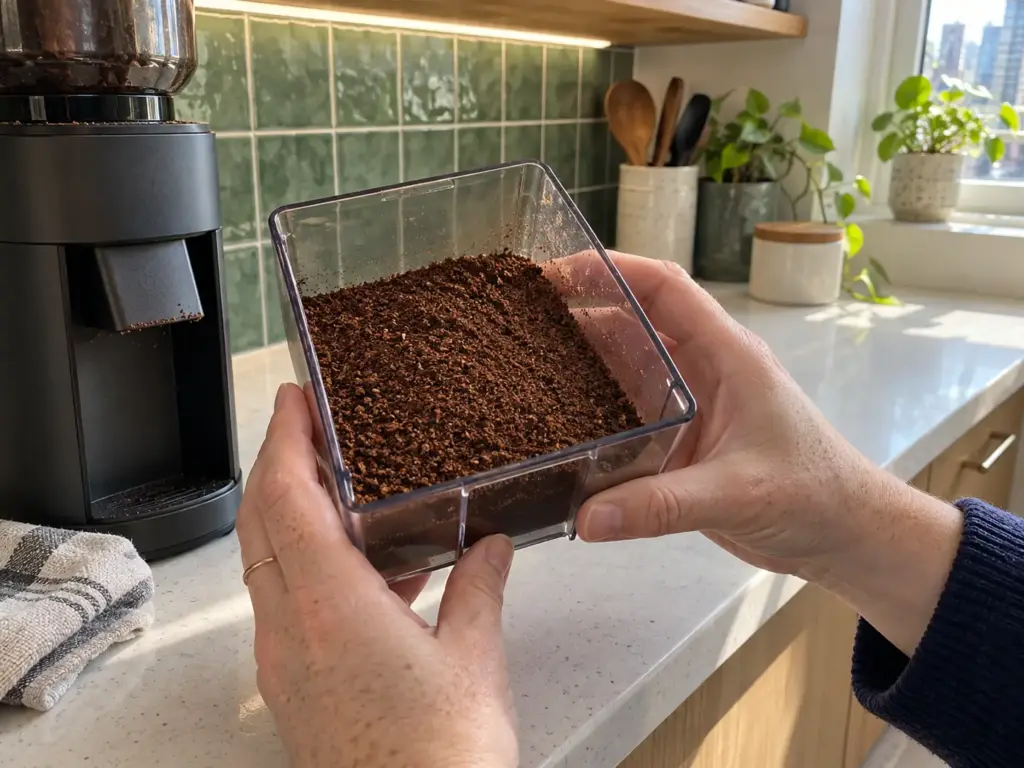
You can often see it before you taste it: smashed beans leave a fine brown dust clinging to the chute and the inside walls of the bin long after the grounds have been tipped out, because that powder is light enough to stick where it lands.
A bean smasher with the word on its box costs more than a blade grinder and grinds only a little better. And a small budget is not the problem: cheap grinders that still grind evenly exist, and what separates them is the edge, not the label.
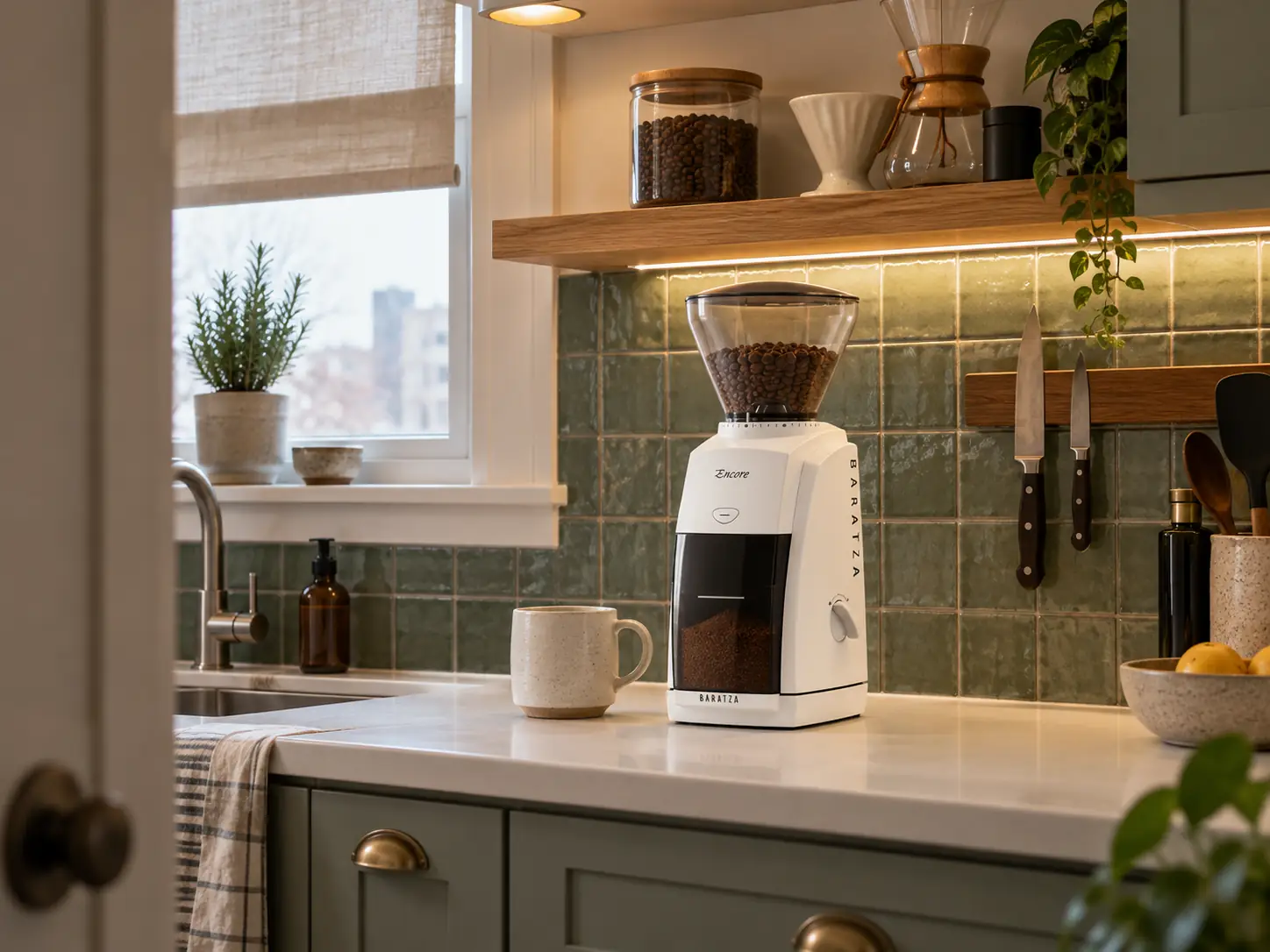
What the box can tell you is a named burr set: its size in millimeters, its material, its shape (burr geometry, on a spec sheet). The Baratza Encore is the widely owned entry-level grinder with a spec sheet done properly, with 40 mm conical steel burrs, 40 grind settings and a DC motor all printed where you can check them. Its limit sits at the fine end. The Consumer Reports writer who has run one daily for years says that for a very fine espresso grind the Encore “maybe isn’t for you”, and that job belongs to grinders built for espresso.
Before trusting the word burr on a listing, find a close photo of the burrs themselves or the parts diagram in the manual. Real burrs show machined teeth with visible edges, graded from coarse at the top to fine at the outlet; the smashers show rounded bumps. If neither the listing nor the manual gives a burr size and a material, treat the word as marketing until someone shows you the part.
A Motor, Gears or a Hand Crank
Something has to turn the moving burr, and home grinders do it three ways. Some electric grinders run the motor through reduction gears that slow it down before it reaches the burr. Others use direct drive, with the burr mounted straight on the motor shaft. And a hand grinder is turned by your arm, which is where the choice between manual or electric begins.
As a rule, conical grinders turn slower and flat-burr grinders faster. Neither drive layout is automatically the better one, and a listing that brags about its motor tells you less than the burr set does.
Speed brings one caution about heat generation. A commenter on r/Coffee warns that some cheap electric burr grinders “grind at very high frequencies, heating up quickly and possibly even roasting the beans a little bit more on the way down.” That is a caution, not a measurement, so treat it as a reason to put a hand on the bin after a dose rather than a reason to avoid electric grinders altogether.
Conical or Flat Burrs, and How the Setting Moves Them
Once you know what a burr is, the next word on the box is conical or flat, and the next thing your hand meets is the setting ring. Both come back to the same gap: its shape, and how far apart it sits.
A Cone Inside a Ring, or Two Flat Discs
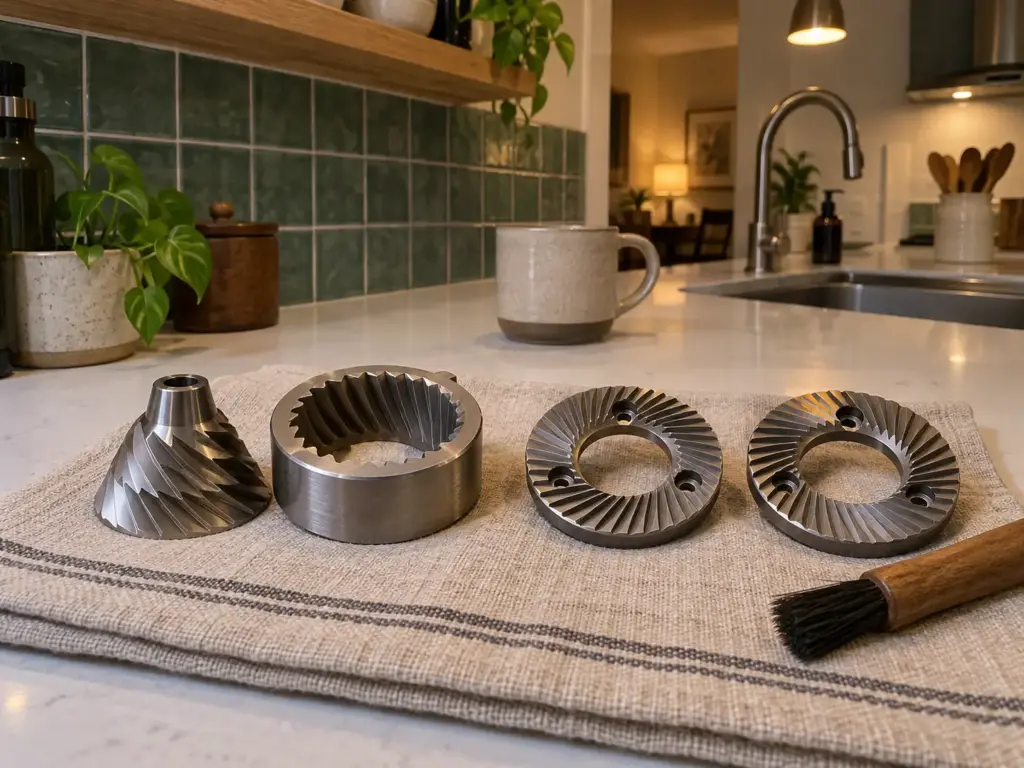
A conical burr set is a cone-shaped burr turning inside a stationary toothed ring. As Prima Coffee’s guide lays it out, beans feed from the top by gravity, work down between the cone and the ring, and leave at the bottom, which is the crack-then-cut path traced earlier. A flat burr set is two toothed discs facing each other with one spinning; beans enter at the center and the grounds are thrown out through the sides.
Most entry-level home burr grinders are conical, and both grinders named in this article are. Which shape earns its place on a home counter has its own answer in conical vs flat burrs, and it’s the natural next thing to settle once the object makes sense.
Stepped or Stepless Settings
Turn the setting ring on a new grinder and what moves, inside, is one burr, sliding a fraction closer to or farther from the other. A stepped adjustment clicks between fixed, numbered positions. A stepless adjustment slides anywhere along its range with nothing to stop it between two marks, and many manual grinders work this way through a threaded knob under the burr, the subject of adjusting a hand grinder.
Steps are easy to repeat, because a click is a click. But the grind you want may fall between two of them, and that is easy to taste: at one setting the coffee has a thin, sour edge, at the next it turns harsh, dry and a little astringent, and neither is the cup you were after. Stepless looks like the cure for that, or half of one: it can land exactly in between, and then getting back to the same spot next week depends on your eye and a mark on the dial.
That gap between two steps is why some grinders add a finer adjustment on top of the main ones. The OXO Brew Conical Burr Grinder is built that way, with conical stainless steel burrs, 15 main settings and a micro-adjustment that moves between them. In Consumer Reports’ own testing it finished ahead of the grinder named in the previous section. The sources read for this article turned up no repeated complaint about this particular model, so none is written here; what the next section describes, drift and grounds packing in around the burrs, applies to it as to any burr grinder.
One more thing the ring won’t tell you: its numbers are that grinder’s own scale. Setting 15 on one grinder is not setting 15 on another, even between two conicals, so a number copied from a forum post is a starting guess at best. The useful target is the particle size itself, and which grind size each brew method wants is the place to start before you count clicks.
Stick a strip of masking tape on the side of the hopper and write down the setting each time you dial in a cup that comes out right, with the brew method and the bag next to it. A chart gets you into the neighborhood; the tape records where this grinder, with your beans, actually landed. When a new bag tastes off at the old number, you will know exactly how many clicks you have moved from a setting that worked.
What Happens to a Burr Grinder Over the Months
In week one the gap is where the dial says it is. Months later it may not be, and the cup usually tells you before you think to look at the grinder.
The Gap Drifts Wider
Say your coffee has been tasting a little weaker and sourer for a few weeks, with the same beans, the same setting and the same brewer, and you’ve already blamed the bag twice. Weak and sour point coarse, toward under-extraction: the water is running through grounds that are bigger than they used to be. Counter Culture’s guide describes this burr drift exactly: with use, the burrs can move apart, and every number on the dial ends up grinding coarser than it did when the grinder was new.
Drift doesn’t announce itself. It arrives a fraction at a time, so no single cup tastes wrong enough to question, and the flavor slides well before anything about the machine looks different.
Re-zeroing tends to be the first thing suggested, as though drift were always the burrs wandering on their own. I’d brush first every time: it is free, it takes a few minutes, and it deals with the likelier cause. Two changes, in this order, with a cup brewed exactly the usual way and tasted between them:
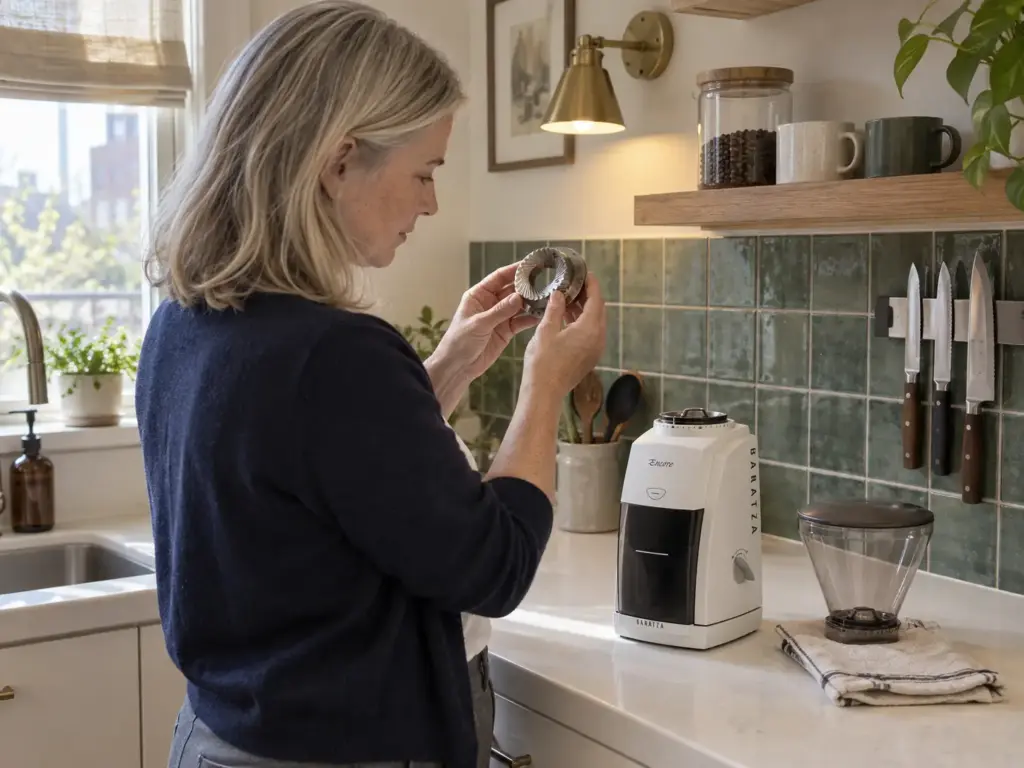
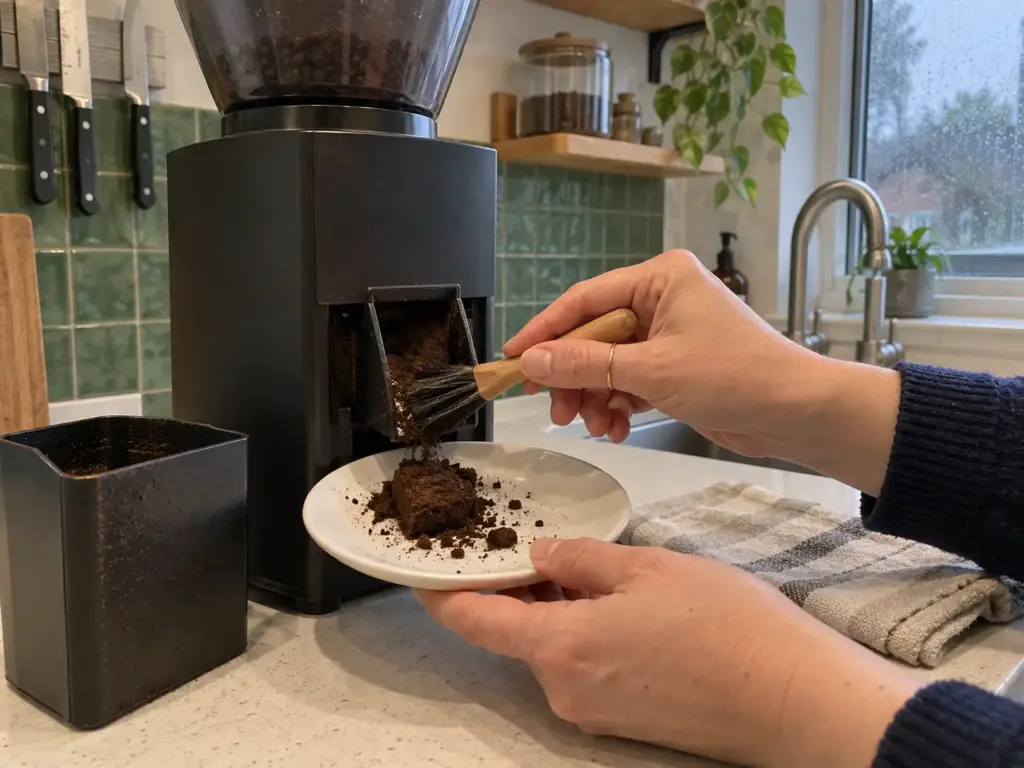
- Brush it out. Unplug the grinder, empty the hopper, take out the upper burr if the manual allows it, and brush the chute and both burrs with a dry brush. Old grounds packed in around the burrs can hold the moving one off, so the real gap is wider than the ring claims. If this was the cause, the next cup has more weight and mouthfeel, and the sour edge backs off.
- Re-zero, only if it’s still thin. Counter Culture describes turning the grinder finer until the burrs just touch and make a light “chirp”, then backing off until the sound stops, a basic burr calibration that puts zero back where it belongs. How to do it on your model, and whether the maker wants you to, is in its manual, and the manual is the authority. If the cup afterward comes out harsh and dry, the taste of over-extraction, you went past it: go one step coarser and taste again.
The first time you find the chirp, write down the number on the ring where it starts. That is the grinder’s true zero in its own units. If the chirp later arrives at a different number, you have measured the drift instead of guessing at it, and you know how many steps to correct by before you brew a single test cup.
When Grounds Push the Burr
Drift isn’t always the burrs creeping apart by themselves. A commenter on r/Coffee describes a cheaper hand grinder whose burr lock doesn’t hold the moving burr firmly: as grounds pack in around it, they push the burr down, and the grind comes out coarser at the same setting. In that commenter’s words, “it happens slowly enough that it won’t ruin a whole batch, you’ll notice it getting coarser a bit at a time.”
The symptom in the cup is the same weak, sour slide, and so is the first fix: a brush. On a loose lock, though, it comes back. If the cup drifts coarse again within weeks of a cleaning, check that the burr seats firmly and square when it goes back in (burr alignment is exactly what that lock is there to hold) and brush more often; a setting on that grinder only holds between cleanings, which is a design limit, not something you are doing wrong.
Fines Never Go to Zero
Burr wear is the slow part of the story. A Consumer Reports writer who has spent close to a decade with the same grinder, the entry-level conical named earlier, says it “grinds between 35 and 51 grams of coffee for me at least every single day, if not more than that,” and its burrs still show little wear. That is three and a half to five standard scoops a day. Burr durability on a home grinder is measured in years of use, so replacing burrs is an occasional job, and when grinder burrs need replacing comes with its own signs.
What never wears away is the mechanism’s own limit. Every time a bean fractures, some of it breaks off as fines, particles under 200 microns as Counter Culture, the roaster, defines them, or about the thickness of two sheets of printer paper. That happens on a well-built grinder with sharp new burrs as much as on an old one. A burr grinder narrows the particle size distribution and gets much closer to a uniform particle size than a blade can, but it never makes every particle the same, and a few fines in the cup are the mechanism working, not a defect to chase and not the muddy cup a blade makes.
Which is also why spending more buys less than you might expect. Commenters on r/Coffee describe the diminishing returns from their own counters: two entry-level burr grinders a step apart in price taste barely different, and the gap between pre-ground coffee and any real burr grinder is far bigger than the gap between a decent burr grinder and a good one. Whether the rest of the machine lasts as long as the burrs do, the motor and the switch and the plastic around them, is the wider question of how long a coffee grinder lasts.
Check the Gap Before You Blame the Beans
What the anatomy comes down to:
- A burr grinder is two hard surfaces and a gap. Nothing leaves until it fits, which is why the grounds come out close to one size and why a setting repeats.
- “Burr” on a box is a word. A named burr set, with its size, its material and sharp machined edges, is the spec.
- The gap moves over months. Brush first, re-zero second, taste between the two, and count a few fines as part of the mechanism rather than a fault.
Take a phone photo of a teaspoon of grounds at your usual setting on white paper, with a coin beside it for scale, and shoot the same setting again a month from now: particles that look bigger next to the same coin mean the gap has started to drift.
Tomorrow, before the first grind, unplug the grinder and brush out the chute and the burrs, then brew exactly as usual and taste for whether the thin, sour edge has eased. If it has, and you’re still deciding whether the grinder on your counter is the one to keep, the next step is choosing a coffee grinder for home, starting from the burr set rather than the box.
Frequently Asked Questions
01What’s the difference between a burr grinder and a regular grinder?
A regular grinder spins a blade that chops beans for as long as it runs, while a burr grinder breaks them between two surfaces until they fit a set gap. That gap is why burr-ground coffee comes out close to one size, and why a setting repeats.
02What is a burr grinder used for?
A burr grinder grinds whole coffee beans to a chosen, repeatable size for a brew method, from coarse for French press and cold brew to fine for espresso, and finer still for Turkish coffee. Whether one grinder covers both ends depends on its range, and many entry-level models stop short of true espresso.
03Is a burr grinder worth it?
For drip coffee, pour-over or espresso it usually is, because an even grind is what lets a single setting change fix a sour or bitter cup. The biggest jump is from a blade or pre-ground coffee to any real burr set, not between burr grinders.
04Are ceramic or steel burrs better?
Neither wins outright: stainless steel burrs are the most common and the tougher of the two, while ceramic burrs resist wear longer but are brittle. Ceramic can crack if the grinder is dropped or a small stone in the beans reaches the burrs.
05Why is my burr grinder grinding coarser than it used to?
Usually old grounds are packed around the burrs, or the burrs have drifted apart with use, so the cup tastes thinner and sourer at the same setting. Brush the chute and burrs first and taste; if it is still coarse, re-zero the grinder the way its manual describes.

How did your cup turn out?
No comments yet. Tell us what you changed — and whether the needle moved.