
We may earn a commission when you buy through links on this page. It never changes what we recommend. How we pick
On this page9 parts
- Manual Coffee Grinder vs Electric: the Burrs Decide, Not the Motor
- What an Even Grind Does to the Cup
- How Many Grams a Day Your Arm Will Grind
- Noise, Counter Space and a Grinder That Travels
- Which Brew Method Tips It One Way
- Month Six: Retention, Worn Burrs and a Crank That Tips
- What Each Budget Buys, Crank or Motor
- Weigh One Day of Beans Before You Pick a Side
- Frequently Asked Questions
You have one counter, one or two brews before work, and a blade grinder whose coffee comes out sour and bitter in the same sip, and the money you’ve set aside could go to a crank or to a motor. Both boxes promise a consistent grind, a phrase that describes nothing you can check, so the manual coffee grinder vs electric question has to be settled somewhere other than the packaging. The taste is set by the burr set, two toothed rings and the gap between them, and it cuts the same way whether a hand or a motor turns it; what separates crank from motor is how many grams pass through it in a day. Below: the cut, the daily-grams line, noise and space, the brewer, month six, and which one fits your counter.
Quick Answer
A manual grinder puts more of the money into the burrs and runs near-silent, but costs arm work and holds one or two doses. An electric buys speed and full-pot capacity for more money, counter space and noise. The fork is grams a day: up to about 30 g, crank; past 50–60 g, motor. Espresso is its own question.
Manual Coffee Grinder vs Electric: the Burrs Decide, Not the Motor
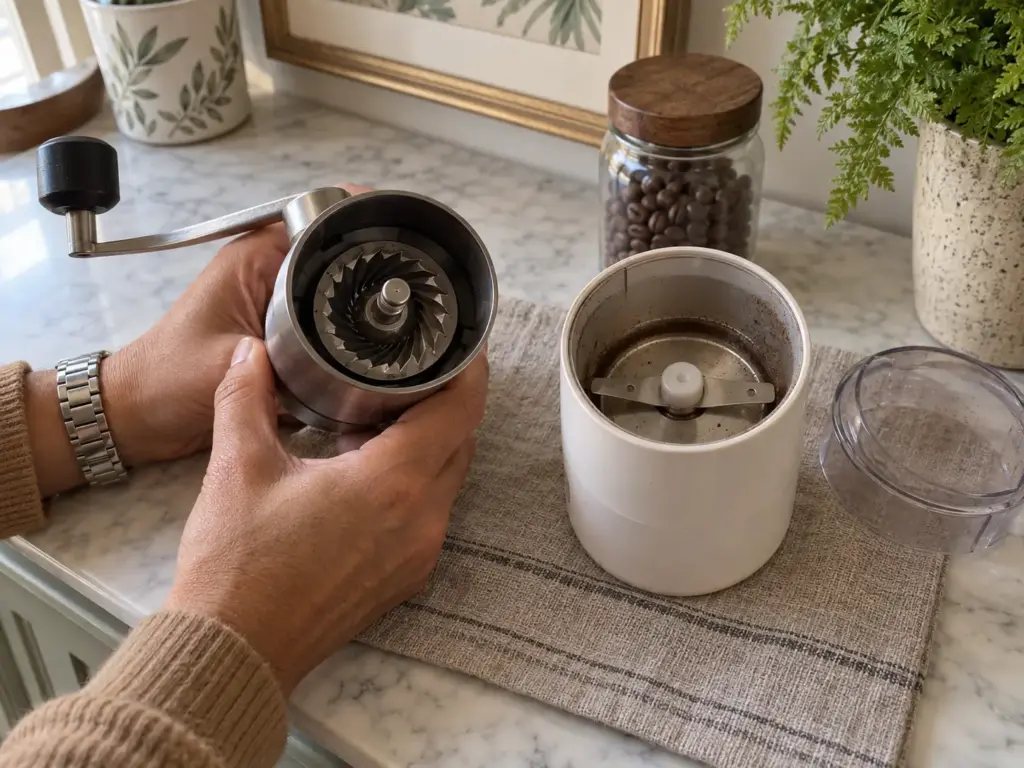
Take the handle or the motor off either machine and what’s left is the same part: two toothed rings, one fixed and one turning, with a gap between them that sets the size of every particle. A burr grinder is that gap. Whether a hand or a motor spins it is the second question, and it only matters once the first one is settled.
What turns the burrs, and what that changes
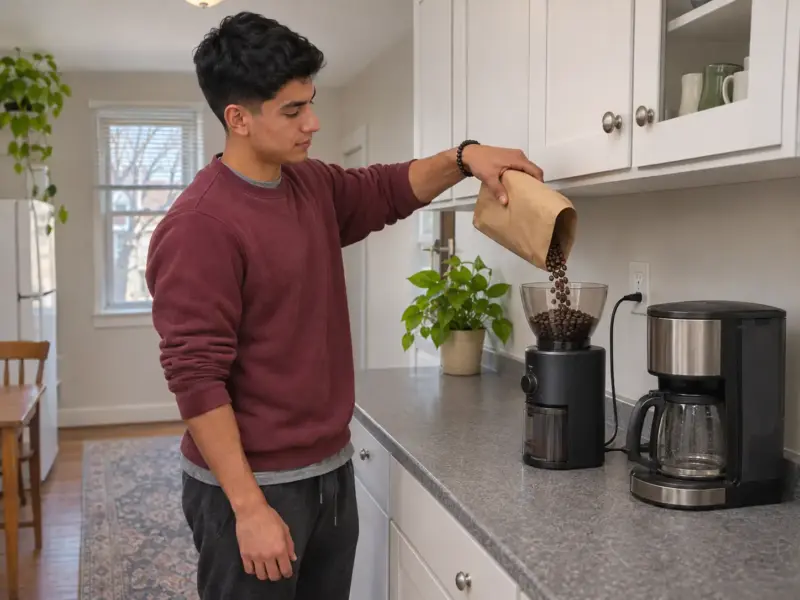
A manual grinder is a conical burr set on a vertical axle, a crank on top, a small hopper that holds one or two doses and a catch cup underneath. An electric burr grinder puts conical or flat burrs behind a motor, with a hopper that can hold much of a bag and a chute that drops the grounds into a bin. If you want the mechanics of the rings themselves, what a burr grinder actually is covers the gap, the teeth and how a setting drifts over time.
What the engine changes is everything around the cut: how fast a dose goes through, how much fits in one go, how loud it is and where the money went. What it doesn’t change is the kind of cut. A crank-turned conical burr and a motor-turned one both crush beans down through a narrowing gap until the pieces are small enough to fall out the bottom. Same kind of cut, different engine, and a different bill for each.
If you still grind with a blade, start there
Both types also come in blade versions, and the blade is the one that doesn’t belong in this comparison. A spinning blade chops; it has no gap and no setting, so every dose comes out as powder and pebbles together. That’s why a blade grinder makes the cup sour and bitter at once: the powder gives up everything and turns harsh while the pebbles barely start, and you taste both in the same sip.
No button on a blade grinder fixes that. Run it longer and the pebbles shrink while the dust piles up; run it shorter and the dust drops while more chunks survive. Either way, the grind time only trades one fault for the other.
Pretty much any decent burr grinder, manual or electric, is an upgrade from a blade grinder. So if a blade is what’s on your counter, the crank-or-motor question can wait a minute. The cheapest real burr grinder of either kind beats it, and a new brewer or a new bag of beans, bought first, changes the wrong thing.
When the burr grinder replaces the blade, keep the same beans, the same dose and the same brewer for the first week, and move only the grind setting. A blade habit is to change the grind time and the scoop together; drop it while you dial in. With everything else held still, a sour cup means one step finer, a bitter one means one step coarser, and the next cup tells you whether the step worked.
What an Even Grind Does to the Cup
Once both options are burr grinders, the cup depends on how evenly each one cuts at the money you have. That evenness is a physical spread of particle sizes in every dose, and the spread decides whether the cup leans one way or both ways at once.
Fines and boulders in the same dose
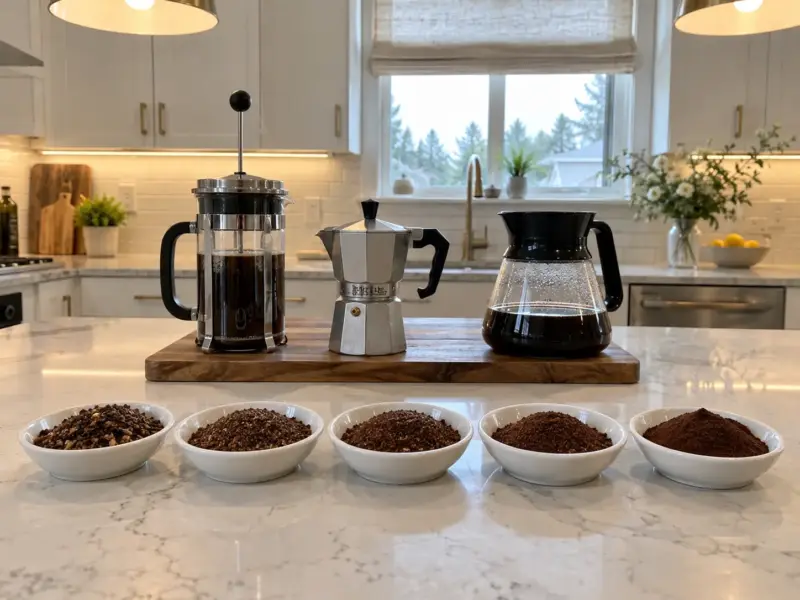
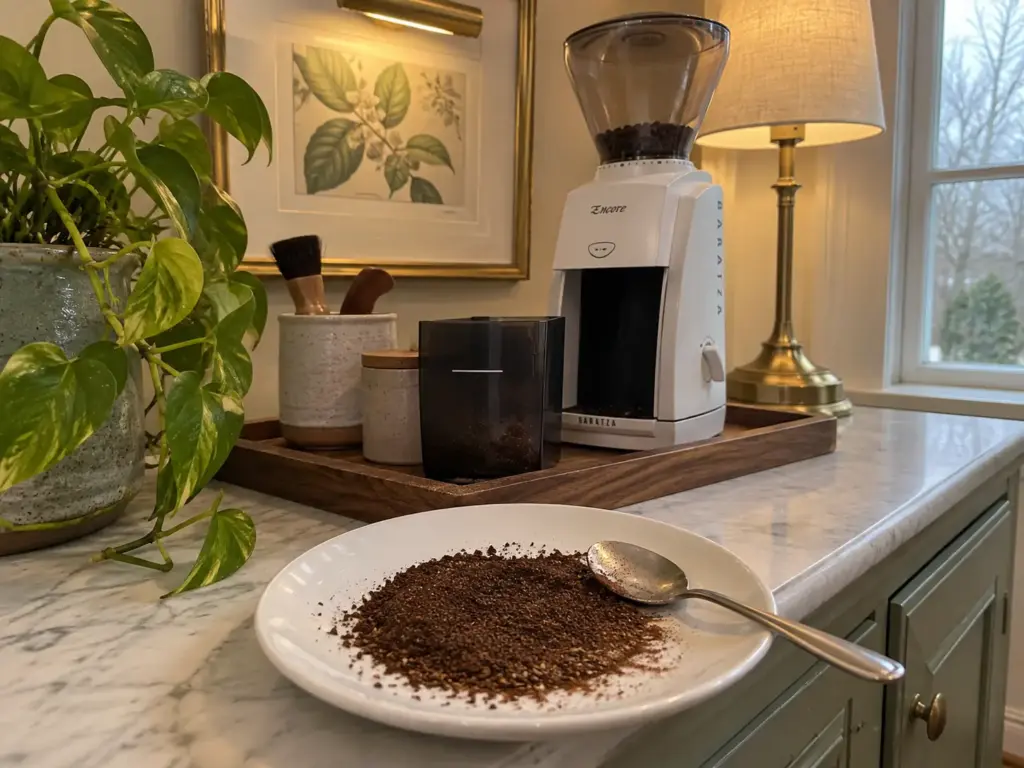
Every burr grinder makes some fines, dust-sized particles, and some boulders, the oversized pieces; a better grinder simply makes fewer of both. Fines have so much surface for their size that they give up everything fast, harsh compounds included, so they pull the cup toward bitter (over-extraction), while boulders extract slowly and leave it thin and sour (under-extraction). Grind consistency is one of the things the Specialty Coffee Association’s brewing and equipment standards exist to pin down, and the SCA keeps a separate standard for home grinders.
A wide spread shows up before you even taste it. In a paper filter the fines wash down into the paper and clog it, the drawdown stalls, and the bed finishes muddy and gray instead of settling into an even layer. A tighter spread is also what lets one grind step mean something, which is the basis of what grind size actually changes in the cup.
Where a hand grinder’s money goes
A hand grinder has no motor, no electronics and no large hopper to pay for, so at the same money more of the price sits in the burr set and in the axle that keeps it centered. That’s reasoning rather than a lab result, but it’s why a mid-range crank so often out-cuts an electric at the same spend. Electric grinders come with conical or flat burrs, and the motor, the housing and the hopper all take their share before the burrs get theirs.
The Baratza Encore is the reference point on the electric side: 40 mm conical steel burrs, 40 settings, and a common first electric for a full pot or back-to-back cups. Its grind is where the money shows. At that level, a burr set can produce more fines than its replacement, and the evenness you give up is the price of speed and a real hopper.
Neither type changes the recipe. The SCA’s Golden Cup numbers put brewed coffee at 55 g of coffee per liter of water, give or take 10 percent (roughly 1:18), with water at 200°F ±5°F (93°C ±3°C) where it meets the grounds. For a drip machine that works out to about 10 g, roughly two level tablespoons of beans, for every 6-fl-oz cup on the carafe, whatever turns the burrs.
How Many Grams a Day Your Arm Will Grind
The effort of a hand grinder usually gets described as a minute or two of cranking. That minute stretches or shrinks with the dose, though, and the owners who have lived with one put the line in grams, which tells you far more about your own mornings.
The line owners draw
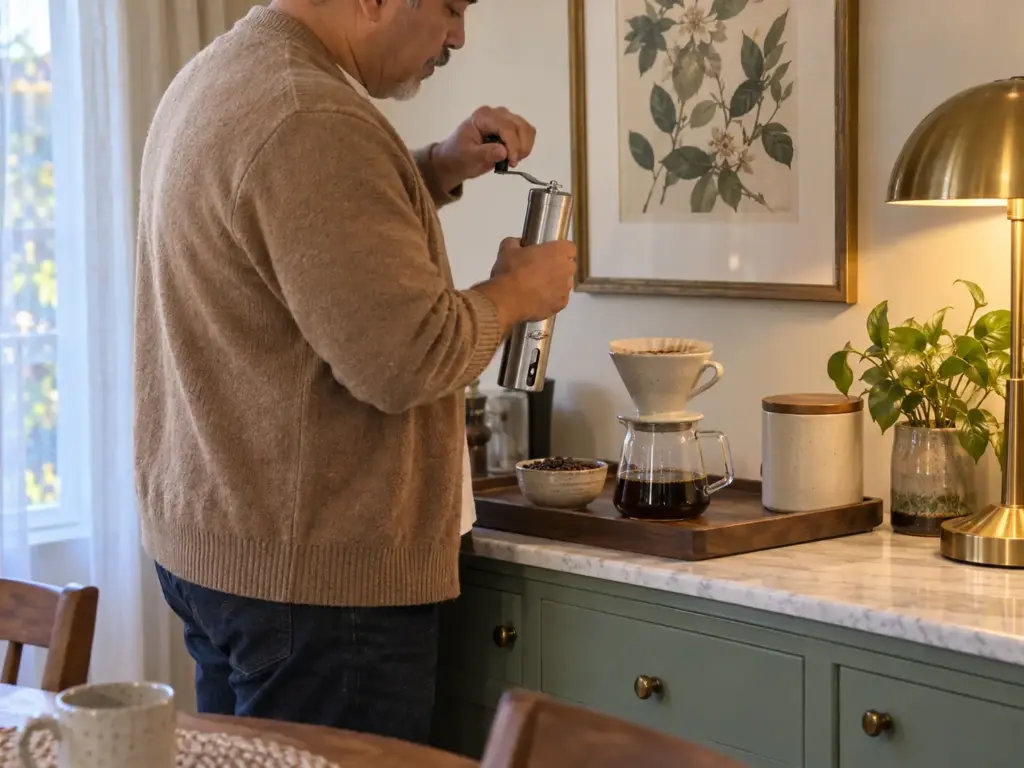
Daily amounts matter: 15 to 30 g a day is no big deal for hand grinding, while 50 to 60 g a day is where it starts to get old quickly. Translated into cups, 15–18 g makes one pour-over or AeroPress, 30 g makes two, and a French press for two sits around 36 g. A full 10-cup drip carafe (about 50 fl oz) wants roughly 80 g at the Golden Cup ratio, which puts one pot well past the line by itself.
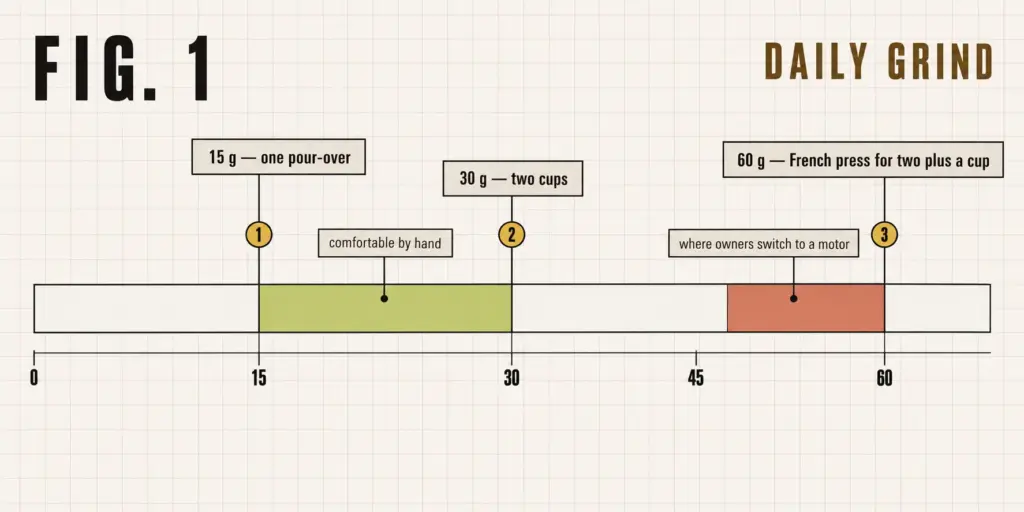
Time follows the grams, and the fineness. A coarse dose moves through a crank faster than a fine one, so the same 30 g takes longer as two AeroPress doses than as one small press; the per-dose count, grinder by grinder, lives in how long grinding by hand actually takes. For the decision, the daily total is the number that counts, because that’s what your arm meets every day.
The hopper draws a line of its own. Many hand grinders hold about 20 g of beans, which makes them single-dosing grinders by design, so anything past one hopper means stopping, refilling and cranking again. That daily refill is usually the moment people start looking at motors.
Two small batches instead of one big one
Picture the second batch: the kettle is already hot, the first cup is dripping, and you’re feeding another 20 g through a hopper built for one dose. But the owners who stayed with a crank past the 30 g line mostly did it the same way, by splitting the day.
Some people split a day’s coffee into two batches and keep it up for years. Each batch stays inside the comfortable range, and each gets ground right before its own cup instead of sitting in a jar. It’s the same total with half the strain per session.
Tie each batch to one brew and grind it just before that brew, never both at once. Two 25 g sessions hours apart feel like two small jobs, while 50 g in one sitting feels like a chore, and the second half of it sits around going stale while the first cup drains. If your hopper holds 20 g, set the dose to fit one fill and let the hopper be your measuring cup.
The budget crank and its wobble
The obvious budget move is the cheapest crank on the shelf. Make that the cheapest crank with a steady arm, because a loose one changes how the daily grams feel. The JavaPresse Manual Stainless Steel is the budget hand grinder most people have already seen: a ceramic burr, 18 click settings and a stainless steel shell. Coffeeness tested it hands-on and found it “works really smoothly and quietly,” with one real complaint: “the arm is quite wobbly in use, and can easily detach from the hex nut.”
At 30 g a day, that wobble costs you something. Part of every turn goes into rocking the arm instead of driving the burrs, so the same dose takes more work and the daily grams feel heavier than the scale says (and an arm that slips off the nut mid-dose tends to send beans across the counter). Before settling on the lowest-priced crank, read what a cheap hand grinder gives up, because the axle and the arm are where the savings usually come from.
Noise, Counter Space and a Grinder That Travels
The first coffee of the day often gets made while someone else is still asleep, and that’s where the two types differ most. A manual grinder is a whole lot quieter, and that matters to anyone who is not trying to hear motors early in the morning. Even fans of electric grinders admit they are loud, and an Encore can be called ridiculously loud by someone who still loves it.
The two sounds differ in kind. A motor is short and sharp and carries through a wall, while a crank makes a low, steady crunch that mostly stays in the room where it’s made. If the grams point to electric but the noise is the deal-breaker, the quietest electric grinders narrow the field. Quiet by hand, remember, is paid for in the arm work from the grams section above.
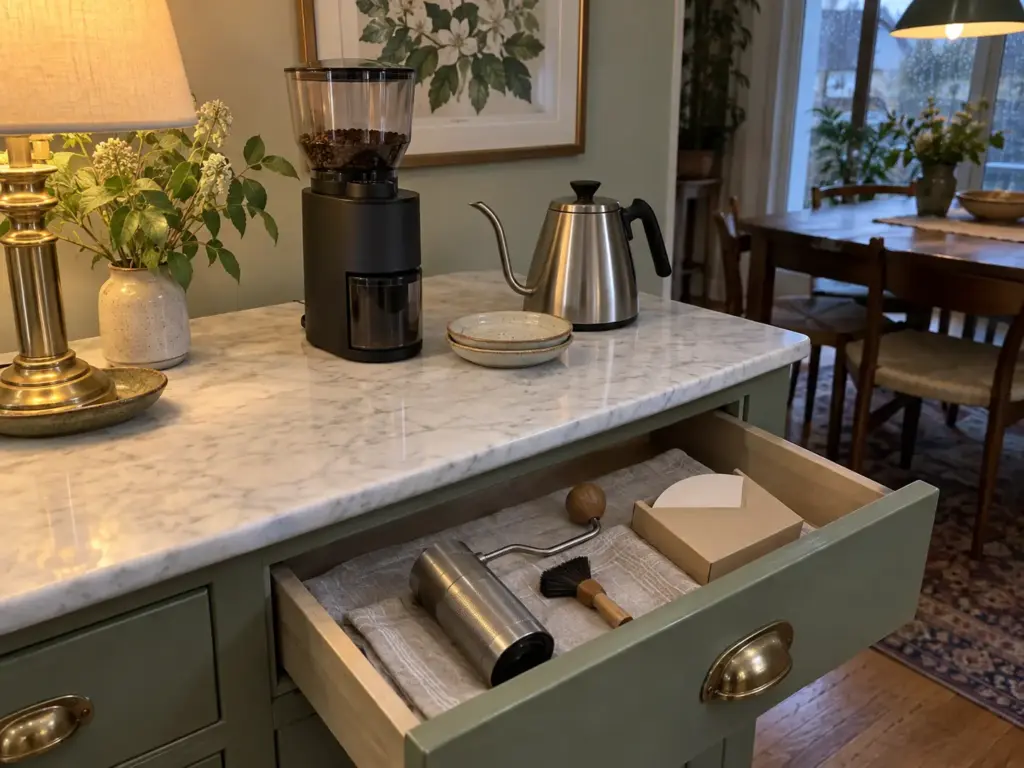
Space is the other cost. An electric grinder needs an outlet and a permanent spot, which on a small counter means competing with the toaster and the kettle for the same plug. A hand grinder lives in a drawer and needs neither.
And it travels. The 1Zpresso K-Ultra comes with its own carrying case, and hand grinders pack easily for trips. A crank is the one kind that never needs charging, so choosing a grinder to pack when there’s no outlet usually starts with the hand-cranked ones.
Which Brew Method Tips It One Way
The brewer on your counter narrows the choice before any grinder does, because each method asks for its own amount of coffee and its own fineness. Knowing the grind size each brewer wants is the step after this one; here the question is only which engine handles that grind at that volume.
Pour-over and AeroPress: either one works
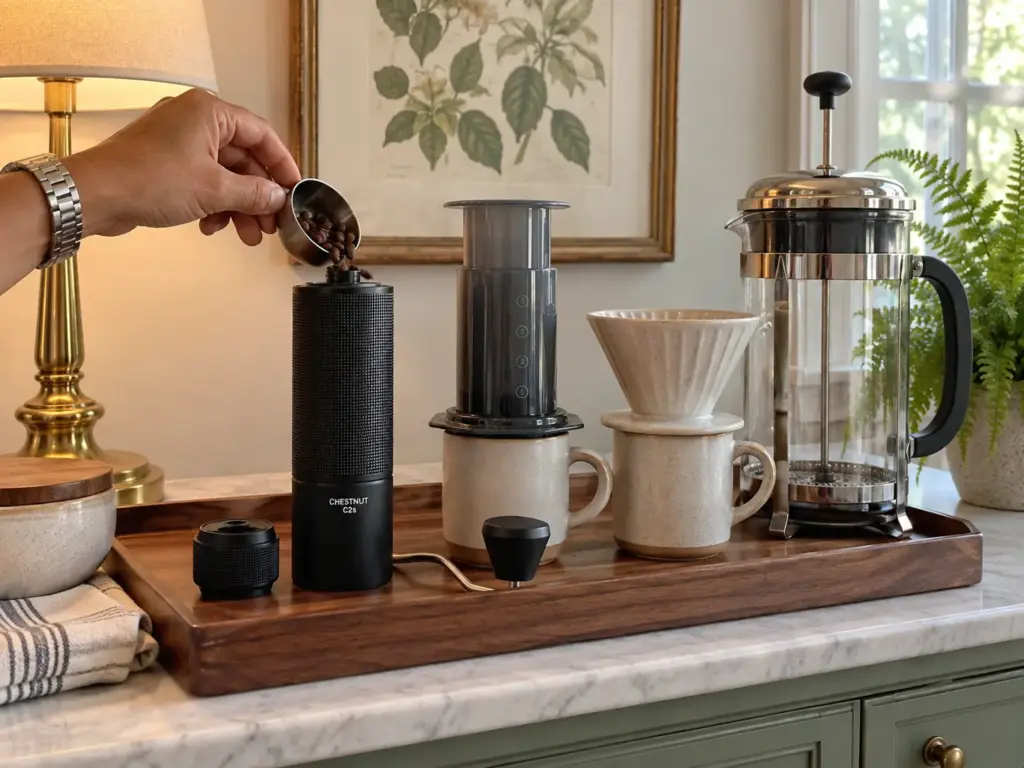
A single V60 or AeroPress sits well inside the comfortable line: one dose of 15–18 g at a medium or medium-fine setting. Either grinder handles it, and at this volume a good hand grinder’s even cut shows up as a drawdown that drains on time and a cup that leans one way when it’s off, not two.
The TIMEMORE Chestnut C2S was built for this job: a 38 mm steel conical burr, about 36 internal clicks and an aluminum-alloy housing around a 20 g hopper. No repeated complaint turns up in owner reports on it. The limit it does have is built in: a 20 g hopper means one dose at a time, so it’s a one- or two-cup grinder by design.
A French press for two or a full drip pot
A French press for two runs about 36 g and a full drip carafe more than double that, so both pass the 50 g mark quickly once there’s a second pot or a second person. This is where a motor and a hopper that holds a bag’s worth earn their place. The dose goes through in one go, and no one stands at the counter cranking for the whole house.
The press does have one thing going for the crank. Its grind is coarse (so is cold brew’s), and a coarse setting moves through a hand grinder much faster than a fine one, because each turn pushes out bigger pieces; if the press is a weekend habit and the weekdays are single cups, one hand grinder can cover both. The drip pot is harder to argue with. At roughly 80 g a carafe, a 20 g hopper has to be filled four times for one pot.
Espresso asks for fine steps
Espresso is a different demand altogether. The fine end of the range needs small, repeatable steps between settings (or a stepless adjustment), because a shot swings from sour to bitter within a narrow window of grind size. The better hand grinders can get there and most budget ones can’t hold a setting that fine, so working out which hand grinders can actually reach espresso is its own question, grinder by grinder.
Month Six: Retention, Worn Burrs and a Crank That Tips
Week one tells you how a grinder feels in the hand. Month six tells you what it does to the cup after a few hundred doses, and some of what shows up runs against the usual assumption that a motor means precision.
What stays inside the grinder
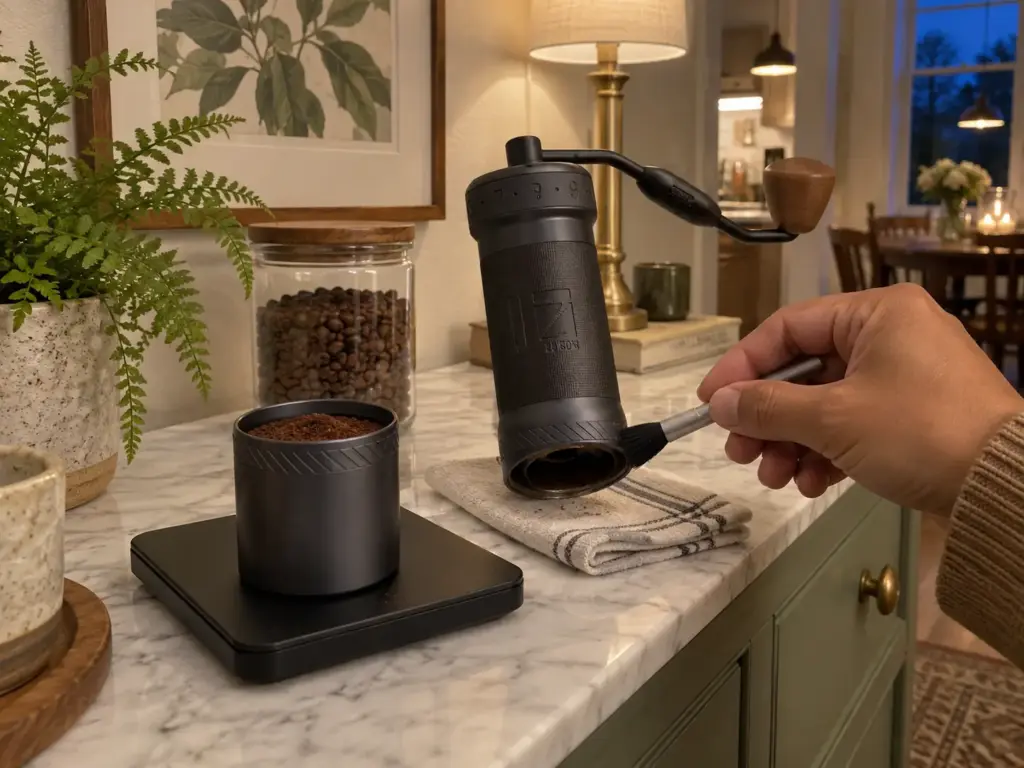
Retention is the coffee that stays trapped inside a grinder between doses, and it comes out stale in the next cup. Tom’s Guide measured it on several grinders with the same method and the same scale, and hand grinders came in low: the 1Zpresso K-Ultra held 1.8 percent and its sibling from the same maker 1.3 percent, against 2.15 percent for an electric grinder in the same testing. On an 18 g dose, 1.8 percent is about a third of a gram.
So “electric is more precise” doesn’t hold as a rule. It doesn’t hold the other way either: another premium hand grinder in the same testing kept 2.75 percent, more than that electric. Retention comes from the path the grounds take out of the burrs, not from what powers them.
The K-Ultra’s weakness is one a spec sheet can’t show. Tom’s Guide found it “fell over on a few occasions during testing” because of its long, heavy crank, and adjusting it past its default range was “finicky.” A grinder that tips when you set it down is a daily annoyance at the premium end.
Retention also explains why the first dose after a setting change tastes off. The grounds left inside were cut at the old setting and they come out mixed into the new dose, so a change you made toward sweeter can taste, for one cup, like it did nothing at all.
After you move the setting, grind 2 or 3 g of beans and throw them out before the real dose. That pushes the old-setting leftovers through, so the next cup tells you what the change actually did instead of what yesterday’s setting did. Judge a grind change on the second cup after it, never the first.
Burrs wear on your tongue first
Burrs dull slowly, and the taste goes before any measurement notices. Barista Hustle’s cupping research compared new burrs with a set that had ground about 300 kg of coffee and found no statistically significant difference in extraction or particle size. The tasters disagreed with the instruments.
In Barista Hustle’s words, “Most cups were decidedly better when ground with the new burrs…sweeter, cleaner, and brighter, with a fuller body.” A separate study the same page cites, Griffiths and colleagues in 2018, found burrs worn to around 600 kg making measurably more fines.
Now run the home arithmetic, because it changes the worry. At 30 g a day a grinder puts through about 11 kg a year, so reaching 300 kg takes more than twenty years, and even a household grinding 80 g a day needs about ten (that test used commercial steel burrs, so treat the timeline as a rough guide for a budget set). At month six, then, a cup that has gone flat is far likelier to be stale retained grounds, a setting that crept or stale beans than worn burrs, on either type.
What breaks, and what gets replaced
Long-term owners tell the mechanical story better than any spec sheet. Some hand grinders serve for years before an electric takes over, with the manual kept only as a backup. On the electric side, a broken part can be replaced free of charge, and a secondhand electric can run for years without the burr-holder failure people worry about.
The pattern is calmer than either camp suggests. A hand grinder has no motor or circuit board to fail, and it rarely breaks unless it is dropped; an electric has more parts that can go, though on a grinder built to be repaired a broken part is a small order rather than a new machine. How much of either one is molded plastic matters for that repair question, and which parts of a grinder are plastic varies more than product photos suggest. Over the long run, how long a coffee grinder lasts comes down to those small parts and the burrs’ slow drift, not to what did the turning.
What Each Budget Buys, Crank or Motor
With the grams, the method and month six laid out, the money question answers itself in levels rather than prices. At each level you’re choosing what to pay in: arm work, or grind quality.
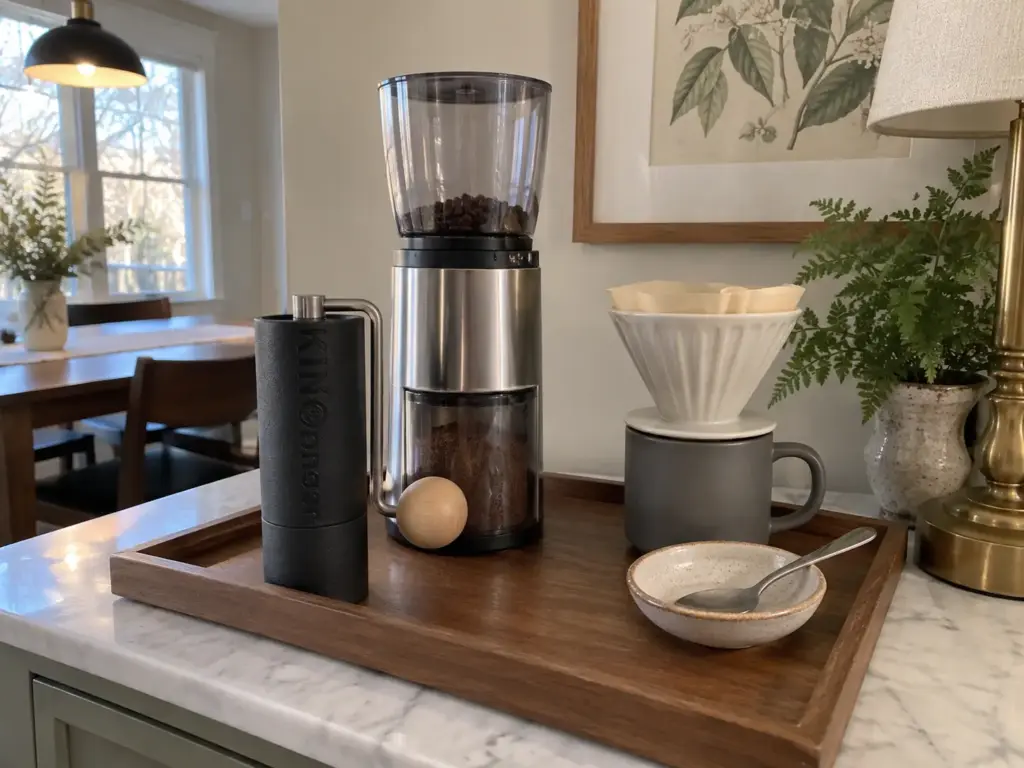
The same money, two different grinders
At the low end, a hand grinder gets you a real burr set for a fraction of what an electric with comparable burrs costs. KINGrinder P2 is the cheap-crank example: an ABS plastic housing around a stainless steel conical burr, light enough to serve as both a travel grinder and a backup. Owner reports don’t circle back to any one complaint about it, and the plastic shell is plainly where the price was saved.
The OXO Brew Conical Burr is the electric at the low end: stainless conical burrs, 15 settings and a 12-oz hopper. It doesn’t carry a repeated owner complaint either, so its trade is the one every motor carries, which is noise, an outlet and a permanent spot on the counter. If the grams say electric and the budget is tight, a cheap electric grinder that grinds evenly goes deeper into that level.
In the middle, the cheapest decent electric and a mid-range crank like the C2S often land at similar money, or close enough that price stops being the question. The electric gives you speed and a hopper; the crank gives you the better cut for the same spend. I’d pick whichever cost you’d rather pay every morning, since that’s the one you’ll keep paying.
At the top, the money buys one of two different things: a hand grinder that holds espresso-fine steps, or an electric that grinds a full pot in one go and keeps its evenness while doing it. Both are the splurge, and why good grinders cost what they do explains where that money goes.
Side by side
The two types, set against the things that decide the choice, with the side that wins each row in green.
| What you’re weighing | Manual (hand) | Electric (burr) |
|---|---|---|
| Grind quality for the money | More of the money sits in the burrs and the axle | The motor, housing and hopper take a share first |
| Comfortable daily grams | Up to about 30 g; 50–60 g gets old | A full pot or a whole household |
| Time per session | Grows with the dose and with the fineness | Short at any dose |
| Noise | A low crunch that stays in the room | Short, sharp and loud enough to carry |
| Outlet and counter space | Neither; lives in a drawer and travels | An outlet and a permanent spot |
| Capacity | One or two doses per hopper | A hopper that holds much of a bag |
| Month-six weak spot | A wobbly crank on cheap models; a heavy one can tip | More parts that can break; beans kept in the hopper go stale |
Which one fits your counter
Pick by your day, and take the flaw along with the pick:
- Up to about 30 g a day, one or two cups, a quiet house or a suitcase: a hand grinder, and the manual grinders worth buying is where to choose one. The arm work grows with every extra gram, and a cheap crank wobbles.
- A drip carafe, a French press for two or more, or several people making coffee: electric, and the electric grinders worth a counter spot is the shortlist. You give up quiet and a piece of the counter.
- Between 30 and 50 g: either one, if you’re willing to split the day into two batches by hand.
- Espresso: the fine steps decide it, not the engine, and only the better hand grinders qualify.
Weigh One Day of Beans Before You Pick a Side
Three things carry the whole comparison:
- The burr set decides the cup, not the motor, and a blade grinder gets replaced first, by either kind.
- The grams decide crank or motor: up to about 30 g a day is comfortable by hand, and past 50–60 g owners reach for a motor.
- Month six is about retention and the crank more than the burrs, and a good hand grinder holds up there as well as an electric one.
A month after the new grinder arrives, notice whether the second batch has started to feel like a chore, and taste whether the first cup after a setting change still carries the old one; both tell you something week one couldn’t.
Tomorrow, weigh everything that goes through your grinder across the whole day, and let that one number pick the type. Then, whichever side it points to, make one change at a time and taste the next cup before making another; the shortlist for each side is linked above.
Frequently Asked Questions
01Is it better to have a manual or electric coffee grinder?
A manual grinder suits one or two cups a day and a quiet kitchen, while an electric suits anything past about 50 g a day or a full pot. At the same money a hand grinder usually carries the better burrs, so your daily grams decide more than the type does.
02Are manual coffee grinders any good?
Yes, a good manual grinder carries a real conical burr set and often grinds more evenly than an electric one bought for the same money. The weak point is the cheap end, where a wobbly crank or axle costs you effort and consistency.
03Is it better to manually grind coffee beans than buy pre-ground?
Grinding right before each brew beats buying pre-ground coffee, because ground coffee loses its aroma much faster than whole beans, whichever grinder did the work. Any burr grinder does the job, crank or motor, so the gain comes from grinding fresh rather than from turning a handle.
04Can a manual grinder grind fine enough for espresso?
The better manual grinders can reach espresso, because they offer small, repeatable steps at the fine end, but most budget hand grinders cannot hold a setting that fine. Check the step size at the fine end before buying one for shots.
05Do manual coffee grinders last longer than electric ones?
A manual grinder has less that can fail, with no motor or electronics, but the burrs on both types wear slowly enough to last many years of home use. Owners report electric grinders running five years and more, and the taste changes before anything looks worn.

How did your cup turn out?
No comments yet. Tell us what you changed — and whether the needle moved.