
We may earn a commission when you buy through links on this page. It never changes what we recommend. How we pick
On this page7 parts
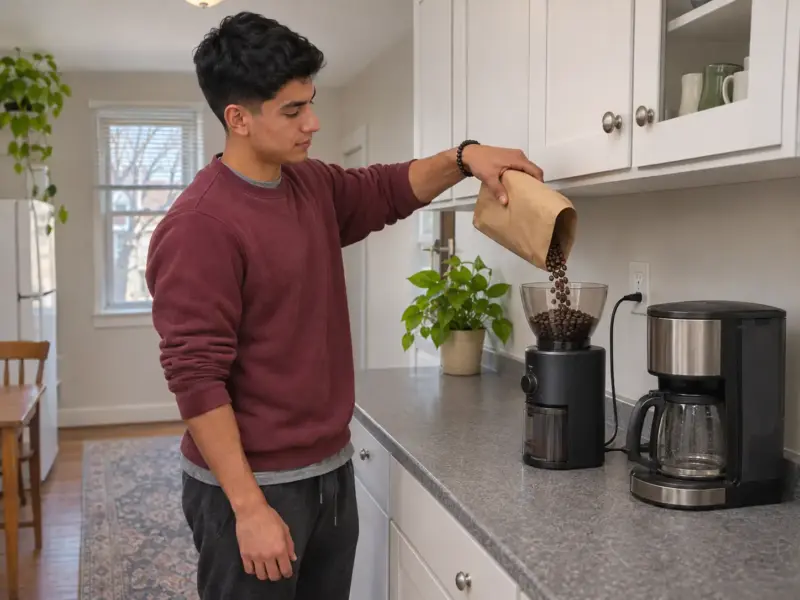
Early morning, and you are at the counter with the house still dark behind you, a dose of beans in the hopper and a finger over the button, working out whose door is closest to the kitchen. The whole dilemma fits in one line: moving to whole beans means noise, and noise in the morning feels like a sin. The quietest coffee grinder is settled by one number, not by the word quiet printed on a box: a hand grinder turns its burrs about once a second, an electric motor spins them twenty-odd times a second, and almost everything a grinder sounds like follows from that gap and from what the housing does with the shaking. Below: why grinders are loud, what to do with the one you already own, what silence costs, the quiet picks with their flaws, and whether quiet lasts.
Quick Answer
A hand grinder is the quietest coffee grinder: with no motor, its burrs turn about once a second, against twenty-plus on an electric. Among electrics, a slower motor and an insulated housing separate a loaded grind in the high 70s dB from one past 90, and a quiet claim means little unless it was measured with beans in.
What Makes a Coffee Grinder Quiet or Loud
Grinder noise is not random, and the brand on the front has little to do with it. It follows how fast the burrs turn and what the housing does with the vibration, which is why two grinders at the same price can sound a room apart. If you are still at the stage of choosing a grinder for home, these are the three things to understand before trusting any decibel figure.
The motor speed does most of the work
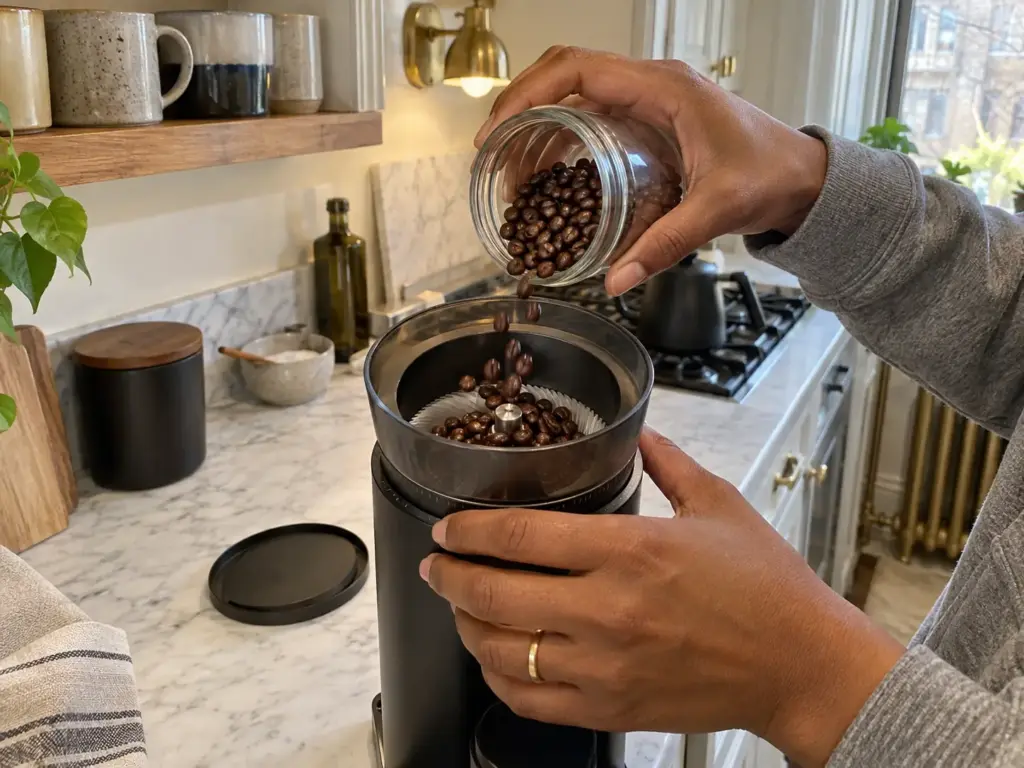
A hand grinder turns at roughly 60 RPM, about one rotation per second, because that is as fast as a forearm comfortably goes. An electric burr grinder spins at up to about 1,400 RPM: call it twenty rotations a second, or twenty-three if you do the division. Those are Coffee Chronicler’s figures for the two categories, and they explain the whole field. At one turn a second you hear each bean crack on its own; at twenty-three the cracks blur into a continuous roar, and the motor lays its own whine on top.
Inside the electric category the spread is wide. The manufacturer speeds that Homegrounds tabled side by side run from 350 RPM on the Fellow Opus and 550 on the Baratza Encore ESP to 1,050 on the Mahlkönig X54, 1,350 on the Eureka Mignon Silenzio and 1,725 on the Rancilio Rocky SD. Slow motors tend to be the quiet ones, since fewer impacts per second put less energy into the housing. But the Silenzio breaks that rule: it runs the second-fastest motor on the list and is still one of the grinders people name first for quiet, for a reason the next section covers.
Speed changes the pitch as well as the volume. A fast motor whines high, and the ear is more sensitive in that register than to a low rumble, so a whine is the part of the sound that stands out in a silent house and slips under a bedroom door. Burr shape is a smaller variable. Coffee Chronicler’s general notes lean toward flat burrs running a little quieter, but next to motor speed and housing the difference between conical and flat burrs is a tiebreaker, not a reason to buy.
A phone decibel app is not a calibrated meter, but it agrees with itself, and a before-and-after needs nothing more. Grind a real dose with the phone about 8 inches (20 cm) from the grinder and note the peak, then take a second reading from the bedroom doorway with the door shut. The doorway number is the one your household hears, so that is the one to compare after every change in the next section.
The housing decides what reaches the bedroom
The motor makes the vibration; the housing decides where it goes. Eureka’s sound-insulated case, sold as Silent Technology and often shortened to “silent tech,” is sound dampening built in: it wraps the motor in insulation and hangs it on rubber mounts, and Homegrounds’ meter put those Mignon models 20 to 30 dB below comparable grinders. That is how a 1,350 RPM motor ends up quiet. A mostly plastic shell does the opposite: it hands the shaking straight to the counter, and the counter spreads it into every cabinet above and below.
The only loaded meter test in the field comes from Coffee Chronicler, which held the meter 8 inches (20 cm) from each grinder with beans in the burrs. A typical hand grinder read 72 to 74 dB, the quietest electrics 79 to 80 dB (the Fellow Ode at 79.4), a DF64-type single-dose grinder fitted with aftermarket SSP burrs about 85 dB, and the loud electrics 90 dB and up. That 85 mark is also where NIOSH’s recommended noise exposure limit sits, and according to NIOSH, “Noise above 85 dBA is considered hazardous.” Treat it as a ruler for loud and nothing more: the NIOSH line is built on an eight-hour working day, a grind lasts ten seconds, and what any noise does to your ears is a question for a doctor, not for a coffee page.
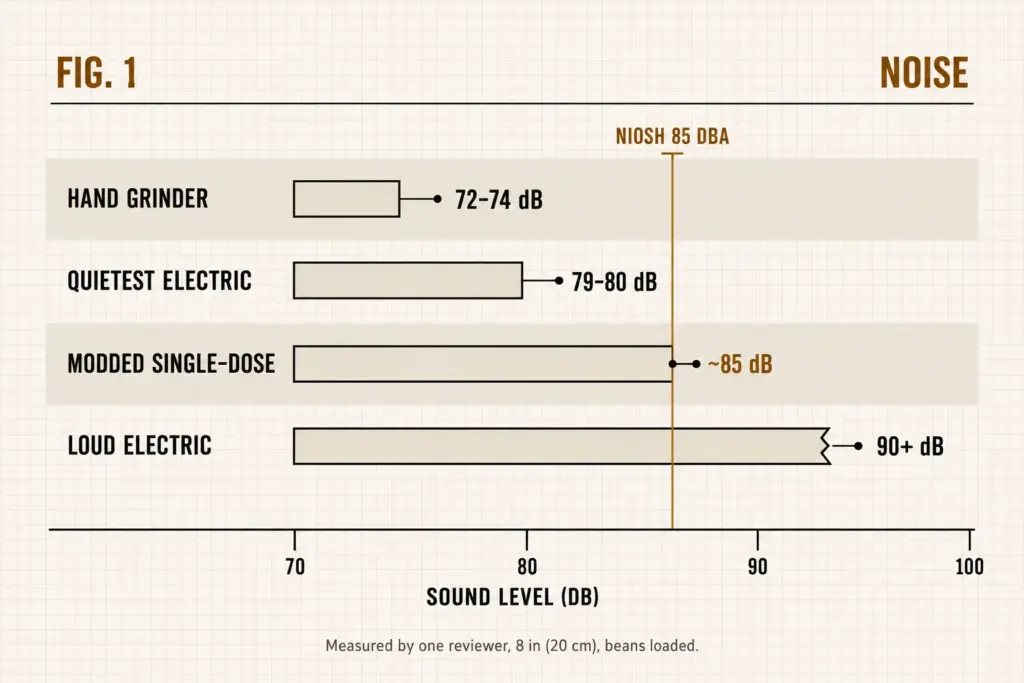
On that ruler the gaps are bigger than they look. Decibels are logarithmic, and NIOSH’s own rule of halving the allowed time for every 3 dB reflects that each 3 dB step doubles the sound energy, so the 11 dB between the quietest electric and a 90 dB grinder is more than ten times the energy, not eleven percent more. The Baratza Sette lives at that top end. Coffee Chronicler calls it “loud as a jackhammer,” says it will most likely wake the whole house, and blames its largely plastic housing.
Empty and loaded are two different grinders
Pressing the button on an empty grinder in a store tells you very little. One grinder in the reporting read 89 dB running empty and 68 dB with beans in it, because a full burr chamber damps the ring of bare metal spinning past bare metal. It can also go the other way: a grinder that hums politely when empty can turn harsh once the burrs have something to break.
That is the trap in most noise claims. A box that says quiet, or a review that gives a number without saying whether the hopper was loaded, has told you nothing you can use, and the empty figure is the one a shop demo gives you. The first morning with beans in it is when the real number arrives. The only reading worth comparing is a loaded one, taken at a stated distance, ideally by the same meter across every grinder, which is exactly why a single tester’s ladder is more useful than ten spec sheets.
Quiet the Grinder You Already Own First
A loud grinder is not automatically a grinder to replace. Before any purchase, the one on your counter can lose a good part of its noise for the price of a bar mat and a closed door, and the changes work best one at a time, with a listen from the doorway after each.
Break the path through the counter
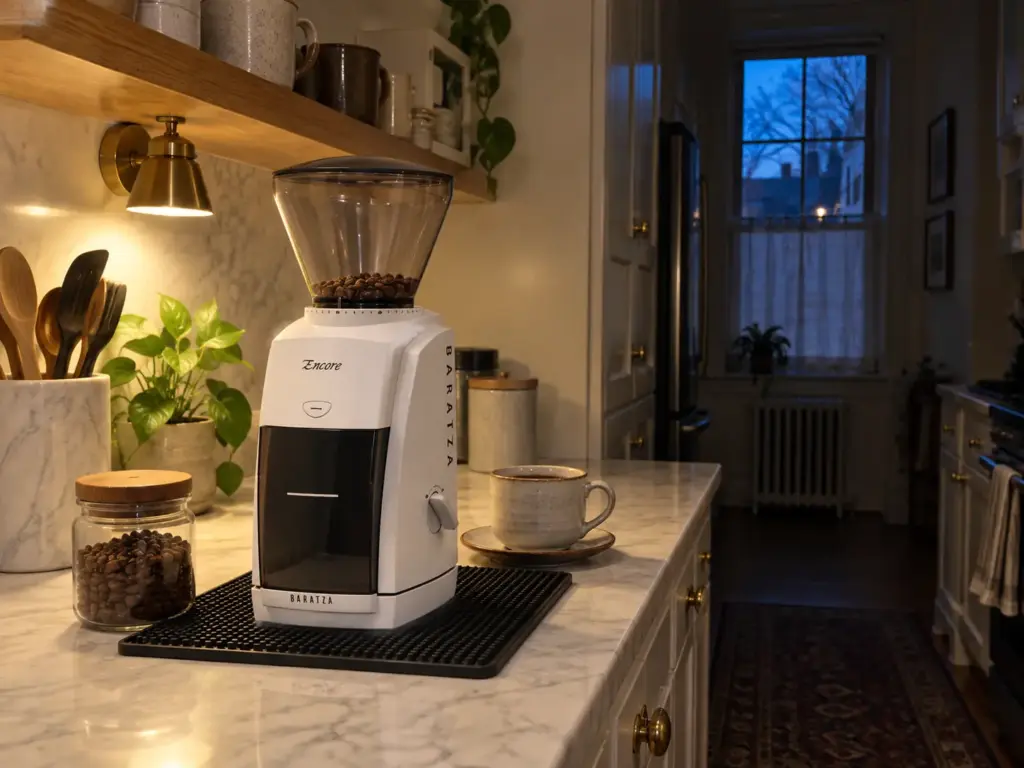
Your counter and the cabinets around it behave like the soundbox of a guitar: the motor’s buzz goes into the stone or laminate and comes back out of every door in the kitchen. The first instinct is a folded towel under the grinder. A rubber bar mat with flexible knobs, about the cheapest anti-vibration mat there is, does the job better, and the knobbed kind is the one to pick rather than a solid slab, because the knobs flex and soak up the shaking while a solid sheet mostly passes it along. Put the mat under the grinder, grind your usual dose, and take the doorway reading again.
Where the grinder stands matters before what it is. A stretch of counter that sounds hollow when you knock on it (over an empty cabinet, or the dishwasher) rings more than a solid stretch a few feet away, and a grinder pushed against the wall it shares with a bedroom (in an apartment, often the case) sends its vibration straight into that wall. Sliding it to a solid spot on an outside wall costs nothing. I would still make it a separate change from the mat, a day apart, so the doorway reading tells you which of the two did the work.
On many grinders the harshest second is the last one, when the beans are gone and the burrs spin with nothing between them. Weigh the dose before it goes in, stay at the switch, and cut the motor the moment the pitch jumps. On a hopper grinder, skip the habit of letting it run a few extra seconds to be sure: that is the loudest part of the whole grind.
Move the grind away from the bedrooms
The mat and the closed door fight two different paths. The mat stops the sound that travels through the counter and the cabinets; a door and some distance stop the sound that travels through the air. So if the doorway reading barely moved after the mat, the noise reaching the bedroom is mostly airborne, and more rubber will not touch it.
That is when you move the grind, not the household. Some people grind in the pantry with the door shut, or in the garage, and one grinds inside a parked RV while the household sleeps. It reads like a joke, and it works for the same reason the mat does: more walls and more distance between the burrs and the pillow. A grinder on a small cart that rolls into the laundry room does the same thing with less walking.
Grinding the night before, and what it costs the cup
The last free option trades noise for flavor. Grinding the night before into a sealed jar buys a silent morning, but ground coffee goes stale far faster than whole beans, because grinding opens up far more surface to the air and the aromatics leave through it. The cup the next morning comes out flatter, with less of the smell that makes the first sip worth it.
That is a fair trade for the one morning a week that matters, an early flight or a baby who finally went down, and a poor one every day. For a single loud morning, the grudging option is a small bag of pre-ground, or having the café grind yours, which is the same trade made with somebody else’s grinder. How much that loss matters to you is really the question of whether grinding at home is worth it at all.
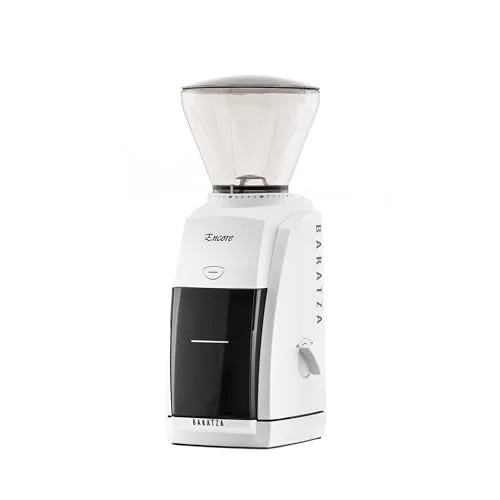
If the grinder on your counter is a Baratza Encore, the mat is where to start. It is a good all-round grinder that was never built or sold for quiet, and the noise tends to be noticed only once something quieter is heard: a grinder like the Eureka Mignon Zero can sound much quieter than an Encore. That is not a defect. A loud grinder that grinds evenly is still worth keeping, and an inexpensive burr grinder that does its job on a mat beats a new one bought for noise alone.
Hand or Electric — What Silence Costs You
The mat and the closed door lower the noise; only a different grinder removes it. The quietest kind charges you in time and effort instead of decibels, and that price is worth knowing before you look at a single model. It sits at the center of the wider question of manual versus electric grinders, seen here only through the noise.
About a minute of cranking per dose
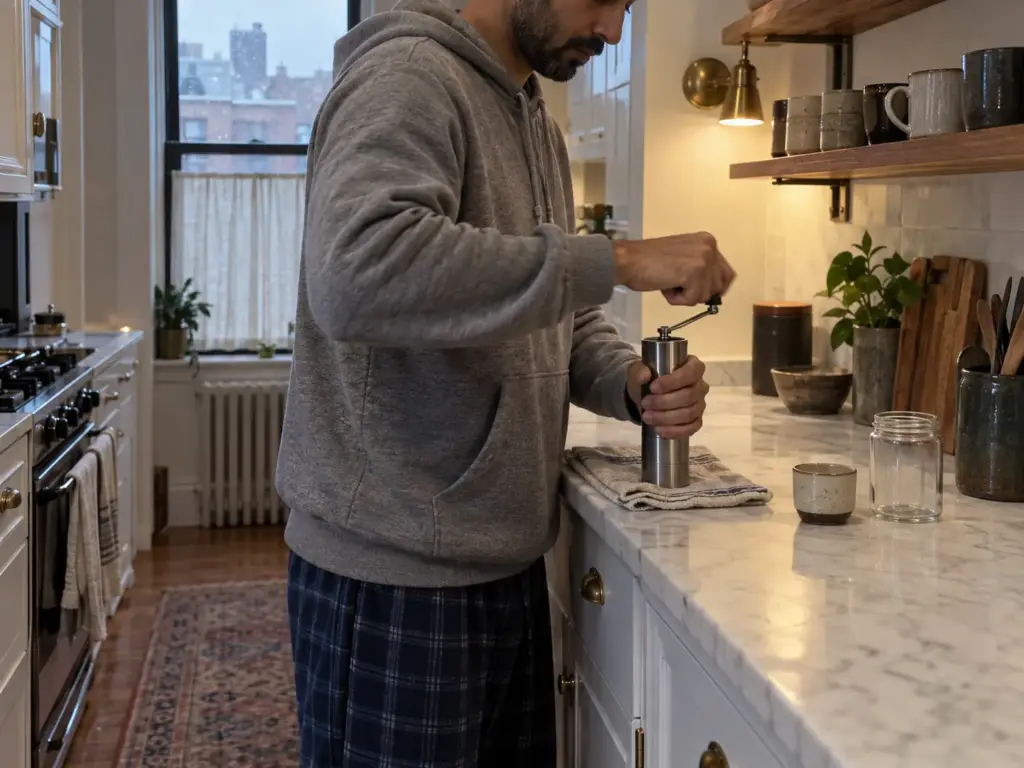
An 18 g espresso-size dose, about two level coffee scoops of beans, takes roughly 5 to 10 seconds on an electric grinder and 60 to 90 seconds by hand. That becomes part of the morning routine every day, not once. For one or two cups of French press or pour-over it is a small price for a silent kitchen; a full drip carafe takes about three times the coffee, and at that size the crank becomes a daily chore.
Burr size matters a little even inside the quiet category. In Coffee Chronicler’s comparison the compact 1Zpresso Q2, with its smaller burr and shorter handle, came out “a smidge more silent” than bigger hand grinders, since a smaller burr needs less force per turn.
A hand grinder is quiet, not silent. The first few seconds are the loudest part, while the burrs crack whole beans and the handle jerks; once the chamber fills with broken pieces the sound settles into a steady crunch that is much harder to hear from the next room.
A hand grinder pressed down onto a stone counter while you crank sends its crunch into the counter just like a motor does. Hold it against your chest or in your lap, or crank over a folded dish towel, and the noise of the first beans stays in your hands instead of traveling through the cabinets.
Espresso by hand is a narrower search
The usual answer to a noise question is to get a hand grinder, and for filter coffee it holds. Espresso is where it runs into trouble. A shot needs a fine grind with tight grind consistency that you can move in very small steps while dialing in, and most budget hand grinders are built and sold for pour-over and French press: their steps are too big for a shot, and their burrs can wobble at the fine end.
The hand grinders that handle espresso well are a smaller and pricier field, which is why hand grinders that can handle espresso get their own comparison. The three-way pull is familiar to many households: excellent for espresso, quiet enough for a house with small children, and a fixed budget. One of the three has to give. If the one that gives is the crank, read what an espresso grinder needs before assuming a quiet electric is out of reach.
The grinders to skip when noise decides
The Sette from the decibel ladder is the first. It is a capable espresso grinder, and its plastic housing is the whole problem for this search. The DF64 is the second, with a caveat: fitted with aftermarket SSP burrs it reached about 85 dB and beyond in Coffee Chronicler’s test, while opinions on the stock unit differ, and some find it quieter in person than its reviews suggest.
The DF54 is where many point DF64 shoppers with a sleeping household, since it is often described as much quieter than the 64. None of these is a bad grinder, only the wrong one when the deciding question is who wakes up.
For a drip coffee or French press drinker, a hand grinder is the cheap route to silence. For an espresso drinker it is not, which is why the quiet electric deserves a real look before the crank.
The Quietest Coffee Grinders, by How You Brew
With the trade-off on the table, the pick comes down to the brewer on your counter, since a quiet grinder that cannot reach the grind your brewer needs is not an answer. The quiet ones are sorted below by what they brew, and each one comes with what is wrong with it.
By hand, for any brew
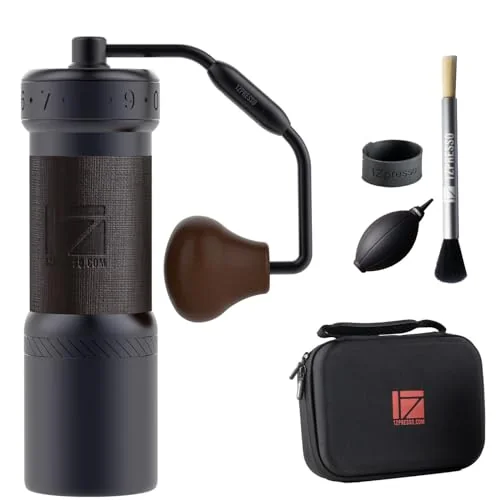
The 1Zpresso K-Ultra is the no-motor reference. It has a 48 mm conical steel burr under an external numbered ring, 100 clicks per rotation at about 20 microns a click, so one grinder reaches from espresso to French press and you can read the grind setting from the outside when you switch methods. With no motor there is no whine at all, only the crunch, and hand grinders sat at 72 to 74 dB in the loaded test above.
What it asks for is your forearm. An 18 g espresso dose takes roughly a minute to a minute and a half of cranking, against 5 to 10 seconds on a motor, dose after dose. If you already know you will not crank daily, it is the wrong purchase however quiet it is. For the rest of the field, the best manual grinders are compared side by side.
For a filter or French press drinker who wants the same silence for a fraction of the money, the TIMEMORE Chestnut C2S puts a 38 mm steel conical burr inside an all-aluminum shell. That metal housing exists because the plastic top cap on the older C2 was a known break point. The trade is in the adjustment: about 36 clicks set from inside the grinder, slower to change than the K-Ultra’s outside ring, and the fine espresso end is not what it was built for. That places it among budget hand grinders for coarser brewing, and as a French press grinder, coarse and quiet is exactly its job.
Quiet electric for espresso
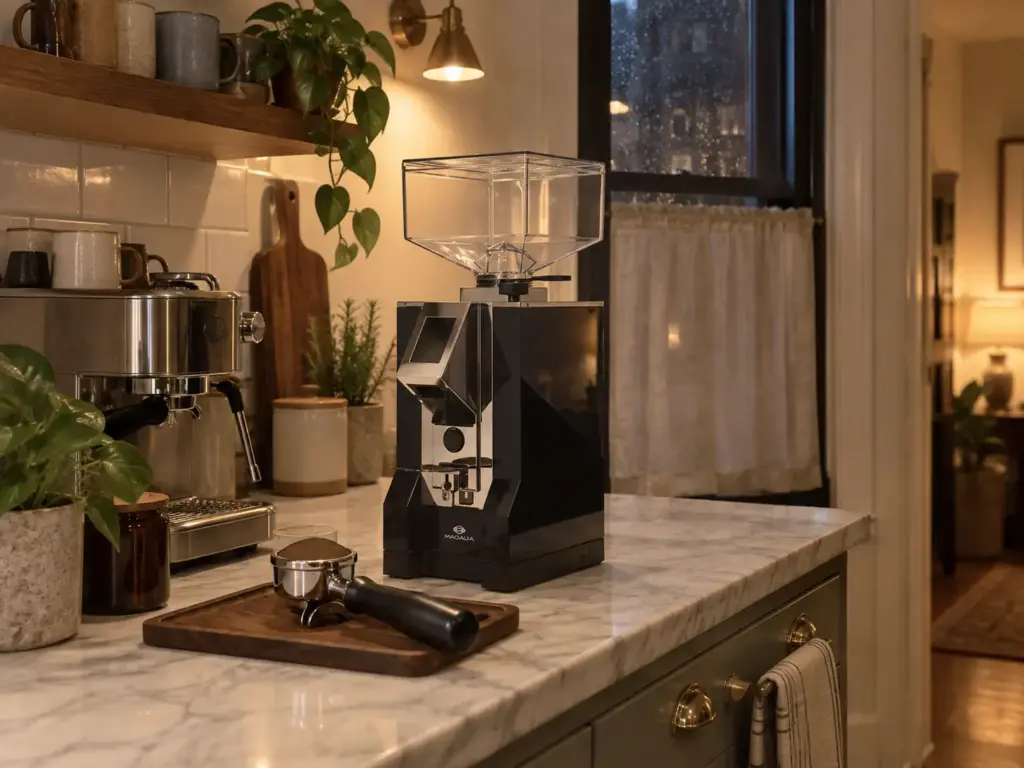
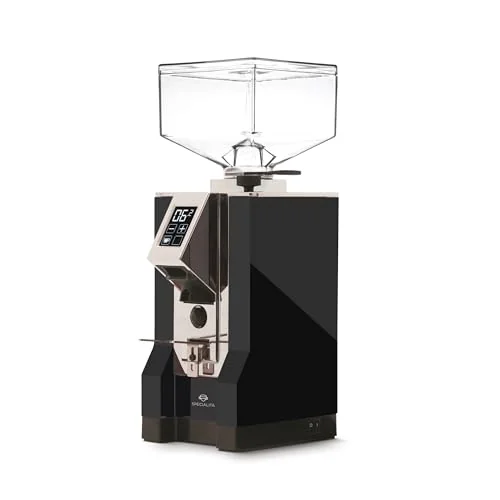
For espresso on a motor, the housing carries the quiet, which is how the 1,350 RPM Silenzio from the speed table ends up on quiet lists at all. That insulated case on rubber mounts is why Eureka’s Mignon line comes up whenever espresso that will not wake the house is the question. The Eureka Mignon Specialita puts that case around 55 mm flat burrs with stepless adjustment, so you can move the grind by any amount instead of jumping between fixed clicks.
Homegrounds measured it at about 40 dB idling and about 73 dB at peak while grinding. That is a different meter at a different distance from the ladder above, so read it as quiet for an electric rather than as a match for a hand grinder. Where it falls short is value: most of what separates it from the near-identical Silenzio is the programmable touchscreen dosing, which adds noticeably to the price and nothing to the quiet. If a timed dose button does not matter to you, the same case and the same silence cost less one model down.
Quiet electric for drip and pour-over
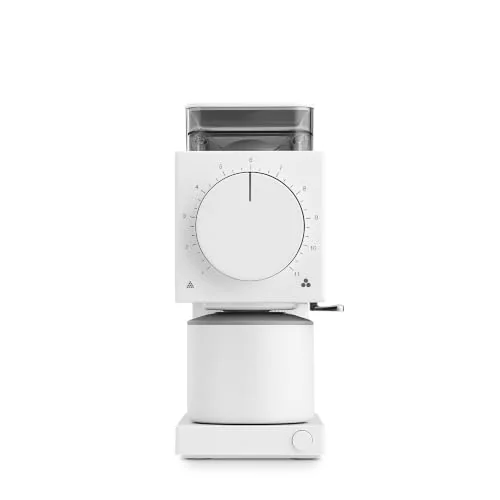
For drip, pour-over and French press, the Fellow Ode Gen 2 gave the quietest electric reading in Coffee Chronicler’s loaded test, 79.4 dB. It has 64 mm flat burrs, 31 settings and a single-dose hopper, so you grind only what you weighed and the motor is never left spinning through a hopper’s worth of beans. That makes it a natural fit among grinders for pour-over, where a quiet motor before work is half of what people ask for.
It cannot grind fine enough for real espresso, and that is structural, not a setting you have missed. Retained grounds and static cling are recurring minor gripes, so expect to tap the chute and brush a little coffee out of the catch cup after each dose.
Does a Quiet Grinder Stay Quiet?
Every noise number in this article was taken on a grinder in its first weeks, and nobody publishes the same grinder measured again a year later. So this section is about what to listen for as the parts wear, not a promise about any model.
What changes as the parts wear
No owner report and no review found for this article tracks a single grinder’s noise over months of use. It is an open question, and a claim that any model holds its first-week decibels for years is a guess. What can be said is mechanical: four things can make a grinder louder with time, and every one of them can be checked at the counter.
- Grounds and chaff packed into the chute, which make the motor push against resistance and can add a scraping note
- A loosened adjustment collar or hopper, which rattles at motor speed
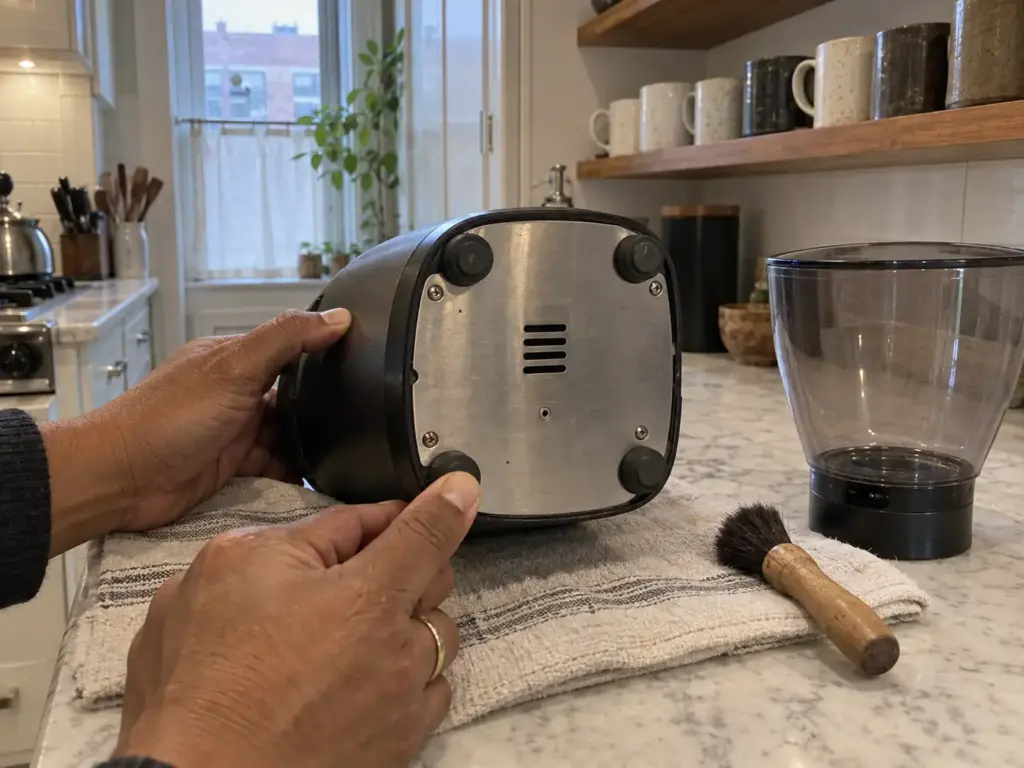
- Rubber feet that have hardened or come off, which put the housing back in hard contact with the counter and undo the mat
- Dull burrs, which take longer to get through a dose, so the same noise simply lasts longer; the signs that burrs are worn show up first in the grind time and the cup, not in the sound
Plastic clips and collars flex a little with every dose, which is one reason the buyers who ask about grinders with no plastic parts end up naming the same grinders as the buyers who ask about quiet. There is one circumstantial hint about wear in the reporting: the DF64’s knob bearing was redesigned between generations, which review sites read as a sign that noise from wear was a known complaint on the original. It is a hint from reviewers, not a measurement by an owner over time, and it says nothing about any other grinder.
And the mat wears too. Rubber hardens with age, heat from the motor and the coffee oils that settle on it, and knobs that have gone stiff or flat stop flexing, which means they stop decoupling. A mat that feels hard under your thumb is doing little more than the bare counter would, and replacing it is the cheapest repair in this whole article.
A monthly listen, with beans in
Once a month, grind one normal dose with beans loaded and listen for anything that was not there before: a scrape, a rattle, a pitch that rises or wobbles. If the phone reading from the first section is still on hand, take it again from the same spot; a vague feeling that the grinder got louder becomes a number you can compare.
The kind of sound narrows the cause before you touch anything. A scrape points at something rubbing that should not: packed grounds, or a part sitting off its seat. A rattle points at something loose.
A whine that climbs or wavers under load points at the motor working harder than it used to, which is where dull burrs and a packed chute both show up. And a single sharp crack followed by a stall, in the middle of a dose, is usually a small stone that came in with the beans rather than wear at all; unplug the grinder and clear the chamber before it runs again.
When something is new, work from the free checks toward the expensive ones, one at a time, and grind again after each:
- Brush out the grind chute, the burr chamber and the grounds bin, then grind a dose.
- Check that the hopper and the adjustment collar are seated and tight.
- Look at the feet and the mat under them.
- Only if the sound survives all three, suspect the burrs or a bearing.
At that last step it stops being a noise question and becomes one of how long a grinder lasts and whether replacement burrs are worth buying.
A scrape that shows up the day after a cleaning is almost never wear. The burr carrier or the hopper usually went back a hair off its seat: lift it out, reseat it until it sits flat all the way around, and run a few beans through before a full dose. Wear creeps in over weeks; it does not arrive overnight with a brush.
A Mat First, Then a Slower Motor or a Crank
Three things decide how loud the morning grind is, and two of them cost nothing:
- A hand grinder is the quietest category because its burrs turn about once a second against twenty-odd on a motor, and it charges for that in a minute or more of cranking per dose.
- A knobbed rubber mat, a solid spot away from the bedroom wall and, if that is not enough, a different room come before any purchase.
- Among electric grinders, trust a loaded measurement, a slower motor and an insulated housing over the word quiet on a box.
A month from now, grind one loaded dose at the same spot and listen for a sound that was not there in the first week.
Tomorrow morning, slide a knobbed rubber mat under the grinder you already own, grind your usual dose, and listen from the bedroom door. If it still carries down the hall, move the grind before you shop for a quiet coffee grinder, and if you do shop, the insulated case and the slower motor are part of what the extra money in a grinder buys, with your brew method deciding which of the two you need.
Frequently Asked Questions
01Which coffee grinder is the most silent?
A hand grinder is the most silent, because with no motor its burrs turn about once a second, and hand grinders read 72 to 74 dB in one loaded meter test. Among electric grinders, the Fellow Ode Gen 2 and Eureka’s insulated Mignon models test quietest with beans in the burrs.
02How do you make a coffee grinder quieter?
Set it on a rubber bar mat with flexible knobs so the counter and cabinets stop amplifying the motor, and keep it off any wall shared with a bedroom. If it still carries, grind in another room. Only after both is a different grinder the answer.
03How loud is a coffee grinder in decibels?
In one loaded meter test at 8 inches, hand grinders read 72 to 74 dB, the quietest electric grinders 79 to 80 dB, and loud electric grinders 90 dB or more. A reading taken with the grinder empty can be far off in either direction.
04Is a hand grinder quiet enough for espresso?
Yes, a hand grinder is the quietest way to grind for espresso, as long as it is built for a fine, even grind adjustable in small steps. Expect about a minute to a minute and a half of cranking for an 18 g dose, every time.

How did your cup turn out?
No comments yet. Tell us what you changed — and whether the needle moved.