

We may earn a commission when you buy through links on this page. It never changes what we recommend. How we pick
On this page8 parts
- Where a Cheap Coffee Grinder Gives Out First
- Try the Free Fixes Before Blaming the Grinder
- How to Read a Cheap Grinder's Listing
- The Cheap Electric Grinders Worth Buying, Flaws Included
- What a Cheap Grinder Looks Like by Month Two
- When a Hand Grinder Is the Best Cheap Coffee Grinder
- Grind One Morning's Dose Before You Buy Anything
- Frequently Asked Questions
Cheap, in a lot of grinder advice, means a price that would buy a decent drip machine outright, and the grinder gets judged on pour-over and espresso, the two methods a drip household brews least. A low-cost burr set usually gives itself away at the other end of the dial, the coarse setting you use for a French press or a cold brew jar, where the cup turns sour and bitter at once and leaves silt under the last sip. That is the test the best cheap coffee grinder has to pass, and it can be measured: evenness is a question of how many particles land near the size you asked for, and a grinder that scatters them runs two different extractions through the same brew. What follows takes the decision in the order it happens: where cheap grinders fail and which way the cup points, the free fixes to try first, how to read a listing, the electric and hand-cranked picks with their flaws, what changes after a couple of months, and when a hand grinder is the better buy.
Quick Answer
At the cheap end, a hand burr grinder grinds more evenly than almost any electric at the same money: you pay in time and effort, not in the cup. If it has to be electric, evenness drops off first at the coarse end (French press, cold brew), and spending more buys that evenness back before it buys convenience.
Where a Cheap Coffee Grinder Gives Out First
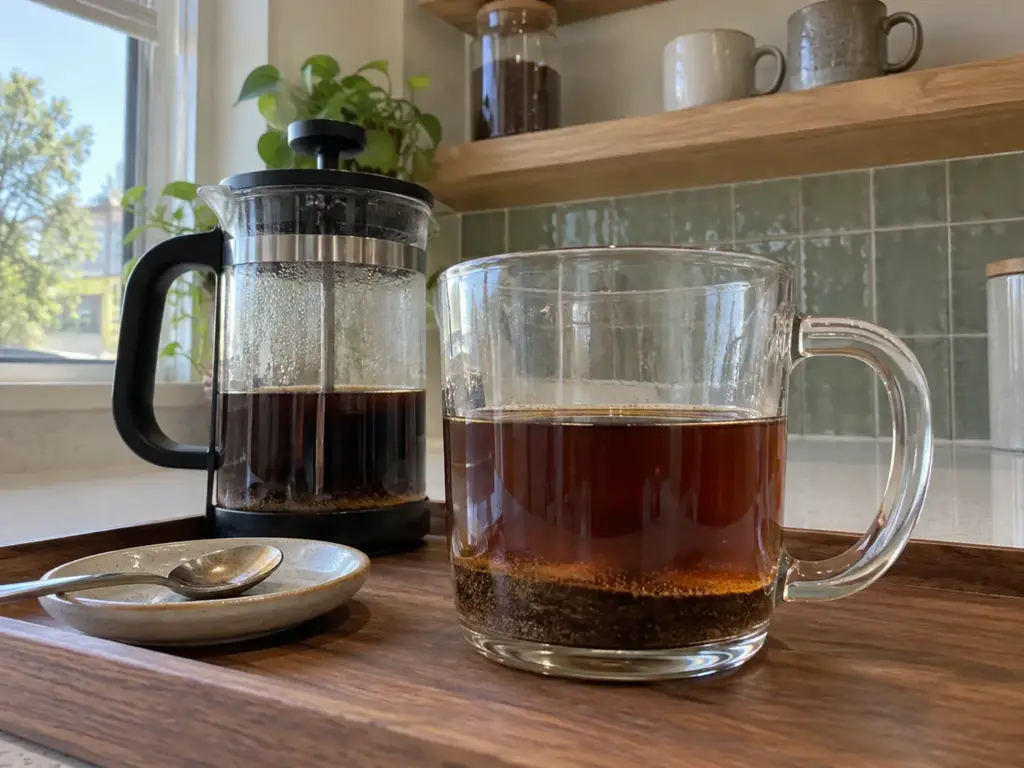
The complaint rarely starts at the drip machine. It starts the first time you plunge a French press ground on a new cheap grinder’s coarsest setting and pour something thin and sharp up front, dry at the back, with grit on the tongue at the end. Before the beans take the blame, notice that the cup is pointing two ways at once, because only the grinder does that.
Why a French Press Shows It First
Hot water takes the sour acids out of ground coffee first, the sugars next, and the drying, bitter compounds last, and how far a particle gets through that sequence depends mostly on its size. A speck of dust (the fines) runs through all of it in the first minute, while a chunk (a boulder) is still giving up acid when the brew ends. Put both in one brew and you get over-extraction and under-extraction in the same cup, which is why sour and bitter together points at grind consistency rather than at the roast. A cup that leans only one way is a different problem, a setting problem, and what grind size changes in the cup walks through which way to move for each.
No grinder cuts every particle to one size, and the coffee world’s own reference grind doesn’t pretend otherwise. The cupping grind the SCA and the Coffee Quality Institute share asks for 70 to 75 percent of the grounds to pass a No. 20 sieve, whose holes are about 840 microns across, as Royal Coffee’s research on grinder alignment lays out. That is a reference for professional tasting, not a yardstick for a home grinder, but it sets the right frame: evenness is a spread, and a cheap grinder’s job is to keep its spread from getting much wider.
The Specialty Coffee Association’s standards for home grinders sit in a library the association describes in one line: “SCA Standards create a shared framework for quality, consistency, and best practices across the coffee industry.” The home-grinder one, SCA 320, sets out how a grinder’s particle distribution and adjustment get measured, which makes consistency something you can test rather than an adjective on a box.
The coarse end is where a cheap burr set struggles most. At a wide setting, small burrs crack a bean more than they slice it, and a cracked bean throws off dust whatever the dial says, so the coarser you set it, the wider the gap between the chunks you asked for and the fines you did not.
Then the brewer finishes the job. French press and cold brew are immersion brewing, and the filter is a metal mesh, so the fines slip straight through and keep steeping in the mug after you pour. Give it a minute and a brown film settles on the bottom, which is why the last sip is always the worst and why owners of cheap grinders call the result a muddy cup.
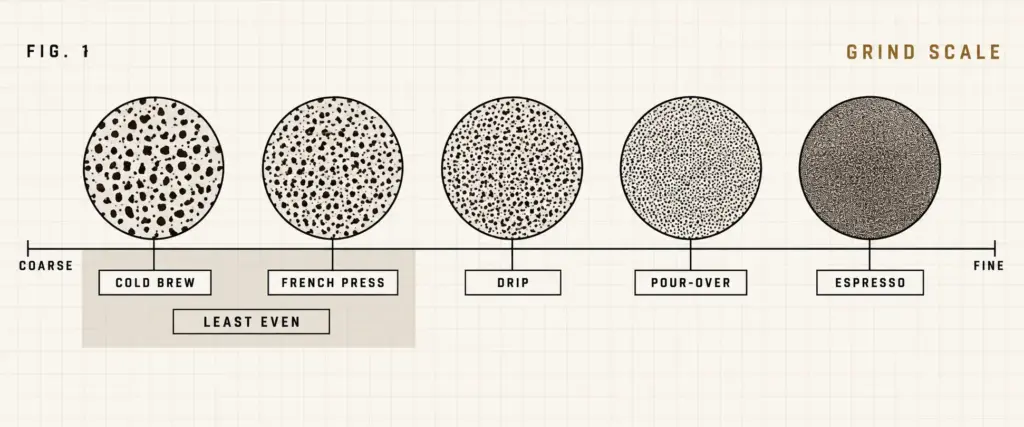
When a press cup comes out silty, the reflex is to go coarser still, and on a cheap grinder that usually makes it worse. The last notch adds boulders without taking away the fines, so the cup turns sourer and thinner and stays gritty. Try the other direction, as the only change: move one or two notches in from the coarsest setting and brew the same dose for the same time. If it worked, the next cup keeps its weight, loses some of the sour edge and tastes more balanced; if it comes out dry and harsh at the finish, you went a notch too far, so come back one.
Leaving the last half inch in the carafe hides the silt without fixing anything. Past that point the grinder has shown you its limit, and a grinder picked for French press is built around exactly that end of the dial.
Drip and Pour-Over Forgive More
A paper filter changes the picture. It catches most of the fines before they reach the carafe, and a drip machine wants a grind from the middle of the dial, where a cheap burr set is at its most consistent, so the same grinder that embarrasses a French press can make a clean pot of drip coffee.
But there is a limit, and it shows in the basket. Too many fines clog the paper, the water drains slowly, and the pot that comes out of a stalled basket tastes bitter and drying (astringent, in cupping terms). A light roast single origin on a pour-over cone, where the whole point is clarity, shows a cheap grinder’s spread sooner. For a medium or dark roast in a drip machine, a cheap burr grinder has plenty of room.
Espresso Runs Out of Steps
Espresso sits at the fine end of the dial and asks for something a cheap grinder does not have: small steps. Dialing in a shot means moving the grind a hair at a time, because the difference between a shot that gushes through the portafilter thin and sour and one that drips out slow and bitter can be a single notch. The OXO’s 15 settings and the Cuisinart’s 18 are a coarse ladder for that job, and the micro-adjustments between the OXO’s settings do not change what its burrs were built to do.
Both are drip and French press tools. If espresso is the plan, grinders built for espresso are a different class of machine, and the budget moves with them.
Try the Free Fixes Before Blaming the Grinder
Before any of this turns into a shopping list, the grinder already on your counter may be losing to one of three problems that cost nothing to solve. Take them in order, one at a time, and brew the same way after each, so the cup can tell you which one it was.
Grind Right Before You Brew
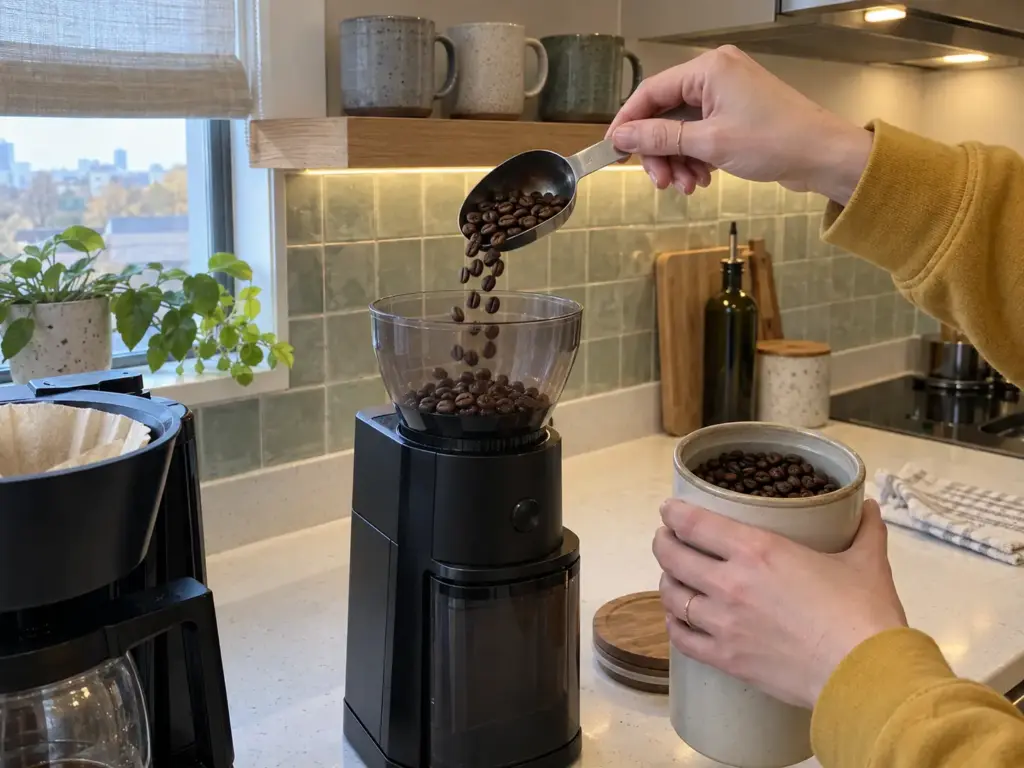
Picture the Sunday-night batch: a week of coffee ground in one go to save a few minutes every morning. By midweek the cup tastes hollow, and it is easy to hear that as the grinder’s fault. Ground coffee goes stale far faster than whole beans, because every particle has its surface open to the air. So the first change is to grind only the dose you are about to brew.
Brew the same pot the same way and taste. If freshness was the problem, the cup comes back sweeter and rounder. On a cheap setup this one habit moves the cup more than trading up to a pricier grinder does, which is most of the case for whether grinding your own coffee is worth it. If the cup is still sour and bitter together, freshness wasn’t it.
Brush Out the Chute and the Burrs
When a cheap grinder seems off after a couple of months, the burrs get suspected first, and they are the least likely cause. Burrs are commonly rated for somewhere around 500 to 600 pounds of coffee in stainless steel and 750 to 800 in ceramic, as the grinder retailer JavaPresse puts it, and at a pound a week, which is a busy kitchen, either figure runs close to ten years. Before you go looking for the signs that burrs actually need replacing, look at the grounds packed around them.
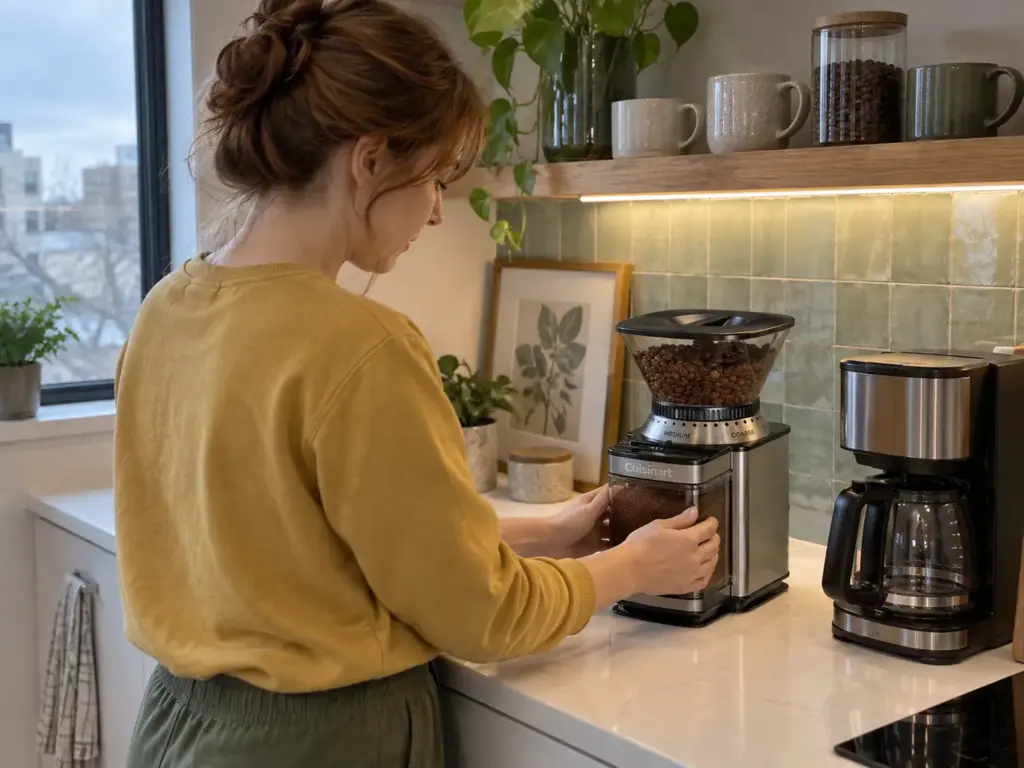
Cleaning burrs on a cheap electric takes no tools and no full disassembly. Unplug the grinder, empty and lift off the hopper, and take out the upper burr if yours comes out; most cheap conical electrics let you. Brush the burrs, the chamber and the grounds chute with a stiff, dry brush, and keep water away from all three.
On the way, look at the lip of the chute. A ridge of old grounds almost always sits there, and some of it drops into every fresh dose. That same grind retention is why the first dose after a setting change still tastes like yesterday’s setting, and why judging a new setting on its first cup misleads you.
Reassemble, brew the same pot, taste. A cup that has lost a stale, papery edge says the packed grounds were in it.
Mist the Beans to Stop the Static
The third problem is the static mess: grounds that cling to the chute and the bin, jump out across the counter when you pull the bin, and leave part of the dose behind inside the grinder. Friction between beans and burrs charges the grounds, which is physics rather than a defect, and it costs you more than a wiped counter, because a dose that comes out short brews weaker than the one you weighed.
What cuts it is a little water. A 2023 University of Oregon study, as America’s Test Kitchen reports it, found that about 20 microliters of water per gram of beans measurably reduces the static and clumping. For a 20 g dose that is 0.4 milliliters, a drop or two, and coffee people have done it for years under the name Ross Droplet Technique.
Add the water, stir, grind, and weigh the beans going in against the grounds coming out on a kitchen scale. The gap between the two numbers should shrink, and the next cup should taste a little fuller at the same setting, because all of the dose made it into the brewer.
No dropper in the kitchen? Run the handle of a teaspoon under the tap, shake it once, and stir it through the beans in the dosing cup before they go in the hopper. That leaves about the right amount of water for a single dose. Then watch the bin as you pull it out: if the grounds stay put instead of leaping onto the counter, static was the problem.
If the French press is still silty after all three, the grinder itself is the limit. That is the only case the rest of this article is for.
How to Read a Cheap Grinder’s Listing
Once the free fixes are spent, the next way to lose money is buying the wrong cheap grinder. Most of what separates a small, honest burr grinder from a blade grinder wearing burr marketing is printed on the listing itself, or pointedly missing from it.
The Specs That Should Be Printed
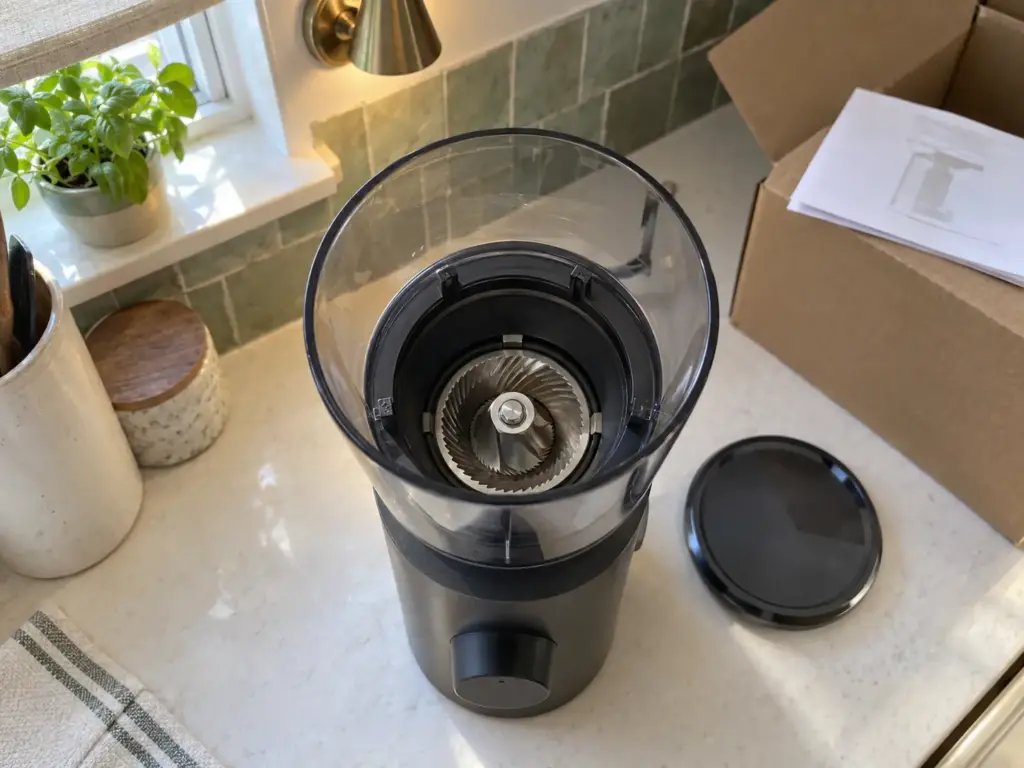
Three listings open side by side, each promising premium burrs, one at a third of the others’ price. A real burr grinder has four things to print and no reason to hide any of them: whether the burrs are conical or flat burrs, what they are made of (stainless steel or ceramic), how wide they are in millimeters, and how many settings the dial has. If those terms are new, what a burr grinder actually does covers the mechanism. For the listing, the question is only whether it admits to having one.
The OXO’s listing prints 40 mm stainless steel conical burrs and 15 settings. The Timemore’s prints a 38 mm conical burr in 420 stainless steel. A listing that says precision grinding and stops there is asking you to take it on trust, and a grinder that sells on trust at this money usually has a reason to.
Diameter is the nearest thing to a size class on the page. Cheap electric and hand grinders both carry burrs around 38 to 40 mm, so what separates them is less the cutting surface than how steadily the burr is held while it turns, which is why a metal housing is worth more on a listing than the burr material.
Words That Tell You Nothing
Premium burr, precision grinding, professional grade: with no size and no material next to them, treat each as unknown rather than as a claim. The quickest check is the word blades in the spec list. Better still, go to the photos, the part of a listing that has the hardest time lying. A grinder with burr in its title whose pictures show a single flat blade spinning under a clear lid is a blade grinder, whatever the text says, and its presets are a timer function deciding how long the blade spins.
That difference matters more than any spec on the page, for the reasons laid out in burr versus blade: a blade makes dust and chunks together on every press, the sour-and-bitter cup from the first section, and a timer only decides how much dust you get.
Stepped or Stepless at This Price
Stepless adjustment means the burrs can sit anywhere between two points instead of clicking into fixed notches. It is an espresso feature, because espresso is where the space between two notches decides the shot. On a very cheap electric whose adjustment dial visibly clicks, the word stepless is a red flag rather than a spec, and a reason to distrust the rest of the listing.
A stepped grinder is fine for drip and French press. What matters is how many steps land inside the grind range your method uses.
Eighteen settings sounds like room to spare, yet if the dial runs from Turkish-coffee fine to extra-coarse, a drip household lives in the middle four or five, and a French press uses the last two or three. For a kitchen that brews both, that is roughly six usable positions out of eighteen, and those six are the number to weigh. (The numbers themselves mean nothing outside that one grinder: a recipe’s setting 14 was written on somebody else’s burrs.)
Hand grinders print their click adjustment differently, as clicks per turn of the adjustment ring: the KINGrinder P2 has 30. More clicks per turn means each click moves the burr less, the manual version of micro-steps. That is why a cheap hand grinder often adjusts in smaller moves than an electric at the same money.
The Cheap Electric Grinders Worth Buying, Flaws Included
With the listing test in hand, two electric grinders pass it at the cheap end for a drip or French press kitchen. Each has a weak point worth knowing before the box arrives, and neither belongs next to an espresso machine.
A Cheap Electric That Prints Its Burr Size
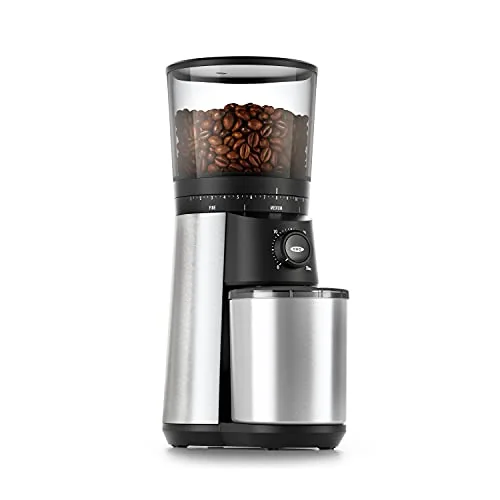
For the household that wants one button in the morning rather than a crank, the OXO Brew Conical Burr is the cheap electric grinder that passes the listing test outright. It prints 40 mm stainless steel conical burrs, 15 settings with micro-adjustments between them, and a 12 oz hopper. The micro-steps earn their place at the coarse end, because they let you sit a notch in from the last setting, which on a cheap burr set is often a better French press grind than the coarsest one.
You will meet its habit in the first week. Static builds in the plastic grounds bin, so grounds cling to the walls and puff out when you pull it, and the counter around the grinder collects a fine brown dusting. That is the friction charge from the free fixes above, and the drop of water stirred into the beans handles it. A return does not.
The Cheapest Real Burr Grinder
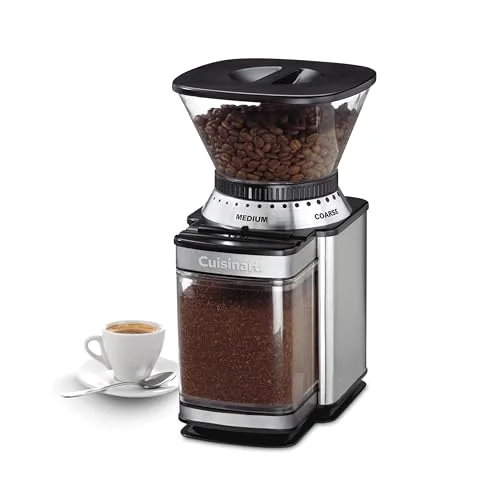
The Cuisinart Electric Burr One-Touch (model DBM-8P1) is the lowest-cost genuine burr grinder here, built drip-first. An 18-position slide dial runs from ultra-fine to extra-coarse, the removable hopper holds 8 oz, and a selector sets how much to grind for anywhere from 4 to 18 cups, so a drip pot’s dose comes out with one press. Like most cheap electrics it will not start until the bin and the hopper lid are seated just so, which feels like a fault the first week and like habit by the second.
The reviews on this exact listing tell a less happy story around month six. Buyers keep reporting the same failure: the unit stops working, the hopper stops feeding beans into the burrs, or, in the reviews’ own words, it “gets jammed up with coffee grounds and then overheats and shuts off.” It repeats often enough to read as a design limit rather than bad luck. Keep the receipt where you can find it, and brush the chamber out often, since jammed grounds are part of the complaint.
Which One for Your Coffee Maker
The Cuisinart looks like the obvious budget grinder, and for a kitchen whose whole job is one drip pot a morning with the budget as the ceiling, it is. Add a French press on weekends or a cold brew jar in summer and the choice turns. I would give the OXO any kitchen that presses or cold brews, because its micro-steps let you find a press grind short of the last notch, and leave the Cuisinart to the one that only drips.
Neither is an espresso grinder, for the reasons in the first section. And if the budget is tighter than either, the KINGrinder P2 covers drip to French press for less, paid for in cranking; it is in the hand-grinder section below. The wider fork, choosing a grinder for your brew method at every price, has its own page, and so does a grinder for pour-over and drip when a clean cup from a cone is the goal.
Every time you move the dial, grind a teaspoon of beans first and throw those grounds away. The chute is still holding coffee from the old setting, and it lands in the next cup at the old size, so without the purge you judge the new setting on a blend of two.
What a Cheap Grinder Looks Like by Month Two
Reviews of cheap grinders are mostly written in the first week, when everything is clean and every setting does what the dial says. What decides whether a grinder was cheap or just low-priced shows up weeks later, and it is rarely the burrs.
Packed Grounds, Not Dull Burrs
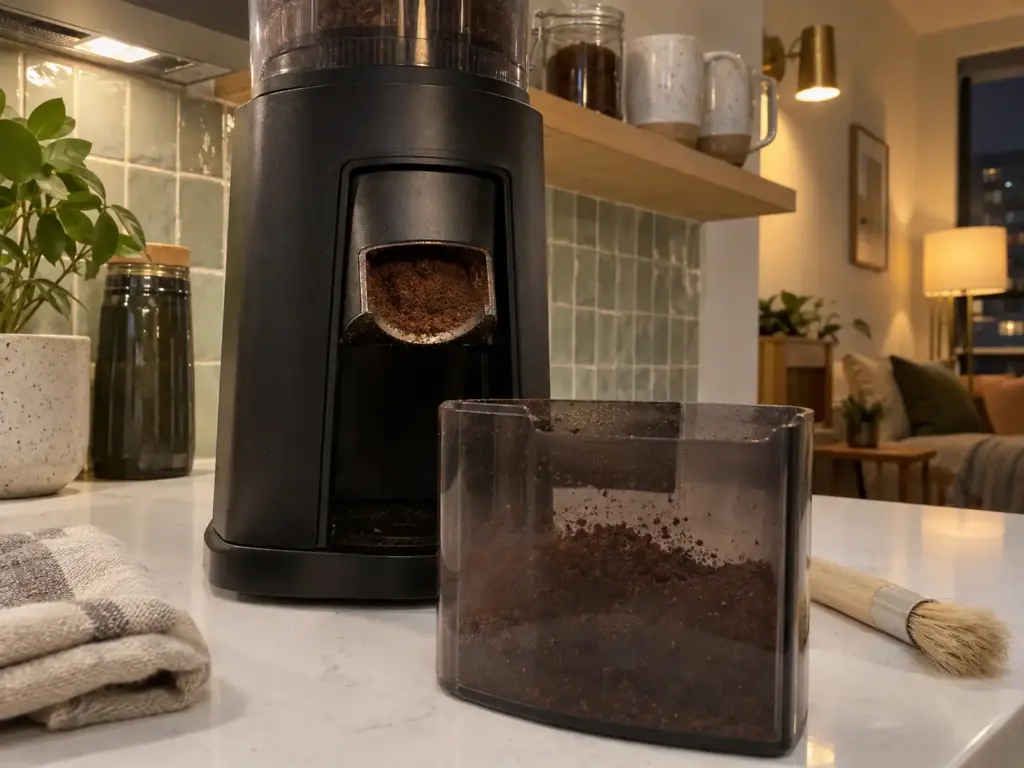
At the mileage burrs are rated for, a pot a day runs for years before the edges matter, so a grinder that grinds differently after eight weeks has a different problem. Grounds pack into the burr chamber and around the exit chute, the path out narrows, and part of each dose gets held back, ground a second time or dropped in late. The same number on the dial stops making the same pile, and the uneven grind shows up in the cup as a sour front and a dry finish that were not there in week one. Dark, oily roasts pack the chamber faster than medium ones, so a kitchen that buys dark beans reaches this point sooner and needs the brush more often.
The trap is what you do about it. The cup drifts, you nudge the dial a notch finer to chase it, then another, and after a few weeks the grinder sits well toward the fine end without anything about the burrs having changed.
Brush it out and the old setting comes back to life, which means the setting you ended on is now too fine, and the next pot tastes bitter. So after a deep clean, go back to the setting you started with before you taste anything. For the parts that do wear with time, and roughly when, see how long a coffee grinder lasts.
Static That Gets Worse
Static is not a week-one annoyance that goes away. Coffee oils build a film on the chute and the inside of the plastic grounds bin, grounds stick to that film, and dry winter air makes it worse again, which is why a grinder that behaved in September can throw grounds across the counter by January. The drop of water becomes routine, every dose, and a dry cloth through the bin once a week keeps the film from building.
Plastic That Flexes
Cheap grinders save money in the housing, and that is where the slow changes happen. A hand grinder with a plastic shell, such as the KINGrinder P2 with its ABS housing, flexes a little under the pressure of cranking, and flex in the housing can let the burr shift off center under load, which widens the spread at the same click. Timemore redesigned its Chestnut C2 into the all-metal C2S for a related reason: the original’s plastic top cover was a known crack point.
The Cuisinart’s month-six pattern belongs here too, with a caveat: it is a failure of the motor and the feed, reported on that one listing, and it does not make every cheap grinder a six-month grinder.
The Monthly Check
Once a month, grind a French press dose at your usual setting onto a white plate and spread it out with a fingertip. An even grind looks like coarse sand in a single shade of brown. A grind that has drifted shows a smear of powder that sticks to the plate, and chunks two or three times the size of the rest. Take a phone photo of the first plate so next month’s has something to be compared with.
If the plate shows powder and chunks at a setting that used to look even, the grinder has changed, and the free fixes above are the first thing to rerun. If it looks the way it did, keep the grinder and look at the beans and the water instead.
A hand grinder gets one more look. Hold the housing in one hand and try to rock the crank handle side to side: a shaft that knocks or wobbles noticeably more than it did in the first weeks is the flex from the section above, and no amount of brushing takes it out. A burr that moves sideways cuts a different size on every turn, so from there the plate will only get worse.
Do the plate check straight after a cleaning, never before it. Whatever was sitting in the chute falls onto the plate first, and you end up judging last week’s grounds instead of the burrs.
When a Hand Grinder Is the Best Cheap Coffee Grinder
If you brew one or two cups at a time, the cheapest good answer is a crank. For the money of a cheap electric, a manual grinder carries a burr set closer to far pricier electrics, and you pay in cranking time rather than in the cup, which is the heart of the manual or electric for your mornings question.
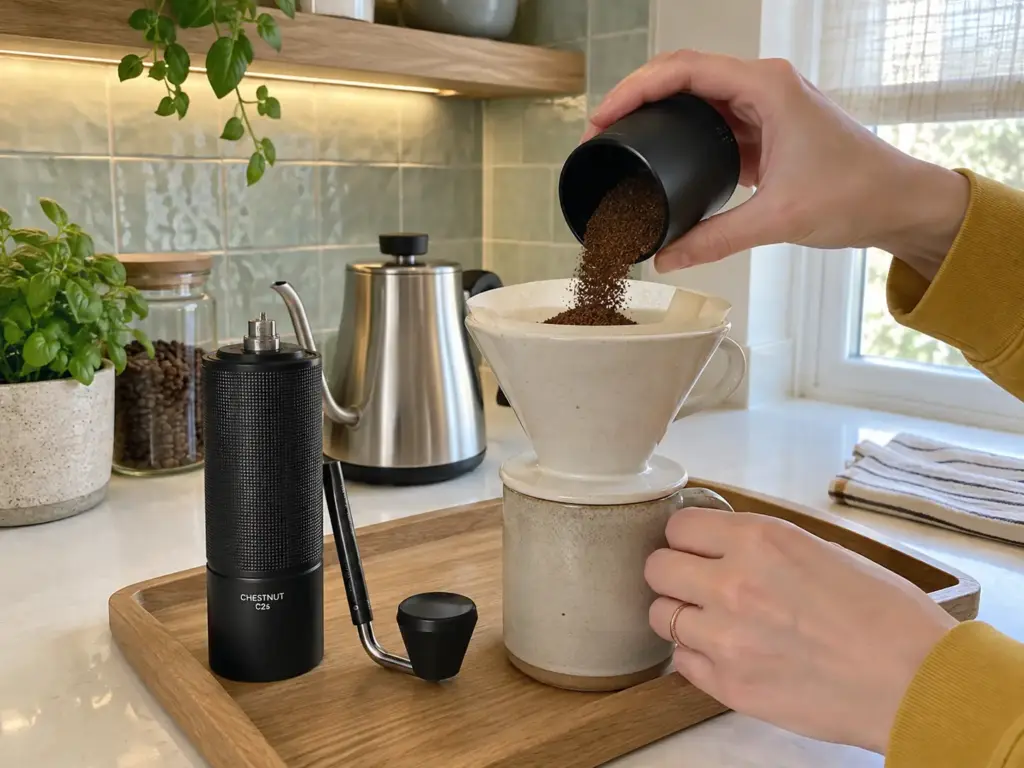
A Metal Hand Grinder With a Serious Burr
A single dose at a drip or pour-over setting takes a minute or so of steady turning, and in return the burr is better than anything else at this money. For the one-cup drinker with a cone dripper, that is a good deal.
The TIMEMORE Chestnut C2S is the metal version of that deal: a 38 mm conical burr in 420 stainless steel, about 36 clicks of adjustment, and an aluminum-alloy shell. You feel the dose finish without looking, because the resistance in the crank handle drops away as the last beans pass through the burr and fall into the catch cup.
What you give up is capacity. The hopper holds 20 g, about two level coffee scoops, which is one large mug or two small cups, so this is a one-person tool. And check the model name before you buy: the older C2, the one with the plastic top cover, is the version to skip.
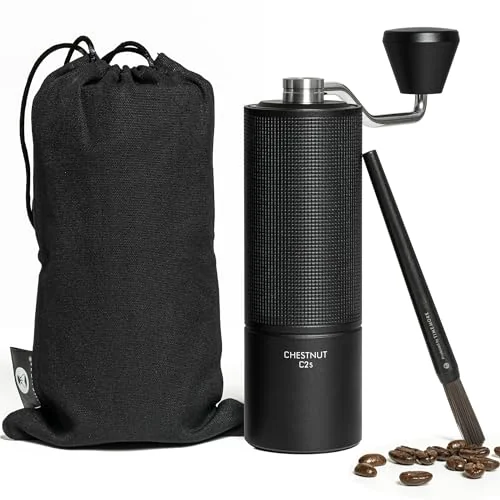
A hand grinder stops being the obvious answer the moment the pot gets big. A full drip carafe takes several loads of that 20 g hopper every morning, and a grinder you dread using ends up in a cupboard next to the can of pre-ground. For a whole pot, the electric above is the better cheap buy, even with the lesser burr.
The Lowest-Cost Real Burr
The KINGrinder P2 is the cheapest genuine burr in this article: a stainless steel conical burr with 30 clicks per turn of the adjustment ring, covering drip, French press and AeroPress. For a kitchen that has done the free fixes and still wants a better grind, it is the smallest spend that changes the cup.
The saving shows in the housing: ABS plastic where the Timemore is metal, light in the hand, and more prone to flex under the crank as the months go on. For one careful cup a day, the burr inside matters more.
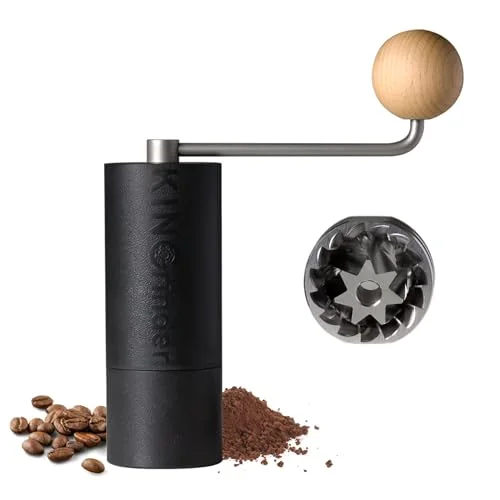
Find zero on a hand grinder before you trust any click number. Turn the ring until the burrs just touch and stop there (gently, never forced), then count the clicks back out to your setting and write that number on a strip of tape on the grinder. After every cleaning, go back to zero and count out again, and the grind you liked comes back exactly.
If you have already settled on a crank and want the whole field, the best budget manual coffee grinders go through it model by model.
What Spending More Buys
One tier up, the entry-level grinder most people mean when they say spend a little more, is the Baratza Encore: 40 mm conical steel burrs, 40 settings against the 15 to 18 of the cheap electrics, an 8 oz hopper, and spare parts you can order when something wears. It grinds a full pot faster and holds its evenness across more of its range, which makes it an all-rounder grinder for drip, pour-over and French press. It is still not an espresso grinder, despite costing more than anything above, and a reader chasing shots will run into a grinder that won’t go fine enough there too.
r/Coffee has a long-running thread titled “Please Do Not Cheap Out On Your Electric Grinder,” and for espresso or light-roast pour-over the argument holds. For a drip pot and a weekend French press it holds less well. Spending more buys convenience, range and repairability, all worth money, but a better French press than a well-set cheap burr grinder kept clean is not usually on that list. The longer answer to why good grinders cost what they do comes down to motors, burr alignment, the bearing that holds the burr shaft steady, and the fine end.
Side by Side
Whichever you pick, the method sets the grind, and the grind size your brew method wants, laid out as a grind chart from cold brew to espresso, is the next thing to settle once the box is open. The four grinders in this article, with the weak point to expect from each:
| Grinder | Type and burr | Adjustment | Best for | The flaw |
|---|---|---|---|---|
| OXO Brew Conical Burr | Electric, 40 mm steel conical | 15 settings plus micro-steps | Drip, French press, cold brew | Static in the grounds bin |
| Cuisinart DBM-8P1 | Electric, stainless steel burrs | 18-position slide dial | A drip pot, and little else | Reviews report failures near month six |
| TIMEMORE Chestnut C2S | Hand, 38 mm 420 steel conical | About 36 clicks | One or two cups, drip to press | 20 g per load; skip the older C2 |
| KINGrinder P2 | Hand, stainless steel conical | 30 clicks per turn | The lowest spend, drip to AeroPress | ABS housing flexes over time |
Grind One Morning’s Dose Before You Buy Anything
A cheap grinder shows what it is at the coarse end, and the cup tells you when: sour and bitter together, with silt in the bottom of the mug. Three things to carry out of this:
- Judge a cheap burr grinder at the French press or cold brew setting, because that is where its spread shows; drip forgives more, and espresso needs a different grinder.
- Spend nothing until the free fixes are done, one at a time with a taste between them: grind fresh, brush out the chute and the burrs, then mist the beans.
- Match the grinder to the pot. A hand grinder is the best cheap buy for one or two cups, and an electric earns its place when the carafe gets filled every morning.
A month from now, brush the grinder out and grind a press dose onto a white plate at the setting you use; powder and chunks on a clean grinder mean the grinder has moved, and an even pile means it has not.
Tomorrow, grind only that morning’s beans, brew the pot exactly the way you brewed it today, and taste whether the sour edge at the front of the cup is gone before you buy anything at all.
Frequently Asked Questions
01What is a good inexpensive coffee grinder?
A good inexpensive coffee grinder is a burr grinder whose listing prints its burr size and material, such as the KINGrinder P2 or the Timemore C2S by hand. For an electric, look at the OXO Brew Conical Burr or the Cuisinart DBM-8P1, and skip blade grinders sold under a burr name.
02What is the best budget coffee grinder?
For one or two cups, the best budget coffee grinder is a hand burr grinder like the Timemore C2S, which grinds more evenly than electrics at the same money. For a full drip pot every morning, an electric burr grinder like the OXO Brew saves the cranking. Choose by brew method, not by the lowest price.
03What is the best value for money coffee grinder?
The best value grinder is the one that grinds evenly at the setting you use most, and for drip or French press that is a cheap burr grinder kept clean. Paying more mostly buys speed, more settings and espresso range rather than a better pot.
04What is the best affordable coffee machine with grinder?
A grind-and-brew machine saves counter space, but its built-in grinder is harder to clean and to replace, and often less even than a separate burr grinder. A cheap burr grinder beside the drip machine you already own tends to make the better pot, and if one fails, the other keeps working.
05Is a cheap burr grinder better than a blade grinder?
Yes, for evenness: burrs grind beans to a set size, while a blade chops them into dust and chunks that brew sour and bitter in the same cup. Even the cheapest real burr grinder beats a blade at a French press setting, where the dust turns into sludge.

How did your cup turn out?
No comments yet. Tell us what you changed — and whether the needle moved.