




We may earn a commission when you buy through links on this page. It never changes what we recommend. How we pick
On this page7 parts
- What Makes a Coffee Grinder Good for Espresso
- Before You Buy, Rule Out What the Grinder You Own Can Still Do
- The Espresso Grinders Worth Buying, Flaws Included
- What an Espresso Grinder Does by Month Two
- Can One Grinder Handle Espresso and Everything Else?
- Shop by the Size of One Step, Not the Settings Count
- Frequently Asked Questions
You pulled a shot that ran fast and tasted sharp, turned the grinder one notch finer, and the next shot crawled out dark and bitter, with no position on the dial between the two. The answer to what coffee grinder is best for espresso starts with that missing position, not with a brand. Espresso forces hot water through a tightly packed puck of grounds, so a change in particle size too small to notice in a drip pot shows up as seconds on the shot: on a classic stepped grinder, a single click can move the shot by several seconds. What follows covers the spec that makes a grinder an espresso grinder, what the one on your counter can still do, the grinders worth buying with their flaws written out, what they do after weeks of daily shots, and whether one machine can cover espresso and everything else, the question where choosing a home coffee grinder gets harder than any listing admits.
Quick Answer
The best coffee grinder for espresso is decided by the size of one step at the fine end, not the settings count: a burr grinder with tiny steps, or a stepless one you can mark and find again, with low retention. Decide first if it is espresso-only or your only grinder, since no burr set does both equally well.
What Makes a Coffee Grinder Good for Espresso
Those two shots, one thin and sharp and one dark and harsh, are the grinder’s doing, not the beans’. A shot that is sour at one setting and bitter at the next comes from a grinder whose steps are too big for espresso, and the size of a step is a number you can look for before you buy. That is why it comes before any model name here.
Why Espresso Punishes a Big Step
Start with which way each shot was off. The fast, sharp one was under-extracted: the grounds were too coarse, the water found wide gaps between them, and it ran through before it had pulled much beyond the sour acids that dissolve first, which is why that shot also tasted thin, with none of the sweetness that comes out later.
The slow, harsh one went the other way. The grounds packed so tight that the water crawled, stayed in contact longer, and dragged out the drying, bitter compounds that come last, which is over-extraction. Sour espresso points finer; bitter espresso points coarser.
In a drip machine the water drains through a loose bed under nothing but gravity, over several minutes, and the paper hardly notices whether the grounds came out a little bigger or a little smaller. A change of a few hundredths of a millimeter barely moves a pot of drip coffee.
Espresso is the opposite case. The portafilter holds a compressed puck, the machine pushes water into it under pressure, and how fast that water gets through depends almost entirely on the size of the gaps between particles. Shrink every particle slightly and the gaps shrink with it, the flow slows, the shot runs longer, and the extraction climbs. So the band of settings that tastes balanced is narrow, and on some beans it is narrower than the distance a coarse dial moves in one click.
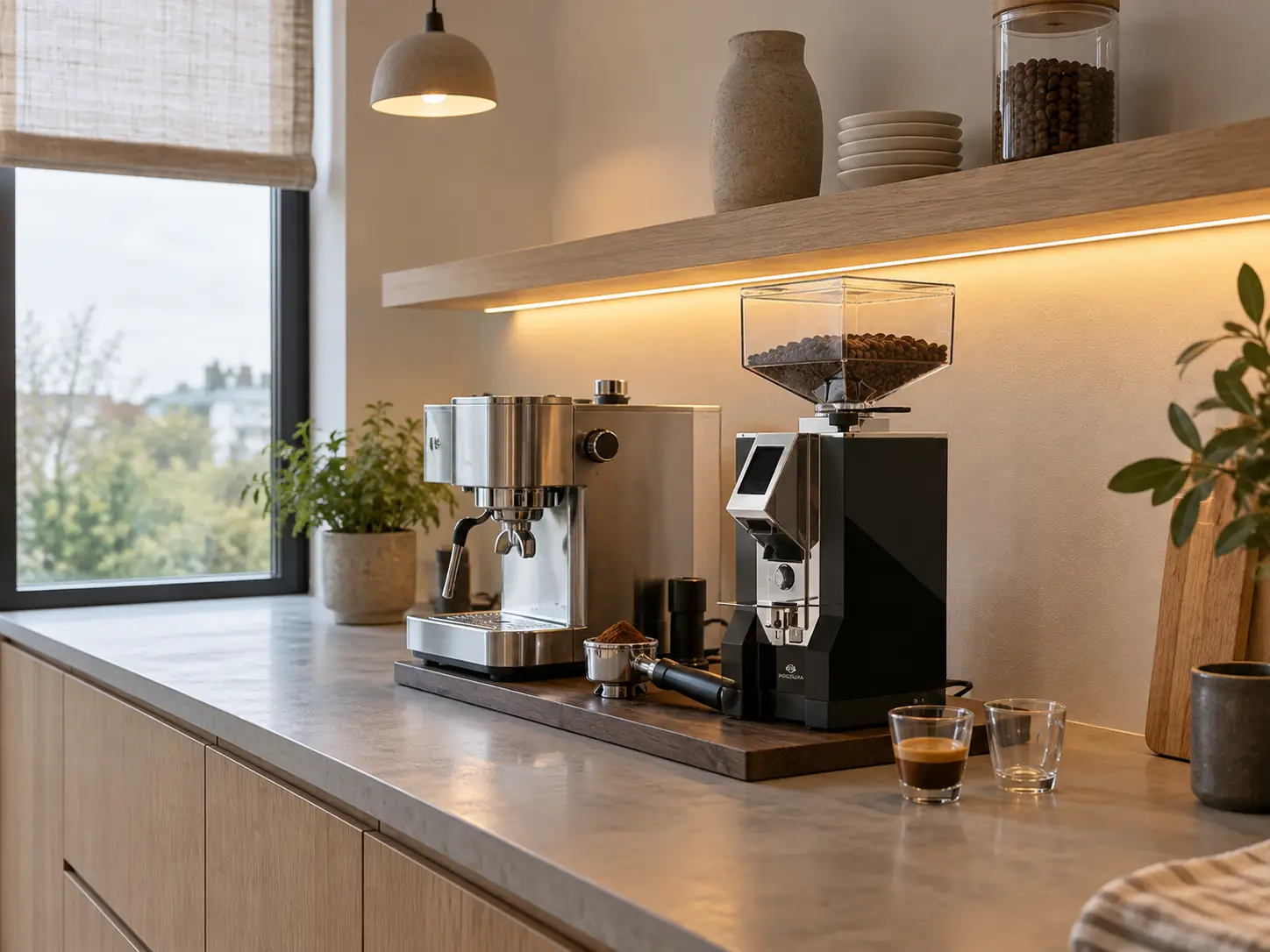
That is the whole problem in one picture: two shot glasses on the counter, one sour and one bitter, and a dial with no position between the shot you poured out and the one you poured out before it. The beans were fine. The grinder could not stop where the shot needed it to stop. The setting itself, in numbers, is a separate question, and how fine espresso grind has to be covers it; this article is about whether the grinder can take a step small enough to land there.
What One Click Actually Moves
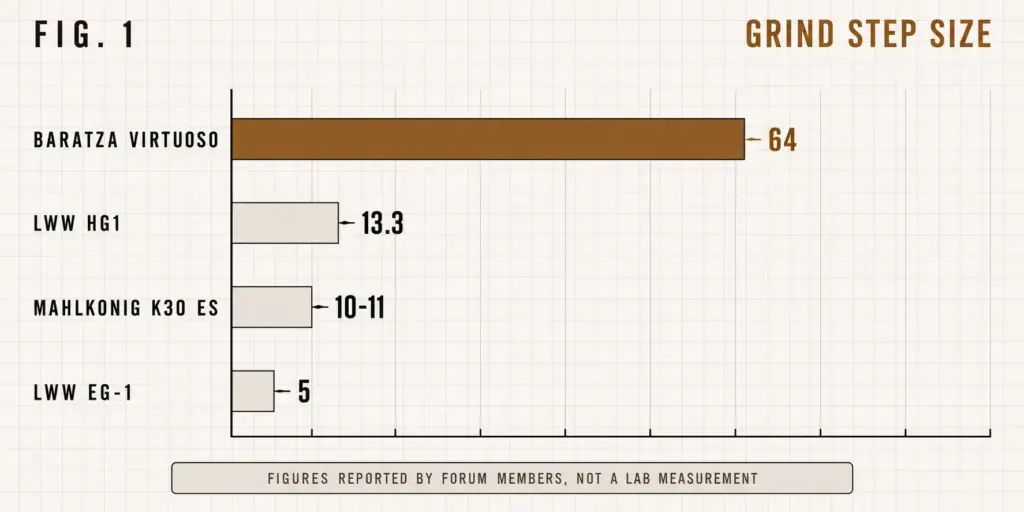
The most useful numbers on this come from worked-out figures for how far the burrs travel per step, grinder by grinder. None of it is a lab measurement or an SCA figure. These figures are estimates from spec sheets and real machines, so treat them as a guide. They are still the numbers the listings leave out.
On the Rancilio Rocky, a classic grinder with stepped adjustment, a single click moves the burrs only a little, and that is still enough to change shot time by seconds. A thousandth of an inch is about 25 microns.
Three to five seconds, on a shot that runs well under a minute, can be the entire distance between sour and balanced. A respected espresso grinder, and its click was still argued to be a size too big.
Then the thread lined up other machines. The Baratza Virtuoso, a real burr grinder that plenty of kitchens own, moves about 64 microns of vertical travel per detent and “is generally considered to have inadequate adjustability for espresso.” At the other end sit grinders designed only for espresso: the Mahlkönig K30 ES at 10 to 11 microns per tick, and the LWW EG-1 at about 5.
Another said he would not own a grinder whose steps were bigger than a hundredth of a millimeter, which is 10 microns.
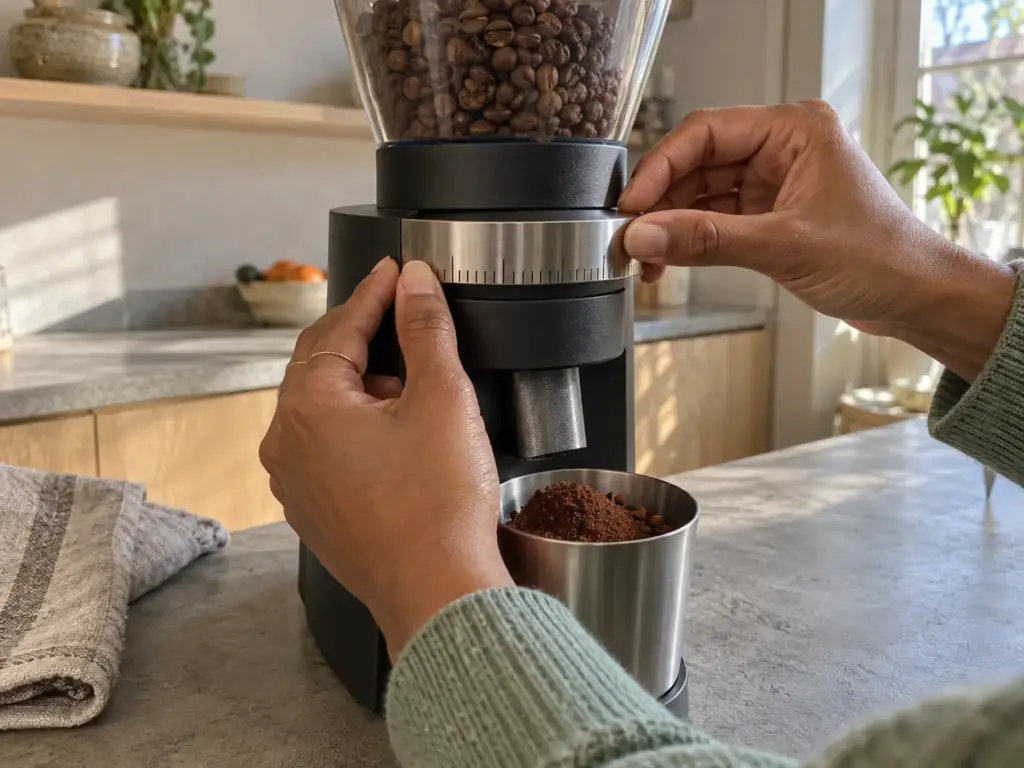
Now the correction that changes how to read every one of those numbers. On flat burrs, the two cutting discs face each other, so when the adjuster moves one of them 10 microns, the gap between them closes by 10 microns. On conical burrs, a cone turns inside a ring and the cutting faces are angled, so moving the cone along its axis closes the gap by less than the move itself.
The thread did the geometry: the LWW HG1 hand grinder travels 13.3 microns per step, but because it is conical the gap changes by only 6 to 7, about half. The same halving applies to the Virtuoso, which puts its real step near 32 microns at the gap. A “microns per click” printed on a spec sheet therefore means different things depending on the burr shape, which is reason enough to know the difference between conical and flat burrs before comparing two listings.
The Rocky’s 25 was called slightly too large. The Virtuoso’s 32 is outside the conversation, and setting it against the Rocky’s 3 to 5 seconds is rough (different burrs, different beans), but the comparison points one way: a bigger step leaves a bigger jump between two shots, and the shot you wanted lives in the jump.
Being a burr grinder is the entry ticket. It is not the qualification, and neither is burr size: a larger burr diameter grinds faster and often more evenly, but it says nothing about how far one step moves.
Why “40 Settings” Tells You Almost Nothing
The number printed biggest on a grinder box is the settings count, and for espresso it is the least useful. What matters is how many of those settings fall inside the espresso window. A 40-position dial spread evenly from Turkish-fine to cold-brew-coarse leaves only a handful of positions at the fine end, each of them a big step. The Baratza Encore ESP has 40 settings too, but roughly the first 20 sit in the espresso range, and that density, not the total, is the reason it exists as a separate model.
Stepless adjustment looks like the way out, since a dial with no clicks can stop anywhere. It trades one problem for another, though. Fixed steps have a clear point: a stepless dial makes it hard to repeat a grind size after changing settings. Another replied with a question, “But, why steps at all?”, and a third pointed at the design in between: stepless burrs with a numbered scale and a pointer, so the setting can land anywhere and still be written down and found again. Even fine steps have their critics. Even fine steps can leave you wishing for the point between two of them when dialing in espresso.
Stepless gets recommended as the espresso choice with no conditions attached. For a kitchen that makes only espresso, one bag at a time, that holds: you move the adjustment wheel a hair and never leave that neighborhood.
It falls apart the day the same grinder also has to make a pour-over or a French press, because the trip back to espresso has no landmark. For that household I would take a stepless dial with printed numbers, or a stepped one whose steps are small enough, over a bare stepless collar. The mechanism behind stepped and stepless burr grinders is laid out part by part if it is new to you.
When a manual or a spec sheet prints the adjuster’s thread pitch and the number of clicks in one full turn, divide the first by the second and you have the step size most listings never print. A 1 mm pitch with 100 clicks per turn moves 10 microns a click. On a conical burr, halve the result to get the change that actually reaches the gap.
Before You Buy, Rule Out What the Grinder You Own Can Still Do
Knowing what to shop for is not the same as knowing you need to shop. A new grinder is the expensive fix, and three of the most common espresso complaints have a cause that costs nothing, so try them one at a time, tasting between each, before you decide the grinder is the problem.
A Blade Grinder Cannot Get You There
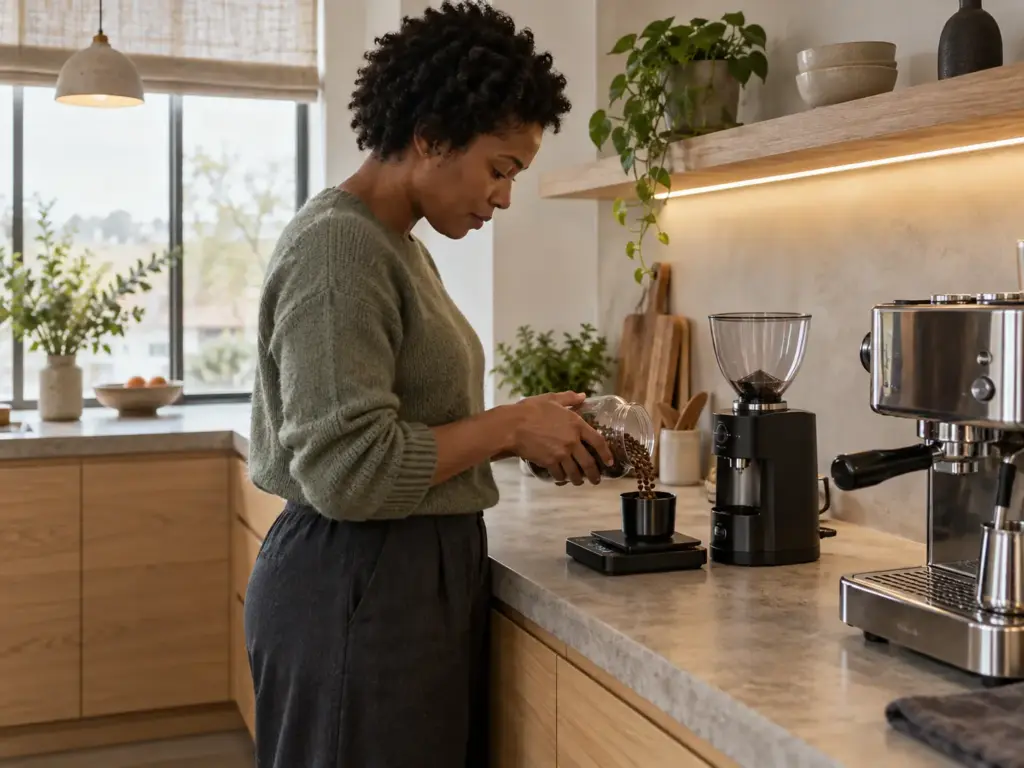
This is the one case where buying comes first. A blade grinder has no setting at all; it smashes beans for as long as you hold the button, so every dose holds dust and boulders together. In a puck that mix fails in a specific way: water rushes through the gaps around the coarse pieces (channeling, in espresso terms) while the dust over-extracts, and the shot tastes sour and bitter in the same sip. No tamp and no timing fixes a spread that wide, which is why a blade grinder makes coffee bitter and sour at once in any brewer, and espresso shows it worst.
Pre-ground espresso coffee fails differently. Its size was fixed at the factory for somebody else’s machine and somebody else’s beans, and it cannot move a step when your shot runs fast. That alone makes the case for grinding your own beans the day an espresso machine arrives on the counter.
The Free Fixes, One at a Time
The instinct after a sour shot is to go finer. Purge first, actually, because the grinder may not be giving you the setting you think you are tasting. Every burr grinder keeps some coffee inside, in the chamber and the chute, and after you move the dial the first grounds out are the ones ground at the old setting. So the first shot after a change can taste exactly like the last one, for the plainest reason: it was mostly the last one’s coffee.
After any move of the dial, grind a gram or two of beans and dump those grounds before you dose the basket. On a single-dose grinder, a few pumps of the bellows or a tap on the housing clears the chute instead. Skip the purge and the first shot at a new setting is a blend of two grinds, which tells you nothing about either.
Then the second change, and only then: one step, one shot, one taste. Move the dial a single step in the direction the last shot pointed (sour and fast means finer, bitter and slow means coarser) and keep the dose, the beans and the tamp exactly as they were.
If it worked, a step finer runs a few seconds longer and tastes rounder and sweeter, with the sharp edge gone. If you overshot, the shot drips out slowly and the finish turns dry and harsh; go back half a step if the grinder allows it, or return to the last step and leave everything else alone for now. What a grind change does to the cup goes through that direction rule for every brew method.
The third, for grounds that clump and cling at the fine end, is a single drop of water on the beans before they go in. Grinding fine builds static charge, the charged grounds clump and stick to the chute, and part of the dose stays behind or lands in the basket in lumps. Experienced home baristas call the trick RDT and try it before spending money on an anti-static grinder. Stir the drop through the beans, grind, and look at the basket: the grounds should fall in loose and level, and the shot should stop spurting from one side.
When the Dial Has Nowhere Left to Go
At some point the free fixes are spent. The sign is plain: at the finest setting, freshly purged, the shot still gushes and tastes sour. The dial has run out, and a grinder that will not grind fine enough has a short list of causes worth checking before you replace it.
On a plain Baratza Encore that result is expected, not a fault. The dial reaches the fine end, but coffeegrinderguide.com, which has reviewed the Encore over years of ownership, puts the limit bluntly: “the grind consistency at fine settings isn’t tight enough for the precision that espresso demands.” On an older grinder that used to pull good shots, the same symptom usually means dull burrs: a worn edge crushes rather than cuts, and the dial creeps finer month after month to make the same shot until it has no room left. Burrs that have worn past their edge cost a fraction of a new grinder and are worth ruling out first.
And if the same setting gives wildly different shots from one day to the next, look past the grinder before you blame it. The dose, how evenly the grounds sit in the basket and the machine itself all move a shot too, and a new grinder steadies none of them.
The Espresso Grinders Worth Buying, Flaws Included
Two questions narrow the field before any brand name does. The first is single-dosing (you weigh the beans for one shot, grind them all, and nothing waits in a hopper) against hopper dosing, where a loaded hopper grinds on demand. Decide between those two styles first, because that choice narrows the list before any spec does. The second is whether this grinder is for espresso only or has to be the only grinder in the house, and this section covers the espresso-first answers, leaving the one-grinder answer to the last section.
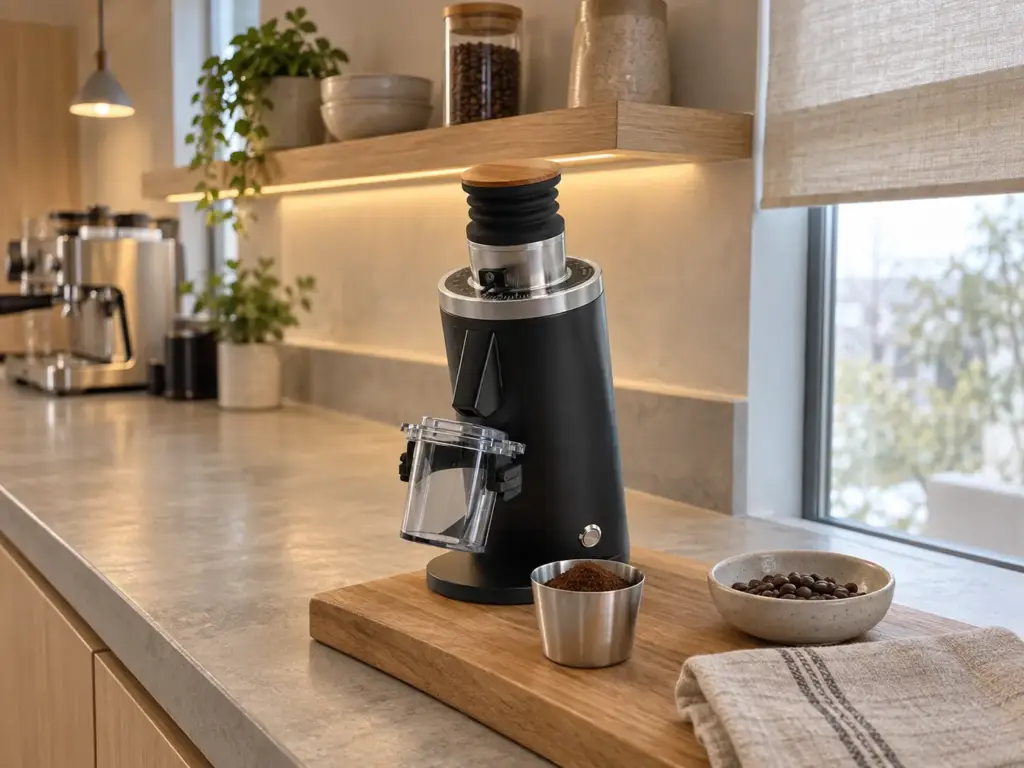
All five grinders in this article sit side by side below, so the whole field is visible before the details.
| Grinder | Burrs | Adjustment and dosing | Built for | The flaw |
|---|---|---|---|---|
| Baratza Encore ESP | Conical, 40 mm steel | 40 steps, about half at the espresso end; bean hopper | Entry-level espresso, with filter on the side | Static in the plastic grounds bin |
| DF54 | Flat, 54 mm | Stepless; single-dose hopper with bellows | Low-retention espresso on a small counter | Anti-static is not static-free; settings need marking |
| Eureka Mignon Specialita | Flat, 55 mm | Stepless; hopper with timed touchscreen dosing | Espresso and nothing else | A small stepless dial that is hard to find again |
| Fellow Opus 2 | Conical, 48 mm | Stepless; auto-stop | One grinder from espresso to cold brew | Gives ground at the espresso end to a dedicated grinder |
| 1Zpresso K-Ultra | Conical, stainless steel, by hand | Numbered external ring; single-dose by nature | Espresso settings you can return to | A hand-ground double takes real effort every day |
The Entry Point: Baratza Encore ESP
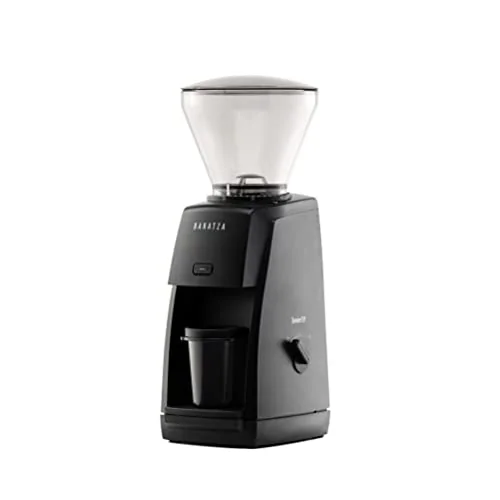
The Baratza Encore ESP is the lowest step up from a drip-only grinder that was built for the fine end rather than pushed toward it. It runs 40 mm conical steel burrs and 40 settings, and the dial is split: roughly the first 20 settings cover the espresso range, packed close together, and the rest open up for pour-over, drip and French press. That split is the answer to the settings-count trap from the first section, since the fine end gets half the dial instead of a handful of positions, and it is why this entry-level grinder belongs on an espresso list when most budget grinder picks do not.
It exists because the plain Encore could not do this job; the original’s stock burrs, as quoted above, are not consistent enough at fine settings for espresso, and the ESP was set up for that end of the range instead. What it keeps from the family is static. Baratza’s plastic grounds bins are known for it, so fine grounds cling to the walls and puff out when you pull the bin, and the drop of water from the free fixes handles most of it.
If espresso is not actually the plan and the grinder will feed a drip machine or a French press, the ESP’s crowded fine end is wasted on you, and a cheap grinder that stays even at the coarse end spends the same money where your cup needs it.
Single Dose on a Small Counter: DF54
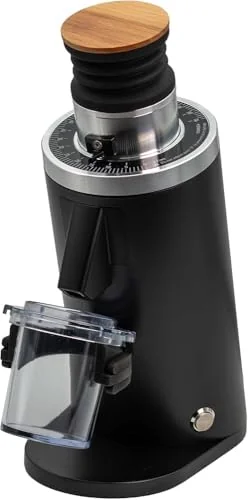
The DF54 is the smaller sibling of the DF64, the grinder family that made single-dosing ordinary at home. It carries 54 mm flat burrs, a stepless adjustment, a bellows on top of a single-dose hopper and an anti-static chute. You weigh a double-shot dose, around 18 g of whole beans, tip it in, grind it all, and give the bellows a few pumps to push out what is left in the chamber, so almost nothing stays behind to go stale before the next shot. That low retention, not a bigger settings count, is the feature that matters for espresso, and it is the reason to pick this mid-range grinder over a hopper model for a small counter.
The family’s history is worth knowing. In coffeechronicler.com’s review of the DF64 Gen 2 (64 mm burrs turning at a fixed motor speed of 1,400 RPM), the first generation’s declumper screen turned out to be too restrictive: it caught particles on their way out and reground them into fines, which left a muddy cup in pour-over until the second generation redesigned the clump crusher and added the anti-static chute. The fix took new hardware.
So read the DF54’s anti-static label for what it is, less static from the grinding itself, not a static-free catch cup in a dry kitchen. On a dry winter morning, expect a ring of grounds stuck to its rim anyway, and carry the same fines-and-static caution as the rest of the family. And stepless means marking your settings, which the next section comes back to.
Espresso Only, and Built for It: Eureka Mignon Specialita
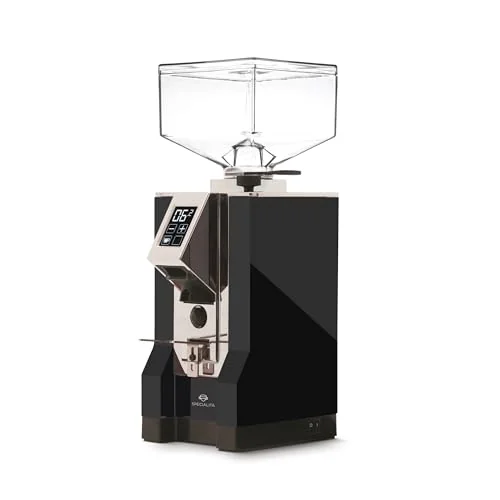
The Eureka Mignon Specialita is the grinder for a kitchen that has made its decision: espresso, and nothing else from this machine. It has the largest burrs of the five, 55 mm flat, plus a stepless adjustment, a touchscreen that times each dose from the hopper, and a sound-insulated housing, and it is made in Italy. Timed dosing from a hopper suits a household that pulls the same bean every day, since each press delivers close to the same dose without a scale in the loop (a scale still earns its place, if only to check the timer now and then).
The trade is written into the design. Espresso only means exactly that: the fine adjustment that suits a shot is the wrong tool for a pour-over, and moving a hopper grinder back and forth between the two wastes beans every time. It is the prosumer grinder of this list, priced and built well above the two before it, and that only pays off if espresso is the daily cup.
The dial is the other complaint. The tiny adjustment dial on the Eureka Mignon family, the line this model belongs to, makes it hard to remember how many turns you have made. If the grinder never leaves espresso, that barely matters. If it ever has to, it matters every single time.
One label deserves a word before leaving the shortlist: the certification sticker. It is a real test, not a marketing badge: the Specialty Coffee Association’s certified equipment program only considers equipment fully evaluated at its third-party testing center, ECBC.
But the certified list is mostly drip brewers, so a sticker on a grinder box, or the lack of one, does not tell you whether that grinder can pull a good shot. The size of its step does.
What an Espresso Grinder Does by Month Two
Every listing is written in the first week, when the chute is clean and the dial sits where the manual says. The flaws that matter arrive later, and they are shared across the whole category: static and fines at the fine end, grounds kept inside, a stepless dial nobody can find again, and burr swaps that take longer than the box suggests.
Static and Fines Live at the Fine End
The finer a grinder goes, the more it shatters each bean into tiny particles, the fines, and the more friction it builds as beans and burrs rub at close range. Both climb together at the espresso end. That makes them a trait of the category, not a defect in one model, and the DF64 story from the shortlist shows it: fixing the fines and the static took a redesigned clump crusher and a new chute, not a software update or a different way of turning the dial.
After a few weeks of daily shots the signs are familiar. Static cling sets in: grounds climb the walls of the dosing cup, a fine brown dust settles on the counter under the chute, and part of every dose stays inside the grinder.
The free fix comes first again: a drop of water stirred through the beans before grinding. If it is working, the grounds drop into the cup instead of leaping out of it, and the weight of the grounds coming out lands within a fraction of a gram of the beans going in. When that stops being enough, stopping grinder static goes through the rest of the options, most of them still free.
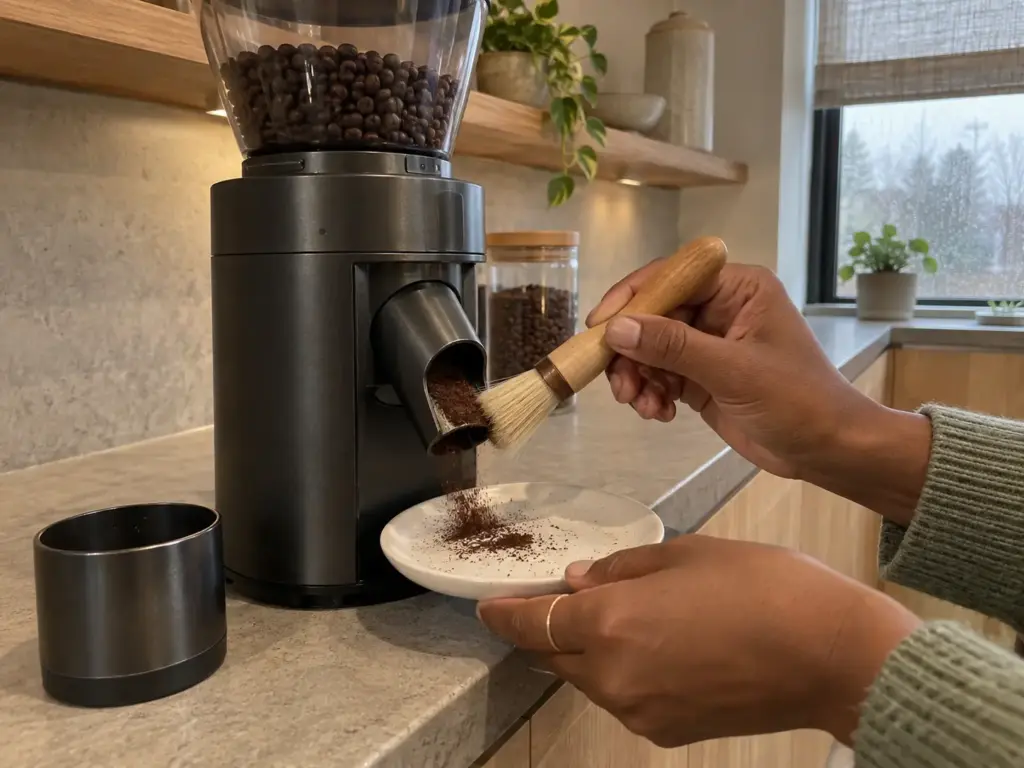
Grind retention is the quieter half of the same problem. Whatever the grinder keeps in its chamber and chute sits there overnight, goes stale, and drops into the next dose, which is exactly why single-dose designs with bellows exist. On a hopper grinder, two habits cover most of it: the small purge after any change of setting, and a brush through the chute on a schedule you will actually keep, say once a bag. Brush the chute clean, look again the next day, and there is already a thin brown film on the inside wall. That film is stale coffee, and it ends up in a shot unless something clears it first.
The retention figures on a box deserve the same skepticism as the settings count. A grinder can retain very little when it is new and clean, and noticeably more once oils and fines have built up along the chute, which is why the habit matters more than the number printed at purchase.
The Stepless Dial You Cannot Find Again
A stepless grinder gives you every setting between two ends and no way to count them. As long as it stays on espresso, you nudge it and taste, and the dial never wanders far. The trouble starts after a switch: a pour-over on Saturday, back to espresso on Sunday, and the setting you had is somewhere within a quarter turn with no click to find it by. That is exactly the problem with the Eureka dial, and fixed steps solve it: it is much easier to repeat exactly one step than to land close to your last setting.
Every guess costs something. Each wrong setting is one dose of beans and one shot down the sink, and hunting by taste can take several of them before the shot settles (a bag of good beans goes faster this way than any recipe suggests). The cost is invisible on the listing, where stepless reads as a clean advantage.
What works is low-tech: a mark on the collar and a line in a notebook. The in-between design, a stepless dial with a printed scale, is the factory version of the same idea, and on a bare collar you can add the scale yourself in two minutes.
Wrap a thin strip of masking tape around the adjustment collar, tick it with a fine pen every few millimeters, and draw a fixed pointer on the housing beside it. Each time a shot tastes right, write down the tick, the bean and its roast date, and do the same for your filter setting. When the same beans need a finer tick two weeks later, that is the beans aging, not the grinder drifting.
Burr Swaps Are Not a Weekday Job
Aftermarket burrs are sold as the upgrade path, and some grinders advertise a swap as easy.
Buyers often ask whether a grinder with an easy burr swap lets you keep two burr sets for two methods. An easy swap is more marketing than a real workflow: cleaning and confirming alignment still make it an involved process, and a spare burr carrier does not speed things much.
So a burr swap is a project for a free afternoon, done once to change what the grinder is for, and never a way to move between espresso and filter from one day to the next.
Burr alignment is the part that stops it being a quick job, and the reason is the size of the gap. At the espresso end the two burrs sit so close together that a tilt too small to see, a burr seated on one grain of old coffee, is a large share of the distance between them.
One side of the burr set then grinds finer than the other, and the dose comes out with a wider spread of sizes than the grinder made the week before. In the cup that shows up as the mixed signal from the blade-grinder section, a sharp front and a harsh finish in the same shot, on a grinder that never used to do it. So clean the seats until they are bare metal before a new set goes in, and expect to spend some beans dialing in from scratch afterward, since the old numbers on the dial no longer mean what they did.
How long the stock burrs last is a better-documented question than it looks. Baratza’s own estimate for the standard Encore’s burrs, as coffeegrinderguide.com reports it, is about 500 to 750 pounds of coffee, and that figure belongs to the regular Encore’s conical set, not the ESP’s. Run the arithmetic at espresso volumes: 500 pounds is roughly 227,000 g, which at 18 g per double comes to about 12,600 doubles, or more than 17 years at two doubles a day. Dull burrs are rarely the problem in the first months, then.
The sign that they are becoming one arrives slowly: the same beans, the same shot, and a dial that keeps creeping toward its finest end to get there. That is the moment to check the burrs, and how long a coffee grinder lasts covers the parts that tend to give out before they do.
Can One Grinder Handle Espresso and Everything Else?
A grinder can reach both ends of the dial, but no burr set does traditional espresso and filter equally well at any price. So the real choice is which end gives. There are three answers, a do-it-all electric, a hand grinder for the espresso end, or two grinders, and the second one turns the decision into manual or electric.
Why the Two Ends Pull Against Each Other
The rule holds: no single burr set at any price can do both, because the requirements pull against each other. A few posts later he spelled out the trade: “if you use burrs that do a great job with filter, you shouldn’t expect syrupy traditional espresso. If you go for traditional espresso burrs, don’t expect clarity in your filter coffee.”
The mechanism sits in the spread of particle sizes. A traditional shot, the thick, syrupy kind with a lot of texture in the mouth, gets part of that texture from a share of very fine particles in the puck. A pour-over gets its clarity from the opposite, an even and narrow spread with few fines to cloud the cup or slow the drain.
Burrs that are good at one are, by their geometry, less good at the other. Another experienced member named the burr families that come closest to doing both for contemporary espresso, the lighter and clearer style of shot rather than the syrupy one, plus filter: “cast burr / SSP lab sweet / Ditting cast / Mizen Omni burrs and their ilk.” That is an aftermarket path for a grinder you already know well, not a place to start.
The adjuster pulls against itself too. A dial built around tiny espresso steps needs dozens of clicks just to travel out toward the coarse end, so makers either limit the range, go stepless, or make the steps bigger, and each choice gives something up. The step-size thread notes that the Mahlkönig K30 ES and grinders like it “are marketed as ‘espresso only’ because they can’t go coarse.” At the far end of that dial is a French press grinder, whose whole job is evenness at settings an espresso grinder never visits.
Then there is the hopper. The problem is plain: a grinder with a hopper has to be running when you adjust the grind size from coarse, for pour over, to fine, for espresso, and that wastes beans if you change brew methods often. That is why single-dose grinders suit a two-method household better than hopper grinders do.
On a hopper grinder, turn the dial toward fine only while the motor is running, so the burrs close on moving beans instead of clamping down on a stalled bed of them. Then grind a few grams at the new setting and throw them out before the first shot. Count those grams every time you switch methods for a week; that total is what one hopper grinder serving two brewers really costs you in beans.
One Electric for Both: Fellow Opus 2
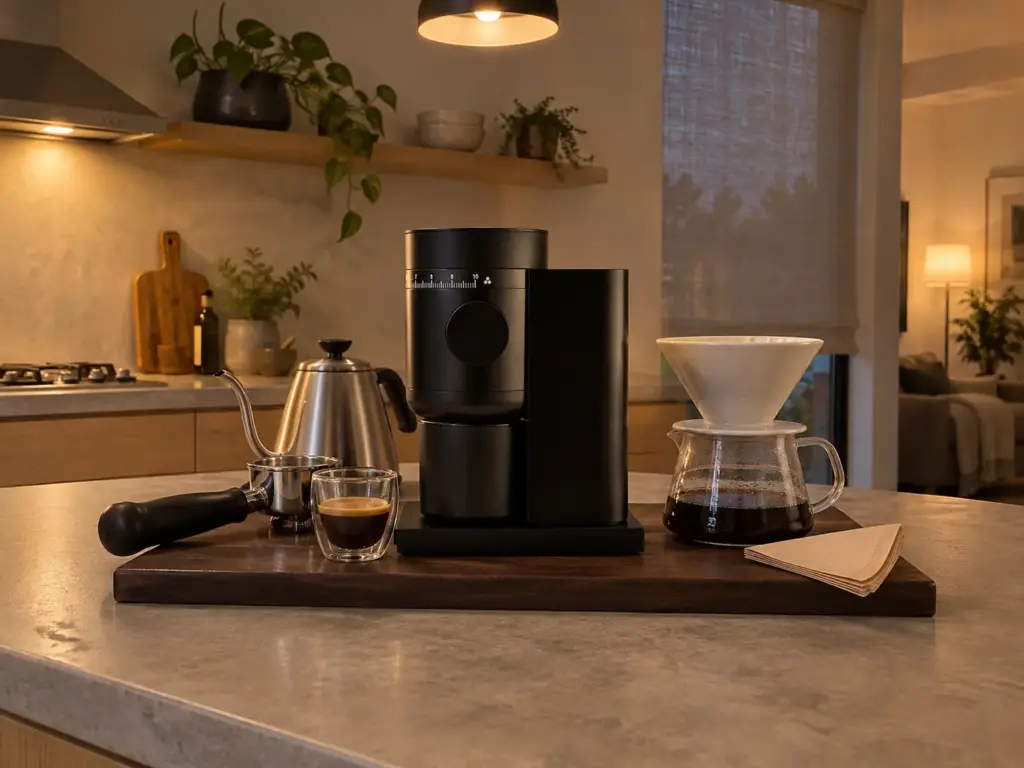
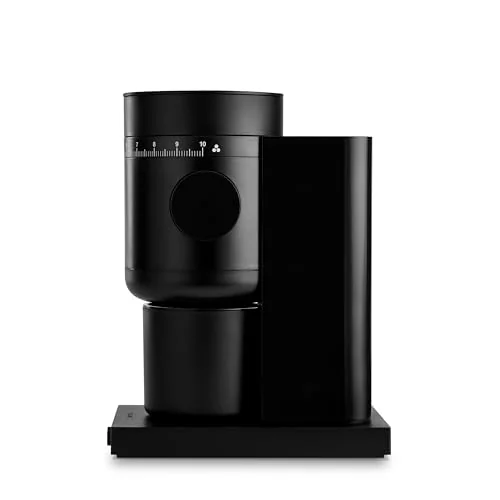
The Fellow Opus 2 is the grinder most people name when they want one machine for every method, and its listing makes the claim outright: espresso to cold brew. It runs 48 mm conical burrs, a stepless adjustment, an anti-static design and an auto-stop that shuts the motor off once the chamber empties. For the reader who refuses to buy two grinders, it is the direct answer.
Set it against the rule above, though. A conical burr set that also has to handle cold brew is not expected to match a dedicated flat-burr espresso grinder at the fine end, and nothing exempts the Opus 2 from that; the rule is about burr sets, and this is one. So the obvious pick depends on which cup is the daily one, and I would let the daily cup decide rather than the range printed on the box.
If the household drinks a pour-over, an AeroPress or a drip pot every day and espresso on weekends, the Opus 2 fits, and a shot that falls a little short of a dedicated grinder’s is a fair price for one machine on the counter. If espresso is the daily cup and filter the occasional one, the obvious pick stops being obvious, and the hand grinder below, or two grinders, is the better call.
A Hand Grinder for the Espresso End: 1Zpresso K-Ultra
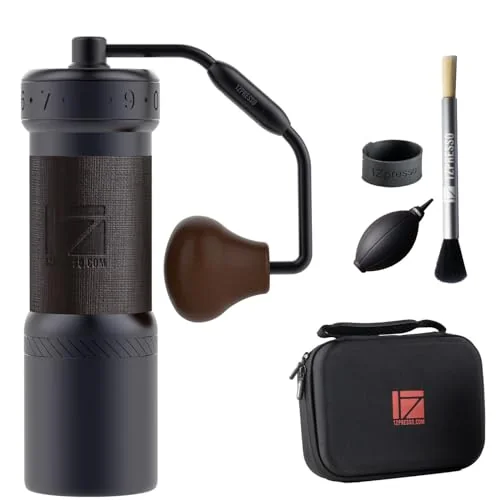
The 1Zpresso K-Ultra answers the stepless-memory problem head-on. Its stainless steel conical burr is set by a numbered external adjustment ring, so a setting is a number you read and return to, not a quarter turn you try to remember. A hand grinder is also single-dose by nature: there is no hopper to purge and no grounds left from yesterday, only the beans you weighed. The handle folds, and it comes with a carrying case.
The cost is effort. Grinding a double-shot dose by hand at a fine espresso setting takes real time and real arm, every morning, noticeably more than any electric grinder in this article, and that is the trade to weigh before choosing it for daily espresso rather than an occasional one. It is not a defect; it is what a hand grinder asks.
The third answer is the one that keeps coming up for readers who care about both cups: two grinders. An espresso grinder for the shot and a grinder picked for pour-over and drip for the filter side, each left at its own end of the dial. It costs more counter and more money up front, and it removes the moment that makes a one-grinder household miserable: the dial swung from the French press setting all the way back to espresso, and the first two shots poured down the sink while the grinder finds its way again.
Which of the two goes manual deserves a moment’s thought. A double shot takes around 18 g of beans; a full drip pot or a pour-over for two takes several times that, and a French press for the house more still.
Put the manual grinder on the espresso side and the cranking lands where the dose is smallest and the numbered ring matters most, while the electric grinder does the heavy filter doses at a setting it never has to leave. The reverse split, an electric espresso grinder and a hand grinder for filter, works for a household where the filter cup is one person’s weekend habit. For a closer look at the manual route, hand grinders that can do espresso compares more of them than one card can.
Shop by the Size of One Step, Not the Settings Count
- The spec that decides an espresso grinder is how far one step moves at the fine end; a settings count or a burr diameter does not tell you that.
- Free first: purge after every change, move one step and taste, and put a drop of water on the beans for static. Buy when the dial has nowhere left to go.
- Decide espresso-only or one grinder for everything before you pick a brand, because each answer gives something up, and the grind size chart for every method shows how far apart the two ends of the dial really sit.
A month from now, notice where the dial sits for the same beans and the same shot: if it has crept finer, the beans have aged or the burrs have started to wear, and either one is worth knowing before the shots start slipping.
Tomorrow, make one change only. Move the dial one step in the direction your last shot pointed, purge, pull the shot, and taste whether the sharp edge or the harsh finish has eased. Once the grinder is settled, the beans are the next variable, starting with whether single origin beans work for espresso.
Frequently Asked Questions
01What type of coffee grinder is best for espresso?
A burr grinder, flat or conical, whose adjustment moves in very small steps at the fine end is best for espresso, because a shot changes by seconds with each step. Blade grinders cannot make espresso, and a burr grinder with coarse steps can reach the fine end without being able to settle there.
02Is a stepless grinder better for espresso?
Not automatically: stepless lets you stop anywhere, which suits espresso, but gives you no click to count when you come back. After a switch between methods, finding the old setting is guesswork unless you mark the collar and write each position down.
03Can one grinder do espresso and pour-over?
A one-grinder household accepts a compromise at one end, or buys two grinders and leaves each at its own setting.
04Is a hand grinder good enough for espresso?
Yes, a hand grinder is good enough for espresso if its adjustment is fine enough and numbered, so you can return to a setting after changing it. The cost is effort: grinding a double shot by hand every morning is real work, the trade against a second electric grinder.
05Can a regular Baratza Encore grind for espresso?
Not well: a regular Baratza Encore’s dial reaches fine settings, but its stock burrs are not consistent enough there for the precision espresso demands. The Encore ESP exists for that job, with roughly half of its 40 settings packed into the espresso range.



How did your cup turn out?
No comments yet. Tell us what you changed — and whether the needle moved.