




We may earn a commission when you buy through links on this page. It never changes what we recommend. How we pick
On this page9 parts
- How Fine Is an Espresso Grind, in Words and in Seconds
- Why Espresso Needs a Grind That Fine
- Dialing In: Hold the Recipe Still, Move the Grinder
- Dialing In Without Pouring Half the Bag Down the Sink
- The Number on a Home Machine's Dial Is Not a Grind Size
- When a Fast Shot Is Not the Grind's Fault
- Month Two: When the Same Setting Stops Giving the Same Shot
- Weigh the Dose, Time the Shot, Then Touch the Grinder
- Frequently Asked Questions
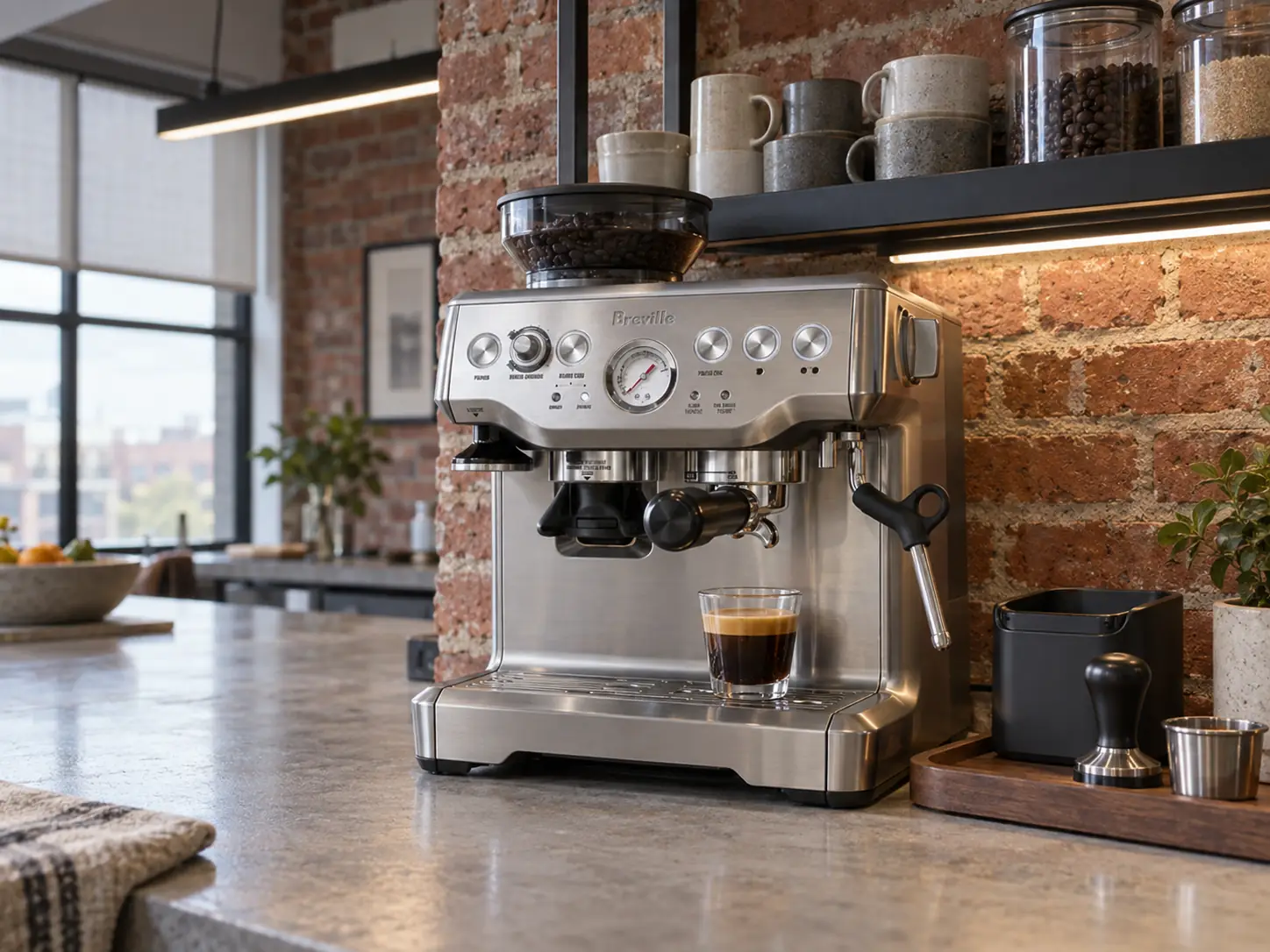
The grinder is on its fine setting, the bag says espresso, and the double you just pulled ran out in about fifteen seconds, pale and thin, with a sharp edge that catches at the back of your tongue. So you type what coffee grind size for espresso and reach for the dial to go finer again, with no idea how far. Espresso is the one home method where the grind is defined by how long the water takes to push through it, not by what the grounds look like: “fine” is where you start, and the shot’s clock tells you where you land. What follows covers how fine in words and in seconds, why espresso needs it, the dial-in one step per shot, how to get there without pouring half the bag away, what a home machine’s number and basket change, when a fast shot isn’t the grind at all, and what happens to the setting a few weeks in (for every method side by side, there is the full grind size chart).
Quick Answer
Fine: finer than table salt, close to powdered sugar. For espresso that is only the starting point. The right grind runs a double of 18–20 g into roughly twice that weight in about 25–30 seconds, and the SCA defines espresso’s grind by brew time. Fast and sour, one step finer; slow and harsh, one step coarser; taste between.
How Fine Is an Espresso Grind, in Words and in Seconds
Look up espresso grind and you get a texture word, and the texture words don’t agree with each other. The coffee world’s own standard skips the word and uses a clock. That gap is the reason your first setting is always a guess.
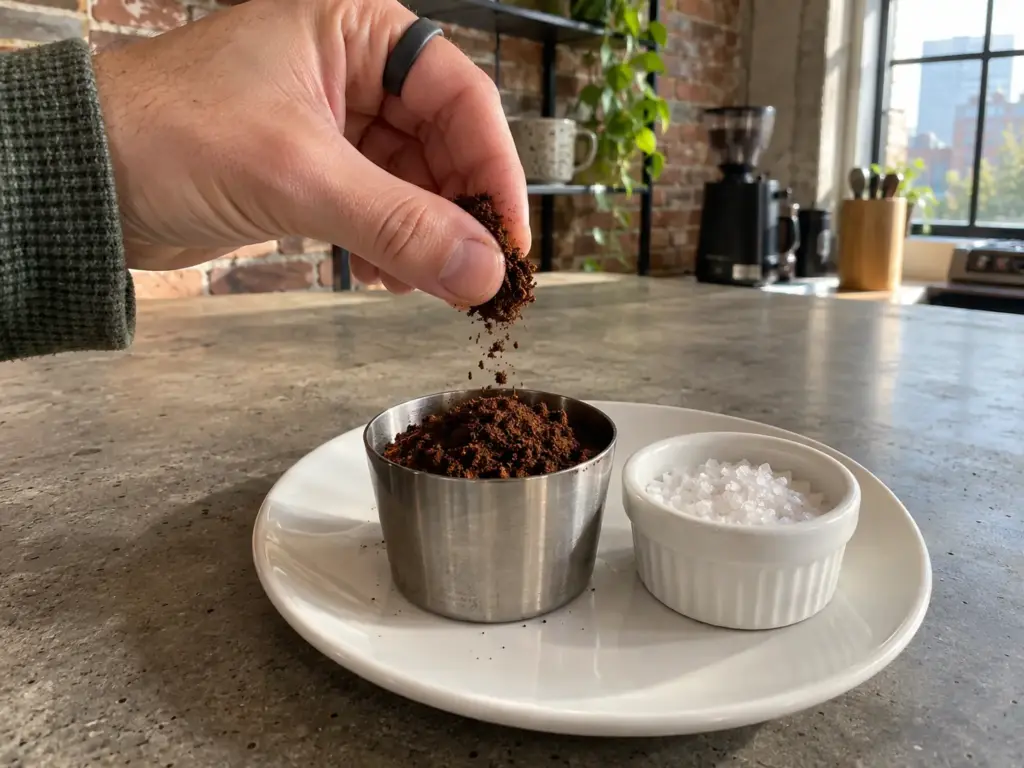
Table Salt, Powdered Sugar or Flour?
Breville’s instruction book for the Barista Express says the grind should be fine but not too fine and powdery. Starbucks’ home brewing guide leans closer to dust: an extra fine grind resembles powdered sugar. A feel check is another route: a grind with a very fine granularity, just a little coarser than powder. Table salt and granulated sugar turn up as comparisons too, and flour gets named about as often as it gets warned against.
Put them side by side and a middle appears. An espresso grind is finer than table salt, gritty when you rub it between two fingers rather than silky, and short of flour. Flour-fine is Turkish coffee territory, and in an espresso basket it packs so tight that the pump can barely push water through it. Everything else on the counter sits coarser: a moka pot a step coarser than espresso, pour-over around medium-fine, a French press coarse.
Then the number. The chart on our grind size page puts the espresso grind size at roughly 180 to 380 microns, and that is one chart’s range, not a standard anyone certifies. A peer-reviewed study of espresso (more on it in the next section) found that two grinders set to the same median particle size can still run shots at different speeds, so a micron figure is a neighborhood, not an address. It tells you which end of the dial to live on.
It can’t tell you which click.
The Definition That Uses a Stopwatch
According to the Specialty Coffee Association’s definition of espresso, the heritage standard describes a shot “where the grind of the coffee is such that the brew time is 20–30 seconds.” The rest of the recipe sits around that line: 7 to 9 g of coffee for a single (14 to 18 g for a double), water at 195–205°F (91–96°C), 9 to 10 atmospheres of pressure, and 25 to 35 ml in the cup for a single shot, about an ounce.
There is no micron figure anywhere in it. The grind is whatever makes the clock read right.
The window moves a little depending on who draws it. The SCA reports a survey of 275 baristas whose average shot has an output of 36.5 grams, extracted in 25–30 seconds. Breville’s manual calls 25 to 35 seconds correct, and a normal double shot lands at about 35 g in about 27 seconds.
Read the four together and what they describe is a band of roughly half a minute, not a line you have to hit to the second. That softness helps you: the shot has room, and your tongue gets the last word inside it.
A Pinch Test Before the First Shot
Before you spend a dose, there is a free check. Sweet Maria’s describes it for espresso: pinch the grounds, and they “ought to clump in the center of the pinch.” If they don’t clump at all, the grind is too coarse “and will make a weak shot”; if they press into a hard little cake, you are past it.
The pinch gets you into the right range in ten seconds (and costs nothing but dusty fingertips). The shot does the rest, and if the texture words still blur together, there is a longer guide on how to tell fine from medium-fine by touch.
Why Espresso Needs a Grind That Fine
The clock only makes sense once you see what the grind is doing inside the basket. At espresso pressure the grounds are more than flavor: they are the brake.
The Puck Is the Brake on Nine Bars
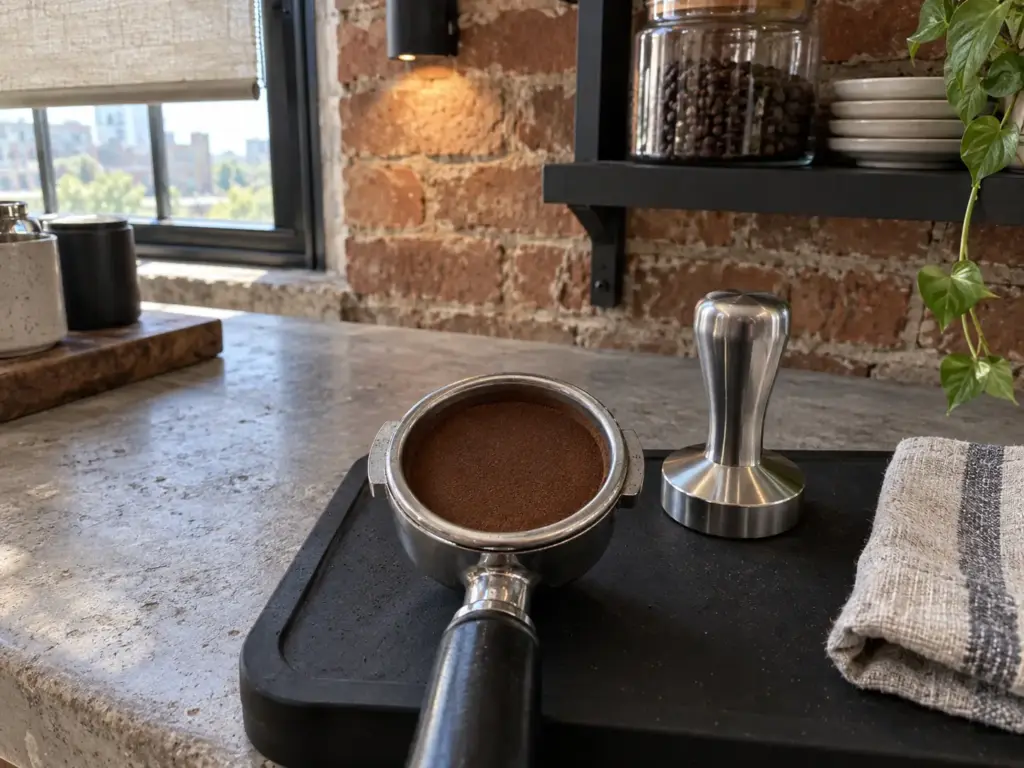
A drip machine lets gravity pull water through a loose bed of grounds over several minutes. An espresso machine does the opposite. It forces water at around 9 bar through a puck of 18 or so grams packed into a steel basket, and the only thing slowing that water down is how tightly the particles lock together. Grind coarser and the gaps open up: the water finds its way through in seconds, carries off the fast-dissolving acids, and leaves most of the sweetness behind in the basket.
You can see it before you taste it. Breville’s extraction guide describes an under-extracted shot as one whose flow starts after 1 to 3 seconds and runs “fast like water,” with thin, pale crema, which in practice means a blond stream almost from the first drop. A correct shot, by the same guide, starts after 4 to 7 seconds and pours slow like warm honey, dark brown. The color gets to you well before the cup does.
Fines Set the Flow, Not the Average Size
This is where a grind number stops transferring from one grinder to the next. A peer-reviewed study of fines in espresso, published in Scientific Reports in 2024, pulled 20 g of coffee at 9 bar to 40 g and tracked what actually controlled the flow. Its answer: “We show that the share of fines plays a key role in the espresso extraction flow rate.”
Fines are the particles under 100 microns, the dust a burr set sheds as it cracks a bean. More of them fill the spaces in the puck, the bed lets less water through, and the shot slows down.
What that means at your counter is in the next finding. The authors saw that two grinders at the same median size can produce a different share of fines, and they conclude that a single value for particle size doesn’t describe the extraction. So your grinder’s own mix of powder and particles, its grind consistency, decides your shot time.
A setting copied from someone else’s grinder means little on yours, and two grinders at what should be the same size can pull noticeably different shots. The setting has to be found on your grinder, with your beans, by the clock.
The same paper’s tasting panel landed near 30 seconds and a 19 to 20 percent extraction yield for the coffee they used, not in the faster 10-to-20-second range the paper calls turbo shots. And the authors add that the roast and the green coffee move that peak. Treat half a minute as a target that shifts with the bag, not a law.
A blade grinder is the extreme case. It makes powder and chunks in the same dose, so the powder chokes parts of the puck while water rushes through the chunks, and there is no setting on it to fix that.
Sour One Way, Bitter the Other
The taste tells you which way the water ran. The Golden Cup extraction range, 18 to 22 percent of the coffee’s weight dissolved into the cup, is a filter-coffee standard that the specialty world borrowed as a reference for espresso. Below 18 percent the cup tastes sour, sharp or thin; above 22, bitter, dry and astringent.
So a fast, sour espresso means the water left too early: go finer. A slow shot that tastes harsh, the classic bitter espresso, means it stayed too long: go coarser.
There is a catch before you trust your tongue alone. Breville’s own manual describes an under-extracted shot as tasting “bitter/sharp, weak and watery,” not sour, while the Golden Cup range puts sour on that side. Taste words are loose, and two people will name the same sip differently. Or rather, the words are loose and the clock isn’t: when the taste is ambiguous, the time breaks the tie, and a thin shot that ran in 17 seconds is under-extracted whatever word you put on it.
Dialing In: Hold the Recipe Still, Move the Grinder
Knowing the direction is half of it. The other half is changing only one thing, so the next shot can tell you something, and that means deciding what stays still before you touch the grind setting.
The Recipe That Stays Still
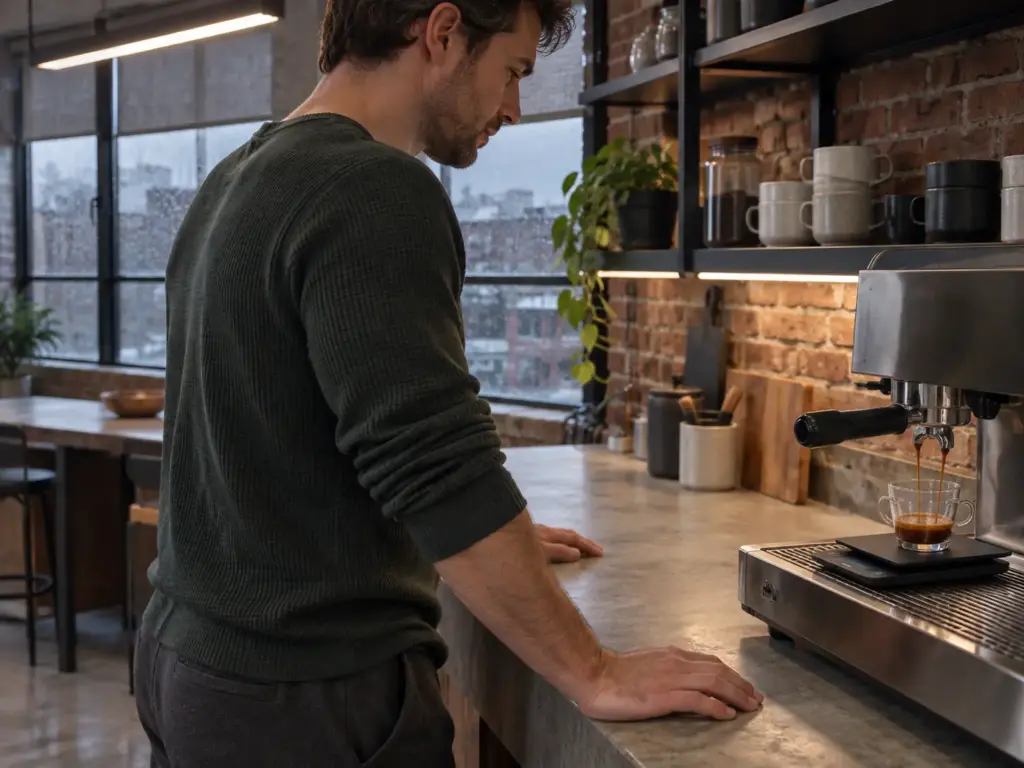
Pick a recipe and hold it: 18 to 20 g of coffee in, about twice that weight out (36 to 40 g), aiming for 25 to 30 seconds. That isn’t a law.
It is roughly where the SCA’s survey of 275 baristas landed, with an average brew ratio of 1:2, two-thirds of them dosing 18 to 20 g, and individual answers anywhere from 1:1.5 to 1:2.5. If your basket is built for a different dose, use that dose. What matters is that the numbers stop moving while the grinder does.
That takes two measurements, grams to a tenth and seconds. A phone stopwatch covers the time for free; nothing free covers the tenth of a gram, and a scale that reads to 0.1 g is the one piece of kit worth buying for exactly that reason. The Hario Drip Scale Timer does both on one pad, weighing in 0.1 g steps with a timer built in, so you can weigh the dose, tare, and watch the yield climb against the clock during the same shot.
It has two weak spots. It is slow to respond to weight changes, a lag you notice while the shot is pouring, so stop a gram or so before your target; and Amazon’s review summary reports several customers saying it broke within six months.
For the first three shots of a new bag, keep everything but the grind identical: the same dose to the tenth of a gram, the same yield, the same basket. Change two things and get a better shot, and you won’t know which one did it, so the next bag starts from zero again.
One Step, One Shot, One Taste
Breville’s manual puts the rule in one phrase: fix a bad shot by “adjusting these factors just one at a time.” Its timing signs work on other machines too. A correct shot starts to flow after 4 to 7 seconds and finishes in 25 to 35; an under-extracted one starts in 1 to 3 seconds; an over-extracted one drips, or runs past 40.
The sequence at the counter:
- Pull a shot at your held recipe and note the time and the taste.
- If it ran fast and tastes sour or thin, move the grinder one step finer.
- If it ran slow and tastes harsh or burnt, move it one step coarser.
- Purge the grinder (more on that below), pull again, and taste before touching anything else.
- Stop when the time sits inside the window and the cup tastes balanced.
How big is one step? Bigger than it looks at the fine end. On a Rancilio Rocky, one click can change the extraction time by a few seconds, so a small step matters.
That is why the rule is one step at a time, not two. Count your steps from a known point, the same habit behind finding zero and counting steps on a hand grinder, so you always know how far you’ve moved.
The first drops give you the answer before the stopwatch does. A stream that starts almost as soon as the pump kicks in is already a fast shot, and you can decide the next click while it is still pouring.
When the Clock and Your Tongue Disagree
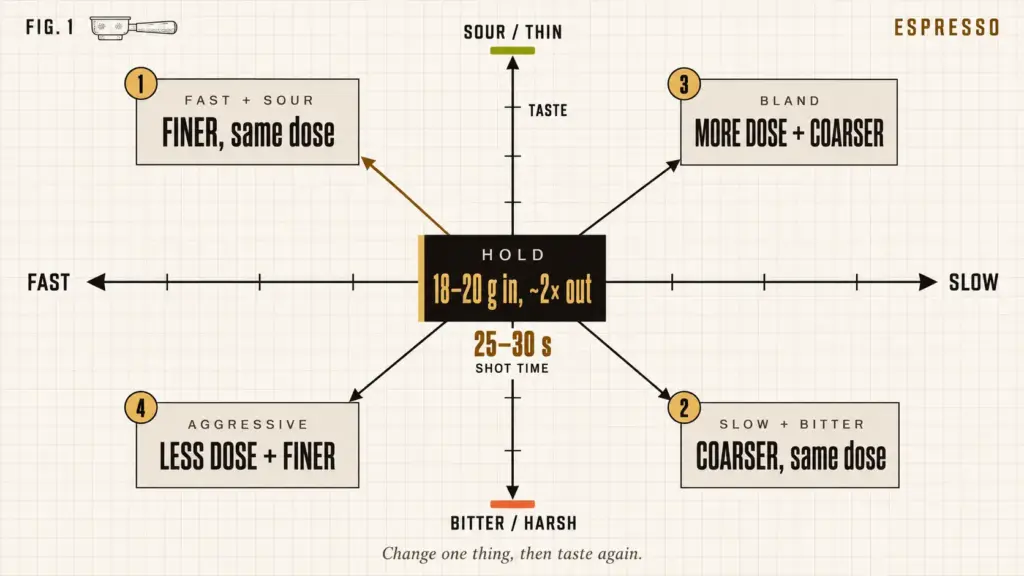
Sometimes the shot lands at 28 seconds and still tastes wrong. Then taste decides, and the rule below moves more than the grind:
- Too bright or sour: keep the dose, grind finer.
- Too bitter: keep the dose, grind coarser.
- Bland: raise the dose and grind coarser, so the flow stays the same.
- Aggressive: lower the dose and grind finer, again to keep the flow.
The same post is plain about the stopwatch: “Beginners are advised to time their shots; but this is not best practice.” Its preferred ways to end a shot are by weight, or at the moment the stream turns pale and almost translucent.
That looks like it contradicts the one-at-a-time rule, and for the last two moves it does. “Change only the grind” is the right habit while you are learning a machine, because the shot is far off and time is the clearest signal you have. Once the shot runs on time and tastes flat or too loud, the usual moves change the taste while leaving the flow where it was: two knobs, one result. Use Breville’s rule to get into the window and the taste rule to adjust inside it, and keep them as two rules for two situations rather than blending them into one.
Dialing In Without Pouring Half the Bag Down the Sink
How fine is only half the question. The other half is how to get there without burning through the beans, and the people who pull shots every day have a cheap answer, most of which happens before the first shot.
Start Where the Last Bag Ended
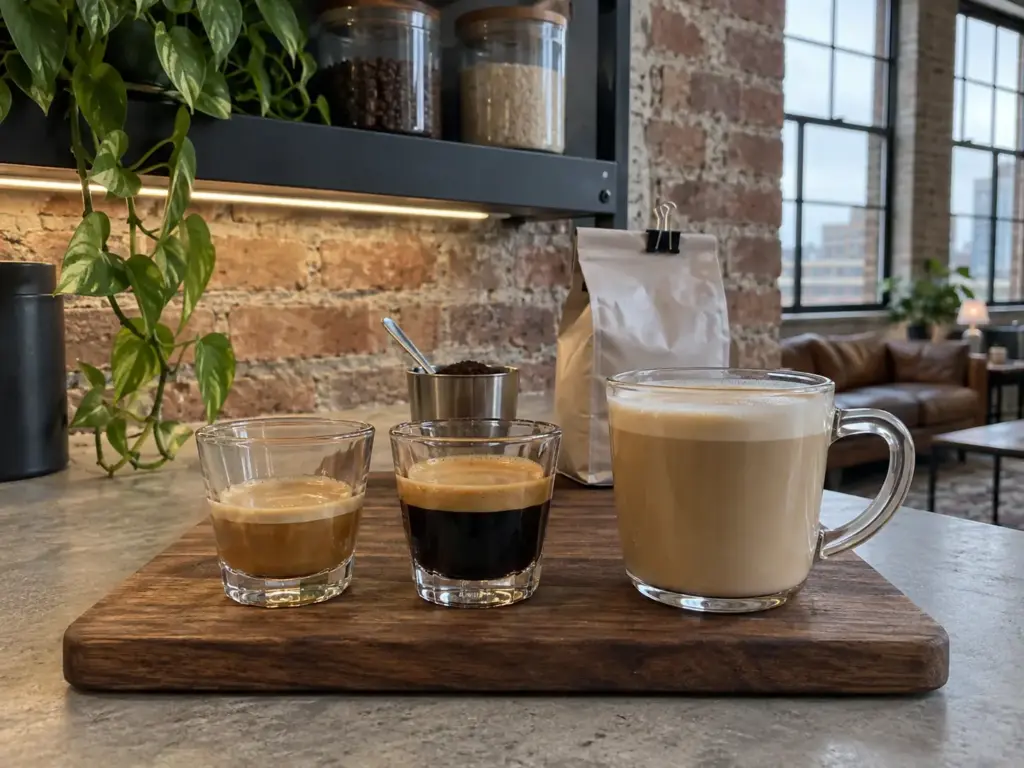
To dial in without waste, plan for the first 2 to 3 shots, which are usually throwaways. The habit that saves the most coffee there is to drink your mistakes as milk drinks instead of pouring them out. Dialing in can take several tries, and each one spends beans.
The cheapest fix is memory. Some people keep notes in white marker on the bag, and others keep a logbook with each coffee’s grind size and ratio. Those are dial-in notes, and they pay for themselves on the next bag.
The next bag of the same coffee starts at the written setting instead of the middle of the dial. A new coffee starts from the nearest one you’ve logged, adjusted for the roast, a lighter roast a little finer and a dark roast a little coarser, for reasons covered in why light roasts need a finer setting. Some people buy a larger bag when they switch coffees, so the throwaway shots come out of a bigger supply.
A test shot that missed by a few seconds still makes a good flat white. Milk hides a lot of sourness and some bitterness, so a shot that would sting on its own goes down fine under steamed milk.
The First Grams After a Change Belong to the Old Setting
Every burr grinder holds some coffee back. Sweet Maria’s puts it plainly: any burr grinder retains several grams of coffee in the burrs and the chute. Buyers of the Baratza Encore ESP note the same retention.
Move the dial, grind your next dose, and the first few grams out of the chute were ground at the old setting. The shot that follows is part old grind and part new, and it tells you almost nothing about the step you just made.
So purge. After any adjustment, grind a little and throw it away before dosing the shot that counts.
On a grinder you load one dose at a time, a couple of grams usually clears it; on a hopper-fed grinder with a long chute, purge more, since that is where several grams can sit. (Yes, this costs coffee. Far less than a sink shot does.)
After moving the grinder, run a gram or two through and throw it away before you dose the real shot. It costs about a teaspoon of coffee, and it saves a whole shot that was really ground at the old setting.
A Small Miss Moves the Yield, Not the Dial
When a shot is close, the grinder is the wrong tool. Changing the dose is another way to play with the extraction without a grinder change and the purge that wastes. The dose moves come from the same idea. And if one step on your grinder moves the shot three to five seconds, a shot that is two seconds out will overshoot the other way after a single click.
The yield is the gentlest lever. Letting a slightly sour shot run to 42 g instead of 38 pushes more water through the same coffee and raises the extraction; stopping a slightly harsh one at 34 g does the reverse. One change, one taste, and the dial stays where it is for the next bag.
The Number on a Home Machine’s Dial Is Not a Grind Size
A lot of home espresso comes out of a machine with a grinder built in, or with a basket designed to take pre-ground coffee, and both change what the right grind means. The number on the dial and the basket in the portafilter matter as much as the grounds themselves.
Setting 5 Is a First Guess
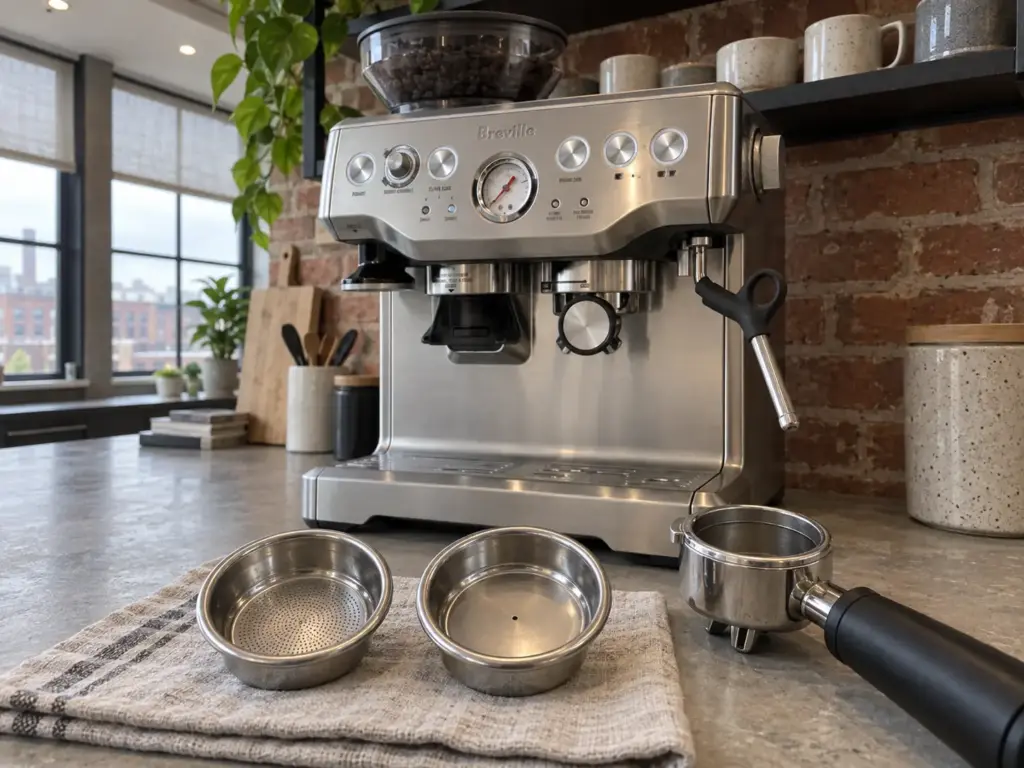
The Breville BES870XL Barista Express is the clearest example, because its manual spells out what the number is. Its built-in grinder is a conical burr set with a numbered GRIND SIZE selector from 1 to 16, where a smaller number is finer, and this instruction: “We recommend you start at setting 5 and adjust as required.”
The same manual warns that the selector “will need to be adjusted a few times to achieve the correct extraction rate,” so the maker itself budgets several test shots. Its sibling, the Barista Express Impress, has 25 settings on its dial according to Breville’s tutorial. Same brand, different scale: the number is a position, not a size.
The Barista Express sits in the premium class of home machines, and it comes with two costs to know about. Its dial can run out at the fine end on light roasts until you reset the adjustable upper burr (covered further down), and Amazon’s review summary notes some owners reporting the grinder stopping and the machine breaking after about three years of use.
Numbers don’t travel between grinders either. Espresso settings differ from grinder to grinder, so a setting from one model means little on another. Neither figure means anything on the next grinder, and the longer answer is in what the number on a grinder actually means.
Single Wall or Dual Wall: Which Basket You’re Grinding For
The Barista Express ships with two kinds of basket, and the difference changes the advice about grind. Its manual is direct: “Use Single Wall filter baskets if grinding fresh whole coffee beans.” Pre-ground goes in the dual-wall basket (the kind often sold as a pressurized basket), and “Dual Wall filter baskets regulate the pressure and help to optimize the extraction regardless of the grind, dose, tamp pressure or freshness.”
My reading of that line, which is mine and not the manual’s: in a dual-wall basket, the basket builds the resistance that the puck would otherwise build, so the shot clock stops measuring your grind. “Grind finer if it runs fast” is sound advice with a single-wall basket and close to meaningless with a dual-wall one. Everything in this article about dialing in by time assumes the single-wall basket.
The manual’s troubleshooting table shows what happens when the two get mixed. Under the problem “No crema. Drip tray fills too quickly.” one of the listed causes is “Single Wall filter baskets are being used with pre-ground coffee.”
So if you move a bag of pre-ground espresso from one basket to the other, you haven’t changed one variable. You’ve changed the whole shot.
Pre-Ground Espresso and the Machines Built for It
Machines with no grinder at all put the burden on the bag. The De’Longhi EC260–265 instruction manual shows it: the coffee goes in already ground (“Place the ground coffee filter (C3) or (C4) in the portafilter.”), and its one-shot filter is listed as suitable for ESE pods.
Its troubleshooting is about what you bought. No crema: the cause is “The coffee is not suitable for espresso,” and the remedy offered is finer ground coffee. Coffee dripping too slowly: “The coffee is too fine or damp,” answered with “Use only pre-ground coffee for espresso coffee makers and make sure it is not damp.”
What that manual doesn’t give you is a time or a weight to steer by, so the dial-in method above has nothing to hold onto on that machine family. Your adjustments there are a different bag, a fresher bag, or a drier one. And a bag, unlike a grinder, can’t be ground a step finer on the morning the shot asks for it.
When a Fast Shot Is Not the Grind’s Fault
Before the dial goes finer for the fourth time, check the things that make a shot run fast even at the right setting. Turning the grinder to fix them only moves you into the wrong corner.
The Bag: Roast Date and Freshness
Start with the free check. Sweet Maria’s notes that the freshness of the beans and their degree of roast “impact how the water is absorbed and pushes through the puck.” Breville’s troubleshooting asks for whole bean coffee used between 5 and 20 days after the Roasted On date, and for pre-ground to be used within a week of grinding.
Fresh beans still carry gas that they release when water hits them; older beans have lost most of it, and the puck built from them lets water through faster at the same setting. Look at the date on the bag before you look at the dial. If you’re not sure whether the beans are the problem, how to tell if the beans have gone stale walks through the signs.
The Dose and the Basket
An under-filled basket gives water an easy path. Breville’s manual says that if the espresso starts to flow in under 3 seconds, you “have either under dosed the filter basket and/or the grind is too coarse.” Two causes, one symptom.
Weigh the dose before you blame the grinder: a basket built for 18 g that gets 16.5 leaves more headspace and a thinner bed, and the shot runs fast at a setting that was right yesterday. Check the basket while you’re at it, since the same manual lists pre-ground coffee in a single-wall basket as a cause of no crema, whatever the dial says.
The Puck and the Machine
A shot can start right and then gush. Sweet Maria’s names the usual reason: “Uneven grind can cause all sorts of problems, including too fast an extraction and channeling in the puck.” Channeling is water finding a crack or a loose patch in the puck and pouring through it, and Sweet Maria’s describes the giveaway: a shot that looks good for a few seconds and then suddenly gushes out blond. That is a hole, not a coarse grind.
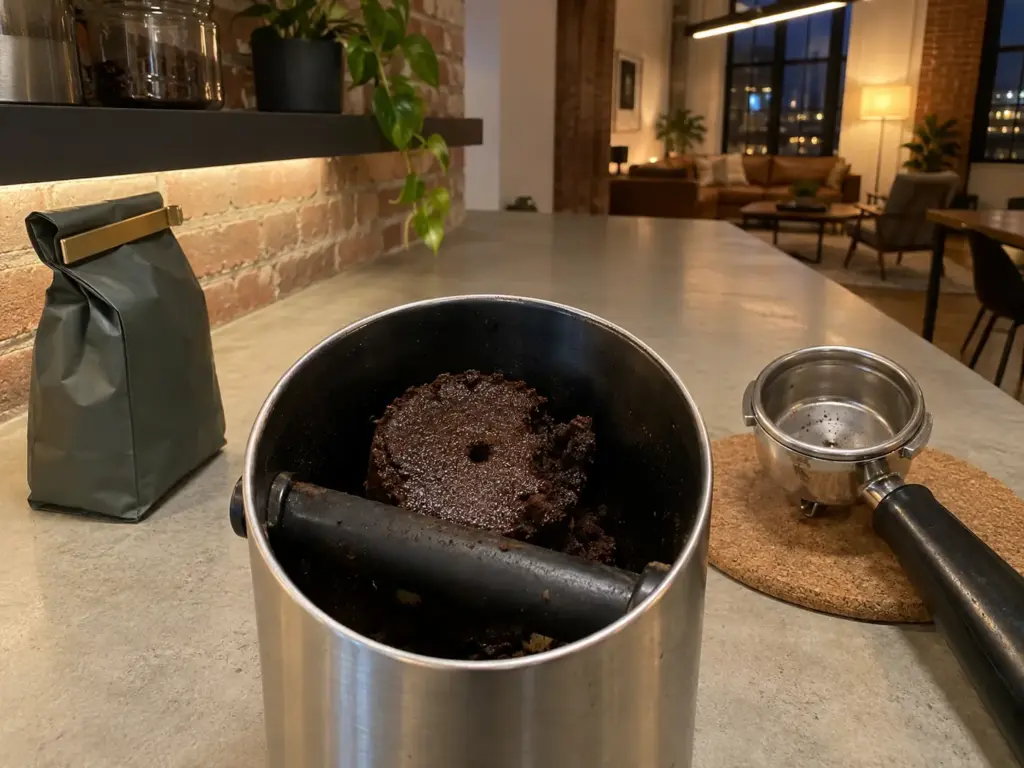
Knock the puck out afterward and look. A soupy puck with a pinhole on top is the channel you couldn’t see during the shot, and Breville’s manual sends a wet puck straight to its under-extraction section. A tamp that is too light shows up in the same manual as a cause of no crema. How you distribute and tamp the coffee is its own subject; for now, keep it the same from shot to shot.
The machine comes last because it is the least likely. When a setting keeps drifting finer, the pump is one suspect, since a slipping pump can change the flow rate a lot. On a machine with a group-head gauge, a too-coarse shot shows up as low pressure. Pump pressure is a longer conversation, but if the gauge reads low with a fresh bag at a weighed dose, the grinder isn’t your problem.
Check them in this order, free and likeliest first, and pull a shot after each one:
- The bag: the roast date, and how long it has been open.
- The dose: weigh it to the tenth.
- The basket: single wall for fresh-ground coffee.
- The puck: even distribution and the same tamp every time.
- The machine: the pressure, if you have a gauge to read it.
Before any adjustment on a new machine or a new grinder, pull one shot with a bag roasted in the last couple of weeks, at a weighed dose. If that shot still runs fast at the finest setting, the grinder is the limit; if it lands in the window, the old bag was.
Month Two: When the Same Setting Stops Giving the Same Shot
A setting that worked last week is a record of that bag on that day. It isn’t a fact about your grinder. Three things move it after the first week, and one of them is the grinder itself running out of room.
The Bag Ages Under the Dial
Sweet Maria’s says the grind has to change “as you use a pound of pre-roasted beans and the beans age.” In practice that means drifting finer as the bag gets older, then going back to the written setting when a fresh bag of the same coffee arrives. You can check it without guessing: if the shot has crept faster over a week, open a new bag at the old setting. When the time comes back, it was the bag.
Some beans simply live finer. Decaf usually needs a much finer grind, and on a low-end machine, lighter roasts can take a choked-up grind and a long shot to taste right.
Over longer stretches the setting can walk for reasons that are hard to pin down. A setting can hold for years and then need a change: one machine’s sweet spot sat around the middle of its scale for years before it needed a much finer setting. The usual suspects are the beans, the dose, humidity and the pump. That is one machine, so treat it as a reason to recheck the basics, not a rule about grinders.
When the Dial Runs Out of Numbers
The dial reads 1, the shot gushes anyway, and the number you were trusting has nowhere left to go. On the Barista Express there is a fix inside the machine: its manual describes “the ability to extend this range with an adjustable upper burr,” and recommends making only one adjustment at a time. Resetting it shifts the whole grind range, so setting 5 no longer means what it did before.
On a grinder without that adjustment, the limit is the grinder. Run the checks in the previous section before you conclude that (a stale bag at the finest setting looks exactly like a grinder that can’t go fine enough). If a fresh bag at a weighed dose still runs fast at the bottom of the dial, the next stop is a grinder that won’t go fine enough and what can still be done with it.
A Grinder With Steps Small Enough for Espresso
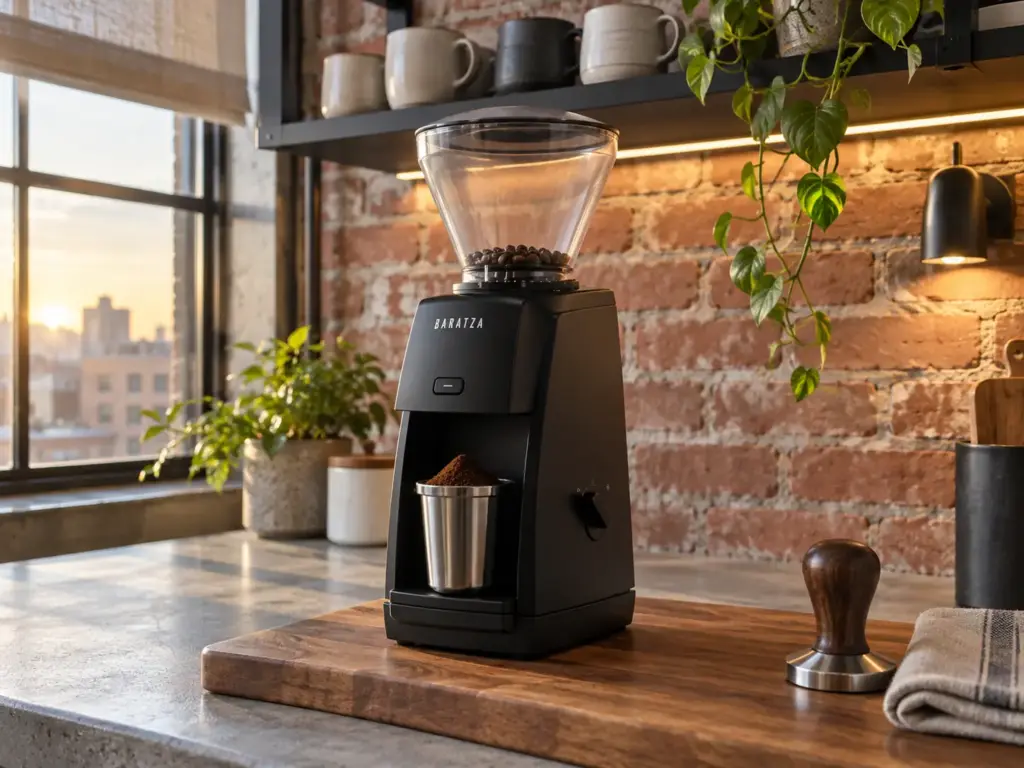
There is a quieter limit, too: a grinder that reaches espresso but can’t land it. The Baratza Virtuoso is generally considered to have inadequate adjustability for espresso.
A grinder built for filter coffee can reach the fine end and still jump clean across the window in a single step. Sweet Maria’s points the other way for the same reason: a stepless adjustment lets you make the slight changes the fine end asks for. That is a grinder question, and how far one step moves on an espresso grinder takes it up in microns per click.
Two grinders built for the fine end show the two routes. The Baratza Encore ESP splits its 40 settings in two, with micro-steps 1 to 20 reserved for espresso and larger steps above them for filter, on 40 mm conical steel burrs. It answers the steps-too-big problem without moving up to the premium class. The trade-offs show up in its reviews: Amazon’s summary says the plastic burr holder and paddle wheel are prone to breaking, and the retention makes purging after every change part of using it.
For the hand-cranked route, the TIMEMORE Chestnut C3 ESP is built to reach espresso with a step you can count: its listing gives a “minor adjustment of 0.0233mm per click,” about 23 microns, on a 38 mm steel conical burr, for a fraction of what an electric espresso grinder costs.
Its reviews don’t show a repeated complaint, so the caution comes from the spec. Twenty-three microns per click is a coarser step than the finest hand grinders offer, which means a shot can sit between two clicks at the very edge of the window, and grinding a double by hand takes real effort every morning.
Weigh the Dose, Time the Shot, Then Touch the Grinder
Three things to carry to the machine:
- Espresso’s grind is set by the shot, about 25 to 30 seconds for a double near 1:2, not by a texture word or a micron number. Fine gets you close; the clock finishes the job.
- Hold the recipe still and move the grinder one step per shot, reading the direction from time and taste together, and purge after every change.
- Check the bag, the dose and the basket before you blame the grind, and expect the setting to creep finer as a bag ages.
A few weeks from now, open a fresh bag of the same coffee at the setting you wrote on the last one and time the shot: if it comes back into the window, your grinder is holding its setting, and if it has to go finer with every new bag, the grinder or its range is the next thing to look at.
Tomorrow morning, weigh the dose, weigh the yield, time the shot, and change nothing but the grind. Then taste, and let that cup tell you which way to move for the next one. Once the grind is under control, the bean is the next thing that moves the setting, starting with which roast works for espresso and whether a bag labeled espresso roast is the one to dial in on.
Frequently Asked Questions
01What is the perfect grind size for espresso?
No single size works on every grinder: the right espresso grind runs a double of about 18–20 g into roughly twice that weight in 25–30 seconds. Start finer than table salt, then let the shot time set the rest.
02Is an espresso shot 1 or 2 oz?
A single espresso is about 1 oz (25–35 ml) and a double about 2 oz, going by the heritage definition the SCA reprints. Most people now weigh the shot instead, and a typical double lands around 36–40 g.
03What grind size does Starbucks use for espresso?
Starbucks’ home brewing guide calls espresso an extra fine grind that resembles powdered sugar, and it does not publish the grinder setting its stores use. At home, the shot time tells you more than any label.
04Can you use pre-ground coffee for espresso?
Yes, in a dual-wall basket: the Breville Barista Express manual says to use dual-wall baskets with pre-ground coffee and single-wall ones for freshly ground beans. In a single-wall basket the same manual lists pre-ground as a cause of no crema, and a bag can’t be ground finer when the shot calls for it.
05What type of coffee grind is best for espresso?
A fine, even grind from a burr grinder whose steps are small enough at the fine end to move a shot a few seconds at a time. A blade grinder makes powder and chunks at once, which runs unevenly and channels through the puck.



How did your cup turn out?
No comments yet. Tell us what you changed — and whether the needle moved.