
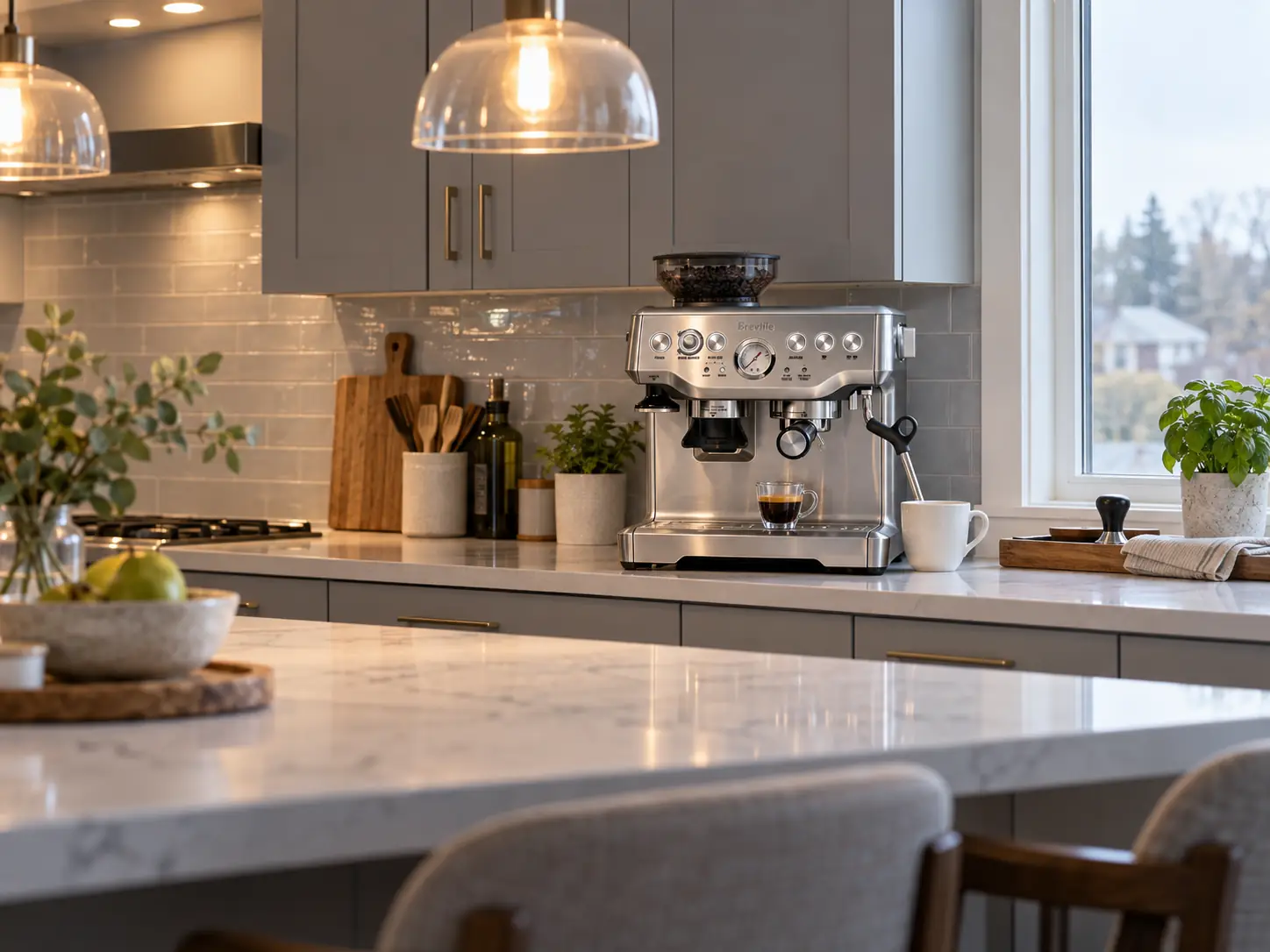
We may earn a commission when you buy through links on this page. It never changes what we recommend. How we pick
On this page8 parts
- What "Espresso Roast" on a Bag Actually Tells You
- Why Dark Roast Became the Espresso Default, and What It Costs
- What a Light Roast Demands From Your Grinder and Machine
- Which Roast to Buy for the Machine You Already Own
- Fixing the Shot: Sour or Bitter, One Change at a Time
- When It Isn't the Roast at All
- Pick the Roast Your Gear Can Pull, Then Move One Step
- Frequently Asked Questions
You open a new bag with espresso roast printed across the front, leave the grinder where it sat for the last bag, and the shot from your espresso machine runs out thin and pale, tasting sharp enough to make you wince. So, should espresso be light or dark roast? It depends on the machine and grinder on your counter and on whether milk goes in, with medium as the usual landing spot.
A lighter bean is denser and gives up its solubles more slowly, so the same grind and the same seconds send the water through before it has finished its work, and the cup lands on the sour side. Pulling a medium roast exactly the way you always pulled dark can taste like gasoline, and the right instinct is to blame the technique rather than the beans. The sections below cover what the bag label means, what each roast costs you, which one to buy for your gear, and the one-change fix for a sour or bitter shot.
Quick Answer
Neither roast is the rule: espresso is a way of brewing, and espresso roast on a bag is a label, not a roast level. Dark or medium-dark is the forgiving pick under milk. Light works but asks for a finer, even grind, hot water and a longer shot, so medium is where most home machines land.
What “Espresso Roast” on a Bag Actually Tells You
Before you pick a roast, it helps to know that the bag will not pick one for you. Should espresso be light or dark roast is a fair question, but the words on the front of the bag answer a different one, and it is worth asking whether espresso roast is a roast level, a promise, or simply a word that sells. The broader story of how light and dark roasts differ in the cup has its own page; here the only question is what happens in the portafilter.
Espresso is a way of brewing, not a roast
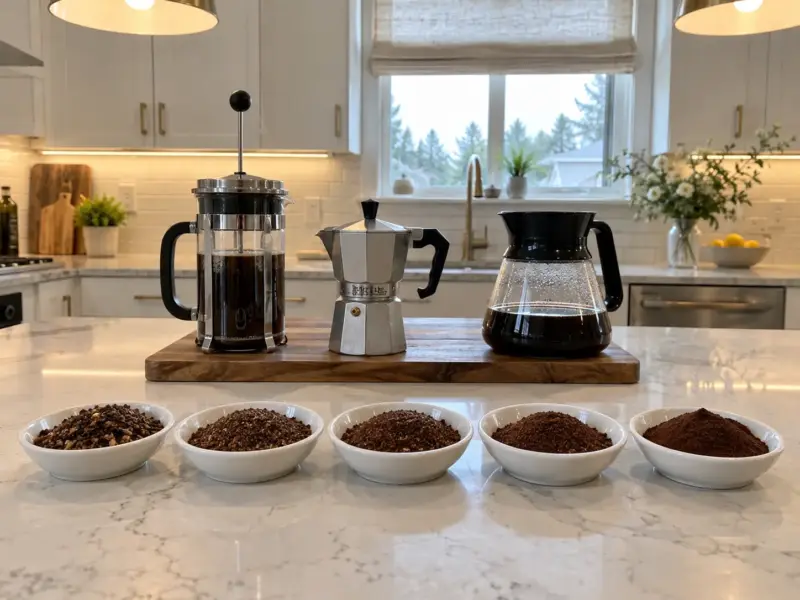
Picture the supermarket shelf: two bags in your hands, both saying espresso, one the color of milk chocolate and the other nearly black with a sheen of oil on the beans. Both labels are telling the truth in the only sense they can, because espresso names the brew. The heritage definition printed with the Specialty Coffee Association’s survey of 275 baristas reads like a recipe for the machine: clean water at 195–205 °F (90.5–96.1 °C), pushed through the coffee at roughly 9–10 atmospheres, a grind fine enough that the shot takes 20–30 seconds, and 14–18 g of coffee for a double (roughly half an ounce to two-thirds of an ounce of beans). The roasts at either end of the shelf, from a pale light roast to an Italian roast or a French roast, all have to fit inside that same window.
Read it again and look for the roast. It is not there. Any bean that can be ground fine enough and wetted evenly enough becomes an espresso bean the moment it lands in the basket. The idea that you must use dark roast for espresso is a common misconception.
Why one coffee carries two roast words
If espresso were a roast level, you could measure it. You cannot, and not because roasters are careless: a study in Scientific Reports notes that roast degree has no universal quantified scale, and that color, density, mass loss, time and temperature are all used to describe it. One roaster’s medium is another’s light, and the bag only prints the word.
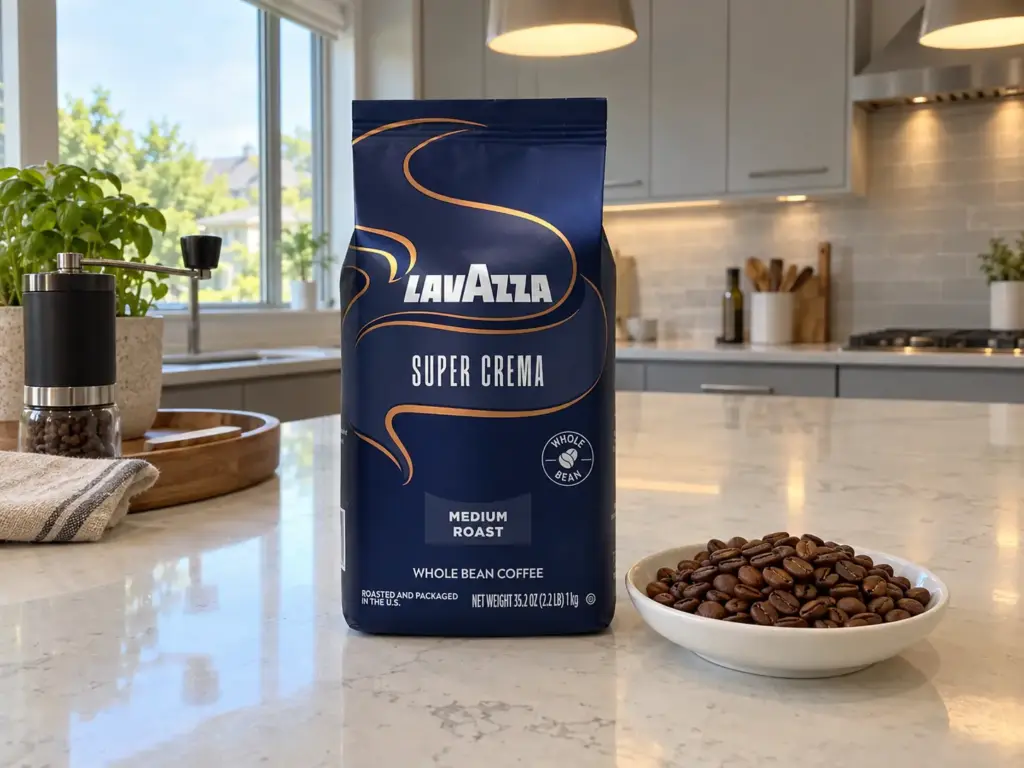
The clearest proof sits on Amazon. Lavazza Super Crema, a whole-bean 2.2 lb bag and one of the most familiar supermarket espresso blends, is titled “Medium Espresso Roast” on one listing and “light-Medium Espresso Roast” on another, for the same coffee. It is a reasonable, forgiving medium bag to start a home machine on, but beans can arrive stale, so the date stamped on the bag tells you more than either roast word. When you are standing in front of the shelf deciding which bag to carry home, the best supermarket coffee beans for espresso is the next question to settle.
Write the grinder setting that gave you a 25–30 second shot on the bag itself before you throw it out. When the next bag looks paler in the hand, start one step finer than that number; when it looks darker and oilier, start one step coarser. The setting a bag needed tells you more about its roast than anything printed on it.
What an “espresso blend” can hide
The same Lavazza listing describes the coffee as an Arabica and Robusta blend. In that 2017 survey, 96 % of the baristas said Robusta is not a component of espresso at all. Neither statement makes the other wrong: one is the bag’s label and the other is how a group of specialty baristas answered a question, and the gap between them shows how much the word espresso can cover. If the blend matters to you, what Arabica and Robusta change in the bag is where that gets sorted out.
The roast word, the blend, and anything else printed beside them describe the bean and the roast, not what a cup does to a person; if your real question is about your own health rather than the taste, that one belongs with your doctor. Everything about the shot itself stays on this page.
Why Dark Roast Became the Espresso Default, and What It Costs
Dark roast earned its place on the espresso shelf, and that deserves to be said before anything else. The tradition is real and the forgiveness is real: a dark bag tends to pull a drinkable shot across a wider range of grind settings than a lighter one, with the roasty, caramel and smoky notes that people expect from espresso. That forgiveness has a cost, though, and it shows up in the grinder after a few weeks rather than in the first cup.
Why darker beans give up their solubles more easily
Heat changes the inside of a bean. The longer it roasts, the more the cell structure opens up, and a Scientific Reports study of roast degree and extraction found exactly that under the microscope: “Scanning electron microscopy was used to measure porosity of roasted seeds and showed increasing porosity with the degree of roast.” A more porous bean lets the water in faster and gives up its solubles with less coaxing, which is why a grind a step too coarse still pulls something drinkable from a dark roast. If you want the physics of what heat does to a coffee bean, it has its own page.
But darker does not mean more extracted. The same paper, working in filter brews, found that extraction yields generally fell for roasts past about 12–14 % mass loss. The darkest beans open up and then have less left to give. That is the forgiving part and its ceiling in one finding.
Where the bitter default came from
There is one common explanation for why dark became the shelf default. Many bars serve 70/30 or 80/20 natural and dark roast blends, so people expect a bitter note in a strong espresso. Dark roast can carry a burnt taste that masks the coffee flavors, while some drinkers want that burnt, bitter note in an Americano.
Treat it as a plausible account rather than verified history. In the end, the question comes down to taste, which is subjective.
Milk is the other reason, and this is judgment rather than a sourced rule: the roasted, bittersweet notes of a dark bean carry through steamed milk, while the brighter flavors of a light roast tend to vanish under it. For lattes, cappuccinos and flat whites, the forgiving roast does its job. Peet’s Espresso Forte is a typical example of that style: a dark, 100 % Arabica whole bean in a 32 oz bag, with the roast date printed on it, which is the detail that matters most. Freshness is uneven, though, and bags can arrive stale, so check that date before the first shot.
The flaw: oil on the burrs by month two
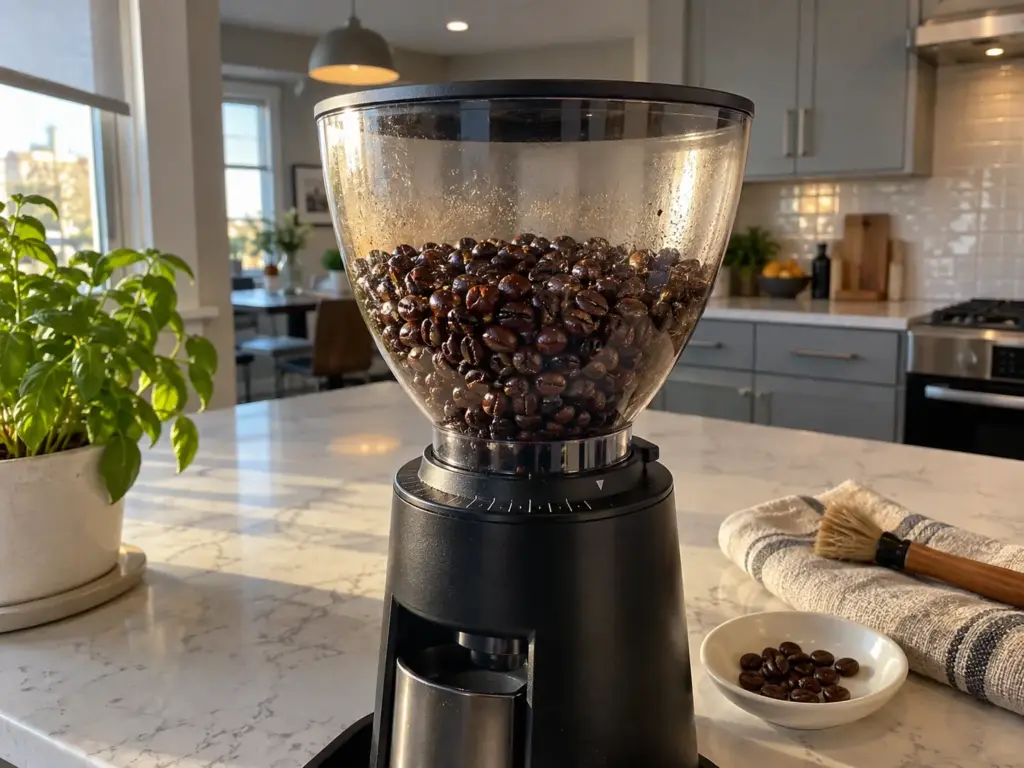
This is where the forgiving roast sends its bill. Dark beans carry oils on the surface, and these oily beans leave a film behind: one equipment retailer’s grinder-cleaning guide notes that dark-roast oil builds up on burrs faster than any other residue and eventually causes clumping and grind drift.
By the second month of a dark bag, the hopper wall looks glossy, the beans stop falling evenly into the burrs, and the shot runs a few seconds faster at the same setting than it did when the bag was new. The roast did not change. The grinder did.
The free step comes first: empty the hopper, wipe the oil off its walls with a dry cloth, and clean the burrs the way your grinder’s manual describes. If the burrs still feel tacky after that, Urnex Grindz cleaning tablets run through the grinder like beans and pull the oily residue out with them. They come as three single-use packets, and value is the common complaint in their reviews: three cleanings disappear quickly, so a brush and a wipe should handle the weekly work and the tablets the occasional deep clean. If you are still on burr and blade grinders as a decision, oil is one more reason burrs need regular attention.
If your shot time creeps a few seconds shorter over two or three weeks of the same dark bag at the same setting, look at the burrs before you touch the dial. Grinding finer to chase an oily grinder only buries the problem, and the shots jump back the day you clean it.
What a Light Roast Demands From Your Grinder and Machine
Light roast is not off-limits for espresso. There is no technical reason you cannot pull an espresso shot with a very light roast. The real question is what a light roast asks of the gear you own, and whether your grinder and machine can deliver it.
Dense beans resist the water
Start with the direction. A sour shot means the water left before it finished, and a light roast pushes in that direction on its own: it is denser and less porous, so it holds onto its solubles longer. What you get in return is the bright, fruity, floral side of the bean, and the same brightness turns acidic and thin in the cup when the shot is under-extracted. Light roasted beans tend to be harder, and City to City+ roasts can still taste fairly sour as espresso shots, while anything lighter mostly tastes grassy and sour.
So the same roast word does not even guarantee the same cup. That answer adds that “sourness varies with bean age, bean origin, and growing season,” which is why two light bags can pull very differently at the same setting. Put a gift bag of light roast through an entry grinder at your usual setting and the shot runs in a flash and tastes sharp, and the instinct is to blame the coffee. It is usually the grind.
Why the evenness of the grind matters more than the setting
A finer grind is the obvious answer, and it is half of it. A peer-reviewed espresso extraction study found that the share of fines, particles under 100 µm, changes how an espresso extracts even when the median grind size is the same. In plain terms, two grinders set to “the same” size pull different shots, because one makes a more even grind than the other. A dense light roast exposes that difference fast, because it has no porosity to cover for an uneven grind the way a dark roast does, and the uneven bed is where channeling starts: water finds a crack in the puck and runs through it, leaving the rest of the coffee short of sweetness.
The free steps come in order, with a taste between each:
- Go one step finer to dial in the new bag. For anyone moving away from dark roast, the advice is to grind a bit finer, which should slow the shot and soften the sourness.
- Lengthen the shot. A starting point for light and medium roasts is about 1:2.5 or longer in 30 to 35 seconds, and it comes from home brewers, not a standard.
- Weigh both the dose and the yield before deciding the grinder is the limit.
If all three are done and the shot still gushes, the grinder may simply lack the reach.
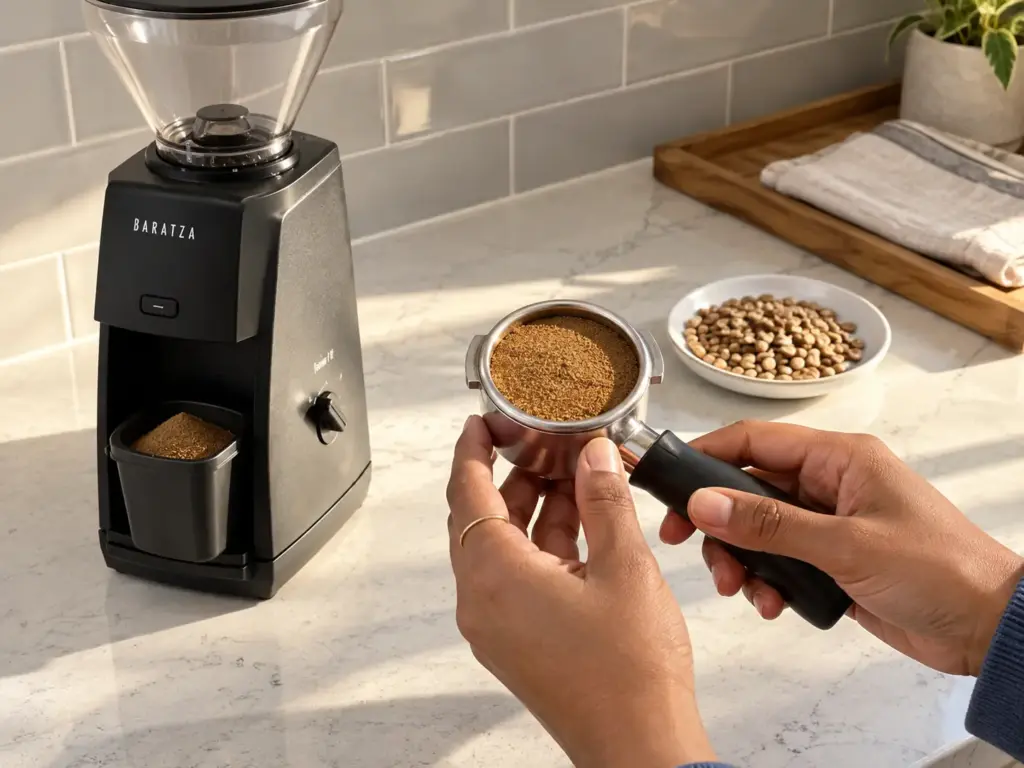
The Baratza Encore ESP is the entry grinder built for this job, with 40 mm conical steel burrs designed to reach espresso fineness. Its weak point is durability: plastic parts can break after about six months, and some units stop working early. A dense light roast puts more strain on those parts than a porous dark one. If your current grinder is already at its finest setting, a grinder that will not go fine enough walks through whether it is maxed out or worn, and what grinder is best for espresso covers the step up.
Moving from a dark bag to a lighter one, turn the grinder one step finer before the first shot of the new bag, not after a wasted one. A medium or light bean at a dark-roast setting will almost always run fast, so the first shot at the old setting tells you nothing new.
What a machine that runs cool does to a light roast
A common rule of thumb splits the water temperature by roast: cooler for dark, hotter for light. It sounds precise. But the SCA’s heritage definition of espresso gives one window for every roast, 195–205 °F (90.5–96.1 °C) and 20–30 seconds, and the baristas in its survey averaged 200.3 °F (93.5 °C). The per-roast split is one roaster’s rule of thumb, and nothing the SCA publishes backs a per-roast table.
The hot-water advice for light roast is not wrong, but it only helps if your machine can deliver it. A machine that cannot hold its temperature inside that window turns a light roast into a gamble, and that is judgment reasoned from the SCA window, not a measured rule. The same goes for a machine with a pressurized basket and a modest grinder: that combination makes medium or dark the practical choice, because it gives the shot little room to be helped. The cup is the final judge either way.
Which Roast to Buy for the Machine You Already Own
The gear sets the roast more than the roast sets the gear. Two questions decide it: are you making milk drinks or straight shots, and how much help does your setup give the shot? A grinder that keeps its evenness at fine settings and a machine that holds its temperature both count as help; this is judgment, built from everything above, rather than a sourced rule.
Milk drinks and the forgiving roast
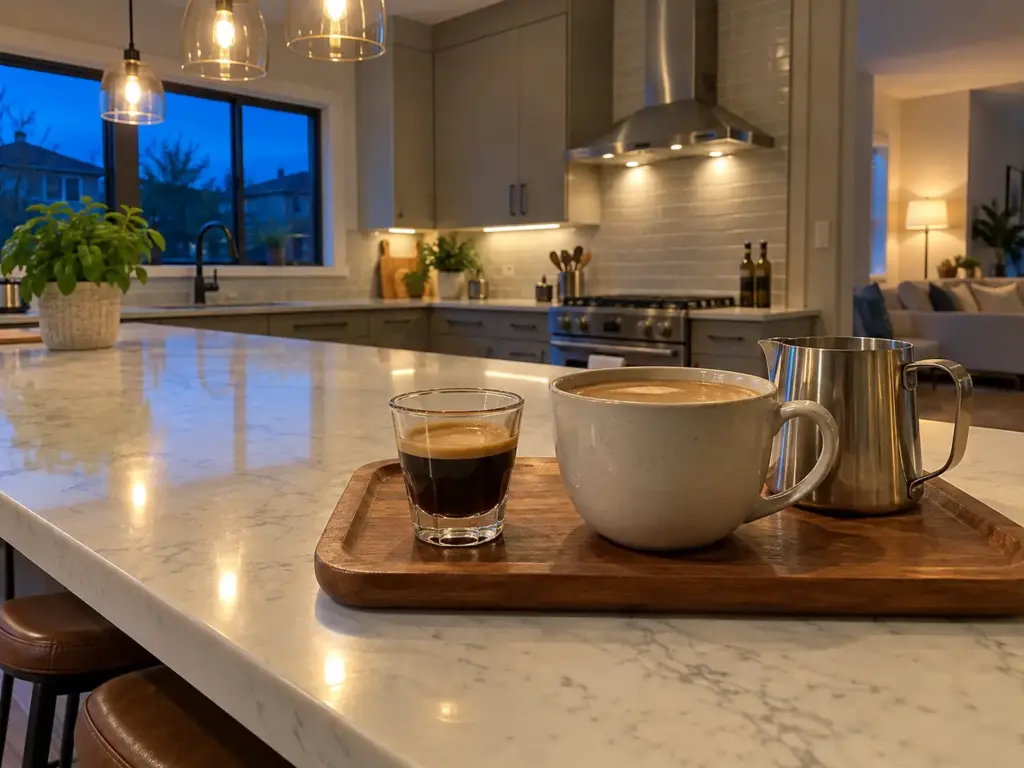
If most of what you pull ends up under steamed milk, dark or medium-dark covers a modest setup well. It tolerates a grind slightly off, its roasted notes survive the milk, and an entry grinder can get it into the 25–30 second window without strain. You give up the brighter flavors of the bean, and under milk you would barely taste them anyway.
Straight shots and what a light roast asks of you
Straight shots change the math. With nothing to hide behind, the bean’s own character is what you are paying for, and medium is the first roast to try; light only makes sense when the grinder reaches fine and even and the machine holds its window.
Many beginners own an all-in-one like the Breville Barista Express (BES870XL), which pairs a semi-automatic machine with an integrated conical burr grinder, 16 grind settings plus an adjustable upper burr. Its built-in grinder and temperature are the practical ceiling for a light roast. Longevity is the other caveat: the grinder can stop and the machine can break after about three years of use.
There is a tell that the machine, not the roast, is the limit. If every bag you put in gives the same fast, sharp shot, whatever its roast, and the grinder is already at its finest setting, the gear is telling you what it can pull.
Medium as the usual landing spot
Medium is where most home setups end up, and for good reason. It keeps most of the forgiveness of a dark roast without the burnt note, and it asks less of the grinder than a light roast does. If straight shots of a medium roast start to bore you, whether single origin works for espresso is the natural next step, and if the same bag also goes into a dripper, light or dark roast for pour over is its own question.
| Roast | Milk drinks | Straight shots | What it asks of your gear | Its flaw |
|---|---|---|---|---|
| Dark / medium-dark | The forgiving pick | Bitter, roasty, can mask the bean | Little: tolerates a modest grinder | Oil on the burrs, grind drift by month two |
| Medium | Works well | The usual landing spot | A step finer than dark, an even grind | Sour if pulled at a dark-roast setting |
| Light | Brightness fades under milk | Rewarding when the gear delivers | Fine, even grind; hot water held in the window; a longer shot | Sour and fast on a modest grinder or a cool machine |
When the roast is settled, the buying question follows: which supermarket beans to buy for espresso, with the roast date as the first thing to read on any bag.
Fixing the Shot: Sour or Bitter, One Change at a Time
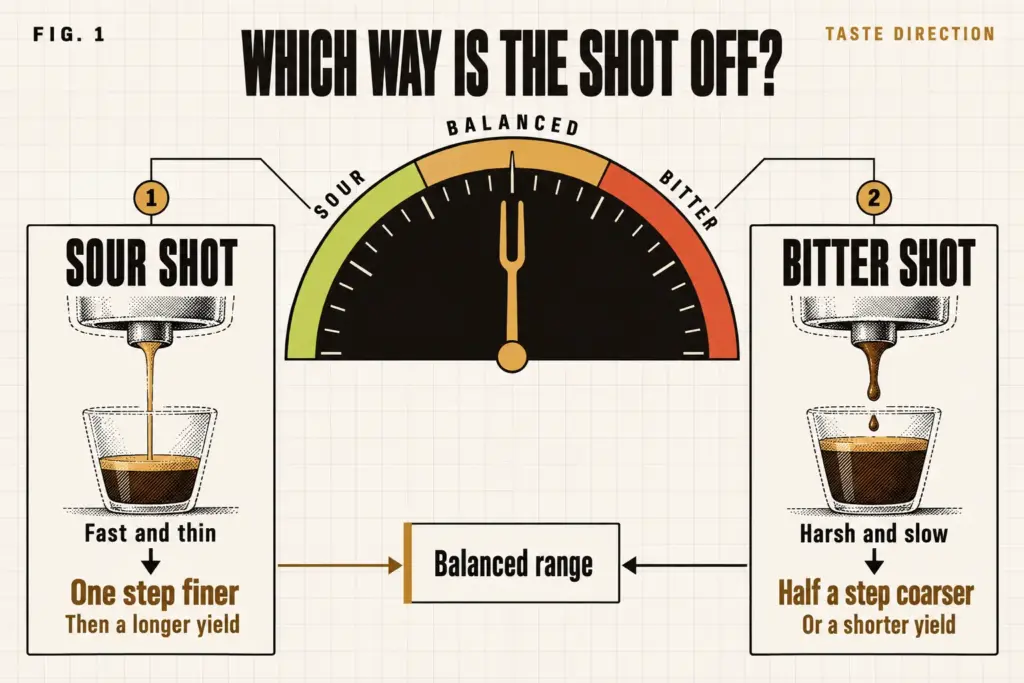
A sour shot and a bitter shot point in opposite directions. Sour, fast and thin means the water left before it finished; bitter, harsh and slow means it stayed too long and pulled out what you did not want. The direction decides the change, and changing the wrong way makes the next shot worse.
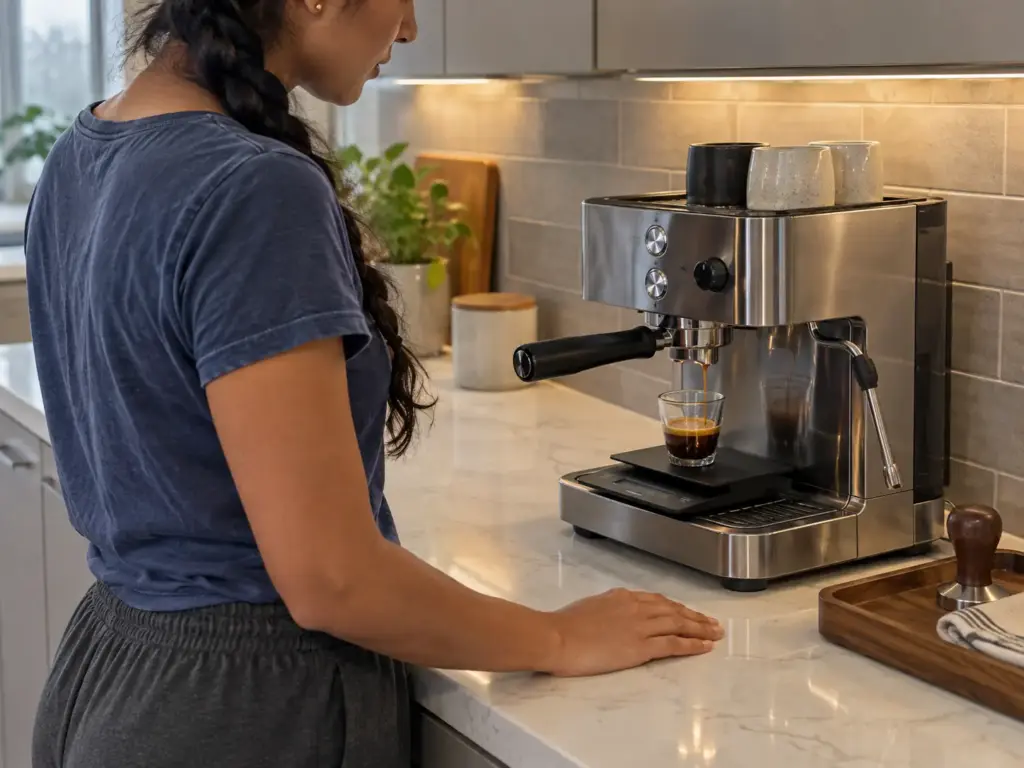
The changes come in order, the free and likeliest first, with a taste between each. Changing the grind, the dose and the yield together on three shots in a row leaves you with no idea which one helped, and the logic behind every step here is the same as how grind size changes taste in any brewer: finer pushes away from sour, coarser pushes away from bitter.
A sour shot: go one step finer first
A sour shot usually gives itself away before you taste it: the stream comes out pale and fast in the first few seconds instead of dripping slowly and darkening. That is under-extraction, and the target it misses has a number. An espresso extraction study puts it plainly: “During a typical espresso extraction around 20% of the solid coffee material is solubilized and extracted into the beverage (extraction yield).” A sour shot falls short of that; a bitter, over-extracted one goes well past it, and the sweetness sits in the narrow band between.
Work through these one at a time:
- One step finer on the grinder, where a step means what a step is on your grinder’s dial. The next shot should run a few seconds longer and taste rounder and sweeter. If it turns bitter and drips, you went too far; come back half a step.
- A longer yield, on light and medium roasts only: about 1:2.5 in 30 to 35 seconds. Done right, the sharp edge softens; overshoot it and the shot turns thin and watery.
- More heat, only if your machine lets you set it. Most entry machines do not, and that is when the roast, not the recipe, is the thing to change.
How far to move by roast has its own page on how much to move the grind by roast.
A grinder holds grounds inside its chute, so the first dose after you turn the dial still comes out partly at the old setting. Grind a few grams and throw them away before the shot you are going to judge, or you will taste the change one shot late and over-correct.
A bitter shot: back off half a step
Bitter, harsh and slow is the opposite case, and it is common with dark roasts at a fine setting. Go half a step coarser rather than a full one, because a porous dark bean reacts quickly to a coarser grind and can swing straight to sour. If the grind is already where the grind size for espresso suggests, stop the shot sooner instead: a shorter yield leaves the last, most bitter part of the extraction in the puck. Either way, the next shot should taste less dry and leave less of a lingering bite, and if it turns sour, the half step was one step too many.
Weigh before you change anything else
Every number above depends on knowing what went in and what came out. The reference recipe from the 2017 survey is a sensible starting point: most baristas dosed 18–20 g, the average output was 36.5 g (about an ounce and a quarter of liquid), the ratio was about 1:2 within a range of 1:1.5 to 1:2.5, and 51 % ran their shots in 25 to 30 seconds. The average pressure reported was 8.5 bar.
According to the SCA and Barista Guild survey, “Our research suggests that the average barista uses a 1:2 brew ratio when extracting espresso and uses weight for output measurement.” In that survey, 82 % measured yield by weight, not by the volume in the cup, which crema inflates.
That 1:2 ratio is a starting point, not a target for every bag. On a light or medium roast, a longer 1:2.5 often tastes better; on a dark roast, 1:2 or a little shorter keeps the bitterness down. A scale is what lets you tell the difference, and it will change more shots than a new bag of coffee.
The Hario Drip Scale Timer reads in 0.1 g steps and has a timer built in, so dose, yield and seconds all come off one device. It is not the toughest scale around: it can break within six months, and there is a lag of about five seconds on the first weight, which means placing the cup a moment before you start the shot.
A cheaper kitchen scale, such as the Etekcity Food Kitchen Scale that many kitchens already have, weighs only in 1 g steps. That is fine for a pour-over but too coarse for espresso, where a single gram on an 18 g dose shifts the ratio noticeably.
When It Isn’t the Roast at All
Sometimes the roast is blameless and the bag has taken the fall for something else. Before you switch from dark to medium or from medium to light, rule out the causes that make any roast pull badly. If you have been blaming the beans for a week, these are the first places to look.
The roast date, not the bag label
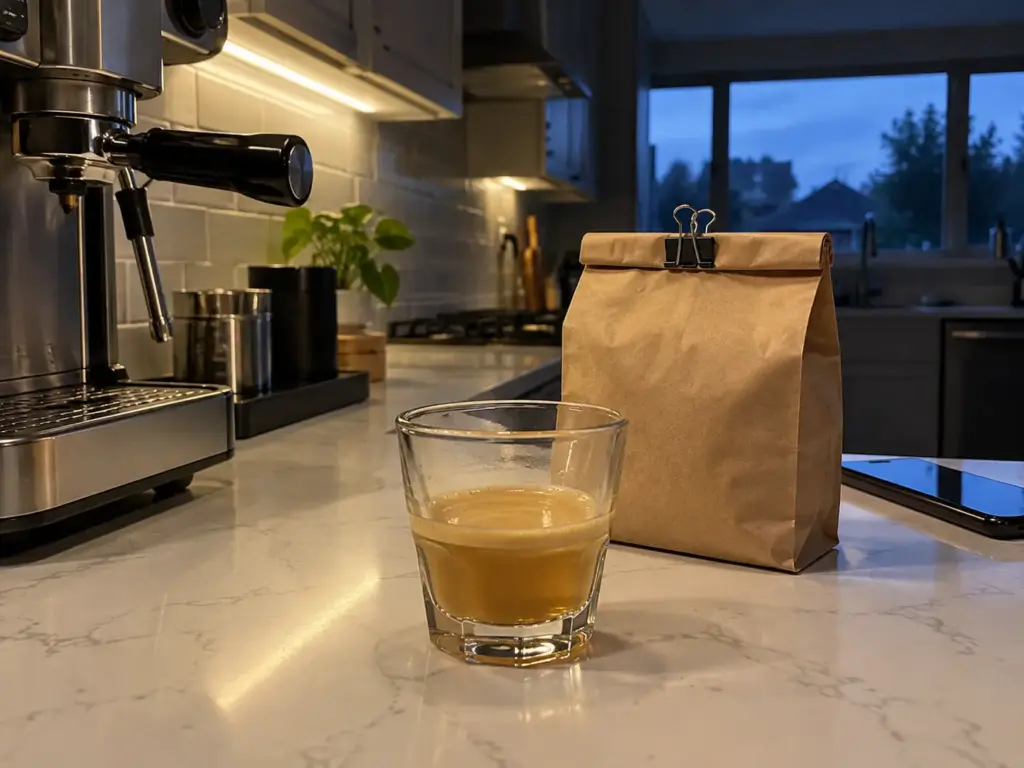
Freshness matters more than roast level. When buying supermarket beans, look for the package with the most recent roasting date: read the date first and the roast word second. Both coffees named earlier carry stale-bag complaints in their reviews, which is a freshness problem, not a roast one.
How long a bag stays good is covered in how long to keep coffee beans after opening, and if you suspect the beans have already gone flat, how to tell if coffee beans are stale walks through the signs. Grinding at home from whole beans only pays off when the beans are fresh, which is the point of reading the roast date first.
A grinder that drifted by month two
A grinder gets oily with dark roasts, as described above, and the drift is gradual: the same setting slowly gives faster shots. If your shot time has crept down without a new bag, clean the grinder before blaming the coffee or turning the dial.
A new bag at last week’s setting
You pull a shot at the setting you used all last week, with a bag that looked the same on the shelf, and it runs in 15 seconds and tastes like a lemon. The roast changed; the setting did not.
Two bags can look identical from the outside and still sit at different roast levels, so start each new bag with one test shot and adjust from there. And if your machine never reaches the 195–205 °F window in the first place, no roast will fix that. Roast also matters for other drinks in the house, and which roast makes better cold brew has its own answer.
Pick the Roast Your Gear Can Pull, Then Move One Step
Three things to take from this. Espresso is a way of brewing, and espresso roast on a bag is a label, not a measured roast level. Your machine and grinder decide which roast works: dark or medium-dark for milk drinks on modest gear, medium as the usual landing spot, and light only when the grinder reaches fine and even and the machine holds its temperature. When a shot goes wrong, read the direction first: a sour shot goes one step finer, a bitter one half a step coarser, one change and then a taste.
A month from now, check the roast date on whatever bag you are using and see whether the same grinder setting still gives a shot of the same length; if it runs faster, the burrs or the beans have changed, not your technique.
Tomorrow, weigh one shot: the dose going in and the yield coming out. Then move the grinder a single step in the direction the cup points and taste the next shot against the last. Once the roast question is settled, the next bag to buy is the only decision left.
Frequently Asked Questions
01Should espresso be light or dark roast if I mostly make milk drinks?
For milk drinks, dark or medium-dark is the forgiving pick, because its roasted notes carry through steamed milk and it tolerates a modest grinder. Medium works too if you want more of the bean to come through. A light roast loses most of its brighter flavors under milk.
02Can you use light roast coffee for espresso?
Yes, you can pull espresso with a light roast, but it asks more of your gear: a finer and more even grind, water held in the 195 to 205 °F window, and a longer shot. A modest grinder or a machine that runs cool makes it sour and fast.
03Is espresso roast the same as dark roast?
No. Espresso is a way of brewing, and espresso roast on a bag is a label with no measured roast level behind it. Roast degree has no universal scale, and the same coffee can be sold as medium on one listing and light-medium on another.
04Why is dark roast used for espresso?
Dark roast is more porous, so it gives up its solubles easily and pulls a drinkable shot across a wide range of grind settings. It also holds up under milk, and many drinkers expect its bitter note. The cost is oil on the burrs and a roasty taste that can hide the bean.
05Do I need to change my grind when I switch roasts?
Usually yes: go about one step finer when moving from dark to medium, and finer again for light, because lighter beans are denser and resist the water. Change one step, pull a shot, and taste before you move again.

How did your cup turn out?
No comments yet. Tell us what you changed — and whether the needle moved.