



We may earn a commission when you buy through links on this page. It never changes what we recommend. How we pick
On this page7 parts
- What a Shot Asks of a Bag That a Pot of Drip Never Does
- Roast Color and the Italian Blend on the Shelf
- How Old the Bag Is Matters More Than the Name on It
- The Oily Dark Bag and the Grinder It Leaves Behind
- A Roaster's Bag on a Supermarket Shelf Is Not Fresh by Default
- Find the Date, Move One Step, Taste Again
- Frequently Asked Questions
The shot you just pulled from a grocery-shelf bag tastes flat, or sharp at the front, or burnt at the back, and neither the grinder nor the machine is obviously to blame. Before you shop again for the best supermarket coffee beans for espresso, it helps to know what a shot does to a bag: hot water under pressure spends only a short time on the grounds, so whatever is stale, scorched or uneven in the beans comes through louder than it would in a pot of drip. That is why the roast date and the color of the roast decide the shot before the brand name does. The sections below take the exam in order: what a shot asks of a bag, how roast color and the Italian blend behave, how old is too old, what an oily dark bag does to a grinder, and where a roaster’s bag on the same shelf really stands.
Quick Answer
A supermarket bag pulls a usable espresso when it is whole bean, roasted medium to dark, and recent enough that the shot does not go flat and bitter. The roast date decides more than the brand does; the Italian robusta blends tolerate age best, but a palate that dislikes bitterness should not start there.
What a Shot Asks of a Bag That a Pot of Drip Never Does
A drip pot forgives a tired bean and a shot does not, so supermarket espresso beans have to be judged on the shot. In the basket of a drip coffee maker the water has time to find what is left in a weak bean; in a shot it gets one short, hard pass, and the dull, sour or scorched parts show first. Judge a bag on the wrong brewer and you can end up keeping the one that fails the only test you bought it for.
Why the top roundups judged the wrong test
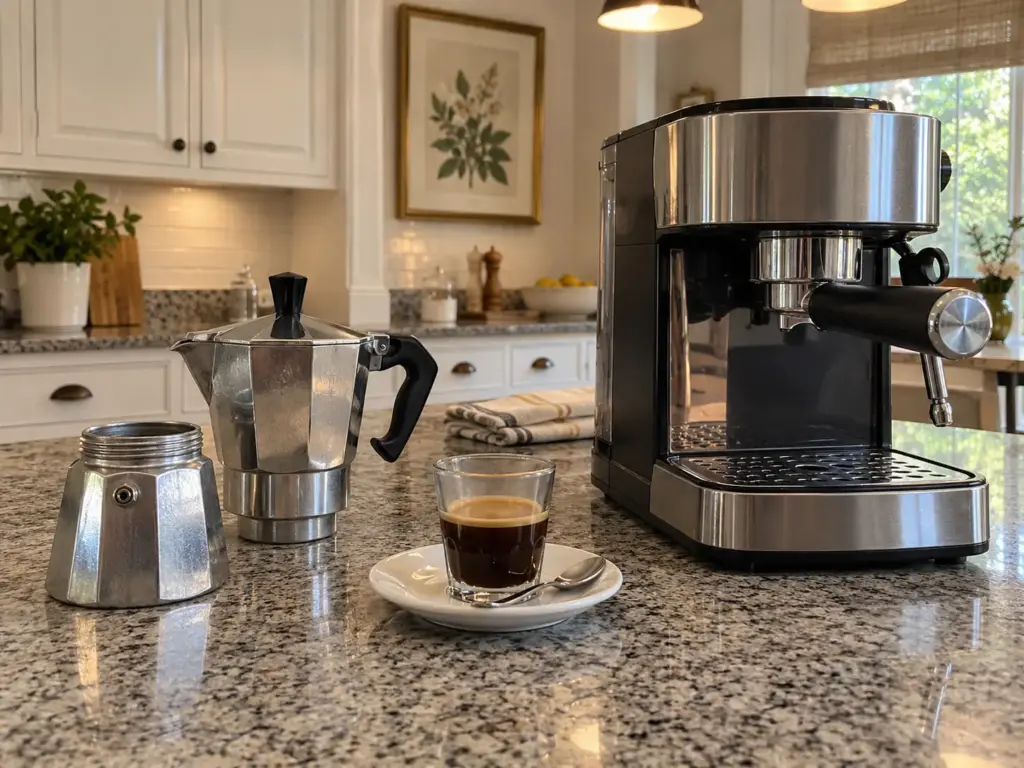
Two ranked taste tests of store-bought espresso beans, both from food sites, brewed their “espresso” in a moka pot. That is a stovetop brewer that pushes water up through the grounds on the steam building in its own base, at far lower pressure than a machine, so what it grades is how a bag tastes from a moka pot and nothing more. Crema, the layer a machine builds on top of a shot, was never part of that test.
The bias is easy to see even without a measurement. A moka pot takes a coarser grind and gives the water a slower pass than an espresso machine does, so it may hide some of the thin, sour, hollow note a stale bean gives under pressure, and it may flatter roasty, bitter-leaning bags that a tightly packed puck would turn harsh. So a bag ranked first from a moka pot can be the one that disappoints on your espresso machine, and a bag marked down for tasting weak may be fine once the grind suits a shot. One of those tastings even allowed that a stale note could come from shipping and storage rather than from the coffee itself, which is the whole problem in a sentence: a ranking like that cannot tell a bag from its age.
Which way the shot is off
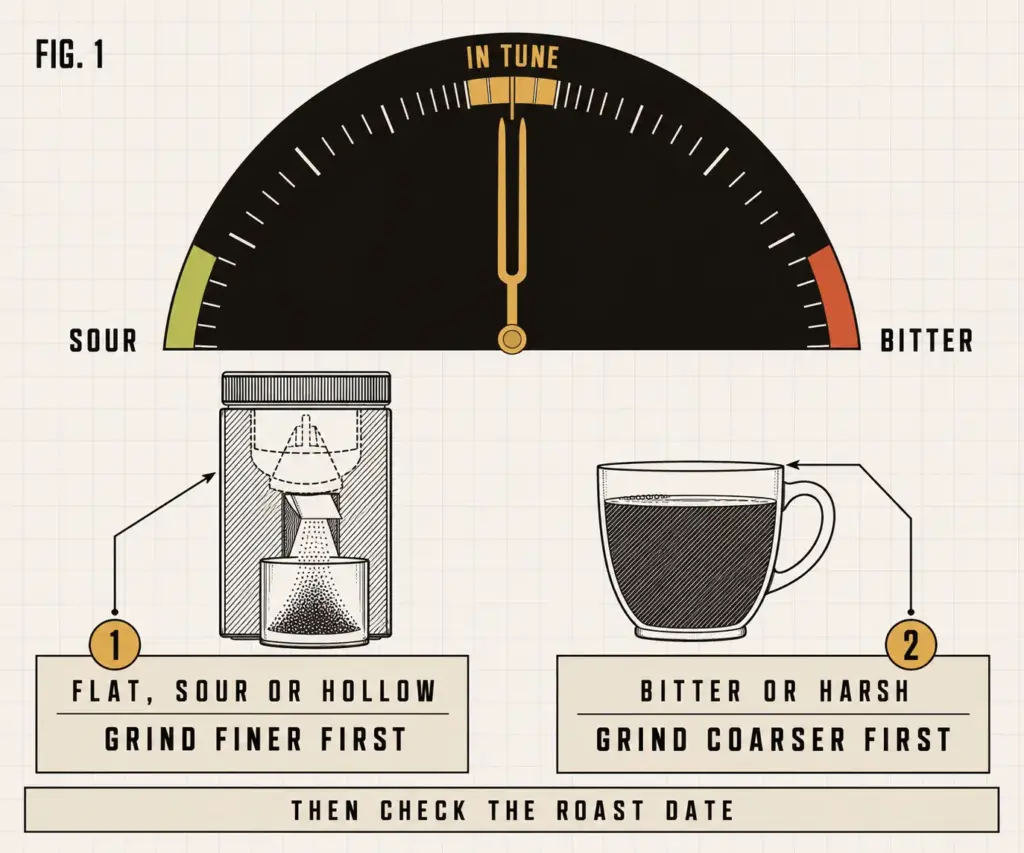
Sour, flat or hollow points one way, and bitter, harsh or ashy points the other. A shot that bites at the front and then falls away, with nothing sweet in the middle, left the grounds too early: the grind was too coarse, the dose too small, or the bag has little left to give. A shot that scrapes at the back of the tongue or tastes of char went the other way, because the water stayed too long or the roast itself carries the char. Stale coffee lands in the first group whatever the grinder says, so you can dial in the grind all week and still chase the problem in circles.
Ignoring that has a price: pulling espresso on stale beans is an exercise in futility. Stale beans bring two problems, trouble building pressure and an off taste even when a shot runs well, and a stale bag is false economy.
The change to try first, before blaming the bag
Move the grinder one step in the direction the cup points and change nothing else: finer for sour, flat or hollow, coarser for bitter or harsh. It costs nothing, and with a recently roasted bag it is the likeliest fix. The seconds and the settings that go with each step belong to what grind size espresso wants, so the numbers stay there.
Then taste before touching anything else. If the step worked, the next shot comes out rounder, with something sweet in the middle where there was a gap; if a step finer tipped the sour shot into bitter, you went past it, and the answer sits half a step back. If the cup barely moves, or only trades sharp for flat, the grinder was never the main problem, and the next free check is the date on the bag.
After a new bag or a new grinder step, the first dose still comes out at the old setting, because a grinder keeps some grounds inside it. Run one dose through and throw it away before you judge anything. Skip that, and you will blame the new bag for the last bag’s grounds.
Roast Color and the Italian Blend on the Shelf
“Espresso roast” on a grocery bag is a marketing phrase, not a standard, so it tells you less than the color of the beans does. What matters at the shelf is how dark the beans are and which species are in the blend, because those two things decide how much bitterness the shot starts with and how much age it can hide. And the shelf leans toward one blend in particular, the Italian blend with robusta, which behaves differently from everything beside it.
What “espresso roast” on a bag means and does not
No grading scheme defines it. A bag marked for espresso can be a medium roast in the cup, and one tasting of store-bought bags flagged exactly that: a whole bean labeled espresso roast that tasted medium. So read the beans through the window or the film, not the word on the front. Medium to dark, a medium-dark roast included, is the working range, and the reasoning behind it, along with where your own machine pushes it, is in whether espresso wants a light or dark roast.
The simplest rule for supermarket beans fits in one line: any whole bean, medium roast, where they show the roast date. It leaves brand out entirely, and that is the point. It names three things you can check with the bag in your hand.
Why the Italian blend tolerates age (and who should skip it)
Look at what a grocery shelf stocks for espresso and the default is the Italian blend: arabica with robusta, in a big bag, roasted for a shot. For a newcomer asking about a supermarket bag, the usual first pick is an Italian blend with robusta, where staleness is a virtue. The thread gives the rule without the chemistry, and the rule is enough to shop by: a blend whose taste is loud has less delicate flavor to lose, so an older bag shows its age less.
The catch is that if you do not enjoy bitterness, a classic Italian blend is unlikely to suit you, even from a good roaster. So a drinker who is sensitive to bitterness is steered toward the blend most likely to taste bitter. The blend that forgives an old bag is the one a bitterness-averse palate may reject, and age tolerance counts for nothing if the cup is not one you want to drink.
How much robusta sits in a given bag is a separate question. It varies by listing, and the share is not printed where a shopper can check it, so arabica and robusta side by side is the place to see the two species compared. Sugar, and a very little salt, can cover the bitterness of darker roasts; those cover the cup rather than change what the water pulled out, so they come after the free changes, not before.
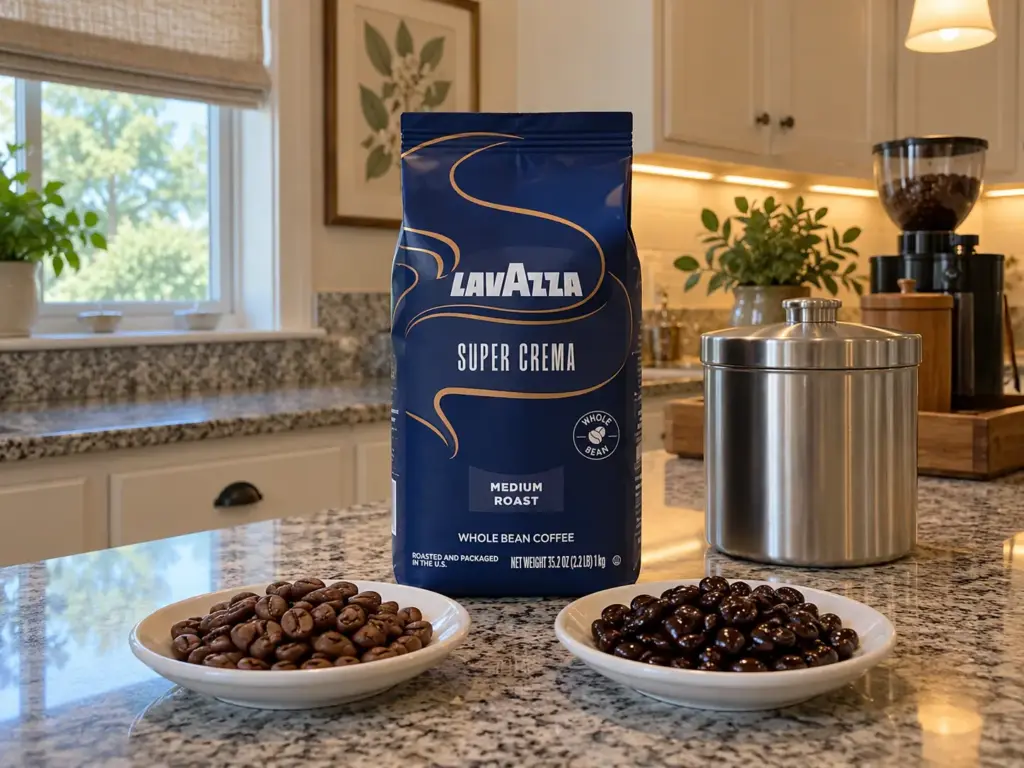
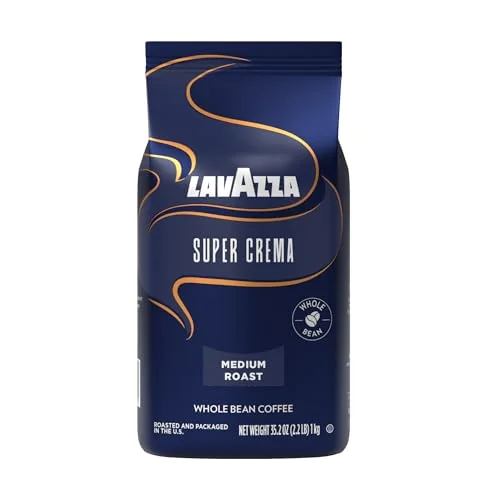
Lavazza Super Crema is the bag most often recommended for this. Lavazza has started printing roast dates on some bags, specifically the Super Crema blend, but a printed date does not guarantee a fresh bag.
So the date is now printed on some bags and absent from older stock, and a shelf can hold both. Turn two bags of the same brand over and one may carry a roast date while the other offers nothing; an undated bag counts as unknown age, and you pay for the unknown in the shot. If you taste bitterness easily, start with a medium bag whose date you can read and come to this one second.
If you are still choosing a color after this, light roast versus dark roast sets the trade-off side by side.
How Old the Bag Is Matters More Than the Name on It
Color and blend are choices; age is a number printed on the bag, or missing from it. A shot is where an old bag stops being hidden, because the short, hard pass of water has nothing left to cover for it. Settle the date first and most of the shelf sorts itself.
Roast date, best-by date and the missing date
A roast date is the day the beans came out of the roaster. A best by date is the store’s number, often set months past the roast, and it says almost nothing about how the coffee tastes today.
The same beans can carry a roast date at one grocery chain and only a best-before date at another, so the label you see can depend on the shelf you stand at rather than on the coffee. Take the bag with the roast date. The argument for every brew method, not just the shot, is made in why the roast date beats every other label on a grocery bag, and this section keeps only the espresso consequence.
When there is no date at all, count the bag as old. That is a rule, not a gamble: the beans may well be fresh, but you cannot find out until you have spent the bag, and a shot is the most expensive place to learn it. How to tell if coffee beans are stale covers the smell and the look of a bag that has gone over, which is the only check left once the label gives you nothing.
A month-old bag is fine for drip and poor for a shot
No authority gives a day count for espresso, and that gap is worth stating before any number is quoted. For espresso specifically, bags that have sat on a shelf for weeks are fine for pour overs but unlikely to give the same results as a fresh bag. Read it as a rule of thumb from people who pull shots, not as a measurement.
The mechanism is on the same side as the rule. The Specialty Coffee Association’s staling review, quoted just below, says most aroma compounds in freshly roasted beans oxidize and can be lost quickly after roasting, so the bright top notes go first. In a pot, that loss shows up as a duller cup; in a shot, it shows up as the sharp, hollow one.
The review also treats air as the main thing aging an open bag, which means a bag finished in a week is a different bag from one dug into for a month, and a bag opened for a pot of drip last month and pulled into service for espresso now will taste fine in the pot and tired in the shot. For how long a bag stays good once it is open, see how long to keep beans after opening.
A second view complicates the first. A bag roasted a few months back, if sealed well, can become a comfort bean that needs little dialing in and tastes decent once you find the recipe, and in milk drinks the gap between a fresh roast and a traditional Italian blend is less noticeable. Both can be true. A month is the line for a reader who wants the bright, sweet shot, and a reader who wants a steady base for milk can live with older beans, provided the bag was sealed and the date is known.
And the shelf moves underneath you. A bag can go from fresh to stale on the same shelf in a matter of weeks. Check the date on every purchase, not once.
Buy the bag you will finish, not the biggest one on the shelf. A small bag used up while its date is still close stays inside its window, and a large one rationed over weeks spends its last cups on the far side of it. If the only bag left is large and its date is already a month old, you are buying the tail end.
Whole bean beats pre-ground, and a pre-ground espresso bag starts behind
Grinding changes the clock. According to the Specialty Coffee Association’s literature review on coffee staling, “When coffee is ground, the porosity and surface-to-volume ratio increase, which accelerates degassing and staling.” In plain terms, ground coffee shows far more surface to the air, so the same beans go stale sooner ground than they would sitting whole in the bag.
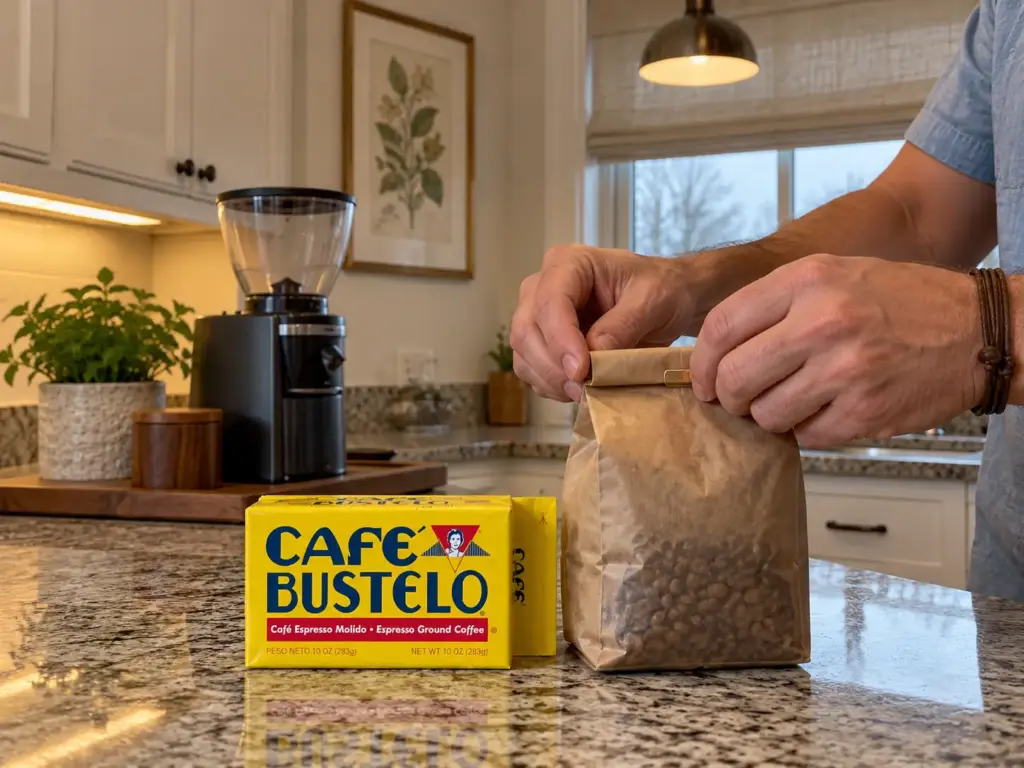
That is the case against any bag that ships ground. Café Bustelo Espresso Ground is the shelf’s plainest example: a dark roast labeled for espresso, ground at the factory and sold as twelve 10 oz bricks, so by the review’s logic its clock started before it reached your counter. It is a fair bag for a household with no grinder, and a poor one for anyone chasing a bright shot. Whether a grinder of your own is worth buying is the question whether grinding at home is worth it answers with the roast date in hand; the short form is that a whole bean keeps its window until the minute you grind it.
The Oily Dark Bag and the Grinder It Leaves Behind
The dark, shiny bag is what a lot of shelf shoppers picture when they hear “espresso,” and oily beans are exactly that: the shine is oil. That oil decides how fast the bag goes off and what the beans leave in the grinder that has to take them. Both land on your counter, not on the shelf.
Where the oil on a dark bag comes from and why it goes off
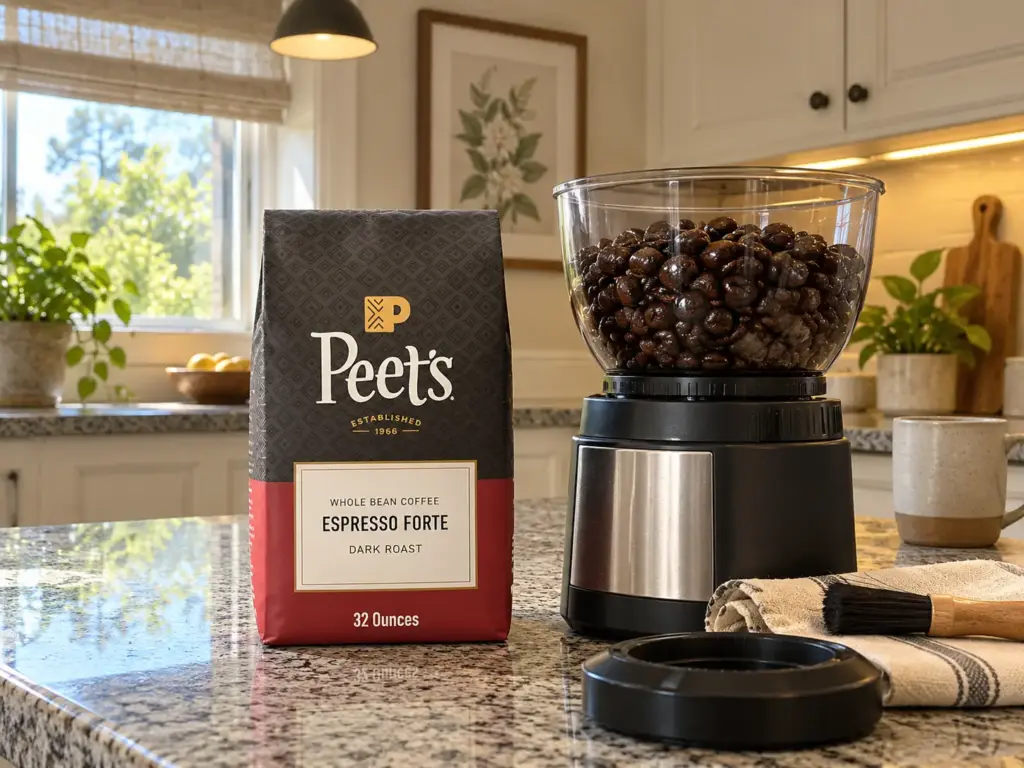
A dark roast shows oil on the surface of its beans; a medium roast usually looks dry. The same staling review puts lipids at about 15 percent of the dry weight of roasted arabica and says they strongly shape how staling tastes, with rancidity coming from lipid degradation and oxidation. So the oil on a dark bean is the fat that turns rancid, and a glossy bag that has sat for weeks is more likely to taste tired than its look suggests.
Grinding hurries it. The review cites work finding that lipid oxidation starts within about a day of roasting and grinding, which means the oil in a ground dose is already changing by tomorrow. A dark bag therefore runs two clocks at once: the roast date, and the day you grind it.
Grind for the shot in front of you, not for tomorrow. Oil in ground coffee starts oxidizing within about a day, so a dose ground tonight for the morning is already a day into going rancid. Weigh the beans, grind them, and pull the shot right away.
What it leaves in the grinder — and the first dose after a bag change
This part is a hypothesis about your counter, not a measured fact, so read it as a list of things to watch. A grinder holds some grounds in its chute and between its burrs, and a very dark bag can leave a film of oil on both. Switch from a medium bag to a very dark one and the first dose may still taste of the old bag; run a very dark bag through a narrow chute and the grounds may clump instead of falling. The shot right after a bag change tells you more than the one after it, and moving between roasts also moves the setting you need, which is what how grind size shifts with roast explains.
There is no month-two figure to quote for any of this, so the honest version is to look at three things four weeks in: the chute, for grounds that stick; the burrs, for a tacky feel under a dry brush; and the date on the bag, because a bag that size is still in use after its best window. None of it costs anything, and it takes a minute.
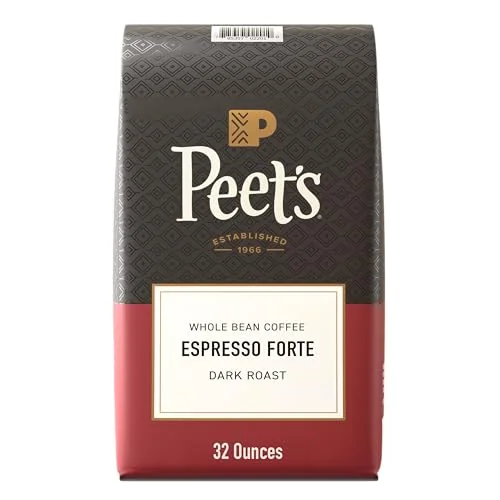
Peet’s Espresso Forte is the dark-roast test case: a whole bean, 100 percent arabica bag in 32 oz, which is the kind of large oily bag a reader carries for weeks. Nothing specific to this roast comes up as a repeated complaint, so the trouble is the size, and the arithmetic is plain: the bigger the dark bag, the longer the oil has to turn before the last shot.
When the grinder is a blade or an entry model
Advice for supermarket espresso assumes a burr grinder that can take a whole bean to a fine grind for a shot. If yours cannot, the bag matters less than the grinder, and no roast date rescues a bag that comes out as boulders and dust. A blade grinder chops unevenly, so one dose gives a cup that is sour and bitter at once, which is the sign to read before you blame the bag; why a blade grinder is a poor fit for espresso goes through the mechanism.
For the reader stuck with that grinder, the bag choice shrinks to something small: a medium bag with a roast date you can read, bought in a size you will finish, ground just before the shot, and judged only after the grind is as fine as that grinder will go. If the shot is still thin and sharp at its finest setting, the grinder has told you something no bag can fix. That points to the next decision, which is a purchase rather than a bag: a grinder that can take an espresso bag finely and evenly enough that the roast date is the only variable left.
A Roaster’s Bag on a Supermarket Shelf Is Not Fresh by Default
Among grocery store espresso beans, a local roaster’s bag in the aisle feels like a safe step up from the national brands, and often it is. The question is how much of its freshness edge is already spent by the time it reaches the shelf, and the threads give a straight answer.
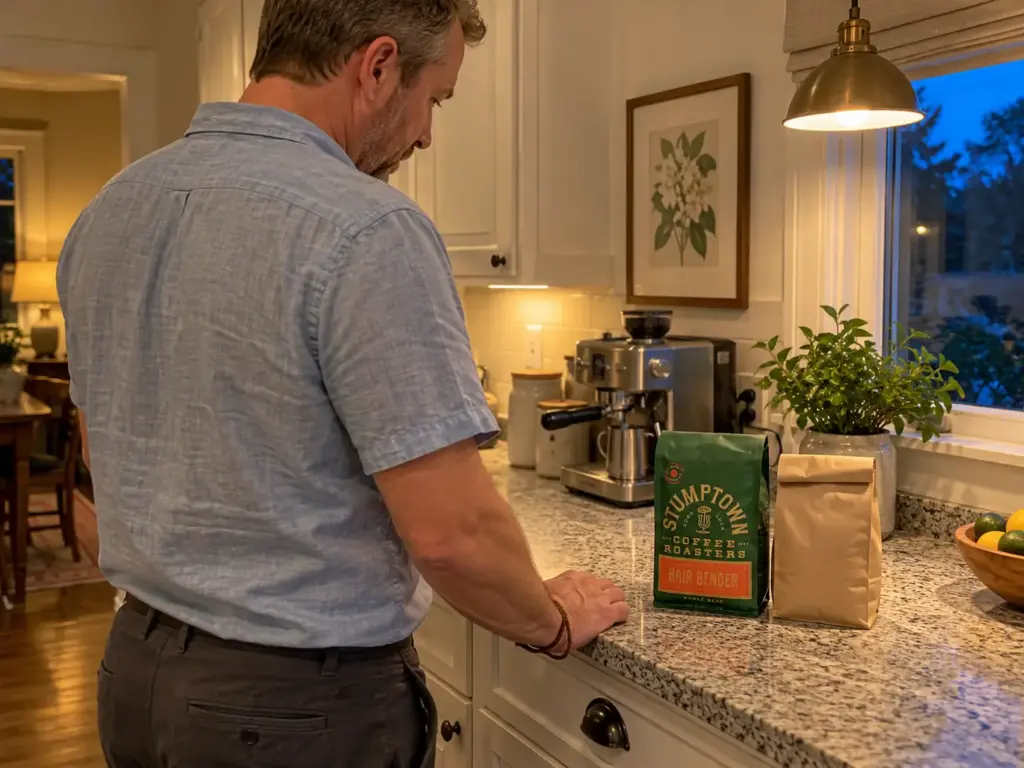
A bag that is two to four weeks old when it lands on the shelf
Supermarket bags can sit a few weeks past roast, which is not bad for a supermarket bean. That is a fair result for a shelf, and it is also close to the month that is the edge for a shot. Add the days the bag spends at home before it is finished and the roaster’s advantage has shrunk to the date printed on it, and nothing else.
That is the flaw of the choice itself. A roaster’s bag is dated more often than a national brand’s, but a higher label on the shelf buys the name, not the date, and only the date tells you what you are getting. Compare the age of two bags and ignore the cost of both.
The roaster’s bag against the national-brand bag, for a shot
Turn two bags over in the aisle and you may find a roast date on one and only a best-by on the other. The roaster’s bag is the obvious pick, and it stops being the obvious pick when the national bag is the one with a readable date: a dated bag is a known quantity, and an undated one is a guess however good its label looks. If both are dated, take the newer.
Stumptown Coffee Roasters Hair Bender is one bag from the roaster that comes up for this: a medium-roast, whole bean 12 oz bag sold at Target, and the Amazon listing is the same bag. One reader there said to wait until it is on sale, when it is usually about a month from roast, and that it still turned out great. A month-old bag is borderline for a shot, so treat a sale bag as one worth tasting before you trust it, not as a bargain by default.
Single-origin bags sit on the same shelf and do not always suit a shot; whether single origin works for espresso walks through when it does.
Where to send the rest of the shelf question
This section covers the espresso shot. The rest of the shelf belongs to the guide that reads it by roast date, the general shelf read, picked by roast date, which names bags and their flaws for any brew method. For reading the label of a bag you have never met, what the bag tells you is the sibling to open.
Find the Date, Move One Step, Taste Again
Take three rules to the shelf and to the counter:
- The roast date and the roast color decide the shot before the brand does, and a bag with no date counts as old.
- The free changes come first and in order: read the bag, move the grinder one step, taste, and only then change the bag.
- A large oily dark bag and a grinder that cannot go fine enough are a pair; fix the grinder before you hunt for a better bag.
In a month, read the date on the bag still in the cupboard and notice whether the first shot after a bag change still tastes of the last one; if it does, the grinder is holding on to more than you thought.
Tomorrow morning, find the date on the bag you have, then move the grinder one step toward the taste you want less of: finer if the shot is sharp and thin, coarser if it is harsh. Taste before changing anything else. The next shot should come out rounder, with something sweet in the middle, and if it only trades sharp for flat, the bag is the problem, not the dial.
Frequently Asked Questions
01What are the best grocery store coffee beans for espresso?
The best grocery store beans for espresso are whole bean, roasted medium to dark, with a roast date you can read. Italian robusta blends tolerate age but run bitter, so a palate that dislikes bitterness should start with a medium bag.
02Which supermarket brand of coffee beans is best for espresso?
No single supermarket brand wins for espresso, because the bag with the newest roast date beats the same brand with an older one. Lavazza Super Crema and Stumptown Hair Bender are the two most often named here; read the date on whichever you pick.
03What type of coffee beans are best for espresso?
Whole beans roasted medium to dark, bought with a roast date you can read, are the type that works best for espresso. A shot is hard on a tired bean, so freshness matters more than origin. Which end of that range suits your machine is covered in light or dark roast for espresso.
04Which grocery store has the best coffee beans?
The store matters less than the date printed on the bag you pick up, because the same shelf can change age between visits. Whole Foods, Costco, Target and Trader Joe’s are places to look, and none is a guarantee.
05Can you use pre-ground supermarket coffee for espresso?
You can use pre-ground coffee for espresso, but it starts behind the same beans ground at home, because grinding speeds staling by exposing more surface to air. With no grinder, a pre-ground bag labeled for espresso is a fair start; buy the freshest pack you can find and finish it quickly.

How did your cup turn out?
No comments yet. Tell us what you changed — and whether the needle moved.