



We may earn a commission when you buy through links on this page. It never changes what we recommend. How we pick
On this page7 parts
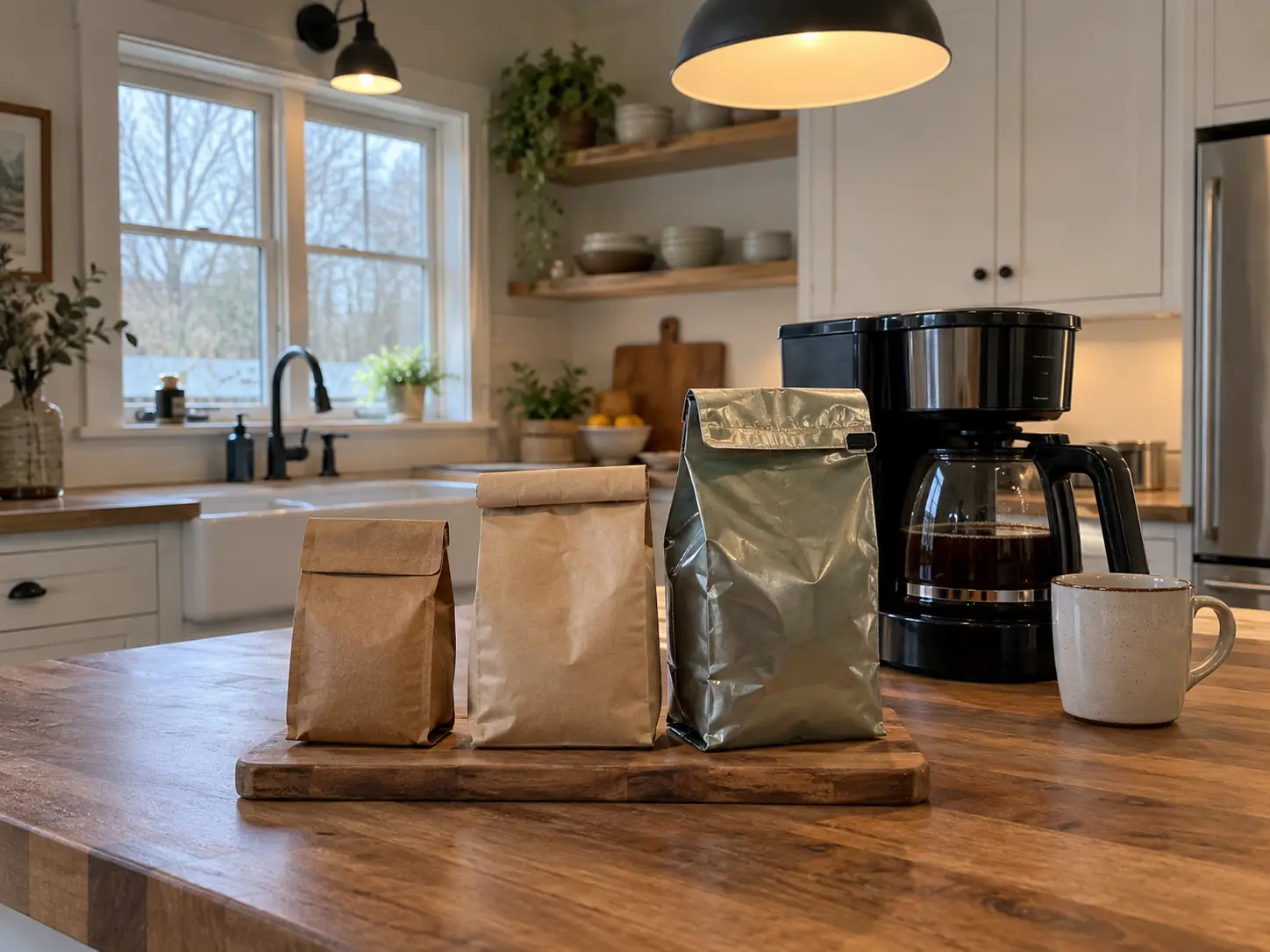
You turn a bag over at the shelf, or scroll to the bottom of a checkout page, and the only date in sight is a best-by line a year away. It says when the maker stops standing behind the bag, not when the beans were roasted, and the roast is where the clock starts.
The Specialty Coffee Association puts the fresh window for whole bean at about three weeks. So when the question is where can I buy good quality coffee beans, the store is the second question and the date on the bag is the first. What follows gives each place its strength and its flaw, then turns the date into a test you can run in the aisle or on the checkout page.
Four places sell good beans, and each one has its own way of delivering old ones. The table shows what each does well, where it fails, and what you can read before you pay.
| Where | What it does well | What it gets wrong | What shows before you pay |
|---|---|---|---|
| Local roaster | Shortest distance between the roast and the counter | The bag may carry no batch date; some roasters ship only inside their own state | The bag in your hand, and a person you can ask |
| Online roaster | Reaches you when there is no roaster in town | Days in transit come out of the three weeks | A roast date on the listing or the bag, if the seller prints one |
| Grocery shelf | Rides along with the weekly shop, and you hold the bag first | The bag may print only a best-by date | The bag itself: a roast date, a best-by line, or neither |
| Marketplace listing | Widest reach and the most bag sizes | The date can only be read after the box arrives | The page; the listings for three well-known bags showed no roast date |
Four Places to Buy Beans, and What Each One Gets Wrong
Every one of these places sells good beans, and every one has a way of delivering old ones. The useful comparison is not which is best but what each can fail at, because a failure you know about is a failure you can test for. Each section below writes the strength and the flaw side by side, and the next section turns them into a test.
The local roaster
A roaster’s counter is the shortest trip a bean makes between the roast and your kitchen, and you can ask a person which day the bag was roasted. That is the strength. The flaw is that a good roaster is not always a dated one. Several well-liked local roasters have bags with no batch date at all, which makes it impossible to know how fresh anything is, and such bags can go stale extremely fast.
How much you like the coffee tells you nothing about how old the bag is. Some small roasters also ship only inside their own state, so read the shipping page and the shipping time before you fall for the beans.
The free fix costs one sentence: ask for the batch date. A roaster who prints it, or can tell you, has answered the question that matters. One who cannot is selling you a bag you have no way to date.
The online roaster
Buying coffee beans online from a roaster solves the problem of living nowhere near one, and for a lot of readers that makes it the real answer, not the backup. The flaw sits in the calendar. The clock starts at the roast and not at the order, so every day the box spends in a truck is a day off the window, and a roaster that roasts to order still has to get the bag to you. No transit-day number is stated here because the number that counts is the one on that roaster’s shipping page.
The test is whether the listing or the bag names the roast date. A listing that gives the date, or the day the batch will be roasted, lets you do the sum before you pay. One that says only fresh roasted asks you to take the word for it, and a word on a label is not a date.
The grocery shelf and the marketplace listing
Grocery store coffee rides along with the weekly shop, and you hold the bag before you pay, which no screen allows. The flaw is that the bag may print only a best-by date.
Opinions differ on how often that happens: some grocery bags won’t have roast dates, while some local roasters always print one. Each is a few shops’ experience, so neither is a rule, and the bag in your hand is the only evidence that counts. The shelf-side version of this test walks the aisle with the same date check.
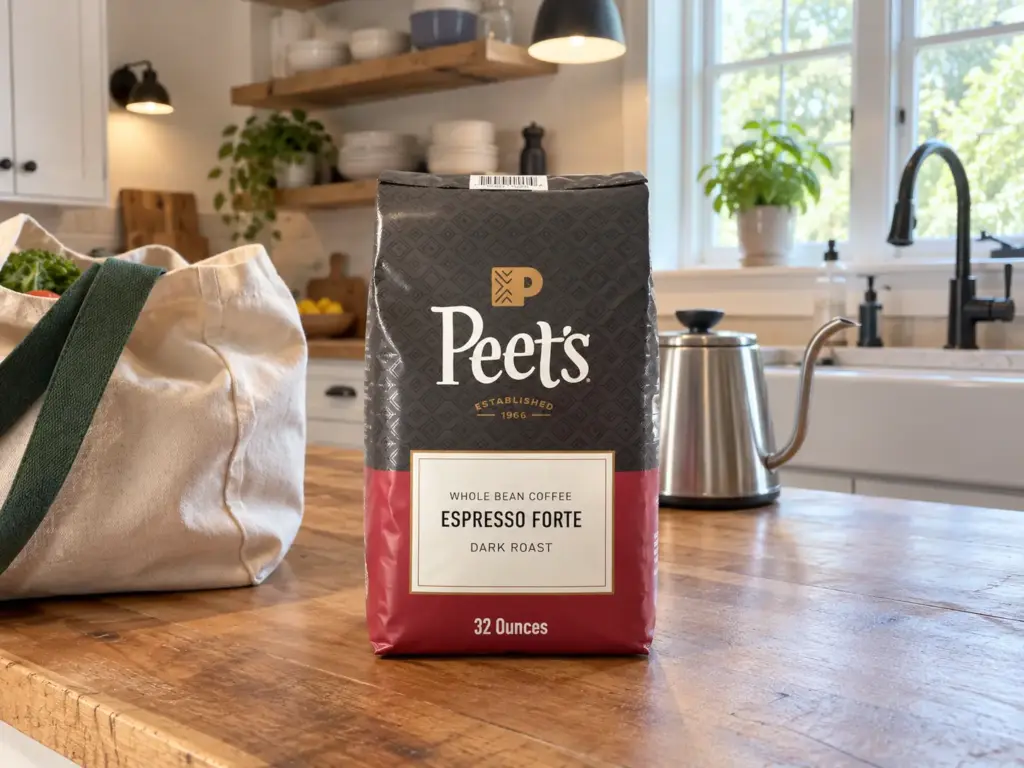
The marketplace listing has the widest reach and the same flaw in a worse place: you pay before you see the bag. The Amazon page for Peet’s Coffee Espresso Forte, a 32 oz bag of 100 percent Arabica dark roast whole bean, has no roast date anywhere on it (a check in early October 2026 found none), so the test cannot run from the screen. Buyers often say the coffee is good overall, but some bags feel past their prime, with less oil on the beans and a flatter taste or slight bitterness. That is the pattern in a sentence: a clean listing, a bag that may or may not be young, and a date you can read only after the box is open.
If the machine on your counter is an espresso machine, the shelf looks different, and the supermarket bags worth considering for espresso are sorted in their own article.
The Roast Date Decides Before the Store Does
If every channel can fail, the store cannot be the first question. The one thing printed on a bag that you can read at the shelf, at the door or on day one is the roast date, and this section covers what to read, how to count it and what to do when it is missing.
Read the roast date, not the best-by line
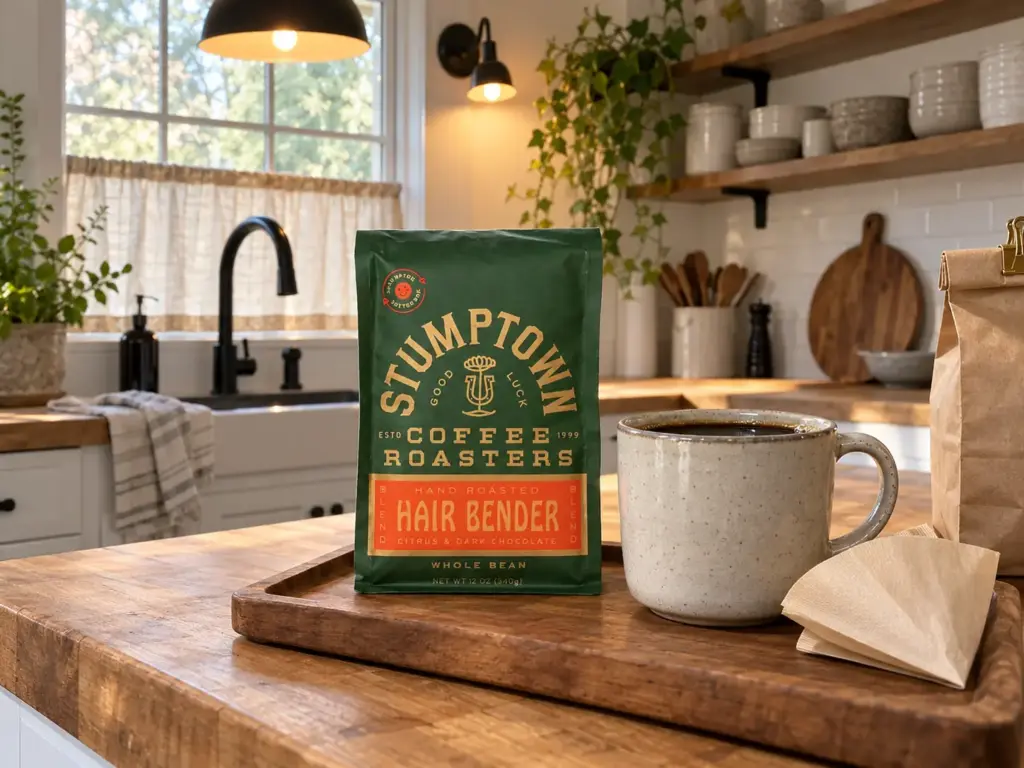
The two dates answer different questions. The roast date says when the clock started. The best-by date says how long the maker is willing to stand behind the bag, and that is a much longer stretch. One reviewer of the Stumptown Hair Bender, a bag that happened to print both, put the problem plainly: “most coffee brands only give you a ‘use before’ date,” with no way of knowing when the beans were roasted.
That bag is Stumptown Coffee Roasters Hair Bender, a 12 oz medium roast whole bean blend of three origins. The maker’s limit sat months past the SCA’s three weeks, which is how a best-by line can stay true while the coffee goes flat. Brewed as espresso in a super-automatic machine, it can disappoint on taste and freshness, and some bags arrive well past their best-by date. The Amazon page itself does not show the roast date, so even with a brand that prints one, the check happens on the bag.
Write the roast date on the front of the bag in marker the day you buy it, or photograph it. By the second week nobody remembers whether the printed date was the 3rd or the 13th, and the count only works if the date does. Read it on every bag, too: a roaster that printed a date last time has not promised to print one next time.
Count about three weeks from the roast
According to the Specialty Coffee Association’s Coffee Decoded column on freshness, whole bean coffee “can reasonably be considered ‘fresh’ within about three weeks of roasting.” The same column notes that the gas the beans give off after roasting leaves fastest in the first 20 days, which is the stretch where a bag changes most. Count from the printed roast date, never from the day you bought it. A bag roasted ten days before it reaches the shelf arrives with about eleven days of that window left.
The SCA’s literature review on how roasted coffee stales agrees on the shape of the curve. It reports the greatest rate of freshness loss in the first month, and it cites work finding that “degradation of freshness occurs as soon as coffee has contact with oxygen.” Heat hurries the same clock: the review also cites work finding that degassing rises about 1.5 times for every 18°F (10°C) of warming, so a warm shelf or a hot car trunk spends the window faster.
Ground coffee runs on a shorter clock. The SCA’s figure is about an hour of freshness after grinding, so a pre-ground bag starts counting at the grinder and a whole bean bag at the roaster. That is why this article talks only about whole bean, and why the roast date matters even more once you grind gets its own treatment.
What to do when no date prints
Run the test in one pass, in this order:
- Find the roast date on the bag, the label or the listing.
- If it prints, count the weeks from it and compare with about three.
- If only a best-by line prints, treat the bag as undated.
- If nothing prints, ask the seller for the batch date, or pick a bag that prints one.
The last step is free, so it comes first in practice: a question costs nothing and settles the channel faster than any comparison. And a bag that is already in your kitchen with no date on it can still be judged; how to tell a bag has already gone stale covers the smell and the cup.
Match the Bag Size to a Three-Week Window
A bag bought with a good date still passes the window if it takes longer than three weeks to empty. So the date test needs a second number, and that number is arithmetic you run at home, with grams and a calendar.
Divide the bag by what you brew each day
The sum is grams in the bag divided by grams used per day. Bag sizes convert like this: a 12 oz bag is about 340 g, a 32 oz bag (two pounds) is about 907 g, and a six-pack of 12 oz bags is about 2,041 g. Start from 20 grams a day, roughly one large mug from a drip coffee maker, which is about two standard coffee scoops of whole beans. Replace that with your own number, because two mugs a day doubles the grams and halves the days.
At 20 grams a day, the 12 oz bag lasts about 17 days (340 ÷ 20), the 32 oz bag about 45 days, and the six-pack about 102 days. The window is about 21 days. The 12 oz bag fits, and the other two do not, unless the beans are shared among several people.
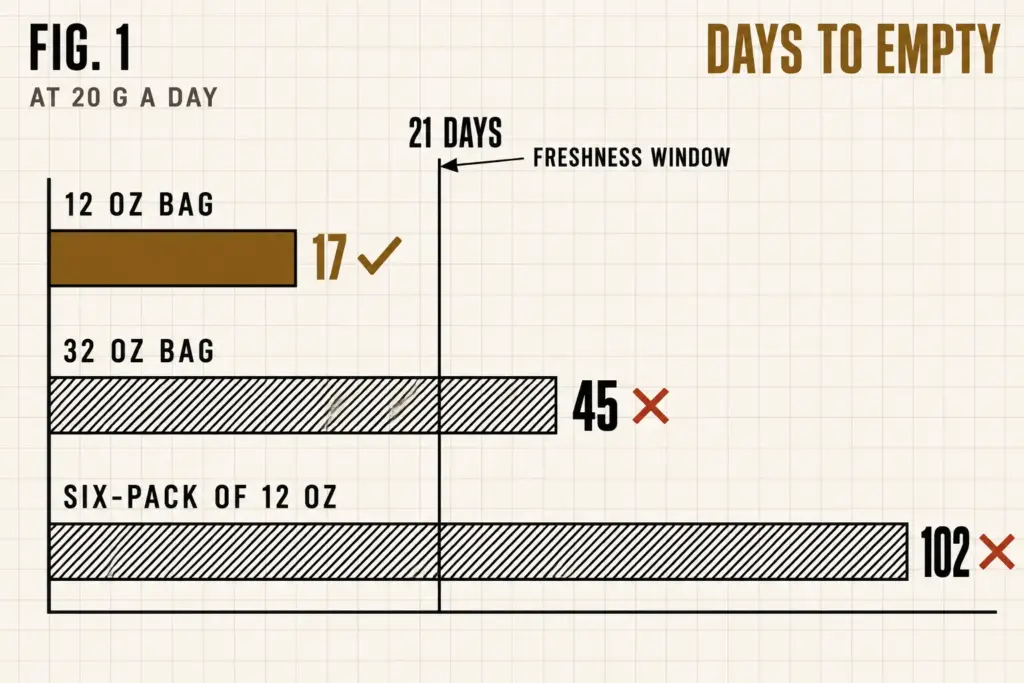
This is where the second month shows. A bag opened on day one is still being scooped in week five, and the last pot comes from beans that were already some days old when they were bought. So the date gets read twice: once at purchase, to see how old the bag is now, and once in the arithmetic, to see how old it will be on the last scoop. How many cups a 12 oz bag makes runs the same sum in cups.
Weigh your beans for three mornings and use the average as your daily grams. A scoop is a volume, and beans of different roasts weigh different amounts per scoop, so the three-morning average is the number the division can trust.
Why a case of bags works against you
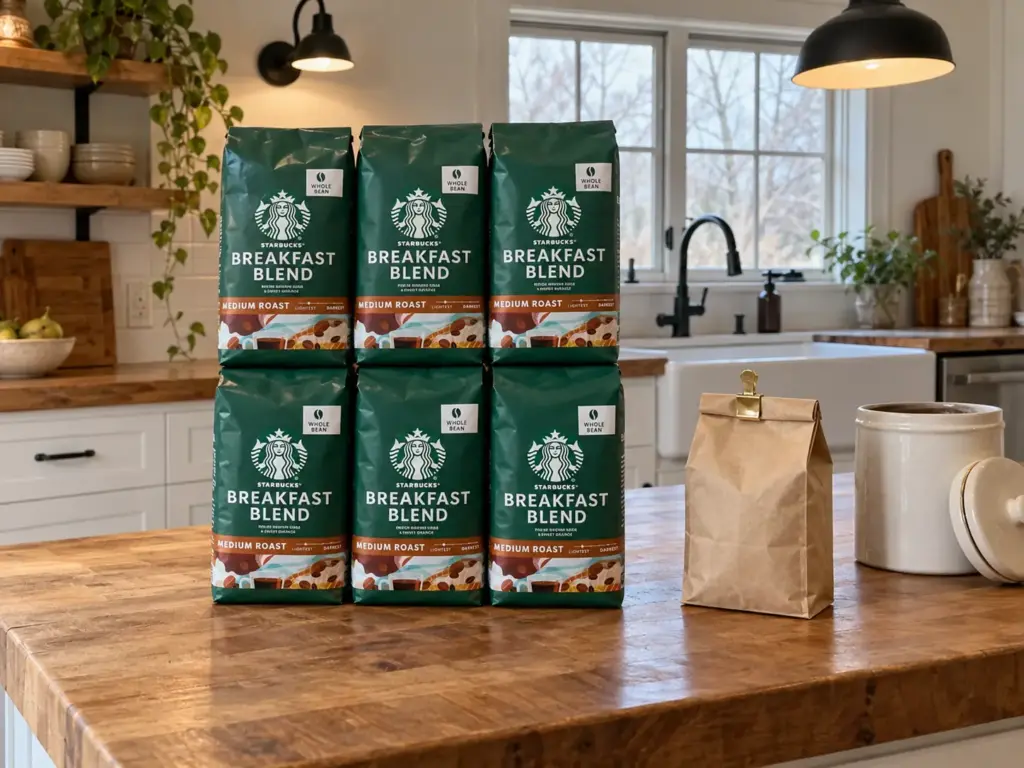
The case is the pack that wins on unit price at the checkout page and loses on the calendar. Take Starbucks Whole Bean Coffee Breakfast Blend, a medium roast sold as six 12 oz bags: that is the 2,041 g of the sum above, or about 102 days at one mug a day, nearly five times the window. Its listing prints no roast date, and Amazon’s own review summary, generated from the reviews, calls freshness mixed: some customers find it very fresh, while “others say it’s not fresh at all and doesn’t have a great smell.”
There is an honest counterpoint. A large household can empty a case inside three weeks, and at that pace it is a reasonable buy. The break-even is about 97 grams a day, roughly five of those mugs, so the question is not whether cases are bad but whether your kitchen brews like that. For a single mug, the case spends its last month on beans well past the window, and what happens to a bag once it is open belongs to how long beans keep once the bag is open.
When a Fresh Bag Still Tastes Flat
A recent date does not fix a cup whose problem is somewhere else, and buying another bag to cure a grinder or a machine is the one purchase that cannot work. So the order matters here: the bag goes first because checking it costs nothing, then the grinder, then the machine, with one change at a time and a taste after each.
Rule out the bag first
Check the roast date against the three weeks. If the bag is past it, the flat cup has an explanation, and the Peet’s reviewer above ties exactly that taste to bags that feel past their prime: less oil on the beans, a flatter cup, a slight bitterness that lingers. If the date is inside the window, the bag is cleared in the time it takes to read the label, and nothing else about the cup has been touched.
Brew the next pot from a bag whose date you can read, with the same dose and the same grind setting as before. If the aroma and sweetness come back, the bag was the cause. If the cup is exactly as thin as it was, the bag is not the cause, and you move to the grinder with a clean answer instead of a hunch.
Then the grinder
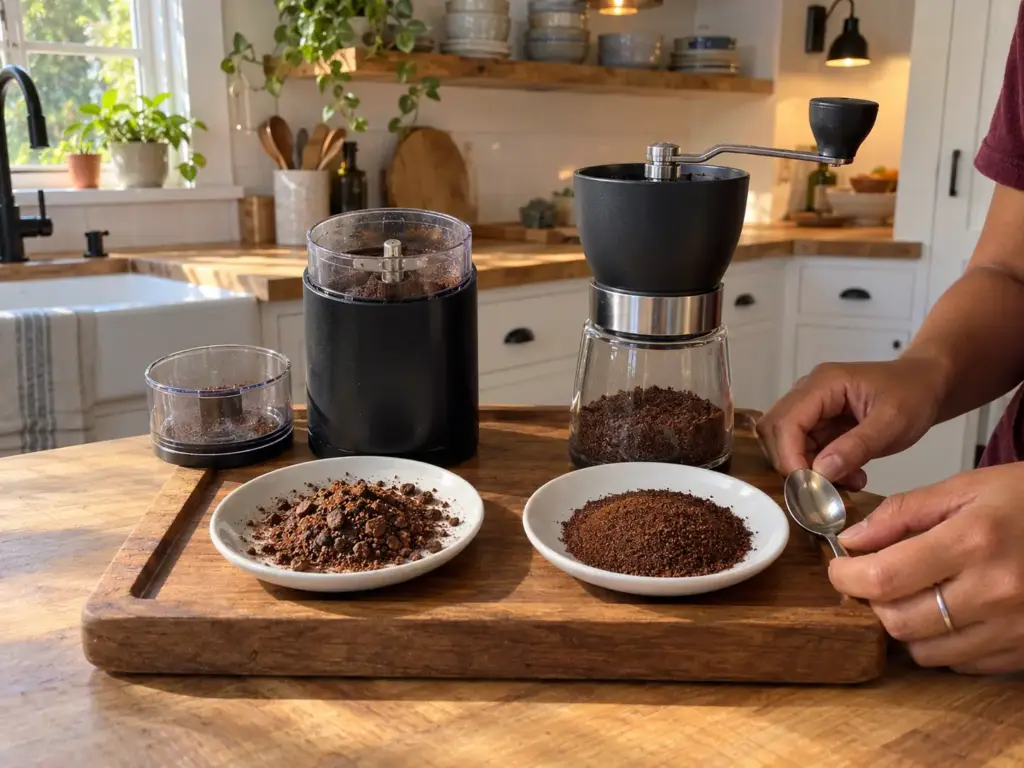
A blade grinder makes boulders and dust at once. The dust over-extracts and tastes bitter, the boulders under-extract and taste sour, so the cup comes out sour and bitter together whatever bag went in. A burr grinder removes that split, which is why a fresh bag in a blade grinder can still taste worse than an older one from a burr set. How long a blade grinder should run covers the timing if a blade is what you have.
The direction decides which way to move the grind. A thin, sharp cup means the water left before it finished, so the grind size goes one step finer; a harsh, bitter cup means it stayed too long, so the grind size goes one step coarser, and a roast level that is darker or lighter than the last bag shifts where the starting point sits, as how the roast changes the grind explains. The setting itself belongs to your grinder and the roast in the bag. Overshoot is easy to read: if the cup swings from sour to bitter, you went too far, and the answer is half a step back.
After you move the grind setting, run a spoonful of beans through and throw it out before the pot that counts. A grinder keeps some grounds inside, so the first dose after a change still comes out at the old setting, and tasting it would make a good change look like it did nothing.
Then the machine
A drip machine that never gets hot enough under-extracts whatever it is fed, and the result is the same thin, sharp cup that stale beans give you, which is why it hides so well behind a bag you already suspect. No temperature is stated here, because the number that matters is the brew temperature in your machine’s manual. If the manual prints one and your cup keeps tasting underdone, the machine is the suspect, along with any scale that has built up inside it and slows the water.
This is where the order earns its keep. A bag with a good date, a grinder that produces an even grind and a machine at its rated temperature leave only the ratio to move, and that is cheaper than any of the three. What never helps is a second bag bought to fix a cup that was never the bag’s fault.
Pick the Channel That Fits Your Brewer and Your Pace
With the date as the test and three weeks as the window, the choice of channel stops being a matter of taste and becomes a matter of pace and brewer. Three readers follow, not a ranking.
One mug a day, a drip machine
Buy a 12 oz bag that prints its roast date, from whichever channel prints it. At 20 grams a day it empties in about two and a half weeks, which leaves a few days of the window unspent. Finding a local roaster only helps if that roaster prints a date. A grocery bag with a date on it beats a roaster’s bag without one, and you can say that without disrespecting either.
No roaster in your town
The online roaster that names the roast date on the listing or the bag is the answer here, ordered in the size that fits the window. The grocery shelf is a real option too, whenever the date prints. You should not be pushed toward a channel you do not have. Whether a recurring delivery keeps the clock shorter is taken up in the article on single origin coffee subscriptions, so it is left there.
Send the seller one line before you order: what day was this batch roasted? If the answer is a date, order. If it is a paragraph about freshness with no date in it, you have the answer anyway.
The next decision, the roast for your brewer
Once the bag is chosen, the next question is which roast and which form suit the brewer on your counter. For the drip reader, which single origin suits a drip machine picks up from here. And if the bag is whole bean, the grinder is the next purchase in the chain.
Ask One Question Before the Next Bag Ships
Three things carry over from all of this. The roast date decides before the store does, so read it before anything else on the bag. Count about three weeks from the roast, and divide the bag by your daily grams to see whether the last scoop lands inside that window. And when the bag is fresh and the cup is still off, change one thing at a time, free first: the date, then the grind, then the machine.
A month from now, compare the roast date on your last bag with the day you scooped the first cup from it, and see whether it finished inside the window. If it did not, the next bag is the smaller one.
Tomorrow, before the next bag goes in the basket or the cart, ask whether the roast date is on it. Then brew the next pot with the same dose and the same grind, and taste for the aroma and sweetness that a flat cup was missing.
Frequently Asked Questions
01Where can I buy good quality coffee beans if I don’t have a local roaster?
Buy from an online roaster whose listing or bag names the roast date, in a size you can finish within about three weeks of that date. A grocery bag works too when it prints a roast date. Read the date first; the store comes second.
02How fresh should coffee beans be when I buy them?
The Specialty Coffee Association says whole bean coffee can reasonably be considered fresh within about three weeks of roasting. Count from the roast date, not the purchase date, because shipping and shelf days come out of those three weeks.
03Is a best-by date the same as a roast date?
No. The roast date says when the clock started, while the best-by line is how long the maker will stand behind the bag, and it can sit months past the roast. If only a best-by prints, treat the bag as undated.
04Are coffee beans on Amazon fresh?
It depends on the bag, and the page often cannot tell you. The listings for three well-known bags show no roast date, so the check happens with the bag in hand. If only a best-by prints, ask the seller for the roast date.
05Can I buy good coffee beans at the grocery store?
Yes, when the bag prints a roast date inside the window. Opinions differ on whether grocery bags print one, so read each bag instead of trusting a rule about the store.



How did your cup turn out?
No comments yet. Tell us what you changed — and whether the needle moved.