
We may earn a commission when you buy through links on this page. It never changes what we recommend. How we pick
On this page8 parts
- What Is Actually in the Price of a Bag of Coffee Beans
- The Weather Behind the Green Coffee Price
- Why the Shelf Price Lags Behind the Raw Price
- The Bag That Shrank: Price per Gram
- Will Coffee Beans Get Cheaper?
- Cheaper Bags and the Flaw Each One Carries
- What to Check Before the Next Bag
- Frequently Asked Questions
You turn the bag over at the shelf and it says 340 grams, where the last one said a pound, and the tag did not move to make up for it. That gap is the quiet half of the question you typed in, why is coffee beans so expensive, and it has nothing to do with how the cup tastes. The coffee in that bag was priced months before it reached the shelf, so the headline about the market and the number on the tag are two separate questions on two separate clocks. This guide splits the price into its lines, follows the weather behind it, explains why the shelf lags, does the arithmetic on the shrinking bag, and ends with the cheaper options and what each one costs the cup.
Quick Answer
Weather losses in Brazil, the biggest grower, repriced green coffee, and the roasted bag follows that price with a lag of months. Tariffs added a layer whose status has since changed. The cup did not get more expensive; the market did.
What Is Actually in the Price of a Bag of Coffee Beans
Before blaming anyone, take the price apart into its lines, because only some of them ever reach the cup. Grinders have a version of this question too, and the same question for grinders has different lines, because a grinder is built rather than harvested.
The Bean, and What Roasting Takes Away
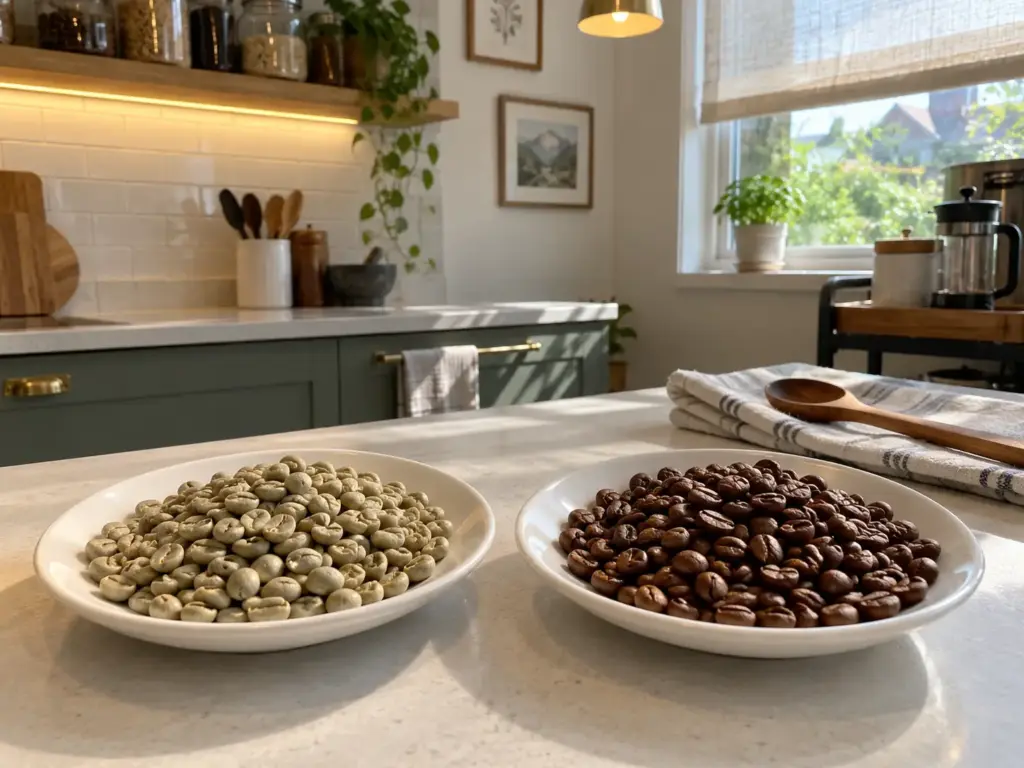
The bean is the biggest line, and it is also the one that moved. A survey of 13 roasters published by Fresh Cup in February 2026 found green-coffee costs up by anywhere from about 17.5 percent to 75 percent, with the median near 50 percent. With a spread that wide, no single figure for the bean’s share of the price holds for every roaster. One of the roasters put the bind plainly: “We’re not able to pass all of that increase along, or we’ll lose so many customers that we’ll go out of business,” one of the roasters said.
A roaster described the same squeeze, with bean costs well above the year before and only two ways out: smaller bags or lots from a past crop at a discount. In that roaster’s words, “Neither is ideal.”
Then roasting loss takes weight away. A technical note from Royal Coffee, a green-coffee seller, puts the loss at about 10 percent of the green weight for a very light roast and about 25 percent for one taken past second crack. Run it on a medium roast that loses about 15 percent: a 12 oz (340 g) bag started as roughly 400 g of green coffee (340 ÷ 0.85). The price has to cover the 400 while the bag holds the 340.
Two bags of the same weight are not the same amount of green coffee if one is a light roast and the other a dark one. By that seller’s figures a dark roast gives up around 20 percent of its weight in the roaster and a very light one around 10, so the darker bag took more green coffee to fill. It is a cost the front of the bag never shows.
The Lines That Reach the Cup
Two lines of the price do reach the cup. One is the grade of the green coffee that went into the roaster, shaped by its altitude and how it was processed, which sets how much flavor the beans can offer at all. The other is the roast date, because roasted beans only hold what they offer for a limited time. The first decides the ceiling of the cup, and the second decides how much of that ceiling is left by the time you grind.
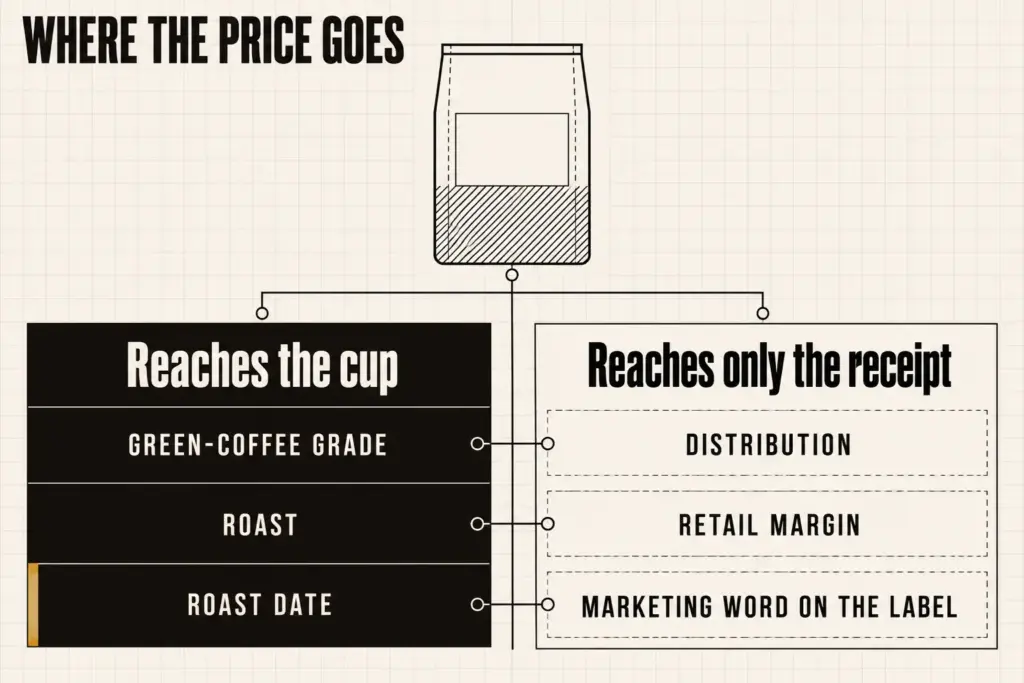
If you are paying more for a bag, these are the lines that should account for it. A lighter or darker roast changes the taste and the weight, but it does not by itself make a bag better.
The Lines That Reach Only the Receipt
Everything else in the retail price lands on the receipt: the freight, the distributor, the store’s margin, and any word on the front of the bag that is not a measurement. No public figure splits that middle of the chain into clean shares, and this article does not invent one.
A label shows it most clearly. A word like single estate or single origin names a place; it does not name an age. A bag can carry a farm’s name and still have been roasted long before you picked it up, so it is worth reading what a single estate or single origin label actually promises before paying extra for the words.
The Weather Behind the Green Coffee Price
The spike was not a store decision. It began in the growing countries and in the market for commodity coffee, months before any price tag changed.
Brazil and Five Weak Harvests
According to the USDA’s July 2026 coffee report, “Brazil accounts for nearly 40 percent of world production,” which is why one country’s rainfall reaches every bag on every shelf. The same report says arabica went through five years of weather losses before rebounding by 9.5 million bags to a forecast 47.5 million, and that Brazil’s 2026/27 crop is forecast at a record 71.9 million bags after rain at flowering in Minas Gerais gave near-record yields.
Five thin years pushed the green price up, and the recovery is only now arriving as supply. The bag you buy today is priced from coffee bought while harvests were still short.
Arabica, Robusta, and Where Vietnam Fits
Brazil grows mostly arabica, the higher-grade bean; Vietnam grows mostly robusta, the cheaper one. The USDA forecasts Vietnam’s output at a record 32.5 million bags and says high prices let its growers spend more on fertilizer and other inputs. A high price plants its own cure: it pays for the next supply. For the split between the two, see the arabica and robusta split, and where sources disagree on its numbers.
The Tariff Layer That Came and Went
If a headline made you wonder whether tariffs are what you are paying, the answer has changed since most of the headlines were written. Trade-press and law-firm reports say coffee was dropped from the reciprocal tariffs in November 2025, and that coffee sits on the exclusion list of the 2026 trade action on Brazilian imports, with the exclusions written by tariff code. Those are reports, not a customs notice, so the code for your bag is what finally counts.
Even before that, the link to the shelf was thinner than the headlines implied. Roasters can absorb costs for years and then settle on a new pricing model, so a tariff is not always the reason a price moved. The practical check is one you can run yourself: if an article treats a tariff on coffee as in force today, look at its date. A steep levy on Brazilian coffee was in force for a stretch, and anything written during it is out of date now.
Why the Shelf Price Lags Behind the Raw Price
If the raw price is already coming down, the bag should follow, and it does, slowly, for reasons that sit between the farm and the shelf.
The Roasters Who Absorbed It, Then Reset
Roasters rarely pass a rise on the week it arrives. The worker’s account above is the pattern: costs absorbed for years, then one reset when the margin ran out. The roaster who did a quarterly count of green-coffee costs found the bean line about 30 percent up and still said, “I haven’t yet raised my prices since last year.” A price that has not been raised yet is a price waiting to be.
Chains add a second clock. Retail chains often run on long-term contracts, and prices rise as those deals get renewed at the current market value. The same logic runs the other way when the market falls, and a contract signed at a high price keeps charging it until the date it ends.
The Bag You Can Watch Every Week
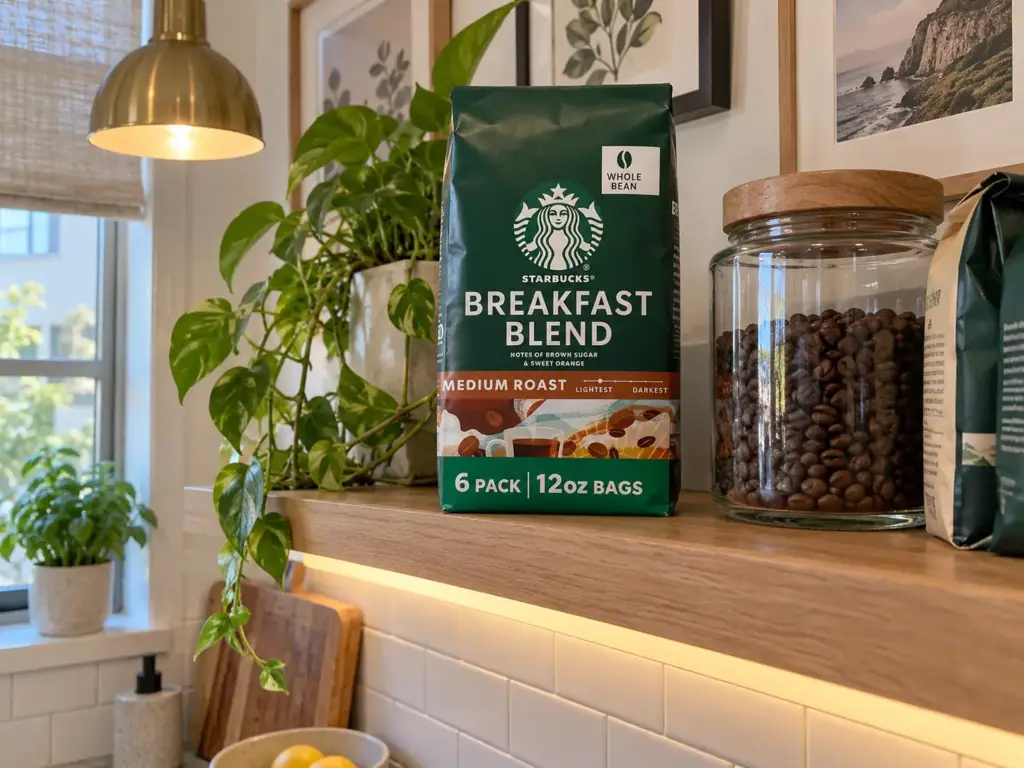
The grocery bag is the easiest price to follow. A grocery-shelf bag many readers will recognize is the Starbucks Whole Bean Breakfast Blend, a medium roast sold in a pack of six 12 oz bags. At 340 g a bag, that pack is 2,040 g of coffee in one purchase, and the pack size is its trade-off: it is a lot of coffee to finish, so the roast date printed on the bags is the first thing to read when the box arrives.
Pre-ground coffee changes the picture. The Café Bustelo Espresso brick is a dark roast ground for espresso, sold as 10 oz bricks in a case of twelve, and the comments around it are about its price, not about the cup. The grind is the catch in a drip machine: espresso-fine grounds slow the water and over-extract, which tastes bitter, so a brick like this belongs in an espresso machine or a moka pot. Whichever bag you follow, learn to check the roast date on a grocery bag, because the tag never mentions it.
Pick one bag you buy often and note its weight and its shelf price each time you buy it. Two entries a few months apart show whether the price moved or the grams did, which is the question a news story cannot answer for your shelf.
Raw Coffee Is Down, the Shelf Is Not
On the raw side, arabica futures, the benchmark traders watch, were about 15 percent lower in early October than in January, by a commodity-data site’s quotes. That figure is arithmetic across two different dates, so read it as a direction. The USDA report adds that the International Coffee Organization’s composite price index fell 25 percent in the seven months to its July 2026 report.
On the shelf side, prices are measured and public: the Bureau of Labor Statistics’ ground-coffee price series, as tracked by the St. Louis Fed is the number to look at. Over the same stretch it has come down only a little. Raw coffee fell a long way and the shelf barely followed, and between the contract dates and the absorbed costs, that is what the lag looks like in a chart.
The Bag That Shrank: Price per Gram
The shelf price can stay put while the cost goes up, because the other thing that changed is the weight inside the bag. You can check this one yourself with a bag and a calculator.
From a Pound to 340 Grams
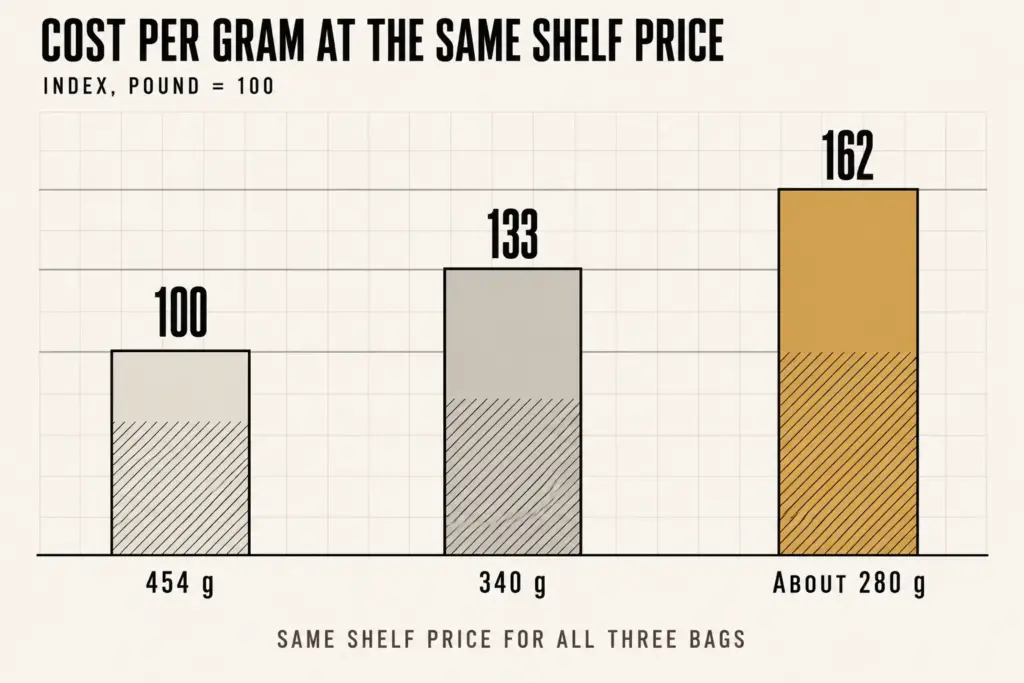
A pound is 454 g (453.6, to be exact). Shrinkflation is the word for it. Many roasters cut the bag from a pound to about 340 g from 2021 or 2022, and some now sell about 280 g. No roaster is named here: the point is the weight, not the brand.
Do the division. At the same shelf price, going from 454 g to 340 g means 454 ÷ 340 = 1.335, so the same coffee costs about 33.5 percent more per gram. A quarter fewer grams under an unchanged tag is a third more per gram, which is the part the tag never says. A 12 oz bag is already 340 g, so the specialty bag in your hand has had this size for a while.
From 340 Grams to About 280
Now the second cut. From 340 g down to about 280 g, the division is 340 ÷ 280 = 1.214, or about 21 percent more per gram.
Stack the two and the picture is plain: from a pound all the way to 280 g, it is 454 ÷ 280 = 1.62, about 62 percent more per gram at an unchanged shelf price. Every figure here uses weights, because the arithmetic holds whatever the tag says this month.
How to Compare Any Two Bags
The comparison costs nothing: read the weight on each bag, divide the shelf price by the grams, and compare the two results; for the cost of one cup, multiply by the grams per cup you brew. And the cup does not change when a bag shrinks, so the grams are the only thing there is to check.
Convert before you compare. One ounce is about 28.35 g, so a 10 oz brick is about 283 g and a 12 oz bag about 340 g. Put every bag in grams first; set ounces on one bag against grams on the other and you are comparing two different numbers.
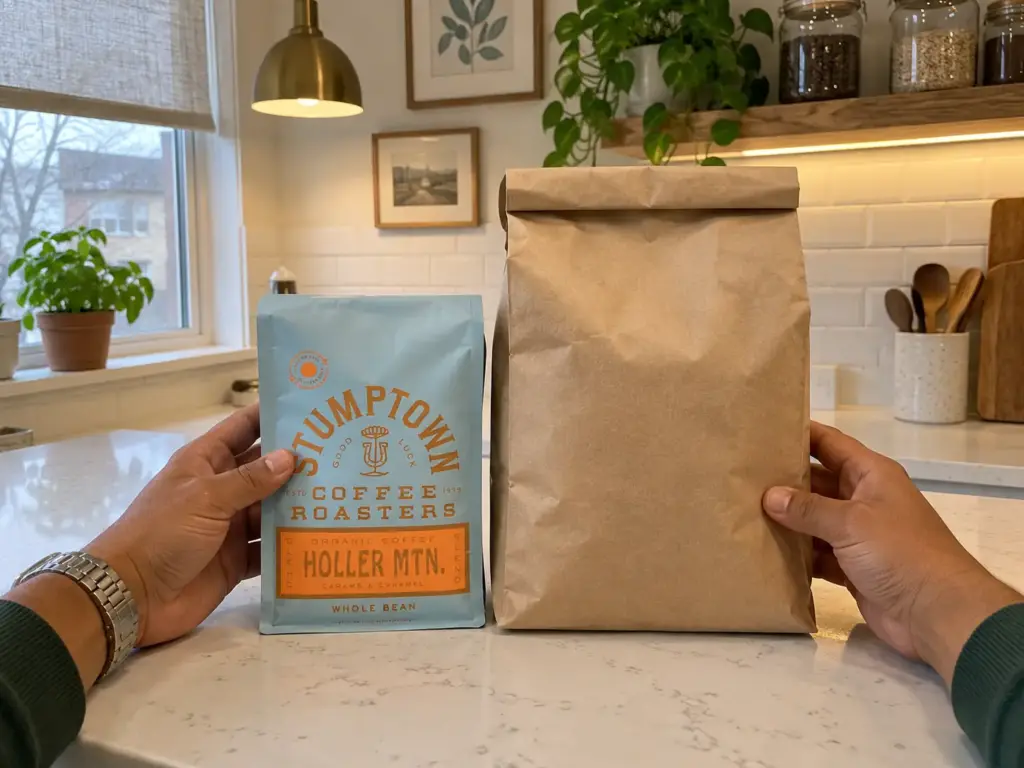
A 12 oz bag is 340 g, and how many cups a 12 oz bag makes is the next step once you have the grams. Take a specialty bag such as Stumptown Coffee Roasters Holler Mountain, whole bean, medium roast, 12 oz. It is already the small size, so the question for it is not whether it shrank but whether the roast date is worth the difference from a grocery bag. It typically sits higher per gram than the six-bag grocery pack, and that is its trade-off: you pay for a fresher date on the bag, and only the date printed there tells you whether you got it.
Will Coffee Beans Get Cheaper?
The raw side is already moving, but the shelf has its own clock, so the answer has two parts.
What the Record Crops Say
The USDA’s July 2026 numbers point down on the raw side: world production forecast at a record 189.7 million bags against record consumption of 179.7 million, Brazil’s crop at a record 71.9 million, Vietnam’s at a record 32.5 million. Bigger supply is what pulled the raw price down.
Why the Shelf Comes Down Slower Than It Went Up
The reasons are the ones from the lag: costs absorbed, contracts that renew on their own dates, and a reset that arrives in one step. A bag bought now carries coffee bought months ago, so a falling raw price shows up on the receipt late and in small steps.
No date comes with this, and no promise. What would change the picture is another weak harvest in Brazil, and the five thin years show that can happen. Your choice, in the meantime, is the bag, not the market. Waiting for a lower price and then stocking a large bag is the trap, so read how long beans keep after the bag is opened before buying more than you will use.
Cheaper Bags and the Flaw Each One Carries
“Cheaper” is not free: each way of paying less moves a cost somewhere else, and the cup is often where it lands. Before any of them, the cheapest change costs nothing: buy fewer grams of fresher coffee and read the roast date.
A Store Brand
Switching from Bustelo to Costco’s Kirkland coffee when the Bustelo price climbed is a reasonable move on price alone. The flaw is the roast date, which a shelf bag may not show, and a cup made from old beans tastes flat whatever the brand. If the bag has no date, how to tell if a bag of beans is stale is the check to run on the first cup.
A Roast Made Near the Sale
Some regional grocery chains sell whole-bean coffee roasted in a town nearby on Fridays, and the freshness can beat older bags from specialty roasters. That is the obvious pick turned around: the roaster’s bag is the usual answer to freshness, and here a grocery shelf did it better. The flaw is that it is local, so you may not have one within reach.
Roasting at Home
Home roasting won’t save you money. Green coffee carries the same price swings, and a home roaster has no economies of scale. A cupper who hosts home roasters adds the other half, saying they see “home roasters disappointed with their results after investing so much time and capital.”
The kitchen route is an air popper, which blows the chaff out. The flaws are smoke, chaff and time, and they arrive before the first good batch does. If you are curious anyway, what roasting actually does to the bean explains what happens to the bean in the roaster.
Buying Big and Freezing Portions
The saving depends on when the green coffee is bought, such as a sale, not on the method. The free fix still comes first: buy fewer grams, check the date, and only then think about bulk. The flaw is that only what you will finish keeps well, and a large bag stays a bargain only until you stop finishing it.
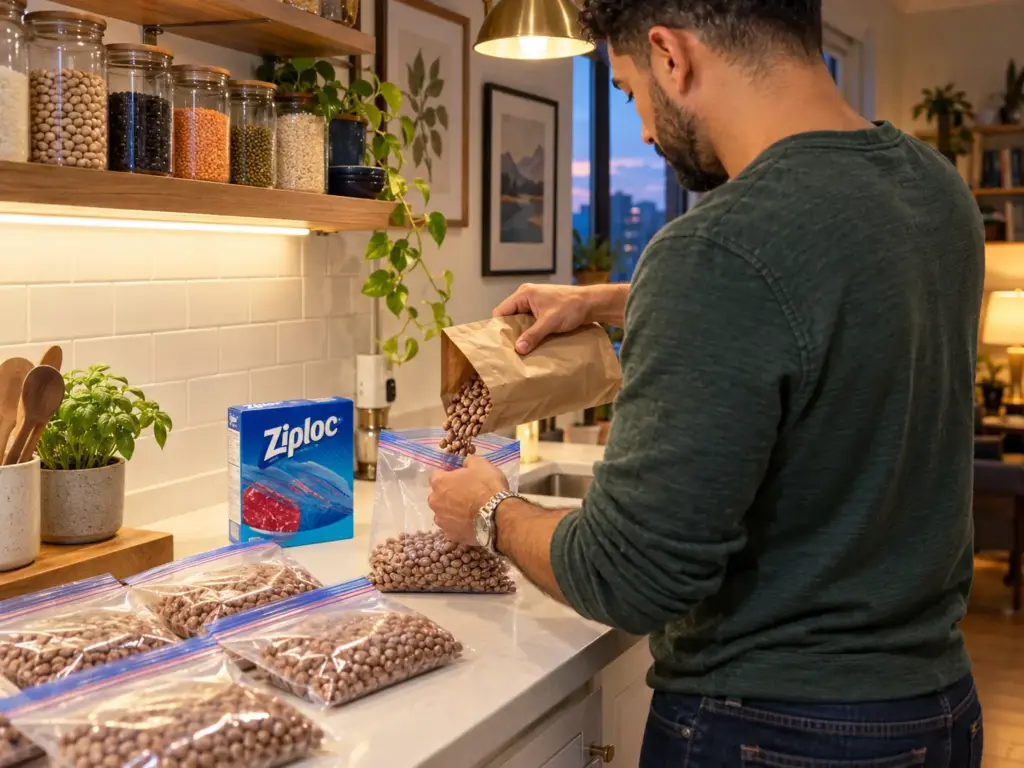
If you do buy big, Ziploc Freezer Bags Grip n Seal in the quart size, 114 bags in the three-pack, are the portion container. A bag is a container, not a method: it does not say how long a frozen portion stays good or how to thaw it, and this article does not state a freezing rule. Whether to freeze coffee beans owns that.
Portion the big bag into the amount you will brew in a week, not the amount the bag holds. Weigh one week’s coffee once, then fill each quart bag to that weight, so every bag you open is finished before it goes stale.
The next decision is which bag to buy from now on. Where to buy beans that stay fresh is the place to start, and if the answer is delivery, a subscription that holds up past month two is the other route.
What to Check Before the Next Bag
Three things hold up whichever way the market goes next. The price on the tag was set from coffee bought months ago, so the news and your receipt will disagree for a while. Sort what you pay for into the lines that reach the cup, the grade and the roast date, and the lines that reach only the receipt, and spend on the first. And compare bags by price per gram, because the weight changed under the same tag.
A month from now, put the weight and the roast date of the bag you buy next to what it cost, and see which of the two moved.
Tomorrow, before anything else, read the grams printed on the bag already on your counter and divide the tag by them. Then taste a cup of whichever cheaper option you picked and see whether it still tastes roasted recently. For the shelf, there are the grocery-store bags worth buying, picked by roast date.
Frequently Asked Questions
01Why are coffee beans so expensive now?
Weather losses in Brazil, the largest grower, repriced green coffee, and the roasted bag follows that price with a lag of months. The cup did not get more expensive; the market did.
02Will coffee ever get cheaper?
The raw price is already lower because record crops are forecast in Brazil and Vietnam, but the shelf price follows contracts and reset dates, so it falls slowly. No date can be promised, and another weak Brazilian harvest would change the picture.
03Is it cheaper to roast your own coffee beans?
The cost moves to smoke, chaff and time.
04How much does a pound of coffee beans cost?
A pound is 453.6 g, so the cost per cup is the grams you brew times the price per gram, and no single figure holds for long. Divide the tag by the grams, then see how many cups a 12 oz bag makes.
05Why does my bag of coffee say 12 oz instead of a pound?
The same shelf price over fewer grams costs more per gram, so convert and compare.

How did your cup turn out?
No comments yet. Tell us what you changed — and whether the needle moved.