



We may earn a commission when you buy through links on this page. It never changes what we recommend. How we pick
On this page7 parts
- What "Single Origin" Actually Promises
- Single Estate, Microlot and the Rungs of the Ladder
- What the Label Never Says: Roast Date, Process and Roast Level
- Using the Ladder to Reorder the Same Cup
- Why the Grinder Decides Whether You Taste Any of It
- Turn the Bag Over Before You Read the Origin
- Frequently Asked Questions
The beans ran out, so you are in the grocery aisle holding a bag that says single origin in large type and, right under it, a country. No farm, no roast date, only a best-by stamped a long way off. Next to it sits a pricier bag that names a farm, and the whole question of single estate vs single origin coffee comes down to whether that farm name buys you a different cup. Both phrases are addresses, not grades: single origin names a place, and the place can be an entire country, while single estate names one farm, and neither one says a word about flavor, quality or how old the beans are.
What follows is what each word on the label actually tells you, what the bag leaves off, how to use the narrower words to buy the same cup twice, and why the grinder decides whether any of it reaches your mug.
Quick Answer
Single origin means the beans come from one place, and that place can be a whole country, a region, a cooperative or one farm. Single estate means one named farm, so every single estate coffee is single origin, never the reverse. A microlot is a smaller lot again. None of the three guarantees flavor, quality or freshness.
What “Single Origin” Actually Promises
Single origin and single estate get printed on bags as if one were a grade above the other. They are not grades. They describe where the beans grew, and the widest of them can cover a whole country’s worth of farms, so it is the place to start before walking down to a single farm.
One place can mean a whole country
Single origin means every bean in the bag was grown in one place. The roaster decides how big that place is. It can be a country, a growing region inside it, a cooperative where hundreds of small growers deliver cherries to the same mill, or a single farm, and the bag uses the same two words for all four. The word moves with whoever prints it.
That is how a supermarket bag can say single origin and mean nothing narrower than Kenya. A grocery bag sold only as Kenyan or Colombian can hardly be called single origin, and the rest of that bag tells its own story: no date of roasting, and a suspiciously low price. The people who buy a lot of coffee read the whole bag, not the word.
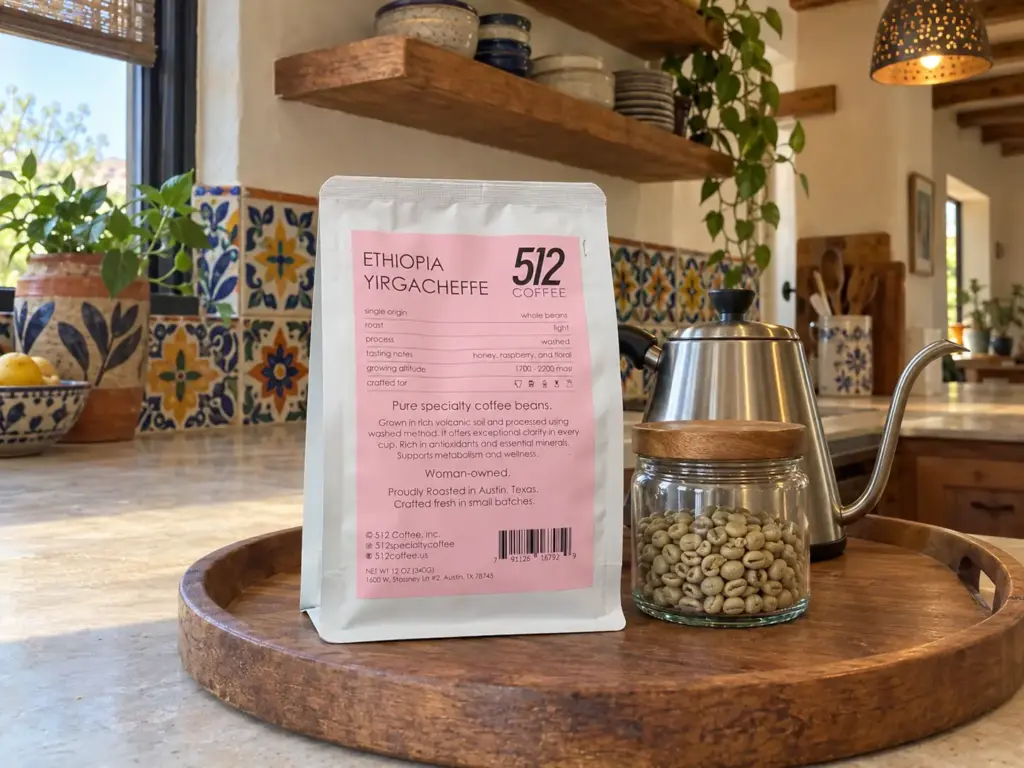
A light roast like the 512 Coffee Ethiopia Yirgacheffe Light Roast shows what this wide rung looks like when the roaster adds a little more. The 12 oz whole bean bag names a country, Ethiopia, and a district inside it, Yirgacheffe, which already narrows things past the grocery bag that stops at “Ethiopian.”
What the label does not name is a farm or a washing station. So it is a single origin and not a single estate, and nothing printed on it lets you ask for the identical lot once it sells out. That is not a defect of the coffee; it is the limit of the rung.
Whether a single origin beats a blend in your brewer is a separate argument, and the single origin versus a blend question has its own page. This one stays with the words on the bag.
No one scale defines the word
There is no global rulebook behind the label. The closest thing is what individual producing countries write for their own coffee, and Colombia’s growers’ federation, the FNC, splits it into separate tiers: a Single Origin Craft coffee is traceable to a department or a municipality, a Relationship Craft coffee to a group of producers, and a Single Farm Craft coffee to one farm and its grower. According to the International Coffee Organization’s compilation of specialty-coffee definitions, which reproduces that scheme, “Craft Estate Coffee: Coffees from a single farm, compiled with strict quality standards, usually above 50 bags x 70 kg.”
Read that for what it is: one producing country’s rules for its own coffee. A roaster in the US printing “estate” on a bag of Guatemalan beans is not checked against it, and a Brazilian or Ethiopian bag answers to whatever its own country or its roaster decided. A tier in one country is not a rule everywhere. (It is still the most precise definition in print, which says something about the rest.)
On the shelf, the origin word is the largest type on the bag and the roast date, when there is one, is the smallest, often a stamp on the bottom seam. The size of the print is already a hint about which of the two tells you more.
What the word does not mean
Single origin is not a variety. A variety is the plant itself (Castillo, Caturra, Geisha, SL28), and one farm can grow several, so even a single estate bag can be a mix of varieties picked from different rows. It is not fair trade and not organic either: those seals answer how the coffee was bought and how it was grown, not where. And it says nothing about the species, which is why a bag prints 100% arabica as a separate claim about which plant the beans came from.
Nor does the word say anything about caffeine, or about whether one coffee is healthier than another. The label records where the bean grew; what a coffee does to you is a question for your doctor, not for the bag.
Count the place names on the label before you read anything else. One name, a country, is the widest rung. Two, a country and a region or district, gets you a similar cup next time. Only a label that ends in a farm, a washing station or a lot number lets you ask the roaster for the same coffee again.
Single Estate, Microlot and the Rungs of the Ladder
Below the country, the label can get narrower, and each narrower word names a smaller piece of the same harvest. Read in order, the words stop sounding like praise and start reading like a postal address: country, region, the group that processed it, the farm, the lot.
The ladder, rung by rung
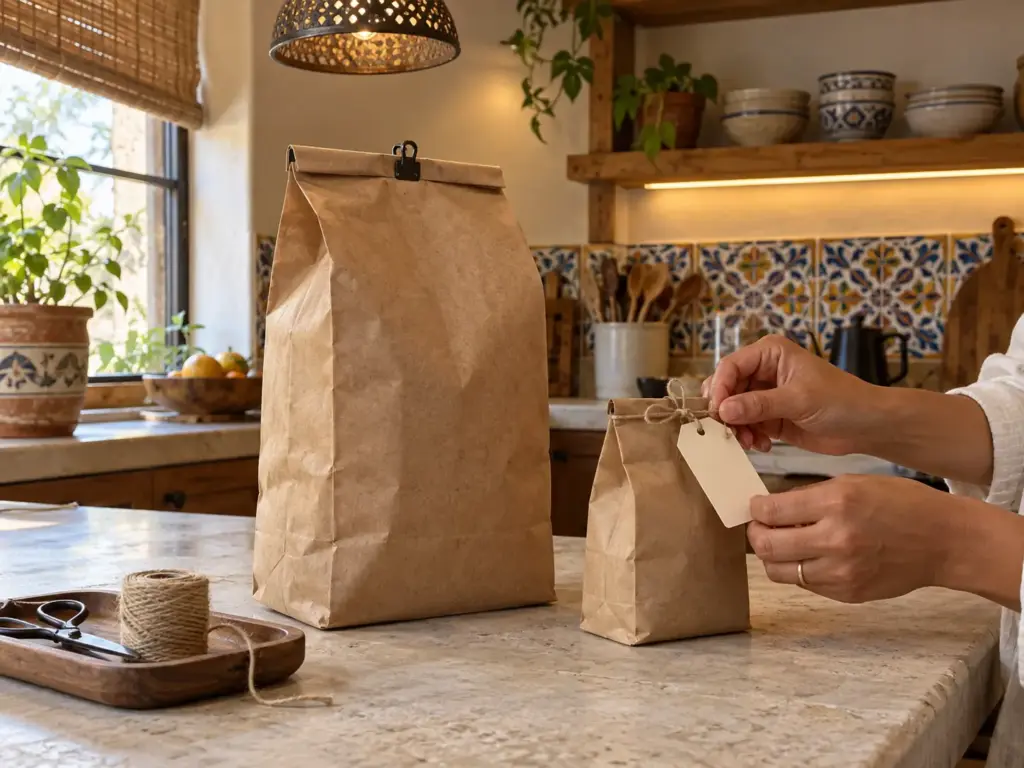
Put two bags on the counter, one that names a farm and one that names only a country, and you are looking at two rungs of the same ladder. Here it is from widest to narrowest, with what each rung lets you predict and what none of them promise.
| Rung | What the bag names | What it lets you predict | What it does not promise |
|---|---|---|---|
| Country | Ethiopia, Colombia, Kenya | A broad style of cup at best | The same coffee next time, quality, freshness |
| Region | Yirgacheffe, Huila, Nyeri | A narrower style and a similar cup from a later bag | That two bags came from the same farms |
| Cooperative or group of producers | A co-op or washing station name | Coffee from one group of growers, often one mill | One farm or one lot |
| Single estate | One named farm | Who grew it, and the same farm next harvest | One lot, one picking day, a better cup |
| Microlot | A farm plus a lot name or number | The closest thing to buying the same coffee twice | Better flavor, or that it will still be there |
The middle column is about traceability, not taste. A narrower rung tells you more about where to find the coffee again and nothing about whether you will like it.
The cooperative rung is the one people skip, and it matters most where farms are tiny. Where growers farm very small plots, no single farm produces enough to fill a lot, so the cherries from many growers go to one washing station and leave under its name. On a bag like that, the station name is the narrowest address that exists. A missing farm name is not a sign that the roaster is hiding something.
Single estate: one farm, not one lot
Single estate means one named farm, which is why every single estate coffee is also single origin and never the reverse. But a farm is not a lot. An estate’s coffee can come from several plots at different altitudes, picked over weeks and run through the farm’s own mill, then sold under one name. The word tells you who grew it, not that every bean came off one slope on one picking day.
The Colombian scheme the ICO paper reproduces puts a score floor on each tier: 83 points on the SCA scale for the regional Single Origin Craft tier, 85 for the single farm, the estate and the microlot. On paper, then, the narrower rung scores higher. Off paper, a bag in a US shop printed “estate” has not been scored against that floor by anyone you can check, so the number belongs to that scheme and stays there.
Microlot is a size, not a promise of flavor
In the same scheme a Craft Microlot is 5 to 50 bags of 70 kg, an estate coffee usually runs above 50 bags, and there is even an Exotic Lot tier at 1 to 10 bags. Run the arithmetic and a five-bag microlot is still about 770 pounds of green coffee, while the estate tier starts around 7,700 pounds. Estate and microlot are two sizes of the same idea: one farm, sliced thinner.
Small is not the same as good. Microlots are often priced on the story, the process and how rare the lot is more than on what lands in the cup. Two cheap single origins can be better than supermarket coffee, but not by much, and a fresher supermarket bag may well beat both. The word on the bag was not what decided that cup.
So a microlot is the coffee to buy when you want to taste one farm’s lot. Or, more usefully, it is the coffee to buy after you already know you like that farm, because a lot that small sells out and a bag you never tasted tells you nothing a cheaper bag would not. The farm name on a bag helps with exactly one thing at the counter: finding the same coffee again. Once the words make sense, the next decision is which single origin to start with.
Before a bag you liked goes in the recycling, photograph the back of it, not the front. The farm name alone may bring back next year’s harvest; the lot code, the harvest year or the process line is what lets a roaster tell you whether the coffee on the shelf is the one you drank.
What the Label Never Says: Roast Date, Process and Roast Level
A farm name tells you who grew the coffee, and then the bag goes quiet on the three things that decide the cup you drink. The roast date, the process and the roast level are printed somewhere else, in smaller type, if they are printed at all. Read them in that order.
The roast date beats the rung
Say the pricier bag, the one that names a farm, brews a thin, flat cup with a faint taste of cardboard. That cup points to age, not to origin: the aromatics that make one farm taste different from another are the first thing to leave a roasted bean, and what remains tastes like any other old coffee.
Per the Specialty Coffee Association’s freshness explainer, whole bean coffee can reasonably be considered fresh within about three weeks of roasting, and the carbon dioxide trapped in the beans escapes quickly for roughly the first 20 days before slowing to a trickle. A single estate bag with no roast date cannot be placed anywhere on that curve. A country-level bag roasted last week can, and it will usually beat the farm.
So the farm-named bag stops being the obvious pick the moment its date is missing or old. Pay for the farm when the date is recent; when it is not, the cheaper bag roasted days ago is the better buy. The three weeks also count from the roast, not from the day you bought the bag, so a coffee that sat in a warehouse and then on a shelf can arrive with most of its window already spent.
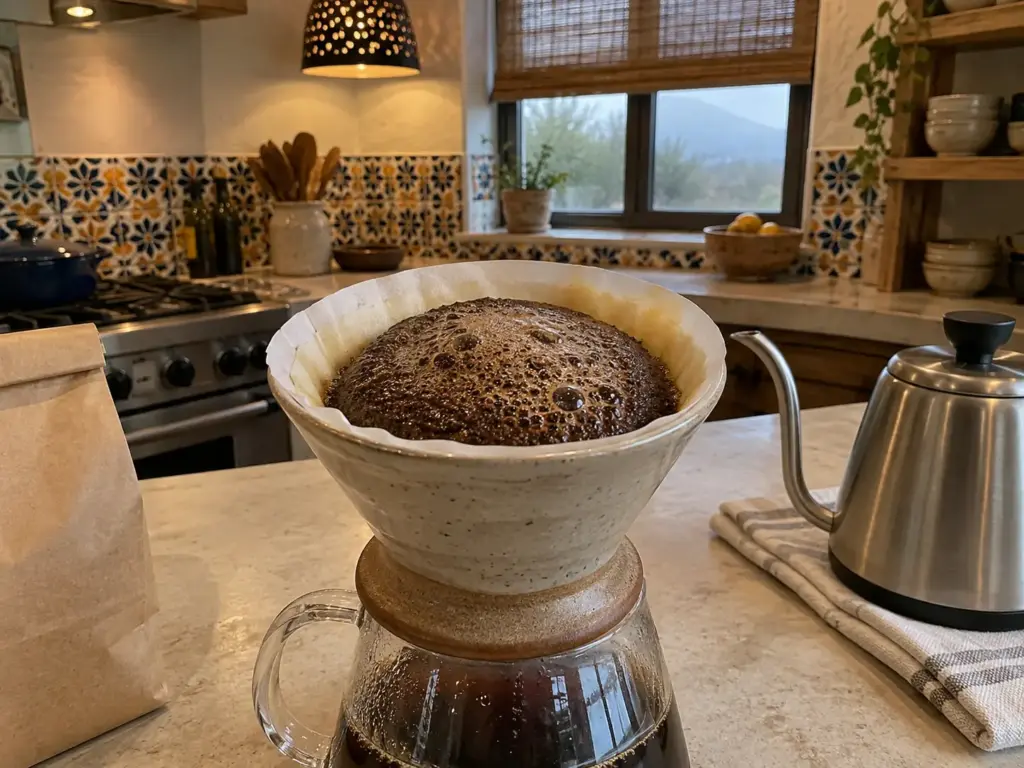
There is a sign you can see before you taste. Pour a little hot water over fresh grounds in a dripper and the bed swells and bubbles as the gas pushes out; grounds from a bag weeks past roast barely rise, because the gas that lifts them has already left.
The free change is to buy by the roast date and brew the same way. If the next cup has its aroma and a little sweetness back, age was the problem and the farm never was. If you are not sure where your current bag stands, how to tell when beans have gone stale covers the signs.
“Best by” is not a roast date
A best-by date is a packaging marker. It tells you when the packer stops standing behind the bag, not when the beans came out of the roaster, and you cannot count backward from it because every brand sets its own gap. The rule is short: a bag with only a best-by date is an undated bag.
The same supermarket thread had someone point out that specialty coffee does turn up in stores, followed by “good luck finding fresh and good specialty coffee in stores.” The workaround that came with it is to look deeper on the shelf, where a local roaster’s bag roasted a week or so ago sometimes sits behind the national brands. In one published tasting of 38 supermarket single-origin whole beans, scores ran from 78, below the specialty line, to 93, all under the same two words. The label sorted nothing; the date and the roaster did.
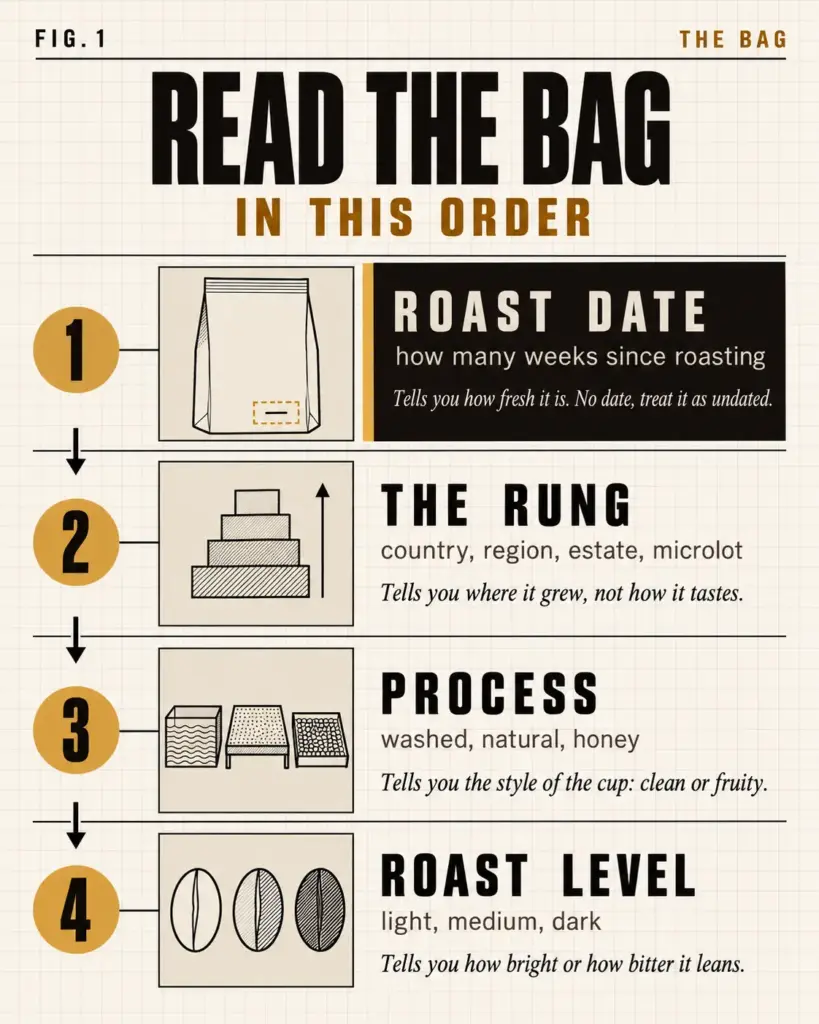
So read the bag in this order: the roast date first, then the rung from country down to microlot, then the process, then the roast level. The date tells you whether anything else on the bag still matters, the rung tells you where to find the coffee again, and the process and roast tell you what kind of cup to expect. That is what the rest of the bag tells you, in the order it pays off.
Process and roast level change the cup more than the farm name
Process is what happened between the cherry and the dry bean. A washed coffee has the fruit stripped off before drying and tends to taste cleaner and brighter; a natural dries inside the whole cherry and picks up fruitier, sometimes winey notes; a honey process sits in between, with some of the sticky fruit left on. You can taste those differences in an ordinary drip machine.
Then the roaster sets the roast level. A light roast keeps the acidity and the character of the place; a dark roast trades both for roast flavor, bitter-sweet and smoky, because the longer the beans stay in the drum the more of what grew on the farm turns into what happened in the roaster. Take one farm, roast a washed lot light and a natural lot dark, and you get two cups that share a name and little else.
The farm name comes fourth. Behind the date, the process and the roast.
When a bag carries a roast date, write the day you opened it next to that date in marker. Two dates on one bag tell you how far into the three-week window you were when the cup went flat, and whether the shop or your cupboard ate the freshness.
Using the Ladder to Reorder the Same Cup
Once the label has been read, the ladder has one real job at the counter: telling the shop which coffee to bring back. It is worth knowing what it cannot do as well, because a narrow rung offers no protection against a bad harvest.
A name that narrows lets you re-buy
The cup was good last month, the bag is empty, and all you have to ask for it again is the label. If the label says Ethiopia, you can ask for another Ethiopian and get something in the same family, or something quite different from another region and another mill. If it names a region, you get closer. If it names a farm, a washing station or a lot, you can ask for that exact coffee, and the roaster can tell you whether it is still in stock.
That is the free move before any new purchase: keep the label. Small specialty roasters, the ones often called third wave, print farm and lot names precisely because their customers reorder by them. The narrow words earn their place here and almost nowhere else.
The same name can taste different next harvest
A single origin follows the harvest. The same farm’s coffee next year grew through different weather, was picked at a different pace and may have been processed by a different crew, and the roaster may have bought a different lot of it. Blends exist partly to absorb that: a roaster swaps components to hold one profile steady. A single origin makes no such promise, and the coffee you liked may be gone by the time you reorder.
Estate and microlot are also marketing. A small lot can be priced for its story as much as its cup, and a country-level bag roasted last week is not the lesser purchase. One farm’s bad year is a bad bag with the farm’s name on it, and the narrow label does nothing to warn you. If you would rather the reorder happen without having to remember it, reordering on a schedule has trade-offs of its own.
Weigh the dose when you reorder
The first check is free. Before blaming a new harvest, compare the roast dates on the old bag and the new one: a cup that went flat between bags may only be an older bag. If the dates are close and the cup still tastes different, measure the dose by weight next.
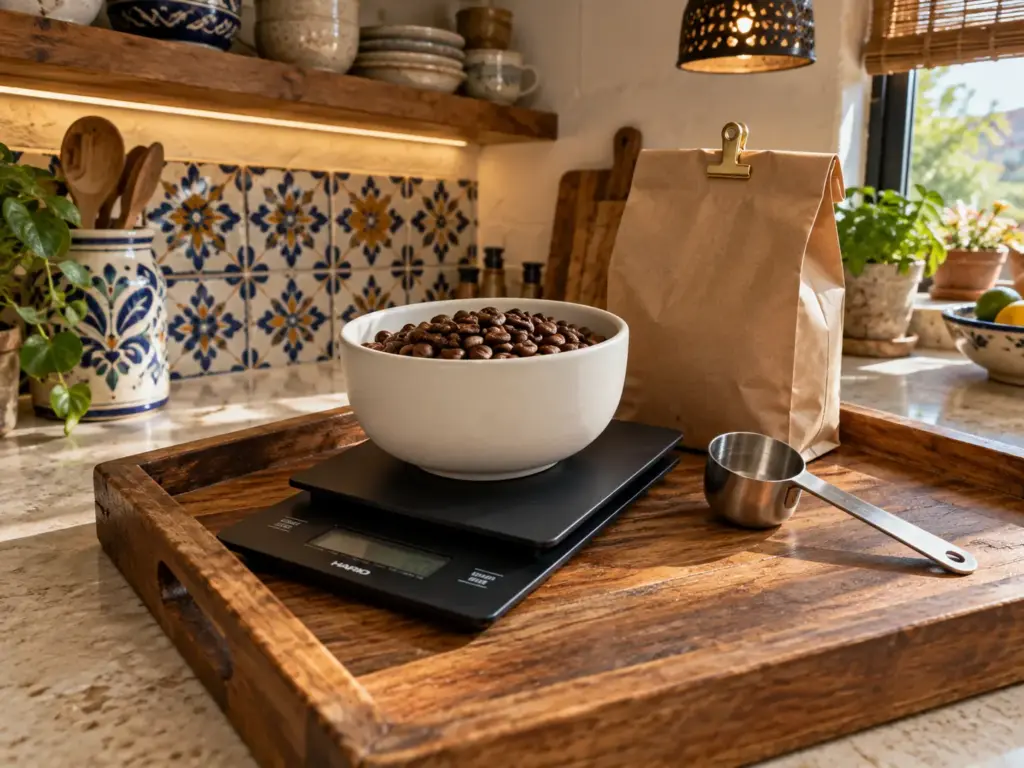
A scoop measures volume, and a light roast is denser than a dark one, so the same level scoop from two bags can hold a different number of grams. Weighing lets you repeat the dose exactly when the same name comes back, so if the cup changes, the change is in the coffee and not in the scoop. That is why weighing the dose before turning the dial comes before any grind change.
The Hario Drip Scale Timer reads in 0.1 g steps and carries its own timer, so the dose and the brew time sit on one display. It also switches itself off after 5 minutes, which means a slow pour-over that runs long, or a scale left on while the kettle heats, can lose its reading in the middle of a brew. For a drip machine, where the scale only weighs the beans before brewing, that never comes up. The Etekcity Food Kitchen Scale does the same weighing job more cheaply, in 1 g steps and with no timer, which is plenty for a full carafe’s dose.
With both bags weighed the same, the comparison means something. The same grams of a new harvest of the same name can come out sharper or flatter, and now you know it is the coffee. If the new cup leans sour and sharp, go one grind step finer and taste again; if it leans bitter and dry, one step coarser. One step, then taste.
Brew the first cup of a reordered bag at exactly the grams and grind setting you used for the last one, and change nothing else. That first cup is your reading of the new harvest; adjust the grind only after you have tasted it, and only one step.
Why the Grinder Decides Whether You Taste Any of It
Everything above assumes the grounds come out even. At a counter with a drip machine and a blade grinder they do not, and the grinder then flattens exactly the differences a farm name is bought for.
Why a blade grinder flattens a single estate
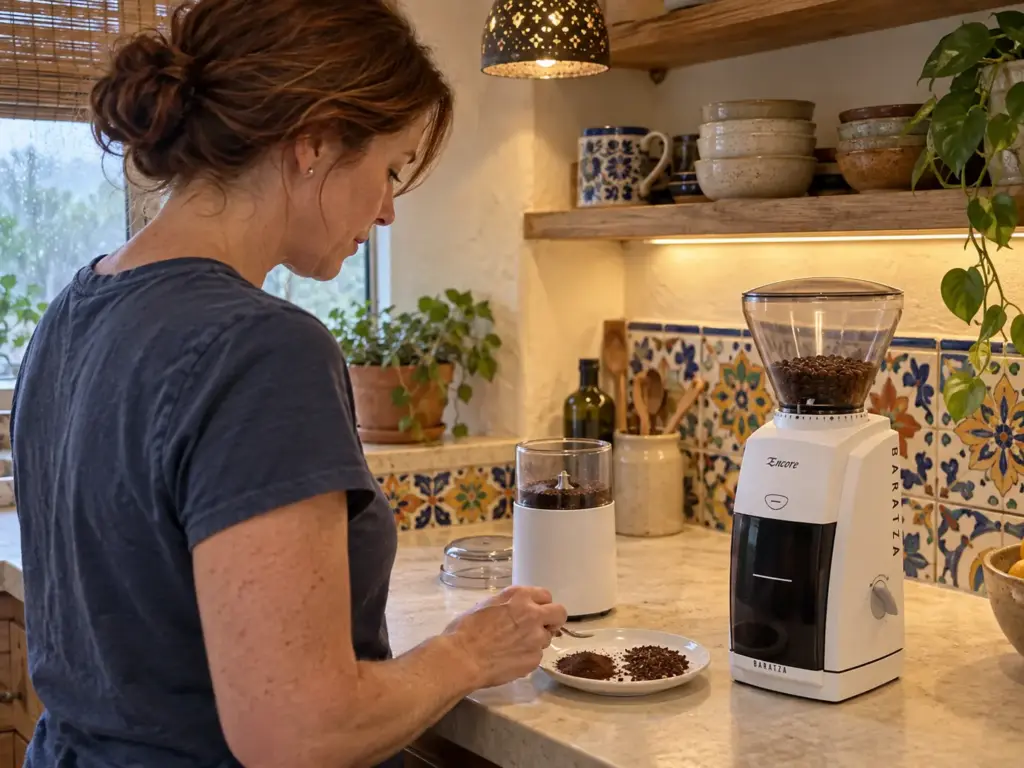
A blade grinder does not grind to a size; it smashes until you let go of the button. The result is boulders and dust in the same pile. The dust over-extracts and turns bitter, the boulders under-extract and stay sour, and the cup is sour and bitter at once. Lift the lid after a pulse and you can see it: powder and chunks side by side in the same pinch.
Now brew a single estate and a grocery single origin through that grinder. What makes the estate worth paying for, a cleaner acidity or a particular fruit note, lives in a narrow band of extraction, and a grind that is half too fine and half too coarse never lands in it. The two cups end up closer to each other than to anything printed on either label.
Better beans are the standard answer to a better cup, and with a blade grinder that answer spends money on a difference you will not taste. The grinder is the part of the chain that decides, which is the whole argument of burr versus blade grinder.
A burr grinder lets the difference through
A burr grinder cuts between two burrs set a fixed distance apart, so the particles come out close to one size and the cup points in one direction you can correct. But it is the third change, not the first. In order, tasting between each:
- Buy by the roast date. It costs nothing, and if the next cup has its aroma back, stop there for a week before changing anything else.
- Weigh the dose. If cups stop swinging from one morning to the next, the scoop was part of the problem.
- Replace the blade grinder with a burr grinder. Sour-and-bitter-at-once should give way to a cup that leans one way, which one grind step can fix.
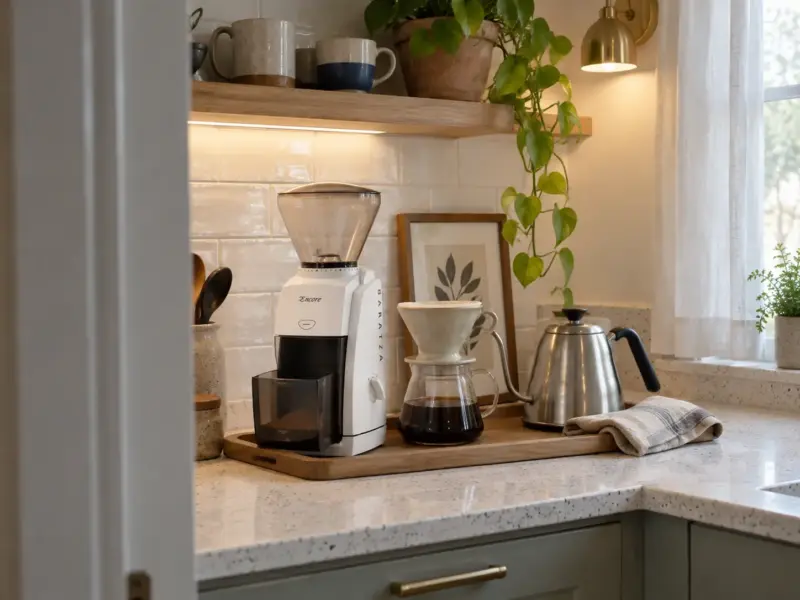
The Baratza Encore uses conical steel burrs with 40 settings, enough steps to move between a drip-machine grind and a pour-over grind and back. It is built for filter methods, though, and its finest settings do not reach the fine, closely spaced grind espresso needs, so an espresso drinker needs a grinder made for that job instead. And if a burr grinder already sits on your counter, a single estate is not a reason to buy a second one; read the roast date instead. Whether a single origin belongs in an espresso machine at all is a separate question, covered in single origin for espresso.
What to do with a grocery single origin
A grocery single origin is still worth buying. Some people keep a cheaper bag as a plan B for the Sunday morning when the good beans run out, and save the proper ones for the cups that count. Treat its country name as a country-level cup: expect a style, not a farm. Pick the bag with a roast date over the one without, whatever the rung, and grind it right before brewing; once it is open, how long beans keep after opening depends far more on that date than on where the coffee grew.
When a cup tastes like nothing, it is usually not the coffee’s address at all. Check the grind and the age of the bag already in the cupboard before buying another.
Until a burr grinder arrives, grind in short pulses and give the blade grinder a shake between them, so the chunks fall back toward the blades instead of riding on top of the dust. Grind only what one brew needs; the evenness is still poor, but the boulders get fewer.
Turn the Bag Over Before You Read the Origin
Three things to carry out of the aisle:
- Single origin names a place, and the place can be a whole country; single estate names one farm, and every single estate is single origin, never the reverse.
- The rung tells you who grew the coffee and helps you buy it again. The roast date, the process and the roast level decide what is in the cup.
- With a blade grinder on the counter, the grinder decides whether any rung reaches the mug.
A month from now, look at two dates on the bag you are finishing, the roast date and the day you opened it: if the gap between them keeps growing from bag to bag, the shop or the shelf is costing you more than any label could give back.
Tomorrow morning, turn the bag over and find the roast date before you read the origin, then brew the same grams the same way and taste that cup against the last one. If it is brighter and smells like something, the date was doing the work all along, and keeping beans fresh past week two is what protects it from there. When you are ready to choose the next bag on purpose, start with which single origin to start with.
Frequently Asked Questions
01What is single estate coffee?
Single estate coffee is coffee grown on one named farm, so every single estate coffee is also single origin, but a single origin is not always one farm. The farm name tells you who grew it, not that the bag is one lot, one harvest day or a better cup.
02Is single estate coffee better than single origin?
Not by itself, because single estate names a narrower place rather than a better cup, and the roast date, process and roast level decide most of what you taste. Its real advantage at home is that a farm name lets you reorder the same coffee.
03Is single origin on a grocery bag the same thing?
Not necessarily, since on a supermarket bag single origin often means only a country, with no region, no farm and sometimes no roast date. That is the widest rung of the label. Read the rest of the bag and choose the one that prints a roast date.
04Which single-origin coffee is considered the best?
No single bag is the best, because the right one depends on your brewer, your grinder and the roast level you enjoy. A recent roast date matters more than the country. For a place to begin, see the best single origin beans to start with.
05Is a single origin better than a blend?
Neither is better; they are built for different jobs. A single origin shows one place and changes with every harvest, while a blend is built to taste the same bag after bag. The full comparison lives in single origin versus a blend.

How did your cup turn out?
No comments yet. Tell us what you changed — and whether the needle moved.