



We may earn a commission when you buy through links on this page. It never changes what we recommend. How we pick
On this page10 parts
- What "Single Origin" and "Blend" Actually Say on the Bag
- What a Single Origin Does in the Cup, and When It Turns Sharp
- What a Blend Does on Purpose, and What It Can Hide
- Which One Suits the Brewer on Your Counter
- The Grocery-Shelf Blend, and When It Does the Same Job
- Mixing Two Bags in the Grinder Before You Buy a Third
- The Reorder Test: Same Bag, Different Cup
- What to Buy This Week, and Where Each Question Goes Next
- Read the Bag, Then Let Your Brewer Choose
- Frequently Asked Questions
You are in the coffee aisle with a bag in each hand. One says 100% Colombian in big letters, the other says Breakfast Blend, and when you turn them over, neither names a farm, a harvest or the day the beans left the roaster. That is the real puzzle behind single origin coffee vs blend: the two words describe where the beans came from and how many places went into the bag, not how good the cup will be, and the cupping standard the coffee world uses judges the coffee in the cup, never the word printed on the front.
(If what you actually want to know is whether one of them is the healthier choice, that question belongs with your doctor; this page stays with the label, the grinder and the cup.) The sections below take the two words apart, show what each does once hot water reaches it, match them to the brewer on your counter, and end with the free moves to try before you pay for a third bag.
Quick Answer
Neither is better. A single origin comes from one place and tastes like that place, so it shifts from harvest to harvest; a blend mixes several places and is built to stay balanced and steady all year. Choose by brewer and drink: milk and drip lean blend, black pour-over leans single origin. Price and quality do not follow the label.
What “Single Origin” and “Blend” Actually Say on the Bag
Both words sit on the front of the bag in the same type as the roast level, so they read like grades. They are descriptions of sourcing, and fairly loose ones at that. Before asking what either one does to your cup, it pays to know how little each is promising.
One Place Can Mean a Country, a Region, a Farm or a Lot
Single origin is a loose term. It promises traceability to one place and little else, and each roaster decides how tight that place is. That place can be a whole country, a growing region inside it, a single farm, or one micro-lot picked from part of a farm in a single harvest. A bag of 100% Colombian is one country, which is a very large thing to call one origin; a bag that names Huila is one region; a bag that names a farm and a lot is telling you whose trees and which picking went into it.
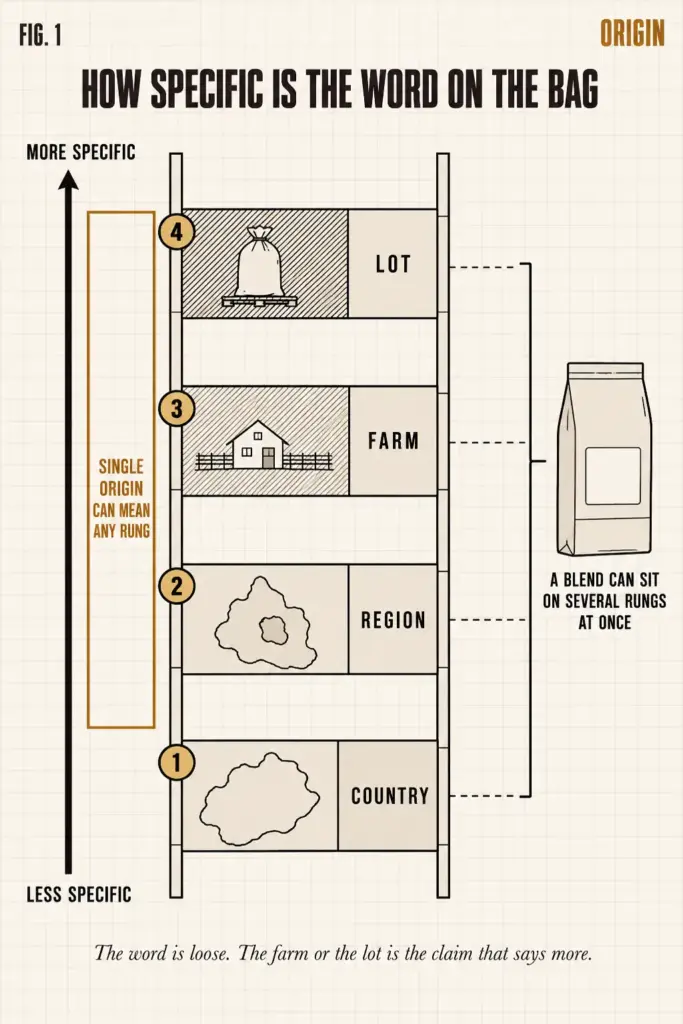
So the scale worth reading on the shelf is not the phrase itself but how far down that ladder the bag goes. Every rung lower is a bag committing to more, and a country name alone commits to very little. The finer differences between the terms on that ladder have their own guide, covering what single estate, single origin and microlot each promise.
A Blend Can Be a Plan or a Leftover
A blend is coffee from multiple origins in one bag, two at the least, and the word covers two very different things. At one end sits a roaster’s built recipe, with the regions printed on the label and chosen because each one does something the others do not. At the other sits the supermarket breakfast blend that names no origin at all.
Blends carry a reputation as the dregs, leftover beans tossed together to use them up. The bad name, though, was earned by cheap grocery bags rather than by blending as such: an intentional blend picks coffees that complement each other. The word on the front cannot tell you which one you are holding. The roaster can, and so can whether the bag bothers to list what is inside it.
A Label Is Not a Score
Neither word is a quality grade, and the coffee world’s own scoring system does not treat it as one. The SCA’s own cupping standard scores a coffee, not a label, and the Specialty Coffee Association is plain about what that score is: “The current cupping protocol emphasizes quality scoring, which is an affective type of assessment.” Its newer Coffee Value Assessment goes a step further and treats the information printed about a coffee as a separate assessment from the coffee itself. A single origin can earn a low cupping score, and a blend a high one.
Both kinds also arrive tired. Amazon reviews of a single origin and of a well-known roaster blend tell the same story from opposite sides of the aisle: a bag opened months past its printed date that tasted flat. A best-by date is not a roast date, either. A bag that prints a country and a best-by date and nothing else is telling you less than it looks like, which is why what a good bag actually tells you starts with the date, not the origin.
What a Single Origin Does in the Cup, and When It Turns Sharp
A single origin tastes like its place and its harvest, which is the whole appeal and the whole risk. When it works, the cup has a clarity a blend rarely aims for. When it goes wrong, it almost always goes wrong in one direction, and that direction tells you what to change.
Bright and Clear When It Works, and Why It Moves With the Harvest
Light-roasted single origins lean bright, fruity, floral and clean. Nothing is averaged out: whatever the terroir (the soil, the altitude, the weather) and the processing put into that one lot comes through, because no second coffee is there to round it off. An Ethiopian washed coffee can taste of citrus and jasmine; a Sumatran one can taste of earth and cedar, and both are doing exactly what they were bought for.
The flip side is seasonality: a lot of the cup is the harvest. The shorthand is that single origins have higher highs and lower lows. The next crop under the same name grew in a different season, so the bag you loved can return next year a shade sweeter, a shade thinner, or simply different.
Sharp Means the Water Left Early, So One Step Finer
Picture the first cup of a light single origin brewed on the same drip machine that has made the same grocery blend for years. It comes out thin and sharp, closer to lemon water than to coffee.
That cup points in one direction: under-extraction, where the water ran through before it pulled enough out of the grounds. The SCA and UC Davis brewing chart reads under-extraction as sour or grassy; its UC Davis authors describe the flavors at the low-extraction end as those “which are usually interpreted as sour or grassy.” The one change is a single grinder step finer, with the dose, the water and the machine left alone.
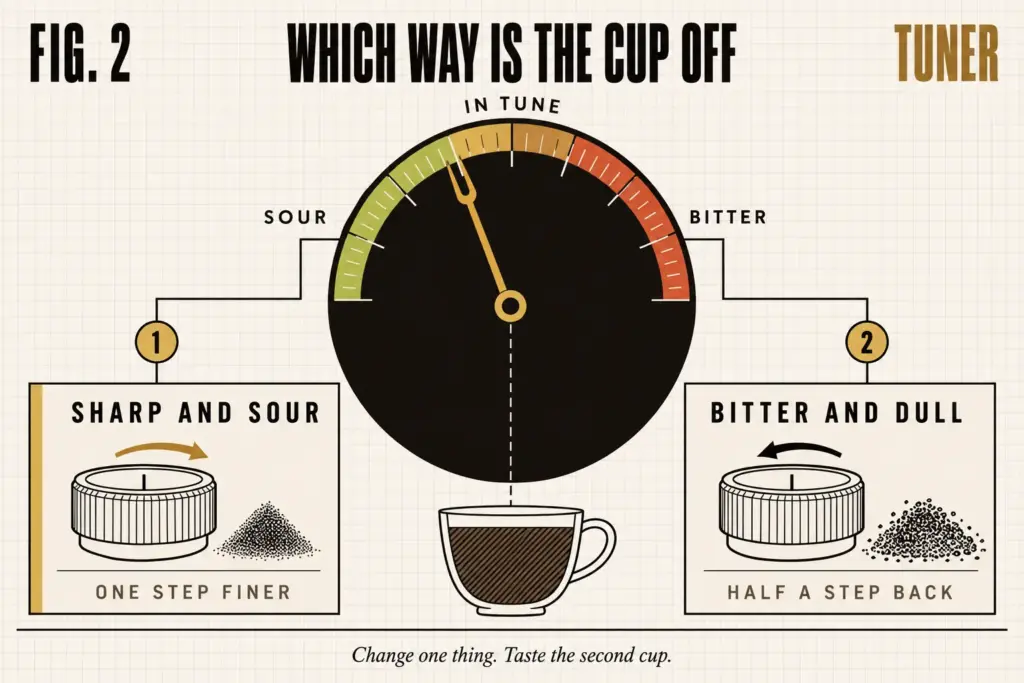
Light roasts are dense and give up their flavor slowly, so a grind set for a darker grocery blend is often a little coarse for them. One step finer gives the water more surface to work on in the same brew time. If you want the full picture of how grind size moves a cup from sour to bitter, that guide walks the whole range. And taste the second cup after the change, not the first: a grinder keeps a little ground coffee inside, so the first dose after a new setting still comes out partly at the old one.
Go too far and the cup swings the other way, bitter and dull. In one UC Davis study, run on a single washed Honduran coffee, sweetness fell as both strength and extraction rose, so pushing a bright coffee harder to get more out of it can cost you the very thing you bought it for. If the next cup tastes flat and harsh, come back half a step.
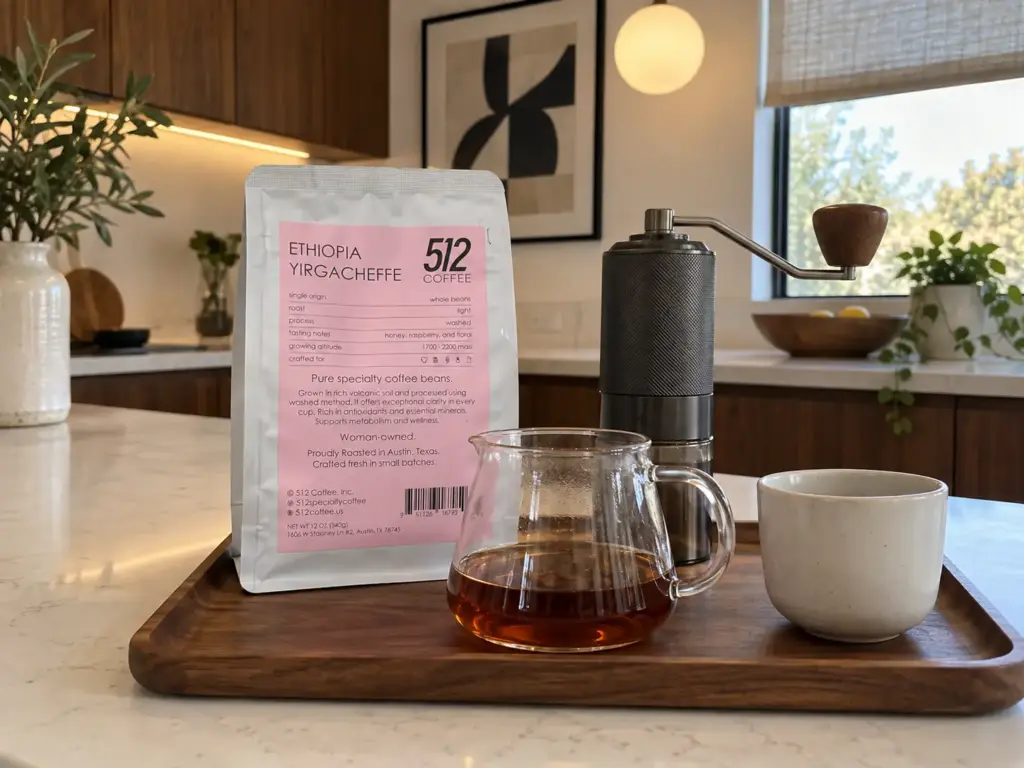
A clearly labeled one-place bag looks like 512 Coffee Ethiopia Yirgacheffe: country, region, a light roast and a filter brewing intent are all on the listing, with raspberry, honey and floral as its notes. It is also exactly the kind of dense light roast that comes out sharp on a coarse drip setting. Only 42 ratings stand behind it, some buyers find the best-by date already close when the bag arrives, and a local roaster can sell the same quality for less, so read the date the day it arrives.
When a light single origin tastes sharp, move the grinder exactly one step finer and change nothing else. Pour the first cup out or drink it without judging it, because it still carries grounds from the old setting; the second cup is the one that tells you whether the step worked.
Why Hotter Is Not the Change
The advice that usually follows a sour cup is to use hotter water. It sounds right, and on a drip machine it is mostly useless, for two reasons. Most machines give you no temperature dial at all.
And a UC Davis study of 270 drip brews found that once brew strength and extraction are held fixed, brew temperature changes the taste very little. The same paper notes that the SCA requires certified home brewers to reach about 198°F (92°C) within the first minute and stay at or under about 205°F (96°C): that window is something a good machine holds for you, not a number to chase.
So the grind is your lever, and the dose is the second one. Sometimes neither is enough, because the coffee itself is a lot. An intense Sumatra can be great on some days and too much on others, and it can come together once it is mixed with a sweeter natural coffee in the grinder (that move gets its own section below).
What a Blend Does on Purpose, and What It Can Hide
A blend is the same decision made the other way round. Someone chose several places so that the cup stays put, and that choice buys steadiness at the price of a few things you cannot see. Both halves are worth knowing before you pick one off the shelf.
Built to Taste the Same on the Reorder
The plainest description is that blends are usually designed to be consistent and balanced. The mechanics are simple: when one component runs out, it is easy to swap in a substitute that keeps the same flavor profile year to year and crop to crop. That is why the reorder of a blend tastes like the last bag. With a single origin, the change you notice is the harvest, not the roaster.
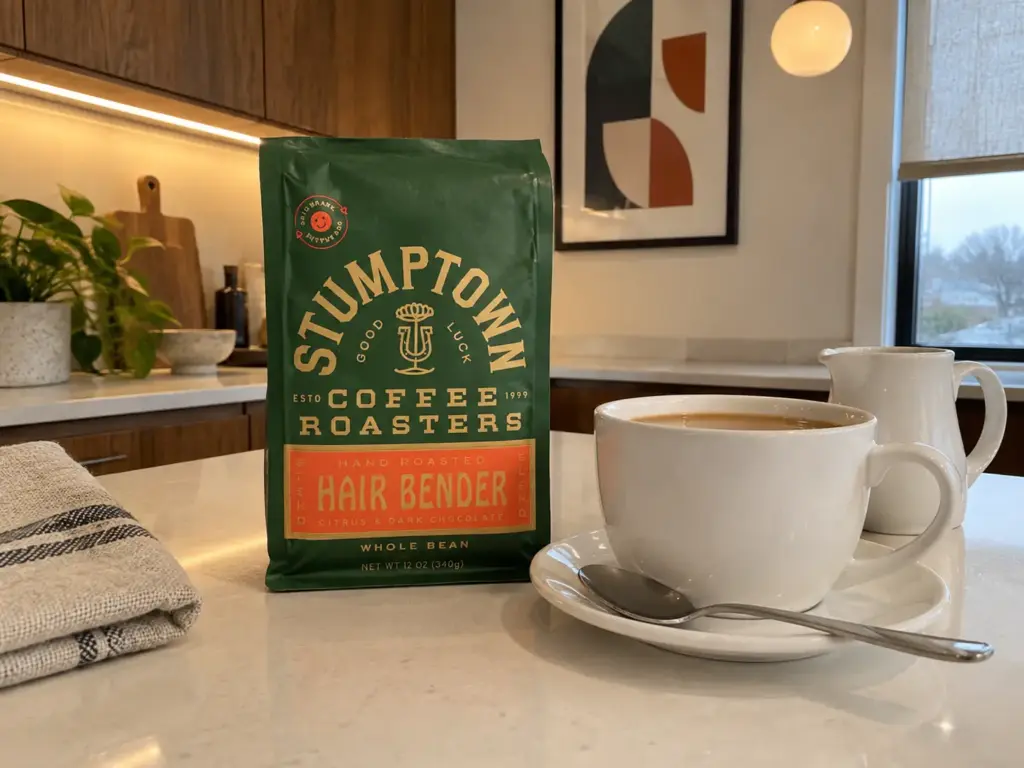
Stumptown Hair Bender shows what a blend made on purpose looks like on paper: its listing names Central and South America, East Africa and Indonesia, a medium roast, notes of citrus and dark chocolate, and sells it as an espresso blend that works with milk. The weak spot is the shipping shelf rather than the recipe. Freshness is the recurring problem, with beans sometimes arriving past their date, and at the dose the bag recommends it can taste too mild for espresso.
Roasted on One Profile, Which Is the Trade
Big-scale blends are almost always preblended: the green coffees are mixed first and the whole batch goes through one roast, even if each component would have wanted its own roast profile. Say a Brazil base that suits a medium roast and a Kenya that wants a lighter one end up on the same curve. The result is steady and unremarkable. For a drip machine or a latte, steady and unremarkable can be exactly the job.
Milk is where the community leans hardest toward blends. Single-origin acidity does not usually match well with the milk drinks people love, and that is a matter of taste rather than a measurement. Espresso has its exceptions, covered in the guide on whether a single origin can work for espresso, and the roast matters as much as the origin there, which is why how the roast level interacts with the machine deserves a read before you buy an espresso blend. A blend sometimes needs a small nudge in brew water temperature before it tastes right, and beans that play nicely together within the same extraction parameters are the main difficulty of blending.
The Weak Part You Cannot Taste Apart
A blend gives you no way to separate its parts. An ashy, cardboard-like note in a blend can come from one tired component or from a cup that is simply under-extracted, and the two are hard to tell apart. Another pointed out that two components can extract at different rates depending on their density and roast. You dial the cup, not each coffee inside it.
Steadier is not the same as immune, either. The same roaster’s blend can taste better one year than the next, for reasons that are not always clear. Treat a reorder of any blend as a new bag until the first cup says otherwise.
Which One Suits the Brewer on Your Counter
So far this is what each bag is. The decision itself lives on your counter: what you brew with, and whether milk goes in. Here it is as one choice per brewer.
This table sums up the view and the reasons behind it; the sections under it explain each row.
| Brewer | Leans | Why | What you give up |
|---|---|---|---|
| Drip machine | Either; start with a blend | A steady blend is what the machine was set up for | A single origin may come out sharp until you grind finer |
| French press | Either | Long steep and a heavy cup suit both kinds | A bright coffee’s clarity gets muddied by the fines |
| Pour-over, black | Single origin | Paper and a clean pour let one place’s acidity show | Changes with the harvest; needs a dial-in on reorder |
| Espresso with milk | Blend | Built balance holds up under milk | A blend can be flat on its own as a straight shot |
Drip Machine and French Press Take Either
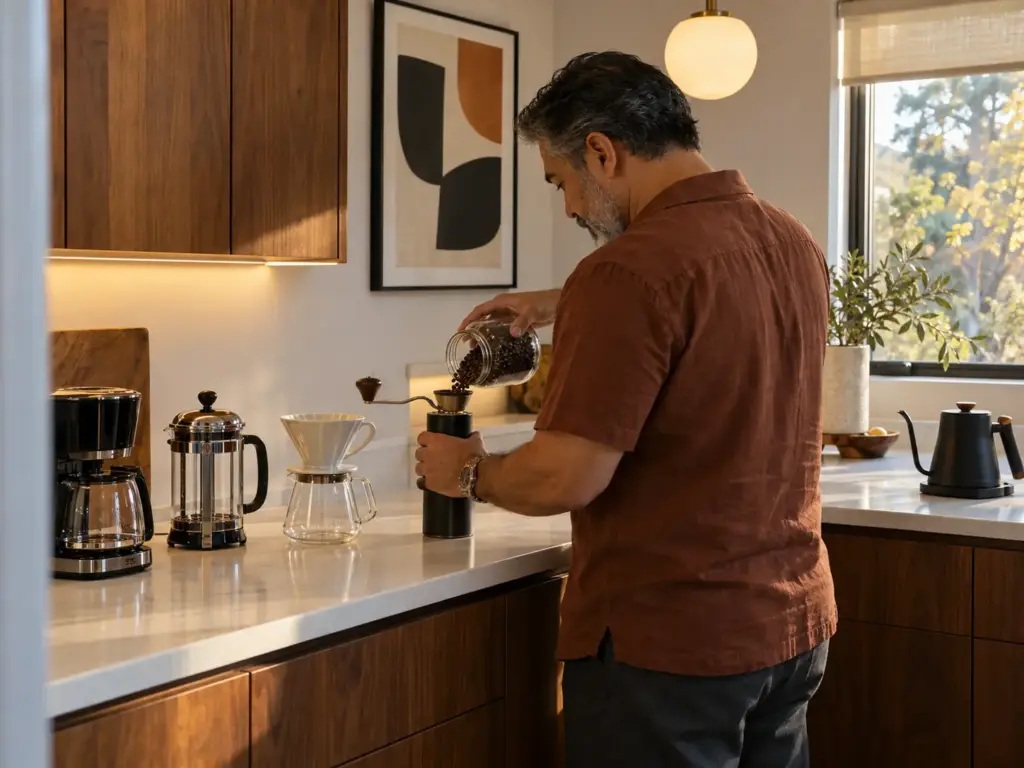
A drip machine and a French press at home take either bag. A grocery blend is built for exactly this brewer, and a single origin in a drip machine is a taste to try rather than an upgrade. Each carries its own risk: the blend can come out flat, and the single origin can come out sharp until you move to the grind size a drip machine wants for a lighter, denser bean.
Before blaming either label, check the machine. A drip brewer that never gets hot enough, or that dumps water on the center of the bed and leaves the edges dry, makes both bags taste flat, and no amount of switching origins fixes an uneven shower head. The sensible habit is to keep the blend for the drip machine or the French press, and save the single origin for a brewer that shows it off.
Pour-Over Rewards a Single Origin, Black
This is where a single origin earns its place. A paper filter and a slow, controlled pour leave a clean cup, and a clean cup is where one place’s acidity and fruit come through instead of being buried. If you drink it black, this is the brewer to buy the bright bag for.
But the obvious pick stops being obvious when the bag is old. A single origin’s appeal is its top notes, and those are the first thing a tired bag loses; a fresh blend in the same cone will usually beat a months-old single origin. Roast level counts as much here as origin, and the guide on how roast level changes a pour-over cup covers that side of the choice.
Milk and Espresso Lean Blend
With milk, lean blend. A built blend’s chocolate and caramel side holds up under steamed milk, while a light single origin’s acidity tends to read as sour once the milk dilutes everything else. The exception is the single-origin espresso drunk straight, which is a habit of its own and has its own guide. Either way, keep in mind that roast level shapes the cup as much as origin does.
The Grocery-Shelf Blend, and When It Does the Same Job
The cheap bag at the supermarket has a bad reputation among people who buy single origins. Some of it is deserved and some of it is snobbery. Knowing which part is which tells you when that bag is enough.
What a Big-Scale Blend Is Built For
A big-brand blend is made to be mild, steady and identical every time you buy it, from components picked and roasted so the next bag matches the last. That is not a flaw for a drip machine or a milk drink; it is the brief. The bad reputation belongs to the supermarket kind with no origins named and no roast date, not to blending as an idea.
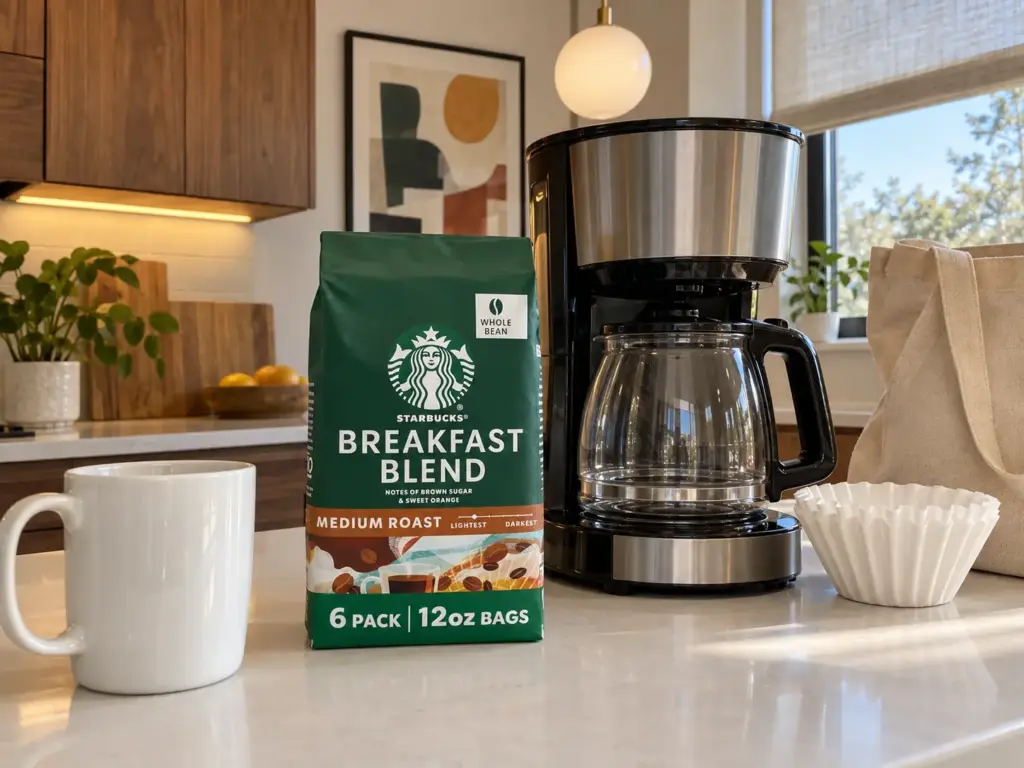
Starbucks Breakfast Blend is the honest example: 100% Arabica according to its listing, a medium roast described as milder and lighter than most of the brand’s range, sold whole bean in a pack of six 12-oz bags. Reviews across nearly 2,900 ratings are split on freshness, some calling it very fresh and others not fresh at all. For drip, for milk, or for a morning with no time to dial in anything, a grocery store bag like this at a fraction of a roaster’s single origin does the job well enough, and the comparison of how grocery-store coffee beans compare ranks the rest of that shelf.
If the same bag is going into an espresso machine instead, the rules change; supermarket beans in an espresso machine need a different look.
The Flaw of a Six-Bag Pack
A six-pack is one bag you are drinking and five more aging on the shelf. The flaw of a grocery blend is freshness, not the word blend, and a big pack multiplies it. Read the roast date if the bag prints one, and freeze what you will not open in the next couple of weeks in portions sealed tight.
The last bag of the six is the one that tells you whether the pack was a bargain. If it tastes noticeably flatter than the first, that is the age of the coffee talking, and a smaller pack bought more often will serve you better.
Split a multi-bag pack the day it arrives. Keep one bag on the counter and freeze the others unopened, then take each one out the night before you need it and let it reach room temperature before you break the seal, so no condensation lands on the beans.
Mixing Two Bags in the Grinder Before You Buy a Third
If one bag is too sharp and the other too flat, the cheapest fix is already in your hopper. Mixing them costs nothing but a few grams of each. Done by weight, the result is a cup you can make again.
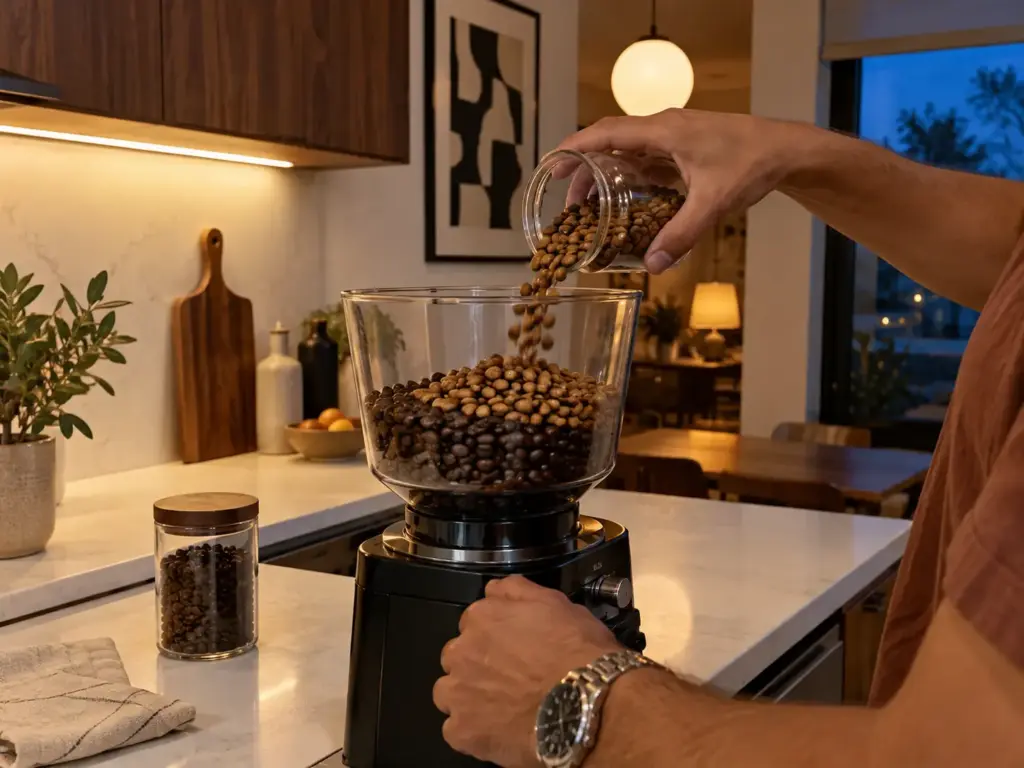
An intense, citrusy Sumatran can be a lot to drink on its own, and a sweeter, fruity natural can be blended with it in the grinder at varying ratios until the mix beats either bag alone. That is one person’s report, not a rule, but the logic holds: the sweet coffee rounds off the sharp one, and the sharp one lifts the flat one.
Do it on a kitchen scale, one ratio at a time, with a cup tasted between each change. Start with three parts of the steady bag to one part of the bright one. (Flip that if the bright coffee is the one you bought to drink and the other is only there to calm it down.) In a 20-gram dose, three to one is 15 grams and 5 grams.
If the cup is still sharp, go to four to one next time; if it has gone dull, the bright bag needs more room, so try two to one.
Write down the ratio that works, because a good cup you cannot repeat is a lucky guess. Grinding whole beans at home is what makes this possible at all, which is one more reason for why whole beans and a grinder at home pay off.
A one-gram scale is fine for a full dose, but at 5 grams a one-gram error is a fifth of the mix. So once a ratio looks promising, mix a bigger batch in a jar instead (say 60 grams and 20) and scoop from that, which keeps the proportion steady from cup to cup. Taste the second cup of any new mix, not the first: the grounds left in the grinder from the last bag go into the first one.
A useful refinement makes this more precise. Some roasters list the components of their blend and also sell each component as a single origin, so you can taste the parts on their own and then build the mix yourself. The catch is the one every house recipe has: when those two bags run out, the cup goes with them, and only you can reorder it.
Mix two bags by weight, never by scoop, and change only the ratio between tastings. Write the winning ratio on the bag of the bright coffee with a marker, so when you open the next one you start from the cup you liked instead of from scratch.
The Reorder Test: Same Bag, Different Cup
Week one is a poor judge of either kind of bag. The reorder is where a blend proves it holds and a single origin proves it moves. The bag you opened last week tasted bright and clean; the reorder under the same name comes out a little flatter or a little sharper on the same grinder setting, and the trick is telling whether the coffee changed or something on your counter did.
Read the Roast Date First
Start with the date, not the label word. A tired bag tastes flat whatever it is called, and the Amazon reviews of both a single origin and a blend keep returning to the same complaint: beans that arrived old. If the reorder is weeks older off the roaster than the last bag, that alone can explain the difference, and the checklist for how to tell if beans are stale, from smell to cup will confirm it in a minute.
A blend is steadier than a single origin here, not immune; the 2018-versus-2019 report above came from a blend. Age is not always the enemy, though. A house blend roasted in March and opened in late summer can still be very good for a blend, especially when the bag is months old. That is a single report and still a months-old bag, so the general rule stands, and so does the advice on how to store beans past week two.
Weigh the Dose Before You Touch the Grinder
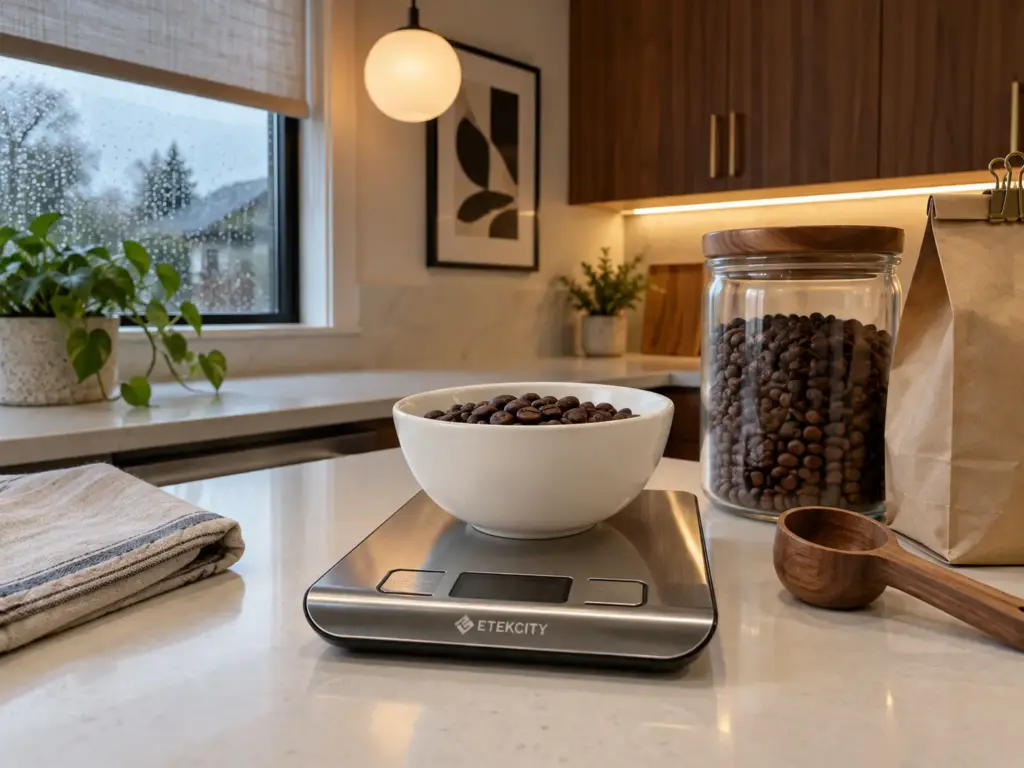
A scale changes more cups than a new bag of beans. If you scoop, the same scoop of a denser light roast and a lighter dark roast holds different amounts of coffee, so a reorder that seems weaker may just be a different weight in the same scoop. Weigh the dose, keep it the same, and only then judge the cup, which is the rule behind weigh the dose before you turn the dial.
The Etekcity Food Kitchen Scale is the plain tool for it: grams and ounces, a tare button and an 11-lb capacity, with nearly 178,000 ratings behind it. It reads in 1-gram steps, which is enough for a cup of drip or pour-over. Its limits show up over time. The same load can read off by a little within a few minutes, and some units stop or drift after a year or more, so weigh twice when a gram matters and check it against something of known weight now and then.
Taste the Same Cup Twice
With the date checked and the dose weighed, brew the reorder exactly as you brewed the last bag and taste two cups before deciding anything. If both come out sharp, that is a single origin from a new harvest asking for one step finer. If both come out flat and the bag is fresh, try half a step finer anyway, since a denser crop can want it. Change one thing, then taste again; changing the grind and the dose together leaves you guessing which one worked.
When a reorder tastes different, work in this order: roast date, then the weighed dose, then one grinder step. Most reorder surprises stop at the first or second check, and the grinder never needs touching.
What to Buy This Week, and Where Each Question Goes Next
One bag per brewer is enough for this week. Everything above folds into that choice. What is left are the narrower questions, and each one has its own article.
One Bag for the Brewer You Own
Black pour-over gets a single origin. A drip machine or a French press takes either, so start with the cheaper bag and try a single origin when you want a change. Milk drinks and espresso get a blend.
Whichever you choose, the free moves come before the next purchase: one step finer for a sharp cup, a weighed dose, and two bags mixed in the grinder when one is too much on its own. When you are ready to pick a specific bag, start with the best single origin beans to start with.
Where the Narrower Questions Go
If the reorder problem is what bothers you most, the guide on whether a single origin subscription is worth it weighs a steady delivery against choosing each bag yourself. The species question sits apart from origin, and what is really in your bag, arabica or robusta covers it. If a single origin’s shelf tag still puzzles you, why coffee beans cost what they cost explains why the price follows rarity, process and fame more than quality.
Read the Bag, Then Let Your Brewer Choose
Three things carry over to every bag you buy. The label describes where the beans came from, not how good the cup will be, and the roast date says more than either word. The brewer and the milk decide which one suits you: blend for drip and lattes, single origin for black pour-over. The free fixes come first, in order: one step finer, a weighed dose, two bags mixed by weight.
On the next bag of the same coffee, read the roast date before you go near the grinder setting.
Tomorrow morning, weigh the dose of whatever bag you have open and brew it the usual way. If the cup is sharp, move the grinder one step finer for the next pot and taste the second cup: it should come out rounder and a little sweeter, and if it has turned bitter instead, you only needed half that step.
Frequently Asked Questions
01Is single origin coffee better than a blend?
Neither is better: a single origin shows one place and changes with each harvest, while a blend is built to stay balanced and taste the same all year. Choose by brewer and drink. Black pour-over suits a single origin; drip machines and milk drinks suit a blend.
02What is the difference between a blend and a single origin coffee?
A single origin comes from one place, which can be a country, a region, a farm or one lot, while a blend mixes coffees from two or more places. Neither word is a quality score. The more specific the bag gets, the more it is telling you.
03What’s so good about single origin coffee?
A single origin shows one place’s flavor, often brighter, fruitier and more distinct than a blend, because nothing else is mixed in to round it off. The cost is that it changes from harvest to harvest and can taste sharp until you grind one step finer.
04Is a coffee blend just leftover beans?
Not necessarily: the leftover reputation comes from cheap shelf blends, while a roaster’s blend is built from named components chosen to taste the same bag after bag. The roaster and the label’s detail tell you which kind you are holding, not the word blend.
05Can I mix two bags of coffee in the grinder?
Yes, and some people like a mix of a sharp single origin and a sweeter coffee more than either alone. Weigh each bag on a scale, start around three to one, change one ratio at a time and taste between cups.



How did your cup turn out?
No comments yet. Tell us what you changed — and whether the needle moved.