
We may earn a commission when you buy through links on this page. It never changes what we recommend. How we pick
On this page8 parts
- Read the Bag Before You Pick a Name
- The First Bag Should Forgive Your Machine
- Why a Fruity Bag Can Taste Sour in a Drip Machine
- The Second Bag Is Bright, and It Is the Fussy One
- Heavy and Earthy Beans, and When They Fit
- When the Bag Doesn't Taste Like Its Notes
- Chocolate First, Bright Second, and One Grind Step in Hand
- Frequently Asked Questions
The bag says Ethiopia in big letters, and three pots later the coffee tastes like lemon water. The beans take the blame, but a drip machine that runs cool strips the sweetness from a bright light roast long before the water has finished its work, while a chocolatey Brazil would have shrugged the same machine off. That is the order this guide builds: the best single origin coffee beans to buy first are the ones that teach you a taste and forgive your machine, and the bright, fussy ones come second. If you are still deciding between single origin versus a blend, that call is settled there; this page is about which bags go in the cart and what to check on each one.
Quick Answer
Buy a medium-roast Brazil or Colombia first: its chocolate and caramel taste forgives an ordinary drip machine. Move to a fruity Ethiopia or Kenya once the brew is dialed in, and check the bag for a roast date, the process and a region or farm, not only a country.
Read the Bag Before You Pick a Name
The name on the front tells you the least. Two bags can print the same country in the same big letters while one was roasted last week and the other last season, so the back of the bag gets read before any origin gets a vote.
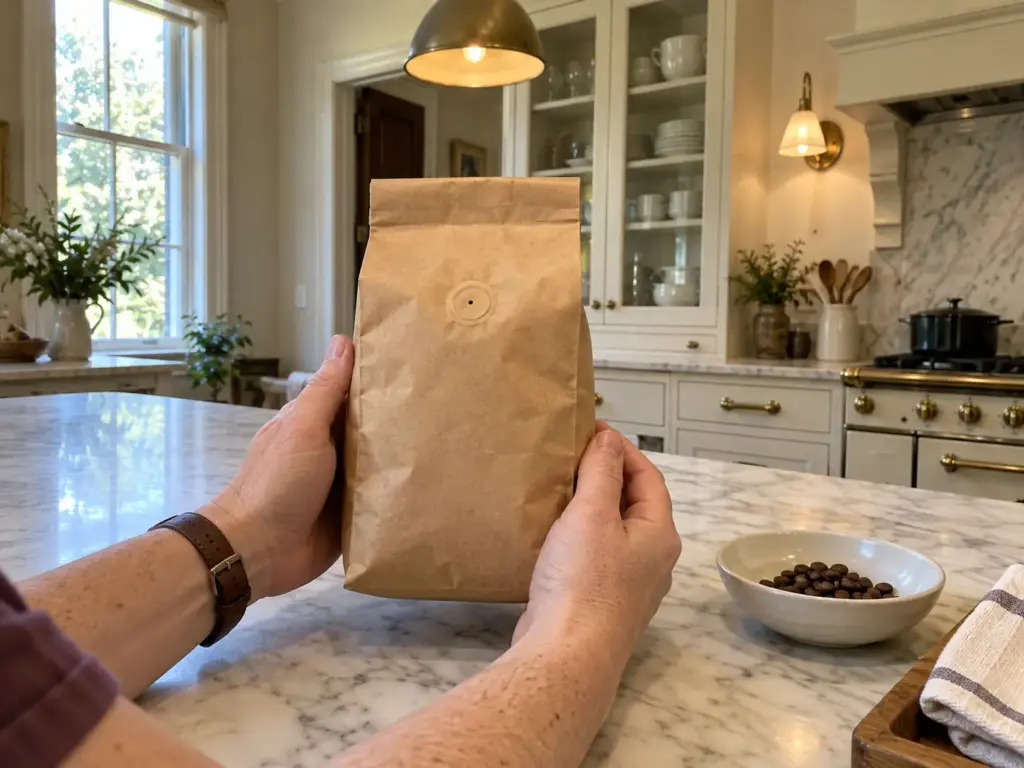
The roast date, not the best-by
A best by date says how long the bag will sit on a shelf, not when the coffee tastes its best. The roast date does that job. The SCA’s freshness explainer reports that degassing, the release of the carbon dioxide trapped in roasted beans, runs fast for the first 20 days after roasting and slows sharply afterward, and that the first three weeks are when aroma changes fastest.
So a roast date inside about three weeks is the fresh window, and “freshly roasted” or “roasted to order” on a label is only a claim until a date backs it up. On a bag, that date looks like a stamp in ink next to the round one-way valve that lets gas out and keeps air out; a bag with only a best-by printed on it is a guess, and you notice the difference only after buying a few of each. When the date is missing altogether, how to pick good coffee beans covers the rest of the back-of-bag checklist.
Process and region, not just a country
Single origin printed alone can mean only a country, and a country is a lot of coffee. What a bag adds when it is doing its job is a region, a farm or a co-op, an altitude, sometimes the varietal, and the process. Washed coffees lean clean and bright, naturals lean fruity and heavy, and newer names such as honey or anaerobic describe other ways of handling the fruit, so the process tells you which way a bag will taste before you cut it open. Turn the bag over before you read the front: if the front says Ethiopia and the back says nothing more, you have learned a country and nothing about the cup. The rungs of that vocabulary are laid out in what single estate and single origin actually mean on a label.
It matters because a fruity bag brewed badly reads as a bad bag. A whole Peruvian single origin brewed on a V60 can go without one cup someone likes, and sometimes the coffee is simply bad. True, and a bag with no process, no region and no roast date leaves you no way to tell a bad coffee from a bad brew. A bag that prints all three does.
Why one 12 oz bag at a time
According to the National Coffee Association’s storage guide, “Coffee begins to lose freshness almost immediately after roasting.” The guide’s advice follows from that: buy enough for one or two weeks.
Bag size matters for the same reason. A 12 oz bag, about 340 grams, is sized to be finished inside that window, and a bag two or three times the size is not.
Buying one bag at a time also keeps the comparison fair, because an origin can only be judged on beans that are still inside their window. Opened whole beans keep about one to three weeks at room temperature in an airtight container; past that they go flat, though they do not become unsafe, which is the polite way of saying the bag you loved in week one tastes dull in week five. How long to keep beans after opening, counted from the roast date walks through the count.
Do the date arithmetic at the shelf, not at home. A bag stamped ten days ago has already used half of the fast degassing the SCA describes, so it is a day-ten bag from its first cup. Take the newest date on the shelf, and grind only what the pot needs.
The First Bag Should Forgive Your Machine
The last section said to read before you buy; this one turns that into a pick. At an ordinary counter, with tap water, a drip machine and maybe a blade grinder, the first bag is chosen for what it forgives, which means a medium roast that leans chocolate, not a fruit-forward lot.
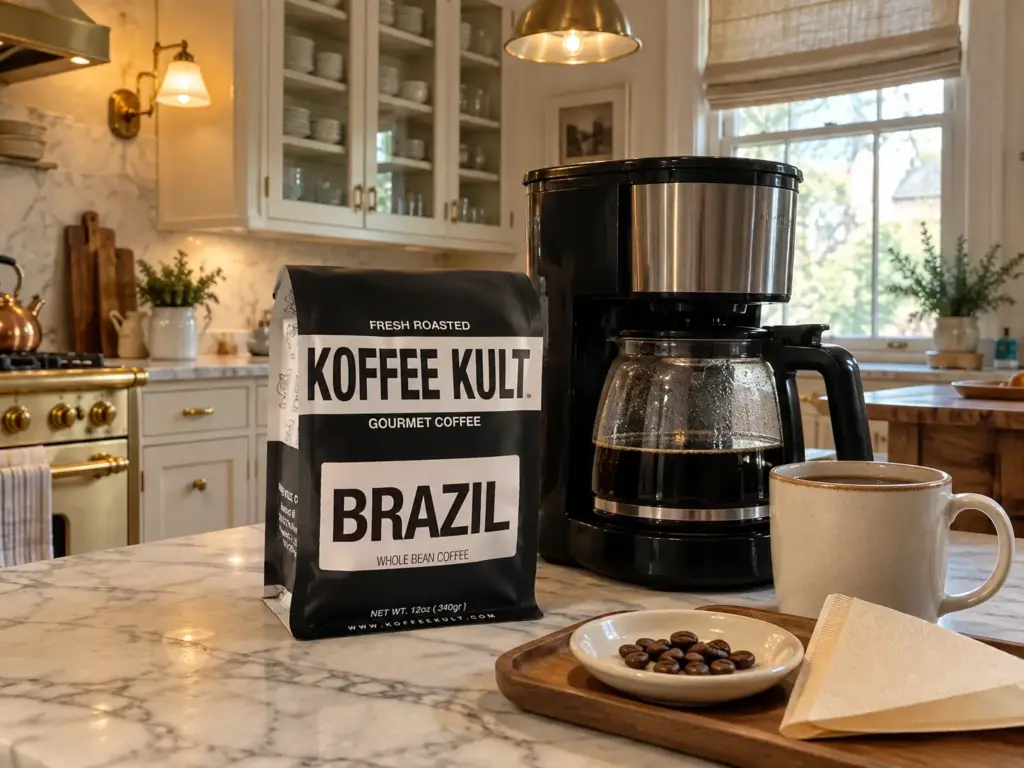
Brazil, Guatemala and Colombia: what they have in common
The National Coffee Association’s guide to origins describes Brazil as full-bodied and a bit down-to-earth, and Guatemala as medium to full in body, almost spicy or chocolatey, with some citrus. Colombia sits beside them as the balanced, sweet one.
The three share a heavy body, the weight of the coffee in the mouth, and a low acidity, both as tastes, and that pairing is what makes them forgiving. A grinder that cuts uneven particles and a drip machine that never quite gets hot both leave a cup a little thin or a little sharp, and chocolate and caramel cover for both. A delicate micro-lot cannot.
A blade grinder makes boulders and dust in the same dose, so the cup comes out sour and bitter at once, and this is the bag that survives it; the bright one in the next sections does not. Pre-ground coffee belongs with this bag too, though whether grinding at home is worth it has an answer of its own.
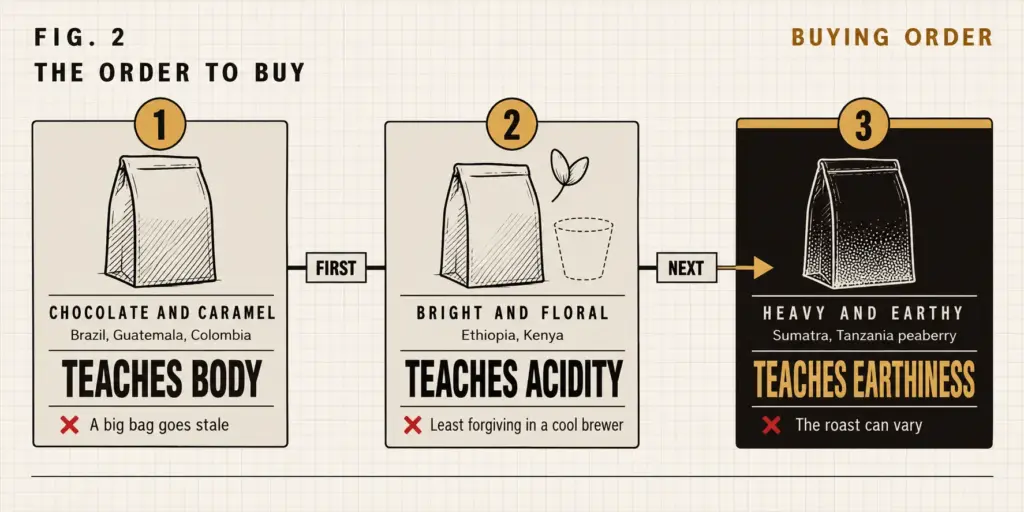
The free fixes still come before any purchase, because a roast date inside the window and one grind step change more cups than a pricier bag. The order also teaches something. Chocolate shows you body, the bright bag shows you acidity, and the heavy one after it shows you earthiness, one variable per bag.
Asked for a favorite single origin, one answer is Guatemala, which tastes like hot chocolate.
The Brazil pick, with its flaw
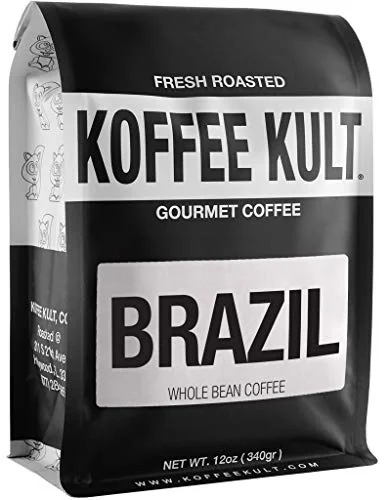
Koffee Kult Brazil Medium Roast Single Origin Whole Bean is the forgiving first pick: 100 percent Arabica, medium roast, sealed with nitrogen in a 12 oz bag, with the maker’s flavor notes pointing to dark chocolate, caramel and toasted walnuts, low acidity and a heavy body. That profile is what hides a cool machine.
What it cannot hide is age. Bags like this one can taste bitter one week and sweet the next, depending on how old the bag is when it lands. The listing also disagrees with itself: the title says medium roast while its own comparison table labels the Brazil dark, so find the roast date and the roast level on the bag you receive before you judge the coffee.
The Guatemala pick, and the Colombia that comes in a big bag
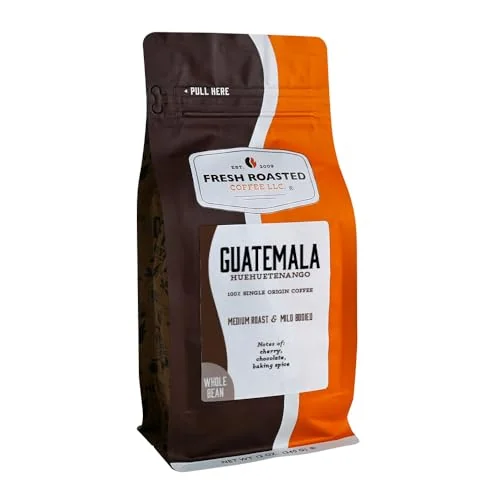
Fresh Roasted Coffee Guatemala Huehuetenango Whole Bean Medium Roast stays in the same chocolate lane with a citrus edge. It is the 12 oz Huehuetenango, not the organic listing, and the listing’s own notes read chocolate and cherry with little acidity. Customers disagree on how fresh the bag is when it arrives, so the roast date matters here as much as it did with the Brazil.
Colombia is the balanced, sweet third option, and Koffee Kult Colombian Medium Roast Single Origin Whole Bean is the only whole-bean listing that turned up; reviewers say it comes out neither bitter nor sour in drip and pour-over. The size is the problem. At 32 oz it is about 900 grams, more than most households finish inside the window, and the 12 oz Brazil above is the smaller way into the same lane.
Why a Fruity Bag Can Taste Sour in a Drip Machine
The chocolate bag forgives and the bright one does not, and that difference decides which pot ends up in the sink. When a good fruity bag arrives tasting sour, the bag was rarely the problem, and a second bag will taste the same on the same machine.
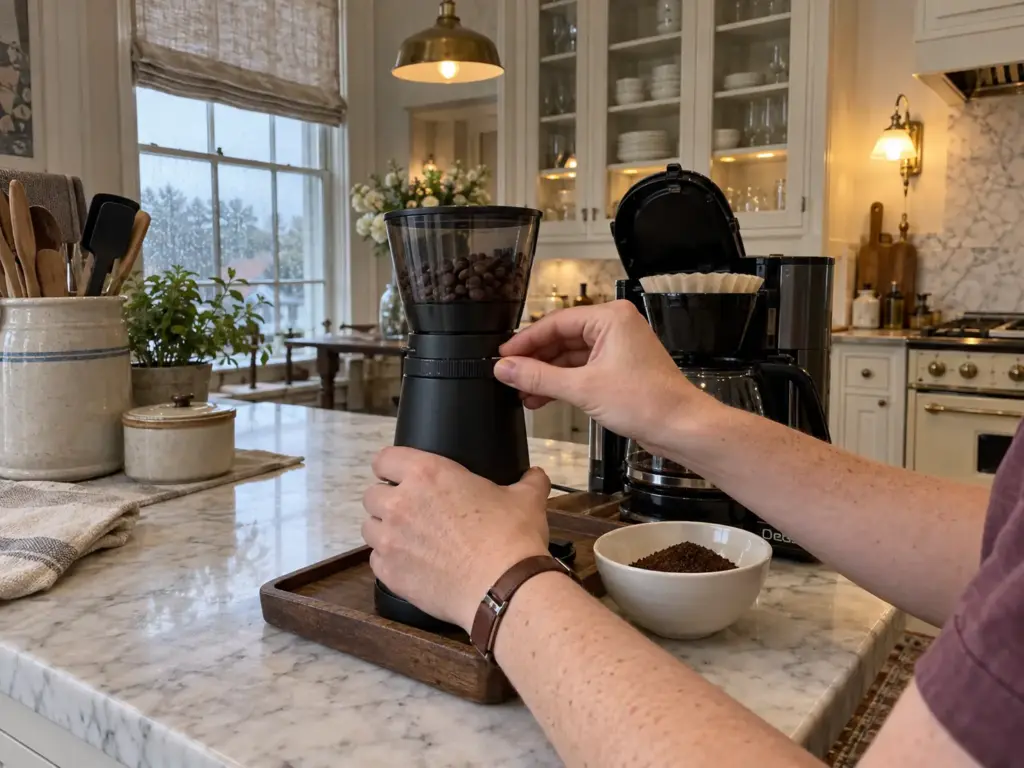
Sour means the water left early
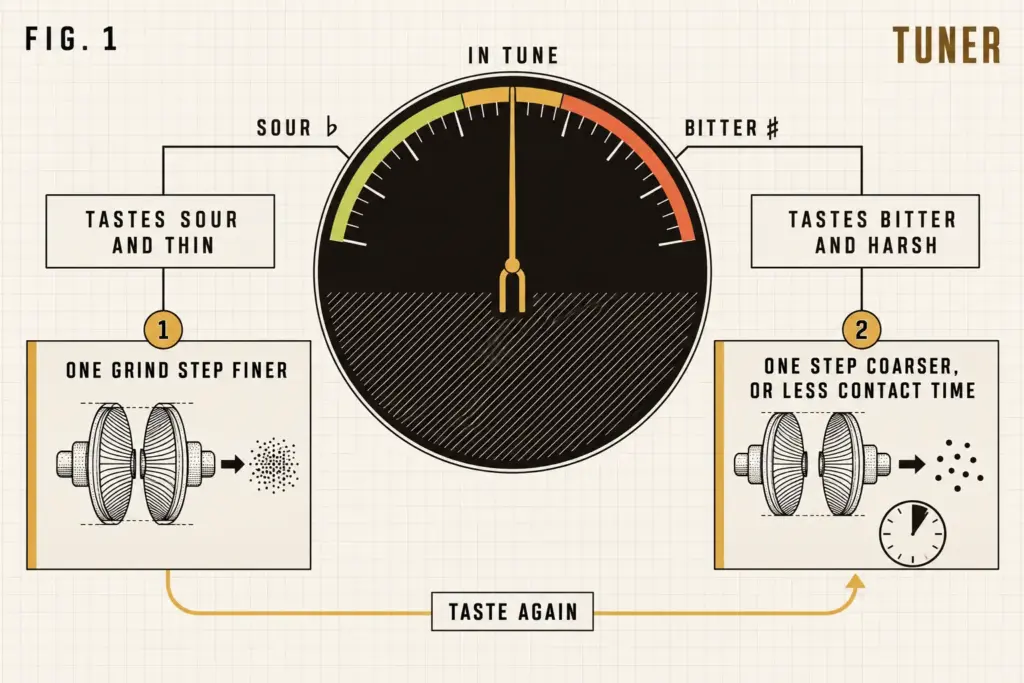
Sour is a direction: the water left the grounds before it finished. Acids come out early in a brew and the sweetness comes later, so a pot that stops short, from a grind too coarse, water too cool or a brew too brief, tastes of lemon and little else. That is under-extraction, and the answer to it is to extract more, not to switch bags.
The numbers agree. In the Specialty Coffee Association’s brew-temperature research, “the intensity of sour taste was highest in coffees that were low in PE (around 16%) and high in TDS (around 1.5%).” PE is percent extraction, how much of the ground coffee ended up in the cup, and TDS is how concentrated the result is, so the sourest cups were strong but under-extracted: the water had taken the first acids and left before the sweetness arrived.
A light roast is the least forgiving roast level in this respect, which is the whole subject of why light roasts go sour and dark ones go harsh: it has to be pushed to give up its sweetness, and a cool machine does not push.
Then the water temperature. The SCA specifies 197.6 to 204.8°F (about 92 to 96°C) for a certified home brewer, according to the SCA’s certified-brewer listing, and the brew-temperature article says drip brewers that cannot reach 92°C fast enough fail certification.
A temperature near 93°C is what most people in the field believe is best, though the same article admits there is little evidence for any one optimal range. Read it as a target, not a rule. A machine that is not on the certified list may run cooler, and nothing printed on its box says by how much.
The one change: a grind step finer
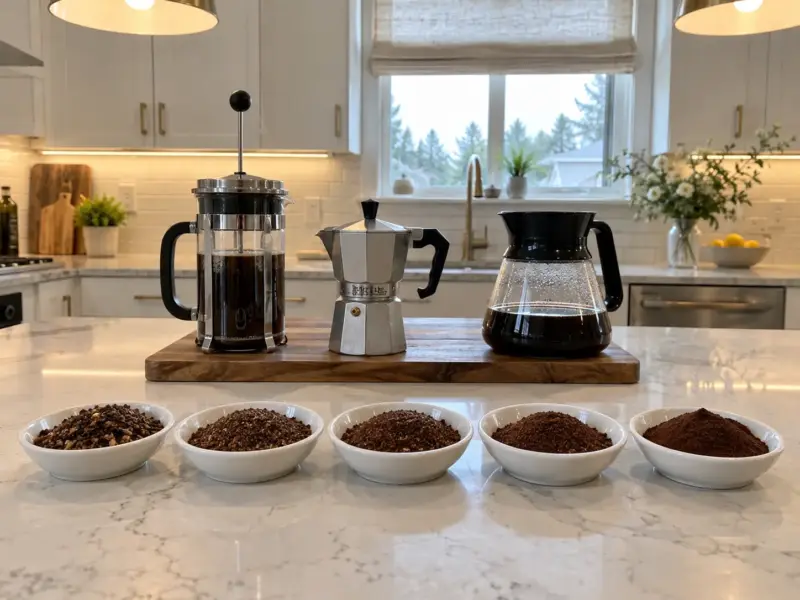
If the machine cannot be hotter, the grind is the lever you own. The same SCA article reached similar extraction at different temperatures by changing grind size and brew time, so a finer grind can make up some of what a cool machine leaves behind. One step finer, nothing else changed, then taste. The grind size that suits a drip machine shows where that setting sits.
The next cup should taste different in a specific way: the lemon edge shrinks, the middle of the sip turns sweeter, and the fruit is still there but rounder. If the end of the sip goes dry and harsh, that was one step too far, so come back half a step. And if the grinder is a blade instead of a burr grinder, there are no steps to count, only seconds; add a few, and accept that a finer blade grind makes more dust, which is one more reason this bag comes second.
A too-coarse pot of light roast tastes thin at the first sip, and at the bottom of the mug, once the coffee has cooled, the sourness is louder than it was hot.
What to try next, one thing at a time
If one step finer moved the cup but not far enough, take a second step and taste again; two steps at once cannot tell you which one worked. If it did not move the cup at all, look at the bag next: a roast date well past three weeks is the bag’s age, not its quality, and a fresher bag is the second change. A different machine comes last, and only once the first two have been tried.
Run one cycle of plain water through the machine and pour it out before the first pot. A cold carafe and a cold basket pull heat out of a brew that was already short of it, and the bright bag is the one that shows it.
The Second Bag Is Bright, and It Is the Fussy One
With the grind step in hand, the bright bag stops being a gamble. This section picks the Ethiopia and the Kenya worth buying second, once the first bag tastes the way its notes say.
Ethiopia Yirgacheffe: floral, washed, and not forgiving
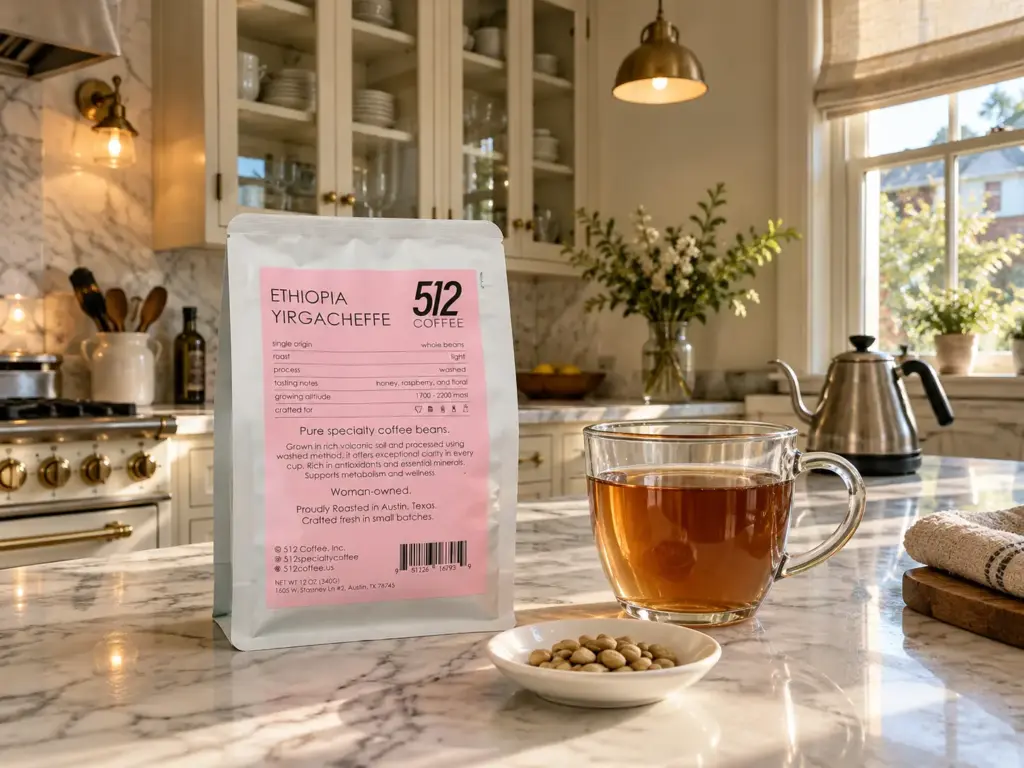
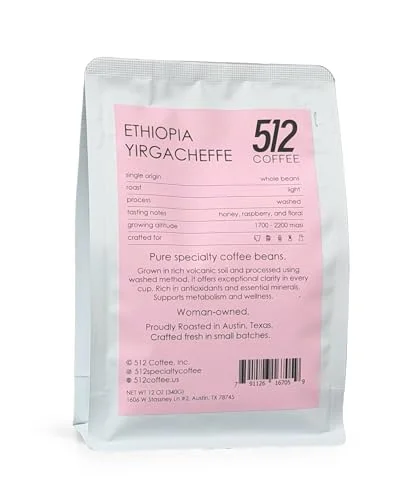
Ethiopian coffee is known for high-altitude fruit, spice and flowers, and a washed Yirgacheffe is the clean, bright end of that description. 512 Coffee Ethiopia Yirgacheffe Light Roast Whole Bean is the 12 oz bag to buy: light roast, listed with notes of honey, raspberry and floral.
Nothing repeats as a complaint in its reviews, which are all positive, so the drawback is the category’s. A light roast is the least forgiving in a cool brewer, as the last section showed, and Ethiopian lots vary in bean size and carry quakers, the underripe, pale beans that stay light when roasted and taste papery. One common dislike of Ethiopian beans is that their size isn’t consistent.
Cut the bag open and smell it before the grinder runs. A fresh Yirgacheffe smells of berries and flowers, and a stale one smells of very little, or of paper; you only learn the difference after smelling a few. If you brew this bag as a pour over rather than a drip pot, pour-over grind size is where to set the grinder.
Kenya AA: blackberry, and what AA does not mean
Another favorite is Kenya, with a blackberry note, and that cup is real. The National Coffee Association’s origin guide calls Kenya full-bodied with sharp, fruity acidity, and says its grading sorts beans by size, shape and density, with AA at the top.
That is a screen-size sort. It is not a flavor and not a quality guarantee, so a Kenya AA can still arrive stale or roasted too far.
Volcanica Kenya AA Whole Bean in the 16 oz bag is the one to buy, and its reviews are mixed. Some buyers report a dominating sour taste, some find the beans over-roasted, and some say they arrived about six weeks old. The sour complaint can be the cool-machine story from the last section, or it can be an old bag, and both are checkable before the Kenya takes the blame.
Why this bag comes second
The order of purchase runs chocolate, then bright, then heavy. Each bag teaches one variable, the first body, the second acidity and the third earthiness, and each carries a different drawback to expect. The bright bag goes second because it asks for something the first does not: a grind step in hand and a machine that gets reasonably hot. Buy it first, on an unproven machine, and a good Ethiopia gets blamed for a cool pot.
The next comparison after this bag is washed against natural: washed is cleaner and brighter, natural fruitier and heavier, and a natural waits until the washed bag has taught you what the cup is supposed to do. Single origins also rotate, so the lot you liked may not come back, and the exact lot is worth writing down. To taste what roast alone changes, one bag of each roast for a pour-over is the cleanest side-by-side.
Heavy and Earthy Beans, and When They Fit
The bright bag sits at one end of the map and the heavy one at the other. Sumatra and Tanzania peaberry are not a lesser version of the first bag; they are the right answer for a different brewer, and the French press is the usual one.
Sumatra: heavy body, low acidity, earthy
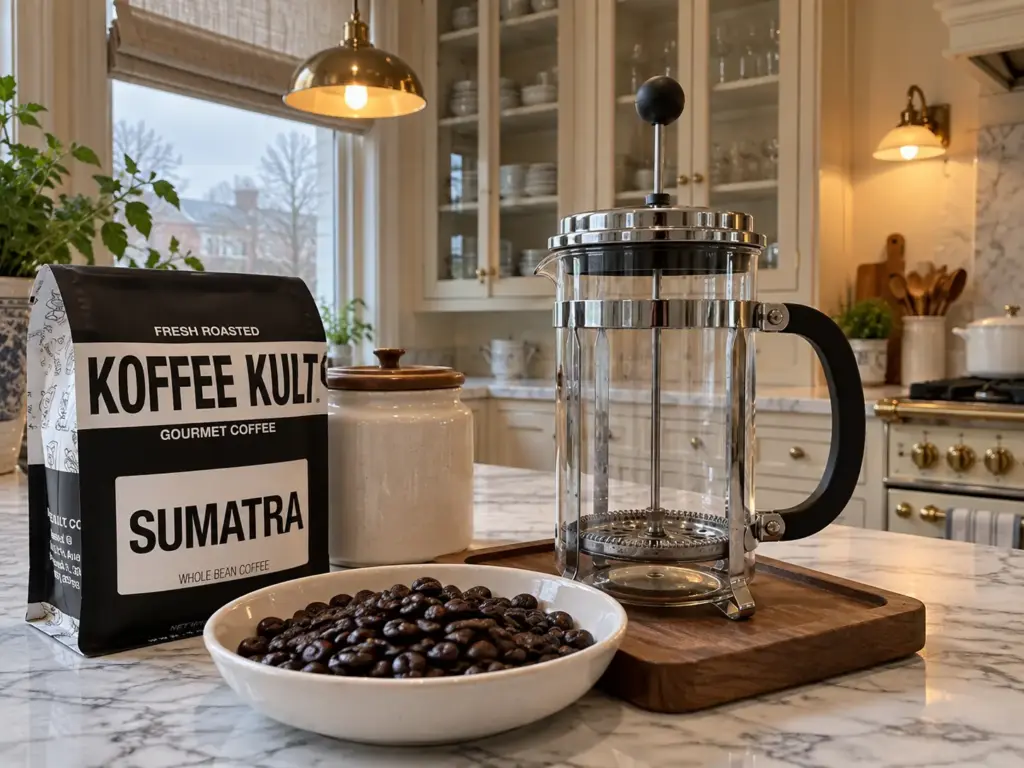
The National Coffee Association describes Indonesian coffee as full-bodied with mild acidity and an aged-coffee process, and a dark roast is where that heavy, earthy lane lives. Koffee Kult Sumatra Dark Roast Whole Bean is the 12 oz pick, with the maker’s notes pointing to low acidity. Reviews are mixed on the roast: some buyers say it was roasted two days before it shipped, others find it over-roasted, and some call it pricey for what it is. Only 8 bags were left when the listing was checked, so it may be gone by the time you click.
Tanzania peaberry: a different kind of bright
Volcanica Tanzania Peaberry Whole Bean is the bright-leaning bag at this heavy end, in a 16 oz size, and the reviews split: some buyers find a bitter or very acidic cup, some say it is not worth the price, and freshness is divided. Peaberry names the shape of the bean, one round seed in the cherry in place of the usual two flat halves. It promises no particular flavor, so treat the word as a reason to read the rest of the bag, not as a verdict.
The French press and the blade grinder
A heavy, low-acid bag suits a French press because the press keeps what a paper filter takes out, the oils and fine particles that carry body. The setting is coarse and even; what grind size suits a French press gives the starting point. Those same fine particles are why the last pour has a layer of silt at the bottom of the cup, which you notice only when you drain the carafe.
Pour the whole press out the moment it has steeped, into a second carafe or into mugs. Coffee left sitting on the grounds keeps extracting, and the last cup comes out harsher than the first.
An uneven grind is also easier to live with on this bag than on a bright one. A blade grinder’s uneven particles turn a bright bag sour and bitter together, but a dark, heavy roast hides most of it behind its body and leaves the cup only a little muddy.
When the Bag Doesn’t Taste Like Its Notes
Sometimes the cup still does not taste like the notes on the bag, and the answer is a short list of changes in order, not a new bag. The list has four steps, and it asks you to stop after each one.
Four changes, one at a time, taste again between them
Name the direction first. Sour means the water left early and bitter means it stayed too long, and the direction decides which way the first change goes. Then work down this list, one step at a time, free and likeliest first:
- Move the grind one step in the direction the cup points, finer for sour and coarser for bitter, and taste. A cup that comes back sweeter has told you the answer; one that overshoots into dry and harsh needs half a step back.
- Check the roast date. A bag well past about three weeks is no longer at its best, and no grind setting brings back the aroma that already left. A fresher bag should taste closer to its notes at the same grind; if it does, the old bag was the answer.
- Change the water for one pot, a different jug or filtered water, and see whether the cup moves. If your tap water tastes of anything, the coffee will too, and the same bag in the same machine will taste different the moment the water changes.
- Only then change the brewer: a different method, or a different machine. This is the expensive step, which is why it is last, and the three before it cost nothing.
Never finer, hotter and a new ratio in one breath. Change three things and you cannot tell which one worked. If the shots are the problem rather than the pot, using single origin for espresso is its own question, and roast decides it.
When it is the bag and when it is not
A useful question is whether the coffee, the method or the brewer is the limit, which is the right order of suspects. It is the bag when the roast date is old, when the smell on opening is flat, or when a second pot with a finer grind still tastes of nothing.
It is not the coffee when scale inside the machine has slowed it and cooled the brew, when an old carafe still carries last week’s coffee, or when a pot has sat on the hot plate for an hour. Scale is the sneaky one: it builds up slowly, so the machine that made a good pot in the first week quietly makes a cooler one later, and a bright bag is the first to show it. The stale-bag case has its own checklist in how to tell if beans are stale.
There is a free way to taste a new bag fairly, too: a French press steep with a strainer, a cupping-style approach. It gives you the full range of the bag at full batch size, with no cupping gear.
Month two, and the next decision
Single origins rotate, and the lot you loved may not come back this year. Listings show the same pattern in miniature, a roast-date lottery: the same label with a bag roasted two days ago in week one and an over-roasted one in week five, which is what the Sumatra’s reviews describe. So the roast date and the lot belong on the bag the day you open it.
Write the lot, the roast date and the grind step you ended on on the bag with a marker. The grind step is the number you will have forgotten when the bag is empty and you want the same cup again.
The next question is either whether a single origin subscription is worth it for the bag you liked, or the grind step for the bag you already have.
Chocolate First, Bright Second, and One Grind Step in Hand
Read the roast date, the process and the region before the origin name. Buy a forgiving chocolate-and-caramel bag first and a bright one second, and treat a sour cup as the machine’s extraction, not a bad bag. In a month, look at the roast date on the bag you liked and at whether that lot is still on the shelf.
Tomorrow morning, if the bright bag is the sour one, move the grinder one step finer, change nothing else, and taste. The lemon edge should shrink and the sweetness should come forward; if the cup turns dry and harsh, come back half a step.
Frequently Asked Questions
01What are the best single origin coffee beans?
Start with a medium roast from Brazil, Guatemala or Colombia, then try a bright Ethiopia or Kenya once the brew is dialed in. The roast date on the bag matters more than the origin name.
02Are single origin coffees better?
Single origin coffees are not better by default: they show one place’s taste more clearly, which helps you learn what you like. A good blend can still taste better in a drip machine than a poorly roasted single origin.
03Who has the highest quality coffee beans?
No roaster holds the title of highest quality, because quality depends on the bag in your hands, not the brand on the front. Look for a printed roast date, the process and a region or farm.
04Why does my single origin taste sour?
Sour usually means under-extraction, the water left the grounds too early, so move the grind one step finer, change nothing else, and taste again before blaming the bag. If it still tastes sharp, check the roast date next.
05How long do single origin beans stay fresh?
Single origin beans are freshest inside about three weeks of the roast date, while degassing is fast, and opened whole beans keep about one to three weeks in an airtight container. Buy one 12 oz bag at a time.

How did your cup turn out?
No comments yet. Tell us what you changed — and whether the needle moved.