



We may earn a commission when you buy through links on this page. It never changes what we recommend. How we pick
On this page7 parts
- The Clock Started at the Roast, Not When You Opened the Bag
- Too Fresh Is a Problem Too, and Then the Slow Decline
- Past the Window: Still Drinkable, Flat Rather Than Bad
- Bag Size Against Your Pace: The Arithmetic
- When the Bag Goes in the Trash
- Read the Roast Date, Then Divide the Bag
- Frequently Asked Questions
You have an opened bag on the counter and a pot to make, and the bag may carry two dates: a roast date and a best-by date. If you count how long to keep coffee beans after opening from the day you cut the bag, you are using the smaller of the two clocks. The beans started losing gas and aroma the day they left the roaster, and a valve bag barely notices being opened in the first days, because the beans are still pushing gas out on their own.
That is why the numbers you read disagree (a week, a month, three months): each one is counted from a different day. Below are the clock, the too-fresh floor, the slow decline, what to do with an old bag, the arithmetic of bag size, and the one sign that sends a bag to the trash.
Quick Answer
Whole beans taste best for about two to four weeks after opening, but the clock really started at the roast date: the Specialty Coffee Association counts them as fresh for about three weeks from roasting. After that the cup goes flat, not bad, while the beans stay dry and free of mold. Ground coffee fades far sooner.
The Clock Started at the Roast, Not When You Opened the Bag
Every figure you meet on this question is a real figure. The trouble is that each one is counted from a different day and judges a different thing, so the first job is to pick the day before picking the number.
Why a Valve Bag Hides the First Weeks
Roasting leaves the bean full of carbon dioxide (the gas is a by-product of what the roast does to the bean), and the bean spends its first weeks breathing it out. According to the Specialty Coffee Association’s column on freshness, degassing is rapid for roughly the first 20 days, and “whole bean coffee can reasonably be considered ‘fresh’ within about three weeks of roasting.” The same column gives the mechanism: as long as CO₂ surrounds and soaks the beans it keeps oxygen out, and once it escapes, air takes its place.
That is why an unopened bag with a one-way valve is still full of gas on day six, and the same bag opened on day thirty is a bag of beans sitting in kitchen air, with oxidation of the oils beginning. The gas leaving the beans is called off-gassing.
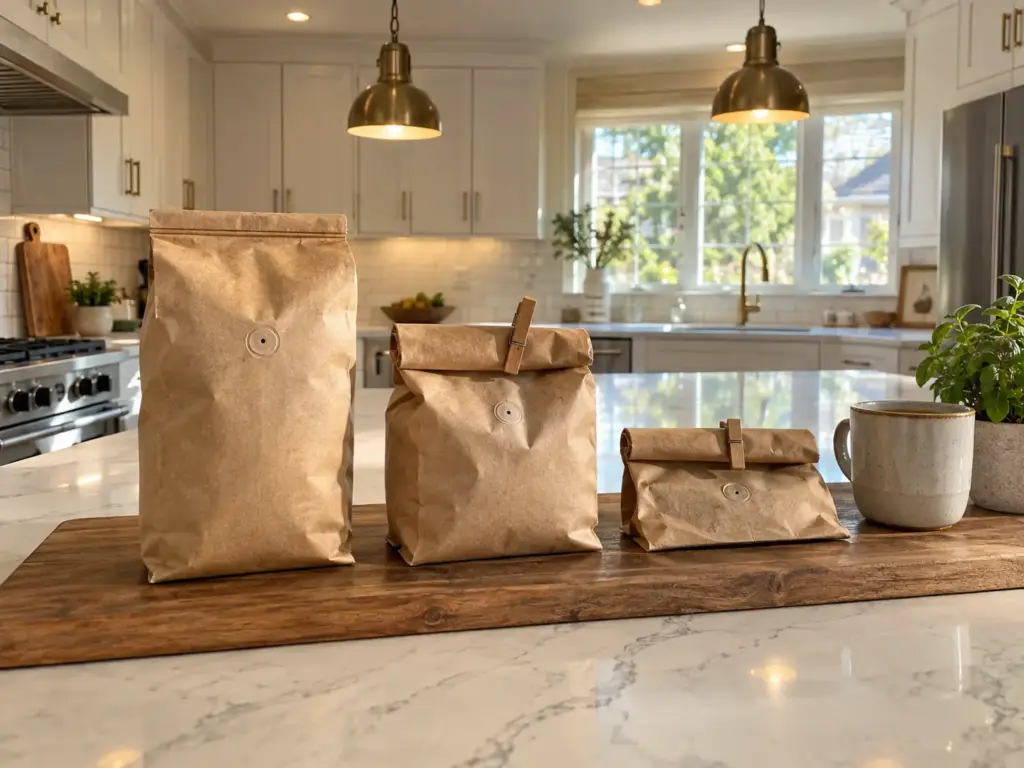
How you close the bag again counts for more than the calendar. A 2022 study of opened coffee packages by Smrke and colleagues measured the air inside: unopened valve packs held near-zero oxygen for nine weeks, while opened packs reached ordinary room oxygen (about 21%) within a week once the beans were poured into a canister or the bag was taped shut. A clip or a screw cap did a little better, and the screw cap did best of the four.
Two caveats travel with that result. It is a chemical study that measured gas, not taste, so it sets no point where the cup turns flat. And it was funded in part by Tchibo, a coffee company.
So the opening matters, but less than the roast date and less than how tightly the bag goes back together. The storage how-to belongs to its own guide on how to keep beans fresh past week two.
Press the air out of a valve bag before you close it, roll the top down to the beans, and clip it. In the Smrke tests a clip did slightly better than tape or a canister, and both of those reached room oxygen within a week. The bag you already own is a decent container if it is rolled tight instead of folded loose.
The Date on the Bag: Roast Date or Best-By
A roast date starts the clock. A best-by date does not tell you when the clock started at all: it is a date the seller chose. Serious Eats points out that some roasters print one on bags of grocery coffee, and then it is nearly impossible to know when the coffee was actually roasted. Learning what the bag actually tells you is worth the two minutes before the next purchase.
If the bag has only a best-by date, treat the clock as unknown. You cannot count days off roast you were never told, so the useful number becomes the day the cup tastes flat, which you can only learn by tasting the same coffee the same way across a couple of weeks.
Why One Source Says a Week and Another Says Three Months
Line them up and the contradiction dissolves. Starbucks puts an opened bag at about one week of peak freshness, counted from the opening. Roasters tend to say two to four weeks of good cups after opening.
Four to five weeks is a safe margin to count on before clear staling notes show. Serious Eats, quoting Hoffmann, goes much further: he would not throw out light roast under three or four months old.
These people are not disagreeing about coffee. One counts from the opening, another from the roast; one asks when the cup is at its peak, another asks when it stops being worth drinking. There is no single clear consensus on this, and most answers are about the same question from two different days. Counted from the roast date and with best separated from drinkable, the numbers fall onto one line, and that line is the next section.
Too Fresh Is a Problem Too, and Then the Slow Decline
The question has a floor as well as a ceiling. Beans a few days off roast are not at their best either, and the decline after the peak is a slope you walk down over weeks, not a cliff you fall off on a given morning.
Days One to Ten: Too Fresh to Dial In
A bag that arrived yesterday can taste odd for a reason that has nothing to do with age. In the first days the beans are still releasing a lot of gas, so the grounds bloom hard and espresso needs repeated dialing in. How long to wait is a wide range. Serious Eats says to rest beans at least four to five days before the first shot, and Wrecking Ball’s Rothgeb, quoted in the same piece, brews from “two to three days off roast up to 14 days.”
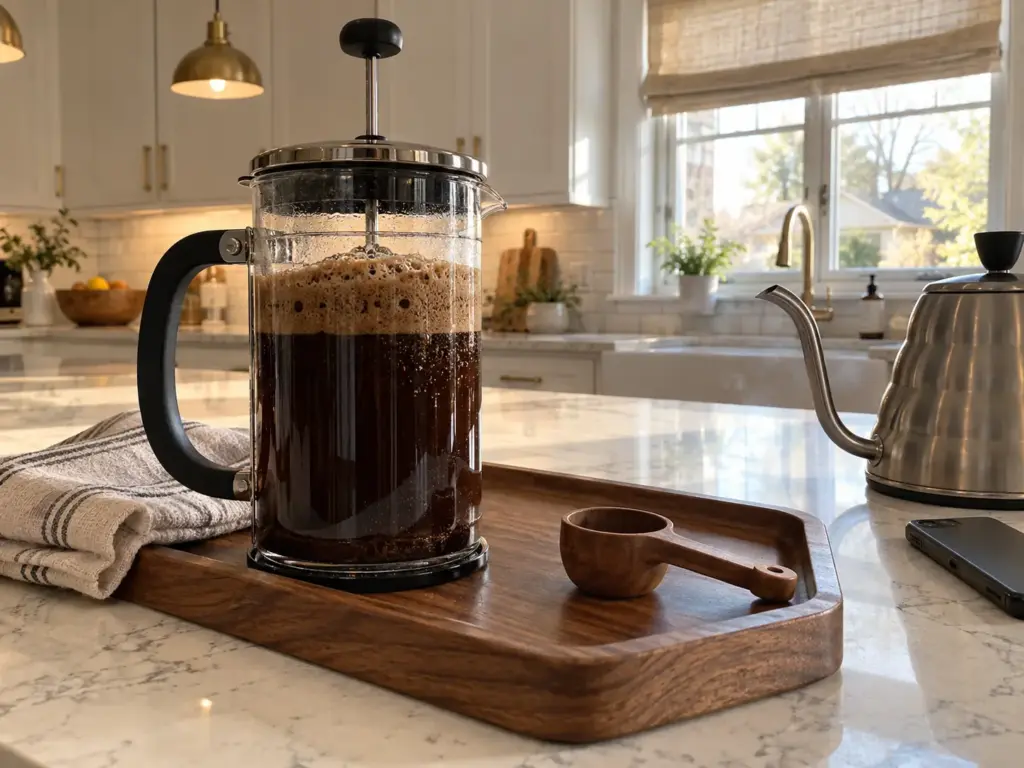
If espresso is your main brew, the roast level matters here too (see light or dark roast for espresso).Immersion may be more forgiving. Degassing matters less in a French press, so a bag only days off roast can work in the press while it still gives an espresso machine trouble.
When a bag shows up only two or three days off roast and you own both an espresso machine and a French press, brew the press for the first few days. The sources put the espresso floor somewhere between about four and ten days off roast, so the press covers the gap, and you have not burned 18 g a morning chasing a moving target.
Weeks One to Four: Peak, Then the Horizon
Put every number on one line and count in days off roast. Roasters often quote a peak of about one to two weeks. The SCA’s own horizon for fresh is about three weeks.
Hoffmann, via Serious Eats, still drinks light roast at three or four months without calling it ruined. Those ranges overlap, because they answer different questions: when is it best, when has it clearly faded, when is it no longer worth brewing.
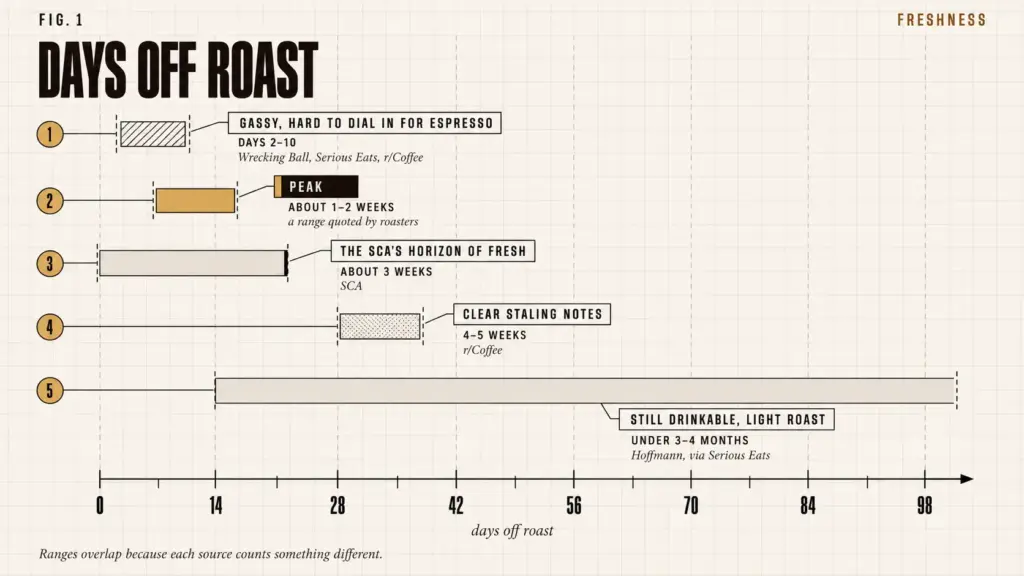
Taste the same bag on day five, day fifteen and day thirty-five and you can follow that line in the cup. Early on, the coffee can taste lively and a little unsettled, especially as espresso. By day thirty-five it still tastes like coffee, but thinner, with less aroma coming off the grounds. Nothing went wrong: the aroma compounds, the volatile aromatics that make coffee smell like coffee, simply left, and a bag can be past its peak flavor and still worth brewing.
Why Dark Roasts and Light Roasts Age Differently
Dark roasts give up their gas faster: Serious Eats, citing the SCA’s Coffee Freshness Handbook, notes that darker beans off-gas more quickly. Light roasts may show their age sooner in a pour-over, and a light roast can start to degrade well before a darker one, though that is an impression, not a measurement. A blend, already missing some of the most fragile notes, can go longer than a single-origin light roast.
The practical reading: finish the light roast early in the window, and let the dark blend be the bag you stretch. And when the last of a bag has faded, the remnants can go into a cold brew stash, where a long cold extraction hides most of what the aroma compounds took with them.
Past the Window: Still Drinkable, Flat Rather Than Bad
A bag five weeks off roast is not a failure. It is a cup with less in it, and the useful question is what to do with the rest of the bag, in order, before you throw anything out.
Flat, Not Spoiled: What Months-Old Beans Are
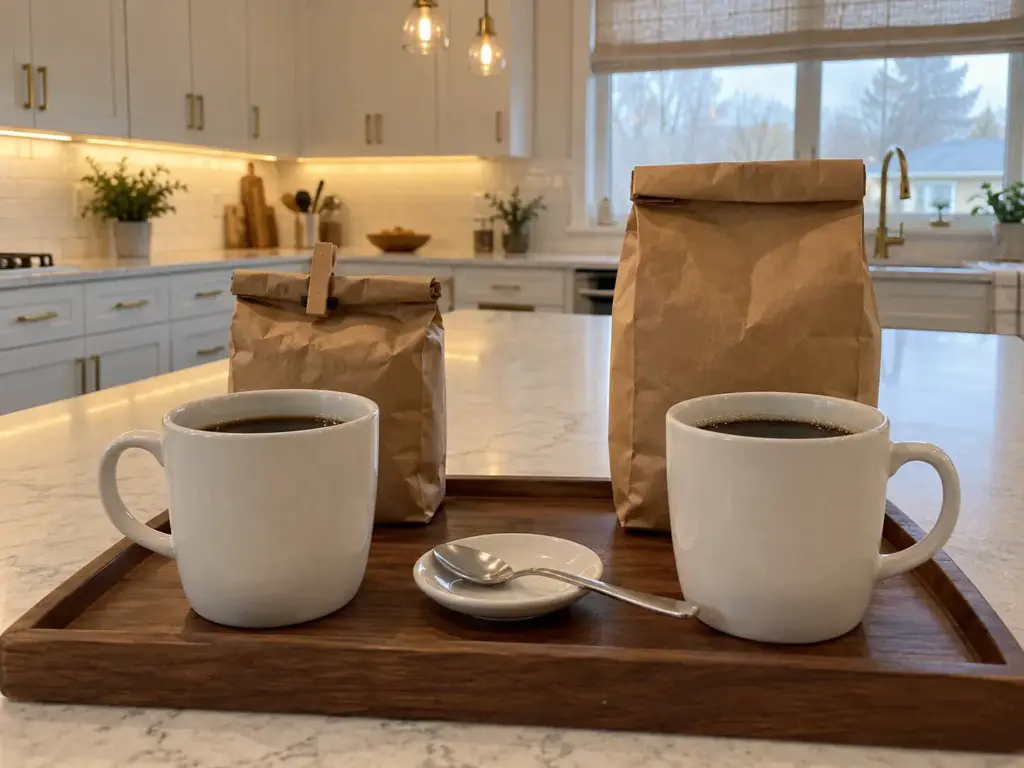
Old beans make flat coffee: less aroma, less sweetness, a duller finish. James Hoffmann would not throw out a light roast younger than three or four months, and a coffee six months past roast can still taste good, while a coffee only weeks old can already fall flat. The roast date alone does not decide it. How the coffee was roasted, how it was stored and how sensitive your own palate is all move the line.
What none of this proves is that old beans are guaranteed fine forever. The sources cover beans that stayed dry and showed no mold, and that is the only claim this article makes about whether they are safe to drink. Moisture is a different problem with a different answer, and it gets its own section below.
One Change at a Time: Taste, Then Change One Thing
Start with the date, not the dial. Read the roast date on the bag, count the days, and decide whether the cup is flat because the beans are old or off for some other reason. The roast date is the first thing to read before moving the grinder, which is the same habit as the advice to weigh the dose before the dial.
Then name which way the cup is off. Thin and sour points one way, harsh and bitter the other, and a hollow cup with nothing wrong except a lack of flavor is simply age.
Change one thing (the grind size one step, or the dose by a gram or two), brew the same way, and taste before you touch anything else. The sources split on which direction an aging bag wants, so treat any change as a test rather than a rule, and expect a flatter cup anyway. If the next cup is no better, the bag is telling you its age, not your recipe’s.
What a Canister Adds to the Clock, and What It Does Not
The obvious purchase at this point is a canister, and it buys less than the box suggests. Plain jars do not help much with storage, and even the high-tech vacuum ones add little. The Smrke study points the same way from the chemistry side: moving beans into a container lost freshness faster than a screw-cap bag, though it measured air, not taste.
If you want one anyway, the Planetary Design Airscape uses a plunger lid you push down onto the beans to squeeze the air out, and the medium size holds about 500 g (1 lb), so a 2 lb bag will not fit in one. For a vacuum canister, the Fellow Atmos twists to pull air out and takes about 11 oz of beans, and an early breakage has been reported, though that is an isolated case, not a pattern.
The MiiR Airlock uses a push plug to displace air in an opaque 12 oz stainless steel canister, and it also takes ground coffee. No repeated complaint about it turned up, and it shares the limit of every canister: a day or so, while staling notes still arrive at four to five weeks whatever the container. Weighing jar, canister or bag is its own decision.
Two cases sit outside this clock. Beans you will not touch for weeks belong in the freezer, sealed, and freezing beans you will not finish covers how. And ground coffee runs on a different clock: the SCA column says the gas whole beans lose over weeks is lost in minutes after grinding, which is why storing ground coffee gets its own rules.
Before buying a canister, check whether your bag has a zip strip. Some roasters print the date on the small bags and leave it off the 1 kg size, which is exactly the bag that has to last longest. A resealable strip with a clip over it is the free upgrade; a big bag without one is the case where a container earns its place.
Bag Size Against Your Pace: The Arithmetic
The free fix for old beans is to stop buying beans you cannot finish inside the window. That is a division, not a feeling, and it takes one number you probably have never measured.
Grams a Day Is the Number That Decides It
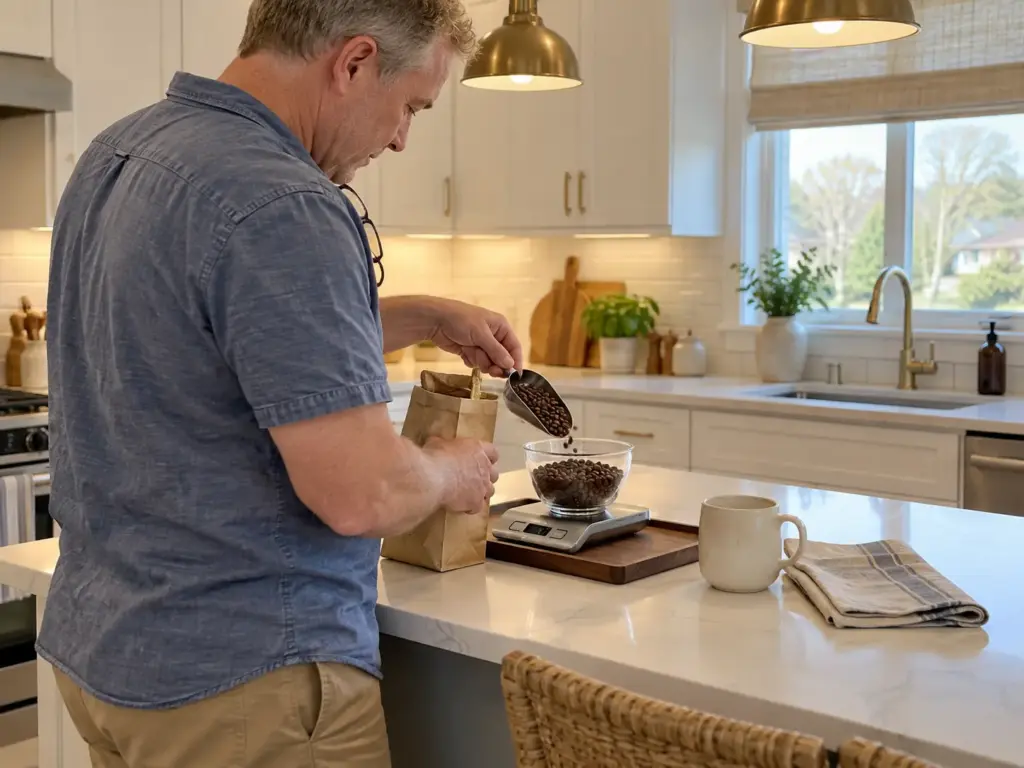
Weigh what you actually use in a day, once, instead of guessing it from scoops. A scoop measures volume, so a heaped one and a level one are different doses, and a couple of grams a day adds up to days across a bag. A scale is the cheap tool here, and it changes more cups than any canister will.
The Etekcity Food Kitchen Scale reads in grams and ounces with a tare button, which is all the arithmetic needs; its 1 g steps are coarse for weighing an espresso dose, where a gram is a big share of the basket. If you also weigh pour-over or espresso, the finer tool is worth the step up. The Hario Drip Scale Timer reads in 0.1 g steps with a built-in timer, and it switches itself off after five minutes.
How Long a Bag Lasts at That Pace
A common case: an espresso drinker who goes through only a little coffee each day is tempted by the cheaper big bag. At 18 g a day, a 12 oz bag (about 340 g) lasts about 19 days. Swap in your own daily dose: the division is the whole method.
| Bag size | Grams | Days at 18 g a day |
|---|---|---|
| 250 g bag | 250 g | About 14 days, inside the window |
| 12 oz bag | About 340 g | About 19 days, inside the window |
| 1 lb bag | About 454 g | About 25 days, at the edge |
| 2 lb bag | About 907 g | About 50 days, past the window |
Replace 18 g with your own daily dose and the table redraws itself. Now add the days the bag sat before you opened it. A bag that reaches your counter a week off roast and takes 25 days to finish ends at about day 32, which is already into the four-to-five-week stretch where clear staling notes start to show.
A 2 lb bag at the same pace is still being brewed around day 57. For grams per cup instead of grams per day, the companion piece on how many cups are in a 12 oz bag runs the other half of the division.
That is the typical case of a big bag kept in a canister and used a little at a time, and the question is when to give up on the rest. The bag was never the problem; the pace was. The size was.
Split the Bag, or Buy Smaller
If the bigger bag is the better buy per ounce, split it on the day you open it, not on the day you notice it fading. A practical move is to buy a 1 kg bag, put 500 g into a vacuum container, and finish that half first while the other half stays sealed. Freeze the half that will wait, sealed and portioned, rather than leaving it in the pantry.
What does not work is grinding the whole bag ahead to save time, because that moves every gram onto the ground-coffee clock at once. Grinding ahead only makes sense against a small bag and a short horizon, which is the point of deciding when to grind by the size of the bag. The way to buy smaller bags and make them work is to match the bag to your pace; a big bag’s saving is gone once its last third goes into a flat pot.
To find your real daily dose without weighing every morning, weigh the full bag when you open it and again a week later. The difference divided by seven is your grams a day, scoop errors and refills included, and it tells you the largest bag you can finish in about three weeks.
When the Bag Goes in the Trash
Everything above is about a cup getting flatter, and none of it is a reason to throw a bag away. Only moisture is, and it has one telltale.
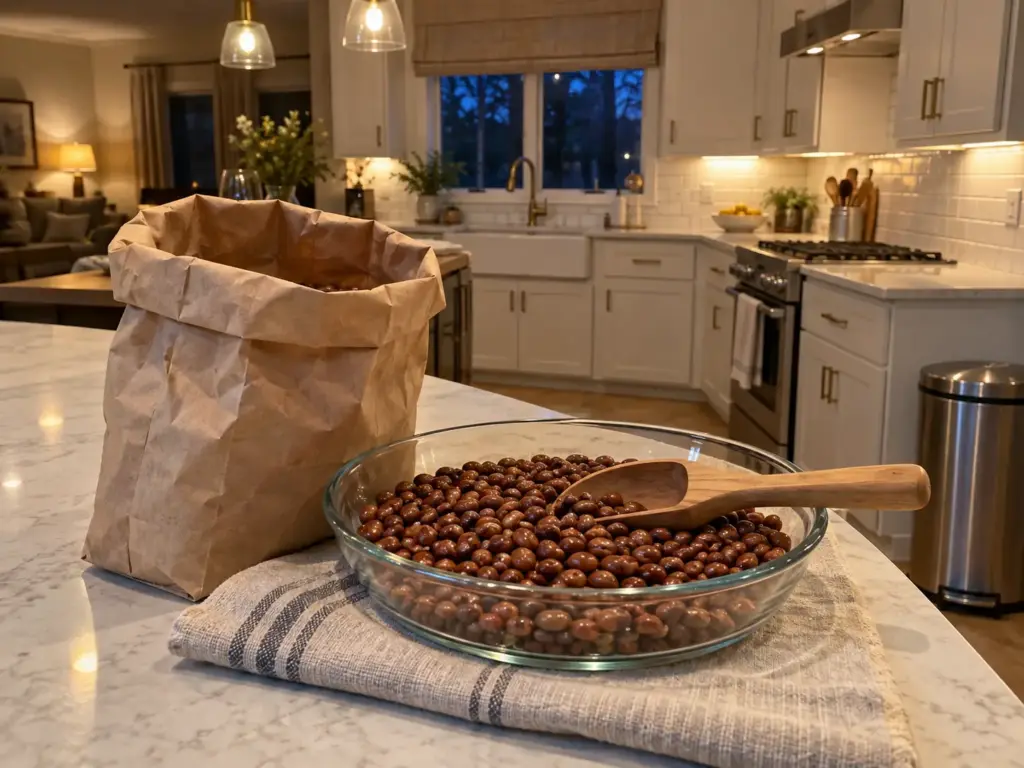
Coffee goes stale; it does not expire in the way milk does. What turns a bag into trash is damp: a bag left open in the cabinet beside the sink, above the dishwasher or next to the kettle’s steam. If you see mold on the beans or smell anything musty when you open the bag, it goes in the trash, with no tasting to check. That is a food question, not a cup question, and the answer is the same at two weeks or two years.
A musty or damp smell is not the same as flat. Flat is a cup with the volume turned down; a damp smell does not belong to coffee at any age. The full sensory check lives in how to tell if beans are stale. Keeping the next bag out of the damp needs no gear: airtight, opaque, cool, dark and dry, at room temperature and somewhere away from the sink and the stove.
Read the Roast Date, Then Divide the Bag
Three things carry over to the next bag. Count from the roast date, because the opening is the smaller clock and a tightly rolled valve bag barely notices it in the first days, and the shelf life of a bag is a question that starts at the roast date. Treat an old bag as a flat cup, not a hazard, as long as it is dry and smells of coffee; mold or a musty smell sends it to the trash. And buy the size you finish in about three weeks, which is a division by the grams you really use, not a guess.
A month from now, compare the roast date on the bag with the day the last cup tasted flat to you. That gap is your own freshness window, and it is a better number than any average quoted above.
Tomorrow morning, weigh the day’s dose once and divide the next bag’s grams by it before you buy. If the bag has no roast date, write the day you opened it on the label. Then brew the same coffee the same way a week later and taste whether anything has faded before you move the grinder, the dose or anything else.
Frequently Asked Questions
01Do coffee beans go bad if opened?
Opened coffee beans go stale rather than bad: the aroma fades and the cup turns flat over a few weeks, counted from the roast date. Only moisture, shown by mold or a musty smell, makes a bag worth throwing out.
02Are 2 year old coffee beans still good?
Two-year-old beans will brew flat coffee, because the aromatic compounds that give a cup its flavor fade over weeks and months whatever the container. No study measured years, so the rule is simple: dry and no mold, brew it and expect little; any musty smell, throw it out.
03What is the 15-15-15 coffee rule?
The 15-15-15 rule is a rule of thumb that circulates online, not a coffee standard, so its numbers are not endorsed here. The Specialty Coffee Association treats whole beans as fresh for about three weeks from roasting and ground coffee for about an hour.
04How long does ground coffee last after opening?
Ground coffee fades far faster than whole beans, because grinding releases in minutes the gas and aroma whole beans give up over weeks. Keep it sealed, cool and dark, and buy or grind only what you will brew soon.
05Should I keep coffee beans in the bag they came in?
A valve bag pressed flat, rolled tight and clipped is a reasonable default for an opened bag of whole beans you will finish within a few weeks. In the one peer-reviewed test of opened packs, a screw-cap bag did best and moving beans to a container did not help, though it measured air, not taste.

How did your cup turn out?
No comments yet. Tell us what you changed — and whether the needle moved.