



We may earn a commission when you buy through links on this page. It never changes what we recommend. How we pick
On this page8 parts
- When Freezing Coffee Beans Pays Off and When It Doesn't
- Why Opening the Freezer Jar Every Morning Is the Real Problem
- How to Freeze Beans: Portions, a Tight Seal and a Taped Valve
- Thawing, Never Refreezing and the First Cup After
- How Long Frozen Beans Hold and What a Bad Cup Is Telling You
- The Free Alternative: Skipping the Freezer Entirely
- Weigh the Dose, Divide the Bag, Then Pick a Shelf
- Frequently Asked Questions
You bought two bags on sale three weeks ago. One sits open on the counter and has stopped blooming, just a flat, quiet puff when the water hits it; the other is still sealed in the pantry, and you are wondering whether the freezer saves it or ruins it. So, should I freeze coffee beans?
The cold does no harm by itself: the trouble starts when cold beans meet room air, because water condenses on them, and roasted coffee takes up moisture and the smells around it. That means the freezer works or fails on how often the bag gets opened, and below is the pace rule that settles it, the procedure, the thaw and the first cup after it, how long frozen beans hold, and what to do when freezing is the wrong call.
Quick Answer
Yes, but only the beans you won’t finish within a few weeks. Split them into airtight portions, freeze them unopened, thaw each portion sealed to room temperature before opening, use it up and do not refreeze it. Leave the bag you open every morning on the counter: daily trips in and out put water on the beans.
When Freezing Coffee Beans Pays Off and When It Doesn’t
The real question is not freezer or counter. It is how long the bag has to wait before you brew the last of it, and you can answer that for your own kitchen with a scale and one division, before any seal, bag or machine enters the picture.
The Bag You Finish in Two Weeks Stays Out
Roasted beans hold their peak freshness on their own for a couple of weeks. The Specialty Coffee Association’s Coffee Freshness Handbook, as Serious Eats quotes it, puts the loss of roughly 40 aroma compounds at about two to three weeks at room temperature, with most of the carbon dioxide gone in the first week. A bag that is finished inside that window has nothing to gain from the freezer and something to lose every time it comes out. Serious Eats lands in the same place: finish a bag within a week or two and you are already doing enough.
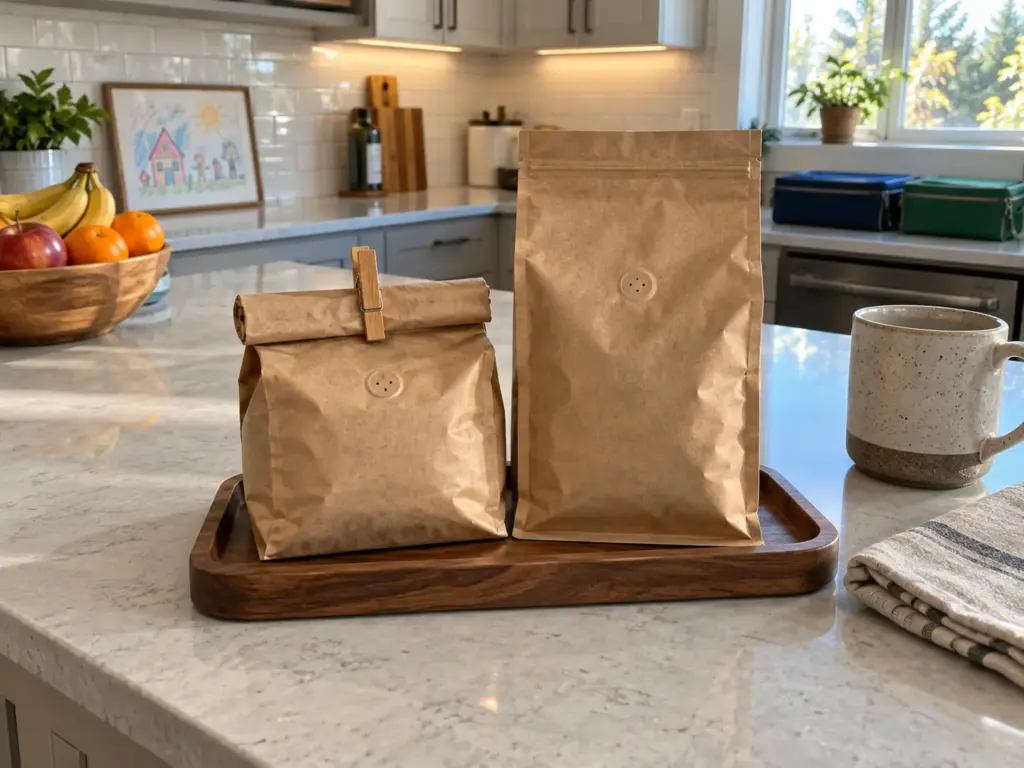
That bag stays in its own one-way valve bag, folded down and clipped. The rest of keeping beans fresh on the counter is about heat, light and air, not cold. It is also why the decision belongs to the day you cut the bag open, not the week the cup has already gone flat.
The Bag That Has to Wait Weeks Is Worth Freezing
The case for the freezer comes from a Penn State food-science study that stored whole roasted arabica for nine weeks in the freezer and at room temperature, then had 48 people smell the ground samples next to a fresh control. According to Penn State, the findings indicate that “freezing does help preserve the aroma of certain varieties of beans.” The dark roast showed it most: the room-temperature dark roast smelled different, while the frozen one held its aroma. The light roast showed no substantial differences across any of the samples over those nine weeks.
So the freezer pays most for a dark roast that has to wait, and much less for a light one. Dark roasts also finish off-gassing faster, which is part of how a dark roast differs from a light one.
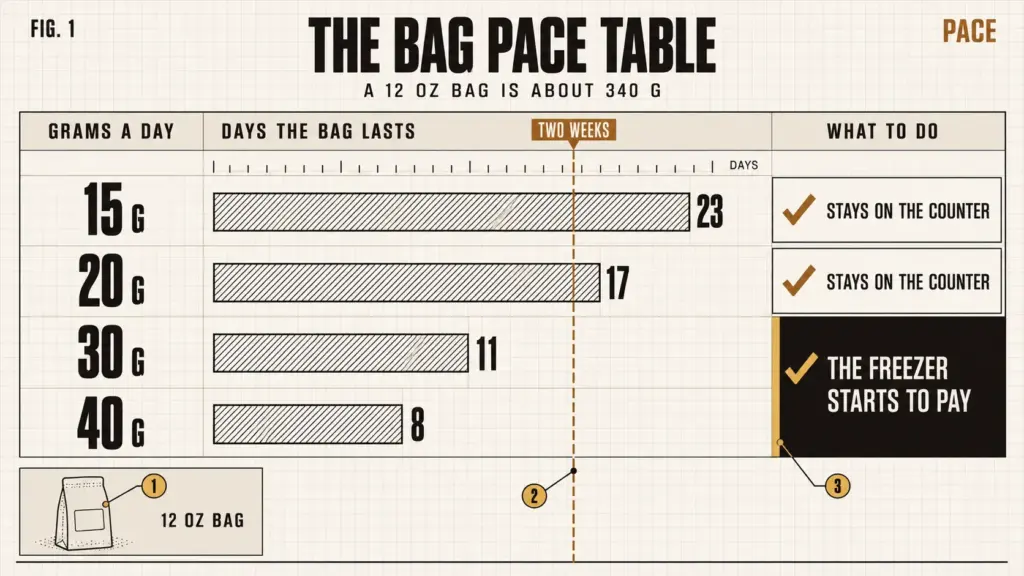
Now the division. A 12 oz bag holds about 340 g. Weigh what you brew in a day and divide: at 20 g a day, roughly two level scoops for one big mug, the bag lasts 17 days; at 30 g it lasts 11; at 15 g, about 23.
Under about two weeks, the bag stays out. Past that, the beans you will not reach before the third week are the ones to freeze, and the same number tells you how big each frozen portion should be.
The worry is familiar: two big bags bought at once, a plan to freeze half, and doubt about what happens to the half that gets opened. With a dose and a bag weight, it stops being a debate.
Do the division the day both bags arrive, not the day the first one runs out. By then the second bag has already spent two weeks in the cupboard, and those two weeks are exactly the ones the freezer was supposed to save.
Beans That Were Already Stale Stay Stale
Freezing stops the clock. It does not wind it back. The sealed bag in the cupboard that is already three weeks past its roast date has lost those three weeks, and a month in the freezer keeps it at exactly that point. Royal Coffee ran a six-month freezing test and still added the caveat that “there is no substitute for fresh beans.”
Before anything goes in the freezer, read the roasted-on date (a best-by date is a different thing), and check what the bag tells you about when the beans were roasted. Grocery beans with no roast date at all leave you nothing to count from, and the freezer keeps whatever is in them and nothing more.
Why Opening the Freezer Jar Every Morning Is the Real Problem
The freezer does not spoil beans. The trips in and out do, and once you see the mechanism you can predict the failure before it reaches the cup. The same mechanism settles the fridge.
What Happens When Room Air Meets Cold Beans
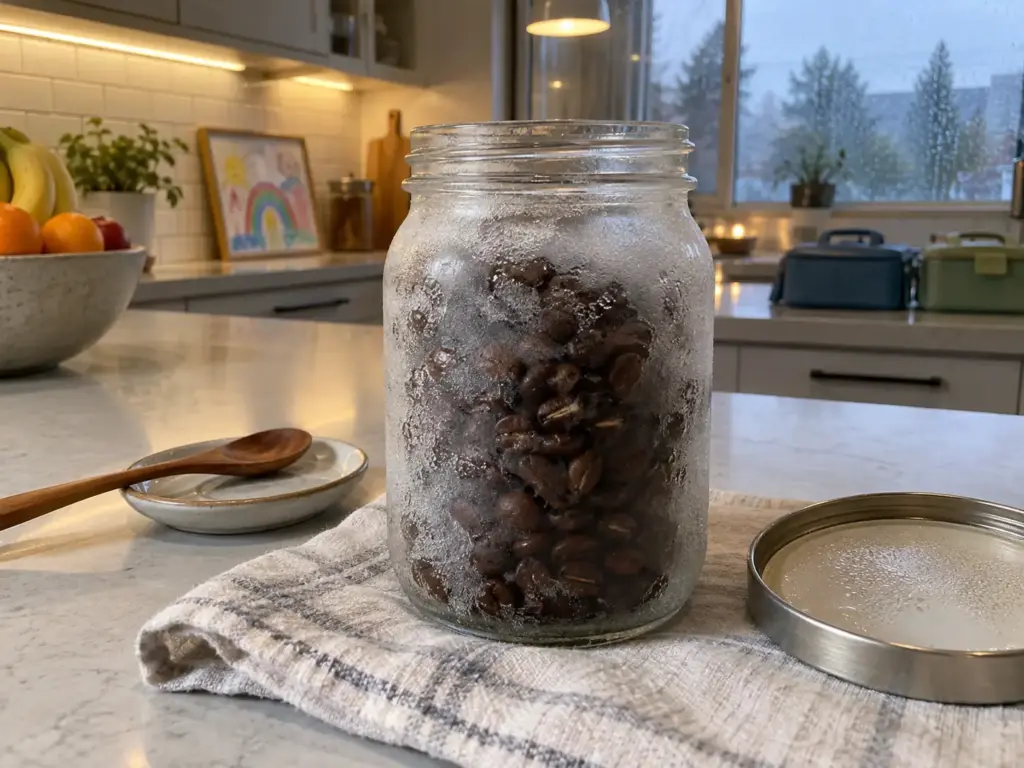
Picture the jar coming out of the freezer while it is still frosted. You twist the lid and the inside fogs in front of you.
Opening the jar lets in room-temperature air, and that air carries a lot more moisture than cold air. Back in the freezer, that moisture condenses and freezes on the beans and on the freezer walls. Every trip for one scoop is a small shot of water on coffee that soaks it up.
Frost damage takes time, so a jar finished in a week or two may never show the frost damage some people call freezer burn. That is the trap. The routine looks fine for the first jar, and the damage turns up in the jar that lasts. Coffee is hygroscopic, so it takes up moisture and the smells of whatever shares the shelf (the bag of onions in the next drawer included).
Why “Never Freeze” Is Not Settled Either
The opposite rule has no better footing. Helene Hopfer, the Penn State food scientist who supervised that study, said many people are against freezer storage to avoid condensation, but looking through the scientific literature her student “could not find any evidence of that.” The blanket ban has no study behind it. What the evidence points at is the repeated opening, not the cold.
There is one more variable, and it is the freezer itself. A frost-free freezer cycles its temperature to melt its own ice, and a no-defrost unit is the steadier choice. That is a suspicion, not a measurement, and nothing settles it yet. It is still one more reason to keep every portion sealed tight.
The Fridge Is Not a Halfway House
The refrigerator looks like a compromise and behaves like the worst of both. Neither the Penn State test nor Royal’s included it, so what follows is reasoning rather than a result: a fridge gets opened many times a day, the bag meets the same warm, damp air every time, and it never gets the deep cold that slows staling. The fridge is a poor choice too.
If the beans are going to be cold, put them in the freezer. If they are going to be opened daily, leave them out.
How to Freeze Beans: Portions, a Tight Seal and a Taped Valve
The free version comes first: a freezer bag from the drawer and a scoop. Then the one purchase worth a look, and the step on the original bag that keeps air out once it is frozen. In order, with each tool’s weak spot in writing.
Size the Portions to Your Own Pace
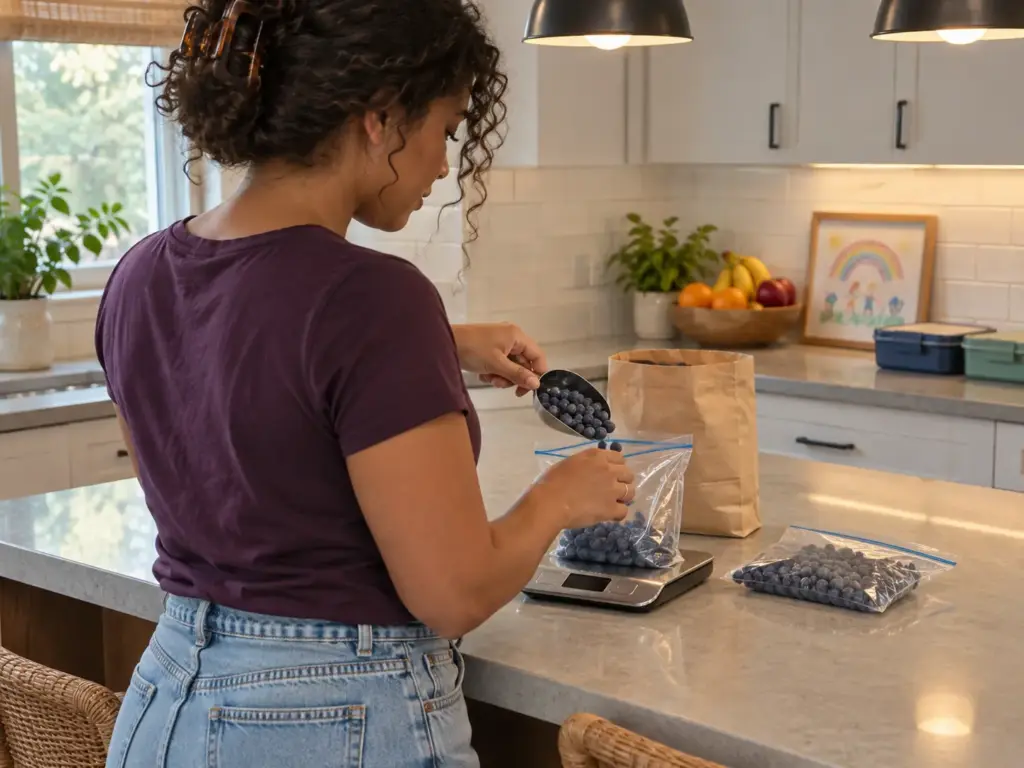
Portion advice runs from three days’ worth to two weeks to just freezing the bag for months, and none of those numbers has a source behind it. They all depend on the dose. Use the division from the pace test: if a 340 g bag lasts you 17 days, a third of it is just under a week of coffee, about 113 g.
Small batches of about a week suit most kitchens. Two weeks is the ceiling, because a thawed portion sits on the counter like any open bag.
Counting level scoops into each bag works, as long as every bag gets the same count. A scale works better, since a scoop of dark roast weighs less than a scoop of light (the beans puff up and lose density as they roast). The Etekcity Food Kitchen Scale reads grams and ounces with a tare button, so you zero the empty bag, pour to your number and seal.
It reads in 1 g steps, plenty for a portion, though coarse if you ever want a dose to the tenth of a gram. The same scale then weighs the morning dose, which fixes more cups than any freezer routine.
The Zipper-Bag Version, Air Pressed Out
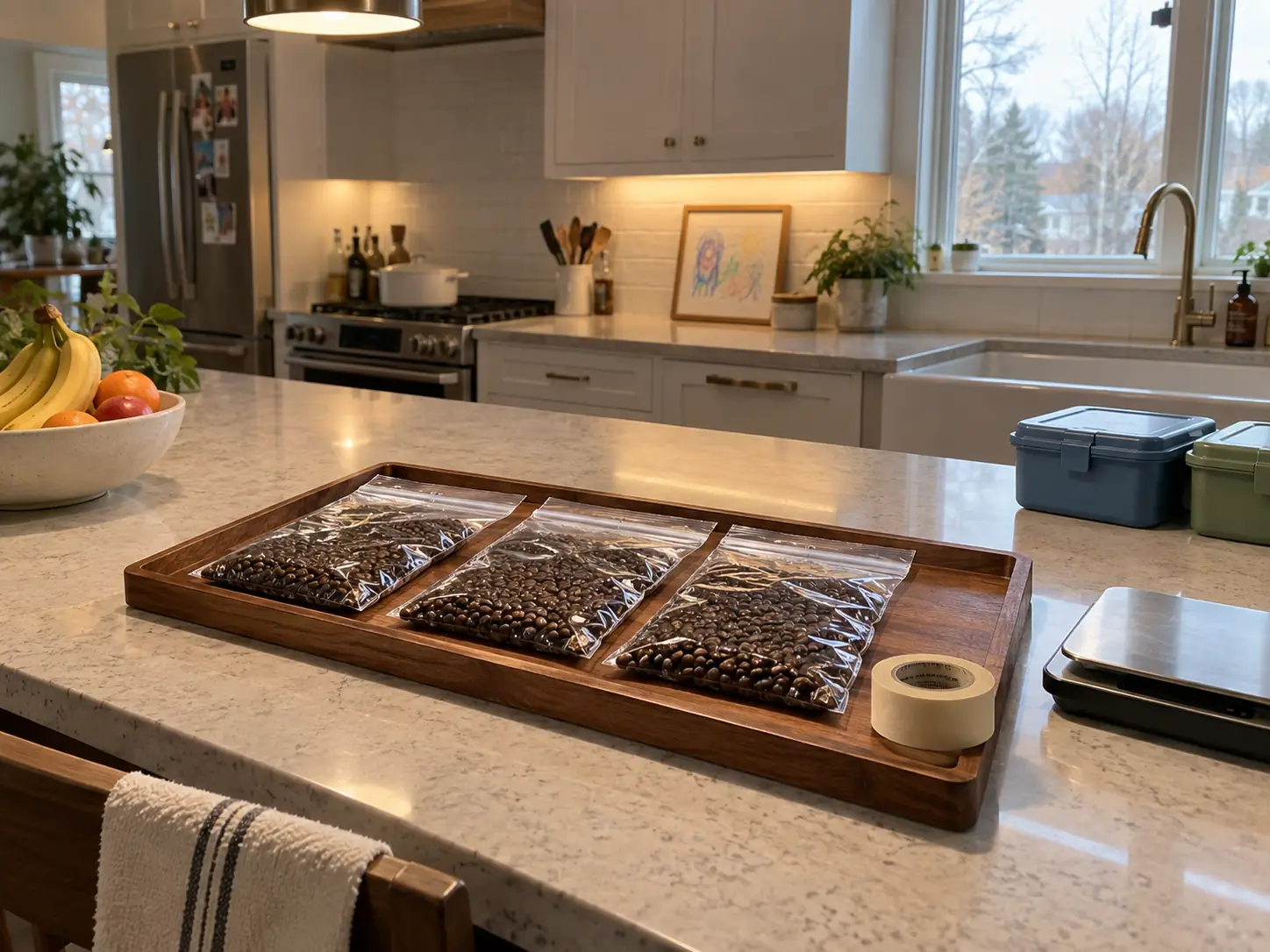
Any freezer-grade zipper bag will do, and there are probably some in the drawer already. The technique is simple: close the zip almost all the way, fold the bag over the beans and squeeze out as much air as you can, or draw the last of it out through a straw with the zip nearly closed, then put a rubber band or two over the seal. Another route is to freeze the whole unopened bag inside a zipper bag. For single doses, weigh each brew into small jars and grind straight from frozen.
The air matters more than the container, because oxygen drives the oxidation that stales beans. The SCA’s Coffee Freshness Handbook, as Serious Eats quotes it, says that reducing the oxygen in a coffee container from 21% to 0.5% can raise shelf life up to 20 times. A bag pressed flat with no headspace is the cheap way to get closer to that.
If the drawer is empty, Ziploc Freezer Bags, Grip n Seal, Quart have a double zipper and come 114 to the pack. Customer reviews are mixed on durability: some bags split, and some are hard to open, so double-bag a portion that will sit for months. There is a second weak spot that no test has checked. A zipper closure may let freezer odors in over several months; that is reasoning from how zippers seal, not a measured result, and it is why the bags go at the back, away from anything strong.
When a Vacuum Sealer Earns Its Place
A vacuum sealer looks like the obvious upgrade, and Royal Coffee’s six-month test is the reason to slow down. Its cuppers compared a vacuum-sealed frozen bag with a one-way valve bag that was sealed and frozen, and found negligible differences between the two. The machine bought nothing the bag had not already done.
Where it does earn a place is volume: many bags at once, or portions cut to an exact size from a roll. The FoodSaver V4400 2-in-1 Vacuum Sealer detects the bag and moisture on its own, stores and cuts the roll, and takes 8 in and 11 in rolls, so a 113 g portion gets a bag its own size.
It is the splurge of this article, many times what a box of zipper bags costs. And its reviews are mixed on the one job it has: some owners say it seals well and keeps food fresh, others that it stops sealing properly and “breaks down after a few months.” Buy it for the number of bags, not for flavor.
Tape Over the One-Way Valve
The original bag can go into the freezer whole and unopened, and it is often the best container in the house. The catch is the one-way valve, the degassing valve that lets carbon dioxide out of a fresh bag. James Hoffmann, as Serious Eats reports, warns that it can fail to keep air out once frozen, so a strip of tape goes over it before the bag goes in. It only has to cover the valve holes flat.
Write the roast date and the grams on each portion before it goes in, and freeze the bags lying flat. A flat portion reaches room temperature overnight, while a round lump keeps a cold core that fogs the moment you open it.
Thawing, Never Refreezing and the First Cup After
The beans only stay good if the exit is as careful as the entry. This section covers the thaw, the one rule about going back into the freezer, and what the grinder does with cold beans, which is where the evidence runs out.
Thaw Sealed, Then Open
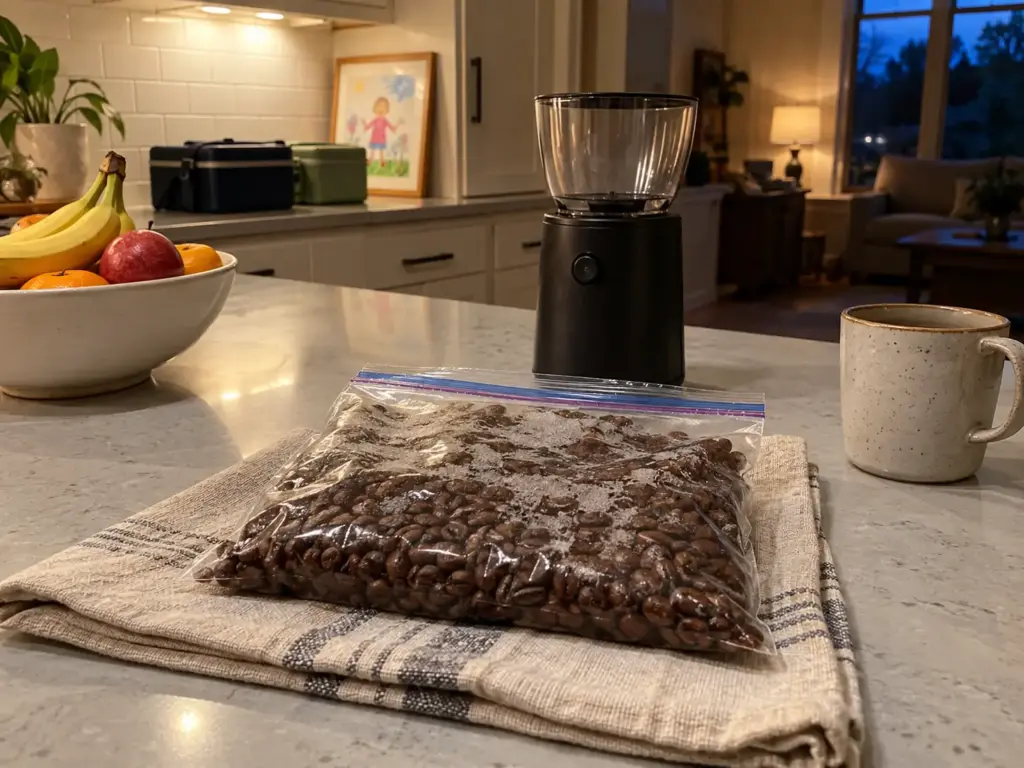
Take the portion out and leave it closed until it reaches room temperature. Opened cold, it fogs exactly like the jar in the section above, and the water lands on beans you are about to brew. The usual routine is to take the next bag out well before it is needed: overnight on the counter is the minimum for a flat portion.
Once it is open, put only that morning’s dose in the grinder hopper and grind it. Grinding the whole portion at once throws away what the thaw protected, which is the whole case for deciding when to grind.
Taking out a week at a time is the textbook routine, and beans can lose their bloom and decline in taste right away once they are out. One person’s report, not a test. A sealed portion still beats a jar opened every day. But if a week on the counter costs you the bloom, the answer is a smaller portion of three or four days, not a return to the frosted jar.
One Trip Out, No Trip Back
Serious Eats is blunt about it: “Once thawed, don’t refreeze.” Every round trip puts the beans through the condensation of the daily jar, all in one go.
A common habit is the scoop-and-put-it-back, and a bag finished in two weeks can still taste fine. That fits the slow pace of frost damage, and it holds for a bag that lasts two weeks. For a bag that lasts two months, the damage has time to show.
Grinding Cold Beans: What the Study Found and What It Did Not
A University of Bath grinding study found that “the colder the beans the finer and more uniform the particles were from the grind.” The team ground beans at temperatures from room temperature down to −321°F (−196°C). Most of the effect belongs to far colder beans than a freezer gives you: the paper reports the most common particle size fell by 31% between room temperature and −328°F (−200°C), while at the freezer’s −2°F (−19°C) the cutoff for the finest particles, 73 μm, sat right next to room temperature’s 70 μm. A home freezer is the weak end of the effect.
Christopher Hendon, a chemist on the team, expects chilling to change the taste, because small shifts in particle size make a large difference in how fast the coffee extracts.
Then the limits. The Scientific Reports paper used Mahlkönig EK43 commercial grinders, with the beans chilled in a paper cup, not a home burr grinder fed from a freezer bag. The authors call the change they saw a lower limit, since cold beans warm up against the room-temperature burrs.
Beans chilled in that covered cup showed no visible condensation, which fits this article’s point: the water arrives when room air is let in. No source covers what condensation does on the burrs of a home electric grinder, and opinions split: some grind straight from the frozen jar and say the cup is better, while others thaw sealed first. The evidence calls it neither safe nor unsafe.
So treat the first cold dose as a re-dial. Write down the setting, brew, and taste. If the cup lands more bitter or drier than the same beans gave before freezing, the grind size went finer: move one step coarser, keep the dose, and taste again.
If it lands sour and thin instead, the grind is not the cause, so go back to the old setting and check the beans. The same logic you would use to re-dial the grinder by roast applies here. If the grounds start clinging to the chute after a thaw, static on the grinder has the fixes.
Judge the second cup from a thawed portion, not the first. The grinder keeps a few grams from the last beans inside, so the first dose is part old bag and part new, and any setting change you make on it is a guess.
How Long Frozen Beans Hold and What a Bad Cup Is Telling You
There is no single honest number for how many months beans keep in the freezer. This section gives the windows that were measured, then turns the problem around: which way the cup is off tells you which step to change first.
The Windows That Were Actually Measured
Figures for frozen beans run from five or six months unopened to a year in a dedicated chest freezer, and none of them comes with a test behind it. Two windows were measured. Penn State’s was nine weeks, over which frozen beans kept their aroma, and Royal Coffee’s was six months, over which the frozen samples kept their sweetness to the end.
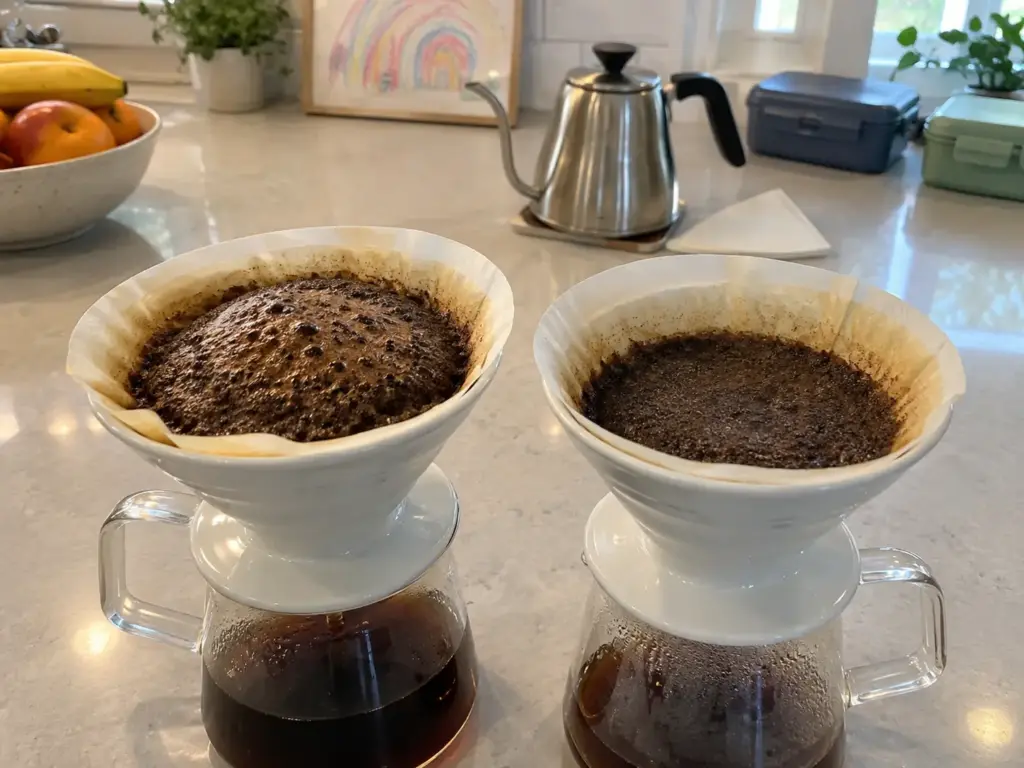
Royal’s turning point is the useful number. After the four-week mark, its cuppers could reliably tell the room-temperature control from the frozen samples. The control lost its sweetness and picked up stale, musty, papery and oily notes, and the frozen coffee did not.
So freezing for anything up to six months has a test behind it; past that, a portion sized to finish is a safer bet than a long date on a label. Once thawed, the beans run on the clock of an opened bag, and how long beans last once they are open is that clock.
A Dull, Papery Cup Points to Age and Moisture
A frozen portion that brews flat, papery, musty or simply stale is pointing at age, and those are the flavors Royal’s room-temperature control picked up as it aged. The step from there to moisture is reasoning rather than a test result: a portion that went back in damp, or lived in a jar opened every morning, ages the same way. The bloom tells you first. A flat, quiet bloom where there used to be a rising dome is how a stale bag reads before you taste it.
Change one thing, the routine: smaller portions and no trip back. Brew the next portion the same way and taste. If the bloom rises again and the sweetness comes back, that was it. If the next portion is just as flat, the beans were old before they went in, and the freezer kept them that way; the signs are in how to tell if beans are stale.
A Freezer Taste Points to the Seal
A cup that tastes of the freezer itself, of whatever shares the shelf, points somewhere else entirely: the seal. Coffee takes up the smells around it, and a bag that leaks lets them in. The change is the seal alone. Press the air out properly, double-bag, or switch to the taped original bag, then taste the next portion with nothing else different.
And if a bag smells or looks wrong when you open it, with fuzz (mold) or a damp, sour smell, throw it out. That is storage hygiene, not a taste to fix.
The Free Alternative: Skipping the Freezer Entirely
For most bags the best fix costs nothing: finish them before the clock runs out. Here is the bag that stays on the counter, the container that helps a little, and what that container does not do.
Buy the Size You Finish in Two Weeks
The pace test works in reverse too. If 340 g lasts you 17 days, a 12 oz bag every two weeks keeps you inside the window with no freezer at all. At 30 g a day, a 2 lb bag is a month of coffee, and that is when the freezer starts earning its place. Buying smaller and more often costs nothing but a repeat order.
Pre-ground coffee is a separate problem. It goes stale faster than whole beans and does not belong in this plan; storing ground coffee has its own rules.
What a Vacuum Canister Changes and What It Does Not
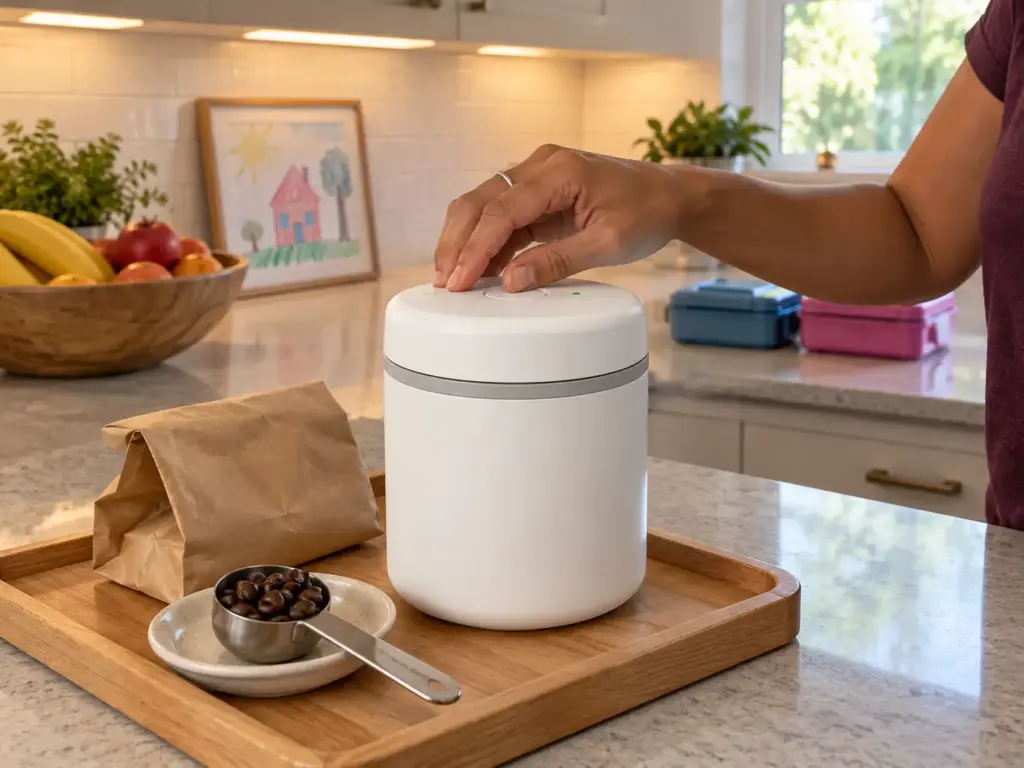
For the bag you open every morning, a canister is the counter option. Neither of the two below is meant for the freezer. James Hoffmann’s view of a vacuum canister against a good valve bag, as Serious Eats reports it, is that the improvement is “typically subtle” for a bag finished in a few weeks.
The Fellow Atmos holds 0.7 L, about 11 oz of beans, and pulls a vacuum when you twist the lid. A Serious Eats tester found the dry aroma of beans kept in it more muted than the same beans left in their own bag. A full 12 oz bag also leaves about an ounce that never quite fits.
If you would rather skip the vacuum, there is a mechanical route. The Planetary Design Airscape in Medium uses an inner plunger lid that you press down onto the beans to push the air out, with room for about 1 lb, so a 12 oz bag goes in whole. It clears the air above the beans, not the air between them, which is the trade-off of any lid that is not a vacuum. Either one is a small step up from the folded valve bag, not a substitute for finishing it, and the next question is which of jar, canister or bag suits your counter.
Roll the valve bag down until it touches the beans before you clip it, every morning. The less empty bag above the coffee, the less air it sits in, and the roll costs you two seconds.
Weigh the Dose, Divide the Bag, Then Pick a Shelf
Three things to carry to the next bag:
- Freeze only what will wait several weeks, in portions sized to your own daily dose.
- Seal each portion flat, thaw it unopened, and never send it back.
- Leave the bag you open every morning on the counter.
A month from now, open the last frozen portion next to a bag that stayed out and compare the bloom and the smell, with the roast date on each bag telling you how fair the comparison is.
Tomorrow morning, weigh the dose you brew and divide the bag’s grams by it, then decide counter or freezer for the next bag before you cut it open. When the first thawed portion goes through the grinder, taste that second cup on its own: if it lands more bitter than the bag before, move one step coarser and leave everything else where it was.
Frequently Asked Questions
01Is it a good idea to freeze whole coffee beans?
Yes, for whole beans that will wait several weeks, split into sealed portions, thawed unopened and never refrozen. It is a bad idea for the bag you open every day, because each trip lets moist room air condense on the cold beans.
02Should I put coffee beans in the fridge or the freezer?
The freezer, for beans that will wait several weeks; the fridge brings the warm-air problem of a door opened all day without the deep cold. No freezing test has included the fridge, and the fridge is still the place to avoid.
03Do I need a vacuum sealer to freeze coffee beans?
No. Royal Coffee’s six-month test found negligible differences between a vacuum-sealed frozen bag and a one-way valve bag sealed and frozen. A zipper freezer bag with the air pressed out, or the original bag with its valve taped, does the job.
04Can I grind coffee beans straight from the freezer?
You can, and some home brewers do it and like the cup, but expect the grind to shift a little finer at the same setting. The Bath study used commercial grinders and no test covers a home electric one, so re-dial one step coarser if the cup turns bitter.
05What is the 15-15-15 coffee rule?
It is a rule of thumb with no SCA standard behind it: green beans roasted within 15 months of harvest, roasted beans used within 15 days, ground coffee brewed within 15 minutes. It describes freshness windows, not freezing; the freezer is one way to stretch the 15 days.



How did your cup turn out?
No comments yet. Tell us what you changed — and whether the needle moved.