



We may earn a commission when you buy through links on this page. It never changes what we recommend. How we pick
On this page8 parts
- What Stale Actually Means, and Why No Sign Proves It
- Smell and Look: The Earliest Signal, and the One That Lies on Dark Roasts
- The Bloom Test With Gear You Already Own
- The Cup Goes Flat, and One Side-by-Side Settles It
- When the Bag Has No Roast Date
- When It Is Not the Beans, and What to Do With Stale Ones
- Smell, Look, Bloom, Then Taste It Against a Fresher Bag
- Frequently Asked Questions
You weigh the same dose, grind at the same setting, pour the same water, and the cup comes out quiet. Nothing sour, nothing bitter, just very little there, and you have already started eyeing the grinder dial. Learning how to tell if coffee beans are stale starts with one idea: stale is flavor that left the bean, not food that went off, and it shows up as flat long before it shows up as anything else.
That is why the checks run in a fixed order, and why each of them can lie to you. Below you get them in that order (smell, look, bloom, then the first cup), plus what to do with a bag that carries no roast date and the things that taste old without being the beans.
Quick Answer
Stale beans have lost flavor, not spoiled, and four checks in this order give them away:
- Smell the bag against a fresher one; faint or papery means aging.
- Look at the beans, but ignore surface oil on a dark roast.
- Wet a spoonful of grounds; fresh ones bubble and rise.
- Brew your usual recipe; a flat, quiet cup points to the bag.
- Treat an undated bag open past a month as stale.
- Throw the bag out only for mold or a damp, musty smell.
What Stale Actually Means, and Why No Sign Proves It
Before any check makes sense, you need to know what you are checking for. Stale coffee beans are not a yes-or-no condition you can read off one clue; they are a slow fade, and every sign that tracks the fade has a way of misleading you. So the order of the checks below is a ranking, from the most honest to the one that lies most often.
Stale Is Lost Flavor, Not a Spoiled Food
Roasting fills the bean with carbon dioxide, made by the same browning reactions that create its aromas. That trapped CO₂ carries the aroma and, for a while, keeps oxygen out. As it leaks away, air moves in and starts working on the oils and the volatile aromatics.
Staling is the sum of those two losses: the gas that carried the smell, and the oils slowly oxidizing. Taken far enough, that oxidation leaves rancid oils behind, but only after months. For how the heat of the roast creates that gas in the first place, see what heat does to the bean.
What it is not is spoilage. The SCA’s review of the coffee-staling research describes roasted coffee as shelf-stable: it does not rot the way bread or milk does, and staling is a perceptible loss of quality that grows with time.
The same review puts the timescales in perspective. Aroma was already measurably weaker one week off the roast in the studies it cites, while trained tasters only picked up rancidity in air-packed coffee after about four months. Aroma goes in days and weeks; the oil turning takes months.
That gap explains the bag at the back of the cupboard, opened sometime in the spring. It still smells like coffee when you unroll it, so you assume it is fine. But the smell in the headspace is the last of it, and the cup has very little left to give. Aroma loss is gradual, not a cliff, which is exactly why a single sniff can fool you.
The Freshness Window, Counted From the Roast Date
The freshness windows people quote disagree with each other: 5 to 30 days, a 7 to 14 day peak, 2 to 4 weeks, stale after three months. Most of them are guesses. The one with a measurement behind it comes from the SCA’s freshness column, which reports that “CO₂ degassing occurs rapidly for the first 20 days after roasting, slowing dramatically afterwards.” On that basis, whole bean coffee can reasonably be called fresh within about three weeks of the roast date.
Treat that as a guide, not a deadline. The SCA’s own review admits staling research is a poor fit for how specialty coffee actually tastes. Day 22 does not turn a good bag bad. It means the bag has left its liveliest stretch and is losing aroma more slowly from there.
Two things follow. The count starts at the roast date, not the day you opened the bag or the date on the shelf. And the full day-by-day timeline belongs to a different question, how long to keep beans after opening, so this article sticks to the diagnosis.
Smell and Look: The Earliest Signal, and the One That Lies on Dark Roasts
No sign proves staleness, but two of them cost nothing except your nose and your eyes. Smell goes first because aroma is the first thing a bean loses. The look goes second because it is the check most likely to send you to the wrong verdict.
Smell the Bag, Then Smell a Fresher One
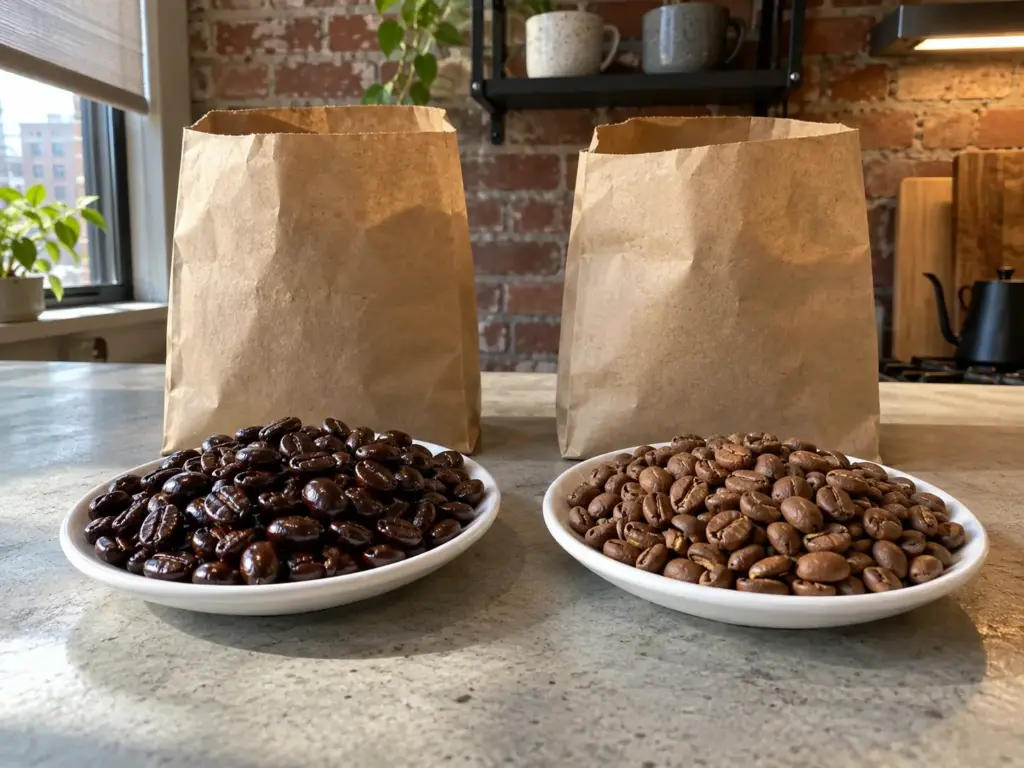
Open the bag and put your nose right at the opening before the air in the bag has mixed with the kitchen. A fresh bag pushes its smell at you: sweet, roasty, sometimes fruity, loud enough that you notice it from across the counter. An aging one gives you something faintly like coffee, a thin, papery note, or what is often called dusty or sandy. That difference between “smells like coffee” and “smells like something that used to be coffee” is the earliest honest signal you get.
The catch is that a nose grades on a curve. Smelled alone, a three-month-old bag can seem fine because you have nothing to hold it against. The kitchen workaround that comes up again and again is the comparison: sniff the old bag, then a fresher one, then the old one again. If you have no fresher bag at home, a coffee shop bag or even a friend’s beans will do for the minute it takes.
Smell the bag a second time after grinding a single dose. Whole beans keep some aroma locked inside, so a bag can smell passable closed and then give up almost nothing once the beans are broken open. If the grounds smell weaker than the whole beans did, the bag is further along than the first sniff suggested.
Oil on the Surface: Old on a Light Roast, Normal on a Dark One
Shiny beans are the sign people trust most, and it is the one that lies most. According to roasters, oil on the surface of a light or medium roast suggests the beans have aged or been stored warm, because at those roast levels the surface is normally dry. On a dark roast, oil on the surface is normal. Glossy dark beans fresh from the roaster are not going rancid; they look like that because of how far the roast went, a point covered in what changes between a light and a dark roast.
So read the gloss against the roast level. Dull, dry light-roast beans that turn into an oily surface in the bag are a real clue. Oily French-roast beans tell you nothing on their own (though once that oil sits on the surface, it is exposed to air and does oxidize faster, so an oily dark bag is a reason to smell it carefully, not a verdict).
Color, Dust and the One Sign That Means Throw It Out
Faded color and a dull, pale, dusty look at the bottom of the bag are weaker clues still. Beans do lose some luster with age, but lighting, the roast and the bag all change how they look, and you will talk yourself into staleness from a photo-perfect bag under kitchen lights.
One sign is different, and it has nothing to do with flavor. White or green fuzz on the beans, or a damp, sour-musty smell like a wet basement, means mold: the bag goes in the trash, with no tasting and no rescue. Dry roasted coffee rarely gets there, which is why it is worth saying once and plainly. Everything else in this article is about a cup that lost something, not a bag that turned into something else.
The Bloom Test With Gear You Already Own
Smell and look cost nothing but attention. The bloom needs a spoon and a splash of hot water, and it earns its place because it is physics rather than opinion: either gas comes out of the grounds or it does not.
What the Bloom Is, and Why Fresh Beans Make One
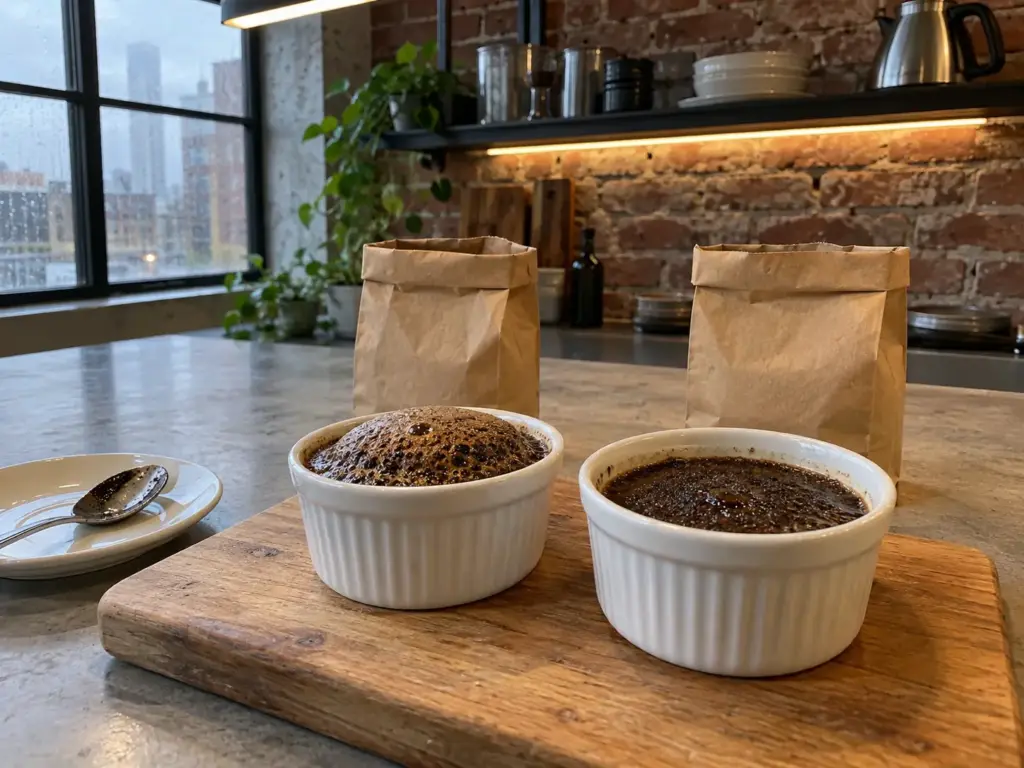
When hot water hits freshly ground coffee, the CO₂ trapped inside the grounds rushes out, and the bed swells, bubbles and domes. That is the bloom. The SCA notes that fresh coffee gives stronger blooms on filter and more crema on espresso for exactly this reason: the trapped gas is released during brewing. A stale bag has already let most of that gas go, so there is little left to push the grounds up.
If you brew with a pour-over dripper, you have probably seen both versions without naming them. On a good bag the bed rises into a soft dome and keeps it for half a minute. On an old one it settles almost as soon as the water lands, and the water drains through in a flat, dark sheet.
The Spoon-and-a-Splash Test, Step by Step
You can run this in a minute with nothing bought. Keep everything identical except the beans:
- Grind a heaped spoonful of the suspect beans at your usual setting.
- Put it in a small cup or a mug and set the cup on the counter.
- Pour a splash of water just off the boil from a short height, enough to wet the grounds, and keep your face out of the steam.
- Watch for about thirty seconds: count the bubbles and see whether the grounds rise.
- If you have a fresher bag, repeat with it in an identical cup, same grind, same water.
Fresh grounds fizz, swell and form a crust that holds. Stale grounds darken, sink a little and sit there. The comparison matters more than the absolute result, because a grind setting or a cup shape can make any bloom look bigger or smaller.
Grind the spoonful right before the splash, not a few minutes earlier while the kettle heats. Ground coffee sheds its gas fast, so grounds that sat out while you waited will bloom smaller than the bag deserves, and the test will blame the beans for your timing.
What a Small Bloom Does Not Prove
Pre-ground coffee blooms weakly almost from the day it is packed. The SCA puts ground coffee’s freshness at about an hour after grinding, because the CO₂ that whole beans lose over weeks leaves ground coffee in minutes. A flat bloom from a can of pre-ground is expected, not a verdict on that can; how to handle it is its own topic, covered in storing ground coffee, while when to grind by bag size covers the timing.
A small bloom on a very pale roast is a weak clue at best, so lean on the comparison with a fresher bag of the same coffee rather than the bloom alone. And crema is a non-test for anyone on a drip machine: it only means something in an espresso shot. The bloom is one check of four, which is why the cup comes next.
The Cup Goes Flat, and One Side-by-Side Settles It
The three checks before brewing only point. The cup is the verdict, and a stale cup fails in a specific direction, one that most people misread as a grinder problem and start fixing with the wrong dial.
Flat Is Not Sour and It Is Not Bitter
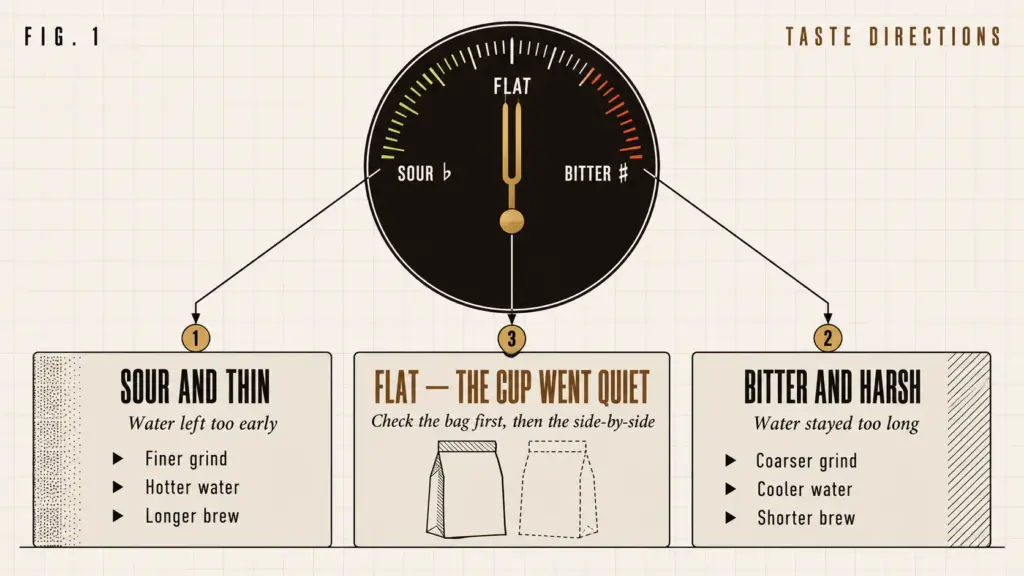
Every off cup points somewhere. Sour and thin means the water left before it finished: the grind was too coarse, the water too cool, the brew too short, and the fix runs finer, hotter, longer. Bitter and harsh means the water stayed too long, and the fixes run the other way. That axis is covered in how grind size moves a cup from sour to bitter.
A stale cup sits on neither end. It reads as less: the brightness gone, the sweetness thinner, nothing sharp to complain about, just a cup that went quiet.
The way the fade unfolds goes like this: you lose brightness first, then you start picking up dull flavors, then you get into cardboard territory. The middle stage is often sandy or dusty, and past a month beans can pick up a sharp, acidic-like smell and taste. A dark roast can go from roasty to rancid within about a week of its peak. It is an old thread, so read it as a community map rather than data, but the order matches what the SCA review says goes first.
Check the Bag Before You Touch the Grind or the Ratio
Say you have already moved the grinder two steps finer and bumped the dose, and you still have a quiet cup. Each change made the cup different without making it better, because neither one was the problem. When the recipe has not changed and the cup went flat, the order of fixes runs like this, tasting between each:
- Check the date. Find the roast date, or how long the bag has been open. Past the three-week window and open for weeks, the bag is the first suspect. Nothing to brew yet.
- Brew the same recipe from a fresher bag and change nothing else. If that cup comes back brighter, sweeter and more defined, you have your answer, and the old bag is the cause.
- Only if the fresher bag tastes just as flat, go to the grind and the ratio, one of them at a time, starting with grind size by roast or, on a drip machine, the grind for a drip coffee maker. If moving finer then makes the cup sharp and drying, you went a step too far; come back half a step.
That order is free and starts with the likeliest cause. It also stops you from changing three things at once and never learning which one mattered.
A flat cup from a brand-new bag does not always mean staling, either.
A French press can taste dull and muddy from a fresh bag that has rested a week, even with nothing in the technique changed, and cleaning the grinder may not bring the sweetness back. The coffee itself is the likely culprit: try a different one, ask the roaster whether a batch had a quality problem, and remember that a new season’s crop of the same farm can simply be weaker. Some of them added that the same cup tastes different depending on when in the day you drink it. Same recipe, different lot, different cup.
The Side-by-Side: Same Recipe, Two Bags
The side-by-side settles what the other checks only suggest. Brew the old bag and a fresher one with the same dose, the same grind, the same water and the same brewer, and taste them one after the other while they are at the same temperature. If you brew on a drip machine, run two small batches back to back rather than trying to taste one cup against a memory.
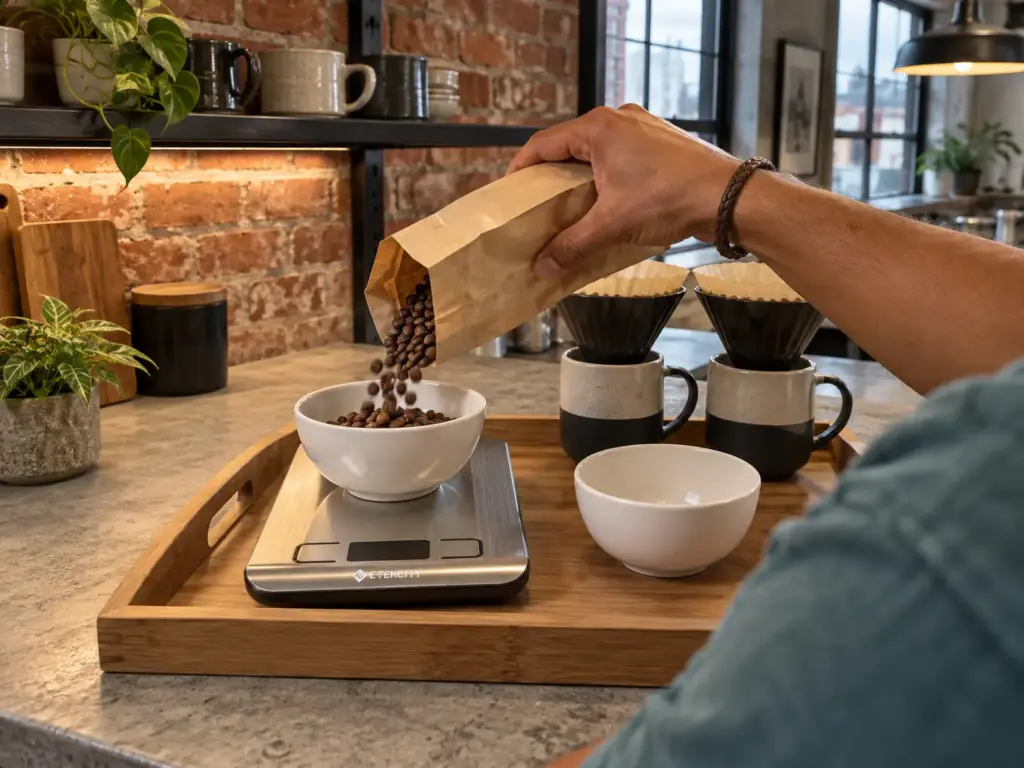
The free version works with two level scoops from each bag. Scoops are less exact than weight (a scoop of dark, puffy beans weighs less than a scoop of dense light ones), so if the two cups come out close, a scale removes the doubt. The Etekcity Food Kitchen Scale has a tare button and reads grams and ounces up to 11 lb, which is all this test needs to put an identical dose of each bag in the brewer. It reads in whole-gram steps, though, so on a 15 g dose it can be off by half a gram either way; that is fine for comparing two bags and too coarse if you later want to tune a single espresso shot.
The moment it works is unmistakable: the fresher bag’s cup comes out a half-step brighter with the identical recipe, and the grinder never moved.
Taste the two cups in a row, then again a few minutes later once both have cooled a little. Very hot coffee blurs differences that a warm cup shows plainly, so a gap you missed on the first sip is often obvious on the second. If they still taste the same when warm rather than hot, the bag was not your problem.
When the Bag Has No Roast Date
Counting from the roast date assumes the bag prints one. Plenty of supermarket bags carry only a best-by date stamped a year or more out, and the advice to “check the roast date” stops being useful at the exact moment you need it.
A Best-By Date Is Not a Roast Date
A best-by date is the packer’s estimate of how long the sealed bag will hold up on a shelf. It says nothing about when the beans were roasted, and since the SCA’s freshness window is counted from the roast, a best-by date cannot place the bag inside or outside it. A bag a few months from its best-by could have been roasted last month or last season; the label does not tell you which.
That is the normal case for grocery store beans, so it deserves a working rule rather than a shrug. Some bags print a roast date and some do not, and the lot code on the others is not something a shopper can read with any confidence.
Judge an Undated Bag by the Bloom and the Cup
The working rule here is a hedge, not a sourced figure: if a bag has no roast date and has been open past about a month, assume it is stale and let the bloom and the cup decide. The smell and look still help, but with no date to anchor them, the two checks that test the beans directly carry more weight.
Picture the bag that was opened weeks ago and rolled down with a rubber band, its one-way valve still on the front and no roast date anywhere. Run the spoon-and-a-splash test on it and on any fresher coffee you can get, then brew the side-by-side. If the bloom is flat and the cup is quiet next to the fresher one, the answer is in. If both bloom and taste alike, the bag was younger than you feared.
If undated bags keep turning up, it is also worth asking whether grinding at home is worth it, since whole beans keep their gas for weeks and ground coffee loses it in minutes.
One change at a time still applies. Do not answer a quiet cup from an undated bag with a new bag, a new grind and a new ratio all at once. Change the bag only, taste, and leave the grinder alone until the bag has been ruled out.
What to Look for the Next Time You Buy
The free fix for next time is a smaller bag you can finish inside about three weeks, from a shelf or a roaster that prints the roast date. A small dated bag beats a big undated one even when the big one looks like the better deal, because you will drink the last third of it flat. What to read on the label beyond the date is its own question, covered in what the bag actually tells you.
Write the open date on the bag with a marker the day you cut it. On an undated bag it is the only date you will ever have, and it turns the one-month rule from a guess into a check you can run in two seconds.
When It Is Not the Beans, and What to Do With Stale Ones
A flat cup is not always a stale bag. Before you throw anything out, rule out the other things in the kitchen that taste old, then decide what the beans that really are stale are still good for.
The Lookalikes to Rule Out First
Several things can make a cup taste tired while the beans are fine. Run through them before blaming the bag:
- Coffee that sat on a hot plate. A carafe left warming tastes stewed and dull, whatever went into it.
- A mug, carafe or travel lid that holds last week’s smell. A carafe can still smell of old, burnt coffee after a quick rinse, and that smell goes straight into the next pot.
- Water or scale in the machine. Different water, or a machine that needs descaling, changes the cup with the beans unchanged.
- A different lot of the same coffee.
If a clean mug, a fresh pot and a descaled machine still give you a flat cup from that bag, and the side-by-side agrees, it really is the beans.
What to Do With Beans That Really Are Stale
Stale beans are weak, not spoiled, so the bag does not have to go in the trash unless it has mold or a damp, musty smell. An aging bag can be used up in cold coffee concentrate, where a long, cold-brew-style steep and milk or ice cover for missing brightness. You can also brew a smaller, tighter cup from it: a little more coffee for the same water gives the faded flavors more to work with.
What stale beans will not do is come back. No grind setting or water temperature puts back aroma that already left, so do not spend a week tuning a bag that is past it.
Keep the Next Bag From Getting There
Once the side-by-side has shown it was the bag, the fix is mostly about air and time. Buy a smaller bag, press the air out and fold it down tight, or move the beans into an airtight container such as a dry jar with a lid and keep it away from the stove and the sunny window. That costs nothing and handles most kitchens.
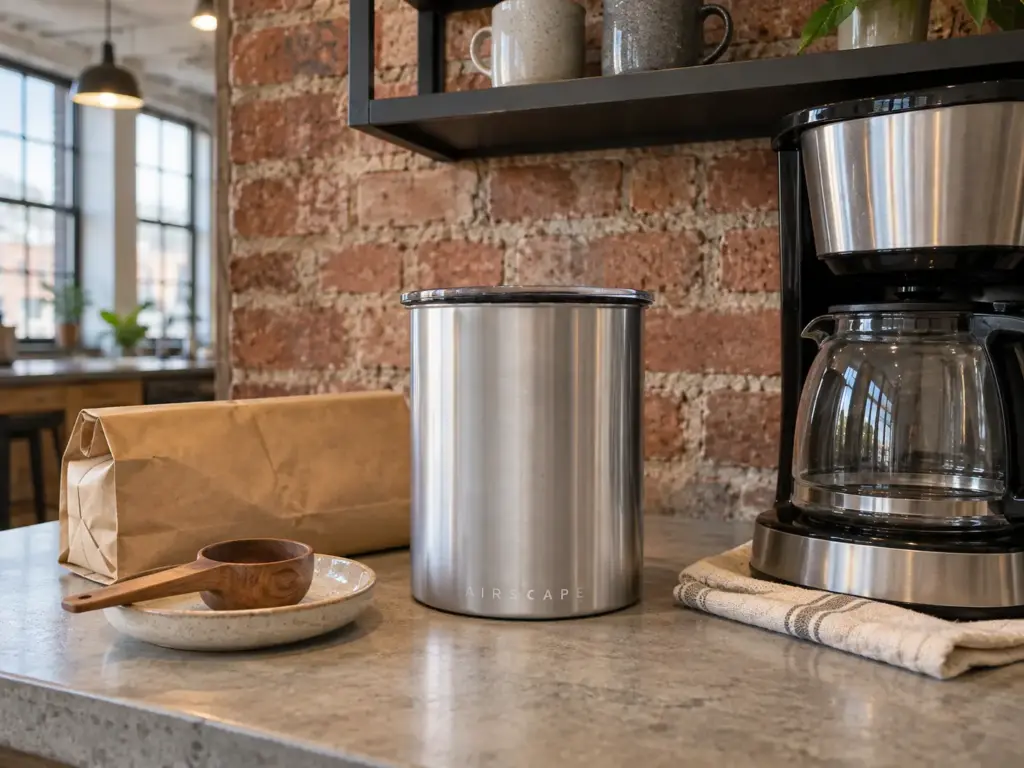
If you want to go a step further, a canister with a plunger lid presses the air out above the beans each time you close it. The Planetary Design Airscape in the Medium size holds about 1 lb (500 g) of beans in an opaque brushed-steel canister, so light stays out as well. Its care is fussier than a jar’s: both lids are hand wash only, and water must not reach the plunger valve or the gasket, so washing it takes more attention than rinsing a jar. Weigh it against the other options in the best container for coffee beans, and if you buy in bulk, look at freezing only what you will not finish before you look at any canister.
Which leads to the next decision: how to store the bag you have now so this does not repeat, which is the whole subject of keeping beans fresh past week two.
Smell, Look, Bloom, Then Taste It Against a Fresher Bag
Three things to carry out of this:
- Run the checks in order (smell, look, bloom, cup) and discount the look on a dark roast, where surface oil is normal.
- A flat cup on an unchanged recipe means check the bag before the grinder, and a same-recipe side-by-side against a fresher bag settles it.
- Stale is lost flavor, not spoilage. Mold, or a damp, musty smell, is the only reason to throw the bag out.
A month from now, look at the roast date or the open date you wrote on the next bag, and taste it before it reaches the back of the cupboard. Tomorrow morning, brew your usual recipe from the freshest bag in the house next to the one you suspect, change nothing else, and listen for the brightness at the front of the sip: if it is there in one cup and missing in the other, you have found your stale bag without touching the grinder.
Frequently Asked Questions
01How do you know if your coffee beans are stale?
Stale beans smell faint or papery, barely bloom when hot water hits the grounds, and brew a flat cup even though your recipe has not changed. Run the checks in that order, then confirm with a side-by-side against a fresher bag. The SCA treats whole beans as fresh for about three weeks from the roast date.
02Can you still use two- or three-year-old coffee beans?
You can, but beans that old will almost certainly taste weak and flat, and only visible mold or a damp, musty smell means the bag should be thrown out. Run the bloom test and brew a small cup first. Cold coffee concentrate is the best use for what is left.
03Is it okay to use stale coffee beans?
For flavor, yes: stale beans have lost aroma and brightness, they have not turned into something else, so they brew a duller cup rather than a spoiled one. The exception is mold. White or green fuzz, or a damp, musty smell, means the bag goes in the trash.
04Do stale coffee beans bloom?
Barely, because most of the carbon dioxide that makes fresh grounds bubble and rise has already escaped from stale beans. Wet a spoonful of grounds from each bag and compare. Pre-ground coffee always blooms little, so a weak bloom is one clue among four, not proof.
05Does the roast date matter more than the best-by date?
Yes. The SCA counts freshness from the roast date, and a best-by date only estimates shelf life without telling you when the beans were roasted. With no roast date on the bag, judge it by the bloom and a side-by-side cup instead.



How did your cup turn out?
No comments yet. Tell us what you changed — and whether the needle moved.