



We may earn a commission when you buy through links on this page. It never changes what we recommend. How we pick
On this page9 parts
- Why the Roast Date Beats the Brand Name on a Grocery Shelf
- The Shelf Picks, With the Flaw of Each
- Light, Medium or Dark: Match the Roast to the Brewer You Own
- Whole Bean or Pre-Ground: What the Bag Keeps and What It Loses
- Is It the Bag or the Method? Fix One Thing, Then Taste
- The Scoop on the Bag Against What You Actually Brew
- Months on the Shelf and the Price Trap
- Read the Date, Change One Thing, Taste Again
- Frequently Asked Questions
You buy the same bag you bought last month, brew it the same way, and the pot tastes flat. The name on the front never changed; what changed is how long the beans sat before they reached the shelf, and the best-by date on the back can describe a window of years. That is the trouble with choosing the best grocery store coffee beans by brand: a name tells you who made the bag, and only a roast date tells you when the clock started. So this guide reads the shelf in order: the date, four bags worth checking with what is wrong with each, the roast for your brewer, whole bean against pre-ground, a way to tell whether the bag or your method is off, the scoop on the label, and what the months do once the bag is home.
On a shelf, a bag that prints its roast date can be judged, and a bag that prints only a best-by date is a gamble. That is the rule to follow. These four are the bags worth checking, each with its flaw in writing.
| Bag | Form and roast | Where it fits | Its flaw |
|---|---|---|---|
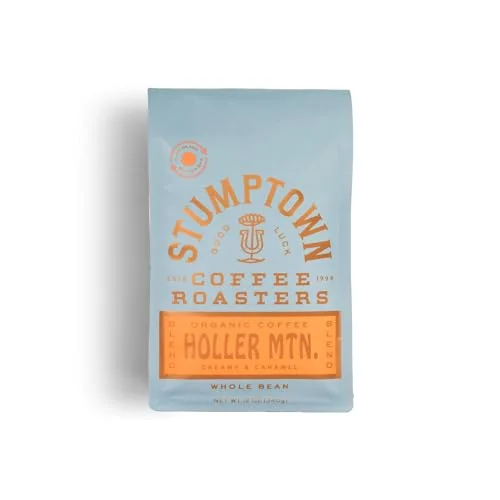
| Stumptown Holler Mountain, 12 oz | Whole bean, medium roast | Drip or pour-over; read the printed roast date first | No repeated complaint about the bag; some drinkers feel the brand has slipped over the years. |
| Lavazza Super Crema, 2.2 lb | Whole bean, medium espresso roast, Arabica and Robusta | Espresso machine or moka pot, ground fresh | No repeated complaint; a 2.2 lb bag outlasts a month, so the date matters |
| Café Bustelo Espresso, 12 bricks of 10 oz | Pre-ground espresso, dark roast | Moka pot or espresso machine, not a drip basket | Finer than drip, badly off when reheated, and the pack is twelve bricks |
| Starbucks Breakfast Blend, six 12 oz bags | Whole bean, medium roast | Drip, when you want six dated bags to read | Five of the six sit sealed while the clock runs; no repeated complaint |
Why the Roast Date Beats the Brand Name on a Grocery Shelf
Turn the bag over before you read anything else on it. A line that says roasted on tells you more about the cup than any name on the front, and this section stays with the basics because the full bag reading has an article of its own.
What a best-by date describes
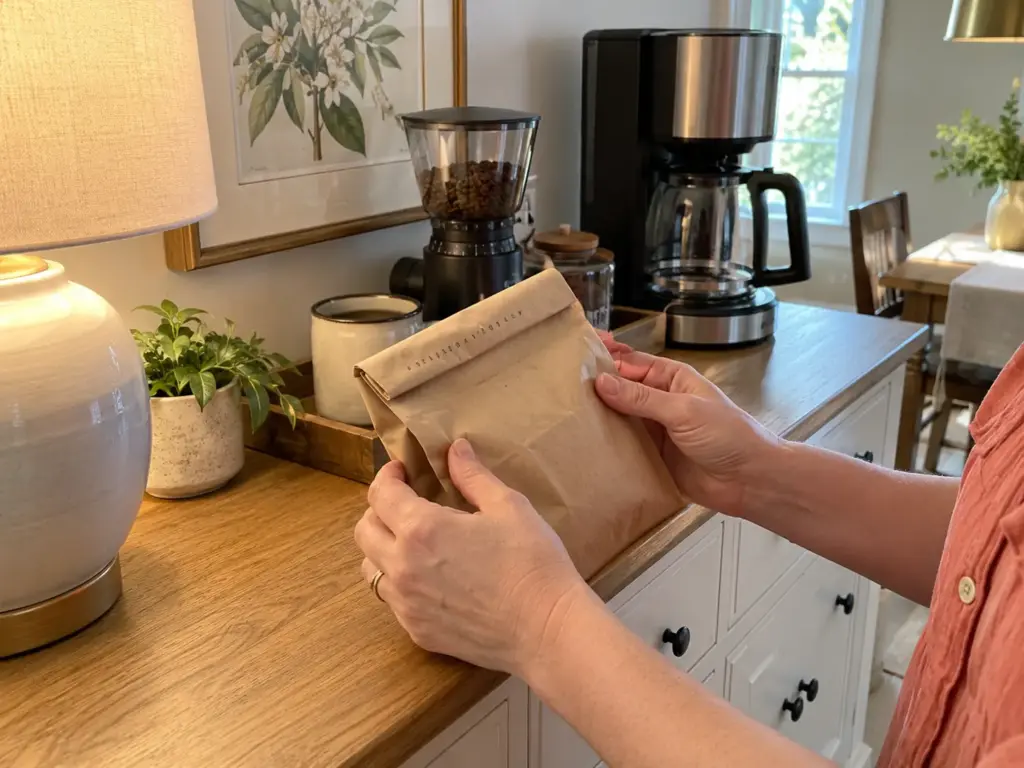
A best-by date is a limit the roaster chose, not a reading of how old the beans are. Roasters often print a best-by date that can run as long as two years, and under that date you can find really stale beans. Another says a big roaster sold widely in their area gives a best-before date 18 months after the roast, which helps only if you know the roaster’s window and can count backward from it. Two bags stamped with the same best-by can have been roasted a year apart if their roasters set different windows, and the older one is the stale coffee waiting at the end of the aisle.
Fresh is not the same as ready
Newly roasted beans shed carbon dioxide, which is why a one-way valve sits in the packaging, and in the words of a 2024 study in *Foods* on how storage temperature changes coffee aroma, “This gas release, also known as outgassing, occurs for about a month in whole-bean coffee.” Grabbing the newest date on the shelf is a sound instinct, but it treats freshness as if it meant finished. A bag roasted two weeks ago is as fresh as a shelf gets, and it is also still inside that month, so one date on one bag settles less than it seems to.
A practical check: find a bag with a printed roast date and make sure that date is recent. That is a community rule of thumb, not a standard, but it beats shopping by the front label. If the bag is whole bean, whether grinding at home is worth it is the next question to settle.
When the bag prints no date at all
Most bags on grocery shelves do not carry a roast date, and the few that do can be six months old or more, though some are roasted within a month. A bag that prints a date is already ahead. The brand does not carry that date with it: some roasters stop printing the roast date on their bags, so the date has to be checked on each one. The same aisle holds both kinds.
Run a thumb along the top fold and the back seam. A small stamped line of numbers there, if the bag has one, is the roast date or the best-by, and the word beside it says which. No date means no way to judge, so pick another bag or pass; what else the bag tells you is the longer read.
Photograph the stamped date on the bag you choose before it leaves the aisle. Once the bag is open the top fold gets cut and crumpled, and a flat cup three weeks later is far easier to judge when you know the exact age instead of guessing.
The Shelf Picks, With the Flaw of Each
Think of this as a shortlist built from named complaints and one dated tasting rather than a new round of testing. Each pick comes with what is wrong with it, in the order you would meet them in the aisle: a whole-bean medium first, then what a 2017 tasting made of the cans and bags, then the names around the end cap.
A whole-bean medium bag with a date to check
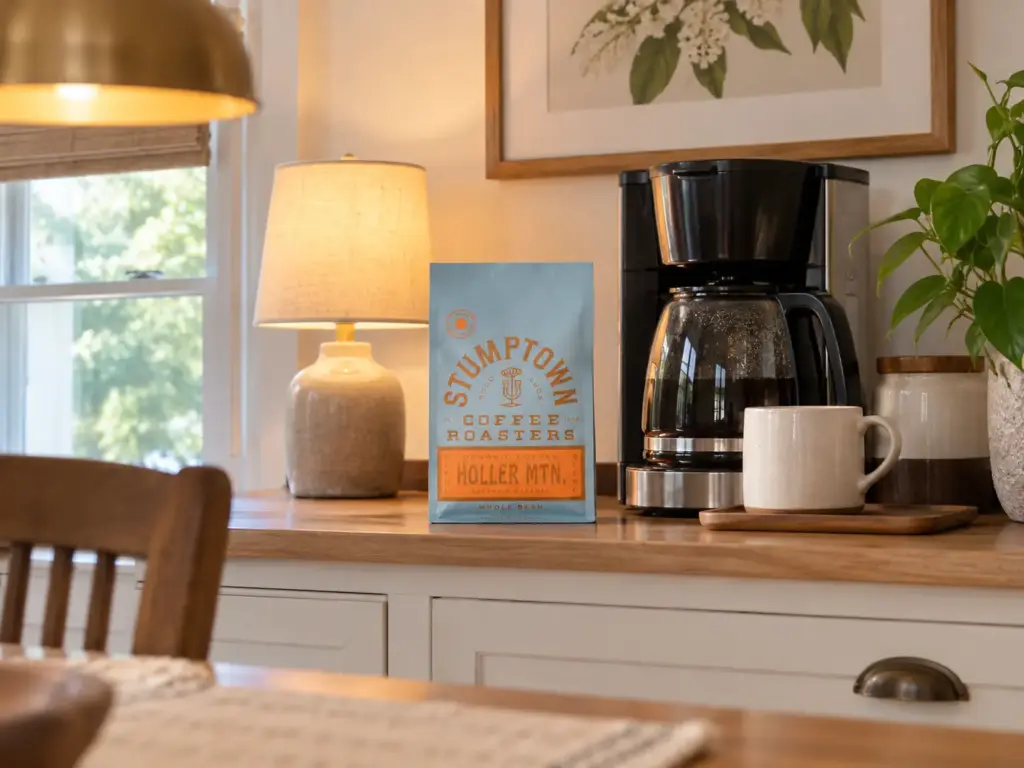
Stumptown Holler Mountain is a whole-bean medium roast, and it is a common choice when no local roaster is near. One says “there’s usually a bag of Stumptown that’s less than 2 months from roast date,” allows that “Their stuff isn’t wonderful,” and concludes that “if it’s on the fresher side it’ll do in a pinch.” No repeated complaint turns up for this bag itself. The only mark against it sits at brand level: some drinkers feel the quality has slipped over the years, which is an opinion rather than a measurement. So the printed date on the bag in your hand does the judging, and that two-month yardstick is the number to hold it against.
What the grocery shelf looked like in a 2017 tasting
Food & Wine ran a tasting of 13 ground coffees from a chain grocery store and published it on 22 June 2017. The method matters for how far to trust it: one 8-ounce mug per brand, brewed through a ceramic pour-over cone with an unbleached paper filter, tasted hot, at room temperature and again after a microwave.
The verdicts that carry over to a bag you hold today are the ones about the cup as it cools. Maxwell House had the best flavor among the cans, yet in the reviewer’s words it “turns a bit as it cools, taking on a bitter aftertaste.” Folgers was “punishing when tepid.”
Gevalia went flat as it cooled but took reheating well. Among the bags, New England Coffee was the reviewer’s pick, Green Mountain stayed “drinkable even as it cools,” and Eight O’Clock was “dark without being bitter.”
That is a 2017 verdict on ground coffee, one cup each, from one stretch of two days. Read it as a cup test, not as a ranking of today’s bags and not as a ratio test. The useful habit it models is tasting the same coffee twice, hot and again after it has sat, which tells a bad bag from a cup that simply did not hold (the next sections build on that).
Store brands and regional roasters near the end cap
Two bags near the same shelf price can hold different amounts: in the tasting, Newman’s Own Organics came in a 10-ounce bag while Starbucks came in 12, and the division that follows from it is worked out in the section on the scoop. Other names turn up around this shelf: Dunkin’, Trader Joe’s, 365 Everyday Value, illy, Kicking Horse and Mayorga. None of them gets a verdict here, because a brand name was never the thing to judge.
Two habits do stand in for a verdict. One habit is to check Whole Foods for what is fresh and on sale, where roasters such as Counter Culture, Ceremony and Intelligentsia are usually found. The other is a local roaster’s house blend, which is often the cheapest available, and a favorite local roaster may already sit on the grocery shelf with roast dates on the bags.
Light, Medium or Dark: Match the Roast to the Brewer You Own
Once the bag is fresh, the roast level decides what the drip machine on your counter can make of it. Roast is the second thing to read on the bag, after the date, then whether it is a blend or a single origin, and it is a match to your brewer rather than a ranking.
Drip first, because it is what most counters have
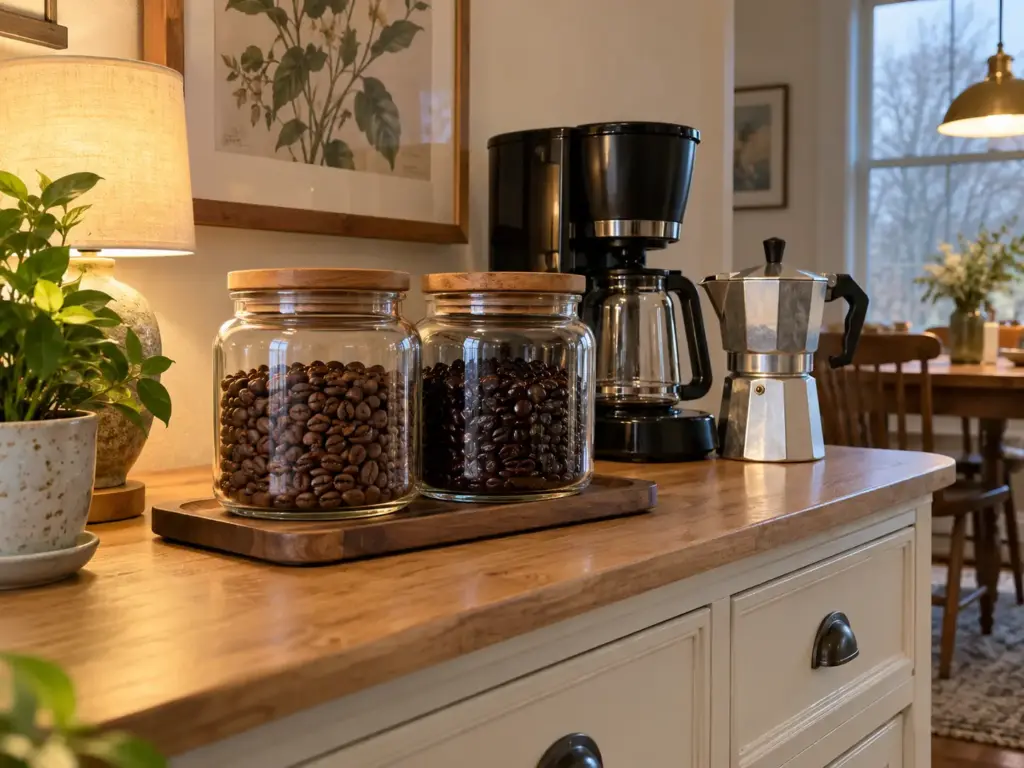
For a drip coffee maker, light and medium roasts are the safer ground, and that is judgment as much as rule. An auto-drip machine runs water through the grounds once, for a few minutes, and you control only the grind and the dose. A roast too dark for the brewer tastes harsh and bitter; one too light for it tastes sharp, because a light roast carries more of its acidity into the cup.
That is the same sour-or-bitter question the section on the bag or the method uses to pick a fix, and the roast sets which way the cup leans before you touch the grinder. For the long version of light roast against dark roast, start there.
The same bag can taste fine in one brewer and flat in another. When that happens the bag is rarely the culprit; the method is.
When a dark roast is the right call
A dark roast earns its place in a moka pot or an espresso machine, where the brew is short and concentrated; French roast and Vienna roast are names for the dark end of the shelf. A dark roast also covers a lot.
Food & Wine’s 2017 tasting said Folgers “is dark enough to mask distracting flavors” and called Café Bustelo “motor oil coffee,” which the reviewer did not count against it. Both are one reviewer’s taste, dated, not a rule. If the bag is for espresso, the best supermarket bag for espresso has its own article, and whether an espresso should be light or dark settles the roast side of it.
Whole Bean or Pre-Ground: What the Bag Keeps and What It Loses
The next fork on the same shelf is the bag in whole bean or already ground, and the date matters more for the second. Grinding multiplies the surface exposed to air, so a ground bag ages faster than a whole-bean one from the same roast day.
Pre-ground starts the clock at the grinder
Pre-ground coffee has already degassed and gets stale quickly. A pre-ground bag has already done its grinding, so its age is the whole test, and a flat cup from it does not prove your method is wrong.
The usual grind-it-fresh advice breaks for a kitchen with only a blade grinder, which turns beans into boulders and dust at once and makes a cup that is sour and bitter together whatever the beans were. In that kitchen a dated pre-ground bag is a fair trade, and a burr grinder is the upgrade that settles it. Once the bag is home, what to store ground coffee in matters more than the brand on it.
Espresso grind is not drip grind
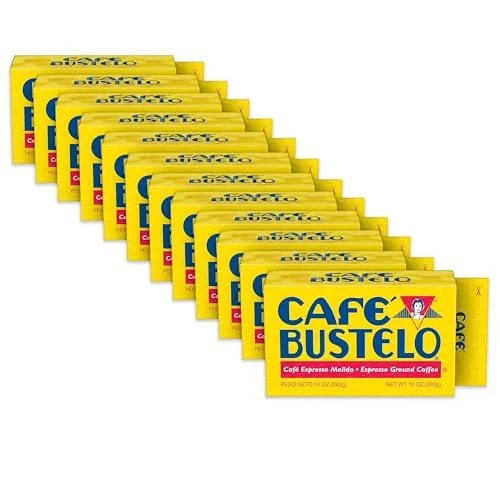
Café Bustelo is the example on the shelf. It is espresso ground, which Food & Wine’s 2017 tasting called “much finer than drip ground,” and the reviewer double-filtered a pour-over to keep silt out of the mug. In a drip machine, grounds that fine can slow the water enough to clog the basket or push the cup toward harsh and bitter, because water that lingers keeps extracting. The same tasting found it “complexly awful reheated,” so a pot left on the plate is a poor match too. The pack is 12 bricks of 10 ounces, 120 ounces of ground coffee in all, which is a lot to work through. It suits a moka pot or an espresso machine and not a drip basket, and a French press wants a much coarser grind than either.
Whole bean needs a grinder you have
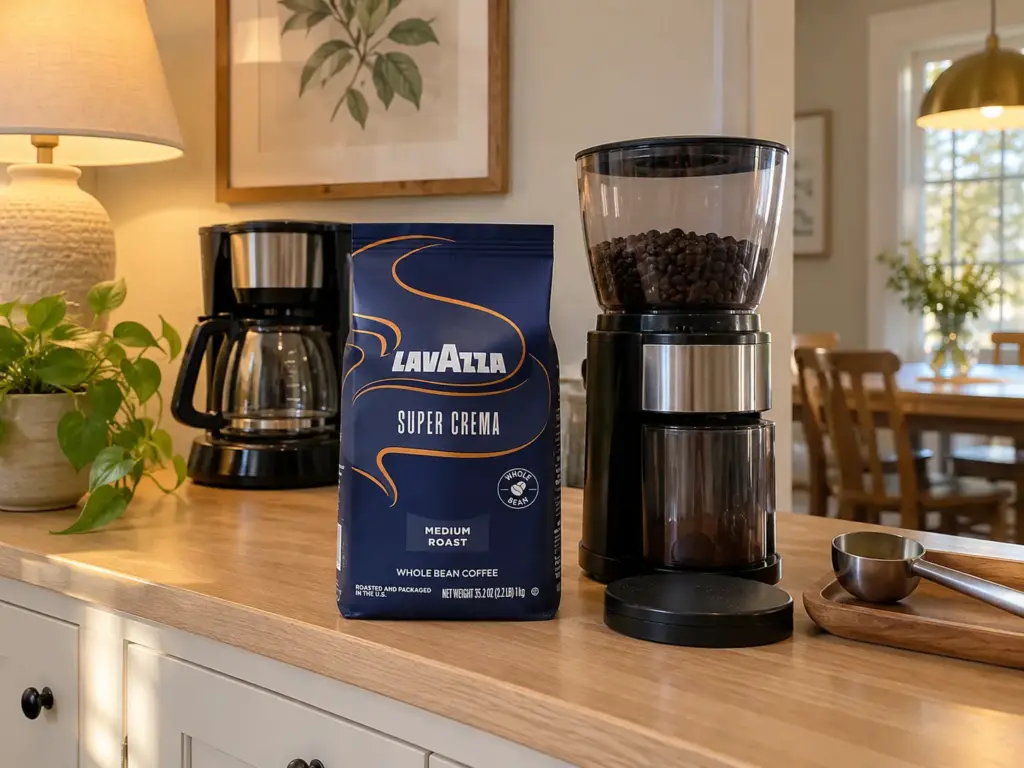
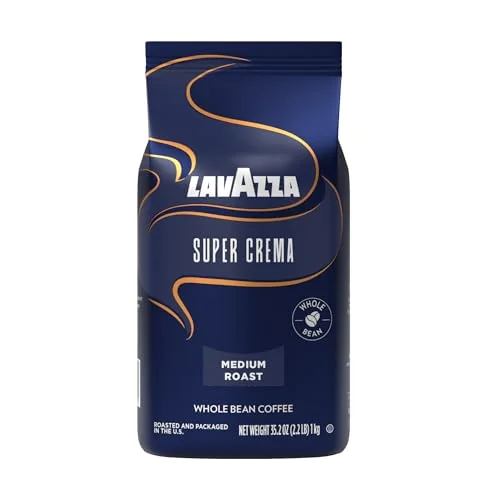
Lavazza Super Crema is the whole-bean version of the same shelf: a medium espresso roast of Arabica and Robusta in a 2.2 lb bag. For grocery beans, Lavazza is a name that comes up often. A warning is about a different product: an opened bag of Gran Riserva can turn out stale. That does not count against Super Crema, though the date on a 2.2 lb bag still has to be read, and a bag that size outlasts a month. If the bag is whole bean, the grinder decides the cup from here, and blade or burr is the choice that matters most.
Is It the Bag or the Method? Fix One Thing, Then Taste
A flat cup from a fresh-looking bag is not proof that the bag is bad, and the only way to tell is to change one thing at a time and taste after each change. The order below runs from free to least likely, and each step says what the next cup should taste like if it worked.
Taste it hot, then again after twenty minutes
Pour two mugs from the same pot and set one aside. Taste the first while it is hot, then taste the second after twenty minutes.
Food & Wine used the same idea in 2017, judging every coffee at brew temperature, at room temperature and after microwaving. A cup that is fine hot and bitter later is a holding problem before it is a bag problem, and Maxwell House did exactly that in the tasting. The pot in your kitchen is a drip coffee maker filled from the tap, not a tasting room, so run the check with the same water you always use. If your carafe sits on a hot plate for an hour, the plate keeps cooking it, which is a method problem the bag never had a say in.
If the cup is flat from the first sip, hot or cold, flat coffee points at the bag first, and how to tell if beans are stale covers the smell and the cup in detail. Flat here means a cup with no sweetness and no brightness left.
Sour or bitter: which way the cup is off
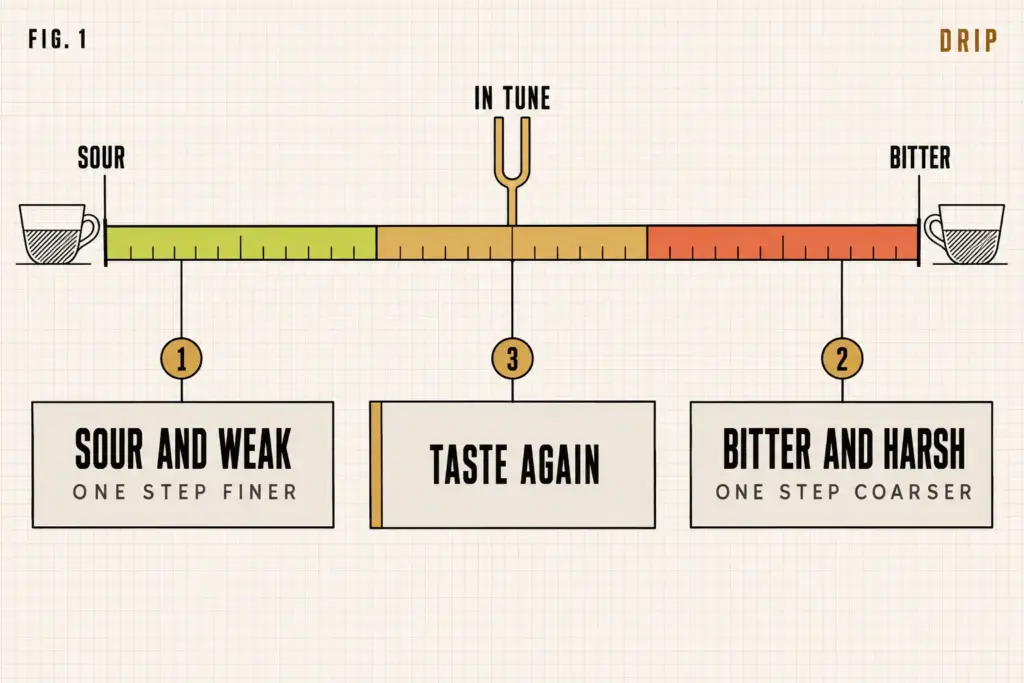
Sour coffee means the water left before it finished: the grind was too coarse, the water too cool, or the brew too short. Bitter coffee means the water stayed too long, an over-extracted cup, so the same three levers point the other way. Opposite directions call for opposite fixes, which is why vague moves like “make it stronger” change nothing useful.
A pre-ground bag or a blade grinder hides the bag’s age and makes the cup sour and bitter at once, and that is not the bag’s fault. And a drip machine that never gets hot enough under-extracts whatever it is fed, so if even a fresh, dated bag comes out sour, suspect the machine’s water before the beans.
One grind step, then taste again
Order the fixes by cost. First the date on the bag, which is free: if the bag has no date or an old one, stop and swap the bag. Then one grind step, in the direction the cup points: one step finer for a sour cup, one step coarser for a bitter one.
Brew the same dose the same way and taste. If a sour cup moves toward round and sweet without turning dry, the step did its job. If it turns dry and bitter, you overshot by a step, so come back half of one.
Never change the date, the grind and the dose together; a reader who does cannot tell which one worked. If one step changes nothing, the dose is next, and that is why you should weigh the dose before the dial rather than at the same time.
A grinder keeps some grounds inside, so the first scoop after you move the setting still comes out at the old one. Run a spoonful through and throw it away before the dose you will brew, or you taste the old setting and decide the step did nothing.
The Scoop on the Bag Against What You Actually Brew
The scoop number printed on a bag is the brand’s suggestion, not a measurement of your cup. This section turns it into grams once and stays honest about what can and cannot be checked from the bag alone.
A “pound” bag is usually 10 to 12 ounces
Pound is a naming habit. Food & Wine’s 2017 tasting noted that “most bags only hold between 10 and 12 ounces of coffee,” and the two bags it set side by side at nearly the same shelf price held different amounts: Newman’s Own Organics at 10 ounces, Starbucks at 12.
The division is plain. At equal shelf prices, a 10-ounce bag costs a fifth more per ounce than a 12-ounce one, because 12 divided by 10 is 1.2. Start every piece of scoop math from the ounces printed on the bag, never from the word on the front. The cups per bag get their own arithmetic in how many cups a 12 oz bag makes.
Weigh your own scoop once
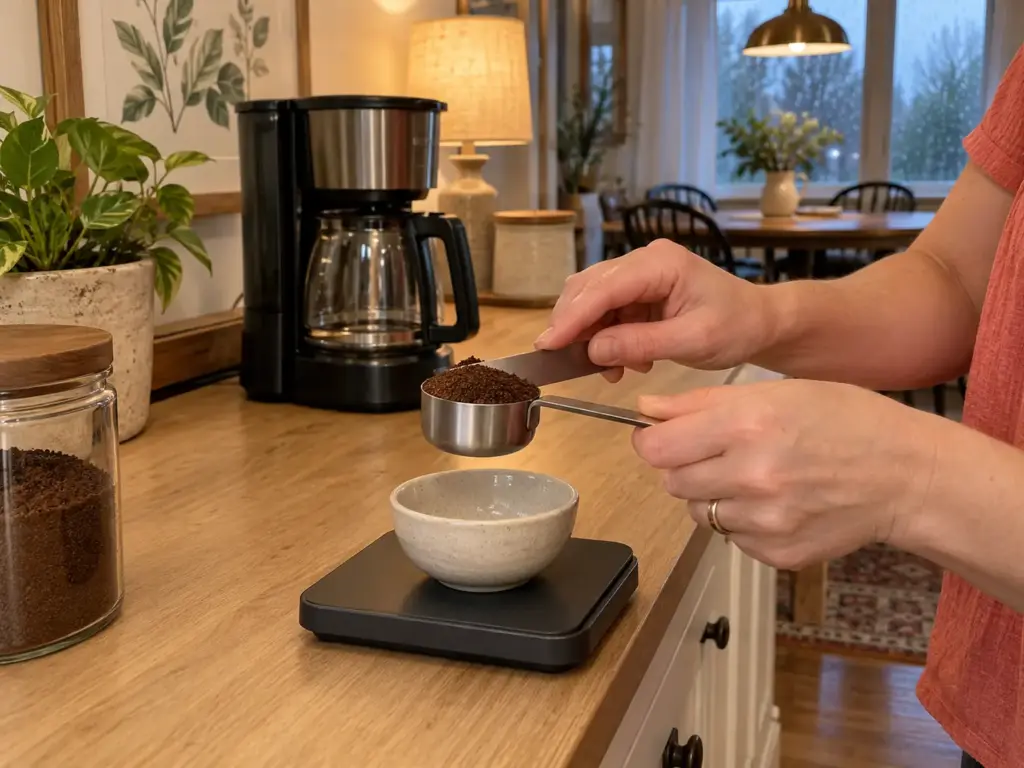
The tablespoon per cup on a label is the brand’s suggestion, and those suggestions differ from one bag to the next. The number that decides the brew ratio is the weight in the spoon. A level tablespoon of ground coffee is about 5 to 6 g, which is a starting guess to weigh yourself and not a figure to trust, because a fine grind packs into a spoon differently from a coarse one.
If your scoop is sized for two tablespoons, the same guess puts it near 10 to 12 g. Put the scoop on a kitchen scale level, three times, and write the average on the lid.
A certified machine is not a recipe either. The page for the Specialty Coffee Association’s certified home brewer program says “SCA Certified Home Brewers are coffee makers that meet SCA’s rigorous standards for brewing quality, consistency, and performance.” It gives no ratio, no temperature and no time, so it tells you the machine passed a test and nothing about how much coffee goes in it.
Re-weigh the scoop whenever the grind changes. A scoop of the espresso-fine brick and a scoop of a coarser drip grind will not weigh the same, so the grams you wrote on the lid belong to one bag only.
Months on the Shelf and the Price Trap
A bag is judged on the day it is bought and again on the day it is finished, and the price on the shelf only covers the first of those days. This section is about the second.
Count from the roast date, not the best-by date
The clock you want starts at the roast, so the sum to do at the shelf is today’s date minus the roast date, not the best-by date minus today. Use the best-by only to learn how long the roaster will stand behind the bag.
Measurements of the same bag at two, four and six months are hard to come by, so the comparison that counts is the one on your own counter: taste the first cup of a bag and a cup from its last third, with the grind, the dose and the machine unchanged. If the cup went flat and nothing else moved, the bag is what aged. How long to keep beans after opening turns that into a schedule.
The warm counter and the multipack
In the 2024 study, coffee that had been opened and resealed in foil bags was kept for one month at 68°F (20°C) or 41°F (5°C), and a trained panel scored espresso and cold brew made from it. The study reports that storage at higher temperatures brought higher perceptions of earthy, sharp and smoky notes and lower chocolatey and sweet ones.
It tests one month and gives no shelf life, so read it as a direction (warm ages coffee faster), not a deadline. A half-empty bag with air in it is a different case the study does not cover.
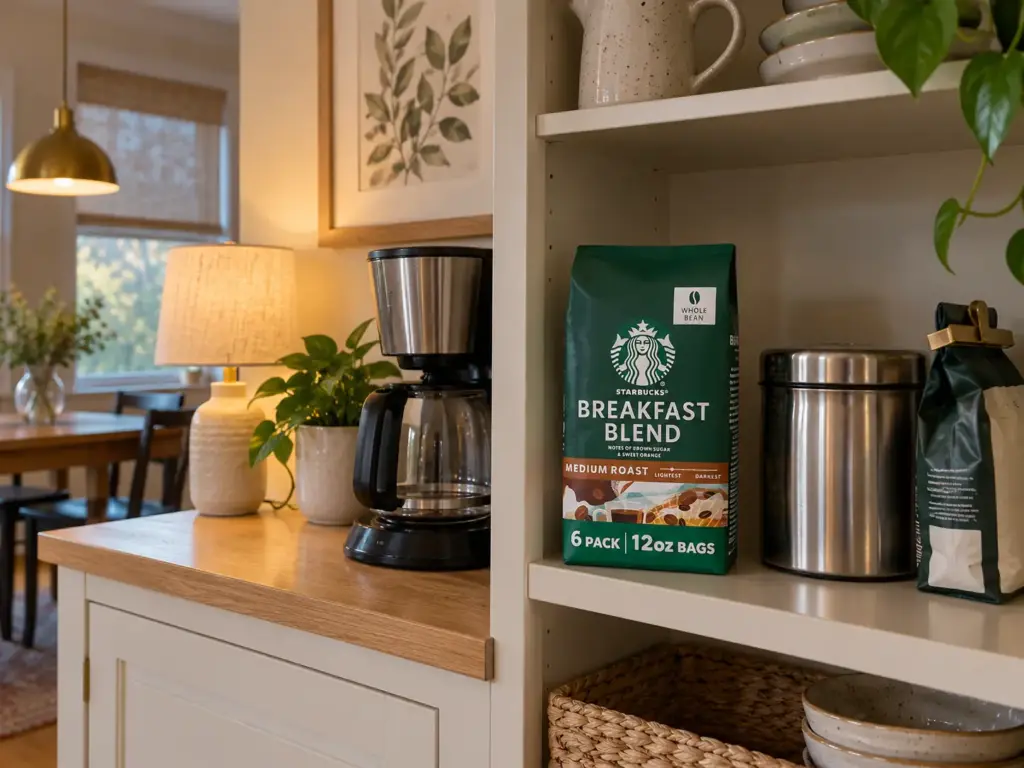
A multipack makes the point in cupboard terms. The Starbucks Breakfast Blend six-pack is six 12-ounce bags of whole-bean medium roast, so six dates to read and 72 ounces of coffee in all, with five bags sitting sealed while the first is open. No repeated complaint turns up for this multipack.
The 2017 Food & Wine tasting panned Starbucks House Blend, but that was a ground coffee and a different product, so the verdict does not carry over. The flaw of any multipack is arithmetic: the last bags age in the cupboard while you finish the first. Keep the sealed ones cool and away from the stove, and how to store beans past week two covers the rest.
Write the day you open a bag next to the roast date, with a marker, on the bag itself. Two dates turn the last third of the bag into something you can measure in weeks instead of a vague “a while.”
What the price on the shelf leaves out
The shelf price is one number; the cost of a cup is that number divided twice, by the ounces on the label and then by the grams in your scoop. Two bags at the same shelf price differ by a fifth per ounce when one holds 10 ounces and the other 12, as in the tasting.
The biggest pack is cheap per ounce only if you finish it before it goes flat, because a bag that goes flat is coffee you paid for and did not drink. The cheapest bag with a date on it can beat the pricier one without. Why coffee beans cost what they do takes that question further.
Read the Date, Change One Thing, Taste Again
Three things carry the shelf:
- Read the roast date before the brand, because a best-by date is a limit the roaster chose.
- Match the bag to what you brew: whole bean or ground, light or medium for a drip machine, dark for a moka pot or espresso.
- When a cup is off, name the direction, change one thing, taste, and only then change the next.
For later, when you reach the last scoop of a dated bag, brew it the way you brewed the first. With the grind, the dose and the machine unchanged, a cup flatter than the first week’s is the bag aging, and the two dates you wrote on it say by how much.
Tomorrow morning, read the date on the next bag before it goes in the cart, and when you brew it, pour a second mug and taste it twenty minutes after the first. If the bag is whole bean, the grinder is the next decision, and a scale is the one after it.
Frequently Asked Questions
01Which supermarket coffee beans are the best?
No single brand wins; the best supermarket coffee beans are the ones in a bag that prints a roast date and suits the brewer on your counter. Check the date, then the roast level, then whether it is whole bean or ground. The four bags above are the place to start.
02What are the best grocery store coffee beans for espresso?
Espresso is a different bag from drip: a dark or medium-dark roast, ground much finer, with a date you can read. Lavazza Super Crema is a whole-bean medium espresso roast to start from, and Café Bustelo is the pre-ground brick for a moka pot.
03Are grocery store coffee beans fresh?
Some are and some are not, and the same aisle holds both, so the roast date is the only way to tell them apart. A best-by date alone can describe a window of years.
04Is pre-ground coffee from the grocery store bad?
It is not bad, it is older: ground coffee loses its gas and goes stale faster than whole bean, so judge it by its age and its grind rather than by its brand. A flat cup from it does not prove your method is wrong.
05What are the best tasting coffee beans to buy?
Taste depends on the roast and the brewer you own: medium roasts suit a drip machine, and darker roasts suit espresso and a moka pot. The same bag can taste fine in one brewer and flat in another, which points at the method, not the bag.



How did your cup turn out?
No comments yet. Tell us what you changed — and whether the needle moved.