



We may earn a commission when you buy through links on this page. It never changes what we recommend. How we pick
On this page7 parts
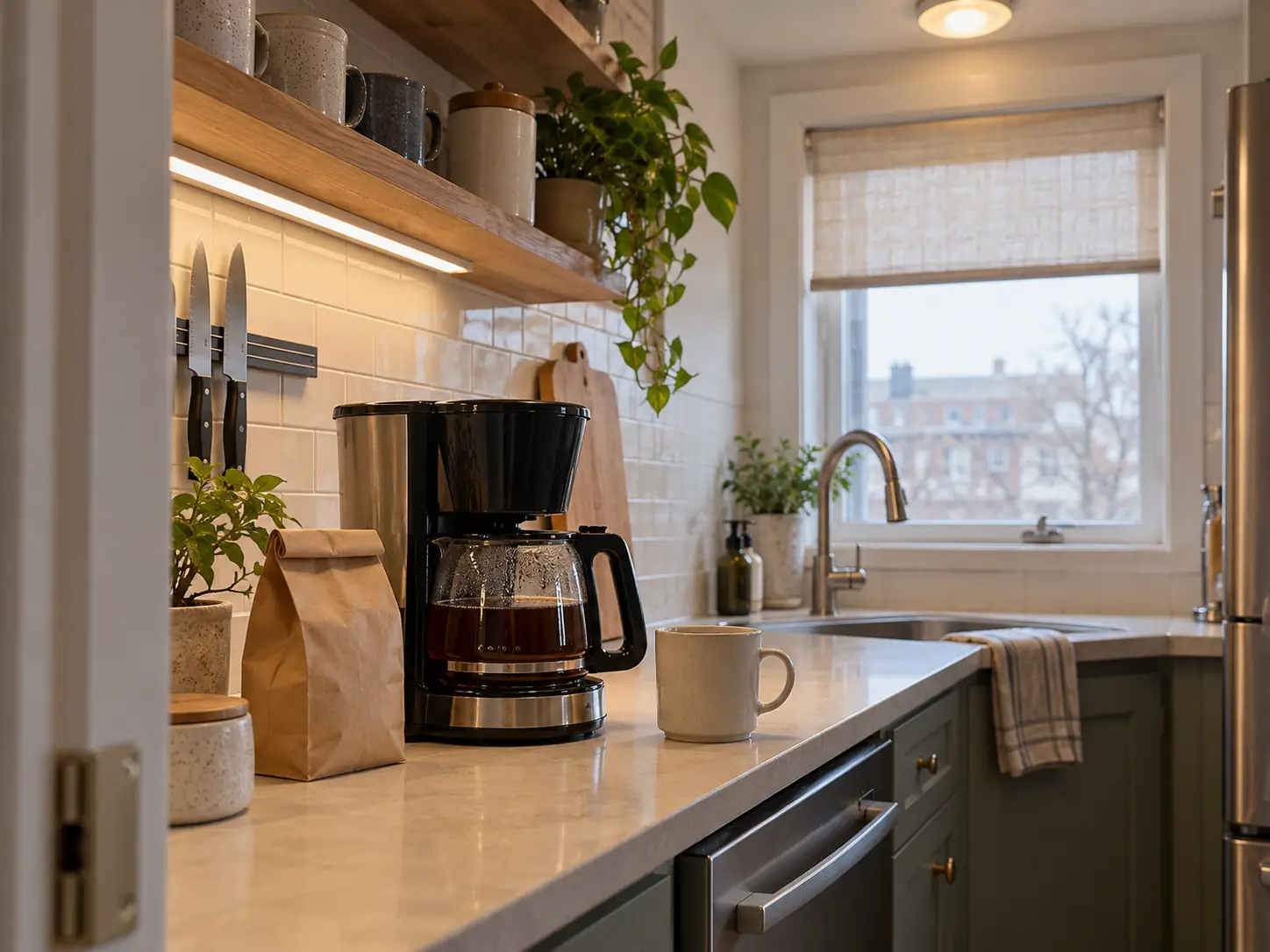
The bag is open on the counter, the 12-cup drip machine is waiting, and the numbered lines on the carafe are about to disagree with the number on the bag. So, 12 oz of coffee beans makes how many cups? The question has a weight on one side and a cup size on the other, and a cup is a different volume depending on whose cup it is. The standard for filter coffee is written in grams per liter, which means the count can be calculated instead of guessed, and this page does the division once: the bag in grams, the cup size that moves it, the count by method, the water the grounds keep, and the bag as a number of days.
Quick Answer
A 12 oz bag is 340 g of coffee, about 23 eight-ounce cups at 1:16. The cup decides the count: roughly 30 six-ounce drip cups, 15 twelve-ounce mugs or 17 to 19 espresso shots. The grounds hold some water, so the real number runs a few cups lower.
Start with the bag in grams and divide
The bag is labeled in ounces and every brewing recipe is written in grams, so the first step is the conversion that everything else hangs on. After it comes one division, and the three parts below are its pieces: the bag, the cup, and the habit of weighing.
12 oz is 340 grams
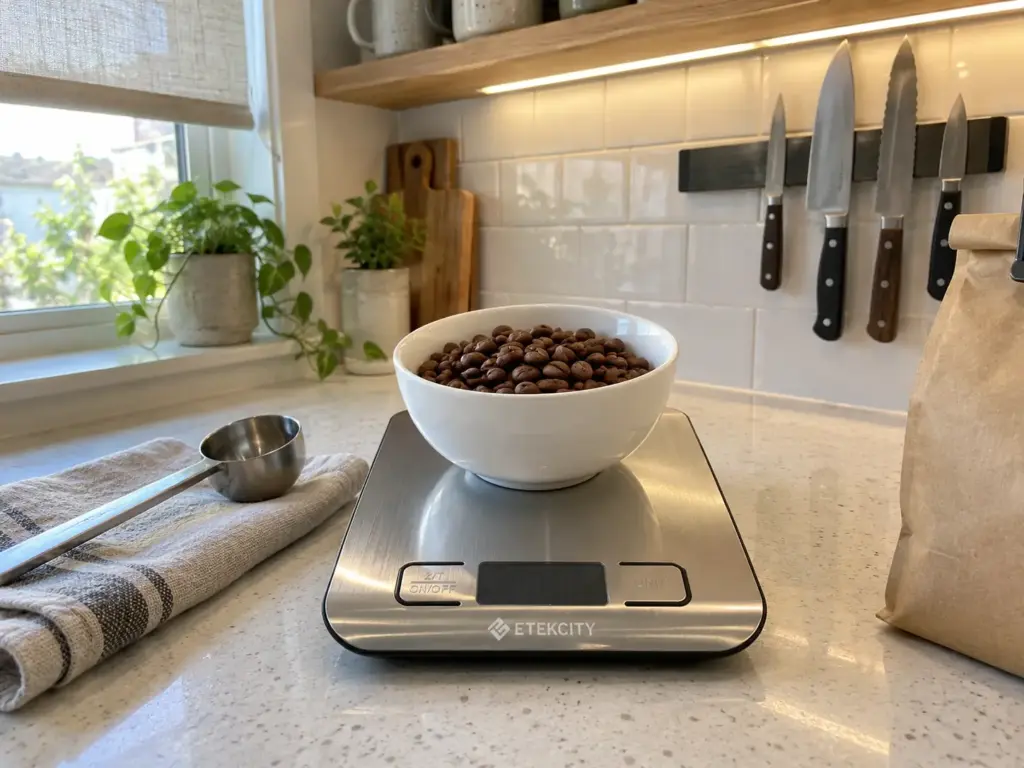
One ounce is 28.35 g, so a bag of 12 oz coffee beans holds 340 g. Turning ounces to grams is the same multiplication every time, and it gives 454 g for a 16 oz bag, about 907 g for 2 lb and about 2,268 g for 5 lb, and every count in this article is one of those weights divided by what a single cup takes. Nothing else about the bag changes the arithmetic. Whole bean or pre-ground, the weight is the same, and the roast and the origin decide how the cup tastes, not how many of them you get.
Grams per cup is the other half of the division
Cups per bag is 340 g divided by the grams of coffee per cup. At a coffee to water ratio of 1:16, meaning 1 g of coffee for every 16 g of water, an 8 fl oz cup (237 mL) takes about 14.8 g, and 340 ÷ 14.8 comes out at 23. Change the cup or the ratio and the 14.8 changes; that is the only number in the sum that ever moves.
Beans per cup is the same question asked backwards, and no standard answers it, because bean size changes the count. Grams are the unit that holds.
A coffee scoop or a tablespoon will not stand in for grams without one more step. A scoop is a volume, and what it weighs depends on the roast, the grind and how heaped it is, so a scoop that looks level can still weigh a few grams more or less from one morning to the next. Over a whole bag that drift is several cups. With no scale in the house yet, the free version is counting: empty the bag one level scoop at a time into a jar, once, and the number of scoops is the bag’s count for that coffee and that scoop, to be divided by the scoops one cup takes.
Weigh the bag once, then keep the number
A scale turns the division into something you can check. The Etekcity Food Kitchen Scale reads in 1 g steps, has a tare and takes up to 11 lb, which covers a 20 g dose and a 300 g carafe alike. It is the budget scale, and it gives up some things for it: it does not register loads of 2 to 5 g, and batteries can run down fast with frequent use.
Weigh the same scoop twice, once leveled off with a knife and once rounded the way you scoop on a rushed morning. The gap between the two readings is the error a scoop carries into every pot, and the level number is the one to write on the bag clip.
Write the bag’s grams on the clip too, so the division never has to be redone from scratch. That weight is also worth knowing before the bag is chosen, and buying beans by roast date covers how to pick one.
The cup is the variable: a drip cup, a mug, a shot
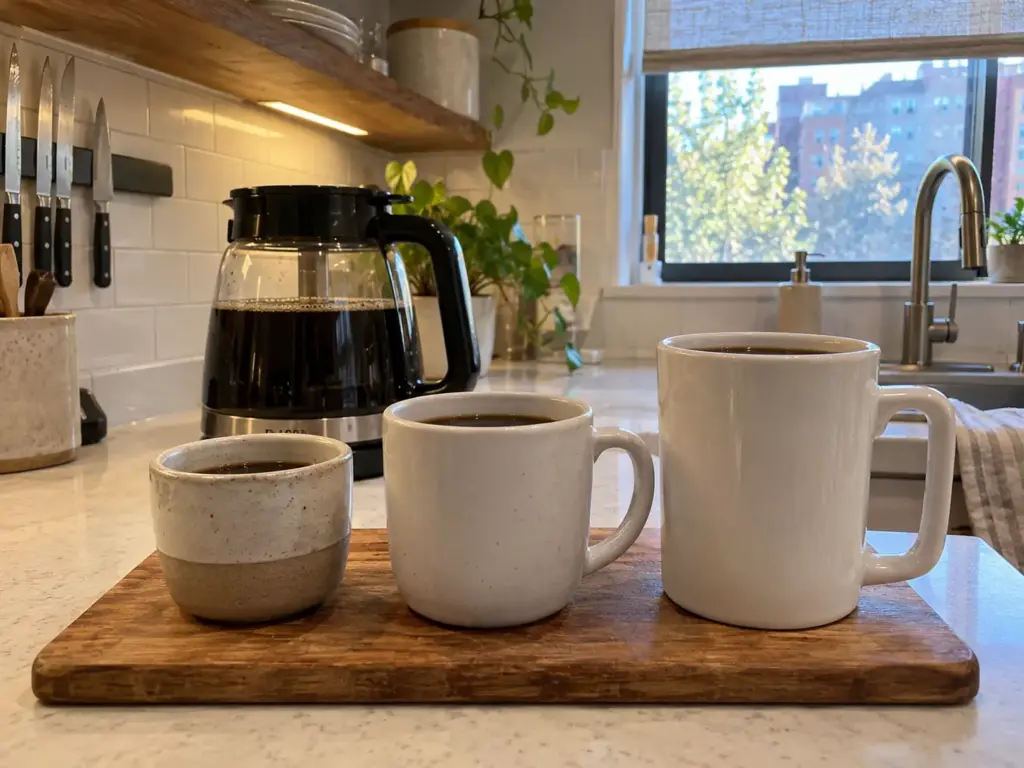
The division only works once “cup” means a number of ounces, and the word means three different things on one counter. The carafe’s lines count one cup, the cabinet holds another, and a coffee shop pulls a third. Pinning down each is what lets the table in the next section stand on something.
A drip machine’s cup is about 6 ounces
Drip machines count a cup as about 5 to 6 fl oz, while a standard US measuring cup is 8 fl oz. At 1:16 a 6 oz cup (177 mL) takes about 11.1 g of coffee, and 340 g makes about 30 of them. The numbered lines on a carafe count that small cup, not the mug that gets filled from it, so a pot labeled for 12 cups holds fewer mugs than the label suggests.
Fill the carafe to its top line with plain water once, pour it into a measuring jug and read the ounces. That is what your machine means by a cup, and it swaps a guess in the division for a number from your own counter.
A mug holds 10 to 16
A diner mug holds about 10 oz and most mugs at home hold 12 to 16. A 12 oz mug (355 mL) takes about 22.2 g at 1:16, which turns the bag into about 15 cups. One bag, three answers: 30, 23 and 15, and none of them is wrong, because each is the same coffee in a different cup. Mug size is the biggest swing in the table.
A double shot of espresso is a different kind of cup altogether. About 18 to 20 g goes in and roughly 36 g of liquid comes out, a ratio near 1:2 instead of 1:16, so 340 g gives 17 to 19 shots. It is the only row where the dose, not the water, sets the count.
A 12-cup pot is closer to two and a half pots per bag
Twelve cups of 6 oz is 72 fl oz, about 2,130 mL, and at 1:16 that pot takes about 133 g of coffee. One 340 g bag is therefore about two and a half pots, which is the number a reader with a machine should be counting in. It also makes any promise of three full 12-cup pots from a 12 oz bag easy to test: three pots at 1:16 need about 381 g, and the bag holds 340. The same check catches a cup count that does not divide, like 25 six-ounce cups from 182 oz of brewed coffee, when 182 ÷ 6 is 30.
If the pot is the daily routine, the next question is how a bag size lines up with the grams you use a day, because a bag is only the right size if the pot is finished before the beans fade.
The count by method, and what the ratio does to it
With the cup pinned down, the next variable is how much coffee goes into it. A stronger ratio takes more coffee per cup and quietly subtracts cups from the bag, which makes it the one peg in this article that has a price. The table is the full map, and the SCA’s range is the yardstick for it.
Cups per bag at 1:16, in one table
Every row below divides the same 340 g by a different cup, with the 1:18 column showing what a lighter ratio does to the same bag.
| Cup | Coffee per cup at 1:16 | Cups per 12 oz bag at 1:16 | Cups per bag at 1:18 |
|---|---|---|---|
| 6 oz drip cup | 11.1 g | 30 | 34 |
| 8 oz cup | 14.8 g | 23 | 25 |
| 12 oz mug | 22.2 g | 15 | 17 |
| Double espresso shot (about 36 g out) | 18 to 20 g | 17 to 19 | n/a |
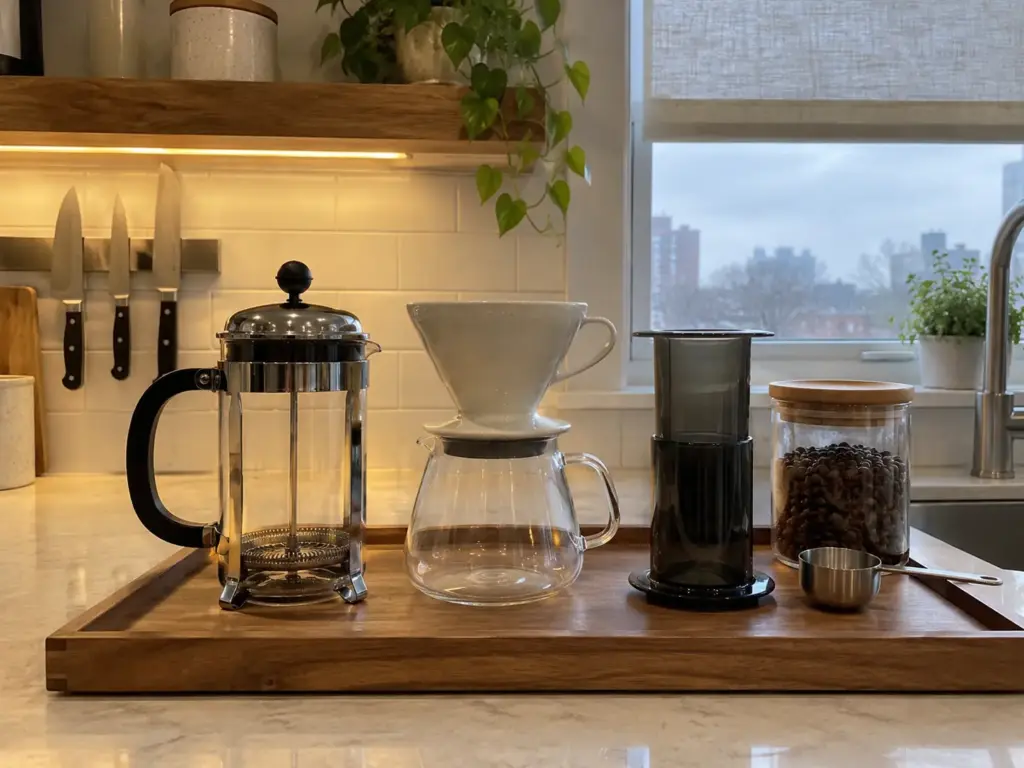
A drip coffee maker, a pour-over cone, a French press and an AeroPress each have their own usual ratio, and the division is the same for all of them: 340 g over whatever your recipe puts in one cup. The espresso row follows its own arithmetic, a dose in and a weight out, which is why it has no 1:18 column. Buying an espresso roast from the grocery shelf changes the beans but not the sum: 340 g over an 18 to 20 g dose.
What 1:18 does to the same bag
According to the SCA’s Golden Cup Standard, as Roastopedia summarizes its 2015 text, the brew calls for “55 grams of ground coffee per liter of water, with an acceptable tolerance of ±10%.” That works out to about 1:18, and the same text puts drip contact time at 4 to 6 minutes and extraction at 18 to 22 percent. At 1:18 an 8 oz cup takes about 13.2 g, so the same 340 g bag gives about 25 cups instead of 23, with roughly 6 liters of water passing through it.
The tolerance runs from about 1:16.5 to 1:20, which puts 1:16 just outside the strong end. That makes the 1:16 cup a little stronger than the standard and the count about 11 percent lower than at 1:18 from the same bag. The standard was written for batch filter coffee, though, not for every brewer, and people who brew a stronger home cup often land between 1:14 and 1:17. Treat 1:16 as a point inside a range, not a rule.
Why a stronger cup costs cups, and where to stop
A weak coffee tempts a second scoop, and a second scoop is the one change in this article that costs cups. Add one level scoop, taste again, and note how the count moved. Changing the grind and the ratio on the same morning hides which of them worked.
There is a cheaper first move when the weak cup also tastes sour. Sour means the water left the grounds before it finished, and one step finer on the grinder fixes that at no cost in cups.
The next cup should taste rounder rather than only heavier. If it turns dry and bitter instead, that was a step too far, so come back half a step. A weak cup with no sour edge is a dose problem, and that is where the extra scoop belongs.
Write the dose in grams on the bag clip the day you open it. When a weak cup nudges the dose up a scoop, the clip is where the shrinking count shows, a week before the empty bag does.
What goes in is not what comes out: weigh the brew
Every cup count above is water poured, and the carafe receives less than that because the grounds keep some. This is the correction the whole article has been heading toward, and it fits on a kitchen scale.
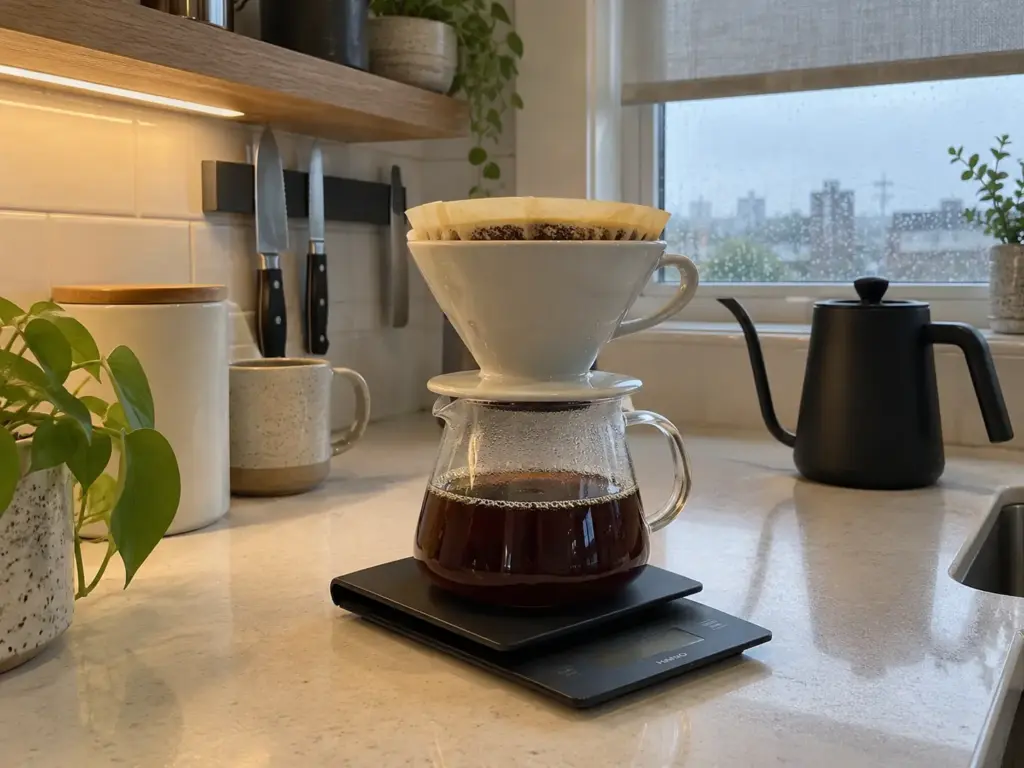
The grounds keep part of the water
Water absorption is the part the arithmetic leaves out: the grounds retain water, so the brew yield is smaller than the water poured. Grounds hold a lot of water relative to their dry weight, and the exact figure varies with the coffee and the filter, so read it as roughly, but run it.
Here 340 g of coffee keeps about 680 g. At 1:16, 5,440 g of water goes in and about 4,760 mL comes out, which is close to 12 percent of the water gone before the first cup.
In cups that is about 20 eight-ounce cups instead of 23, about 26 six-ounce cups and about 13 mugs.
Weigh the full pot once and divide again
The answer is a weighing, not a better estimate: weigh the empty carafe, brew the pot, weigh it full, and divide the difference by the grams in one of your own cups. The free version is the measuring jug from earlier, pouring the finished pot in and reading the ounces. A scale makes it faster, and the Etekcity from the first section does the job; if its display hides under a wide plate, one reviewer’s workaround was moving to a smaller one.
The obvious coffee scale is the Hario Drip Scale Timer, and for counting cups the cheap one does the same work. The Hario earns its place when you pour by hand and want a timer on the same display, and it reads a tenth of a gram where the Etekcity reads a whole one. It also has a flaw that matters for exactly that use: the reading can lag behind the pour, which at a steady pour can mean overshooting the target, so stop pouring a little early and wait for the number to settle. The touch buttons give no feedback and have no backlight, and some units have stopped powering on within months.
Tare the carafe with its lid on, and read the display only after the number has stopped moving. A scale that settles a beat late reports a pot that is still pouring, and the count comes out a beat behind.
Read your own count off your own numbers
Grams of brew out, divided by grams of coffee in, is your real yield per gram. Suppose a 133 g dose with 2,130 g of water comes out at about 1,860 g in the carafe: that is roughly 14 g of brew per gram of coffee, so 340 g gives about 4,760 g of brew, and 4,760 ÷ 237 is 20 eight-ounce cups. Your pot will land on its own number, and that number replaces every estimate on this page.
The scale also has a month-two habit to plan for. Keep a spare battery where the scale lives, since the Etekcity’s batteries lasted about six weeks for one reviewer, and re-zero before each weighing rather than trusting the last tare.
A bag is a count of days
The cups only matter because they are a calendar. Turn the count into days and the bag becomes a purchase schedule you can test against the next one.
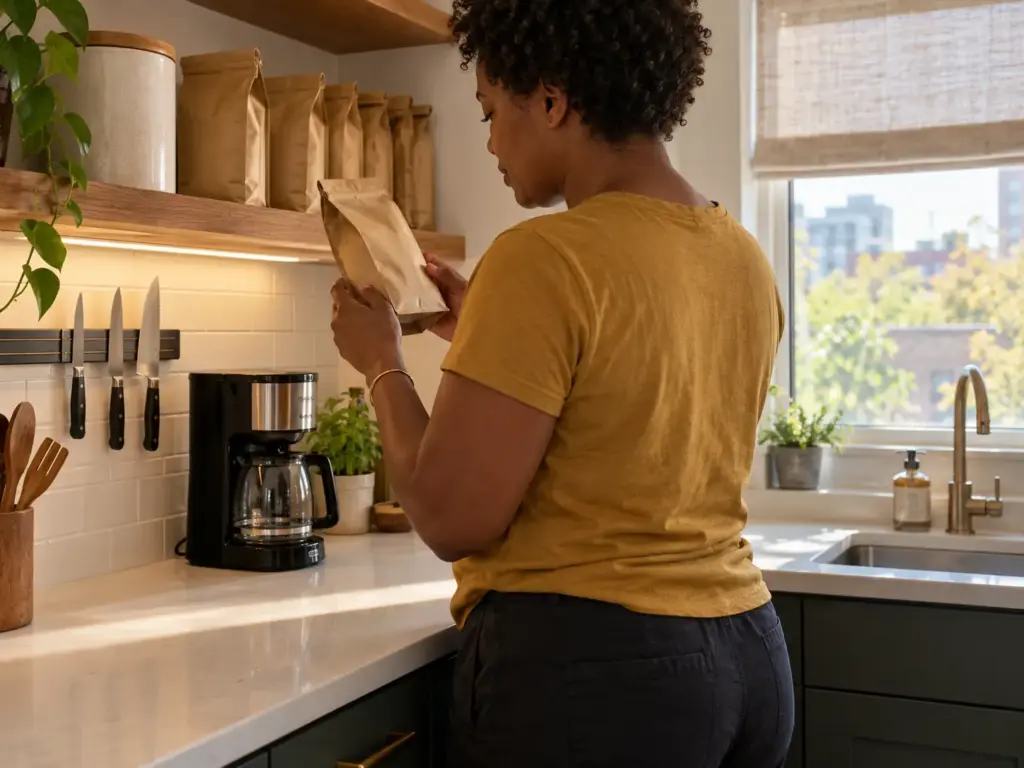
One cup a day is about three weeks
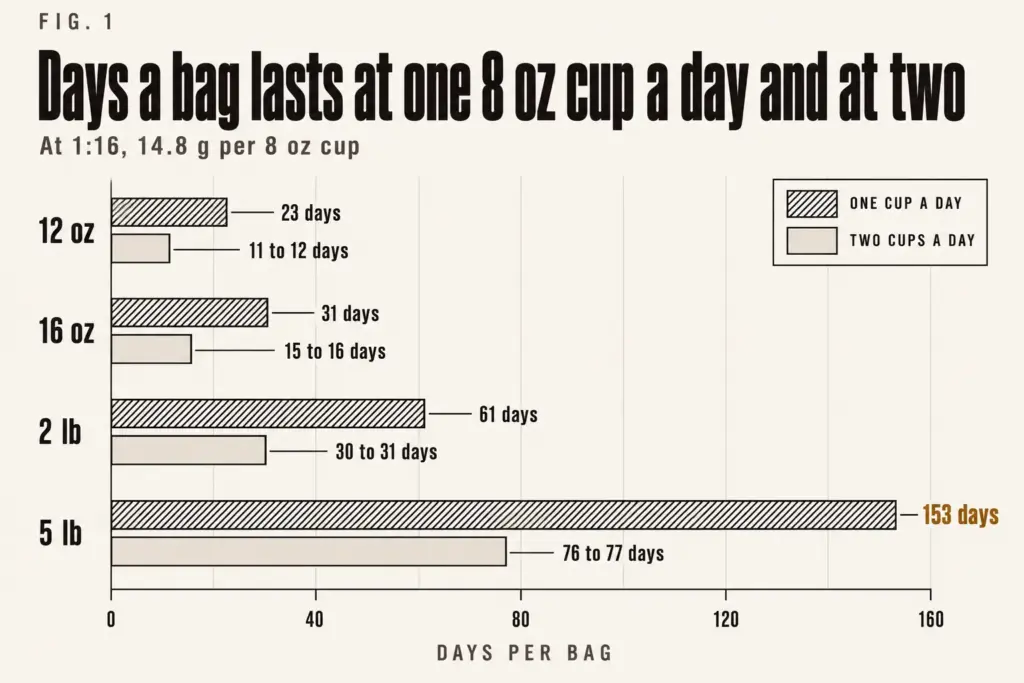
Days per bag is the cup count turned around. At 14.8 g per 8 oz cup, a 12 oz bag lasts about 23 days at one cup a day, or about 26 days at 1:18.
The bag tends to run out a few days before the division says when the cups were made a little stronger than 1:16, and the date on the clip is where that shows.
Two a day and a full pot
Cups per day is the other dial: two 8 oz cups a day empties the bag in about 11 to 12 days, or about 13 at 1:18. A full 12-cup pot of 6 oz cups is the heavier habit: at two and a half pots per bag, the third pot is already short.
Bigger bags run to months
The same division scales up. A 16 oz bag lasts about 31 days at one cup a day, a 2 lb bag about 61, and a 5 lb bag about 153, which is five months and far past the point where the beans are at their best. A bigger bag only saves anything if it is finished inside the freshness window, and how long to keep coffee beans after opening sets that limit.
Those numbers come from the same division as everything else, so the next decision is a bag size that fits the grams you actually use. Choosing a bag size that matches your daily grams is where that decision gets made.
Weigh one pot tomorrow and the count is yours
Three things carry the whole page:
- 340 g divided by the grams one cup takes is the entire calculation, and the cup size and the ratio move it far more than the beans do.
- The grounds keep some of the water, so the carafe holds fewer cups than the arithmetic says, and one weighing replaces the estimate.
- A bag is a calendar: about three weeks at one 8 oz cup a day, and months for a 5 lb bag.
A month from now, compare the date you opened the bag with the date it ran out. If the gap is shorter than the division promised, the scoop has crept up, and that is the number to look at before blaming the bag.
Tomorrow morning, weigh the coffee for one pot, brew it the usual way, count the cups that come out, and taste before changing anything.
Frequently Asked Questions
01How many cups does a 12 oz bag of coffee beans make?
A 12 oz bag makes about 23 eight-ounce cups at 1:16, from 340 g of beans at 14.8 g a cup. A 6 oz drip cup gives about 30 and a 12 oz mug about 15; the grounds hold water, so expect a few fewer.
02How many coffee beans equal 1 cup of coffee?
Count grams instead of beans, because bean size changes how many it takes and no brewing standard is written in beans. An 8 oz cup at 1:16 takes about 14.8 g; weigh one cup’s dose once and use that number.
03How many cups is 12 ounces of coffee?
It depends which 12 ounces: a 12 oz bag is 340 g of beans, about 23 cups, while 12 fluid ounces of brewed coffee is one large mug of 355 mL. That mug is one and a half 8 oz cups.
04How long will a 12 oz bag of coffee beans last?
A 12 oz bag lasts about 23 days at one 8 oz cup a day and about 11 to 12 days at two. A full 12-cup pot each weekday empties the bag in about two and a half days.



How did your cup turn out?
No comments yet. Tell us what you changed — and whether the needle moved.