
We may earn a commission when you buy through links on this page. It never changes what we recommend. How we pick
On this page11 parts
- Where the Line Between Light and Dark Sits
- What Roast Changes in the Cup
- What the Words on the Bag Actually Mean
- Which Way Each Roast Goes Off, and the One Change That Fixes It
- Light Roast in an Ordinary Kitchen
- Scoop Versus Scale, and What Caffeine Does
- Matching the Roast to the Brewer
- When It Is Not the Roast, and Each Roast's Flaw
- Which Bag to Buy First
- Weigh It, Move One Step, Taste the Next Cup
- Frequently Asked Questions
You finished the dark bag, opened a light one, scooped the same two scoops into the same drip machine, and the cup came out thin and sharp, closer to lemon water than to the coffee you expected.
Run it the other way, a light-roast drinker opening a French roast with the same settings, and the cup turns harsh and ashy. The beans aren’t faulty in either case: roast is how far the bean was cooked, and that changes how fast hot water pulls flavor out of it, so a grind and a kettle set for one roast miss with the other. This guide to light roast vs dark roast covers what each roast puts in the cup, which way each one goes wrong, and the single change that brings it back. Which roast sits better with your stomach, or counts as the healthier one, is a question for your doctor; everything below stays with the cup.
Roast is a trade-off, not a quality scale, and each end has its own way of going wrong:
| In the cup | Light roast | Medium roast | Dark roast |
|---|---|---|---|
| What you taste | The origin: fruit, citrus, floral | Caramel and nuts, some fruit left | The roast: chocolate, smoke, toast |
| Acidity | High and bright | Moderate | Low, replaced by roast bitterness |
| Body | Light, tea-like | Rounder | Heavy, from a porous, oily bean |
| How it goes wrong | Sour and thin | Forgiving either way | Harsh, burnt, ashy |
| The change that follows | One step finer, then hotter water | Start here, adjust by taste | One step coarser, then cooler water |
Caffeine barely enters it. A 2024 lab study found the difference runs one way or the other depending on how the coffee is brewed, so “dark is stronger” describes the taste, not the caffeine.
Where the Line Between Light and Dark Sits
Before a roast takes the blame for a bad cup, it helps to know what the word means. A roast is a bean cooked for a certain time to a certain temperature, and the bag in your cupboard almost never prints either number.
What heat does to the bean
Green coffee goes into the roaster dense, pale and smelling of hay.
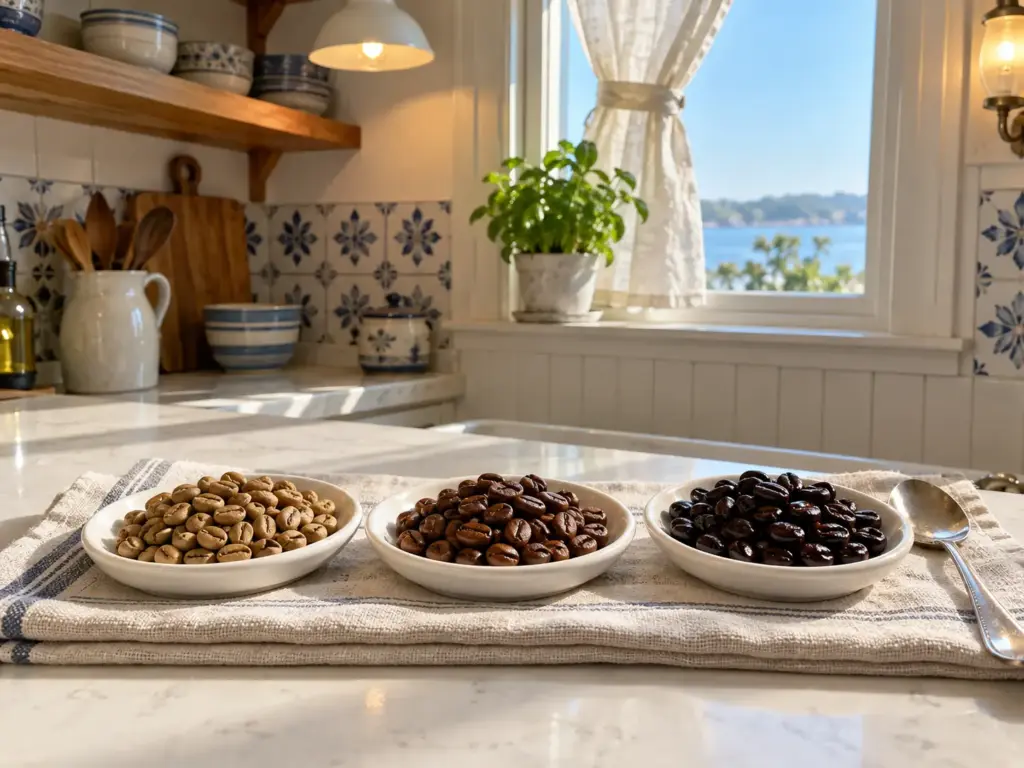
Heat drives the water out, browns the sugars and builds pressure inside the bean until it splits with an audible pop, the first crack, which most roasters treat as the border between light and everything after it. A light roast is pulled from the drum shortly after that crack; a dark roast keeps going toward second crack, a quieter crackle, by which point oil has started to migrate to the surface. The longer the bean stays in, the more mass it loses and the more porous it gets, and that porosity is what changes how fast your water empties it later. The full story of the drum, the cracks and the chemistry belongs to why beans are roasted at all; for brewing, the part that matters is that a dark bean is lighter, airier and gives up its flavor faster.
Why the numbers on the web do not agree
Look up roast temperatures and you get a spread. One large roaster puts first crack at roughly 380–400°F (193–204°C) and a dark roast’s finish at 440–480°F (227–249°C); another says dark finishes at 430–440°F (221–227°C). That is a 40°F (22°C) disagreement about where the same word ends, and neither page checks its figure against anything outside its own roastery.
They aren’t lying. A probe in one drum reads differently from a probe in another, and the bean’s temperature is not the air’s.
A 2024 Scientific Reports study on caffeine and roast level states that no standard method universally quantifies degree of roast: color, density, mass loss, the time after first crack and the drop temperature each capture part of it and none captures all of it. So any single “correct” roast temperature you read is that roaster’s number for that roaster’s machine. Useful to them. Meaningless on your shelf.
The words carry the same problem. A longtime French-roast drinker can call light coffees weak and sour, when the sour is really brightness, and weak simply means not bitter. One cup, two vocabularies.
Medium, the middle of the spectrum
Medium roast is stopped somewhere past first crack and before the oil shows, which leaves a wide window. Pour two bags that both say medium into two bowls and the beans can differ in shade before the grinder has touched them, because one roaster’s medium sits where another’s dark begins. Medium is the roast that forgives a cool machine and an uneven grind, for a reason the sections below make plain.
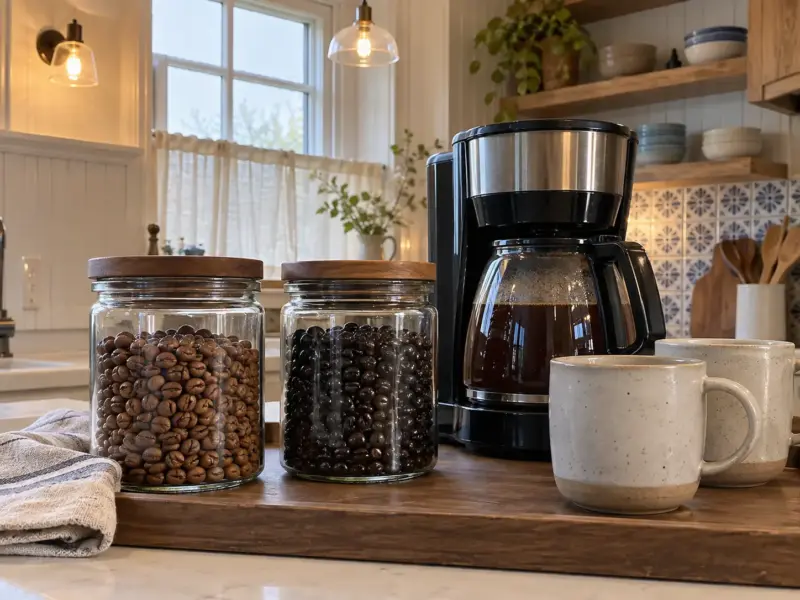
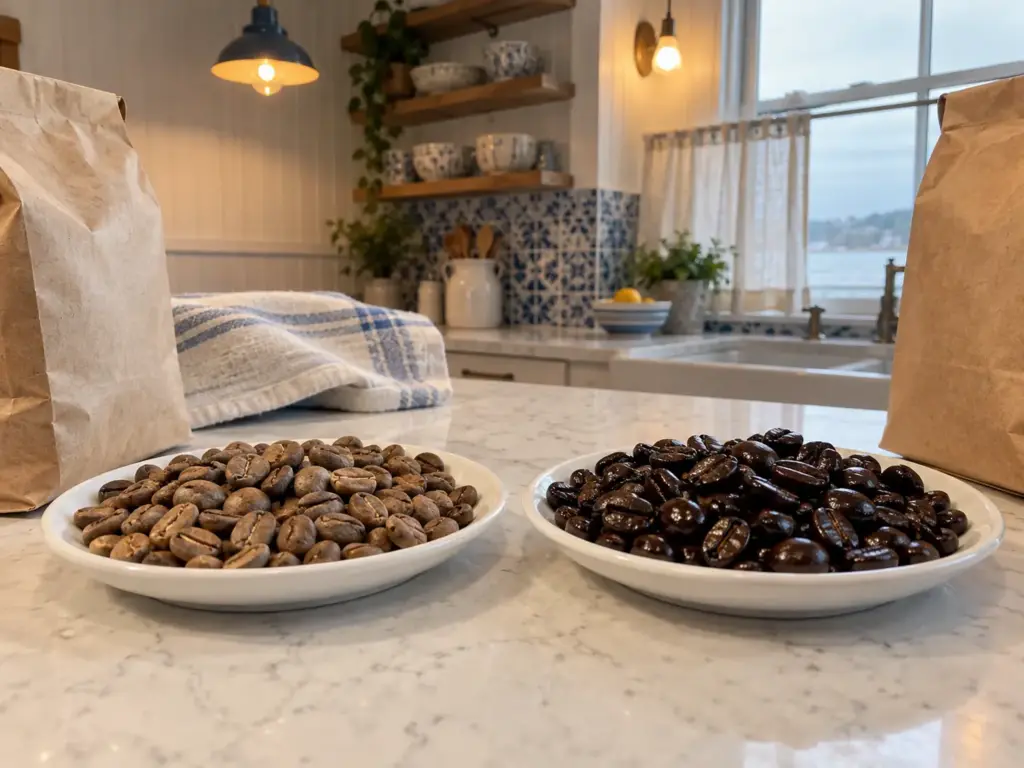
Shake ten beans from each bag onto a white plate and look at them by a window, not under the kitchen bulb. Side by side, a milk-chocolate brown next to a near-black with a sheen tells you more about the two roasts than either label, and it takes ten seconds.
What Roast Changes in the Cup
The table above names the differences in a word each; this section says what each one is in the cup and why it happens. There are three trade-offs here, and none of them makes one roast better than the other.
Acidity and the origin: light keeps fruit and floral, dark trades it for chocolate and smoke
Acidity in coffee is a taste: the bright, juicy edge that makes a good light roast read like citrus or berries. Those acids and aromatics come from where the coffee grew and how it was processed, and they are fragile. A short roast keeps most of them, so a light Ethiopian can smell of jasmine and taste of lemon. A long roast breaks them down and builds roast compounds in their place, which is where chocolate, toast and, pushed far enough, smoke come from.
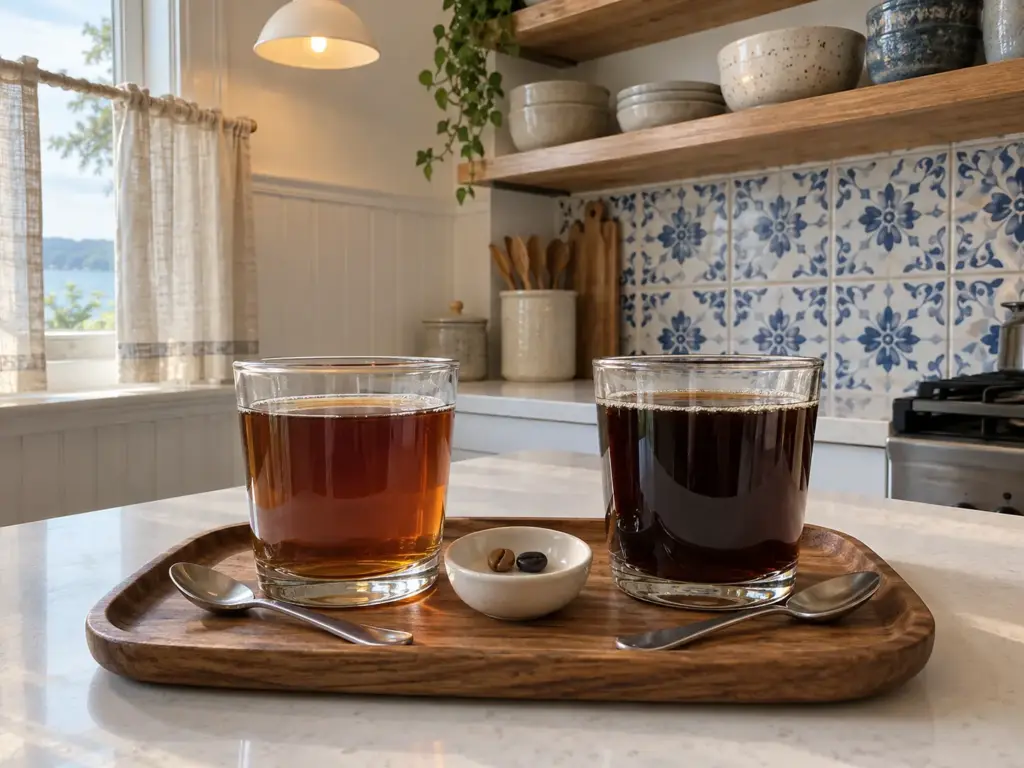
Brew both bags the same way and pour them into two clear glasses.
The light one looks thinner and tastes sharper at the first sip.
Leave both for ten minutes. As the light cup cools, the sweetness that the heat was masking comes forward and the sharpness settles into something closer to fruit; the dark cup, cooling, tends to show more bitterness at the finish. Dark-roast drinkers reach for words like bright and citrus-forward for that first sip, and some compare it to a hoppy IPA. They weren’t wrong about the taste, only about calling it a defect.
Body and the oily bean
Body is how heavy the coffee feels in your mouth. Light roasts brew a tea-like, light-bodied cup; dark roasts brew something heavier and more syrupy, partly because the porous dark bean releases more of its solids and oils into the water. Those oils are also why a dark bean shines: the long roast breaks down the cell walls and pushes oil to the surface, while a light bean stays dry and matte.
The filter decides how much of that body you keep. A paper filter holds the oil back, so a dark roast through paper tastes cleaner and a little thinner than the same coffee from a French press, where nothing stops the oil reaching the cup. (That is also why a dark roast that tastes heavy in a press can seem flat in a drip machine.)
Why single origins go light and blends go dark
Roast is only half of flavor.
The other half is the terroir and the processing: the altitude, the variety, whether the fruit was washed off or dried on the bean. A roaster who bought a lot for what it tastes like on its own wants that origin in the cup, so single origins usually leave the drum early. A blend is built to taste the same from one bag to the next while its components change with the harvest, and a darker roast makes that easy, because roast flavor covers the differences between origins. If you want to know whether you are buying the place or the roast, the guide to single origin versus blend sorts the two.
What the Words on the Bag Actually Mean
The two sections above treat roast as a continuous spectrum. The bag doesn’t: it uses a handful of words, and none of them is a measurement.
Blonde, city, French, Italian: a spectrum with no ruler
The common names make up a rough roast spectrum, from lightest to darkest: blonde roast or cinnamon, then light and city, then city-plus and full city (the medium range), then Vienna, French and finally Italian roast, the darkest and oiliest. Espresso roast is not a level at all: it names a use, and depending on the roaster it can mean anything from a medium to nearly black. The order is a habit of the trade, not a standard, and the same Scientific Reports study is clear that no single measure pins a roast down, so nothing stops two roasters using the same word for different beans.
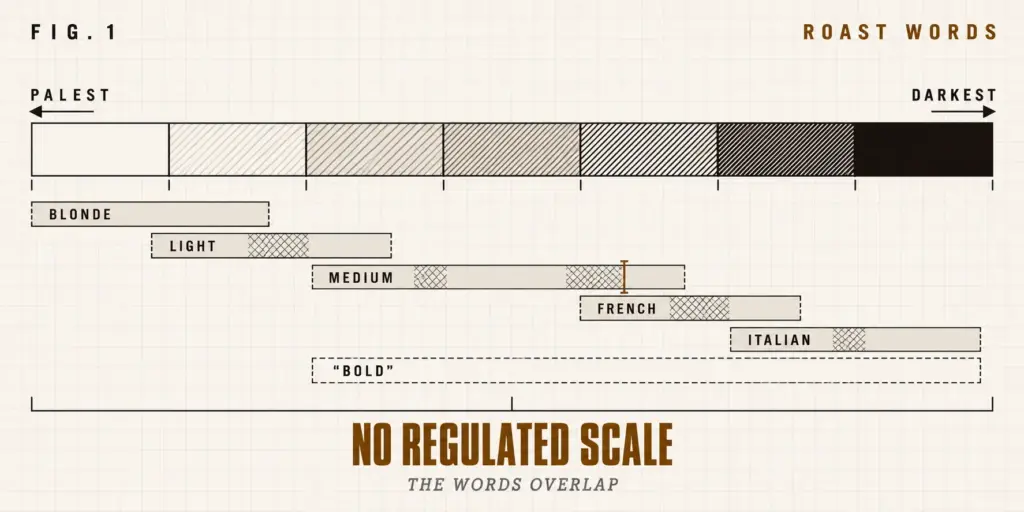
You can see it at the shelf. Three bags that all say dark, poured into three bowls at home, can range from a deep brown to a glossy black with a wet shine. The word tells you which direction the roaster went, not how far.
“Bold” is a taste claim
Bold and strong on a bag describe a taste, or a sales pitch, and never a caffeine level. What the reader usually tastes as bold is the bitterness and heavy body of a darker roast, and plenty of drinkers learned the word “weak” to mean “not bitter,” which is why a bright light roast gets called weak by people who are tasting more flavor, not less. A dark roast brewed at a tight ratio does taste stronger, because there is more dissolved coffee in each sip; the roast alone doesn’t do it. The caffeine side of this has its own arithmetic further down, and for the rest of the vocabulary printed on a bag, see what the other labels on a bag mean.
The sheen on the bean and the date on the bag
A shiny bean is a dark bean, whatever the label says. A shiny bean on a coffee sold as medium usually means it sat long enough for the oil to work its way out, which points to an old bag rather than a dark roast. And of every word on the package, the roast date tells you the most: a two-week-old light roast will beat a three-month-old one of any name.
Which Way Each Roast Goes Off, and the One Change That Fixes It
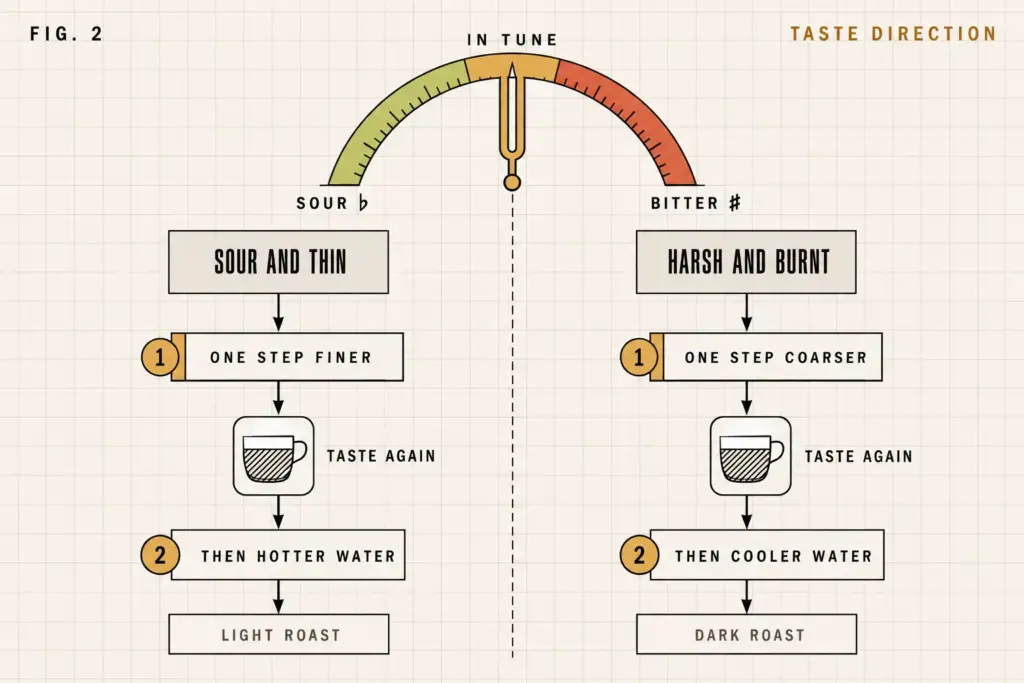
Each roast has a direction it goes wrong, and the direction tells you which dial to move. Light roasts drift toward sour, dark roasts toward harsh, and the fixes come one at a time with a cup tasted in between.
Light roast tastes sour and thin: one step finer, then hotter water
Sour means the water left before it finished. Light beans are dense and hold their solids tightly, so with the grind and water you used for the dark bag, the brew stops short of the sweet, heavier compounds and leaves you the sharp acids, which dissolve first. The Specialty Coffee Association’s brew-temperature research, run with UC Davis, found sour intensity peaked in coffees with low extraction (around 16 %), while brown, roasted flavor was strongest at high extraction (around 24 %). The two complaints sit at opposite ends of the same scale.
So the first change is free: grind one step finer. More surface lets the water reach further into each particle in the same time. The next cup should taste less sharp, sweeter in the middle and slightly heavier; if a dry, bitter edge shows up at the finish, you went past it, and the move is back halfway. For the full direction rule, see how grind size changes sour and bitter.
If one step finer helps but doesn’t finish the job, the second change is the water. The commonly cited window for brewing water is 195–205°F (90.5–96°C), and the SCA’s own entry for a certified drip brewer specifies 197.6–204.8°F (92–96°C). With a kettle, that means pouring just off the boil for a light roast. But the same SCA piece found little empirical evidence that any one temperature in the 87–93°C (189–199°F) range is the right one for everybody, so treat the number as where to start and your next cup as the judge.
Dark roast tastes harsh or burnt: one step coarser, then cooler water
The dark bean is porous and has already lost more of its mass in the drum, so water empties it quickly, and the roasty, bitter compounds climb as extraction goes up. Harsh, ashy or burnt means the water stayed too long for this bean, even at the setting that made your light roast taste fine.
Grind one step coarser first.
The next cup should lose the ash at the back of the throat and show more of the chocolate; if it turns hollow and watery, with a sour pinch, you overshot. The second change is cooler water: let the kettle rest a minute off the boil, and with a French press, cut the steep a little shorter. A drip machine won’t let you set its temperature, which is why the grind does most of the work for dark roast in a drip kitchen. Each of these numbers is worked out per roast in how far to move the grind for each roast.
Taste between each change
A sour cup and a harsh cup point in opposite directions, so the same move cannot fix both, and two moves at once leave you guessing which one worked. Change one thing, brew, taste, then decide.
The routine is short:
- Weigh the same dose you used last time.
- Move the grind one step in the direction the cup points.
- Brew with the same water, the same amount, the same way.
- Taste it warm, then again as it cools.
- If it went past, come back halfway; if it still points the same way, move the next dial.
Knowing whether you actually moved is its own skill, and how to tell a finer grind from a coarser one shows how to check the step by eye and by brew time.
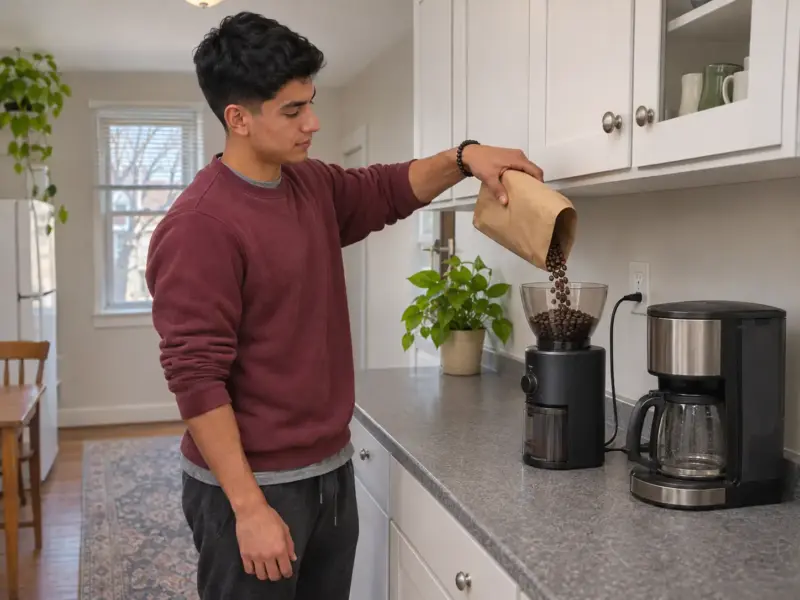
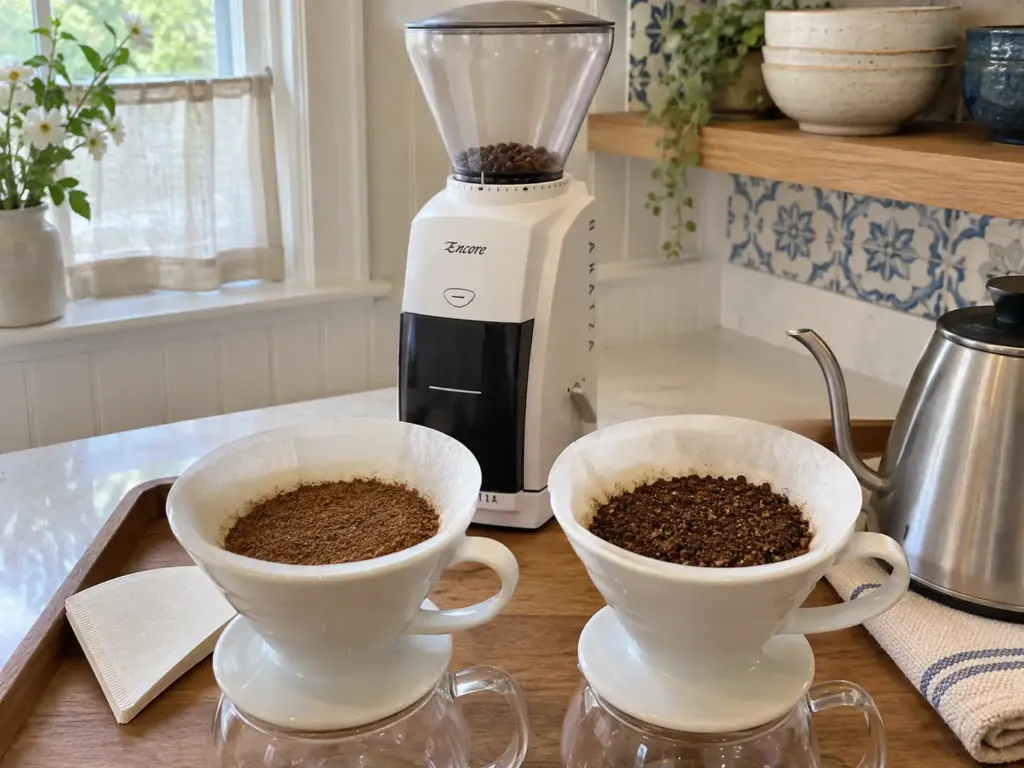
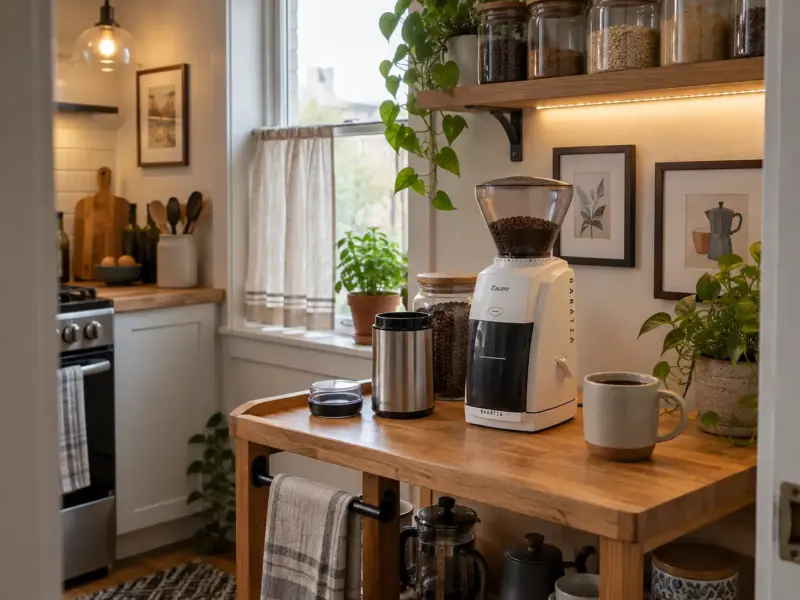
With a blade grinder, “one step finer” means a few more seconds and a guess. A burr grinder with numbered settings turns it into an instruction you can repeat and undo: the Baratza Encore has 40 mm conical steel burrs and 40 settings, so a step is a click you can count, write on the bag and return to with the next roast. The dial is still only a guide, though. Grounds stay inside the burr chamber, so the first dose after any adjustment comes out partly at the old setting, and a cup brewed from it tells you little about the new one.
After you change the setting, run a few grams of beans through the grinder and throw them out before grinding the real dose. It costs a spoonful of coffee and saves you judging the new setting on a cup that was half the old one.
Light Roast in an Ordinary Kitchen
The free changes above assume the machine can do its part. Many home drip machines never get the water hot enough for a light roast, and when that is the limit, it is a gear question before it is a taste one.
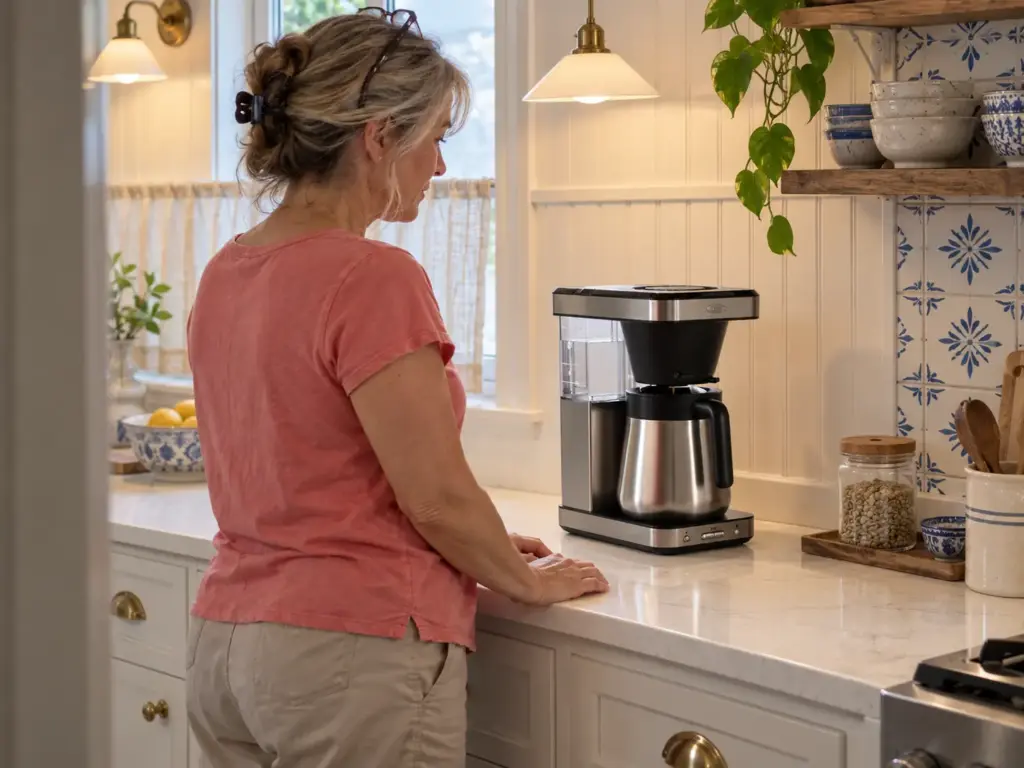
A drip machine that never gets hot enough
The SCA certifies home brewers, and its brew-temperature research is plain about the bar: a drip brewer that cannot reach 92°C (197.6°F) fast enough fails. Most machines on a kitchen counter have never been tested against that bar. An uncertified machine may still do fine, but if it brews cooler, a light roast is the first coffee to show it, coming out flat or sour no matter how good the beans were. It is the likeliest suspect when a light roast disappoints in a drip machine, though without a thermometer in your own brew basket it stays a suspect.
Picture the pattern from the reader’s side: you buy a lighter, pricier bag from a small roaster, brew it in the machine that has made your coffee for years, and it tastes almost exactly like the old supermarket blend. When the water never gets hot enough to pull out what makes the two coffees different, the machine makes the same cup from both.
Before blaming the machine, try what costs nothing.
Run a full carafe of plain water through it first so the heater, the lines and the basket start warm. Grind a step finer, following the grind that suits a drip machine. Check that the bag was roasted in the last few weeks. If the cup is still sour after those, keep the machine and try a medium roast, which extracts more easily at lower temperatures.
Only after that does a new machine make sense, and when it does, the SCA’s list removes the guesswork about water temperature.
The SCA’s certified home brewer list includes the OXO Brew 8-Cup, which the SCA describes as “certified by the SCA for meeting its rigorous home brewing standards,” with the water specified at 197.6 to 204.8°F (92–96°C). The OXO Brew 8-Cup Coffee Maker uses a showerhead to wet the grounds evenly and pours into a thermal carafe, so the coffee isn’t sitting on a hot plate. It brews 10 to 40 oz at a time, which makes it the wrong machine for a single small mug, and it is a bigger purchase than a basic drip machine. The certificate also covers the machine’s heat, not the water from your tap.
Brew a light roast as a full pot rather than two or three cups. A small batch can spend much of its time warming up the basket and the lines, so the water may reach the grounds cooler than it would halfway through a full carafe.
Tap water and a blade grinder
A blade grinder doesn’t cut to a size; it smashes until you stop it, leaving boulders and dust in the same chamber. The boulders under-extract and taste sour, the dust over-extracts and tastes bitter, and a light roast, already slow to give up its solids, makes the sour half louder. That is why a blade grinder gives a sour and bitter cup at once. If it’s the grinder you own, grind in short pulses and shake the grinder between them, and give a light roast a few more seconds than a dark one.
Tap water works against light roast in a slower way. Hard water leaves scale in the machine’s heater and lines, which slows the flow and lowers the temperature at the basket a little at a time, so a machine that brewed a decent light roast when new can lose it without any single morning feeling different. Descaling on schedule is the cheapest way to keep its heat.
Buying a light roast to taste the origin works with a burr grinder and a kettle. With a blade grinder and an old drip machine, it sets you up for a sour cup and a wrong conclusion about light roasts.
When a medium roast is the sensible answer
Light roast is the least forgiving coffee you can buy: cool water, a stale bag and an uneven grind all show up in the cup, and they all show up as sour or thin. Medium sits far enough into the roast to extract easily at the temperatures most machines reach, and close enough to the light end to keep some fruit. If your setup is a drip machine and a blade grinder, a medium roast isn’t a compromise. It matches the gear you have.
Scoop Versus Scale, and What Caffeine Does
Before the roast has had any say, switching bags with a scoop can change the dose. The same arithmetic explains why “dark means stronger” keeps getting repeated.
Why the same scoop is a different dose
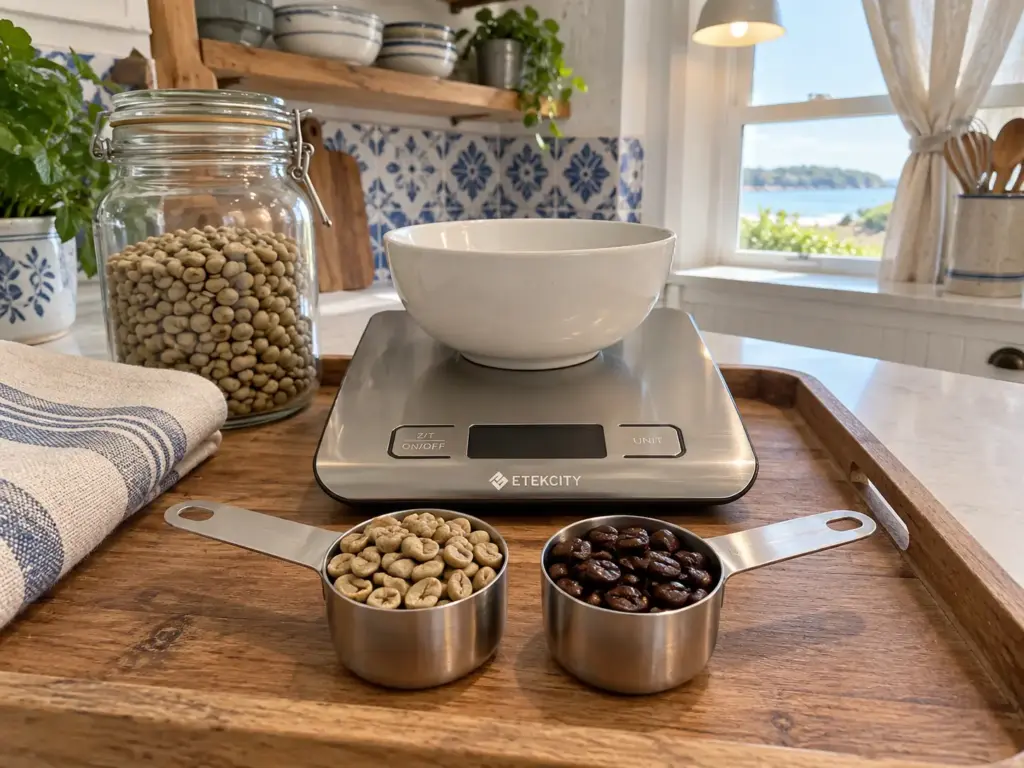
A scoop measures volume, and the two roasts don’t weigh the same per volume.
Dark beans have lost more mass and are more porous, according to the 2024 Scientific Reports study, so a level scoop of dark coffee holds fewer grams than a level scoop of light.
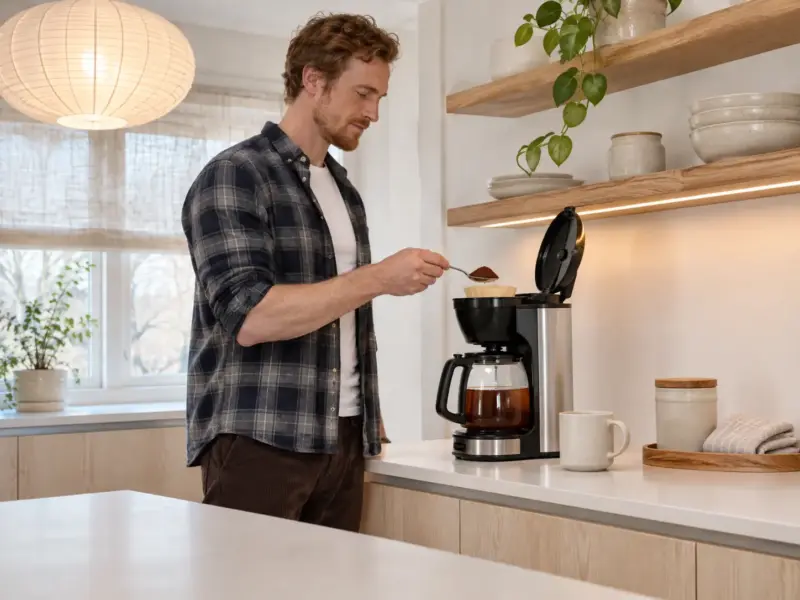
Move from the light bag to the dark one with the same two scoops and less coffee goes into the same water: the cup can come out thin and harsh at once, more extracted per gram and still weaker overall. Go the other way and more grams of a slow-extracting coffee go in, which can taste heavy and sour together. In both cases the dose moved before the roast did anything. Dosing by weight stops it, and it also tells you how many cups are in a bag instead of guessing.
What the study found about caffeine and roast
The same study brewed 30 batches in an AeroPress at 15 parts water to 1 part coffee.
At identical brewing conditions, caffeine in the cup was generally lower for dark roasts than for light and medium. At identical extraction yields, the result flipped, and the authors write that “at identical extraction yields, dark roasts generally exhibited higher caffeine concentrations than lighter roasted coffees.” Which roast “has more caffeine” depends on how you measure and how far you extract. Neither result supports the idea that a dark roast is the strong one.
What you taste as strength is concentration: how many grams went into how much water, and how much of them dissolved. Which roast carries more caffeine per cup, and which tastes less acidic, are questions with their own articles; for brewing, the roast is not a strength dial.
Weigh the dose when you change roast
A scale fixes more cups than a new machine. At the 15-to-1 ratio the study used, a 12 fl oz mug (about 355 g of water) takes roughly 24 g of coffee, and weighing it once per bag means the next change you make is to the grind, not an accidental change to the dose.
The Etekcity Food Kitchen Scale reads in 1 g steps with a tare button and handles up to 11 lb, enough for the beans and the full carafe of water. Owners in its Amazon reviews report readings that drift or quit after a year or more, one describing it as unreliable by the third year, and 1 g steps are coarse for a small pour-over dose. A scale that drifts is worse than a scoop because you trust it, so check it now and then against something of known weight, such as a full, unopened 12 oz bag.
If you brew pour over, the next step up is the Hario Drip Scale Timer, which reads to 0.1 g and runs a timer alongside the weight, so the contact time you change for each roast is on the same screen. It switches itself off after about five minutes, which a slow pour can outlast, and 0.1 g is more precision than a drip machine can use. Weigh before you blame the roast, and read why the roast date matters more than the roast name before you blame the bag.
If you want to keep the scoop, weigh one level scoop from each new bag the day you open it and write the grams on the bag with a marker. You only weigh once, and the next time you switch roasts you know how many scoops make the same dose.
Matching the Roast to the Brewer
With the dose weighed and the direction known, the brewer still decides which roast is easier to get right. Three of them have their own articles, so this section gives a verdict and hands off.
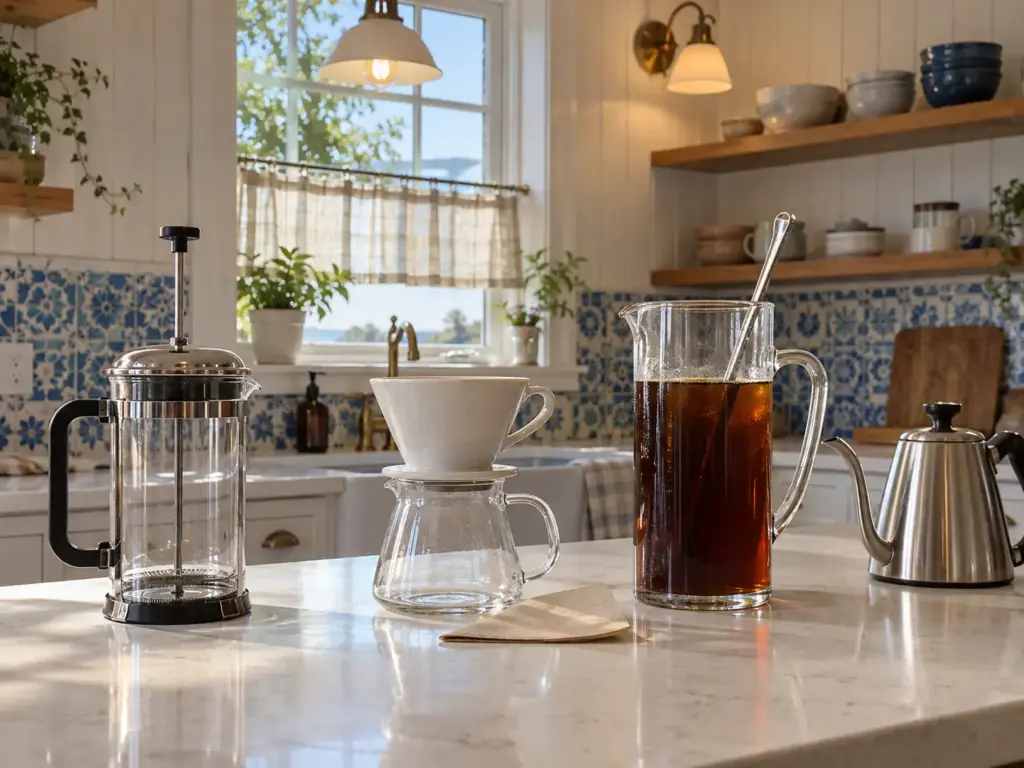
Espresso
Espresso runs hot water through a fine, packed puck in under a minute, which suits the darker, faster-extracting beans that made Italian espresso what it is. A light roast can make striking espresso, but it asks for a finer grind and hotter water than many home machines manage, and it punishes a small mistake with a sour shot. Whether yours should be light or dark for espresso depends mostly on the grinder in front of it.
Cold brew
Cold water extracts slowly, so a light roast’s bright acids tend to come through quieter and the chocolate and nut of a medium to dark roast carry more of the cup. Which roast makes the better batch, and how long to steep each, is worked out in which roast makes better cold brew.
Pour over, drip and French press
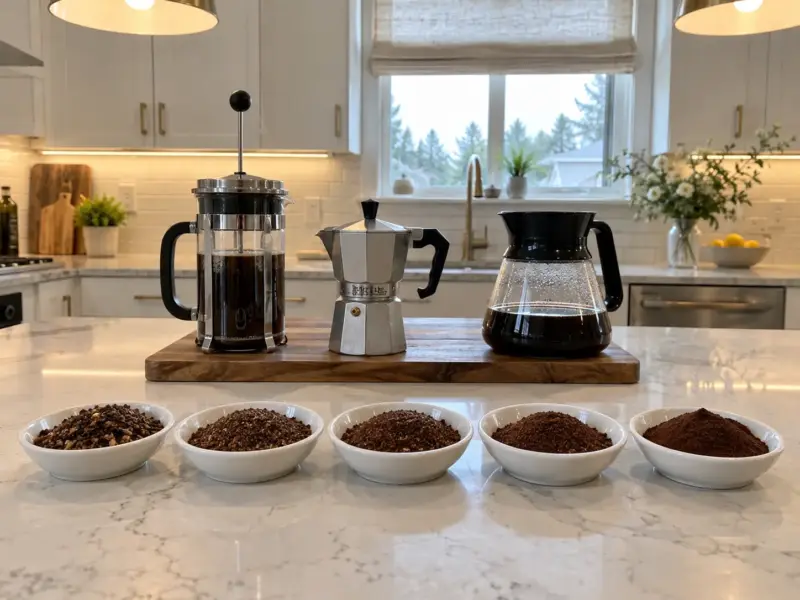
A paper-filter pour over is where a light roast shows best. For a drinker who finds light roasts sour, the advice is a Chemex, V60 or Kalita, aiming for a clean cup with about a four-minute total brew; the full comparison is in light or dark for pour over. A drip machine is a pour over with less control, and medium is its natural partner. The French press goes the other way: bright light coffees don’t convert well in a press, coming out muddy, while darker coffees work well there, because the heavier, unfiltered cup suits their cocoa sweetness.
When It Is Not the Roast, and Each Roast’s Flaw
Much of what gets blamed on a roast is a stale bag, the wrong grind or cool water. And every roast has a flaw of its own, which the bag will never print.
A stale bag, the grind and the water cause most of the complaints
A verdict of weak and sour on a light coffee is a good example: it often comes from a bright coffee brewed as if it were a dark one, an extraction problem with a roast name attached. The same thing happens with time. A bag that tastes lively in its first week can taste flat and papery by week four, and if you opened a new roast in between, the roast takes the blame for what the calendar did.
Fresh beans are still releasing gas, so when hot water hits them the grounds swell and bubble; beans that barely move are past their best. Before you change roasts, check that and read how to tell if beans are stale. Then look at the date on the bag against how long to keep beans after opening, and only then reach for a different roast.
The flaw of light roast
Light roast exposes everything. A machine that runs a few degrees cool, a grinder that makes dust and boulders, a bag a month past its date: each shows up as sour, grassy or thin, and a light roast shows it first. What you gain is the clearest view of where the coffee came from. You pay for that view with less room for error.
The flaw of dark roast
Dark roast forgives a cool machine and an uneven grind, but it gives up the origin to do it, and one dark roast tastes a lot like another.
Dark roasting has long been used in the industry to cover up the defects in poorer quality coffee.
That cuts both ways. A dark roast hides a weak bean, and it also hides a great one. It over-extracts quickly, too, so the margin between chocolate and ash is narrow, and a drip machine that sits on its hot plate for an hour pushes it over. Keeping either roast fresh is mostly a question of how to store beans.
Which Bag to Buy First
The decision comes down to the gear you already have and what you know now about fixing the cup. Start from the counter, not the label.
A drip machine and a blade grinder: start at medium
With an ordinary drip machine and a blade grinder, a medium roast is the forgiving first bag. It extracts well at the temperatures most machines reach, it hides some unevenness in the grind, and it still has enough fruit to taste of something besides roast. If a medium tastes harsh, go one step coarser; if it tastes sour, the machine is the suspect.
A burr grinder and a paper-filter dripper: try a light roast
With a burr grinder and a paper-filter pour over, a light roast is worth the trouble, because now you have both dials. Start one step finer than you use for medium, pour near the boil, and taste for sweetness rather than sharpness. If the grinder is old, the burrs may be part of the problem; which grinders wear out first covers what dulls and when.
Check the bag before the roast
Buy the roast date before the roast name, and buy whole bean if you can: the freshest bag of either roast will beat a stale bag of the one you prefer. A bag that tastes right on day three of opening and flat by week three hasn’t changed roast; it has gone stale. For what else on the package is worth reading, see how to pick a good bag of beans. The right roast is the one your gear can brew well.
Weigh It, Move One Step, Taste the Next Cup
Light and dark are not better and worse. They are three trade-offs, acidity, body and how much of the origin survives, and each one points to its own way of going wrong. A sour, thin cup wants one step finer, then hotter water; a harsh, burnt cup wants one step coarser, then cooler water, with a taste between each change. And before blaming any roast, weigh the dose and read the date on the bag, because the scoop and the calendar cause more bad cups than the roaster does.
A month from now, check whether the cup still tastes the way it did in its first week: the roast date on the bag and the reading on your scale are the first two things to drift.
Tomorrow morning, weigh the dose from the bag you already have, move the grind one step in the direction the cup points, and taste whether the sharpness or the ash went down. Then look up how far to move the grind for each roast for whatever is in your cupboard.
Frequently Asked Questions
01Is light or dark roast stronger?
Neither roast is stronger as a caffeine fact: a 2024 study found less caffeine in dark roasts at identical brewing conditions and more at identical extraction yields. Strength in the cup comes from the dose and the extraction, so weigh the coffee.
02What are the drawbacks of light roast coffee?
Light roast is the least forgiving roast: cool water, a stale bag or a blade grinder all leave it sour and thin. Go one step finer first, then use hotter water. If your drip machine runs cool, a medium roast is the easier bag.
03Why does my light roast taste sour?
Sour means the water left before it finished pulling flavor: the grind was too coarse, the water too cool or the brew too short. Grind one step finer and taste. If it stays sharp, check the roast date and whether your machine gets hot enough.
04Does dark roast hide bad beans?
It can. Roast flavor flattens what the origin would show. A recent roast date and a named origin tell you more than the roast level.
05Can I use light roast in a French press?
You can, but bright light roasts often come out muddy in a press, while darker coffees suit its heavier, unfiltered cup. A paper-filter pour over shows a light roast better. If the press is your only brewer, pick a medium or dark roast.

How did your cup turn out?
No comments yet. Tell us what you changed — and whether the needle moved.