




We may earn a commission when you buy through links on this page. It never changes what we recommend. How we pick
On this page8 parts
- How Coffee Grind Size Moves With the Roast, and How Far
- Why Dark Beans Give Up Their Coffee Faster
- Weigh the Dose Before You Touch the Dial
- When the Roast Isn't the Reason the Setting Moved
- Light Roasts, Cool Machines and Grinders That Can't Follow
- Switching Bags Without Losing Your Place
- Tomorrow's Cup Starts on the Scale
- Frequently Asked Questions
You open a new bag, darker than the last one and from a different roaster, level the scoop the way you did all last month, and leave the grinder exactly where it was. The pot comes out thin and faintly sour, and the only thing on the counter that changed is the bean. Coffee grind size vs roast comes down to two things that happened inside that bag: a longer roast leaves the bean lighter and more open, so it gives up its coffee faster at the same setting, and the same scoop now holds fewer grams of it. Below: which way to move the dial and how far, why, the two checks that come before it, and how to switch bags without starting over, built on how grind size moves the taste from sour to bitter.
Quick Answer
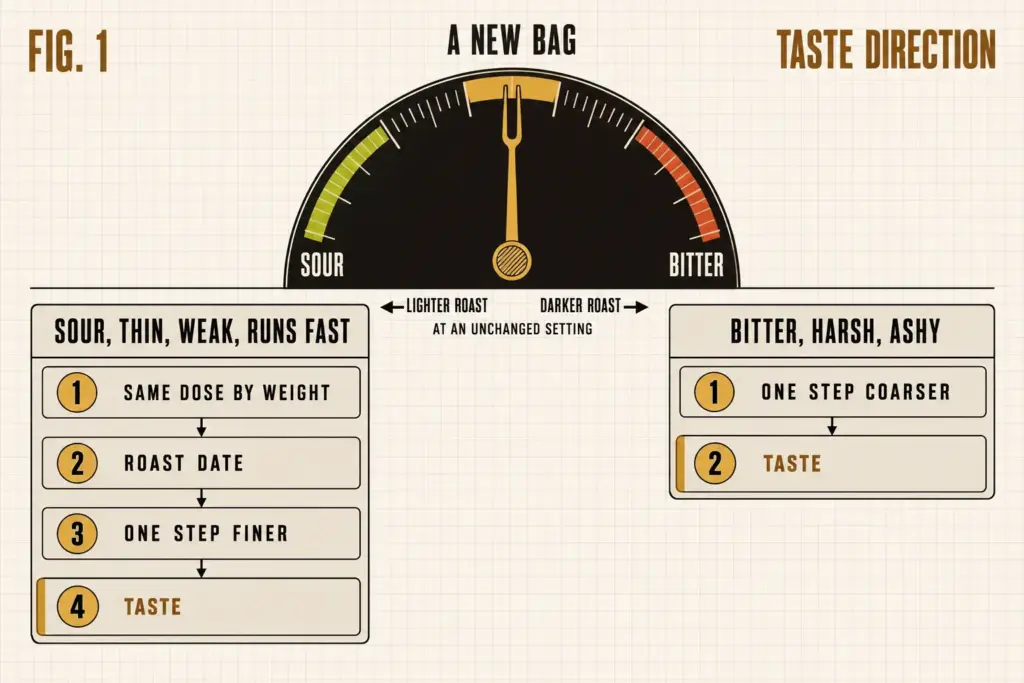
On the same brewer, a lighter roast usually wants a step finer and a darker roast a step coarser, because dark beans are more porous and give up their coffee faster. It is a step or two, not a new chart. But dark beans are lighter, so a scoop holds less coffee: weigh the dose before you move the dial.
How Coffee Grind Size Moves With the Roast, and How Far
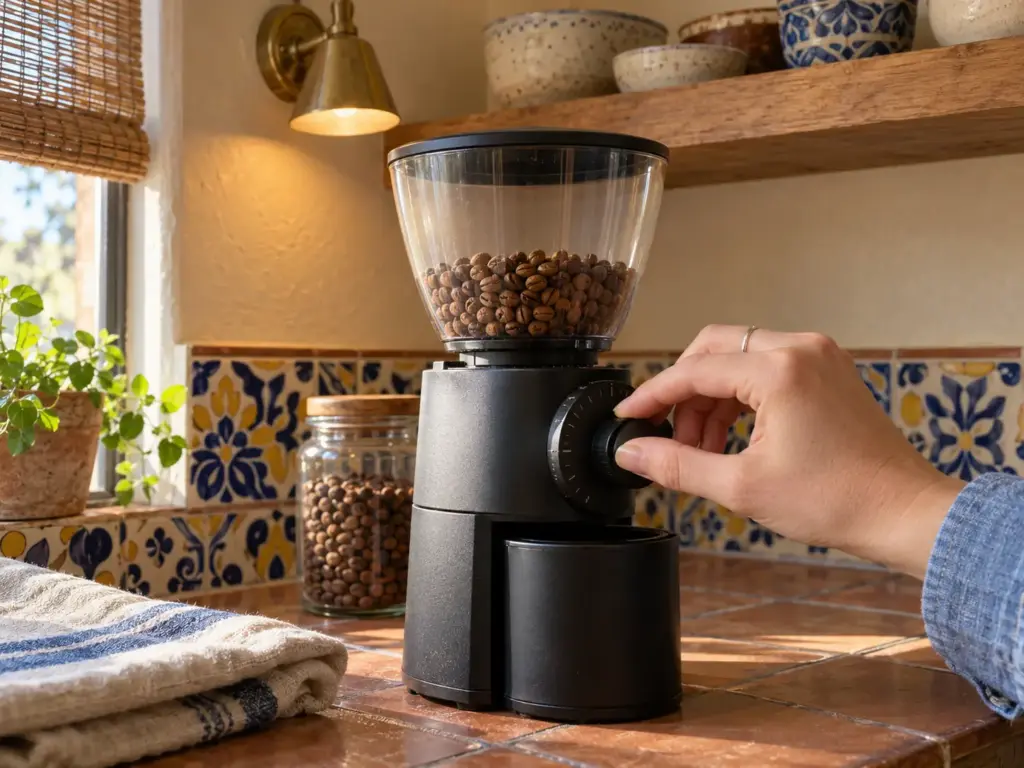
On the same brewer, a lighter roast usually wants the grinder a little finer and a darker roast a little coarser. The size of that move is one or two steps on the dial you already use, not a new recipe. The cup decides whether you needed the second one.
A Light Roast Usually Wants a Step Finer
Start from the grind setting the per-method grind chart gives your brewer, which is almost always written with a medium roast in mind. A light roast is denser and gives up its solubles more slowly, so at that medium setting the water leaves before it has taken enough. The cup reads sour, thin, sometimes a little papery.
That is under-extraction, and one step finer (a click on most burr grinders) adds surface area so the same water pulls more out. The further a bag sits from medium, the more likely it needs a second step.
A Dark Roast Usually Wants a Step Coarser
A dark roast runs the other way. It gives up its coffee readily, so at the medium setting it overshoots into the over-extracted end: bitter, harsh, sometimes ashy at the back of the sip. One step coarser takes surface area away and slows the extraction back down.
Taste and read the direction again. Still a burnt edge? One more step.
Thin and sharp now? You went past the middle, so come back half a step (or a full one, on a grinder with no halves).
Why One Step Is the Right Size of Move
The coffee world’s target is the SCA extraction band, an extraction yield of 18–22 %, the share of the coffee’s weight dissolved into the cup, and it is a zone rather than a cliff. According to UC Davis researchers writing for the SCA, “Most coffee experts will not be able to distinguish coffee brewed to 17.9 percent versus 18.1 percent extraction.” Their tasting panels also showed which way each fault points: sourness climbed as extraction fell, while bitterness and burnt, ashy notes climbed as it rose.
So a roast change rarely throws a cup far out of the band, and one step usually brings it back. Five steps trade one fault for the other.
Don’t judge a new setting by the first cup after you turn the dial. Most grinders hold some coffee in the burrs and the chute, so that first dose still comes out partly at the old number. Grind a few grams, throw them out, then grind the real dose, or let the second cup be the verdict.
Why Dark Beans Give Up Their Coffee Faster
The rule is only safe to use once you know what it rests on, because the same mechanism explains the exceptions in the next two sections. Three things change as a roast goes darker, and they are not equally proven.
A Longer Roast Leaves a Lighter, More Open Bean
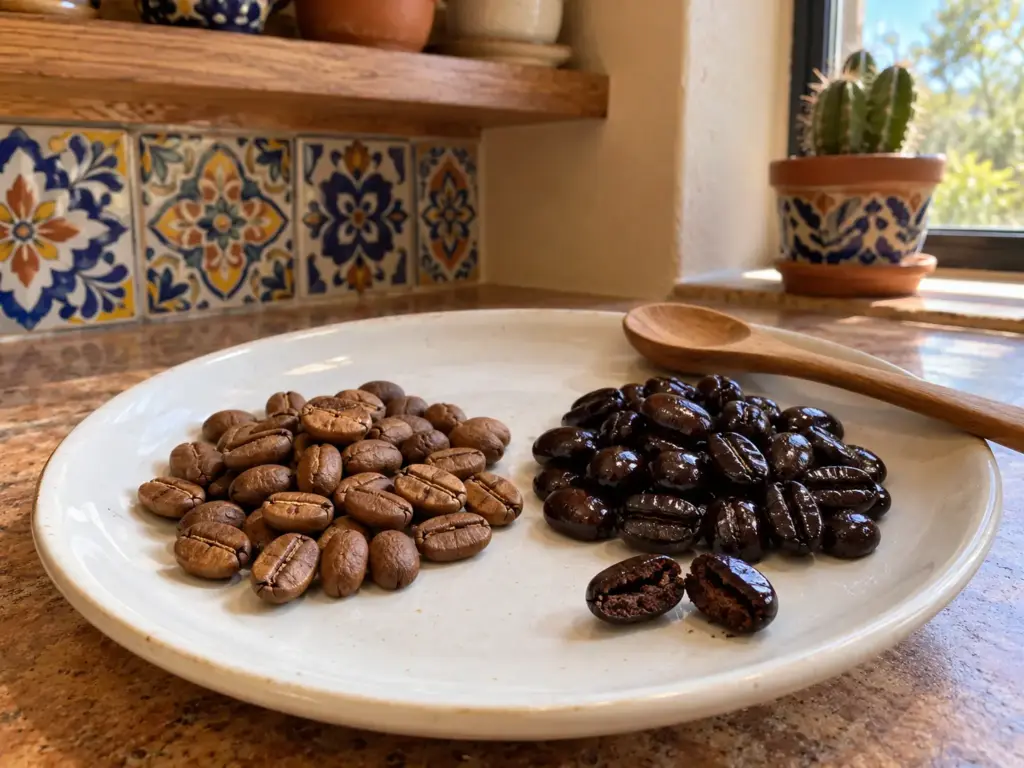
Heat breaks down the bean’s cell structure, and the longer the roast runs, the more of it goes. Counter Culture’s grind guide, written by a roaster, puts it in those terms: the more degraded that structure, the less dense the bean. You can feel that drop in bean density in the hand. A dark bag, roasted into or past second crack, weighs less for its size, and its beans look puffed and often shiny.
Which roast to buy is a separate question, covered in what actually changes in the cup between a light and a dark roast; here the point is only what that open bean does at the burrs.
More Comes Out per Second, So Less Help Is Needed
An open bean lets water in faster. The same roaster describes darker roasts as more readily soluble: at any given grind, water pulls more out of a dark bean every second it sits in the brewer.
A finer grind is help, more surface for the water to work on, and a dark bean needs less of it to reach the same extraction. To grind coarser just takes away help the bean no longer needs. Put a dark roast at a light roast’s setting and it goes harsh and ashy first; put a light roast at a dark roast’s setting and it goes sour and thin. Same grinder, opposite ends of the band.
Fines From a Brittle Bean Are a Roaster’s Claim, Not a Measurement
The third part of the story is fines. Roasters say a dark bean is more brittle and shatters into more fines, which Counter Culture defines as particles under about 200 microns. Fines extract fast, so more of them would be one more reason to go coarser.
It may be true. But the measured evidence is thinner than the confidence.
A 2016 grinding study in Scientific Reports ground four coffees at one fixed setting and found the particle size spread was the same whatever the origin or processing. All four were light to medium roasts, and the authors write that they can only speculate about how a dark or French roast would behave. So when a new bag acts differently at the same number, the likelier explanation is that it extracts differently, not that the burrs cut it differently.
What you can see is the oil. A dark bag often leaves a faint oily film in the catch cup and the chute, with fine dust clinging to it, and that chute needs a brush more often while a dark bag is in rotation.
Weigh the Dose Before You Touch the Dial
The rule says a dark bag goes coarser, yet a dark bag that runs too fast and tastes too thin is a common complaint, which points the other way. Most of the time neither the rule nor the grinder is wrong. The dose is, and a kitchen scale settles it before the dial moves at all.
The Same Scoop Holds Less Dark Coffee
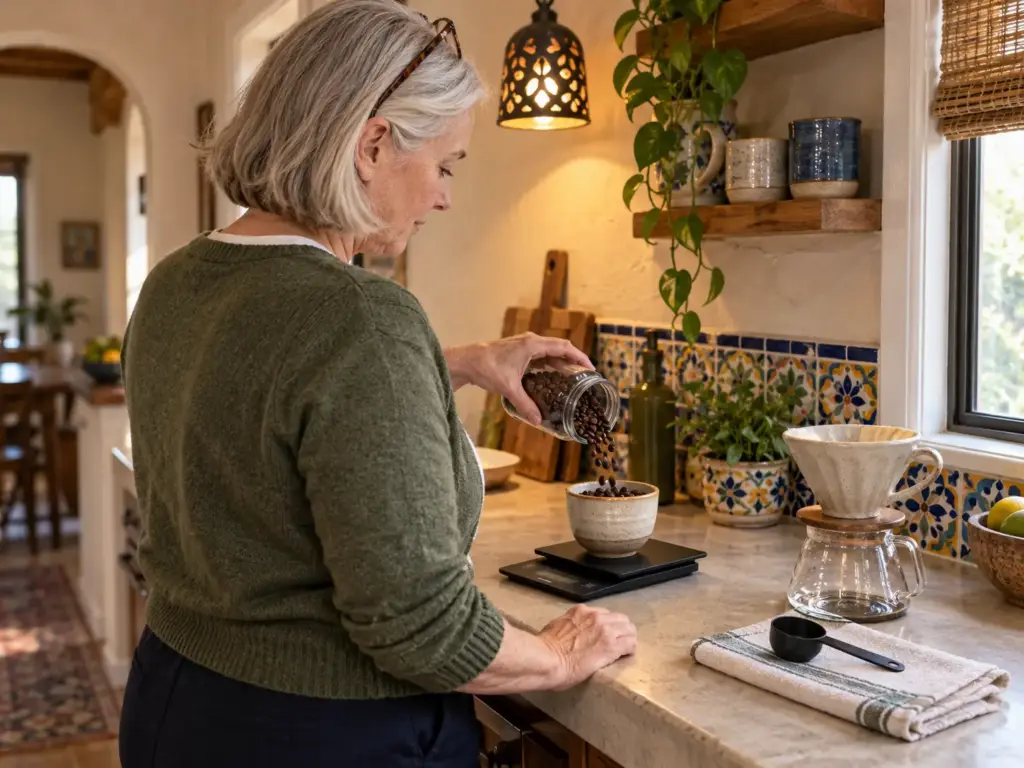
A dark bean is less dense, so each gram of it takes up more room. Dark roast takes up more space than light roast by weight, so the same 18 g can fill a different volume.
A level scoop measures by volume, so when the bag goes darker, the scoop quietly carries fewer grams, and the pot you brewed exactly as before is a smaller dose in the same water. It comes out weak and a little sour, the taste that sends you to the grinder. The grinder is innocent here.
In a drip machine the scoop is how almost everyone doses, which is why the drip-machine grind and dose matters more here than any roast chart. A level scoop of a dark roast even looks different: it sits taller and fluffier than the same weight of a light one, a difference that is obvious on a scale and invisible in the scoop. Some immersion brewers never touch the grinder for this: for French roast and darker, they add more grounds by weight, because the darker beans weigh so much less per scoop.
The Fast Dark Shot and the Racing Drawdown
The espresso version is louder. A dark roast can run much faster than a medium one at the same setting, and only a finer grind slows it down again.
Their puzzle was fair: dark should mean coarser, not finer. Other explanations point elsewhere. The dark beans filled so much of the portafilter basket that the dose, and the puck it made, ended up smaller than planned, and the bag was probably stale.
A dripper shows it too. A darker bag from a new roaster can run straight through a V60, and the cup comes out watered down.
The usual advice splits three ways: grind finer, it is probably stale, or stop watching the clock and go by taste. The first question to ask is what the dose weighed. (Reference times for your brewer: drawdown time for each dripper.)
So the two camps are measuring different things. Solubility says a dark bean extracts faster, so coarser. A fast, thin flow says the bed is putting up less resistance, and the usual reasons are a smaller dose or an older bag, so check those first and go finer only after. The taste gives you the direction; the clock and the dose tell you why.
A Scale Settles It Before the Grinder Does
Before any setting changes, run the free order, one change at a time:
- Weigh the same dose in grams you used with the last bag, not the same number of scoops.
- Brew exactly as before and taste. If the thin, sour cup is gone, the dial was never the problem.
- Still sour? Check the roast date on the bag; the next section explains why.
- Only then go one step finer and taste again. If the cup turns bitter, you overshot; come back.
If a few beans of the old bag are left, weigh one level scoop of it and then one level scoop of the new bag on the same scale. The gap between the two readings is exactly how much your dose dropped when you switched, and you learn it before brewing a single disappointing pot.
Any scale that reads grams does the dose job. If you brew pour-over or espresso, the Hario Drip Scale Timer reads to 0.1 g and runs a timer on the same display, so one scale answers the dose question and the drawdown or shot-time question. Several owners in Amazon’s review summary say theirs broke within six months, and that it is slow to respond, with about a five-second lag after power-on.
For a drip machine, a tenth of a gram is more precision than the pot can use. The Etekcity Food Kitchen Scale costs less and reads in 1 g steps with a tare button, enough to show that a scoop of a dark bag weighs less than a scoop of a light one. Whole grams are its limit: on a full pot a gram barely registers, but on a 15–18 g single cup it can be off by a gram, about 6 %, and multiple owners report it stopped working or would not turn on.
When the Roast Isn’t the Reason the Setting Moved
The dose was the first suspect. The bag’s age and its origin are the next two, and either one can push the setting further than the roast color does.
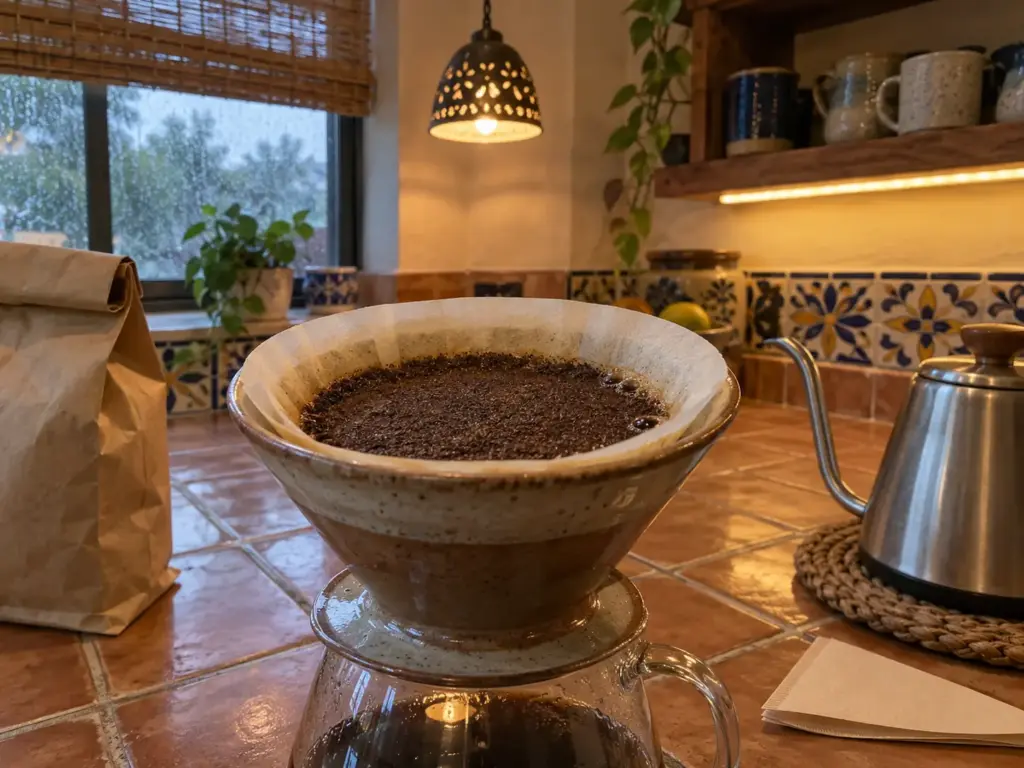
An Old Bag Asks for Finer, Whatever Its Roast
Stale coffee generally requires a much finer grind than freshly roasted coffee. Some brewers grind a supermarket dark bag several steps finer than their lightest roast, and suspect age rather than roast.
So read the bag before you blame the roast. A best-by date is a shelf date, often months out, and the beans can be well past their best while the bag is still within it. The roast date is the one that tells you something.
A common freshness rule of thumb, the 15-15-15 rule, puts roasted beans at their best within about 15 days, and a bag that prints no roast date gives you no way to count them. For the signs at the counter, see how to tell if the beans are stale.
Two of those signs take a few seconds. A fresh bag puffs a little when you press the valve, and its bloom rises and cracks in the filter. An old dark bag barely blooms, and its beans can look glossy with oil that has worked its way to the surface.
You can chase a stale bag finer, five steps and counting. Better to check the date first, though: a finer grind brings the flow back, not what the weeks took out of the beans.
Origin and Density Can Outweigh the Roast Color
Origin moves the setting too, because density does. Counter Culture’s guide says a denser coffee grown at high elevation needs a finer grind to reach the same extraction, and gives a pair of examples: a light-roast Honduran grown at 1,650 meters generally wants a coarser grind than a Kenyan grown at 1,800. It also says Ethiopian coffees need a slightly coarser grind than other origins roasted to the same level.
A single-origin Ethiopian often needs a finer grind than a darker crowd-pleaser espresso blend. Two confident sources, two directions. What survives is a habit, not a rule about any country: a new origin is a fresh dial-in, and the cup decides. If you are choosing between single origin or a blend, expect the single origin to move your setting more.
Temperature moves the number too. The same 2016 study found that beans ground cold came out with a smaller average particle and a narrower spread, so a bag straight from the freezer grinds a touch finer at the same setting.
Reading a Bag That Prints No Roast Level
Plenty of roasters print no roast level. The practical checks are simple: look at the color and the oil sheen, with shiny spots starting to show around medium-dark, smell the bag for smoke, and try cracking a bean between thumb and finger, since a light roast resists and a dark one gives. Then dial in from your brewer’s medium setting and let the first two cups move you one step either way.
Light Roasts, Cool Machines and Grinders That Can’t Follow
For a light roast, grind finer is nearly the whole of the usual advice, and it runs into limits. The grinder may not go finer, the machine may not get hot enough, and some kitchens never choose a grind at all.
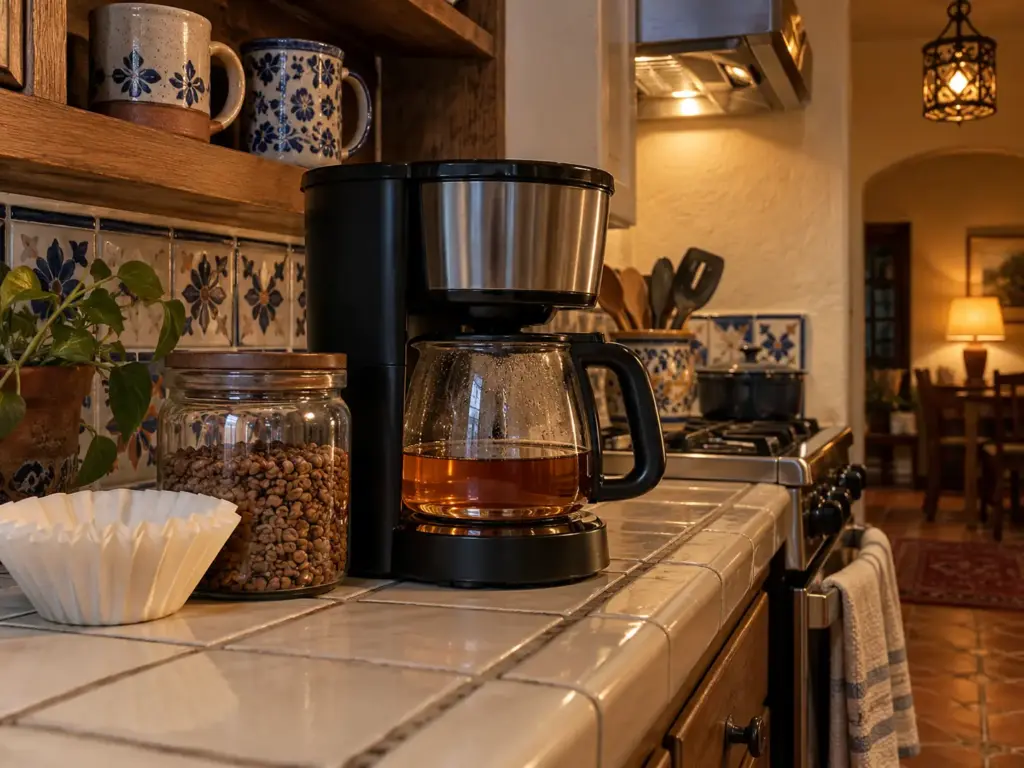
When Finer Alone Doesn’t Fix a Light Roast
A light roast resists the water, and a very light bag at the same setting can roughly double an espresso machine’s pre-infusion time. Finer is the first move, not the only one, and finer is not always stronger once the bed stops draining well.
If a step or two finer leaves the cup sharp and thin, the second change is the dose: a little more coffee by weight, same water, which tightens the brew ratio. Light roasts generally need a higher water temperature, so the kettle should come first. The evidence is less sure.
A 2020 UC Davis brewing study in Scientific Reports brewed coffee at 189°F (87°C), 194°F (90°C) and 199°F (93°C), adjusting grind and time so every batch hit the same strength and extraction, and its tasting panel found no appreciable difference between them. The authors conclude that “brew temperature should be considered as only one of several parameters that affect the extraction dynamics.” It was one coffee at one roast, so it does not settle light roasts for good, but it puts the grind and the dose ahead of the kettle.
And sometimes the grinder stops short: a burr set that cannot reach the fineness a light roast wants is a hardware limit, and a grinder that won’t go fine enough has its own checks.
To see which part of a pour-over is going wrong, split one brew across four cups: the bloom into the first, then switch cups every 30 seconds. The first usually tastes sweeter and more acidic, the last the most bitter and astringent, and tasting them side by side shows which end of the brew your problem lives in before you change a thing.
A Drip Machine That Never Gets Hot Enough
One temperature problem is worth knowing. To earn SCA certification, a home drip coffee maker has to reach about 198°F (92°C) within the first minute of the brew, hold at least that for the rest of the cycle, and never go above about 205°F (96°C). A machine that never gets there under-extracts a light roast whatever grind you feed it.
The grounds often show it: after a light roast in a tired drip machine, the bed can come out flat and pale at the edges, with a dry ring near the rim where the water never reached. The shower head and heater are the next suspects, not the grind.
Pre-Ground Bags and Blade Grinders
A pre-ground bag has its grind chosen for you, so the roast cannot move it. What you can still change is the dose, weighed rather than scooped, and which bag you buy, by its roast date.
A blade grinder chooses badly on its own, making dust and boulders in the same batch so the cup tastes bitter and sour at once, and if the roasters are right about brittle dark beans, a dark roast adds to the dust. More on what a blade grinder does to the grind.
Switching Bags Without Losing Your Place
The number you land on belongs to this bag this week, not to dark roast in general, and it drifts as the beans age. One note per bag keeps you from starting over every time you switch.
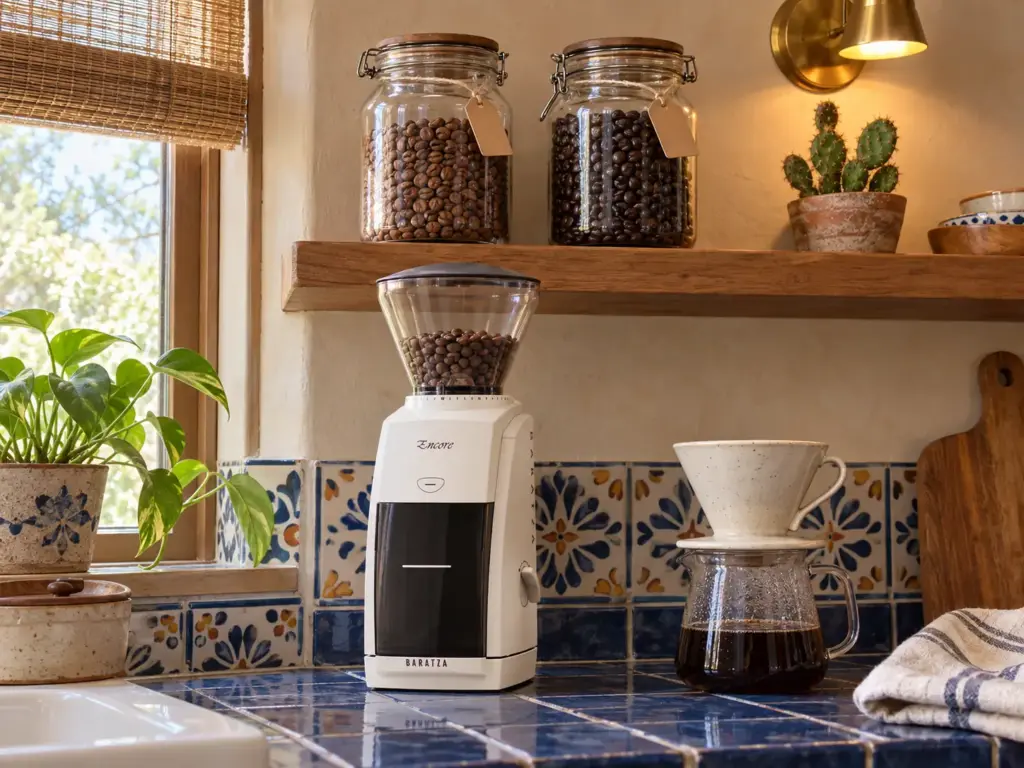
One Note per Bag, Not per Roast Level
Dialing in is a process that never ends: as a bean ages you keep tweaking, often going a bit finer as the days pass. Every bean is trial and error, and older beans may need changes again. So write the setting down per bag, with its roast date and one word for how the cup tasted.
Numbered steps make that note possible. The Baratza Encore, with 40 mm conical steel burrs and 40 numbered settings, is one example where one step is a countable, writable move. Several owners in Amazon’s review summary report it breaking after about two months of use, and opinions on its noise are split, with some finding it loud. Whatever grinder you use, it also helps to check the grind you actually have and keep a small reference sample from a cup you liked.
On many grinders the dial is not linear either. A step at the fine end changes the flow more than a step at the coarse end, so one step is a bigger move for espresso than for a French press.
Write the day you opened the bag under its roast date. When the cup starts running sour at a setting that used to work, the gap between those two dates usually explains it before the grinder does, and you will know to go one step finer instead of wondering what broke.
Espresso Shows the Roast Shift Most
Espresso magnifies all of this: a few seconds of shot time separate sour from balanced, so a dark bag’s move shows there first. The shot-time side of it is in espresso grind is set by seconds, and the roast choice itself, whether espresso wants a light or dark roast, is its own decision.
Coming Back to the Old Bag
Say you alternate a light bag on weekdays and a dark one on weekends. Going back to the light bag, start from its note, not from wherever the dial sits after the dark one, and let the first cup tell you whether a few days of age pulled it one step finer.
If you are starting with a grinder you have never set before, the question comes one step earlier: what number your grinder should start on.
Tomorrow’s Cup Starts on the Scale
Three things carry over to every bag you open:
- A lighter roast usually wants one step finer and a darker roast one step coarser, on the same brewer, and the cup decides whether you need a second step.
- Before you blame the roast, weigh the dose and read the roast date; a scoop of dark coffee holds fewer grams, and an old bag asks for finer whatever its color.
- The setting belongs to the bag, not the roast level, and it drifts finer as the beans age.
A month from now, when this bag is near its end, look at the roast date and the note beside your setting: if the cup has started running thin at the same number, the beans aged, and one step finer brings it back.
Tomorrow, before you touch the dial, weigh out the same grams of coffee you used last week. If the cup is still sour, go one step finer and taste again; it should come out rounder and less sharp, and if it tips into bitter, you have found the edge and can come back half a step.
Frequently Asked Questions
01Do darker roasts need a finer grind?
Usually not: on the same brewer, a darker roast wants a slightly coarser setting, because it is less dense and gives up its coffee faster than a light roast. When a dark bag runs fast and thin, weigh the dose and check the roast date before going finer.
02What grind size for medium roast espresso?
Start from your grinder’s normal espresso range, since most espresso charts assume a medium roast, then adjust one step at a time by shot time and taste. From there, a lighter bag goes a step finer and a darker bag a step coarser.
03Coffee grind size vs roast for pour over: does a light roast need finer?
Usually yes, about one step finer than a medium roast on the same dripper, with the dose weighed in grams rather than scooped. If the cup still tastes sharp and thin after that step, add a little more coffee by weight before reaching for a hotter kettle.
04What is the 15-15-15 coffee rule?
A freshness rule of thumb: roast green coffee within about 15 months of harvest, use roasted beans within about 15 days, and brew ground coffee within about 15 minutes. It says nothing about grind size, but a bag well past its 15 days usually needs a finer setting.
05What grind size does Starbucks use?
According to a food-media report, Starbucks uses a single medium-coarse grind for its pre-ground bags, meant for drip machines, French presses and percolators. Treat that as a report, not a spec. With a pre-ground bag the roast cannot move the grind, so the dose by weight is what you can still adjust.



How did your cup turn out?
No comments yet. Tell us what you changed — and whether the needle moved.