
We may earn a commission when you buy through links on this page. It never changes what we recommend. How we pick
On this page8 parts
- Burr vs Blade Grinder — What Changes in the Cup
- How a Blade Grinder Chops Coffee Beans
- Getting a More Even Grind From the Blade Grinder You Own
- How a Burr Grinder Sets One Size and Holds It
- Conical or Flat Burrs, in Brief
- Cost, Noise and What Wears Out Over the Months
- Look at the Grounds Before You Buy Anything
- Frequently Asked Questions
You take a sip and it grabs the back of your tongue, harsh and a little dry, and then there’s nothing behind it: thin, faintly sour, gone before you swallow. Those two tastes normally point in opposite directions, because sour means the water left the grounds before it finished and harsh means it stayed too long, so when both arrive in the same sip the beans are rarely the first suspect and the grinder is. That turns burr vs blade grinder for coffee into a question you can answer from your own cup. What follows is what a blade does to the beans, what to try with the grinder already on your counter before you buy anything, and what a burr grinder changes (and what it leaves alone).
Quick Answer
The grinder type changes the cup. A blade grinder chops beans into dust and chunks at once, so the same cup comes out bitter from the dust and sour or weak from the chunks. A burr grinder breaks beans down to one size set by a fixed gap, which is why a fix like one step finer works.
Burr vs Blade Grinder — What Changes in the Cup
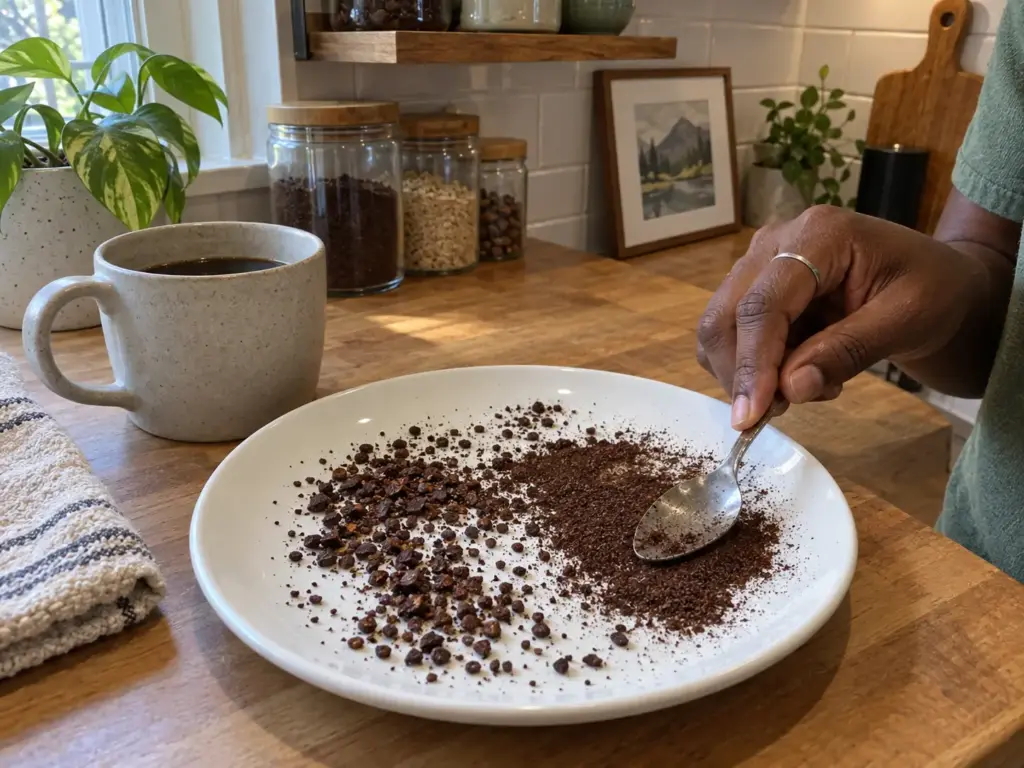
Most bad cups lean one way. They’re sour, or they’re bitter, and a single change in the right direction pulls them back toward the middle. The cup that leans both ways at once is the one worth slowing down for, because that double complaint says something about the grounds rather than the beans.
Bitter and Weak in the Same Sip
Start with the two directions. A sour, thin, weak cup is under-extracted: the water drained through before it pulled enough out of the grounds. A bitter, harsh, astringent cup is over-extracted: the water kept pulling after the pleasant part was done and dragged the heavier compounds out with it. Because the two sit on opposite sides, any single change that rescues one of them pushes the other further off.
That’s what makes the diagnostic simple. If tomorrow’s cup is harsh and thin together, the grind is the first suspect, because poor grind consistency is the one fault that produces both in a single brew. If the cup is only sour, or only bitter, you don’t need a new grinder yet: one grind step, or the water, is the likelier answer.
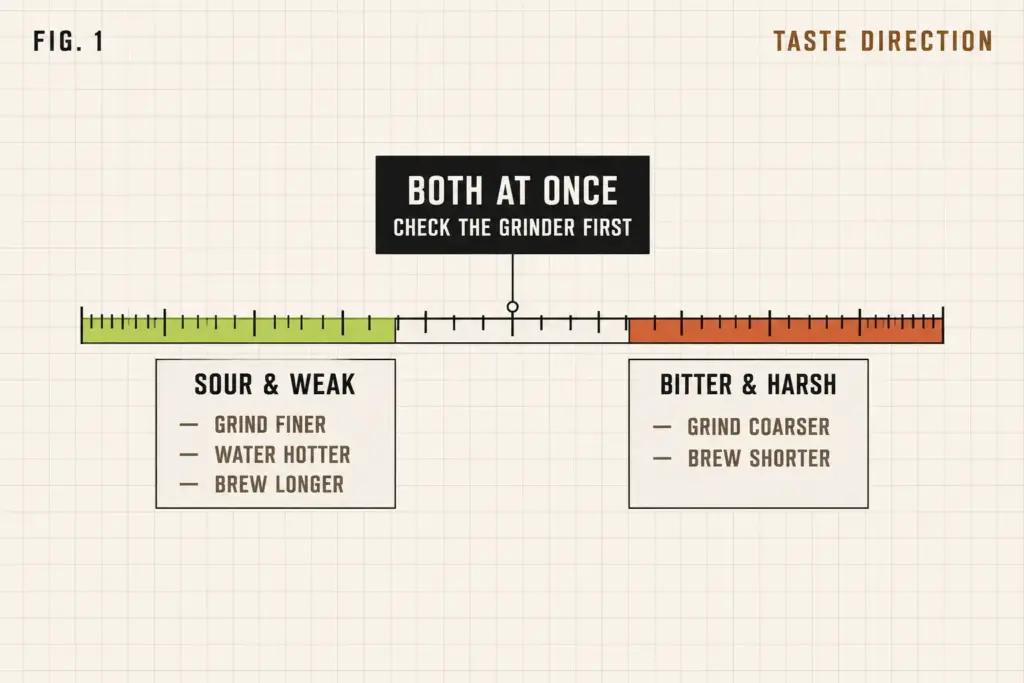
You can check it without tasting anything. Spread a spoonful of fresh grounds on a white plate or a paper towel near a window, and a blade-ground batch shows powder and pieces the size of cracked peppercorns lying side by side. The powder is the part to watch. On r/Coffee, u/cajunflavoredbob found that “the stuff that stays stuck to the paper towel is the ultra fine stuff that leaves behind a ton of sludge in my cup”, and that fine layer is the same material turning your cup harsh.
Judge the cup once it has cooled to warm, not straight off the brewer. Heat flattens both the sour edge and the dry, harsh finish, so a sip at drinking-hot temperature can pass for a cup that is only weak. Ten minutes later the two tastes separate on your tongue, and that is when you can tell a one-direction cup from a muddy one.
Why the Two Tastes Don’t Cancel Out
It seems like the bitter dust and the sour chunks ought to average out into something drinkable. They don’t, because they extract on completely different clocks. Fine dust has so much surface that it gives up everything, harsh compounds included, in the first moments of contact, while a chunk the size of a lentil has barely started by the time the brew ends. You drink both results layered rather than blended, and the sweetness that should sit between them never shows up, which is how u/the_cox put it on r/Coffee: “They don’t cancel each other out, so it just makes the cup taste muddy.”
In a drip basket or a pour-over cone the dust does a second piece of damage. It washes down into the paper and clogs it, the water drains more slowly, and the whole brew sits on the grounds longer than the machine intended, which gives the harsh side one more push while the chunks still don’t catch up.
Grinding finer for a sour cup is sound advice on a burr grinder, where one step moves every particle a little smaller (that’s what one grind step changes in the cup). On a blade grinder the same advice turns into “run it longer”, and running it longer shrinks the chunks while the dust keeps piling up. The sourness fades, the harshness climbs, and the cup travels from one kind of muddy to another without ever passing through balanced.
More seconds, same spread.
When the Grinder Isn’t the Culprit
Plenty of wrong-tasting cups have nothing to do with the grinder, and they give themselves away by pointing in only one direction. Stale beans taste flat and papery, and when the hot water hits them they barely bloom, because the gas that makes fresh grounds swell has already gone. That’s the bag, not the blade, and it’s the first thing to rule out before you question grinding your own beans at home.
A drip coffee maker whose water temperature runs low, often because hard tap water has scaled it up, makes a cup that’s sour or thin every time, whatever grinder fed it. A carafe left on the warming plate goes bitter and burnt in one direction only, and it gets worse the longer it sits. None of those three will show you dust and chunks on a white plate, and none of them is fixed by a new grinder.
How a Blade Grinder Chops Coffee Beans
The cup points at the grind, so the next question is why a blade grinder makes dust and chunks every single time, however carefully you work the button. The fault isn’t bad luck or bad technique. It’s built into the way the machine cuts.
A Spinning Blade Has No Setting
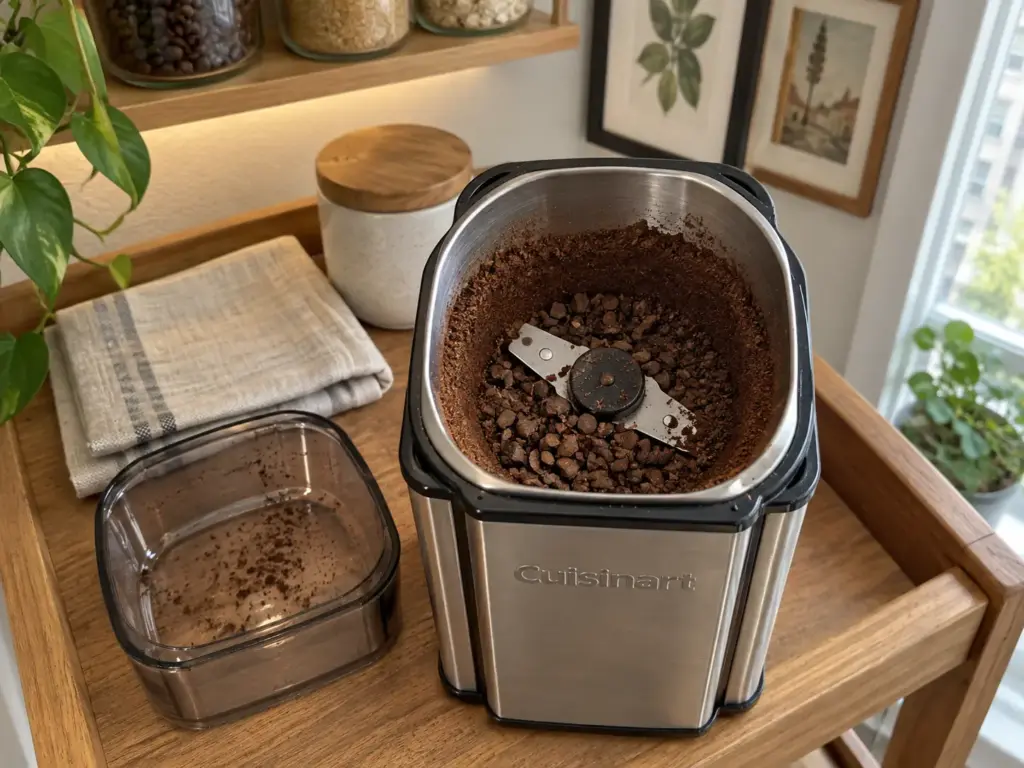
A blade grinder is a small motor with a two-armed steel blade at the bottom of a grinding chamber. It spins fast and chops whatever it hits, and the size you end up with depends on two things only: how long it runs and how full the chamber is. There’s no gap between two surfaces, so nothing decides when a piece is small enough to stop. As u/golden_one_42 described it on r/Coffee, blade grinders “smash the ever living hell out of the beans, resulting in really uneven bits, and lots of debris and dust.”
The Cuisinart DCG-12BC Grind Central is a typical example: stainless steel blades, one-touch operation, a compact housing that fits in a cupboard. And the part that gave out for one owner wasn’t the blade at all: in a Fixya support thread, a unit used lightly stopped grinding after about 18 months because the plastic hub coupling the blade to the motor shaft had started to slip, and getting it back meant taking the grinder apart.
Most people settle on a number by habit, something like ten seconds, and that number only means something at one fill level and one set of beans. The next morning you hold it a beat longer because the kettle clicked off, and the cup changes without any reason you could name. “One step finer” doesn’t exist on this machine, because there’s no step to take.
Dust and Boulders From the Same Pulse
Inside the chamber, the beans sitting low near the blade get hit again and again. The ones flung up against the wall and the lid ride the air and come back down less often, so they get hit far less. That’s where the two ends of the batch come from: fines that have been chopped a dozen times and boulders that were barely touched, ground in the same pulse.
Every brew method, from a moka pot to a V60 to an AeroPress, wants a particular size, and the grind size each brew method wants is a target a blade has no way to aim at. The dose moves the result too. Grind a small amount for one mug and a full chamber for the carafe for the same number of seconds, and the small batch comes out finer, because fewer beans each meet the blade more often.
Weigh the beans on a kitchen scale instead of scooping them. With the same grams in the chamber every morning, the fill level stops moving (and so does your brew ratio), and the seconds you hold the button finally mean the same thing from one day to the next. It’s the closest a blade grinder gets to a setting.
Speed, Heat and Static
A blade spins much faster than a burr set ever turns, and that speed has two side effects. The first is heat generation: the friction warms the grounds before any water touches them. The second is static, so the finest dust clings to the lid and the chamber walls instead of falling into your filter. What you tap out is never quite the whole batch, and the part left behind is the finest part.
Of the three, heat is the smallest problem in my view. The uneven size does far more to the cup than a few degrees of warmth in the grounds, and a blade that ran cool would still make dust and boulders.
Getting a More Even Grind From the Blade Grinder You Own
A blade grinder can’t be made even. It can be made less uneven, though, and that costs nothing today. Two changes, in order, with a cup brewed and tasted between them.
Short Pulses, Then a Shake
Change one: stop holding the button down in one long run. Switch to pulse grinding: short bursts of 3 to 5 seconds, with a shake of the chamber between them and the lid held on. The shake drops the big pieces back down to the blade and lifts the dust away from it, so the next pulse works on the chunks instead of pulverizing the powder again.
The Hamilton Beach Fresh Grind 80335R is the blade grinder already on a lot of counters: stainless steel blades, a removable chamber that goes in the dishwasher and holds enough for up to 12 cups. CoffeeGearZone’s hands-on review found pulse-and-shake brought its drip and French press results up to “Excellent” and “Good”, which is a real improvement for free. The same testing rated it “Inconsistent” with “some dust, chunks” at pour-over fineness and “Not suitable” at espresso, and after 12 to 18 months of use the reviewer found the blade noticeably duller, the output chunkier and the clear lid stained from dark roasts.
Brew the next cup exactly as before, same beans, same amount, same machine, and taste. If the change worked, the dry, harsh finish softens and the thin middle fills in a little. If the cup now tastes flat and sour, the batch came out coarser overall than your old long run, so add one more pulse tomorrow and taste again.
Not everyone hears the difference, and that’s worth knowing before you spend anything. On the same r/Coffee thread, u/actualxchange said “I’ve never tasted the difference. With a blade you just learn to get the right average grain size”, while u/ebzinho, who went “from a literal smoothie blender to an Encore”, was “shocked at how much better the coffee was”. Both are telling the truth about their own cups, and the plate test from the first section tells you which camp you’re in.
Let the grounds sit in the chamber for a minute before you tip them out. The finest dust settles to the bottom, so the last scrape is the dustiest part of the batch. For a French press, pour out the loose grounds and leave that final film behind rather than scraping it in: it’s a small amount of coffee and a large share of the sludge.
The Sieve Test Before You Spend Anything
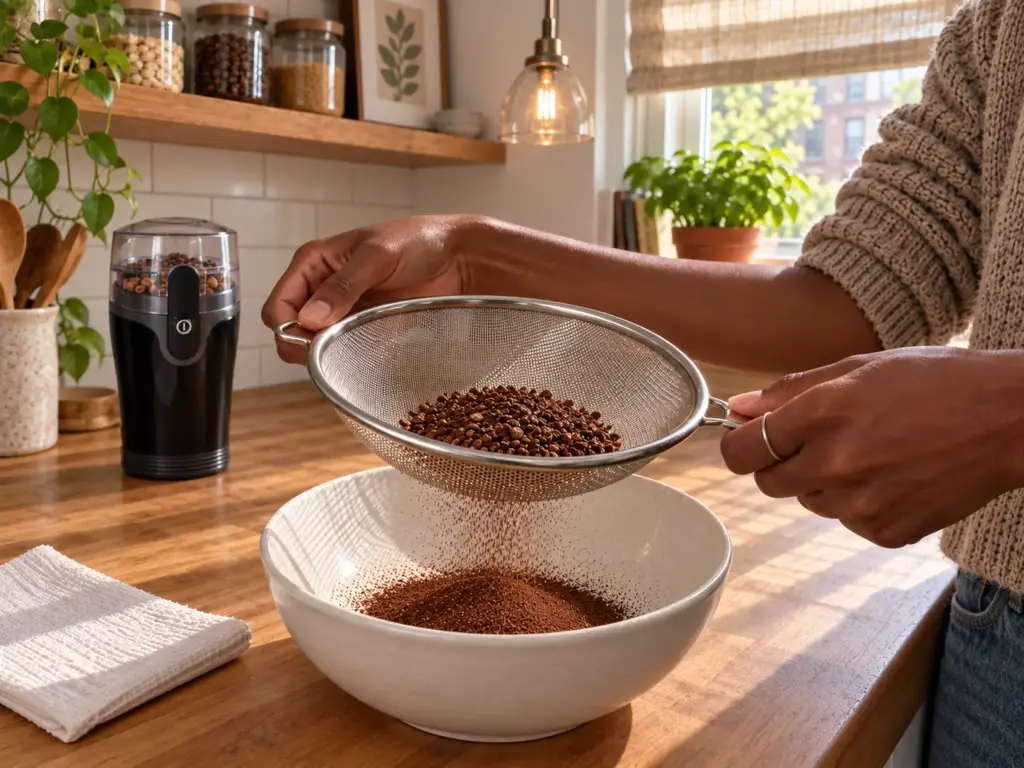
Change two, and only if the cup is still muddy after the pulses: sift. Grind as usual, then shake the grounds through a fine kitchen sieve over a bowl.
u/cajunflavoredbob on r/Coffee ran a blade grinder for French press for a long time and blamed the sludge in their cup on the press filter, until the sieve showed the blade chopping part of every batch “ultra fine along with the larger chunks I wanted.” Their rule from then on was simple: “the stuff that didn’t fall through the sieve was the stuff I wanted for the French Press. The stuff that fell through was waste.”
Brew with what stays on top. Or rather, look first at what fell through, because the size of that pile is the most useful number you’ll get out of this whole exercise. A thin dusting means the pulses are doing most of the work; a pile that looks like a third of your dose means the blade is wasting a lot of every bag.
The sifted cup should taste cleaner, with less grit at the bottom and less of that dry finish. It may also taste a little weaker, since you threw away part of the dose. Leave that for the following cup, where the one change is a few more beans in the chamber before grinding.
If the pile under the sieve stays big no matter how you pulse, that’s the ceiling of the blade, not of your technique. The smallest step up from there is a budget hand grinder with real burrs, which gets you a fixed gap without the cost of an electric burr grinder.
Where a Blade Grinder Still Does the Job
Buying a burr grinder is the obvious recommendation, and for a reader who only makes French press or cold brew it stops being obvious. Both use a coarse target and a long steep, and that combination hides some of the spread: the chunks have minutes to catch up, and a coarse batch sifted once carries little of the dust. Pulse, shake, sift, and a blade can make a French press you’d happily drink; when you do want an upgrade for it, the grinders that suit a French press don’t need to reach the fine end at all.
Spices are the other job a blade does well, which is reason enough to keep it on the counter as a spice grinder after a burr grinder arrives. Consumer Reports’ long-term Encore owner keeps a small grinder just for spices (cardamom in the morning drip is nobody’s plan). And a blade still beats a bag of pre-ground coffee for most readers: as u/HamHockShortDock put it on r/Coffee, “fresh ground beans are 1000% better than pre ground even if they are uneven.”
How a Burr Grinder Sets One Size and Holds It
If the sieve showed more dust than you’d like, this is what a burr grinder changes. Not the beans, and not the speed: a fixed gap that every piece has to pass through before it reaches your filter.
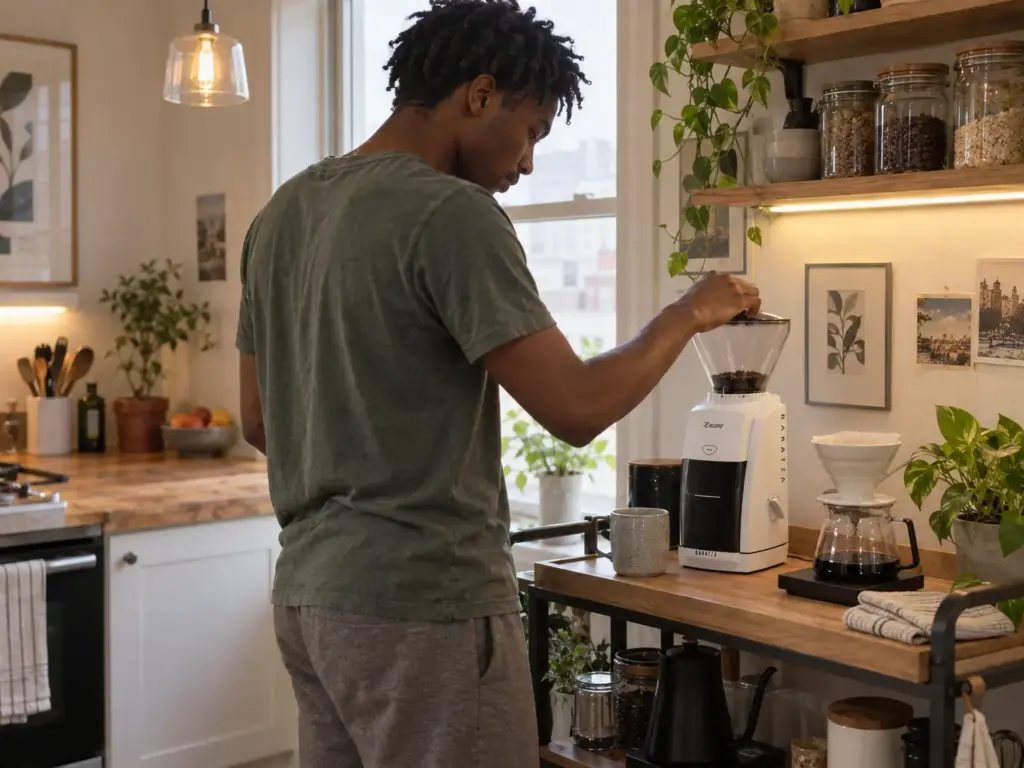
The Gap Between Two Burrs Sets the Grind
A burr grinder has two hard, toothed surfaces, one fixed and one turning, with a gap between them. A bean breaks down between the burrs until its pieces are small enough to fit through that gap, and then they fall out, which is where a uniform particle size comes from. u/brewingexcellence on r/Coffee compared them to kitchen tools everyone knows: burr grinders “operate like a pepper grinder or a grain mill”, and “the two burrs will be adjusted closer or further apart” depending on how fine or coarse you want the grounds.
Evenness here is something the coffee world measures rather than argues about. Among the Specialty Coffee Association’s published brewing and grinding standards is one written specifically for home coffee grinders (SCA-320), and the SCA certifies home equipment against its own standards. A blade grinder has nothing for a standard like that to grab onto, because its output depends on the seconds and the fill.
The anatomy (which burr turns, how the adjustment collar moves the gap, where the grounds exit) is its own subject, covered in how a burr grinder works, part by part.
Why One Step Finer Finally Means Something
Because the gap sets the size, the same setting gives you the same grind tomorrow, and the diagnostic from the first section becomes something you can act on. Sour and thin: one step finer, brew the same way, taste. Bitter and harsh: one step coarser, brew, taste. That loop, one click and one cup at a time, is how you dial in a grinder, and it’s the thing a blade grinder can’t do.
The methods that punish an uneven grind most are pour-over and drip, where the water runs through the bed once and doesn’t wait for the chunks to catch up. Those are also the methods most home readers use, which makes grinders for pour-over and drip the list most people land on after this one.
The Baratza Encore is the most documented example of the idea: 40 mm conical steel burrs and 40 numbered settings on a stepped adjustment, so every step is a place you can return to. Consumer Reports has a writer who has lived with one for years, which is rare evidence past the unboxing week. The same writer is clear about where it stops: if you want a “very precise, very fine grind” for espresso, the Encore “maybe isn’t for you.”
One detail catches almost everyone after their first adjustment. Some grounds stay inside the grinder, in the burrs and the exit chute, so the first dose after a change still comes out partly at the old setting. The first cup after a click isn’t the verdict.
After you move the setting, run a small handful of beans through and throw those grounds away before you grind the real dose. It pushes out what was sitting in the chute at the old size, so the cup you taste is the cup of the new setting and not a blend of two.
Conical or Flat Burrs, in Brief
Once burrs are settled, the next word on the store page is conical or flat, and it’s easy to assume that’s the next big decision. For most home brewing it isn’t. The jump from a blade to any burr set is far larger than the difference between the two shapes.
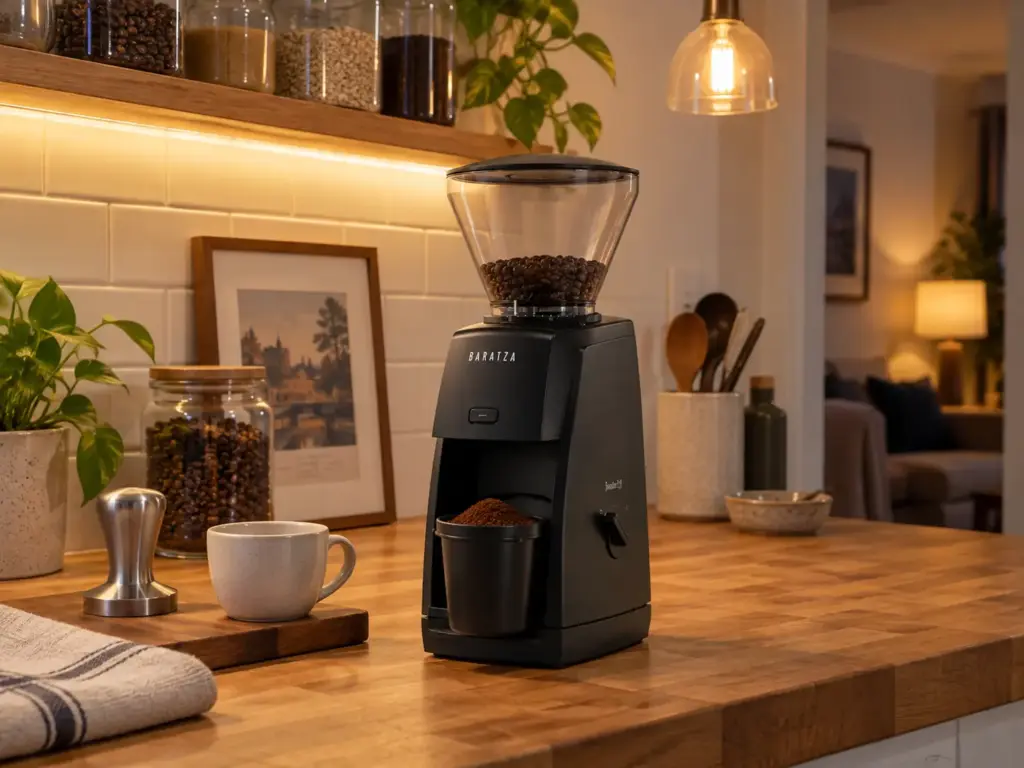
A conical burr is a cone turning inside a toothed ring; a flat burr set is two parallel rings facing each other. Both hold a fixed gap, and both are adjusted by moving that gap. Most entry-level home burr grinders are conical, including the Encore and the OXO in this article, and the finer points of the choice live in conical vs flat burrs.
Where the choice starts to matter is at the fine end, for espresso. Even there, what decides a home grinder is how fine it can go and how small its steps are (or whether it has a stepless adjustment with no steps at all), more than the shape of its burrs. That’s why the standard Encore, the easy pick for drip, stops being the easy pick when espresso is the goal, and the Encore’s own fine-end ceiling is the most common version of a grinder that won’t go fine enough.
Baratza’s answer is the Baratza Encore ESP, with the same 40 mm conical steel burrs built for the espresso range the standard model can’t reach. It costs more than the standard Encore, and every bit of that extra goes to a fine range that drip, pour-over and French press readers will never use. If espresso is the plan, the wider list of grinders built for espresso is the place to compare it.
Cost, Noise and What Wears Out Over the Months
Week one says a burr grinder beats a blade, and it does. What decides whether the switch suits your mornings is what each one is like to live with after the first month, and the catch of switching that the box leaves off.
Side by side, by type rather than by model:
| What decides it | Blade grinder | Burr grinder |
|---|---|---|
| What sets the size | How long it runs and how full the chamber is | The gap between two burrs |
| Consistency | Dust and chunks in every batch | Mostly one size, with a few fines |
| Adjustability | None, only seconds and pulses | Numbered steps you can return to |
| Noise | Loud, with a sharp whine | Still noisy, less harsh by owners’ accounts |
| Heat and static | Spins fast, warms and charges the grounds | Turns slower; grounds still cling in the chute |
| What wears first | The blade dulls and the batch gets chunkier | Burrs dull slowly; clumping is the first sign |
| Methods it suits | French press, cold brew, spices | Drip, pour-over, French press; espresso needs a grinder built for it |
What You Give Up for an Even Grind
Money comes first. An entry-level electric burr grinder costs several times what a blade grinder does, and a budget grinder turned by hand, mentioned earlier, is the cheaper way into real burrs. The daily costs are smaller: a taller machine on the counter, a hopper to keep clean, and grounds that stay inside between uses.
Noise level is a trade rather than a win: both types are loud, and owners describe burr grinders as still noisy, just less harsh than a blade’s sharp whine. If the grinder runs while someone else in the house is asleep, the quieter grinders are a category of their own.
The OXO Brew Conical Burr Grinder is the second entry-level grinder worth knowing, at a different price tier from the Encore: stainless steel conical burrs, 15 settings plus micro-adjustments between them, and one-touch grinding. No complaint about it repeats with a source you can check, which is not the same as having no weak spot. Expect the tier’s usual limits: a chute to brush out like any burr machine, and no promise at the espresso end.
What Wears Out on Each One
A blade dulls, and a dull blade smashes rather than chops, so the same seconds give a chunkier, more sour batch as the months go by. That’s the CoffeeGearZone finding on the Hamilton Beach at 12 to 18 months, and it means the timing you learned in the first weeks slowly stops working. The full picture for both types is in how long a coffee grinder lasts.
But burrs wear too, slowly, and without a single day when they fail. On Home-Barista, the owner of a Baratza Vario W bought used noticed “lots of clumps in the ground coffee” after about a year and a half.
A long-time member’s reply, from memory rather than a spec sheet: “Burrs go bad slowly, so some suggest changing them at half ‘rated life’. Maybe five years in home use?” It’s a rule of thumb, but it matches what burr wear looks like at the counter: clumping, and a creeping need to grind finer for the same cup. Burr replacement is a part swap, not a new grinder, which is a large part of the durability case for burrs.
At the other end of the scale, according to Consumer Reports’ decade-long test of an entry-level burr grinder, “For coffee, you want a burr grinder, which uses multiple surfaces to crush the beans rather than cut them, which is what the typical blade grinder… does.” Its writer’s Encore has been used daily for “going on 10 years” with burrs that “don’t show much sign of wear and tear at all.” When the signs do show up, when to replace grinder burrs covers the timing and the tells.
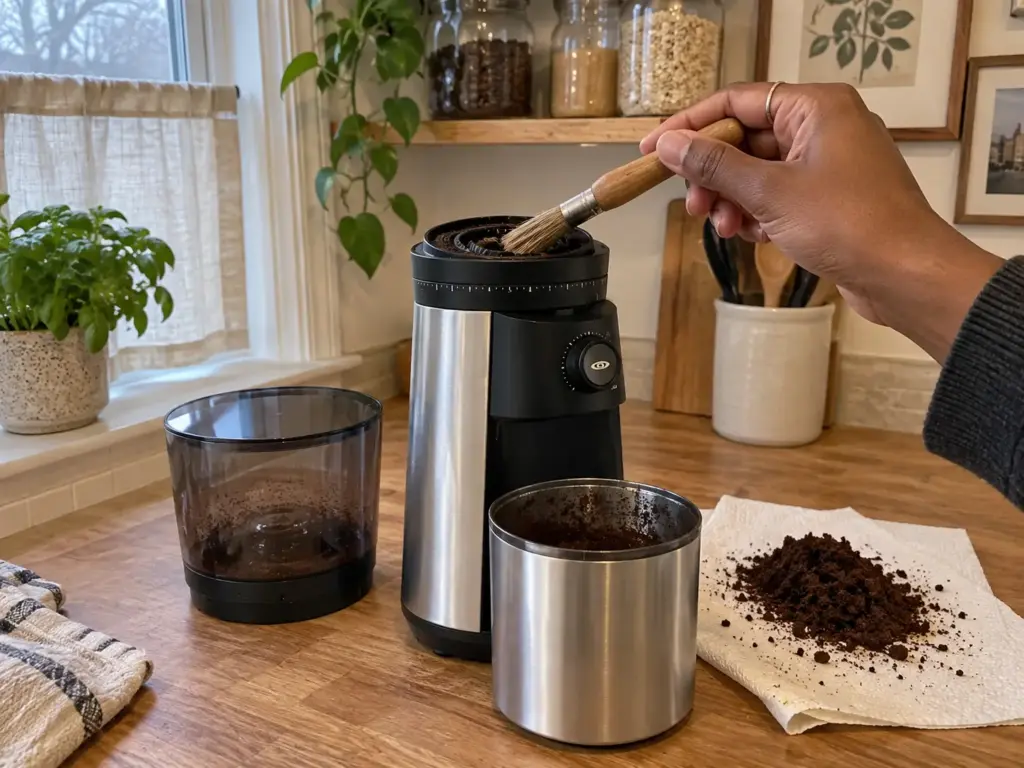
Every few weeks, unplug the burr grinder and brush out the exit chute and the burrs with a dry brush. Old grounds packed in there go stale and fall into the next dose, and a cup that slowly turns flat and papery with fresh beans in the hopper is often the grinder’s leftovers, not the bag.
The Burr Grinder That Still Disappoints
The whole recommendation carries a catch of its own: burr versus blade is closer to a range than to two tiers. A cheap burr grinder is a real step up from a blade without being the full jump, and the Encore’s ceiling at the espresso end shows that even a well-regarded one has a limit.
The Cuisinart Electric Burr One-Touch Automatic Grinder sits at the low end of that range: stainless steel burrs, 18 positions, one-touch operation. Eighteen positions against the Encore’s 40 means fewer stops to land between two tastes, so if your cup falls between two of its settings, there’s no in-between to try. No repeated complaint about this exact model turned up with a source behind it, so the step count is the weak point to weigh. If you want the low end without the trade-off, cheap grinders that still grind evenly compares the options that hold up.
Look at the Grounds Before You Buy Anything
Three things carry over to tomorrow’s cup:
- A cup that’s harsh and thin in the same sip points at the grind before the beans, the water or the machine.
- The free changes come first and one at a time: short pulses with a shake, then the sieve, with a cup tasted after each.
- A burr grinder gives you a size that holds, so a grind change finally means one thing, but the cheapest ones still have limits at the fine end and fewer steps to work with.
A month from now, tip a spoonful of fresh grounds onto a white plate again: clumps, or a spread of dust and chunks where there used to be one size, mean the grinder has drifted, whichever type it is.
For tomorrow, change one thing. Grind in short pulses with a shake between them, brew exactly as you always do, and taste for the dry, harsh finish backing off. If it does and the cup still falls short, the next question is choosing the grinder itself, starting with whether you want a hand grinder or an electric one.
Frequently Asked Questions
01Is a burr or blade grinder better for coffee?
A burr grinder is better for most brewing, because it breaks beans down to one repeatable size, so the cup extracts evenly and a grind change actually moves it. A blade grinder is still acceptable for French press, cold brew and spices, especially if you pulse it and shake the chamber.
02Can you really taste the difference between burr and blade?
Often yes, and it usually shows up as a blade-ground cup that tastes harsh and thin at the same time. Some owners never notice it with coarse methods like French press. The finer your brew method, the bigger the difference becomes.
03Is a blade grinder better than pre-ground coffee?
Usually yes, because whole bean coffee ground right before brewing keeps more of their aroma than coffee ground weeks ago, even when the grind is uneven. Grind in short pulses and shake the chamber between them to narrow the spread of sizes.
04Can you use a blade grinder for a French press?
Yes, with some care: pulse and shake for a coarser, more even batch, since the long steep and coarse target forgive part of the spread. If the cup turns muddy or leaves sludge at the bottom, sift out the fine dust first.
05What is the best type of grinder for coffee beans?
A burr grinder with steps fine enough for the way you brew is the best type for coffee beans at home. Conical burrs are the usual home choice, and espresso needs a grinder built for fine grinding.

How did your cup turn out?
No comments yet. Tell us what you changed — and whether the needle moved.