
We may earn a commission when you buy through links on this page. It never changes what we recommend. How we pick
On this page7 parts
- What Type of Burr Grinder Is Best Depends on the Spread
- Sour or Bitter Is the Setting, Not the Burr Shape
- The Best Type When One Grinder Does Everything
- What Each Type Asks of You Over the Months
- When a Flat Burr Grinder Is Worth It
- Turn the Dial Before You Change the Burr Shape
- Frequently Asked Questions
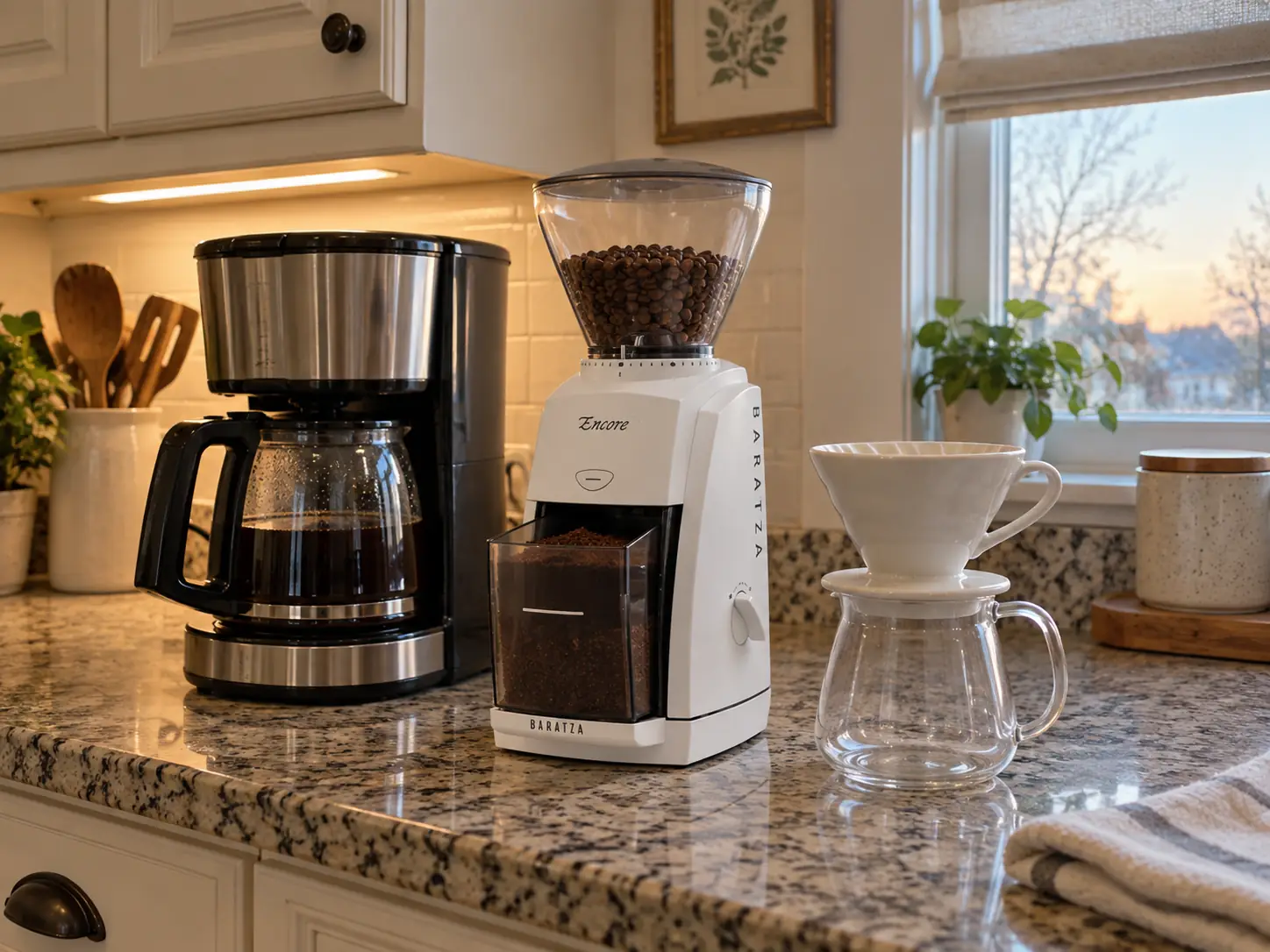
The blade grinder is gone, or about to be, and every grinder page you open now prints one word under the photo: conical, or flat. Read five of those pages and the verdict looks settled, with flat burrs as the upgrade and conical as the place you start, and the forums half agree. Then you look at your own counter, where one grinder has to feed the weekday drip pot and the Saturday pour-over from the same bag, and the question of what type of burr grinder is best stops being about which shape wins on paper.
Both shapes hold a fixed gap, so both grind far more evenly than a blade. What the shape changes is how the particle sizes scatter around the number on the dial, and across two dozen measured grinders that scatter leans one way for conical sets and the other for flat ones, pulling the cup toward body or toward clarity rather than toward better or worse. What follows covers what each shape does to the grind and the cup, why a sour or bitter cup is almost never the shape’s fault, which type to buy when one grinder does every job, what each asks of you over the months, and when a flat burr grinder earns its place.
Quick Answer
For a kitchen with one grinder for every brew, a conical burr grinder is the safer type: its wider spread of particle sizes leans toward body and sweetness and forgives small slips in dose, time or setting. Flat burrs lean toward clarity and bright acidity, and they’re best when light-roast pour-over is the daily cup. Neither wins everywhere.
What Type of Burr Grinder Is Best Depends on the Spread
Both shapes clamp the beans through a fixed gap, and both leave a blade grinder far behind; that’s the bigger jump from a blade to any burr, and nothing in this article argues with it. So the difference that’s left is subtler than the product pages make it sound. It isn’t whether the grind is even, but how the sizes scatter around the setting, and that scatter is what reaches the cup.
A Cone Crushes, Two Discs Slice
Put two product pages side by side, one saying conical and one saying 64 mm flat, and the word looks like it must be worth the difference in price. Strip the label off and each word describes a path the bean takes. In a conical burr set, a cone turns inside a toothed ring and the beans are crushed as they work their way down; in a flat burr set, two parallel discs face each other and the beans are sliced as they’re flung outward from the center.
Grinder makers and retailers agree on that much, and it’s enough to explain what follows. Crushing cracks the pieces as they travel, and every crack throws off a few very small fragments, the fines, alongside the pieces that come out at the size the gap allows. Slicing between two flat faces tends to leave more of the dose close to one size, with less of it shattered into dust.
Neither shape stops making fines, and neither lets a whole bean through. The difference is in proportions, and proportions are exactly what shows up in a cup.
That’s as far as the anatomy needs to go for this question. The parts themselves, the ring, the discs and what the adjustment actually moves, are laid out in how a cone and a pair of discs sit inside the grinder.
What Two Dozen Measured Grinders Show
The claim that flat burrs grind more evenly has a measurement behind it, and the measurement is more careful than the claim. Coffee ad Astra analyzed roughly 300 particle-size distributions from 24 espresso grinders, sorting them by how many peaks each spread had and how tightly the sizes bunched together. According to Coffee ad Astra, “Conical burrs appear on average less unimodal and less uniform, although there is a large overlap.”
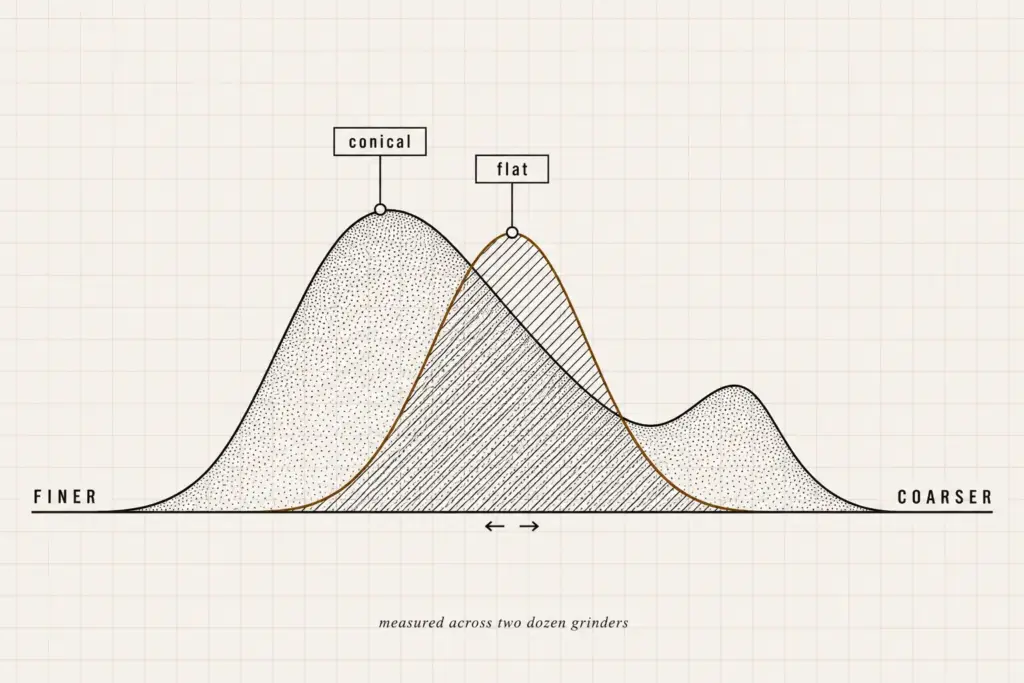
Two phrases in that line carry the weight. A unimodal distribution has one peak: most of the particles cluster around a single size. A bimodal distribution has two, a main group near the setting plus a second, smaller hump of fines, and bimodal is the word coffee forums reach for when they describe a conical grind.
The other two phrases, on average and large overlap, matter just as much. They mean the shapes are tendencies, not categories. A particular flat set can grind less evenly than a particular conical one, and the analysis says outright that such pairs are easy to find, which is why the model and its build count alongside the shape.
Grind consistency is a measurable property, not a matter of taste: the Specialty Coffee Association publishes a standard with test methods for home coffee grinders, SCA-320. Its contents are for members, so the particle size distribution findings in this section come from the published analysis above, not from the standard.
A second finding gets lost whenever the result is shortened to “flat means fewer fines.” In the same analysis, the more unimodal grinders ended up dialed finer, and once dialed in they did not simply carry fewer fines; by one measure they carried slightly more per gram. My reading of why, and it’s a reading rather than a finding: with less fine dust packing the gaps, water runs through faster at a given setting, so the dial goes finer to hold the shot time, and a finer setting makes fines of its own.
The shape sets a tendency. Where you end up on the dial moves the numbers again.
There’s one more limit to the data, and it matters for a drip kitchen. Every distribution in that analysis was ground for espresso, the finest setting most grinders have. At a pour-over or French press setting, the same lean is what grinder makers and forum regulars describe, not something that dataset measured, so the direction is well supported and the size of the gap between shapes at coarse settings is an open question.
The community’s own before-and-after reads like a plain-language version of the same curves. On an r/Coffee thread asking whether flat burrs are universally better, one commenter who moved from a conical grinder to a flat one described the switch like this: “Conical was faster but with a bit more size variation, while the new flat burr grinder gave a much more even grind.” Faster and looser against slower and tighter, which is the trade in one sentence.
Body or Clarity in the Cup
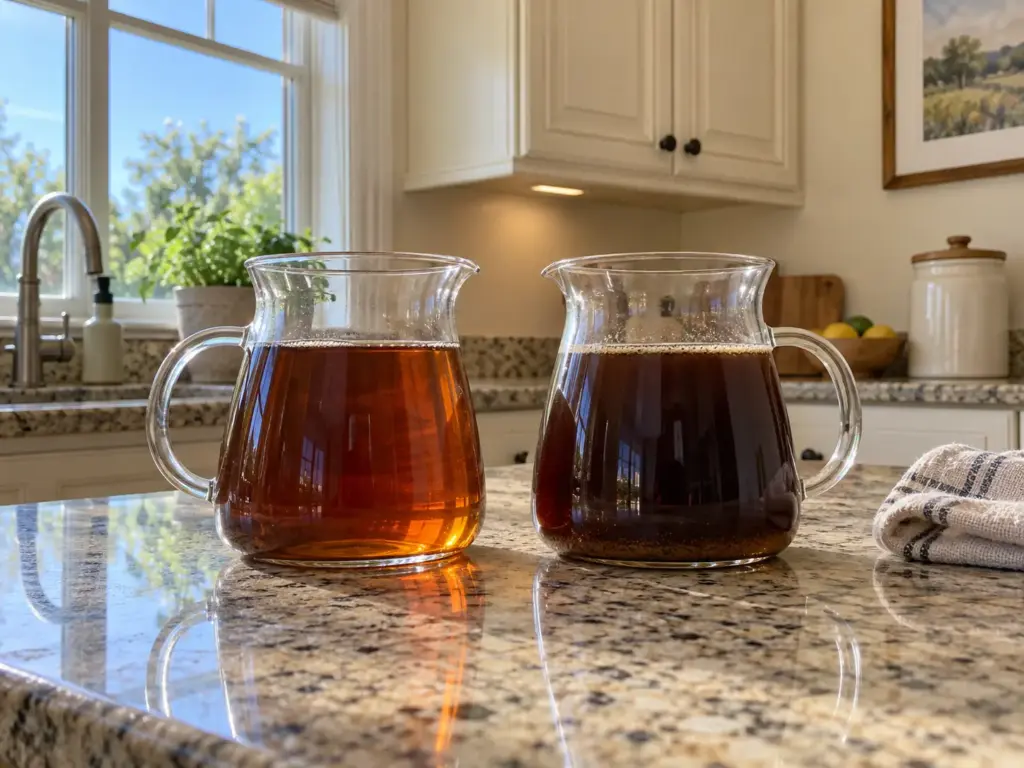
The spread matters because every particle size extracts at its own pace. Fines give up their flavor fast, including the heavier, bitter-sweet compounds that only come out late, while the larger pieces give up less in the same time. A wide, two-humped spread brews a blend of the two, which reads on the tongue as weight, sweetness and a fuller mouthfeel, with the edges of the flavors softened into each other.
A narrow spread extracts more evenly across the whole dose. The flavors arrive separately, the acidity stands up on its own, and a coffee with fruit in it tastes like fruit rather than like a general sweetness. That’s what people mean by clarity, and it’s why the two shapes get described as body against clarity rather than good against bad.
People who’ve owned both describe the same split. A commenter on that r/Coffee thread who runs two cafés says the shop’s conical grinders are “quieter, faster” and give “a sweet and Chocolatey cup,” while the flat grinders bring the brightness and the acidity forward, and sums it up as “Different grinders for different purposes.” One shop, both shapes, each on the job it does best.
Roast pulls in the same direction, which is why the two get paired so often. Darker roasts already lean toward heavy, bitter-sweet flavors and have less bright acidity left to show, so a conical grinder’s body sits comfortably with them; lighter roasts keep more of the fruit and acidity that a flat grinder’s clarity puts on display. Half of the body-or-clarity answer is what the roast level itself changes in the cup, and the grinder decides how much of it comes through.
You can sometimes see the lean before you taste it. Ground for the same brew, a conical grind tends to settle into a denser mound in the bin, with a faint film of dust clinging to the walls, while a flat grind tends to pour out looser and more uniform to the eye. The eye can’t count fines, so treat it as a hint about which way the cup will go, nothing more.
Side by side, the two shapes compare like this, with every row describing an average and a large overlap:
| What decides it | Conical burrs | Flat burrs |
|---|---|---|
| How they grind | Crush: a cone turning inside a ring | Slice: two parallel discs |
| The spread of sizes (on average) | Wider, in two groups (bimodal) | Narrower, in one group (unimodal) |
| What it leans to in the cup | Body and sweetness | Clarity and brighter acidity |
| How it treats small mistakes | Forgives more | Asks more to get right |
| Where it fits | One grinder for several methods; darker roasts; espresso with body | Light roasts, pour-over and drip where clarity is the goal |
| Grinders named here | Baratza Encore, OXO Brew Conical | Fellow Ode Gen 2 |
Sour or Bitter Is the Setting, Not the Burr Shape
Before anyone shops for a different burr shape to fix a cup they don’t like, the cup has to say which way it’s off. The two most common complaints, sour and bitter, point at the dial rather than at the geometry of the burrs. The shape only becomes the question once the dial has been ruled out.
Sour One Way, Bitter the Other
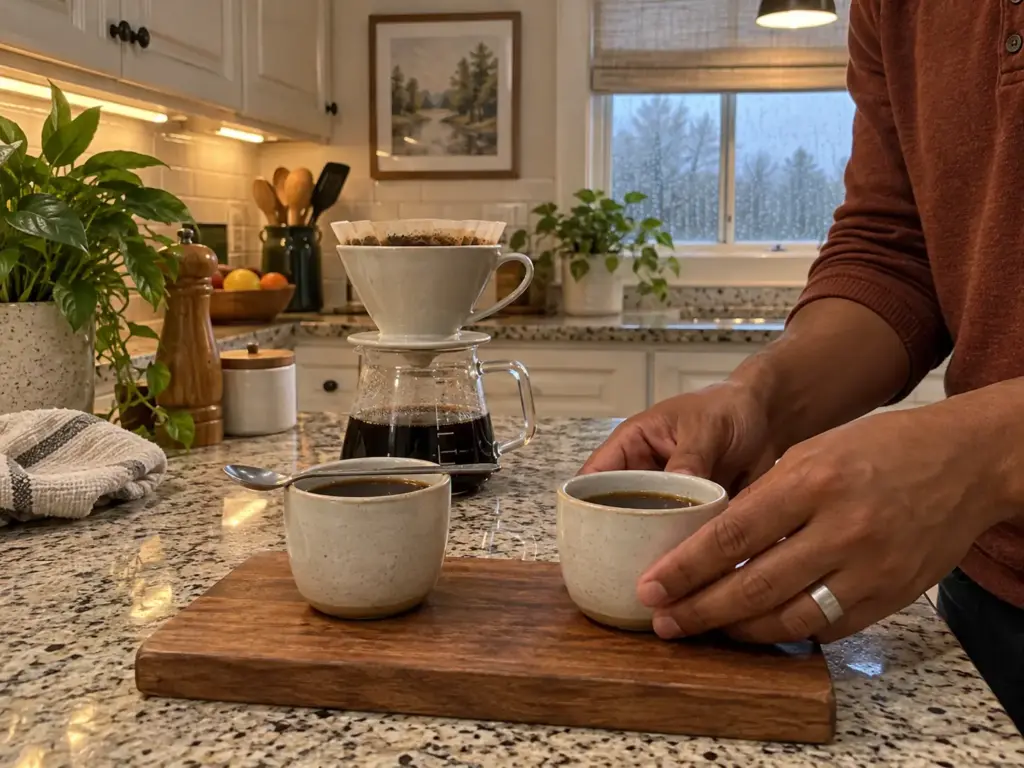
Say the Tuesday cup comes out sharp and watery, with a sourness that pinches the sides of your tongue, and Thursday’s, from the same bag, leaves a dry, puckering bitterness, an astringency that hangs on after the sip. Both are easy to pin on the burrs inside the grinder. Neither points there.
Sour means the water left before it finished. The grounds were too coarse for the brew, so the water ran past them and pulled out the quick, acidic compounds without the sugars and heavier compounds that come later, which is under-extraction. Bitter is the opposite: the grounds were too fine, the water had too much surface to work on, and it dragged out the harsh compounds at the tail end of over-extraction.
The direction decides the change. Sour and thin, go one step finer. Bitter and dry, go one step coarser.
Or rather, before touching the dial at all, make sure nothing else moved since the last cup you liked. The test works best with the same beans and the same dose on two mornings running; open a new bag the same day you change the setting and there’s no way to tell which of the two moved the cup. Then keep the water, the brewer and the dose still, brew, and taste the new cup against the old one.
If the sour edge has eased and there’s more sweetness underneath, the step was right. If the cup has swung over to dry and harsh, you went a step too far, so come back half a step if your dial has them, or keep whichever of the two steps tasted closer. A cup that improved but still leans the same way gets one more step in the same direction, and another tasting.
The roast moves the target, too. A lighter roast is denser and gives up its flavor more reluctantly, so it usually lands finer than a dark roast brewed the same way, which is why a lighter roast usually wants a finer grind. Change bags and the old number can turn sour overnight with nothing wrong with the grinder.
What No Setting Can Change
A dial moves the average grind size. It doesn’t change the shape of the spread around that average, because the spread comes from how the burrs break the beans, not from how far apart they sit. A conical grinder dialed in exactly still leans toward body; a flat grinder dialed in exactly still leans toward clarity.
So there’s a narrow case where the burr shape is the answer, and it only shows up after the sour-and-bitter test. The cup is balanced, neither sharp nor dry, and it’s still not the cup you want.
Maybe you brew light, washed coffees as pour-over and the cup tastes a little muddy, the fruit on the bag’s label blurred into a general sweetness. Or you brew a dark roast in a French press and it comes out correct but thin, without the weight you were after. That’s the burr shape talking, and only at that point does the conical-or-flat question earn your attention.
Most cups never get there. A grinder that makes a sour cup at one setting and a bitter one two steps away has already shown it can land in between, so the problem was the number, not the burrs. (If no setting lands in between, and every step jumps from one fault straight to the other, the steps may be too big for the brew, which is a separate question from the shape and comes up again further down.)
Before you shop for a different burr shape, brew three cups from the same bag on three mornings: one at your usual number, one a step finer, one a step coarser, with the dose weighed and everything else held the same. If one of the three tastes right, the grinder you own already reaches the cup you want. If all three miss the same way, muddy or thin rather than sour or bitter, write down which, because that’s the only complaint a different shape can answer.
How Sensitive the Coarse End Is
The spread around the setting isn’t a detail, and one home measurement shows how quickly it moves the brew. A poster on Home-Barista ran his espresso grind through a stack of sieves and pulled out about 4 grams of a 19.5-gram dose as the coarse fraction, the pieces the forums call boulders. With those 4 grams gone, his shot ran noticeably slower, and he noted he’d have to grind coarser to bring it back.
A longtime member of the forum replied with a caveat worth keeping. The cut he’d sifted, somewhere between 200 and 500 microns, was probably catching part of the main peak of the grind as well, not just boulders. So it’s one measurement with a generous definition of boulders, and it doesn’t tell you how much of a typical dose is oversized.
What it does show is how directly the coarse end of the spread steers the flow. Take some of it away and the water slows; leave it in and the water finds its way around those big pieces without extracting much from them.
Filter brewing has no shot clock, but the same physics is at work. In a pour-over, the fines settle into the paper and slow the drain, while the boulders at the other end give up too little and add a thin, sour note under everything else. In a French press, the fines slip through the mesh into the cup and the boulders sit in the pot barely touched.
That’s why the spread, and not only the number, is what the burr shape shapes. The shape decides how much of the dose sits far from the setting on either side. The dial can only slide the whole spread finer or coarser.
The Best Type When One Grinder Does Everything
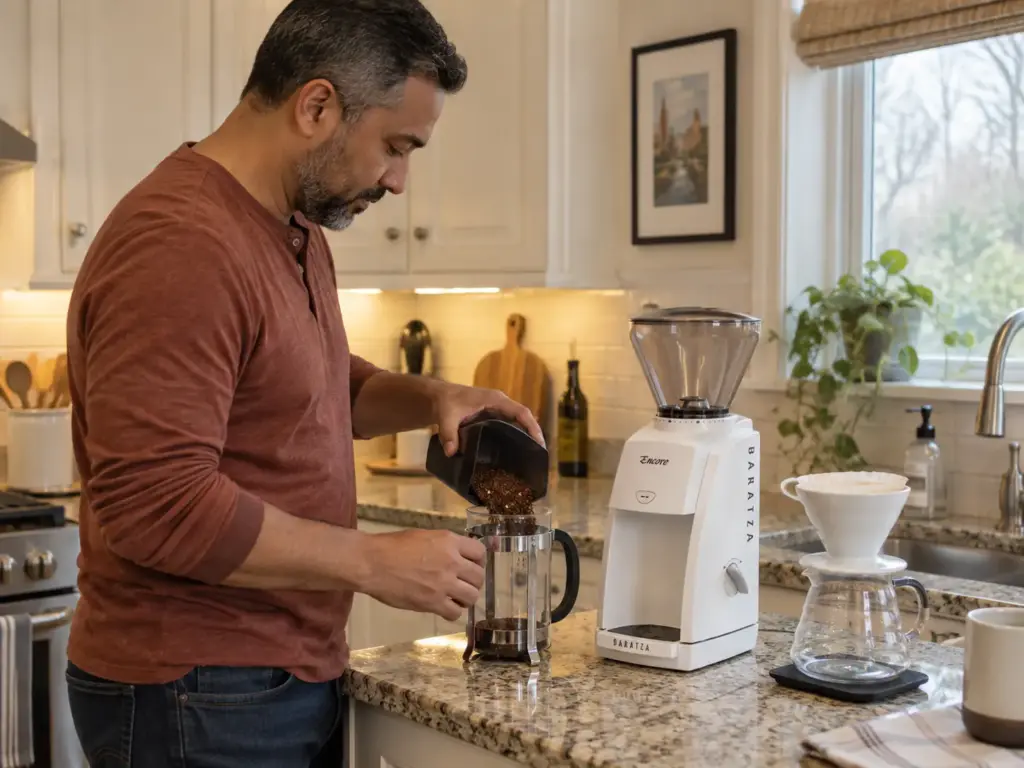
Most home kitchens don’t choose a burr type for one brew. The same grinder feeds the drip machine on Tuesday, a French press on Saturday and a pour-over when there’s time for one, sometimes for two people who like their coffee differently. So the useful question isn’t which shape wins at its best, but which one gives up the least across all of them.
Why a Wider Spread Forgives
The r/Coffee thread asking whether flat burrs are universally better has a comment that compresses the whole debate into two lines: “Bimodal is simply more forgiving, unimodal is far more demanding to get right.” The same commenter finished the thought with the verdict most of the thread circled around: “it’s not a matter of better or worse; it’s a matter of priorities and taste.”
Forgiving, in the community’s sense, means a grind that still tastes fine when the ratio, the brew time or the dose is a little off, which describes most weekday mornings. The reason sits in the spread. A wide, two-humped grind is already a blend: some of the dose runs a touch over-extracted, some a touch under, and the cup is the average of them.
Scoop a little too much into the drip basket, or pour a little too slowly over the cone, and the blend shifts. But it shifts gently, because no single particle size decides the taste on its own.
A narrow spread has nothing to average. When most of the dose sits at one size, all of it moves together: nail the brew and the cup is clean and precise, miss it and the whole dose misses in the same direction, so the sourness or the bitterness arrives undiluted. That’s the demanding half of the trade, and it pays off for someone who weighs every dose and times every pour.
It costs something for a household that scoops by eye. A wide spread hides a sloppy morning; a narrow one reports it.
The café owner from the same thread makes the point without meaning to. That shop runs conical grinders for espresso and milk drinks and flat grinders for single origins, both under one roof, each matched to what it brews most. A café can afford two grinders for two jobs.
A kitchen with one grinder can’t, and the same logic still applies: pick the shape that fits most of what gets brewed in your house, not the shape that wins in the abstract. In a house where drip coffee is most of the week and a French press comes out on weekends, that majority points to a conical set.
One Grinder From French Press to Drip
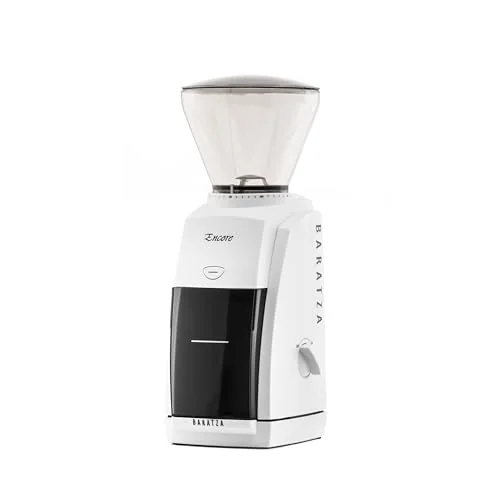
Range is the other half of the one-grinder answer, and here the specs speak plainly. The Baratza Encore puts 40 mm conical steel burrs behind 40 stepped grind settings that run from a French press grind at the coarse end, through drip and pour-over, to the coarse end of espresso. The Fellow Ode Gen 2, the flat-burr grinder this article comes back to later, scopes itself on its own listing to filter methods: pour-over, drip, French press and cold brew.
That contrast is where the upgrade advice runs into a real kitchen. “Flat burrs are the step up” quietly assumes the reader already owns a grinder for the other jobs, or plans to buy one. For someone with a single grinder, the flat pick built for filter coffee is a fine choice until the day an espresso machine arrives, and from that day it’s no longer the only grinder in the house.
A conical generalist doesn’t reach a true espresso grind either. Its dial does reach the coarse edge of the espresso range, which a grinder scoped to filter doesn’t claim at all, and it keeps the whole everyday range in one machine. If espresso is a real prospect, the grinder is only part of that decision, and which roast espresso usually wants shapes the rest, since the roast you plan to pull shots with also decides whether body or clarity is what you’ll want from the grinder you eventually add.
At the coarse end of the dial, a conical grinder’s wider spread matters less than it sounds. A French press’s metal mesh lets fines through no matter what ground them, and the long steep evens out a good share of the difference between sizes. What does matter at that end is that the coarse settings are actually coarse and actually repeatable, which is what to look for in a grinder for the French press end of the dial.
A grinder shared between a French press and a drip machine spends its life being turned back and forth across the dial, sometimes twice in one morning. A stepped adjustment is what makes that livable. Each person can count their way back to their own number instead of guessing, and a setting that worked on Sunday is still findable on Wednesday.
The Encore’s limit is written into its range rather than buried in a review: the dial stops at the coarse end of espresso, so a proper espresso grind is past its reach. For drip, pour-over and French press from one grinder, that limit never comes up.
The Cheaper Conical and Its Bigger Steps
Cheaper still is possible, and it’s where the word burr on a box starts to mean less. A thread on r/Coffee follows a reader who skipped the blade grinder on purpose, bought a budget grinder with disk burrs for a French press, and was still fighting a layer of dust that slipped through the press’s metal mesh. The poster’s own workaround was pouring the pressed coffee through a paper filter, which catches the dust and adds a step to every morning.
Cheap grinders can still do the job. A burr set grinds evenly only when it’s built to, though, and the coarse end is where a poorly built one shows it first.
The OXO Brew Conical Burr Grinder is an entry-level grinder that states its spec as plainly as the Encore does: conical stainless steel burrs, a 12-ounce hopper and 15 main settings. It gives a drip-and-French-press kitchen the same forgiving shape for noticeably less. The catch is arithmetic: spread across the span from French press to drip, 15 main steps means each click moves the grind further than one of the Encore’s 40, so a pour-over whose best cup sits between two of the OXO’s steps is harder to land.
For drip and French press, where a step either side of ideal still makes a good cup, bigger steps rarely get in the way. For pour-over, where the gap between a sweet cup and a faintly sour one is often smaller than one of those clicks, you’ll notice it as a cup that’s close at one setting and close the other way at the next. It’s one of several cheaper grinders that still grind evenly, and the right one depends on which brew sits at the center of your house.
When two people share one grinder, agree on a parking number, usually the drip setting, and put the dial back on it after every use. Each person then only has to remember an offset from it, so many clicks coarser for the French press, so many finer for the pour-over, and that offset lives on a note where their brewer is kept, not on the grinder. No one has to guess where the last person left the dial.
What Each Type Asks of You Over the Months
Week one flatters every grinder. The difference between the shapes that shows up on a real counter comes later, in how each one keeps its grind and what you have to do to keep it that way. The people who maintain these grinders are specific about the checks and quiet about the timing, so this section keeps to the checks.
Why Flat Burrs Get an Alignment Check
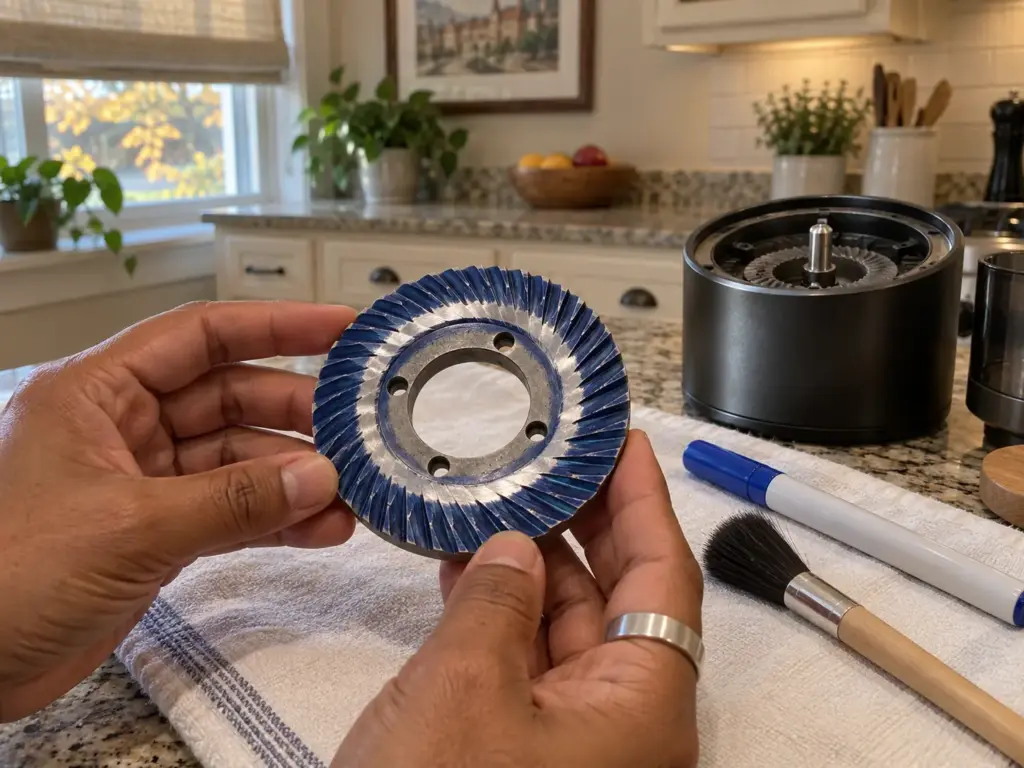
A grinder that ground evenly when it was new can seem, later on, to make a less even cup, and it’s hard to know whether to blame the beans, the setting or the burrs. For flat burrs, the forum regulars have a standing answer about where to look first. A long Home-Barista thread on flat burr grinders opens with the advice that the first thing to do with any new flat burr grinder, new or used, cheap or expensive, is check that the two burrs are parallel.
The reasoning is geometry. Two discs that face each other have to sit parallel for the gap to be the same all the way round; tilt one even slightly and the burr spacing is wider on one side than the other, so part of the dose comes out coarser and part finer than the setting says.
The larger the burr, the more a given tilt matters, because the same angle opens a bigger difference at the outer edge of a big disc than at the edge of a small one. The thread’s own illustration contrasts burrs over about 70 mm with smaller ones, and the post’s author put it without hedging: “The larger the burr size, the MORE you should care about the alignment of the burrs.”
What burr alignment does to the cup is exactly what the flat shape was bought to prevent. A flat set chosen for its narrow spread, tilted even a little, widens that spread again, and the clarity you paid for starts to blur. The same opening post goes further for espresso: if you can’t pull a decent shot, alignment is the first thing to check.
Conical sets get this ritual far less often in the forums, which isn’t the same as saying they never go out of line. A cone turns on a shaft inside its ring, and its alignment depends on that shaft running true. Neither thread gives a rate of burr drift for either shape, or any timeframe at all.
So what can be said is what each shape asks for, not which one holds its alignment longer. The flat set asks for an alignment check as routine. The conical set mostly doesn’t get one.
The Whiteboard Marker Test, and What It Misses
The check the thread recommends needs nothing more than a whiteboard marker, and the original poster was emphatic about the kind: whiteboard, never permanent. With the grinder unplugged, open it the way its own manual describes, and follow the manual on whether it lets you bring the burrs all the way together. Color the cutting faces of the burr with the marker, reassemble, bring the burrs together until they just touch, with no beans inside, turn the moving burr a little by hand, then open it up again and look at where the ink has been rubbed away.
Ink worn evenly all the way round means the faces met evenly, which means they’re parallel at that point. Ink gone from one side and untouched on the other means the burrs touched on one side first, and the gap opens on the far side. The whole test costs a marker you probably already have stuck to the fridge (plus a few minutes with the manual open).
It isn’t the last word, and the thread says so. One experienced member pointed out that a good-looking marker test only shows the burrs are parallel at the zero point, not that they stay parallel while grinding, for instance if the upper burr’s mount rotates as the setting changes. A member of the forum’s own team agreed and added the designs where the ink pattern can mislead: burr mounts that turn with the setting, and spring-loaded adjustment collars that can tip the whole burr carrier if they aren’t cut true.
That same team member then made the point that changes where to look. In his experience, most grinder manufacturers cut the precision faces of their burr carriers well, and the problems he has actually seen come from somewhere else: “the axis of the lower burr not being aligned with the planar face of the top burr.” In those cases, he wrote, “the ink test is your best friend.”
So the marker test is the right first check for the most common fault, and a clean result at zero still doesn’t clear every grinder. Beyond it, the thread’s regulars floated more exacting tools, a crushable gauging strip of the kind mechanics use for bearing clearances and a dial indicator, and the member keenest on the gauging strip called it tricky to work with. For a home grinder, the marker test done once and repeated when something changes is as far as most people need to go.
Run the whiteboard marker test the week a flat burr grinder arrives, while the return window is still open, and snap a photo of how the ink wore. Repeat it only when the grounds at a setting you know well start to look less even than they used to. Two ink patterns to compare tell you far more than one, and whiteboard ink comes off where permanent ink would not, which is why the thread insists on the kind.
Wear, Grounds and the Cleaning Both Share
Some upkeep doesn’t care about the shape. Grounds pack in around the burrs and in the chute of every burr grinder, conical or flat (the forums call what stays behind retention), and until they’re brushed out they change how the grinder behaves. With the grinder unplugged, lift out the upper burr the way the manual describes and brush both burrs and the chute with a stiff, dry brush, then brew exactly as usual and taste before you touch the dial.
Burrs also dull with use, and there’s no reliable month to put on it. How fast depends on how much coffee goes through, how hard the beans are and what the burrs are made of, and the signs to watch for, along with the timing of a burr replacement, belong to when a dull burr set needs replacing.
The first sign people notice is rarely a taste. It’s the grind in the bin looking less even than it used to at the same number, with more dust on the walls and a few larger flakes that didn’t used to be there. Look for it before you taste for it.
Put together, the upkeep leans toward the conical for a kitchen with one grinder, and only slightly. The flat set comes with an alignment ritual the forums treat as routine; the conical doesn’t. Both need brushing, both wear, and nothing measured says which shape lasts longer, so an easier grinder to maintain shouldn’t be read as one that drifts less.
That’s a smaller difference than the one in the cup. But it’s one you live with every week.
When a Flat Burr Grinder Is Worth It
None of this makes flat burrs the wrong answer. It makes them a narrower one, and for one kind of cup they’re the right one. The question is whether that cup is the one you brew most.
Light Roasts and the Pour-Over Cup
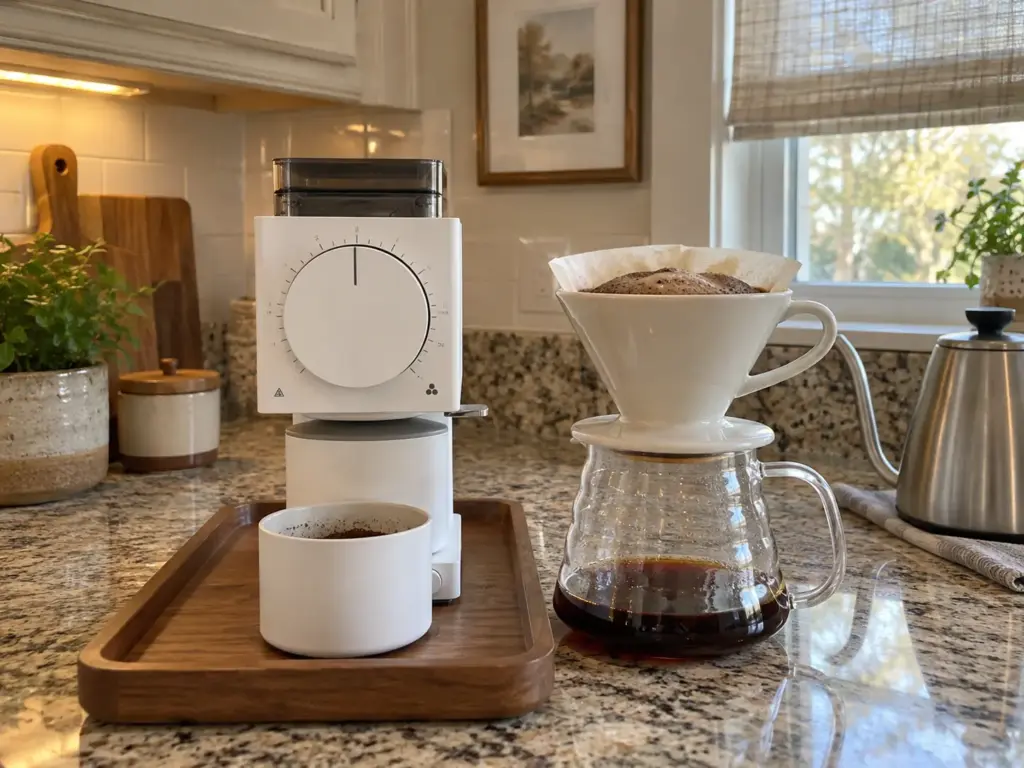
Picture a counter where the kettle is a gooseneck, the brewer is a paper-filter cone, and the bags are light single-origin roasts with tasting notes on the label: stone fruit, black tea, citrus. The cup is balanced and sweet enough, and it still tastes a little muddier than the notes promise, as if the fruit were there but out of focus.
That reader has already run the sour-and-bitter test and passed it. For that cup, a flat burr grinder is the best type. The clarity flat burrs lean toward is exactly what a light roast has to offer, acidity and delicate fruit that a wider spread tends to round off into general sweetness.
A paper filter already holds back most of the oils and fine sediment; a narrow grind spread removes the other source of blur. If that’s your daily cup, grinders built for pour-over and drip is where to compare models, and whether pour-over wants a light or dark roast settles the other half of the pairing.
Espresso doesn’t sort itself so neatly. In a Home-Barista thread about particle distribution for espresso, a longtime member put it flatly: “It isn’t even a flat or conical thing, as there are some flat burr sets that rival or outshine most conicals for traditional espresso.” He added that the same conical burr set can be rated high by people pulling darker, traditional espresso and low by people pulling medium or lighter roasts as espresso.
For shots, then, the roast and the cup you’re after decide, and the shape follows. Grinders that reach a real espresso grind are a separate shopping list from this one.
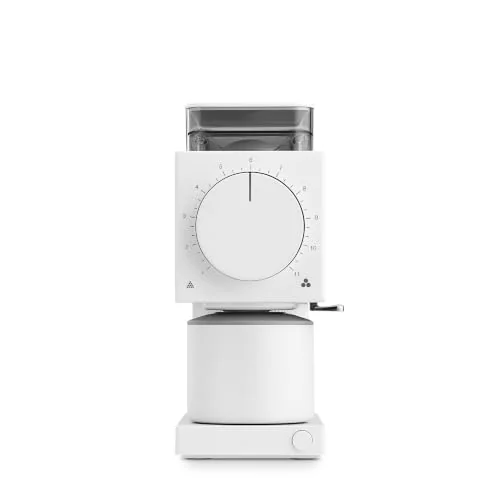
The flat grinder this article keeps returning to is the Fellow Ode Gen 2, and its own listing draws its limit for it. It’s built for filter coffee, pour-over, drip, French press and cold brew, and it doesn’t claim espresso, which suits the light-roast pour-over reader and is a real cost for anyone who might want shots later.
Bigger Flat Burrs Don’t Guarantee Evenness
Flat burr grinders are sold by burr diameter, and the numbers climb fast: 54 mm, 64 mm and beyond. It’s natural to read that as a ladder where each rung grinds more evenly than the last. Coffee ad Astra’s analysis found otherwise: among flat burrs, going from the mid-50s to 64 mm and up did not reliably produce a more uniform or more unimodal grind, and the burr geometry, how the cutting surfaces are designed, mattered more than the width.
So 64 mm on a spec sheet is a number that depends. It tells you the burr is big, not that the grind is even. And a bigger disc raises the stakes on alignment, as the marker test above made clear.
Several commenters on the r/Coffee thread came at it from the other side. A well-aligned conical, they argued, can beat a cheap or misaligned flat set, which means a disappointing cup is sometimes a calibration problem rather than a reason to change shapes.
Don’t pay for millimeters alone. Comparing two flat grinders, ask whether the burrs are a named set with a known design, whether the grinder makes alignment easy to check, and whether its settings cover the brews you actually make; diameter comes after all three.
What a Flat Burr Grinder Asks in Return
A flat burr grinder built for filter asks for a few things besides the purchase. The first is a second grinder, eventually, if espresso ever comes into the house, since the Ode’s own scope stops at filter. The second is money and room: larger flat sets cost more to make and take up more counter, which is why larger burr sets cost more, and a flat grinder in this class is the splurge next to either conical above.
The third is the alignment check, done on arrival and again whenever the grind starts to look uneven. The fourth is noise. The café owner from r/Coffee found the conical grinders in the shop “on the whole quieter,” which counts for something in a kitchen where somebody else is still asleep, and quieter grinders for early mornings is the list to read if that’s your house.
The Ode also brings a habit with it. A single-dose hopper holds the beans for one brew rather than a bag, so every cup starts with weighing out the beans and pouring them in, and ends with tapping the grounds out of the catch cup. With a slow pour-over that’s part of the rhythm (the scale is already out for the pour), and weighing every dose is what lets the flat grinder’s precision count.
On a rushed weekday with a drip pot to fill, it’s one more step between you and the coffee, and it can grate. A grinder that asks for a scale every morning suits a person who already owns one and uses it.
Before buying a flat burr grinder, test the case for one with gear you already own. Brew the same light roast two ways on two mornings, once through a paper filter and once in a French press, with the grinder you have. The paper cup leans toward clarity and the press toward weight, the same two directions the burr shapes lean, pushed by the filter instead of the grind. If you reach for the paper-filter cup every time, a flat grinder will give you more of what you like; if you keep going back to the press, the conical you have already fits.
Turn the Dial Before You Change the Burr Shape
Three things to take back to the grinder:
- The burr shape sets a tendency, not a verdict. Conical leans toward body and forgives small mistakes, flat leans toward clarity and asks more of you, and measured grinders overlap enough that the particular model matters too.
- Sour or bitter is the setting first. Move the dial one step in the direction the cup points before you blame the burrs.
- For one grinder doing every job, a conical set is the safer type; a flat set earns its place when light-roast pour-over is the cup you make most.
Today, set aside a spoonful of grounds from your usual setting in a small sealed jar, and a month from now grind a fresh spoonful at the same number and put the two side by side on a white plate: if the new one looks less even, with more dust and more stray flakes, check and clean the burrs before you think about buying anything.
Tomorrow morning, move the dial one step in the direction your cup points, finer if it’s sour, coarser if it’s bitter, and taste for whether the sharp or dry edge has eased. Only if the cup comes out balanced and still isn’t what you want is it time to think about the burr shape, and then the next step is the grinders worth buying for a home counter, starting from the shape that fits the cup you brew most.
Frequently Asked Questions
01What type of burr grinder is best?
For a kitchen with one grinder for several brew methods, a conical burr grinder is the safer type, because its wider particle spread forgives small mistakes. Flat burrs are best for light-roast pour-over, where clarity matters most.
02Which is better, a conical or a flat burr grinder?
Neither is better across the board: on average, flat burrs grind a narrower spread that leans toward clarity, and conical burrs a wider one that leans toward body. Measured grinders overlap a lot, so the specific model and its alignment matter as much as the shape.
03Which type of burr grinder is better, ceramic or metal?
For choosing between conical and flat, the burr material matters less than the shape and how well the burrs are aligned. All three grinders named in this article use steel burrs, and the steel-versus-ceramic trade-off gets its own section in the guide to what a burr grinder is.
04Are bigger flat burrs better?
Not reliably: in a measured analysis of two dozen grinders, larger flat burrs did not by themselves produce a more uniform grind, and burr geometry mattered more than diameter. A bigger burr also makes good alignment matter more.
05Can a flat burr grinder make espresso?
Some can, and some flat burr sets rival conical ones for espresso, but many home flat grinders are built for filter coffee only. The Fellow Ode Gen 2’s own listing scopes it to pour-over, drip, French press and cold brew, so check a grinder’s stated range first.

How did your cup turn out?
No comments yet. Tell us what you changed — and whether the needle moved.