




We may earn a commission when you buy through links on this page. It never changes what we recommend. How we pick
On this page8 parts
- What the Best Coffee Grinder for French Press Has to Get Right
- Free Fixes to Try Before You Buy a Grinder
- Electric Grinders That Hold a Coarse Setting
- How Much Coffee a Full Press Takes, and Which Grinders Hold It
- Hand Grinders for a French Press, and What They Ask of You
- What Changes After Month Two
- Evenness at Coarse Decides the Cup, and Paper Comes First
- Frequently Asked Questions
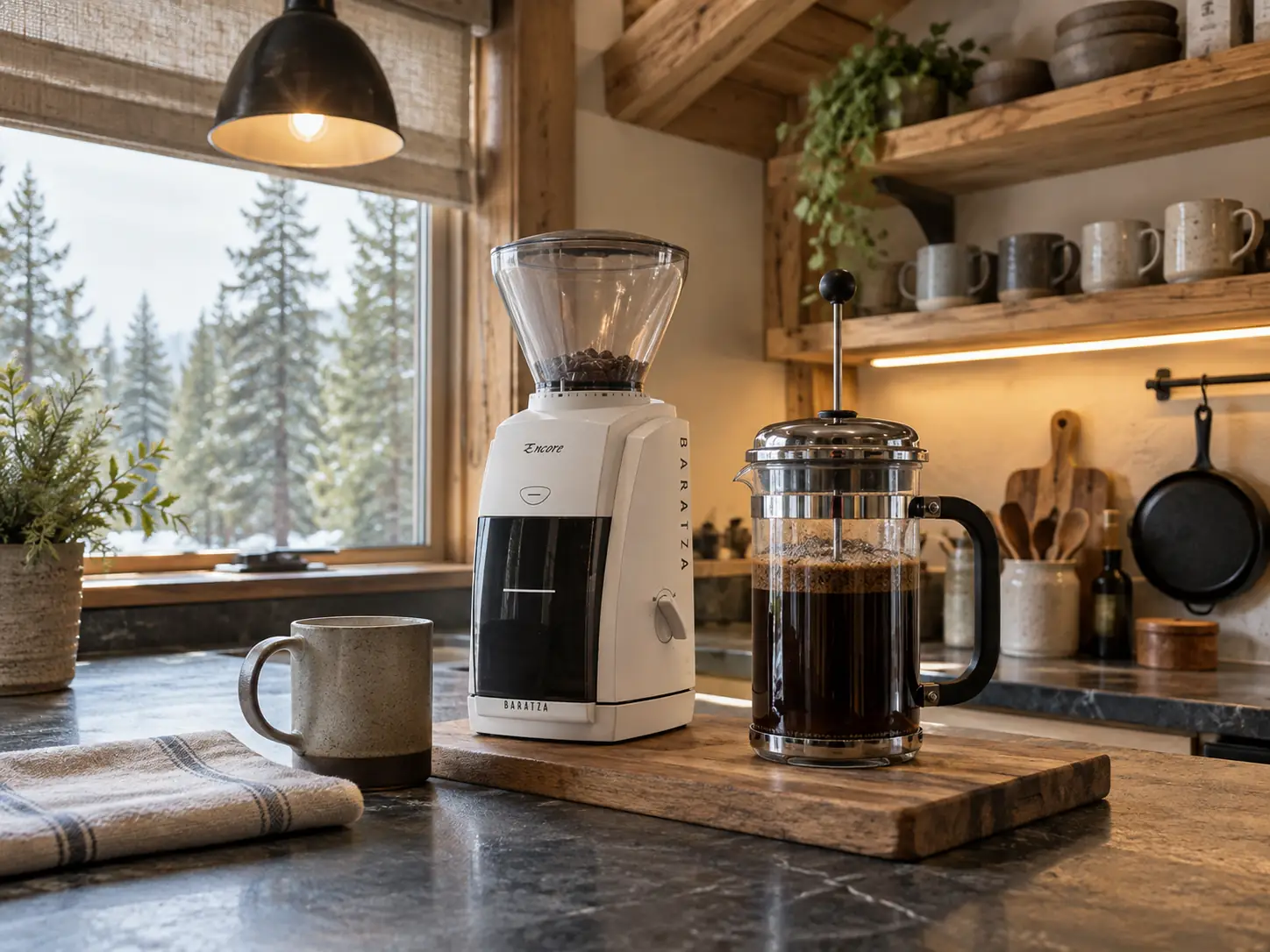
You reach the last third of the mug and the coffee changes on you: grit on your tongue, a brown cloud settling at the bottom, and a taste that is sour and bitter in the same sip. That muddy finish is the whole question behind the best coffee grinder for French press, because a press has no paper in it, and the grinder is the only thing deciding how much powder slips past the mesh into your cup. Below you will find what a press grinder has to get right, the free fixes to try on the one you already own, the electric and hand grinders worth buying with their flaws in writing, how many grams a full press really takes, and what changes once the burrs have some wear on them, all of it one method’s corner of every coffee grinder we’d put on a home counter.
Quick Answer
For French press, the best grinder stays even at the coarse end, since the mesh lets the fines through. Baratza Encore for most kitchens, OXO Brew for less, Fellow Ode Gen 2 if it also grinds pour-over; by hand, 1Zpresso K-Ultra or KINGrinder K6, one two-mug press per grind. Before buying, strain the brew through paper.
What the Best Coffee Grinder for French Press Has to Get Right
A drip machine hides a bad grind behind a paper filter. A press puts it in front of you, because the only filter in the pot is a metal mesh, and anything the grinder makes smaller than the gaps in that mesh ends up in the mug. So the job description for a French press grinder is short and strict, and it comes down to grind consistency: at the coarse end, make as little powder as possible, and keep cutting the same size from the first bean of the dose to the last.
Why the Mesh Lets the Fines Through
Every burr grinder makes fines, the flour-like fragments a bean sheds as it cracks. They are not a defect of cheap grinders alone; they are what happens when a brittle roasted bean breaks. What changes from one grinder to the next is how many there are, and what happens to them afterward depends on the filter. In a pour-over, where the paper catches much of that powder, most of the dust stays behind in the cone.
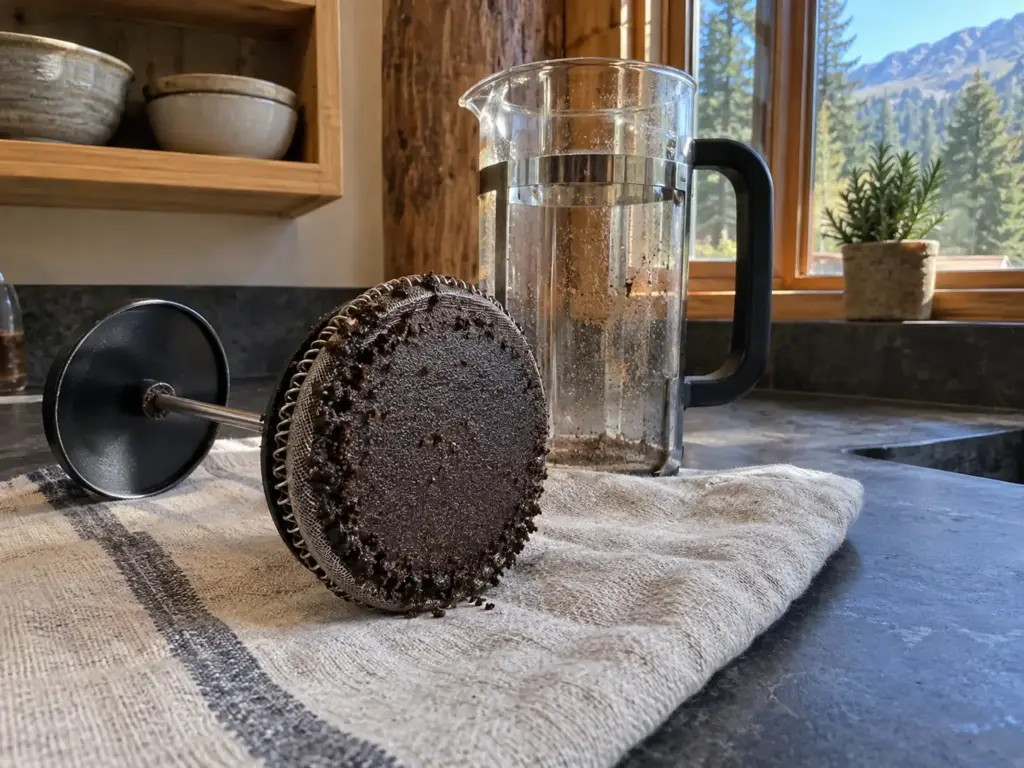
A French press screen is a mesh filter of woven metal, built to hold back grounds about the size of coarse salt, and powder goes straight through it. Some of it rides up with the water when you plunge and stays suspended, which is why a press pours slightly hazy. The rest sinks. By the time you reach the bottom of the mug, the fines have settled into the layer many home brewers call the sludge, and that layer keeps giving up flavor for as long as it sits in hot coffee.
That is why the first sip of a press can taste fine and the last one harsh. The powder at the bottom went on brewing after you stopped.
You can see the grinder’s share of the problem without tasting anything. Unscrew the plunger to rinse it and look at the mesh. The dark paste smeared into the weave, finer than anything you meant to grind, is the part of the dose the screen could not hold, and the more of it there is, the more of the same stuff went into your cup. A slow, steady plunge keeps a little more of it back (a hard shove forces the brew through the screen faster); it does not change what the grinder made.
Sour and Bitter in the Same Cup
Taste gives you the direction before anything else does. Sour means the water left the grounds before it pulled enough out of them; bitter means it stayed long enough to pull the harsh compounds that come out last. A cup that tastes of both at once is not a ratio problem or a steep-time problem. It is two brews running in one pot: the boulders (the oversized chunks from the same dose) are still under-extracted and sour when you plunge, while the fines around them gave up everything in the first minute and went bitter from over-extraction.
A single setting cannot fix that, because moving the dial moves both ends of the spread together. Go coarser and the boulders get bigger and sourer; go finer and the fines multiply. The only thing that narrows the gap is a grinder that cuts more of the dose to the same size. A blade grinder is the extreme case, and why a blade grinder makes boulders and dust in the same pass is the mechanism behind every muddy press made with one.
A weak burr grinder pushed to its coarsest setting does a milder version of the same thing, which surprises people who assumed any burr set would do. Cheap grinders at coarse settings tend to produce a mixture of large and small grinds, which ruin the flavor. That mixture is the spread, and the spread is what you taste as sour and bitter together.
Grinding coarser is what most people try first for a harsh press, and with an even grinder it works. With a blade grinder it mostly fails. Pulsing for less time does make the chunks bigger, but the blade still smashes the beans it hits first into dust, so you end up with sourer boulders and the same powder. The better call in that kitchen is not a shorter pulse but the paper pass in the next section, or a burr grinder.
Does Grinder Quality Matter That Much for French Press?
Many press brewers wonder whether a pricier grinder would ever show up in the cup. Opinions split. One camp says a press barely cares, the other says fines ruined their coffee, and both are describing something real.
It matters less than for pour-over or espresso. In an immersion brew every particle sits in the same water for the same four minutes: there is no paper bed for fines to clog and no pressure to push water through the weak spots of a puck, so a press forgives a grind that would stall a V60 or spray an espresso shot.
But forgiving is not the same as blind. The fines still decide whether the cup is clean or sludgy, and a cheap grinder crosses that line quickly. Move a budget hand grinder one step finer and you get visibly more fines, and the cup can end up hard to get right at all.
Grind evenness is not a reviewer’s adjective, either. The Specialty Coffee Association keeps a published standard for home coffee grinders, and according to the SCA, “SCA Standards create a shared framework for quality, consistency, and best practices across the coffee industry.” The grinder standard itself sits behind a member login, but the point stands: how evenly a grinder cuts is something that gets measured.
Expect some fines whatever you buy. Grind evenness has long been the complaint: a burr grinder that is supposed to be even can still leave a decent amount of dust and fines. Chemex brewing shows the same lesson, and it carries over to a press: the goal is fewer fines, never zero.
The other half of the job is holding the setting. A burr grinder fixes the gap between two burrs and cuts each piece until it fits through, so a solid one keeps that gap from the first bean to the last, while a grinder built to a lower standard lets it wander, and the dose comes out as a spread instead of a size. A press grinder should give you a coarse grind without a lot of dust, be easy to clean, avoid a static mess, and work like a tool rather than a toy. That list still works as a checklist.
Free Fixes to Try Before You Buy a Grinder
The grinder already on your counter can often be rescued, or at least bought some time. The fixes below come in order, cheapest and likeliest first, and each one gets its own brew with nothing else changed, so you can tell which one did the work.
One Step Coarser, Then Taste
If the cup is gritty with a harsh finish, move the grinder one step coarser and leave everything else alone: same beans, same grams, same water, same four minutes. The next cup should leave less silt in the bottom of the mug and finish shorter and cleaner. If it comes out thin with a sour edge instead, you went a step too far. Go back to the old setting and move on to the fixes below, because your grinder’s coarse end has reached its limit.
One step is the whole instruction, on purpose. The number on your dial depends on the grinder and the beans, and the question of where to start belongs to the setting itself, which the last section of this article points to. What matters this morning is the direction and the size of the move.
With a burr grinder, a step coarser usually trims the fines a little, because bigger pieces leave less broken surface behind. With a blade grinder there is no step to take, only a shorter pulse, and as the section above explained, that trades powder for boulders rather than removing it. Skip straight to the paper.
A Paper Filter After the Plunge
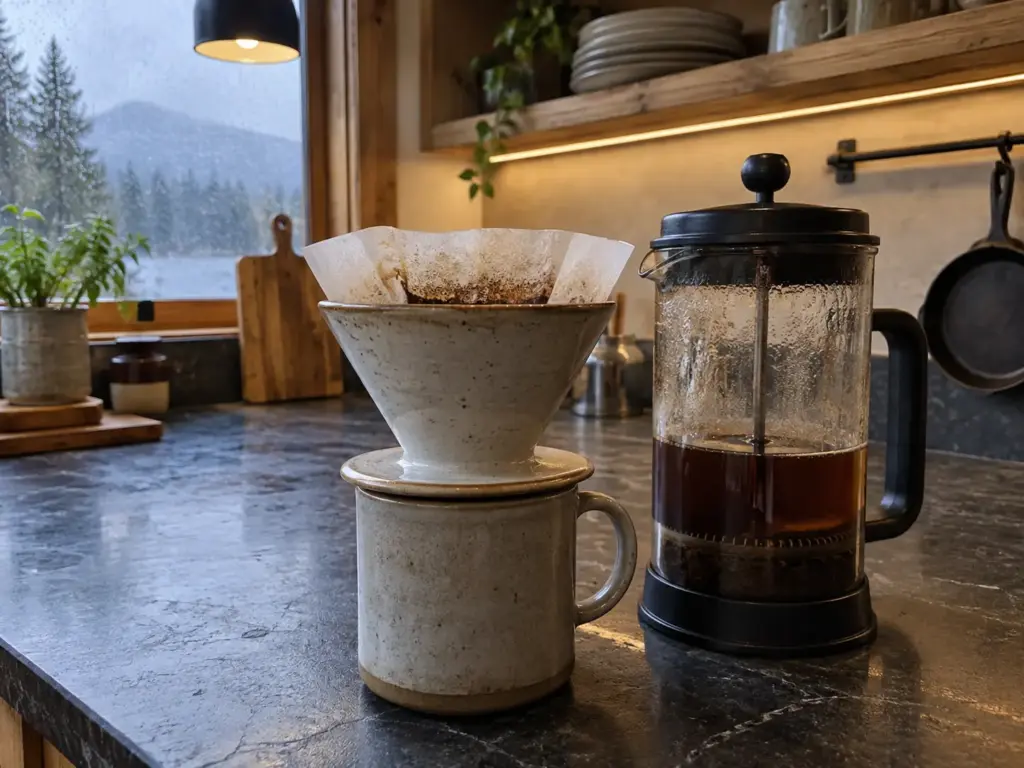
The second fix catches the powder after the fact. Plunge as usual, then pour the finished coffee through a paper filter set in a dripper over your mug or carafe. The paper traps what the mesh let through. Sifting out the fines is a known trick, and it has even won coffee competitions.
Watch the pour and you will see where the fines were. The first half drains quickly. Then, over the last inch or so, the filter slows to a crawl, because that last inch carries most of the powder that settled in the press, and powder is what plugs paper. If you are in a hurry, stop pouring from the press before the dregs; the silt at the bottom is exactly what you are trying to leave behind.
There is a trade to accept. The paper also holds back the oils and the fine haze that give a press its heavy, coating mouthfeel, so the strained cup drinks lighter, closer to a good drip coffee than to a classic press. Some people find that is what they wanted all along. Others miss the weight, and for them the sieve below is the better route, since it takes the powder out before brewing and leaves the oils alone.
You already own the filter for this. The cone filter from a drip machine or a pour-over dripper works; rinse it with hot water first so the coffee picks up no papery taste, set the dripper over the mug, and tip the press slowly so the sediment stays in the glass. The paper traps what the mesh let through, and the slow tip means less of it reaches the paper in the first place.
A Sieve Before the Brew
The third fix takes the powder out before it ever meets water. Shake the ground coffee in a small fine-mesh kitchen sieve over a bowl or the sink for a few seconds: the dust falls through, the usable grounds stay in the basket, and you brew with those. Before buying anything new, a sieve can reduce the fines. Some brewers keep sifting pour-over grounds through a cheap kitchen sifter, grinder upgrades or not.
Two cautions. Kitchen sieves vary a lot, and a coarse one lets fines through along with the grounds, so the tighter the mesh, the better it works here. And sifting removes weight. Weigh the grounds after shaking, and next time grind a couple of grams extra so the brew keeps the strength you had been dialing in.
Two smaller habits help at the grinder itself. With a hand grinder, feeding the beans in slowly rather than dumping the whole dose into the hopper at once tends to mean fewer fines. If the fines are flying rather than falling, the way grounds that cling and fly off the grinder tend to on dry days, a few drops of water shaken over the beans before grinding cuts the static on many grinders, though it does not fully cure every one.
When It Isn’t the Grinder at All
Before any purchase, rule out the suspects that make a press taste muddy or harsh with a perfectly good grinder. Check them in this order, one per brew:
- Pour the whole press out as soon as you plunge. The grounds below the screen are still sitting in the coffee, and a second cup poured from the pot twenty minutes later has kept extracting; it tastes bitter whatever ground the beans.
- Leave the last half inch in the pot. The silt settles at the bottom of the press, and shaking it into the mug undoes the grinder’s work.
- Look at the screen. A mesh that is bent at the edge or no longer sits flat against the glass lets whole grounds slip around it. The bottom of the mug tells you which one you have: coarse, sandy grains point to the screen, a fine muddy paste points to the grinder.
- Check the roast date on the bag. Beans weeks past roasting taste flat and dull, which people sometimes read as a grinder problem. Fresh grounds rise into a crust when the water hits them; old ones barely move.
Only when all four check out is the grinder the suspect, and that is the moment to shop.
Electric Grinders That Hold a Coarse Setting
When the paper and the sieve have done what they can and you still want a clean pot straight from the plunge, the answer is a better grinder, and for most French press kitchens that means an electric burr grinder. Evenness can be tested rather than claimed, and the SCA certifies home coffee equipment against its own standards; the three grinders below are judged here on something a certificate cannot show, which is what owners report after months and years of coarse grinding, flaw included.
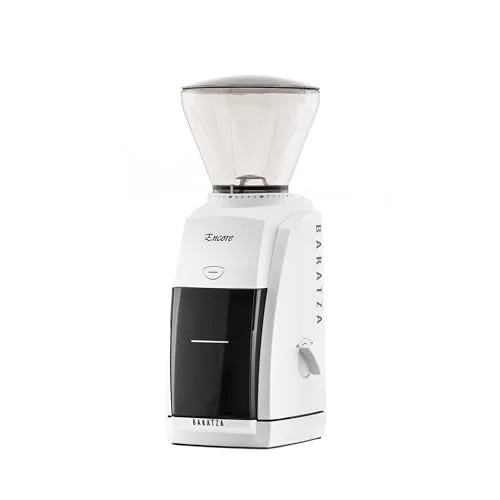
Baratza Encore, the One People Keep for Years
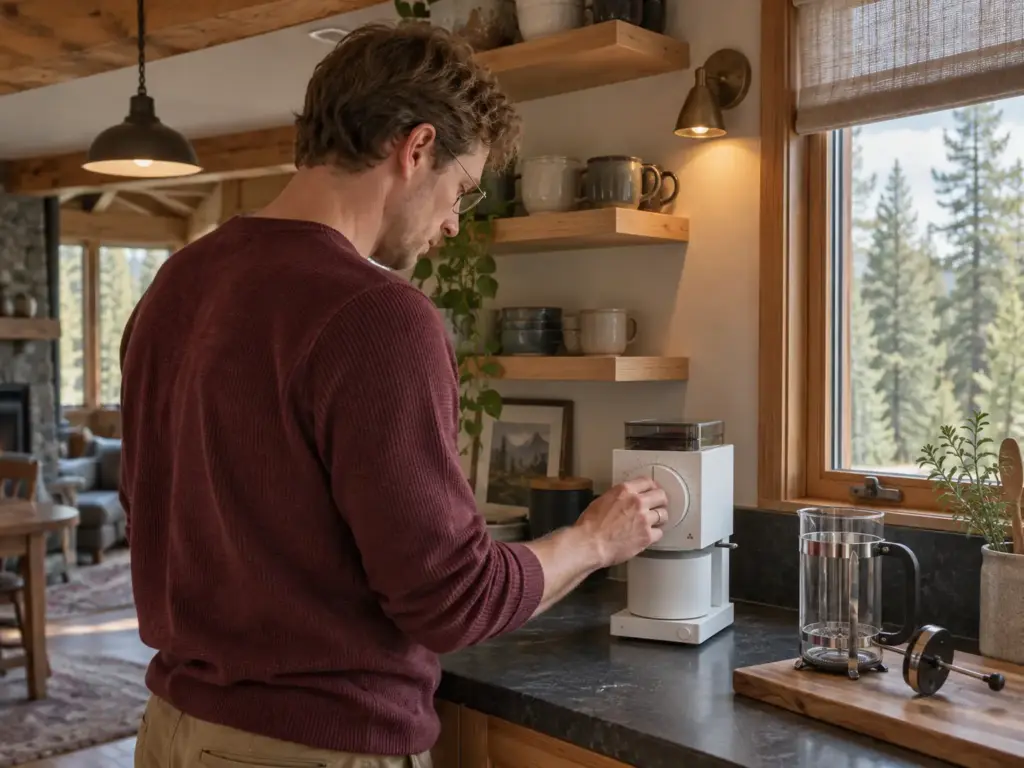
The Baratza Encore is the grinder the French press threads keep returning to as the buy-once answer for press and drip. It pairs 40 mm conical steel burrs with 40 settings and a hopper of about 8 oz (220 g), which holds the beans for three full 34 oz pots. The case for it is the calendar: burrs on these grinders can keep cutting for years of daily use, and the brand sells those burrs directly.
The service reputation is older than the Encore: the brand has a history of standing behind its machines, and it still sells replacement burrs for them.
The Encore is not a grinder built for espresso; its range is spent on drip, pour-over and press. Tip out the grounds bin after a coarse dose and you will still see a faint dusting of powder clinging to the plastic walls, the share of fines every grinder makes, which is why the paper and the sieve stay useful even with a good one.
The catch shows up late. Burrs slow down with heavy use: the same dose takes noticeably longer to grind than it did when the burrs were new. That is a wear signal rather than a breakdown, and it is also the moment the replaceable burrs earn their keep. For a kitchen that brews press and drip and nothing finer, this is where I would stop shopping.
OXO Brew Conical Burr, a Bigger Hopper for Less
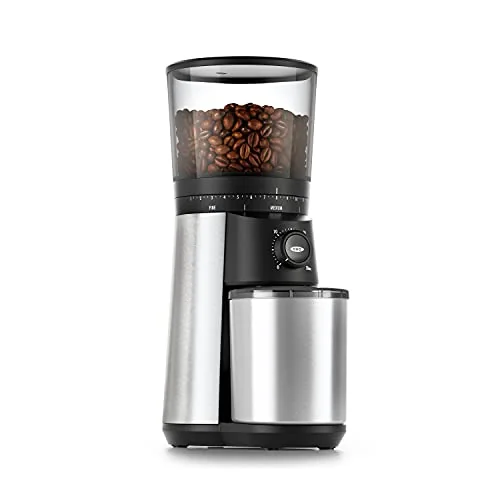
On a tighter budget, the OXO Brew Conical Burr grinder gets you a 40 mm stainless conical burr set, 15 settings and a 12 oz hopper, enough beans for about five full 34 oz pots, for noticeably less than the Encore. Fifteen stepped settings across the whole range means bigger jumps between them than the Encore’s forty, with no stepless adjustment in between. That costs little at the coarse end, where a press rarely needs more than one move up or down.
Its trouble spot is the path from burrs to bin. Owners in Amazon reviews report that fine and espresso-level grinds clog the chute and are hard to clear, and that grounds cling to the catch container and escape when it comes out. At a French press setting you meet this less often, but if the output slows, the chute is where to look. The wider field of cheaper grinders that still grind evenly has its own page.
Fellow Ode Gen 2, If the Same Grinder Also Brews Pour-Over
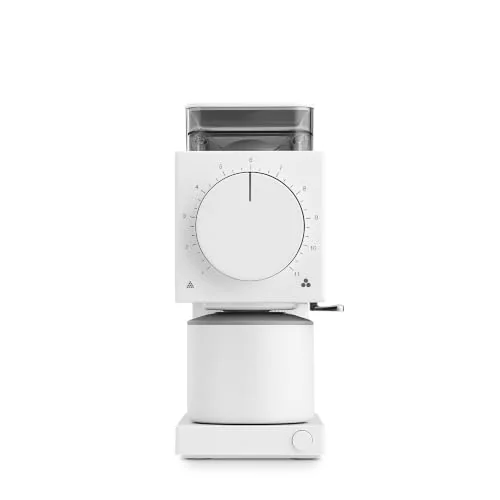
The Fellow Ode Gen 2 is a different kind of machine: 64 mm flat steel burrs, 31 settings and a single-dose design, where you weigh the beans for each brew and load just those. For a press, the coarse settings matter most. On coarse settings, a better grinder can clear out the sludge at the bottom of the cup and the slight bitterness a cheaper one leaves in the same brew.
Whether the flat burrs are the reason is a longer argument. Conical and flat burrs do cut a bean differently, enough to fill their own page, but the burr shape is not what decides a press.
The Ode looks like the obvious upgrade, and for a press alone it is the wrong one to reach for. The Encore already does the coarse job, so most of what the Ode’s higher price buys is evenness at the medium-fine settings of a pour-over cone, which a press never uses. If the grinder serves a press on weekends and a V60 on weekdays, the splurge pays for itself in the second method; what the extra money buys in a grinder sorts out where the price bands actually differ.
Its weak spot is the housing. Some units show visible gaps around the dial’s faceplate, and a loose faceplate that wiggles, something that can show up with ownership rather than at unboxing. It does nothing to the grind, but at this end of the market the front of the machine should not move.
How Much Coffee a Full Press Takes, and Which Grinders Hold It
Before the hand grinders, one number decides whether a small grinder is a pleasure or a chore: how many grams of coffee your press actually takes. Reviews print hopper capacity as a spec line and stop there. Set that capacity against the pot, and a hand grinder either fills your press in one go or asks you to grind twice every morning.
The Grams a Press Takes, by Size
The arithmetic takes one line, and it is worth doing for your own press. A fluid ounce of water weighs about 29.6 g, so multiply the press’s capacity in ounces by 29.6 for grams of water, then divide by 15 for the 1:15 brew ratio most press recipes start from (by 16 if you like the cup a shade lighter). For the three sizes most kitchens have:
- A 12 oz mug: about 355 g of water, so roughly 24 g of coffee (22 g at 1:16)
- A 17 oz two-mug press: about 503 g of water, so roughly 33 g of coffee (31 g at 1:16)
- A 34 oz press filled to the brim: about 1,005 g of water, so roughly 67 g of coffee (63 g at 1:16), or close to 60 g brewed to the practical line a little below the top
A level two-tablespoon coffee scoop holds roughly 10 g of ground coffee, so that is about two and a half scoops for the mug, a little over three for the small press, and six or more for the big one.
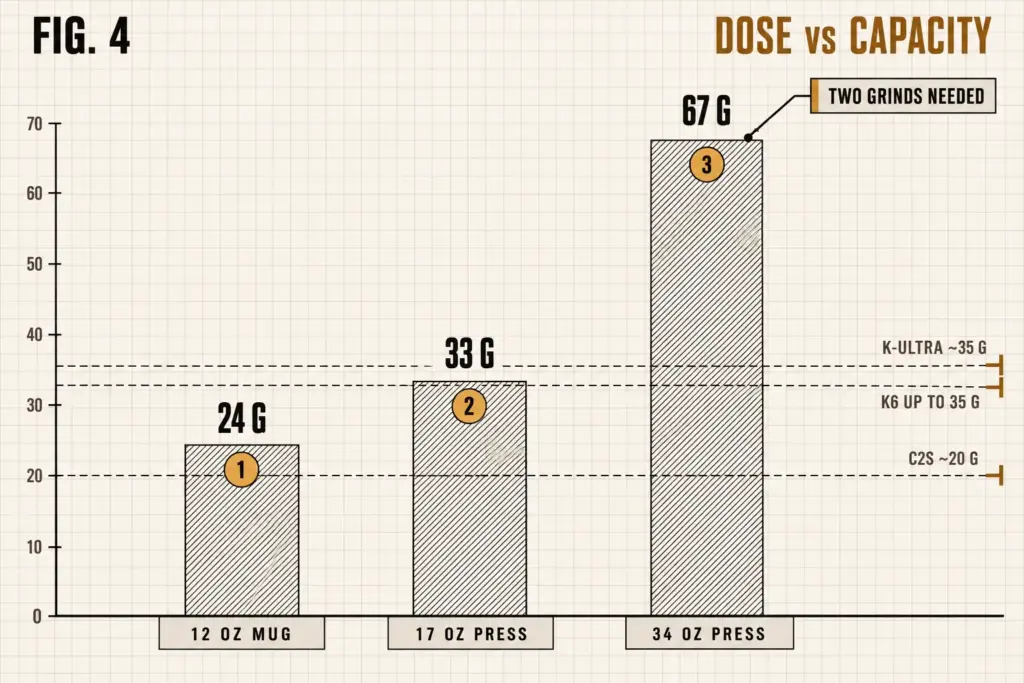
The dose is where a quoted number goes wrong. The figure you will see repeated for “a French press” often sits around 30 g, which is right for the 17 oz size and less than half of what the 34 oz pot wants. Put 30 g in the big press, fill it to the top, and you are brewing at roughly 1:33, a cup that tastes thin and sour however good the grinder is. Same dose, different pot, opposite problem.
The gap between the brim and the practical line is not fussiness either. The grounds rise into a crust as they wet, the plunger and its rod take up room once you seat them, and a press filled to the very top runs down the outside of the glass the moment you plunge. Most people stop a little under the rim, which is where the figure of about 60 g for a full big press comes from, and why the hand grinders below still need two rounds for it.
It also changes how fast a bag goes. At the big pot’s dose, a 12 oz bag (340 g) makes about five full 34 oz presses, or ten of the small ones, the same division that how many cups a 12 oz bag really makes runs from the bag’s side. Work it out once for your own press and your own ratio, and every capacity figure on a grinder box becomes a yes or a no.
Why a Small Hand Grinder Means Grinding Twice
Now set the grinders against those numbers. The makers give these capacities: about 20 g for the TIMEMORE Chestnut C2S, about 35 g for the 1Zpresso K-Ultra, and 25 to 35 g for the KINGrinder K6, depending on the beans. The three electric grinders above all take a full pot’s dose in one go, so this is only a hand-grinder problem, and batch size sorts them quickly.
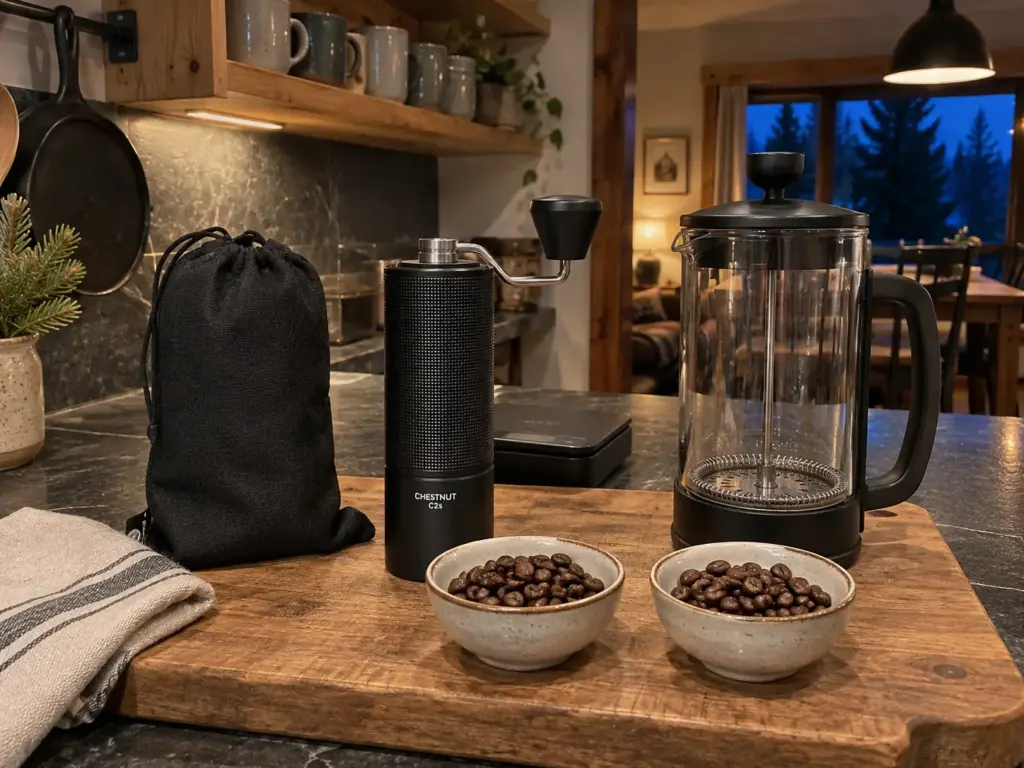
The TIMEMORE Chestnut C2S is a well-liked budget hand grinder: a 38 mm conical burr in 420 steel inside an aluminum housing, with about 36 internal clicks. For a press, its 20 g chamber is the limit. That fills one mug (about 10 oz of water at 1:15), means two grinds for a 17 oz press and three or more for a full 34 oz pot, which makes it a sensible choice for somebody brewing a single cup and a tiring one for anybody else.
The K-Ultra, and the K6 at the top of its range, fill the 17 oz press in one grind. Neither fills a full 34 oz pot. On either one that is two grinds, roughly 35 g and then another 25 g.
People tend to discover this after the purchase. A 20 g chamber is too small for a 35 g daily dose, which means a second batch every single morning. A small hand grinder can mean grinding twice to fill the pot. The second grind suffers most: the arm is tired, the kettle has already clicked off and is cooling, and the beans get poured in faster than they should.
Weigh the whole bean dose for your press once on a coffee scale and pour it into the grinder’s chamber, yours or one you can handle in a store. Where the beans stop is your one-grind limit, and it beats the spec sheet: an oily dark roast and a dense light roast of the same weight do not fill the same space. If the dose overflows, you are looking at two grinds every morning.
The Six Grinders Side by Side
All six in one place, with each grinder’s one-grind capacity set against the press sizes above and the catch that matters for this method.
| Grinder | Type | Burrs and steps | One grind fills | The catch for a press |
|---|---|---|---|---|
| Baratza Encore | Electric, hopper | 40 mm steel conical, 40 settings | A full 34 oz pot | Burrs slow down after years of heavy use |
| OXO Brew Conical Burr | Electric, hopper | 40 mm stainless conical, 15 settings | A full 34 oz pot | Chute clogs and grounds cling to the bin, per owners |
| Fellow Ode Gen 2 | Electric, single dose | 64 mm steel flat, 31 settings | A full 34 oz pot | Faceplate gaps and wiggle, per an owner |
| TIMEMORE Chestnut C2S | Hand | 38 mm steel conical, about 36 internal clicks | One mug (about 20 g) | A 17 oz press is two grinds |
| 1Zpresso K-Ultra | Hand | Stainless conical, 20 microns per click | A 17 oz press (about 35 g) | Handle knob reported to come off |
| KINGrinder K6 | Hand | Stainless conical, 16 microns per click | A 17 oz press at the top of 25 to 35 g | Factory zero often off, per owners |
Read the fourth column against your own pot before the burrs. A full 34 oz press every day points to the top three rows whatever else you like about the bottom three, and a 17 oz press opens up all six. If the table leaves you torn between manual or electric, that choice has its own page; the next section is for the reader who has already picked the crank.
Hand Grinders for a French Press, and What They Ask of You
With the capacity settled, the hand grinders make their case: quieter, smaller and, at the good end, more even at coarse than an electric at the same money, as long as your press is the size they fill. Two stand out for this method, a splurge and one that costs about what a budget electric does. The rest of the field is in the best manual coffee grinders.
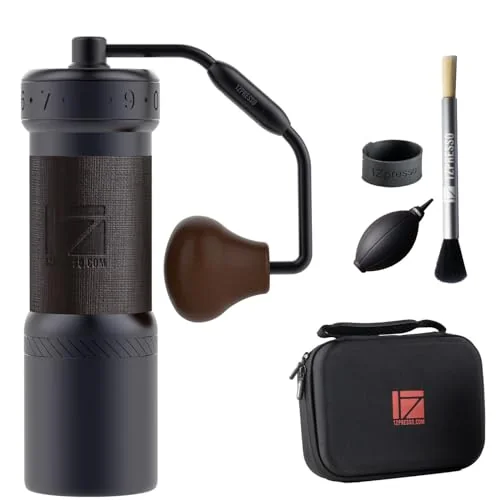
1Zpresso K-Ultra, the Splurge With the Clean Clicks
The 1Zpresso K-Ultra puts a stainless steel conical burr under an external dial that moves 20 microns per click across more than 100 clicks, so you read the setting from the outside instead of counting from zero. Its chamber holds about 35 g, enough for a 17 oz press in one grind. 1Zpresso’s grinders are known for staying consistent at coarse settings, which is the one trait this article cares about.
Twenty microns per click is far finer control than a press needs, so the precision is wasted here. Or nearly: it matters when you come back to the same setting after a cleaning or a detour to a finer grind, and the numbered outside dial makes that a glance instead of a count. The folding handle packs small, so it also works as the grinder that packs into a bag for travel.
The knob on the end of the folding handle can work loose and fall off, and it can be a recurring issue with the design rather than a one-off. Check that it is snug when the grinder arrives, and again every few weeks. It also costs more than the Encore, which grinds a full pot in one go, so the K-Ultra is the better buy only if your press is the 17 oz size or the grinder needs to travel.
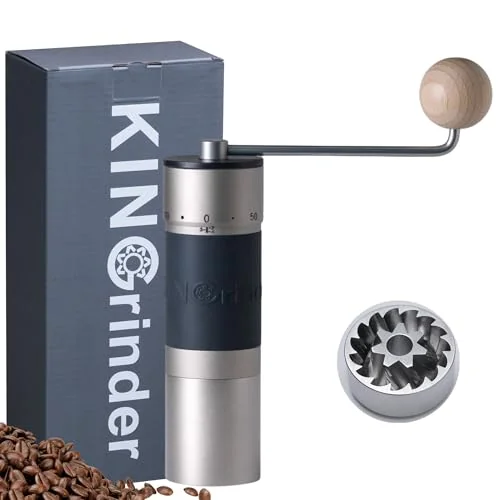
KINGrinder K6, the Budget Hand Grinder People Keep
The KINGrinder K6 is a common pick among budget hand grinders, and it tends to keep its reputation a year or two after purchase. It uses a stainless steel conical burr adjusted in 16-micron steps, holds 25 to 35 g depending on the beans, and comes in an all-aluminum housing. It costs about what a budget electric does, well under the K-Ultra.
Its quirk is the zero point. Owner reports say many units arrive with the dial’s zero not matching where the burrs actually touch, with no way to recalibrate it. That sounds worse than it is. Turn the dial gently until the burrs just meet, note the number it shows, and count your settings from there; until you do, a setting copied from another K6 owner will be off by the difference between your zero and theirs.
What Cranking by Hand Costs Every Morning
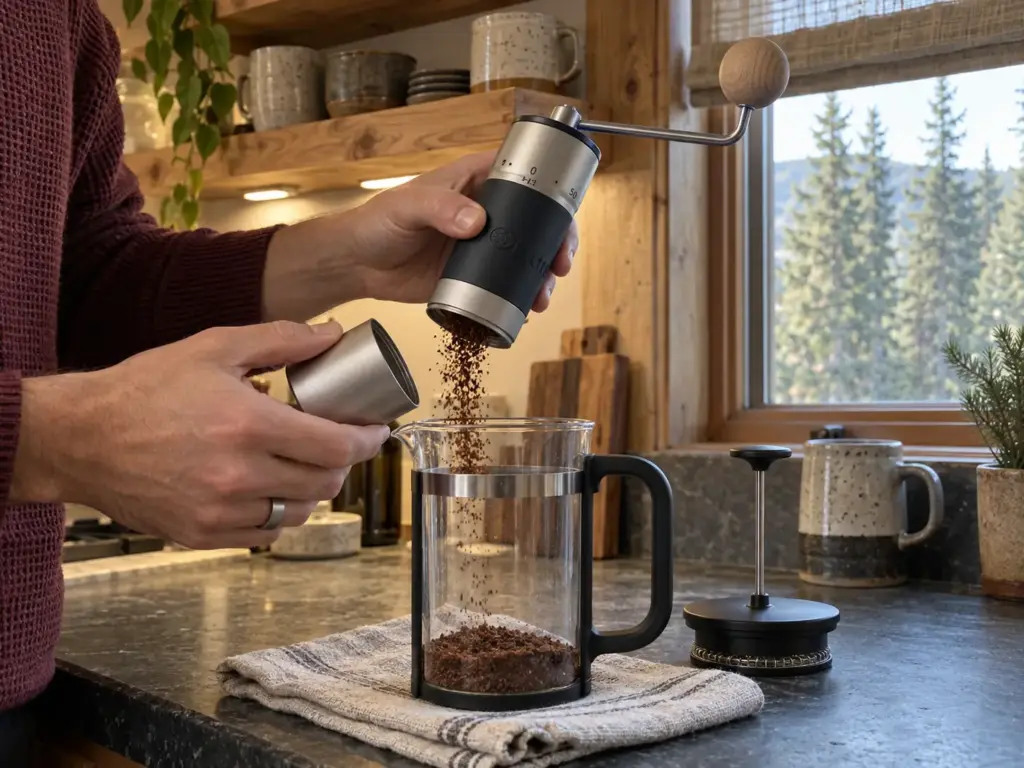
A hand grinder costs minutes and wrist, not seconds. There is one piece of good news for French press people: coarse grinding goes faster than fine, because the burr has less cutting to do on each bean, so a press dose turns more quickly than an espresso dose on the same grinder. It is also quieter than any electric motor, which counts in a house where somebody is still asleep.
The wrist complaint arrives later. A heavier hand grinder with an offset handle, such as the Lido 2, can put a lot of torque on your wrist from the handle’s geometry, and it tends to grind more slowly than a smaller one. None of that is visible on the first day. Hold a hand grinder the way you would hold it every day, crank a full dose, and pay attention to your forearm rather than the finish.
If your household drinks a full 34 oz press every day, a hand grinder is the wrong tool whatever its burrs, because you will grind twice every morning. The advice is old. A manual grinder is a fine answer for a press, with one condition: you have to be willing to do the extra work. The work of hand grinding has not changed; the grinders have.
What Changes After Month Two
Reviews are written in the first week, and the grinder you buy this week will not grind the same in a year. What changes first is quiet: the fines creep back, a small part loosens, and grounds pile up where you cannot see them.
Duller Burrs Mean More Fines
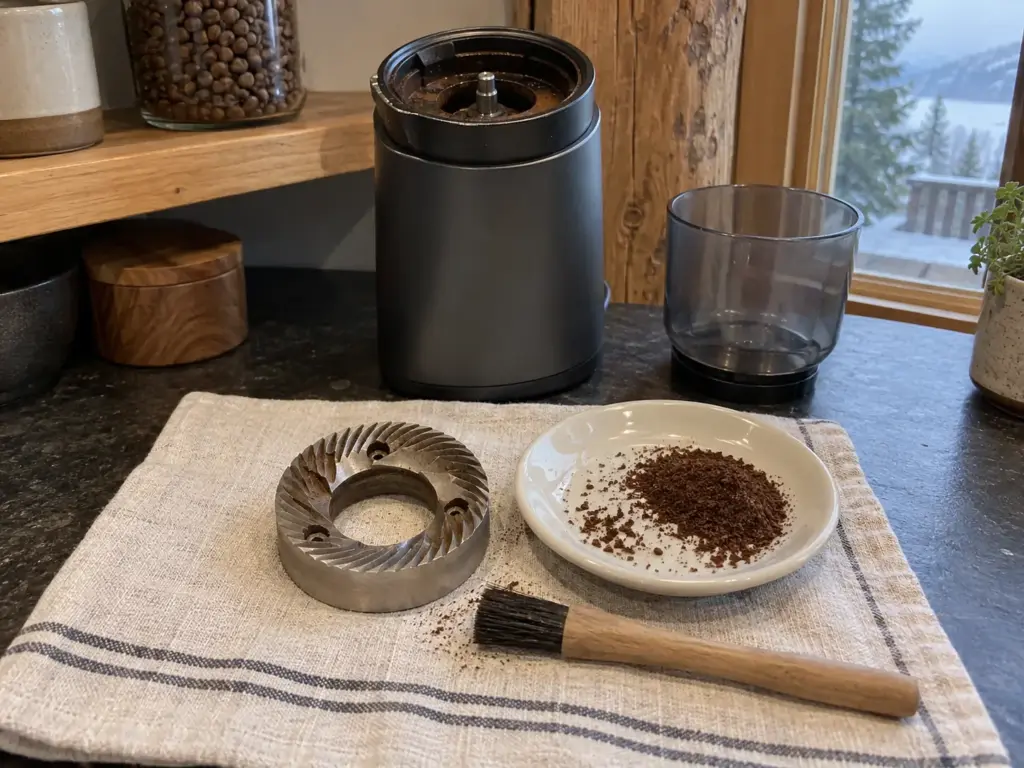
Sharp burrs cut a bean into pieces close to the size of the gap. Burrs dulling with daily use start to crush more than they cut, and crushing is what makes dust. The spread between the fines and the boulders widens, which is the same sour-and-bitter failure from the first section getting worse slowly. The symptom is a press that was clean in its first months and turns muddy again at the same setting, with the same beans, without anybody touching the dial.
You can check it without a lab. Keep a note of the setting and the bag on a morning when the press tasted clean. When the silt comes back, grind that same kind of bean at that same setting and repeat the mesh check from the first section: if the paste on the screen has grown and the bin walls carry more powder than you remember, the burrs have moved on, not the recipe.
Rule out the beans first, because a new bag is a more common cause than a worn burr: a different roast can shatter into more fines in the same grinder at the same setting. Then look at the grinder. The Encore gives a sense of the timescale: burrs keep cutting for years of daily use, getting slower on the same dose rather than ruined.
Slower is the early sign, and more powder in the bin at a setting that used to be clean is the next one. The signs it is time for new burrs lays them out in order, and for the wider question of how long a coffee grinder lasts, motor and housing included, the numbers are different again. A set of burrs is a part, not the whole machine.
The Small Faults That Show Up Later
The flaws that matter on the grinders above are the ones that appear with use rather than out of the box. On the Ode, the faceplate around the dial can end up gapped and loose after a while of use. On the K-Ultra, the knob on the folding handle can work its way off. The K6’s zero point is there from the first day but usually gets noticed only when a borrowed recipe refuses to taste right, and the OXO’s chute is the part that can clog, mostly after runs at finer settings.
The adjustment itself can fail outright, which is worse than the slow grind drift of a setting creeping over the months. A budget grinder of that era could lose its ability to adjust, with only fine espresso grinds coming out at every setting. The model is long gone and says nothing about today’s grinders, but the failure is still the one to watch for. If a coarse setting suddenly gives you fine grounds, stop turning the dial and check the adjustment before you blame the beans.
Keeping the Coarse End Clean
Every grinder keeps some grounds inside it (retention, in grinder talk), in the chute and around the burrs, and those come out first on the next dose. Move the dial coarser for a press after a fine grind for something else, and the first grams through are still the old, finer grind. That is why the first press after a change can taste like the setting you just left.
After any change of setting, grind a few grams of beans and throw them out before you grind the dose you will brew. The grinder holds grounds from the last setting in its chute and around the burrs, and those come out first; the purge sends them to the trash instead of into the press, so the first cup at the new setting tells you the truth about it.
Brush the chute and the burrs every few weeks, and more often with dark, oily beans, whose oil holds fines against the metal where they go stale. A bottom burr that does not come out needs a firm brush worked around it, and that workaround still applies to any grinder with a fixed lower burr. A clean chute also means the retained grounds you purge are fresh ones.
Anything that takes the burrs out also moves the setting you knew. A hand grinder with internal clicks, like the C2S, has to be closed and counted back out from zero after a cleaning, while an outside dial like the K-Ultra’s only needs a glance to confirm it is back where it was. Purge the first dose after reassembly the same way, and taste that press before you trust the setting again.
The same even coarse end serves one more brew. If you ever take the grinder further, an even coarser grind for cold brew is the only setting in the kitchen coarser than a press, and a grinder that stays even at a press setting usually has room left on the dial to get there.
Evenness at Coarse Decides the Cup, and Paper Comes First
Three things carry over from everything above:
- A press has no paper, so the grinder’s evenness at the coarse end is the whole job, and the fines are what you are counting.
- The free fixes come first and in order: one step coarser, then a paper pass after the plunge, then a sieve before the brew.
- The grinder has to match the pot: a good hand grinder fills a 17 oz press in one grind, and a full 34 oz press every day wants an electric.
A month after you settle on a grinder, look at the bottom of your last cup and at the paste on the mesh when you rinse the plunger; more of either at the same setting means the burrs or the beans have changed.
Tomorrow, make one change: move the grinder you already own one step coarser, keep everything else the same, and taste the last sip for grit and a bitter edge. If the grit is still there, the paper pass is the next morning’s change, and only after both would I spend money. Once a grinder you trust is on the counter, the next question is the number on its dial, and the right grind size for French press starts from there.
Frequently Asked Questions
01What’s the best coffee grinder for French press?
For most kitchens it is an electric conical burr grinder that stays even at the coarse end, and the Baratza Encore keeps cutting after years of daily use. What matters for a press is how few fines a grinder makes at coarse, not how fine it can go.
02What grind works best for a French press?
A coarse, even grind, roughly like coarse sea salt, works best, because the grounds stay behind the mesh and extract at about the same rate. The exact setting depends on the grinder: start coarse and go one step finer only if the cup tastes sour or thin.
03What is the best hand coffee grinder for a French press?
The 1Zpresso K-Ultra is the pick for the most even coarse grind by hand, and the KINGrinder K6 does the same job for less money. Each holds about enough for a 17-ounce press; a full 34-ounce pot takes two grinds.
04Does grinder quality matter for French press?
It matters less than for pour-over or espresso, because every particle in a press steeps in the same water for the same four minutes. The fines a poor grinder makes still pass the mesh, though, so they decide whether the cup is clean or muddy.
05Can you use a blade grinder for French press?
You can, but a blade grinder makes boulders and powder in the same pass, and the powder slips through the mesh into the cup. Short pulses and pouring the finished brew through a paper filter cut down the silt.



How did your cup turn out?
No comments yet. Tell us what you changed — and whether the needle moved.