
We may earn a commission when you buy through links on this page. It never changes what we recommend. How we pick
On this page6 parts
Same beans, same pot, same scoop, and the coffee has been going flat and a little muddy for months, while the grinder’s dial sits several steps finer than you remember setting it. You moved it yourself, one step per bag, each time the pot tasted thin. Burrs don’t wear out on a date: the cutting edges round off slowly, and the grinder and the cup report it long before any pound count would.
So the answer to when to change coffee grinder burrs is in those reports: the signs and which way they point, the free checks that look exactly like wear, what café ratings in pounds mean at home, and how to tell dull burrs from a tired grinder. It all assumes you already know why burrs beat a blade in the first place; this is about the day they stop earning it.
Quick Answer
Change the burrs when the grinder and the cup both show it: the dial keeps creeping finer for the same cup, the grounds come out warmer and clumpier, and no setting tastes sweet anymore. Clean and reseat them first, because dirt mimics wear. At home volume, a steel set usually takes years to get there.
The Signs It’s Time to Change Coffee Grinder Burrs
A dull burr never announces itself on one bad morning. It takes over the cup a little at a time, so the signs worth acting on are the ones that pile up in the same direction for weeks, and one sour pot after a new bag is not among them.
The Dial Keeps Creeping Finer
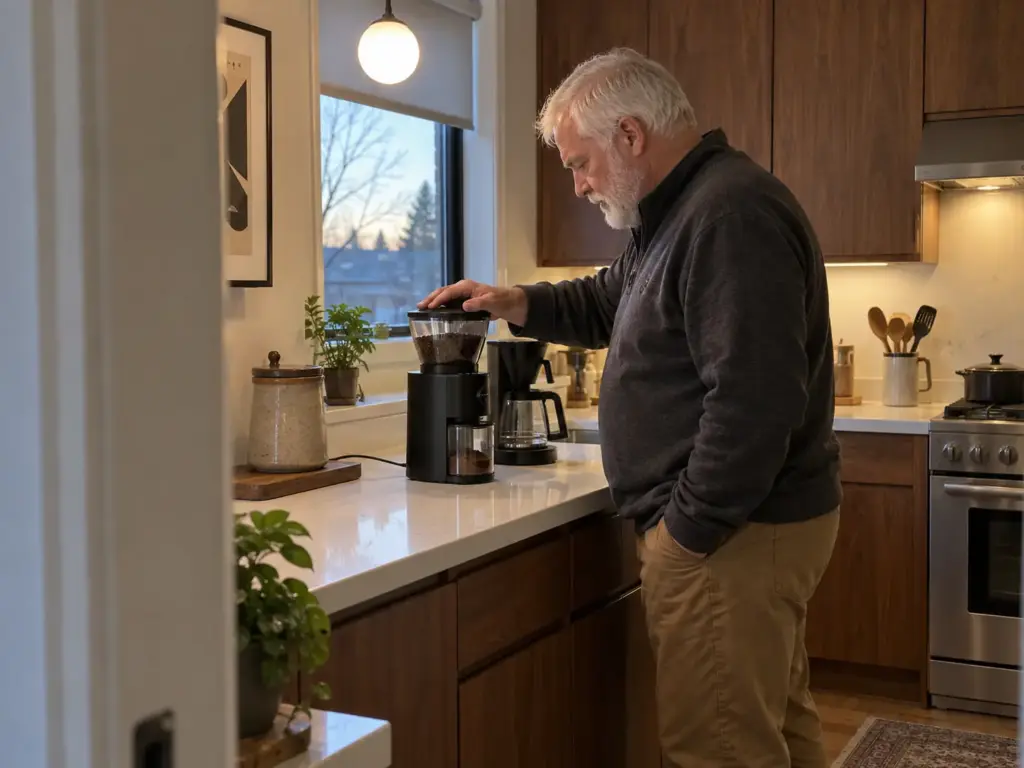
A sharp burr tooth cuts a bean into pieces close to the size of the gap. A rounded one crushes more than it cuts, so the same setting throws out more fine dust and more coarse chunks at once, and the spread between them (the particle size distribution) widens. Grind consistency is what goes first (how a burr set cuts in the first place covers the teeth and the gap part by part). The chunks give up too little to the water (under-extraction), the cup reads thin, and the natural response is to go one step finer.
That response is what the forum calls grind creep. A longtime Home-Barista moderator listed the mechanical signs of worn burrs in a single sentence: “Wear indicators include coffee overheating and clumping, having to grind finer and finer, shot volume decreasing before blonding and grind time increasing.” Blonding is the moment an espresso shot turns pale and thin, so a shot that reaches it with less in the cup than it used to, at the same setting, is extracting less before it runs out.
Each nudge feels too small to mean anything, which is how the creep hides. One step for a new bag, one for a damp week, one because the last pot tasted weak, and one day the dial is near the end of its travel with a cup that still runs thin. Espresso shows it first, because the shot time moves with a single step and how fine an espresso grind actually has to be leaves almost no room at the fine end; drip coffee or a pour-over can hide the same drift for a season.
Hotter, Slower, Clumpier
For a drip reader, the moderator’s list turns into three things you can check with the usual dose and nothing else. The grind takes longer, the grounds land in the bin warmer, and they clump at the chute. A sharp set pulls beans through, while a dull one rubs them, and rubbing takes time and turns more of the motor’s work into heat, which is also part of why the grounds stick together.
None of these proves wear by itself. Stale coffee and a humid week both make grounds clump on a perfectly sharp set. What makes it a burr sign is company: it shows up alongside the creep and stays through bag after bag.
A Cup That Loses Its Sweet Spot
Barista Hustle gives the clearest account of the taste side. As burrs age, the evenness of extraction slips, and the highest extraction you can reach before the cup turns harsh comes down with it, so the cup drifts toward muddy, flat, sour or astringent. The direction is the tell. A normal dial-in problem points one way (sour means go finer, bitter means go coarser), but a tired set gives you both at one setting, under-extraction and over-extraction in the same dose: go finer to lose the sourness and the cup turns harsh before the sourness is gone.
Why it can feel sudden has to do with the steel. As Barista Hustle explains it, citing the SCA’s Coffee Technicians Guild, most grinders use hardened steel burrs, hardened on the surface over a softer core. Once that hard outer layer wears through, the wear speeds up, so a set can grind well for years and then fall off much faster than it declined before.
The day you dial in a fresh bag of your usual beans, save the setting that tastes right and the seconds the dose takes to grind in a phone note, next to the roaster’s name. If the same kind of bean needs several steps finer a few months later, and takes longer to get through the burrs, those two written numbers are your evidence. A memory of where the dial used to sit is not.
Rule Out a Dirty or Badly Seated Burr First
Every sign in the last section has a free explanation that looks exactly the same in the cup. Two of them cost nothing but a brush and some patience to test, so the burrs are the last suspect, not the first.
Old Oil and Grounds Look Exactly Like Wear
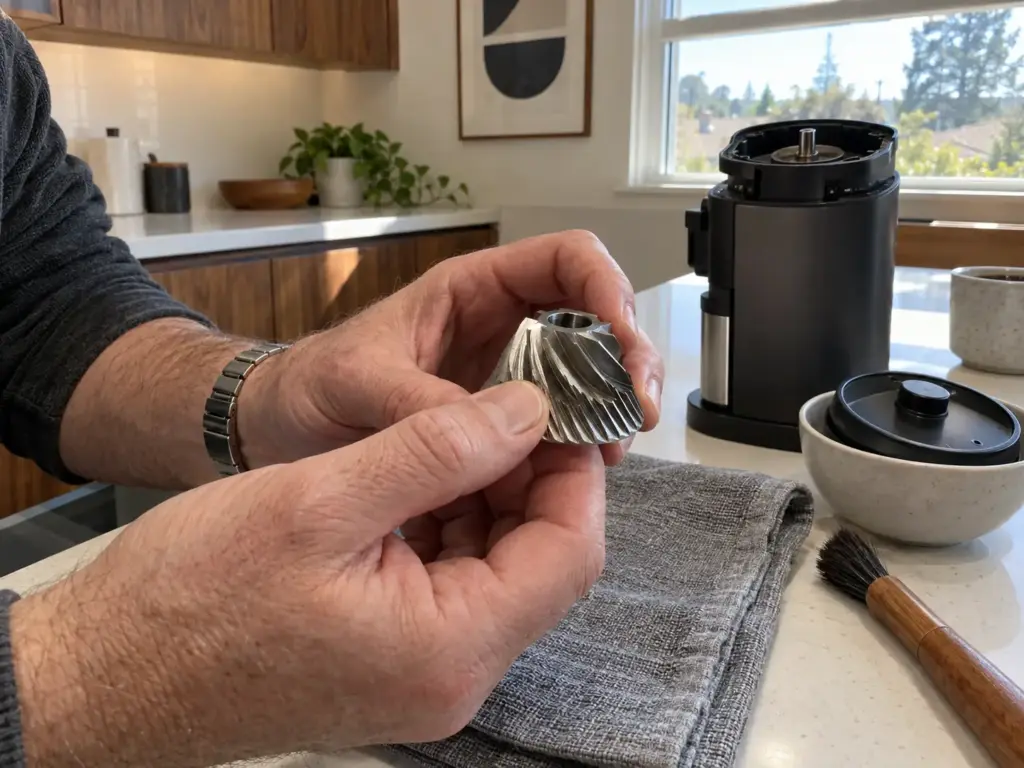
Coffee oil doesn’t stay on the beans. It coats the teeth, packs the grooves the grounds are meant to fall through, and goes tacky, so the teeth stop cutting cleanly and the grind comes out clumpy and uneven, which is what a dull burr set does too. A Home-Barista member who opened a grinder bought secondhand found “caked-on, oily, tarry coffee crud all over the inside” and had to scrape some of it off with a screwdriver.
The replies to that post show how tangled the two causes get. One reply guessed that a grinder that dirty probably needed burrs as well, then gave the order anyway: clean it first, and if the thin shots don’t improve, change the burrs before deciding the whole grinder has to go. A dirty grinder that looks clean from the hopper can still carry a brown film on the burr faces and in the grind chamber, and you only see it with the top burr out.
Clean, Reseat, Then Taste Again
The first tool here is a brush. Actually, the first tool is a pen: write down the current setting before anything comes apart, because on many grinders lifting out the upper burr loses your place on the dial, and the whole test depends on grinding at the same number afterward. Then, one change at a time:
- Unplug the grinder, every time the burrs come out.
- Take out the hopper and the upper burr the way the owner’s manual for your model shows.
- Brush the burrs and the surfaces they sit on until no packed grounds or oily film is left.
- Reassemble, return to the setting you wrote down, and grind your usual dose.
- Brew it the way you always do, and taste before touching anything else.
If the cup is back, it was the crud. If it is closer but still not right, the forum’s next step is a reseat rather than a purchase: an experienced member suggested turning one burr to a new position on its mount, a third of a turn at a time (120 degrees), and checking after each move. A burr that sits a hair off its seat grinds unevenly around the ring, and a speck of old coffee under it can be enough to do that.
Two more free explanations come before any order goes in. A grinder that won’t go fine enough at its finest setting may need its zero point found again, a job to recalibrate rather than replace. On a flat set, wear that looks heavier on one side points to misaligned burrs, a burr alignment question, and the marker test for flat burrs answers it.
After a first real cleaning the cup often tastes better, and then the doubt arrives. The original poster of the second Home-Barista thread wrote that his shots after cleaning “seemed better, but it may just be my expectation.” The way through that is deliberately boring: same beans, same dose, same setting, two mornings running, and only then a verdict.
The Finger and Thumbnail Tests, and Their Limit
The forum has two hand tests, both free and both done with the grinder unplugged and the burr out. An espresso-machine repair tech’s rule for steel burrs is to run a finger against the direction of the cut, the way you would test a knife edge: if it catches, there is life left, and if it slides without catching, the edge is dull. A member of the forum’s own team uses a thumbnail instead: “If the burrs will shave off nail, they are still good to go, if they do not it may be time for a replacement.”
The same thread then undercuts both. A longtime member who rehabs grinders wrote that it is “not really possible to tell the difference between worn burrs and new ones by touching the edges or doing a simple visual examination,” unless the set is badly worn, and that he had rebuilt grinders whose burrs looked and felt fine but pulled poor shots until a new set went in. He added a detail that makes the eye test worse still: new burrs usually have a dull-looking surface, not a shiny one.
Owners said the same from the other side. One held his old top burr beside a new one and wrote, “I can’t tell the difference! Can’t tell by look or by feel.” Another, who replaced the burrs on a used grinder as a matter of course, “could not really tell the difference between the old and new, but there was quite a difference in performance.”
So the test that settles it is swap and taste, which one reply in the second thread boiled down to two short sentences: “Trust your taste. Don’t trust your perception.”
When a new set goes in, put the old pair in a zip bag with the date on it instead of throwing it out. If the cup doesn’t change, the old burrs had life left and are now a spare. If it does, you have learned how long a set lasts at your grinding pace, which is the one figure no rating can give you.
How Many Pounds a Burr Set Lasts at Home
The pound figure is the first thing anyone quotes, and it is a real number. It was written for café grinders that run all day, though, so it means something only once it is divided by what a home kitchen actually grinds.
Café Ratings, Home Arithmetic
Manufacturer figures, collected in Barista Hustle’s table, run from about 660 lb (300 kg) of coffee for a small café grinder, the Mazzer Mini, to 40,000 lb for a commercial grinder, the Bunn G Series. The one set of ceramic burrs in the table, on a La Marzocco Swift, is rated at 3,300 lb. Those ratings describe machines that grind all day behind a counter. The advice to change burrs every few hundred pounds fits a café that goes through that much in a season; at home it points to a date so far off that it stops being useful.
Take a pot that uses 30 grams per day of beans, about three level coffee scoops, which makes two ordinary mugs. Over a year that is roughly 11 kg, or about 24 pounds. Two double shots a day, around 36 grams, comes to about 29 pounds a year. At 24 pounds a year, a 660 lb rating is more than 25 years away.
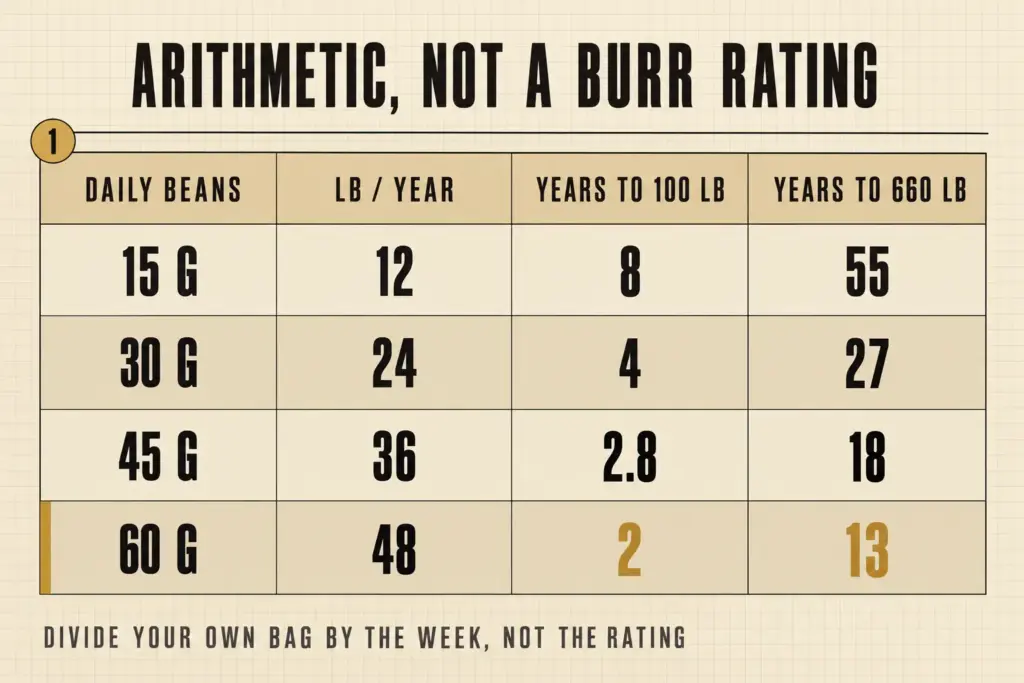
A Rocky owner on Home-Barista works to a much shorter schedule: “Rocky burrs should be replaced every 75-100lb to maintain quality grind.” At the same 24 pounds a year, that is three to four years. Both numbers are true, and that is the point: different burrs, different grinders, and different ideas of when a grind stops being good enough.
All of this is arithmetic, rounded down, and an estimate rather than a measurement of any burr. Most people have never weighed a year of their coffee, and the real figure usually comes in lower than the guess.
Weigh the beans you use in one ordinary week, multiply by 52 and divide by 454. That is your pounds a year, and it is the only number that makes a burr rating readable: a 150-gram week works out to about 17 pounds a year, which puts even a 100 lb rating close to six years out.
Why the Figures Disagree So Much
The published figures don’t even agree with each other. One Home-Barista poster’s schedule for three Mazzer sizes put the Mini at 750 lb, the Super Jolly at 1,000 and the Major at 1,200, already above the table’s 660 for the Mini, and then suggested backing those numbers off by 25% for the best quality and consistency.
The spread has causes. Bigger burrs spread the same beans over more cutting edge, steels and their hardening differ, denser beans are harder on an edge (roast density matters here: light roasts are denser than a dark roast, which is also why lighter roasts grind differently), and owners draw the line for worn in different places. Taking a quarter off a rating makes sense for a café that needs every shot to match the last. At home, where the rating sits decades out, a quarter off still leaves decades, so the cup is the better gauge.
On r/Coffee the reports stretch further still. One commenter’s arithmetic put a café-rated Mazzer Mini at about 73 years for four drinks a week; an owner who changed flat burrs after seven years found plenty of life left in the old set; an Encore owner replaced burrs after 12 to 13 years of daily coffee for three people. Those are single owners’ reports, not tests, but they point the same way as the arithmetic.
The maker of that Encore describes its burrs as “durable enough to remain sharp for years and years of home use,” and the grinder as “designed to last around 10 years of home use,” both claims from Baratza’s own product copy rather than measurements. No standards organization puts a number on burr lifespan. The Specialty Coffee Association does keep a certification standard for home coffee grinders, and says “SCA Standards create a shared framework for quality, consistency, and best practices across the coffee industry,” but nothing it publishes openly gives a burr-wear figure.
A Used Grinder Starts the Clock Early
There is one case where free first gives way. The moderator quoted earlier is blunt about secondhand grinders: “Used grinders invariably have worn-out burrs. Replacing them isn’t expensive or difficult.” A used grinder arrives with no history, no idea how many pounds went through it or whether the burrs were ever changed, so the checks in the last section have nothing to compare against.
On a secondhand grinder, then, a new set is the starting point rather than the last resort. I would not spend a week trying to judge the old pair: a fresh set gives you a known zero for everything that comes after. Clean the whole grinder while it’s open anyway (the forum’s own secondhand example arrived with bits of packing peanut inside), then fit the new pair.
Worn Burrs or a Worn-Out Grinder
Once the free checks are done and the arithmetic says the burrs could plausibly be tired, one question is left. Is it the burrs at all, or the grinder around them? The two fail differently, and the difference decides what you buy, if anything.
Dull Burrs Grind Worse, a Failing Grinder Stops
Dull burrs still grind. They grind worse, and slowly, with the signs from the first section: the creep, the heat, the clumps, the cup with no sweet spot. A grinder that stalls, jams, whines, slows down mid-dose or won’t start is telling you about the motor, the gears or something caught in the chamber, which is the territory of a grinder that jams or won’t start, not of a new burr set.
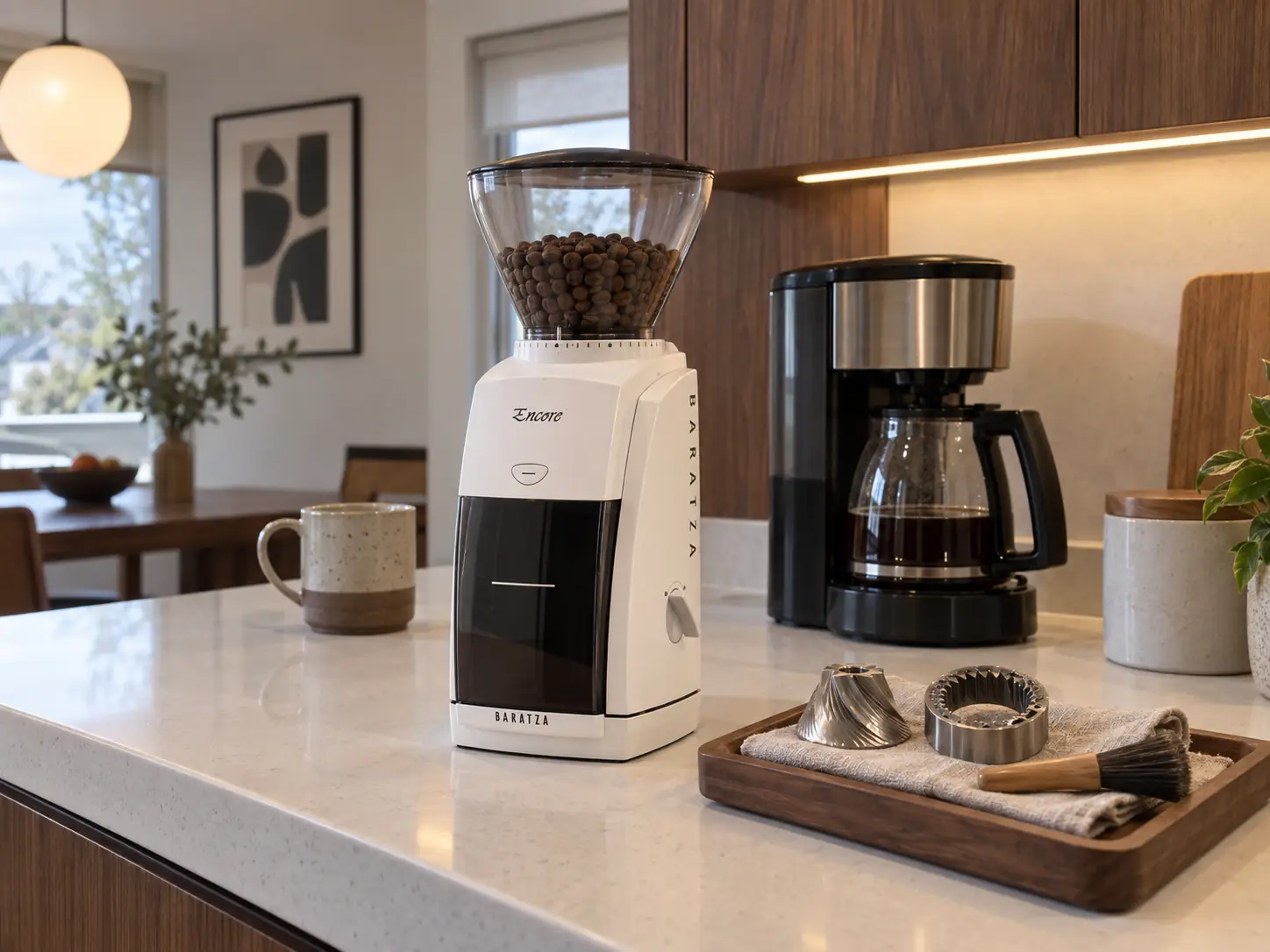
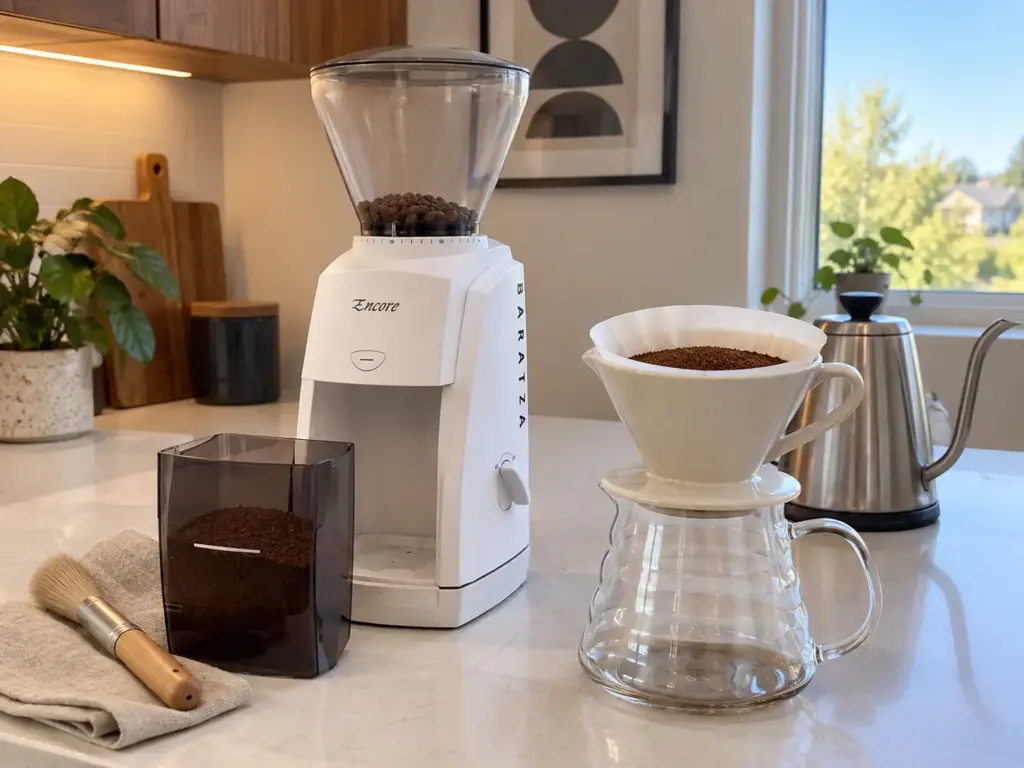
The Baratza Encore sits on both sides of that line. Its 40mm conical burrs are hardened alloy steel with 40 grind settings, and Baratza’s own copy says they stay sharp for years of home use, which is exactly the case the arithmetic above describes. The complaints land on the other side: most of the durability mentions in its Amazon review summary are negative, with owners reporting grinders that stopped within the first months. That is a motor or mechanism giving out rather than burrs dulling, and no replacement set fixes it.
Whether the whole machine is near its end is a separate question, answered in how long the grinder itself should last. On most home grinders the motor and gears, not the burrs, are what decide it.
Swapping the Set: Both Burrs, Clean Seats, a New Zero
With the grinder itself sound, the burr replacement is short. The same moderator called it “an easy 15 minute job with time left for cleaning,” and most of those minutes go to the cleaning.
- Run the hopper empty, then unplug the grinder.
- Remove both burrs the way the manual for your model shows.
- Clean the seats both burrs sit on until nothing is left on them.
- Fit both new burrs, never just one.
- Find the zero point again, then re-dial from the middle of the range for your brew method.
On step three the forum is specific: “be absolutely sure that the mounting surfaces are perfectly clean before installing the new burrs.” Both burrs go in together because they wear together and set the gap between them, so a new outer ring against an old cone, or one new flat disc against a worn one, grinds unevenly from the first dose. And the old number on the dial no longer means the same grind, which is why the re-dial starts from the middle rather than from where you were.
The first doses through a new set can taste different from the last ones through the old, and that is the new set, not a mistake. Make one change, taste, and let the setting land where the cup puts it rather than where the old number was.
Before the old set comes out, grind a small dose at the current setting into a clean jar. After the swap, put the first dose from the new set in a second jar, then tip both onto a white plate side by side. The dust and the chunks you can see there are the difference the cup is about to report.
When a New Grinder Makes More Sense
A replacement set costs a fraction of a new grinder, which is why it comes first whenever the grinder itself is sound. The math flips in three cases: an old grinder with a tired motor as well as tired burrs, a model whose burrs are no longer sold, and a grinder that never ground well for your brew method in the first place. Any one of those makes choosing the next grinder the better use of the money.
And if the grinder on your counter is a blade grinder, none of this applies. The Cuisinart DCG-12BC Grind Central has stainless steel blades, one-touch grinding and room for enough beans for 12 cups, and nothing in it to replace: the blade dulls instead, and there is no setting to return to because there never was one. The bigger trouble is the chop itself, since a spinning blade leaves dust and boulders in the same dose and the cup comes out sour and bitter at once, however new the blade is. That makes burr versus blade the real question for its owner, and the practical next step is cheaper burr grinders that still grind evenly.
Write Down Today’s Setting, Then Let the Cup Decide
Three things decide this. The signs of worn burrs pile up in one direction: finer and finer on the dial, hotter and clumpier in the bin, and a cup with no setting left that tastes sweet. The free checks come before any purchase, in order: clean the burrs and their seats, reseat, then taste on two mornings. And at home, a café rating in pounds is usually years or decades away, so the cup, not the calendar, says when.
The setting that tastes right today, written down, is what you hold up against the one the same beans ask for a few months from now; if it has moved several steps finer, the burrs are wearing.
Tomorrow, unplug the grinder, brush the burrs and the surfaces they sit on, and grind your usual dose at your usual setting. If the cup tastes the way it did when that setting was new, the burrs were never the problem. If it still runs thin and harsh at once, a new pair is the next change, and the only one to make.
Frequently Asked Questions
01How do I know if my grinder burrs need replacing?
They need replacing when the dial keeps going finer for the same cup, the grounds come out warmer and clumpier, and cleaning and reseating the burrs didn’t change the taste. Looking at the edges rarely settles it. Swapping in a new set and tasting does.
02How often should I replace coffee grinder burrs?
There is no fixed interval, because ratings run from several hundred to tens of thousands of pounds while a pot a day grinds only about 24 pounds a year. So most home sets last years. Change them when the signs appear, not on a date.
03What is the average lifespan of a burr grinder?
Nobody publishes a measured average, but Baratza says its Encore is designed for about 10 years of home use. Owners on r/Coffee report burr sets lasting past that, and the motor and gears usually decide when the whole grinder goes.
04How long do Baratza burrs last?
Baratza doesn’t publish a pound figure for its home burrs, only that they stay sharp for years and years of home use. One Encore owner on r/Coffee replaced them after 12 to 13 years of daily coffee for three people.
05Should I replace both burrs at the same time?
Yes, replace both burrs together, because the two wear as a pair and set the gap between them, so a new one against a worn one grinds unevenly. Clean the seats, fit both, and find the zero point again before re-dialing.

How did your cup turn out?
No comments yet. Tell us what you changed — and whether the needle moved.