



We may earn a commission when you buy through links on this page. It never changes what we recommend. How we pick
On this page7 parts
- What a Green Coffee Bean Is and Why It Can't Be Brewed
- What the Heat Does Inside the Roaster
- How Far the Roaster Stops Decides What You Taste
- Why the Roast Date Matters More Than the Roast Name
- Roasting at Home and What Heat Can't Change
- Read the Date, Then Move the Grind One Step
- Frequently Asked Questions
Turn over the bag on your counter and two things printed on it matter more than the artwork: a word like medium or dark, and the date the roasting stopped. Underneath both sits a stranger fact, which is that the bean in its natural state smells like cut grass, clicks like gravel and would fight your grinder long before it became anything worth brewing. So why are coffee beans roasted? Because heat is what turns that dense, grassy seed into a porous, brittle bean that grinds cleanly and gives up its flavor to water, and the moment the roaster cut that heat moves your cup further than most things you could buy for it.
What follows covers the green bean, what happens to it past 400°F, how far the roaster goes, why the date on the bag outranks the name, and what changes if you try roasting yourself.
Quick Answer
Coffee beans are roasted because a raw green bean is rock hard, grassy and can’t be ground or brewed into anything pleasant. Heat past 400°F (204°C) inside the bean drives off the water, leaves it brittle and porous, and builds flavor through browning. Where the roaster stops decides the cup: brighter and more acidic, or deeper and more bitter.
What a Green Coffee Bean Is and Why It Can’t Be Brewed
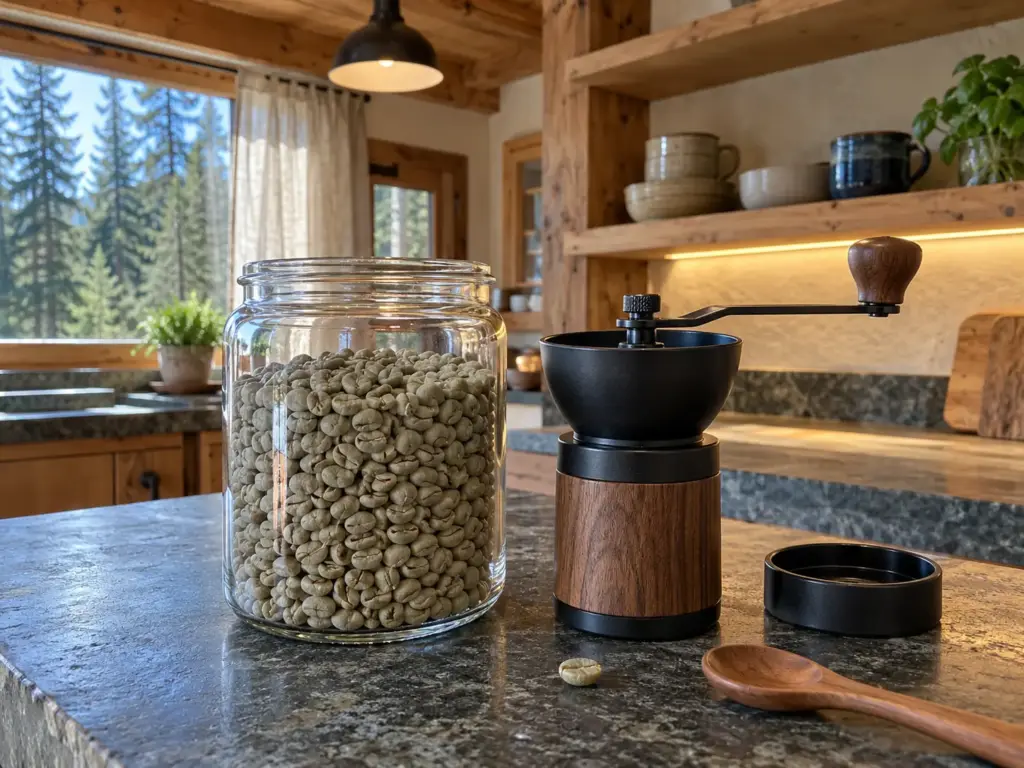
Start where the roaster starts. A green coffee bean is the seed of a fruit, and raw coffee beans are dried so they can sit in a sack for months and travel across an ocean; nothing about them was designed to be steeped. Each part of this section is about something that seed refuses to do at your counter, and why heat is the only way around it.
A Seed Built to Keep
According to the National Coffee Association’s roast guide, “A green coffee bean has none of the characteristics of a roasted bean—it’s hard as a rock and smells grassy.” The same guide notes that green coffee can be stored for long periods without losing quality or taste. That is what a seed is for: it keeps, it waits, and it gives away almost nothing until something forces it to.
Whether the seed is arabica or robusta is settled long before it reaches a roaster, and the roast does not change which one you bought. What the roast changes is how much of that seed you get to taste, and in what direction. It is also why many roasters buy green and roast closer to the day they sell: the raw seed is the stable form, and the roasted bean is the perishable one.
A green bean’s clock barely moves; a roasted bean’s clock starts the minute it leaves the cooling tray. When you pick up a bag, find the roast date first and the roast word second. If the bag only prints a best-by date a year out, you are reading the clock of the package, not of the coffee inside it.
Why It Won’t Grind
A burr grinder does not slice coffee. It cracks it, over and over, until the pieces are small enough to fall through the gap between the burrs. That only works on something brittle, and a green bean is the opposite: dense and still carrying its moisture. Green beans are much harder than roasted beans, hard enough to damage a home grinder.
Picture it in a hand grinder. A roasted bean crackles through in a few easy turns. A green bean fights the crank, and what comes out, if anything does, is chips and flattened pieces rather than grounds. A blade grinder fares no better: the blade knocks the beans around the cup and chips their edges.
Roasting is what changes that. The porosity research on roasted coffee describes the finished bean as an open, porous structure, and an open structure breaks along its own gaps when a burr bites into it. A roasted bean is grindable; a green one is not.
So grind size, the setting you move most often at the counter, only exists as a dial because somebody roasted the bean first. Everything about grinding your own beans, from the step you turn to the fines to the evenness of the bed in your filter, assumes a bean that shatters. A green bean does not shatter. It resists.
That is the first answer to the question, and it comes before flavor even enters the picture. Unroasted coffee fails at the grinder before it ever reaches water.
What a Green Bean Tastes Like
People have tried. Chewing raw beans tastes very grassy, and it is not the flavor most people are after. A few found the raw taste mild and almost pleasant, which is where a lot of the confusion about roasting starts: if the raw seed is mild, why does the roasted one ever taste bitter? Section three takes that apart.
Beyond the grass there is nothing to find: no toast, no caramel, no roast, because none of those flavor compounds exist in the seed yet. Whether eating raw beans or drinking green coffee is a good idea for you is a question for your doctor; this article stays with the taste, the texture and what your grinder can handle.
What the Heat Does Inside the Roaster
The temperatures attached to roasting are bean temperatures, read by a probe inside a machine, and none of them is a number you would set on an oven. Keep that distinction in mind and the rest is three changes happening at once: the water leaves, the structure turns brittle and porous, and browning builds the flavor.
Water Leaves and the Bean Turns Brittle
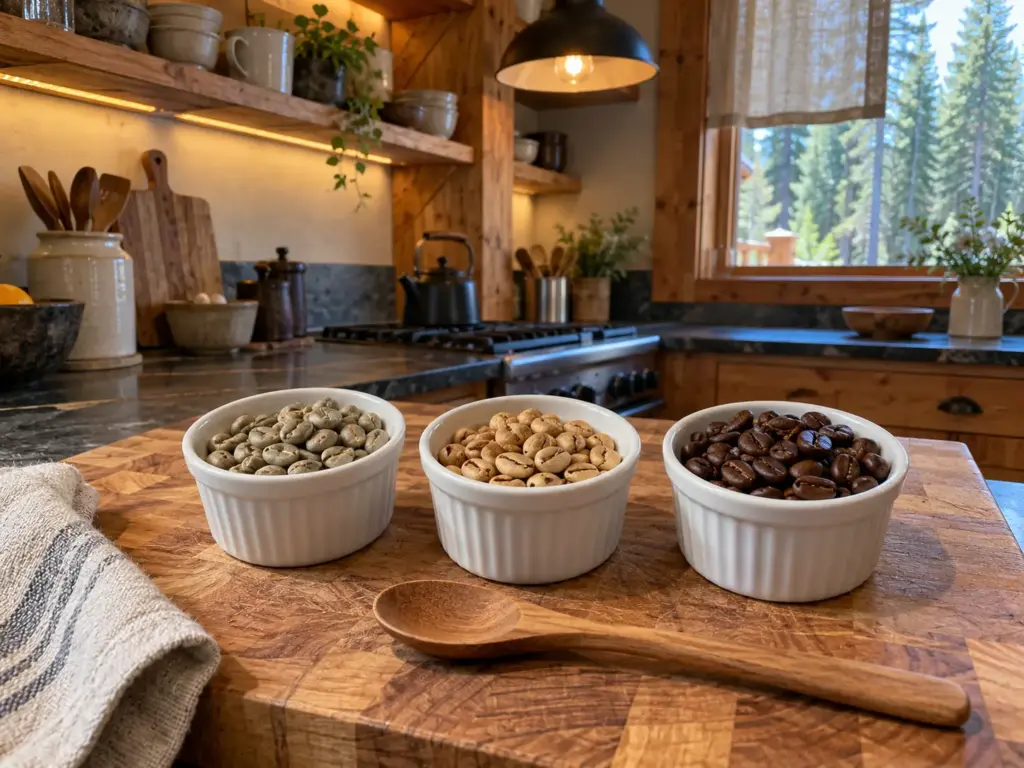
The NCA’s roast guide describes the process in one line: beans are brought rapidly to a very high internal temperature, over 400°F (about 204°C), then quickly cooled. By the end, nearly all the moisture is gone, so the beans weigh less and turn crunchy. That crunch is the brittleness your grinder needs.
The mass loss is bigger than most people guess. Roasting costs weight, so a 12 oz (340 g) bag of roasted coffee started life as roughly 14 to 15 oz (about 400 to 415 g) of green. Darker roasts lose more, because they stay in the heat longer, and the bean density drops with it.
And that has a consequence on your counter. A darker bean has lost more mass and weighs less for its size, so a level scoop of dark roast can hold fewer grams than the same scoop of light. Two tablespoons per cup is a volume, not a dose. Switch from a medium roast to a dark one and keep scooping, and you may have quietly made a weaker pot.
The gas is part of the story too. Roasting builds carbon dioxide (CO2) inside the bean, and according to a peer-reviewed degassing study from Zurich University of Applied Sciences, that gas is partly “retained inside the porous structure of the roasted beans” and released over storage, grinding and brewing. It is why a good bag has a one-way valve, and why fresh grounds puff up when the first water hits them.
When you change roast level, weigh one scoop of the new bag before you brew. If it comes in lighter than your old scoop, add coffee until the grams match, and only then judge the cup. A dark roast that tastes thin is often a scoop that shrank, not a roast that failed.
Browning Builds the Flavor
The color change from green to yellow to brown is chemistry you already know from the kitchen. The Maillard reaction (sugars and amino acids reacting under heat) and caramelization of the bean’s sugars drive both the browning and the toast and caramel flavors, the same reactions that brown a bread crust or the outside of a seared steak; a peer-reviewed study of roasting chemistry traces the color change in heat-treated coffee to exactly those two reactions.
This is the part of roasting that makes coffee taste like coffee. The grassy notes of the seed fade as these new flavor compounds form, and what water pulls out of a roasted bean is largely the product of that browning. Stop early and you get the lighter end of it, closer to the bean’s own character. Keep going and the sugars brown further, then start to burn, and burnt is a flavor of its own.
Bean Temperature Is Not an Oven Dial
The one temperature here with an authority behind it is the NCA’s: over 400°F inside the bean. Roasters’ own charts add two landmarks you can hear.
First crack, the audible pop as moisture and gas break out of the bean, lands at roughly 385 to 400°F (196 to 204°C) of bean temperature, and it marks where light-roast territory begins. Second crack, a quieter, faster crackle when oils start reaching the surface, comes at roughly 435 to 450°F (224 to 232°C) and marks the start of dark roast. Treat those as rough figures from roasters, not a standard; they move with the bean, the batch size and the machine, whether that is a drum roaster or a hot-air roaster.
That distinction is exactly what gets lost at home. A recipe that says “roast at 450°F” in a home oven sets the air, not the bean, and a bean in a hot oven lags well behind the air around it while its outside races ahead of its center. So the same number means two different things depending on whether a probe is in the bean or in the oven wall. When you see a roasting temperature quoted, the first question is which one it measures.
One more detail from the color research at UC Davis, published by the SCA: first and second crack happen at nearly the same bean color whatever the roasting speed. So the color of the bean, not the clock or the dial, is the closest thing the industry has to a shared yardstick. That matters in the next section, because the words on the bag are not.
How Far the Roaster Stops Decides What You Taste
If a green bean tastes mild and grassy, and heat is what builds the flavor, why does so much roasted coffee taste bitter? The answer is how far, not whether. Roasting creates the flavor; where the roaster stops decides which flavors dominate.
Light, Medium and Dark Are Colors, Not Tastes
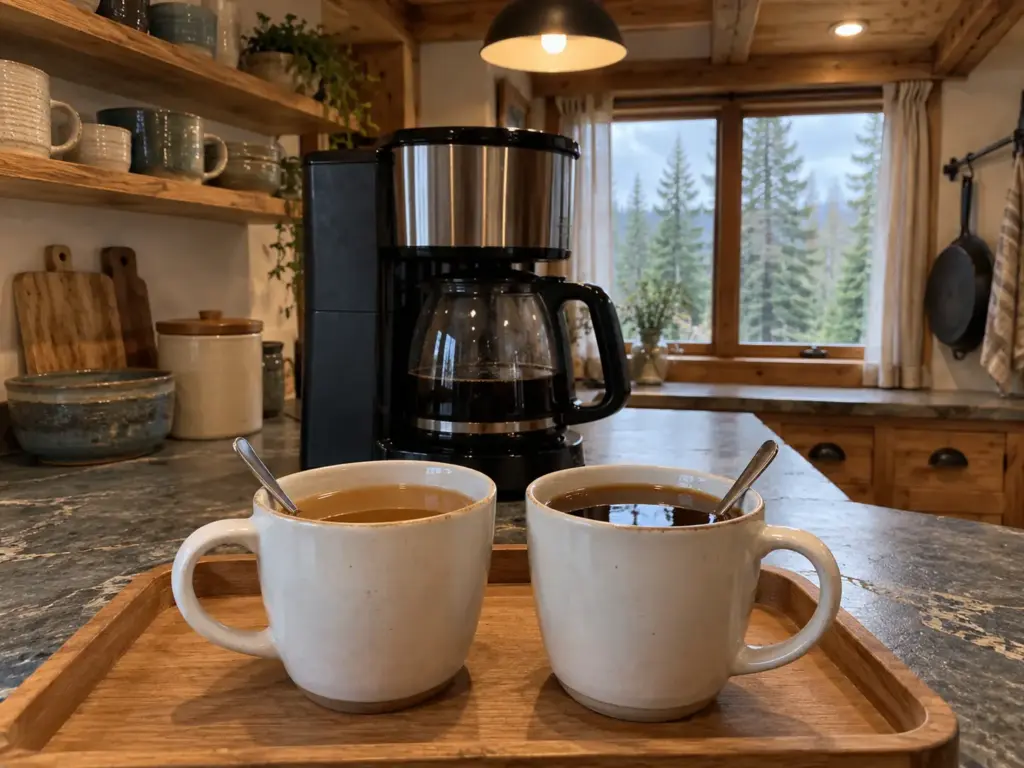
The NCA sorts roasts into three color groups. Lighter roasts keep more of a coffee’s own character and brew a more acidic cup; dark roasts come out shiny and oily, with a pronounced bitterness and less acidity. Medium roast sits between. That is the whole dial, and the roaster set it before the bag reached the shelf.
The catch is that the words are not a measurement. The NCA itself notes that one roaster’s dark may differ from another’s, and most roasters invent their own names on top (city, full city, French, Italian). The SCA’s roast-color research from UC Davis is blunter: “Despite how vital roast level is for coffee, there are no agreed-upon standards.”
Half the roasters surveyed at a 2023 SCA Roasters Guild retreat said they judge roast level simply by looking at the beans. A numeric color scale exists (the Agtron scale, roughly 100 for very light down to 20 for very dark), but a bag rarely prints it.
So two bags both labeled dark, from two different roasters, can brew two different colors in the same drip machine. If you decided you dislike light roasts after one sour bag, the label may be what misled you, not the roast level.
It matters because the same UC Davis work, cited by the SCA, found that roast level drove the greatest flavor differences in how people perceived filter coffee. The roast is the biggest decision made before you ever open the bag. Choosing it on purpose is its own question, and it is the one our pillar on light roast vs dark roast answers.
Sour or Bitter: Which Way the Cup Is Off
Before changing anything, name the direction. A sour cup tastes sharp, thin and a little lemony, and it means the water left before it pulled enough out of the grounds; a lighter roast, which carries more acidity, leans this way more easily. A bitter cup tastes harsh, ashy and dry at the back of the tongue, and it means the water pulled too much, or the roast itself was taken far enough that the bitterness is baked in. The two point in opposite directions, so they never share a fix.
That answers the confusion about the weight. Green coffee isn’t bitter because nothing has browned yet, and roasted coffee isn’t bitter because it was roasted. Bitterness comes from how far the roast goes, and then from how hard you extract what the roast left behind.
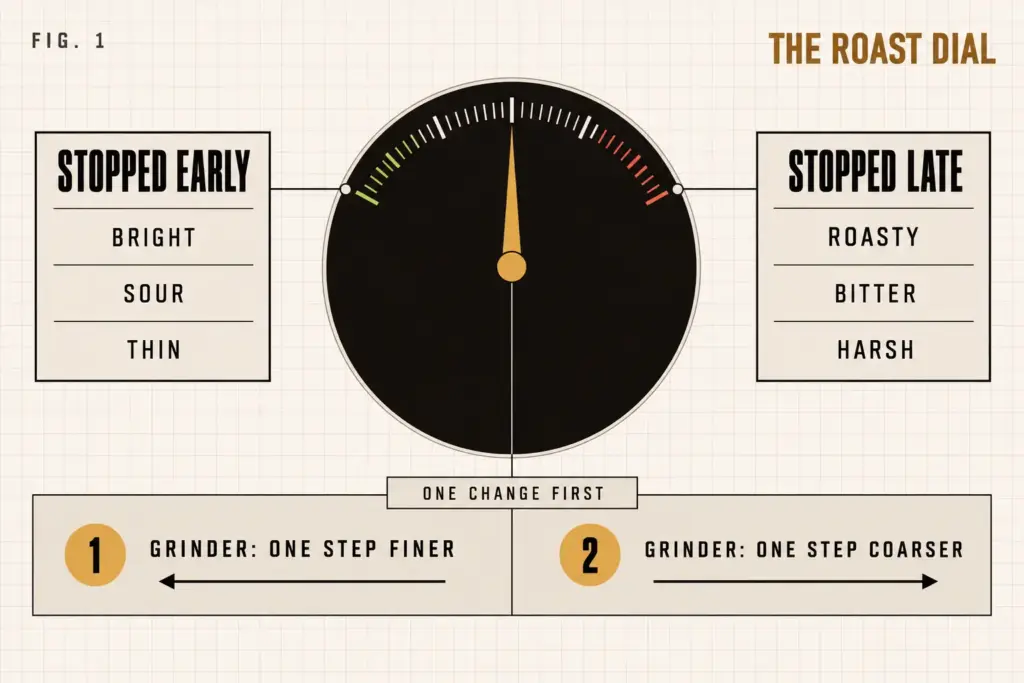
A cup can also be both at once, sour up front and bitter on the finish. That usually points at the grinder rather than the roast: a blade grinder or worn burrs make boulders and dust in the same dose, and each extracts in its own direction.
The One Change to Make First
The common advice for a bitter cup is to switch to a lighter roast. That works, but it costs a new bag and changes everything at once, so you never learn what was wrong with the old one. Move the grinder first.
For a sour cup, go one step finer. For a bitter cup, one step coarser. Keep the dose the same by weight, the water the same, the brew the same, and taste.
If the next cup is sweeter and rounder, stop there. If a sour cup turned harsh, you went a step too far; come back half a step. The rule of thumb in our guide to grind size against the roast runs the same way: lighter roasts usually want a finer setting, darker ones a coarser one.
Actually, one correction to that order: if you switched bags recently and kept scooping, weigh the dose before touching the grinder, because a shrunken scoop tastes sour and weak no matter where the burrs sit.
Taste the first cup of a new bag black and before you change anything, then write one word on the bag: sour, bitter or good. Tomorrow, change only the grind, one step, and taste again against that word. A single setting change you can taste beats three you can’t separate.
Where the roast should land for your brewer is a separate question with its own answers, depending on whether you brew pour over, cold brew or espresso.
Why the Roast Date Matters More Than the Roast Name
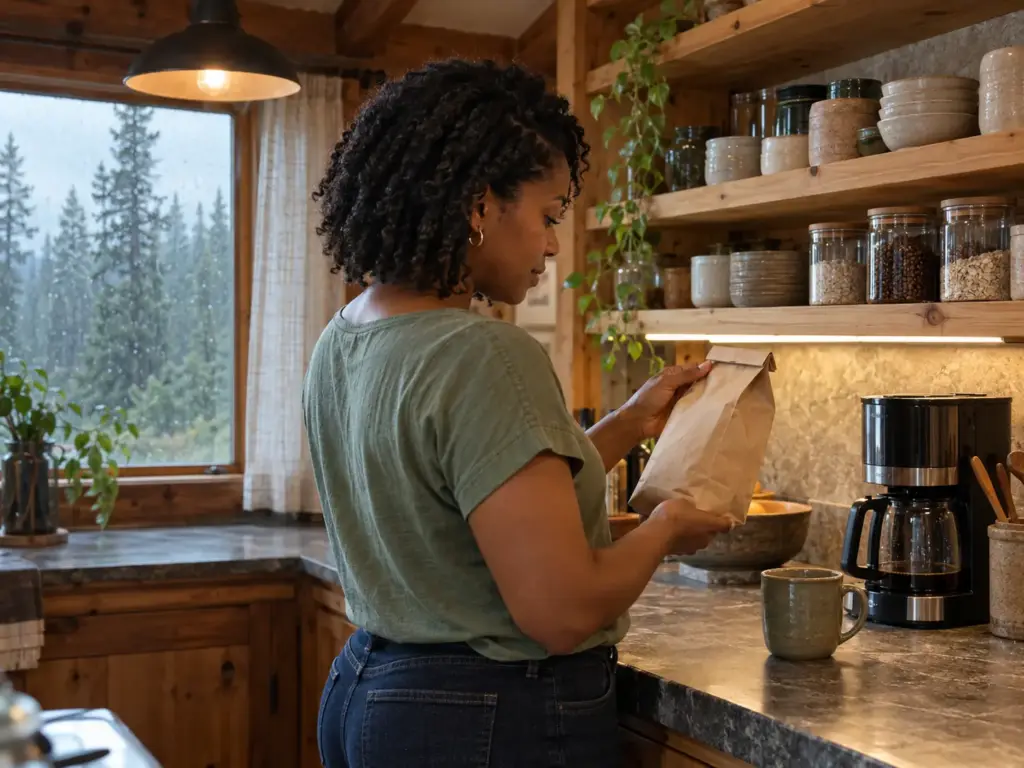
A green bean waits. A roasted one starts to fade almost as soon as it leaves the cooling tray, which is the whole reason roasters don’t roast a year’s coffee at once. So the date the heat stopped is the number on the bag that tells you the most.
Rest First, Then Brew
Fresher is better, but not on day one. The NCA suggests resting roasted beans about 2 to 3 days before grinding, then brewing within about 2 to 7 days after roasting for the freshly roasted peak. In that first stretch the bean is still pushing out the carbon dioxide the roast built, and a very fresh dose can puff and foam hard when the water first hits it.
After that window the coffee does not stop being drinkable; it starts sliding. How long a bag stays worth brewing once it’s open, and how the roast date maps to that, is laid out in our guide on how long to keep coffee beans after opening.
A Roasted Bean Fades While a Green One Waits
Here the two forms of the same seed split completely. Green coffee, per the NCA, keeps for long periods without losing quality or taste. Roasted coffee, according to the NCA’s storage guide, begins to lose freshness almost immediately after roasting. Most roasted beans never expire in the sense of going bad; they decline in aroma and flavor, week by week.
The same porous structure that lets a roasted bean grind and brew is the one the degassing study describes releasing its gas through storage. A dense green seed holds onto almost everything; a roasted bean is open to the air by design, and that openness works against it on the shelf. Stale coffee is flat rather than harmful: the aroma goes quiet, the sweetness thins, and the cup turns papery and dull. The NCA’s practical advice is to buy one to two weeks of coffee at a time and keep it in an opaque, airtight container.
What to Check a Month On
Say you open a cupboard and find a bag from three weeks ago, labeled dark. The word tells you neither how far that roaster actually went nor how much of the roast is still there. The date does the second job, and it is the only number on the bag that does.
A best-by date a year out is the package’s date; the roast date is the coffee’s. Our guide to what the bag tells you goes through every line of the label in order.
Then check the bloom. Pour just enough hot water to wet the grounds and watch for a few seconds. Fresh coffee puffs, domes and bubbles as the trapped gas escapes. Stale coffee barely moves, and the wet grounds just sit there and darken.
If the bloom is flat and the cup is quiet, the beans are past their window, and you can confirm it with our checklist on how to tell if coffee beans are stale.
If you move beans into a canister, write the roast date on a strip of tape on the lid, where your hand goes every day. The date on a bag folded at the back of a cupboard is a date you stop reading; the one on the lid you see every time you dose.
Roasting at Home and What Heat Can’t Change
From the outside, roasting looks easy: a pan, some heat, and a bag of green beans that costs a fraction of the roasted price. What the pan doesn’t give you is an even, controlled path past 400°F inside every bean at the same time. That gap is most of what you pay a roaster for.
Can You Roast at Home?
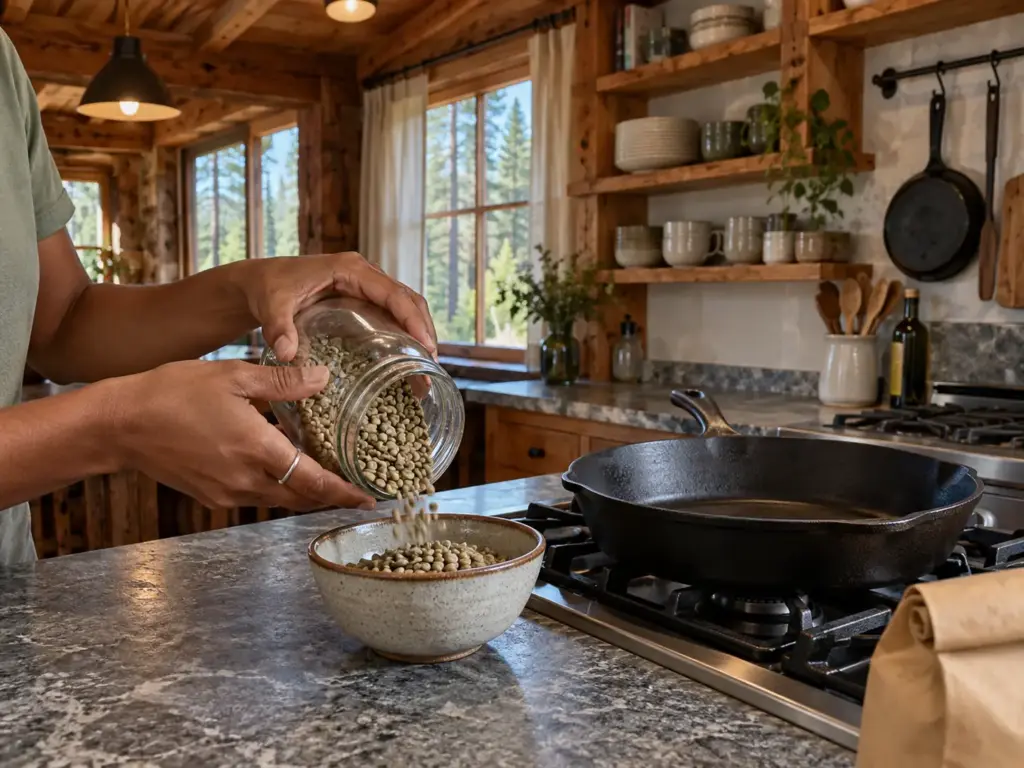
Yes, and people do. The price gap between green and roasted coffee pushes many people toward small popper-style roasters as the usual way in, and matching a local roaster’s consistency is a massive undertaking. Getting beans to roast at all is the easy part; getting every batch to land in the same place is the hard one.
A skillet or an oven shows why. A pan heats the side of the bean that touches it, so one face browns while the other stays tan unless you stir constantly, and an oven heats the air while the beans lag behind it, as above. Expect smoke and papery chaff floating off the beans.
Home roasting is a fine hobby. As a way to save money on good coffee, it stops looking like a shortcut by the second batch.
Why Roasted Costs More Than Green
Part of the gap is plain arithmetic. With a weight loss of roughly 15 to 18%, every 12 oz of roasted coffee needs about 14 to 15 oz of green going in, so even before anyone is paid, the roasted pound costs more green coffee than the green pound. Run the division yourself with today’s prices: take the green price per ounce, multiply by about 1.2, and that is the green cost hiding inside each roasted ounce.
The rest is what you can’t see on the bag: the roaster’s time and skill, the batches that come out wrong, the machine, and the fact that roasted coffee has to be sold within weeks while green can sit in a warehouse. The full breakdown, origin and grade included, is in our piece on why coffee beans cost so much.
What a Darker Roast Doesn’t Change
A darker roast changes color, flavor and acidity. It does not make the coffee stronger. The NCA says so directly, and adds that light roasts carry slightly more caffeine than dark. The heavier, more bitter taste of a dark roast reads as strength, but it comes from how far the browning went, not from more of anything in the cup.
So if the goal is a stronger cup, the dial is the ratio, more grams of coffee per cup of water, weighed. Picking a darker bag for strength gets you a different taste at the same strength, and often a weaker pot if you keep scooping by volume. With that and the roast date in hand, the real choice left is which roast to buy for the way you brew.
Read the Date, Then Move the Grind One Step
Three things to carry back to the counter:
- Roasting is what makes coffee possible. A green bean is a hard, grassy seed that resists the grinder and brews into a pale, vegetal cup; heat past 400°F inside the bean dries it, makes it brittle and builds the flavor.
- How far the roaster went is the dial. Lighter leans bright and acidic, darker leans roasty and bitter, and the word on the bag is not a standard from one roaster to the next.
- The roast date outranks the roast name. Green waits; roasted fades from the first days, so the date tells you more than any word printed next to it.
A month from now, look at the roast date on whatever bag is open and pour a small bloom: if the date is past a few weeks and the grounds barely rise, the beans have gone quiet, and no grind setting will bring that back.
Tomorrow morning, read both the date and the roast word before you brew. If the cup comes out sour, go one grind step finer; if it comes out bitter, one step coarser. Keep everything else the same, and the next cup should land sweeter and rounder in the middle. If it swung past, come back half a step.
Frequently Asked Questions
01Why are coffee beans roasted at all?
Roasting turns a hard, grassy green seed into a brittle, porous bean that grinds easily and gives up toasty, caramel flavors to hot water. Without that heat, there is nothing in the raw seed you could brew into a pleasant cup.
02Can you brew coffee from green, unroasted beans?
Not in any way that tastes like coffee, because green beans are hard enough to damage a home grinder and taste grassy. Roasting is what makes the bean brittle enough to grind.
03Why does dark roast taste bitter if roasting makes coffee taste good?
Bitterness comes from how far the roaster takes the beans, not from roasting itself, so a lighter stop keeps more acidity and a darker one adds roasty bitterness. If a cup tastes harsh, try one grind step coarser before buying a lighter bag.
04How soon after roasting should you brew the beans?
Rest freshly roasted beans about two to three days, then brew them within roughly two to seven days of the roast date for their freshest peak, according to the National Coffee Association. After that they fade slowly rather than spoil.
05Does a darker roast have more caffeine?
No, a darker roast is not stronger, and the National Coffee Association notes that light roasts carry slightly more caffeine than dark. What makes a cup taste stronger is the amount of coffee per cup of water, not the color of the bean.

How did your cup turn out?
No comments yet. Tell us what you changed — and whether the needle moved.