



We may earn a commission when you buy through links on this page. It never changes what we recommend. How we pick
On this page8 parts
- Arabica vs Robusta in One Table, as Ranges
- Why the Caffeine and Share Figures Differ
- What Each Species Does in the Cup
- When a Bitter Cup Is the Roast, Not the Species
- What 100% Arabica on a Bag Promises
- A Side-by-Side Test With the Machine You Own
- Change the Bag Last, After the Grind and the Roast
- Frequently Asked Questions
A can of ground coffee sits on the counter next to a bag that says 100% arabica, and the carafe beside them holds something harsh. The can names no species at all, so it is tempting to decide the missing word is the problem, and that is where most questions about arabica vs robusta begin. They are two different plants, the sources do not agree on their numbers, and a bitter cup usually has more to do with the roast and the grind than with either name. Below: one table of ranges, why the figures drift, what each species does in the cup, how to check the roast before blaming the bean, what the label promises, and a side-by-side test for a drip machine.
Quick Answer
Two different species: arabica leans sweeter and more acidic, robusta plainer and more bitter, with more caffeine by a range (50 to 60 percent more per the National Coffee Association, about 1.4 to 1.8 times in brewed studies). The label 100% arabica names a species, not a quality grade.
Arabica vs Robusta in One Table, as Ranges
Two species, a handful of numbers, and not one figure that every source agrees on. The table below keeps each number as a range and names the kind of source behind it, so the gaps are visible before the rest of the article explains them.
Two plants, not two grades
Arabica (Coffea arabica) and robusta (the trade name for Coffea canephora) are separate species, the way a lemon and an orange are separate fruits. They are not a premium and a standard version of the same plant. The words still get used as grades, arabica as the good one and robusta as the cheap one, and a reader in the grocery aisle meets both species at every level of quality.
The spread inside each species is the part a single number hides. A bad arabica is still pretty palatable, while bad robusta is awful and great robusta is pretty amazing. Robusta, in other words, swings wider, and which end of the swing is in your cup is something a species name cannot tell you.
The ranges, side by side
The growing facts come from the National Coffee Association’s species chart: arabica grows at higher altitudes in milder temperatures and is more disease-prone, so it needs more care, while robusta grows lower and warmer and is hardier. That hardiness is why robusta is the cheaper species and why it ends up in cans and instant coffee. Every other row is a range, tagged with where it came from.
| What you compare | Arabica | Robusta | Source type |
|---|---|---|---|
| Taste direction | Sweeter, more acidic | More bitter, plainer | Roaster pages and drinkers’ descriptions |
| Caffeine in green beans (percent of dry weight) | 0.9 to 1.5 | 1.2 to 2.4 | Literature review of studies from 2010 to 2020 |
| Caffeine in a brew | The baseline | About 1.4 to 1.8 times in the review’s studies; 50 to 60 percent more per the NCA | Review and trade association; one study in the review found arabica higher in a machine-brewed cup |
| Where it grows | Higher altitudes, milder temperatures; more disease-prone, needs more care | Lower altitudes, warmer temperatures; hardier | National Coffee Association |
| Share of world production | About 57 percent; other pages print 60 or 70 | About 43 percent; other pages print 40 or 30 | Trade association citing the ICO’s August 2026 market report; roaster pages |
A table of single figures would have been tidier, but it would have made a choice the sources do not make themselves.
A free eyeball test: the shape of the bean
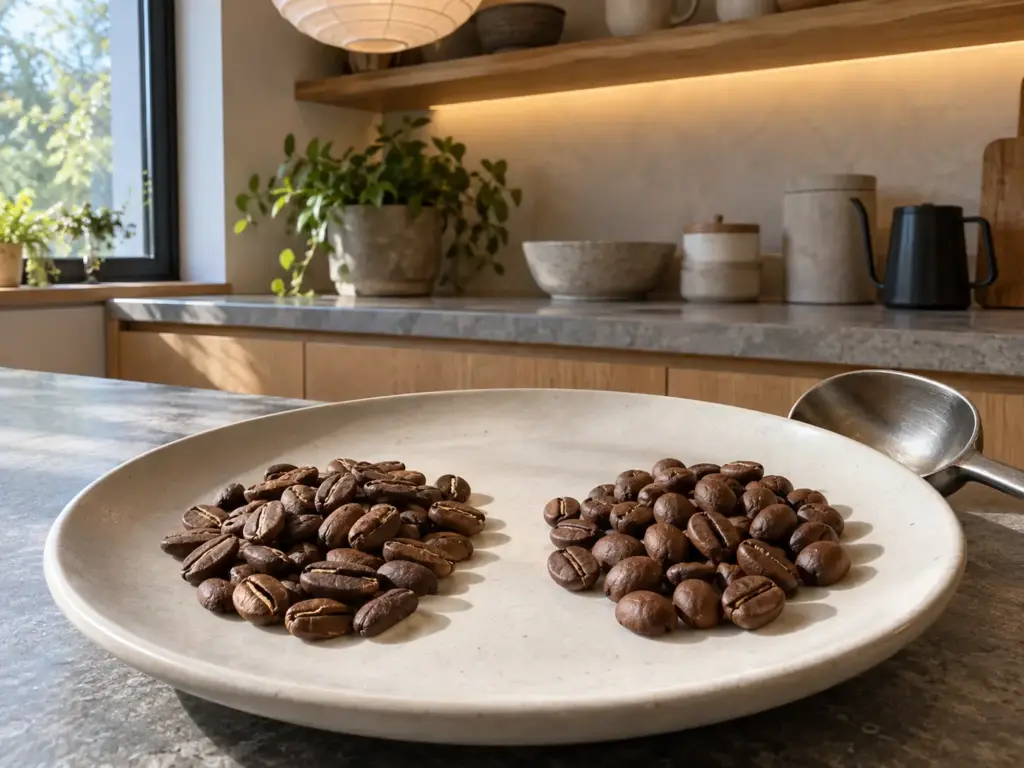
If you buy whole beans, you can sometimes check the species without any label. Arabica beans are flatter and more elongated; robusta beans are smaller and rounder, according to the same NCA chart. Pour a few beans from two bags onto a plate and the difference shows, since the robusta beans sit visibly smaller and rounder next to the arabica. The bag itself rarely says which is which, and a pre-ground can gives you nothing to look at.
Why the Caffeine and Share Figures Differ
Look up the caffeine in robusta on two pages and you will likely get two answers. Twice as much is the rounded version of something messier, and the same goes for how much of the world’s coffee is arabica. These three sections take the figures apart: the caffeine in the bean, the share of production, and the cup you actually pour.
Caffeine: the ranges overlap
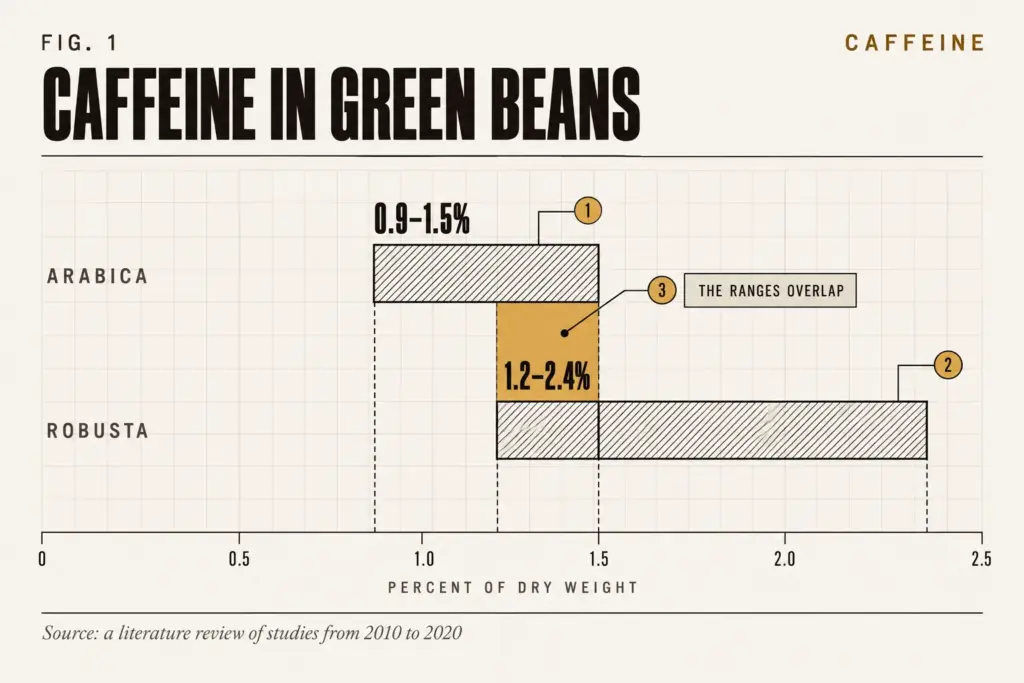
A literature review of studies from 2010 to 2020 puts caffeine in green arabica beans at 0.9 to 1.5 percent of dry weight and in green robusta at 1.2 to 2.4 percent. The top of arabica’s range sits above the bottom of robusta’s, so a strong arabica and a weak robusta can land close together. “Twice the caffeine” is the middle of those two ranges, not a rule that holds from bean to bean.
Brewing moves the numbers again.
In a review of caffeine studies from 2010 to 2020, the authors write that “almost all researchers confirm that Robusta contains about 1.4 to 1.8 times more caffeine” in the cup, which is not the same as twice. One study they cite even found arabica higher in a machine-brewed cup.
The National Coffee Association says 50 to 60 percent more. One roaster’s page prints about 1.5 percent for arabica against 2.7 percent for robusta. Three sources, three numbers, and none of them is wrong. The caffeine content they report differs because they measured green or roasted beans, dry or wet, from different origins, brewed in different ways.
Production share: 57, 60 or 70 percent
The National Coffee Association, citing the International Coffee Organization’s coffee market report from August 2026, prints roughly 57 percent arabica and 43 percent robusta.
Other pages print 60/40, and one roaster’s page says about 70 percent arabica. All three can be honest. A share depends on the year counted, on production versus shipments, and on whether the weight is green or roasted. Repeat the source and the year along with the percentage, and the number stops being a fight.
How much is in the cup you pour
The only per-cup figure worth printing is the official one. The FDA’s typical-caffeine table lists 113 to 247 milligrams of caffeine in 12 fluid ounces of regular brewed coffee, and the species of the bean is one of the things that moves a cup around inside that band. How any amount of it suits you personally is a question for a doctor, not for a chart of beans; this article stays with what is in the cup.
There is a bigger lever than species, though. The same bag brewed two different ways changes the chemistry of the cup more than swapping one species for the other does, and a 2022 study on exactly that comes back in the fourth section.
Write the source and the year next to any caffeine or production figure before you repeat it. A percentage with no source is a rounded guess, and two pages can both be right once you see they counted different things.
What Each Species Does in the Cup
The numbers are only half of what most readers are really asking; the other half is what the next cup will taste like and what to expect from the bag in the cabinet. Each species has a strength and a flaw, and the flaw is worth knowing before you choose.
What arabica brings, and its flaw
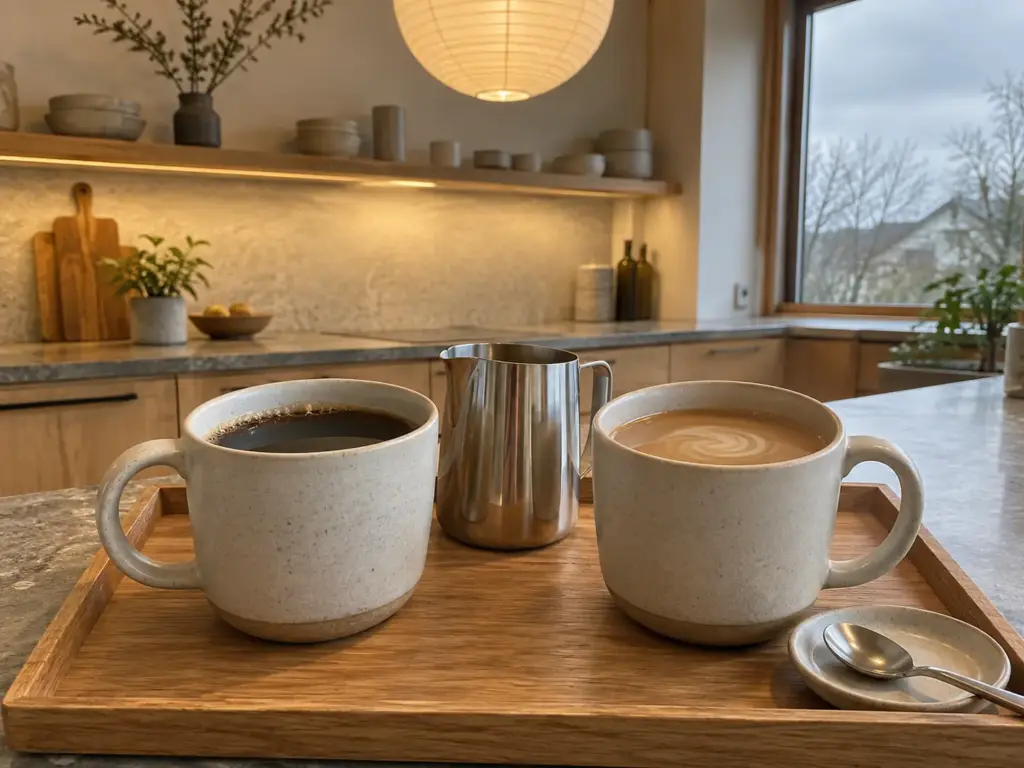
Arabica leans sweeter and more acidic, which is why specialty roasters build around it. The same acidity is its catch in a harsh or underfed cup, where it reads as sharp rather than bright. The plant is also the more disease-prone and fussy of the two, according to the NCA, and the beans are easy to buy stale, so a well-grown arabica can arrive tired.
The species word on the label does not rescue a bad bag. The very cheapest 100% arabicas are not so palatable after all, and some are really difficult to drink. Some drinkers say the same; the label settles the species and nothing else.
What robusta brings, and its flaw
Robusta leans more bitter and plainer. At its best, robusta from small roasters tastes like cereal grain, with no sweetness, no floral or fruity notes and no acidity, and at its worst it tastes like burning tires. That disagreement is the honest picture: the plainness and bitterness are real, and whether they are a flaw depends on the drinker.
Fine robusta is grown and roasted with the care an arabica gets. Specialty robusta in Hanoi can have sweetness, acidity and floral notes, and that style is not common in the US. Said as theirs, and rare.
Where robusta works: milk and espresso blends
Milk is where robusta gets forgiven, and milk drinks are where it turns up most. Robusta’s flavors are strong enough to survive milk, and a single-origin robusta as a pour-over still tastes like robusta and may still need milk. Iced drinks with sweetened condensed milk came up more than once.
One drinker who kept getting bright 100% arabica from artisan roasters moved to a medium-roast 50/50 robusta and arabica blend from Vietnam, reporting low acidity, a chocolatey cup and less worry about overextracting than with a dark-roast arabica. One person, one bag.
Espresso is the other place it turns up, inside blends. If you are weighing a single origin for the same machine, whether you can use single origin coffee for espresso comes down to the roast first, which our guide on espresso works through. The tell on a blend bag is simple: it prints both species and almost never the split.
When a Bitter Cup Is the Roast, Not the Species
A harsh cup points at the species first, because that is the word printed on the bag. It is not the likeliest suspect. The order below checks the grind, then the roast, and leaves the species for last.
What the chemists found about bitterness
Thomas Hofmann of the Technical University of Munich, speaking at an American Chemical Society meeting, estimated that caffeine is only about 15 percent of a cup’s perceived bitterness. His line on the cause was: “Roasting is the key factor driving bitter taste in coffee beans.” In light to medium roasts the bitterness comes mostly from chlorogenic acid lactones, he said, and dark roasts add compounds formed from them that taste more lingering and harsher. Swapping to a lower-caffeine bean therefore aims at the wrong 15 percent.
The brewing side shows up in a 2022 study of arabica and robusta brewed four ways, which found that “the extraction process played a hierarchically higher role in driving the chemical composition of the beverages when compared to coffee species.” That is a chemistry result, not a taste ranking, and it does not say species is irrelevant. It says the way the coffee is brewed counted for more, which is where the bigger lever sits.
Check the grind before the species
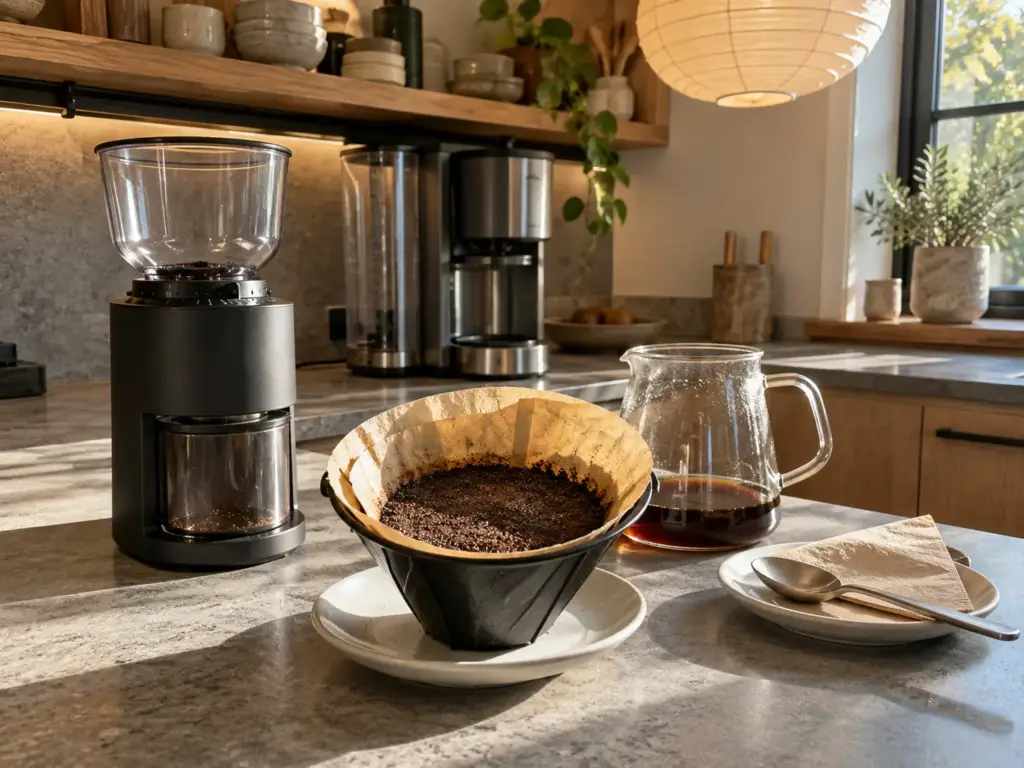
Bitter means the water pulled too much or stayed too long. The cheapest and likeliest change is to go one grind step coarser, which costs nothing and leaves the bag alone. Brew the same weight of the same coffee and taste: a cup that is rounder and less harsh means the grind was the peg that mattered, and a cup that has gone thin or sour means you went a step too far, so come back half a step. If you want the longer version, how grind size changes the taste walks the whole sour-to-bitter range.
The advice to buy 100% arabica because robusta is bitter fails exactly here. A bitter cup that stays bitter after a bag swap is a cup where the grind and the dose never moved. If I had only one change to spend, it would be the grind, and the bag would be the last thing on the list.
Move the grind one step coarser and taste before you touch the bag. If the harshness eases, the species was never the cause; if it stays, the roast is next.
Check the roast before the species
If one step coarser did not move the cup, read the roast on the bag. A dark roast pulled long is the bitterness many drinkers call overextracted and blame on the bean, and by Hofmann’s account the darker the roast, the harsher and more lingering that bitterness gets. A dark roast labeled 100% arabica can therefore still taste harsh, while a medium roast with some robusta in it may not. The comparison of light roast vs dark roast is the better place to decide which side you are on.
Only after the grind and the roast have been checked, one at a time with a taste between each, does the species earn the blame. By then the bag swap tells you something, instead of adding a third variable to a cup that was already confusing.
What 100% Arabica on a Bag Promises
Once the species is no longer the whole story, the next place you meet it is the label. The words on the bag rule some things out and say nothing about others, and that gap is where most of the confusion in the grocery aisle comes from.
What the label rules out, and what it does not say
100% arabica is a species label, not a quality grade. It rules robusta out.
It says nothing about the roast date, the roast level or the freshness, which is how a stale or heavily roasted 100% arabica bag ends up tasting worse than a fresh blend. The label sits a layer below the words people read first. Country, estate and single origin are covered in what the label means, and the pillar on single origin coffee vs blend covers what a blend is and is not.
A blend that names both species and no split
A bag without the phrase 100% arabica is not automatically robusta, and many blends do not print the split at all. The options are to ask the roaster or to look on the brand’s own site.
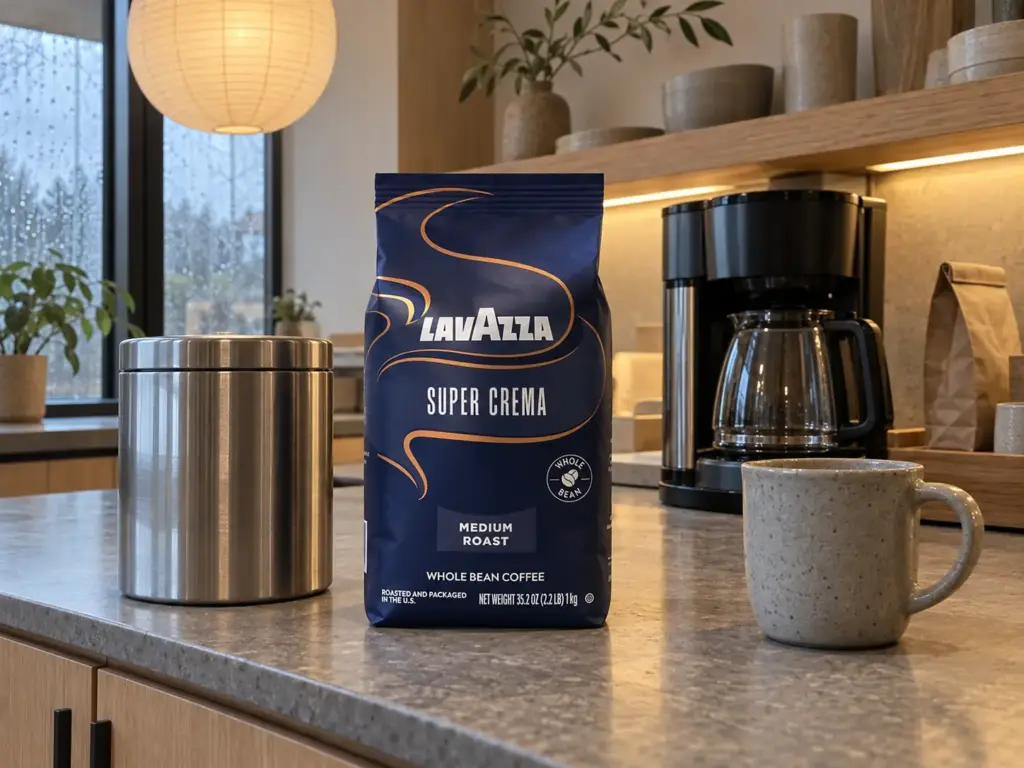
Lavazza Super Crema shows the pattern: a medium roast labeled for espresso, sold as whole beans in a 2.2 lb bag, with Arabica and Robusta printed on the label and the proportions nowhere. That is typical of supermarket coffee.
A blend with robusta is not bad coffee by default, and one reviewer was still pulling crema-rich shots from a bag roasted nearly three months earlier. The catches are on the bag: it carries a best-by date and no roast date, it does not reseal (several reviewers move the beans to a canister), and Amazon’s customer summary says some buyers find it very fresh while others get stale beans.
Count from the roast date
Many large supermarket bags print only a best-by, and a best-by is a promise about the bag, not a record of when the beans were roasted. If there is a roast date, count the age from there; if there is only a best-by, count from the day you open the bag and use it up sooner. A stale bag is the bigger change in a cup than a species swap, and it is worth ruling out first. What the bag tells you reads the roast date and the origin lines in more detail.
Look for a roast date before you look for the word arabica. When a bag prints only a best-by, treat the day you open it as day one and plan to finish the bag sooner.
A Side-by-Side Test With the Machine You Own
The label is understood; now comes the cup. This test costs nothing if there is already a bag of 100% arabica in the cabinet, and it changes exactly one thing.
The test: same grams, same grind, same machine
- Weigh the same amount of coffee for each cup, whatever you normally use.
- Keep the grind step the same and use the same water and the same machine.
- Brew the usual can first, then the 100% arabica bag.
- Taste each and write down which way each cup leans: sour, bitter, flat or harsh.
The only variable is the bag. No ratio or temperature is prescribed here because the point is your usual routine, not a better one. That is one change at a time.
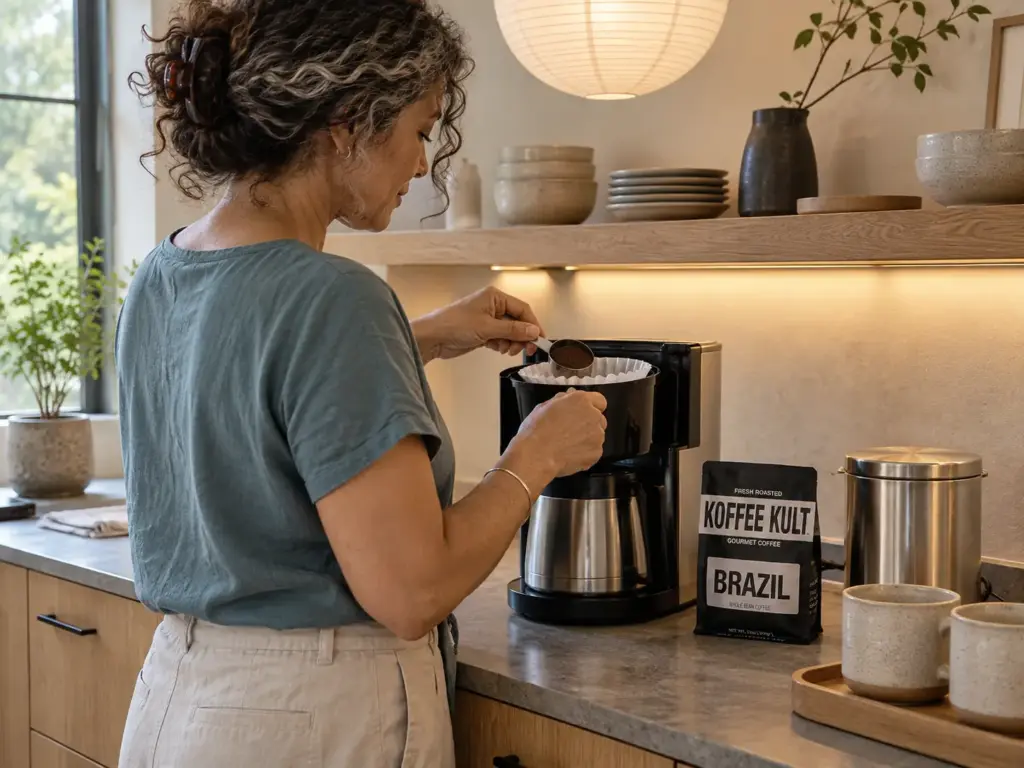
If you have no 100% arabica bag at all, Koffee Kult Brazil is a label example, not a pick: a medium-roast, single-origin Brazil, 100% arabica, nitrogen-sealed in a 12 oz bag. The evidence behind it is thin in both directions, only a few dozen ratings, and the few low reviews on file (2019 and 2020) describe a bitter and sour cup that was not the freshest, with one mentioning hard beans that grind unevenly. Any 100% arabica bag you already own does the same job.
Taste again, then decide what to change
If both cups lean the same way, both flat or both harsh, the bag was never the cause, and the next move is back to the grind and the roast from the fourth section. If a grinder sits in the chain, it keeps a little of the last coffee inside, so the first cup from the new bag can still taste like the old one; run a small throwaway amount through before you brew the test cup. The species is the last suspect, not the first.
When it is not the species, and the bag to read next
Rule out a stale bag before you decide anything. How to tell if coffee beans are stale covers the smell and the cup, and a stale bag changes the taste more than a species swap does. Once the cups are sorted, the next decision is which bag to buy, and best single origin beans for a drip machine picks up where this test ends.
Change the Bag Last, After the Grind and the Roast
The table is ranges, so do not repeat the rounded caffeine claim from any one page; the sources count different things. A harsh cup is more often the roast or the grind than the species, so change those first and taste in between. And 100% arabica is a species label that says nothing about roast date or freshness.
A month from now, look at the roast date on the next bag rather than the best-by, and notice whether the usual can still tastes the way it did beside it.
Tomorrow morning, put the 100% arabica bag next to the usual can with the same grams and the same grind, brew both, and taste each before you change anything else.
Frequently Asked Questions
01Which is better, arabica or robusta?
Neither wins on its own, because the cup depends on the roast, the grind and the age of the beans as much as on the species. Arabica leans sweeter and more acidic, robusta plainer and more bitter, and a bad roast ruins either one.
02Does Starbucks use robusta or arabica?
Starbucks says on its own website that the coffee it buys is arabica. That is the company’s statement about its own sourcing, cited here as theirs and not something checked independently.
03Which has more caffeine, arabica or robusta?
Robusta, by a range rather than a rule: the National Coffee Association says 50 to 60 percent more, and studies of brewed coffee found about 1.4 to 1.8 times. The FDA lists 113 to 247 mg in 12 fl oz of typical brewed coffee.
04Is 100% arabica always better coffee?
No. The label rules robusta out and says nothing about roast date, roast level or freshness, so a stale or heavily dark-roasted 100% arabica bag can taste worse than a fresh blend.
05How can I tell arabica from robusta in the bag or on the shelf?
Read the label first: 100% arabica rules robusta out, and a bag that names both species rarely prints the split. In whole beans, arabica is flatter and more elongated, while robusta is smaller and rounder (National Coffee Association).

How did your cup turn out?
No comments yet. Tell us what you changed — and whether the needle moved.