
We may earn a commission when you buy through links on this page. It never changes what we recommend. How we pick
On this page8 parts
- How Long to Grind Coffee in a Blade Grinder, by Brew Method
- Why the Same Seconds Give a Different Grind Tomorrow
- What the Blade Makes While the Clock Runs: Dust and Boulders
- Pulse, Shake, Look: How to Run the Blade
- Taste It, Then Change One Thing
- If You Own a Burr Grinder, You Do Not Time the Grind
- Weigh the Dose, Pulse, Then Let the Cup Decide
- Frequently Asked Questions
You let go of the lid, look inside, and find a few whole beans sitting on top of a layer of flour, and the pot that tasted fine yesterday comes out muddy today. A blade grinder has no size setting: it chops for as long as the switch is held, so time is the only dial it has, and the dose in the bowl and the edge on the blade decide what each second actually does. So the answer to how long to grind coffee in a grinder comes in parts: a starting range for each brew method, the reasons that range moves, what the dust and the chunks do to the cup, how to run the blade, and how to read the cup back into seconds, with a short section for burr owners and a word on whether grinding at home is worth it at all if that is the question you started from.
Quick Answer
In a blade grinder, pulse a few seconds at a time, about 10 to 15 seconds in total for drip and a little less for French press. More time only makes finer, dustier grounds, so stop when a shake shows an even pile, not when the clock says so. A burr grinder is not timed at all: its setting sets the size.
How Long to Grind Coffee in a Blade Grinder, by Brew Method
The stopwatch question has a short answer, and it is a range rather than a number. The three sections after this one explain why it can only ever be a range, so read the figures here as the place to start, not the place to stop.
Starting points for French press, drip and pour-over
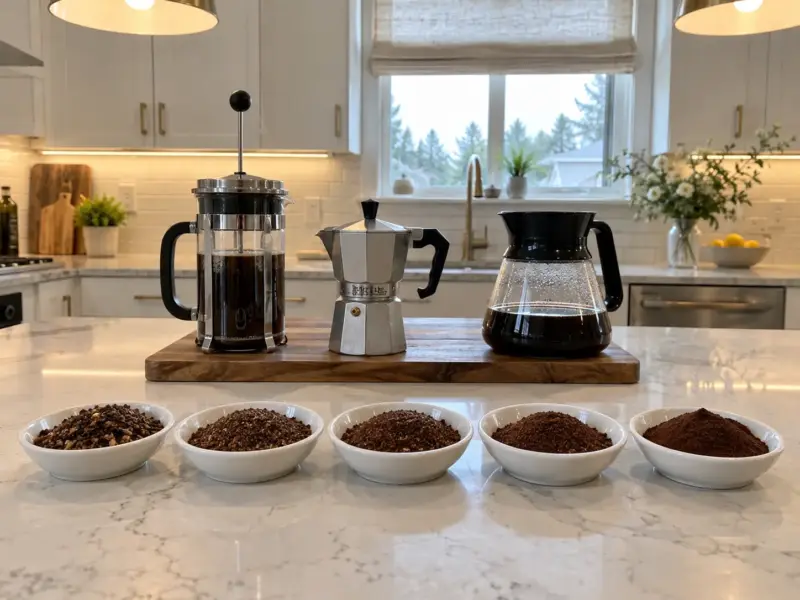
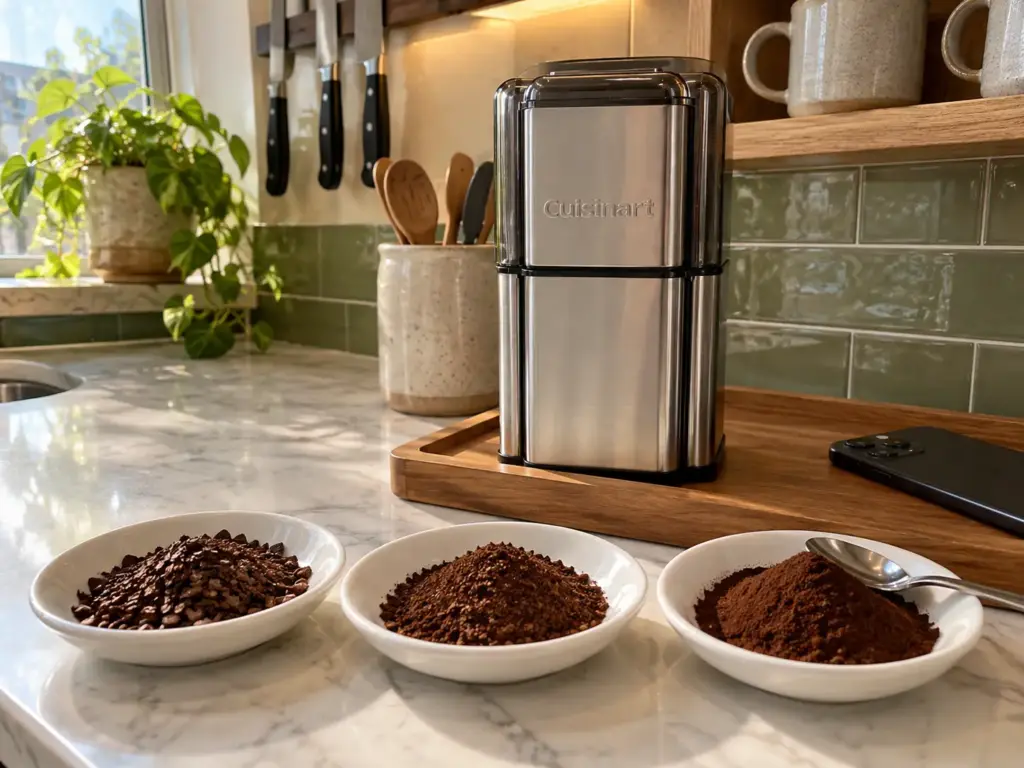
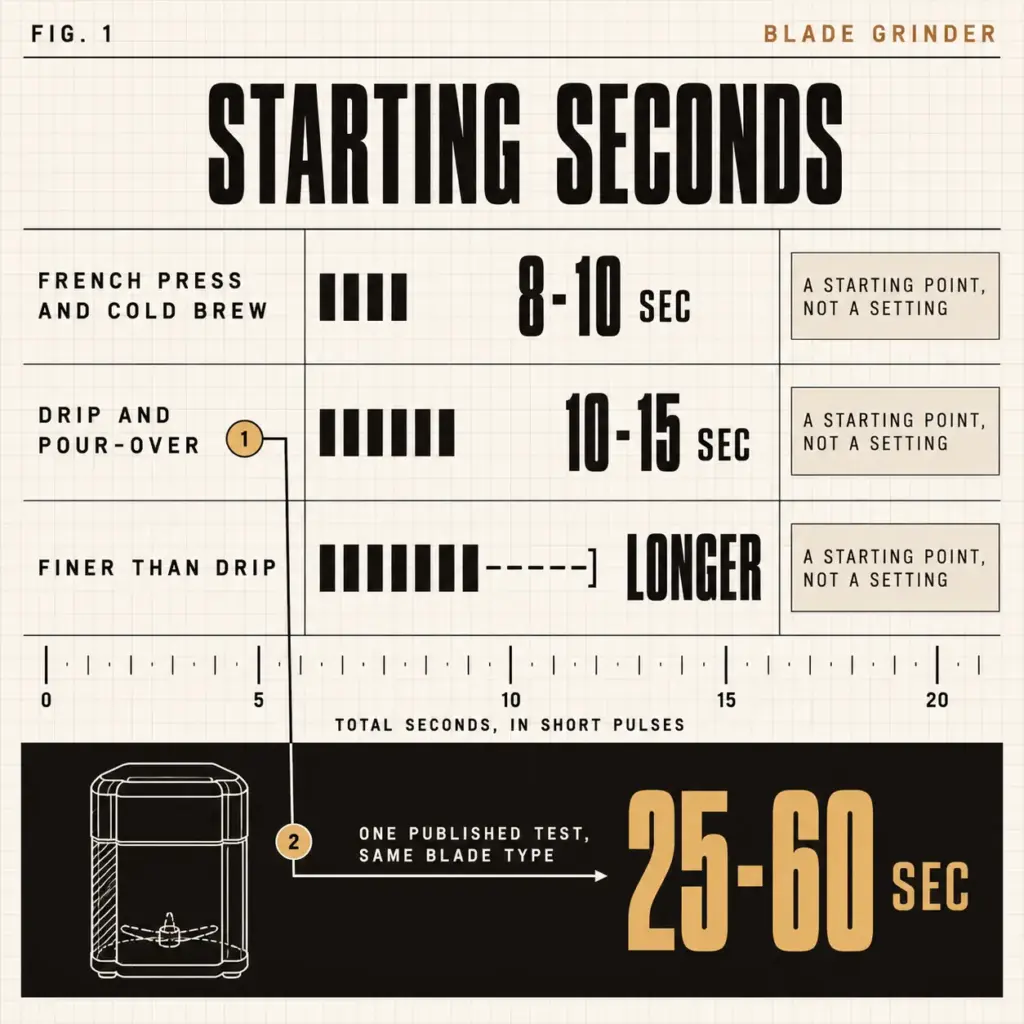
The figures grinder makers print for their own blade models sit close to each other. For a coarse grind, the kind a French press or a cold brew jar wants, they put the total at roughly 8 to 10 seconds, spread over short bursts; if you are unsure what the pile should look like, French press grind is closer to coarse sea salt than to sand. For a medium grind, which is a drip grind and also what most pour-over cones take, the total runs roughly 10 to 15 seconds. KitchenAid’s own guide gives 14 to 21 seconds for its grinder, and anything finer than drip takes longer still.
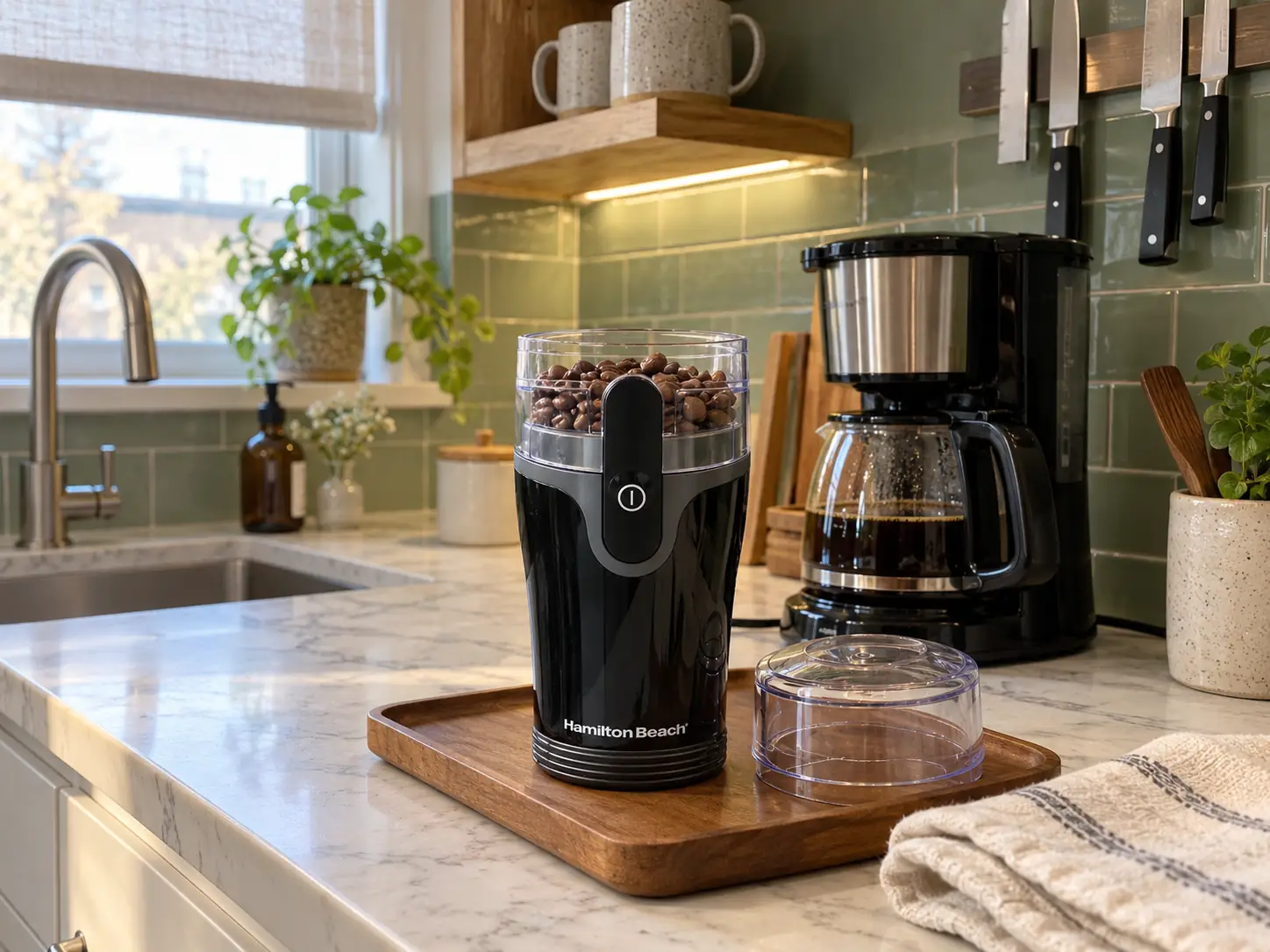
Those totals are the sum of several presses, never one long hold. A plain example of the type is the Hamilton Beach Fresh Grind: stainless blades under a lid that doubles as the switch, and a bowl sized for up to 12 cups of coffee. It has no repeated complaint of its own.
What it carries is the flaw of every blade grinder, which is that it makes powder and boulders in the same run. America’s Test Kitchen ground beans for 15 seconds in a set of blade grinders, sifted the result, and found only 27 to 44 percent of the pieces in the medium range, where its favorite burr grinders averaged above 60 percent.
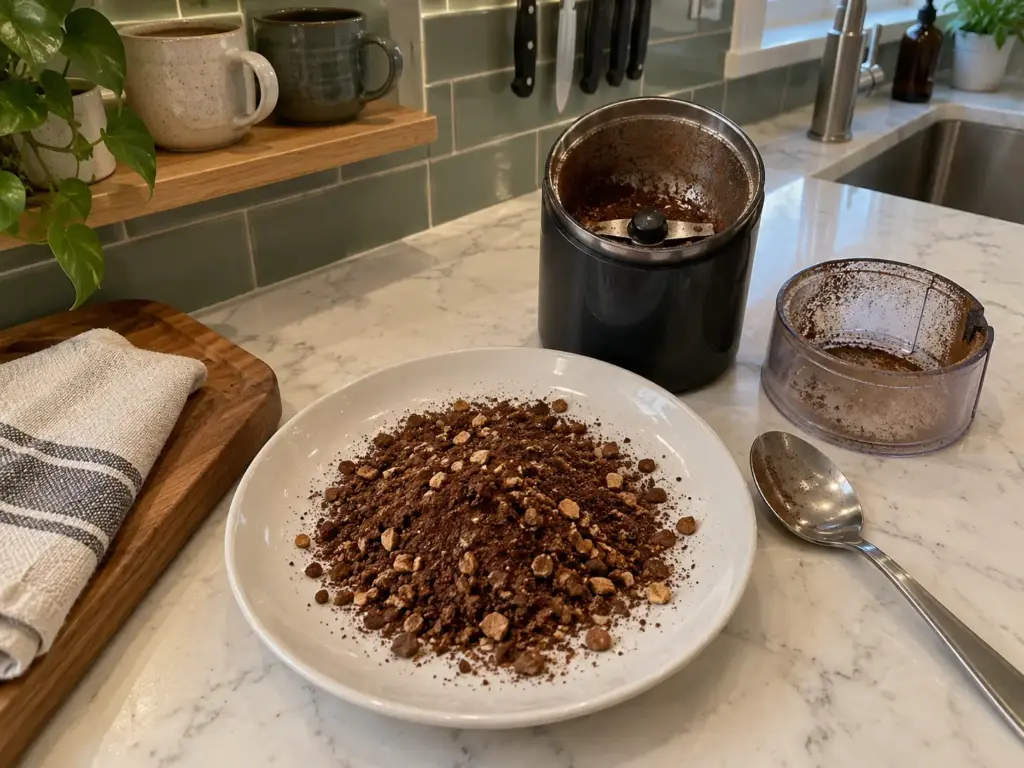
You can see that spread without a sifter. After a short run there is almost always a small scatter of whole or halved beans riding on top, and a fine flour packed into the bottom of the bowl, under the blade.
Why the same blade does not give everyone the same number
Grind time is where advice splits. Ask three people with blade grinders how many seconds they use and you get three answers, and all three can be right for their own counter. The same ten seconds that gave you a good cup last week can give a coarse one today, with nothing changed that you noticed.
The range above looks precise until you meet a grinder that ignores it.
Tom’s Guide timed the Cuisinart DCG-12BC Grind Central, a one-touch blade grinder with a bowl of about 90 g, and needed 25 seconds for medium-coarse, 35 for medium, 40 for medium-fine and 60 for fine. That is roughly twice the 10 to 15 seconds for the same kind of blade doing the same job. So the clock belongs to the grinder and the dose in it, not to the brew method. That review also found the Cuisinart heats the coffee as it grinds, clumps and grinds unevenly, with a motor that “gets very hot”, which is worth knowing before you hold its button for a full minute.
You might expect the coffee world to have settled this. The closest thing to a rulebook is the Specialty Coffee Association’s published standards, including one for home coffee grinders, SCA-320, a set of specifications and test methods, and the SCA’s own page defines the word plainly: “A standard is a documented set of guidelines or requirements used across an industry to create consistency, quality, and shared best practices.” That page gives a blade grinder no number of seconds, and a figure like that could only belong to one grinder and one dose anyway.
Where a blade grinder stops being the right tool
Espresso and Turkish coffee need an extra fine grind, finer than table salt and more even than a blade produces, however long you hold it. More time does push the average size down, but it pushes the dust up faster, so the result is not a fine grind but a fine grind with chunks in it. That is why this article gives no seconds for them: espresso needs seconds of a different kind, the seconds of the shot, and those come from a burr set.
If you grind by hand, the question has another answer again, since a hand mill is paced by turns rather than by a switch; how long a hand mill takes is its own article.
Why the Same Seconds Give a Different Grind Tomorrow
The seconds in the first section are a starting point, and they stay one for a plain reason: four things move them while the timer reads the same: the dose, how full the bowl is, the roast, and the state of the blade.
The dose and the lid change the time
Tom’s Guide says it outright for its Cuisinart: the volume of beans in the chamber changes how long you need to grind. The mechanism is easy to picture. With fewer beans in the bowl, each one tends to get hit more often per second, so a small dose can go finer in the same time. The scoop that is level on Monday and heaped on Thursday is enough to make the same ten seconds give two different piles, and the last scoop of a bag, the one that barely covers the bottom, can go fine faster than a full bowl did.
A burr grinder is not immune to this either. Grinding time for the same grinder varies, and the time to grind 18 g on a Eureka Specialita can run from under 10 seconds to over 20. The pattern is that it takes less time the fuller the hopper is.
The opposite problem shows up at the low end. America’s Test Kitchen’s advice is to fill the bowl to above the blades, because a thin layer of beans sitting under them does not grind the same way as a full load. If you only ever grind one cup at a time, that is the dose that will drift most.
And the blade itself may be moving the number. A dull blade, one that has rounded off over the months, can need more seconds for the same cup. There is no date for that; the check is the pile, not the calendar.
Roast changes it too
A dark roast is more brittle, and it shatters quickly under a blade. A light roast is harder and denser, and it resists. The same eight or ten seconds on a dark bag and on a light one do not give the same size, which is why the bag you switched to last week can be the reason the cup changed.
This is also why weighing the dose before the dial comes first on any grinder: once the grams are fixed, the roast is the only thing left that moves the result, and you know which one to blame.
Weigh the dose before you touch the clock
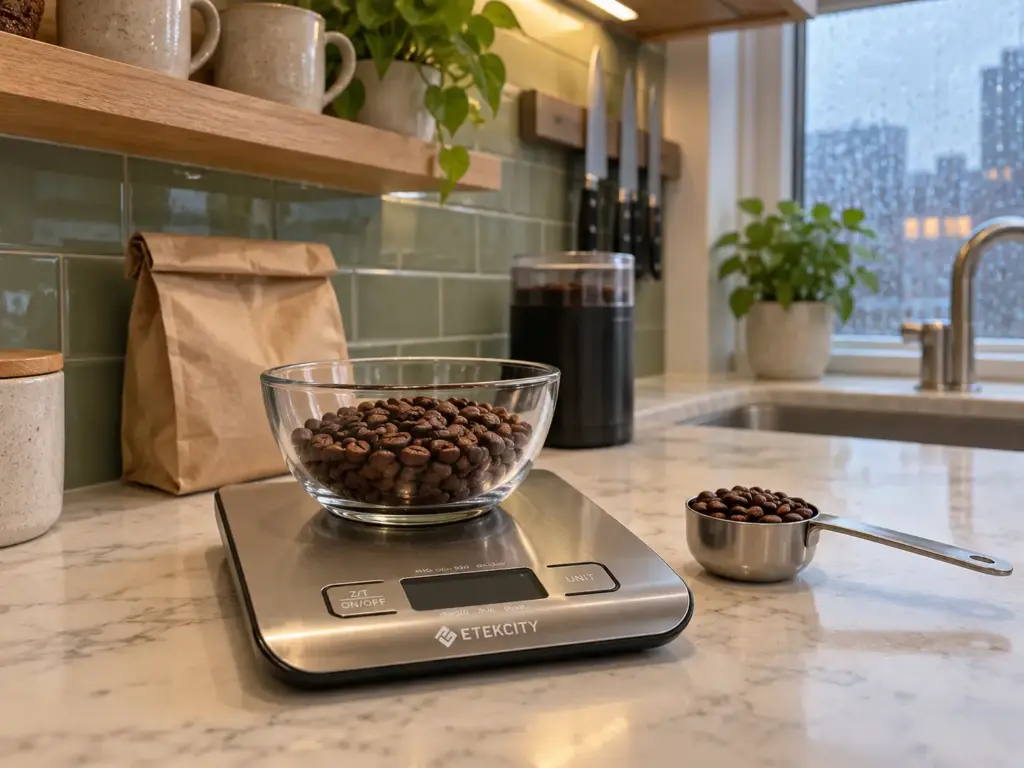
The free version of this habit needs nothing new. Count the coffee the same way every morning, level tablespoons rather than heaped ones, and the seconds start to mean something. KitchenAid’s own figure puts 2 tablespoons of beans at about 10.6 g, enough for one 6 oz cup, which gives you a translation between the scoop and the gram even without a scale.
A scale makes it exact. The Etekcity Food Kitchen Scale reads grams and ounces with a tare button, and it turns the question from “was that a big scoop?” into a number. Its steps are 1 g, though, and on a dose of about 10 g that is a tenth of the dose in a single step, coarse enough that two “10 g” readings can differ by more than you would guess.
For small doses the step up is the Hario Drip Scale Timer, which reads in 0.1 g steps and has a timer built in, so the same device weighs the beans and counts the pulses. It switches itself off after five minutes, which matters if you weigh, get pulled away, and come back to a blank display and a lost tare.
Weigh the beans going in and the grounds coming out once. The gap is what stays packed under the lid and in the corners of the bowl, and on a blade grinder it can be enough to make a small dose come out short. Knowing that number tells you whether to add a gram or just knock the lid harder.
What the Blade Makes While the Clock Runs: Dust and Boulders
The seconds move, and weighing the dose steadies them. The bigger problem is what the blade makes in any number of seconds, and that one the timer cannot fix.
Why a blade grinder is sour and bitter at once
A blade does not cut to a size. It spins, throws the beans against the wall of the bowl, and keeps hitting whatever falls back into its path, so some pieces are hit many times and some almost never.
The big pieces give up their flavor slowly and leave the brew under-extracted, which tastes sour and thin. The dust gives up everything at once and ends over-extracted, which tastes bitter and dry. Clive Coffee draws the same line: uneven particles are what make a cup sour one time and bitter the next, because water rushes through the gaps between the boulders and over-extracts the dust on its way.
America’s Test Kitchen puts it in one line: “Too many fines makes bitter coffee; too many boulders, weak coffee.” One blade can deliver both in the same mouthful, a sharp edge and a harsh finish, and that is the taste to learn to recognize. If you want to know how grind size changes the taste in general, that is the article that lays it out; if you want to check what is actually in your bowl before brewing it, rub it, sift it, then time it.
The same America’s Test Kitchen test also found little to no difference for drip between a good blade sample and a burr sample. That result is worth keeping at its real size. It does not say blades are as good as burrs; it says a blade run with care can land close enough for a drip machine, and that blades are inexact and need watching. The care is the whole point of the next section.
What more seconds really do
Holding the switch longer feels like it should even things out. It does not. The blade keeps hitting what it already hit, so the pieces that were already small get smaller and the flour at the bottom grows, while the boulders riding above the blade keep riding above it. More time shifts the average size down; it does not shrink the spread.
That is also why the first instinct with a sour cup, grind longer, needs a qualifier on a blade grinder. If the cup is only sour, a few more seconds help. If it is sour with a bitter finish, more seconds add to the half that was already too fine. (The sour half stays sour, and now the bitter half is louder.)
The heat question, at its real size
Overheating is the usual worry: friction warms the grounds, and a long run warms them more than a short one. Tom’s Guide found its Cuisinart heats the coffee as it grinds and leaves grounds stuck to the bowl, and warm, dry grounds are the ones that cling and clump. On a 10 to 15 second run in pulses the warming is small. On a minute of steady grinding it is real: you open the lid to a smell of warm coffee and a film of powder clinging to the underside of the lid and up the bowl wall.
None of that is a reason to fear the grinder, only a reason to keep runs short. The powder on the lid is the other half of the story, and static and clumping has its own fixes.
Before you lift the lid, give the grinder two firm taps on the counter and wait a few seconds. The fines stuck to the lid drop back into the bowl instead of snowing onto the counter, and what you judge by eye is the whole dose, not the coarse part that happened to stay down.
Pulse, Shake, Look: How to Run the Blade
If time is the weak dial, the useful tools are the pulse, the shake and your eyes. None of them cost anything, and together they close most of the gap between a blade and a burr for a drip machine.
Short pulses and a shake between them
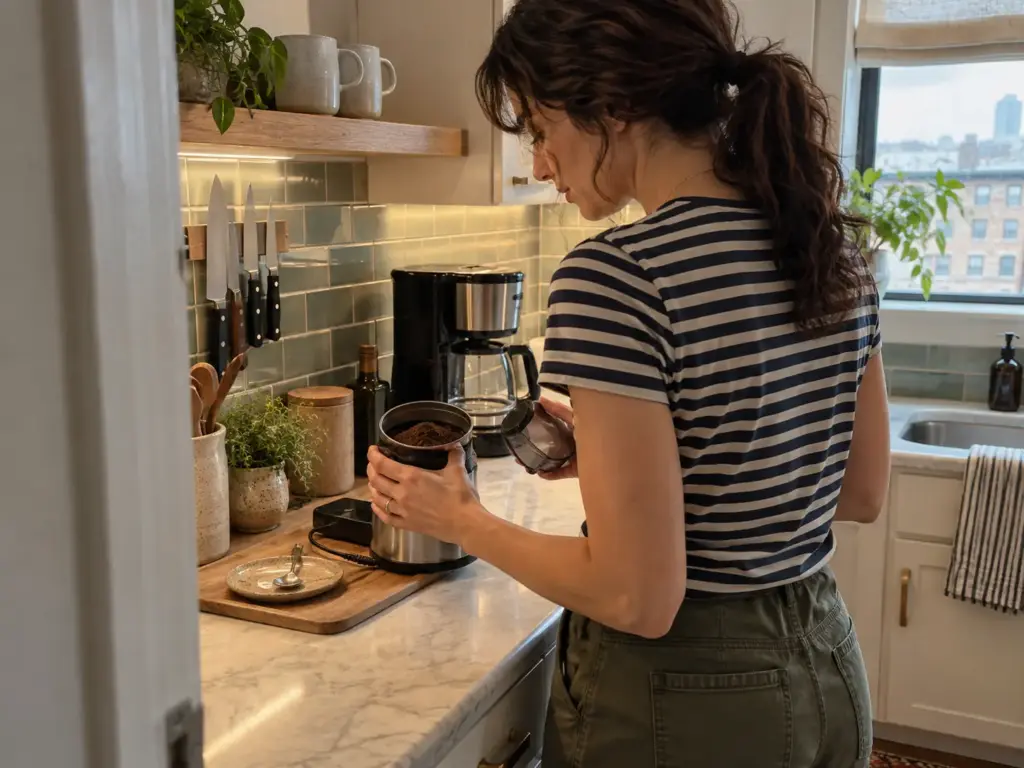
Pulsing gives the beans a chance to fall back into the blade between hits. Sprudge’s guide to blade grinders suggests breaking the grind into “something around 5-10 second pulses”, and shaking between them, because the grounds collect at the outer edge of the bowl, away from the blade. Shorter presses of a few seconds each do the same job with more control, and they are easier to stop at the right moment.
A routine that works on most lid-switch grinders:
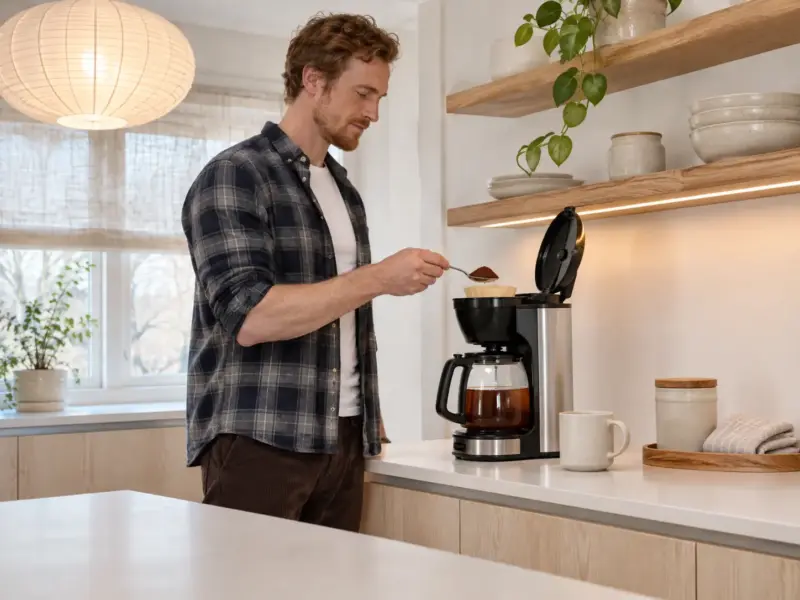
- Weigh or level-scoop the dose, and fill the bowl above the blades.
- Press for a few seconds, then let go.
- Lift the grinder and give it a sideways shake to bring the edges back to the middle.
- Repeat until the running total reaches the low end of your range.
- Open the lid and look before you add anything.
Stop when the beans look right, not when the timer says so
The stop signal is your eyes and your fingertips. Sprudge’s own test on a Mr. Coffee blade grinder stopped at about table-salt fineness, and the way to judge it is to look for boulders (they mean more grinding) and rub a pinch between two fingers. The seconds are only the pacing that gets you there.
There is a catch in “until it looks right”, though. Holding the switch down until the pile looks done tends to leave clumps of powder next to whole beans, because the blade has been working on the same bottom layer the whole time. Looking works when it comes between pulses, not at the end of one long hold.
Between runs, wipe the lid and the bowl. America’s Test Kitchen points to the underside of the lid as the place grounds get trapped, and yesterday’s stale powder falls into today’s dose if you leave it there.
Sift out what the blade missed
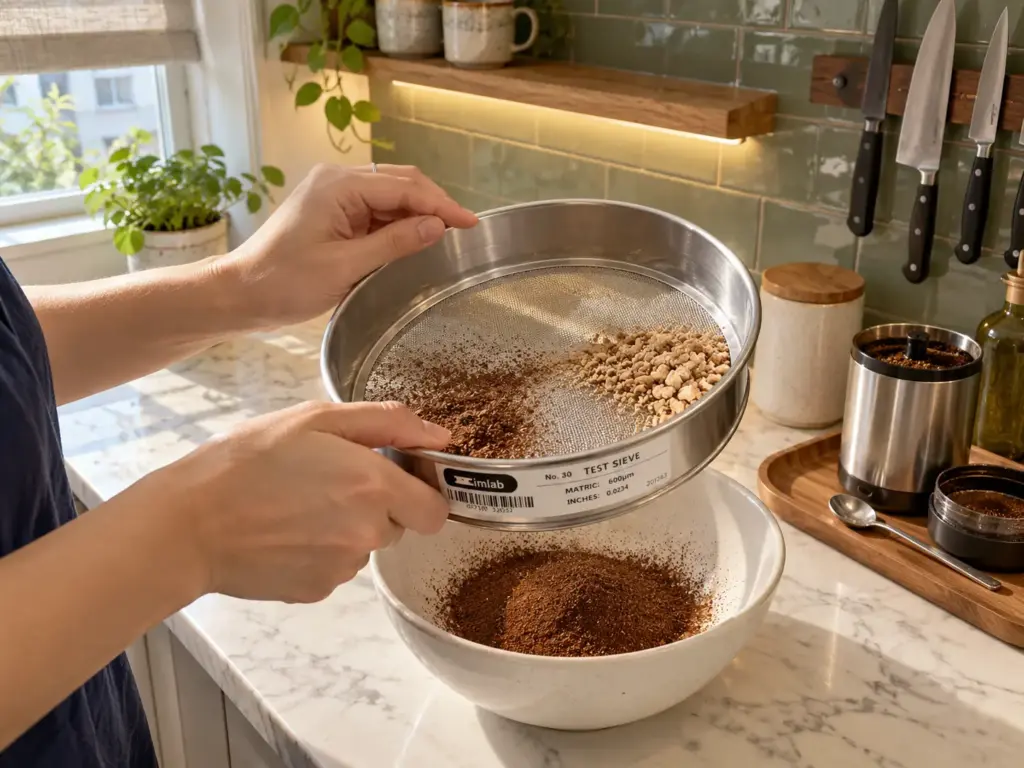
The free step first: most kitchens already have a fine-mesh strainer. Shake a dose through it over a bowl and two things show up at once, a layer of powder that settles into the mesh and passes through, and a few chunks that stay on top. The chunks are the boulders; you can throw them out or put them back in the grinder for one short pulse, and the same trick works for sifting what a blender or a rolling pin leaves when there is no grinder at all.
If you do not own one, the HIC Kitchen Fine Mesh Strainer is a 5.5 inch stainless strainer with a handle, small enough to sit over a mug. It gives no precise cut, since a kitchen mesh is made for flour and sauces, but it will catch the boulders.
For an exact line, a test sieve does the job a strainer only approximates. The KimLab Economy Test Sieve is a #20 mesh, an 850 micron opening in 304 stainless steel, so anything left on top is bigger than 850 microns, which is where the boulders are. It is a lab sieve eight inches across, much bigger than a breakfast dose needs, and it takes up a drawer of its own.
What you do with the pieces that stay on top matters as much as catching them. A second pass makes its own dust, so regrinding what is left works best as one short pulse on the boulders alone, not the whole dose.
Sift one dose, not every dose. Weigh what stays on top of the strainer and what falls through, and you have a picture of what your seconds make. After that, a quick look in the bowl is usually enough, and the strainer only comes out when the cup changes.
Taste It, Then Change One Thing
The strainer tells you what is in the bowl; the cup tells you which way to move next. Name the direction before you change anything, and keep the dose where you weighed it so the seconds are the only thing that moves.
Sour or weak: add a few seconds
A sour, thin or watery cup means the water left before it finished its work, and the brew time was too short for the size of the grounds: the grounds were too coarse for the time they spent in the brewer. On a blade grinder the one change is a pulse or two more, then the same dose, the same water and the same brewer, and taste again. If it worked, the sharp edge softens and the cup gains some sweetness in the middle. If it overshot, you will taste a drying, bitter finish, and the answer is to come back half the distance, one shorter pulse, not all the way.
The full logic of from sour to bitter, the grind’s effect on taste sits behind this, but on a blade you only need the direction.
The order matters more than the size of the step. Dose first (fixed in the second section), then seconds, then sifting, with a cup tasted between each. Two changes on the same morning leave you guessing which one worked.
Bitter or muddy: take some off
A bitter, harsh or muddy cup points the other way: too many fines, or too long on the blade. Take a pulse off the total and brew again. A good result tastes cleaner, with the bitterness pulled back to the edges, and a cup that clears in the mug instead of leaving silt at the bottom.
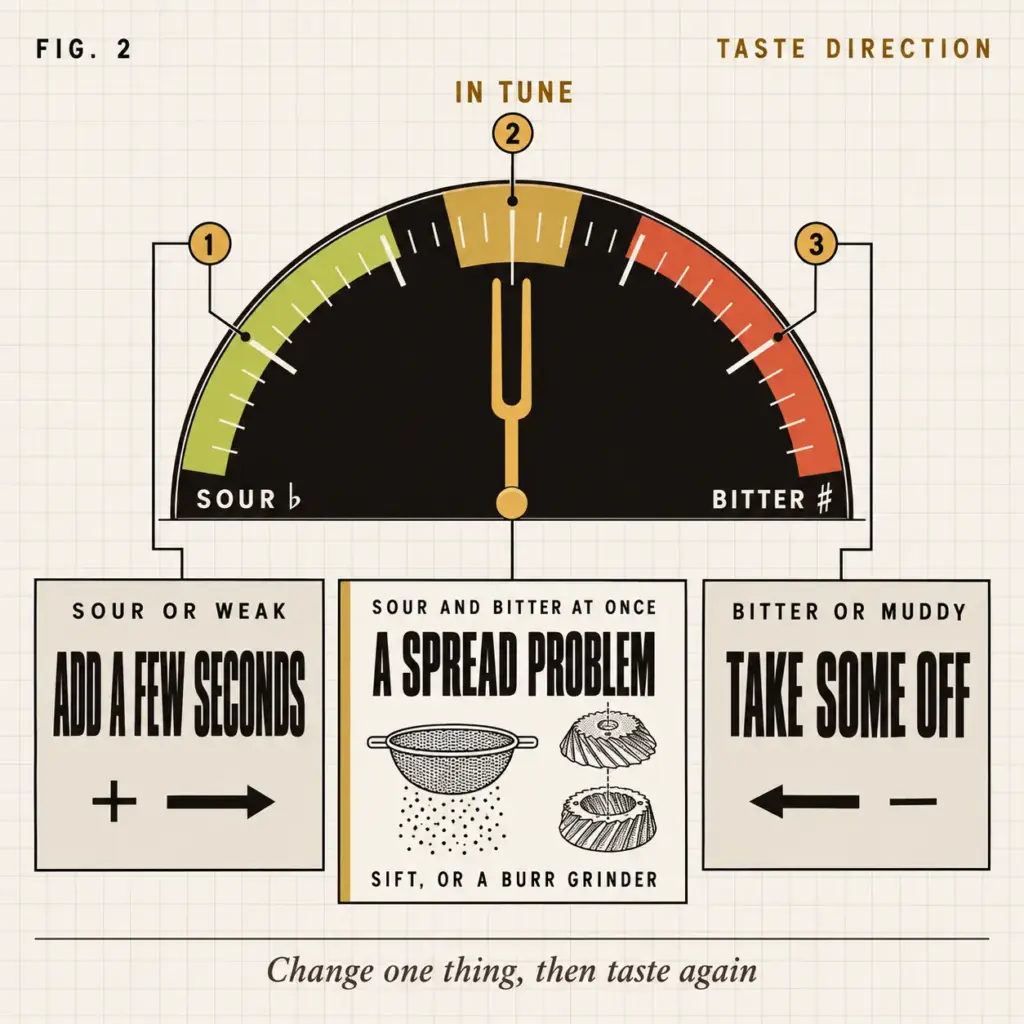
The common rule, finer for sour and coarser for bitter, breaks in one case, and it is the case a blade grinder produces most. If the cup is sour and bitter at once, it is not a timing problem at all: it is the spread from the dust-and-boulders section. Adding seconds feeds the bitter half; cutting them feeds the sour half. The change that helps is the strainer, and if sifting every dose sounds like a chore, it is the moment to think about a burr grinder.
When the same seconds drift over the months
Keep your own number, the one you dial in on your own grinder. The ranges in this article are brand and test figures for particular grinders, and once you find the pulse count that works for your grinder, your dose and your brewer, that count is worth more than any of them. Write it on a strip of tape on the grinder if it helps.
If that number starts creeping up, with more pulses needed for the same pile, the blade is the first suspect. A blade that has rounded off can take more seconds to do the same work, and the article on how a grinder wears over the years covers what wears and what can be replaced.
One trap sits between the two cups you are comparing: the first cup after a change can still taste like the old one when a little of the previous grind is left under the lid and in the corners of the bowl.
Brush out the bowl and the lid before the dose you are testing, not after. A spoonful of leftover grounds from yesterday’s longer run is enough to push a cup that should taste cleaner back toward bitter, and then the new pulse count looks like it failed when it did not.
If You Own a Burr Grinder, You Do Not Time the Grind
On a burr grinder the setting decides the size, and the stopwatch is only a way to repeat a dose. If you came looking for seconds and your grinder has burrs, the difference between burr versus blade is exactly this one: the size problem a blade owner solves with a clock, your grinder already solves with a dial.
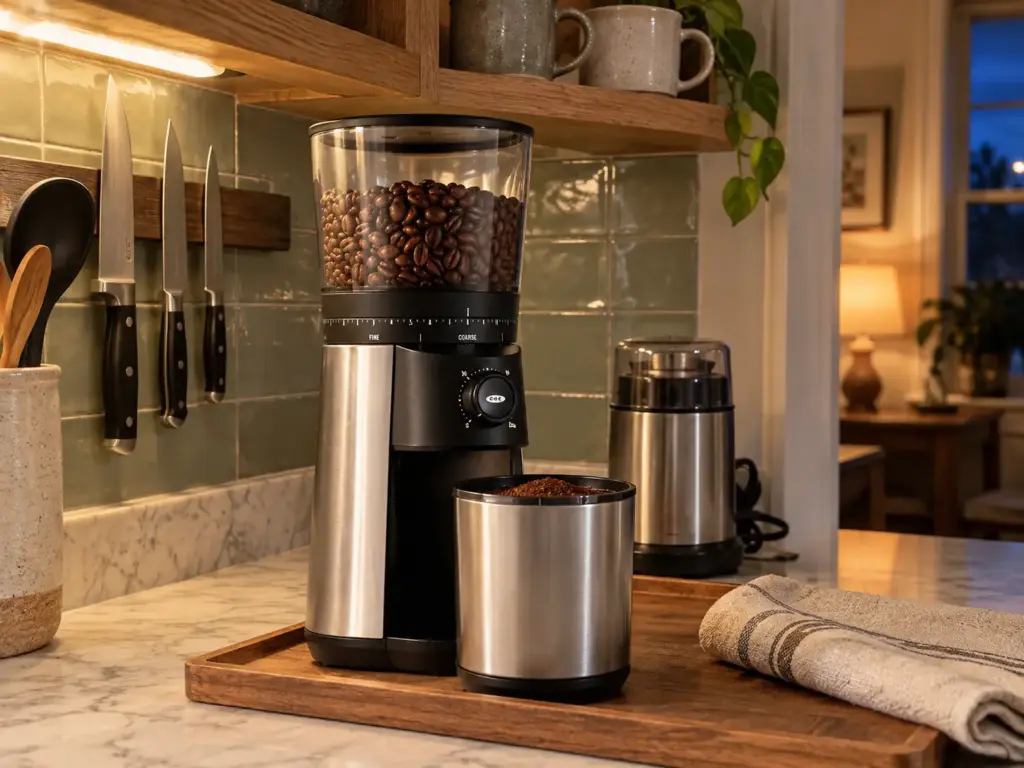
Two burrs, one fixed and one turning, only let a piece of coffee out once it is small enough to pass the gap between them, which is how a burr grinder works and why its seconds follow the dose and not the size. The fuller the hopper, the faster it goes. On a timed burr grinder, the seconds are a dose counter; the size is what number a burr grinder should be on.
The OXO Brew Conical Burr Grinder is the kind of machine that ends the stopwatch question: conical stainless burrs, 15 grind settings and a 12 oz hopper, so the size is a number you set once. Fifteen settings are few for fine-tuning a fine brew, though, so a pour-over that sits between two of them has nowhere to go. It also has the quirk every burr grinder shares: the first dose after you change the setting still comes out partly at the old one, because grounds from the last run are waiting in the chute.
A burr grinder of this kind costs a few times what a blade does, so it is the step after the free ones, not before. If you have weighed the dose, pulsed, shaken and sifted, and the cup is still sour and bitter at once, then a cheap burr grinder that stays even is the next decision, tasted against what you have now. And if your question is less how long and more how early, when to grind deals with the timing in days rather than seconds.
Weigh the Dose, Pulse, Then Let the Cup Decide
Three things carry the whole answer:
- The seconds are a starting point for one grinder and one dose: about 8 to 10 seconds for French press and 10 to 15 for drip, in pulses, and only after the dose is weighed or leveled.
- Run the blade in short pulses, shake between them, and stop by what you see in the bowl, not by the count.
- Read the cup back: sour or weak gets a pulse more, bitter or muddy a pulse less, sour and bitter together gets the strainer, one change at a time.
A month from now, run the same weighed dose with the same pulses and compare the pile with the one you get this week; if it looks coarser for the same count, the blade is the thing to check.
Tomorrow morning, change only one thing: weigh the beans, grind in short pulses with a shake between them, and stop at the first look that shows no whole beans. Then taste. A cup that is sharp and thin says add a pulse next time; a cup that is sharp and harsh at once says sift, and if sifting becomes a daily job, the burr-versus-blade question is the one to open next.
Frequently Asked Questions
01How long should you grind coffee in a blade grinder?
Grind in short pulses of a few seconds, adding up to about 10 to 15 seconds for drip and a little less for French press. Shake between pulses and stop when the pile looks even, since your grinder and dose may need more or less.
02How many seconds should you grind coffee for a French press?
For a coarse French press grind, start at roughly 8 to 10 seconds in total, in short pulses, then open the lid and look for even chunks like coarse sea salt. The exact count varies with the grinder and the dose.
03Can you grind coffee too long in a blade grinder?
Yes. Extra seconds do not make the grind more even; they turn the small pieces into dust, so the cup goes bitter and muddy. A long run also warms the grounds and makes them cling and clump.
04What are the most common mistakes when grinding coffee?
Holding the switch instead of pulsing, never shaking the grinder, using a different dose each morning, and stopping by the clock instead of by sight. Expecting a blade grinder to make an espresso grind is the other one.
05How much coffee should you grind for two cups?
For two 6 oz cups, grind about 4 level tablespoons, roughly 21 g of beans. The SCA’s reference ratio for testing home brewers is 55 g of coffee per liter of water, so weigh it once and adjust from the taste.

How did your cup turn out?
No comments yet. Tell us what you changed — and whether the needle moved.