
We may earn a commission when you buy through links on this page. It never changes what we recommend. How we pick
On this page7 parts
- A Second Pass Adds Dust, So the Dial Goes Coarser
- Brew the Grounds You Have Before You Regrind Anything
- If You Regrind Anyway: Coarse Grounds, a Spoonful, One Change at a Time
- When the Grinder Packs Up: Stop Signs and Cleanup
- Whole Beans Fix This for Good
- Match the Brewer First, Then Touch the Dial
- Frequently Asked Questions
A bag of pre-ground coffee sits on your counter, a gift or a sample box or the one a subscription shipped by mistake, and the brewer beside it wants something finer than what is inside. The grinder is right there, so the question writes itself: can you grind already ground coffee and get the right size out of it? You can, and a burr grinder will take it, but a second pass cuts pieces that were already cut, so it throws off far more dust than the setting promises, and dust is what packs a grinder and muddies a cup.
The usual reason for trying is espresso, and how fine espresso has to be is a long way from a drip bag. Below: which way the dial has to move, which grounds are worth a try at all, the free fix that skips the grinder, and what to do when the chamber packs up.
Quick Answer
Yes, a burr grinder will regrind pre-ground coffee, but it rarely helps. A second pass makes more dust, so the dial goes much coarser than usual, the aroma stays lost, and a fine setting can pack the grinder. Regrind only coarse grounds, a spoonful at a time; otherwise brew the bag in a method that suits its grind.
A Second Pass Adds Dust, So the Dial Goes Coarser
The grinder will take the grounds; that part was never in doubt. What matters is what a second pass does to pieces that have already been cut once, because that decides which way the dial has to turn. And it turns the opposite way from what most people expect.
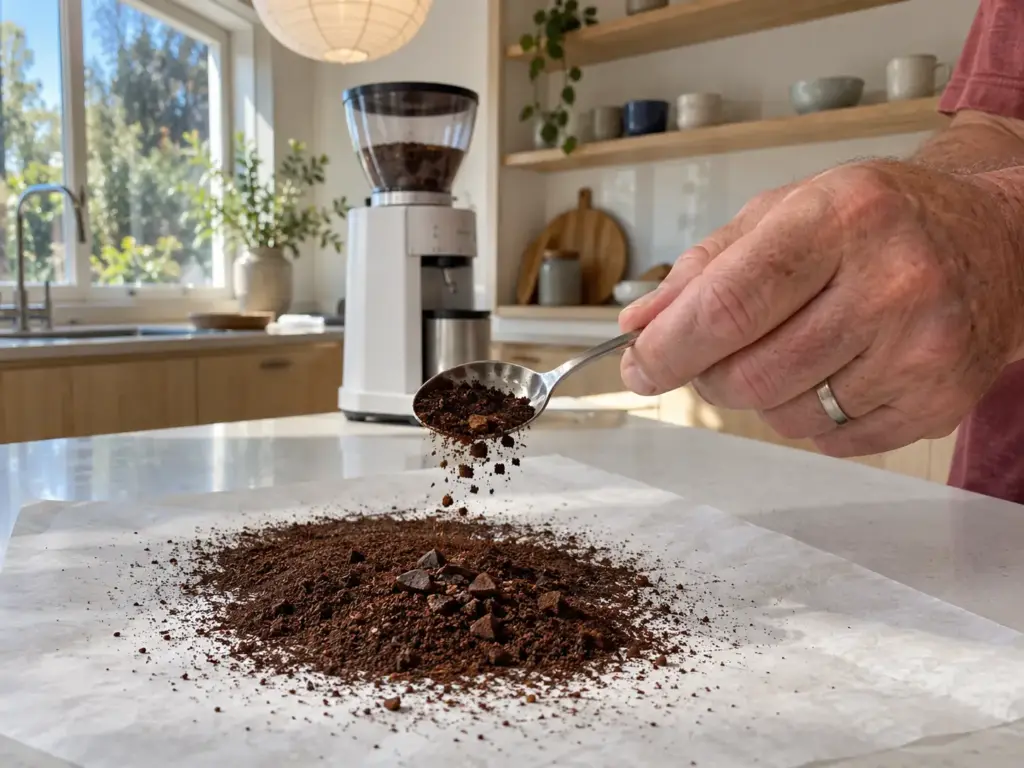
Cut pieces get cut again
A burr grinder does not sort coffee. It cuts whatever passes between the burrs, and every cut throws off some fines, the particles under about 100 microns, as Barista Hustle defines them. Whole beans make that trip once.
A bag of pre-ground coffee already carries an uneven grind, a spread of particle sizes from somebody else’s grinder: a few chunks, a lot of middle, some dust. Run it through again and the chunks shrink, but the middle pieces get cut a second time too, and the dust that was already in the bag just gets company.
Dust matters because of what it does to the water. A bed of coffee with more fines packs tighter, so water moves through it more slowly and less evenly.
According to a 2024 Scientific Reports study on fines in espresso, “the fines are from a practical standpoint only modifying coffee bed permeability.” Put plainly, the dust mostly changes the flow. That is why a regrind set to your usual espresso number chokes the shot or pushes the water through in channels, and why the setting has to back off.
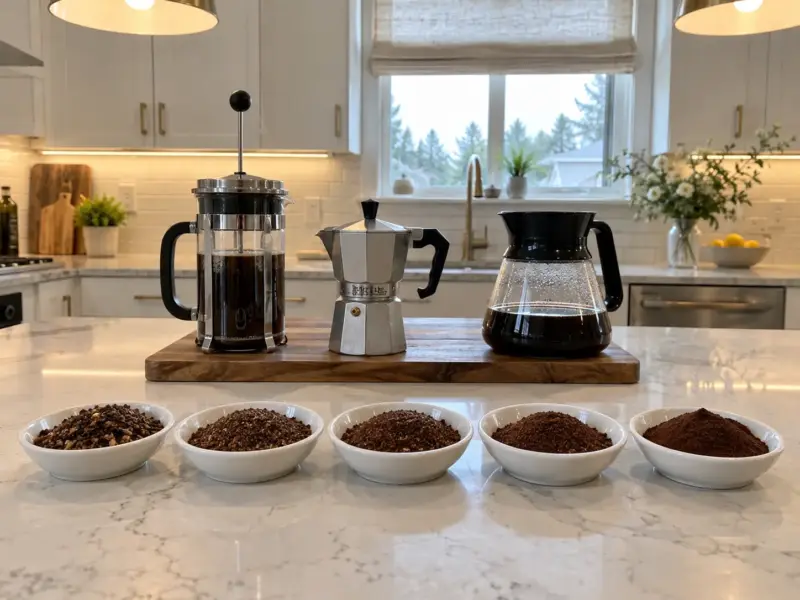
So the cup from a regrind is off in two directions at once. The chunks that survived give up too little, so that part of the cup is under-extracted and tastes sour and thin; the dust gives up too much, so that part is over-extracted and tastes bitter and muddy. The first peg to turn is the grind setting, and it goes coarser, not finer. Pour a pinch of the regrind beside a pinch from the original bag on a white plate and you can see it before you brew: the regrind is a soft powder with a few stubborn chunks sitting in it.
Before any of this, check what the bag actually holds. A grind word printed on a bag is a claim, not a measurement; rub it between your fingers and sift it and you will know whether you are holding a coarse press grind or a drip medium, which changes everything in the sections below.
What the one controlled test found
Barista Hustle ran the only controlled test on record, on espresso. The setup was a K30 grinder, an 18.0 g dose, about 36 g out, and shots dialed to 25 to 27 seconds.
They pulled three sets: from whole beans, from beans pre-ground at a very coarse batch-brew setting on an EK43, and from coarse broken nibs. The pre-ground coffee needed a much coarser setting to hit the same shot time, and the finer the first grind, the coarser the second one had to be. Extraction came out lowest for the pre-ground coffee, and the gap between single and double grinding was statistically significant (p<0.01). Their own summary is blunt: “Grinding twice required us to grind a lot coarser, suggesting that a lot more fines were produced, and resulted in lower extraction yields.”
No number of steps came out of it, and one would not travel well: every grinder numbers its dial differently, and a step on one is half a step on another.
Reports from 2014 land in the same place, without a lab. On a flour hand mill, the first pass at a setting gives something a little coarser than espresso, and a second pass at that exact setting gives powder, so the final setting has to be a lot coarser. Applied to your counter, the number you use for beans is a different grind once the coffee has been through a grinder already.
Now the result that does not fit. In the same test, the double-ground shots tasted much sweeter and smoother, with a thicker, shinier crema made of smaller bubbles, while the single-ground shots came out tart and roasty. The authors call the mismatch a mystery and point out that the shots were dialed for time, not for taste.
So is regrinding a hidden trick? Look at the conditions first: one test, one commercial grinder, espresso only, and freshly pre-ground coffee from an EK43, not a grocery bag that sat on a shelf for weeks. For a home grinder and an old bag, the piece of that result that carries over is the direction of the dial. The sweetness does not.
Before you move the dial for a regrind, mark the setting you use for beans with a strip of tape or a pencil line. The regrind setting is a detour, and without a mark the next morning’s beans go through at the detour setting and come out far too coarse.
The aroma does not come back
The roaster Driftaway Coffee makes the freshness point directly: aromas are released when coffee is ground, so in a pre-ground bag many of them are already gone. A regrind changes the size of the particles and nothing else. It cannot put back what left the bag the week it was opened, and how quickly the aroma fades after grinding is its own story.
That is the failure that catches people who regrind an old bag: stale plus dust. The cup comes out flat because the aroma left long ago, and muddy because the second pass added fines. Finer does not fix flat. If the bag already tasted dull in the brewer it was cut for, a regrind will only make it dull in a new way.
Brew the Grounds You Have Before You Regrind Anything
The cheapest fix touches no grinder at all: match the brewer to the coffee in the bag. Most of the time it is also the better cup, because the grind in the bag was set once, for a method, and nothing has been cut twice.
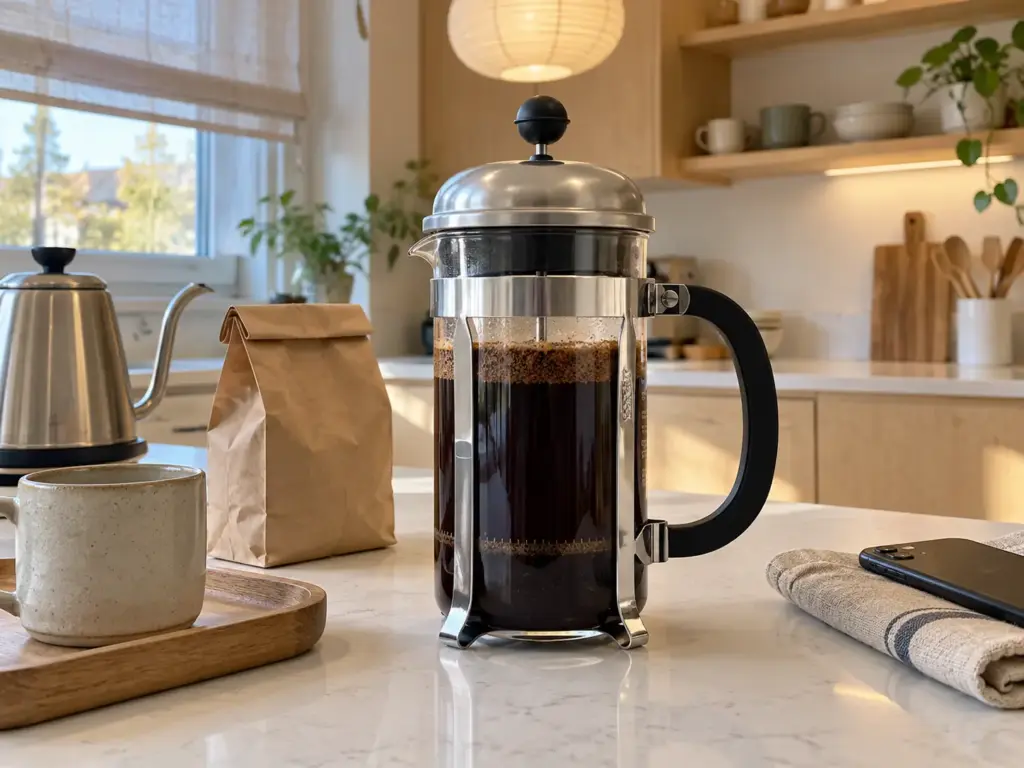
A coarse bag goes to a brewer that wants coarse
Driftaway’s own advice for a pre-ground gift is to brew it with a method that suits the coarseness it already has, and a coarse bag has three easy homes. A French press is the forgiving one; what grind size is best for a French press is exactly what a coarse bag already is. A jar for cold brew takes it too, since the grind for cold brew is set by the filter you strain through, and a percolator wants it coarser still. Brewed that way, a coarse bag gives a clearer cup than the same coffee pushed through a regrind, which leaves a layer of silt waiting at the bottom of the mug.
If you do not own a press, the Bodum Chambord French Press is the plain version of the method: a 34 oz borosilicate glass carafe in a polished stainless frame, sold as 8 cups, which works out to about three ordinary mugs. It takes a coarse bag as it comes. What you give up belongs to the method, not the model: there is no paper filter, so some silt always reaches the cup (and a pour-and-wait brewer means standing next to it for the whole steep).
Pour the whole press out as soon as you plunge, into mugs or a carafe. Grounds left under the plunger keep brewing, and the last cup poured out of a press that sat for a while is the bitter one. Leave the final half inch in the pot too: that is where the silt settles.
A medium bag belongs in a drip machine
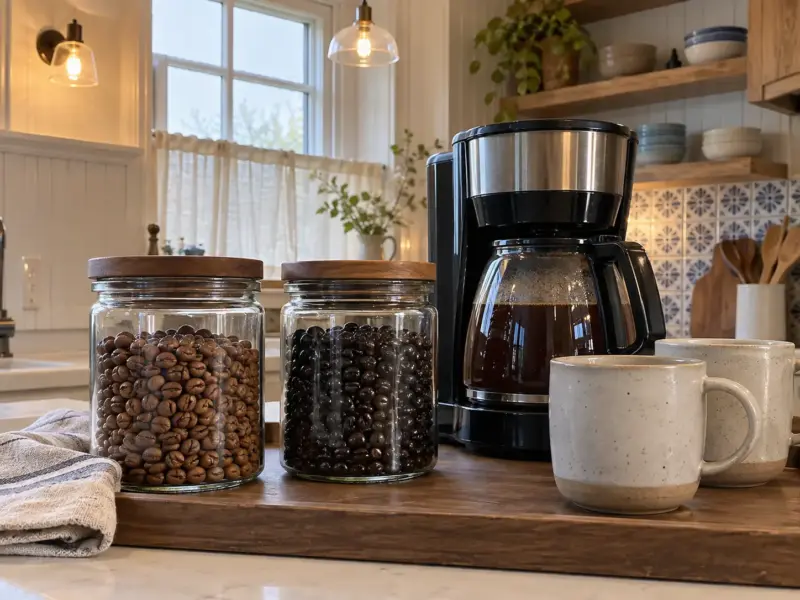
Many grocery bags are cut for drip, which is the grind a medium bag already matches, and the grind a drip machine wants is what the roaster aimed for when the bag was filled. If a drip cup from that bag tastes sour and thin, the grind is rarely the first peg. Add a little more coffee to the basket, brew the same amount of water, and taste. If the cup turns heavy and bitter, you went too far; take half of that extra coffee back out.
The one thing a bag of grounds asks of you is speed. It goes stale faster than beans, so fold it tight and read how to store coffee you keep as grounds instead of saving it for a regrind that will not bring the aroma back.
Moka and espresso are the hard cases
A moka pot and an espresso machine both want finer coffee than a drip bag or a pour-over cone, and that is where the regrind temptation comes from. For the moka pot, the clean answer is a bag ground for the pot in the first place, with the moka pot grind settings as the check. Bialetti Perfetto Moka Classico comes ground and labeled for moka: an 8.8 oz (251 g) bag of medium roast with a one-way valve. It is still pre-ground coffee, which is the whole point of this article: once the valve bag is open, it goes stale faster than beans would.
Espresso is harder. The obvious move is to regrind the bag finer and pull the shot, and it falls apart in a home kitchen: the regrind is dusty and uneven, the grinder is the kind that packs, and the shot either chokes or gushes.
Left as it is, in a normal single-wall basket, a coarse bag runs fast and thin because nothing holds the water back. The better call is to change the basket, not the grind. Driftaway’s salvage route is a machine with a pressurizing valve after the basket, what most people call a pressurized basket, which builds the resistance the grind cannot. The shot they describe from it is “passable,” and that word is about right.
If You Regrind Anyway: Coarse Grounds, a Spoonful, One Change at a Time
Sometimes the coffee is coarse, the grinder is a burr, and the brewer really does need finer. Then a second pass is a small experiment. The way to run one is a spoonful and one change at a time, with a taste in between.
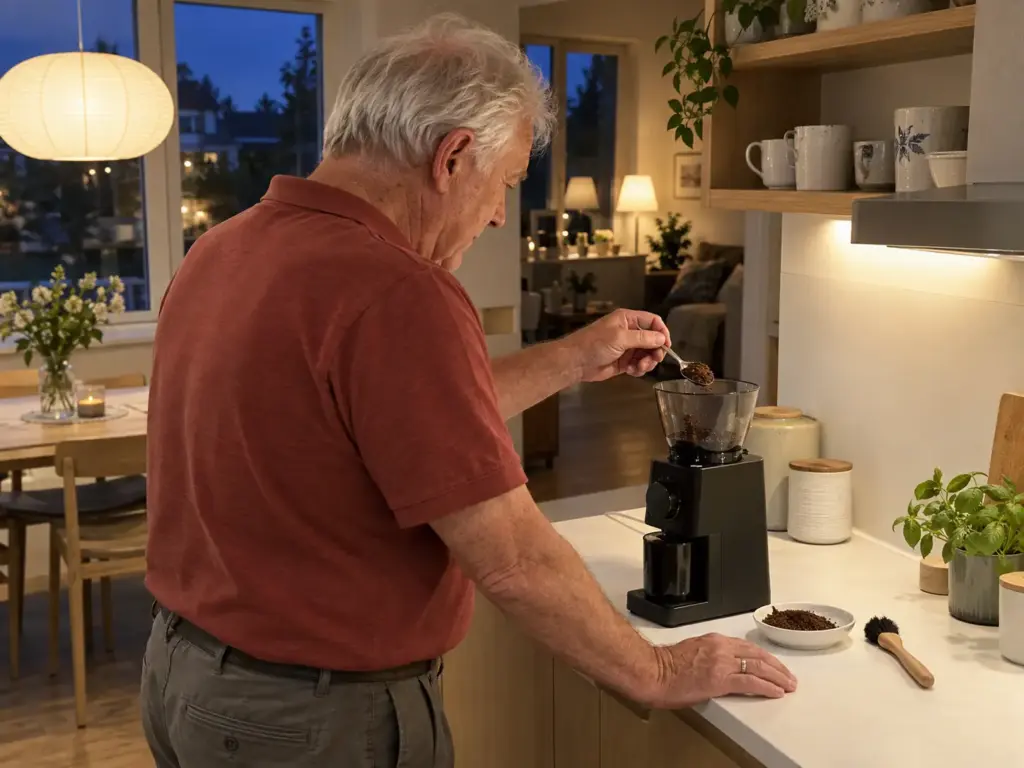
Which grounds qualify
Only coarse grounds going finer have a test behind them. Barista Hustle fed its grinder a coarse batch-brew grind and broken nibs, nothing smaller. Driftaway’s warning is that medium and coarse grounds pushed onto a finer setting will likely clog the grinder, and the medium end of that is where it bites: a medium bag is already close to the gap it is heading for, so the grinder mostly compresses it.
That line has never been measured, so treat it as a practitioner’s warning rather than a rule. Leave medium bags alone, or rather, leave them for the drip machine they were cut for, and fine bags for the brewer printed on them.
The grinder has to be a burr. A blade has no setting to regrind to, because a blade chops instead of setting a size, and every extra second on a bag of grounds makes more powder; how long to run a blade grinder on beans is the only timing worth learning there.
Burr grinders are not all alike on this, and the answers split along that line.
aecletec reported regrinding on 64 mm and 75 mm flat burrs “in 100g+ amounts without issue,” while JmanEspresso opened with “Short answer. NO.” for a Vario, a home grinder. Those are reports from 2014, not measurements.
Hand-grinder regrinds were for a different job. yakster used a Hario Slim to knock down boulders, which is not the same as making a bag finer.
One sentence of caution before the first spoonful: Driftaway notes that taking a grinder apart to clear a clog may void its warranty, so read your grinder’s wording first.
The spoonful test, one change at a time
What follows is a synthesis of the sources above, not a published method, and it is built to dial in a regrind while losing as little coffee and as little grinder as possible:
- Set the dial coarser than you would use from beans for that brewer, and start from the coarse end. another_jim’s starting point is “a setting used for drip grinds.”
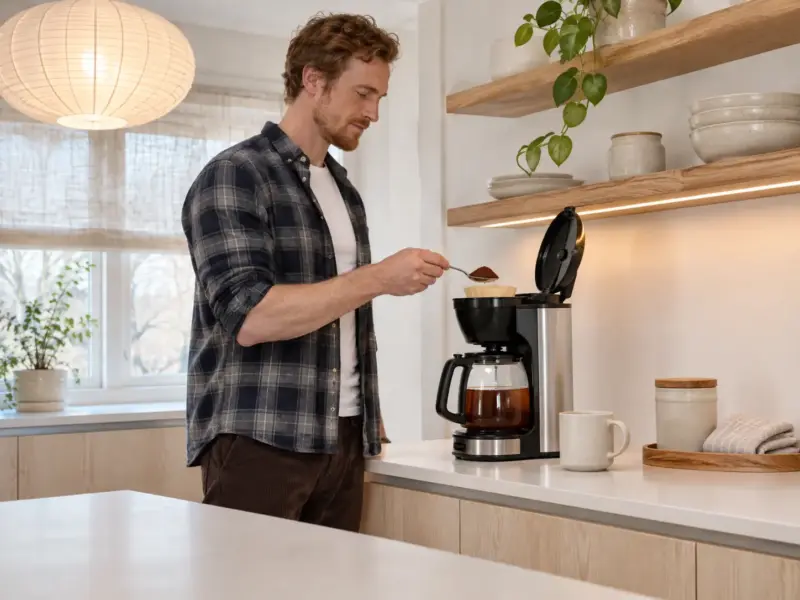
- Feed one level tablespoon, and feed it slowly. Barista Hustle describes the idea that a slow feed makes fewer fines.
- Let the grinder run empty before adding more. Never press grounds down into the burrs.
- Brush out the chamber and the chute.
- Brew the regrind the same way, with the same grams of coffee and water you normally use, then taste.
The first spoonful lies a little. A grinder holds some coffee inside, so what comes out first is partly the last thing you ground, at the last setting. Feed a second spoonful before you judge the first (a small waste, and cheaper than a whole brew that tells you nothing).
Then read the cup and change one thing. Sour and thin means one step finer. Bitter and muddy means one step coarser. Brew the same amount the same way and taste again, and if the dial is already at its finest and the regrind still comes out too coarse, you are looking at a grinder that will not go fine enough, not a bag that needs a third pass.
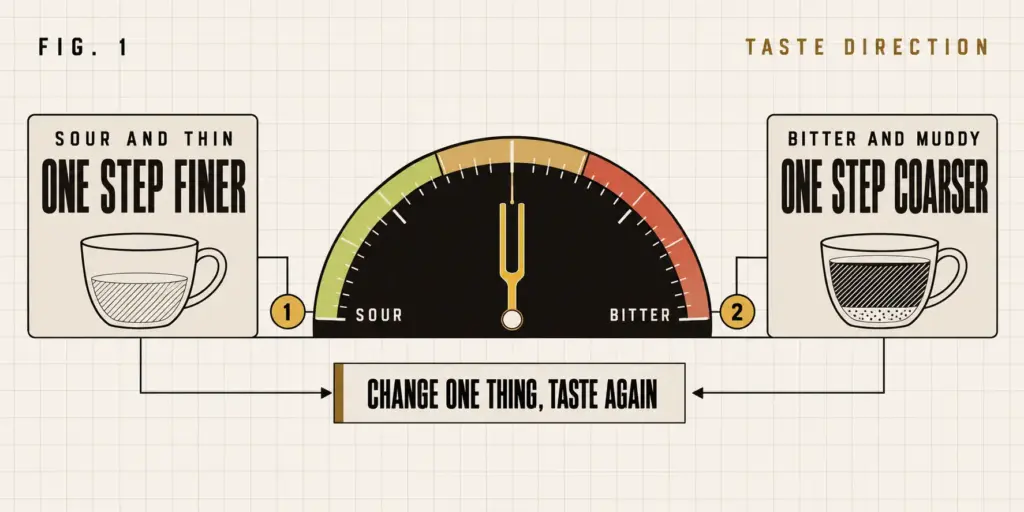
Change the dose or the water in the same round and you will not know which one moved the cup. Grind first, since it is the thing the regrind broke.
Sift the dust out
The dust is what muddies a regrind, and the usual workaround is to shake it out before brewing. A fine-mesh kitchen strainer over a bowl does the job: whatever falls through is the powder, and what stays in the mesh is what you brew. If you already own one, use it. If not, the HIC Kitchen Fine Mesh Strainer is a 5.5 inch 18/8 stainless mesh with a handle, small enough to hold over a mug.
Know what it does and what it does not: it takes the dust out, but the pieces left behind are still uneven, so the cup gets cleaner without becoming a one-pass grind. Sifting out the dust from coffee made without a grinder follows the same logic, step by step.
Shake the strainer, do not stir it. Pushing the grounds against the mesh with a spoon forces small pieces through with the dust and packs the rest into the holes. Sift over a dark plate and the pile of powder that collects tells you how much of the regrind was dust.
When the Grinder Packs Up: Stop Signs and Cleanup
A second pass at a fine setting is what packs a grinder, and it tends to happen on the spoonful where you stop paying attention. Knowing the signs, and what to do at each one, keeps a small experiment from turning into a repair.
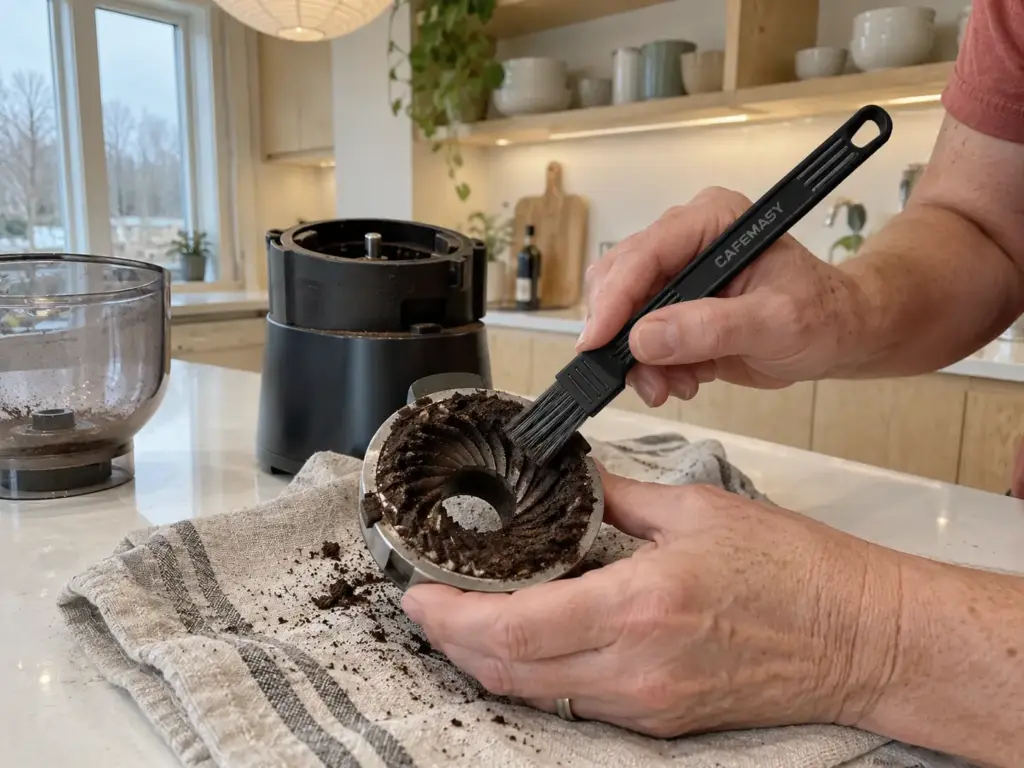
The signs to stop on
Every one of these comes from people who tried it, and each one gets the same first move: stop feeding and switch off.
- The motor strains or sputters. Switch off before the next spoonful goes in.
- The grinder runs hotter than normal. Regrinding can seem to run hotter than normal and gum things up occasionally. Let it cool before you do anything else.
- Coffee cakes inside the chamber. Regrinding has its own risks, including caking inside the grinder and leaving more residue.
- Dark grime in every corner. Driftaway describes a dark-colored grime that finds its way into every nook of the grinder. When you see it at the chute, the regrind is over.
If the motor hums and nothing comes out at all, you are past a stop sign and into a grinder that hums and does nothing. None of these signs tells you the motor is damaged. They tell you to stop before it could be.
Unplug, empty, brush
The order matters. Unplug the grinder, take the hopper off, and tip out whatever comes loose. What a packed chamber looks like when you get to it is not loose grounds: it is a dark, pressed paste in the chute and around the burr, closer to damp clay than coffee.
A stiff, dry brush clears most of it. Any clean paintbrush you already own will do the job; the SPIRIT Cleaning Brush is a two-pack of 7.7 inch stiff-bristle brushes cut for grinders. It clears what it can reach, which is not the same as clearing everything, and how far a home user may open the grinder is the manual’s call, not the brush’s.
After the brush, and only after, come the grinder-cleaning tablets. One regrind of 30 g left no damage to the burrs, just a lot of caked-on coffee powder, which a cleaning tablet would likely have lifted. Urnex Grindz tablets come as three single-use packets in the home version; follow the packet exactly as printed. They are a consumable, and they do not replace the brush: the tablets lift the oily fine film, the brush moves the paste.
If the regrind left the catch cup full of clinging powder, grounds that cling to the catch cup are a static problem with a fix of their own, and fines make it worse.
Once the grinder is clean, run a small dose of whole beans through it at your normal setting and throw that coffee out. It pushes out the last of the regrind powder still sitting in the chute, so tomorrow’s first cup is not carrying yesterday’s dust.
Read the warranty wording before you need it
Driftaway’s warning is that clearing a grinder packed by a regrind can mean taking it apart, and that a disassembly may void the warranty. That is a general caution from a roaster, not a statement about any specific maker, so the only way to know is your own grinder’s paperwork. Read it before the first spoonful, not after the motor stalls. If the manual says the burrs come out by hand, you are fine; if it says to call service, the brush and the tablets are as far as you go.
Whole Beans Fix This for Good
Every problem above exists because the coffee was cut before your grinder ever saw it. The last fix is to let the grinder do the cutting, once, at the setting you choose.
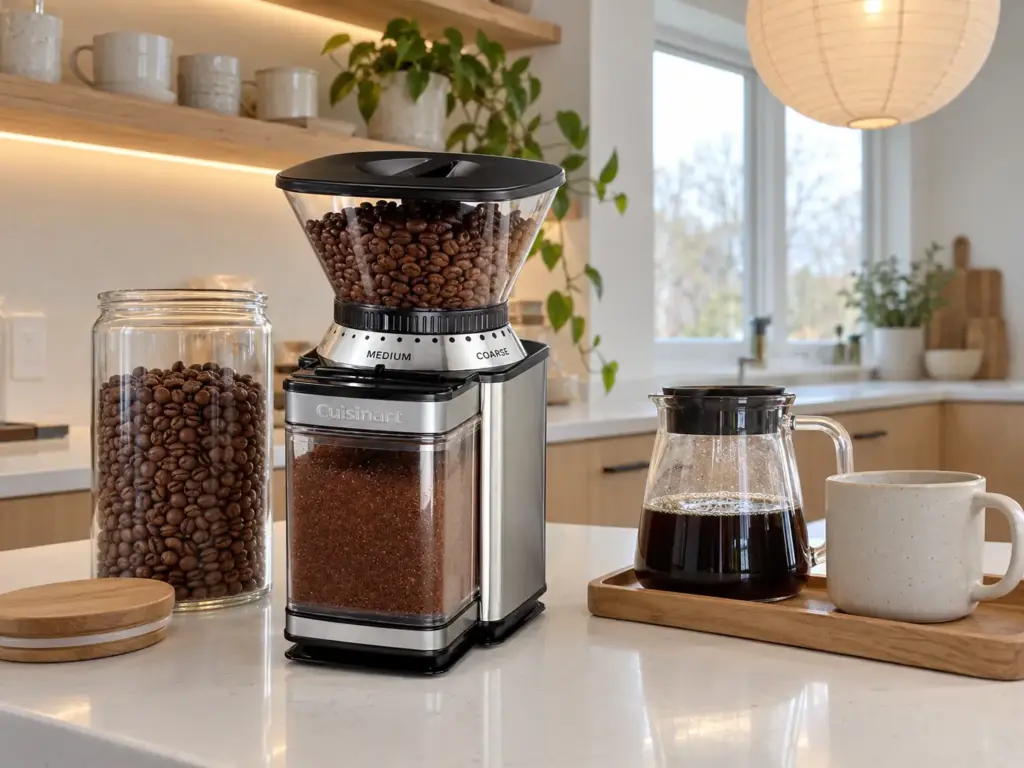
One pass, at the right setting
A whole bean is cut one time, to the size the dial says. A bag of grounds was cut by somebody else’s grinder at somebody else’s setting, so anything you do to it afterward is a second pass with all the dust that comes with one. That is the whole case for beans in this situation, and whether grinding at home is worth it at all is a bigger question with its own answer. But if a gifted bag sent you to the grinder, you already have half the answer on the counter.
The grinder to grow into
If you already own a burr grinder, you are done: buy whole beans and use it. If the drip machine is your only brewer, a pre-ground drip bag is fine as it is, and there is nothing here to buy.
For a first burr grinder, the cheaper route is the Cuisinart Electric Burr One-Touch Automatic Grinder, with stainless steel burrs and 18 grind positions.
That is how a burr grinder cuts: two burrs at a set gap, instead of a blade spinning for as long as you hold the button. The trade-off is in the count. Eighteen positions means bigger jumps between them, so the setting you want can fall in a gap.
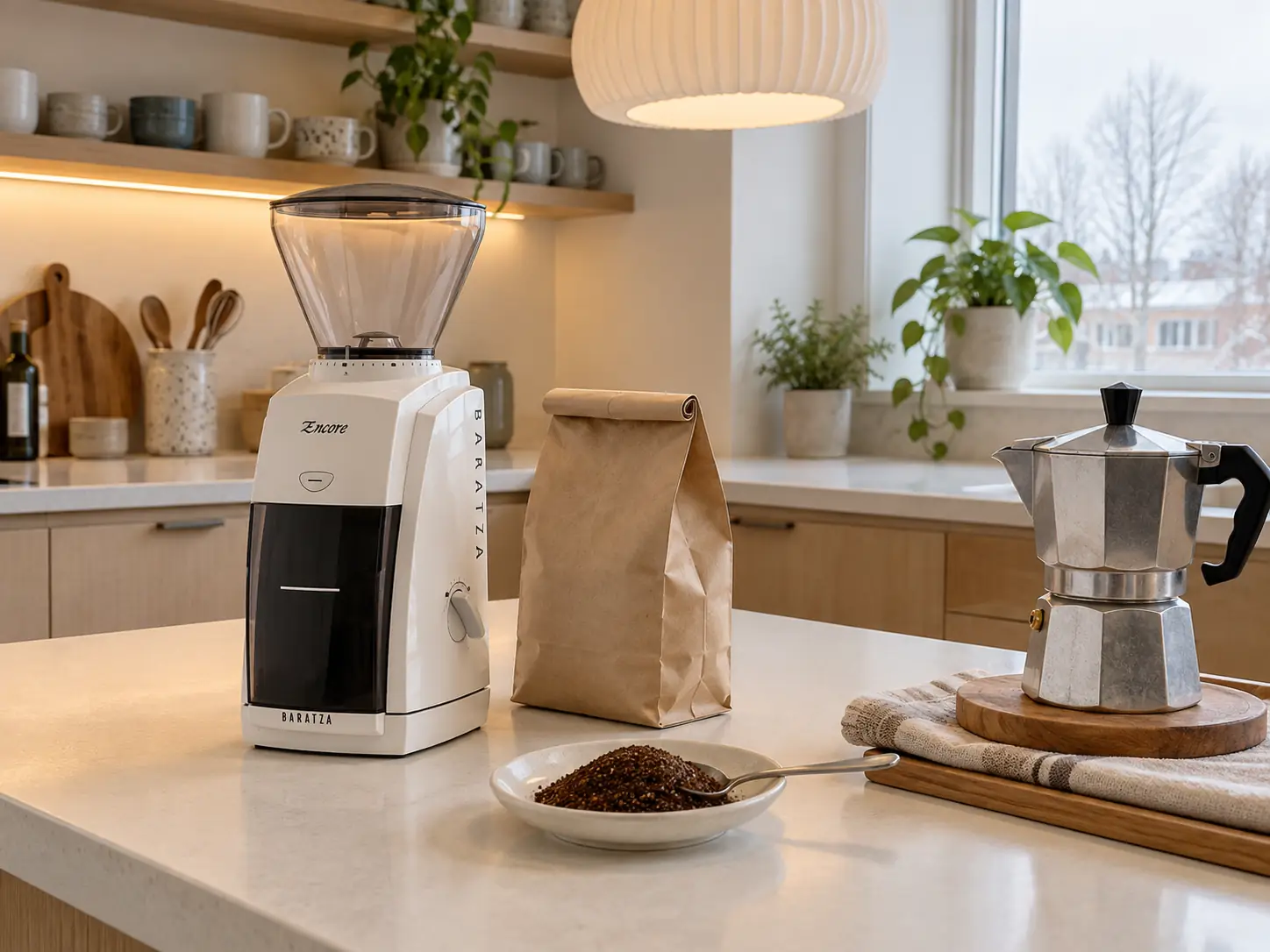
The splurge buys more room to move: the Baratza Encore has 40 mm conical steel burrs and 40 settings, so each step is smaller and one change really is one small change. It is still a stepped dial, though: 40 steps, not an infinite range, and a cup can sit between two of them. When it does, move the dose instead of the grind for the half step.
The next bag
The bag that replaces the gift should say two things on it: whole bean, and a roast date you can read. What to buy in the grocery aisle sorts out which shelf bags carry both. Once the beans are home, the first decision is where to set the dial for the brewer you own, and the grind size chart in microns is the place to start it.
Match the Brewer First, Then Touch the Dial
A second pass through the grinder works, but it adds dust, so the dial has to go coarser than your bean setting rather than finer. Only a coarse bag is worth trying, a spoonful at a time, in a burr grinder, changing one thing between cups. And the free fix, brewing the bag in a method that suits the grind it already has, usually makes the better cup; a whole-bean bag ends the question for good.
Next time you fill the hopper, look at the chamber and the catch cup: if a dark paste is building up in the chute, the grinder is telling you it was fed something it was not built for.
Tomorrow morning, make one change: brew the bag as it is, in the brewer that matches its grind. Then taste. If it is still sour, go one step on the dose or the grind, not both, and taste again.
Frequently Asked Questions
01Can I put pre-ground coffee in my grinder?
A burr grinder will take pre-ground coffee if you feed it a spoonful at a time with the dial set coarser than your usual setting for beans. A blade grinder only turns it into more powder. Stop at the first sign of straining or caking.
02Can I grind ground coffee again for espresso?
Sometimes, but it is rarely worth it: in the one controlled test on record, double-ground espresso made more fines, needed a much coarser setting and extracted less. The shots still tasted fine there. A pressurized basket is the easier salvage route for a coarse bag.
03Will regrinding ground coffee damage my grinder?
Usually it does not damage the burrs, but a fine setting can pack the chamber with paste, heat the motor and gum up the chute. Stop at the first strain, unplug and brush it out. Reports agree on the mess, not on damage, and a disassembly may affect your warranty.
04Can you use coarse pre-ground coffee in an espresso machine?
In a normal single-wall basket, coarse pre-ground coffee runs fast and thin because nothing holds the water back long enough. A pressurized basket builds that resistance for you and can make the shot passable. Otherwise, brew the bag in a French press.
05Can you use coffee grounds twice?
Grounds that already brewed a cup have given up most of what they had, so a second brew comes out thin and weak. That is a different question from regrinding a fresh bag, which still has everything to give.


How did your cup turn out?
No comments yet. Tell us what you changed — and whether the needle moved.