
We may earn a commission when you buy through links on this page. It never changes what we recommend. How we pick
On this page7 parts
- Paper or Permanent: Which Way Each Coffee Maker Filter Moves the Cup
- The Basket Decides the Filter, Not the Cup Count
- The Permanent Filter: Sediment, and the One Change That Follows
- When It Is the Filter's Seat, Not the Coffee
- Which Coffee Maker Filter to Use, and What Each One Costs You
- Check the Seat, Brew One Pot, Change One Thing
- Frequently Asked Questions
The box of paper cones on your counter and the wire-mesh basket at the back of the cupboard are two answers to the same job, and they leave the cup in opposite places. Paper catches the finest particles and nearly all of the oil that leaves the grounds; a permanent mesh lets the particles through and keeps the cup fuller for it. Picking a coffee maker filter is a choice of direction, clean and light or full with a little silt, long before it is a choice of brand. This guide covers what each type does, the basket that decides what fits, the one change that follows a permanent filter, what to rule out before blaming the grind, and a pick.
Quick Answer
Paper gives a cleaner, lighter cup, and a permanent mesh gives a fuller one with fine sediment in the last third of the mug. Which one fits is decided by the basket, cone or flat-bottom, not by the cup count on the machine or the box.
Paper or Permanent: Which Way Each Coffee Maker Filter Moves the Cup
A filter is the last thing the water meets before the cup, and what it lets past decides what you drink. Neither type is the better coffee, because each one trades something: paper gives up body for clarity, and a mesh gives up clarity for body. So the question is which direction you want the cup to move, and what you are willing to live with to get it.
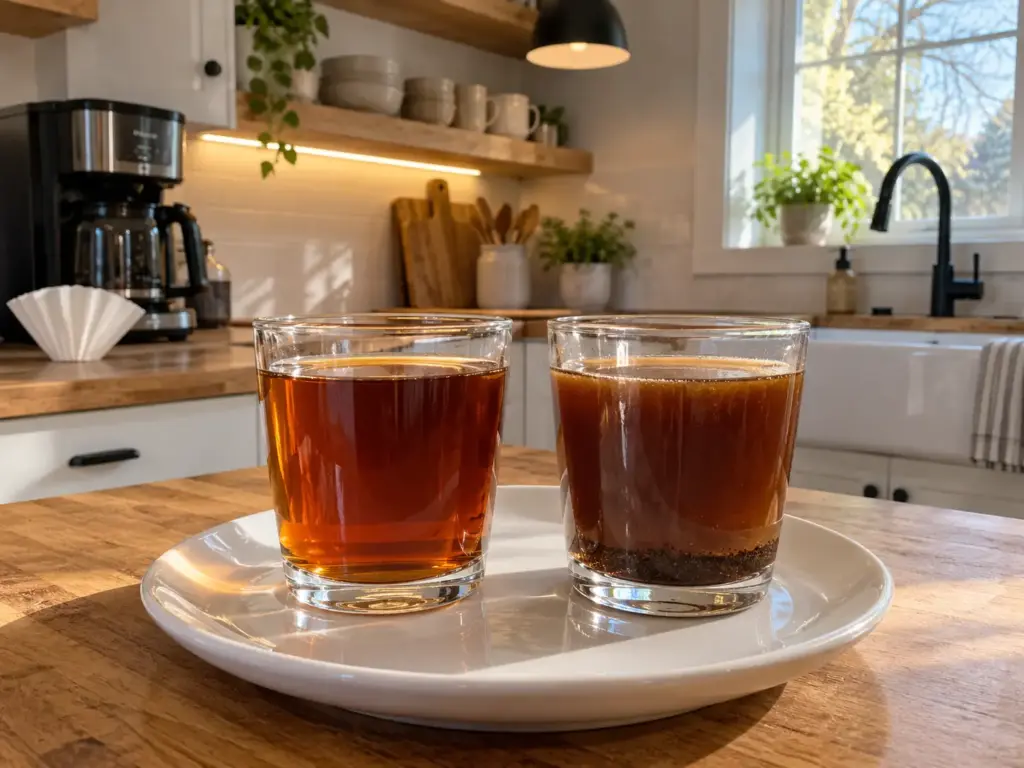
What a Paper Filter Holds Back
America’s Test Kitchen ran the comparison with the coffee held constant: one batch through a paper filter in a manual drip, one through a metal filter in a second manual drip. Its panel found the two pots virtually identical in flavor, with no papery taste in the paper batch. The metal batch had more body from fine particles and tasted slightly weaker.
The verdict reads, “Our recommendation? Use paper if you like your coffee without any particles in the mix.” So the old pitch that a mesh frees flavor the paper traps did not show up in that test. What showed up was particles.
Paper also holds back oil. A 2017 study in Food Research International followed cafestol, one of the oils in roasted coffee, through a brew: the paper filter kept 12.41% of it, the spent grounds kept 87.45%, and the brew itself carried 0.15%. Most of the oil never leaves the grounds, and of the little the water does pull out, almost all of it stops on the paper.
That study measured the paper only, so it cannot say how much more a mesh lets through. What any of that oil means for you is a question for your doctor, and this guide stays with what changes in the cup.
What a Permanent Mesh Lets Through
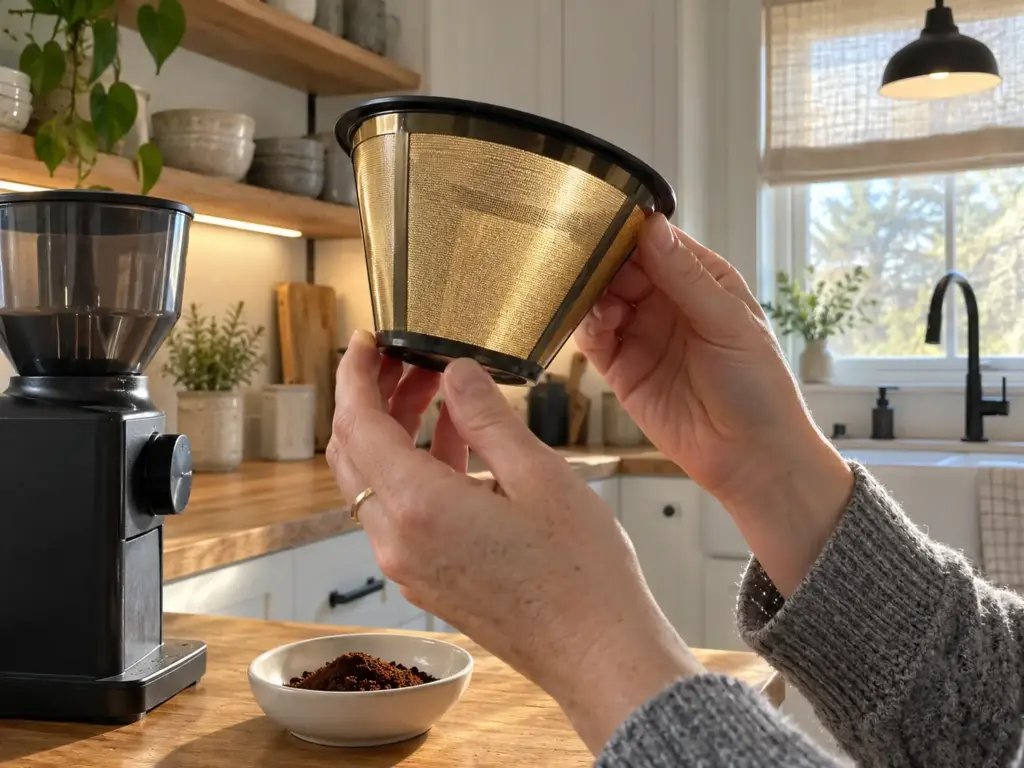
A permanent filter, also sold as a reusable filter, is a fine screen of stainless steel or gold tone mesh that stays in the basket and gets rinsed instead of thrown out, such as the Mr. Coffee basket-style gold-tone permanent filter sized for an 8-to-12-cup basket. Its openings are larger than paper’s pores, so fine particles ride through with the water. That is where the fuller cup comes from, and it is also where the grit comes from.
A gold-tone filter in place of paper can leave a really dirty cup of coffee, with the foil letting silt through. Even with a Technivorm, using only the gold filter and no paper can come out dirty. Many give up and go back to paper filters.
Others drink the silty cup daily and like it, which shows how much taste varies. Dirty is a taste, and some people want it.
The numbers behind that grit sit in the Specialty Coffee Association’s home-brewer standard, SCA 310-2021. Its test grind for a conical basket allows no more than 20% of the grounds below 425 microns, and for a flat-bottom basket no more than 18% below 589 microns.
That is a grind for testing brewers, not a rule for your kitchen, but it shows the fines held to about a fifth in a controlled setup, and fines are the part a mesh cannot hold back. Push your own grinder finer and that share climbs. With paper in the basket you never see it; with a mesh you do.
Silt settles, so it collects in the last third of the mug. If you brew through a mesh, leave the final swallow in the cup before you touch the grinder or the filter; it costs nothing and tells you how much of the grit is only sitting at the bottom.
The Basket Decides the Filter, Not the Cup Count
Before direction matters, the filter has to sit in the basket. The number on the box is a size, not a promise about your cup, and the cup count printed on the machine does not choose it.

Cone Basket or Flat-Bottom Basket
The Specialty Coffee Association’s standard treats the basket’s shape as the variable. It defines the brew basket as the part that holds the filter and says “It may be conic or with a flat bottom.” When a maker ships no filter, the standard’s tests use Melitta filters for conical baskets and Mr. Coffee filters for flat-bottom ones.
The rule is shape, not brand, and you can apply the same rule at your own counter.
A cone filter pressed into a flat-bottom basket leaves its point hanging with nowhere to seat. A flat-bottom filter dropped into a cone basket folds over on itself. Either way the paper sits wrong, and the grounds find the gap.
The number on the box is the size: a #4 filter is the cone for an 8-to-12-cup cone basket. The cup count on the machine describes the carafe, not the basket, which is why two machines that both say 12 cups can want different paper. How to read your own basket and measure the coffee in grams instead of scoops is covered in how to read the basket and measure by grams, so it is not repeated here.
Read the basket by its floor, not by its label: a floor that narrows to a point takes cones, and a flat floor takes flat-bottom filters. Photograph the size printed on the box once, and the shopping question is settled for good.
Does a Drip Coffee Maker Need a Filter at All
Yes. The standard defines the filter as the medium that separates the coffee grounds from the brew, and a drip machine has nothing else doing that job. It needs either a paper filter that you replace every pot or a permanent one that stays in the basket. A machine run with neither gives you a carafe of grounds and water, which is not a stronger cup, just an undrinkable one.
Brand does not decide whether a filter fits, and neither does the price on the shelf. Only the shape and the size of the basket do. Match those two things and almost any filter in the right shape will work.
The Permanent Filter: Sediment, and the One Change That Follows
Once the filter fits, the permanent mesh is the one that puts a setting back in your hands, because what it lets through changes with the grind. Paper forgives a grind that a mesh will punish. So the cup can be off in two opposite ways, and each way has its own single change.
A Silty Cup: Coarser First, Paper Second
Silty is the first direction: grit at the bottom of the mug, the last third thick and dull. Read it as too many fines reaching the cup. The grind itself may be too fine, since there should not be much sediment. The change is on the dial, and the grind setting for a drip machine tells you where yours sits.
Go one step coarser, brew the same dose of coffee and water, and taste. The next cup should look cleaner at the bottom and taste a touch lighter. If it turns sour and watery, that was one step too many, and you go back to the setting before it.
And if a coarser setting still leaves the bottom of the mug gritty, the dial is not the problem. Trying several grind settings on a Baratza still leaves the cup dirty for some, who then go back to an AeroPress. That is the cue for paper: the filter is the cause, and no number on the grinder will fix it.
A Thin Cup: One Step Finer
The other direction is a cup that tastes weaker than the same coffee did through paper. America’s Test Kitchen saw a hint of it, a metal-filter pot that tasted slightly weaker, and gave the reason: water passes through a metal filter faster than through paper. The grounds spend less time in contact with the water, so less comes out of them. Its instruction was to grind a little finer to get the proper extraction.
Do that, one step finer, brew, and taste. The next cup should carry more flavor and lose the watery edge. If grit comes back at the bottom of the mug, you have walked into the first problem, and the step before this one was the right setting.
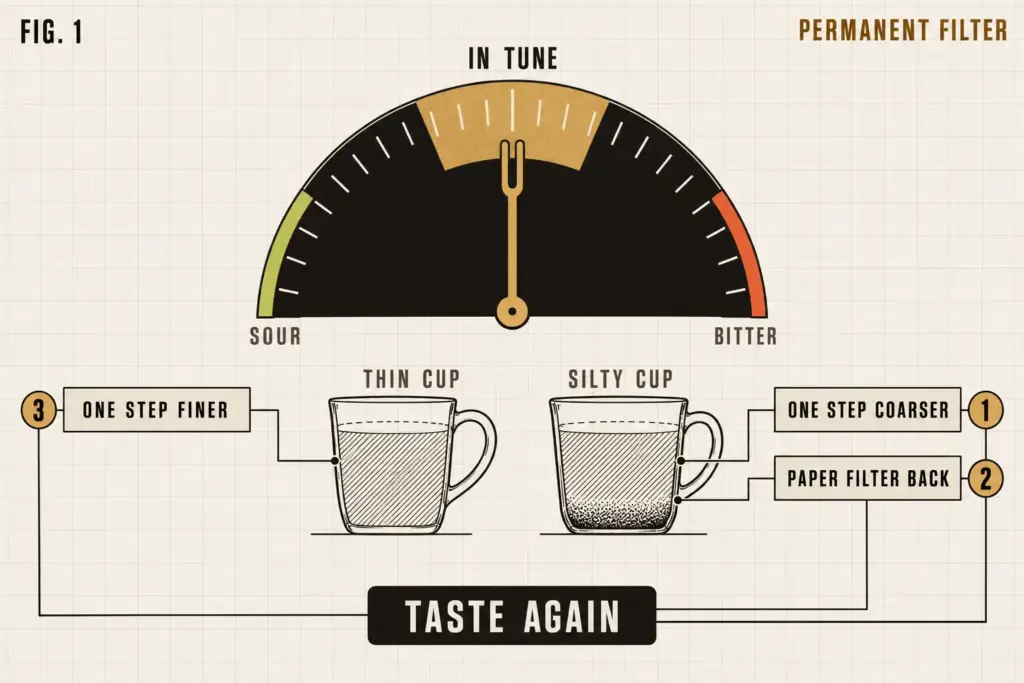
These two fixes pull on the same dial in opposite directions, so never apply both to one pot. Look at the bottom of the mug first. Grit means coarser. A watery cup with a clean bottom means finer.
Grit and a watery cup in the same mug means the mesh is the wrong tool for this grinder, and the paper goes back in.
After you move the dial, the grinder still holds a few grams from the old setting, so the first dose comes out at the old setting. Run a spoonful through and throw it away before the pot you intend to taste, or you will judge the new setting by the old coffee.
When It Is the Filter’s Seat, Not the Coffee
A weak or gritty pot is not always the grind or the filter type. Sometimes the paper has not sat flat, and a coffee maker filter that looks right can still let grounds past its edge. Rule out the filter seat first, because it costs nothing.
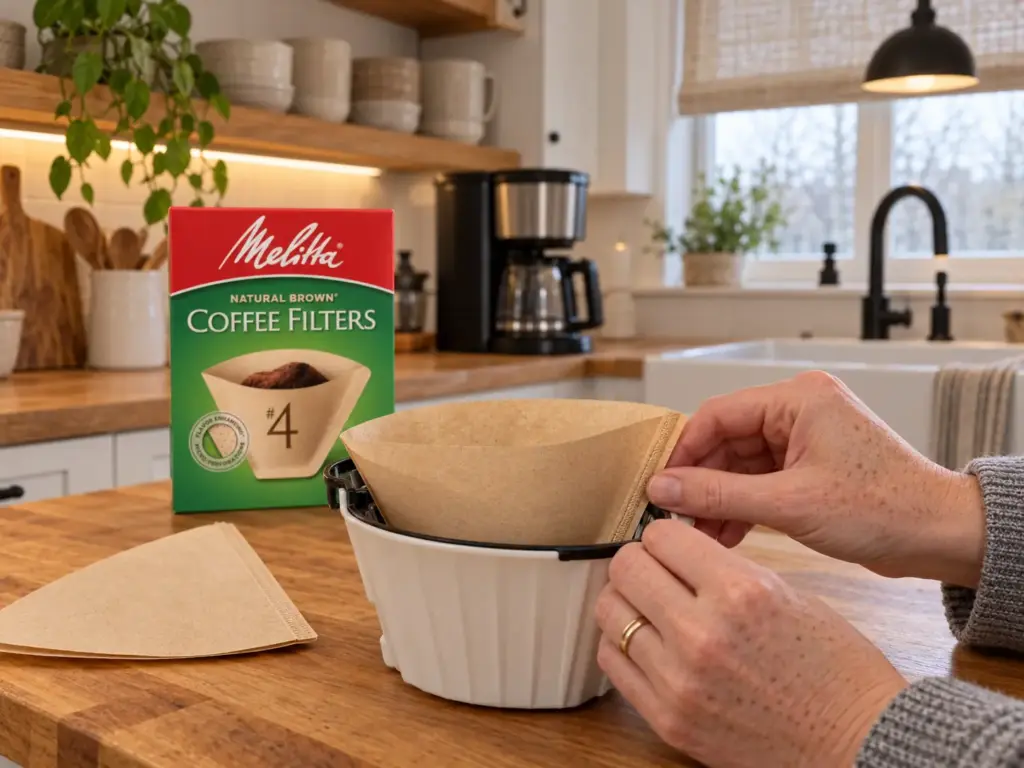
A Paper Cone That Gives Way at the Edge
Picture the pot that comes out with grounds floating in it while the grinder, the ratio and the water have not changed. The first suspect is the seat of the paper. A reviewer on the Melitta #4 product page writes that some owners have had trouble with edges “blowing out” and letting grounds into the coffee, and adds, “Since the edges are crimped, not glued, this can be a common problem.”
The reviewer’s remedy costs nothing: fold the bottom edge over one way, fold the long side edge over the other way, and give both folds a good crease before the paper goes into the basket. A second reviewer, brewing in a Chemex rather than a drip machine, says the same about the bottom: fold it over or it rips out.
The cone in question is the Melitta #4 Unbleached Natural Brown Cone filters, a pack of 100 sized for 8-to-12-cup cone baskets, and it is a sensible default for a cone basket. It is also the cone that needs the fold. The crimped edge is why filtration can be mixed: some grounds stay out of the cup and others get through. Fold first and the cone does its job; skip the fold and the seam is the first place the paper opens.
A Filter That Does Not Match the Basket
A filter built for another basket sits badly for the same reason the standard chooses by shape: a cone wants a cone, and a flat floor wants a flat filter. A paper that does not seat leaves a corner standing, and the water finds the corner. That is mechanism, not a test result, but the remedy is the same either way: put the right shape in. When grounds reach the cup, work through it in this order, one step at a time:
- Check the filter’s shape against the basket.
- Fold the seams and press the paper flat into the basket.
- Brew the same dose of coffee and water, and taste.
- Only then touch the grind, using the two directions above.
The reason the grind sets the brew time once the paper is right is covered in why the grind sets the brew time, and it explains why steps one to three come first.
Which Coffee Maker Filter to Use, and What Each One Costs You
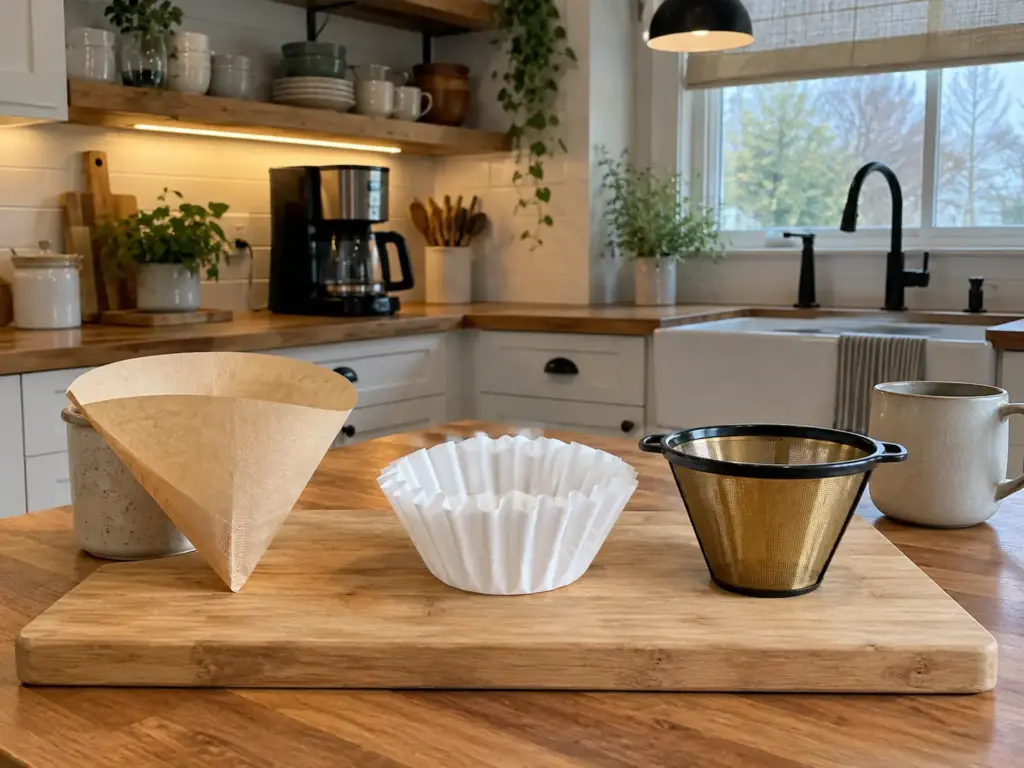
The pick starts with direction, clean and light or full with a little silt, and ends with the flaw you are agreeing to live with.
Pick by the Cup You Want
Three filter types cover almost every drip machine, and each carries a cost that the shelf label leaves out.
| Filter type | Moves the cup toward | What it fits | Its flaw |
|---|---|---|---|
| Paper cone | A cleaner, lighter cup with the fine particles held back | Cone baskets; a #4 suits an 8-to-12-cup cone basket | Crimped edges can blow out, so fold the seams before it goes in |
| Paper flat-bottom | A cleaner, lighter cup, the same direction as the cone | Flat-bottom baskets only | In a cone basket it folds on itself and does not seat |
| Permanent mesh | A fuller cup with fine sediment, slightly weaker in America’s Test Kitchen’s test | The basket it is sized for; a basket-style gold-tone suits an 8-to-12-cup basket | Silt in the last third of the mug, and one more dial to watch |
If you want a clean cup and one fewer thing to adjust, use paper in the shape your basket wants. If you want more body, and you accept the silt and a grind setting you now have to watch, use the mesh and keep a box of paper in the cupboard in case the silt wins. A mesh also replaces the box you would otherwise keep buying, which is its real argument.
The obvious pick stops being obvious with a blade grinder. It makes boulders and dust in the same pass, and the dust goes straight through a mesh into the mug. Paper stays the better choice there, however good the mesh looks on the shelf.
The Next Decision: The Basket and the Machine
A basket that fits no filter you can find, or a pot that overflows however the paper sits, is a machine problem and not a filter problem. The next decision is the drip machine itself, and the way to choose one is by how hot it gets the water.
Check the Seat, Brew One Pot, Change One Thing
Three things carry the rest of this guide:
- Paper moves the cup toward clean and light; a permanent mesh moves it toward full, with silt.
- The basket’s shape, not the cup count, sets which filter fits.
- Change one thing at a time: seat and fold the paper first, then the dial, then the type.
A month from now, look at two things: whether the last cup of a pot still tastes like the first, and whether the filter still sits flat in the basket. Neither is a finding, only a place to look if the cup drifts.
Tomorrow morning, hold the filter against the basket before you reach for the grinder, brew one pot, and taste it. If the cup is off, name the direction, change one thing, and taste the next pot before you change another.
Frequently Asked Questions
01Does a coffee maker need a filter?
Yes, a drip coffee maker needs a filter to keep the grounds out of the pot, either a paper one or a permanent mesh that stays in the basket. With neither, the carafe fills with grounds and water.
02Do coffee filters fit all coffee makers?
No, the basket decides the fit, not the brand or the cup count on the machine. A cone basket takes cone filters and a flat-bottom basket takes flat-bottom ones, so check the shape and the size on the box before you buy.
03What are the two types of coffee filters?
The two types are paper, which you replace, and permanent, a mesh or gold-tone screen you rinse and reuse. Paper moves the cup toward clean and light; a permanent filter moves it toward full, with some fine sediment.
04Can I use a cone filter in a flat-bottom basket?
No, a cone filter is the wrong shape for a flat-bottom basket, because the pointed bottom has nowhere to sit flat and hangs. The standard matches the filter to the basket shape, so use flat-bottom filters in a flat basket.


How did your cup turn out?
No comments yet. Tell us what you changed — and whether the needle moved.