



We may earn a commission when you buy through links on this page. It never changes what we recommend. How we pick
On this page8 parts
- A Boiling Tube Does the Lifting, Not a Pump
- After the Spray, Gravity Does the Rest
- The Grind Is the Only Dial on How Long Water Stays
- Why the First Third of a Pot Runs Colder
- Where a Pot Goes Wrong, Stage by Stage
- What Month Two Does to the Lift
- What to Change Tomorrow and What to Time Next Month
- Frequently Asked Questions
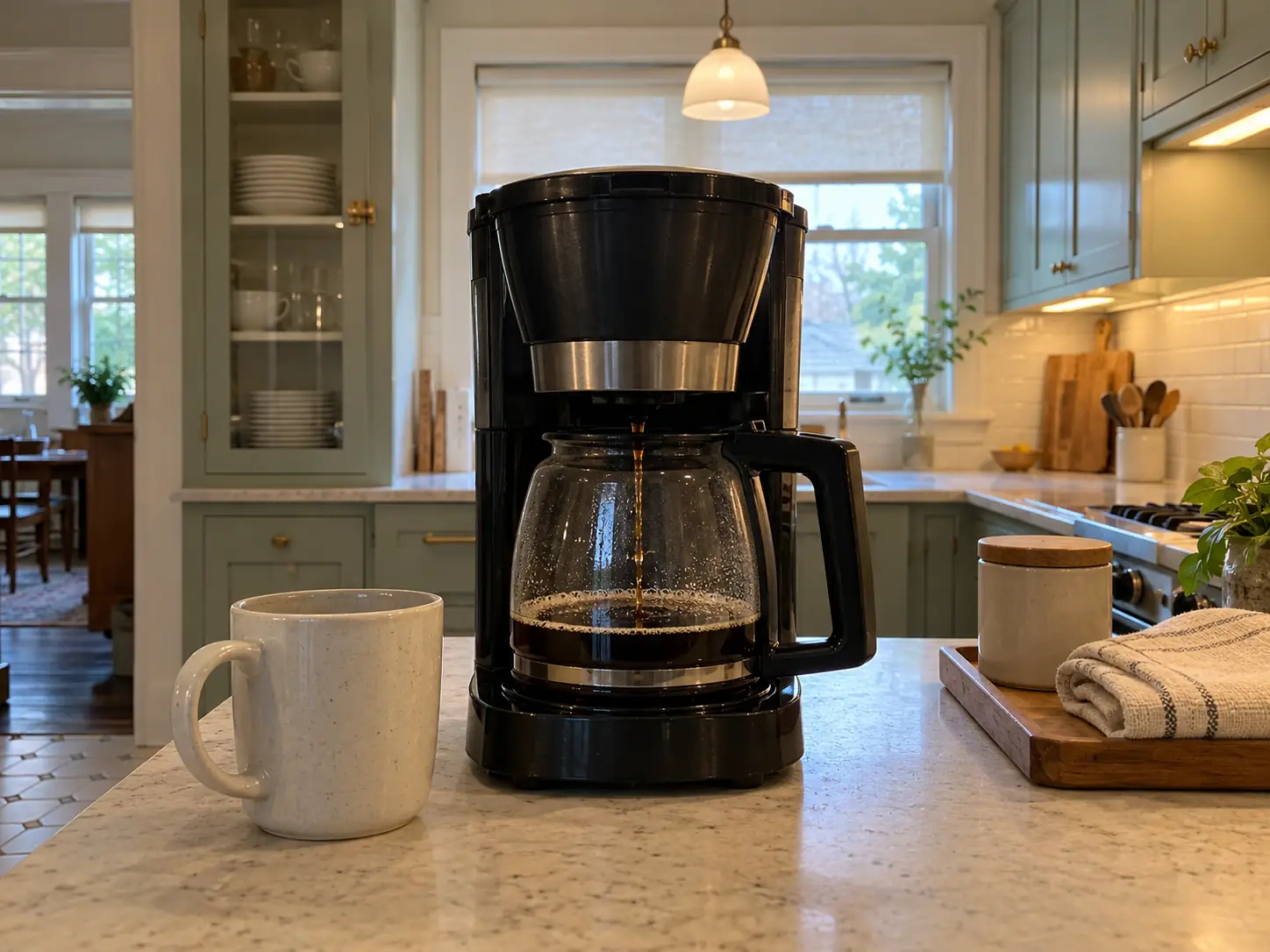
You flip the switch, the machine gurgles for a few minutes, and the pot that comes out tastes thin. So how does a drip coffee maker work, when all it appears to do is rain hot water over the grounds? A common doubt is that the water just falls through and only seems to lightly brush against the coffee. It does not, because the machine has no pump and no pressure, which leaves the time the water spends in the grounds as the one thing you control.
This guide follows the water in the order it moves (lift, spray, bed, carafe), then makes the grind the dial it really is, then shows where a pot goes wrong and what month two does to the lift; the routine at the counter, by weight covers the daily steps this one leaves out.
Quick Answer
A drip coffee maker has no pump and no pressure. A heater boils water inside a tube, the bubbles push it up to the spray head, and gravity pulls it through the grounds and a paper filter into the carafe. The grind decides how long the water stays in the bed.
A Boiling Tube Does the Lifting, Not a Pump
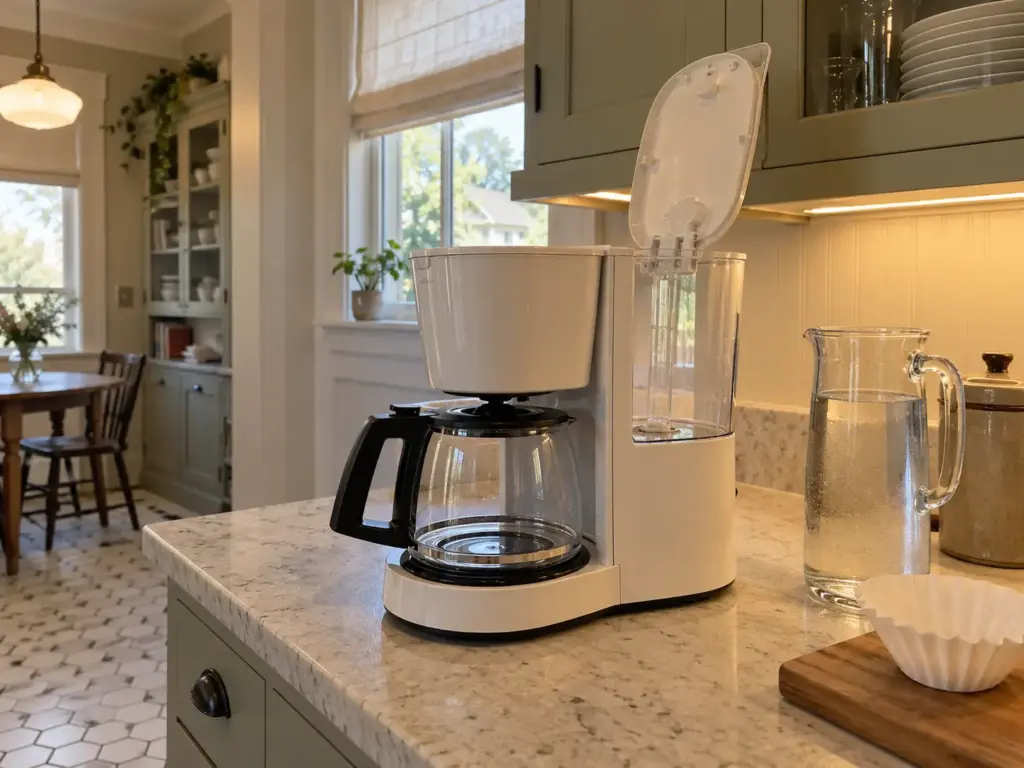
What surprises most people is not the grounds but how the water gets up to them. Lift the lid of the water reservoir and you find a plain tank with no motor and no hum, yet the water ends up at the top of the machine. Everything the machine does to the water starts at the bottom, in a metal part you never see.
The heater wraps a tube, not the tank
The base holds an aluminum tube with a resistive heating element pressed against it, a coil much like the one in a toaster. Cold water drains from a hole in the bottom of the reservoir into that tube through a one-way valve, and when you flip the switch the element heats the tube until the small amount of water inside it boils. The same element is sandwiched against the underside of the warming plate, which is why one heater both brews the pot and keeps it warm afterward.
Because that one part decides how hot the water gets, the buying side of it is sorted by heat before features, and this guide stays with how the heat works.
The bubbles carry the water up
Here the one-way valve earns its place. Without it, boiling water would be just as likely to flow back down into the reservoir as to rise, so the valve lets cold water into the tube and forces the bubbles up the narrow white riser tube. The tube is small enough and the bubbles big enough that a column of water rides upward on top of them, the way it does in an aquarium filter, until it reaches the spray head. It is the same boiling-water lift a percolator uses, which means there is no pump of any kind and almost nothing that moves except that valve.
The small sign that the lift is working is one you can hear: a gurgle and a sputter at the start of the brew cycle, as the first bubbles push water up. A machine that stays silent and never begins to pour has stalled at this stage, though that reading comes from the design of the machine and not from a test.
The thermostat keeps it from boiling dry
A heater that runs with nothing left to heat would climb past any safe temperature, so the base carries sensors and fuses. The sensors detect when the coil is getting too hot and cut the current, then switch it back on as it cools, and that cycling is how the element holds an even temperature instead of running flat out. The fuses are the backup, cutting power outright if the main sensor fails. Nothing in this stage is adjustable, which is why the controls you actually have start further along the path.
After the Spray, Gravity Does the Rest
The lift ends at the top of the machine. From the spray onward the water is on its own: nothing pushes it, and the only thing slowing it down is what sits in the basket. That is where the doubt that the water simply falls through gets its answer.
The shower head spreads the water over the bed
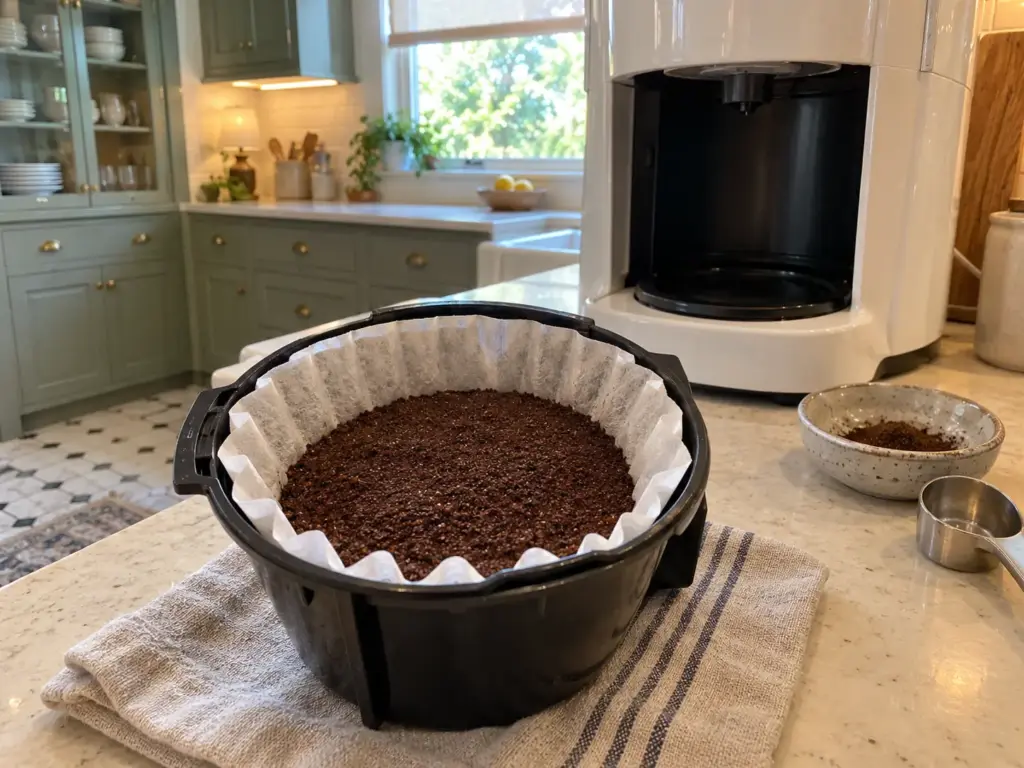
At the top, the white tube delivers the water to a shower head, or on some machines to a perforated plastic disc called the drip area, which lets it fall evenly onto the waiting grounds. Even coverage matters because water takes the easiest path, so a spray that lands in one spot runs through that spot, a point that follows from how a bed works and not from a measurement. From here on, gravity is the only force in the machine.
The bed and the paper filter slow the fall
Picture water that lightly brushes the coffee and keeps going. What actually sits in the brew basket is a layer of ground particles packed against a paper filter, and the water has to find a way around every one of them on its way down. That resistance is the whole brew. The grind’s job is to slow the water’s progression through the bed of coffee, which turns the machine’s gravity into time.
So the water does not fall through. It waits, and the time it spends waiting is what pulls the coffee out of the grounds. The paper filter adds one more thing: it holds back part of the coffee oils, which is why a drip cup comes out clearer and lighter than one made without paper.
The carafe and the plate keep it warm
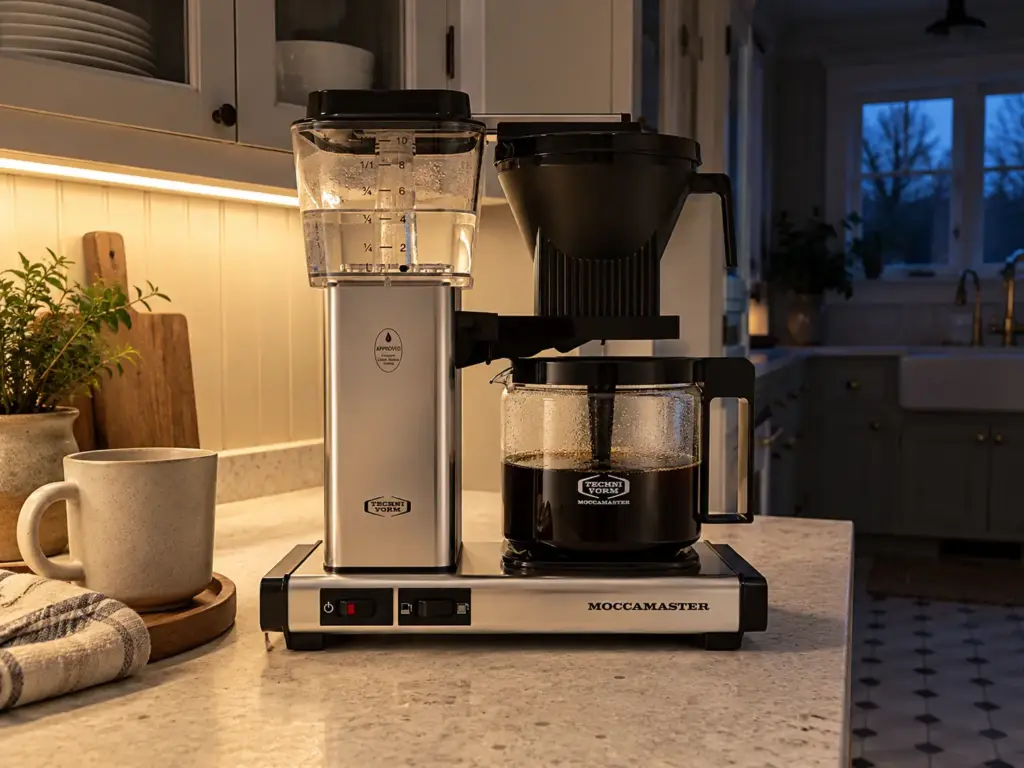
Under the carafe sits the warming plate, the hot plate that keeps the pot warm, fed by the same element that boiled the water, and its job is narrower than it looks. The Specialty Coffee Association’s home-brewer standard, SCA Standard 310-2021, asks a heated carafe to hold the coffee at 176 to 185°F (80 to 85°C) for the first 30 minutes and forbids the heater from pushing it above 185°F (85°C). The plate keeps a cup warm; it never makes one hotter.
The standard speaks only about that first half hour. What the plate does to a pot after that is the design’s business, and the design keeps heating what is left, so a pot left on the plate for an hour tastes different from the first cup of the same pot. That is stated from how the plate works, not as an event, and how long a pot sits on the plate is the question the glass-versus-thermal choice answers.
A cold mug pulls heat out of the first pour within seconds, and the plate cannot give it back, since it only holds the carafe in that 176 to 185°F (80 to 85°C) band. Rinse the mug with hot tap water before you pour and the first cup stays warm for longer, with nothing changed in the brew.
The Grind Is the Only Dial on How Long Water Stays
With no pump and no pressure, a drip machine has one adjustable thing left, and it is not on the control panel. It is in the grounds. A pot’s brew time is not a setting you choose; it is what the bed of coffee allows, and the grind is what builds the bed.
Why a finer bed slows the water
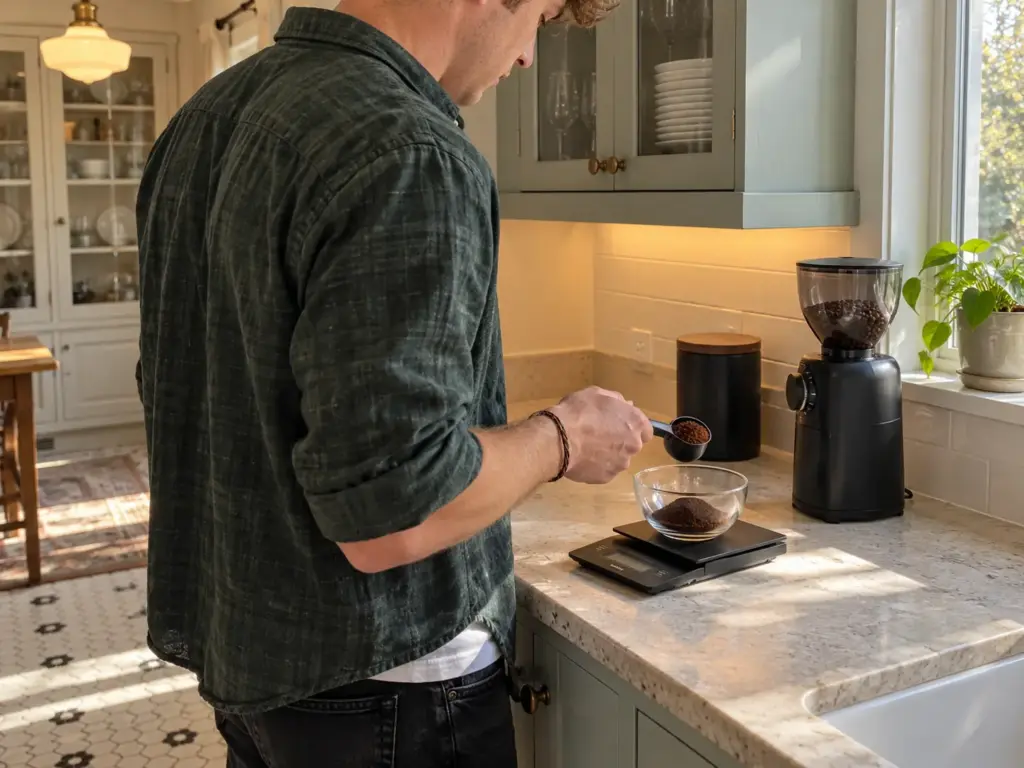
Smaller particles do two things at once. They pack tighter, so the gaps the water has to find are narrower and it leaves the basket more slowly, and they have more surface per gram, so each particle gives up its coffee faster. Both effects point the same way: a finer grind means more contact time and a fuller extraction from the same machine on the same dose, while a coarser one lets the water pass quickly and leaves part of the coffee behind, which is under-extraction.
The answer to the doubt is that a drip machine’s grind is chosen fine enough to hold the water in the bed long enough for the right share of the coffee to dissolve. The machine only supplies hot water; the grounds supply the wait.
Machines with a strength setting make the same point from the other side. On digital models that offer a strength or bold setting, the way to deliver a stronger cup is to slow the brewing, which is the machine doing to its own water what a finer grind does to the bed without a menu.
And the bed is only as even as the grinder that built it. A blade makes boulders and dust together, so the dust packs and stalls the water while the boulders let it rush past, which is why a blade grinder gives a bitter and sour cup at once.
One step, then taste
Sour or thin means the water left before it finished, so the first move is one step finer. (Thin or weak by itself can also be a light dose, which is the next section.) Bitter or harsh means the water stayed too long, which is over-extraction, so the move is one step coarser. That is the direction map, and how grind size moves the taste from sour to bitter draws it in full.
Make that one move and nothing else: the same dose, the same water, the same machine, then pour a cup and taste.
You can also watch the bed work before the pot is finished. With a fine grind the water pools above the grounds for longer and the drip at the base of the basket turns slow and steady; with a coarse one it runs quick and the bed barely holds any water. That is the contact time showing itself, a reading from the design and not a measurement.
What the next cup should tell you: if the finer step worked, the sharp edge fades and the sweetness has room, and the pot tastes rounder. If it overshot, you will taste the other direction, a dry, harsh finish that lingers, and the pot may drag through the basket noticeably longer, so come back half a step. If the cup barely changed, take one more step, again alone. Changing the grind and the dose and the water in the same morning is how a pot ends up better with no way to say why.
After you move the grind setting, the grinder still holds grounds from the old one, so the first dose comes out partly at the setting you just left. Run a few grams through and toss them before you weigh the dose for the test pot, or the taste you are reading belongs to the wrong setting.
Dose first, then grind
The grind only means something if the dose is the same from pot to pot. The scoop that came with the machine looks like the practical measure and is where the dose first goes wrong: a level scoop of a fine grind and a level scoop of a coarse one do not weigh the same, and the roast changes it again. So weigh the dose before touching the grind. The standard brew ratio in the SCA’s home-brewer standard is 55 grams of coffee per 1,000 grams of water, about 1 to 18.
In kitchen terms, a fluid ounce of water weighs about 30 grams, so that ratio is roughly 1.6 grams of coffee per fluid ounce, or one level tablespoon for every three ounces of water (a rough guide only, since a tablespoon’s weight shifts with the grind). The “cups” on a carafe are not standard cups either: a machine that lists 10 cups at 40 ounces is counting four ounces a cup, and that full pot wants about 65 grams of coffee, around 13 level tablespoons. That is a lot of tablespoons to count correctly every morning.
The Hario Drip Scale Timer is the free step done with a proper tool. It reads in 0.1-gram steps and has a timer built in, so it takes the guess out of the dose. It switches itself off after five minutes, which makes it a dose tool you pick up and put down rather than something left running beside the machine, and a tenth of a gram is finer than a drip dose strictly needs.
An ordinary kitchen scale with 1-gram steps and a tare button handles the dose and gives up only that fine gram. Either way, a scale changes more cups than a new machine does.
Why the First Third of a Pot Runs Colder
Everything above assumes the water arrives hot, and a drip machine is the appliance where that is hardest to take for granted. The heater works on the water a little at a time while the pot is already brewing, so the start of the cycle is where a slow heater shows. The reference for what “hot enough” means is not a feeling but a number.
What the standard asks of the bed
The reference is the Specialty Coffee Association’s list of certified home brewers, whose machines are tested against SCA Standard 310-2021. The standard asks that the brew slurry, measured with three thermocouples placed at the top and center of the bed of coffee, reach 194 to 205°F (90 to 96°C) “by the moment when 33% of the water mass has been sprayed onto the coffee,” and stay inside that range for the rest of the cycle.
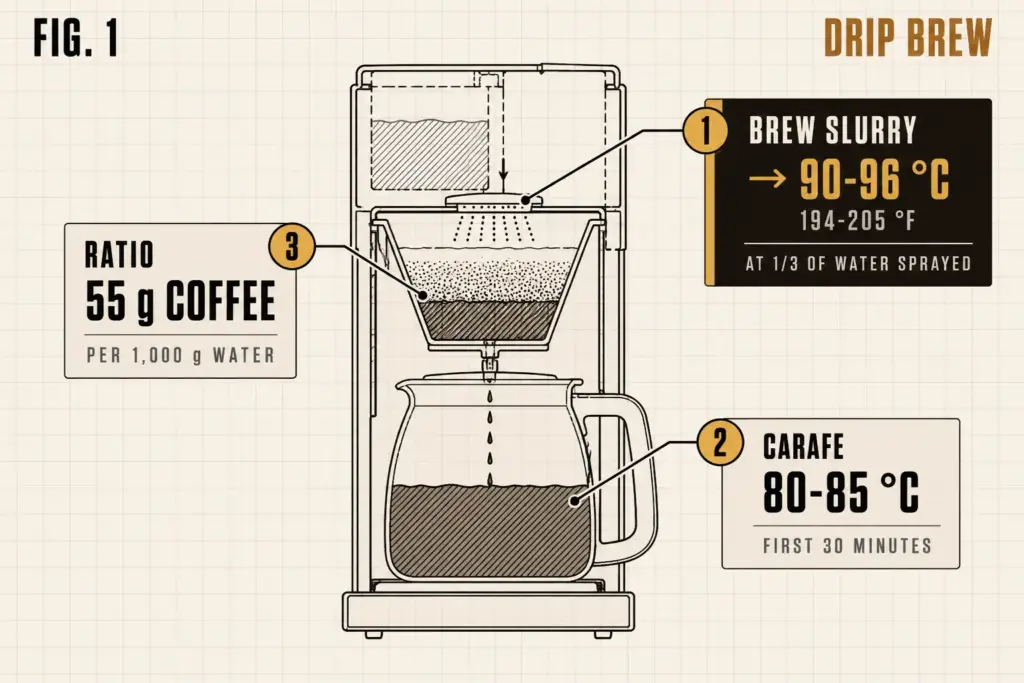
Read the test point carefully. The standard does not ask for hot water at the first drop; it asks for the slurry to be inside the window by the time one third of the water has gone through, and to stay there. That leaves room for the very start of a pot to sit below the window, and the standard says nothing about what that does to the taste.
Why a cold start has the least time
What follows is inference, not measurement: the standard gives the target and not the cause. A machine that heats slowly spends the start of the pot below the window, and water cooler than the window leaves behind part of what hotter water would have taken from the same grounds. So the first third of the pot is the most likely to come out under-extracted, which fits a pattern every drip drinker knows: the first pot of the morning from a cold machine tastes thinner at the start than at the end, thin and a little sour early, ordinary by the end, because the brew temperature was lower while the first water went through.
That pattern also names the direction. A pot that is thin and sour early and fine late is a heat-and-time problem, not a beans problem, and a new bag of coffee will not touch it.
Test the cold-start reasoning without buying anything: pour the first cup into one mug and the last cup of the same pot into a matching one, let both sit a minute, and taste them side by side. Same beans, same dose, same water, so a thinner first cup points at heat and time and not at the coffee.
One change, then taste
A fast heater looks like the obvious answer to a cold start, and it comes second. The free change comes first: one step finer on the grind, the dose weighed and unchanged, then taste before blaming the machine. A finer bed gives the cooler first water more time in the grounds, and it costs nothing. If the first cup is still thin and the last one is fine, the heater is the paid fix, and that is where the machine starts to matter.
A fast heater is easiest to see in an example. The Technivorm Moccamaster 53941 KBGV Select has a copper heating element, and its listing gives 40 ounces in four to six minutes, which is a speed spec and not a measured bed temperature. It is the splurge, and a fast heater does nothing for a grind that is wrong for it.
A basic machine with a manual switch and no timer makes coffee the same way; what it may give up is heater speed, so the number worth looking for on a box or in a manual is how quickly the machine reaches brewing temperature, and the drip machines picked by water temperature are sorted on exactly that. A machine on the SCA’s certified list was certified against the standard’s temperature window, which makes the list the shortest check of all.
Where a Pot Goes Wrong, Stage by Stage
Knowing the order the water moves gives you a way to check a bad pot without buying anything. Work through the stages in that order and stop at the first one that fits. The order is reasoning from the parts, not a study, so treat it as a checklist for the counter.
A machine that does not pour at all
A machine that does not pour points at the front of the path, where the lift happens. The one-way valve can clog open or closed, and either way the lift stops; the manual shows how to reach it, and the manual comes before any disassembly described in an article.
The power cord and the on-off switch are the other common failures, and an improper replacement of either can start a fire, so those belong to someone who repairs small appliances or to a new machine. Two failures cannot be repaired at home at all: a heat-sensitive switch that has died and a heating coil that has burned out, because replacement parts are hard to find. If the lift is dead, the coffee and the grind are not the cause.
A machine that pours too slowly
If the water drains out of the basket slowly, look at the grounds and the basket next, the stage after the lift. A bed packed too fine, a dose heavier than the basket was built for, or a filter that has clogged all slow the water, which is the earlier section run in reverse. One step coarser costs nothing, so try that first, then taste. And if the machine was fine last month at the same grind and is slow now, skip to the last section: that is the lift narrowing, not the bed.
A thin cup from a pot that poured normally
When the pot poured at its usual speed and still tastes thin, the water and the grounds met for the usual time and the usual amount of coffee was not there to meet them, which points at the dose. Weigh it against the ratio of 55 grams per 1,000 grams of water before touching anything else. If the dose is right and the cup is still thin, the cold-start reasoning from the last section is the next place to look, starting with the first cup against the last.
What Month Two Does to the Lift
The part of the machine that matters most for the lift is also the narrowest, and it is the part that changes with months of use. Nothing about it shows from the outside: the machine looks the same, and the pots slowly take longer.
Scale in a tube that is the narrowest part
Tap water carries calcium, hard water leaves more of it behind, and every cycle heats that water in a narrow aluminum tube. The tubes can clog with calcium, and the heating tube is the worst case. Here is the mechanism, from the design and not from a measurement: the riser tube is the narrowest path in the machine, and the bubbles have to fit inside it to carry the column of water up, so scale there narrows the path the lift depends on, not only the flow.
The sign you can read at the counter is a pot that takes longer than it used to with the same grind and the same dose. That tells you the lift, not the beans, has changed.
The free descale comes first
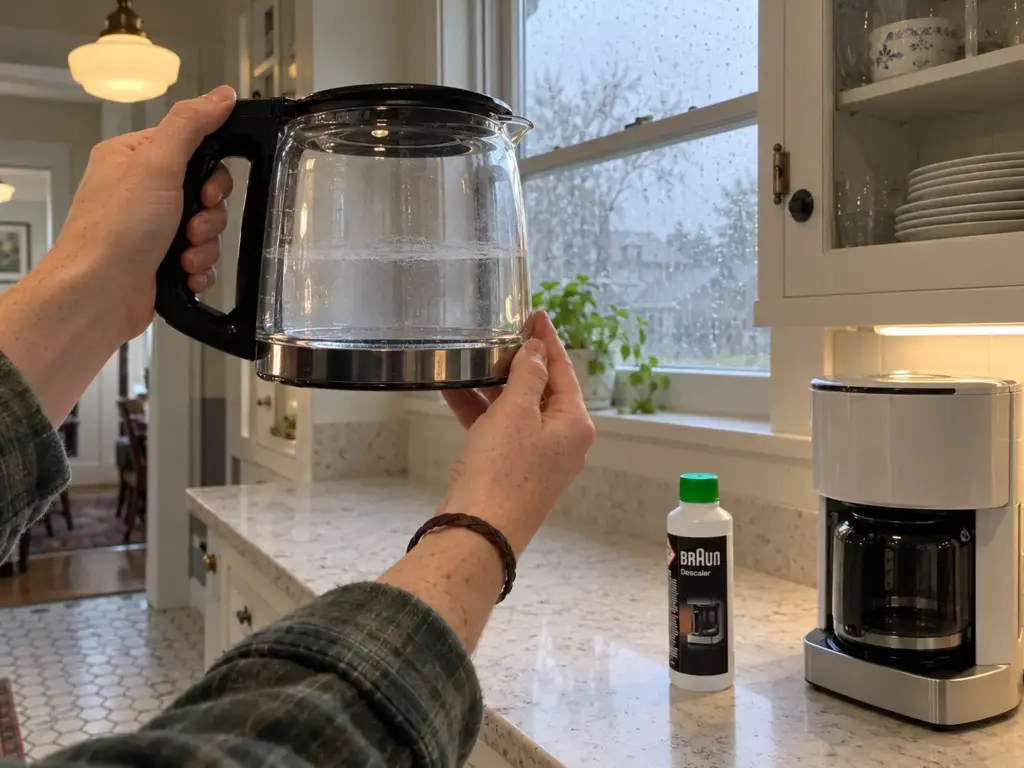
Vinegar is the standard free run: pour white vinegar through the machine once, then run two full batches of plain water through to clear it out. The schedule that counts is the one in the manual for your machine, and the manual also decides whether vinegar is welcome in it at all. If the manual names a descaler, use that one.
A descaling solution is the convenience that comes after the free step, not instead of it. The Braun Coffee Maker Descaling Solution comes in a 200-milliliter bottle (about 6.8 fluid ounces), and its compatibility is verified only for Braun machines. On any other maker’s drip machine it is not recommended here, and the manual decides. Since the vinegar run does the same job, the solution is for the reader who wants it measured out and ready, not for one who needs it.
What to look at a month from now
In month two the clock changes before the taste does. A pot that needs more minutes than it used to, at the same grind and dose, is the lift narrowing: descale. A pot that takes the same time and tastes off is back to the grind and the dose.
Time one full pot today, from the first drip to the last, at your usual dose and grind, and write the number on a sticky note inside the cabinet door. It takes one pot and no equipment, and it is the baseline every later pot gets compared against.
What to Change Tomorrow and What to Time Next Month
A drip machine lifts its own water with a boiling tube and no pump, so nothing pushes the water through the grounds except gravity, and the grounds are what slow it. That makes the grind the one dial on how long the water stays, and the order for a bad pot never changes: the direction first, one change, then taste. The part you cannot see, the narrow tube, scales up over months, which is why a pot that slows at the same grind is a descale and not a new machine.
A month from now, brew one pot at the same dose and grind as today and compare its time with the number on the note; a longer pot is the earliest sign the lift has narrowed.
Tomorrow morning, weigh the dose, move the grind one step in the direction the last cup pointed, brew the same pot and taste once before touching anything else. If you are unsure which way that is, or what size a step lands on, the grind size a drip machine wants is the next decision.
Frequently Asked Questions
01How does a drip coffee maker work?
A drip coffee maker heats water in a tube until bubbles lift it to a spray head, and gravity pulls it through the grounds and filter into the carafe. There is no pump, so the grind sets how long the water stays in the bed.
02Is drip coffee just regular coffee?
Yes, drip coffee is ordinary brewed coffee made by an automatic method, with hot water passing through ground coffee and a paper filter into a carafe. The filter holds back part of the coffee oils, so the cup is clearer and lighter than an unfiltered one.
03How do I make coffee in a drip coffee maker?
Fill the reservoir to the line, set a paper filter in the basket, add a weighed dose of ground coffee, close the lid and switch the machine on. Use about 55 grams of coffee for every 1,000 grams of water. The full routine by weight has its own guide.
04What’s the difference between a coffee maker and a drip coffee maker?
A coffee maker is any machine that brews coffee; a drip coffee maker is the kind that heats water, sprays it over the grounds and filters it into a carafe. Pod machines, espresso machines and French presses are coffee makers too, just not drip ones.
05Why does my drip coffee maker pour so slowly?
A slow pour usually means the grounds are packed or ground too fine, the paper filter is clogged, or scale has narrowed the heating tube. Change one thing: go one step coarser, then taste. If it slows over weeks at the same grind, descale the machine before replacing it.


How did your cup turn out?
No comments yet. Tell us what you changed — and whether the needle moved.