



We may earn a commission when you buy through links on this page. It never changes what we recommend. How we pick
On this page8 parts
- Reading the Pot: Burnt Later or Flat at First
- The Glass Carafe Gives You an Hour
- The Thermal Carafe Holds for Hours, After a Preheat
- The Time the Pot Waits Picks the Carafe
- Month Two: The Soak, the Shatter and the Pour
- When the Carafe Is Not the Problem
- Taste the Last Cup Before You Buy Anything
- Frequently Asked Questions
The first cup from the pot is fine. By the last one, poured long after breakfast, it tastes cooked, or it is lukewarm and dull, and the machine takes the blame. The coffee maker glass vs thermal carafe question is really about which of those two failures your counter runs into: a glass pot on a drip coffee maker sits on a plate that cycles on and off to keep it warm, while a thermal pot has nothing under it and can only lose heat. The sections ahead cover which way the pot is off, the one free change for each carafe and what goes wrong with it, the length of wait that picks between them, and what each one looks like after weeks of daily use.
Neither carafe holds heat better in a fair test, so the choice comes down to how long the pot waits. Glass suits a pot that is gone within the hour, and a preheated thermal carafe suits a pot that has to last the morning.
| At the counter | Glass carafe | Thermal carafe |
|---|---|---|
| The first hour | Drifts about 2.5 °F (1.4 °C) up and down on its plate (Consumer Reports) | Loses about 4 °F (2.2 °C) (Consumer Reports) |
| Past the first hour | Cools quickly off the plate, cooks on it | Can hold for hours when preheated (owner report) |
| The first cup | Pours the hotter cup | Starts cooler, even after a preheat |
| Pouring | Light, and you can see what is left | Heavier, and some dribble |
| Cleaning | Wide mouth, a sponge fits | Narrow neck, stains until soaked |
| How it fails | Cracks or shatters | Stains and dents |
| The one free change | End the pot’s time on the plate | Preheat the carafe |
Reading the Pot: Burnt Later or Flat at First
The two carafes fail in opposite directions, so the taste in the cup tells you which one to blame before you shop for anything. A pot that gets worse the longer it sits points at the plate under it. A pot that is dull from the first pour points at the vessel itself.
Burnt and bitter an hour later
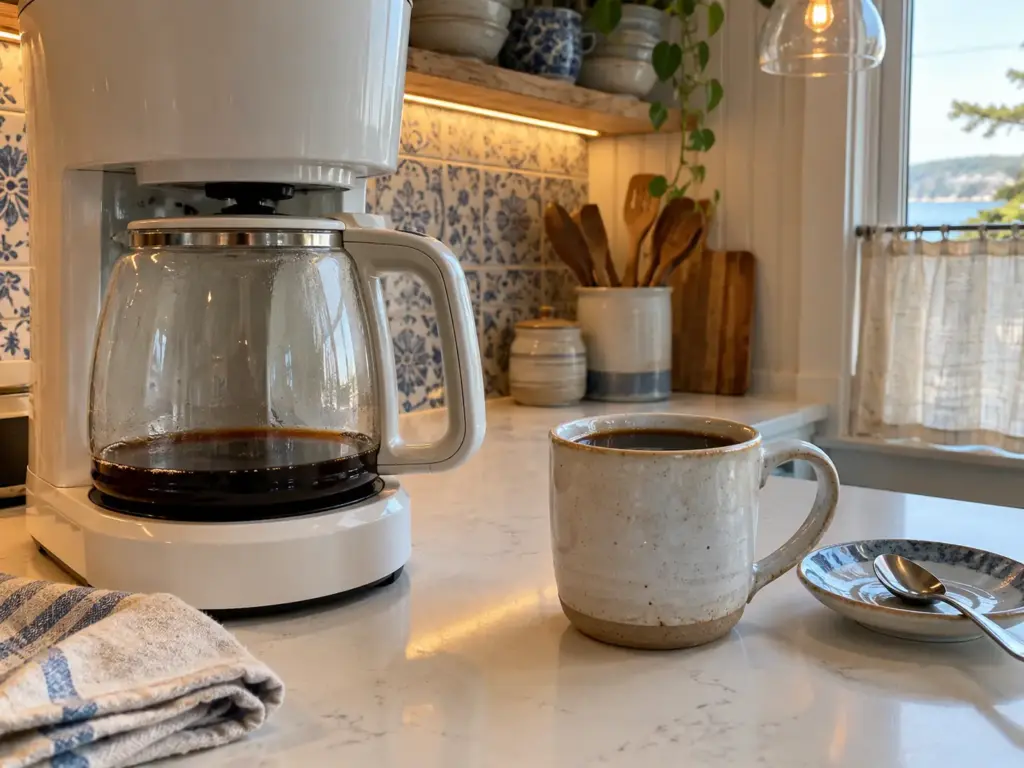
Picture a glass pot that goes through a long morning on its warming plate. The early cups are fine, a later one has a harsh, scorched edge, and by the end the pot tastes like something boiled twice. A grind that is too fine gives you bitterness from the very first cup; a pot that starts well and ends harsh has changed after the brew, and the only thing acting on it is the plate that is supposed to keep warm what it ends up cooking.
Most hot plates are too hot and will scorch coffee after too long. The complaint is the same from the other side of the counter: the plate can seem to burn the coffee into a brown mess. Neither is a measurement, and I would not hang a rule on them. But fine early and cooked late is a signature that points at the plate and at nothing else.
Cool and flat at the first cup
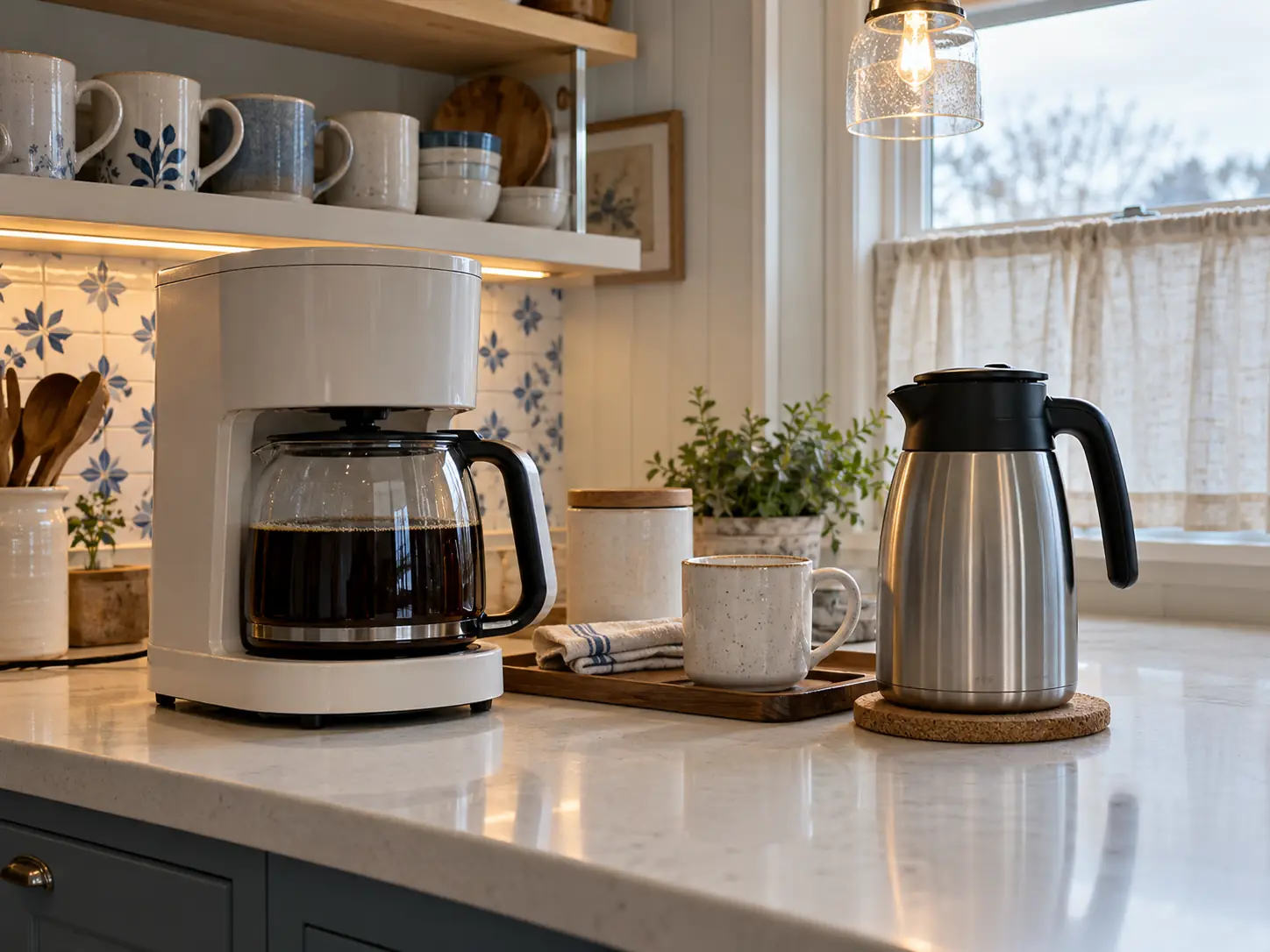
The opposite complaint is a first cup that never gets properly hot. A stainless carafe has more thermal mass to warm, so it starts cooler than glass, even after an empty-basket preheat cycle; glass has less mass and pours the hotter first cup. And a lukewarm cup tastes duller, which is the flat taste people mean. If the pot is cool and dull from the first pour and stays that way to the last, the vessel is losing the heat, not the plate adding to it.
That gives the two pots curves that cross. Glass pours the hottest first cup it will ever give and then falls or cooks. Stainless pours its coolest cup first and its best-kept cup last. Judge either carafe by one cup alone and you will pick wrong.
What the one fair test found
Consumer Reports’ own test measured both carafes at 30 minutes and again at one hour. A glass carafe on its hot plate drifted about 2.5 °F (1.4 °C) either way, because the plate cycles on and off. A thermal carafe lost about 4 °F (2.2 °C) in the hour and only ever fell. That is a gap of under two degrees over sixty minutes, and it does not even point one way.
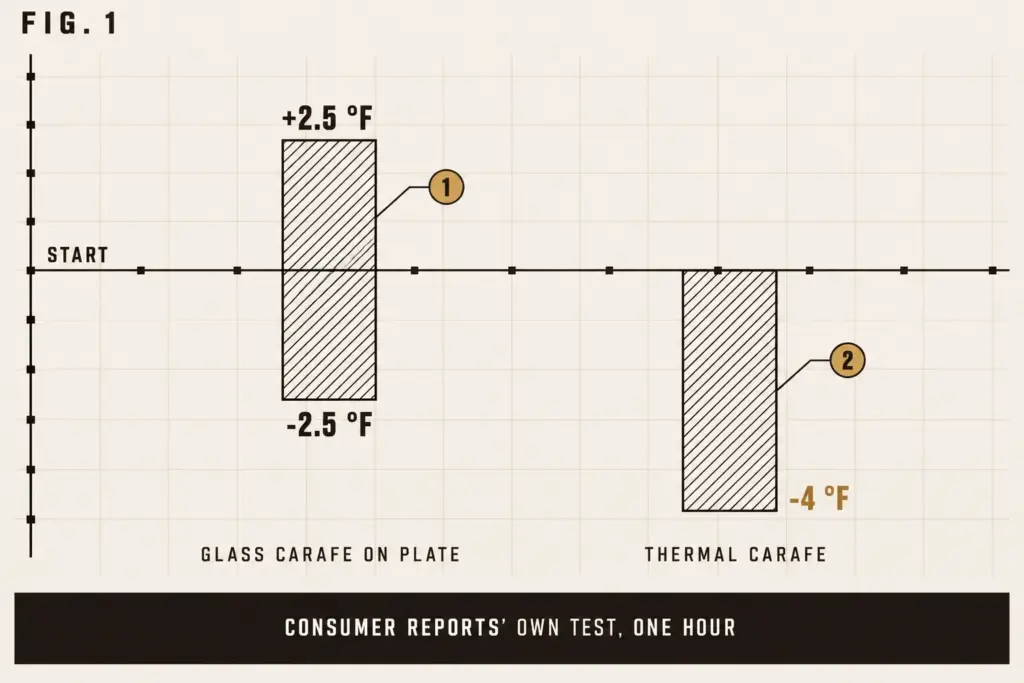
Consumer Reports test engineer Ginny Lui puts the conclusion plainly: “We find that there isn’t a significant difference in temperature loss between the two types.” So the heat does not pick the carafe. The wait and the pour do. The heat side itself, from the plate’s cycling to what lets a drip machine reach the right water temperature in the first place, is worked through in what makes a drip machine heat the water properly, so this article stays with the choice.
One limit, said once: past that first hour, the hold times here come from owners’ reports rather than a lab test, so read them as ranges, not specs.
The Glass Carafe Gives You an Hour
Glass wins the first cup and loses nearly everything after the first hour, so this section is about one number: the time the pot spends on its plate. Everything else about a glass carafe is easy to like. The plate is the catch.
Why the first cup is the hottest one
Less thermal mass means the freshly brewed coffee fills the glass and pours hot, with no heavy wall to warm first. It is also easy to live with: you can see how much is left, and the wide mouth takes a sponge. For a household that finishes the pot in one sitting, or pours cups through a meal, that is the whole story. Off the plate, glass cools quickly, so after a while the coffee is likely too cool to enjoy.
The plate cooks what it keeps warm
That cycling plate is what keeps a glass pot warm and what spoils it. Even a dedicated low-temperature plate, like the one on a Moccamaster, is not something to leave under the pot for long. Treat the hour as a ceiling, not a target. A plain machine’s plate is not a specialty brewer’s, so on an ordinary counter the ceiling is likely lower.
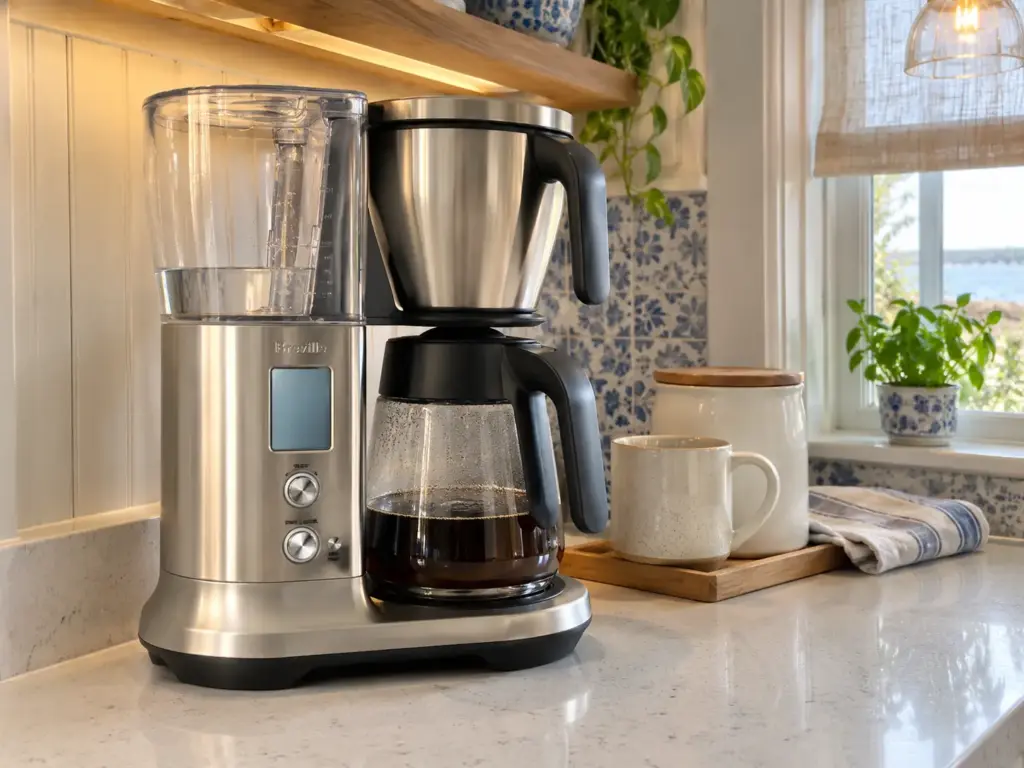
The Breville BDC400BSS Precision Brewer is the glass example here: a 60-ounce pot, 12 cups, brushed stainless. That is a lot of coffee to leave sitting, and what goes wrong with it is what goes wrong with any glass pot, a plate that keeps heating coffee nobody finished. Consumer Reports adds a safety note, too: a plate under a glass pot is a burn risk, and a thermal carafe may suit a home with children.
If the glass machine you want is the cheaper one, the Cuisinart DCC-1200P1 Brew Central gives you the same kind of glass pot and warming plate for less than the Breville, with programming on top. The same hour applies. What each glass or thermal choice costs on that machine is laid out in the Cuisinart review.
The free change: end the plate’s time
One change, before any purchase: pour what will be drunk in the first hour, then end the plate’s time. Switch the plate off, or lift the pot clear of it. An auto shut-off helps, though one that waits two hours still lets a glass pot sit twice as long as it should, so check the spec rather than trusting the feature.
Then taste the next day’s last cup. If the change worked, it comes out cooler than the first cup but without the harsh edge. If it now tastes flat and tepid instead of scorched, you have not made a mistake; you have reached the limit of glass, and that coffee wanted a thermal pot. Drip machines sorted by how their carafe holds heat make the shortlist for that move, and picking a drip machine by water temperature covers what the machine does before the carafe is involved.
Pour the last third of the pot into a mug or a preheated insulated bottle the moment the first cups are out. It takes the plate off exactly the coffee that would have cooked, and you can drink it as the lukewarm cup it was always going to be.
The Thermal Carafe Holds for Hours, After a Preheat
The thermal pot is the mirror of the glass one: nothing under it to cook the coffee, so its cost moves from the cup to the counter. That cost is real. But one thing has to happen first, or the carafe loses the advantage you bought it for.
Nothing under it, nothing to scorch
A thermal carafe has no element. It can only lose heat, and in Consumer Reports’ hour it lost about 4 °F (2.2 °C). Past that hour, a well-sealed thermal carafe can still pour a good cup hours after brewing, which is the strongest case for thermal, though it rests on few cases. The sensible middle is that a closed, double-walled carafe holds for hours, and how many depends on the carafe and on how often the lid comes off.
The usual reason to buy a thermal carafe is heat. In the numbers above, heat retention is a tie for the first hour. What the thermal pot buys you is everything after it, and that is a different reason to buy one.
Preheat it, or lose the hours
A stainless carafe can keep coffee hot for hours if you preheat it first. Preheating is the free change. Run a water-only cycle through the machine with an empty basket first, and pour that warm water out before the real brew. Otherwise the cold steel takes its first share of heat straight from the coffee.
Then taste the first cup against the last one. Expect the first cup to be hot enough but still a notch below what glass pours, since stainless starts cooler even after a preheat cycle. If the first cup is plainly cool, preheat before the next brew and change nothing else. If the last cup is the flat one, the lid was opened too often or the pot waited longer than it can hold.
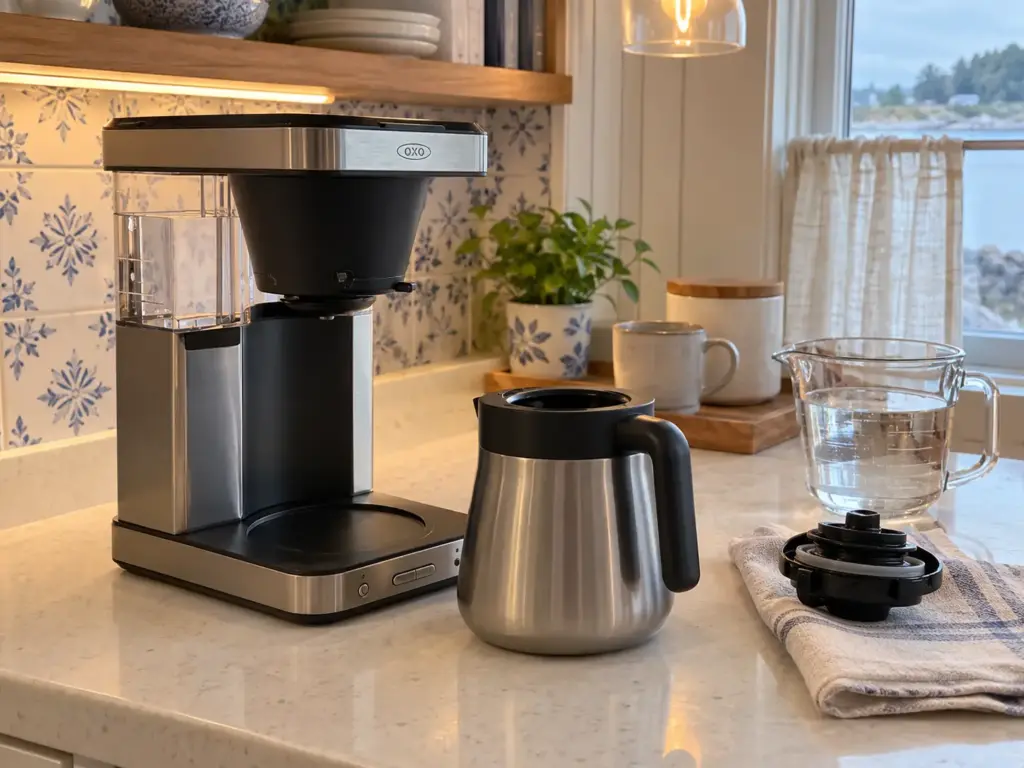
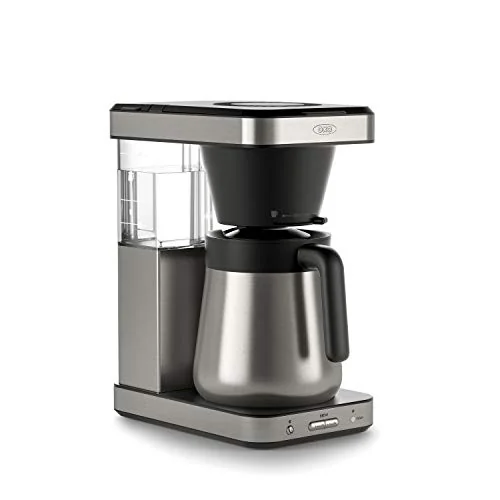
The OXO Brew 8-Cup with the thermal carafe is the stainless example in this article: eight cups of 5 ounces, so up to 40 ounces, a Rainmaker shower head and 1,400 watts. Stainless carafes of this type come with a narrow mouth and stains that stay until soaked, which is the chore that goes with the hold time.
The budget way into a thermal pot
A thermal carafe does not need a premium machine. The Mr. Coffee 12-Cup Programmable with the thermal carafe option is the cheaper way in: 12 cups, a Brew Strength Selector, delay brew, and a two-hour auto shut-off in the spec.
No complaint specific to this model came up, so plan around what every thermal pot carries, the weight and the pour. How that brand ages is covered in what the Mr. Coffee looks like in year two.
Run a water-only cycle with an empty basket before the real brew, and pour that water out. Even then the first cup comes out a notch cooler than glass would pour it, so judge the carafe by the last cup, not the first.
The Time the Pot Waits Picks the Carafe
Now that each carafe’s strength and free change are on the table, the question stops being which one holds heat better and becomes how long your pot will wait. That is a household fact, not a machine fact: the same machine is right for one house and wrong for the next. The gap between the first pour and the last is your drinking window, and three of them cover most kitchens.
Under an hour: glass is enough
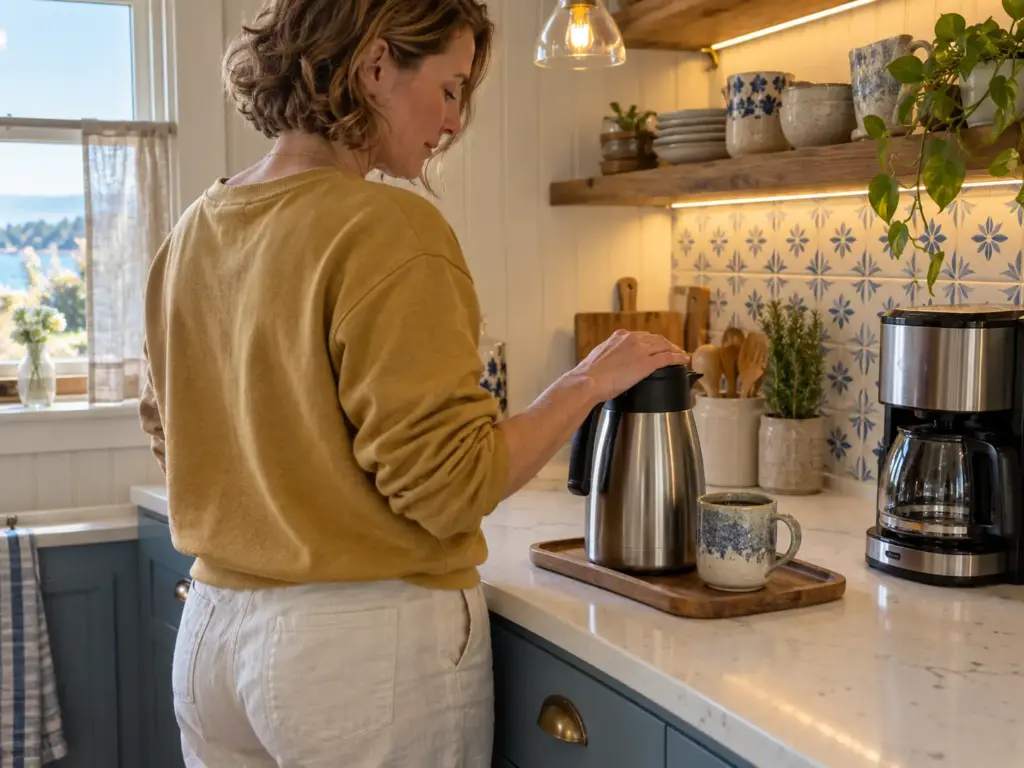
The household that drinks the whole pot before work needs nothing more than a glass carafe. The first cup is the hottest it will ever be, and the rest follow within the time the plate can be trusted. If the pot is drunk fast, there is little reason to pay for warmth that never gets used, and that is the right instinct.
The free change here is not a purchase but a batch size. A carafe’s cups are 5 ounces, not mug-size, so a 12-cup pot brewed full for two people with a 10-ounce mug each is 20 ounces in the cup and 40 ounces left under the plate. Brew what the household drinks, pour, and end the plate’s time. What goes wrong with this window is the plate, and only the plate: every minute past the hour moves the last cup toward the scorched end.
Two to four hours: the thermal, preheated
The household that comes down in shifts needs the pot to hold. A preheated thermal carafe with the lid closed is the one that does it, and the single change that earns it is the preheat. What it costs you is the pour and the first cup: a heavier carafe that is slower to tip, and a first cup that starts cooler than glass would. One owner who runs three machines keeps the glass pot for the coffee that is finished in one sitting and the stainless for the slow household, which is this same split drawn by someone who has lived with both.
Between one and two hours is the awkward stretch. Glass is past its hour, and a thermal pot is not yet earning its weight. If your pot regularly waits that long, I would lean thermal, because the plate’s cooking only gets worse from there while a thermal pot’s loss is slow. Taste the last cup of a long morning against the first, and let that decide whether the lid is doing its job.
One cup at a time: the pour is the cost
The household that pours one cup at a time pays the thermal carafe’s price over and over. Consumer Reports found thermal carafes heavier and harder to pour than glass, and some dribble: every cup is another go at that flaw, and every lid opened is a little heat gone. A pot on a plate is no better, since it cooks the coffee while it waits for the next person.
The answer for this window is two smaller batches, or a thermos for the last cups, instead of one big pot kept hot all morning. When two batches or a thermos beat one big pot goes through that case, including the last cup on the plate.
One caveat about all three windows: the owners quoted here run specialty brewers, and a regular drip machine on tap water is rougher on the coffee. The shape of the windows should hold; the exact hour may move.
For one week, write down when the last cup of each pot gets poured. Pick the carafe by the longest wait on a normal morning, not by the size of the machine or the one long Sunday that never repeats.
Month Two: The Soak, the Shatter and the Pour
Both carafes look fine in the first week. What separates them is what each does after weeks of daily use, and it is not the heat.
What a thermal carafe holds on to
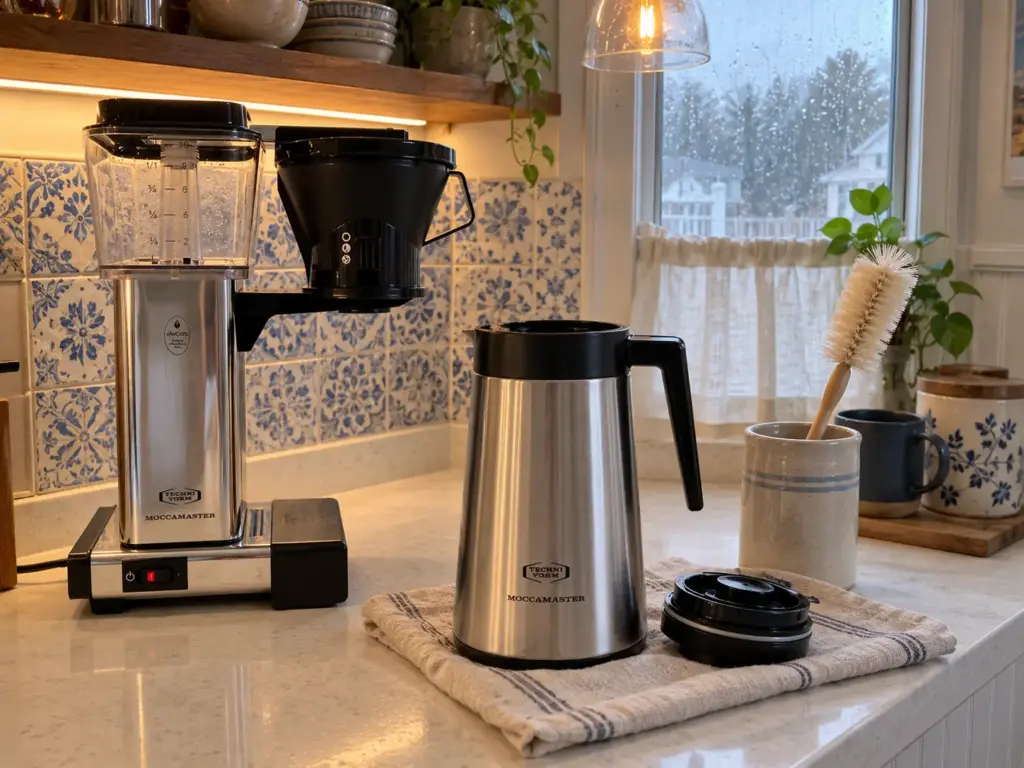
Stainless carafes can carry stains until they are soaked in a cleaner such as Cafiza. The fix is a soak in a coffee-equipment cleaner, not a new carafe. The narrow mouth is the problem: he cannot fit a hand in any of his, and a silicone bottle brush reaches the walls without giving any leverage.
The stain a stainless carafe holds is invisible from the outside, so the first sign is often the cup. A pot that tastes off with fresh beans and a clean basket deserves a look inside the carafe before anything else is replaced.
What glass does when it fails
Glass has a wide mouth, a sponge fits, and it is less reactive than stainless and stains less. His Moccamaster glass carafe “looks brand new after 1+ years of use.”
Glass fails differently: not with a stain but with a crack or a shatter, all at once. That is one owner, and no month count here should be read as data. The pattern is what matters: stainless degrades slowly, glass fails suddenly.
The plate’s side of month two is slower and quieter. The scorched taste builds as the same habit repeats, and no measured timeline exists, so the check is the last cup of a long morning.
The pour that never stops being the flaw
On a thermal carafe the pour is the complaint that never goes away. Consumer Reports calls thermal carafes heavier and harder to pour than glass, with some that dribble. The premium example makes the point: the Technivorm Moccamaster 79112 KBT carafe can be a bit tricky to use and messy to pour.
On paper the KBT is the splurge of the five machines here: a copper boiling element, a full 40-ounce carafe in 4 to 6 minutes, a manual drip-stop basket and a 5-year warranty. It is the same flaw Consumer Reports names for thermal carafes in general, in a better machine.
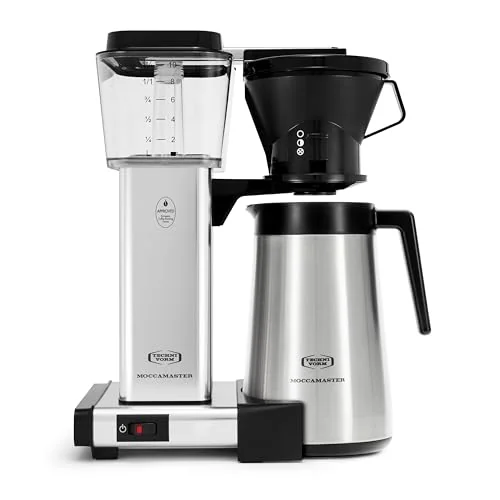
The flaws of the whole machine, the carafe and the plate included, are written out in the Moccamaster review’s list of flaws in writing.
Soak a stained stainless carafe instead of replacing it, then scrub with a silicone bottle brush and rinse until it smells of nothing. A glass carafe needs only a sponge, which is half of why it looks new for so long.
When the Carafe Is Not the Problem
A pot can taste wrong for reasons the carafe never touches, and swapping carafes is an expensive way to find that out. Three checks come first, and then the next decision: the machine that comes with the carafe you want.
Sour is not the plate
A scorched plate points bitter. Sour points the other way: the water left the grounds before extraction was finished, because the grind was too coarse, the brew temperature too low or the brew too short. No carafe fixes that.
The free change is a finer grind, one step, with everything else left alone. The next cup should taste rounder and less sharp; if it turns harsh from the very first sip, you went a step too far, so come back half of one. Which way to move the grind for a sour pot is covered in the drip grind guide.
A clean carafe before any new one
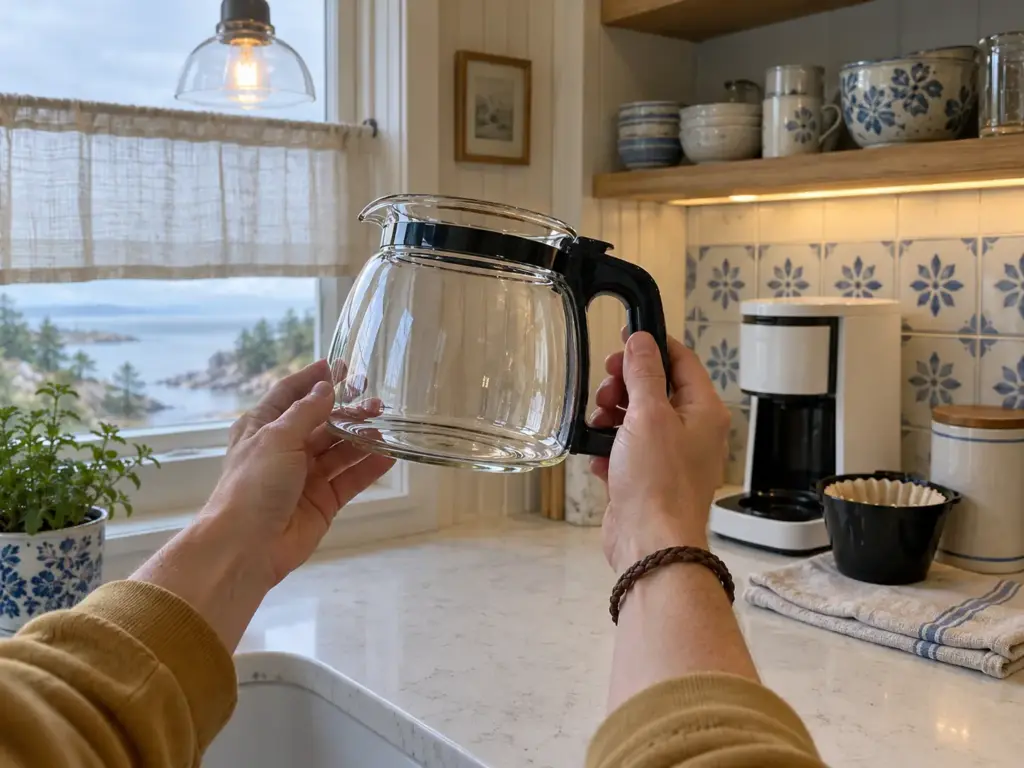
Before you buy anything, soak the carafe and rinse it well. Stains and residue are a cleaning question on stainless, and a clean carafe removes the one variable you can fix in ten minutes. Brew the same beans the same way and taste. If the cup is the same, the carafe was not the problem, and you have saved the cost of a new one.
Which machine comes with the carafe you want
Once the carafe is chosen, the next decision is the machine that comes with it, and which brand of drip machine holds up over the years is the place to start.
Taste the Last Cup Before You Buy Anything
Three things to carry out of this:
- The direction of the taste picks the carafe to blame: burnt and harsh late in the pot is the plate, cool and dull from the first pour is the vessel.
- Pick by how long the pot waits, with one free change per wait: end the plate’s time for glass, preheat for thermal.
- Every choice carries its catch, the plate, the pour or the stain, so choose the one you can live with.
A few weeks on, taste the last cup of a long morning against the first, and look inside a thermal carafe, because that is where the pot either kept the coffee or cooked it.
Tomorrow, make one change. If the pot is glass, pour what you will drink in the first hour and end the plate’s time. If it is thermal, preheat it before the brew. Then taste the last cup of the day and see whether it still tastes like the first.
Frequently Asked Questions
01Which is better for coffee, a glass carafe or a thermal carafe?
It depends on how long the pot waits: glass suits a pot finished within the hour, and a preheated thermal carafe suits a pot that has to last. Glass also pours the hotter first cup.
02Which is better, glass-lined or stainless steel coffee carafe?
The sources here cover plain stainless: it stains until it is soaked and has a narrow neck, but it dents instead of shattering. Glass-lined carafes are not covered, so no verdict is given for them.
03Does a thermal carafe keep coffee hot?
Yes, especially when preheated: Consumer Reports measured a loss of about 4 °F (2.2 °C) in the first hour. The longer hold times come from owner reports, and the first cup pours cooler than glass.
04Are thermal coffee makers better?
In the coffee maker glass vs thermal carafe comparison, thermal is no better on heat over the first hour: Consumer Reports found no significant difference. It wins on a long wait and loses on weight, pour and cleaning.

How did your cup turn out?
No comments yet. Tell us what you changed — and whether the needle moved.