
We may earn a commission when you buy through links on this page. It never changes what we recommend. How we pick
On this page8 parts
- Which Cuisinart Fits the Pot You Actually Pour
- The Filter and the Dose Before Any New Machine
- The Warming Plate: Bitter in One Pot, Lukewarm in the Next
- What the 1–4 Cup Button Really Changes
- What Changes After the First Year
- When to Stay With Cuisinart and When to Leave the Brand
- Swap the Filter Tomorrow, Then Watch the Carafe
- Frequently Asked Questions
The pot you made at breakfast is still on the warming plate, and the cup you pour from it at lunch tastes burnt. That cup is bitter, and the likeliest cause is the plate, not the coffee and not the model number on the box, which buys a pot size and says nothing about flavor. This review of the Cuisinart coffee maker starts there: the line sorts by how many mugs you pour at once and by the carafe, and two free changes, paper in place of the gold mesh filter and the plate switched off, move the cup more than any upgrade. Below, the lineup in a table, those changes in order, a water test for the 1–4 cup button, and what changes once a machine is years old.
Three jobs, and the flaw to know written beside each one.
| Model | What it brews | The carafe | The flaw to know |
|---|---|---|---|
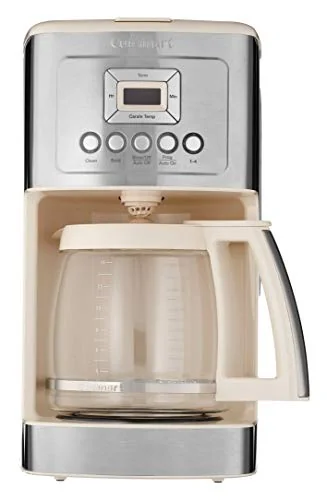
| Cuisinart DCC-1200P1 Brew Central | A 12-cup pot, programmable, with a plate on low, medium or high | Glass | A burner can stop working after years of use. |
| Cuisinart DCC-3200CRM 14-Cup | A 14-cup pot with a strength control and a 1–4 cup setting | Glass | The glass broke more than once for one owner; one reviewer’s heater lasted about two years |
| Cuisinart DGB-2 Grind and Brew | One mug at a time, 8, 10 or 12 ounces, with a conical burr grinder built in | None, it brews into your mug | A grinder to clean; its sister model needed several steps and some disassembly |
Which Cuisinart Fits the Pot You Actually Pour
The Cuisinart drip coffee maker line looks like a long list of model numbers, but it sorts into three jobs: a 12-cup pot, a 14-cup pot and a single serve grinder. The cup count printed on the box measures the machine, not your mugs, so the useful question is how many mugs you pour at once.
The 12-cup pot for two to four mugs
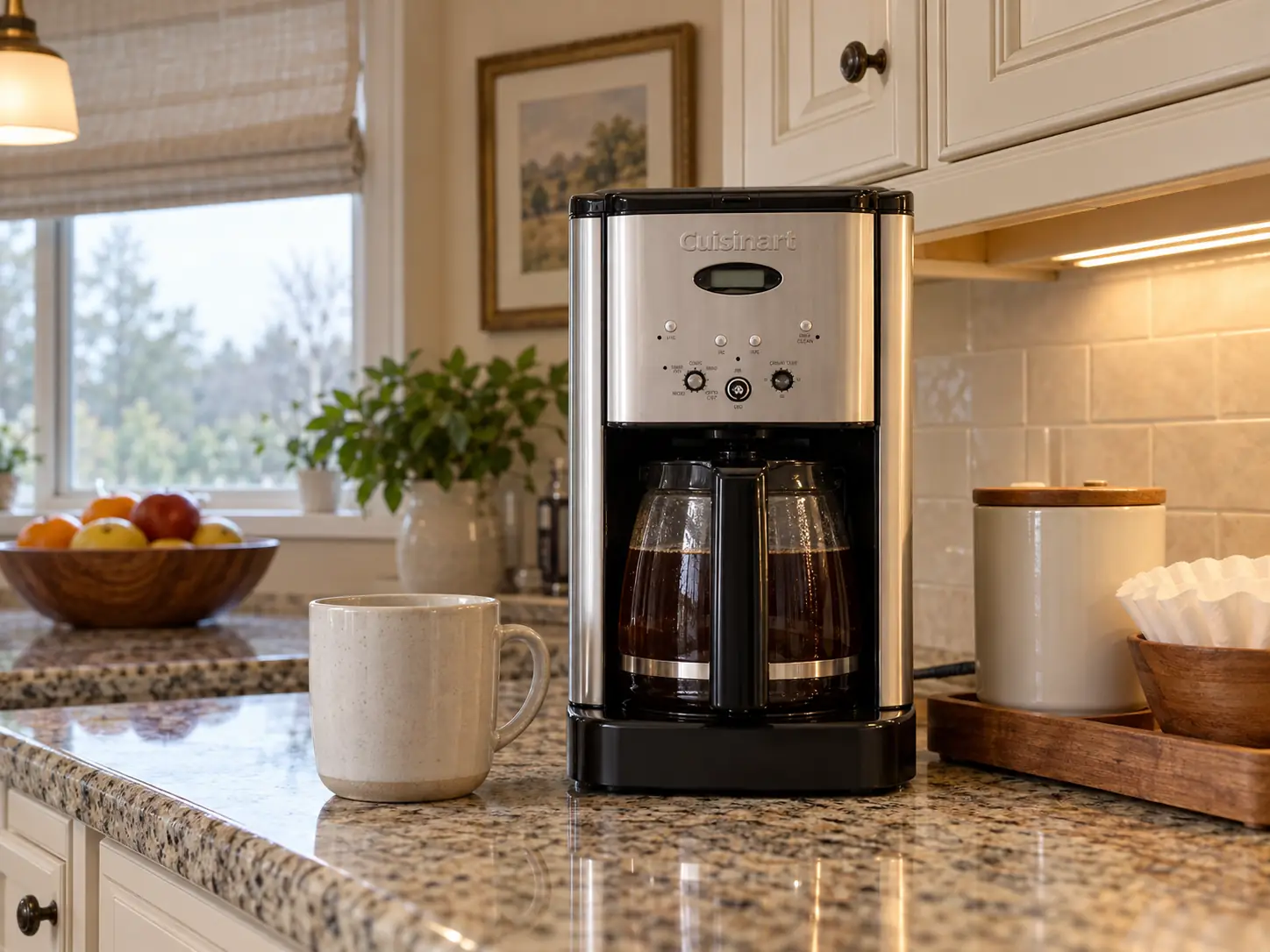
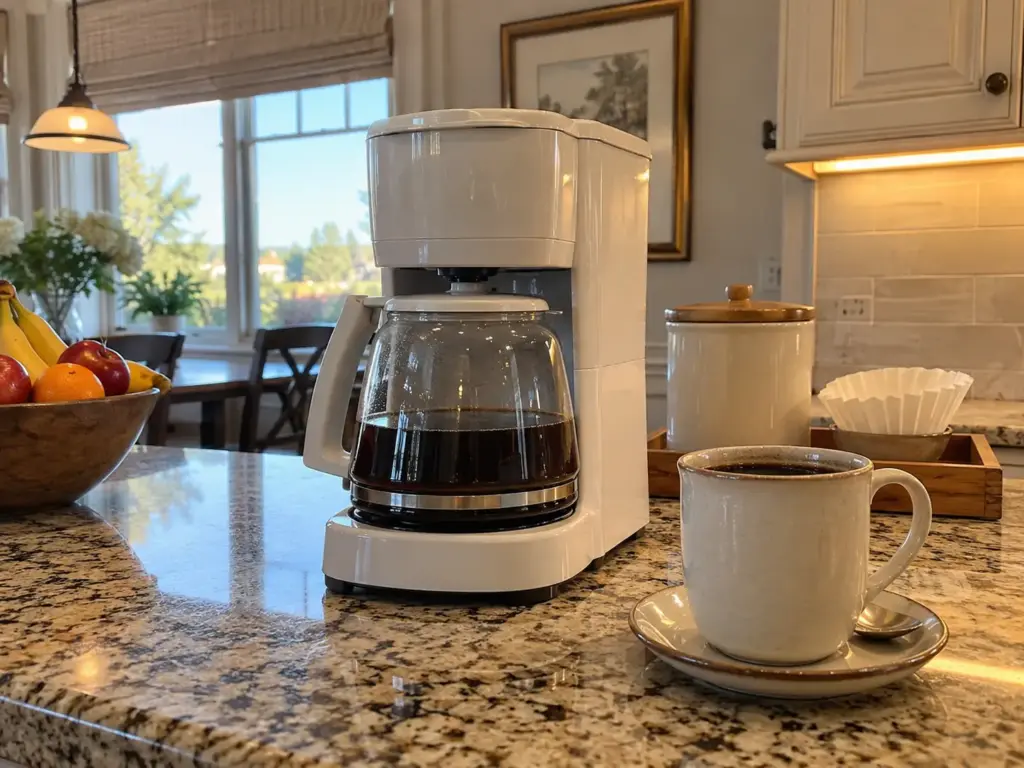
The Cuisinart DCC-1200P1 Brew Central is the machine most people picture when they say Cuisinart: a 12-cup glass carafe, a programmable start and a warming plate with low, medium and high settings. The brand sets the parts and the warranty while the model sets the cup, a point the verdict on which brand of drip coffee maker is best makes in full, so this review only sorts the models. For two to four mugs the 12-cup pot is the right size: four 10-ounce mugs are 40 ounces, about two thirds of a carafe the box rates at twelve 5-ounce cups. The sign that a pot is too big for the house is a carafe sitting half full on the plate mid-morning, because the second half of that pot is the part that goes bitter.
The 14-cup pot and the ounces behind the number
The Cuisinart DCC-3200CRM is the same idea as the Cuisinart 12-cup pot at fourteen cups, with a strength control and a 1–4 cup setting for small pots. A box cup is about 5 ounces, so fourteen of them is roughly 70 ounces, or seven 10-ounce mugs. That is a crowd machine, and for the reader who pours one mug and leaves the rest on the plate it is the wrong tool. The arithmetic for every pot above twelve lives in the piece that tells you to count ounces, not cups, and it is worth running before any 14-cup purchase.
The grind-and-brew single-serve, and why it is a different decision
The Cuisinart DGB-2, the Cuisinart Grind and Brew of the line, works the other way around: it brews one mug at a time, 8, 10 or 12 ounces, from a conical burr grinder with a 100-gram bean hopper and a 48-ounce removable reservoir, per its listings.
A buyer who brings it home to serve six people runs it six times, and the first mug waits while the last one brews.
Whether the grinder suits you is its own question, answered in the guide to coffee makers with a built-in grinder, and if one mug is all you ever pour, a machine for one mug is the shorter list. The DGB-2’s flaw is a chore. A Bon Appetit test of its sister model, the Custom Grind & Brew, found the grinder takes several steps and some disassembly to clean. Whether the DGB-2 shares that chore is not something a test has shown yet.
The Filter and the Dose Before Any New Machine
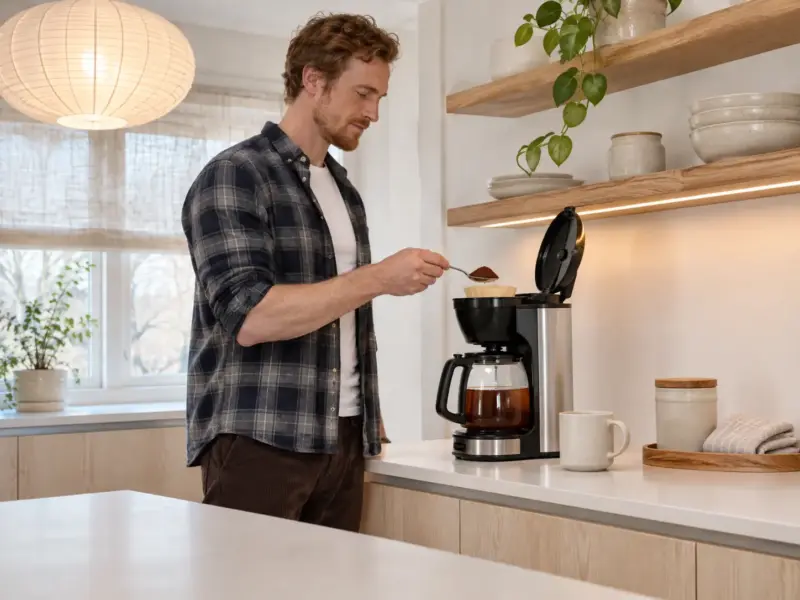
Before the pot is blamed, a thin cup is a question of the filter in the basket and the grams in it, and both cost less than any machine in the line. Hollow and flat is the direction here: the water ran past the grounds before it finished the job. Change one thing, taste, then change the next.
Paper in place of the gold mesh
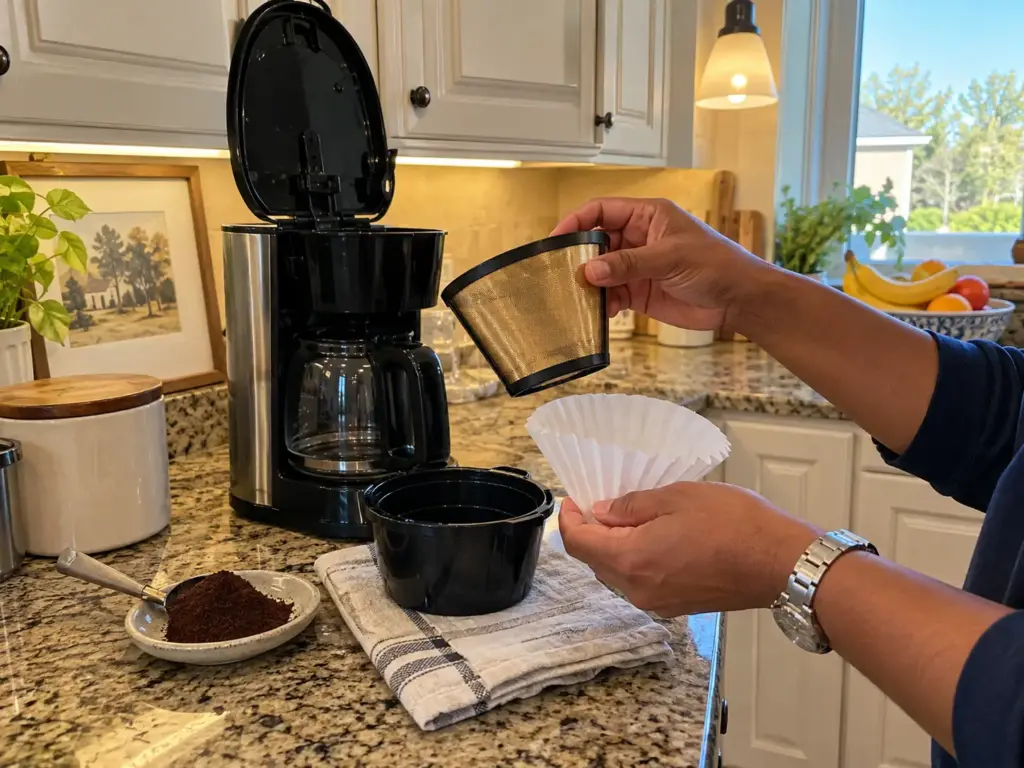
In a Serious Eats test of one Cuisinart combination machine, the included gold mesh filter gave a thin, hollow cup, and with a paper filter the problem was resolved. The reviewer read it as under-extraction. It was one unit’s drip side, so run the same test on your own pot rather than taking it as a law of the line.
The sign to look for is a pot that looks the right color and still tastes like tinted water. Color misleads here; the hollow taste is what tells you the water did not stay long enough.
Put paper in the basket, brew the same grams you brewed yesterday, and taste. The next cup should be fuller and less watery. If it is still hollow, the paper was not the problem and the dose is next.
Run the filter change as a pair. Brew the same grams twice in the same machine, once through the mesh and once through paper, and pour both into matching mugs. The difference shows in the first sip, and you never have to trust your memory of yesterday’s cup.
The dose per pot, in grams
The same test used 55 grams of coffee for 1,000 grams of water in the large pot, about 1:18, which is roughly 34 fluid ounces of water and about eleven level tablespoons of grounds at 5 grams each. The small pot got 30 grams for 500 grams, about 1:16.7, or 17 fluid ounces and about six tablespoons.
The small pot received a little more coffee per ounce of water than the large one, so two pots are two different doses and the button on the front is not a recipe. Weigh the water you put in the reservoir (1 gram of water is 1 milliliter) and work from that number. The SCA’s home-brewer spec sits behind a membership, so these are the test’s doses, not a published standard’s.
Move the dose by a tablespoon or so and taste. A stronger cup is the sign it worked; past the point, it turns heavy and harsh, and you come back half a tablespoon. Only then reach for the grind, and grind one step finer for a drip machine is the third change, not the first.
When the basket is not seated
After a thorough cleaning, hot water with a splash of coffee in the pot can show up. The owner’s guess was that the basket was not pressed down far enough to meet the lid. That is a hypothesis, not a verified cause, but it costs nothing to check: seat the basket until it stops, close the lid, and brew again. If the pot still comes out nearly water, the filter and the dose are the next suspects, in that order.
The Warming Plate: Bitter in One Pot, Lukewarm in the Next
With the filter and the grams right, the cup that comes out of the carafe an hour later is a different cup, and the plate is why. It pushes one pot toward bitter and another toward lukewarm, and the minutes the pot sits decide which of the two you get.
What thirty minutes on the plate does
In the Serious Eats test, the large pot fell from 177 °F (81 °C) to 144 °F (62 °C) in thirty minutes on the plate, and the coffee turned bitter after the second cup. The plate kept the pot warm, not hot, and still cooked it. Falling temperature and turning flavor are two separate things. The smell of a pot that has sat since breakfast is the first clue: the burnt note arrives before the cup is cold.
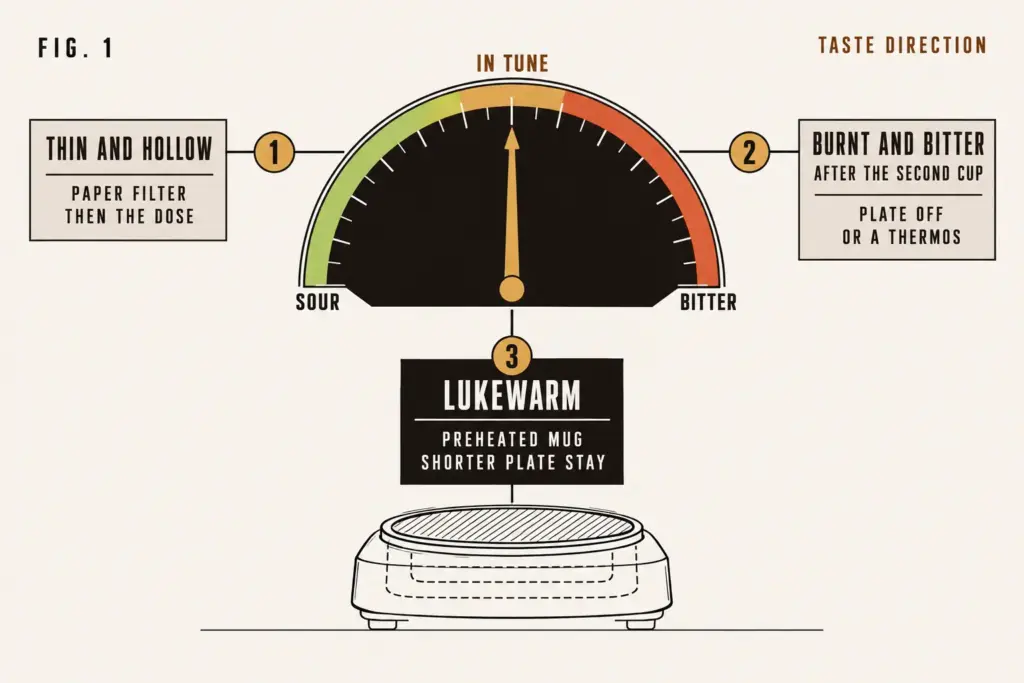
An owner of a different Cuisinart, the PerfecTemp family, reports the opposite problem from the burnt pot: lukewarm coffee, reheated in the microwave. So the plate is the variable in both directions, and a cheaper machine’s plate behaves differently again, which is the trade in the heat you give up on a cheap drip machine.
Glass or thermal, and what each one costs you
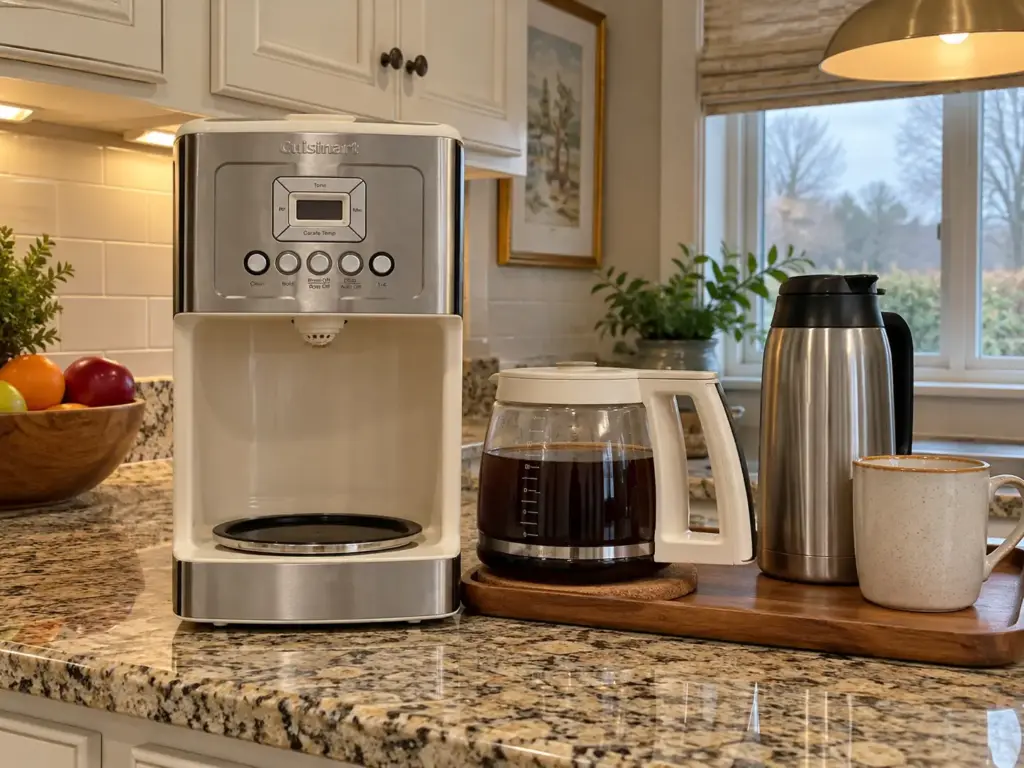
A glass carafe needs the plate to stay hot, so every minute you want hot coffee is a minute of cooking. A thermal carafe keeps the pot hot without the plate, which is why it is the real answer to this problem. The DCC-3200CRM ships with glass, so for that machine the answer is the thermos below, not a carafe swap.
Glass has a second cost. The glass carafe can break more than once, and the heater can give out before the rest of the machine is old. Both are single reports, not a rate, but a household that pours several mugs a day will notice either one.
The thermos for the second batch
Switch the plate off the moment the brew ends, rinse a thermos with hot tap water so it starts warm, and pour the whole pot into it. Then the second cup should taste like the first, not like a pot that kept cooking. If it comes out lukewarm instead, the thermos went in cold, or the pot stood on the counter too long before the pour.
Your plate has its own timing, so measure it. Taste a mug from the carafe at twenty minutes and again at an hour. The minute the cup turns from fine to burnt is how long your plate can hold that pot.
What the 1–4 Cup Button Really Changes
The DCC-3200 line has a button for small pots, and the question is whether it changes the recipe, the volume, or only the label on the front. Two runs with plain water settle it.
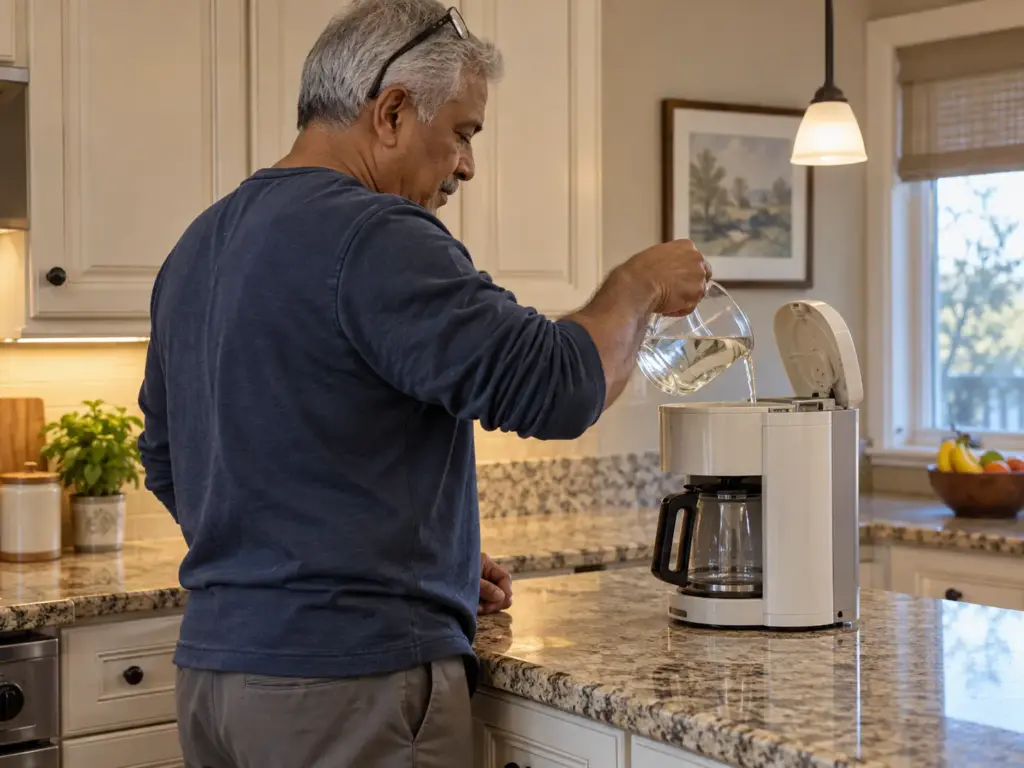
The test: fill the reservoir to the cup count, then press
You need a scale and a carafe, nothing else, and no coffee.
- Put a paper filter in the basket and leave it empty, set the carafe on the scale and note its weight.
- Fill the reservoir to the 4-cup line, leave the button off, and run the machine.
- Weigh the carafe again; the difference is the water that arrived.
- Repeat with the same fill and the button pressed, and compare the two numbers.
If the two weights match, the reservoir is setting the volume, and whatever the button changes happens in how the machine brews, not in how much comes out. If the pressed run is lighter, the button is cutting the volume. A little water stays behind as steam and in the filter, so expect a bit less than you poured in.
What is reported and what is not measured
Coffeeness says the 1-4 button changes the brew recipe, and some reports say the machine brews however much water is in the reservoir. Both can be true at once, but neither is a measurement, and your two runs are the only number that counts on your own machine. A small pot is also a different dose, the 500 grams and 30 grams of the earlier test, which is why it is worth reading when a weak cup isn’t the grind before you reach for a finer setting. The button is no substitute for a machine built for one mug, and a small pot that comes out nearly water usually has an unseated basket, which no button fixes.
Once the water test gives you a number, write it on a strip of tape on the machine: grams of water for each fill line. From then on you dose the grounds from that figure, and the button stops mattering.
What Changes After the First Year
A machine’s first week tells you little about year four, and the only evidence on a Cuisinart comes from years of use. None of these reports is a failure rate; they show the shape of what can go wrong.
A burner that quit after years
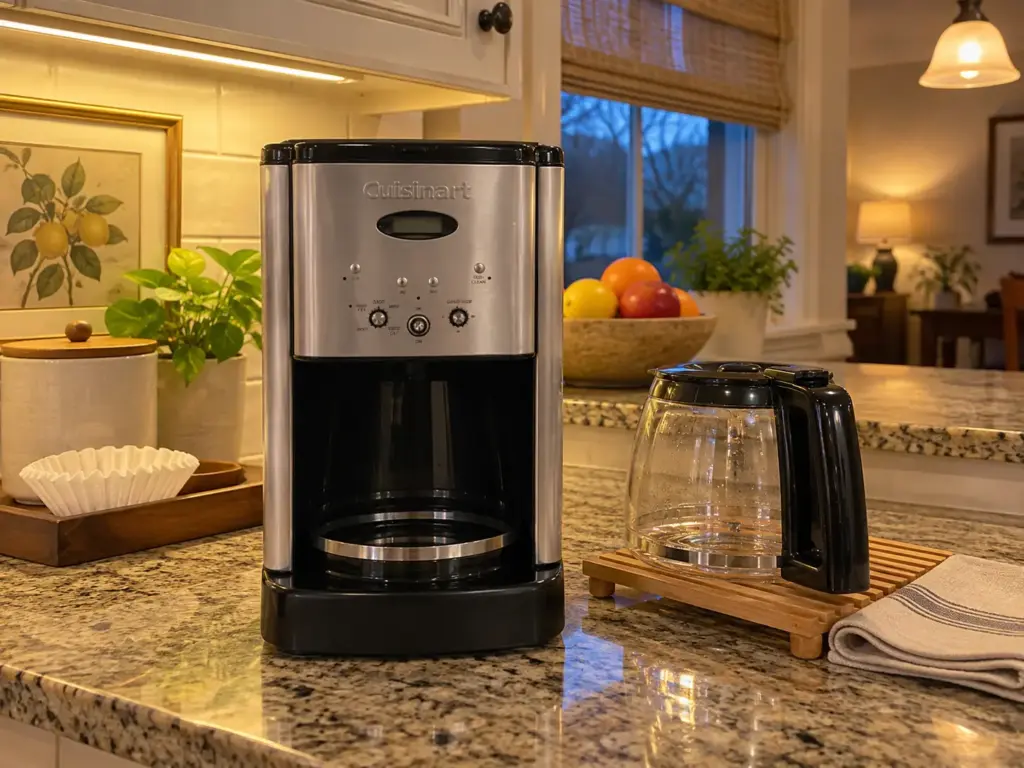
A burner can stop after several years, and a machine can begin leaking from places that are hard to find. The leak that cannot be traced is the complaint that matters, because there is nothing to descale or tighten. Two owners are two owners, not a trend.
A glass carafe that breaks, and a base that rusts
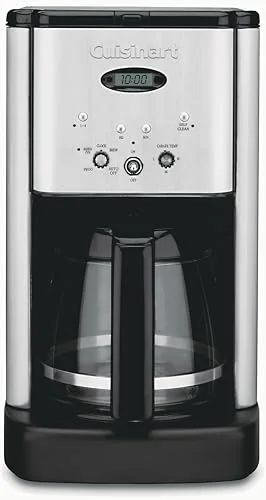
Glass is the weak point most often mentioned: a carafe can break more than once, and some people move to a thermal carafe, though a machine can still stop turning on with no clear cause. On older machines, the base can rust through and leak. A rusted base is a slow failure, and water that stays on bare metal is how it starts.
Rinse the carafe and stand it on a rack between pots, and wipe the bare plate dry. It costs nothing, and metal that stays wet is the metal that rusts.
The owner whose machine still brews well
On the other side, a machine can still brew well after four years. A single happy owner proves as little as a single unhappy one, and the two sides together say what the evidence supports. A complaint that repeats across many people would point to a design flaw; the reports here are few, so read the carafe and the burner as the two things to watch, not as a verdict.
When to Stay With Cuisinart and When to Leave the Brand
Every machine in this line is a decision about pot size, and the next decision is whether to leave the brand for something built to run a batch. Keep the Cuisinart when the pot matches the household and the cup is right after the free changes; leave when the pot never fits.
Keep the Cuisinart if
Keep it if the pot matches the mugs you pour, the cup turned fuller with paper and a weighed dose, and the plate is off after the brew. For a 12-cup household the DCC-1200P1 is the budget pick next to the batch alternative below. If you are still weighing it against the rest of its price class, a drip machine sorted by carafe heat lines the 12-cup pots up by what the carafe does to the heat.
Leave the brand if
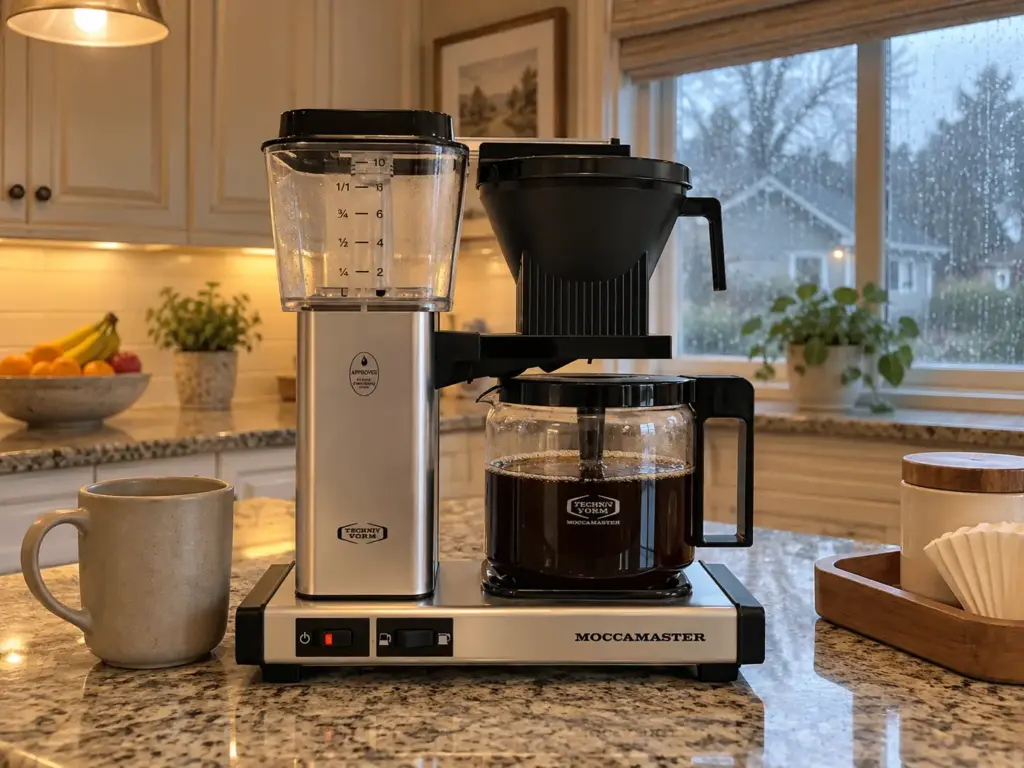
Leave when the pot is bigger than the household and the plate keeps it alive for hours, or when you want a machine built to brew a batch cleanly. The batch alternative is the Technivorm Moccamaster 53941 KBGV Select, a 10-cup, 1475-watt machine with a copper heating element and a half-pot switch. Its ten cups are 40 ounces, so count ounces on this one too. Its carafe and reservoir have flaws that the Moccamaster review lays out, along with why it earns its place from four cups.
If the next question is water temperature across machines, drip coffee makers picked by water temperature is where to go. A word on certification claims: the Specialty Coffee Association says on its SCA certified home brewer list page, “SCA Certified Home Brewers are coffee makers that meet SCA’s rigorous standards for brewing quality, consistency, and performance.” No Cuisinart drip machine was on that list when it was checked in October 2026, which says nothing about the cup in your own kitchen.
Swap the Filter Tomorrow, Then Watch the Carafe
Three things carry this review. The cups you pour at once and the carafe pick the model, not the number on the box. Paper in place of the gold mesh, a weighed dose and then the plate fix the cup before any upgrade, one change at a time with a taste between. The evidence on years is thin, which makes the carafe and the burner the two things to watch, not a verdict on the brand.
A month from now, check the carafe and the bare plate between pots, and check whether the pot still comes out the color it did in the first week. Tomorrow morning, put a paper filter in the basket in place of the gold mesh, brew the same grams as yesterday, and taste. If the cup is still hollow, the dose is the next change, and nothing else moves until you have tasted it.
Frequently Asked Questions
01Are Cuisinart coffee makers any good?
A Cuisinart drip machine makes a decent household cup, so pick the model by how many mugs you pour at once and by the carafe. Paper in place of the gold mesh and the plate off do more for the cup than an upgrade does.
02What are the common issues with Cuisinart coffee makers?
A burner that quits, a leak that is hard to find, a glass carafe that breaks more than once and a rusted base are the kinds of problems that come up. These reports are not a failure rate, and some machines in them have been running for many years.
03Which coffee maker is better, Breville or Cuisinart?
There is no head-to-head here: the better machine is the one that matches the pot you pour and the carafe you want. The brand verdict on parts and warranty is in the brands piece linked in the first section.
04Which Cuisinart coffee maker is considered the best?
It depends on the cups you pour at once: the 12-cup for two to four mugs, the 14-cup for a crowd, the DGB-2 for one mug. Pick the size first, then fix the cup with paper and a weighed dose.
05Does the 1–4 cup button change how much coffee I need?
The reservoir water sets the volume, so test it with water and weigh what reaches the carafe. Dose the grounds from that weight, not from the button.

How did your cup turn out?
No comments yet. Tell us what you changed — and whether the needle moved.