



We may earn a commission when you buy through links on this page. It never changes what we recommend. How we pick
On this page9 parts
- Why a Drip Machine Under $100 Can Still Brew a Sour Pot
- Weigh the Coffee Before You Blame the Machine
- The Ninja CE251, the Pick the Roundups Argue About
- Which Extra Feature Changes the Cup, and Which Only Changes the Morning
- The Cuisinart DCC-1200P1 and the Plate You Can Turn Down
- The Buy-Nothing Answer: A Cone, a Press or the Machine You Already Own
- A Built-In Grinder Changes the Cup, and Month Two Changes the Machine
- Read the Carafe, Weigh the Dose, Then Pay for One Feature
- Frequently Asked Questions
One Ninja, three verdicts: the top pick of one test, a cup that leans bitter in a second, and a flat pot in a third. You are standing at the counter with a pot that tastes off and a firm ceiling on what a budget drip coffee maker can cost, so the question for the best drip coffee maker under $100 is which of those verdicts your own kitchen will repeat. Most of the answer sits in a number you can read yourself, the temperature of the carafe right after the brew, because the box prints cups and button counts and never degrees.
This article takes the free checks first (the heat of the pot, the dose in grams), then sorts three machines by what each one charges the cup, then ends on the answer that costs nothing. The showerhead mechanism belongs to our main guide, which covers the temperature mechanism behind all of this, so this one skips it.
Of the three machines below, only the Ninja has a tested showerhead reading, 195°F (91°C), inside the SCA window. The Cuisinart and the BLACK+DECKER have no reading of their own in the tests cited here, which is why the carafe check in the first section matters, and each one charges the cup for exactly one feature.
| Machine | Heat, as tested | What touches the cup | Where it falls short |
|---|---|---|---|
| Ninja CE251 | 188°F (87°C) finished pot in NYT’s test; 195°F (91°C) at the showerhead in Serious Eats’. One more test calls a Ninja flat | The hottest finished pot in NYT’s test | Leans bitter; a little acrid after hour two on the plate |
| Cuisinart DCC-1200P1 | No reading for this exact model | A plate with low, medium and high | Plate cannot be switched off; hardest tank to fill; a same-family plate test failed to hold steady |
| BLACK+DECKER CM5000B | No reading in the tests cited | Grinds right before it brews | Grinder noise, no thermal carafe, a plate that can curdle milk |
Why a Drip Machine Under $100 Can Still Brew a Sour Pot
The box prints a cup count and a button count and never a temperature. The coffee world asks for a specific brew temperature, though, and a machine that misses it makes a thin, sour pot out of beans that were fine. This section covers what the standard asks for, why three tests of the same Ninja disagree, and the one reading you can take at home.
The Box Prints Cups, Never Degrees
Drip machines are meant to brew with water between 195 and 205°F (91 to 96°C) at the showerhead, the SCA brewing window, set by the Specialty Coffee Association’s protocols and the one Serious Eats and NYT Wirecutter both test against. Nothing on the box says where a given model lands inside it, which makes the model, not the brand and not the price, the thing that decides the heat. According to the Specialty Coffee Association’s 2025 certified home brewer lineup, “Every brewer in the program is tested to ensure consumers can enjoy scientifically better coffee.” That is worth knowing, and easy to misread on a listing, as a later section shows.
A cool-running machine leaves a taste you can learn to spot. The first mug is sour and a little hollow, because the water left the grounds before it finished the job, which is under-extraction; by the last mug the plate has cooked the pot and added a flat, burnt edge on top of the sour.
Three Roundups, One Machine, Three Readings
Take the Ninja CE251, the 12-cup machine this article keeps returning to. NYT Wirecutter measured an average finished temperature of 188°F (87°C) in its carafe, the hottest of its test, and said the machine “consistently brewed the best-tasting coffee among the machines we tested.” Serious Eats put a thermocouple at the showerhead instead, logged 195°F (91°C), inside the SCA window, and still found “a slightly less-balanced cup of coffee” than the Zojirushi machines gave, which reads as a pot leaning bitter. Bon Appétit’s “Ninja 12-Cup Programmable Coffee Brewer” came out flat and unrecommended, though the piece prints no model number, so that one is probably this machine and not certainly.
These readings do not cancel each other out. Two testers measured in two places, a showerhead and a carafe, and three palates sat in front of three different pots.
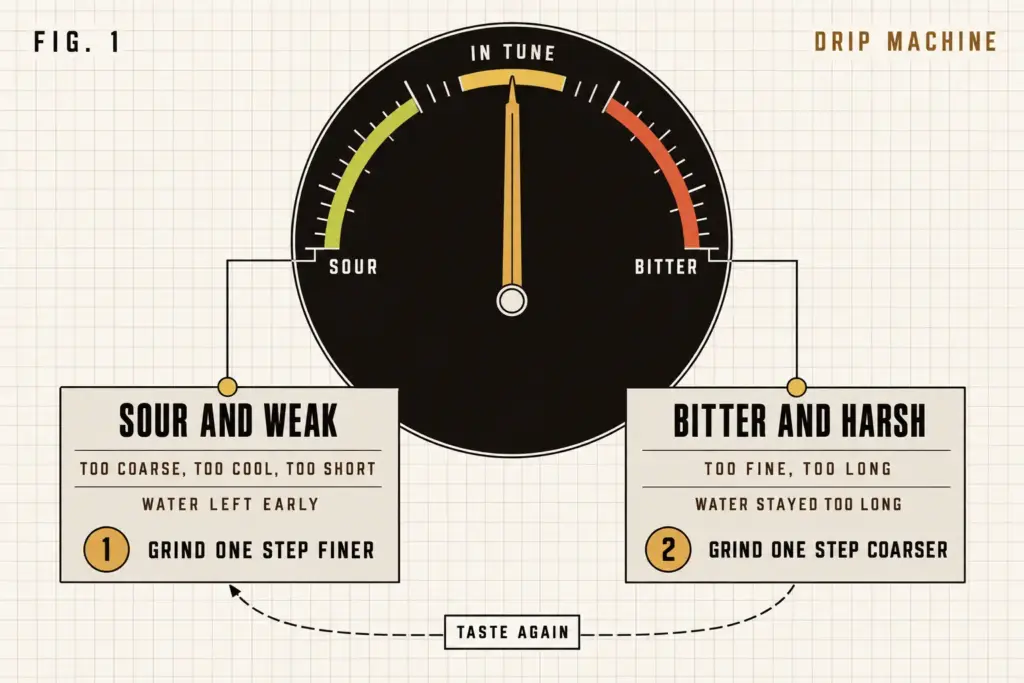
But a verdict is no use until you know which side your own cup is on. Sour and weak means the water left before it finished: too cool, too coarse or too short a brew. Bitter and harsh is the opposite side: too fine, too long, or a plate that kept cooking the pot afterward. The direction decides the change, and the change goes in alone, with a taste before the next one.
Read the Carafe Right After the Brew
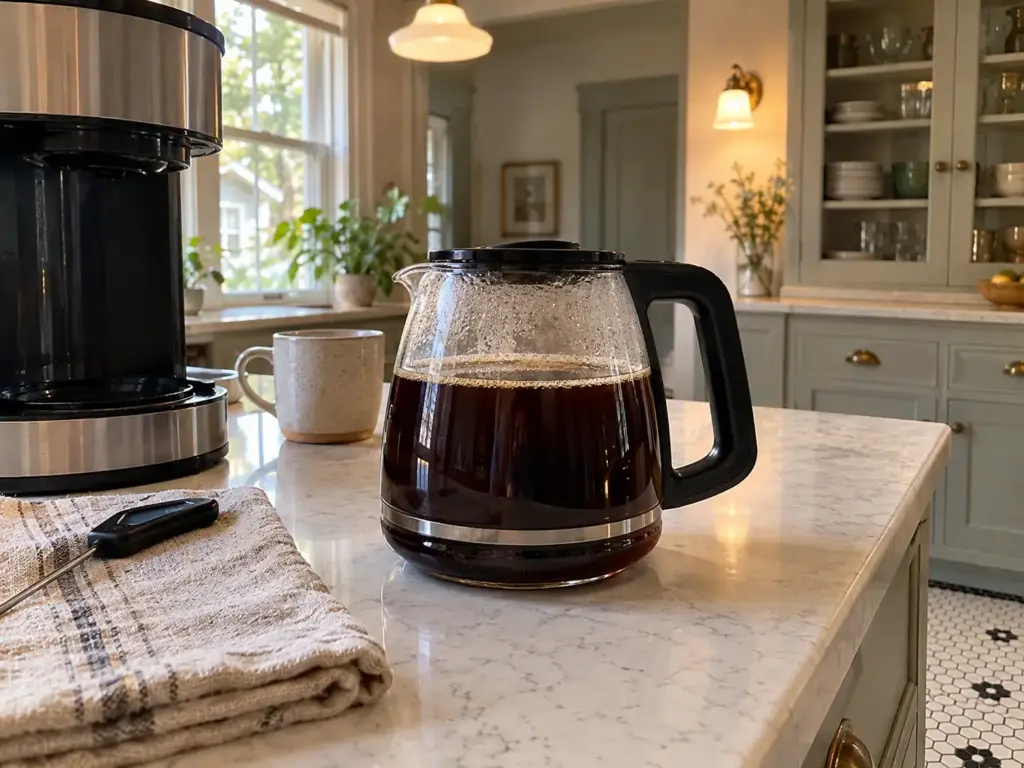
You cannot put a thermocouple in a showerhead at home, but you can read the pot. Brew with your usual dose and, the moment the last drip lands, push a probe thermometer into the middle of the carafe. NYT says the finished pot should ideally be at least 180°F (82°C); the Ninja averaged 188°F (87°C) in its test.
Be plain about what this is: a proxy. The carafe reads lower than the showerhead did, since the water cools as it falls and the glass takes some of the heat, so the number tells you whether this machine, with your own tap water, or filtered water if that is what goes in the tank, lands anywhere near the window. It certifies nothing.
A pot that reads below the floor means the machine runs cool, and the options are a bigger batch, because a fuller pot holds its heat better, or a different machine. A new bag of beans is not one of them.
The regular Ninja is probably fine for most people looking for the best bang for their buck, a calmer verdict than the testers’, and one that holds if your own pot reads above the floor.
Take two readings of the same pot: one the moment the last drip lands, one ten minutes later with the plate on. The first tells you how hot the machine runs; the gap between the two tells you how fast that carafe lets the heat go, which is the number that decides the last cups.
Weigh the Coffee Before You Blame the Machine
The heat belongs to the machine; the dose belongs to you, it costs nothing, and the two best-known sources give different doses for the same pot. A thin or harsh pot from the wrong amount of coffee looks a lot like a pot from a cool machine, so the scale comes before the shopping.
Two Ratios for the Same Pot
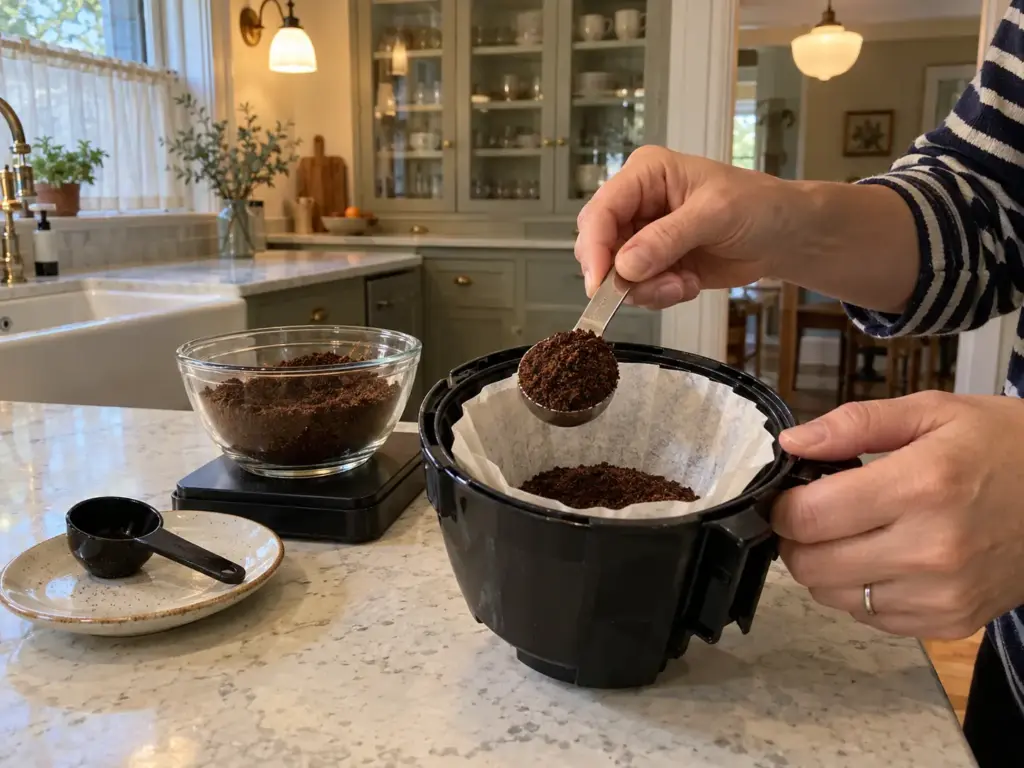
Bon Appétit recommends 1:16 by weight, and its example is 1,700 g of water for a 12-cup machine with 106 g of coffee. The SCA works from 55 grams per liter, which is 55 g of coffee for every liter of water, about 1.63 g per fluid ounce, the figure NYT and Serious Eats both use, and for the same 1,700 g of water that comes to about 94 g. So 1:16 is roughly 13 percent more coffee than the standard, so the two sit about 13 percent apart, one a house preference and the other the reference the SCA’s testing uses. Neither is wrong, but they are two starting points, and a pot cannot be tuned from both at once.
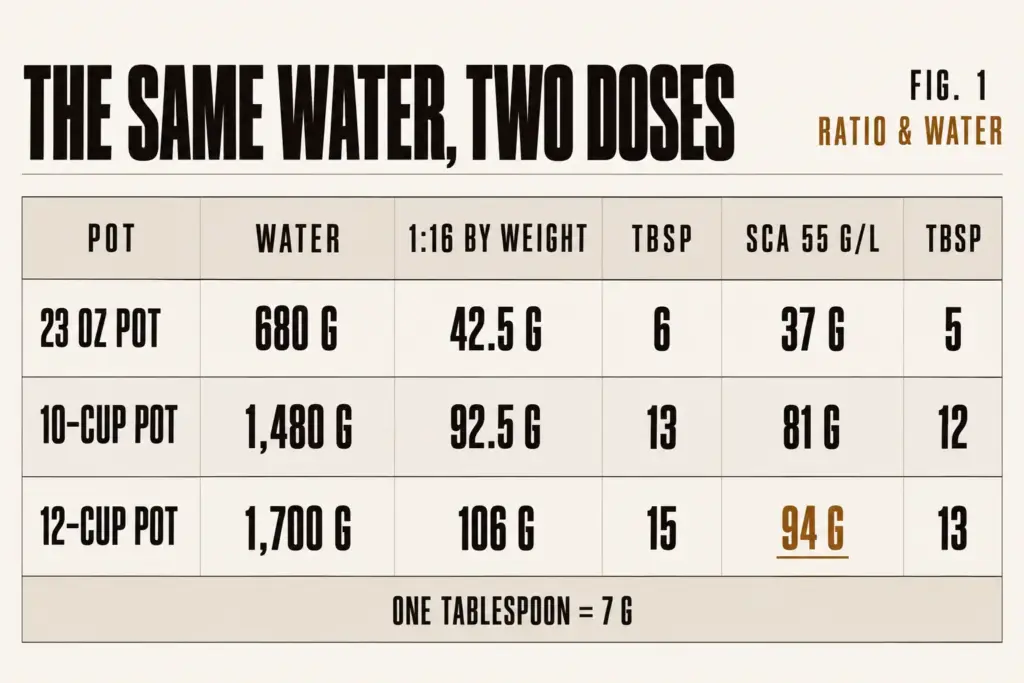
Start from the standard and move up only if the pot tastes watery. In the unit a drip machine owner actually has, a level tablespoon of ground coffee is about 7 g (NYT), so 94 g is about 13 tablespoons and 106 g is about 15. Two spoons is the whole difference between the two sources.
Cups on the Box Are Not Mugs
A 12-cup pot is twelve 5-ounce servings, about six mugs (NYT), and that is the whole cups versus mugs gap. Divide the number on the box by two for the mugs, and set the dose by the water you pour in, never by the cup count. A 40-ounce pot takes about 65 g at the SCA ratio, nine tablespoons or so, and the 1,700 g in Bon Appétit’s example is about 57 fluid ounces, close to the 60 ounces a 12-cup pot holds. For the arithmetic in the other direction, how many cups a bag of beans really makes runs it from the bag.
The scoop that shipped in the box is not the tablespoon in the drawer, so “two scoops” makes two different pots depending on the spoon. Weigh one level scoop of your actual grounds once and write the grams on the lid. Weigh it again when the bag changes: a dark roast fills the same scoop with less weight than a light one.
Change the Dose First, Then Taste Again
Weigh the dose first, then taste. If the pot is still sour and weak at the standard amount, the next free change is a finer grind, one step and nothing else, from the medium grind a drip basket expects, and the same order runs through the grind-by-roast piece on why you weigh the dose before turning the dial. Some drip brewers handle that by weighing a dark roast and grinding a little finer than the usual drip setting. Level the grounds in the filter basket too, and check that the paper filter, a flat-bottom filter or a cone filter, sits square in it, because a crooked filter lets water slip past the grounds.
The next pot should taste rounder, with the sharp edge gone. If it turns bitter or harsh instead, the step was one too many, so come back half a step. A scale changes more cups than a new machine does.
The Ninja CE251, the Pick the Roundups Argue About
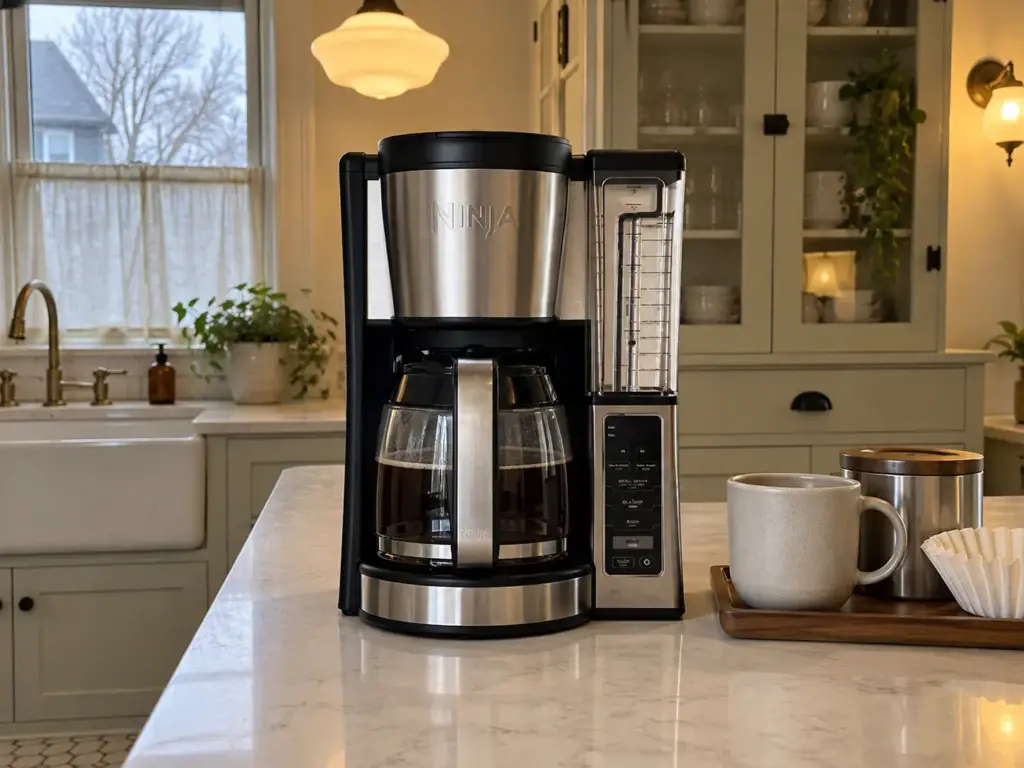
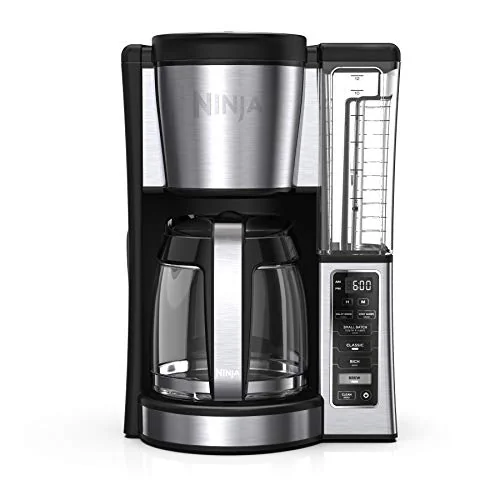
With the heat check and the dose settled, the first machine to run through them is the one that sits at the top of one test and in the middle of another. The Ninja CE251 is a 12-cup machine with a glass carafe, a removable water reservoir, 24-hour delay brew, an adjustable warming plate and a small batch setting. The listing prints the reservoir size two different ways, so judge it by the fact that it lifts out and ignore the ounces.
What the Ninja Gets Right
It is NYT’s top pick, and its 188°F (87°C) finished pot was the hottest in that test. Serious Eats’ 195°F (91°C) at the showerhead puts it inside the SCA window, which makes it the one machine of the three here with a tested reading in the window, and that single fact is why it is carded below.
The reservoir lifts out and carries to the sink, so you never pour a pitcher into a tank at arm’s length, and the delay brew changes when the pot is ready without changing the pot. If the ceiling has to come down further, the 8-cup Bonavita is the pillar’s Bonavita pick: less machine and less money, with the same temperature logic.
Where It Leans Bitter
Serious Eats found a cup slightly less balanced than the Zojirushi machines gave, and a pot that leans bitter points in a known direction: too fine, too long, or too hot a plate afterward. On this machine the plate is the likeliest culprit. NYT found the warming plate kept the coffee hot for four hours before shutting off automatically, and the flavor turned “a little acrid after hour two.” Serious Eats, for its part, found the Ninja’s adjustable plate kept coffee hot for hours without scalding it, so the plate verdict is split between the two tests.
Turn Stay Warm, the keep-warm function, off and pour the pot into a mug or a thermal carafe; the last cups should then taste like the first, with no scorched edge. And with no thermal carafe in the kitchen, two preheated mugs do the same job for a pot that will be finished within the hour. If the pot is bitter straight out of the machine, before the plate has had a chance, go half a step coarser on the grind and taste again.
The SCA Badge: Check the List, Not the Listing
A badge on a listing is a shortcut people stop checking. Whether the Ninja CE251 is SCA certified was once claimed and then corrected: it is not. An older Ninja, the CM401, was certified once and let it lapse. The SCA’s own directory page lists no Ninja model at the time of writing.
Certification follows a specific model and configuration, not a brand: the 2025 lineup names the OXO Brew 8-Cup with a glass carafe, not the family. Match the model number on your machine against the SCA’s full list of certified home brewers, not the badge in the listing’s images.
Which Extra Feature Changes the Cup, and Which Only Changes the Morning
Every step up from the cheapest machine adds a timer, a removable reservoir, a plate setting or a grinder. The question to ask of each one is whether it touches the coffee or only the clock. Four moments decide it: before the brew, during it, after it, or nowhere near the cup at all.
The Timer and the Reservoir Change the Morning
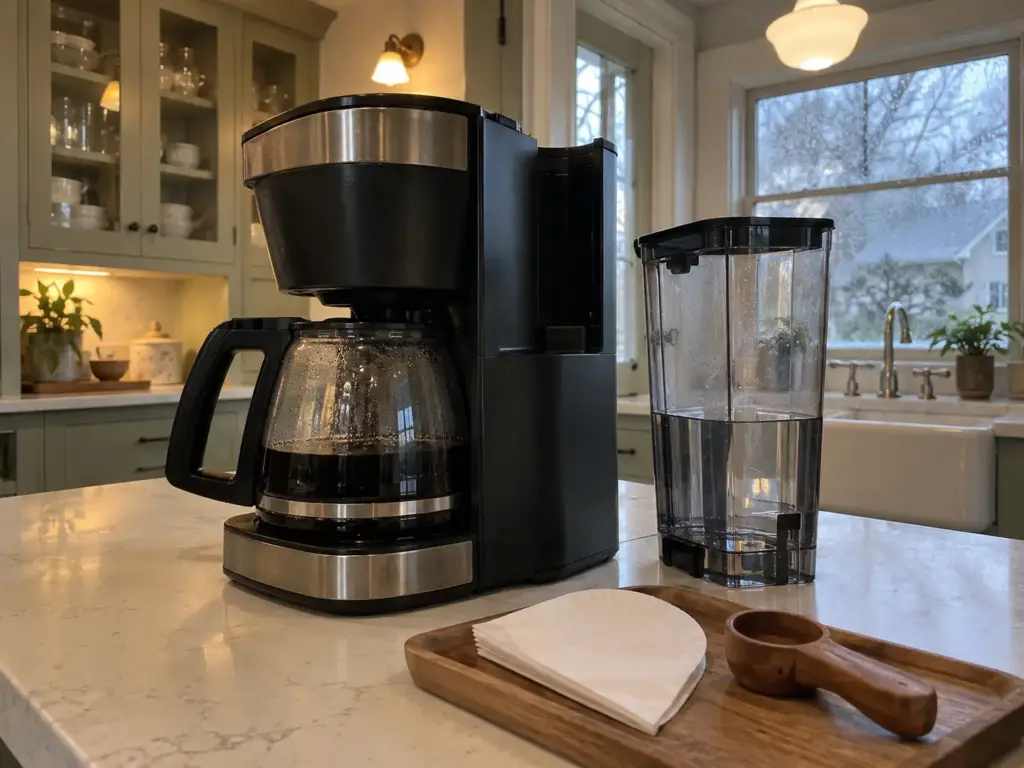
A programmable timer decides when the pot is ready and nothing about what is in it. The Ninja and the Cuisinart both carry 24-hour delay brew, and a pot that was waiting when you walked in tastes like the same pot started by hand.
Serious Eats calls an auto-brew cycle the feature most people want, because it turns a cheap machine into a programmable one, and that is a fair reason to want it. A removable reservoir is the same kind of feature: it changes the trip to the sink and never the cup. Both are pleasant, both are priced into the machine, and neither is a reason to accept a cooler brew.
Delay brew sets when the brew starts, not when you arrive. A timer set for the minute you leave the house hands you a pot that has been on the plate since then, so count backward from the moment you will actually be pouring.
What Touches the Cup Before the Brew, and After It
Before the brew, the grinder. Grinding just before the water arrives changes the flavor, per Bon Appétit, because ground coffee goes stale far faster than whole beans; the price is noise and a few more seconds at the counter. During the brew, the one thing that touches the cup is the heat from the first section, and no button on the front changes it. You will hear the cycle end, a sputter as the last water goes through a nearly empty tank, and it says the brew is done and nothing about the cup.
After the brew, the plate. NYT’s Ninja turned a little acrid after hour two, Serious Eats’ Brew Central failed to hold a steady temperature across a two-hour test, and Bon Appétit warns that a hot plate can end in curdled milk. Of the four moments, the plate reaches the cup most often, because nearly everyone leaves a pot on it, and the next section takes the machine NYT singles out for its plate settings. Sorted by moment, the features come out as a short list:
- Before the brew: a built-in grinder, which changes the cup and charges you noise.
- During the brew: only the machine’s heat, which no feature button changes.
- After the brew: the warming plate, which keeps cooking the pot unless you turn it down or off.
- Only the clock: the timer and the reservoir.
The Cuisinart DCC-1200P1 and the Plate You Can Turn Down
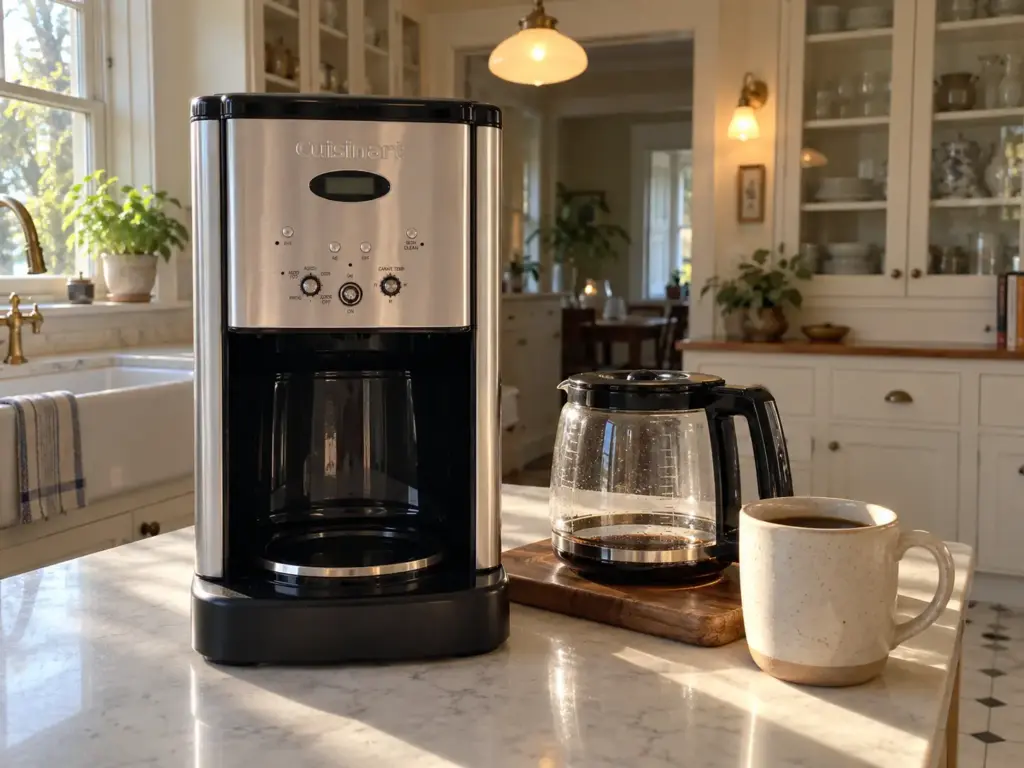
If the pot sits on the plate, the plate decides the last cups, and NYT singles this machine out for the control it gives over the hot plate. A pot made at seven that still has two cups in it at nine is the case it answers. It is NYT’s runner-up: 12 cups, 24-hour programming and a three-year warranty.
A Plate With Low, Medium and High
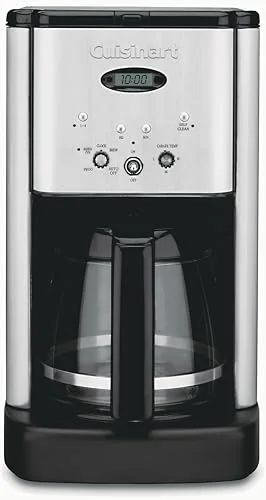
The Cuisinart’s plate has low, medium and high holding settings (NYT). The Ninja’s plate is adjustable too, so the difference is smaller than it sounds, and NYT adds that the Cuisinart’s plate cannot be switched off the way the Ninja’s can, so low is as cool as it gets. Lower holding heat means less cooking of the cups at the bottom of the pot. The free move still comes first: pour the pot into a thermal carafe or a mug as soon as it finishes, and keep the plate on low for what you cannot finish.
The Ninja has the better-tested heat, and it is the one with an off switch for the plate. For a household that pours one cup and leaves the rest, the Cuisinart’s low setting slows the cooking and the Ninja’s switch stops it, so pick the one that matches what you do with the pot.
What Two Hours on a Plate Does
The first cup tastes like the machine; the last cup tastes like the plate, with a flat, cooked edge that no grind change will remove. Serious Eats’ Brew Central “failed to hold coffee at a consistent temperature over the two-hour testing period.” That test covered the same family, not a confirmed match for this exact model, so read it as a warning about what the family does and not a verdict. For the plate-by-plate explanation in the cheapest machines, the warming plate, in the cheaper band takes it further.
The Tank You Will Fight With
NYT’s complaint about this machine is the tank: “the hardest water tank to fill” of the machines it tested, with measurement markings that are hard to read. Since the dose follows the water anyway, fill a spouted pitcher on the scale, pour it in, and the unreadable markings stop mattering.
The Cuisinart also sits near the top of the band and slips under it only when it is on sale, so check the live listing before you plan around it. One more caution is that a Cuisinart from a warehouse club can stop heating after six months. That is a different model and a single dated report, not a verdict on this one.
The Buy-Nothing Answer: A Cone, a Press or the Machine You Already Own
A reader asking for a machine under a hard ceiling is sometimes better served by a different question: do you need a drip machine at all, or is another tool the better fit? The cup a cone or a press gives is worth putting next to the picks, and the small-counter machine nobody can link belongs in the same conversation.
The Cone and Pot That Outlast Machines
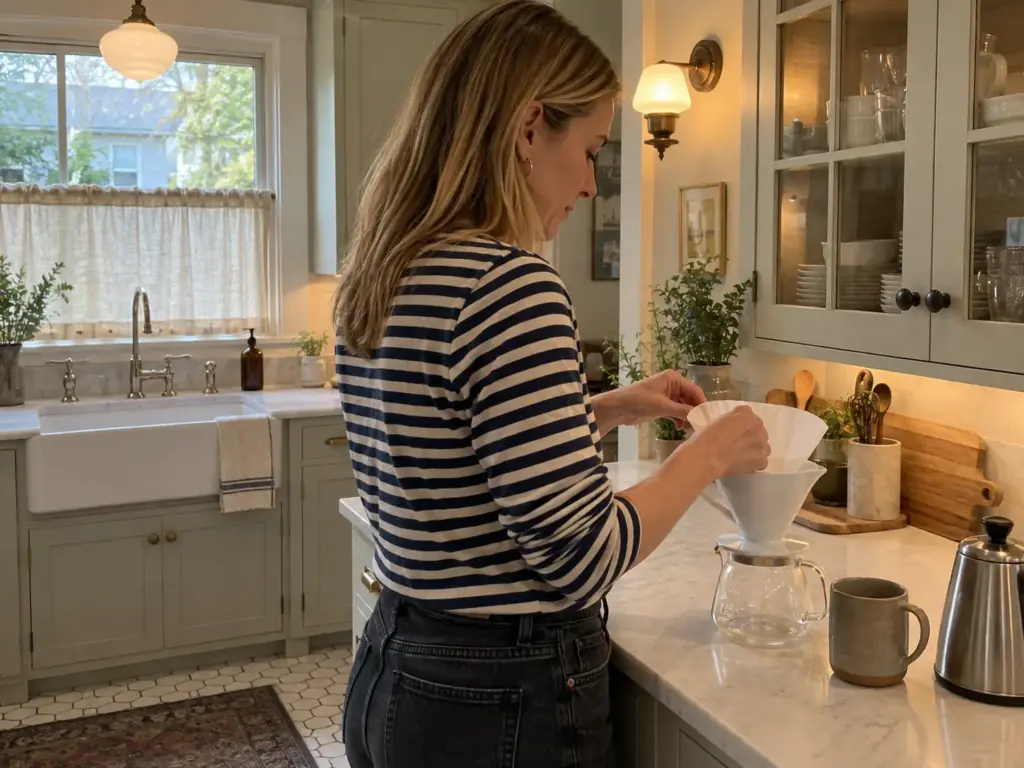
For a machine under a firm ceiling, a Melitta cone and pot is a classic answer, and it can last decades. That is a community impression rather than a measurement, but it matches what Bon Appétit says outright: you could abandon the drip machine altogether and use an affordable pour-over setup. For one mug, a cone and a kettle give the same cup as a machine that makes a pot. The cone asks for a kettle and a minute of attention; the machine asks for neither, and that is the whole trade.
When a Press or an AeroPress Fits Better
The same conversations name a Clever Dripper, a French press and an AeroPress, and a Clever Dripper can last four or five years. A press keeps the grounds in the water for the whole brew, so the cup comes out heavier and less clear than a cone’s; an AeroPress is the forgiving one when the grind is not perfect. None of the three is a product pick here, so there are no links, only the point that each one removes the heat question from the machine, because you control the water.
The Small Counter and the Machine Nobody Can Link
The Zojirushi EC-DAC50 Zutto is Serious Eats’ best small pick, logged at 199°F (93°C) at the showerhead, and NYT’s second most flavorful cup. It holds just under 23 ounces, has no programming and no auto shutoff, so you turn it off yourself. Amazon showed no offer for it at the time of writing, so there is nothing to link, and the machine is here for the reader with one or two mugs a day and ten minutes before work, who should know it exists. For that same reader the cone is the free comparison.
A Built-In Grinder Changes the Cup, and Month Two Changes the Machine
Of everything this band adds, only one feature changes the coffee before it touches water, and it is also the one that sounds and wears the most. The BLACK+DECKER CM5000B is the only machine of the three that grinds right before it brews. Month two is where all three show what they are, so the end of this section covers it.
What Grinding Just Before Brewing Changes
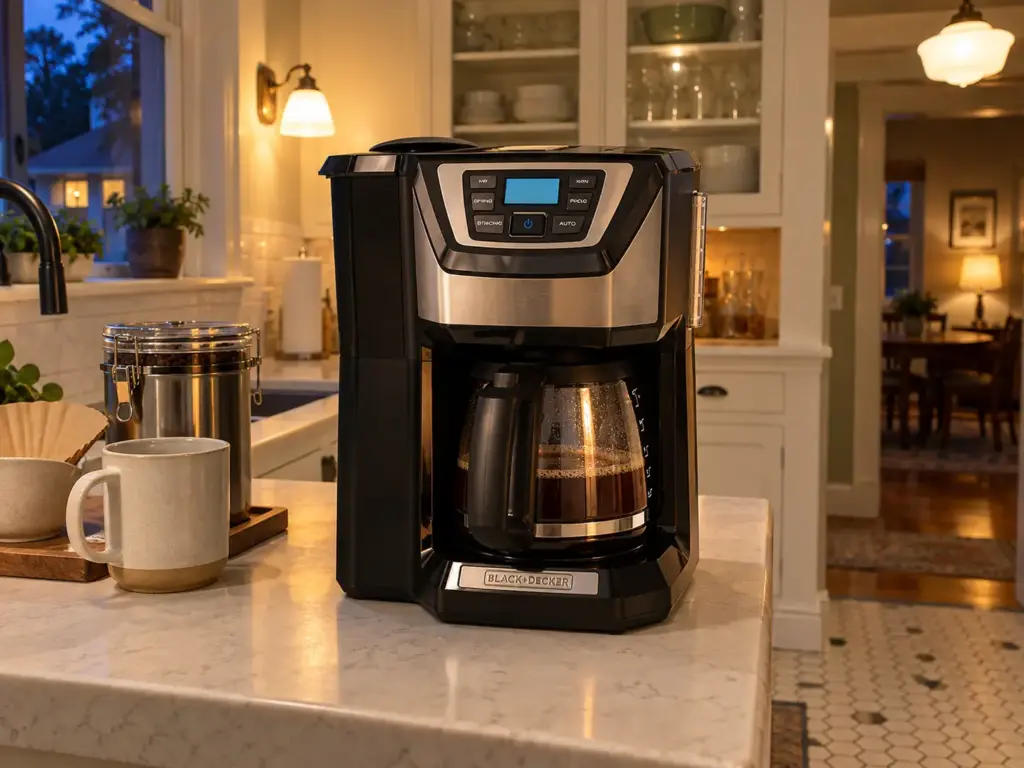
Ground coffee starts going stale the moment it is ground, which is why Bon Appétit counts grinding right before brewing as a change to the flavor before the water even arrives. The CM5000B does it in the basket, with a Grinder Off option for days you want to use pre-ground coffee, 24-hour programming and a 12-cup carafe that is not thermal. You will hear the grind cycle before the first drip, and the smell of the grounds in the basket tells you the hopper did its job.
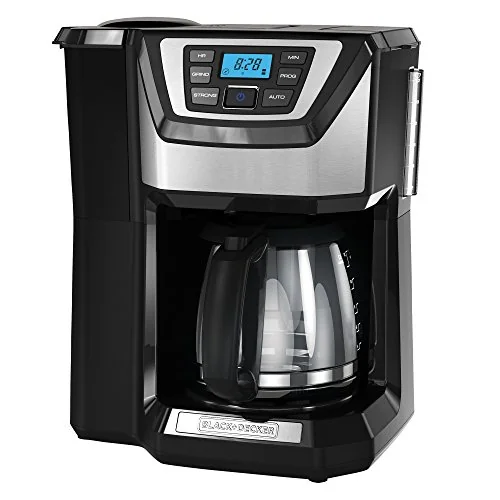
Which kind of grinder sits in the hopper matters for the cup, and burr and blade grinders explains why a blade makes boulders and dust at once and a burr set does not, so check the listing for the type before counting on an even grind.
The Noise, the Carafe and the Plate
The flaws come as a set. The grinder is loud (Bon Appétit), the carafe is not thermal, so the pot sits on a plate that can curdle milk, and the listing shows limited stock with a ship time of one to three weeks at the time of writing, so check it before you plan around it. The free alternative is a separate grinder doing the same job without the machine carrying the noise, and a cheap grinder that stays even at the coarse end is the version that matters for a drip pot. The Grinder Off option then lets this machine take what that grinder produced.
Brew one pot with the built-in grinder and the next with the grinder off and the same weight of pre-ground, same water, same plate. That is one change, tasted twice, and it tells you whether the feature earns its noise in your kitchen.
Month Two: What Wears Out First
NYT notes that reviews of cheap makers tend to report failures around the two-year mark, and the tests cited in this article measure a machine’s first weeks, not the months after. In between, scale builds in the lines, slows the machine and cools the brew, and a plate drifts away from the heat it started at.
A 10-cup Mr. Coffee can run for many years when it is cleaned with vinegar each time the indicator light comes on, which is the kind of upkeep that carries a machine that long. The Cuisinart has a self-clean function that reminds you when to run its clean cycle (NYT), and the pillar covers what wears first over the months.
If the pot turns sour in the second month with the same beans and the same dose, the carafe reading from the first section comes first and the grind step for a drip machine comes second: one step finer, then taste.
Read the Carafe, Weigh the Dose, Then Pay for One Feature
Three things decide the pot more than a badge on the box. The carafe reading right after the brew says whether the machine reaches the heat the standard asks for, the dose in grams says whether the coffee did its half, and of the features this band sells, only the grinder and the plate touch the cup, while the timer and the reservoir touch the morning. Pick by the feature you will actually use: the Ninja for heat, the Cuisinart for a pot that sits on a plate with set levels, the BLACK+DECKER for grinding fresh.
A month from now, read the carafe again exactly as on day one. A reading that has dropped means the machine runs cooler than when it was new, usually from scale, and the descale comes before any new beans. The scale you used for the dose raises the next question, which grinder to buy next, and once the machine and the grind are settled, which beans to try in the machine comes after.
Tomorrow, weigh the dose for the pot at the standard amount and taste it. If the dose was the problem, the cup should come out rounder with no flat edge; if it is still sour, go one grind step finer and nothing else.
Frequently Asked Questions
01What is the best drip coffee maker under $100?
The Ninja CE251 is the pick for heat, the Cuisinart DCC-1200P1 for a plate with low, medium and high settings, and the BLACK+DECKER CM5000B for grinding fresh. Check each one against the carafe reading before you commit.
02What is the best coffee machine under $100?
A drip machine fits a full pot best, and a cone with a kettle fits a single mug best, and the cup per serving is the same. The choice is how many mugs you pour at once.
03How hot should a drip coffee maker brew?
Drip machines should brew with water between 195 and 205°F (91 to 96°C) at the showerhead, the window set by the Specialty Coffee Association. At home, read the carafe right after the brew: NYT’s guide is at least 180°F (82°C) for a finished pot, and that reading is a proxy, not the showerhead number.
04How many mugs is a 12-cup coffee maker?
A 12-cup coffee maker makes twelve 5-ounce servings, so a full pot comes to about six ordinary mugs, not twelve. Set the dose by the water you pour in, about 1.63 grams of coffee per fluid ounce at the SCA ratio, never by the cup count on the box.
05Do I need a drip machine at all?
For one or two mugs a day, a cone, a kettle and paper filters give the same cup as a drip machine without the counter space. A machine earns its place when you pour a full pot or want a timer.



How did your cup turn out?
No comments yet. Tell us what you changed — and whether the needle moved.