
We may earn a commission when you buy through links on this page. It never changes what we recommend. How we pick
On this page7 parts
- What "No Plastic Parts" Covers on a Drip Machine
- Following the Water From the Tank to the Carafe
- The One Automatic That Claims a Plastic-Free Hot Path
- Month Two: What Breaks and What to Ask the Maker
- The Cone and the Kettle, for a Fraction of the Cost
- Turn the Lid Over and Ask for the Parts List
- Frequently Asked Questions
You searched for a drip coffee maker with no plastic parts, and the box in your hands says no plastic touches the water or the coffee. Turn it over and the parts list names a water-tank lid, a shower head and a filter-basket lid without saying what any of them is made of. That gap is the whole question, because on a drip machine “no plastic” can mean plastic nowhere on the machine, plastic only on the cold side before the heater, or plastic on the hot water and the brewed coffee, and a box answers one of the three at most.
This page answers it by walking the water path in order, checking the one automatic that claims a plastic-free hot path against its own parts list, covering what the second month asks of it, and setting it beside a cone and a kettle that do the same job. What any of these materials does to a person is a question for your doctor; this page stays with what each part is made of, where it sits and what it does to the machine and the cup.
Quick Answer
No electric drip maker named here is plastic-free end to end. The Simply Good brewer claims a plastic-free hot path yet keeps silicone seals and plastic outside the water line. A cone, a kettle and a paper filter do the same job for a fraction of the cost and ask for a pour instead of a button.
What “No Plastic Parts” Covers on a Drip Machine
The introduction leaves one phrase doing three jobs, and this section splits it so the rest of the page can be read against it. Before you compare any machine, decide which of the three questions you are asking. If you want the full drip picture first, the drip machines we sorted by water temperature sit one level up from this page, and a drip coffee maker with no plastic parts is the materials question asked of those same machines.
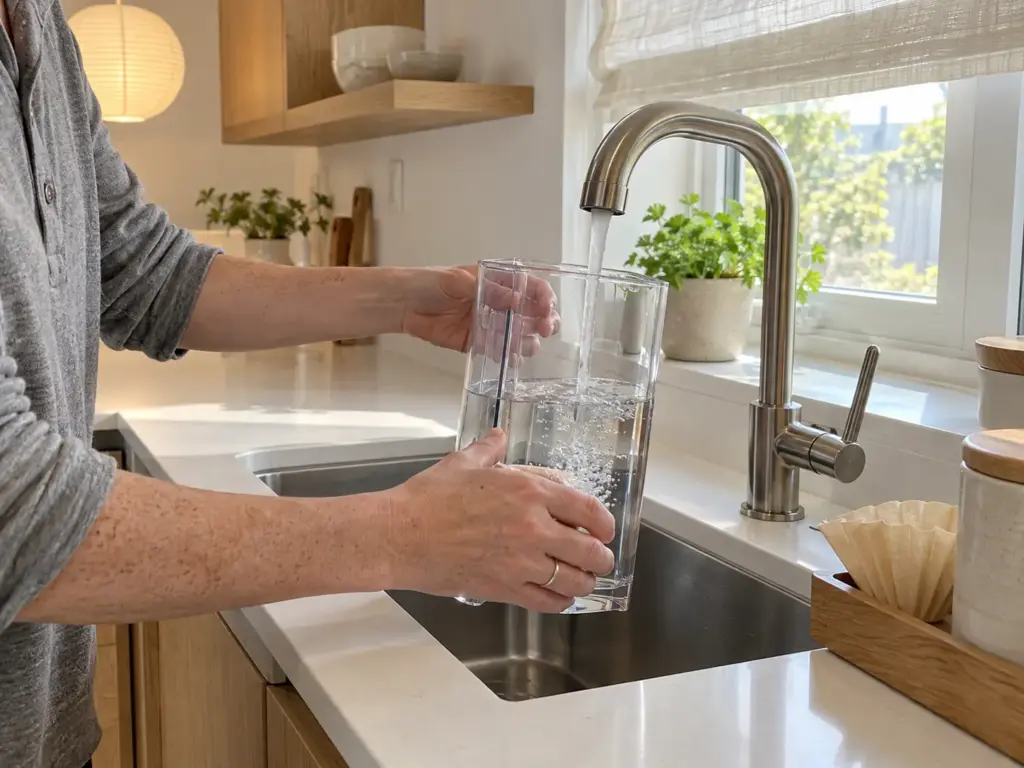
Three questions behind one phrase
The first question is whether there is plastic anywhere on the machine: the housing, the buttons, the feet. The second is plastic on the cold side, meaning the water tank and the tubing that carry water before the heater reaches it. The third is plastic on the hot side or on the coffee itself: the shower head that sprays the heated water, the brew basket, the carafe lid and the spout. A machine can pass the third and fail the first, and that gap is where a plastic-free claim usually lives.
The wording people use shows which question they mean. A plastic-free machine, at least in the parts that touch hot water or steam, is the question here, and a fully stainless steel pour-over funnel is one answer. Some buyers loosen the first two questions and hold firm on the third, because the tank holds cool water briefly while everything after the heater handles hot water and coffee. That ordering is a choice, not a rule, and the rest of this page lets you apply either.
What “BPA-free” and “non-toxic” actually name
BPA-free names one compound that a plastic was made without. It says nothing about the other parts of the machine, or about which plastic those parts are. Non-toxic is not a regulated term, a point Serious Eats makes outright, so it is a promise with no standard behind it. And plastic-free can be a statement about the brew path alone: the Simply Good brewer’s product page prints “Brew Path: 100% plastic-free” and then defines it as “no plastic or aluminum contacts water or coffee,” which is a claim about contact, not about the machine.
The same page’s box list is where the question stays open. It names the water-tank lid, the shower head, the filter-basket lid and the carafe lid with its mixing tube, and it gives a material for none of the four. The glass, the stainless steel and the silicone are named; the lids and the shower head are not.
So the question to put to a maker is a parts list with a material beside every line, in writing. A product page is marketing copy, and an emailed list is a commitment.
Why silicone is the argument
Silicone is where the “plastic-free” machines draw their line. The Simply Good page calls its seals medical-grade silicone, and Tom’s Guide counts silicone tubing in the water lines besides. The thread argues it both ways. Stainless steel moka pots are never fully steel, because there is always a silicone gasket, and silicone is not plastic.
Both can be right. Silicone is a different material from the hard plastic of a typical lid, and whether it crosses your line is yours to decide. What matters for the machine is the job it does: silicone is the soft part that flexes, seals hot water and wears, so the argument over the word matters less than the question of how often it has to be replaced. That question comes back in the section on the second month.
Following the Water From the Tank to the Carafe
The three questions need a route to be asked along, so this section walks the machine in the order the water travels: cold tank, tubing, heater, shower head, brew basket, carafe, carafe lid and spout, seals, warming plate. The box names some of those stops and skips others. Checking them in order is how you find which.
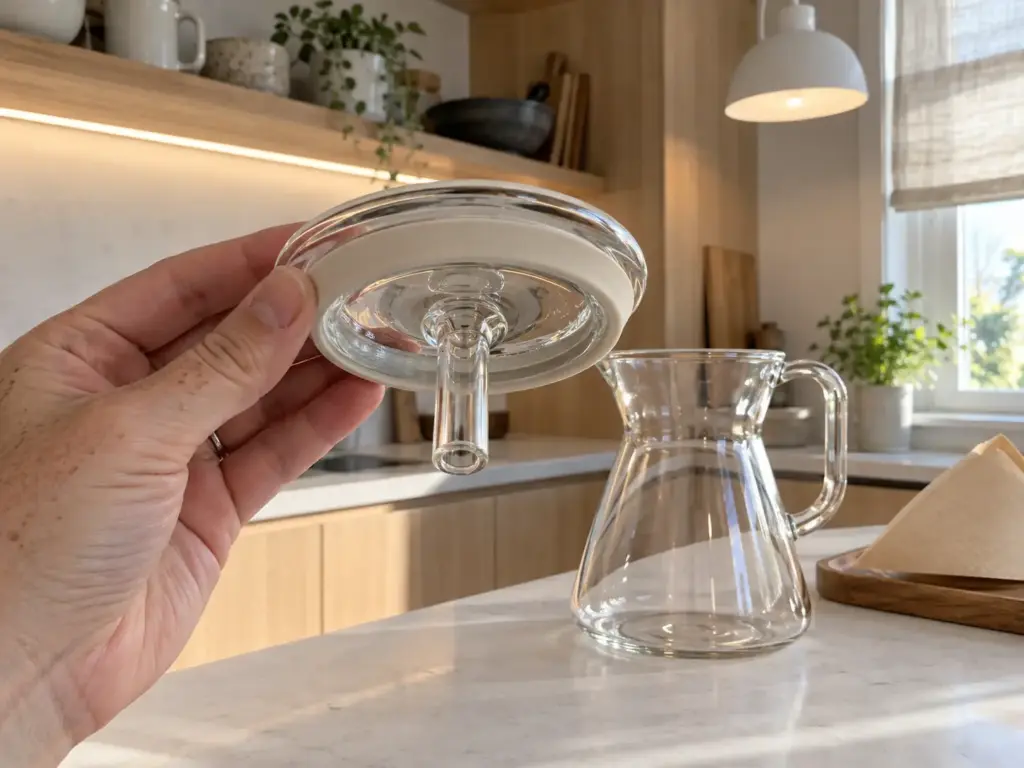
The cold side: tank and tubing
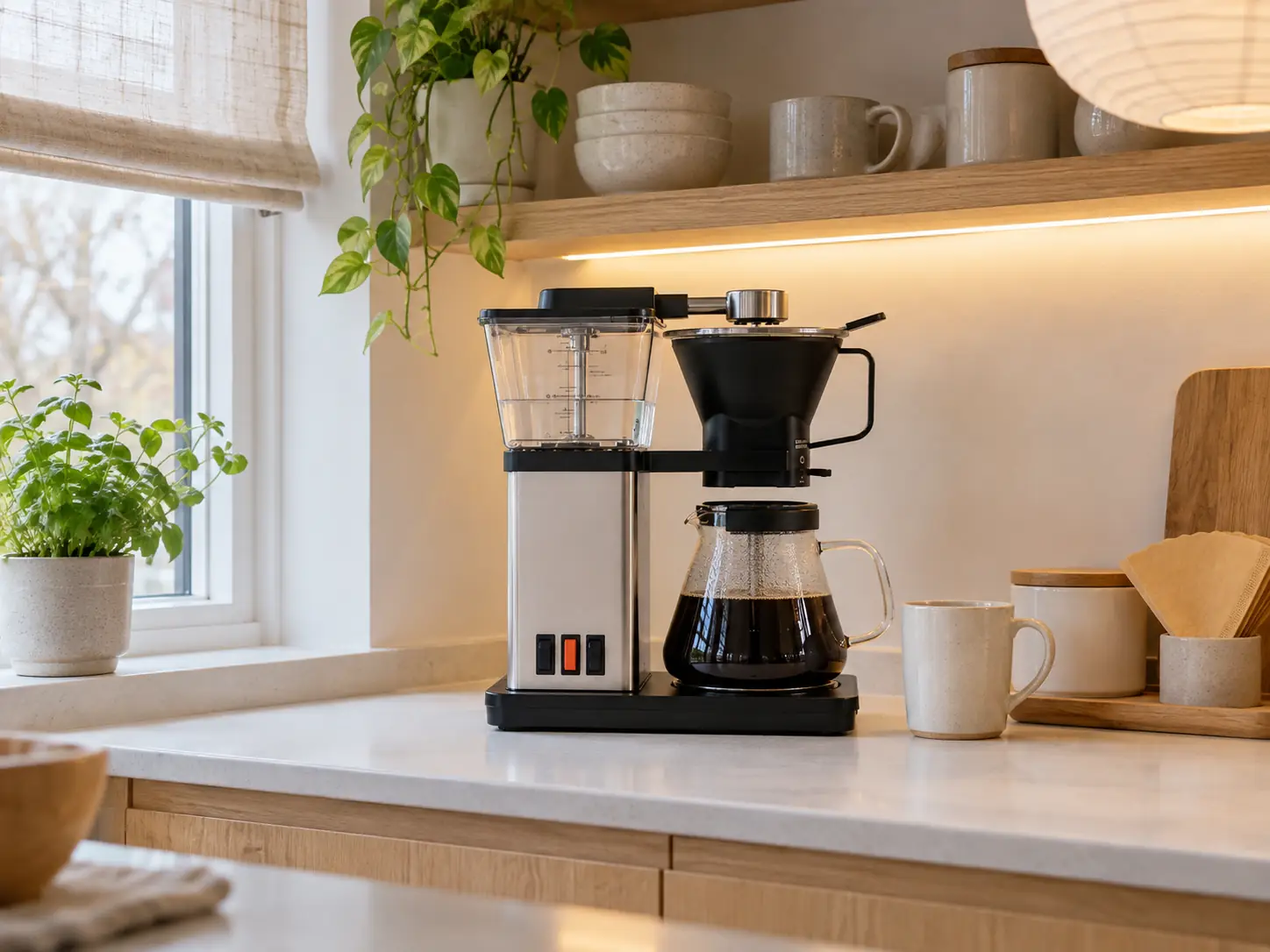
On a conventional machine the cold side is the plastic side. Tom’s Coffee Corner’s reviewer describes the usual build: plastic water reservoirs, plastic shower heads, plastic drippers and drip stems, and a housing of ABS plastic. The Simply Good brewer swaps the reservoir for borosilicate glass and sends the heated water up a stainless stem, and a glass reservoir was a first for that reviewer, who had met plastic ones on every other machine.
The tubing and the hot-water lines are the part that stays hidden. Tom’s Guide’s reviewer found medical-grade silicone in the water lines, and a box photo shows the tank and never the tubing underneath it.
The heater sits out of sight as well. The Simply Good maker lists a stainless steel boiler, and the Moccamaster KBGV Select uses a copper heating element. Neither is a plastic question. Both are a scale question, and scale gets its own section below.
The hot side: heater, shower head and basket
The first part the heated water reaches that a buyer can inspect is the shower head. The Simply Good brewer’s is stainless with a silicone connection, but Tom’s Coffee Corner’s reviewer found that the stem behind it “is housed in plastic” while the water itself runs through a stainless tube. The filter dripper is stainless on the inside, where the paper sits, and insulated on the outside with plastic so it can be handled. That is plastic on the machine and not in the water, which is exactly the difference between the first question and the third.
The best-known premium drip machine has plastic on this stretch. Tom’s Guide reads the Technivorm Moccamaster KBGV Select as having a plastic filter basket, a plastic destratification tube and a plastic water tank. Technivorm’s stated position is that its plastics are virgin rather than recycled and carry the BPA-free, BPS-free and phthalate-free labels. That is a statement about which plastic is in the machine, not about whether there is any.
The carafe, its lid and its spout
The carafe is the last part the coffee touches, and the lid is the part a product photo never shows. Plastic can turn up exactly there in some Moccamaster machines. One wrote about “a black plastic chute IN the glass carafe” running from the top of the pot to the bottom, and the other sent the machine back because “the carafe spout had a huge plastic component” and the rest felt cheap to them. Both are first-week reactions from one account each, not a failure rate, and both are the kind of detail a parts list answers in one line.
On the Simply Good brewer, the carafe lid with its mixing tube is one of the four parts the product page lists without a material. Tom’s Coffee Corner’s reviewer found the drip stem that reaches into the carafe to be stainless, held to the glass by a silicone grip, where other machines, Technivorm’s among them, use a plastic stem.
Turn any carafe lid over before you commit to it and look for two things: the seal ring and the mixing tube. If the ring is a loose band you can pull out and rinse, it is also a part you can replace. If it is molded into the lid, ask the maker what happens when it wears.
Glass is a heat question as much as a materials one. A glass carafe loses heat faster than an insulated thermal carafe, and how heat holds in a carafe at the lower end is its own sort criterion if carafe heat matters more to you than the material.
The seals and the warming plate
Seals and gaskets are the silicone in this story: the connection at the shower head, the valve in the dripper’s drain port, the grip on the drip stem. They are small, they flex, and they are asked to hold hot water over and over. The warming plate carries no plastic question at all and a real cup question. The Simply Good brewer shuts its plate off after roughly 30 to 40 minutes, and a pot that sits on any warming plate that long tastes cooked by the last cup, so pour what you will not finish in the next few minutes into a mug.
The One Automatic That Claims a Plastic-Free Hot Path
After the route comes the one automatic whose maker says the hot side is plastic-free. This section checks that claim line by line against the parts list, because the claim and the list answer different questions. What the claim covers takes five minutes at a product page, and what it leaves out takes one email.
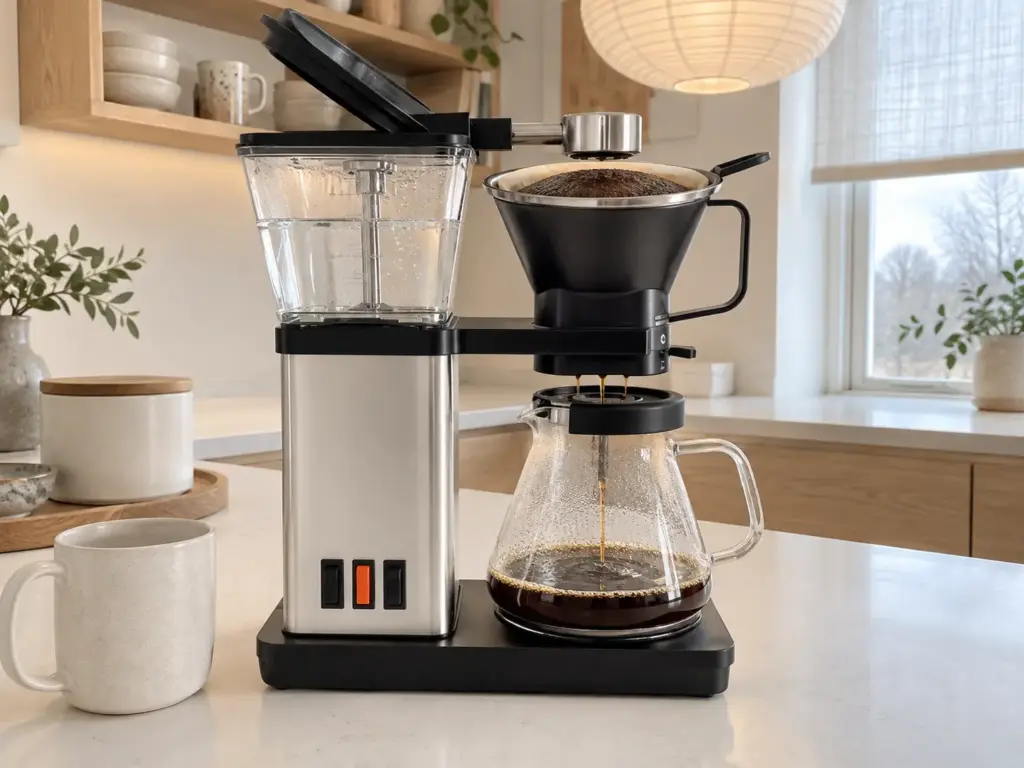
What the claim covers
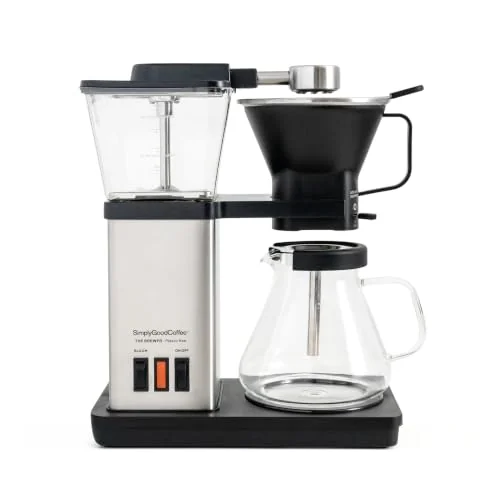
The SimplyGoodCoffee Brewer page lists an 8-cup, 40-ounce machine with a stainless steel boiler, a borosilicate glass reservoir and carafe, a stainless filter basket that takes #4 cone filters, and seals in “medical-grade silicone.” It prints a brewing temperature of 195 to 205°F (90 to 96°C) “for optimal extraction.” That window is the maker’s own number, not a measured one and not an outside standard, and Tom’s Guide’s reviewer notes the brewer “isn’t SCA-accredited yet” while the company “claims the Brewer adheres to the SCA’s guidelines”. Hold the machine to the window as a claim, not a result.
For the cup, the evidence is friendlier. Tom’s Guide’s reviewer tried every full-pot dose from 56 g to 72 g and found 60 to 72 g right, which works out to about 1 g of coffee for every 16 to 20 g of water in a 40-ounce pot. Bob Vila’s reviewer found the machine produced evenly brewed coffee over dozens of pots “without temperature swings or weak batches”. The maker’s own scoop holds about 9 g and the rule is one scoop per 5-ounce cup, so a full pot is eight scoops, 72 g, at the top of the range.
What the parts list leaves unnamed
Read the box list again. The page names a water-tank lid, a shower head, a filter-basket lid and a carafe lid with a mixing tube, and says nothing about what any of the four is made of. A lid can sit outside the claim. A shower head and a mixing tube cannot, and the page gives a material for neither.
Two reviewers filled in the blanks, and the headline they reach is two sentences at once. Tom’s Guide’s reviewer calls the machine one that “is not plastic-free,” pointing to a plastic coating on the exterior to prevent burns and silicone tubing in the water lines. The spec sheet says that no hot water touches plastic at any point during the brewing process, and both of those claims can be true together.
Tom’s Coffee Corner’s reviewer adds the plastic housing behind the shower head and the plastic insulation around the dripper.
The practical reading is that the hot-water path is steel and glass by the reviewers’ counts, the cold-side tubing and the seals are silicone, and the lids and the shower-head housing are the open question. If that line matches where you drew yours, this is the machine the label describes.
The flaws, in writing
The reservoir is the daily complaint. Bob Vila’s reviewer found it “difficult to drain and clean,” and lists a non-removable water reservoir and drip-stop lever trouble among the practical concerns, so emptying it means tipping a glass tank that stays in the machine.
The carafe is the other flaw, with a caveat on how much evidence stands behind it: some buyers report the glass breaking early, and the maker has offered a replacement. That is a single account, not a failure rate. Pour cold water from a fridge dispenser gently into a carafe that has sat clean at room temperature for hours.
First-generation hardware also has a short record. Zenda Guide’s durability score for the brewer is built on owner data rather than bench testing, and it reads a young record with early reports of leaks, overflow and component problems. The price sits at the splurge end of the drip range, many times what a cone and a kettle cost together, and the page prints no price for a replacement seal. The maker lists a five-year warranty, and whether it covers the glass carafe is one more line to ask about.
The free test comes first, and it costs an email: the maker’s parts list with a material beside every line, requested in writing, plus a look at the lids and the shower head the day the box opens. And because the brewer takes the same #4 paper cone filter as the Melitta cone in the last section, you can run the cone first and decide with the taste in hand.
The brewer’s bloom setting wets the grounds before the main brew, and the maker suggests it for batches of four cups and up, though some people notice no difference with it on. If you end up with one, brew the same coffee at the same dose twice, bloom on once and off once, and taste the two side by side before you leave it on out of habit. One change, then taste.
Month Two: What Breaks and What to Ask the Maker
The first week of a glass-and-steel machine mostly shows you the coffee. The second month shows you the carafe, the seal and the heater, and that is what this section covers, including the places where no number exists. Where a number exists it is attributed, and where it does not the section says so out loud.
The carafe that breaks first
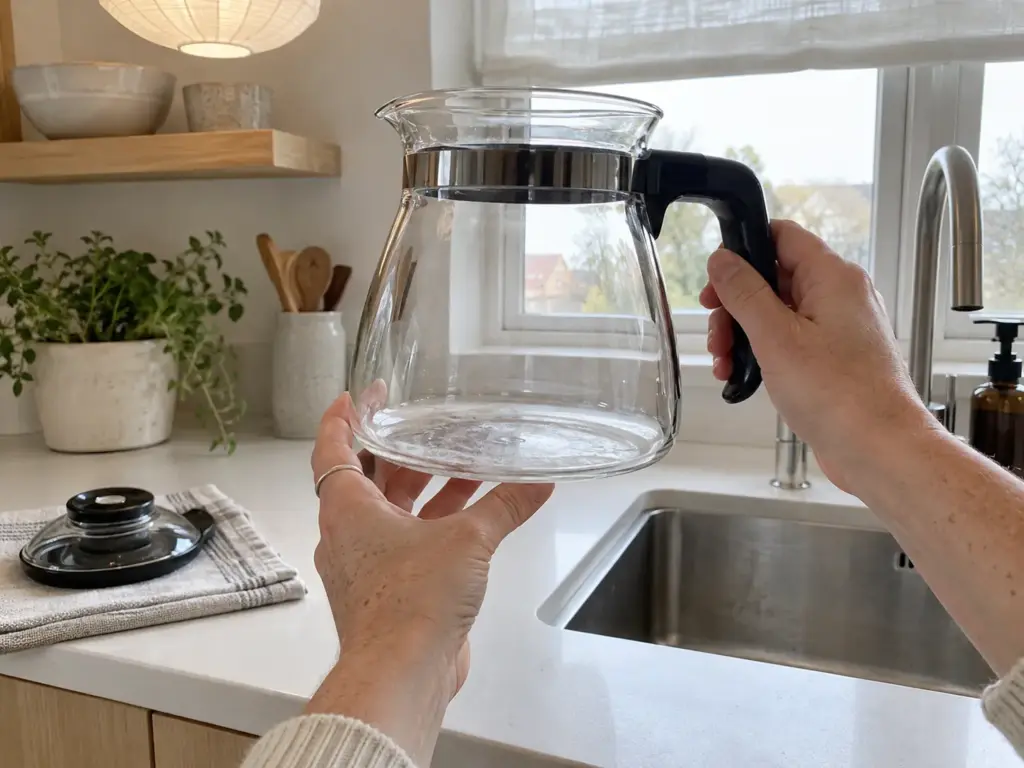
Glass is the part that fails first in the reports so far. A carafe gone within two weeks of a gentle cold fill is a single case, and the cause of that one break is untested. What can be said without a test is narrow: glass dislikes a sudden temperature change, borosilicate resists it better than ordinary glass, and neither makes a carafe immune to a knock against the sink.
A glass carafe also gives up heat faster than an insulated one, so a cooler pot is the likelier reason the last cup tastes flat than anything the material did to the coffee.
Rinse and fill a glass carafe with tap-cool water, not straight from a fridge dispenser, and never carry it from the hot plate to a cold tap. The one reported break followed a fridge-cold fill into a room-temperature carafe, and the cause was never tested, but the habit costs nothing.
The seal nobody times
Seals are the part with a clock and no number. No replacement interval for a drip machine’s seals appears on the Simply Good page, and the one silicone-gasket interval that is easy to find belongs to a stovetop moka pot: about every 12 months for the Bialetti Venus, as Homes & Gardens reports it. That is a different machine, so it is a reference point, not an answer.
What a tired seal does shows before it fails: a lid that stops sitting flat, steam where there was none, a drain valve that no longer holds. Bob Vila’s reviewer listed drip-stop lever trouble, so that valve is the first one I would watch.
The descale clock
Scale is the failure you cannot see, because it builds in the heater and the lines, the parts a buyer can neither inspect nor swap. The one descaling figure that can be attributed is the Moccamaster’s: about every 100 cycles, per Homes & Gardens, which calls the machine somewhat high-maintenance.
A hundred cycles is a count of brews, not months. One pot a day reaches it in a little over three months, and two pots a day reach it in under two. The Simply Good product page prints no descaling interval, so that line lives in the manual. Scale slows a machine and cools the brew, and filtered water is the free way to slow it down.
Before the card goes in, put three requests to the maker, in writing:
- The parts list, with a material beside every line, lids, shower head and mixing tube included.
- The seal replacement interval and the price of the replacement ring or gasket.
- The carafe warranty and the price of a replacement carafe.
No month-two report on the seals or the scale of a plastic-free drip machine turned up, so the maker’s answers are the only evidence you can collect before the machine is on your counter.
The Cone and the Kettle, for a Fraction of the Cost
The same plastic-free path exists without the machine, and this section sets it beside the automatic and says what it asks of a morning. A cone, a dripper and a kettle together cost a fraction of what the brewer does, and each carries a flaw of its own. The trade is a button for a pour.

What the cone path leaves out
A kettle, a cone and a #4 paper filter, the same filter family the Simply Good brewer takes, make up the whole path. What the route leaves out is everything the first four sections spent time on: the tubing, the lids, the seals, the heater and the drain valve. The cone has no parts to break unless you smash it. Another uses “a metal ikea pour over with normal coffee filters” with a thrifted teapot as the carafe and a glass measuring cup to catch the last drips, and a third found “an all glass/stainless steel kettle” with no plastic contact anywhere.
The roundups also list stainless French presses and the AeroPress Steel as manual routes. This page stays with the cone because it shares a filter with the brewer, and a press has its own list of materials to check.
Which cone, with its flaw
The cheapest route is the Melitta 1 Cup porcelain cone, which takes the same #4 filters as the Simply Good brewer and ships with a starter pack of them. It makes one cup at a time through a single drain hole, and that is the price of the low cost: a second mug is a second pour.
The Chemex Classic 6-cup is the glass version: borosilicate, six five-ounce cups (30 ounces), and a box of 100 bonded square filters, not #4 cones. Glass sheds heat quickly with no insulation around it, a point Serious Eats makes about the Chemex, so the last cup from a pot that sat on the counter is the cool one.
The Kalita Wave 185S is the stainless choice for anyone who wants a sturdier cone than porcelain or glass: a flat bed with three small holes, a 120 g weight and a range of two to four cups. It takes Kalita’s own wave-style paper filters, not the #4 cone. No repeated complaint turned up for it, which is a gap in the record and not a clean bill.
The kettle that goes with it
A cone needs a kettle that pours slowly and steadily. The Hario V60 Buono 1 L is a stainless stovetop kettle with a fine gooseneck spout, so no electric base sits on the water path, and stock is thin on it. The handle is plastic, outside the water path, and there is no thermometer. You judge the heat by the boil: a full boil is 212°F (100°C) at sea level, a little above the top of the window the Simply Good maker prints, so take the kettle off the heat at the boil and let the bubbling settle before the first pour.
What it asks of a weekday morning
What the cone asks is attention for the length of the pour: a steady stream, a filter that sits straight, and one cup at a time on the Melitta. A reader who wants a machine for one mug, with a button, will find the one-cup drip answer among the siblings of this page.
Wet the paper filter in the cone before the coffee goes in. It seats the paper against the wall so it stands straight for the whole pour, and the rinse water that drains through goes down the sink.
For a mug, the cone’s math is the machine’s: about 9 g of coffee for every 5 fluid ounces (150 mL) of water, the ratio of the Simply Good scoop, which lands near 1 to 16. A 10-ounce (300 mL) mug takes about 18 g, two of those scoops or roughly three and a half level tablespoons.
The grind is what you adjust, and grind size for a pour-over cone has the starting point.
Taste the first cup and name the direction. Sour means the water ran through before it finished, so go one step finer and brew the same dose again. Bitter means it lingered, so come back half a step. One step, one cup, then taste.
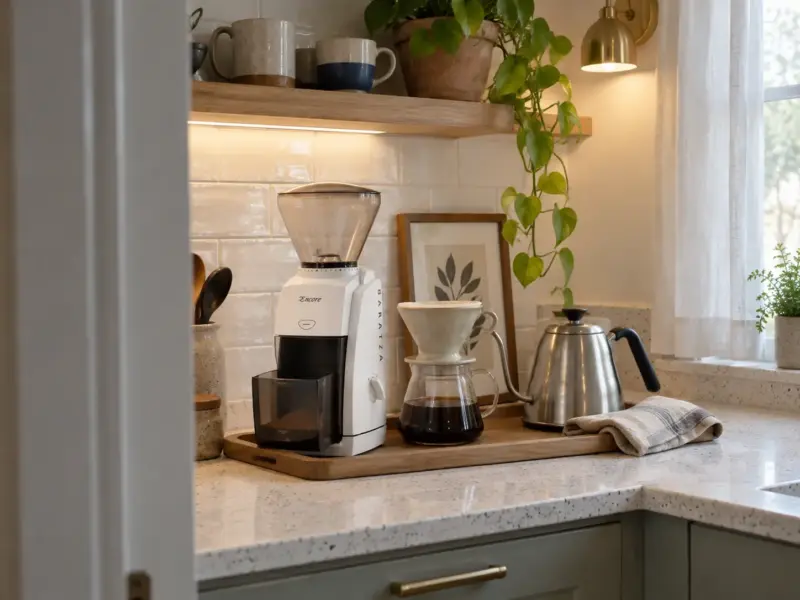
A plastic-free brewer or cone does not finish the job if the grinder feeding it has a plastic hopper and chute, because the beans pass through both on the way to the filter. That is the next decision, and a grinder with no plastic from hopper to catch cup is where it starts.
Turn the Lid Over and Ask for the Parts List
No electric drip maker named here is plastic-free end to end, so decide first which of the three questions the box answers. A plastic-free claim can be checked along the water path, and it stops at the lids, the seals and the housing. A cone and a kettle give you the same path for a fraction of the cost and ask for a pour instead of a button.
A month from now, look at three things: the seal ring on the carafe lid, the film on the inside of a glass carafe, and whether the lid still sits straight.
Tomorrow morning, before anything goes into a cart, turn the carafe lid of the machine you already own over and find its seal and its tube, then write the maker one request for the parts list with a material beside every line. When the reply comes, check whether every lid and the shower head have a material next to them. A reply that does is the spec sheet the box never printed.
Frequently Asked Questions
01What are the best plastic-free drip coffee machines?
No electric drip machine named here is plastic-free end to end, so the best choice depends on which part of the water path you want free of plastic. The Simply Good brewer is the one automatic whose maker names a plastic-free brew path, and a cone, a kettle and a paper filter remove the machine entirely.
02Are plastic free coffee makers worth it?
Whether a plastic-free coffee maker is worth it depends on which of three questions you are asking: plastic anywhere, plastic before the heater, or plastic on hot water and coffee. The automatic is the splurge end and the cone is the cheap end, and a parts list in writing is the free test before either.
03Is there an automatic drip coffee maker without plastic parts?
One automatic, the Simply Good brewer, describes a plastic-free brew path, but it is not free of plastic: its seals and tubing are silicone and its exterior is plastic-coated. Its lids and shower head have no material named on the product page, so ask the maker for the parts list.
04Which coffee maker has the least amount of plastic in the brew path?
A porcelain, glass or stainless steel cone with a paper filter and a stainless kettle has no plastic in the brew path. Among automatics, the Simply Good brewer keeps hot water to stainless steel and borosilicate glass, with silicone tubing on the cool side.


How did your cup turn out?
No comments yet. Tell us what you changed — and whether the needle moved.