
We may earn a commission when you buy through links on this page. It never changes what we recommend. How we pick
On this page7 parts
- The Machine Owns One Number: How Hot the Water Gets
- Which Way the Cup Is Off, and the Dose You Change First
- The Pot Keeps Cooking on the Warming Plate
- The One Machine We Could Verify: Hamilton Beach 46299J
- Month Two: What the Cheapest Shelf Gives Up First
- What to Do Tomorrow Morning, and What to Check in a Month
- Frequently Asked Questions
You pour the first mug from a pot that looks right and tastes flat, and the question at the counter is whether the machine or the coffee is at fault. Shopping for the best drip coffee maker under $50 mostly means buying without the one number that decides the cup, because machines at this line rarely print their brew temperature, and no grind setting adds heat back. A Consumer Reports lab note on one familiar 12-cup model shows how easily a cheap coffee maker misses it. This guide covers that number, the three things you still control in order (the dose, the grind and the warming plate), the one machine that could be checked, and what to watch once the first weeks are over.
Quick Answer
At this price, buy a model number, not a brand, and trust only one whose water was measured near 195°F (91°C): the machine settles the heat. What you settle, in order, is the dose by weight, the grind one step at a time, and the warming plate switched off.
The Machine Owns One Number: How Hot the Water Gets
An inexpensive coffee maker and an expensive one make the same promise on the box: twelve cups, programmable, ready when you wake up. The difference a drinker can taste is mostly a single number, the temperature of the water as it reaches the grounds, and no grind setting reaches it. The three parts below are about finding out whether a given model clears it.
What a Lab Found on One Well-Known Model
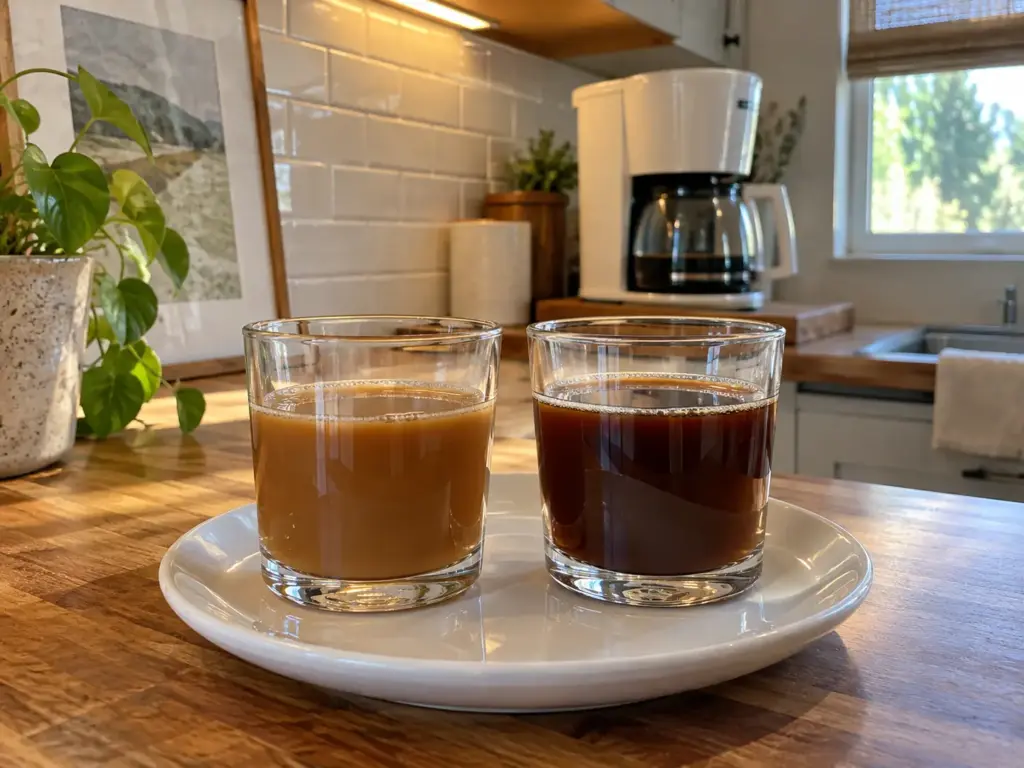
Water that arrives cool pulls out the sharp, thin first part of the coffee and leaves the sweeter part behind, so the pot tastes sour and weak at any dose. The temperature that counts is the one at the showerhead, held through the whole brew, and only a lab logs that. Few machines at this line have a published result, which makes the one on file worth reading closely. Water that is hot enough also has to reach the grounds evenly: a single-hole outlet can send it down one channel through the bed and leave the rest of the grounds unsaturated and under-extracted, so heat and distribution both belong to the machine.
For the Mr. Coffee 12-Cup Programmable (model 2182808), Consumer Reports’ lab note on the Mr. Coffee 12-cup programmable records the brew performance in one line: “Fell short of recommended guidelines of 195°F or more, maintained for five or six minutes.” That guideline, 195°F (91°C), is the floor the lab asks the water to reach and hold, and this model did not.
The overall score sits behind a members login, so nothing about the machine as a whole is repeated here.
Mr. Coffee machines have a reputation for never getting the water hot enough, and for breaking in under a year. That is about a brand family rather than a model, so it counts as a pointer and not a measurement. It does describe the same fault the lab recorded.
Why the Brand Name Tells You Less Than the Model Number
A brand name covers dozens of models built in different years, and a lab note belongs to exactly one of them. Buying by brand feels safer than it is: one Mr. Coffee listing on Amazon prints no model number anywhere in its text, so a shopper cannot tell whether it is the machine the lab tested or a neighbor of it.
So read the model number before the star rating. Find it on the box or in the spec table, search it next to the words brew temperature or lab test, and treat a result for a different model of the same brand as no result at all. When the number is missing from the listing, you have learned something about how much the seller expects you to check.
What a Spec Sheet Prints, and What It Leaves Out
The Hamilton Beach 46299J listing prints a capacity (12 cups), three brew options, a two-hour auto shutoff and a non-stick warming plate. It prints no brew temperature, and the other listings read for this brief did the same. A number on a spec sheet is the maker’s word; a lab note is somebody else’s test, and the two are different kinds of evidence.
The nearest thing to a test a home brewer can look up is a certification. The Specialty Coffee Association’s certified home brewer list says that only equipment fully evaluated at its third-party testing center is considered for certification, which means a temperature on that list was checked by someone other than the maker. A buyer at this line is left with a lab note if one exists, and a first pot as the test if it does not.
A missing temperature is not a bad sign by itself, since most listings leave it out. It does make the first pot the test. Taste the first mug while it is hot, before the carafe has touched the plate, and note whether it reads sour, flat or fine. Without that baseline every later change is a guess.
If the first pot is sour and thin and stays that way at a proper dose, the heat belongs to the machine, and a finer grind alone will not rescue it. The pillar on the temperature window a drip machine really reaches covers the mechanism, the showerhead and the probe, so it is not rebuilt here. What follows is everything on the counter that is yours to change.
Which Way the Cup Is Off, and the Dose You Change First
The heat is settled at the shelf, so everything from here is what you control. This section says which way a pot is off and which single change comes first, with a taste between each one. The scale gets its place here because the first change is a weight, not a scoop.
A Weak or Sour Pot Points One Way, a Bitter One the Other
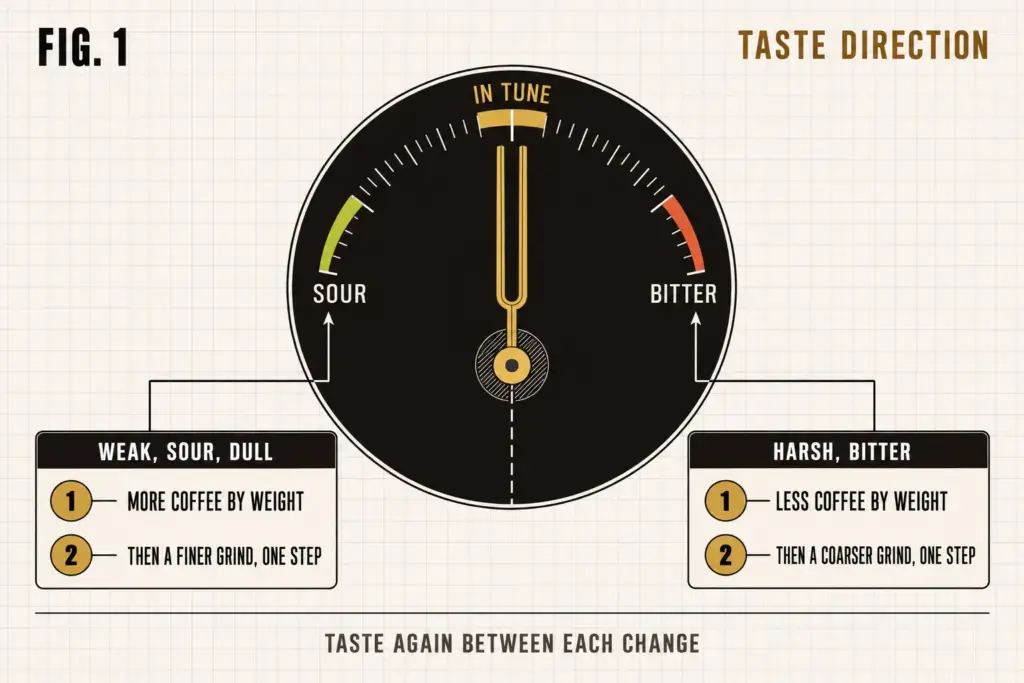
Sour and bitter point in opposite directions, and the direction picks the change. A harsh, bitter, drying pot means too much was pulled out of the grounds: the water stayed too long, the grind was too fine, or there was too little coffee for the water. The move is less coffee by weight first, or one step coarser, never both at once.
A weak, sour or dull pot is under-extracted: the water left before it finished. Too little coffee spread across the water does this, and so does a grind too coarse for the time the water spends in the basket, and so does water that arrived cool. In that order of likelihood, the first move is more coffee by weight, and the second is a grind one step finer. A machine that runs cool will still taste sour after both, because heat is the one input the grind cannot supply; if the pot flattens at a proper dose, the machine is the answer and the settings are not.
Weigh the Dose Before You Touch the Grind
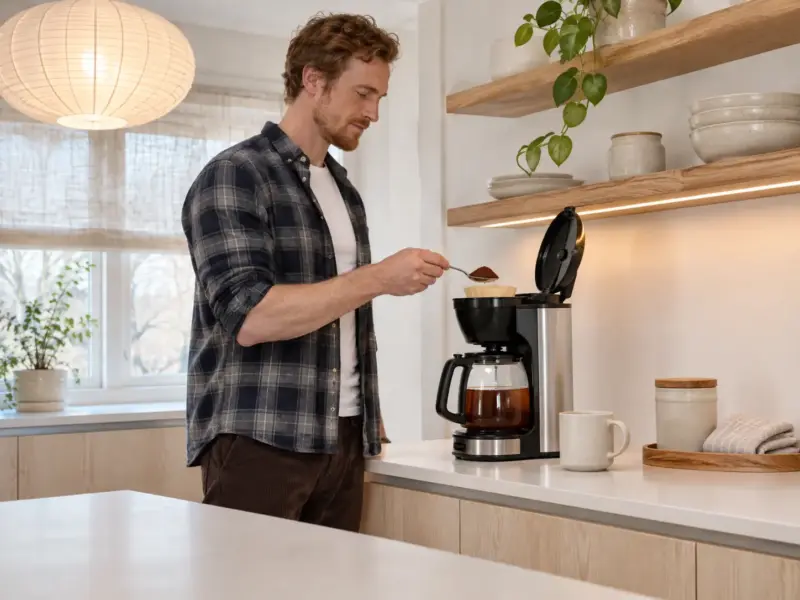
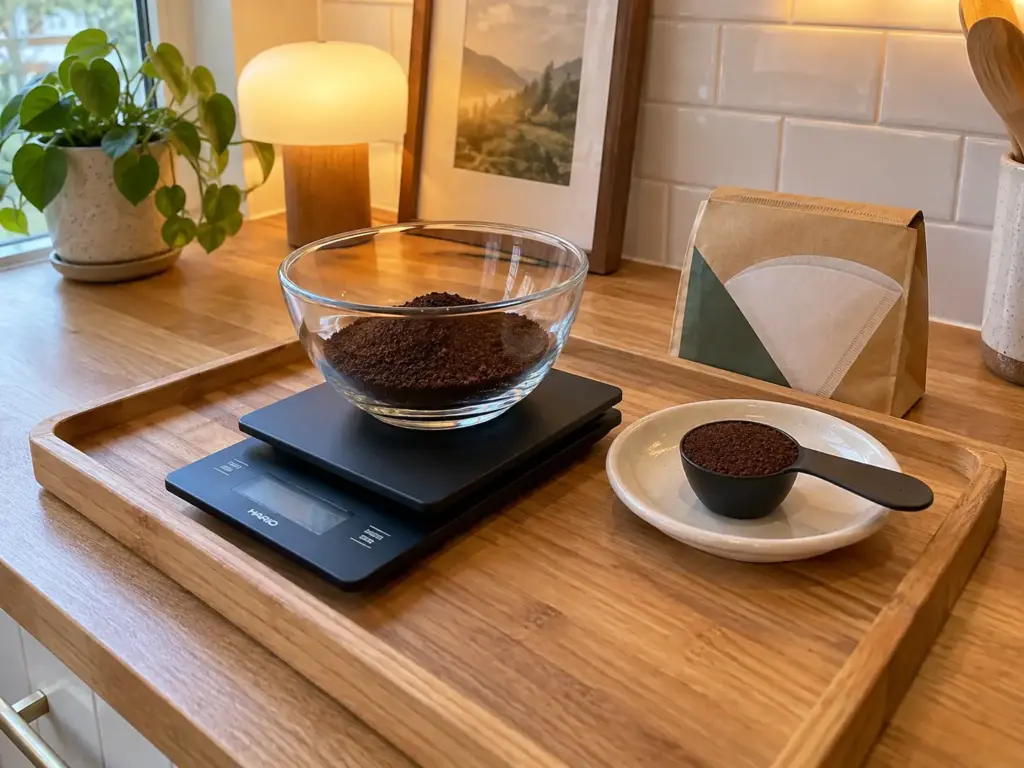
A scoop heaped one day and level the next is a different pot each morning, and the grounds in that scoop also change weight with the roast and the grind. A weight does not. This is why the dose is the first free fix, and why a scale changes more cups than a new machine: the Hario Drip Scale Timer reads in tenths of a gram and carries a timer, so the pot is the same on Tuesday as on Monday. No pattern of owner complaints about it is on record here to pass on; the one limit written on its spec sheet is a five-minute auto-off, which is plenty for a dose and short for a slow pour-over.
The starting coffee to water ratio depends on whose standard you take, and the two common ones differ by about a scoop. Bon Appétit works from 1:16 by weight, which on a full 12-cup pot of 1,700 g of water (about 57 fluid ounces) comes to 106 g of coffee. Serious Eats works from 55 g of coffee per 1,000 g of water, a protocol it ties to the SCA, and on that same pot the arithmetic gives about 93.5 g, about 13 g less. That gap is about a scoop’s worth of grounds, and it is enough to move the brew strength of a pot from heavy to thin.
A machine’s “cup” is smaller than a mug: the 46299J’s listing gives 60 fluid ounces for 12 cups, which is 5 ounces each. For the reader making one mug or two 12-ounce mugs, a half pot of about 710 g of water, the same arithmetic gives roughly 44 g at 1:16 and 39 g at 55 g per liter. Start at one, brew, taste, and move toward the other if the cup is off. The point of having two numbers is that neither is a rule.
The 46299J’s own reviews show the move in practice. On this machine the regular setting can come out weak and the bold setting a little bitter, and a good pot comes from a fuller scoop of grounds. That is a dose fix, not a machine fix, and the obvious reach for the bold button was the wrong first move: it is a setting you cannot measure, while the dose is a number you can. It is also the same idea as weigh the dose before the dial on the grind side.
Stir the pot before you pour. A drip pot can stratify, stronger at the bottom of the carafe than at the top, so the first mug and the last can taste like two different coffees. One slow stir with a spoon evens it out, and it is free.
Move One Thing, Then Taste Again
Changing three settings at once leaves you with a different cup and no idea which change did it. Three changes in order, with a taste between each, is the whole method:
- Weigh the dose, and move it by a few grams toward the direction the cup points. The next pot should taste closer to even; if it has swung to harsh, you overshot, so come back half the move.
- Hold the dose and move the grind one step. Start from a medium grind, then set the grind size a step finer for a weak or sour pot, or one step coarser for a bitter one, following the grind step for a drip machine. A finer grind slows the water and extracts more, so the cup gains body and loses sharpness; too far and the basket can slow and overflow.
- Only after both, change the water or the machine: filtered water if the tap water leaves scale in the reservoir, a fresh paper filter if the basket has been reused, or a different model if the pot still reads flat at a proper dose and a proper grind.
Brew the same amount the same way between steps, and write the settings down, since the pot you remember is never the one you brewed.
The Pot Keeps Cooking on the Warming Plate
The cup can be right when it finishes brewing and wrong an hour later, and nothing about the grind or the dose touches that. This section is the cost-free fix for the pot after it is made. It is also the change most likely to rescue the second mug.
What the Plate Does to a Pot That Sits
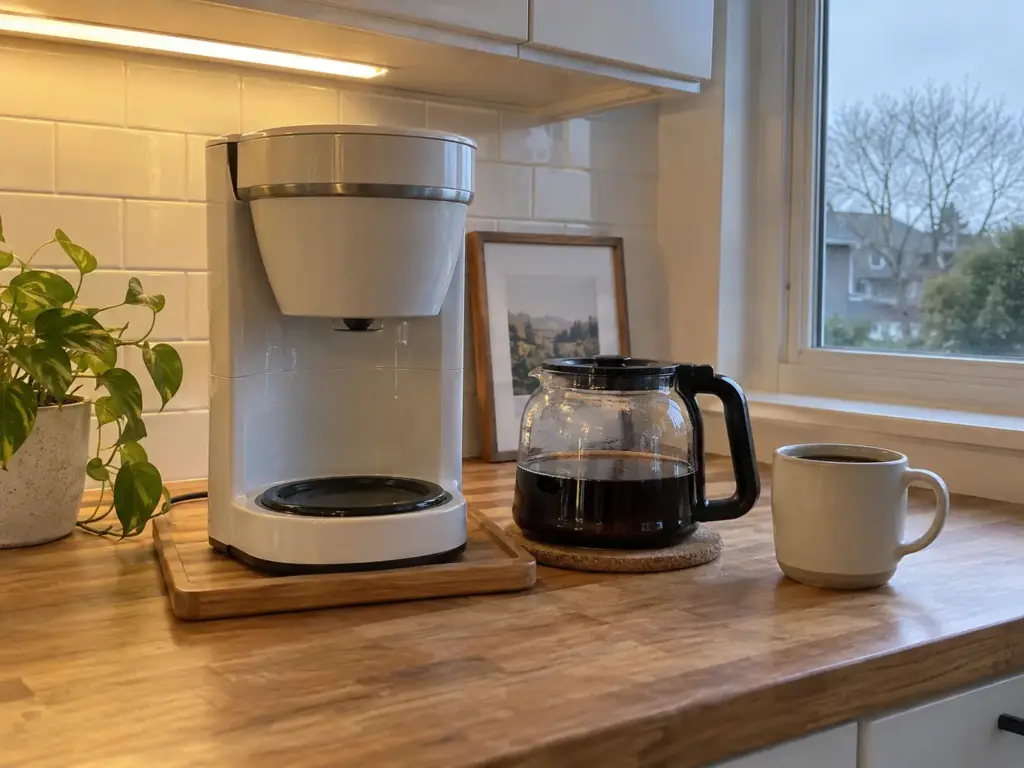
The plate under the carafe keeps heating the coffee after the brew ends, so a pot that sits on it goes flat first and burnt after that. Serious Eats kept coffee on a warming plate for two hours and tasted it at 30, 60, 90 and 120 minutes, and Bon Appétit reports a plate hot enough to curdle milk. Both are tests of the plate, not of the grounds, and what they found is the cup you pour at the end of a slow morning.
The same pot gives two different cups for a plain reason: the first mug is coffee, and the last mug is coffee that has been cooked for an hour on a hot surface. If your second mug is the burnt one, look at the hot plate before you touch the grind a second time.
Pour It Out and Switch It Off
When the brew ends, pour the pot into a mug or a thermal container and switch the warmer off. A 46299J reviewer reheats a single mug in the microwave instead of leaving the plate on, which trades a brief reheat for a pot that was never cooked. A thermal carafe does the same job without the reheat; it is its own decision, and a bigger one than this section.
Taste the pot twice, once poured out at once and once left for an hour on the plate, and the difference tells you more than any spec sheet will.
Taste the last inch of the pot against the first mug. If the last one is the burnt one, the plate is the problem, not the coffee. Run one pot with the warmer off and the coffee poured at once before you adjust the grind again.
The Auto Shutoff Is a Limit, Not a Fix
The 46299J turns its plate off after two hours, and a Krups described in one of the tests shuts its keep-warm off after one. Both are safety limits and not a cup-quality feature. The coffee is already past its best well before either fires, so waiting for the shutoff does nothing for the pot.
The One Machine We Could Verify: Hamilton Beach 46299J
The first three sections cost nothing; this one is the machine, placed last because the free fixes come first and because the flaws need room. Nothing here was run on a counter. It is the listing and the owner reviews, read for what a one- or two-mug drinker needs and for what goes wrong.
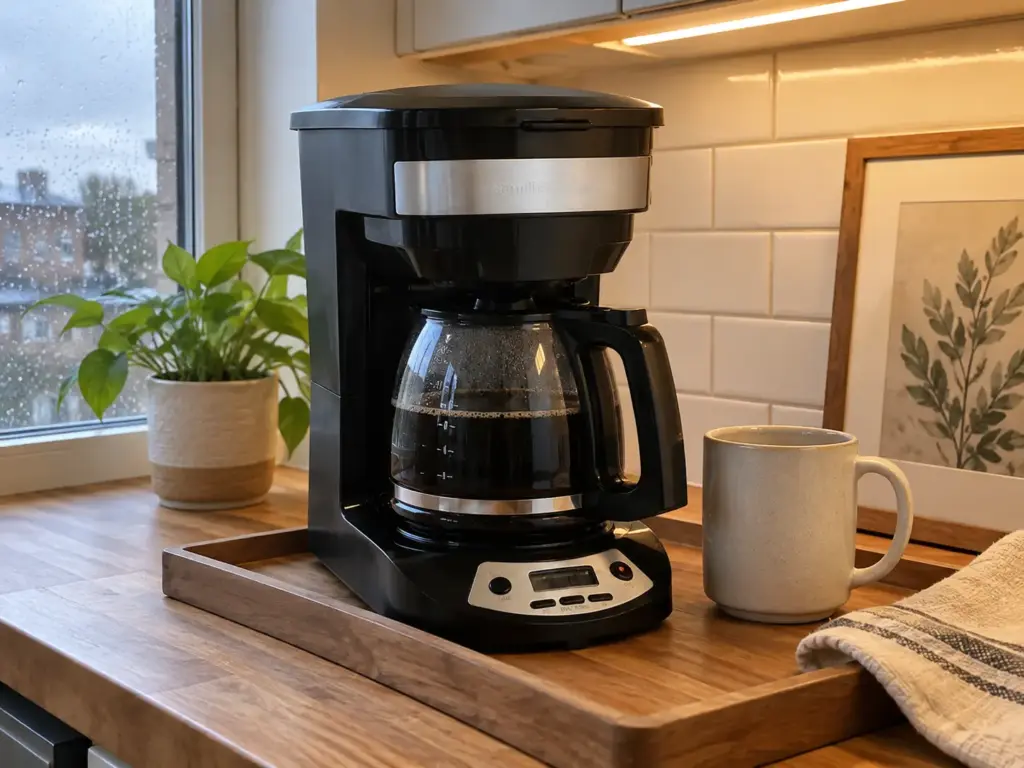
What It Is
The Hamilton Beach 46299J is a 12-cup programmable coffee maker with a glass carafe, rated at 60 fluid ounces on its listing. It offers three brew options (regular, bold and a 1-to-4-cup setting), a 24-hour auto-brew start, a two-hour automatic shutoff, a non-stick warming plate, and a carafe and basket that go in the dishwasher. The listing shows 4.4 stars from 6,495 ratings and publishes no brew temperature.
That last point sets the terms. Without a measurement, its heat is unproven, so this is a pick on convenience and on the small-batch setting, not on a measured temperature. If the first pot tastes sour at a proper dose, the machine has told you something the box did not.
Who It Fits
The 1-to-4-cup setting speaks to the reader who makes one or two mugs, and that is the half-pot case the machine is built for. It is also the setting with the least water over the bed, so the dose is the first thing to check there: a small batch magnifies a few grams either way. At a proper weight, the regular setting is the better first try than the bold button, which can taste a little bitter.
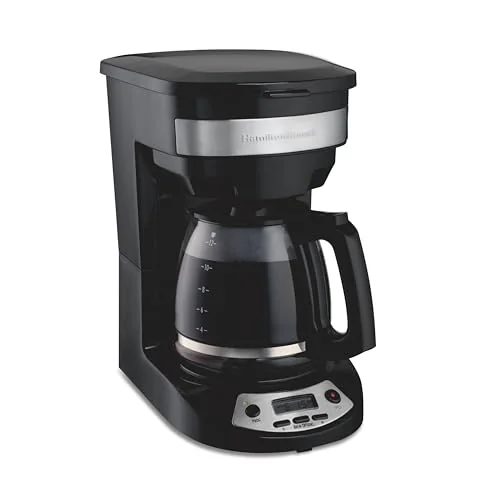
What It Gives Up
The evidence is thin, and it is not a test. The carafe glass and the handle can feel thin and may not survive daily use, and the heating element can burn out early. Carafe breakage and mixed results on leaking show up in summaries, so treat them as a pointer to what to check, not as a failure rate.
The last report is the quiet one: the regular setting comes out weak and the bold one slightly bitter, which is a calibration complaint that a scale answers better than a button. Together these describe a machine that does the basic job at a modest line and asks you to watch the parts that take the most handling.
Month Two: What the Cheapest Shelf Gives Up First
Week one is when every machine works. This section says what the buyer reviews show about the weeks after, and it is honest that, at this line, it is a handful of reviews and not a long-run study.
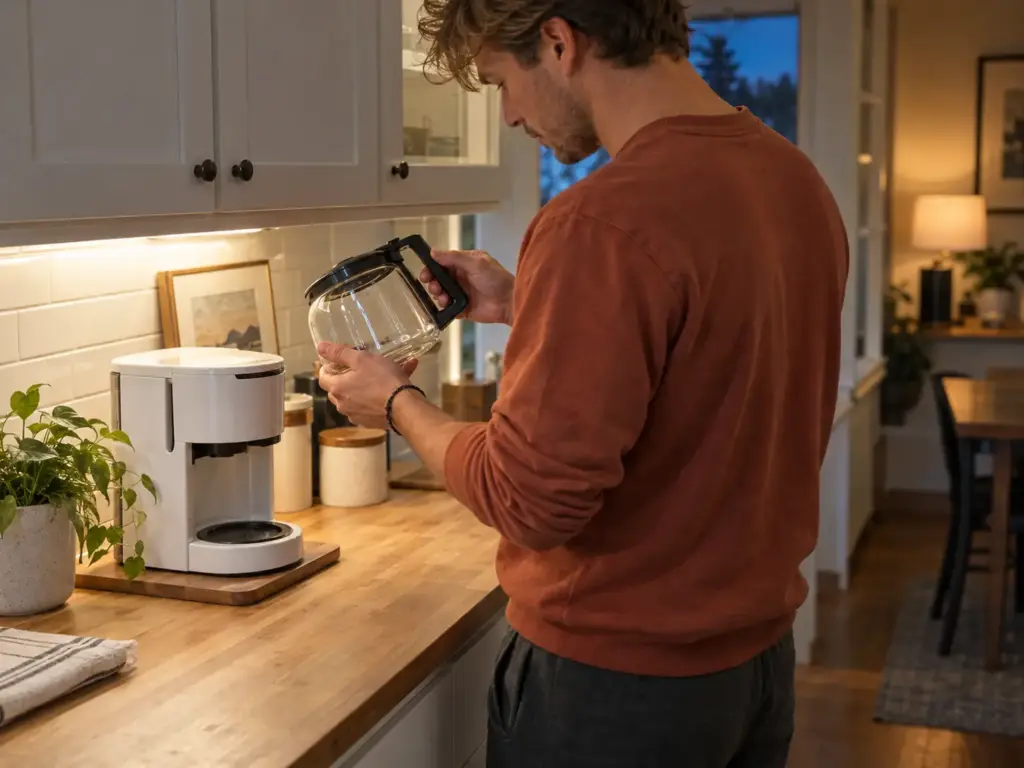
What the Reviews Report First
The carafe comes up first: thin glass and a thin handle, and breakage in the first months per Amazon’s summary.
The heating element is second, with one 1-star report of a burnout after two uses on the 46299J and a Mr. Coffee owner whose element stopped after five or six weeks. The clock is third: a Mr. Coffee owner reported in 2024 that the clock ran about twice as fast, which turns a scheduled brew into a pot made at the wrong hour.
None of these followed one machine for months. Each is a single report, and a machine-written summary is not a measurement. A cheap machine can still work after years, but it is not as reliably hot or well built as a Bunn or a Moccamaster, and both things can be true: a budget coffee maker can last for years and still make a cooler cup.
Set the clock against your phone the day the machine arrives and check it again a few days later. A clock that runs fast was the fault reported earliest, and a program that brews at the wrong hour is the cheapest problem to catch while the box is still in the house.
A Check for the End of Month One
Rinse the carafe and basket, brew one pot with tap water and taste the first mug and the last. A big gap means the plate is cooking the carafe or the pot is stratifying. Look at the carafe handle for play or hairline cracks, and confirm the plate cuts off when it should. Three checks, five minutes, and you know whether the machine is holding.
When to Step Up, and to What
If the pot still runs cool after the free fixes, the next step is a more expensive machine whose heat has been measured, and a thermal carafe if the pot sits; a scale comes before either, because it changes more cups than any machine. A used machine from a local listing can beat a new cheap one. That is advice from 2018, and a used machine comes with no lab note either, but it points at the same thing: measured heat is worth more than a new box.
What to Do Tomorrow Morning, and What to Check in a Month
Three things carry the article:
- The machine owns the heat; you own the dose, the grind and the warming plate, in that order.
- A model number is worth more than a brand, and a lab note belongs to one model only.
- The one machine that could be verified is a pick on convenience, and it comes with its flaws written down.
A month from now, taste the first mug of a pot against the last, and look at the carafe handle. If the last mug is the burnt one, or the handle has loosened, the machine is telling you what the cheapest shelf gives up first.
Tomorrow morning, weigh the coffee instead of scooping it, pour the finished pot into a mug, and switch the warmer off. Taste the second mug against the one you used to get. If it is cleaner, the plate was the problem; if it is still flat, move the dose a few grams and taste again.
Frequently Asked Questions
01What is the best inexpensive drip coffee maker?
The one machine under the line that could be verified is the Hamilton Beach 46299J, a 12-cup with a 1-to-4-cup setting. Its brew temperature is not published, so weigh the dose and taste the first pot.
02Which drip coffee maker is the most reliable?
No drip machine at this line has a long-run study behind it, so reliability here means a handful of buyer reviews. Carafes, heating elements and clocks are what those reports name first.
03What is the best drip coffee maker according to Consumer Reports?
Its lab note on one Mr. Coffee 12-cup programmable says the brew fell short of the 195°F (91°C) guideline. The overall scores sit behind a members login, so no ranking is repeated here.
04Is a $50 drip coffee maker good enough?
Yes, if the model is not known to run cool and you fix the dose and the warming plate first. If the pot stays flat after those free fixes, the machine is the limit, not the grind.

How did your cup turn out?
No comments yet. Tell us what you changed — and whether the needle moved.