
We may earn a commission when you buy through links on this page. It never changes what we recommend. How we pick
On this page8 parts
- What the 70 oz Hot Tank Changes in the Cup
- Check the Filter Before You Touch the Grind
- A Thin or Sour Cup: Grind Finer First, Then the Dose, Then the Restrictor
- The Tank in Month Two: Heat, Scale and the Plug
- The Warmer Plate and the Carafe: Where the Heat Goes After Brewing
- Which Bunn Fits Your Counter, and When Another Brand Does
- Tomorrow's Pot: Filter First, One Step Finer, Then Taste
- Frequently Asked Questions
You pour the first cup from a coffee maker Bunn built to fill a ten-cup pot in about four minutes, and it tastes thin, or sour, or the paper filter has folded over and the pot is full of grounds. The speed is real, and so is what it costs: a tank holding 70 ounces (about 2 liters) of water sits at brew temperature all day, which removes the heat-up wait and also shortens the time that water spends on the coffee. Less contact time points a cup toward sour before it points anywhere else. Below: what the tank does, the filter check that costs nothing, the order to change the grind, the dose and the flow restrictor, what a standing tank does by month two, and which Speed Brew fits which counter.
Quick Answer
A Bunn Speed Brew pours a ten-cup pot fast because a 70 oz tank stays hot all day, so there is no heat-up wait. The four-minute figure is Bunn’s own internal test. Whether the cup tastes right depends on the filter and the grind first, not on the badge.
What the 70 oz Hot Tank Changes in the Cup
The speed is the first thing every Bunn page sells, so it is the first thing to take apart. Where it comes from decides what it costs, and what it costs decides which fix makes sense when the cup comes out wrong.
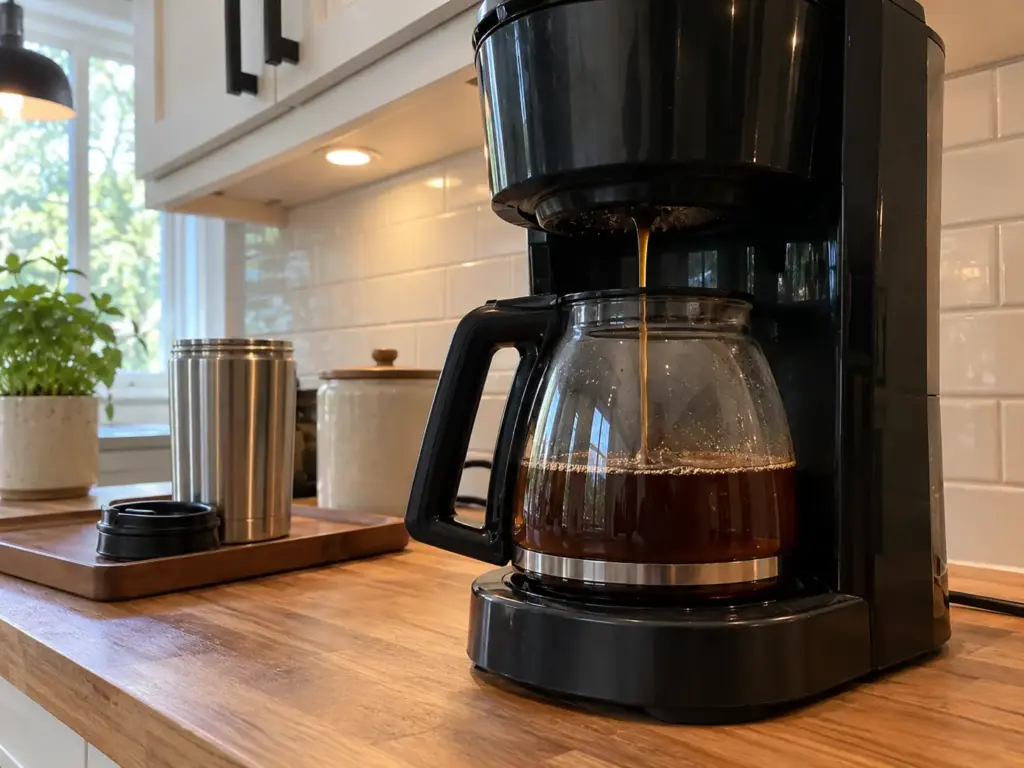
The Tank That Never Cools
Most drip machines heat water as it passes through, which is why they take a while to get going. A Speed Brew skips that step. Bunn’s spec sheet says the tank “keeps 70oz of water always hot,” and a buyer on the Elite listing puts the logic in one line: “In order for fast brewing the water stays HOT.” That 70 oz hot water tank is the whole trick.
So the pot starts the second you press the switch. The same design also means a reservoir of water sits at temperature around the clock, and that detail matters more at month two than it does on day one (more on that in a later section).
Four Minutes Is Bunn’s Own Test
Bunn’s spec block for the Classic says it fills a full 50 oz carafe, about 1.5 liters, in four minutes, and that it “Brews 20oz to fill a travel mug in 2 minutes.” Both claims sit behind a footnote: “Based on internal testing of BUNN Speed Brew coffee makers to other similar coffee makers.” That is the maker timing its own machine against machines it does not name. It tells you the machine is quick; it does not tell you what the water did to the grounds in those four minutes.
The coffee world does publish a reference. The Specialty Coffee Association’s standards page says “SCA Standards create a shared framework for quality, consistency, and best practices across the coffee industry,” and it lists a home-brewer document titled “Home Coffee Brewers: Specifications and Test Methods.” The page itself prints no time and no temperature, so this article quotes no SCA number and leaves the comparison to be made at the source. Bunn’s shop pages, for their part, print no brew temperature at all.
What Fast Takes From the Grounds
Extraction is a matter of how long hot water stays in contact with the coffee. Shorten the visit and the water leaves before it has taken the heavier, sweeter material, so the cup tastes sour, thin and short. That is under-extraction, and it is the direction a Bunn cup tends to point.
A common complaint is that the water runs through the coffee too fast. The fast cycle means the machine needs more coffee than a standard recipe, so add a bit more grounds. If you use 60 grams today (about six level scoops), that means 75 grams.
The same post adds the other edge: “Longer brew time for more flavor yes but also a bitter flavor too.” Faster gives sour, slower gives bitter, and the Bunn starts on the fast side.
The temperature question is open too. Neither post says how the reading was taken, so treat them as two owners’ numbers and not as a spec.
Bunn’s own listing copy for the Platinum Thermal claims other brewers can run above a 200°F (93°C) standard, which is the maker’s line and not the SCA’s. If water temperature is the question you care about most, a drip machine picked by water temperature is the place to compare.
Check the Filter Before You Touch the Grind
Before you change a single grind setting, look at the filter. A Bunn funnel is built around a taller filter than most machines use, and the wrong height produces a cup that looks like a grind problem and is not one.
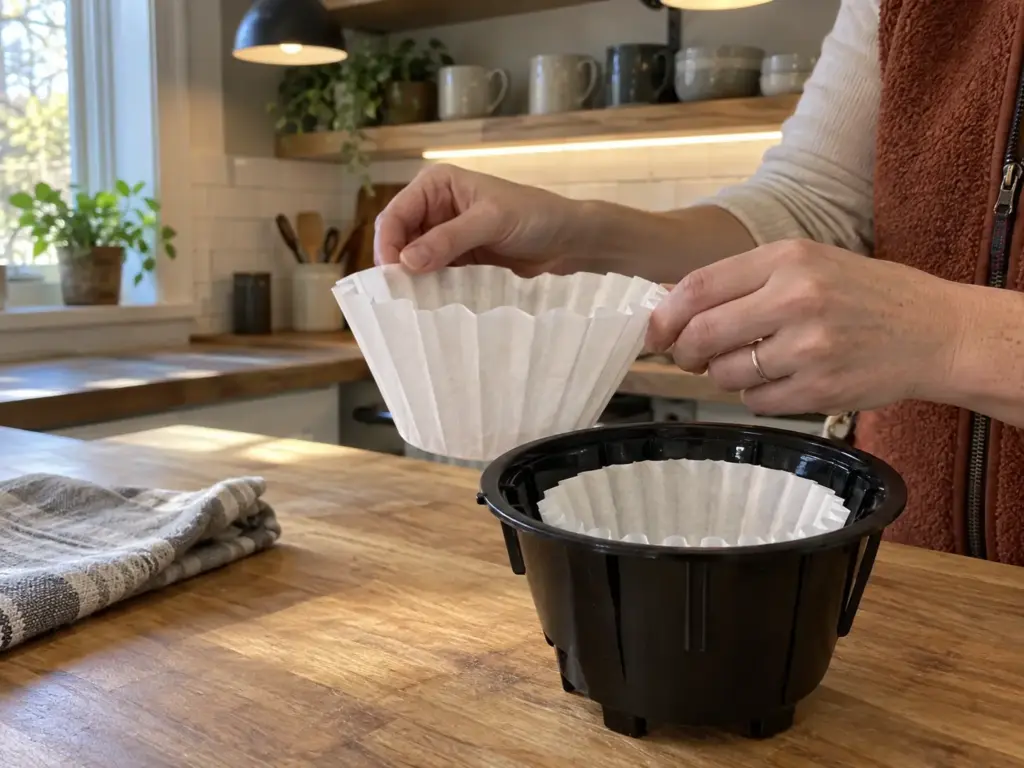
Why a Bunn Funnel Wants a Taller Filter
The funnel is, in Bunn’s words, “engineered to accommodate BUNN filters which are” a quarter inch taller than other filters. A quarter inch is easy to dismiss until you see where it matters: the extra wall keeps the bed of grounds contained when water arrives fast. The usual fix for the fast cycle is taller than normal filters.
What Goes Wrong With a Standard Filter
A filter that sits low lets water run over the rim and carry grounds into the pot. A standard-size paper basket can splash coffee on the Elite, so the filters designed for the BUNN coffee maker are the safer choice. The giveaway is a layer of grounds floating on the surface of the pot, plus a cup that tastes both gritty and weak, because the water that overflowed never touched the bed.
This is also the machine’s tie to the brand: the right filter is Bunn’s filter. That is a cost, and it is a fair one to count before you buy.
The Half-Pot Overflow
Short batches are where it shows up, and a taller filter helps with overfilling.
Check this before anything else. It costs the price of the right filter and no test cups, and once the funnel behaves, the next free change is the grind size that suits a drip machine.
After the pot finishes, look at the surface before you pour. A skin of loose grounds floating on top means the water went over the filter wall, and no grind change will fix that. Put the tall filter in and brew the same amount again before touching anything else.
A Thin or Sour Cup: Grind Finer First, Then the Dose, Then the Restrictor
With the filter right, the cup can still point one way, and the direction decides what to change first. This section puts the changes in order, one at a time, free ones before paid ones, with a taste between each.
Which Way the Cup Is Off
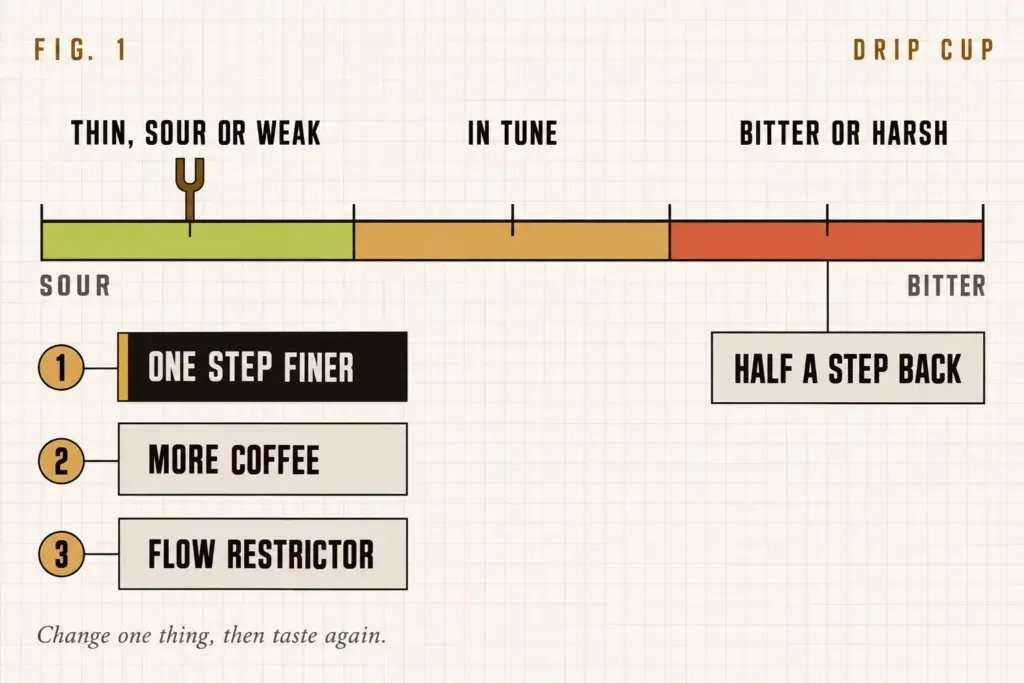
Thin, sour and weak all say the same thing: the water left early. Bitter, harsh and drying say the opposite, that it stayed too long or reached too much. On a Bunn, the first group is the usual one, because the machine’s whole design is a short visit.
That is useful, because it tells you which way not to go. The reflex when a cup is weak is to add more coffee, and that is the right call eventually, but it is the second change, not the first. If you get past a sour cup and land on a bitter one, you went one step too far; come back half a step and stop.
One Step Finer, Then Taste
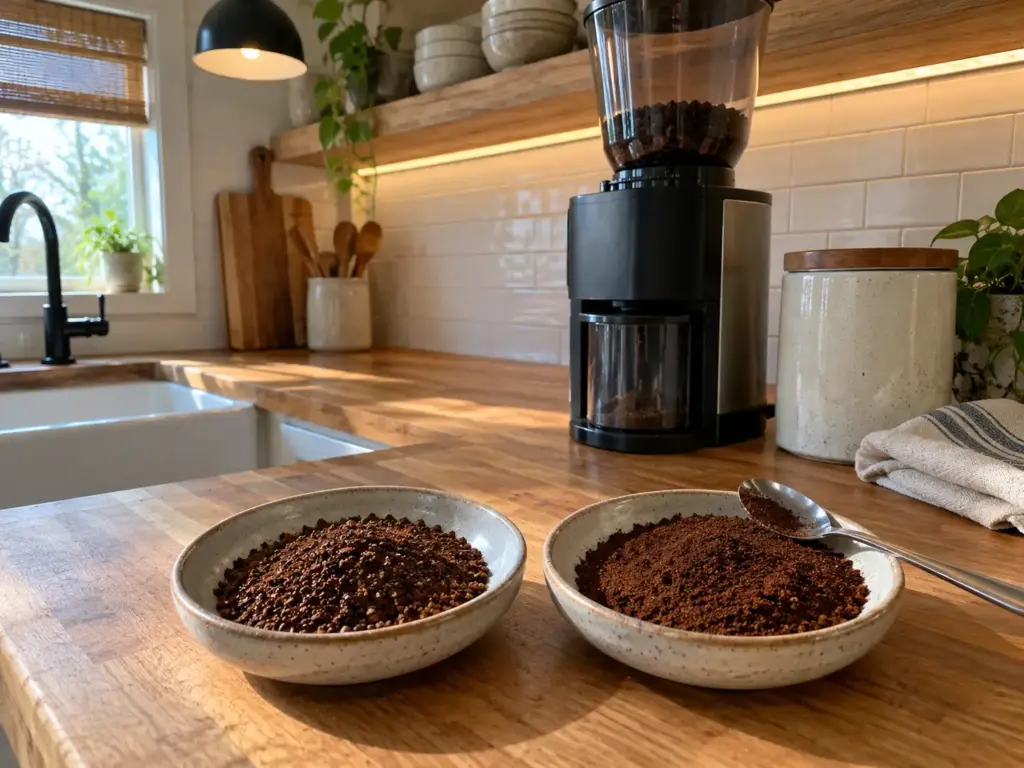
The free change is the grind. A finer grind exposes more surface to the water, so a four-minute cycle pulls more out of the same coffee. If you cannot tell a fine setting from a coarse one by eye, how to tell a fine grind from a coarse one shows how to check before you move anything. Move one grind step, brew the same dose the same way, and taste.
What you want to find is a cup that is rounder and less sharp than the last one. If it is flatter but still sour, the grind may not be done; one more step is fair. If the cup turned bitter and dry, you overshot, and how grind size changes the taste from sour to bitter maps the whole range so you know where you are on it.
(A grinder keeps some grounds inside, so the first pot after a change can still carry the old setting. Brew once, throw nothing away, and judge the second pot.)
One catch deserves a warning. A finer grind slows the flow through the funnel. A Bunn that overflows after you go finer is telling you to put the tall filter in, not to go coarser again.
Then the Dose, Then the Restrictor
The order is the part to hold on to: grind one step finer first, then more coffee, then the flow restrictor, tasting between each, because a reader who changes all three at once can never tell which one worked.
The dose is second. It is free, and it works by making the cup stronger in the ratio sense, where the water meets more coffee, without touching time. The risk is the opposite flaw: more coffee in the same funnel is also more bed to overflow, so check the filter again after any dose increase.
The restrictor is third, because it costs money and slows the flow on purpose. Bunn’s page lists a “Flow Restrictor sold separately with Speed Brew parts bundle,” and it does not say which models ship with one, so check the box before you buy another.
Owners use it. Bunn offers a flow-restricted spray head for some models, which is the fix people reach for when they want a stronger cup. A slower flow means more contact time, which is the thing the machine trades away, so this is the one change that attacks the cause instead of working around it.
Write the change on a strip of tape on the lid of the grinder or the canister: the date, the setting and the dose. When a cup comes out off a week later, you can see which change was last, and you can undo exactly that one.
If none of the three moves a thin cup, it may not be the coffee at all. A cool, flat cup can come from the tank or the plate, which the next two sections cover. Check those before a fourth change.
The Tank in Month Two: Heat, Scale and the Plug
The tank that makes the machine fast is also water that sits warm all day. After the first week, that stops being a feature and starts being a routine. Here is what owners and the mechanism say it costs.
Heat All Day
A standing tank is a design choice, not a fault, and the cost is energy and attention. On these machines the water stays heated around the clock. The machine is always on, and it draws power constantly to keep the water hot. Take it as one owner’s figure.
At that draw, a full day is 35 watts for 24 hours, which comes to 840 watt-hours, a little under one kilowatt-hour every day (multiply it by the rate on your own bill to see what that is worth to you).
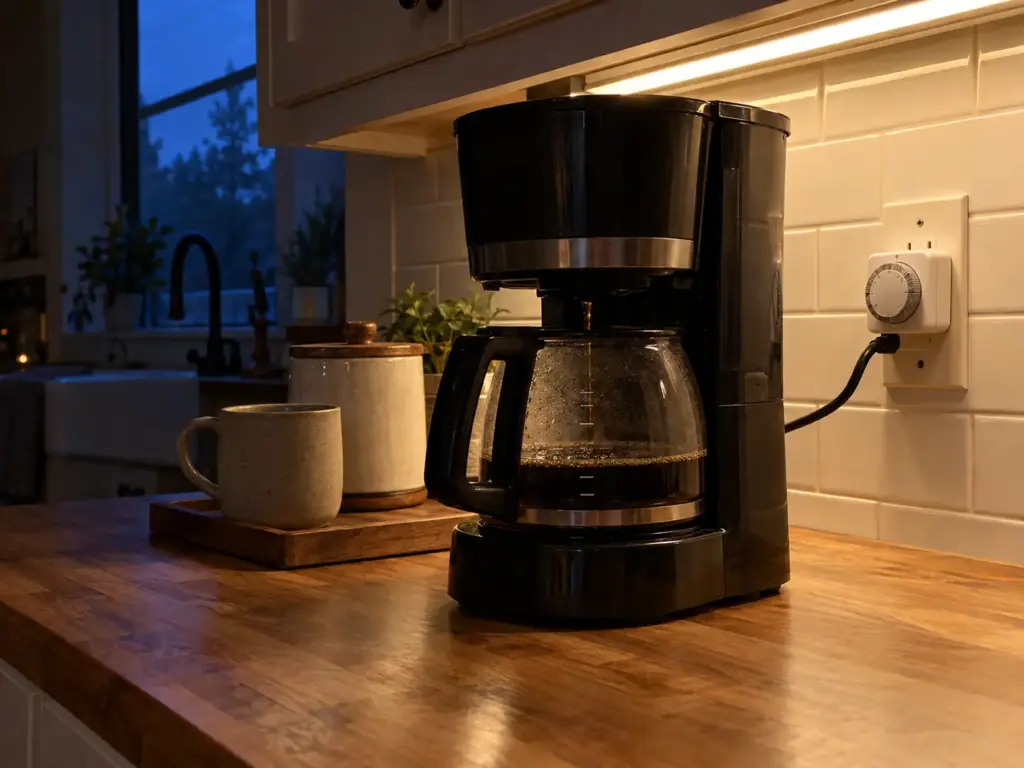
The fix is to put the machine on a timer. Some people add a digital timer, set to switch the machine on about an hour before they wake. The tank is then hot when you are, not all night.
Where Scale Builds
Scale forms where water sits warm. A tank that holds 70 ounces at temperature, day and night, is that place, and tap water leaves its dissolved minerals behind as it heats, hard water more than soft. What the mechanism gives you is the symptom: scale restricts flow and insulates the heating element, so a pot that comes out cool or weak at month two may be the tank before it is the grind.
Owners’ routines vary. Running vinegar through the machine is a cleaning habit some people use, but it is not a set interval. An Elite buyer cleans twice a year. Distilled or reverse-osmosis water is the way to avoid mineral build-up in the first place, though that is advice, not a spec.
A Tank Left Unused
Leaving the tank alone for days is its own problem. The Elite’s flaw is a reviewer’s warning about exactly this: “as it gradually evaporates it can get low enough to cause the element to fail.” That reviewer switches both switches off for a week or more away. If you travel, copy that habit.
The BUNN CSB2B Speed Brew Elite 10-Cup has the same 70 oz standing tank in a different housing, a funnel made for BUNN filters, and a carafe with a lid that controls the pour, according to its listing. The evaporation warning came from an owner of this machine, but the same standing tank sits in the other two, so the answer is the switches, not a different pot.
Beyond the first month, the evidence is buyer reviews and the written warranty. Bunn states a “3-Year Warranty on all Speed Brew models.” Lifespans vary: some of these machines last a long time, and others are replaced sooner. Older models may wear out an internal rubber gasket after a few years, and that does not necessarily describe the current line.
If your Bunn is old, check the sticker. The 2006 Consumer Product Safety Commission recall covers models GR-10B, GR-10W, B-10B, B-10W and BT-10B sold between May 2004 and January 2006, for a plastic pour-in bowl and lid that can melt or ignite. The Speed Brew line is not on it. For a view of what a cheaper machine looks like at the same age, the year-two test of a cheaper machine takes it from the other side.
If the first pot after a long weekend tastes flat, run a full tank of plain water through the machine and throw it out before you brew. Water that sat for days in a warm tank can taste stale, and the first pot is where you taste it.
The Warmer Plate and the Carafe: Where the Heat Goes After Brewing
The brew is hot when it leaves the funnel. The carafe decides how the cup tastes twenty minutes later, and a glass carafe on a plate is a second heater you have to manage.
The Plate Is a Switch You Turn Off
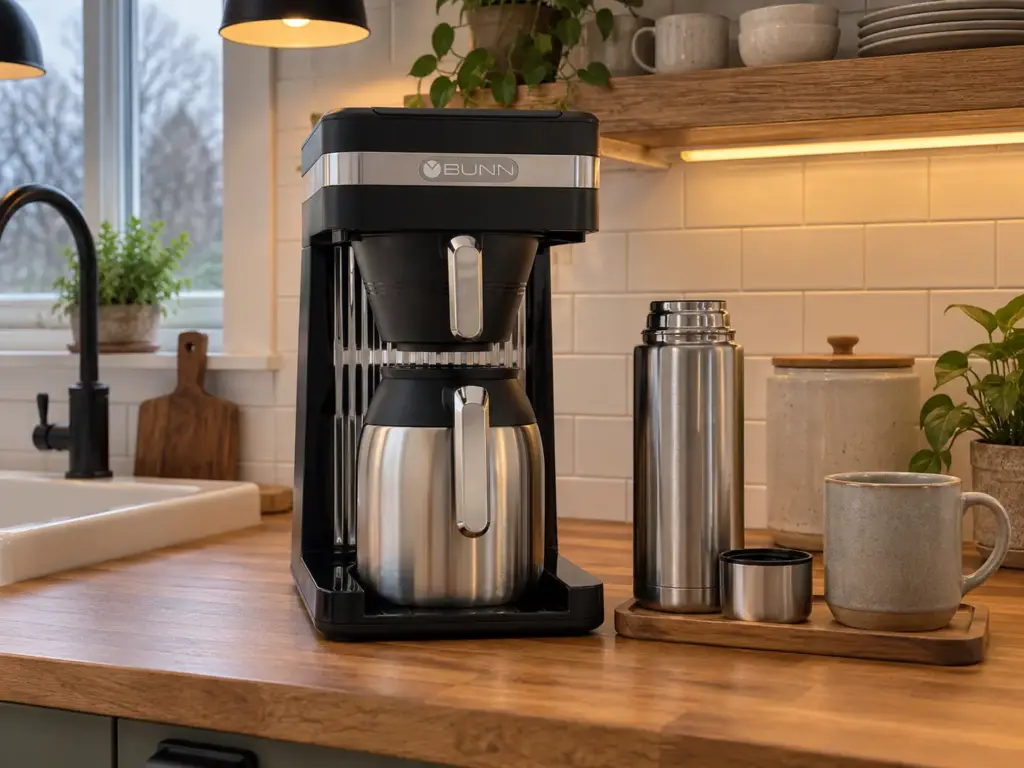
On the glass-carafe models, the warmer plate runs from a switch (the listing calls it switch activated), so it keeps heating until you turn it off. A plate that keeps heating a pot goes on cooking the coffee that is already made, and the cup tends to go flat and harsh toward the end of the pot. Pouring the brew into a thermos right away keeps it from scorching on the heating plate.
The free fix is the switch. Turn the plate off as soon as you are done pouring, or do not turn it on at all.
Pour Into a Thermos, or Buy the Thermal Carafe
Keeping the brew on a powered hot plate warmer is a bad idea, and a machine that brews into a thermos-style carafe avoids that. A thermos does the same job for nothing: pour the pot into it, close it, and the plate never enters the picture.
If you want that built in, the BUNN 55200 CSB3T Speed Brew Platinum Thermal pairs the same 70 oz tank with a vacuum-insulated, double-wall thermal carafe, which its listing says holds serving temperature for two hours or more (that is the maker’s copy). The carafe does the holding, so there is no plate. Its flaw is durability: some units last only about 1.5 years, which is not a measurement, but one to weigh against the three-year warranty.
On cost, the Platinum is the splurge of the family, and the Classic does the same tank job and leaves the heat to the plate. If you already own a good thermos, that is your cheapest thermal carafe. And if the carafe is what you are choosing on, drip machines sorted by how long the carafe stays hot lines them up by that one question.
Rinse a thermos with hot tap water for a minute before you pour the pot into it. A cold steel wall pulls heat out of the coffee in the first minutes, and that loss is the part you can prevent for free.
Which Bunn Fits Your Counter, and When Another Brand Does
The last question is the model and the counter: what fits under the cabinet, what the warranty promises, and when a different brand is the sensible call.
The Classic on a Real Counter
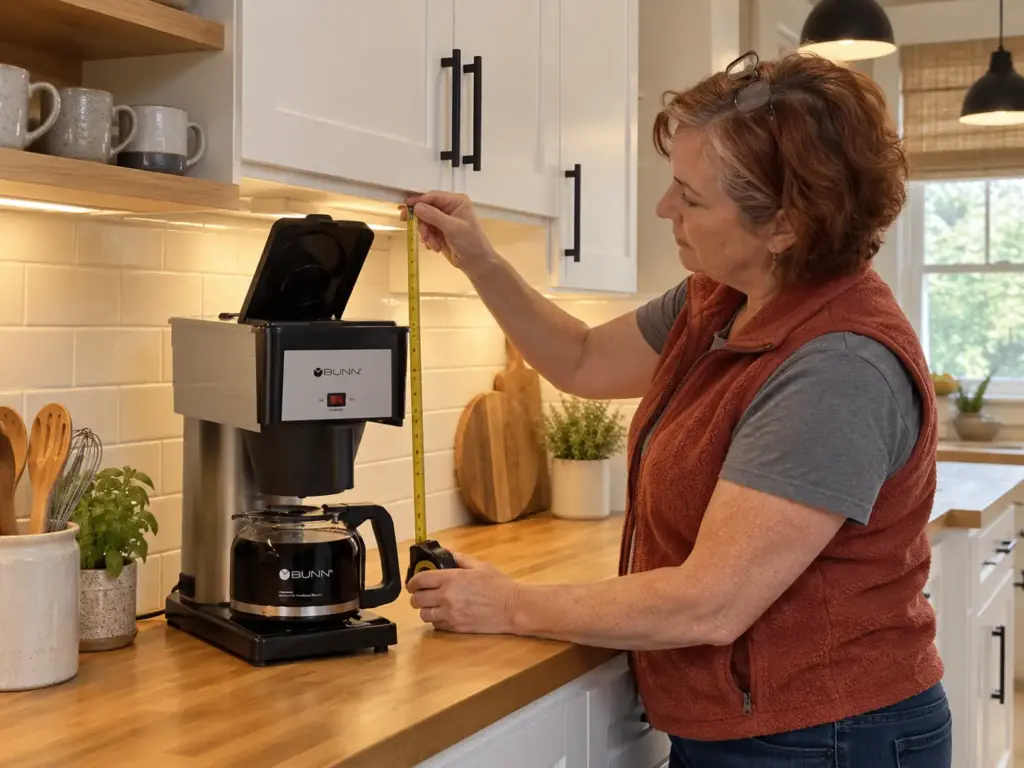
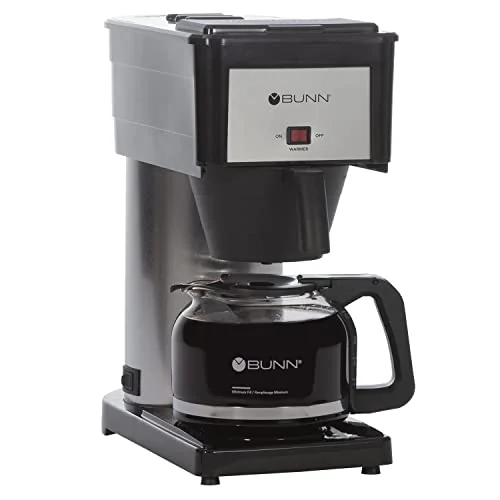
The BUNN BXB Speed Brew Classic 10-Cup is the reference unit the other two are measured against, a 10 cup machine whose batch size is a full 50 oz pot. It measures 14.3 inches high (36 cm), 7.1 wide (18 cm) and 13.8 deep (35 cm) with the lid closed. The lid-open height is not on the page, so measure the under cabinet gap with the lid raised, to the underside of the cabinet, the check the box does not do for you.
If the gap is tight, a coffee maker less than 14 inches tall is a different starting point. Bunn lists it as made in USA, designed and assembled there, and backs it with the three-year warranty.
Its flaw is in a buyer’s review: “It does not stop flowing if you pull the pot out,” so the drip carries on after the carafe is gone. Add to that the half-pot overflow from the family-wide report above.
Classic, Elite or Thermal
All three share the tank, and the difference is what happens after the water leaves it. The Classic leaves the heat to a warmer plate and drips on after you pull the pot. The Elite adds a lid-controlled pour and has to be switched off if it will sit unused for days, or the tank can run low enough to hurt the element. If you want no plate at all, the Platinum Thermal swaps it for a vacuum carafe, and carries a buyer report of a short life.
None of them wins on every count, and the cup is mostly decided before you choose, by the filter, the grind and the dose.
When Another Brand Is the Answer
If you are still weighing makers, which brand of drip coffee maker is best is the pillar this review hangs from.
A few cases point away from a Bunn on their own. A cabinet lower than the lid-open height is one. A cup that stays thin after the dose and the restrictor have both had their turn is another. And a household that will not run a tank all day, or a timer, is the third.
For those, the sibling reviews cover different ground: a Moccamaster is reviewed on whether it is worth it from four cups, a Cuisinart by cups brewed, and a Ninja as a drip or pod machine with the flaw stated first.
Tomorrow’s Pot: Filter First, One Step Finer, Then Taste
Three things carry over from all of this.
- The speed comes from a tank that never cools, and the four minutes is Bunn’s own test. Fast machines trade contact time for speed, and the cup shows it.
- Fix the cup in order: the right filter, one step finer, more coffee, then the flow restrictor, tasting between each change.
- A standing tank has a month-two bill in heat and care, and a glass carafe on a plate has one of its own.
A month from now, brew the first pot of the morning and compare it to your notes from week one: if it tastes flatter or comes out cooler, look at the tank water and the clock on the timer before you touch the grind.
For tomorrow morning, put the taller BUNN filter in the funnel, move the grind one step finer, brew the same dose, and taste for a cup that is rounder and less sharp. The grind that fits a four-minute brew is the next question, and the grind size that suits a drip machine is where to take it.
Frequently Asked Questions
01What is so special about a Bunn coffee maker?
Its tank keeps 70 oz of water hot all day, so a pot starts at once and finishes in about four minutes by Bunn’s own test. The trade is less time on the grounds, which is why the grind and the dose matter more.
02How long does a Bunn coffee maker last?
Owners report anything from five years to about twenty, and Bunn writes only a three-year warranty on Speed Brew models. A Platinum review summary reports 1.5 years for some units. No measured lifespan was found.
03Which Bunn coffee maker is the best?
None wins on every count. The Classic is the reference, the Elite has a different pour but a tank that must not be left to run low, and the Platinum Thermal removes the warmer plate but has a short-life report.
04Why do people say a Bunn coffee maker is expensive?
It carries a heated 70 oz tank and the heater that keeps it hot, which a basic drip machine does not. No price is quoted here; cheaper machines exist, and the tank is what the extra buys.
05Do I have to leave a Bunn coffee maker on all day?
The tank stays hot while it is plugged in and switched on. Owners put it on a timer to wake before they do, and an Elite owner turns both switches off for a week or more away.

How did your cup turn out?
No comments yet. Tell us what you changed — and whether the needle moved.