



We may earn a commission when you buy through links on this page. It never changes what we recommend. How we pick
On this page9 parts
- Which Mr. Coffee Are You Judging, the Switch or the Programmable?
- Sour or Weak From a Mr. Coffee? Grind Finer, Then Check the Heat
- The Carafe and the Warming Plate Change the Cup After the Brew
- What Month Two to Month Twelve Looks Like on Owner Reports
- The One-Year Warranty Against the Years You Expect
- The Flaws Written Down, and the Cleaning That Keeps It Going
- When to Keep the Mr. Coffee and When to Move Up
- Grind a Step Finer Tomorrow, Then Keep the Receipt
- Frequently Asked Questions
Type coffee maker Mr. Coffee into a search bar and you get a name, not a machine: the same label sits on a 5-cup with a filtration disk, a 12-cup with one switch and no timer, a 12-cup with Delay Brew, and a 14-cup with a four-hour keep-warm. That is how one Amazon owner can report eleven years of near-daily use while another is on a third machine in three years, and both are describing a real Mr. Coffee.
What ends up in your mug depends on how hot that model’s water gets and how long the pot then sits on its plate, and a kitchen thermometer measures both. So the verdict below depends on the model, is counted in years instead of first-week taste, and is set against a one-year warranty.
Quick Answer
A Mr. Coffee is worth it as a machine you expect to replace. The cup depends on the model: a 5-cup Mini Brew measured 181.9°F (83.3°C), while the Optimal Brew met Consumer Reports’ 195°F (91°C) guideline. The warranty is one year, lifespans range from six months to many years, and no lifespan figure has been published.
Which Mr. Coffee Are You Judging, the Switch or the Programmable?
The name on the box covers a 5-cup, a 12-cup with a switch, a 12-cup programmable and a 14-cup, so a verdict on Mr. Coffee is really a verdict on one of four machines. This section sorts them first, because heat, carafe and lifespan all change with the model. Find yours here before reading on.
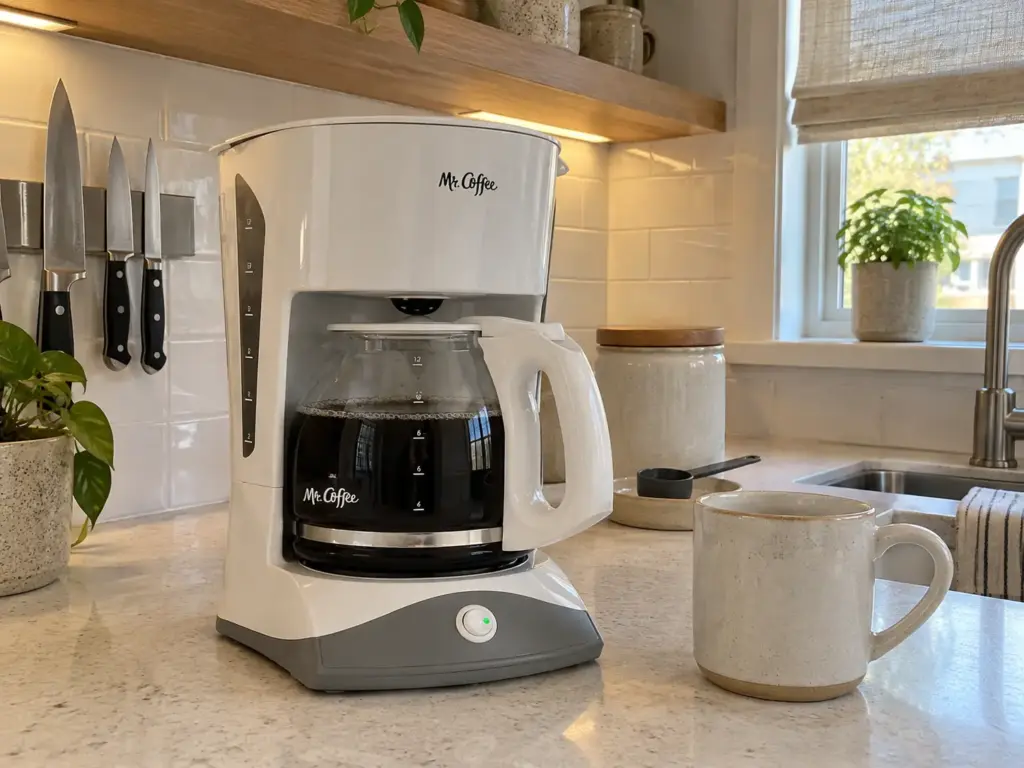
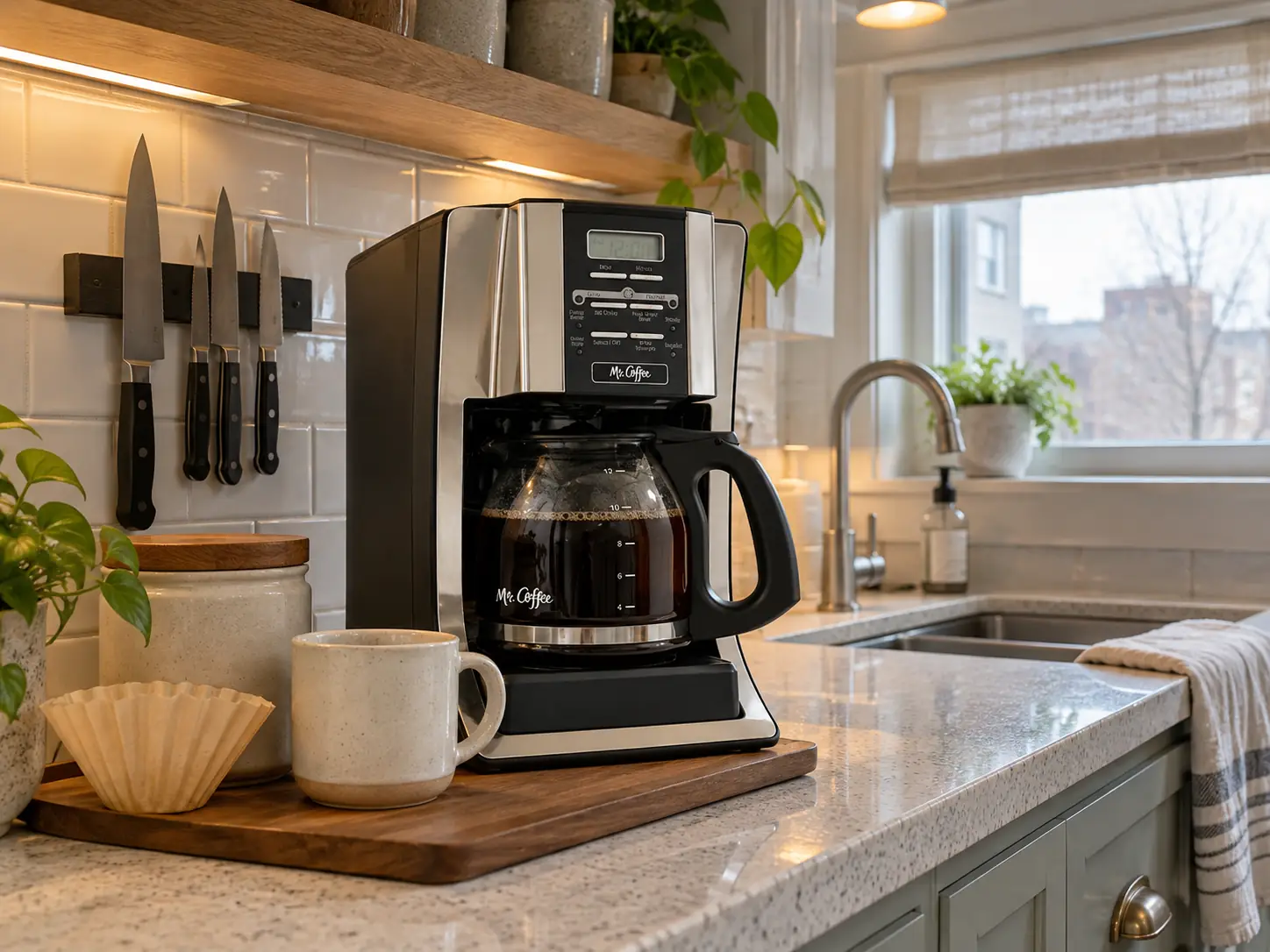
The 5-cup, the 12-cup and the 14-cup are different machines
Start with the sizes, because a “cup” on these machines is 5 fluid ounces: the 5-cup’s 25-ounce capacity is two 12-ounce mugs, so a 12-cup carafe works out to about 60 ounces and a 14-cup to about 70 if the same cup holds.
- The 5-cup programmable adds Auto Pause, a Brew Later timer and a water filtration disk, and the listing says it shuts itself off after two hours.
- The 12-cup Simple Brew is a manual switch with a permanent filter, no timer and, according to its owners, no automatic shut-off.
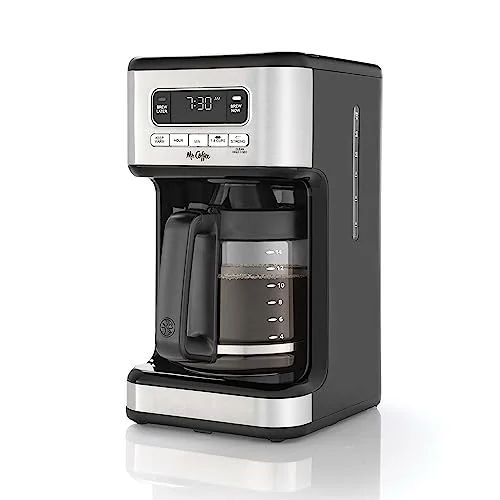
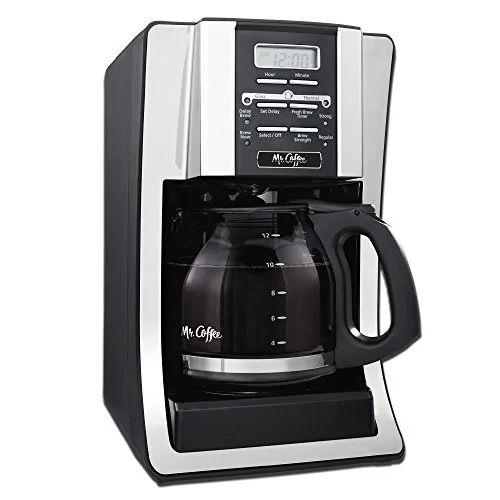
- The 12-cup programmable adds a Brew Strength Selector, Delay Brew and a two-hour shut-off, and it is built to take a thermal carafe that the maker sells separately.
- The 14-cup programmable adds a one-to-four-cup small-batch selector and a keep-warm setting of one to four hours, with an automatic shut-off after four.
That is why “mine is fine” and “mine died in a year” can both be true: they are usually about different machines from the same shelf, and every claim below is tied to a model for that reason. The guide on which drip brand is best gives Mr. Coffee no verdict of its own, which leaves cost over the years as this article’s half of the answer.
What the Simple Brew switch leaves out
The Simple Brew has no timer and no automatic shut-off: its listing says the power light is there to remind you to shut it off. The carafe is the other catch. Grab-A-Cup Auto Pause is meant to let you pull the pot mid-brew, but in practice pulling the carafe out during or right after brewing can drip coffee down onto the hot plate.
That makes the Mr. Coffee 12-Cup Simple Brew Switch the benchmark the other three get measured against: 12 cups, a permanent filter and a single switch.
Heavy daily use shortens that: internal leaks and heating-coil failures are the usual endings. That is a harder life than one pot a morning, so it marks the rough end of the range rather than the middle.
Where the timer models earn their keep
The programmable models close the Simple Brew’s two gaps. Delay Brew or Brew Later has the pot waiting when you get up, and the shut-off (two hours on the 5-cup and the 12-cup, four on the 14-cup) turns the plate off for you. That is the whole difference, and it is a real one for anyone who has left the house with a switch still on.
What the timer does not buy is life. Slow pots, overflowing baskets and dead heating elements show up on programmable models too. Treating the Mr. Coffee as something you rebuy is a fair way to buy one.
Sour or Weak From a Mr. Coffee? Grind Finer, Then Check the Heat
A cool brew tastes sour and thin, and a cheap machine can be the cool part. But a grind that is too coarse produces the same cup for free, so the grind changes first and the machine is judged second. Each step below is one change, with a taste in between.
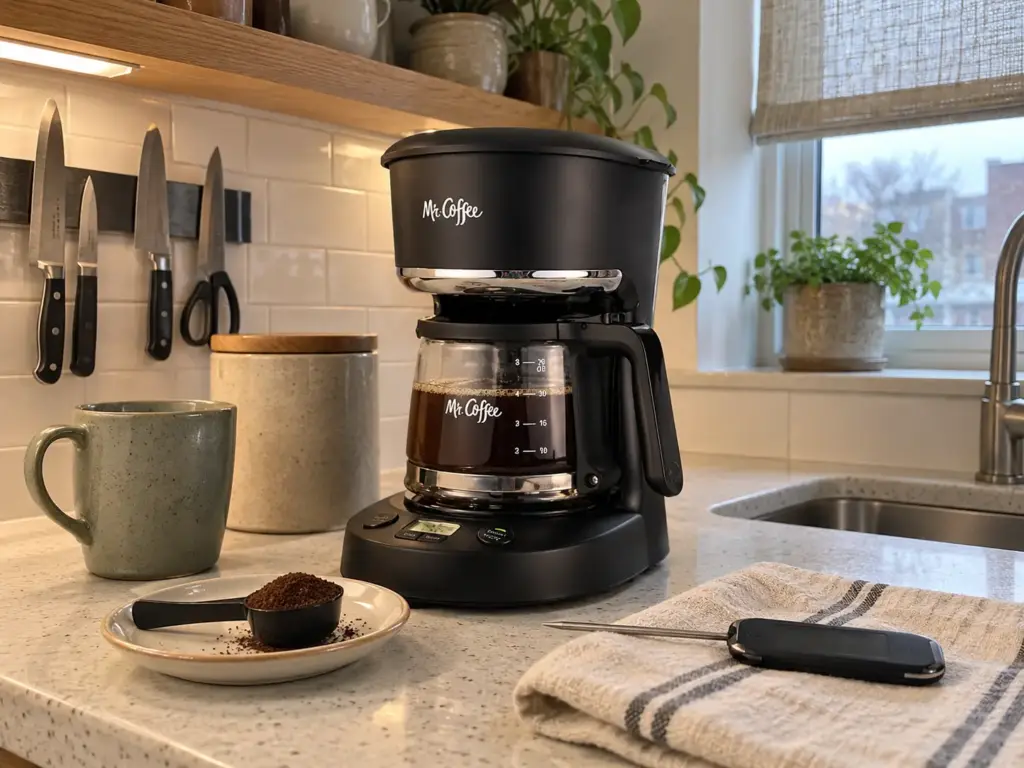
Sour and weak point one way: the water left early
Sour with a thin middle means under-extraction: the water passed through before it dissolved enough of what makes a cup sweet, so the first acids dominate and little follows them. On a drip machine two things set that, and you control one of them for nothing: how coarse the grounds are, and how hot the water is when it reaches them. TechGearLab’s verdict on its 5-cup Mini Brew, a light cup with “a bright sparkle of acidity,” reads like the same direction in a reviewer’s words. Bitter and dry points the opposite way, toward a coarser grind, and this section is only for the sour pot.
Change the grind first, and taste again
Go one step finer, keep the dose and the water the same, and brew the pot the same way. The next cup should taste less sharp, a little sweeter and fuller. If it turned dry and bitter, you overshot, so come back half a step (on a grinder with coarse steps, take half a step the first time). With pre-ground coffee the grind is fixed, so skip to the temperature check below.
If the cup is flatter but still sharp after that one step, the heat is the next suspect. The steps on a home grinder are laid out in the drip grind that fixes a sour pot.
Then take the pot’s temperature with a kitchen thermometer
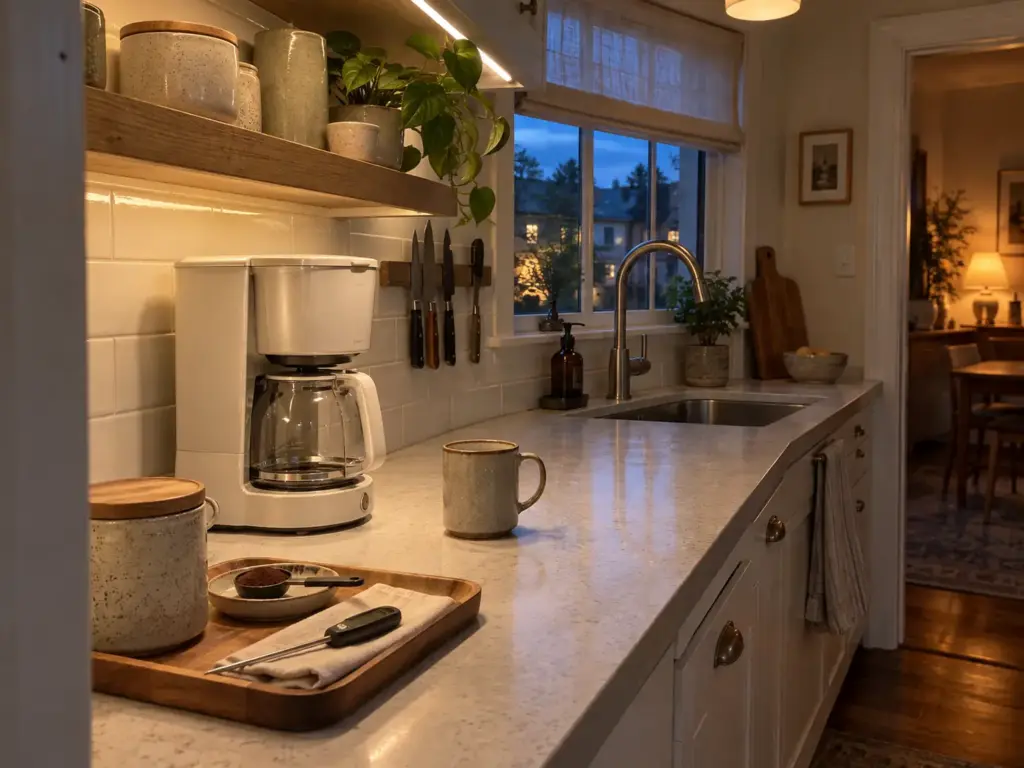
Use the meat or candy thermometer already in your drawer. Put the tip in the pot at the end of the brew, before anything is poured, not in the reservoir and not in the first cup. Read it, then read it again five minutes later.
One owner supplies the only reference points that exist for a glass-carafe Mr. Coffee. Using a candy thermometer on a 12-cup in 2012, that owner read 175°F (79°C) right after brewing and 155°F (68°C) within five minutes. One owner, one meter and an old unit: it is a reference, not a pass mark.
Do not hold your own reading against 195°F (91°C). That figure is a lab’s brew-temperature guideline, and by the time the coffee reaches your thermometer the water has already lost heat to the basket, the carafe and the air. Compare the pot to itself instead: a first reading that stays low after the grind change points at the machine, while a big drop between the two readings points at the carafe.
Take the reading on the first pot of the day. TechGearLab saw its 5-cup brew at lower temperatures with each consecutive pot, so a third pot tells you less about the machine than the first one does.
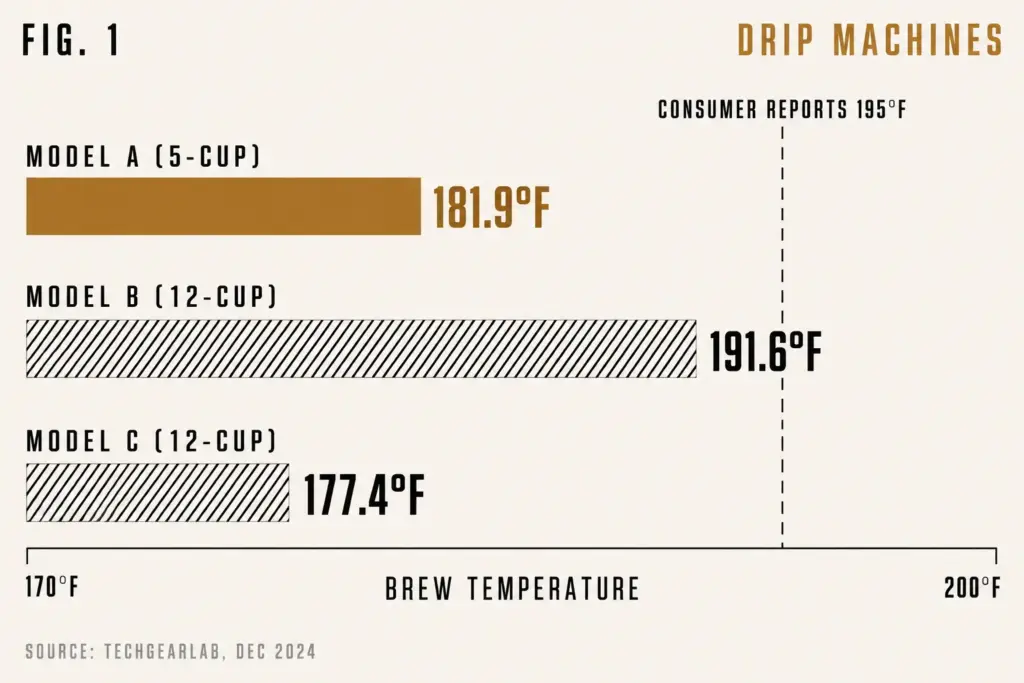
In TechGearLab’s test of December 2024, the 5-cup Mini Brew averaged 181.9°F (83.3°C) across five separate brews. The same test put a Ninja 12-cup at 191.6°F (88.7°C) and a Black+Decker 12-cup at 177.4°F (80.8°C), so Mr. Coffee was not the coolest machine in the lineup.
The brand is not the variable. The machine is.
What a measured 181.9°F and a 195°F guideline say about the model
The 5-cup Mini Brew sits 13°F below the 195°F guideline, and the same brand has a result on the other side of it. According to Consumer Reports’ lab test of the Optimal Brew, that 10-cup model “Met recommended guidelines of 195°F or more, maintained for five or six minutes.” Two labs, two methods and two different models mean the numbers show a direction, not an exact gap. What they do show is that a pass and a miss can carry one name, and that the Ninja’s 191.6°F also fell short of 195°F.
The buyer reviews lean the same way: some say the machine does not heat the coffee enough.
The Mr. Coffee 5-Cup Programmable Coffee Maker is the same size class as the unit TechGearLab tested, but that unit was the Mini Brew, a one-switch model, and no open test of the programmable’s heat turned up. So 181.9°F is a lead for this size, not a measurement of this machine. The programmable brings two complaints of its own: grounds can end up in every cup, and the basket can overflow at a full scoop, sometimes after only a few months.
The limit, stated once: no maker brew-temperature figure for these four models was available to check, and no open test covers the 12-cup or the 14-cup. The verdict on heat depends on the model in front of you. Brew temperature belongs to the machine, and the heat you give up at the cheap end is a subject of its own.
The Carafe and the Warming Plate Change the Cup After the Brew
The machine’s job ends when the last drop falls, but the pot then sits on a glass carafe over a heated plate for as long as no one pours it. That is where a good brew goes flat. This section is about those next hours.
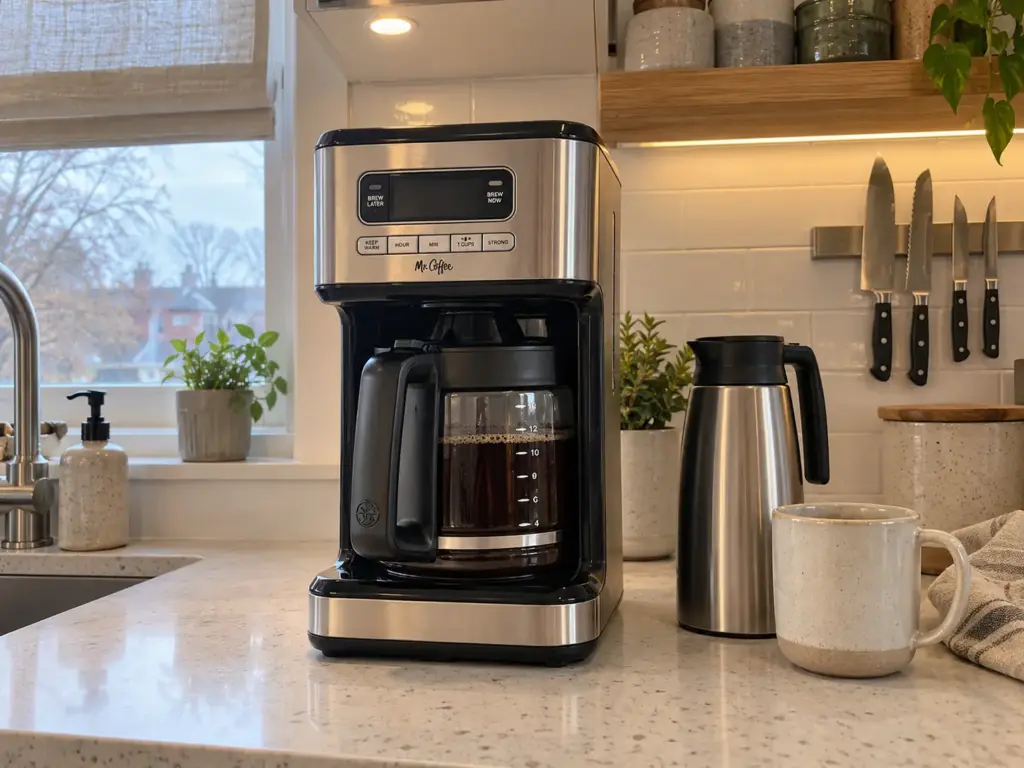
A glass carafe loses its heat in minutes
The same owner who read 175°F (79°C) right after brewing read 155°F (68°C) five minutes later: 20°F (11°C) gone before the first cup was finished. The owner’s answer was an insulated carafe, used at once. A pot brewed at 7:00 and poured again at 9:30 is a lukewarm second cup, not the pot that came out of the machine. The plate keeps it warm, not fresh.
On the 12-cup, the opposite problem shows up: the burner can turn off after the coffee is made, so a pot you drink off and on can get cold. The two programmables fail in opposite directions, one letting the pot cool and the other keeping it on the plate. How a better machine handles it is covered in the guide to carafe heat in the next price class.
The plate that stays on after the pot runs dry
The 14-cup swings the other way. Its keep-warm adjusts from one to four hours and the machine shuts off after four, which is a long time to leave a plate hot under a pot. If the warming plate stays on, the water can evaporate from the carafe and the coffee residue can scorch. A plate has no idea whether the carafe is full.
Pour it into something that holds heat
The free habit beats both the plate and the carafe: pour the whole pot into an insulated flask or mug the moment the brew ends, and switch the plate off. Rinse the flask with hot tap water first, so it is not pulling heat out of the coffee. The last cup should be as hot as the first, and it should not carry the cooked edge of a pot that sat on the plate.
A thermal carafe is the paid version of the same idea. The 12-cup programmable is built to take one, but the maker sells the thermal carafe separately, so it is a cost on top, not something in the box. Size a flask by ounces, not cups: for a 14-cup pot, count ounces, not cups.
Fill the 14-cup’s reservoir from a pitcher with a spout, not by carrying the carafe to the tap and back. The reservoir is hard to fill without spilling, and water can be left behind the machine after every cycle, so keep a towel under the base.
The 14-cup is the model where the pour-it-out habit matters most, because it pairs the longest keep-warm setting with the longest shut-off.
What Month Two to Month Twelve Looks Like on Owner Reports
A cheap machine is judged in the first week and fails in the second year, so this section reads what owners wrote months in, not what the box promised. These are Amazon owner reports, not a measured life, and they are thin enough that the range matters more than any single report.
Four months in, the slow pot and the overflowing basket
On the 14-cup, a pot can brew in a few minutes at first, and once the slow drip sets in it can take much longer. The reviewer names no cause, and neither does this article: the only fact in the report is the timeline, about four months.
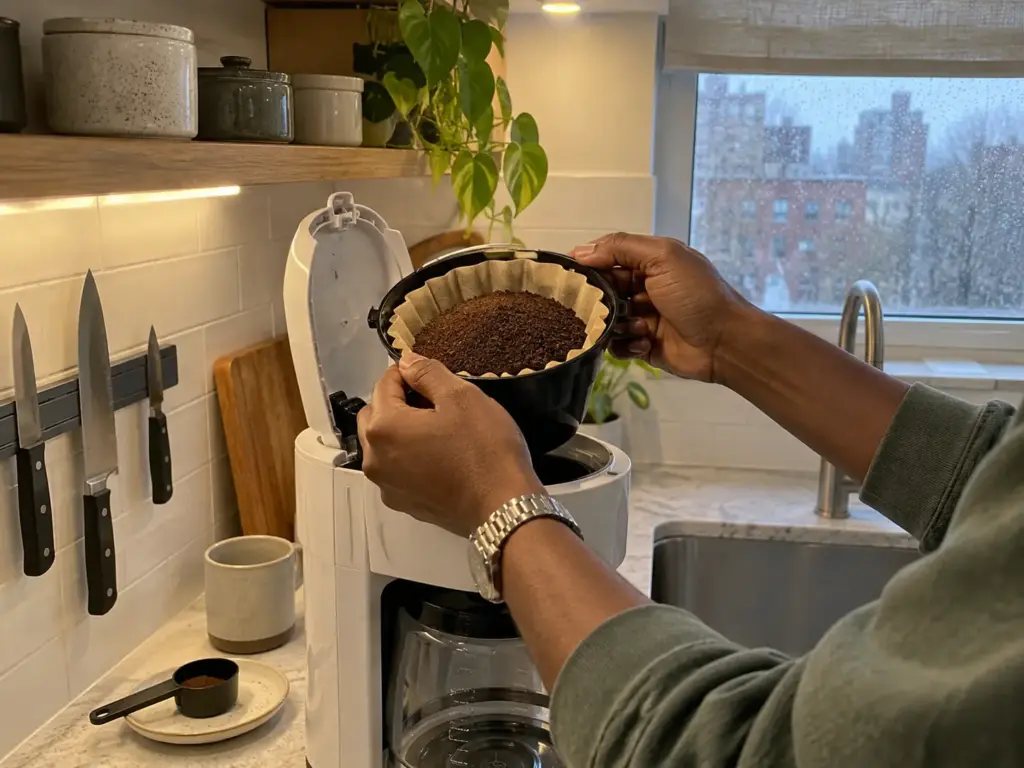
On the 5-cup, the filter basket can be too small, and the replaceable water filter takes up even more of it, so a full scoop can overflow into the cup. Over time the coffee can become hard to drink. The sign to watch is brew time, not noise. TechGearLab clocked 9 minutes for the first pot on its 5-cup Mini Brew and about 8 for the later ones, a long wait on day one, which is why the number worth keeping is your own.
Time one full pot from the switch to the last drip this week and write the number on a strip of masking tape on the machine. A pot that takes noticeably longer than that number, with the same amount of water, is an early sign of trouble.
Six months to just over a year, and the other end of the range
The Simple Brew reviewer’s six months to just over a year came from a machine left on all day.
The 12-cup listing shows a wider spread on a single page. A unit can fail early even with light use.
Some units keep running for years of near daily use and still keep the coffee hot. Going by the dates, the two units were bought around the same year.
So the same listing holds a machine that died at about six months and one that is still running at eleven years. Nothing in the reports says why, and a story that only fits one end of the range is not a finding.
Why an average hides the story
Six months and eleven years are 6 and 132 months. Average them and you get about 69 months, nearly six years, a life no one in these reports actually had. The number to carry instead is the cost per month: divide what you paid by the months the machine ran, and the same sticker is a 22-to-1 spread between the two ends.
Reviews also skew to the extremes, a failure or a long run, which is another reason to read the range instead of the middle. The maker prints no lifespan figure, and no independent test of one turned up. Plan for a short life and an eleven-year surprise would be a gift. Plan for a decade and a short one hurts.
The One-Year Warranty Against the Years You Expect
The only life figure the maker prints is a one-year warranty, and owner reports put the common failures right around it. This section reads the one against the other. It also reads the line in the warranty that turns cleaning into paperwork.
What the warranty says, and what it leaves out
Mr. Coffee’s own warranty page, effective October 2, 2024, says the product “will be free from manufacturing defects for one year or other period as provided herein from the date of purchase or delivery (whichever occurs later).”
A few details matter. The clock starts at the later of purchase or delivery, not when you first use the machine. Normal wear and tear is excluded, and where wear ends and a defect begins is the maker’s call.
The page covers a product the original buyer purchased in the United States or Canada, and it lets the maker reject claims on products bought from unauthorized sellers, so the seller line on your order is worth a look. “Other period as provided herein” means your model’s manual may carry a different term.
The cleaning line that can cost you the claim
The same page excludes “damage from misuse or abuse (such as improper cleaning, neglect, negligence, or accident).” Cleaning is paperwork as well as taste: the manual’s cleaning cycle is the thing a maker can point to if a claim lands on a machine that failed. The page also excludes defects from use in a commercial manner or contrary to the operating instructions, worth reading twice if a machine runs around the clock.
None of the buyer reviews above names a cleaning cause, so this is a caution about the claim, not an explanation of the failures.
One sentence that puts the year next to the range
The warranty is one year, lifespans run from a few months to many years, so a year of coverage reaches the early failures and stops before the long tail begins. A cheap machine replaced at the end of its life is a fine outcome when you expected it. What hurts is expecting a decade and getting a year.
Photograph the receipt or order page the day it arrives and set a calendar reminder for the eleventh month. The warranty counts from the date of purchase or delivery, so that date is the one to keep, not the box.
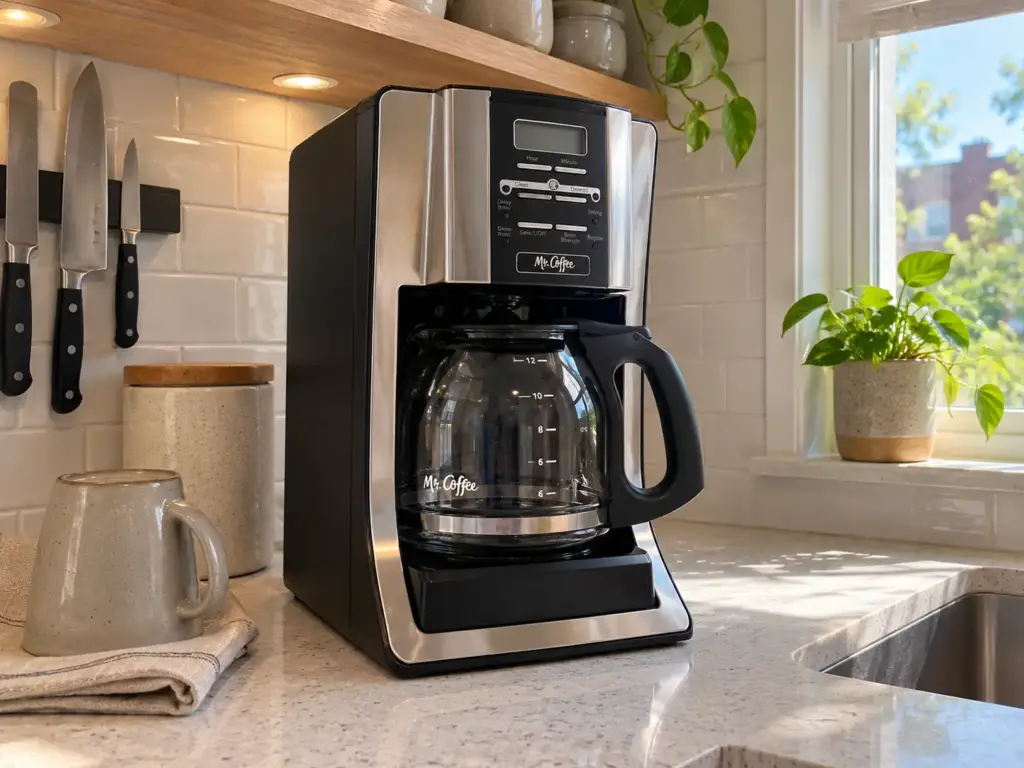
The 12-cup programmable whose reviews hold both ends of the range is below.
The Flaws Written Down, and the Cleaning That Keeps It Going
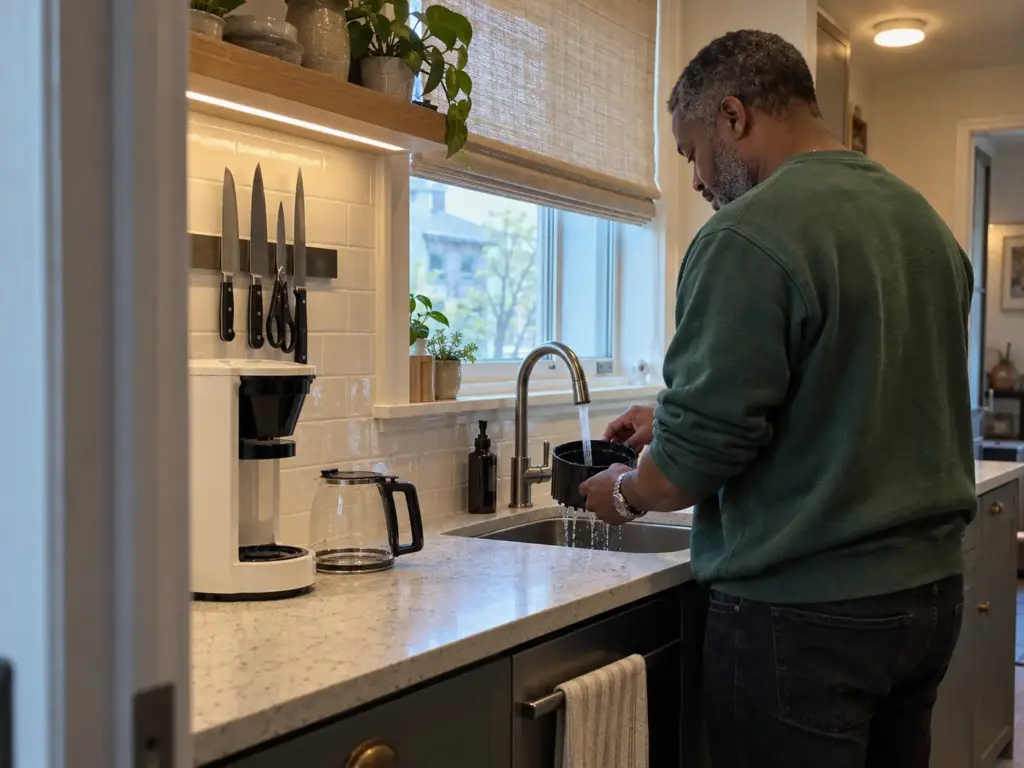
Every machine in this line has a flaw its owners repeat, and the cheapest maintenance is the manual’s own cleaning cycle, the one thing the warranty counts against you. This section writes the flaws down, free fix first, and stops short of inventing a cleaning recipe.
The flaws owners repeat, machine by machine
Each of these comes from a dated buyer review on the product’s own listing.
- The Simple Brew has no automatic shut-off, and its carafe drips onto the hot plate when it is pulled early (September 2026).
- The 5-cup basket overflows at a full scoop and leaves grounds in the cup, and its water-level lines are hard to see (June 2026 and August 2025).
- The 12-cup programmable has one owner’s 175°F (79°C) pot, a 2016 report that the burner does not stay on after brewing, and one unit that died about six months in.
- The 14-cup keeps its plate on after the carafe runs dry, is hard to fill without spilling, leaves water behind the machine, and slowed to nearly an hour per pot after about four months in one report (2025 and 2026).
What to do about each, free first
On the Simple Brew, turn the switch off by hand as soon as the pot is poured; the power light is the reminder. The drip onto the plate is a limit of the design, and by that reviewer’s account waiting did not help, so buy this model knowing it.
On the 14-cup, pour the pot out the moment it finishes and switch off the keep-warm. The second cup should taste cleaner and less cooked. Fill the reservoir from a pitcher and set a towel under the base.
On the 5-cup, scoop below the rim of the basket. The cup should come out without silt at the bottom. The overshoot is a thinner pot, because you are using less coffee, which is where the grind change from the top of this article does the work. The red tab on the water filtration disk tells you when to change it, so the disk is a part you will keep replacing, not a one-time fix.
Cleaning: follow the manual’s cycle, not a recipe
The manual and the maker’s own cleaning cycle are the authority here. The 14-cup’s maker copy says its auto-clean cycle reminds you when it is time to clean. This article gives no interval, no ratio and no step list on purpose: the warranty excludes improper cleaning, and the manual for your model is the one document that cannot be wrong about your model.
The plastic smell divides people. A white-vinegar cleaning cycle can clear a 12-cup pot after the first brews, while for some the plastic taste does not go away. Whether vinegar suits your model is the manual’s call.
Treat the first pot out of the box as a rinse and pour it out. If the smell survives the manual’s own cleaning cycle, it is the plastic and not the cleaning, and owners who cannot get past it have a reason to look at machines with no plastic parts.
When to Keep the Mr. Coffee and When to Move Up
After the flaws, the choice is not good or bad but whether the year-two risk is worth the saving, and where the next step up starts. The answer depends on the model and on one thermometer reading.
Keep it when the saving is the point
Keep a Mr. Coffee when the budget is fixed and you expect to replace the machine. The cost is then what you paid divided by the months it ran, and a short life you planned for is just the arithmetic you chose.
Check the heat first with the thermometer, and keep the Simple Brew only if you will turn it off by hand every time. If the cup is still sour after the grind change, the machine is the next suspect.
Move up when heat or the carafe is your complaint
Move up when the pot stays sour after the grind change and the first-pot reading stays low, or when the carafe is the complaint. The thermal carafe is the first thing to buy. Or rather, the pre-warmed flask is, since it costs nothing and does the same job; the thermal carafe is the answer after that.
The premium step is a batch-size question, covered in a Moccamaster review, and the middle step is a question of cups brewed, covered in a Cuisinart review. This article stays on cost and years.
The next decision: which brand, or which drip machine
Two questions remain after the model: which brand decides parts and warranty, and what a good drip machine does with its water temperature. The first is the brands guide linked at the top. The second is where this article’s thermometer ends: a drip coffee maker picked by water temperature.
Grind a Step Finer Tomorrow, Then Keep the Receipt
- The model decides both the cup and the life, so name yours before you judge it.
- No figure in between has been published.
- Free first: the grind, then the thermometer, then a different machine.
A month from now, time the same pot from switch to last drip and set it against the number you wrote down, because the slowdown shows on the clock before it shows in the cup.
Tomorrow morning, grind one step finer with the same dose and the same water, and taste: the sharp edge should soften and the cup should fill out. If it turns dry and bitter, back off half a step. Only if it stays sour does the thermometer go in the pot.
Frequently Asked Questions
01Is a Mr. Coffee coffee maker still worth buying?
Yes, as a low-cost machine you expect to replace, judged by its model rather than its name, because the cup depends on how hot that model brews. Take the pot’s temperature with a kitchen thermometer before deciding the machine is the weak point.
02What is the average lifespan of a Mr. Coffee coffee maker?
No maker or independent lifespan figure turned up; lifespans run from six months to just over a year on the Simple Brew, and longer on some 12-cup pots. The warranty covers manufacturing defects for one year.
03What coffee goes in a Mr. Coffee coffee maker?
Ordinary ground coffee at a medium drip grind fits the filter basket; if the cup tastes sour, go one grind step finer and brew the same dose again. The steps are in the drip grind guide.
04How do you use the Mr. Coffee coffee maker?
Water goes in the reservoir, a filter and the grounds go in the basket, and you press the switch or set the timer on a programmable model. The Simple Brew has no auto shut-off, so turn it off by hand; your manual covers the rest.


How did your cup turn out?
No comments yet. Tell us what you changed — and whether the needle moved.