



We may earn a commission when you buy through links on this page. It never changes what we recommend. How we pick
On this page8 parts
- Two ways a coffee maker gets its hot water
- Does the tap touch the brew? A five-minute check
- The brew has its own number, and it is not the tap's
- Tea, oatmeal and the tall travel mug
- Month two on the hot side: scale and leaks
- Tap or kettle: the count of machines on the counter
- Count the Tanks, Then Taste the Pot
- Frequently Asked Questions
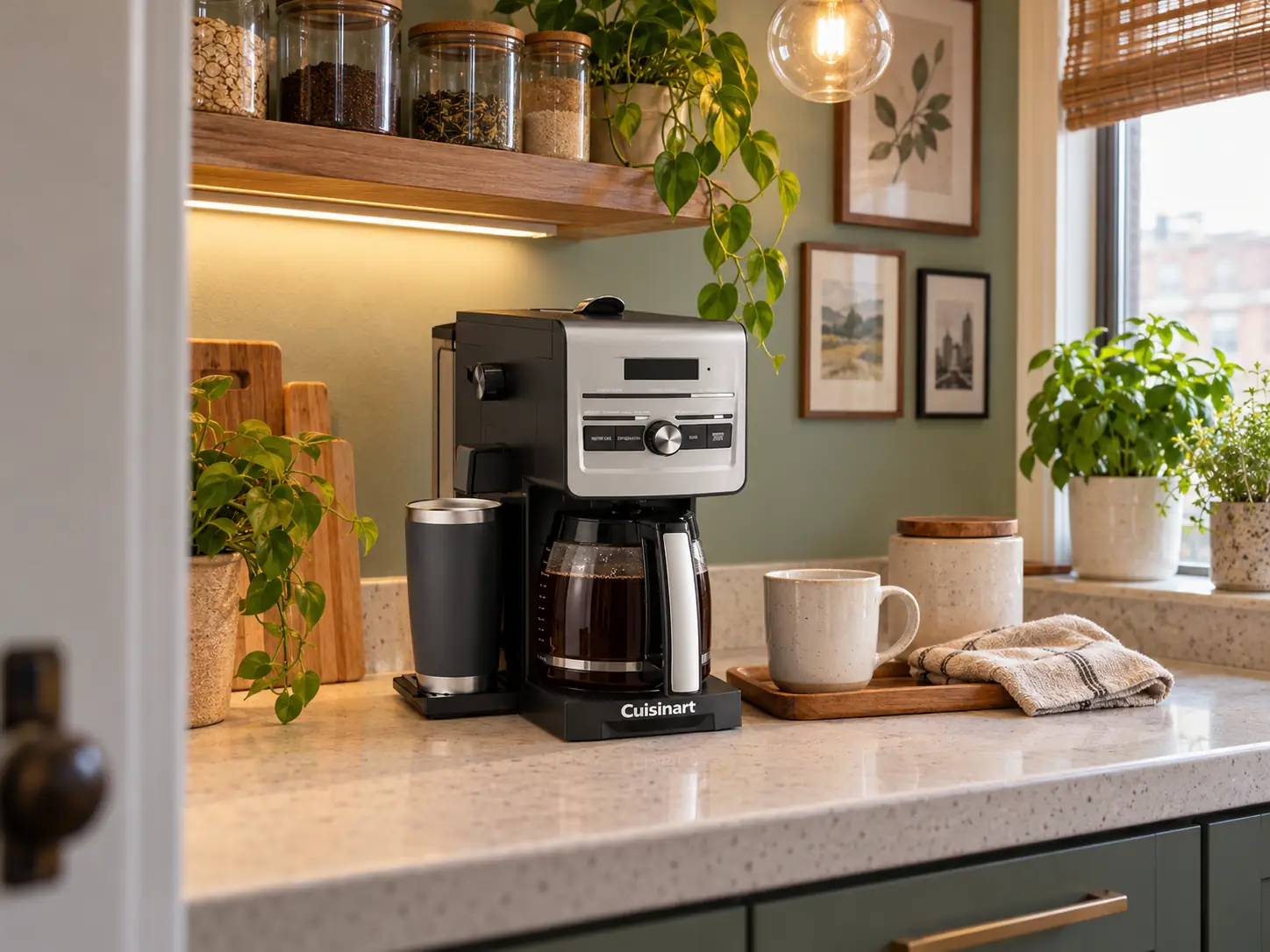
The box says coffee maker with hot water dispenser, and that phrase promises a tap, not a tank. Whether the tap draws from the same water that brews your pot is the question the box never answers, and it decides whether the hot side can ever touch the cup. The pot’s heat belongs to the brew cycle; the tap is a second job handed to the same machine.
This guide gives the five-minute check that tells you which design you own, the brew’s own temperature kept apart from the tap’s, what the tap does for tea and oatmeal, and how the hot side wears by month two. The features guide leaves the tap open on purpose, and this is where it gets settled.
Quick Answer
A hot-water tap changes your morning, not your cup. On a machine with a separate hot-water reservoir the tap never touches the brew water, and the pot’s heat still comes from the brew cycle, which the SCA standard holds to 194 to 205°F (90 to 96°C).
Two ways a coffee maker gets its hot water
The label names the tap and stops there, so the first thing to learn is what sits behind it: a tank of its own, or the same tank that fills the pot. Everything else in this guide depends on that one fact.
What the tap is
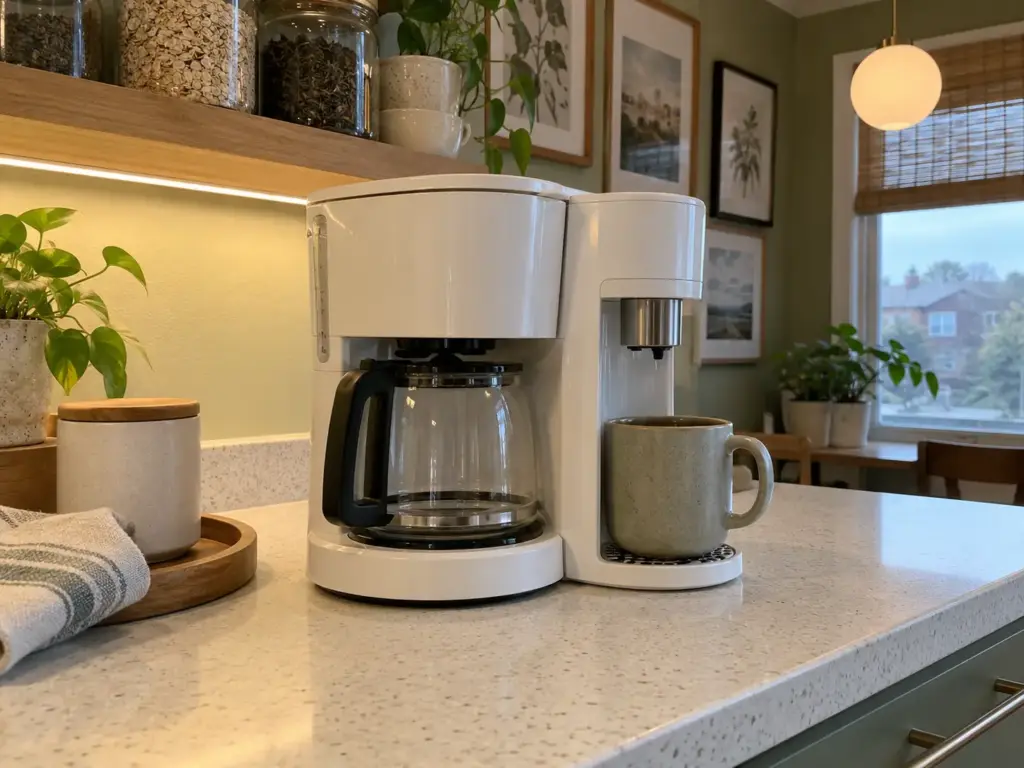
The tap is a second outlet on a drip or pod machine that serves plain hot water for tea, instant oatmeal, cocoa or soup. It is a hot water dispenser in the plain sense: a heater, a spout, and a button or lever, with no grounds anywhere near it. You are at the counter with a drip machine on one side and a kettle on the back burner, wondering whether one machine could retire the other.
It can, for some mornings. What it cannot do is promise anything about the coffee, because the tap and the brew are two jobs that happen to share a plug.
Separate reservoir versus shared tank
On the first design the hot water has a separate reservoir of its own, a separate hot water reservoir that never mixes with the brew water. Both sides can run at once, and nothing the tap does can reach the pot. The Hamilton Beach 49982 is the named example, with a 32 oz hot-water reservoir by the maker’s own number.
It is also discontinued: the machines built on the same idea were unavailable when this was written, so the design is easier to explain than to buy. Leaks from the hot water dispenser are a known risk, which is the price of a second tank with a second set of seals.
On the second design one named shared tank feeds both jobs. The Cuisinart SS-18 listing names a 62 oz reservoir and the SS-10P1 listing a 72 oz one, and neither listing says whether the hot side and the brew side draw from it together. The manual decides, and the box never prints it.
Does the tap touch the brew? A five-minute check
Every reader arrives with the same worry, that the tap is why the pot tastes the way it does. The honest answer depends on a design the box does not print, so the answer is a check you run yourself.
What the answer is for each design
With a separate reservoir the tap and the brew water never meet, so the tap cannot change the pot. A thin or flat pot on that machine has another cause, and the next section goes after it.
With a shared tank, the manual is the only source. Some machines draw hot water for the tap from the same tank and the same heater as the brew; the diagram in the manual shows how, and a listing almost never does. A tall wall of product pages will give you capacity, wattage and a count of cups, and none of them prints the tank count. The hot side is often called the water side, and it works like an add-on rather than a part of the brew.
How to tell which one you own
Do this with the machine switched off and cool. It takes about five minutes and no tools. This is a method, not a published rule, and it works because a manual cannot hide a second tank.
- Open the parts list in the manual and count the water reservoirs. One named reservoir is one tank; two means two.
- Find the water-path diagram, usually near the first-use or descale pages, and trace the line from each tank.
- Two tanks should show two paths that never join. One tank with a split line means the tap and the brew share water.
- Write the count down, then put the manual back in the drawer.
It is the same habit that makes a plastic-free shopper read the parts list before a purchase, and following the water path part by part is the better version of it if you want the whole route from tank to carafe.
The three-in-one case, and why a listing is not enough
The Cuisinart SS-18 is a three-in-one: a 12-cup glass carafe side, a single-serve side with a reusable filter cup, and a hot-water dispenser. Its listing names one 62 oz reservoir that mounts on the back or side, and it does not say whether the two sides share it. That is exactly the kind of machine the check is for. If the manual shows one tank feeding a split line, you own the shared design and the tap belongs to the same water as the pot.
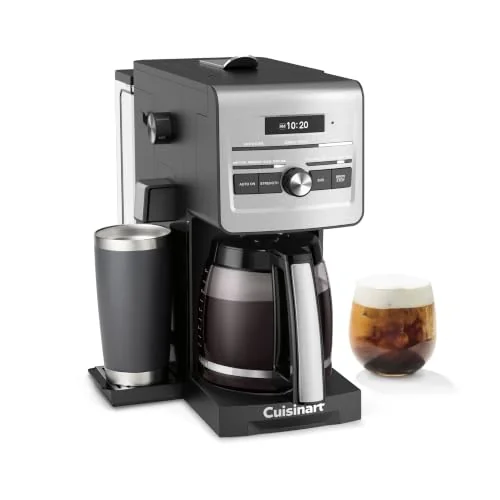
The obvious reading of a single named tank is that everything shares it, and that reading is probably right here. But probably is a guess made from a listing, and the manual turns it into a fact. The same goes for the SS-10P1 further down.
Write the tank count on a sticky note and stick it under the machine, next to the descale date. You run the check once, and the next time the pot tastes off, the note says whether the tap could possibly be involved.
The brew has its own number, and it is not the tap’s
A reader with a hot tap and a weak pot will blame the tap, and the blame is usually aimed at the wrong number. This section separates the two temperatures, because one decides the pot and the other decides the tea.
What the brew cycle has to hold
The reference is the Specialty Coffee Association’s home-brewer standard, SCA 310-2021, section 6.2. It asks for the slurry to reach 90 to 96°C (194 to 205°F) by the moment 33% of the water mass has been sprayed onto the coffee. According to the standard, “The temperature shall be maintained within the 90 to 96°C range for the remainder of the brew cycle.” The heat of the pot is the brew cycle’s job from the first pour to the last drip.
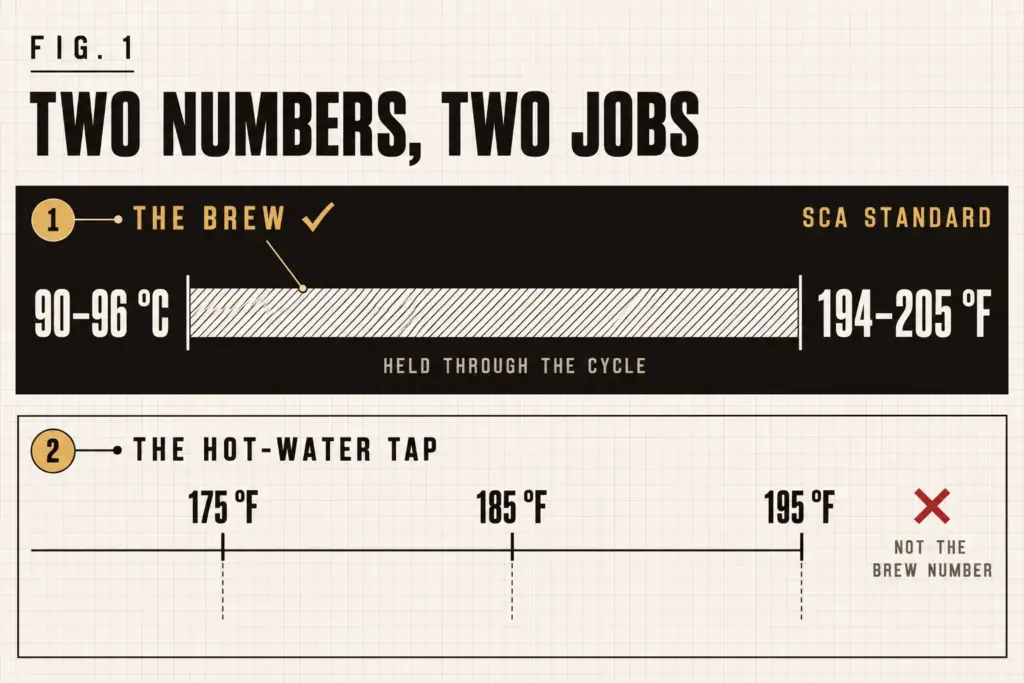
A hot tap does not appear anywhere in that clause: the standard is about the brew temperature of a drip coffee maker, and the tap is not part of it. The reader picking between machines should compare the brew, which is why picking a drip machine by water temperature is a better first filter than counting spouts.
What the tap’s setting is, and what it is not
The SS-18 listing gives its hot-water side three settings, 175, 185 or 195°F (about 79, 85 and 91°C), and says green tea steeps cooler and black tea hotter. That number is the seller’s claim for the tap, not a measurement, and it is a setting for tea. It sits near the bottom of the brew window and partly inside it, which makes the mix-up easy: the tap’s 195°F and the brew’s 194 to 205°F look like they describe one thing, and they describe two jobs on two sides of the machine.
The tap’s number tells you how hot the water leaves the spout for a mug. The brew’s number tells you how hot the slurry stays across the whole pour. One number per job, never merged.
A weak or cool pot, one change at a time
A thin pot is a direction: the water left before it finished, so the cup is under-extracted, flat and a little sharp, and the cause is almost never the tap. Work through it in this order and taste between steps.
First, a finer grind, one step. It costs nothing and it is the likeliest culprit. If the next cup is rounder and sweeter, stop. If it turned dry and bitter, you went one step too far, so come back half a step.
Second, a clean machine. Scale in the brew path slows the water, and a machine that has not been descaled for months can drift away from its window without announcing it. Descale by the manual, run the descaling cycle through, and brew the same dose the same way before you judge the result.
Third, ask whether the machine reaches the standard window at all. A machine that never gets hot enough cannot be fixed with a setting, and it is the one purchase on this list that is justified.
The timer does not touch the brew heat either. A timer that does not change the heat is another feature people blame for a pot it never affected.
Tea, oatmeal and the tall travel mug
With the brew settled, the tap’s real job comes into focus, and it is the second drink. A weekday at seven, a pod machine on one side, a tea bag waiting: this is where a tap earns its place or loses it.
Tea without coffee in the cup
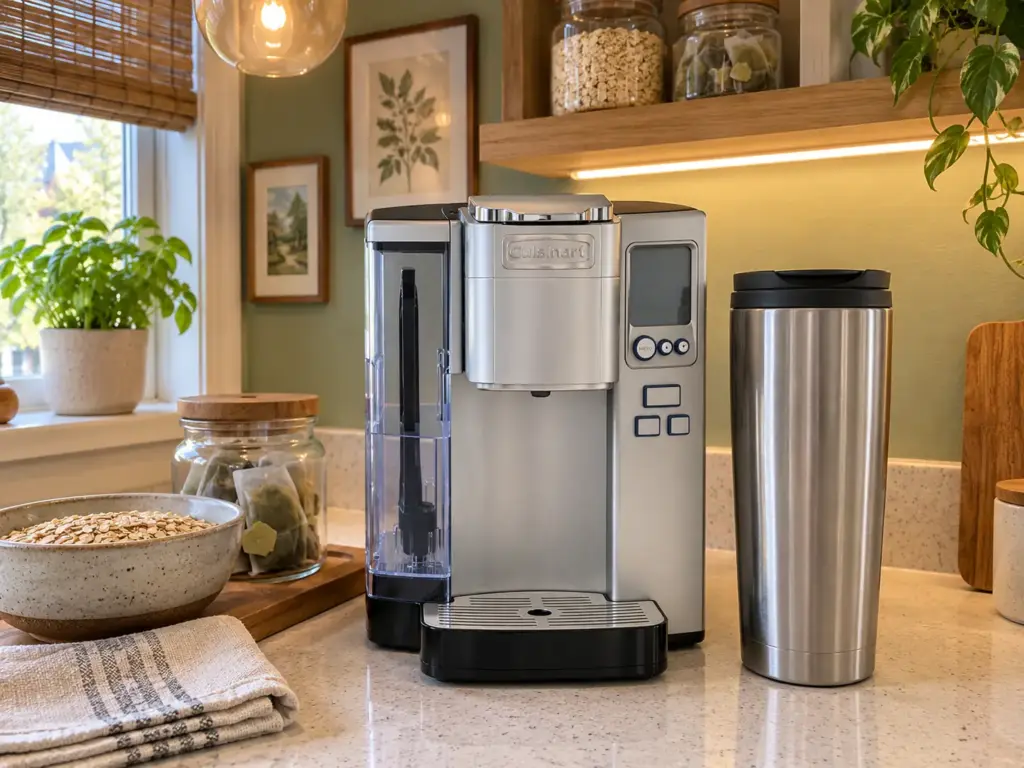
The same complaint keeps coming back. Nobody wants loose coffee grounds in the tea after a pod machine, which is exactly what a hot-water line of its own removes, because the water that reaches the mug has never been near a basket. It is also the reason grounds in the cup of a pod machine is a real problem on a shared machine and a non-problem on a separate line.
On a shared tank the tea still comes from the same water, so a coffee taste in the cup points to the spout or the previous brew, not to the tank. That is a cleaning job, and it is why the spare-cup habit below costs nothing.
Run the tap into a spare cup first and taste it before the tea bag goes in. If it smells or tastes of coffee, the spout needs a rinse, and you have lost a spare cup, not a tea.
The mug and the heat
The flaw of the separate-line design is simple: it does not allow for tall travel mugs. A hot-water spout built into a short alcove leaves little clearance for a tall mug, so measure your travel mug before you buy.
The hot water from a tap is hot enough to scald, so keep a cup under the spout and keep children away from it while it runs.
The Cuisinart SS-10P1 is the machine closest to this morning: a single-serve brewer that takes a pod or loose grounds in a reusable filter cup, with a button for hot water on the same unit.
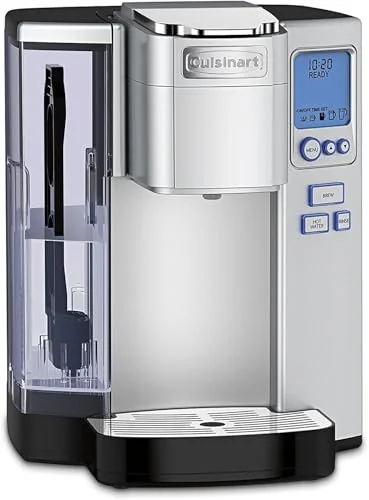
That durability note is a pattern: machines like this can break after two months, die after six, or stop working entirely. The listing calls its tank a 72 oz reservoir, so it reads as one shared tank, and the manual confirms or corrects that reading.
Month two on the hot side: scale and leaks
Reviews are written in week one, and the hot side is a second place for things to wear. The tap can look perfect on day three and still be the first part of the machine to complain by month two.
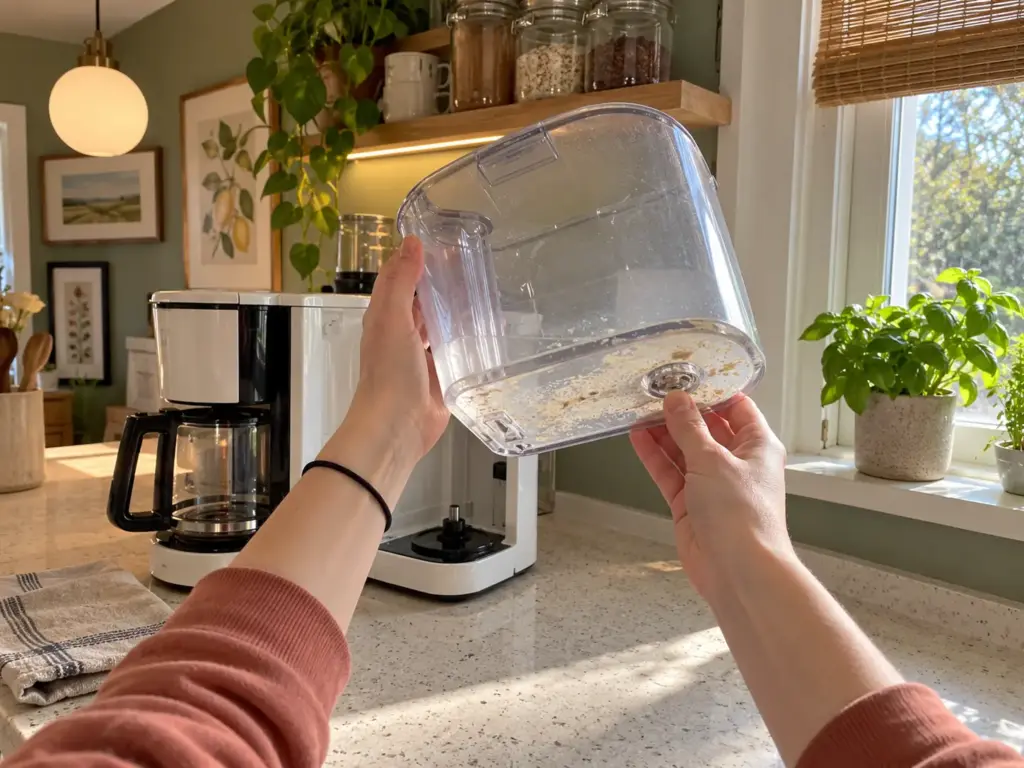
The hot line scales too
Scale builds wherever hot water sits and runs, so the hot side scales the same way the brew side does. The mechanism is the same: minerals left behind as the water heats, narrowing the passage and coating the heater. There is no honest figure to attach to that, because the sources that turned up were a vendor’s claim and a patent, and neither counts.
What the manual says matters more than any number. Some manuals flush the hot line during the descaling cycle, and others leave that hot section out entirely, so the machine you own either cleans its tap or quietly skips it. Read the descale pages of your own manual and look for the hot-water line; if it is not mentioned, assume it is not covered and say so on that sticky note from earlier. A machine that keeps a hot tank all day has the same question, and the Bunn that holds a hot tank is the nearest thing in this guide’s neighborhood to the shared-tank case.
What the owners report
Buyer reviews mention the hot water dispenser leaking from the bottom within months, and some find the water side of the machine of little use. The tap is the reason for the purchase, and it was the first thing to stop mattering.
On the SS-10P1, a review text reads “This has gotten louder over time.” A machine that has become louder is telling you before it fails, and the sound is the cue to descale, not to wait.
And the weak pot at month two is more often the brew side’s scale than the tap. If the tea is hot but the pot is thin, go back to the order of fixes in the section on the brew’s own number.
Tap or kettle: the count of machines on the counter
With the design, the brew’s number and month two known, one question is left: does the tap earn its place against a kettle? The answer is arithmetic, but a count of machines and plugs, not dollars.
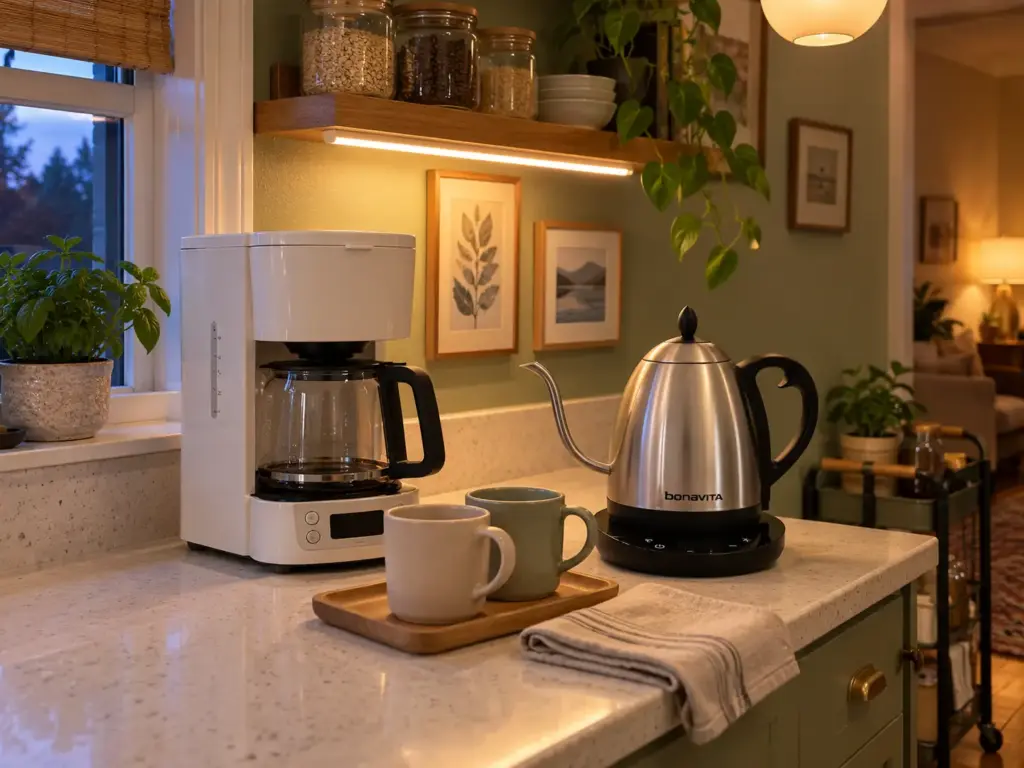
A plain machine and a kettle
One machine with a tap against a plain drip machine plus an electric kettle comes to two plugs against one, two things to descale against one tank to care for. That is the whole comparison, and it favors the single machine on counter space and the pair on everything else.
The Hamilton Beach 46299J is the plain-drip half of that count: a 12-cup glass carafe, a regular or bold brew setting, a hold-to-serve pause, a two-hour auto-off and a nonstick warming plate, with no tap at all. Reviewers mention leaks from the water reservoir, with texts like “Not able to use coffee maker, water reservoir leaks,” so check the tank seam the first week. It is also a useful reference for carafe heat in a lower-budget machine, since a plain drip machine’s heat is the same brew cycle all the others depend on.
A kettle gives the tea its own number instead of borrowing the coffee machine’s tap. A gooseneck kettle with preset temperatures puts black tea, green tea and oatmeal each on a setting. The Bonavita Cosmopolitan is a 1.0 L gooseneck with a 1,200 W element and a temperature control that runs from 140 to 208°F in 1-degree steps, plus six presets. Its record is a thin one, 4.2 stars over 26 ratings with two one-off low reviews and no repeated complaint, so read it as a weak data point and not a verdict.
Before buying anything, count the free outlets on your counter, then count the plugs in each plan. A second plug that has nowhere to go decides the question faster than any spec.
When the tap is worth having
The plainest answer is to get a pod machine that works, and also a cheap electric kettle. The tap earns its place when one machine serves more than one job every day, a coffee and a tea in the same morning, or an oatmeal before the pot is even done. For a reader who makes tea once a week, the plain machine and a kettle is the honest answer, and the tap is a part that waits.
The next decision is which machine, then the descale routine that covers the hot side. No guide can write that routine for you, so it goes to the manual of the machine you choose.
Count the Tanks, Then Taste the Pot
Three things carry over from all of this.
- The tap is a second job for the machine, and on a separate-reservoir design it cannot change the cup.
- The brew’s heat is the brew cycle’s job, held to 194 to 205°F (90 to 96°C), and it is a different number from anything on the tap.
- The hot side scales and leaks by month two, so the manual’s descale routine matters, and what the carafe holds once the brew is done is the next place a good brew can go flat.
A month from now, look at two things: whether the descale pages mention the hot line, and whether the pot still pours as hot as the first week. If either answer has changed, the tap is not the first suspect.
Tomorrow morning, count the reservoirs in your manual, then taste the pot again before you blame the tap. If the next cup is thin or flat, go a step finer and taste once more.
Frequently Asked Questions
01Does a coffee maker’s hot water dispenser change how the coffee tastes?
Not on a machine with a separate hot-water reservoir, because the tap and the brew water never meet. On a shared tank the manual’s water-path diagram decides, so read it before blaming the tap.
02Will tea from a coffee maker’s hot water tap taste like coffee?
It can on a shared tank or a spout that still carries the last brew, but a separate hot-water line avoids the grounds entirely. Run the tap into a spare cup first and taste it before the tea goes in.
03Is the hot water from a coffee maker’s dispenser hot enough for tea?
It can be, but the number comes from the maker. The Cuisinart SS-18 listing gives 175, 185 or 195°F, a seller’s figure and not a measurement. A kettle with temperature presets is the other route.
04Do I need to descale the hot water side of a coffee maker?
Yes, scale builds wherever hot water sits and runs. Some manuals flush the hot line during the descale cycle and others do not, so your own manual’s descale pages say whether it is covered.
05Is a coffee maker with a hot water dispenser better than a kettle?
It depends on how many jobs the machine does each day. A plain drip machine and a cheap electric kettle is the honest answer for anyone who makes tea rarely, and it gives the tea its own temperature.



How did your cup turn out?
No comments yet. Tell us what you changed — and whether the needle moved.