


We may earn a commission when you buy through links on this page. It never changes what we recommend. How we pick
On this page8 parts
- Why a Hot and Iced Coffee Maker Makes a Thin Iced Cup
- The Free Fix Is Weighing the Ice, Not Buying a Machine
- What the Iced Button and the Strength Label Change
- The Brew Temperature Under the Label
- Will the Glass Fit Under the Spout?
- Month Two and the Iced Setting Nobody Uses
- Weigh the Ice Once, and Check the Setting in a Month
- Frequently Asked Questions
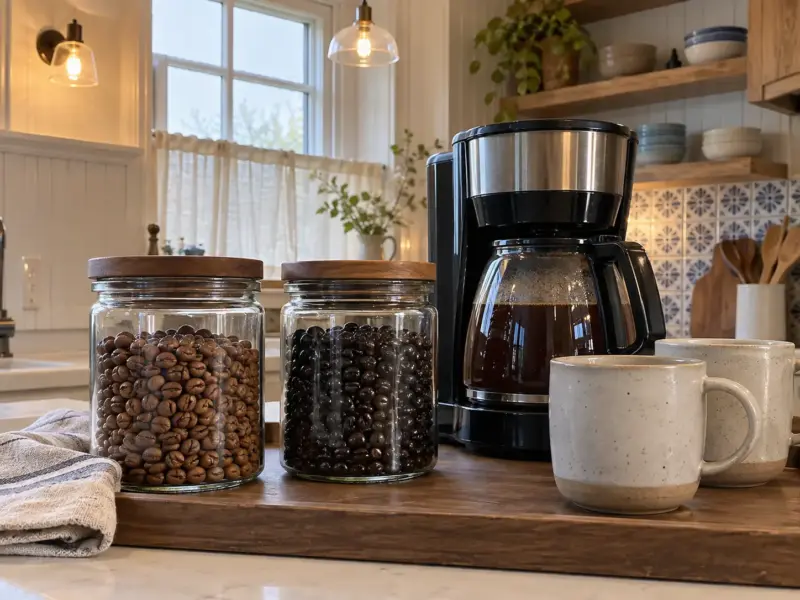
You fill the glass to the top with ice, press the iced button, and the first sip tastes like the coffee was poured on and then forgotten. Nothing is wrong with the beans or with you. A coffee maker for hot and iced coffee brews the same hot cup it always does, the ice is water waiting to melt into it, and the machine has no way to see how much of it you packed in the glass.
The home-brewer standard asks for about 55 grams of coffee per kilogram of water, and once the ice is counted, that is a very different brew. This guide does the arithmetic, then tests what the labels on the box actually change.
Quick Answer
Yes, a machine that brews hot can make a good iced cup, but the melting ice dilutes it. Brew stronger by the weight of the ice: about 1:12 when the ice weighs half the brew water, 1:9 when it weighs the same. The iced setting assumes an ice load it cannot see, so weigh yours.
Why a Hot and Iced Coffee Maker Makes a Thin Iced Cup
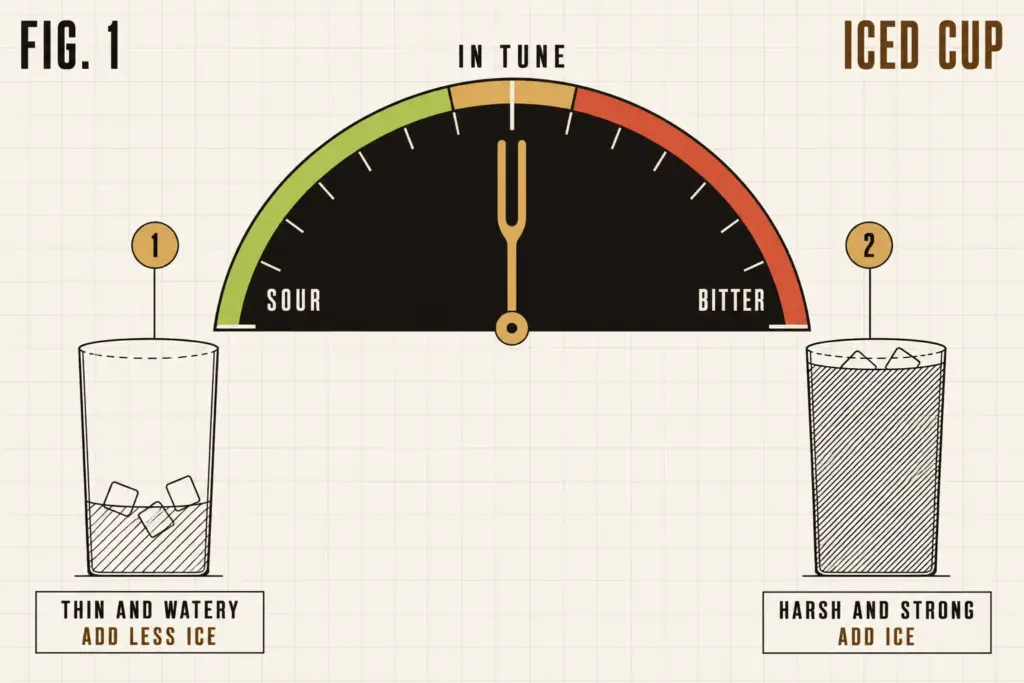
The box promises a cold cup from a machine that heats its water, and the water that cools the coffee is the same water that thins it. Thin and flat is a direction: too much water for the amount of coffee in the glass. The cure is not a better bean, it is a stronger or smaller brew.

The ice is water too
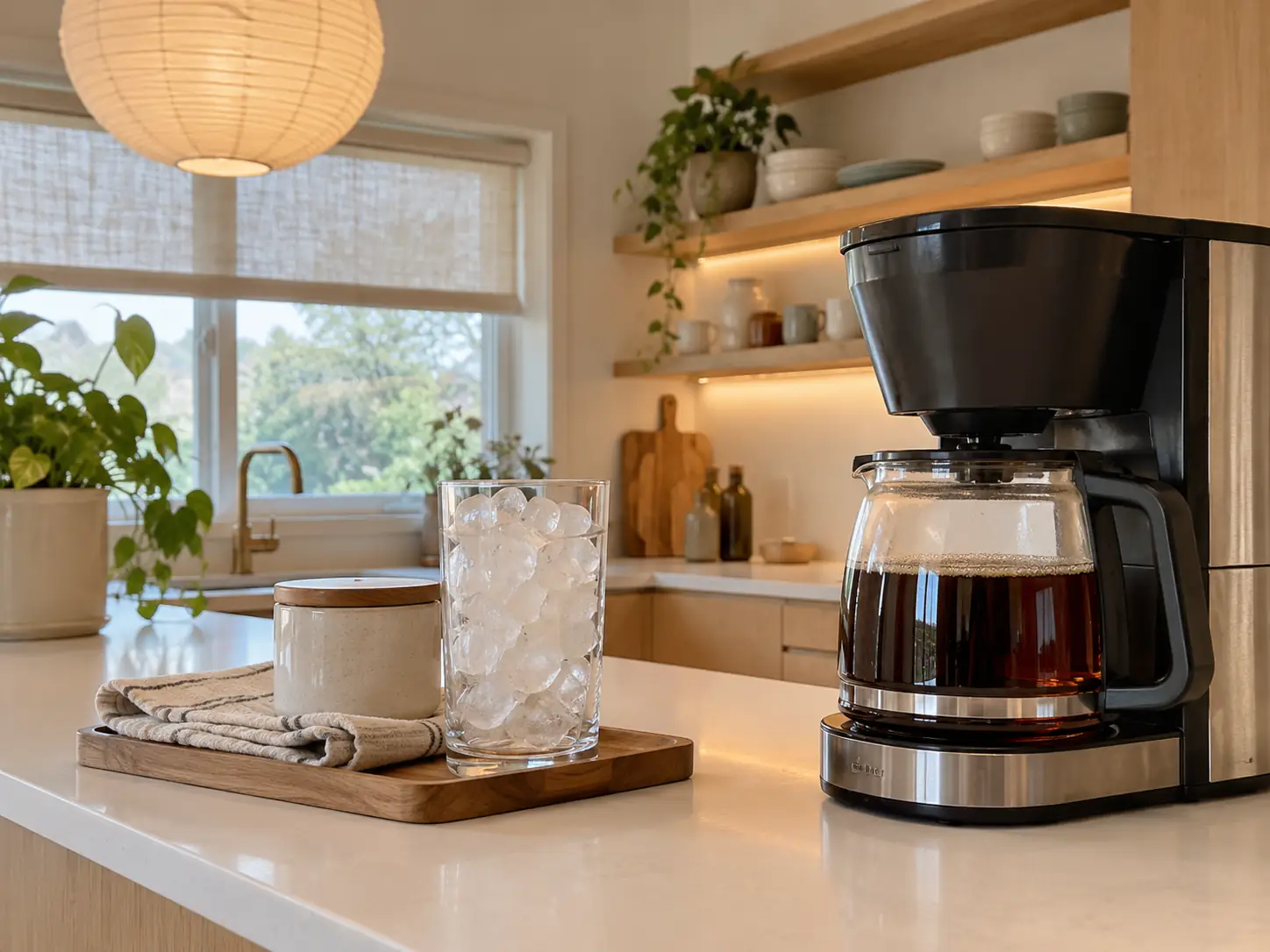
A cube is frozen water, and it ends up in the cup. If you brew 250 grams of hot water over 250 grams of ice and the ice melts completely, you are drinking 500 grams of liquid made from whatever coffee the brew carried. A brew that would have been fine as a hot cup is, by the end of the glass, half as strong.
The thinning is gradual, which is why the first sips can fool you: the cup only settles at its true ratio once the last cube is gone. A glass that tastes fine at the start and watery by the end is the melt arriving on schedule. That is the watery iced coffee people blame on the beans.
What the standard asks for, and what the ice does to it
The Specialty Coffee Association’s home-brewer standard, SCA 310-2021, asks a brewer’s instructions to suggest a ratio of 55 g of coffee per kilogram of water, or its equivalent. That is roughly 1:18, the standard brew ratio, and it is the number a finished iced cup should land near too, not just a hot one. The catch is that 1:18 describes the cup you drink, while the machine only controls the brew water. Everything the ice adds has to be paid for in coffee the machine put in beforehand.
The balance is plain division, and it is our arithmetic on the SCA’s figure, not a number any manufacturer prints. Whatever weighs the glass at the end, the coffee has to be 55 grams per kilogram of all of it. Ice at half the brew water’s weight means the brew has to be about 1:12. Ice equal to the brew water means about 1:9, a double strength brew.
| Ice in the glass weighs | Brew at (coffee per kg of hot water) | Finishes near |
|---|---|---|
| Nothing (a hot cup) | 55 g, about 1:18 | 55 g per kg |
| Half the brew water | about 83 g, about 1:12 | 55 g per kg |
| The same as the brew water | about 111 g, about 1:9 | 55 g per kg |
A common ratio fits the table. A 1:10 brew over ice can finish near 1:16.7 once the ice has melted (75 g in 1,250 g). That brew sits between the table’s rows, because the ice there is two thirds of the brew water, and the arithmetic holds.
For a single glass, 250 g of water at half-weight ice works out to about 21 g of coffee, roughly four level tablespoons; with ice equal to the water, about 28 g, closer to five and a half.
Why the machine cannot see the ice
An Over Ice or iced button chooses the water the grounds get. It cannot weigh what is in your glass, so whatever it assumes is built in, and the cup is right only when your ice happens to match it. Pack the glass to the rim and the cup goes thin; use three cubes and it runs strong.
Brewed over normal ice, the coffee will be watered down, and that is the failure to avoid with this kind of machine. Ninja’s own page for the machine in this guide says its Over Ice style makes “flavorful iced coffee that’s never watered down.” Both can be true, but only if the brew is stronger by the weight of the ice, and the page prints no ratio to show it. Treat the claim as something to test, which the next section does, and read which coffee maker features change the cup for the other labels on the box.
The Free Fix Is Weighing the Ice, Not Buying a Machine
The cup is thin for a reason a scale can find in one afternoon, and nothing needs buying before that check is done. One change at a time, in order: the ice first, then the water, then taste before anything else moves. If you change all three at once, you will not know which one worked.
Weigh the ice and the brew once
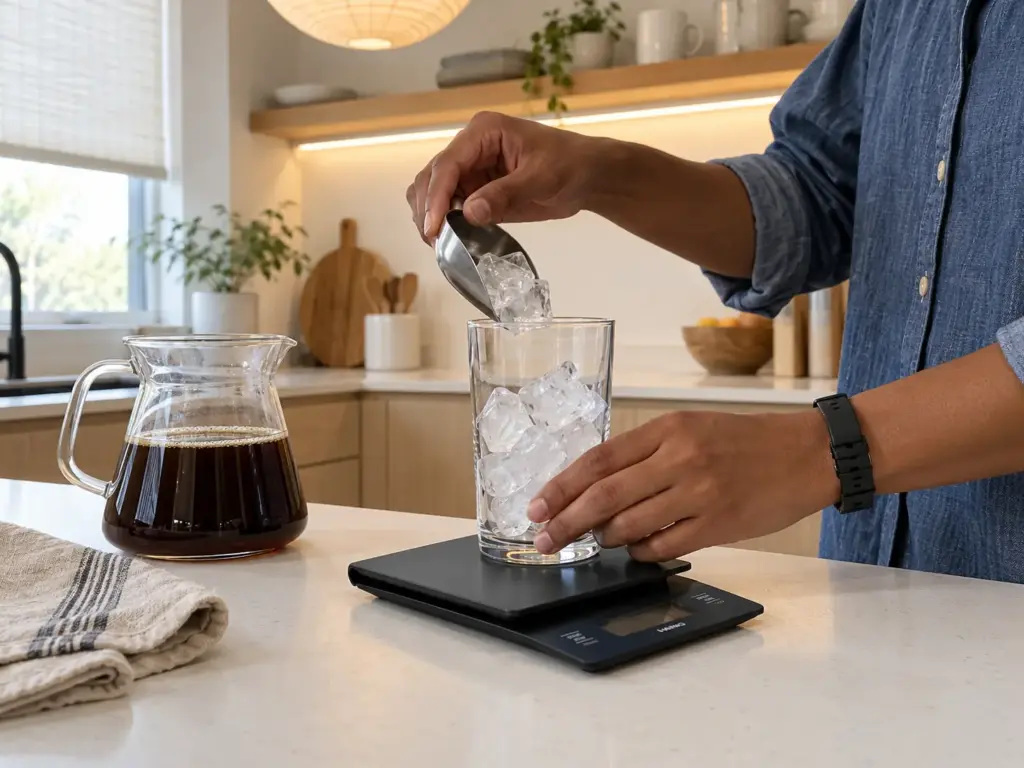
Fill the glass the way you always do, put it on a scale, and write the ice’s grams on a sticky note on the cabinet. Then weigh the water the carafe line gave you.
A kitchen scale with 0.1 g steps, like the Hario Drip Scale Timer, turns “a few cubes” into a number you can plug into the table, and it times the brew too. It shuts itself off after five minutes, which matters if you wander off mid-brew. A scale changes more cups than a new machine does.
Weigh the empty glass first and zero the scale. Then the ice, then the brew water, each time you press tare in between, and the note on the cabinet only has to hold two numbers.
Brew the same grams with less water
With the ice weight known, pick the row of the table that matches it and brew the same grounds with less water. Put ice in the bottom equal to half the water’s weight, and brew with half the usual hot water. That is the same rule the table gives, reached from the other end. Another approach brews 25 g of coffee to 250 g of hot water over ice and then adds more ice to replace what melted, which is the table’s middle row with a top-up.
The machine you already own can do this. A 75 g brew in 750 ml over 500 g of ice, in a drip carafe, comes out to about 1.25 L. And if the cup tastes weak at the base, the grind sets the strength before any ice is counted, so set the grind first for a drip coffee maker before moving the water. The scale comes first, though.
Taste again before touching anything else
Taste the next cup and name its direction. If the thin, watery edge is gone and the cup is a little rounder, the change worked and you stop. If it turned harsh and heavy, the brew was cut too far for the ice you used, so add a few more cubes or move the brew back half a step. Move one number, then taste again, and keep the order: the ice, the water, then the cup.
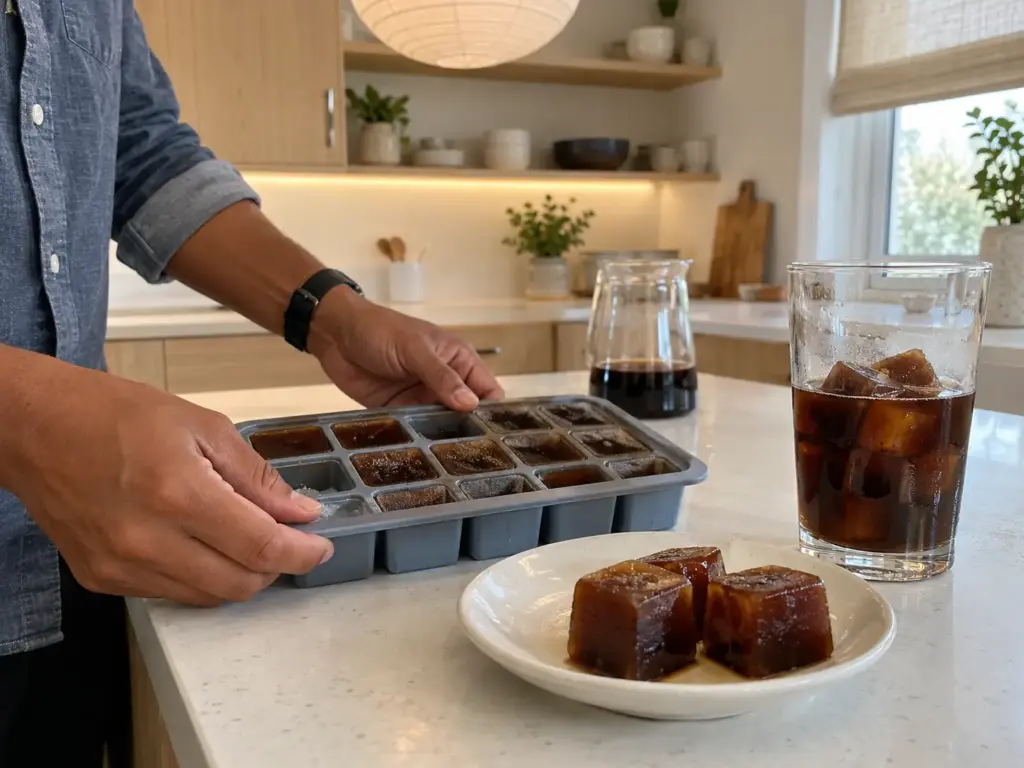
One more free option bypasses the melt entirely. A strong batch brewed beforehand, cooled and frozen in ice cube trays, gives you frozen coffee cubes, so the ice is the coffee: pour a fresh batch over the cubes and the melt adds none of the water. The same fix comes from different directions.
What the Iced Button and the Strength Label Change
With the arithmetic in hand, the labels on the box can be tested instead of trusted. The honest question is whether a button changes the water the grounds see, or only the name on the display. A label becomes a method when the volume or the temperature changes, and until it does, it is a word.
A setting is not a method until the water changes
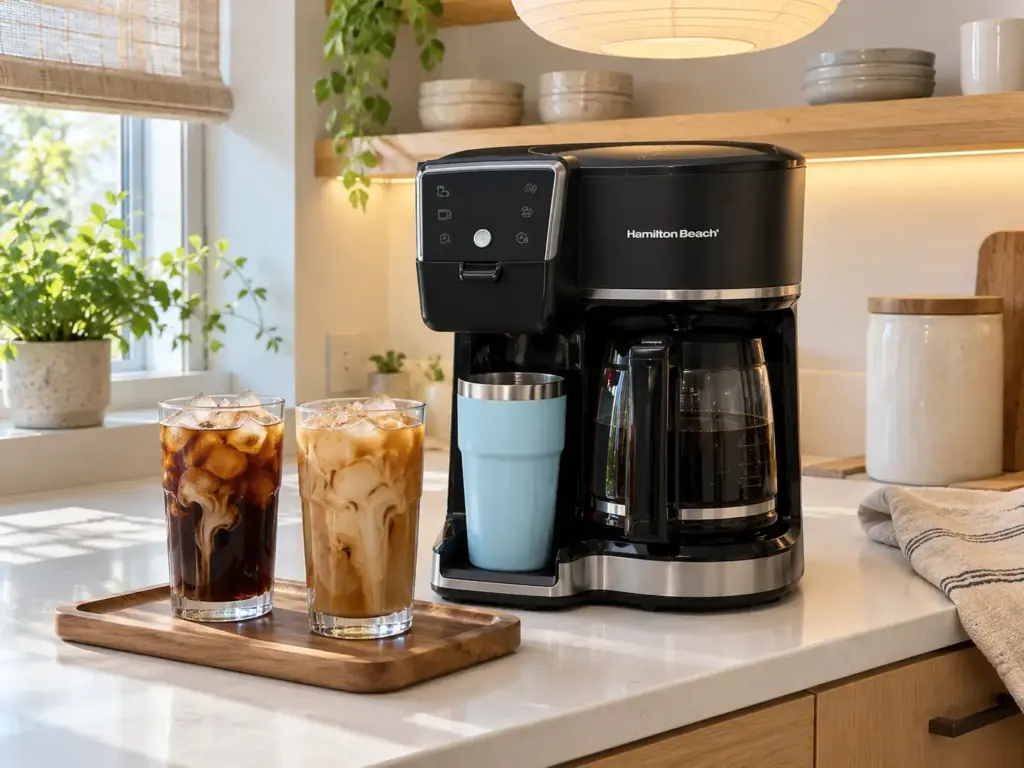
A strength dial that changes nothing is a real possibility. One dual-machine roundup ran the Hamilton Beach’s regular, bold and iced modes and noticed no major differences between them, so the bold setting and the iced one might be doing less than the label claims. Test it yourself with the same grounds on two settings, weigh each brew, and see which one is heavier. If the two weigh the same and taste the same, the label is cosmetic.
On a pod machine the setting that counts is the brew size, and that is its own diagnosis: a weak cup is often the size button against the ratio, covered in when weak isn’t the grind. The iced cup is the same problem with ice in the glass.
Run the two-cup test with the same weight of grounds and the same water line, changing only the strength dial. Weigh the finished brew in the carafe each time. If both land within a few grams, the dial is a label, and the strength is yours to set with the amount of coffee.
The machine with a brew style named for ice
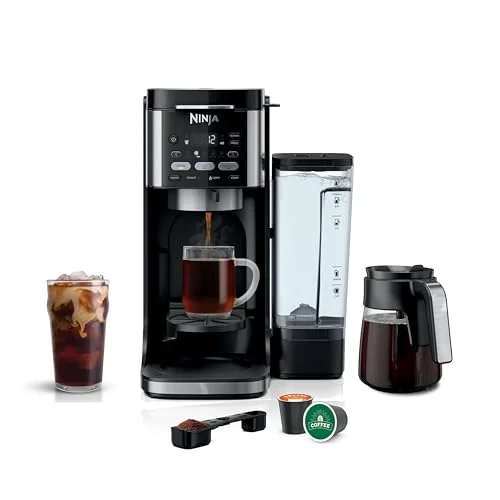
The Ninja DualBrew Hot and Iced (CFP101) has three brew styles: Classic, Rich and Over Ice. It also has nine grounds sizes, from a single serve through a travel mug to a full carafe, four pod sizes (6, 8, 10 and 12 oz) and a 60 oz removable reservoir. The grounds size is the real control, because it decides how much water the grounds get, so the size you pick matters more than the style name.
It has a keep-warm plate with three adjustable temperatures. Those belong to the plate, not the brew, so do not read them as three brew temperatures.
The limit here is on the page, not in a review: it prints no brew ratio and no brew temperature for Over Ice, so “never watered down” is a claim you can test with the table and a scale. That is a fair test for any machine, and for the Ninja it is the reason to run it. The rest of the line, and what each Ninja does, sits in our review of the Ninja line.
The cheaper machine with an iced label, and the two-cup test
The obvious pick is the machine with Over Ice in the name, and that stops being obvious the moment you can control the water without it.
The Hamilton Beach 2-Way is the budget option with an iced label, a dual coffee maker that pairs a carafe with a single-serve side. The carafe holds up to 12 cups, the single-serve side runs from 6 to 14 oz, and there are regular, bold and iced strength settings and a reusable filter in mesh. It does not take K-Cups. The trade-off is width: it measures 10.2 inches across, so measure the counter before ordering.
Run the weighing test on it. The same grounds, two settings, two weighed brews tell you in ten minutes whether the iced setting changes anything, and the test costs nothing on any machine you already own. The pick follows the water you can control, not the label on the front.
The Brew Temperature Under the Label
Even with the water settled, a machine that brews cooler in its iced mode under-extracts before a single cube touches the cup. Under-extracted coffee tastes sour and thin, which is easy to mistake for dilution. So the temperature is worth a check of its own.
What the standard asks for
SCA 310-2021, §6.2, says the slurry has to reach 90 to 96 °C (195 to 205 °F) by the time a third of the water has been sprayed on the grounds, and stay there.
In the standard’s words, “The temperature shall be maintained within the 90 to 96°C range for the remainder of the brew cycle.” The SCA also runs a certified program for home machines. In the Specialty Coffee Association’s own announcement of its certified home brewer testing, “SCA Certified Home Brewers undergo independent third-party testing to verify they meet established standards for brew temperature” and more. So the range is something a lab measures, not a marketing line.
Do not assume an iced mode brews at the temperature of the hot one. Nothing on the Ninja page says it does, and a mode built to be poured over ice has a reason to do something different.
Which machine lets you set it, and how to check
The check needs no purchase. Put a probe thermometer in the carafe during a brew, lid off, or run the manual’s own water test. A carafe reading is a floor, not the slurry’s number, because the coffee has cooled on its way down, so a reading near the range is a good sign, while one far below it is worth a second brew before you draw conclusions.
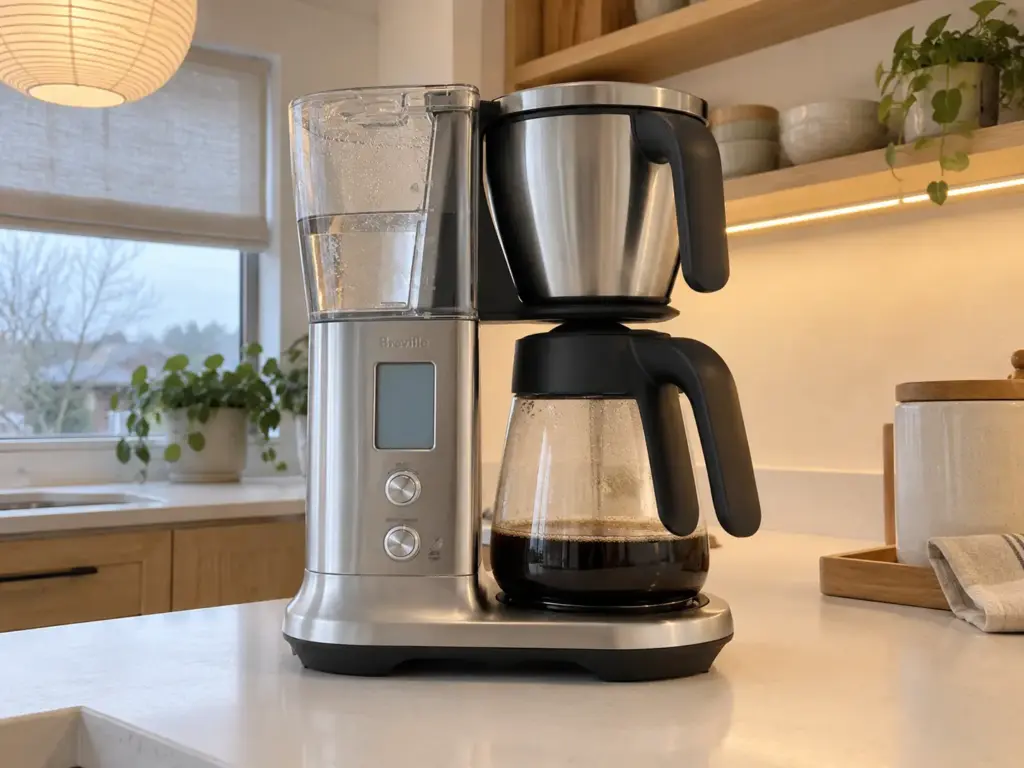
The Breville BDC400BSS Precision Brewer is the one machine in this set where temperature is a setting you can see. It has six modes (Gold, Fast, Strong, Iced, Cold Brew and My Brew) and My Brew adjusts brew time, temperature and flow rate. The catch is that the adjustable temperature sits in My Brew, a custom mode, so you set it on purpose rather than getting it from the Iced button. A tap setting is a different thing from a brew temperature; one tank or two covers where that line falls.
Take the carafe reading on the iced setting and the hot one back to back, same water and same grounds. If the iced one reads clearly lower, the sour edge is coming from the machine, and you can brew the iced cup on the hot setting and pour it over the ice.
If a drip machine runs cool in every mode, that is a reason to shop differently, and the drip pillar shows machines picked by water temperature.
Will the Glass Fit Under the Spout?
A tall glass full of ice does not always go where the carafe goes. The instructions for iced coffee assume the glass fits, and nothing says it does until you put one there.

No source measures the cup clearance for a tall glass, so this is a check, not a claim about any machine. Put the glass with its ice under the spout before the first brew. Look at where the drip tray sits, because it is the part that decides it: a travel mug fits under one single-serve side only with the drip tray removed, and that is a reason to measure before you buy or brew.
Brew sizes vary widely across these machines: the Hamilton Beach’s single-serve side runs from 6 to 14 oz, the Ninja’s pod sizes from 6 to 12 oz, and the Breville’s carafe goes up to 60 oz. Pick the size by the glass, then read the table for the brew strength.
Brewing into a pre-iced glass rather than a carafe means the water has the size of the glass, not the pot, so the arithmetic applies to the glass. If a tall glass never fits, brew into the carafe and pour over the ice. The table changes by nothing.
Fill the glass with ice and water to the line you plan to drink to, then pour that water into the carafe or the reservoir to see how many ounces it really is. That number is your brew size, and it keeps you from guessing at the display.
Month Two and the Iced Setting Nobody Uses
The machine that does this on day one is not always the one doing it in month two, when the iced setting is the button nobody presses. Owner reports about an iced setting after the first weeks are scarce, so this section says plainly what is known and what is a check you can run.
The setting that goes unused
A 10-cup sibling of the Ninja brews well, and the other brew options are often skipped. That is a signal, not a failure report: an iced setting can work and still go unused, because the hot pot is what the morning needs. If the pot sits on the warming plate, or in a thermal carafe instead of glass, how long a pot holds its heat decides how that coffee tastes before it meets the ice.
The check for later is two questions. In a month, is the iced setting still the one you press, and does the weighed ice still match the brew? If the answer is no twice, the machine is not the problem; the method is.
Coffee cubes keep for the week where the melt never does. Brew a strong batch on Sunday, let it cool before it goes in the tray, and each cube replaces one of the ice cubes in the weighed glass, so the cup does not thin as it sits.
When the next step is a different method
Sometimes the answer is that a hot brewer is the wrong tool for iced coffee, and a different method fits. The question that follows is whether the drip or pod machine you already own can brew over ice by hand, with the arithmetic above, or whether a dedicated cold brew maker is the real answer. Dedicated iced makers, flash chilling in the Japanese iced coffee style and the single-serve hot and iced method each work differently from the hand-weighed brew above, and each is a topic of its own.
If cold brew is where you are headed, the next decision is its grind, in the grind for cold brew, which is set by the filter you use rather than the machine.
Weigh the Ice Once, and Check the Setting in a Month
The iced cup runs thin because of the ice, and the direction of the fix is stronger or smaller, never “buy another machine.” Weigh the ice once, brew the same grams with less water, taste, and change one thing at a time. A setting is a method only when the water changes, and the temperature is yours to check against the 90 to 96 °C range rather than the label.
In a month, look at whether the iced setting is still the one you press and whether the weighed ice still matches the brew, because a note that stopped being true is a thin cup waiting to happen again. And tomorrow morning, make one change: weigh the ice and the brew once, then taste the next cup and say which way it is off.
Frequently Asked Questions
01What is the best coffee maker for hot and iced coffee?
The best one is whichever lets you control the water the grounds get, not the one with the longest label. Check for a grounds size or brew size control, then weigh your ice against the table.
02Can any drip coffee maker make iced coffee?
Yes, if you brew it stronger than a hot cup by the weight of the ice. A drip machine with no iced setting does the same job once you weigh the ice and adjust the brew.
03Does brewing hot coffee over ice water it down?
It does, because the ice melts into the cup. Brew the coffee stronger by about the weight of the ice, and the finished cup lands near the same ratio as the hot one.
04Can you freeze coffee into ice cubes for iced coffee?
Yes. Freezing a strong batch in a tray means the ice is coffee, so the melt adds no water. Home cooks use it for exactly that reason.
05How much ice should go in the glass with the over ice setting?
Weigh it, since the setting assumes a load it cannot see. Half the brew water’s weight is a common starting point, and the table shows how much stronger to brew for each load.

How did your cup turn out?
No comments yet. Tell us what you changed — and whether the needle moved.