



We may earn a commission when you buy through links on this page. It never changes what we recommend. How we pick
On this page10 parts
- Sour and Bitter Point at Different Features of a Drip Coffee Maker
- The Free Changes to Make on the Machine You Own
- Water Temperature Through the Whole Brew
- How the Water Reaches the Grounds
- The Carafe and the Hot Plate
- Capacity Is Counted in Ounces, and Small Batches Have a Floor
- Timer, Reservoir, Hot Water and Iced: What Changes the Morning
- What Wears Out After the First Month
- Tomorrow's Pot: One Grind Step, Then the Last Mug
- Frequently Asked Questions
The shopping page lists programmable, 12-cup and thermal carafe, and not one of those words tells you what the water does to the grounds. So what is a good drip coffee maker, judged by the pot you pour tomorrow and not by the box it came in? The standard that certifies home brewers measures water heat across the entire brew cycle, not at the first drip. That sets the order here: the cup first, then the free changes, then the three features that decide the cup, then the ones that decide the morning, and last what wears out.
Quick Answer
A good drip coffee maker holds the water between 194 and 205°F (90 to 96°C) through the whole brew and wets the grounds evenly. Those two decide the cup. The carafe decides how the last mug tastes, and capacity, timer and reservoir decide how easy the morning is, not how the coffee tastes.
Sour and Bitter Point at Different Features of a Drip Coffee Maker
A spec sheet lists features in the order that sells them: capacity, timer, carafe. The cup suffers them in a different order, and the taste tells you which one to look at. So start from the mug and walk back to the part of the machine.
A Thin, Sour Pot Points at Heat and Wetting
Sour means the water left before it finished its work. In a drip machine that comes down to two features: how hot the water is while it passes through the grounds, and how evenly the showerhead or spray arm spreads it across them. Water a few degrees short, or a bed with a dry patch in it, hands you the sharp, under-extracted pot.
The reference for the first one is the Specialty Coffee Association. According to its page on SCA certified home brewers, “SCA Certified Home Brewers undergo independent third-party testing to verify they meet established standards for brew temperature, extraction, consistency, and overall brewing performance.” The number behind that testing sits in SCA Standard 310-2021, the home brewer specification: the water has to reach 194 to 205°F (90 to 96°C) by the time a third of it has been poured, and stay in that range for the rest of the cycle.
Heat belongs to the model, so you cannot turn it up at the counter. That makes the grind the free first move for a sour pot, one step finer, and the heat something to suspect once that step has been tried and the pot is still sharp. Finer is the standard answer to sour coffee, but a finer grind cannot add heat a machine never delivers; on a machine that runs cool, the second and third steps just make the pot slower and drier while the sharpness stays.
A Bitter, Dry Pot Points at the Bed and the Plate
Bitter is the opposite direction: the water stayed too long or pulled too much. Two features cause it in a drip machine. One is the bed, meaning the depth of the grounds in the basket; a small dose makes a shallow bed that the stream pushes around, which owners call over-agitation, and the cup comes out dry and astringent. The other is the hot plate under a glass carafe, which keeps cooking the pot after the brew has ended.
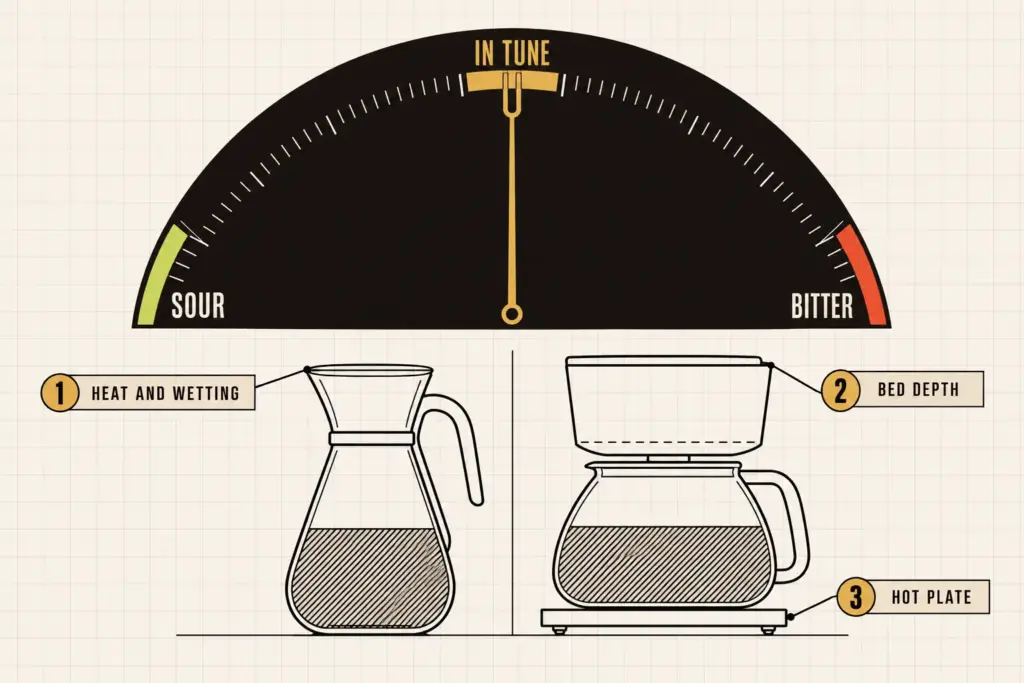
A machine that cannot change its brew can leave a pot bitter whatever you do at the counter. A Moccamaster can feel locked into a single brewing pattern: fruity light roasts can come out bitter or too acidic, and changes to grind and dose may not fix it. That is one owner’s case and not a trend, but it shows what kind of feature to suspect when a pot stays bitter after the grind has moved both ways. A basket that goes shallow with small doses gets its own section further down.
The Pot That Tastes Right Early and Cooked Late
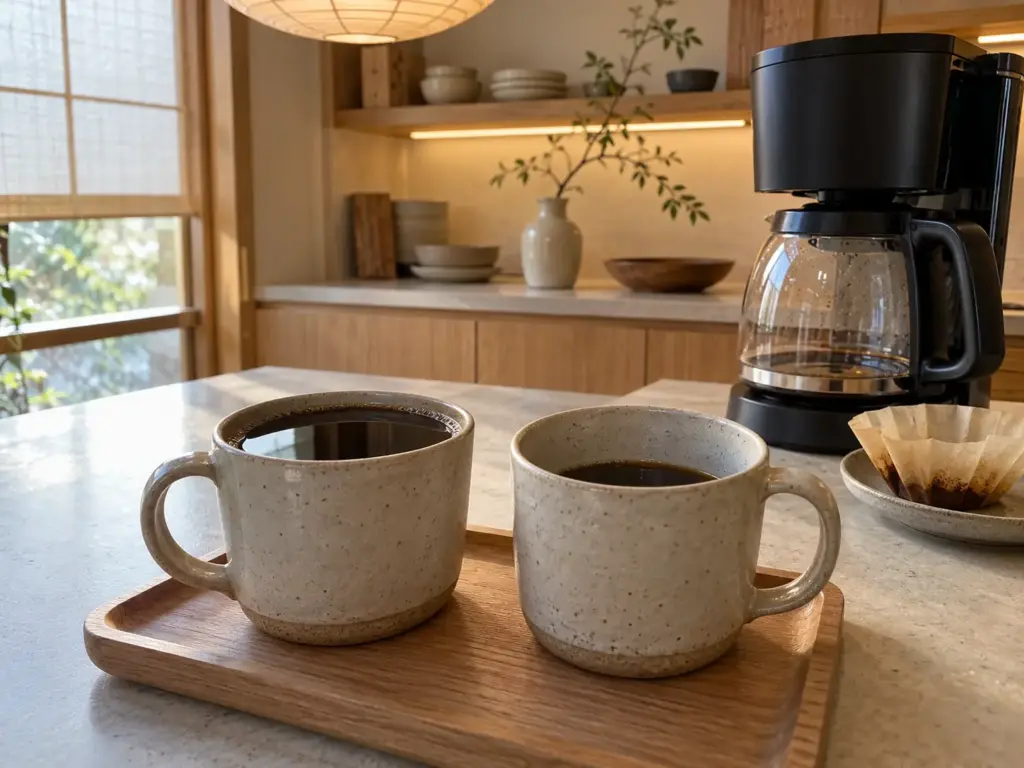
The cheapest test of everything in this guide costs nothing. Pour a mug from the start of the pot and another from the end, and notice whether the taste moved.
A first mug that is right and a last mug that tastes of cooked coffee blames the plate before the grind. A last mug as thin as the first blames heat or wetting. The box can claim anything; the second mug from the same pot is the evidence.
Hot coffee hides flavor, so taste the two mugs fairly. Pour a small sample from the start of the pot and another from the end, leave both until they have cooled to the same warmth, then compare. If the difference survives the matching, it is in the coffee and not in the temperature.
Picks are not on this page. They live on the Drip pillar, where the picks are sorted by water temperature, and everything below is the checklist to read them with.
The Free Changes to Make on the Machine You Own
Before any feature gets blamed, three changes cost nothing and move the cup. They go in order, one per pot, with a tasted pot between each, because changing two things at once teaches you nothing about the result.
Go One Step Finer or Coarser, Then Taste
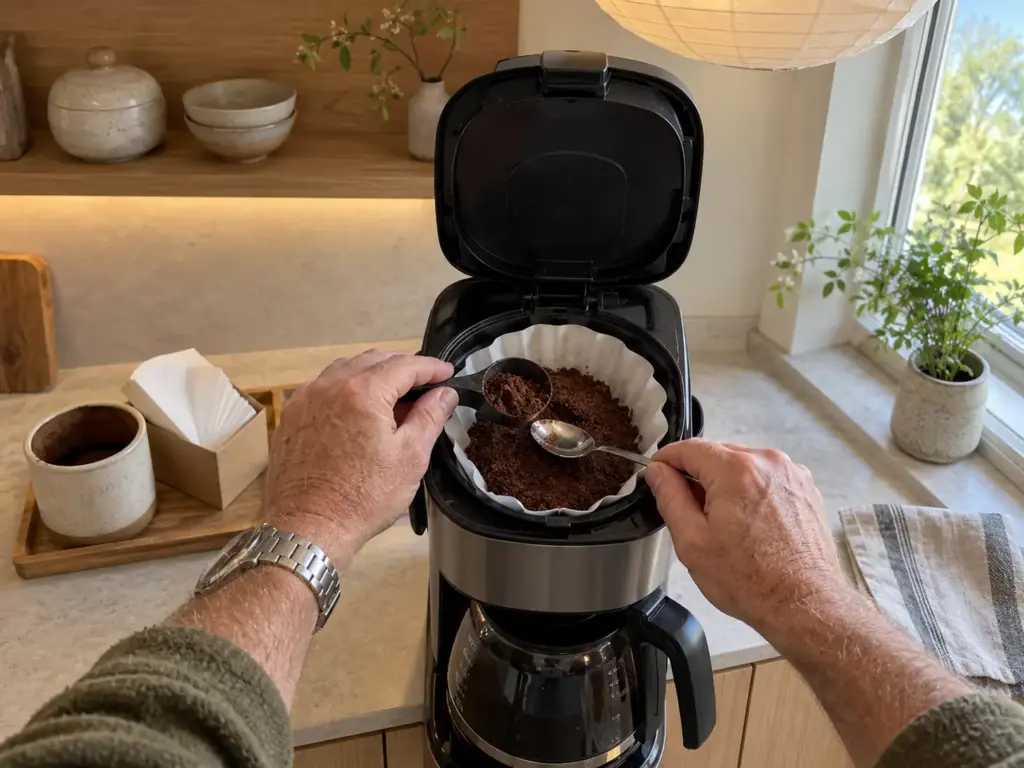
The direction picks the move. A sour pot goes one step finer; a bitter, dry one goes one step coarser. Start from the right grind size for a drip coffee maker, keep the dose and the water line identical, and brew the next pot.
If it worked, the sourness backs off and the cup tastes rounder instead of just weaker. If you overshot, a dry, bitter finish arrives, and the answer is to come back half a step.
A grinder also holds some grounds inside, so the first dose after a change still comes partly from the old setting. Judge the second pot, not the first.
Stick a note beside the machine and write three things on it each pot: the grind setting, the water line, and two words for how it tasted. By the fourth pot you will not remember which setting was the sweet one, and the note will.
Let the Bed Bloom Before the Rest Comes Through
A pause of about 30 seconds after the first wetting lets the coffee bloom, which helps because the showerhead is not perfect. Nothing measures the effect, so treat it as a free experiment and not a proven fix.
If your machine has a pause or serve-pause feature, the manual will say whether it can be used before the cycle finishes; use that and nothing else, and leave the basket where it sits. Without a pause feature, skip this step entirely. The free change is then the grind and the dose, and the dose gets its own section below.
Check the Machine’s Manual Before Anything Else
Cleaning and descaling belong here, along with the manual’s own word on the smallest pot and on how the pause works. Follow the maker’s interval and steps; this guide puts no number on them, because the number belongs to your machine and not to a general rule. A setting name on the panel is a label, not a spec, and the manual is where you find out what it changes, if anything.
Water Temperature Through the Whole Brew
Ask what makes a drip coffee maker good and heat comes first, the first of the three features that change the cup, because it is the one a standard actually measures, and it measures it across the cycle and not only at the start. The box says hot water. The standard says how hot, by when and for how long.
The Window Covers the Whole Brew, Not the First Drip
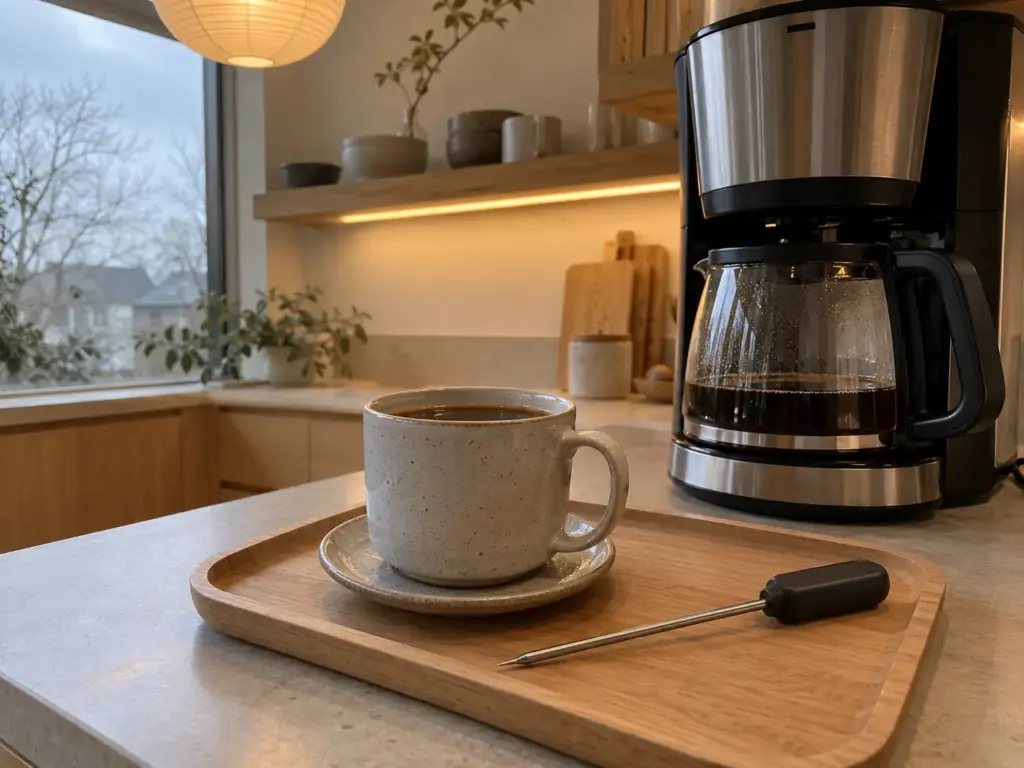
SCA Standard 310-2021 sets the figure in its section on brew temperature: 194 to 205°F (90 to 96°C), reached by the time a third of the water has been poured. That is the SCA window. That wording matters, because the very start of the brew is not held to the window and everything after it is.
Then comes the clause that does the work. In the SCA’s home brewer standard, “The temperature shall be maintained within the 90 to 96°C range for the remainder of the brew cycle.” A machine that starts in range and slides out of it fails, even if the first mug tastes fine.
The reverse is worth knowing too: a machine can spend the first third of the pour warming up, as the standard allows, and still pass. What the standard asks is that the rest of the pour arrives hot, which is the part of the brew that fills most of the pot.
Spec sheets often print 195°F to 205°F, which is that window rounded. The standard’s own figure is metric, and 194°F is where 90°C lands.
Two numbers in this area look alike and do different jobs, so keep them apart. A certified maker, quoted in the SCA’s own post, gives 185 to 205°F (85 to 96°C) as the range its machines brew in. The bottom of that range matches the ceiling the standard sets for coffee sitting on a heating element, which is a holding limit and not a brewing floor. Read it as the maker’s figure, not the standard’s.
At a real counter this means a pot can taste fine at the start and off by the end, and a heat drift is one of two suspects. The other is the plate, covered in the carafe section.
What an SCA Badge Tests and What It Leaves Out
A badge means a lab measured brew temperature, extraction, consistency and overall performance. Nothing in that list is how a carafe holds heat across an hour or what an app profile does, and the standard speaks about the plate for 30 minutes and then stops. So the badge is the best evidence available for the first of the three features and says little about the third.
And certification is not the same as a better pick. It speaks for the brew of the model that was tested; check that the model on the list is the model in the cart, since a sibling with a different carafe can be a different SKU (the OXO in the carafe section shows how that goes wrong). The carafe is the next decision, and a drip coffee maker sorted by carafe heat is where that choice gets worked through.
How the Water Reaches the Grounds
After heat comes the path. The same hot water can wet a bed evenly or run through it in a channel, and the features that decide it are the showerhead or spray arm, the shape of the basket and whether the machine lets the pattern change. It sounds like plumbing, and it tastes like sour and bitter in the same pot.
Showerhead and Spray Arm: What Each One Has to Do
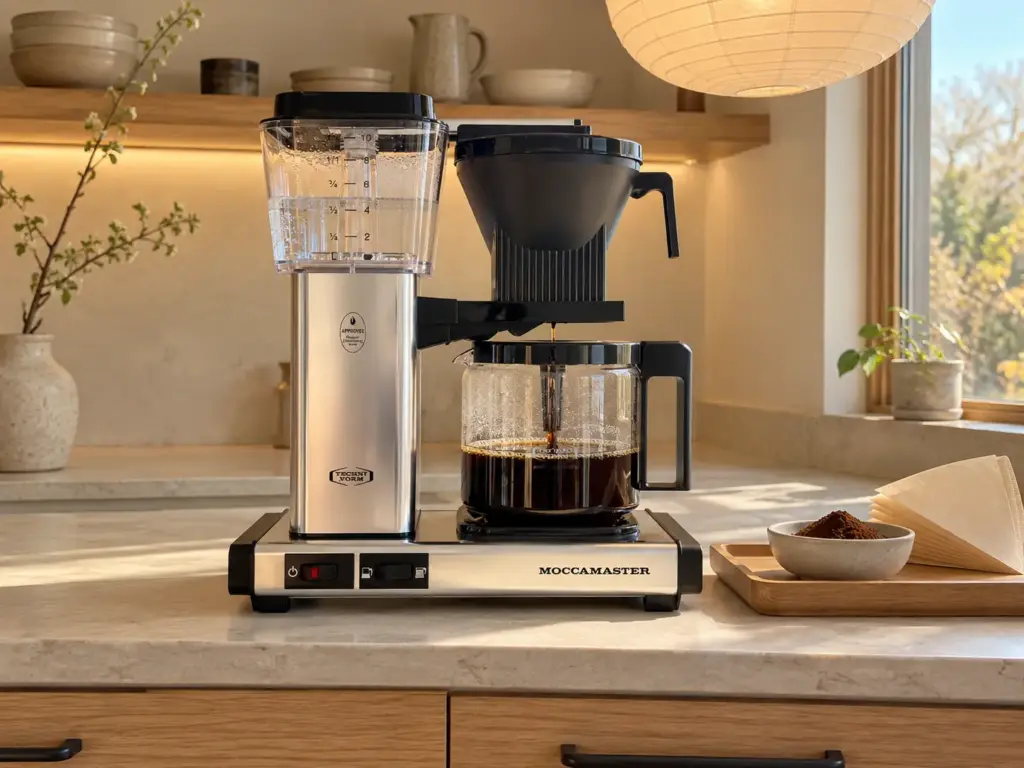
A showerhead or spray arm has one job: wet every gram of the bed at about the same time, an even saturation, so no patch sits dry and no ditch forms where the water runs straight through. Water follows the path of least resistance. Where it finds a channel it over-extracts that strip of coffee, and the dry patches beside it under-extract, which is how one pot ends up sour and bitter together.
You can read the result yourself. Once the basket has stopped dripping, look at the spent coffee bed. Flat and even is a good sign; dished in the middle, or wet on one side with a dry rim, means the water took a route.
Owners also build their own fixes for a poor spray pattern. Resting a shower screen on top of a V60 dripper makes the water fall onto the grounds instead of being forced up by steam, and it works on one Moccamaster variant and not on every one. It is something owners try, not something to copy, since no measurement backs it.
Flat-Bottom or Conical Basket: Both Pass the Standard
SCA Standard 310-2021 says a home brewer may have a conical brew basket or a flat-bottom basket, and it ranks neither. That settles an argument before it starts: the shape belongs to the machine you own, and you match the grind to it, not the other way around.
What the standard also leaves open is the dose. It tests a full-capacity batch, and brewers above 1 kg of water are tested at 1 kg too, which is about 34 fluid ounces. It sets no minimum amount of grounds. A machine can pass and still spread a small dose into a thin layer, and a thin layer is the bed that gets pushed around.
A pot that is bitter at a small dose and fine at a full one has told you something before you touch the beans. Brew the same grounds at the larger batch once, taste, and only then decide whether the coffee or the dose was the problem.
A Fixed Brewing Pattern Against a Profile You Can Change
The clearest example of a fixed pattern is the Technivorm Moccamaster 53941 KBGV Select 10-Cup, a 40-ounce machine whose spec names one adjustment, a half or full pot selector (the Moccamaster review takes the whole machine apart). Its flaw, in owners’ words, is the one from the first section: fruity light roasts came out bitter or too acidic, grind and dose did not help, and one owner sold it after a month. With small doses the basket goes shallow, which means over-agitation and a bitter, astringent cup; going coarser only makes it watery. Both are single reports, and the same machine has long-lived owners, which the last section picks up.
The answer to a fixed pattern is not a different grind. It is a feature that changes how the water arrives, a profile you set on a dial or from an app instead of living with one route through the bed.
The owner who sold the fixed-pattern machine moved, by that owner’s account, to the Fellow Aiden Precision Smart Drip Coffee Maker, which takes its profiles from an app (see the Fellow Aiden review). The Aiden can retain heat a little too well, and its default profiles can run too hot; a cooler profile needs almost twice the brew time. Neither the SCA badge nor the carafe test covers app profiles, so what they do rests on owners’ reports. An app is also one more thing that has to keep working, and only time shows that.
The Carafe and the Hot Plate
The third feature that changes the cup is not part of the brew at all. It is what happens to the pot afterward, and the two kinds of carafe trade one risk for another.
What the Plate Does to a Pot Left on It
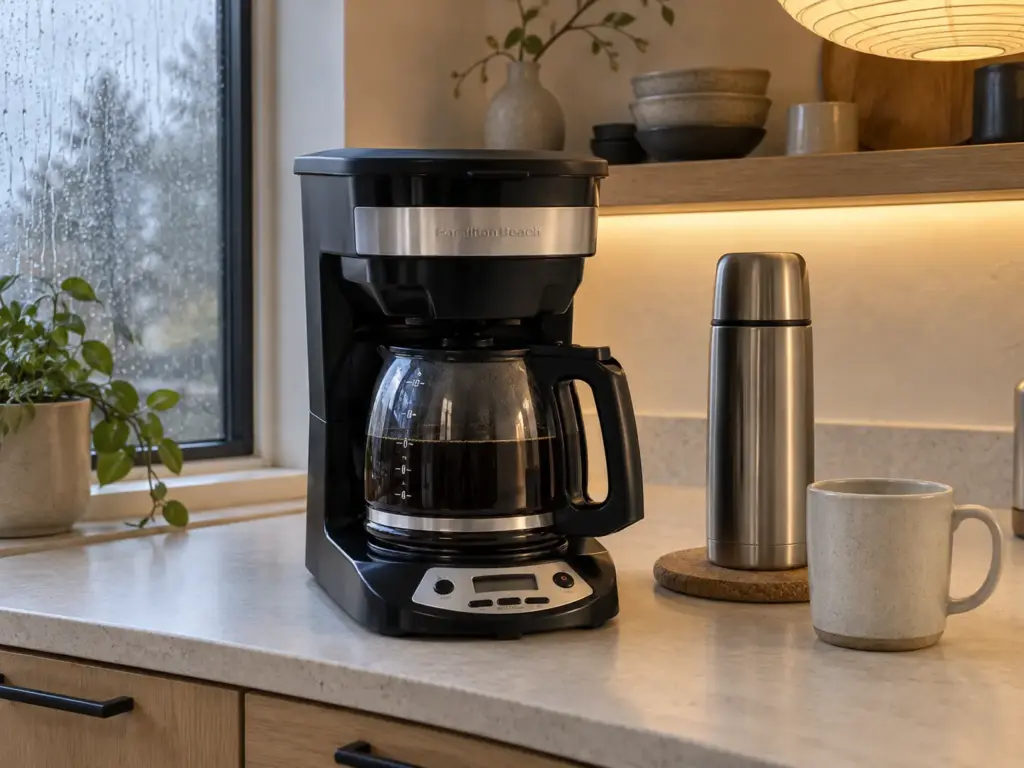
A hot plate, also called a warming plate, under a glass carafe heats in pulses, not steadily; Consumer Reports’ carafe test, updated in January 2023, describes plates keeping coffee hot by cycling power on and off. The SCA standard is the only source that puts numbers on it: a heated holding receptacle should keep coffee at 176 to 185°F (80 to 85°C) for the first 30 minutes, and at no point should the coffee rise above 185°F (85°C) from the heating element. After 30 minutes the standard says nothing at all. So a minutes limit is not something this guide can give you, and a pot that sat for an hour is outside what any spec promises.
The plain example of that setup is the Hamilton Beach 12 Cup Programmable 46299J: a glass carafe on a nonstick plate, with a serve-pause (the machine’s own version of the pause from the free changes) and an auto-shutoff at two hours. Two hours is ninety minutes past the only span the standard describes, and the plate stays on until then. No repeated complaint turns up for this model, so the downside is the class’s. Consumer Reports notes a burn risk from the plate beneath a glass carafe and the potential for a burnt taste when coffee stays on it.
The mug poured at the end of the morning from a pot made at seven tastes of the plate before it tastes of the coffee, which is cooked coffee in the plainest sense. The Smeg review and its hot plate looks at one machine’s plate in detail.
What a Thermal Carafe Costs in Pouring and Cleaning
The usual answer to the plate is a thermal carafe, an insulated steel jug with no heating element under it, and the logic holds: with no element, the pot cannot cook, which is Consumer Reports’ point about avoiding the potential for a burnt coffee taste. The cost sits elsewhere. By the same test, thermal carafes are heavier than glass, which makes them harder to pour, some of them dribble, and they can be harder to clean.
The OXO Brew 8-Cup Coffee Maker, Thermal Carafe is the class example: eight 5-ounce cups (10 to 40 ounces per brew) and a Rainmaker shower head. Mind the trap in the name. The SCA’s certified list names the glass-carafe version of this model, not this thermal SKU, so a badge on one does not carry to the other.
No repeated complaint turns up for this SKU, which leaves the class costs above as the ones to weigh, and they are daily ones: a heavier jug at every pour and a harder wash at every cleaning. Brew heat belongs to the model while the plate belongs to you, so a cheaper machine can give up heat in the brew that no carafe gives back, which is the subject of the heat you give up in a cheaper machine.
Neither Carafe Holds Heat Well
The measurement is the part that surprises. In Consumer Reports’ test, a glass carafe on a plate moved about 2.5°F (1.4°C) either way over an hour, and a thermal carafe lost about 4°F (2.2°C). Their engineer sees no significant difference in temperature loss between the two types.
The common assumption that a thermal carafe keeps coffee hotter does not hold up in that test. What a thermal carafe buys is the end of the plate’s cooking, and what it costs is weight and washing. Pick on that trade, not on a heat claim.
Capacity Is Counted in Ounces, and Small Batches Have a Floor
The first of the two features that change the morning rather than the cup is capacity, and it hides in a unit that is not a mug. A cup on a coffee maker is the maker’s unit, and two machines with different cup counts can hold the same water.
Ounces, Not Cups
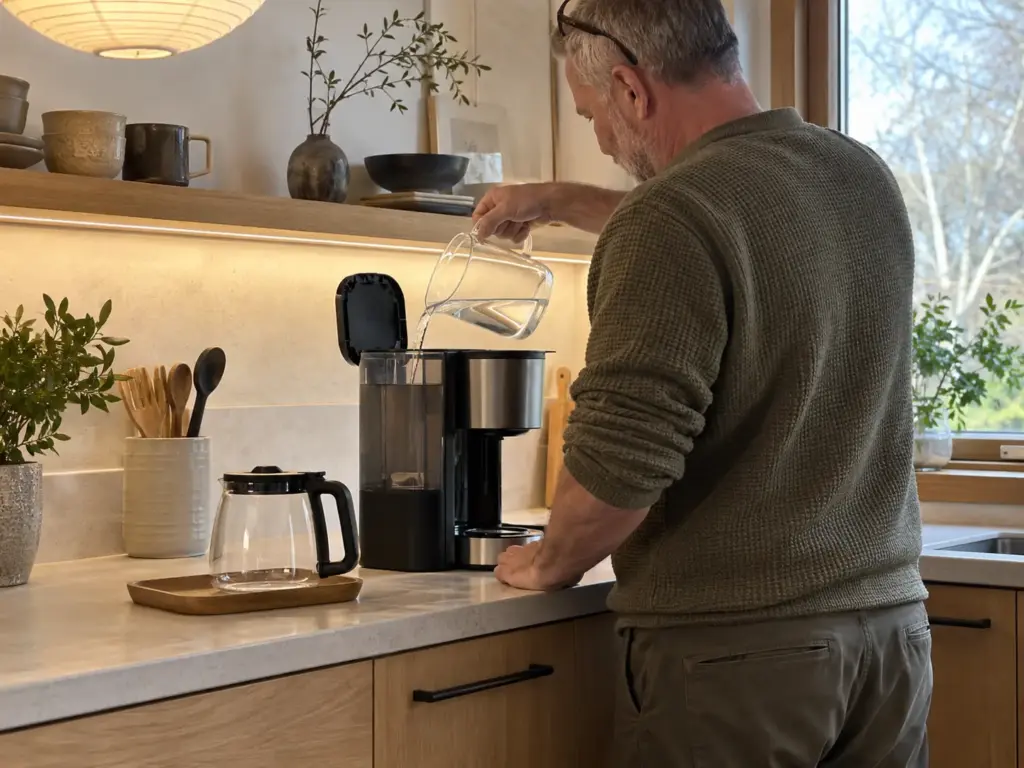
The OXO counts eight cups of 5 ounces, 40 ounces at full, and the Moccamaster’s ten cups come to the same 40 ounces, so a cup is 5 ounces on one label and 4 on the other. A mug holds more than either.
Fill a measuring jug to the reservoir line to see what your own machine calls a cup, then divide by the mugs you actually drink. The SCA’s 1 kg test point, about 34 fluid ounces, is less than either of these machines at full. Counting ounces, not cups goes further for bigger machines.
The Smallest Pot a Machine Will Brew Well
The standard sets no minimum dose, so a machine can pass and still brew a shallow bed at a small dose. That is the small-dose issue from the water-path section: below a small dose, the Moccamaster basket goes shallow. The Hamilton Beach lists a 1-to-4-cup setting, which answers the problem on paper, though a setting name is not a test result.
The free change before buying anything is to brew closer to the machine’s full size, or to use the small-pot setting if it has one. A reader at a counter set up for a family should look at a coffee maker for one person that doesn’t waste a pot.
Timer, Reservoir, Hot Water and Iced: What Changes the Morning
The convenience features decide when and how easily you brew, not how the cup tastes. Each of them is its own question, and this section only sorts them out of the cup group and says what each one costs you.
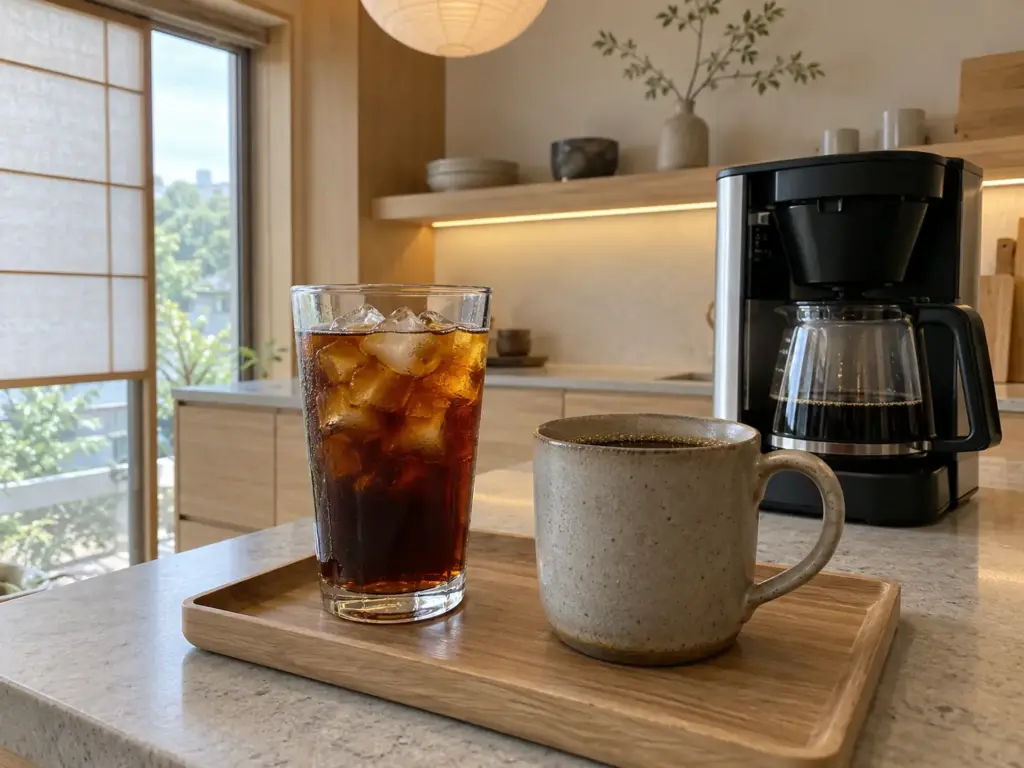
A programmable timer decides when the brew starts, not what the water does while it runs, so it belongs to the morning and not to the cup. The reservoir is the same kind of feature: a removable reservoir is easy to carry to the sink, while a fixed tank has to be filled where it sits, which under a low cabinet means pouring from a small jug at an awkward angle. If that shelf is yours, read about a coffee maker that fills in place before a taller machine ends up in the wrong spot.
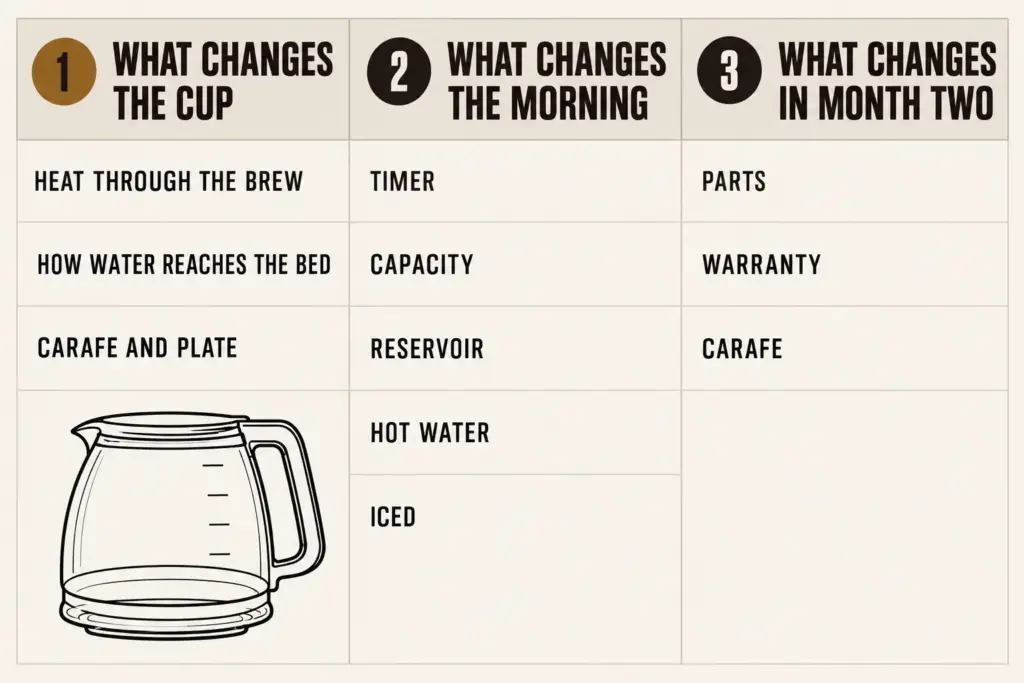
A built-in grinder is one more branch with its own trade-offs, covered in a coffee maker with a built-in grinder. The materials in the water path, plastic or glass or steel, are a question of wear and cleaning, and a drip machine with no plastic parts sorts the parts one by one.
A hot water dispenser and a hot-and-iced setting for iced coffee are named here and sent on, with nothing claimed about them in this guide. Ask of each the same question as of the timer: does it change what the water does to the grounds, or only when and how easily you get to the pot? Only the first kind belongs in the cup group, and none of these four is in it.
What Wears Out After the First Month
The third group is the one reviews cannot cover, since they are written in week one: the plate, the carafe and the parts only speak later. What follows is where to look, and what to ask a brand before it matters.
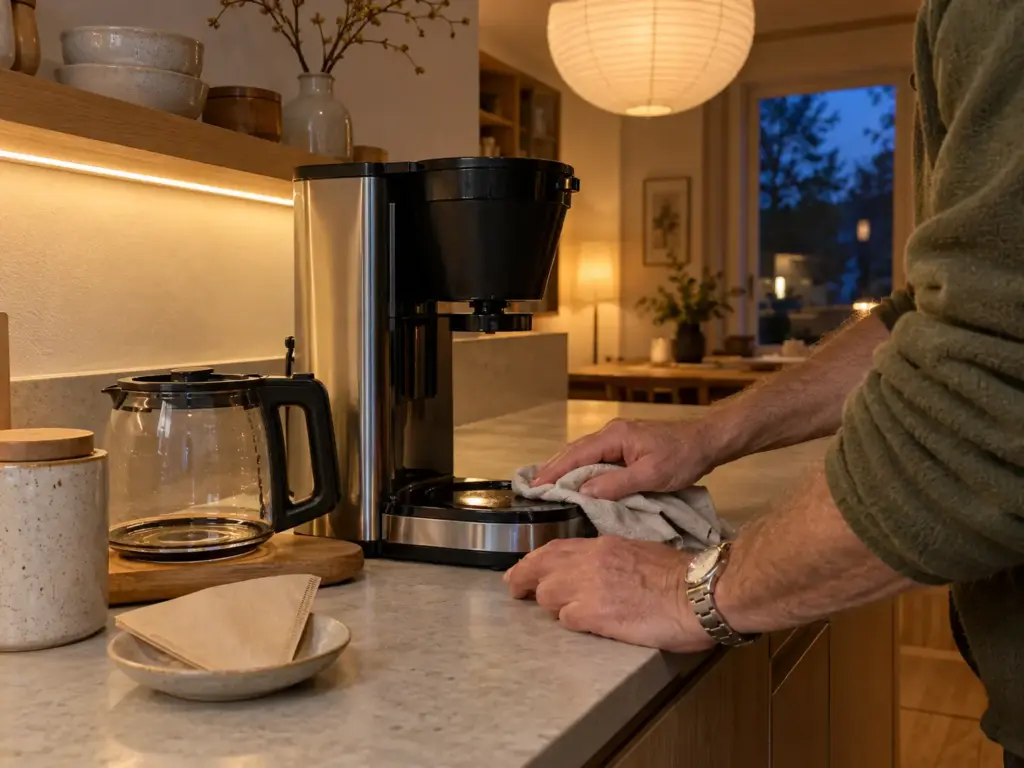
Parts and Warranty Decide Whether It Is Repairable
A brand page is where replacement parts and years are compared, and which brand of drip coffee maker is best, parts and years is the place to start. The Moccamaster ships with a five-year warranty by its maker’s own figure, and long service lives are reported for these machines, with a heater that keeps coffee hot for a long time. That is an impression rather than a measurement, so read it as a palate and not a spec.
What a Week-One Review Cannot See
Consumer Reports’ carafe test follows a pot for an hour. Month two is a different test, and each class of feature has its own way of failing it:
- The plate cooks the pot that stays on it.
- The thermal carafe pours and cleans badly.
- A fixed tank fills badly in a tight spot.
- A fixed brewing pattern cannot be tuned.
None of those shows in the first week, because in the first week the novelty is the feature. How often to descale is the manual’s answer for your machine, and this guide does not guess at it.
Decide at pouring time how much of the pot you will drink in the next half hour. Pour the rest into a preheated mug or a thermal bottle and switch the machine off, because 30 minutes is the only span the standard gives for coffee sitting on an element.
Tomorrow’s Pot: One Grind Step, Then the Last Mug
Three things to carry out of this. Judge a drip machine by the heat it holds through the whole brew and by how it wets the grounds, in that order, because those are the two the cup cannot recover from. The carafe and the plate decide what the last mug tastes like, and each class has its flaw: the plate cooks, the thermal jug pours and cleans badly. And the timer, the tank, the hot water and the iced setting change the morning and not the cup, so they go last on the list.
A month from now, brew one pot with the setting on your note and taste the last mug against the first. If they have drifted apart since the week you started, the plate or the carafe is the first suspect and the grind is the second.
For tomorrow, taste the first and last mug of one pot. If both are sharp, move the grind one step finer; if both are dry and bitter, one step coarser; if only the last mug is cooked, pour what is left off the plate. Change that one thing, brew the same dose to the same water line, and taste again.
A sour pot should come back rounder, and a dry finish means the step went half a step too far. When it is time to choose a machine, the Drip pillar, where the picks are sorted by water temperature is the next stop.
Frequently Asked Questions
01What is the best drip coffee maker for home use?
The best one holds the SCA brewing window of 194 to 205°F (90 to 96°C) through the whole brew and suits the batch size you actually make. Specific machines are sorted by water temperature on the Drip pillar.
02Is a thermal carafe better than a glass one?
Not for heat: Consumer Reports found no significant difference in temperature loss, about 4°F (2.2°C) an hour for thermal and about 2.5°F (1.4°C) for glass on a plate. Thermal avoids the burnt-taste risk but pours and cleans worse.
03Does the SCA certify drip coffee makers?
Yes, it publishes a list of certified home brewers that undergo independent third-party testing for brew temperature, extraction, consistency and overall brewing performance. See the SCA certified home brewers post. It does not cover the carafe or an app.
04Can a drip coffee maker brew a small batch well?
Some can, but it depends on the basket. The SCA standard sets no minimum dose, and a small dose on a Moccamaster can leave a shallow bed and a bitter cup. Check the machine’s small-pot setting.
05Is a hot plate bad for coffee?
Left long enough, it can be: Consumer Reports names a burnt-taste potential with plates, which is why it points to thermal carafes. The SCA specifies 176 to 185°F (80 to 85°C) for the first 30 minutes, and says nothing after that.



How did your cup turn out?
No comments yet. Tell us what you changed — and whether the needle moved.