

We may earn a commission when you buy through links on this page. It never changes what we recommend. How we pick
On this page7 parts
- A Few Machines Take Both Pods, and Only One Is Easy to Buy
- Two Brewers in One Shell, Each With Its Own Size Range
- The Flaw of Each Machine, in Writing
- What Month Two Asks of a Machine With Two Paths
- Three Routes, and When Each One Wins
- Test the Weaker Cup First, Then Pick the Route
- Frequently Asked Questions
A box of K-Cups sits in one cupboard, a sleeve of Nespresso capsules sits in a drawer, and the counter has room for one machine. So you go looking for a coffee maker that uses K-Cups and Nespresso pods, hoping a single shell ends the argument about which system wins the kitchen. A few exist. Each one is two brewers sharing a housing, and the sizes show where the compromise lives: the one maker that prints both ranges puts its K-Cup side at 8 to 12 ounces and its Nespresso side at 2 to 6.
This guide names the machines, writes the flaw of each, asks what the second month demands of a two-path shell, and closes on three routes with the free one first. That last decision only makes sense once you have settled whether a Keurig or a Nespresso suits your cup in the first place.
Quick Answer
Yes, a few machines take both pods, but as two brewers in one shell: each pod runs its own path with its own size range, so the cup on the system you drink less is the one to test before buying. Only one of them is easy to order, and a free route comes first.
A Few Machines Take Both Pods, and Only One Is Easy to Buy
Owner threads have said no for years, and on pod compatibility through a single brew path they are right. On the products they are wrong: a short list of machines does take both pods, and the list carries a catch that the box never mentions.
The machines that take both K-Cups and Nespresso capsules
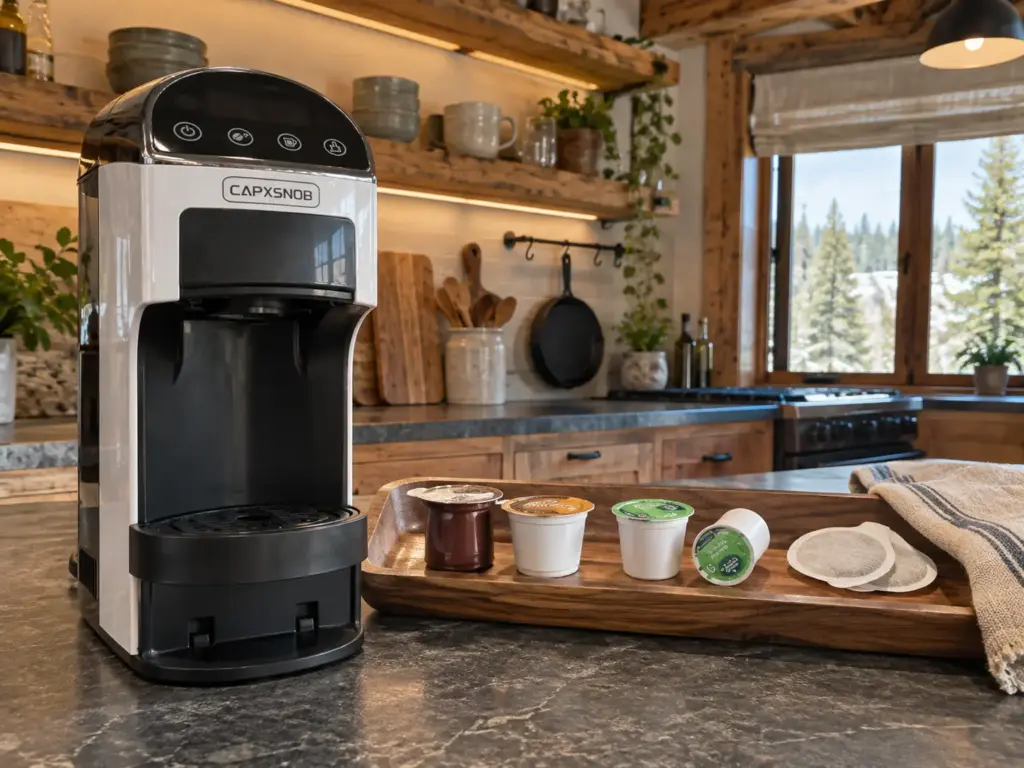
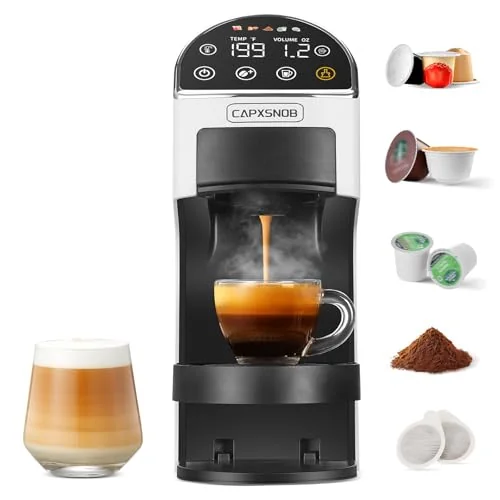
The names that keep surfacing are the Instant Pot Dual Pod Plus, the KOTLIE 4-in-1, the Magician2 Multi-Pod, the Cuisinart 4-in-1 Coffee Center and a multi-capsule model sold under the Thyme & Table name. Of those, only the Magician2 has a listing you can order from Amazon right now. Every KOTLIE listing that was checked showed as unavailable, and the Instant Pot gets its own section below. The practical list is one machine long.
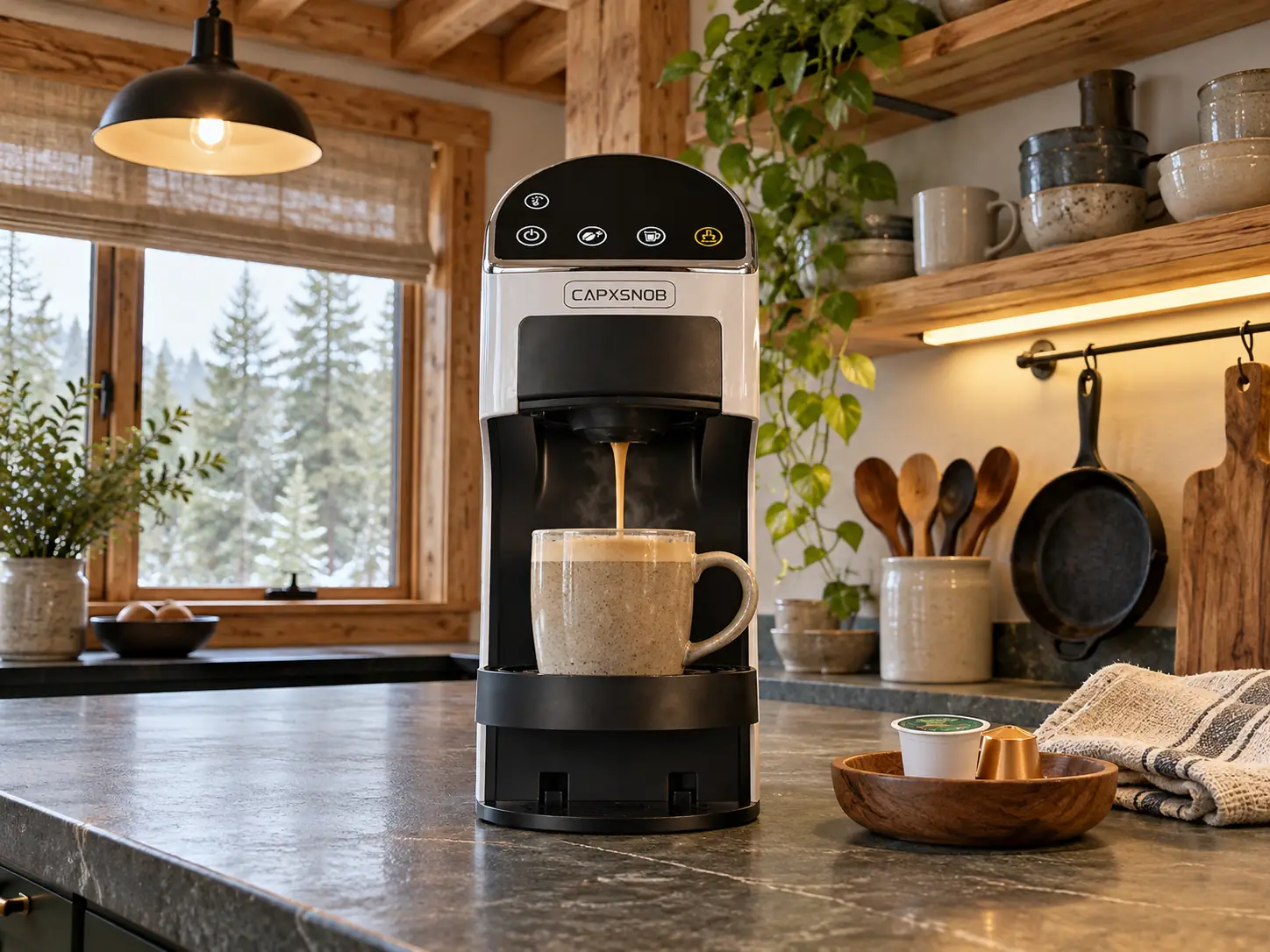
The Magician2 listing says it takes K-Cup pods, Nespresso Original capsules, 44 mm ESE pods and ground coffee through five interchangeable adapters. It also lists Dolce Gusto, a third system this article leaves alone, and it says the machine does not take Vertuo or Senseo pods, which matters if your drawer holds Vertuo capsules. All of that is the seller’s claim, not something measured at a counter.
What the old answer got right and wrong
The old claim is that no machine can process both Nespresso pods and Keurig pods. As a statement about products, that fails: the Magician2 listing and the Instant Pot maker’s own page each describe a machine with a slot or an adapter for both. But as a statement about the brew path, it holds. No single path serves both, because a K-Cup and a Nespresso capsule are built for different jobs, which is why the pods do not swap between machines even though the dual machines exist.
The listing and the thread are counting different things. A listing counts adapters, so the same machine reads as 5-in-1 on the box. A thread counts brew paths, and on the counter that machine is two systems that happen to share a housing and a power cord. Keep the second count in mind whenever the first one looks generous.
The Instant Pot everyone names and nobody can link
The Instant Pot Dual Pod Plus is the machine owner threads name first, and it is the one this article can only name. No new unit was buyable on Amazon when this was written, so there is no link, no card and no photo. Its maker’s page is still the clearest published statement of what a two-system machine promises: K-Cup sizes of 8, 10 and 12 ounces, Nespresso sizes of 2, 4 and 6, a stated brew temperature of 195°F (91°C), a 19-bar pump and a 68-ounce (about 2 L) reservoir. Those are the maker’s figures, printed as theirs, and they are the yardstick for the next section.
Two Brewers in One Shell, Each With Its Own Size Range
The last section showed that the machines exist. This one is about what “both” means inside the shell: two sets of sizes, one fixed dose per pod, and a cup on one side that is bound to come out weaker than the other.
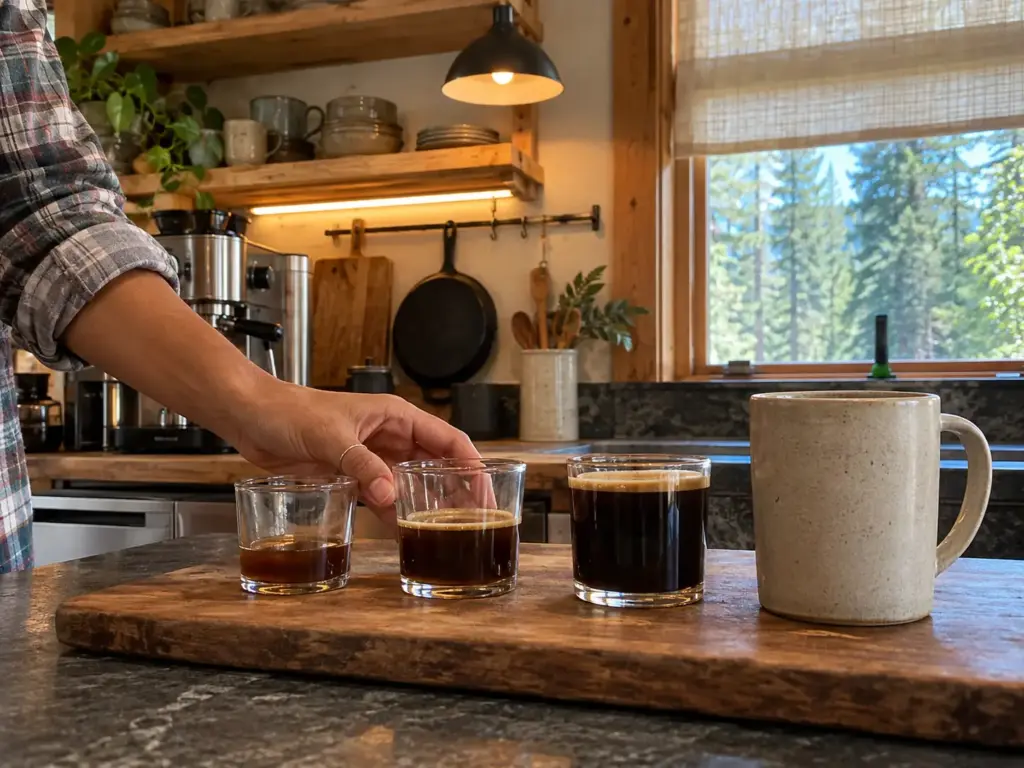
The K-Cup side runs big and the Nespresso side runs small
The Instant Pot maker lists 8, 10 and 12 ounces (about 240, 300 and 355 mL) for K-Cups and 2, 4 and 6 ounces (about 60, 120 and 180 mL) for Nespresso. The two ranges barely touch. The gap follows the pods: a K-Cup is packed for a long, drip-style pour and an Original capsule for a short, pressurized shot, so each side is tuned to the volume its own pod expects.
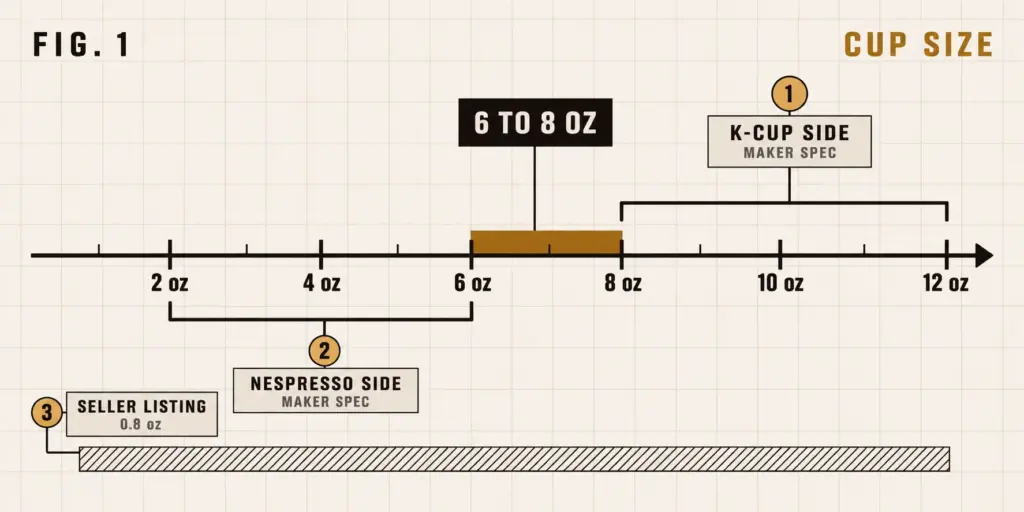
The Magician2 listing quotes a cup volume of 0.8 to 12 ounces (about 24 to 355 mL), a far wider span on paper. Read it as the range of brew sizes the pump can reach, not as a promise for each pod.
The dose is fixed inside the pod, so every ounce past what it was packed for is added water, and added water is how a pod cup turns thin. The pressure figures follow the same rule, 19 bar on the Instant Pot’s page and 20 bar on the Magician2’s listing, and both belong to the people selling the machine. For the other half of this question, how the two cups compare by mug size has its own article.
Which side is the weaker cup
A weak cup from a machine like this goes wrong in one direction: thin, flat, short on crema, the profile of too much water over too little coffee. The available evidence on this one leans toward the Nespresso side. A two-pod machine is decent at both, but not amazing with the OL pods, meaning the Original Line capsules, and it only brews 2, 4 or 6 oz of those.
Two cautions keep that honest. That machine is sold under more than one name, so the description applies to that model and not to every unit sold under a similar name. And it is one owner. What it does show is where to look first: a side whose smallest size is already 2 ounces has no smaller setting to fall back on, so if you like a short cup, that is the side that will let you down.
Test the system you drink less before you buy
The cup that decides this purchase is the one on the system you drink less. Your favorite side will taste acceptable on almost any machine, so the new shell only has to earn its place on the other side.
Test that cup first, with nothing to buy: for a week, pull your lesser system on the machine that already makes it, at the brew size you actually press, and write that size down. Then hold it against the ranges above. If the dual machine does not offer that size on that side, the compromise shows up in the first cup.
Write down the size you press most on the system you drink less, in ounces, then look for that exact size on that side of the new machine. A range that brackets your size is a different thing from a setting that makes it, and the range is the part the listing prints.
The Flaw of Each Machine, in Writing
A size range is one flaw. Each model has its own, and the support question sits behind all of them, so this section writes them down one machine at a time.
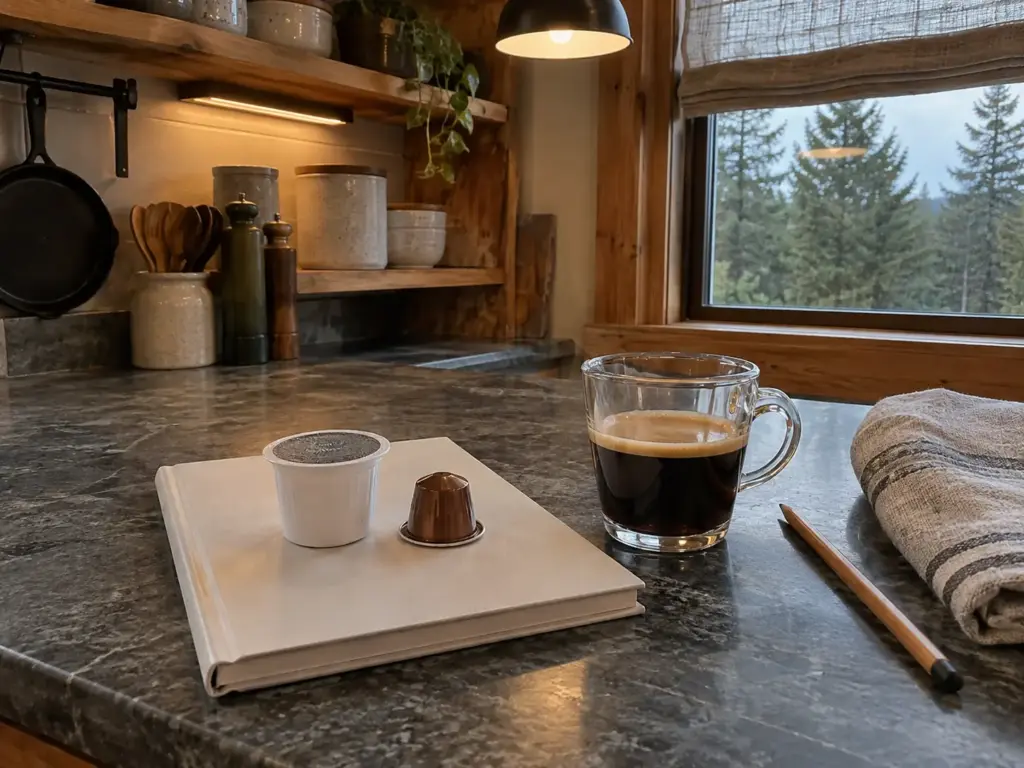
The Magician2: what the listing claims and where the listings disagree
The flaw that can be written for the Magician2 today is the listing itself. One listing describes a US version with a K-Cup adapter, another describes a European 5-in-1 set, and both cannot be right for the same box. Before ordering, open the page of the exact unit in your cart and confirm that the adapter list names the K-Cup holder and the Nespresso holder, not just a count of adapters.
No owner review of this machine was read, so no repeated complaint is claimed here, and no behavior at month two either. A wider cup range (0.8 to 12 ounces) can also tempt you into trusting the machine on both sides equally, and that is the assumption the previous section took apart.
The Instant Pot: what its owner says about the Nespresso side
The flat verdict on the Nespresso side has a second part that matters as much as the first: this machine is not supported by Nespresso. Read that as a support fact, not a quality one. A break on that machine is the maker’s to handle, and a machine that the capsule company will not open a ticket for is part of the deal with a shell like this.
Consumer Reports, which tests pod machines, says “We also give you our top-rated dual coffee maker, which brews both from pods and ground coffee.” The model in that test, a Hamilton Beach, takes K-Cups or grounds and does not take Nespresso at all. The best-tested combination brewer skips the Nespresso side, which is a sign of how hard that side is to share, and not a verdict on any machine named here.
Who services a machine that takes both pods
The Instant Pot maker’s page states a one-year limited warranty served by Instant Pot Brands. Nespresso’s own warranty FAQs, in the Malaysia and Sweden versions, list non-Nespresso capsules, accessories and parts as outside coverage and route a machine’s warranty through the retailer that sold it. Neither is a US page, and the US policy was not read, so this article will not tell you whom to call about a Nespresso-side break.
What it can tell you is what to check on the page of the machine in your cart: who the warranty is from, and whether it names the pods it covers. That reading costs nothing and takes a minute.
Screenshot the warranty section of the exact listing before you order. Listings get edited after a sale, and a screenshot is the only copy of the promise you can still point to later.
What Month Two Asks of a Machine With Two Paths
Week one is fine on any machine, and week one is where most reviews stop. A two-path machine has a doubled routine waiting by the second month, and no month-two report for either machine turned up, so this section is a set of questions with one free check, not a verdict.

Two paths to rinse and descale
Two brew paths mean two things to rinse, a water reservoir to descale, and a drip tray and a bin for used pods to empty, and the manual is the only source that can say how often. Read the cleaning section for each system before the first cup, not after the first complaint. A manual that gives one cleaning paragraph for two systems is the sign of an unfinished product.
Read the manual’s cleaning section before the first cup. If it names one routine for the K-Cup path and a different one for the Nespresso path, you now know what the second month will ask of you; if it names one routine for both, ask what the second path is doing in the meantime.
The reservoirs are the makers’ and sellers’ own figures: 42 ounces (about 1.2 L) for the Magician2 per its listing and 68 ounces (about 2 L) for the Instant Pot per its maker. A bigger tank holds more water to descale and more water that sits between uses, which is a reason to fill it to what you will drink in the next few days, not to the line.
The check that costs nothing is to pull one cup from each side on the same day and set each beside the cup from the first week. The weaker side tells first, and the sign is usually the cup you stopped finishing.
One shell against two machines on the counter
Counter space is why most readers ask this question, so compare it plainly. One shell takes one place and one cord. Two single-system machines, a K-Cup brewer and a Nespresso capsule machine, take two places and two cords, and any dimension printed here would not survive a different model.
If the cabinet has room for one machine and the second system is a few cups a month, the shell starts to make sense. If the counter can hold two, the pair gives each system its full size range.
Three Routes, and When Each One Wins
With the compromise written out, the decision is three routes, and they come cheapest first. The order matters because the first one can be undone for the price of a basket, and the last one cannot.
Keep the machine you own and add a reusable pod
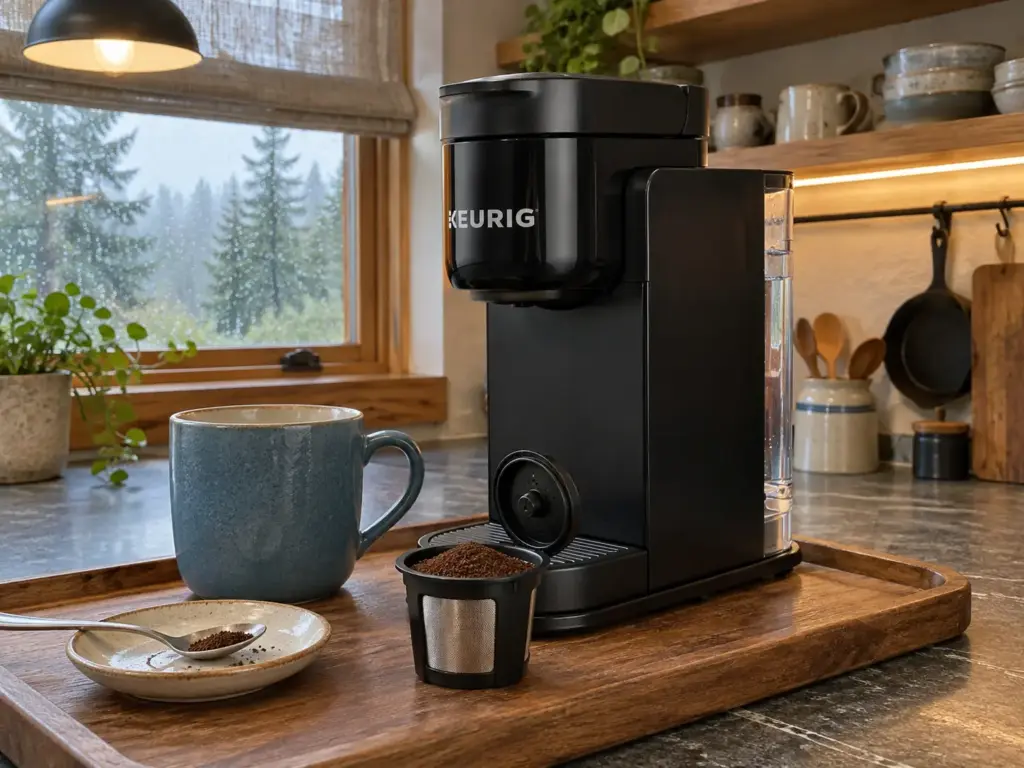
If the machine you own is a K-Cup machine, the cheapest move is not to buy anything new. A reusable K-Cup filled with your own grounds gives that machine a second source of coffee besides boxed K-Cups, and for many households that was what the second system was for.
The Keurig My K-Cup Reusable Coffee Filter is a stainless mesh basket in a plastic holder with a lid and fill lines marked MAX, cup and mug. It fits K-Cup slots and nothing else, and no cheap pod runs both systems, so this route changes the K-Cup side and leaves a Nespresso machine, if you keep one, to do its own work. Which reusable pod fits your Keurig depends on the needle type.
The obvious pick, the dual machine, stops being obvious here. It is the only route that cannot be undone cheaply, while the reusable pod is reversible the same afternoon. And since the best-tested combination brewer in Consumer Reports’ pod testing takes K-Cups and grounds, not Nespresso, the argument for this route does not rest on one writer’s taste.
Two machines, one per system
The only way to get both full size ranges is two machines. The Nespresso Original half can be the Breville Nespresso Original Essenza Mini, whose listing gives a 19-bar pump, a heat-up of about 25 seconds, two programmable cup sizes and both espresso and lungo. Its limit sits on the page itself: the listings give very different tank sizes, so check the one in your cart before assuming a number.
On the other side of the counter, the single-serve K-Cup half can be the Keurig K-Express, with 8, 10 and 12 ounce sizes, a Strong button as its strength setting and a 42-ounce removable reservoir. As with every pod machine, the pod sets the dose, so the size button changes the water and nothing else. A 12-ounce press on a pod packed for less is where thin cups begin.
The cost of the pair is two cords and two spots on the counter. In return, each system runs at its own sizes, and each machine can be descaled, serviced or retired without touching the other.
One machine that takes both
The two-system shell wins in one situation: counter space is the constraint, and the system you drink less is rare. In that case the Magician2 is the one buyable option, with the flaws written above, and it also brews grounds, so it covers the grounds route inside the same housing. When the second system is not rare, the shell asks you to live with the weaker cup every week.
A reader who wants a carafe as well may be better served by a drip-and-pod machine, which sorts that question by its flaws first. Whichever route you take, the machine on the counter is the one that gets used, and the second system’s pods in the cupboard are the ones that go stale. The next number to check is the one that decides whether the second system is worth keeping at all, what each cup costs per ounce, and that arithmetic runs on your own boxes and your own sizes.
Test the Weaker Cup First, Then Pick the Route
Three things carry over from all of this:
- A few machines take both pods, and each one is two brewers in one shell.
- The cup on the system you drink less, measured in ounces, decides whether the shell was worth it.
- The routes run cheapest first: a reusable pod on the machine you own, then two machines, then the shell.
A month from now, pull one cup from each side on the same day and set each beside the first week’s cup; whichever side has slipped will taste thinner first. Tomorrow morning, make the system you drink less on the machine that makes it now, at the size you would press on the new one, and taste it. If that cup is one you would gladly finish, the shell deserves a closer look. If it is thin, the free routes are already on your counter, and the cost per ounce is the next question.
Frequently Asked Questions
01Is there a coffee maker that does K-Cups and Nespresso?
Yes. A few multi-pod machines take both, but each runs the two systems on separate paths with different size ranges. Of the machines named here, only the Magician2 has a buyable Amazon listing, and its adapter list is worth confirming on the page.
02Can I use Keurig K-Cups in a Nespresso machine?
No. The two pods differ in size and shape, so neither fits the other’s holder. The workaround is decanting the grounds, which is covered in why the pods do not swap.
03What coffee makers can use Nespresso pods?
Nespresso’s own machines for each line: Original machines take Original capsules, and Vertuo machines take Vertuo only. The multi-pod machines described here take the Original line per their listings, not Vertuo.
04What is the best dual pod coffee maker?
No tested best exists for K-Cup plus Nespresso. The best-tested combination brewer in Consumer Reports takes K-Cups and grounds, not Nespresso. Of the two-system machines, the Magician2 is the one with a live listing, with its flaw written above.


How did your cup turn out?
No comments yet. Tell us what you changed — and whether the needle moved.