


We may earn a commission when you buy through links on this page. It never changes what we recommend. How we pick
On this page11 parts
- Should I Buy a Keurig or a Nespresso? What Each One Does to the Water
- The Cup Each Machine Makes, and the Drinks You Will Actually Pour
- The Keurig Side: What the Buttons Change and What the Pod Fixes
- The Pod After the Cup: Choice, Reusables and Where the Waste Goes
- The Nespresso Side: A Set Cup Size and a Capsule Only It Takes
- The Dose Nobody Prints, Checked Against the SCA Standard
- Pods per Week: The Arithmetic That Settles the Running Cost
- Month Two and Year Two: What the Week-One Reviews Skip
- Which One for Which Counter, and What to Check Before You Buy
- Cup First, Then the Pod, Then One Test With a Scale
- Frequently Asked Questions
Your mug comes out thin, and a new machine looks like the repair. Before you decide whether you should buy a Keurig or a Nespresso, take in the one fact the two systems share: the coffee is sealed into the pod at the factory, so the machine you buy sets the cup size and the water, and the pod sets the grams. That changes the order of the Keurig vs Nespresso decision. This guide takes it in four steps: the cup you want to drink, the pods you can live with, the weekly arithmetic, and what each machine does once the novelty is gone.
A Keurig makes a drip-style cup in several sizes from a wide pod range at the lower cost per cup; a Nespresso makes an espresso-style shot and milk drinks from a narrower pod range at a higher cost per cup. Both fix the dose inside the pod, so you tune the cup with water and strength, never with grind.
| At the counter | Keurig K-Express | Nespresso Vertuo Pop+ |
|---|---|---|
| The cup it makes | A mug-size, drip-style cup in 8, 10 or 12 oz | An espresso-style shot or a longer cup, in five sizes the machine sets |
| What you can change | The size button and the Strong button | The cup size; the machine sets the volume |
| The pods | K-Cups, a wide range of brands | Vertuo capsules, made for this system |
| Cost per cup, as a direction | Lower | Higher |
| Where the used pod goes | Depends on your town, or a mail-back bag bought from Keurig.com | Free prepaid bags, dropped at any UPS |
| Its flaw | The cup turns thin as the size grows | The capsule is the system’s own, and nothing else fits |
Should I Buy a Keurig or a Nespresso? What Each One Does to the Water
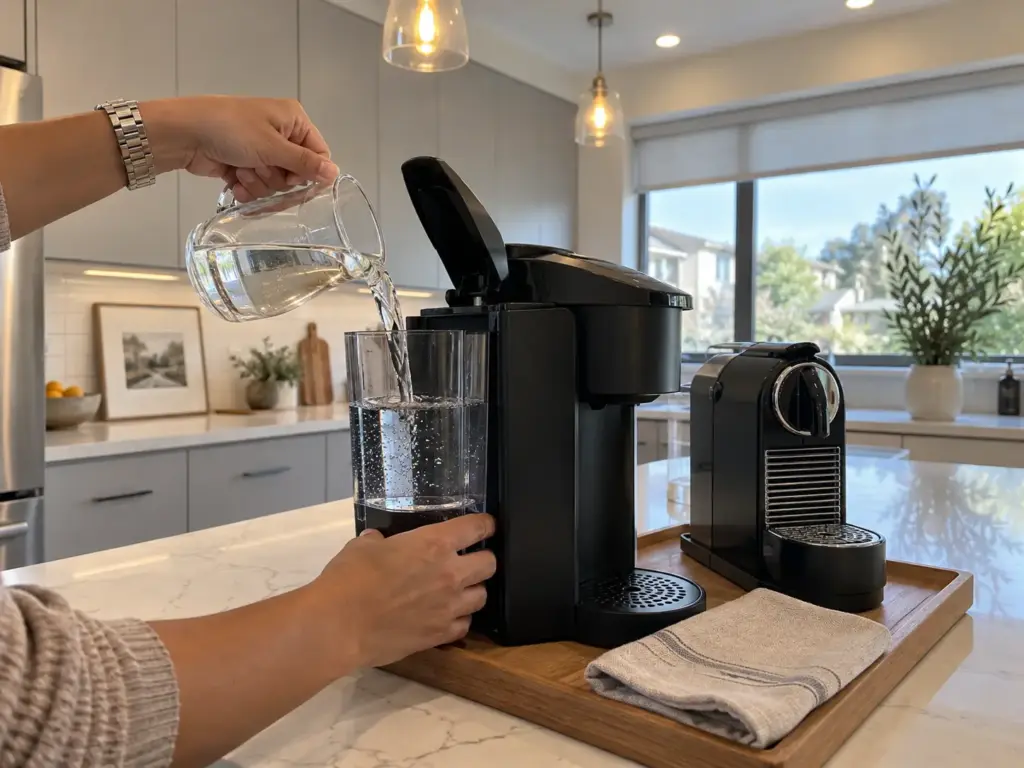
Brand loyalty answers this question badly; what each machine does to the water answers it well. Both systems seal the coffee into the pod ahead of time, which leaves the machine two jobs: how much water goes through, and how that water moves. The two systems split those jobs differently, and the split decides which part of the cup you can ever change.
The Keurig: One Pod, a Size Button and a Strong Button
A Keurig pushes hot water through a single K-Cup and stops when it has delivered the volume you chose. On the K-Express that choice is 8, 10 or 12 oz, and the size button does one thing only: it adds water through the same pod. The Strong button is the one setting that changes strength, which is why it sits at the center of every thin-cup repair on a Keurig.
The arithmetic makes the size button concrete. Twelve ounces is 1.5 times the water of eight ounces passed over the same dose, so the larger cup carries a third less coffee in every ounce. Nothing in the pod changed, only the dilution.
That is why the cheapest experiment on a Keurig counter costs nothing: one pod, brewed at 8 oz and again at 12 oz, tasted side by side. The brew size is the only thing that moved, so the difference you taste is the water.
The Vertuo: A Set Volume per Cup Size
A Vertuo works the other way around. The cup is a set volume chosen by size on the machine, and the capsule does not change it. Nespresso’s Vertuo Next page lists Espresso at 40 ml (about 1.4 fl oz), Double Espresso at 80 ml (about 2.7 fl oz) and Gran Lungo at 150 ml (about 5.1 fl oz), all from the same kind of capsule. A gran lungo is therefore the same capsule with nearly four times the water of an espresso.
Those volumes come from the Next, not from the Pop+ used in this article, whose Amazon listing counts five cup sizes, so read them as the Vertuo line’s pattern rather than a spec for this model.
With a Vertuo, picking the size is picking the drink, and the “which button?” guess disappears. So does a second lever.
Some Vertuo drinkers try most of the VL line and still find the coffees do not suit them. That is a taste report, not a fault, but it shows the cost of a fixed system: with a sealed capsule and a set volume, a cup that does not suit you leaves only the size and the capsule to change.
The OriginalLine, in One Honest Paragraph
Nespresso also sells an OriginalLine, a separate machine family with its own capsules, and the two lines do not trade capsules. This article compares the Vertuo line and leaves the Vertuo-against-Original decision to a guide of its own. Where an owner’s report involves an Original machine, it is labeled as one.
The Cup Each Machine Makes, and the Drinks You Will Actually Pour
Before the pods and the arithmetic comes the cup. A mug-size, drip-style coffee and a small espresso-style shot are different things to drink, and most arguments over which system is better are really arguments about that.

The Mug-Size Drip-Style Cup
The Keurig’s cup is the one most people picture: 8 to 12 oz on the K-Express, poured into a mug, with tea and hot chocolate pods running through the same machine. The dose is spread through a lot of water, so it is a gentle cup, and when it goes wrong the word people reach for is watery. On the other side, Keurig coffee can taste too acidic to some drinkers. One person’s palate, then, not a verdict on the machine.
What the mug cup offers is sameness. A pod machine pours the same cup on Monday as on Friday, and the question is whether you want that sameness or would rather have a cup that moves when you move the settings.
The Small Espresso-Style Shot and the Milk Drinks
The Vertuo’s cup starts where the Keurig’s stops. Its smallest listed cup is a 40 ml espresso, about 1.4 fl oz, and what sits on top of it is called crema. A shot that size is also the base of a milk drink, which is why the reader who wants a cappuccino on Saturday looks at this side. If your daily cup is one 12 oz mug, check the largest cup the machine lists before you open the box, because a 5 fl oz gran lungo is less than half of that mug.
Where the Keurig Reaches for Espresso
One Keurig is sold on espresso. Keurig’s October 2025 announcement for the K-Crema says it makes “espresso-style shots” from K-Cup pods and claims “5x more pressure than standard Keurig brewers,” with no bar figure given. Read that as the maker’s word for a style, not a measured shot, and note that it belongs to that one model: a standard K-Cup brewer is not sold on pressure at all.
The Keurig Side: What the Buttons Change and What the Pod Fixes
If the cup in your hand is thin, the repair comes before the shopping. A thin Keurig cup has a short list of causes, and the free ones are already on the machine you own.
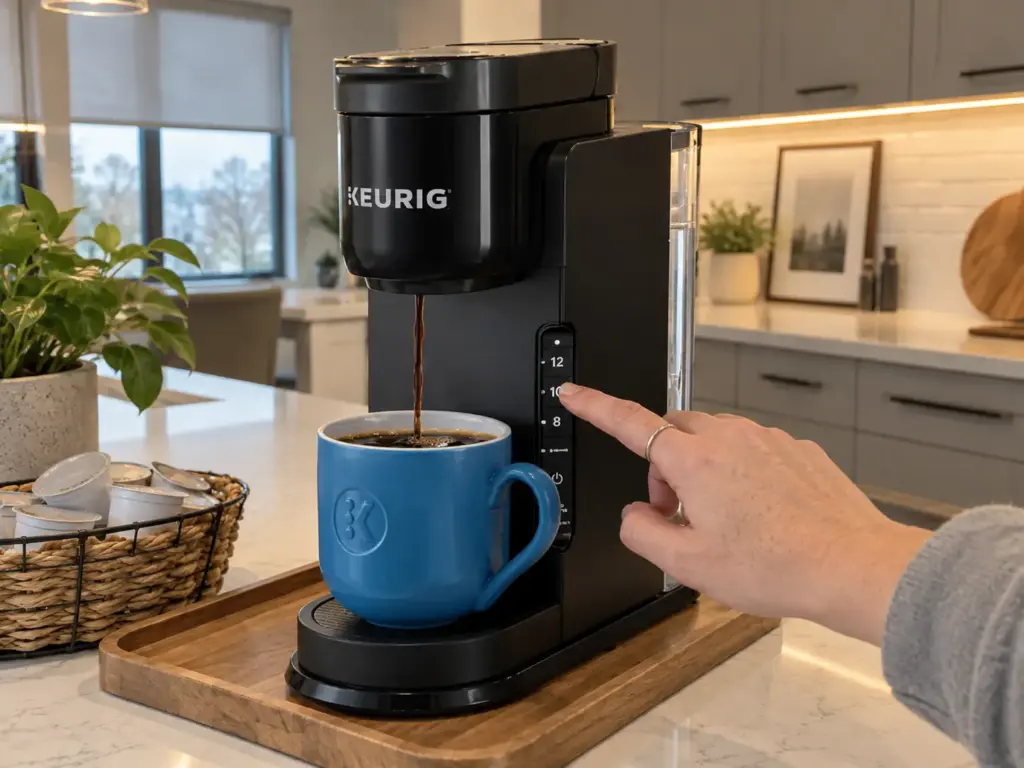
Weak and Watery: Smaller Size First, Then Strong
Watery means the water outran the dose: too much water over a fixed amount of coffee. That is the direction, and it points at the size button first.
Drop one size, from 12 to 10 oz for instance, brew the same pod and taste. The cup should come out fuller and closer to what the box promised. If it is now bitter or harsh instead of thin, you went past it; go back one size.
If the smallest size is still thin, press the Strong button and taste again. It is the one setting that moves strength, and the Keurig lines are not identical, so what the Strong button does on each Keurig line is worth a look before you rely on it. Only after both changes do you swap the pod, and you swap it for a different one, not a second copy of the same. Weak coffee that survives all three changes is the pod’s dose, not the machine.
Brew the same pod at 12 oz and at 8 oz into two identical mugs and taste them back to back while both are hot. A cooling cup hides thinness, and the side-by-side is the only way to know whether the pod or the water is the limit.
When It Is Not the Machine at All
A sealed pod has no grind setting, so a weak cup from a sealed pod is never a grind problem. Grind enters only with a reusable pod, and for that case there is a check in when a weak K-Cup cup is not the grind. The other free suspects are on the machine itself: scale inside it, a descale light that has been ignored, a cleaning skipped once and then twice. Rule those out with the maker’s own cleaning steps before you blame the pod.
The K-Express, With Its Flaw
The Keurig K-Express is the standard Keurig a reader can buy today, with the three sizes and the Strong button the weak-cup check above runs on. Its weak point is reliability, in one reviewer’s words: “At about 3 months was not reliable at all.” Cleaning fixed it. That is a single Amazon review, not a pattern, but it is exactly the kind of failure a one-week impression cannot catch.
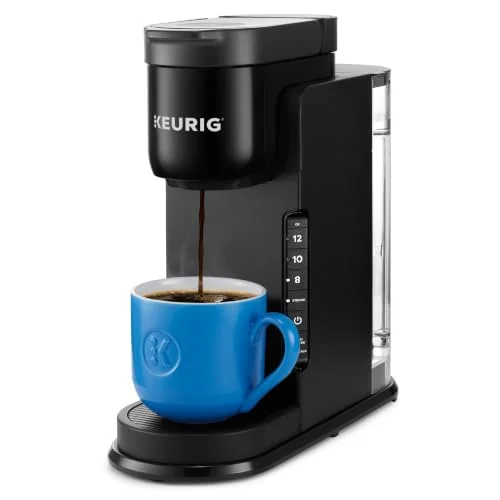
If the smaller machine is enough, the Keurig K-Mini brews 6 to 12 oz on the same pods. Same pods also means the same sealed dose, so a smaller footprint does not change what is inside the pod.
The Pod After the Cup: Choice, Reusables and Where the Waste Goes
A pod machine is a long-term deal with one kind of pod, so the second question after the cup is how many pods you can live with and what you do with the empty ones.
How Many Pods Can You Actually Find
The count that matters is the one at the store where you shop. Walk the shelf for K-Cups and then for Vertuo capsules and count the brands that are actually there, because a pod you can only get by mail is a delivery schedule, not a coffee. The two kinds do not swap: K-Cups do not fit a Nespresso, and Vertuo capsules do not fit a Keurig. Which pods cross over, and which machines take both, is a question for its own guide.
Count the brands on the shelf where you do your regular shopping, and photograph it before you decide. Whatever you cannot find there, you will be ordering ahead, and that habit is the real cost of a narrow pod range.
The Reusable Route, and Why It Tastes Thinner on Both
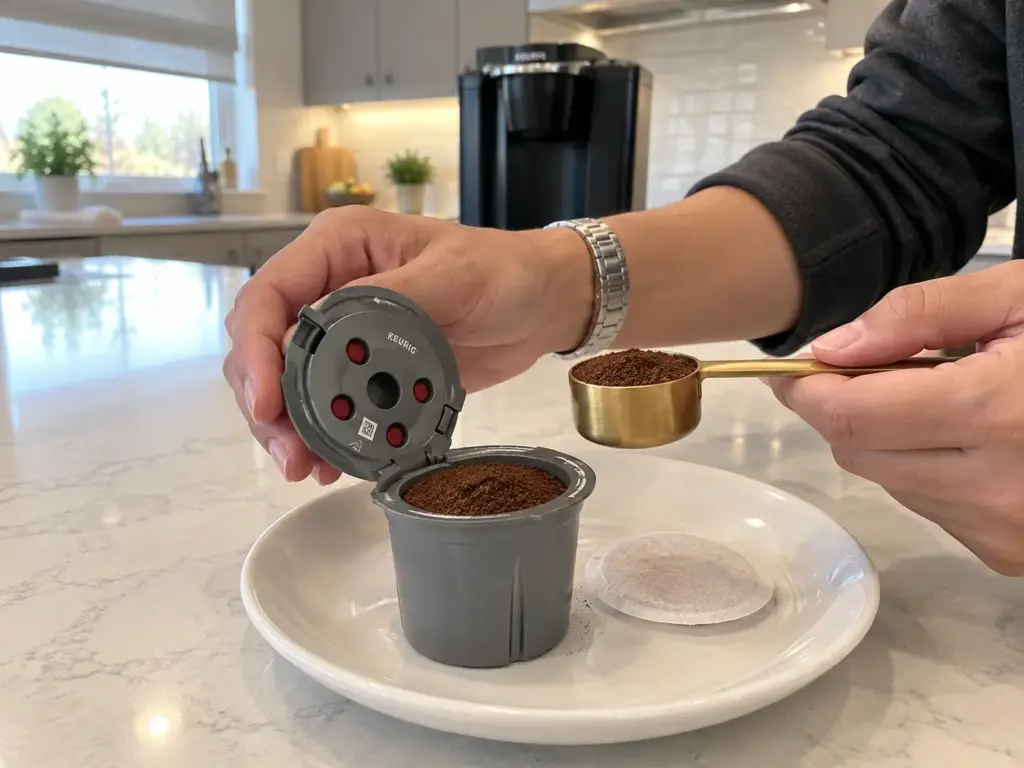
Reusable pods exist for both systems, and the verdict on them is the same word again. Reusable K-Cups and reusable Nespresso pods are both described as pretty watery tasting. The mechanism is plain: a reusable pod swaps the factory’s dose for whatever you put in it, so the fill line becomes the dose, and a pod filled under the line is a thin cup by arithmetic.
On the Keurig side the My K-Cup Reusable Coffee Filter is stainless mesh with a lid and three fill lines, MAX, cup and mug, and the line you fill to is the dose. Its flaw is that reusable pods taste thin, and this one asks for cleaning after every cup. If you would rather not scrub mesh, the Irmidi 300-count paper filters sit inside a reusable pod for the 1.0 and 2.0 models and go in the bin with the grounds; the catch is one more thing to restock. For the full choice by needle type, see choosing a reusable pod by needle type.
Where the Empty Pod Goes
The empty pod is a counter object too, and where it goes is worth deciding before the box is open. Nespresso’s own recycling page says: “Our free, prepaid recycling bags make it easy to send your used capsules back to our state of the art facility.” In the US the bags are free and prepaid, they are dropped at any UPS, and they are added to a coffee order.
Keurig’s side depends on where you live. Its December 2024 K-Cycle At Home release describes a program for consumers in communities that do not accept K-Cup pods in local recycling: the bag, with a prepaid return label, is bought from Keurig.com, and the maker encourages checking with your town first. So the order is simple: ask your town, then decide whether you need the bag.
The Nespresso Side: A Set Cup Size and a Capsule Only It Takes
The Nespresso half of the choice is easier to describe and harder to leave: the machine sets the cup, the capsule is the machine’s own, and the flaw is the lock-in as much as the taste.
What the Vertuo Fixes for You
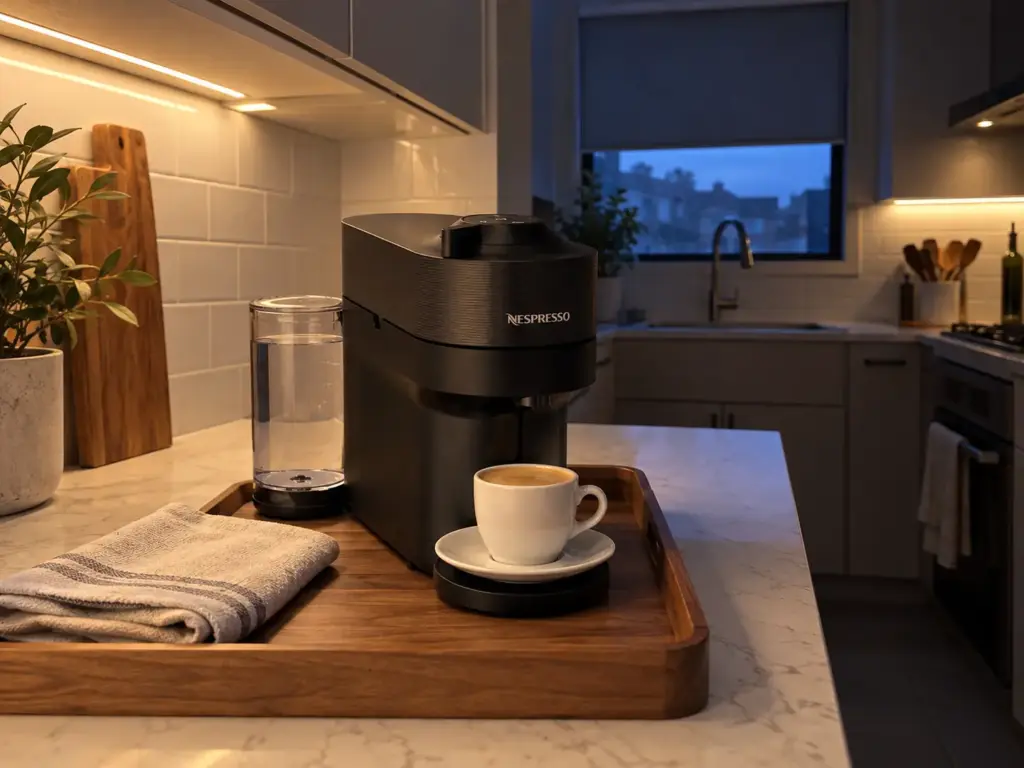
With a Vertuo the lever you hold is the size, not the grind or the dose. That removes the guess about which button to press and removes the freedom to change it: the same capsule at the same size is the same cup, as long as the capsule is the system’s own. For a reader who wants one press and an espresso-style cup or a milk drink, that fixed answer is the appeal. For one who likes to change a variable and taste, it is the limit.
The Vertuo Pop+, With Its Flaw
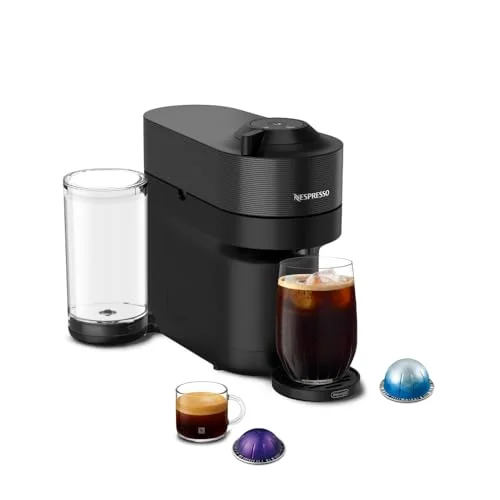
The Nespresso Vertuo Pop+ is the entry Vertuo a reader can buy as a first pod machine. The Amazon listing gives it a 25 fluid ounce side tank, a 30-second heat-up and five cup sizes, so the machine sets the cup. No repeated long-run complaint is on record for this model, which says it is unproven rather than clean.
The mug-platform complaint was written about a Vertuo Next, and it does not carry over to the Pop+. The structural flaw is the lock-in: the machine takes the system’s own capsule and nothing else.
The Dose Nobody Prints, Checked Against the SCA Standard
Neither maker prints how many grams are in a pod, so the one number that decides the cup is the one the box leaves out. You can find it with a kitchen scale and ten pods, and then read it against a standard.

What the SCA Standard Says, and What It Does Not Cover
The Specialty Coffee Association writes its home-brewer test for one machine type. According to the SCA’s standard for filter drip brewers, “The brew ratio used for testing in this standard is 55 g of coffee per 1.000 kg of fresh water unless stated otherwise.” That is 55 grams per kilogram, about 1:18, and the same standard excludes pod and capsule brewers, so neither a Keurig nor a Nespresso is measured against it.
This blog works from a stronger reference, 1:16, which is 62.5 grams per kilogram and about 14 percent more coffee than the SCA’s test ratio; the 1:16 reference in grams, not scoops explains the method behind it for a drip coffee maker. Neither number is a pass mark for a pod. They are two yardsticks for a mug of drip-style coffee, and the chart turns them into grams for each cup size.
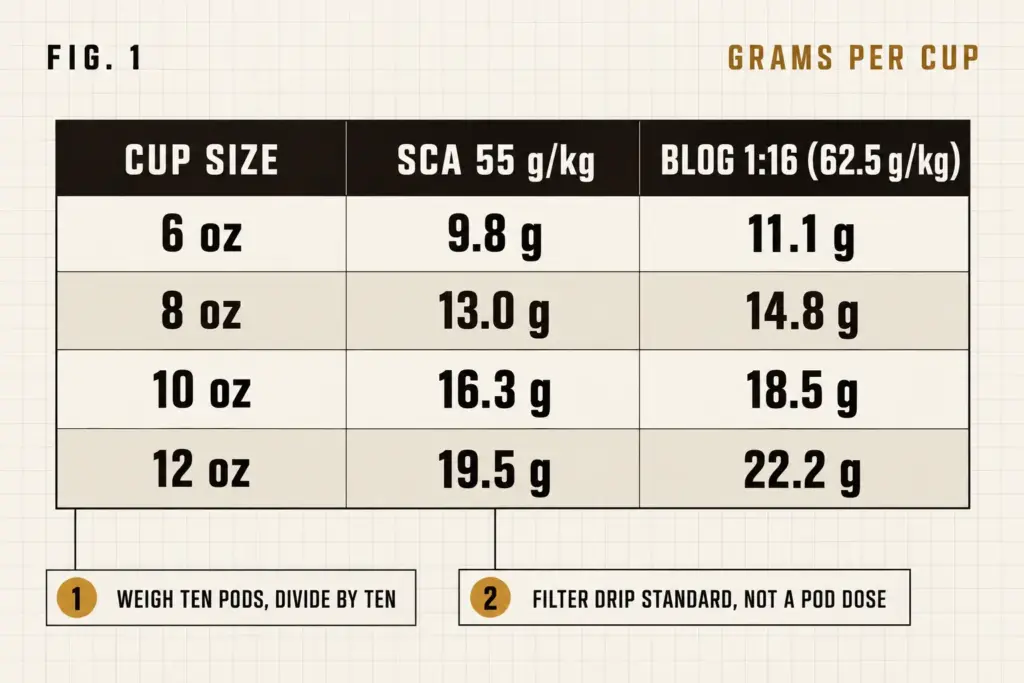
At 8 oz of water, for example, the SCA ratio calls for 13.0 g of coffee and 1:16 for 14.8 g. The drip-machine reader who measures in scoops is guessing at both; a scale reads grams.
Weigh Ten Pods and Divide
Put ten sealed pods on the scale and write the number down. Then peel the foil, empty them into a bowl and weigh the empty shells, because the cup, the foil and the filter weigh something too. The difference divided by ten is the coffee in one pod. A scale that reads whole grams still gets you to a tenth of a gram this way, since the rounding error is shared across ten pods.
Weigh ten pods from one box, not one pod ten times. Pod-to-pod noise averages out across the ten, and a kitchen scale that only reads whole grams becomes good enough to see a difference between two brands.
Then read across the chart. Find the row for the cup size you brew and see whether your pod lands near the 55 g/kg column, near the 1:16 column, or under both. A K-Cup that lands under the row for 12 oz is why the 12 oz button tastes thin, and nothing you do at the machine changes what is inside the pod. A Vertuo capsule is a different case: the line’s listed cups run from about 1.4 fl oz to about 5 fl oz, so the drip chart is the wrong yardstick, and the weigh test there only tells you the dose so you can compare one capsule with another.
Pods per Week: The Arithmetic That Settles the Running Cost
Cost is where the two systems separate, and the honest way to compare them is a division you run yourself with today’s shelf price, not a figure that goes stale next month.

Pods per week is cups per day times the days you brew. Cost per pod is the box price divided by the pods in the box. Multiply the two and you have the week; multiply that by fifty-two and the pod price starts to read like a subscription.
A one-mug household uses 7 pods a week, 364 a year; a household of three mugs a day uses 21 a week, 1,092 a year. The reviews put the Keurig side lower per cup, so a one-mug household barely feels the gap while a house of daily drinkers feels it every time. Your own shelf prices are the final word, which is why you run the division yourself.
Write the start date on the first box with a marker, then note the date the last pod comes out. That gives you your real pods per week, and it is usually a different number from the one you guessed at the store.
The full cost-per-cup arithmetic, including how a box of K-Cups compares to a sleeve of capsules, belongs to the pod-cost guide.
Month Two and Year Two: What the Week-One Reviews Skip
Whatever you decide in week one gets tested at month two, when a cleaning has been skipped once and the novelty has worn off. The reports below are single accounts, mostly from 2021, so they promise no failure rate. They are what repeats when the machine stops being new.

The Keurig Reports: Month Three and Year One
Keurigs have a reputation for breaking down within about a year. It is one account.
The K-Express reviewer above, with a cup that stopped holding up at about 3 months until the machine was cleaned, tells the same story at a smaller scale. Neither is a failure rate. Both are what a one-week impression cannot test: the question to put to a pod machine is what you will do when the descale light is on and the habit is gone.
The Nespresso Reports: Eleven Years and One Leak
The Nespresso side of the thread splits. A Nespresso Original can keep working through daily use for many years.
Another owner’s Essenza Mini “started to leak after I used some third-party pods,” and the warranty replacement worked. Both are Original-line machines, both are one person each, and nothing in them applies to a Pop+. The fair reading is that the capsule you use matters as much as the machine, and that no long-run report for the Pop+ is in hand.
The Machine Nobody Uses Anymore
The last report is the quietest. Keurigs often end up sitting unused once people switch to a Nespresso, and others keep using them only for hot water for tea. If you already own a Keurig, that is a free option: the machine you have can stay as a hot-water machine instead of being replaced, and a second purchase can wait until you know which cup you actually drink.
Which One for Which Counter, and What to Check Before You Buy
The decision is simple once the cup, the pod and the months are laid out. What is left is matching it to your counter and checking the one free thing first.

The Weekday Mug Drinker
If you drink one mug at 8 to 12 oz, drip-style, buy the Keurig. It gives you several sizes, a wide pod range and the lower running cost. Its flaw is the one you have already read: the cup turns thin as the size grows, so the best sizes are the smaller ones, and a reader who wants a big mug should plan on tasting the pod at three sizes before committing to a brand.
The One Who Wants a Shot or a Milk Drink
If you want an espresso-style shot or a milk drink on one button, buy the Nespresso. Its flaw is the other side of the same coin: the pod range is the system’s own, and it costs more per cup. In a house where one person drinks a mug and another a shot, a Ninja that makes both a pot and a pod is the place to look before buying two machines.
Before You Buy: Is It the Machine or the Pod?
Run the free check first. Brew the same pod on the smallest size and then the largest, then press the Strong button, then try a different pod, tasting between each. If the cup stays thin through all of it, the pod’s dose is the limit, and no machine fixes that. If the machine that disappoints is a drip machine, the repair is water temperature and grind, not a pod machine: see a drip machine picked by water temperature and the grind setting that fixes a sour drip pot.
And whichever system you pick, the next decision is the roast. A dark roast and a lighter one go wrong in different directions, and how roast moves the cup more than the machine is worth more than the logo on the front.
Cup First, Then the Pod, Then One Test With a Scale
Three things to take away:
- Both systems seal the dose in the pod, so you tune the cup with size and strength, not grind.
- Weigh ten pods and run the weekly division before the box is open.
- A first-week impression is not a verdict; the machine is judged when it has been cleaned once and the habit has settled.
A month from now, look at two things: the number of pods you actually used in a week against the number you expected, and whether the machine is still getting its cleaning on schedule.
Tomorrow morning, brew the same pod at 8 oz and at 12 oz and taste them side by side. If the smaller cup is clearly fuller, the water was the limit, and you know which direction to move before you spend anything.
Frequently Asked Questions
01Should I buy a Keurig or a Nespresso if I only drink one mug a day?
Buy a Keurig if your mug is 8 to 12 oz and drip-style, and a Nespresso if your cup is a small shot or a milk drink. Match the machine to that cup first.
02Why does a Keurig coffee taste watery?
The pod fixes the dose, and the size button only adds water, so a larger cup is a thinner one. Try a smaller size first, then the Strong button, which changes strength.
03Can you use reusable pods in a Nespresso?
Reusable Nespresso pods exist, but the Vertuo system is designed around its own capsule.
04Which is cheaper per cup, Keurig or Nespresso?
Divide the box price by the pods in the box for each system, using the prices on the shelf where you shop. The Keurig side usually lands lower per cup.
05Are Keurig pods and Nespresso capsules easy to recycle?
Nespresso gives free prepaid bags that you drop at any UPS. Keurig depends on your town: check local recycling first, or buy a prepaid mail-back bag from Keurig.com.



How did your cup turn out?
No comments yet. Tell us what you changed — and whether the needle moved.