

We may earn a commission when you buy through links on this page. It never changes what we recommend. How we pick
On this page11 parts
- What one pod fixes before you touch a button
- Size adds water, Strong changes the cup
- The lines, sorted by the feature that changes the cup
- Where a Keurig's water temperature sits
- One flaw written down for each line
- The pod, the reusable filter and the arithmetic per cup
- What the descale light is asking for
- Month two and year two: what the reviews keep saying
- When the Keurig is not the problem, and when it is the wrong machine
- One button tomorrow, and the light to watch in a month
- Frequently Asked Questions
You press the largest cup-size button on your Keurig coffee maker to fill a travel mug, and what comes out is pale and thin. The pod looks guilty, the machine looks guilty, and neither is the first suspect: a sealed pod holds one fixed dose of ground coffee, so a bigger size is the same coffee stretched over more water. That one mechanism explains most of what you see at the counter. Below, the lines are sorted by the single feature that changes the cup, the brew temperature is set next to what Wirecutter reports about the standards, every line gets one flaw in writing, and the cost of a pod becomes a division you run yourself.
Quick Answer
A Keurig brews one cup from one sealed pod, so the pod fixes the dose of coffee. The cup-size button only changes how much water passes through that dose, which is why a bigger mug tastes thinner. The Strong button is the one setting that changes the strength of the cup itself.
What one pod fixes before you touch a button
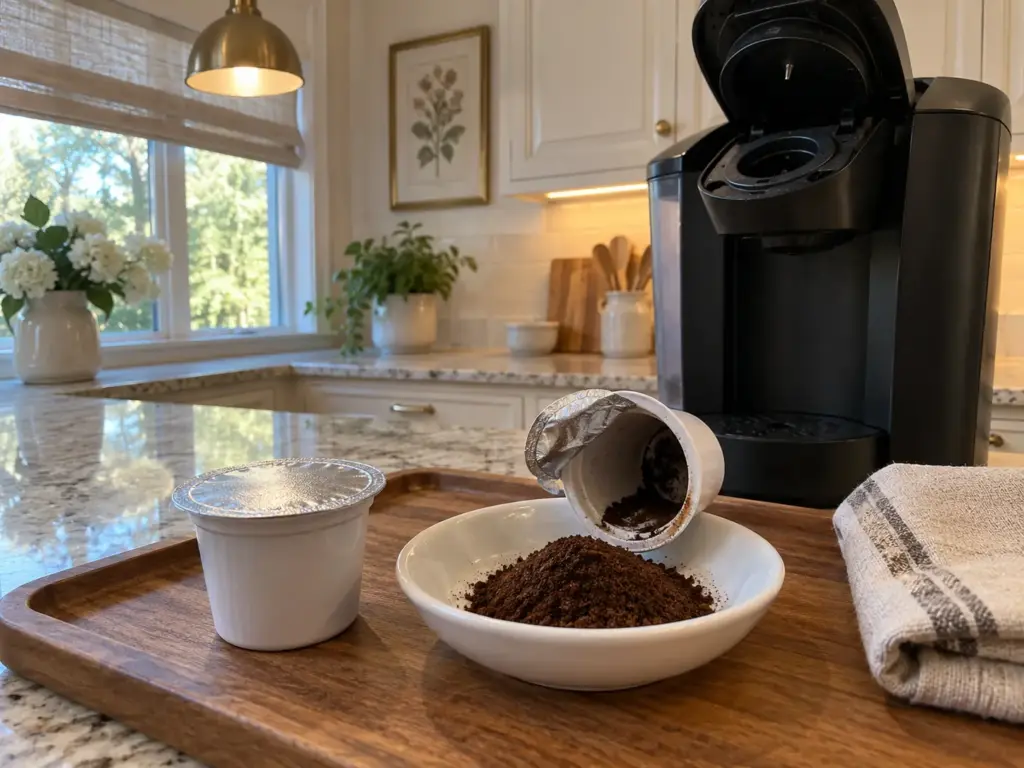
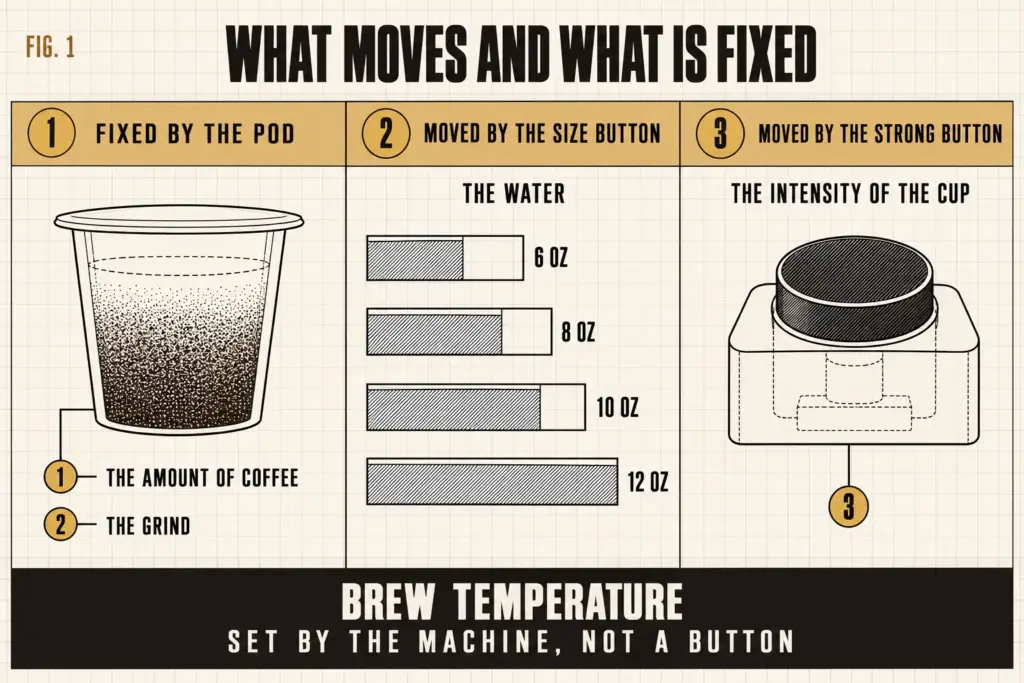
Before any model name or button, it helps to know which part of the cup was settled in the factory, because that part is not yours to change. A Keurig is a single-serve coffee maker: it brews one cup from one sealed pod, and the pod arrives with its coffee already ground and portioned. Everything on the panel works on the water or on the intensity of the brew, never on the dose.
One sealed pod, one cup
The machine punctures the pod and pushes a measured amount of hot water through it, and that is the whole trick. Wirecutter’s point, and the one worth keeping in your head, is that a larger serving is just more water over the same amount of coffee. Take one pod from an 8-ounce cup to a 12-ounce cup and the coffee in the mug is identical, spread to about two-thirds of the concentration.
The grind belongs to the pod as well. It was set at the factory, so unless you swap the pod for a reusable filter (covered in the section on pods), the grind is not a setting you get to touch.
What the machine adds and what it cannot
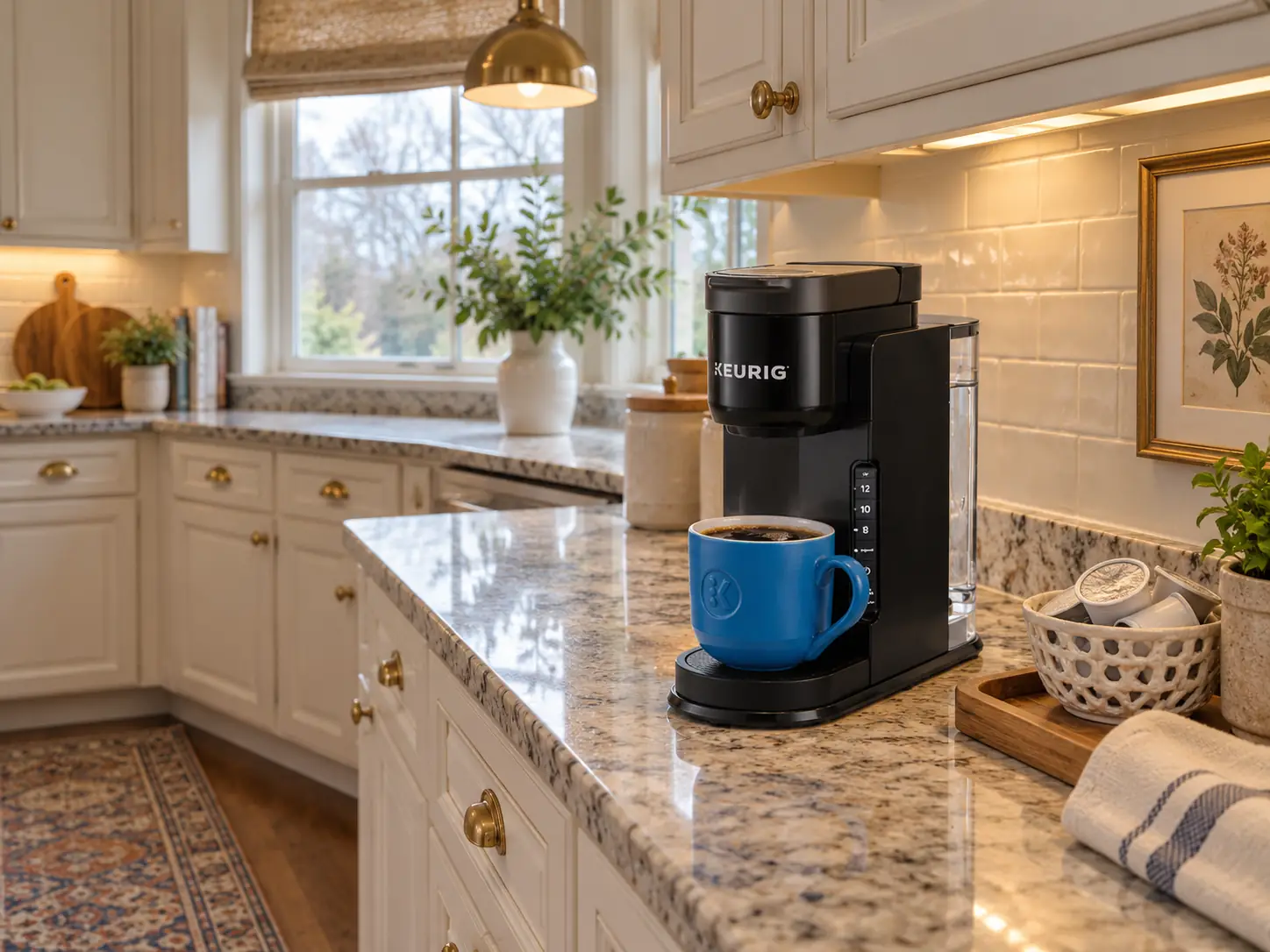
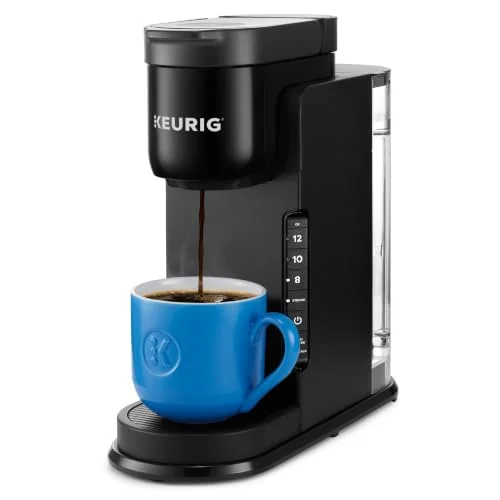
What the machine adds is limited by the model. The K-Express, for one, offers 8, 10 and 12 ounces, a Strong button, a 42-ounce removable water tank, a high altitude setting and two lights, one for low water and one for descaling. Other Keurig models go as low as 6 ounces. Look at what that list leaves out: nothing on it adds coffee.
When a cup is thin, the word Wirecutter uses is watery, and it names what you are tasting: too much water for the amount of coffee. The first check needs no sip. Look at the color of the coffee in the mug after a size change, because a pale cup from the same pod points at water, not at the pod.
Size adds water, Strong changes the cup
If the pod cannot change, only two things on the panel can, and they do opposite jobs. One adds water. The other changes the intensity of the cup. Mixing the two up is how a thin cup turns into five button presses and no answer.
The size button: the same coffee in more water
Each step up in size multiplies the water and leaves the coffee where it was. Go from 8 to 12 ounces and the pod’s single dose now has to color half again as much water, and the last inch of the mug shows it first, visibly paler than the first. A cup that tastes thinner as the size rises points one way: too much water for this pod.
The Strong button: the one setting that moves the cup
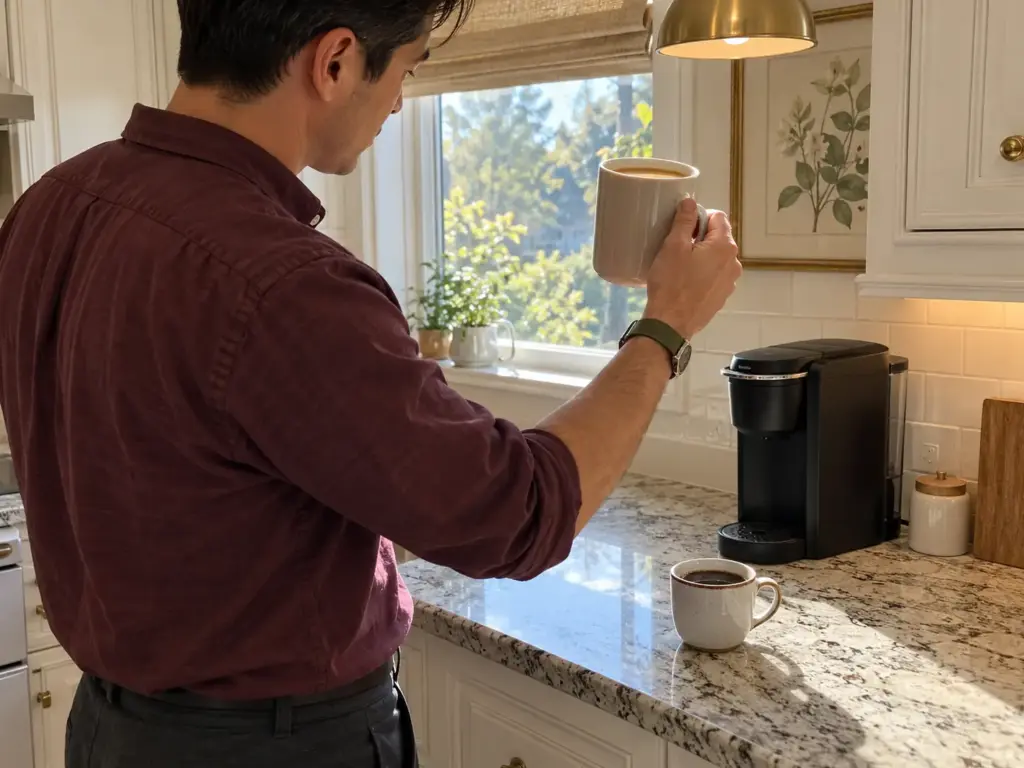
On the K-Express and the K-Duo, Wirecutter found the Strong button to be the one control that changes the intensity of the cup itself, and it treats the button as a necessity on a Keurig. A strong brew on a Keurig starts with this button, not with a different pod. What the button does is raise the intensity. How Keurig gets there is a design detail this guide will not guess at, so no figure comes with it.
Strength is also not the same thing as extraction, a distinction that which coffee grind is strongest takes apart if you want the mechanism.
Reading a thin cup, one change at a time
Name the direction first. A thin, pale cup of weak coffee at a large size says the water outran the coffee, so the free change is the next size down. Brew the same pod, look at the mug, taste.
If it is still thin, press Strong on that same size and taste again. If it now tips toward harsh or bitter, the cup has overshot, and one step back is the answer, not a third button.
The pull at this point is to buy a stronger-tasting pod before touching the panel. Hold off, because a new pod changes the dose, the brand and the roast at once, and then you cannot tell which of the three did anything. A weaker pod brand really is a different dose of coffee, but that is a question about the pod, and the buttons answer first. The case where the dose is yours to choose, the reusable filter, comes in the section on pods.
Change one button between cups and taste before touching the next. If you drop the size and press Strong together and the cup improves, you will not know which one did the work, and the next pod will bring the same problem back.
The lines, sorted by the feature that changes the cup
A Keurig range has more names than differences, so sorting by model name leads nowhere. The sort that helps is by the one feature each line adds to the cup: the Strong button, a carafe, a cold function or a connection. Most other differences are about the machine, not the coffee in the mug.
Pod only: Classic, Slim, Mini and Express
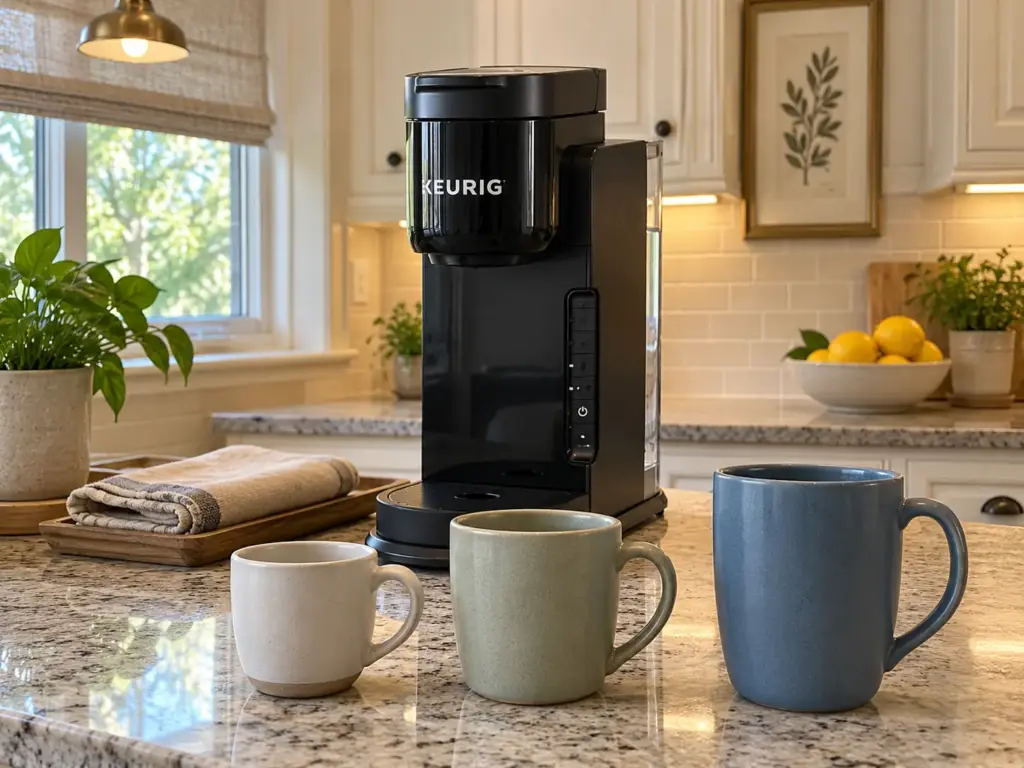
The K-Classic, K-Slim and K-Mini are the compact single-cup machines, where counter space is the question they answer, and this guide prints no feature list for them, because a list of features no one confirmed would be filler. What does carry across lines is the range of cup sizes. Some Keurig models go down to 6 ounces, while the K-Express starts at 8 and adds 10 and 12 above it. A 6-ounce option concentrates the cup a little, but do not expect a miracle from it.
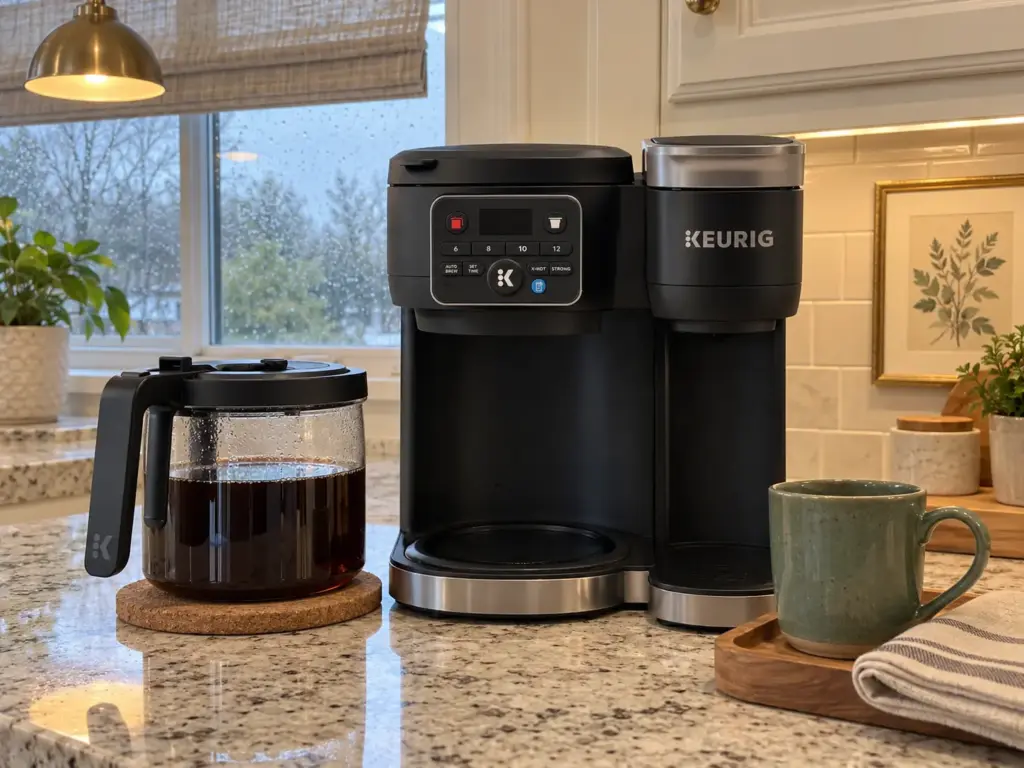
The K-Express is Wirecutter’s top pick, and the reason is the Strong button, which arrives on this line at the smallest step up. The recommendation follows from that button, not from the name on the box. It is a narrow, deep machine, with the tank behind it and lifting off to fill, which suits a counter that has more depth than width.
Its flaws belong right here, next to the card. The smallest serving is 8 ounces, so a thin cup at that size leaves the size button nothing more to give. And some units go unreliable at about three months.
Pod plus a carafe: the Duo
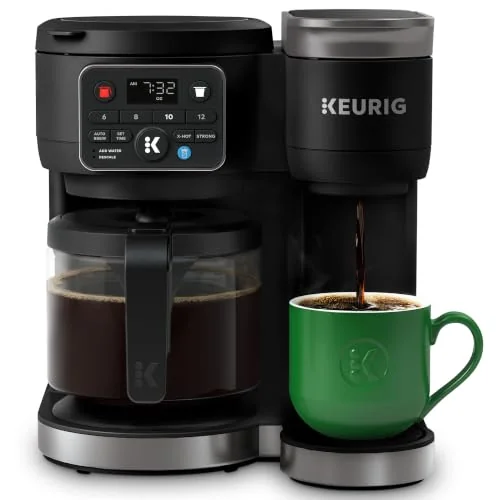
The K-Duo puts a pod side and a 12-cup glass carafe on one footprint. The pod side has the Strong button and sizes of 6 oz, 8 oz, 10 oz and 12 oz; the carafe brews as few as 6 cups, sits on a heating plate and has a pause and pour function, and the machine runs hot or iced. It is Wirecutter’s pick for a household that wants a drip pot and a pod machine on the same counter.
Pause and pour lets you take a cup mid-brew, but Wirecutter reports that pausing past about 20 seconds risks an overflow. The plate and the basket, this machine’s two real flaws, get their own section below.
Cold and SMART lines
Two more features sort the rest. The cold lines (the K-Iced and Brew + Chill) add a cold or iced function, and Wirecutter reports that Brew + Chill makes cold coffee four in a row and can take up to six hours to cool down. Iced coffee from a Keurig is a question of its own and gets no recipe here.
The SMART lines (Supreme, Supreme Plus and K-Café) turn the machine into a smart coffee maker by adding a connection. A connection changes how you control the machine, not what is in the pod, and whether a hotter setting helps is the next question.
Where a Keurig’s water temperature sits
The cup also depends on a number you cannot set: the heat of the water. The ranges quoted for it do not line up with what the machines do, and one of the two standards behind them could not be read. So this section says what was measured, whose claim each range is, and what that does and does not tell you.
What Wirecutter measured
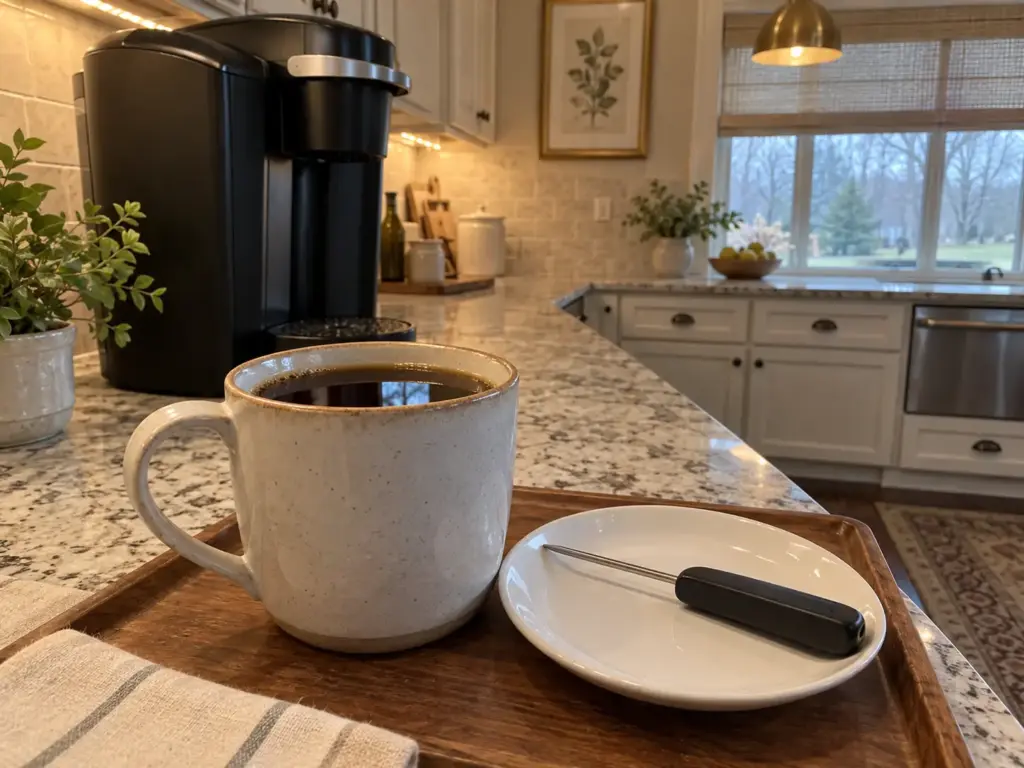
Wirecutter reports that most Keurig machines brew at 192°F (89°C). It sets that against 194 to 205°F (90 to 96°C), the range it attributes to the Specialty Coffee Association (SCA), and against 195 to 205°F (91 to 96°C), the range it attributes to the National Coffee Association (NCA).
The K-Elite adjusts between 187 and 192°F (86 to 89°C), which Wirecutter says is still below the NCA range as it quotes it. The K-Supreme SMART has a hottest setting of 206°F (97°C), and in Wirecutter’s testing that setting made no substantive difference to the cup. A hotter number on the box is not a fix in itself. The same heat question asked of pot-style machines is the job of a drip machine picked by its heat before its features.
Every figure below is Wirecutter’s measurement, or Wirecutter’s report of a standard, and not a reading of the standard’s own wording.
| Machine | Top brew temperature Wirecutter reports | What it means for the cup |
|---|---|---|
| Most Keurig machines | 192°F (89°C) | Below the SCA range as Wirecutter quotes it |
| K-Elite | 187 to 192°F (86 to 89°C), adjustable | Its top setting is where most machines already sit |
| K-Supreme SMART | 206°F (97°C) on its hottest setting | No substantive difference in the cup |
Two ranges that disagree, and the one we could not read
The two ranges barely disagree with each other: the SCA’s lower edge, as Wirecutter quotes it, is 194°F and the NCA’s is 195°F, a single degree apart, and both sit above 192°F. The disagreement that matters is between the machine and both ranges, and that leaves a gap in the evidence.
The SCA’s home-brewer standard, SCA-310, is listed on the SCA’s standards index, where its home-brewer standard sits behind membership, open only to members who log in. The ranges here are as Wirecutter attributes them, not the standard’s own wording.
That makes the conclusion a hedged one on purpose. A machine at 192°F sits at the bottom edge of a range this guide could not confirm, and the free change is still the size and the Strong button from the section above, not a hotter machine. One more detail from the counter: a machine that has sat unused is slow to its first drip, and that first cup of the day is the one most likely to run coolest.
One flaw written down for each line
A range is easier to choose from once each line has its flaw in writing, and no brand page prints one. Where the sources hold a flaw, it is below, with the free fix first. Where they hold none, the section says so instead of inventing one.
The K-Express: the 8-ounce floor and month three
The 8-ounce floor has one practical meaning. If a cup is still thin at 8 ounces, the size button has no smaller step to offer on this model, so Strong is the only lever left, and a machine with a 6-ounce option would have given a little more concentration. That is a limit, not a defect, and it is the reason the order in the earlier section runs from size to Strong.
Month three is the other half. The unreliable stretch tends to show up at about three months, and some units break within six months of use. A cleaning that brings a machine back points toward scale, which is the subject of the descale section further down, but it does not settle the question.
The K-Duo: the plate and the basket
The free fix comes first: pour the carafe and turn the plate off. Wirecutter reports that the plate stays on for two hours unless it is switched off, and that after those two hours its carafe tasted slightly burnt. A carafe left on the plate smells of cooked coffee before it tastes of it, which is the early warning.
Pour the carafe and switch the plate off in the same motion. It costs nothing, and it keeps the second cup from tasting like the plate.
The filter basket is the second flaw. Its stated maximum is 15 tablespoons, and Wirecutter found it too small for a full 12-cup brew at the SCA’s golden ratio of 1:18 (or even 1:20).
The arithmetic is quick. A level tablespoon of ground coffee weighs roughly 5 grams, so 15 tablespoons is about 75 grams, and 75 grams at 1:18 covers 1,350 grams of water, around 46 fluid ounces.
If the carafe’s twelve cups are the five-ounce cups drip machines usually count, a full pot is 60 ounces, and that asks for close to 100 grams, or about 20 tablespoons. The answer is a smaller pot. Weigh a level tablespoon of your own coffee once on a scale, because ground coffee varies, and read the full ratio method in how to use a drip coffee maker in grams, not scoops.
The other lines: what is and is not known
For Classic, Slim, Mini, Select, Elite and Supreme, no flaw has been reported that this guide can attribute, and it leaves the line blank rather than make one up. The one fact that touches a line here is the K-Elite’s adjustable range, which tops out where most machines already sit. If you want a flaw for those models, the only honest places to look are the reviews of the exact model you are about to buy.
The pod, the reusable filter and the arithmetic per cup
Because the pod fixes the dose, the cost and the waste of a Keurig live in the pod, not in the machine. That makes the pod the place to do the arithmetic, and the reusable filter the one route to choosing the dose yourself. Neither comes without a catch.
Cost per cup is a division
One pod makes one cup, so the cost per cup is the price on the box divided by the number of pods inside it. For a reusable filter, the division has two steps: the weight of the bag divided by the grams you put in one fill gives the cups per bag, and the price of the bag divided by that number gives the cost per cup. Run both with today’s prices from the shelf and compare the two answers.
The prices will change; the division will not. The pods per box come off the label, and the grams per fill come off your own scale.
The cheaper road is not automatically the filter, because it trades money for a fine grind, a level fill and a rinse after every cup. How much coffee goes into a reusable pod and which reusable pods are worth owning are questions of their own, and this guide answers neither.
The reusable filter and the grind it needs
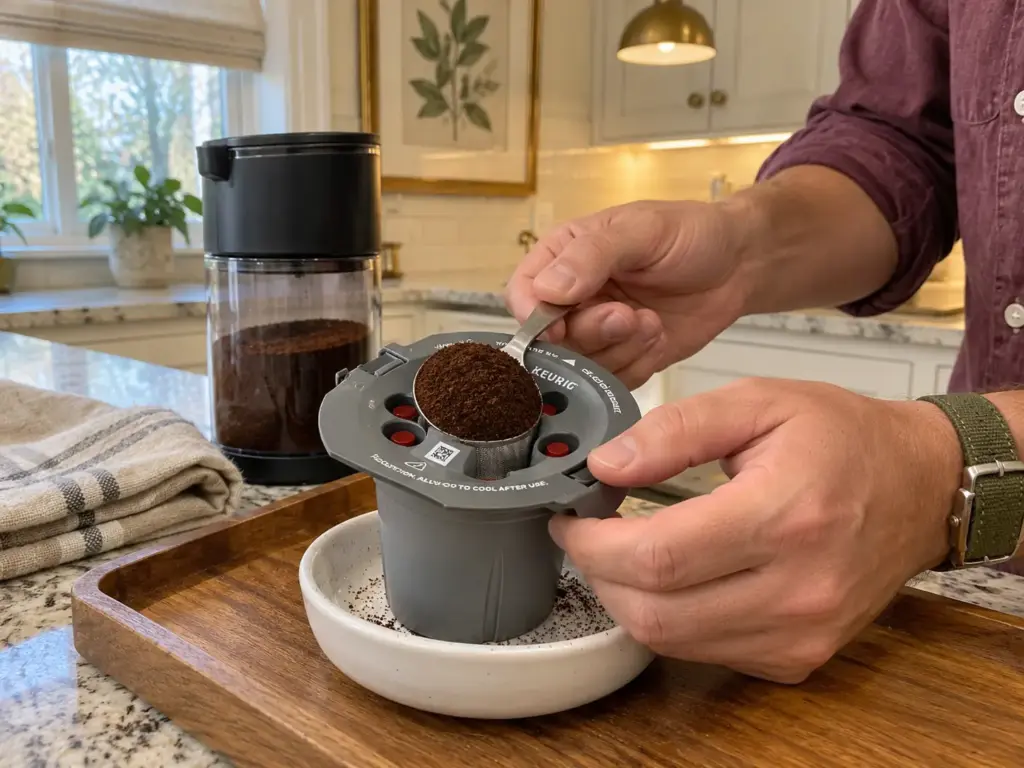
The reusable K-Cup filter looks like the obvious fix for a weak cup, since it lets you pick the dose. It is, but only after the grind has gone fine. The Keurig My K-Cup reusable filter is a stainless-steel mesh basket in a plastic holder, with a lid and MAX, cup and mug fill lines.
Wirecutter had to grind quite fine to get drinkable results from it, and even then the cups came out watery. It also says the fill-and-clean routine works against the convenience a pod machine sells.
A filter overfilled to the rim wets unevenly and comes out thin, so fill to the line. The setting itself, and the chart behind it, live in coffee grind size for a K-Cup.
There is a paper route as well. The Irmidi paper filters come 300 to a pack for reusable pods, models 1.0 and 2.0, so the mesh is not the only way in. No repeated complaint turned up about them, but the page for these was not opened, so read that as an absence of evidence and not a clean record.
What happens to the pod after the cup
A pod is a single-use cup, and what Keurig said about pod recycling became a legal matter. In the SEC’s own words, “The Securities and Exchange Commission today charged Keurig Dr Pepper Inc. with making inaccurate statements regarding the recyclability of its K-Cup single use beverage pods.” That is from the SEC’s own press release on K-Cup recyclability, which also says Keurig agreed to a $1.5 million civil penalty (a penalty, not a price).
Wirecutter describes a mail-in recycling program where used pods return in a paid bag, but that is Wirecutter’s reading, and it was not checked against Keurig’s own program page.
What the descale light is asking for
The cheapest cup is the one from a machine that is not choked with scale, and the machine tells you when. Direction matters here as much as in a taste problem: a cup that gets smaller or slower over weeks points at scale, not at the pod.
The light and the scale behind it
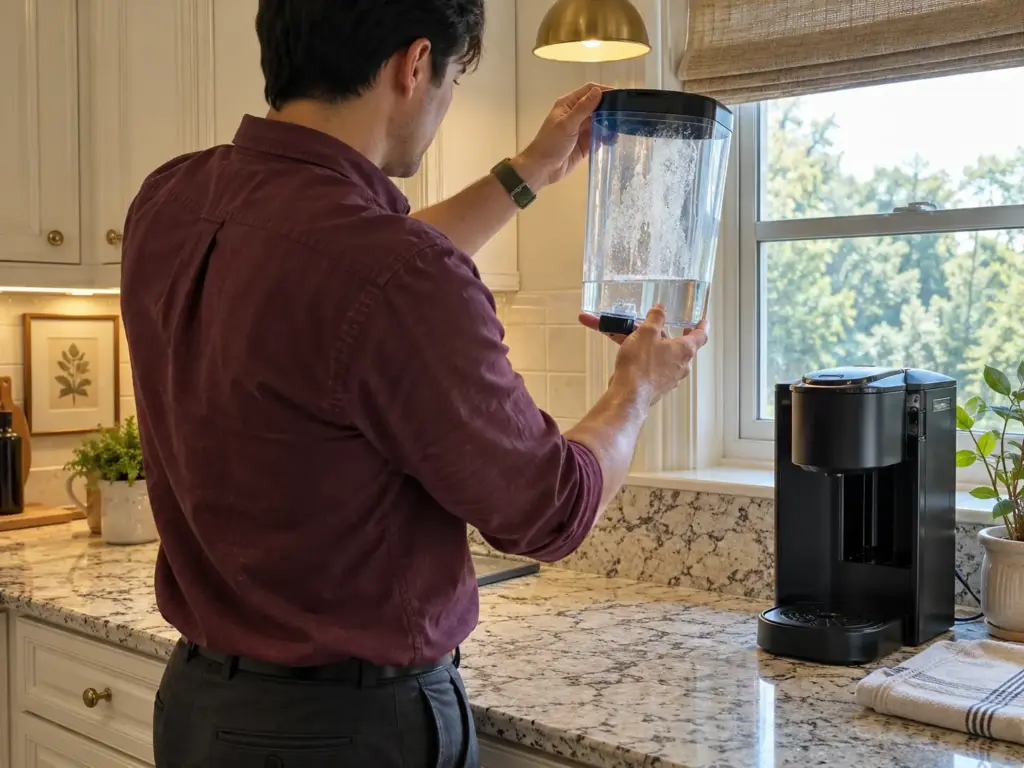
The K-Express has two lights, low water and descale, and the descale light is the machine asking for a clean of the scale that tap water leaves behind. The free change is the descale the manual describes. The manual decides the routine, so this guide gives no procedure and recommends no product; the step-by-step is a job for its own guide.
One more thing is worth knowing. A white-vinegar clean can bring one back, but that is not a recommendation, and the manual still wins.
The first cup after a descale can taste of the rinse, so run clear water through until the cup tastes of nothing.
When the descale light comes on, follow the manual’s routine that day instead of waiting for the cup to tell you. By the time the mug comes out smaller, the scale has been building for weeks, and the cup is the last place it shows.
Month two and year two: what the reviews keep saying
Week one lies, and the reviews that matter are written at month three and year ten. What follows sets the reports side by side and states the gap plainly: no source gives a lifespan, so this guide gives no number of years.
The failures that repeat
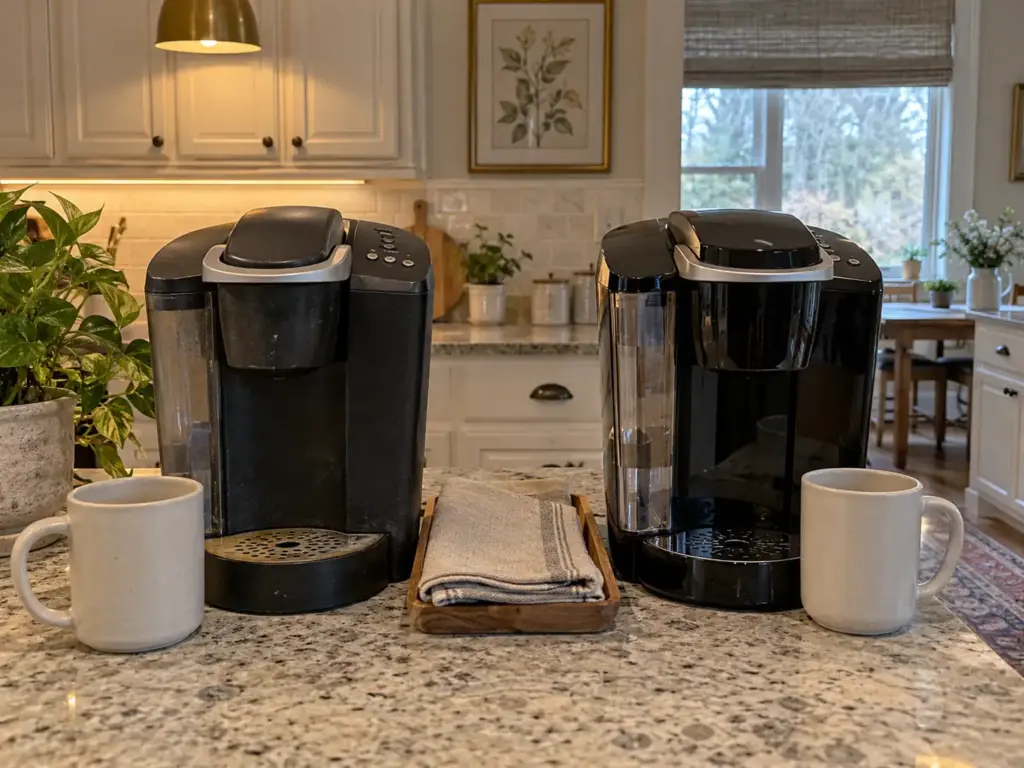
Wirecutter says Keurig machines have a reputation for breaking easily and that they are usually irreparable when they do, and it adds that it does not expect them to last. The reports line up with that. Units go unreliable at about three months, and some break within six months of use. A cup that comes out a little smaller than it used to is the sign to watch for before anything stops.
On cover, the K-Express and K-Duo carry a limited one-year warranty. Using non-Keurig pods or accessories may affect it, which is worth knowing before you buy third-party filters like the Irmidi paper ones, and Wirecutter notes that some online reviews say Keurig is not the best about honoring warranties.
The machines that outlast them
The other side is real too: a K-Elite can last a decade before it finally stops.
Some Keurig machines have run for ten years or more. They are titles only, so what those machines were fed and how they were cleaned is unknown. This guide sets the two sides next to each other and does not average them. The question of parts and years across makers is the job of which brand of drip coffee maker is best, by parts and years.
When the Keurig is not the problem, and when it is the wrong machine
Sometimes the cup is off for a reason the panel cannot reach, and sometimes the honest answer is a different kind of machine. This section closes the loop: what to check before buying anything, and where to go next.
The faults this guide hands on
If the cup is off, check three things before blaming the Keurig: the scale inside the machine, the size button, and the dose of the pod brand. When it is none of those, the faults are a different kind of question: a leak, a cup that never fills, water that comes out not hot, a machine that will not pump. Each is its own problem with its own fix, and this guide writes no list of them.
The same goes for the choice between two pod systems, where Keurig against Nespresso is the question that comes next for a reader weighing the two. Nothing is lost by sending those on, because the three checks above cost nothing.
A drip machine instead
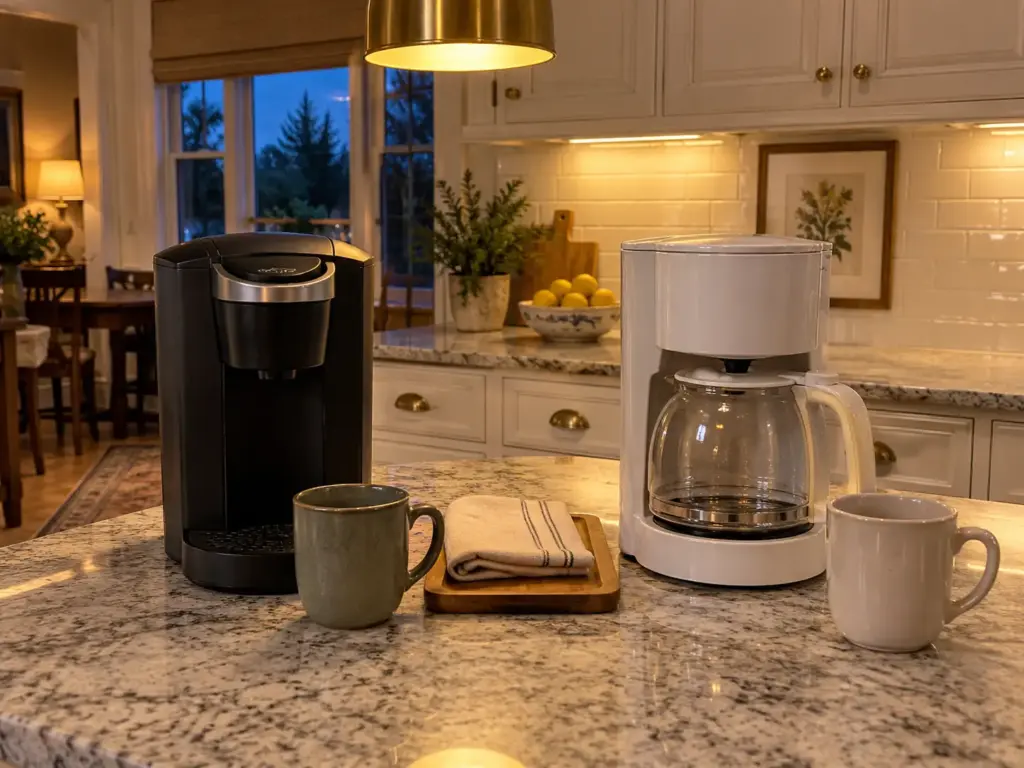
A Keurig makes one cup at a time, and a second cup from a one-cup machine is where the shape shows. If you brew for two or more, or want a pot that holds its heat, a drip machine fits better, and a drip machine picked by its water temperature is the place to start. A cheaper version of the same idea is a drip machine under fifty dollars and the heat you give up.
If you want one machine for both a pot and a pod, there is the Ninja that does both drip and pod. Before replacing anything, though, give the size button, the Strong button and a descale their turn first.
One button tomorrow, and the light to watch in a month
Three things carry this guide. The pod fixes the dose, so the size button and the Strong button are the only settings that move the cup, and they move it in opposite ways. The brew temperature belongs to the machine, and one of the two standards behind it could not be read here, so a hotter machine is not the first purchase. Every line has a flaw in writing, and the two free fixes before any purchase are the carafe plate on the K-Duo and the scale inside the machine.
A month from now, run the same pod at the same size and compare the mug with how it looked in the first week. A cup that has quietly shrunk, or a lit descale light, means scale, and the manual’s descale comes before a new pod or a new machine.
Tomorrow, brew your usual pod one size down and look at the last inch of the mug before you taste. If it is still thin, go back to the usual size and press Strong. Stop at the first cup that tastes right, and leave every other button alone.
Frequently Asked Questions
01What’s the best Keurig coffee maker to buy?
The right pick depends on your counter: the K-Express if a pod is enough, the K-Duo if you also want a carafe. Those are Wirecutter’s two picks. Each has a flaw in writing above: the K-Express starts at 8 ounces, and the K-Duo’s plate scorches coffee after two hours.
02How long do Keurigs usually last?
No source gives a measured lifespan for Keurig machines, so any single number would be a guess, and this guide does not offer one. Wirecutter says it does not expect them to last, while reviewers report anything from a unit unreliable at about three months to one that ran ten years.
03What are the most common problems with Keurig coffee makers?
Scale, the wrong cup size and, on the K-Duo, the carafe plate cover many of the thin, slow or burnt cups. Scale shows up as the descale light, then a smaller, slower cup. Leaks, a cup that never fills, water that is not hot and a machine that will not pump are separate faults.
04What’s the difference between a Keurig and a coffee maker?
A Keurig brews one cup from one sealed pod, while a drip coffee maker brews a whole pot from loose grounds that you measure yourself. The pod fixes the dose, and with loose grounds you choose it. A drip machine suits two or more cups better.
05Can I use my own coffee in a Keurig?
Yes, with a reusable filter and a fine grind, though the cup can still come out watery. Wirecutter had to grind quite fine to get drinkable results from the My K-Cup filter. Fill it to the line, not the rim, and expect to rinse it after every cup.


How did your cup turn out?
No comments yet. Tell us what you changed — and whether the needle moved.