
We may earn a commission when you buy through links on this page. It never changes what we recommend. How we pick
On this page7 parts
- The Cheap Keurig Dupe Is Often Still a Keurig
- What the Brand's Reliability Record Says About Year Two
- The Water Temperature a Cheap K-Cup Machine Holds
- A Strength Label Is a Claim, the Strong Button Is a Test
- When a Cheap K-Cup Machine Is Not the Answer
- Three Checks Before You Pay, and One Taste Test Tomorrow
- Frequently Asked Questions
You search for a cheap Keurig dupe and the least expensive K-Cup machine on Consumer Reports’ list of five turns out to be a Keurig. That is the trouble with the word dupe: a machine that costs less only counts if it also beats the brand’s own record, and the record has a rating attached. A single-serve coffee maker pushes a fixed dose of grounds and a fixed volume of hot water through one pod, so nearly everything about the cup comes down to three checks: how hot the water gets, how long the machine lasts, and whether the strength control moves the cup. The table sorts the machines that take K-Cups by what each one gives up, and the sections after it run those three checks.
Four kinds of machine answer the question, and none of them comes without a catch.
| Machine | Brews K-Cups | What it gives up | Check before buying |
|---|---|---|---|
| Keurig K-Mini | Yes, one mug at a time, 6 to 12 oz | A basic model: Consumer Reports gives it a so-so brewing range score | Whether the water tank lifts out, since the two sources disagree |
| Cuisinart SS-10P1 | Yes | No major drawback | Where a 72 oz reservoir will sit under your cabinets |
| Ninja DualBrew CFP101 | Yes, per the listing title, and ground coffee too | No major drawback | That the listing you order from says K-Cup compatible |
| A plain drip maker (Hamilton Beach 12-cup) | No, it brews a pot | The one-mug speed; budget models also tend to give up carafe heat | How hot it brews and how many grams go in per pot |
The Keurig models themselves and the mechanics of the Strong button belong to the Keurig lines and what the Strong button does, so this page stays with the cheaper machines.
The Cheap Keurig Dupe Is Often Still a Keurig
The table puts a floor under the page, and the floor has a brand name on it. This section covers what that means for a shopper trying to leave the brand, what the cheapest machine gives up, and how small the tested part of the alternative field is.
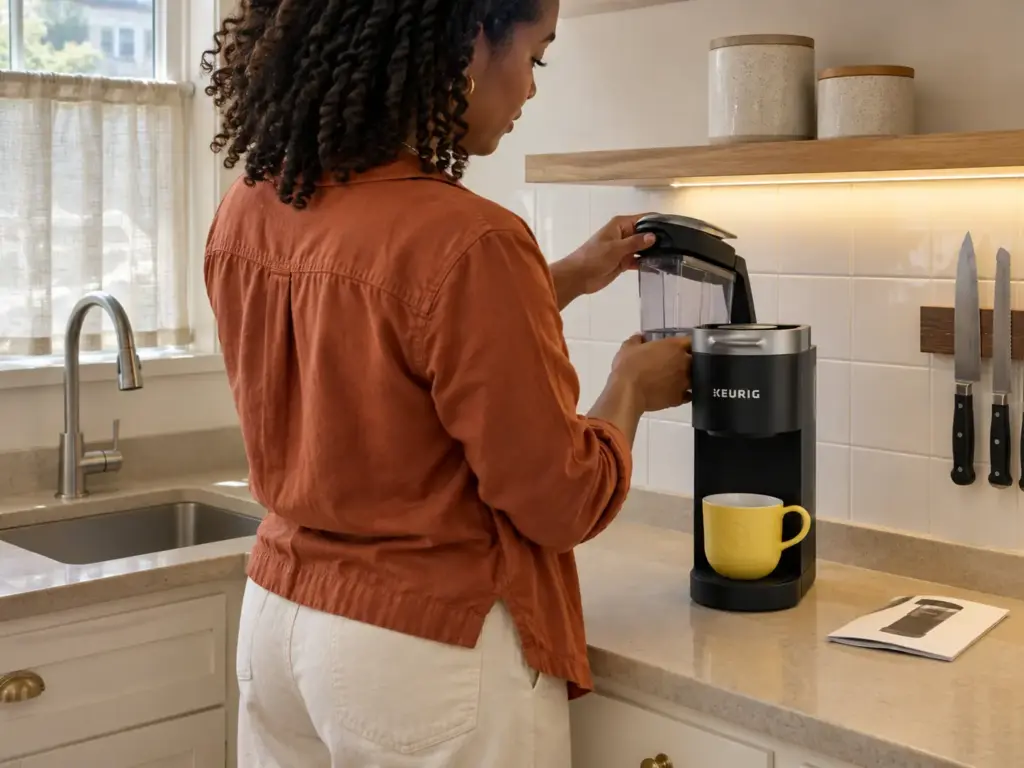
The cheapest machine on the list carries the brand you wanted to avoid
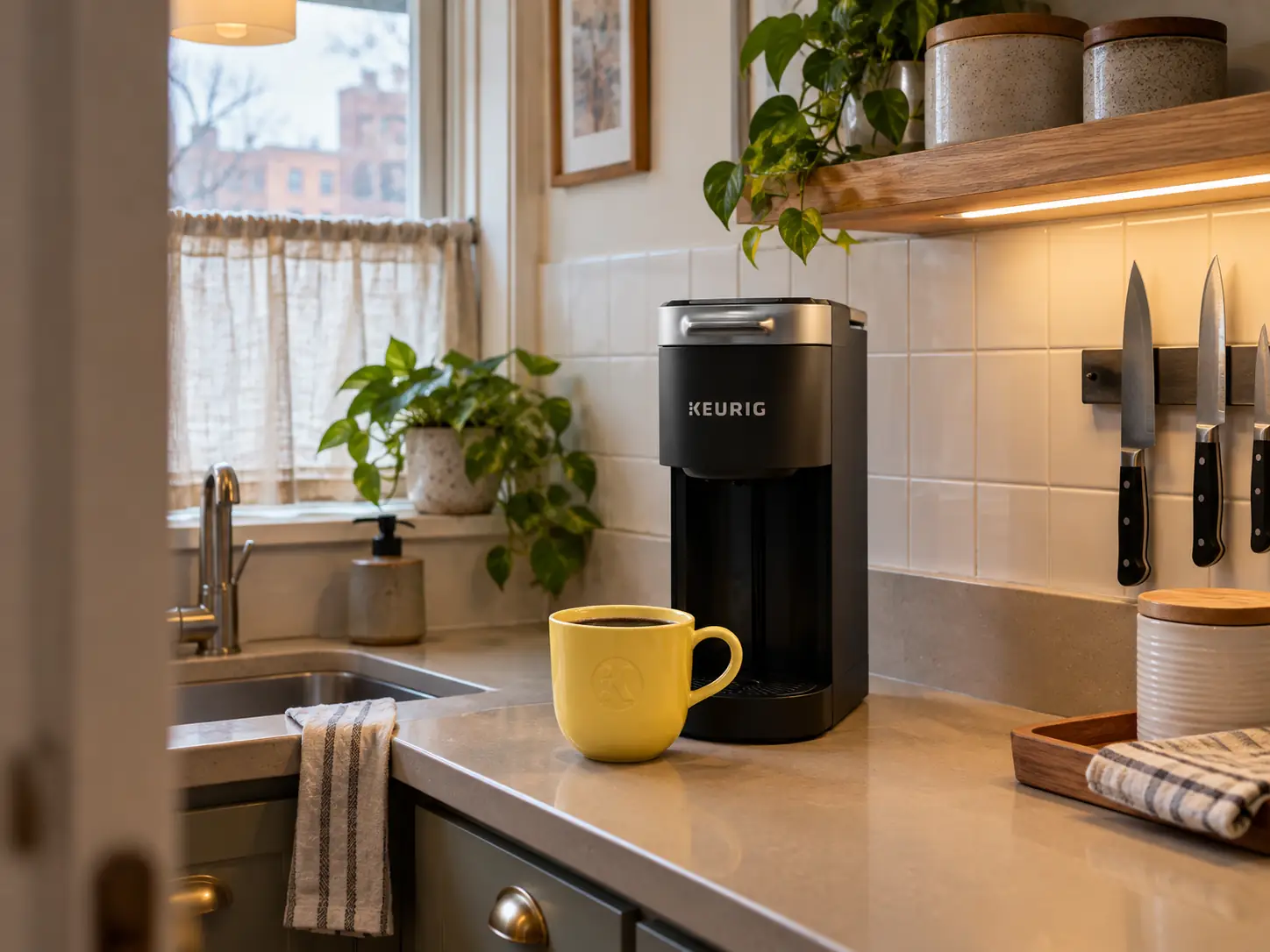
Keurig accounts for 74 percent of the single-serve models Consumer Reports members bought from 2024 through the first half of 2025, so a list of K-Cup machines is mostly a list of Keurigs before any lab work starts. Of the five machines the lab picked, the K-Mini Mate (K88) “is the least expensive K-Cup coffee maker on this list,” with a very good overall rating and excellent first-cup speed. Price and score arrive together, inside the brand you searched to get away from.
That sounds like a reason to stop looking. It is better read as a reason to finish reading the lab’s wording first. Consumer Reports says the best pod machines for home use do not always make the best-tasting brew, and that the draw is speed and convenience. A dupe that matches the speed and the convenience is doing what the category does, nothing more.
So the question changes shape. It stops being which machine costs less and becomes which machine costs less, stays out of the repair queue, makes a cup you can adjust, and tells you the truth about its tank. The next sections take those one at a time, starting with the machine at the bottom of the lab’s list.
What the K-Mini gives up
The lab’s own list of shortcomings is short. Consumer Reports calls the K-Mini Mate a basic model with a so-so brewing range score and tells the reader not to expect many ways to customize the brew. That fits a machine built to pour one mug and stop.
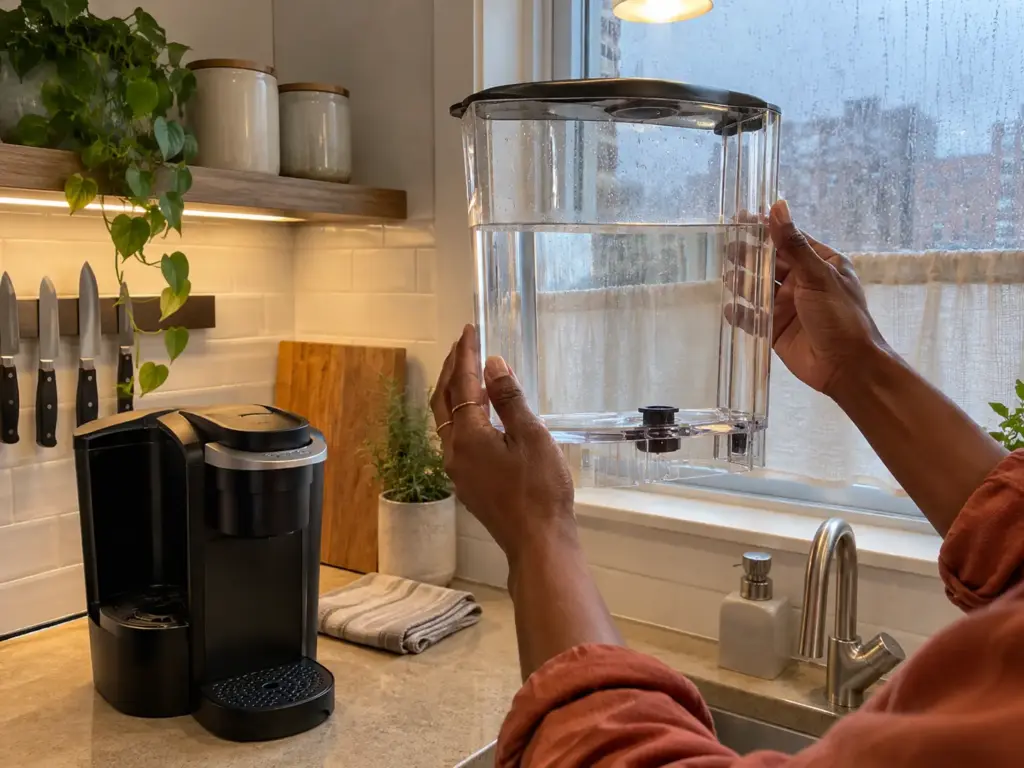
The removable water tank is where two sources describe the machine in opposite ways. Wirecutter’s K-Mini lets you pour in only as much water as you want coffee, which gives you control over the size and dilution of the drink. But Wirecutter says the tank can’t be removed for refilling or cleaning, and adds “we worry about mold and clogs.”
Consumer Reports, writing about the K-Mini Mate (K88), says “It has a removable reservoir.” Both cannot describe the same tank, and nothing in either text settles which one you will receive. Two versions can share a family name in a listing, and the title on the Amazon page, Keurig K-Mini Single Serve K-Cup Pod Coffee Maker, 6 to 12 oz brew sizes, does not settle it either. Check the tank on the listing itself before you order: the description, the photos and the model number.
If the tank is fixed, every mug starts at the sink with a jug, and the part you cannot lift out is the part you cannot see. That is a better question to answer before the first descale light than after it.
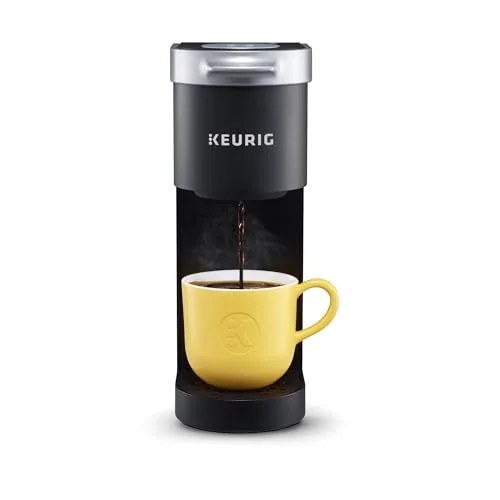
Write the model number from the listing in your phone notes the day you order. The number is what finds the right manual, the right descale routine and the right warranty claim a year later, and it is the only way to tell two similar-looking machines apart once the box is in the recycling.
The machines nobody tested
Wirecutter “considered 18 Keurig-compatible coffee machines and tested seven.” That leaves eleven that never reached a counter test there, and the K-Cup field runs well past the names in this article. A machine that turns up only in a listing or a casual mention has no lab record to hold it against. One thread credits a reliability score to an off-brand machine and pins it on Consumer Reports; the score does not appear on the Consumer Reports page it was credited to, so it does not count here.
Everything about the Keurig range itself sits in the lines Keurig sells and which one the Strong button belongs to, so this page follows the machines beside the brand rather than the brand’s own lineup.
What the Brand’s Reliability Record Says About Year Two
Price is the first filter, but a machine that dies in its second year costs more per cup than a pricier one that makes it to a third. The brand’s rating, the warranty and the way owners care for the machine give the first honest read on year two.
A one-year warranty against a four-year window
Consumer Reports puts it in one sentence: “Keurig, as a brand, has a middling reliability rating,” meaning it is more likely than others to have problems within the first four years of ownership. The warranty does not cover that window. Wirecutter lists a limited one-year warranty (the Instant’s covers manufacturer defects) on the K-Express, the K-Duo and the Instant Dual Pod Plus, which ends three years before the period the survey measures.
Wirecutter adds that it does not expect these machines to last, and that is a judgment, not a measurement. No source here counts how many machines fail and when. What exists is a brand rating from member surveys, a warranty length from the maker and a pile of buyer reviews, and the honest reading is that all three lean the same way without ever producing a failure rate.
One more clause matters for anyone planning to swap in a reusable pod. Wirecutter warns that damage during use of non-Keurig-branded pods or accessories may not be covered, so the cheapest fix for a weak cup can quietly cost you the warranty.
The brand Consumer Reports scores best for reliability among its five picks is Instant, which “receives very good scores for product reliability” in member surveys. Its Dual Pod Plus is not offered through the listings this site links, so it stays a data point and not a pick. The same brand question applies to a drip maker, and which brand of drip coffee maker holds up, parts and years answers it for the machines on the other side of this decision.
Three machines in two years, one in seven
Owner threads are anecdote, undated and impossible to count, but they show where the failures cluster. Keurigs are often said to die around the two-year mark. Another has had to “trash 5 of them and 11 months was the longest lasting one,” with replacements sent free three or four times, one that would not power up out of the box and another that spat grounds through on the first day.
Machines that are cleaned thoroughly, at least once a month, can last a long time. Dying early and lasting long are both possible, so this is not one story. It is two, and the difference between them is a routine, not a model number.
A caution runs the other way too. With 74 percent of the single-serve models in Consumer Reports’ member survey, Keurig fills most complaint threads about pod machines simply by being most of the machines. A thread tells you about the category as much as the brand, which is why the survey rating carries more weight than any one story.
The monthly clean that changes the odds
Tap water leaves mineral scale in the path the water takes to the pod. Scale narrows that path, slows the flow and insulates the heating parts, so the machine takes longer to reach temperature and the cup that results is cooler and thinner. The next section picks up the heat problem, and the care problem is often the same problem.
The machine tells you before it fails. The K-Express lights up for low water and for descaling, and Wirecutter notes the machine won’t brew when the water is low. A slow drip, a sputter before the pod finishes or a mug that comes out lighter than it did in the first month are the descale light’s cousins, and they arrive earlier. Run the descale cycle the manual describes when you see them, and it works out as the cheapest warranty extension you will ever buy.
Pour a mug the day a machine arrives and write the time it took on a sticky note under the lid or beside the plug. Month three, time the same pod at the same size. A mug that takes visibly longer is scale, and it shows up long before the light does.
The Water Temperature a Cheap K-Cup Machine Holds
Year two is the long test; the first cup is the heat test, and the sources disagree on both the number and the standard it comes from. Lay the figures side by side before you trust any of them, because the cheapest cup you can fix is the one that is only too cool.
What the sources say, and where they disagree
Wirecutter’s number is blunt: “Most Keurig machines brew at 192 °F” (88.9 °C), which it says is below the Specialty Coffee Association’s recommended range of 194 to 205 °F (90 to 96 °C). The K-Elite adjusts from 187 to 192 °F (86 to 89 °C), still under that floor. The K-Supreme claims up to 206 °F (96.7 °C), but Wirecutter did not notice a substantive difference in temperature on the hottest setting.
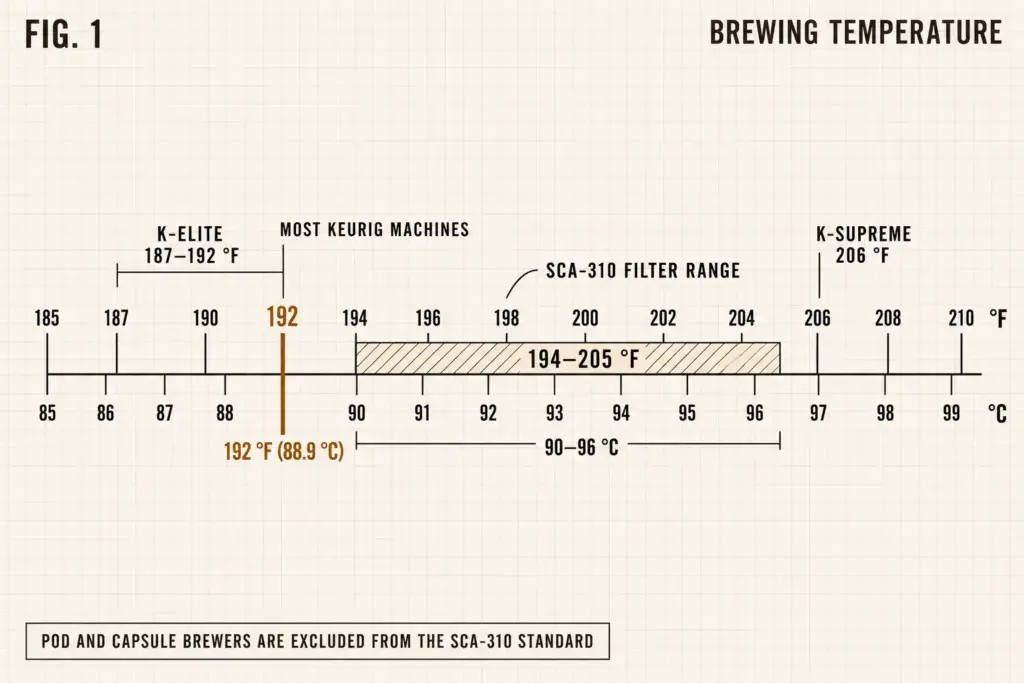
The range Wirecutter attributes to the SCA matches the SCA’s own home brewer standard, SCA-310, which sets brewing temperature at 90 to 96 °C. Converted, that is 194 to 205 °F. Wirecutter’s K-Elite paragraph pins a different range on the National Coffee Association, 195 to 205 °F, and the one-degree gap between the two is not a difference a mug can taste.
It is worth knowing about only because a number repeated without its source cannot be checked. The SCA’s floor is 90 °C, which is 194 °F, and that is the figure used here.
Two details of the standard change how to read any of these numbers. SCA-310 measures the slurry, the grounds and water together in the basket, with a floating array of three thermocouples, and requires the temperature to reach the range by the time a third of the water has been sprayed on the coffee and stay there for the rest of the cycle. That is a different measurement from the water temperature in a tank or at the spout, and a machine quoted at one figure by one method and at another figure by another method has two honest numbers, not a contradiction.
Why the SCA range does not test a pod machine
Read the scope clause before the temperature clause. SCA-310 covers filter coffee electrical brewers designed for home use, and states that “pod/capsule brewers are excluded from this standard.” The 194 to 205 °F band is the drip brewer’s range. No K-Cup machine has been run against it under this standard, which means 192 °F sits below the floor of the filter-brewer range, a statement about distance from a drip machine, not a verdict on a pod machine.
The exclusion makes sense. A pod is a small dose with a short contact time, a different job from a basket of grounds sitting in a spray for several minutes. Whether 192 °F is enough for that job is a question the cup answers, not the standard. When a thin, sharp mug follows a cheap pod machine, heat is a suspect; it is not a conviction, and the next section shows the order in which to check.
The machine that the standard does test is the drip maker, which is why a shopper deciding between the two should read a drip maker picked by the water temperature it holds before settling on a pod machine as the answer.
What a cool brew tastes like
Water that is too cool, or that leaves the grounds too soon, pulls less out of them than it should. The cup runs thin and sour first, a sharp edge with little sweetness behind it, and only later does it turn flat and papery. Bitter points the other way, to water that stayed too long or too hot. Name the direction before you change anything: thin and sharp means the water did not finish.
Then change one thing at a time and taste between each change. First, run a cycle of plain water through the empty machine and brew the same pod at the same size right after. If the first mug of the morning is no longer the thinnest, the cool path was the problem, and the machine is fine.
Second, change the pod and keep everything else fixed: a medium roast from a different maker at the same size and button. If the cup fills out, the earlier pod was the weak link. Third, if the cup stays thin through both, suspect the machine’s own heat, and use the Strong button test in the next section before spending anything.
Judge a machine on two mugs brewed back to back, never on one. The first mug after hours of idle crosses a cold heating path and a cold brew chamber, so it punishes the machine for sitting; the second shows what it holds once warm, and the gap between them is the number worth knowing.
Where the Cuisinart fits
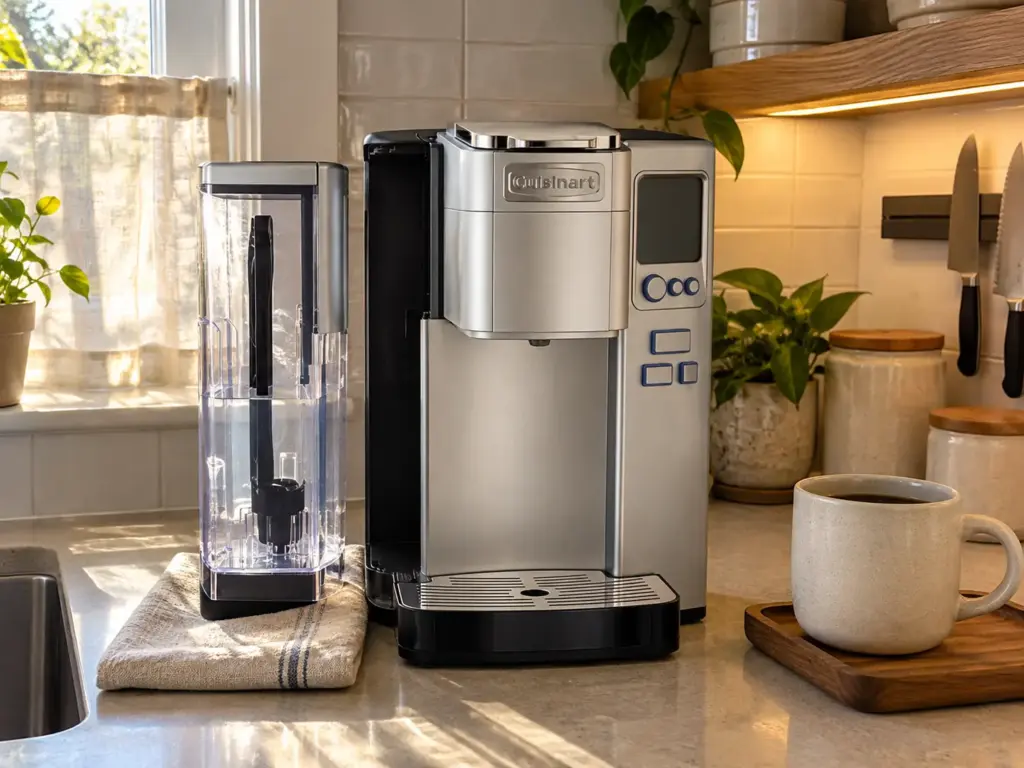
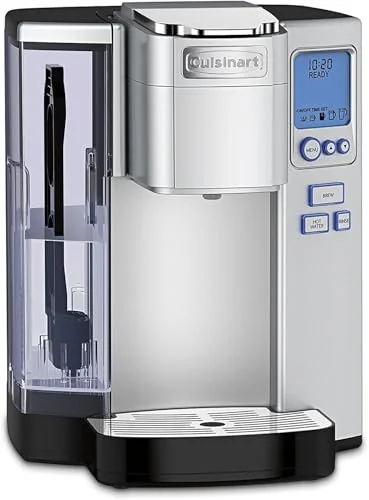
Consumer Reports describes the Cuisinart Premium Single-Serve Brewer SS-10 as one of its highest-rated K-Cup models and says that from cup to cup you can expect the volume and temperature to be consistent, which it notes is not always true of this type of machine. The spec list is long: a removable water reservoir, a built-in water filter, programmability, a height-adjustable drip tray and auto-shutoff. The SS-10P1 listing on Amazon is the 72 oz version.
Consistent is not the same claim as hot. No source here puts a number on this machine’s brew temperature, so the Cuisinart answers “which cheaper machine holds its heat steadily” and leaves “how hot” unanswered. The recent reviews on the listing are the right place to look for what the lab does not report.
A Strength Label Is a Claim, the Strong Button Is a Test
Heat is fixed inside the machine; strength is the one control you move, and the number of levels printed on the box does not tell you which one actually moves the cup. This section turns the strength question into a test you can run in five minutes at your own counter, with the pod you already buy.
Taste the Strong button against the size button
The size button sets the cup size and does one thing: it adds water. Wirecutter says it plainly, that a larger Keurig serving is just more water over the same amount of coffee, whatever is in the pod.
Do the arithmetic and the effect is not small. A 12 oz cup pushes the same pod through 50 percent more water than an 8 oz cup, which puts roughly a third less coffee in every sip. A reader pressing the biggest size button and getting a pale, watery mug of weak coffee has pressed the wrong button.
The Keurig K-Express, the reference every cheaper machine gets measured against, shows the other half. It has three size buttons, 8, 10 and 12 ounces, and a Strong button that Wirecutter calls a necessity with a Keurig machine. What it gives up is a floor: it offers no serving smaller than 8 ounces, where some other Keurig models go down to 6. Wirecutter still found that an 8-ounce cup made with Strong tasted better than a 6-ounce cup made without it on other machines.
To run the test as a series of single changes, use the pod you buy every week and the same mug each time:
- Brew the smallest size with Strong off, and taste it. This is your baseline.
- Brew the same pod at the same size with Strong on. It should come out fuller and less watery; if it swings to harsh, the setting has overshot for this pod.
- Brew the same pod at the largest size with Strong on. It should thin out again, and that thinning is the size button’s dilution, not the machine’s strength.
Run this test with the pod you actually buy, not a sample from a variety pack. A dark roast and a medium blend respond differently to the same button, and the pod you drink all month is the one the setting has to work for.
Why more strength levels do not mean a stronger cup
More dial positions sound like more control. Wirecutter tested the K-Supreme Smart, which offers six strength and temperature settings, and found that its highest strength setting “made a weaker cup of coffee” than the K-Express on Strong. Consumer Reports lists the K-Café Smart with six brew temperature settings and five brew strengths, and rates it very good to excellent in its tests, which says nothing about whether the top strength setting beats a single button on a cheaper machine.
A dial’s level count is a claim on the box. The cup is the test. Nothing printed says what a given position on a dial actually changes: the ratio, the flow rate, the contact time or only the label. The only way to know is to taste the top position against the plain setting on the same pod, and trust the cup over the number.
The grind check before you blame the machine
If the machine takes a reusable pod, the grind joins the size button as the second thing you can turn, and a weak cup from a reusable pod is usually the brew size and the grind before it is the machine. Move one thing at a time. Drop to the smallest size first, since it is free, and taste: the cup should come out fuller.
If it is still thin and sharp, go one step finer, toward a fine grind, and brew the same size again. The cup should slow and fill out; if the water drips for far too long, backs up around the pod or the cup turns bitter, you overshot, and half a step back is the answer.
The grind side of this question, sized for a pod basket, is in coffee grind size for a K-Cup. The strength side, finer until the water no longer drains well, is in which coffee grind is strongest.
When a Cheap K-Cup Machine Is Not the Answer
If the machine on your counter still works, the cheaper fix may be the pod that goes in it, and if it does not, a plain drip maker or a machine that takes both pods and grounds may be the better buy. The pod you buy is where the money goes every month; the machine is the smaller line.
Put a reusable pod in the machine you already own
Free first. A reusable pod costs a fraction of any replacement machine, and it turns the Keurig you already own into a machine that takes whatever grounds you choose, which is the strongest dupe of all: the same machine, a different pod. Reusable pods by needle type sorts the choices by the part of the machine that pierces the pod.
The catch is the warranty clause from earlier: Wirecutter warns that damage while using non-Keurig-branded pods or accessories may not be covered, so on a machine still inside its one year, the first month is the one to be careful with.
A paper disc set inside the pod keeps the grounds out of the cup. The arithmetic is simpler than it sounds, and it never needs a price printed on this page.
For a boxed pod, divide the price of the box by the number of pods in it. For a reusable pod, divide the price of a bag of ground coffee by the cups you get from it. The ratio between the two numbers stays true after prices move.
Do the division once, on paper, for both boxes: the pods you buy now and the bag you would use in a reusable pod. Write the two cup costs side by side and note the ratio. Redo it on the day the bag or the box changes, and the comparison stays honest while any quoted figure goes stale.
A drip maker, measured in grams
A drip maker brews a pot, not a mug, and the numbers it works from are the ones the standard actually tests. SCA-310 tests at 55 grams of coffee per kilogram of water, which is about 52 grams per quart of water, or roughly ten level tablespoons. Measure that once with a scale or a scoop and you know your pot’s dose for good. The temperature range the standard sets for these machines, 90 to 96 °C (194 to 205 °F), is the one that applies here, unlike on the pod side.
The catch with a cheap drip maker is carafe heat: budget models tend to give up some of it for the price, and the detail lives in our pick of budget drip makers and the heat they give up. The next tier up is sorted differently, by how well the carafe holds its heat, in the next tier of drip makers, sorted by carafe heat.
The pot-sized pick here is the Hamilton Beach 12 Cup Programmable 46299J, a 12-cup machine with a glass carafe, regular and bold settings and a two-hour auto-off. It makes the pot, not the single mug, and that is the trade a pod machine does not ask you to make.
One machine for pods and for grounds
If you want the pod’s convenience on a busy morning and a pot for a full house, the machine to look at is the one that takes both. The Ninja DualBrew Hot and Iced CFP101 takes ground coffee for a 12-cup drip side or a K-Cup for a single mug, and brews hot coffee or iced coffee. Its K-Cup compatibility comes from the listing title, which is a retailer’s statement, not a Ninja one, so check that line on the page you order from.
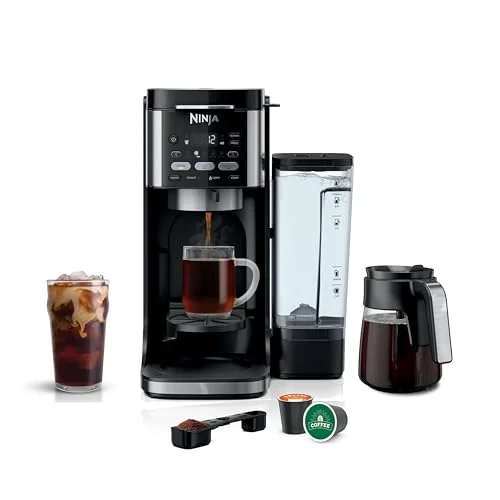
The full write-up, flaw first, is in the full flaw-first review of the Ninja, drip or pod. There is a third door that this page names and does not argue, which is a Nespresso machine, with capsules instead of K-Cups. It belongs to its own comparison.
Three Checks Before You Pay, and One Taste Test Tomorrow
Three things carry over from everything above. The cheapest K-Cup machine on the lab’s list is a Keurig, so judge a dupe by the four-year record and the care it needs, not only by the price. Check the tank, the temperature and the strength control on the cup, and taste the Strong button against the size button before you decide anything is weak. And a reusable pod in the machine you own, or a drip maker for a full pot, may be the cheaper fix; reusable pods by needle type is where the first of those begins.
At month two, brew the same pod at the same size and button as today. If the cup has gone thinner at the same setting, or the flow has slowed and the machine has started to sputter, scale is the first suspect, and the descale cycle comes before any blame goes to the pod.
Tomorrow morning, make one change: brew your usual pod at the smallest size with the Strong button pressed, and leave the big size button alone. Taste it against yesterday’s mug. It should be fuller and less watery, and if it is, you have found the cheapest dupe there is.
Frequently Asked Questions
01Where can I find a cheap Keurig?
The least expensive K-Cup machine on Consumer Reports’ list of five is the Keurig K-Mini Mate, so the cheapest option is often a smaller Keurig. Compare current listings on the day you buy, and confirm on the page whether the water tank lifts out.
02What is generic for Keurig?
A generic Keurig is a machine from another brand that takes K-Cup pods, or a reusable pod that lets the same machine brew your own grounds. Few have been tested: Wirecutter tested seven of 18. See reusable pods by needle type.
03What are some good alternatives to Keurig pods?
The main alternatives are a reusable pod filled with your own grounds, or a plain drip maker that brews a whole pot instead of a single mug. If a reusable pod makes a weak cup, change the brew size first and the grind second: coffee grind size for a K-Cup covers the grind side.
04Where can I find the cheapest K-Cups?
Divide the box price by the number of pods in the box, then compare that figure with the cost of one cup from a bag of ground coffee in a reusable pod. Run the same division on every box you consider; the ratio stays true after prices move.
05How long does a cheap K-Cup machine last?
No source measures how long a cheap K-Cup machine lasts, so any single number is a guess; the evidence is a brand rating, a warranty and owner reports. Consumer Reports rates Keurig middling over four years, and the warranty is one year.


How did your cup turn out?
No comments yet. Tell us what you changed — and whether the needle moved.