
We may earn a commission when you buy through links on this page. It never changes what we recommend. How we pick
On this page7 parts
- Why the Same Coffee Tastes Different on Bottled Water
- Rule Out the Grind and the Ratio Before You Blame the Water
- Read the Label in 20 Seconds, Then Read Your Own Tap
- The Bottles That Fit, and the Flaw in Each One
- Gallon Jug or Six Small Bottles? The Arithmetic and the Machine
- Brew Twice Tomorrow, Then Watch the Tank's Water Line
- Frequently Asked Questions
You are standing in the water aisle typing best bottled water for brewing coffee into your phone, and the shelf is already steering you wrong: the word mineral sounds like the upgrade, yet legally it is a claim about at least 250 ppm of dissolved solids, the shelf your coffee does not want. Calcium and magnesium carry the flavor out of the grounds, and bicarbonate buffers the acids that make a light roast taste bright, so the bicarbonate figure on the label decides most of what lands in the mug. The plain, cheap bottle often sits closer to what the coffee needs than the one with an alpine peak on the front. Two numbers on any label settle it, and this page shows where to find them.
Quick Answer
Buy the low-mineral bottle: roughly 30 to 100 ppm of dissolved solids and bicarbonate at or under about 50 mg/L on the label. Evian and San Pellegrino are the wrong shelf. Volvic and Crystal Geyser Alpine Spring come closest, each with a flaw, and a cheap purified water can sit too close to zero.
Why the Same Coffee Tastes Different on Bottled Water
Two pots from the same bag, ground the same and brewed at the same ratio, can taste like two different coffees, because water is about 98.5 percent of what ends up in the mug. This section says what the minerals on a bottle label do to the cup, so the rest of the article has a number to measure against.
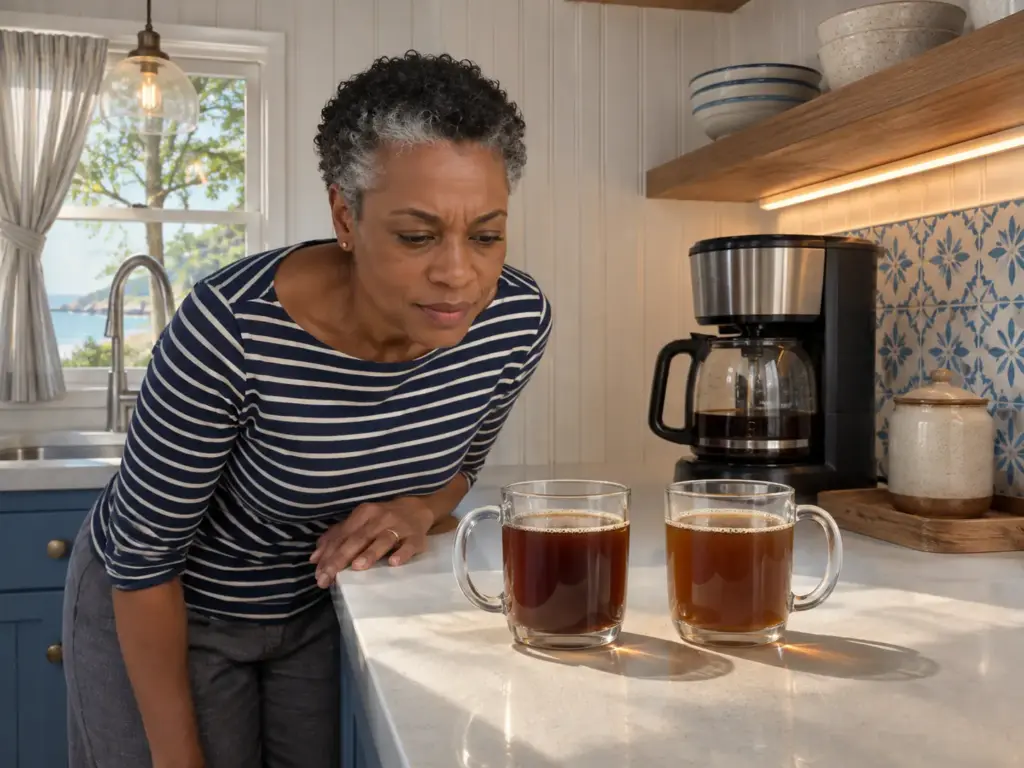
What calcium and magnesium carry out of the grounds
Calcium and magnesium, together called general hardness, are the minerals that grab flavor compounds as water moves through the grounds. They give a cup its body, a mouthfeel with some weight to it and a finish that lingers, and a water with too little mineral content leaves the cup thin and a little hollow, however good the beans. Too much water hardness tips it the other way, toward an over-extracted, drying, astringent aftertaste.
Picture the first cup after switching to a new bottle: same coffee, same dose, same grind, and the cup goes quiet. The fruit is gone, a chalky edge sits where the sweetness was, and the beans take the blame. A bottle that tastes lovely in a glass can still do this to a light roast, because a glass never asks the water to carry anything and a brew does. Most of the bottles named for coffee sit somewhere along this scale, and the TDS numbers behind every brewing water put the wider list in one place.
What bicarbonate does to the acids
Bicarbonate, which a label may print as HCO3 or bicarbonates and which coffee people call alkalinity or carbonate hardness (KH), is the buffer. A light roast is prized for its acids, and bicarbonate absorbs them on the way into the cup; with too much of it the brightness disappears and the cup turns flat and chalky. In the SCA’s own explanation of alkalinity and extraction the priority is stated plainly: alkalinity matters far more than pH when choosing a water for coffee, so the pH printed on a bottle is the number to skip.
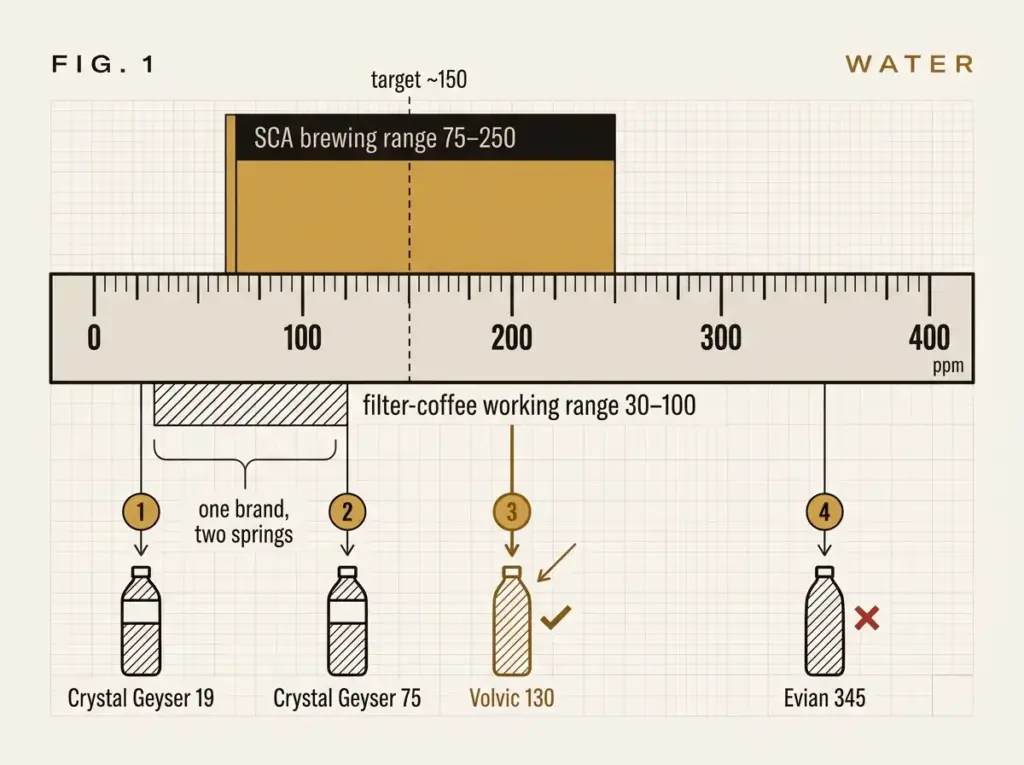
The Specialty Coffee Association’s long-published target for brewing water is about 150 ppm of total dissolved solids, with 75 to 250 acceptable, alkalinity around 40 ppm and a pH of 6.5 to 7.5. Working bands by method run lower for filter coffee, 30 to 100 ppm, and higher for espresso, 80 to 150 ppm, where machine health is the reason the band climbs.
Labels and meters speak slightly different units, and one division bridges them. A label’s mg/L and a meter’s ppm are the same figure, and bicarbonate in mg/L divided by 1.22 gives alkalinity as ppm of calcium carbonate, so 50 mg/L of bicarbonate lands on about 40 ppm, the SCA’s own number.
Find the line that says bicarbonate (or HCO3) and skip the pH; a pH of 7 describes a bottle that can still flatten a light roast. If the label prints no bicarbonate figure at all, the bottle cannot be judged, and the next one on the shelf is the better buy.
Which way the cup points
The direction of the taste names the number that is off. Flat, chalky and muted means the bicarbonate is eating the acidity, and the next bottle should carry less of it. Thin, sharp and hollow points the other way: the mineral load is too low to extract, and a little tap water or a mineral packet moves it back toward the middle.
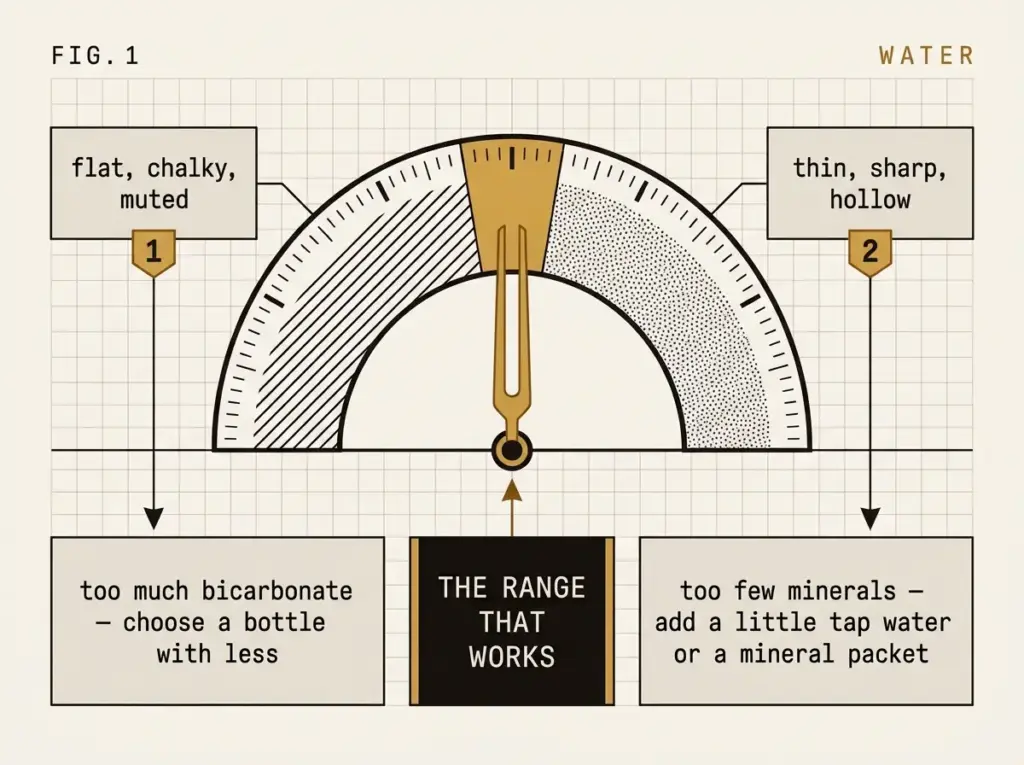
Sour can also come from the grind or the ratio, so those get checked before any bottle goes in the cart.
Rule Out the Grind and the Ratio Before You Blame the Water
A new bottle will not rescue a cup that is sour because the grind is too coarse, or thin because the dose is short, and the free checks cost one morning. The order is simple: move a single setting, taste, and buy water last. And it holds whatever the brewer, a drip machine, a pour-over cone, a French press or an AeroPress.
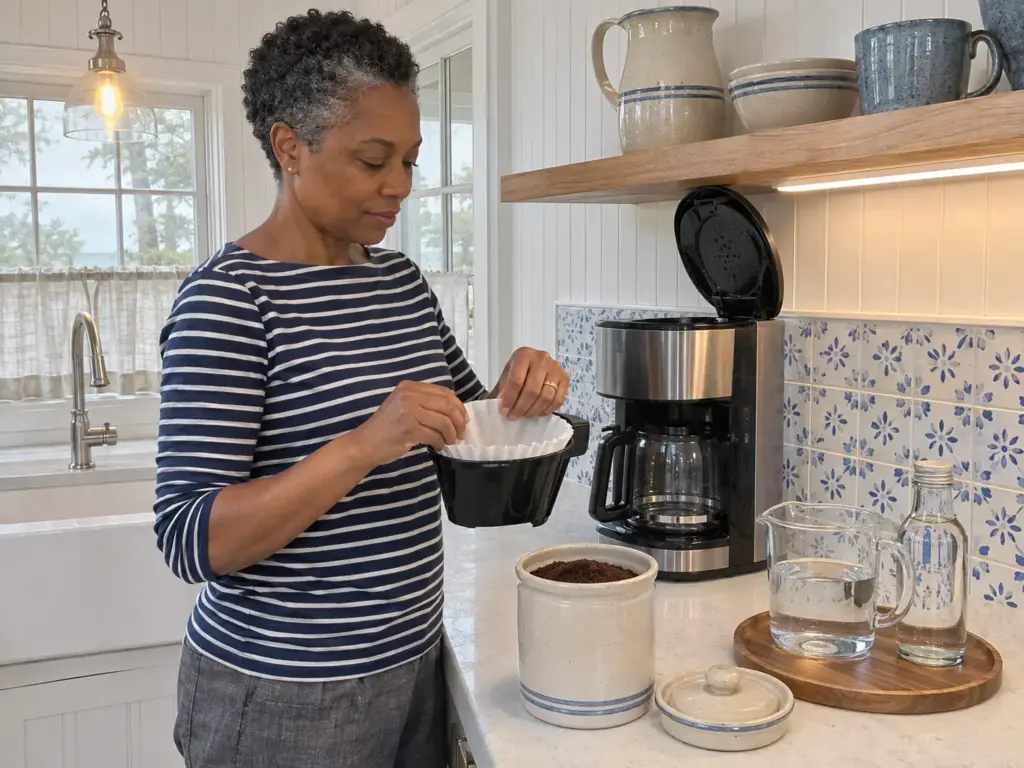
Brew the same coffee twice
Use the same coffee, the same dose, the same grind and the same ratio, and change only the water: one pot on the bottle, one on the tap, the two mugs set side by side and tasted a minute apart. Nothing else is allowed to move, or the comparison means nothing.
A drip machine can hold a little of the previous tank in its tubing and heater, so run a pot of plain bottle water through before the pot you plan to taste. The cup that follows is the one that reports on the water, instead of on whatever was in the lines yesterday.
Read the two cups
A bottle cup that comes out flatter and chalkier than the tap cup points at the bicarbonate, and the previous section says which way to move. A bottle cup that comes out thinner, sharper and hollower points at a mineral load too low to extract. If the two cups taste the same, the water was never the lever, and the money stays in your pocket.
Taste each pair twice, once while the cups are hot and again after they cool. Water trouble shows more in the cooler mug, as a chalky or hollow finish that the heat was hiding.
When the cup stays sour or thin
A cup that stays sour or thin after the pair test was probably never a water problem. Work through the free checks in order, with a taste between each one. First, go one step finer on the grinder for a sour cup (or one step coarser for a bitter one); the next cup should taste rounder and sweeter, and if it turns dry and bitter you overshot by a step.
Second is the ratio to check before you change the water. A brew ratio of about 16 parts water to 1 part coffee works out to roughly two level tablespoons of grounds for each 6 fluid ounces of water. Third is the water temperature, around 199°F (93°C) at the grounds, and why the grind outranks the degree and the bottle is worth reading before you touch a kettle. The thin, sharp cup is usually read as under-extraction before the grinder is ever questioned, and a different bottle gets bought for a problem the grinder was causing.
Read the Label in 20 Seconds, Then Read Your Own Tap
A bottle nobody has reviewed can still be judged in the aisle with two numbers from its own label, and the tap at home can be read with a pen that costs less than a case of water. This section turns both into figures you can compare.
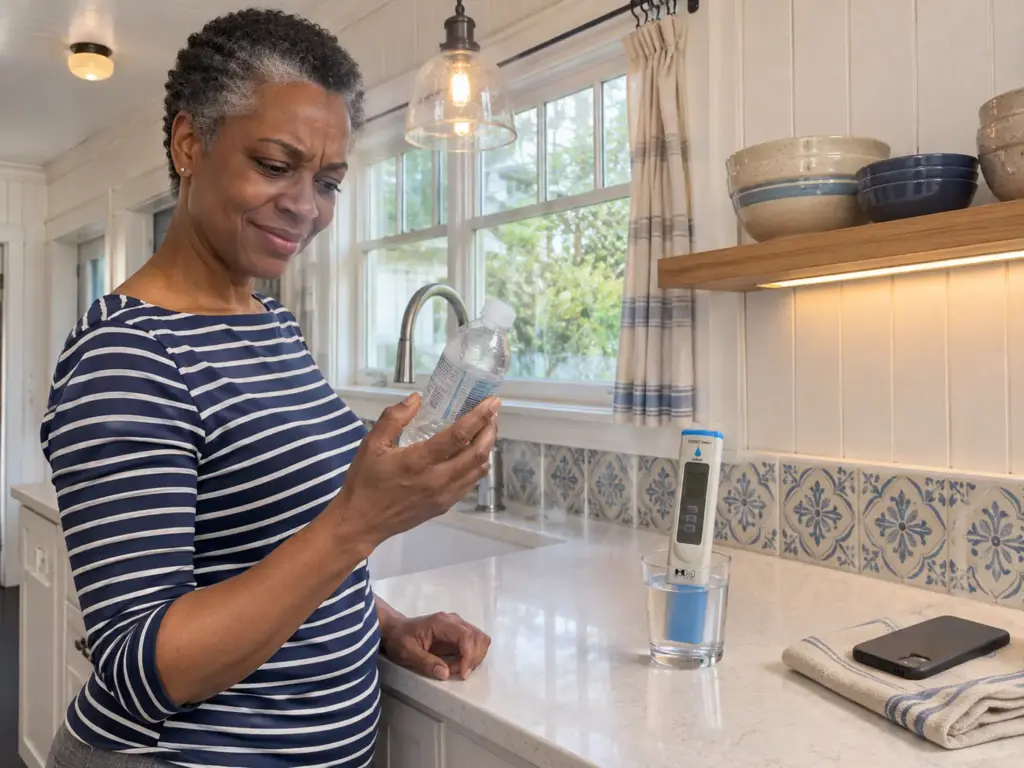
What the words on the bottle actually mean
On a label, mineral water is a legal category, not a grade. Here is the FDA’s rule for what may be called mineral water, word for word: “This water comes from an underground source and contains at least 250 parts per million total dissolved solids.” That makes the word a claim about 250 ppm or more, which is where the famous mineral waters fall off the list.
Purified means the water was distilled or treated by reverse osmosis, so it describes what was taken out. Spring names a source and says nothing about the profile, which is how two jugs with the same label can taste different.
The two numbers, read in the aisle
Stand at the shelf with the phone’s calculator open and read two lines: calcium plus magnesium against 100 mg/L, and bicarbonate against 50. Everything else on the label, the pH and the sodium and the story on the front, can be ignored.
To see how a bottle stacks up against the standard, convert. Bicarbonate divided by 1.22 gives alkalinity as ppm of calcium carbonate; calcium times 2.5 plus magnesium times 4.1 gives general hardness in the same unit. The SCA wants each of those at no less than about 40 ppm, so the boiler in a machine can build its protective layer. The dry residue printed on a label is the TDS figure a meter would read, since mg/L and ppm are the same number.
This is a shortcut, and the printed analysis is a range for one source. A label belongs to a spring, and the brand on the front inherits it.
Write the two numbers of the bottle you liked on a sticky note and stick it to the machine. The next time the store is out of it, a different bottle can be judged against that note in seconds.
A meter for the tap at home
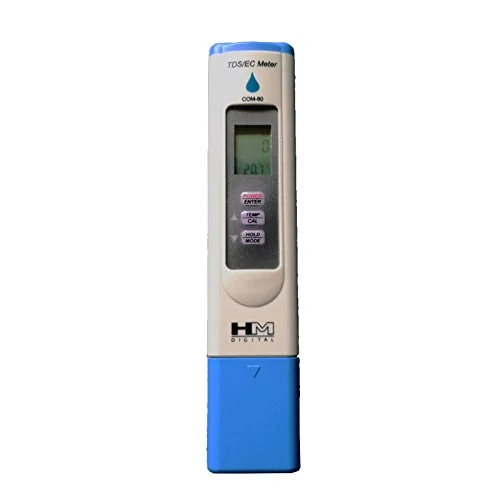
A TDS meter tells you the water hardness of the tap in one number, whether it sits near 60 or near 250 before any bottle is bought, and that is its whole job. It counts everything dissolved at once, so it is the entry ticket and not the answer: the label, or a dilution, tells you the rest. Dip it in a glass of Volvic and it should land near the 130 printed on the label; dip it in a glass from your own faucet and the reading can be very different, which is the moment the bottle stops being a guess. The free half of the same test is what a glass of your own tap tells you.
The meter to start with is the HM Digital COM-80, because it also reads temperature and lets you calibrate it. Calibration is the weak point: a unit can arrive slightly off, so dip a new one in distilled water first and expect a reading close to zero. The HoneForest TDS Meter, which reads TDS, EC and temperature up to 9,990 ppm, is the cheaper alternative.
The Bottles That Fit, and the Flaw in Each One
With the two numbers in hand the shelf sorts itself: a soft mineral water at one end, a spring water that changes from one jug to the next, a cheap purified water that can sit too low, and the famous brands that fail the first test. Each gets named here with what is wrong with it.
Volvic, soft and priced like it
Volvic’s own label gives calcium 12, magnesium 8 and bicarbonates 74 mg/L, with a dry residue of 130 and a pH of 7. Calcium plus magnesium comes to 20, soft enough that a light roast keeps its acidity, and that half of the test is a clear pass. The bicarbonate is the other half, and at 74 it sits a little above the 50 line, about 61 ppm of alkalinity against the SCA’s 40.
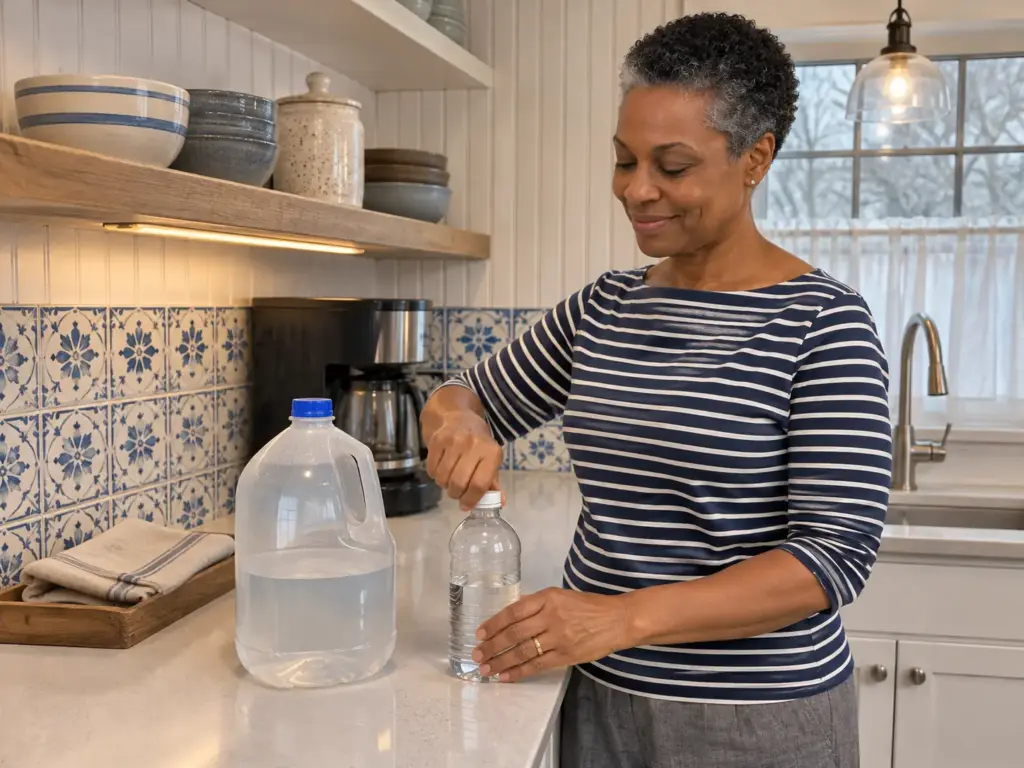
Volvic Natural Mineral Water is still among the closest bottles in the aisle to a coffee water, and the flaws arrive with it. Six 500 ml bottles hold only 3 liters in all, so they make fewer than two pots; per liter it costs roughly seven times what a gallon jug does; and soft water carries little body out of the grounds, so a dark roast can read thin. The small format does suit a pour-over kettle or a machine with a small tank.
Crystal Geyser, a label that belongs to a spring
The gallon format of Crystal Geyser Alpine Spring is the one that fills a drip machine’s tank, and that convenience is half the case for it. The other half is a warning, because the label belongs to a spring and the company bottles at more than one. A Water Quality Rank lab report on a gallon bottled in Moultonborough, New Hampshire lists calcium 2.2 mg/L, magnesium 0.31 and an index of 19 ppm TDS, while a California-bottled jug measured about 75 ppm in a home test.
At 19 ppm the water is too soft to extract well, and a light roast can read sour; at 75 it sits comfortably in the filter band. The spring decides the rest. A machine can run for years on one spring’s water and open up clean, while another machine on a different spring, with the same routine, arrives already calcified. It also carries a premium over a store-brand jug, so check the source line on the carton and read the printed analysis again whenever the jug comes from somewhere new.
Purified drinking water, the cheap bottle that can sit too low
Purified drinking water is often the cheapest useful bottle on the shelf. The legal word covers water that was distilled or treated by reverse osmosis, so reverse osmosis water and purified water are often the same bottle. It describes what was removed, and some brands keep enough minerals to land in the filter band.
The risk sits at the other end. Some brands are so close to zero that the cup brews flat, and with almost no hardness or alkalinity left they protect nothing inside the machine, since the SCA’s floor is about 40 ppm of each. A splash of tap water or a mineral stick brings that bottle back into range. Read the printed numbers, never the word.
The shelves to skip
Evian’s own published composition lists calcium 80, magnesium 26, bicarbonates 360 and dissolved solids of 345 mg/L. The bicarbonate is about seven times the 50 line, roughly 295 ppm of alkalinity against the SCA’s 40, and the dissolved solids sit above the 75 to 250 range. It is a legal mineral water and the wrong shelf for coffee. San Pellegrino fails the same way, sparkling and mineral-heavy, and a bottle sold as alkaline water mutes a light roast because the buffer that earns it the label is the same buffer that absorbs the coffee’s acids.
No supermarket bottle is a spec sheet. The printed analysis covers one source, and two jugs with the same label bought weeks apart can taste different, because the label follows the source and the source can change when the carton does.
Gallon Jug or Six Small Bottles? The Arithmetic and the Machine
The bottle that passes the label is only half the decision; the other half is how it fits a kitchen with a drip machine whose tank is measured in liters. This section runs the arithmetic of the jug against the six-pack, says what bottled water does to a machine over the months, and marks the point where buying water stops making sense.
Liters per carton, and what a pot costs
Six 500 ml bottles hold 3 liters. Six one-gallon jugs hold about 22.7. A 12-cup drip pot is 60 fluid ounces, about 1.8 liters, so the small bottles make fewer than two pots and the jugs make about twelve.
Per liter the jug is roughly seven times cheaper, which means a pot brewed on the small bottles costs about seven times a pot brewed on the jug. That division, not taste, is what sends most kitchens to the jug, and you can rerun it with today’s prices on both cartons. How much water a coffee maker takes gives the tank figure to divide by.
Buy a single jug of one candidate and brew a week of ordinary pots on it before you commit to a carton. With the coffee and the routine unchanged, the water is the only thing that moved.
Scale, plastic and storage
Bottled water still scales a machine. De’Longhi says in its own FAQ that bottled water does not avoid limescale, and one machine maker’s manual caps inlet water at a hardness of 4 °dH, about 71 ppm as calcium carbonate. La Marzocco adds the useful half: a small amount of scale builds up even on ideal water and, in ordinary amounts, protects the metal, while harsh scale falls outside the warranty. The goal is slow scale, with zero out of reach, and a bottle too soft to scale at all also brews thin.
A machine that never gets hot enough collects scale faster, and why a drip machine that runs cool is the one that scales covers that side and the descaling that follows. For a quick check on the water, look at the line inside the tank: a pencil-width white line at the water level after years means slow scale, and a chalky film long before that means hard water.
Storage matters too. Water kept in a poor-quality plastic bottle can pick up a flavor from the plastic, so the jug lives somewhere cool and shaded, never in a warm car or on a sunny counter for weeks. And distilled water sold for irons and humidifiers is not drinking water.
When the jug becomes a weekly chore
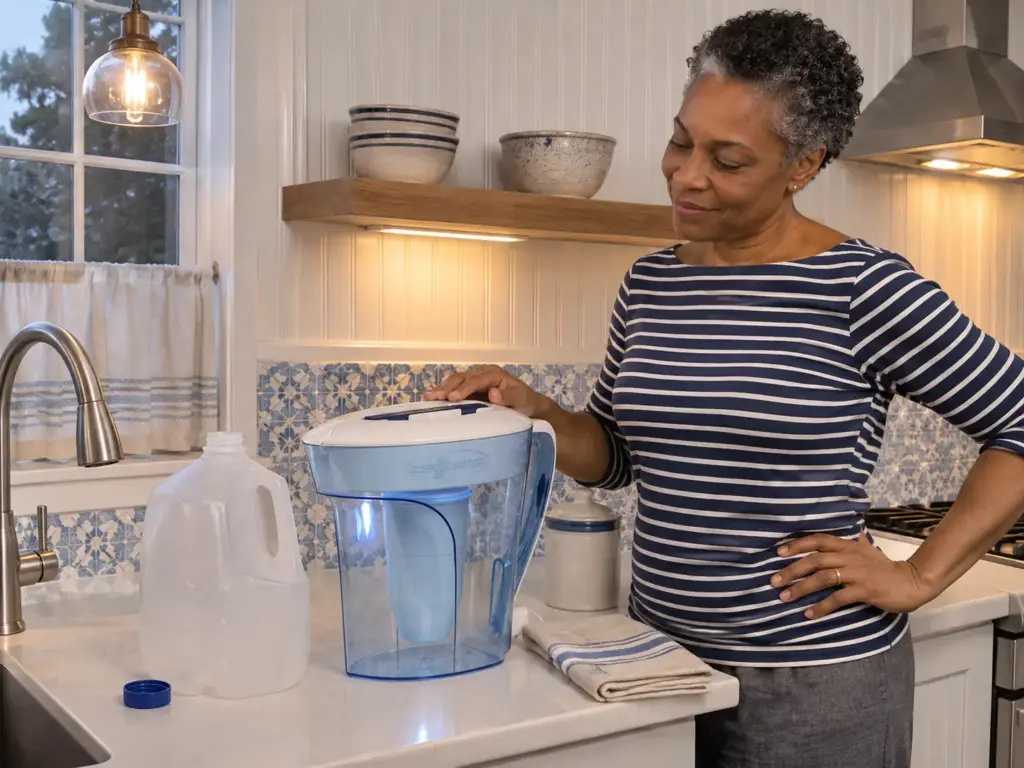
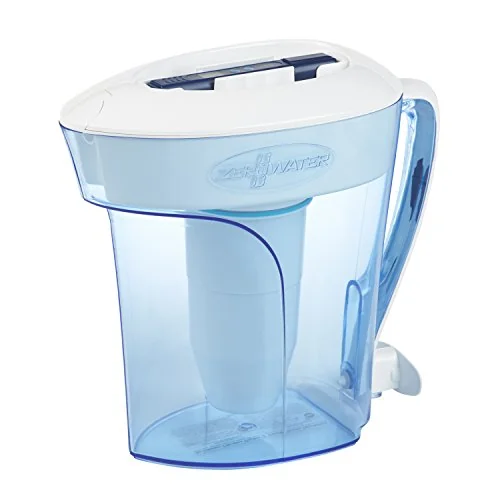
Hauling a jug every week eventually feels like a chore, and a filter pitcher is the next step. It comes after the bottle, never before it: the free route, the jug and the label, gets tried first. The ZeroWater turns tap water into 0 TDS water, a blank canvas that needs minerals put back, or a splash of tap, before it brews anything worth drinking. The cartridge is the running cost, spent fastest in hard water, which is the very kitchen that pushes people toward a pitcher, so the pitcher that replaces bottles turns into a monthly line item.
A Brita Small 6 Cup with an Elite filter is the familiar alternative, and it is a water filter that cleans the water without moving hardness or alkalinity much, so it does not do the ZeroWater’s job for coffee.
Brew Twice Tomorrow, Then Watch the Tank’s Water Line
Buy the low-mineral bottle and read it from its own label: calcium plus magnesium near or under 100 mg/L, bicarbonate near or under 50. Leave the famous mineral waters on the shelf, pick the gallon jug over the six-pack, and settle the grind and the ratio before any bottle goes in the cart.
After a few weeks of daily pots, look at the water line inside the tank, and read the printed analysis again every time the jug comes from another store or the source line on the carton changes. A label that passed once only covers the spring it was printed for.
For tomorrow’s cup, brew the same coffee twice, once on a bottle that passes the label and once on the tap, and taste which is flatter, rounder or harsher before buying a second jug. A flatter bottle cup says look for less bicarbonate; a thinner one says look for more minerals.
If bottles stop making sense after that, the next step is a mineral packet in distilled water.
Third Wave Water Classic is the named example: one stick per gallon turns distilled or reverse-osmosis water into a repeatable profile, and the box covers 12 gallons. How much a stick changes the cup varies with the coffee and the water it goes into, so test one gallon before you commit the box, and half a stick stretches the box. The Classic profile also carries a sulfate load, which is the part of it worth knowing about. Why distilled water brews flat on its own, and how to put the minerals back covers the dilution that goes with it.
Frequently Asked Questions
01What is the best bottled water for brewing coffee?
A low-mineral bottle: roughly 30 to 100 ppm of dissolved solids, with bicarbonate at or under about 50 mg/L on the label. Volvic and Crystal Geyser Alpine Spring come closest, but Volvic’s bicarbonate runs a little high and Crystal Geyser varies by spring.
02What is the best bottled water to use in a coffee machine?
The same low-mineral bottle, in the gallon size that fills a drip machine’s tank. Water that is too soft makes a thin cup, and water that is too hard scales the machine faster, so read the label and descale on the schedule in the manual.
03Is bottled water good for brewing coffee?
It can be, if it is the right bottle. Mineral waters carry at least 250 ppm of dissolved solids and often flatten a light roast. Brew the same coffee once on the bottle and once on your tap, and taste the pair before you buy more.
04Is purified drinking water good for coffee?
Sometimes. Purified water is distilled or treated by reverse osmosis, so some brands are cheap and useful and others sit so close to zero that the cup brews flat. Read the printed numbers, and add a splash of tap water or a mineral stick if the cup comes out hollow.
05Does bottled water stop a coffee maker from scaling?
No, it only changes how fast scale arrives. De’Longhi says in its own FAQ that bottled water does not avoid limescale, so the descaling schedule in your machine’s manual still applies.

How did your cup turn out?
No comments yet. Tell us what you changed — and whether the needle moved.