
We may earn a commission when you buy through links on this page. It never changes what we recommend. How we pick
On this page8 parts
- The Tap Is Fine to Brew With, but It Is Not Neutral
- Read Your Own Tap Before You Spend Anything
- Let the Cup Name the Part of the Tap That Is Off
- The Counter Routine for the Water You Already Have
- Where a Carbon Pitcher Helps and Where It Does Nothing
- Month Two: the Kettle Crust, the Dead Cartridge and the Bottled-Water Trap
- What to Smell Tomorrow, and What to Look at Again After a Season
- Frequently Asked Questions
The pot has tasted flat for a few weeks, so the bag of beans takes the blame and a new one goes in the cart, while the water in the tank is the same water that has filled it for months. So, can I use tap water for coffee? Yes, and the better question is whether yours should stay.
What comes out of a US tap is neither pure nor neutral: a disinfectant that survives all the way to the kettle, plus a load of dissolved minerals that goes straight into the extraction and onto the heating element. The sections below cover how to read your own tap for free, which part of it the cup is pointing at, the routine for the water you have, the one pitcher worth owning and what it cannot do, and what tap water does to the machine after the first weeks.
Quick Answer
Yes. Most US kitchens can brew with the tap if a cold glass of it smells clean. Chlorine gives a pool note that a carbon filter removes; hardness and alkalinity flatten the cup and crust the kettle, and a carbon filter leaves them alone. Good for coffee and good to drink are two different questions.
The Tap Is Fine to Brew With, but It Is Not Neutral
Yes is the answer to the search bar, and it is where the useful part starts, because tap water arrives with a disinfectant and a load of minerals and each acts on a different thing. The disinfectant shapes the taste of the cup. The minerals shape how flat or chalky it runs and how fast the heating element crusts over. Two parts mean two fixes, and mixing them up is how a pitcher gets bought for a problem it cannot touch.
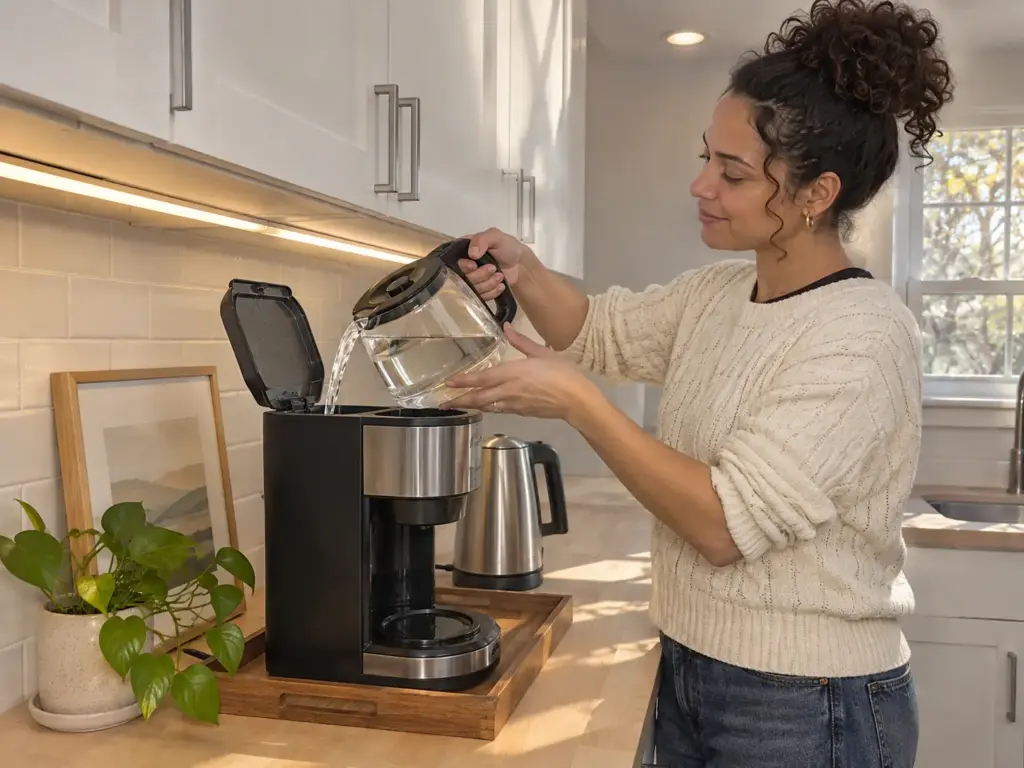
What actually arrives in the tank
The disinfectant is chlorine, or chloramine in cities that chose the longer-lasting kind, and it stays in the water all the way to your kettle. It leaves a pool note, sometimes a medicinal or papery one, and the nose finds it before the tongue does. The dissolved minerals are a separate matter: calcium, magnesium and the carbonate that buffers acid. They set how flat, chalky or sharp the cup comes out, and they are what the kettle keeps when the water boils away.
Water hardness is read two ways, and the names get mixed up. General hardness counts the calcium and magnesium; carbonate hardness is the lower of total hardness and alkalinity, and alkalinity in a tap is mostly bicarbonate. The carbonate part is what heat turns into limescale, so a kettle crust is the visible mineral buildup of unfiltered tap water, while soft water, with little of either, leaves almost none.
There is a free way to tell the two apart. Fill a jug from the cold tap and leave it for an hour. Chlorine tends to drift out of standing water, so a jug that smells less of the pool than the running tap did points at chlorine. A smell that holds on points at chloramine, which stays put much longer in the pipes and, by the same stubbornness, in the jug.
Where “good for coffee” stops and the utility’s report begins
This page answers two questions only: what the water does inside the cup, and what it does inside the machine. Whether the water is right for the people drinking it belongs to your utility’s annual water quality report and to a doctor. Neither is a coffee article’s job, and the rest of this one goes back to the cup.
What an average American tap looks like on paper
The Specialty Coffee Association (SCA) puts the average US tap at about 150 ppm of alkalinity and about 170 ppm of total hardness, both measured as calcium carbonate. Its target for alkalinity sits near 40 ppm, so a typical kitchen starts medium-hard and well buffered before any filter touches the water. That buffer is the number that matters most to the cup, and the middle of this guide shows why.
Hardness is a smaller lever on the cup than most water advice implies, and a much bigger one on the machine. The SCA measured the effect of total hardness on extraction as insignificant from roughly 20 to 250 ppm, and a tap at 170 sits comfortably inside that band; the over-extracted, harsh cup turns up above 250, and an under-extracted one below 40. The case for softening water is weak on taste and strong on equipment, and the equipment half comes further down.
Read Your Own Tap Before You Spend Anything
The cheapest water test there is already exists, and it arrives in the mail once a year. Next to it sit two readings that need no purchase at all: a glass of cold water held to the nose, and the white ring inside a kettle that has dried. Taken in that order they cost nothing, and each says something specific about the tap.
The annual water quality report, the one every utility has to send
The CDC’s guide to how to read the annual water quality report your utility sends puts the rule in one line: “The U.S. Environmental Protection Agency (EPA) requires your utility to send you a water quality report each year by July 1.” It comes in the mail, sits on the utility’s website under a name like annual water report or city water report (officially the Consumer Confidence Report), or arrives with a phone call to the office. For coffee, skip most of it and find two lines: hardness and alkalinity, printed in grains or in milligrams per liter.
Some reports leave them out. Minerals are not a public-health item, so many reports mention them barely or not at all, and a missing line is common and means only that the utility had no reason to print it. That is where the glass and the kettle take over.
Reading the hardness line, in grains or in ppm
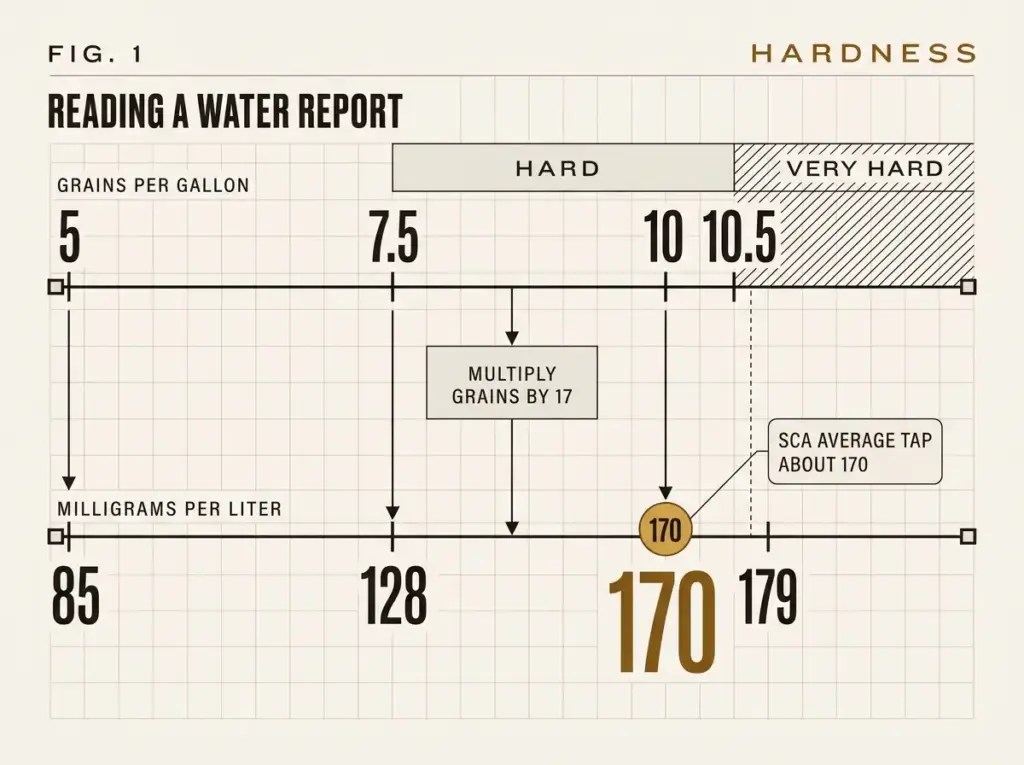
Utilities that print grains per gallon (gpg) and coffee standards that use milligrams per liter (mg/L, the same as ppm) speak in different units. One grain per gallon is about 17 mg/L, according to Penn State Extension, so a report that prints grains is read by multiplying by 17. Ten grains is roughly 170 mg/L, which happens to be the SCA’s average tap. Penn State calls 7.5 to 10.5 gpg hard and anything above that very hard.
The TDS line on a report works differently. A report’s total dissolved solids figure is read against a drinking-water limit of 500 mg/L, and that limit says nothing about coffee: the SCA’s window for brewing water tops out at 250. So a TDS number that passes on the report can still sit well above what a pot wants, and a hardness figure is the more useful of the two.
A cold glass and a dried kettle
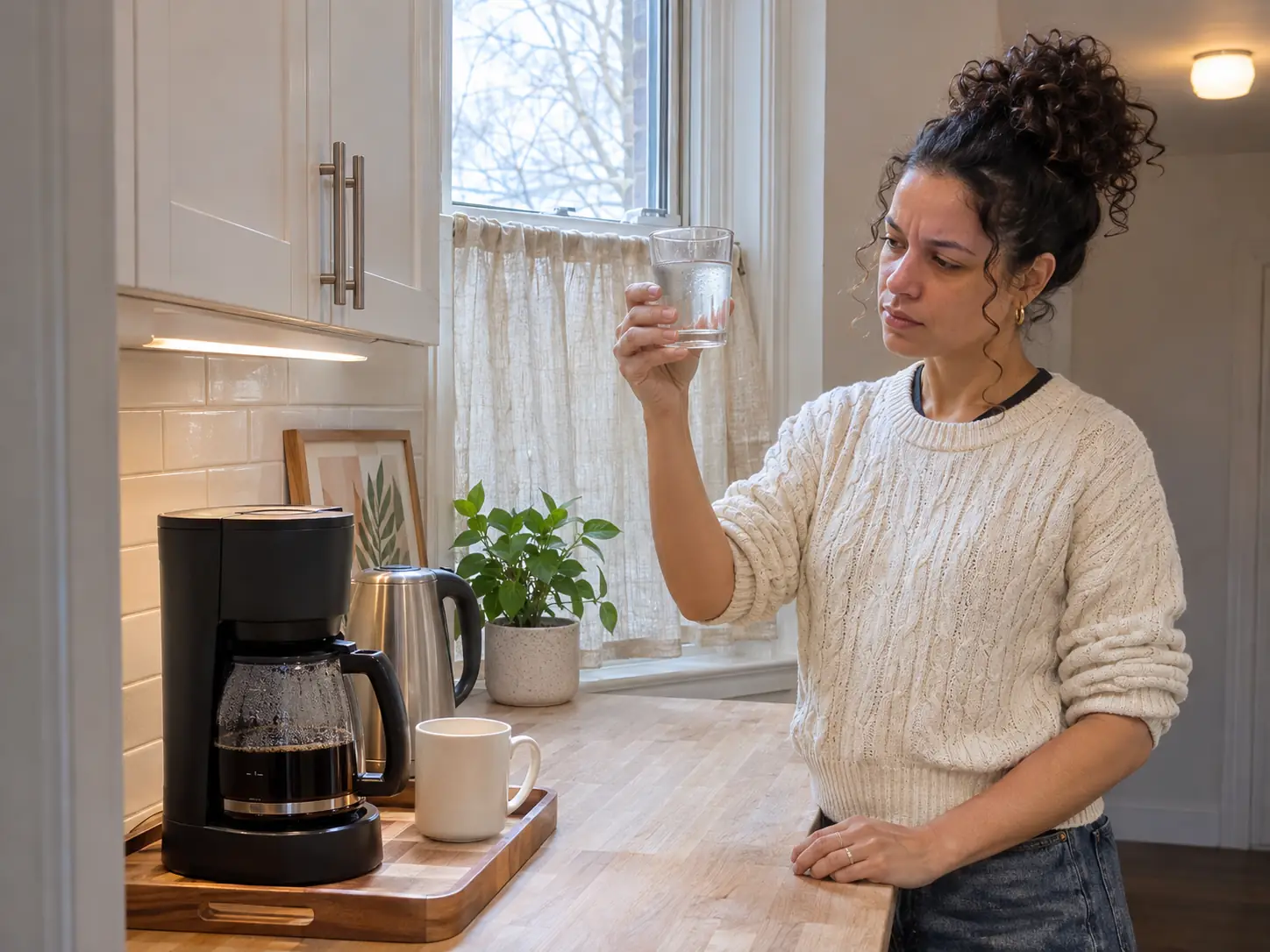
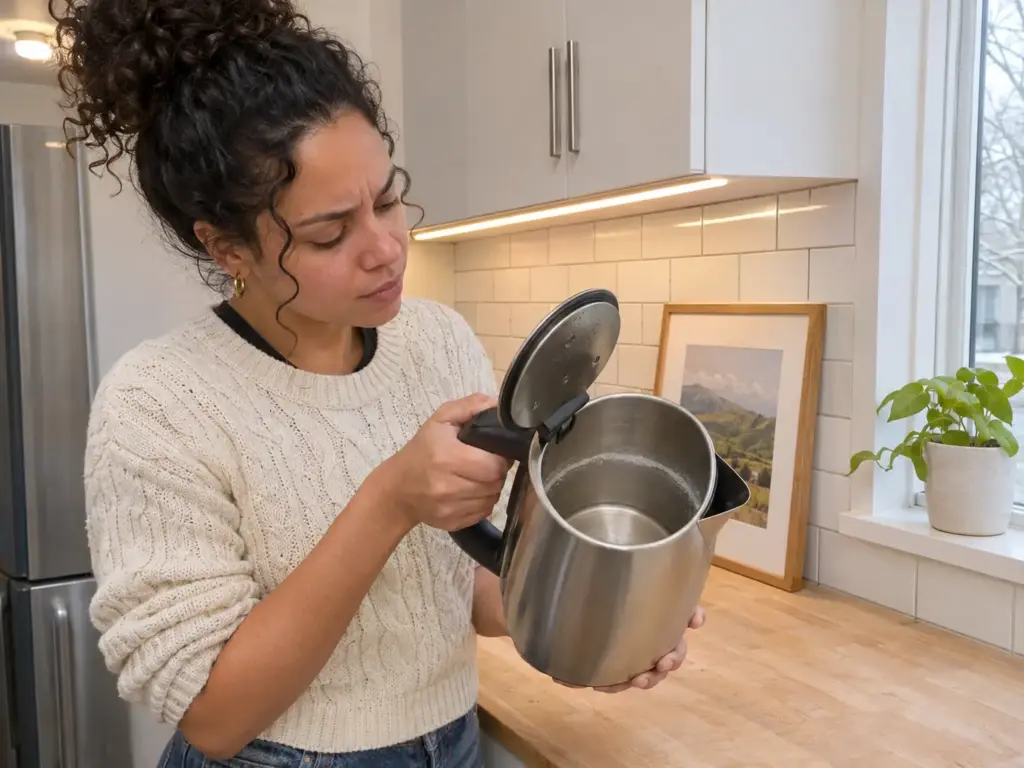
Fill a glass from the cold tap and smell it before tasting it. A pool note, a metal note or nothing at all is the first free reading, and it names the disinfectant. Then look inside the kettle once it has dried completely. A white ring or a crust on the wall is the hardness gauge, and the thicker it gets across a month of daily use, the harder the water.
A kettle that looks clean at first glance often shows its ring only when it is tilted toward a window. Look at a fixed spot, just above the old waterline, so the next check compares like with like.
A meter, for the glass in front of you
A report gives the average of a whole system, and the glass at your sink can differ from it. The HoneForest TDS Meter (see it on Amazon) reads 0 to 9,990 ppm at 1 ppm resolution and adds conductivity and temperature readings, for about what two bags of coffee cost.
It is a conductivity meter that shows its reading in ppm, so it says how much is dissolved and not which minerals, and that is not the same as hardness or alkalinity. Accuracy is the weak spot of this model: a unit that reads tap water and purified water the same is a unit that is not measuring, so test yours against a bottle of purified water before trusting a number, and use it for a sanity check and no more. Later it earns a second job, watching a filter cartridge spend itself. A GH and KH test kit, or a titration kit, counts hardness and alkalinity drop by drop, and it is the next purchase if the report prints neither and the meter’s number needs a second opinion.
Let the Cup Name the Part of the Tap That Is Off
A flat pot and a pool-water pot are different complaints, and the tap has three separate faults behind them, each with a symptom and a change. The cup points at the part, and the part points at what to do. Before any of that, rule out what has nothing to do with the water.
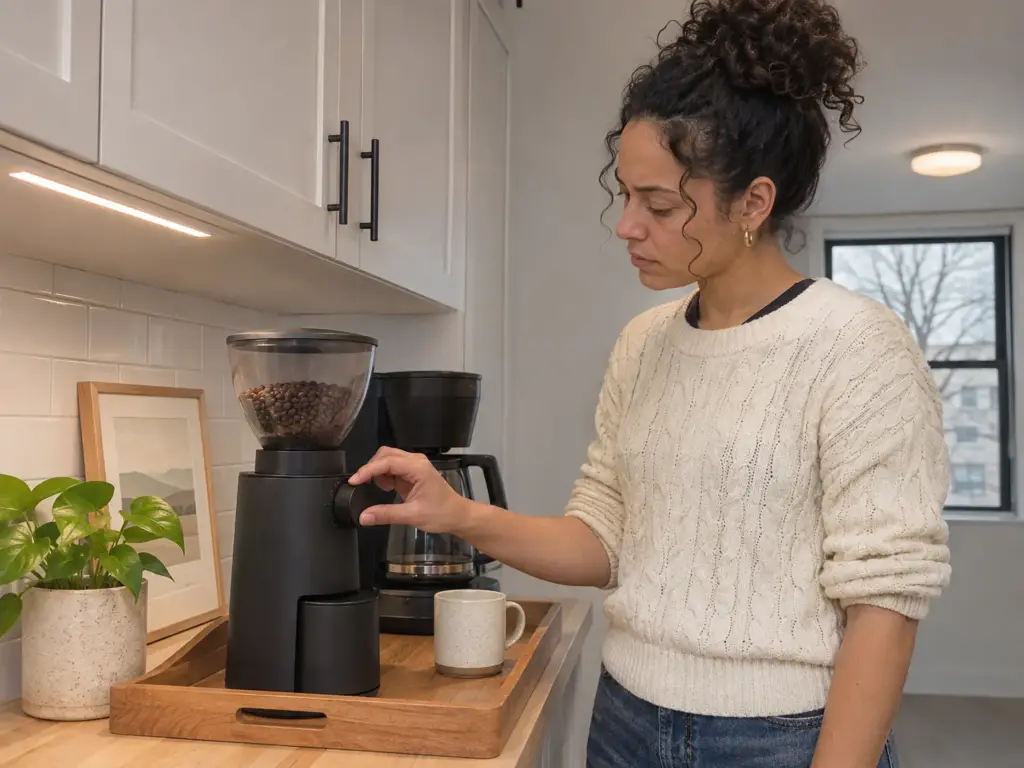
Rule out the bag, the grind and the carafe first
If the glass smells clean and the pot is still flat, the water is not the first suspect. A bag opened weeks ago, or past its roast date, gives a flat pot with no pool note at all, and stale beans say nothing about the tap. A grind a step too coarse gives a thin, sour cup, because the water leaves before it has finished.
A carafe left on the hot plate cooks what is in it. And a drifted brew ratio weakens or sharpens the pot in either direction, which a scale and one test pot settle in minutes (whether the dose, rather than the water, is what is off is a separate check). Roast matters here too: a light roast, with more acidity for a buffer to eat, shows a high-alkalinity tap sooner than a dark roast does.
One more look-alike: a pot that is thin on the first mug and fine on the last is usually the machine’s water temperature. A drip maker is meant to brew between 195 and 205°F (90 to 96°C), and a scaled or tired one lands below that; what a few degrees do to the same pot is easy to taste. Clear all of these before touching the water, since every one is free.
Pool or medicinal: the disinfectant
When the cold glass smells of a pool and the pot carries a papery, medicinal edge, the disinfectant is the part that is off. That chemical, pool-like note sits in the aftertaste as well as the nose. More than one in five Americans drinks water treated with chloramine, according to the EPA’s page on chloramines in drinking water, and chloramine is harder to remove than chlorine because it is made to last longer in the pipes.
That limits what a pitcher can do: a plain activated carbon filter handles chlorine well and sometimes changes nothing where the disinfectant is chloramine. The change here is a carbon filter, and the next pot should come out cleaner, with the medicinal edge gone. If the pot tastes the same, the filter did not match the disinfectant.
Flat and chalky: too much buffer
The number to look for on the report is alkalinity, and pH is the one to skip. The SCA’s own explanation of why alkalinity outranks pH puts it bluntly: “the impact of alkalinity is several hundredfold times higher than that of pH on the final acidity of the beverage.” A tap with a perfect pH can still flatten the cup into something bland and muddled, because alkalinity is the buffer that neutralizes the acids in the coffee, and the acids are where the brightness lives. At about 150 ppm the average tap carries nearly four times the alkalinity the SCA aims for, and a dry, astringent aftertaste is how that chalk often shows.
The free changes come first: the dose and the grind from above. After them comes a blend of half tap and half water that has lost its minerals, and that is free only where the kitchen already has a mineral-stripping filter, a reverse osmosis tap for example. A carbon pitcher will not do it. Brew the blend and taste: the cup should come back brighter, with the clarity back and a little sweeter, and if it turns thin and sharp the blend went too far toward the stripped water.
Thin and sharp: water that is too soft
This is the rarest direction, and the least often named. The SCA says neither hardness nor alkalinity should sit below about 40 mg/L as calcium carbonate, the level that lets a protective layer form inside a boiler. Under it the soft water turns aggressive on metal, which is corrosion, and the cup comes out under-extracted, which tastes thin, hollow, sharp and bland.
A tap this soft is uncommon, but a house with a water softener gets there on purpose and a naturally soft supply gets there by geography. The change is to put hardness back, by blending in unsoftened water, and the cup should fill in; too much swings it back to chalky.
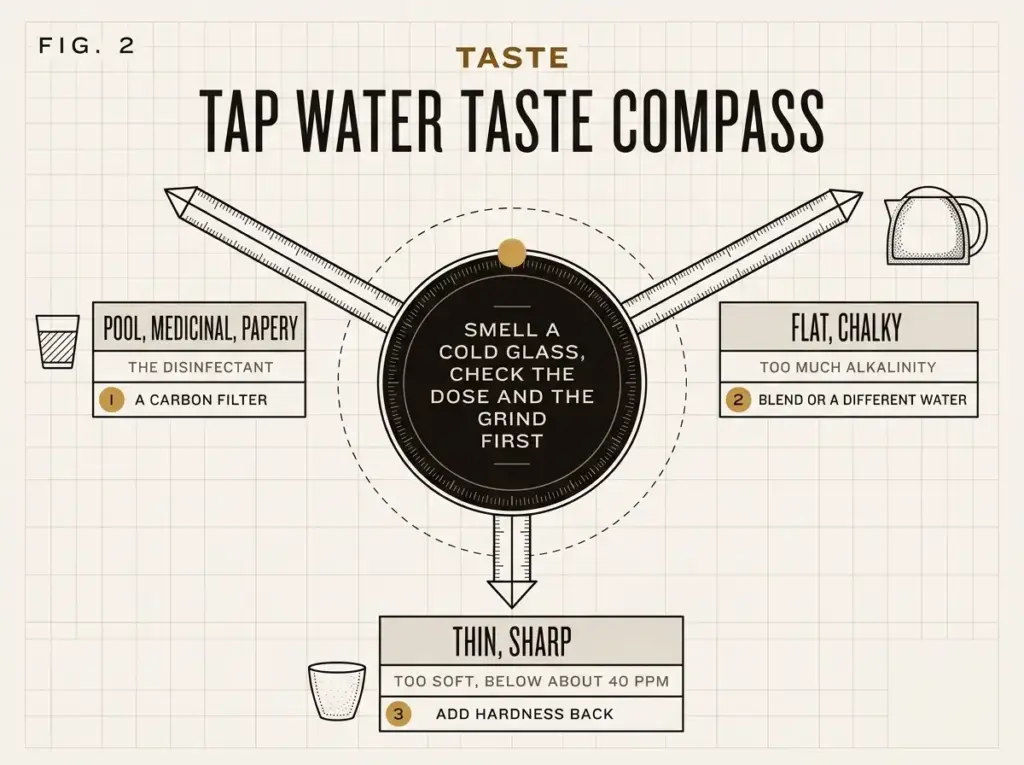
The order matters. Dose and grind first, because they cost nothing; then the water, a direction at a time, with a taste between each. A reader who moves all three at once cannot tell which one worked. The full set of water numbers and every step above the tap lives in the Water guide, and it is where a flat cup that survives all of this goes next.
Keep the bag, the grind and the dose exactly where they are through every water test, and taste from the same mug each time. A pot that improves under those conditions improves because of the water.
The Counter Routine for the Water You Already Have
Before a pitcher, a meter or anything new, a short routine costs nothing and removes most of what makes the brew water of a tap pot worse than it has to be. None of it needs a tool, and all of it is the kind of habit a morning keeps. The three habits below fit a drip machine, an electric kettle and a pod machine alike.
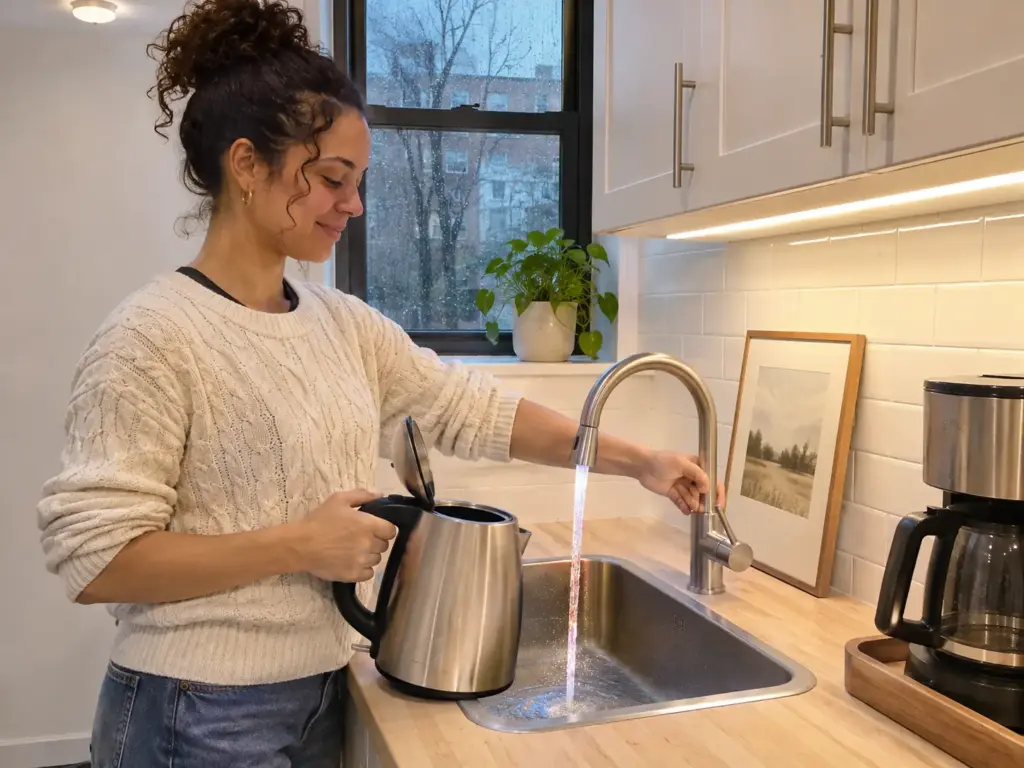
Cold water only, and let the tap run first
Use the cold tap and never the hot one. The hot tap looks like the sensible shortcut for a kettle, and it fails: that water has sat in the heater and the pipes and carries more of what lives there, so the habit that saves a minute puts the most into the cup. The machine heats the water itself anyway. Run the tap cold for a few seconds first, so whatever stood in the pipes overnight is gone before the tank is filled.
Filling a 12-cup drip machine to the cup line from the carafe follows the same rule (the first-pot routine for a drip machine, in grams has the rest of it). The marks count about five fluid ounces to a cup, so the line sits near 60 ounces, a little under 1.8 liters.
Do not re-boil what sat in the kettle
Each boil concentrates what is left behind and drives off what the nose liked, so water boiled twice tastes flatter than water boiled once. Fill from cold every time and pour out what is left instead of topping it up. How hard to boil and how long to let a kettle rest covers the temperature side.
Fill a glass at the same moment as the tank and smell the glass before the machine starts. If the glass smells fine and the pot still tastes of pool, look at the machine’s own plastic and an old reservoir before you blame the tap.
What a pod machine does with the same water
A pod machine such as a Keurig draws from a reservoir, and the habit that goes wrong there is topping it up for weeks without ever emptying it. The water at the bottom has stood the whole time, and the first sign is a faint film on the reservoir wall. Empty it, rinse it and refill from cold, and the first cup afterward should taste cleaner.
The rule is the same one: cold, fresh, a few seconds of run. How a pod machine sets the dose and handles the reservoir covers the rest of its morning.
Where a Carbon Pitcher Helps and Where It Does Nothing
When the cup smells of the pool and the free routine has not shifted it, a carbon pitcher is the first thing worth buying, and it is also the thing most often bought for the wrong problem. It fixes one part of the tap and leaves the other alone. Knowing which part saves the purchase.
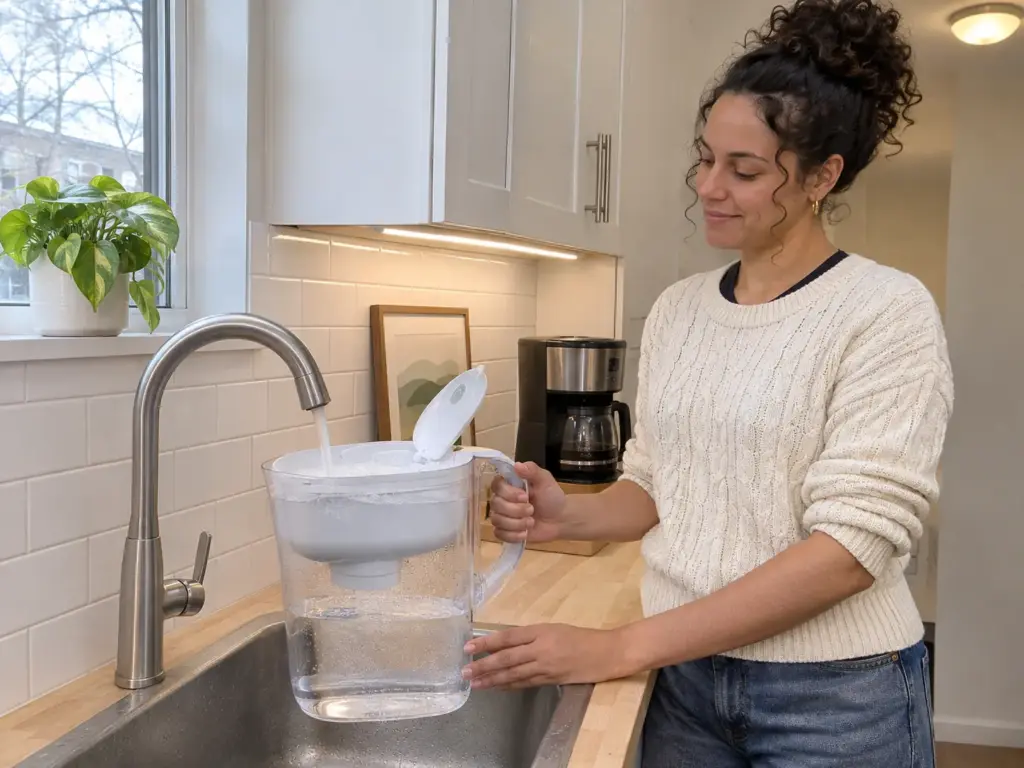
What carbon takes out and what it leaves
Activated carbon pulls out chlorine and the compounds that taste of it, and it leaves the hardness minerals where they were. It does not touch alkalinity either, so a chalky cup stays chalky through a carbon pitcher and the direction from the last section does not change. Carbon takes only a bite out of the TDS number, too, so a meter shows a small drop and no collapse. And in a city that treats with chloramine, a plain carbon pitcher sometimes changes nothing at all.
A pitcher is an activated carbon filter in a small cartridge, and a carbon block filter under the sink is the same idea with more contact time and the same limit on minerals. The chlorine-taste claim on a pitcher box is the one NSF/ANSI 42 covers, which is taste and odor and nothing about hardness. A whole-house water system is a purchase for a different problem, and not part of this guide.
Water that tastes clean straight from the pitcher and flat from the machine an hour later tells the same story: the cup was never the pool note alone, and the water sat in the tank with its buffer intact.
Two pitchers, and the cost per gallon is the number to read
The Brita Small 6 Cup (see it on Amazon) with its Elite filter is rated for 120 gallons or about six months, and it carries WQA and NSF/ANSI certification for chlorine taste, the one thing a carbon pitcher reliably fixes. The plastic shell cracks from a light knock and the lid drips when closed, so it wants a spot on the counter where nothing gets bumped.
The cheaper pitcher at the till is the PUR 7-Cup (see it on Amazon), certified by NSF for chlorine. Its filter is rated for 40 gallons or two months, which means three PUR filters for the gallons of one Brita Elite, so unless a PUR filter costs a third of a Brita’s, the Brita wins on cost per gallon. The plastic hinge breaks and the lid stops fitting properly, and a lid that does not shut is a pitcher that drips onto the counter.
The Brita is the pick, for the lower cost per gallon. The PUR makes sense only when the cheaper sticker matters more than the cost across a year, because the sticker is the smaller part of what either one costs.
When the pitcher changes nothing
Three cases leave a pitcher with nothing to fix: a plain pitcher in a chloramine city, where the pot smells the same as before; a chalky or scaling cup, since hardness and alkalinity stay in the water; and a pot that is flat because the beans are old or the grind is off, which no water fixes. In all three the next step is not a second pitcher: it is the numbers in the Water guide and the months section below.
If there is no report to read, the meter goes first and the pitcher second. If the cold glass smells of the pool, the pitcher goes first.
Month Two: the Kettle Crust, the Dead Cartridge and the Bottled-Water Trap
Week one on a new habit tells you little, and the tap’s real cost arrives later, in the kettle, in the drip machine and in a cartridge that gave out before its box said it would. The sections above are about the first pot. This one is about the pot after the novelty has worn off.
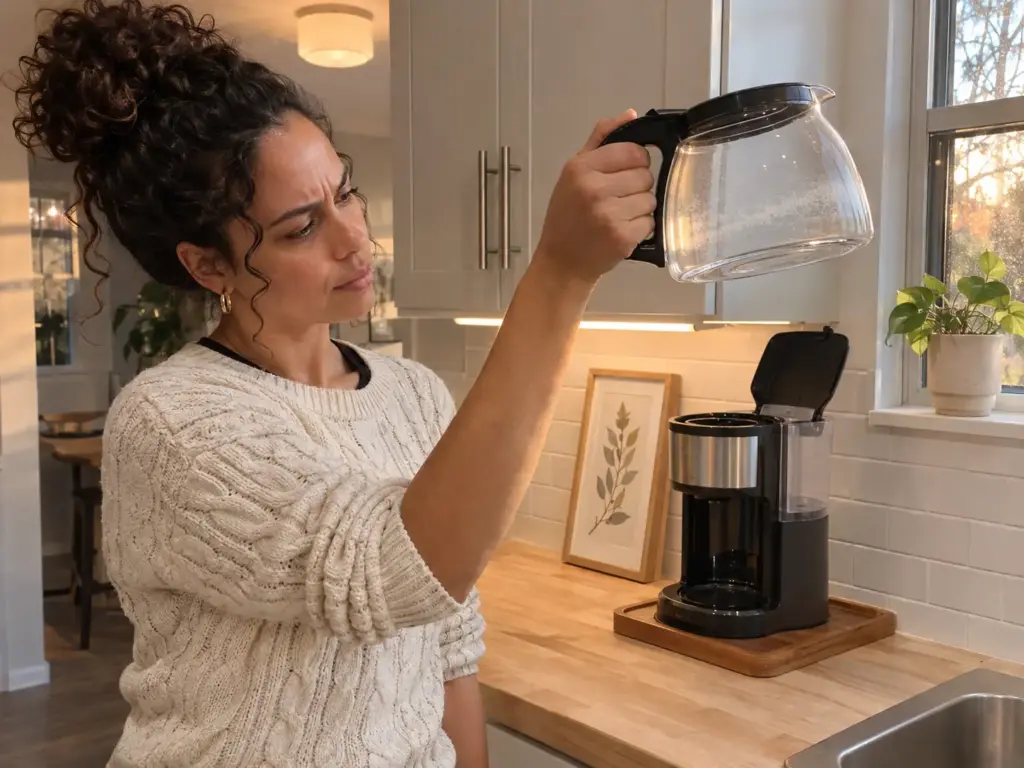
Scale builds on the element and in the boiler
Hardness leaves limescale in the kettle, on the heating element of a drip machine and in any boiler, and Penn State Extension notes that hard water causes scale in hot-water heaters and reduces their effective life. A boiler opened after years on unfiltered hard water is packed with scale, while the same model run for years on water with almost no minerals opens up clean. Zero scale is a water choice, not a descaling habit. An espresso machine’s boiler is the least forgiving of all: the SCA’s own work found that scaling the filter standard up for espresso lands in a zone of heavy scale formation.
The practical version is a schedule. White vinegar or citric acid in a scaled kettle is the free descale, and for a machine its own manual overrules any label and any advice here, including whether vinegar is allowed at all.
A machine that is scaling brews cooler and slower, and what scale does to a drip machine’s brewing temperature by month two is the sour, thin cup it leaves behind. An automatic machine tells you when to descale from the hardness number you set, and the hardness setting an automatic machine uses for its descale prompt shows where that number goes. The white film inside a glass carafe that wipes off and comes back within the week is the same story, small and early.
A filter is rated in gallons, not months
A pitcher filter carries a rating in gallons and a time estimate beside it, and hard water spends the gallons faster than the calendar does. A cartridge that lasts a month on one supply can last days on a much harder one. That makes the pitcher a subscription and the cost per gallon from above the number that holds up. Count the pitchers filled and write the date on the cartridge: both give a better guess than the box.
Bottled water does not skip the descale
Bottled spring water and mineral waters carry minerals too, so the machine still scales on them. Paying for bottles to dodge the job is money spent twice, once on the bottles and again on the descale that comes anyway. A bottle can still be a fair test of the tap, and that is its best use here, but it does not retire the kettle.
Distilled water is the other end: close to no minerals, so the machine stays clean and the cup comes out thin and sharp, and the equipment can suffer when minerals are not added back. To remineralize it, or to use bypass water (a share of plain tap blended past a stripping filter), is the same blend idea from the earlier sections, with a reading and a taste between each try.
The pitcher that shows you the cartridge dying
The ZeroWater 10-Cup (see it on Amazon) is the one pitcher here that moves the TDS number: its five-stage ion-exchange cartridge takes the reading to zero, and a TDS meter ships in the box, the same kind of tool as the one earlier in this guide. Carbon alone takes a bite out of TDS; ion exchange takes it to the floor, and the meter shows the moment the cartridge stops doing it, which is the best thing about the pitcher. It suits a report that comes back well over the coffee window and stops short of an under-sink system. Two things go against it: the cartridge life is short, and the pitcher leaks when full.
Zero is below what coffee wants, so the use is as one half of a blend: half pitcher, half tap, a reading on the meter and a taste. The SCA’s TDS window for brewing water runs from 75 to 250 ppm, and that is where the blend is aiming.
Read the meter on the day a new cartridge goes in and write the date on the pitcher. When the filtered water climbs off the floor, the cartridge is spent, whatever the box says about gallons.
What to Smell Tomorrow, and What to Look at Again After a Season
The tap can stay if a cold glass of it smells clean. The report, the glass and a dried kettle give three free readings, and the cup then points at one part of the tap: flat and chalky means too much buffer, thin and sharp means water that is too soft, and a pool or medicinal note means the disinfectant. Cold water, a few seconds of run and a fresh fill every time make up the routine that costs nothing. A carbon pitcher fixes the pool note and nothing else, hardness shows in the kettle by the second month, and bottles do not skip it.
After a season of kettle use, look at the ring again and compare it with the first look. If a pitcher lives in the house, read the meter against its first reading as the cartridge nears its rating, since a cartridge in a hard house is spent before the box says so.
Tomorrow, fill a glass from the cold tap, smell it, and look inside the kettle. If the glass smells of the pool, a carbon pitcher is the first step; if it smells clean, check the dose and the grind before changing the water, and taste the pot after each. A meter comes first where the report is nowhere to be found, a pitcher where the glass smells of chlorine, and the next rung of the Water guide if the cup is still flat after both.
Frequently Asked Questions
01Can I use tap water in a drip coffee maker every day?
Yes, cold tap water works in a drip coffee maker every day, as long as a cold glass of it smells clean. Hard water will scale the machine over the months, so descale it on the schedule in its manual.
02Is it better to use filtered or tap water for coffee?
It depends on which part of the tap is off: a carbon filter fixes a pool or medicinal note and leaves hardness and alkalinity exactly where they were. If the cup is chalky, a pitcher will not change it, and the next step is a different water.
03Can I use hot tap water in a coffee maker?
No, fill the tank from the cold tap, because hot tap water has sat in the heater and the pipes before it reaches you. The machine heats the water itself, so the hot tap saves no time worth the taste.
04Is it okay to use bottled water for coffee?
Yes, bottled water makes a good cup, and it can serve as a fair test of whether the tap is the problem. Spring and mineral waters carry minerals too, though, so the machine still scales and still needs descaling.
05Will a Brita pitcher fix a chalky cup?
No, a Brita pitcher will not fix a chalky cup, because carbon removes chlorine and leaves the hardness and alkalinity that make the chalk. A chalky or scaling cup stays as it was, and the next step is a different water.

How did your cup turn out?
No comments yet. Tell us what you changed — and whether the needle moved.