
We may earn a commission when you buy through links on this page. It never changes what we recommend. How we pick
On this page12 parts
- Drip Coffee Maker vs Single Serve: What Each Does With the Water
- Where the Dose Gets Set on Each Machine
- One Pot or One Cup: What a Morning Needs
- Counter Space and the Choice of Coffee
- The First Cup: Minutes for a Pot, Seconds for a Pod
- Making One Mug on a Machine Built for a Pot
- What a Cup Costs, in Pods and in Waste
- Cleaning Day: What Each Machine Asks For
- Month Two: What the Carafe and the Pod Machine Show
- Tap Water in Both Machines
- Tomorrow's Cup: Weigh the Dose or Drop a Size, Then Taste
- Frequently Asked Questions
Put the same mug under a drip machine and then under a pod brewer, with the same tap water and the same hour, and the two cups come out different. The price tag of either machine is not what moved; what moved is who decided how much coffee went in. On a pot, strength is grams and grind that you choose at the counter, while a pod’s strength was settled at the factory before you touched the button.
That difference is the whole argument behind drip coffee maker vs single serve, and what follows runs it through the six things each side changes in a morning (cups, time, cost, cleanup, space, variety) plus four that decide how the machine feels after the box is opened: the small batch, month two, tap water and the flaw of each choice. Anything about what coffee does to you, from the heart and the stomach to sleep, pregnancy or how much caffeine suits you, is a question for your doctor; this comparison covers only what each machine does to the cup.
The drip machine makes the cup you set yourself, the single-serve machine makes a fixed cup fast, and the count of mugs, not the price, decides which one fits your morning.
| At the counter | Drip coffee maker | Single-serve machine |
|---|---|---|
| Who sets the dose | You: grams of coffee, grind and water | The pod, capsule or basket; you add the water and, on some models, a strength setting |
| Cups per brew | A pot of 6 to 12 cups | One cup |
| Time to the first cup | 5 to 10 minutes for a full pot | 30 to 60 seconds |
| Cleanup | Basket, filter and a pot to wash | A drip tray, a used-pod bin and a descale light |
| Cost per cup | Bag price over about 19 mugs from a 12-oz bag | Box price over the pods in it, usually the larger share per cup |
| Waste | A paper filter and wet grounds | A pod or capsule every cup, unless you fill a reusable one |
| Counter space | Room for a carafe and a lid that opens | The smaller of the two |
| Best for | Several mugs, guests, a cup you set yourself | One cup in a hurry, no pot to wash |
Drip Coffee Maker vs Single Serve: What Each Does With the Water
Both machines heat water and push it through ground coffee. What differs is how much coffee is waiting and how long the water stays in it. The phrase “single serve” needs pinning down before anything else gets compared, because it names three different machines, and two of them make the strength decision before you walk into the kitchen.
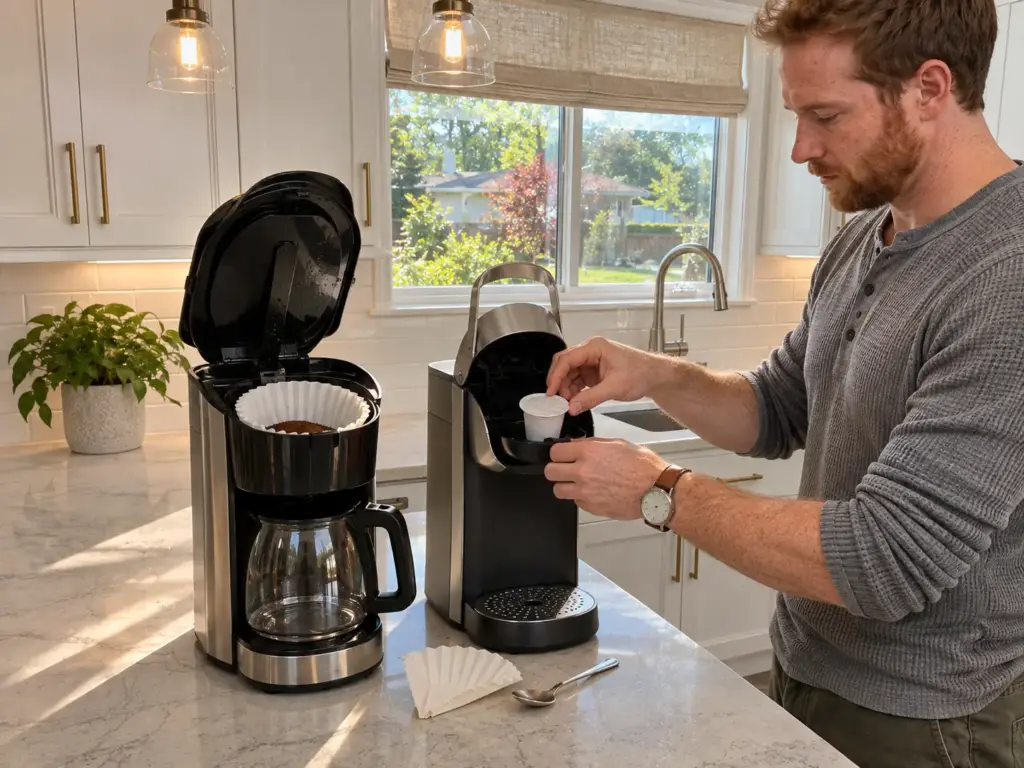
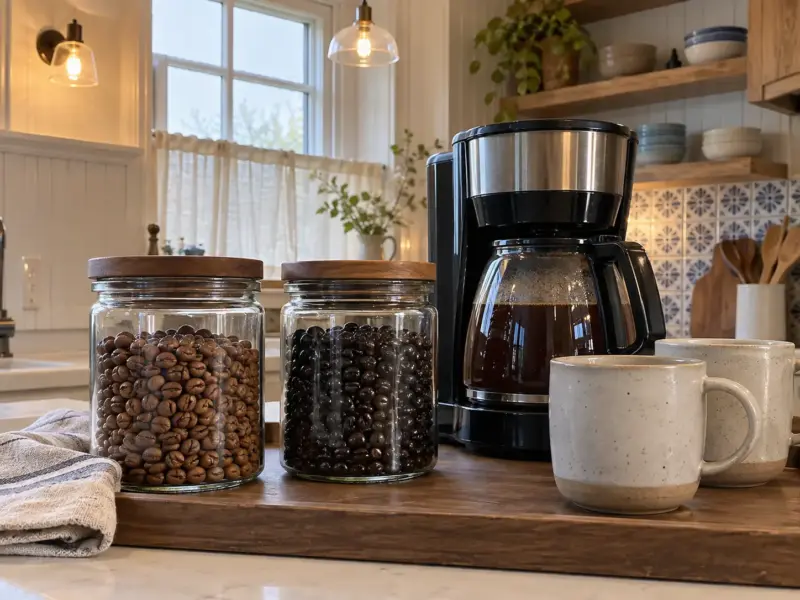
What a drip machine does: reservoir, heater, a spray over a basket of ground coffee, a pot below
A drip machine is a reservoir, a heater and a spray head. The heater lifts hot water to the spray head, which wets a basket of ground coffee that you filled; the water works down through the bed, a paper or mesh filter holds the grounds back, and the brew collects in the pot below. How long the water lingers in that bed is mostly the grind’s doing, and how a drip machine moves water through the grounds follows the path from tank to carafe.
What a pod, capsule or grounds basket does: a short run through a sealed or measured dose
A pod or capsule machine skips the filling. The coffee arrives sealed, the machine pierces the K-Cup or reads the Vertuo capsule’s barcode, and a short run of hot water goes through that fixed amount and into the mug, usually in under a minute. The drip tray under the cup is where such a machine first shows trouble, since every spill and every leak collects there. Most kitchens that own one own a Keurig, and the Keurig lines and what the Strong button does sorts out which line is which.
Why “single serve” covers three different machines
The first is the pod brewer, which takes a sealed K-Cup. The second is the capsule brewer, Nespresso being the name most people know, which takes a sealed capsule. The third is the one-cup grounds brewer, a drip machine shrunk to a mug, where you fill the basket yourself.
A reusable pod blurs the first line, because it turns a pod machine into a grounds machine and hands the dose back. Two of the three fix the dose before you arrive, and the rest of this comparison sorts on that.
Where the Dose Gets Set on Each Machine
The last section ended with a drip basket you fill and a pod that arrives full. That single difference carries everything below it, and it means a thin cup is fixed by a different move on each machine.
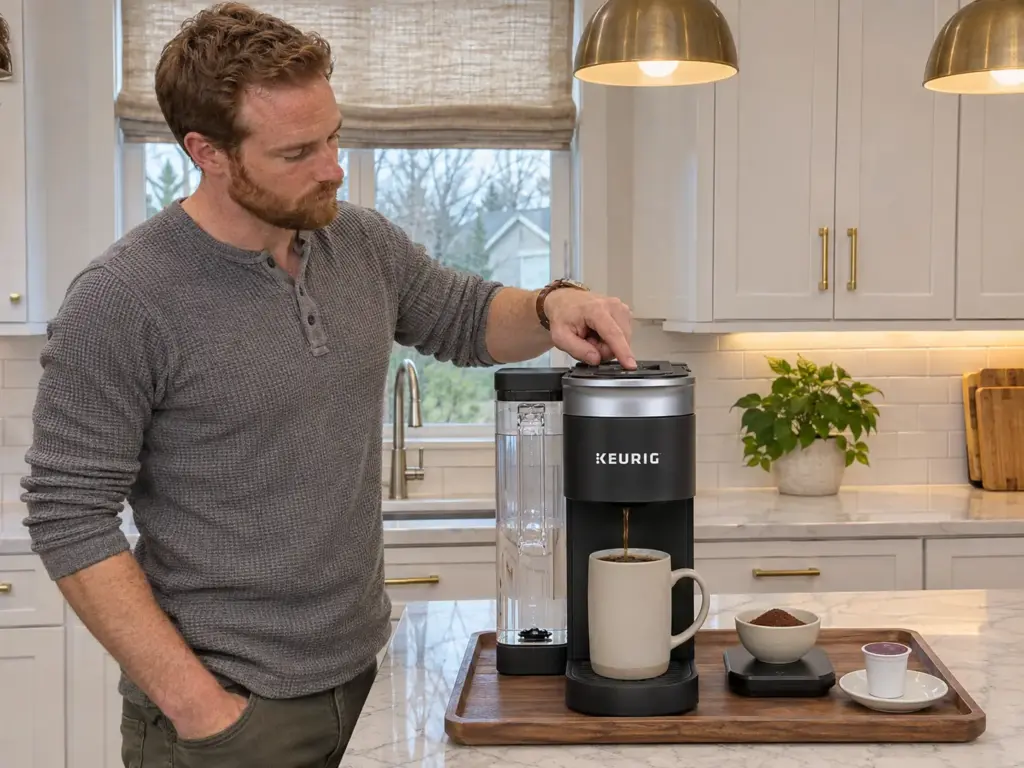
On a drip machine: grams and grind are yours
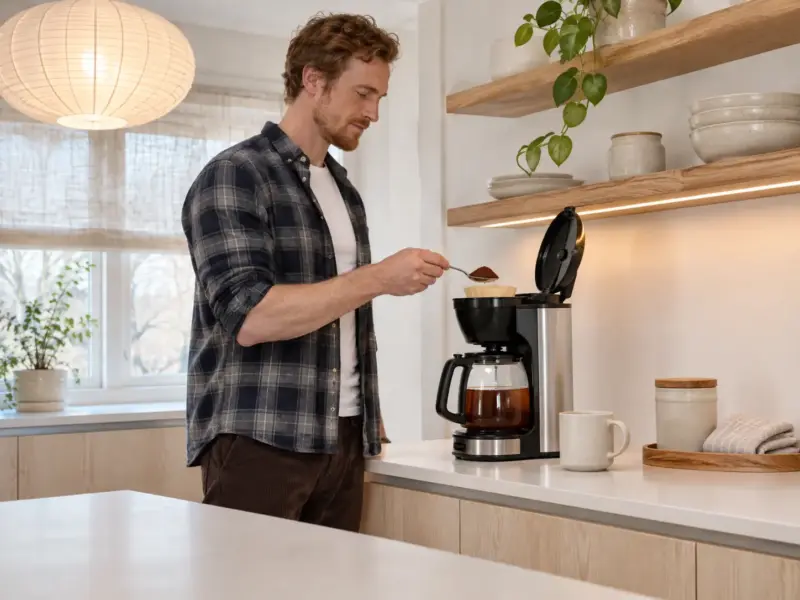
On a drip machine the strength of the cup comes down to three numbers you choose: grams of coffee, the grind and the water. Serious Eats tests manual methods at 15 g of coffee to 250 g of water, and the standard brew ratio it cites is 60 g per liter, about 1:16.7. At that ratio a 10-oz mug (about 300 mL) takes roughly 18 g of coffee, which is closer to two level scoops than one, since a two-tablespoon scoop holds about 10 g.
A standard proves less than it sounds like. According to the Specialty Coffee Association’s certified home-brewer list, “Only equipment that is fully evaluated at our third-party testing centre ( ECBC.coffee ) is considered for certification.” That is a statement about who tested the machine. It prints no ratio, no brew temperature and no grind, so the numbers in this comparison come from the testers and the makers named beside them.
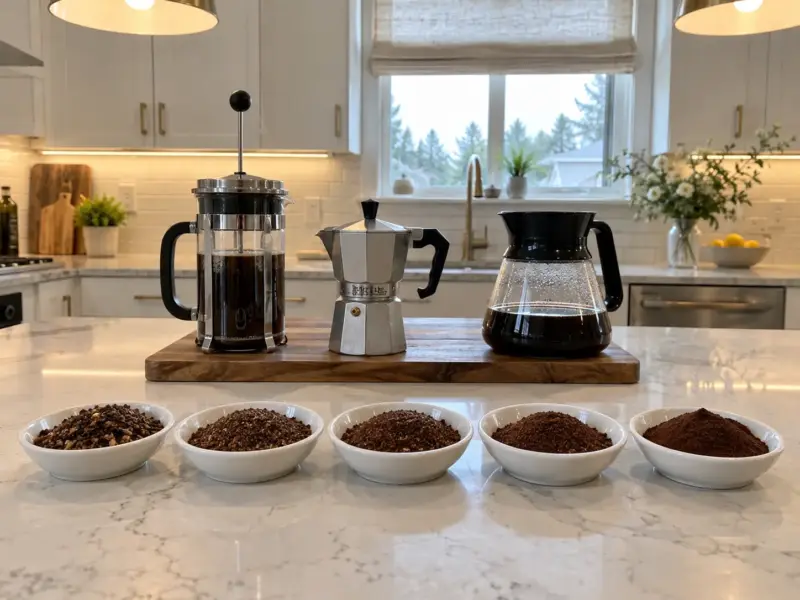
Grams come first and the grind size second. A drip cup that tastes sour or thin usually wants a notch finer, which slows the water and raises the extraction, carrying more out of the bed, and the grind that fixes a sour drip cup has the chart. The water comes last, because it costs the most to change.
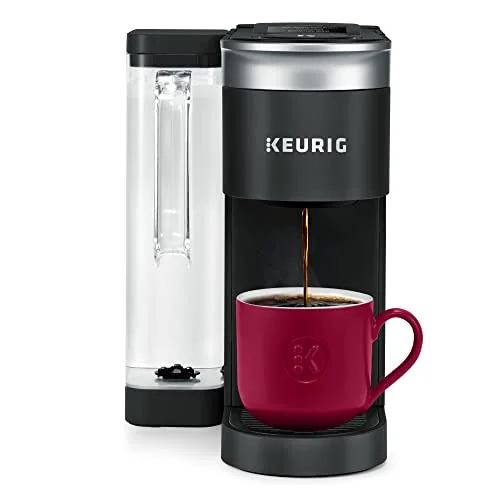
On a pod machine: the dose is fixed before you press the button
A pod machine takes the dose out of your hands. The pod holds a set amount of coffee, the size button only adds water to it, and the strength button (Strong, on a Keurig) is the one control that moves the cup. That explains a result you can taste at the counter: the same pod at 8 oz comes out thinner than at 10 oz, because the water went up and the coffee did not.
The way to get the dose back is a reusable pod filled to its line, and filling a reusable pod to the line covers what goes in and how far. Until then the levers are the water and the strength setting. The Keurig K-Supreme SMART shows the arrangement plainly: its hottest setting is listed at 206 °F (97 °C), and past that the only things left to turn are the brew size and the Strong setting.
The same thin cup, one change on each machine
A thin cup is one complaint with two different fixes. On the drip side the first move is free: weigh the dose once, because a scoop is a guess, and taste. If the cup is still thin or turns sour, go a notch finer on the grind, and only then look at the water. On the pod side the order runs the smaller brew size first, the Strong setting second, and a different pod or a reusable one filled to the line third.
A weak pod cup usually traces to the pod’s fill and the brew size before it traces to the machine, and when a weak K-Cup is not the grind rules the grind in or out for pods.
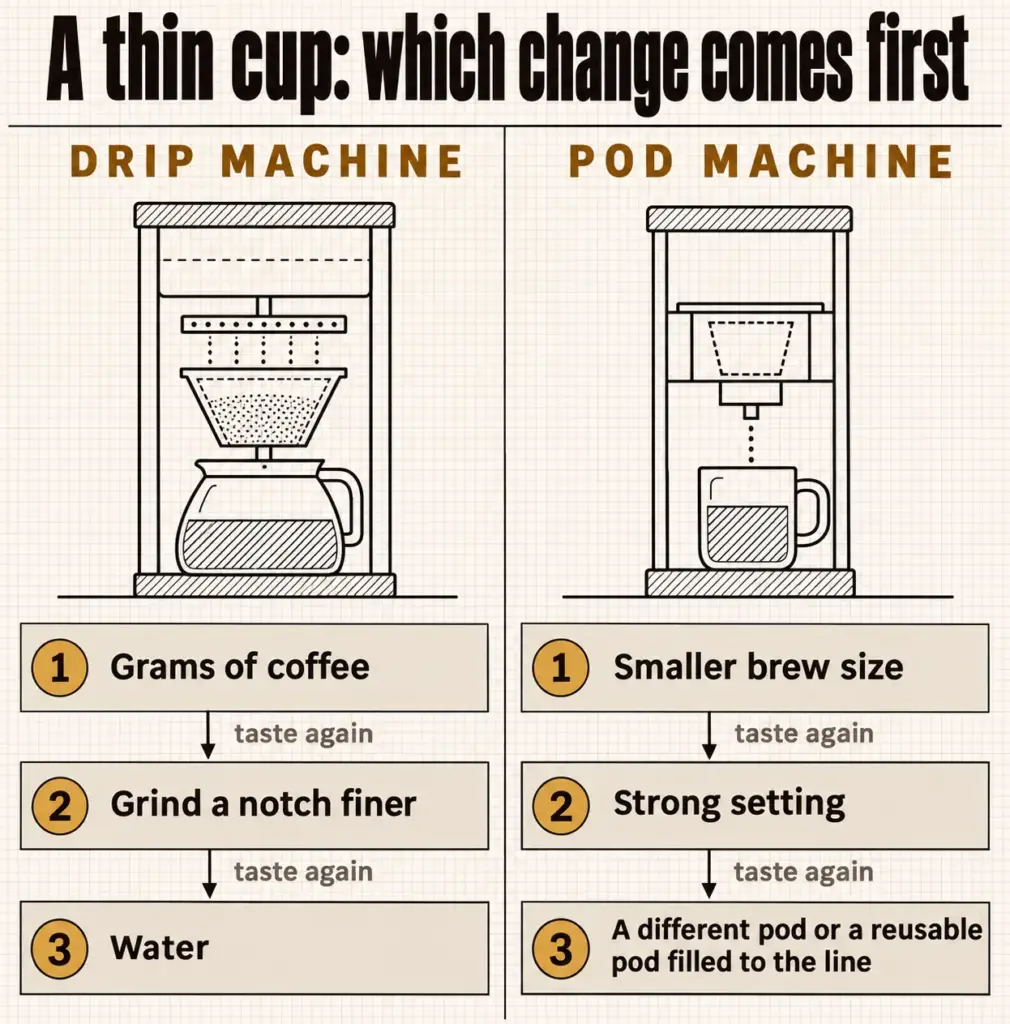
Taste between every step, and read the overshoot as the signal to stop. If the drip cup turns bitter and dry, the grind went one notch past the target; come back half a notch. If the pod cup at the smaller size turns harsh and concentrated, go back up one size and leave the Strong setting alone.
Weigh one mug’s dose once, count how many level scoops it took, and tape that number inside the cabinet door. The scale proves the scoop a single time, and after that the scoop does the daily work.
One Pot or One Cup: What a Morning Needs
The dose settles the strength; this section settles the count. A morning is a number of mugs, and the two machines are built for opposite numbers.
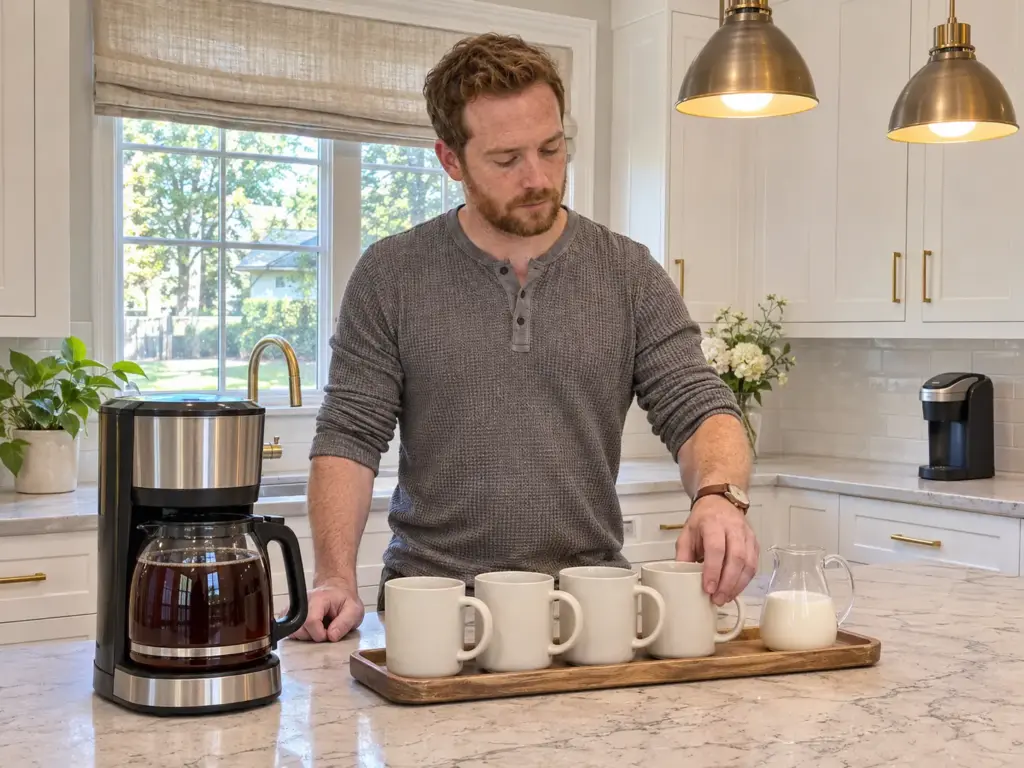
A full pot: 6 to 12 cups against 1
The chulux comparison puts a drip machine at a pot of 6 to 12 cups and a single-serve machine at one. Watch the unit, though: a “cup” on a drip machine is 5 oz, so an 8-cup machine holds 40 oz, about four 10-oz mugs. A pot serves a table in one run, while a pod machine serves it one cup at a time and the last mug is cold by the time the first is poured. For two people with different tastes, one at a time is the point, since each gets a different pod.
When guests come
With company the pod machine loses on arithmetic alone. At 30 to 60 seconds a cup, six guests means three to six minutes of someone standing at the counter pressing the button, against a pot that brews while everyone talks. And a drip pot brewed for six leaves no cold mug at the end if it sits in a thermal carafe.
When the carafe holds more than the morning drinks
The reverse failure is the pot nobody finishes. One mug from a pot-sized machine runs into the small-batch problem covered further down, and whatever is left in the carafe either goes down the sink or sits and cools. Past 12 cups a machine is sold by the ounce, and why a 12-cup machine is counted in ounces explains how to read that number. If your morning is one mug, a drip machine for one person that does not waste a pot is the better starting point than a smaller pot.
Counter Space and the Choice of Coffee
The kitchen has one counter, and the coffee you can use depends on the machine you put on it. The pod brewer takes the least room; the drip machine will brew any bag you bring home.
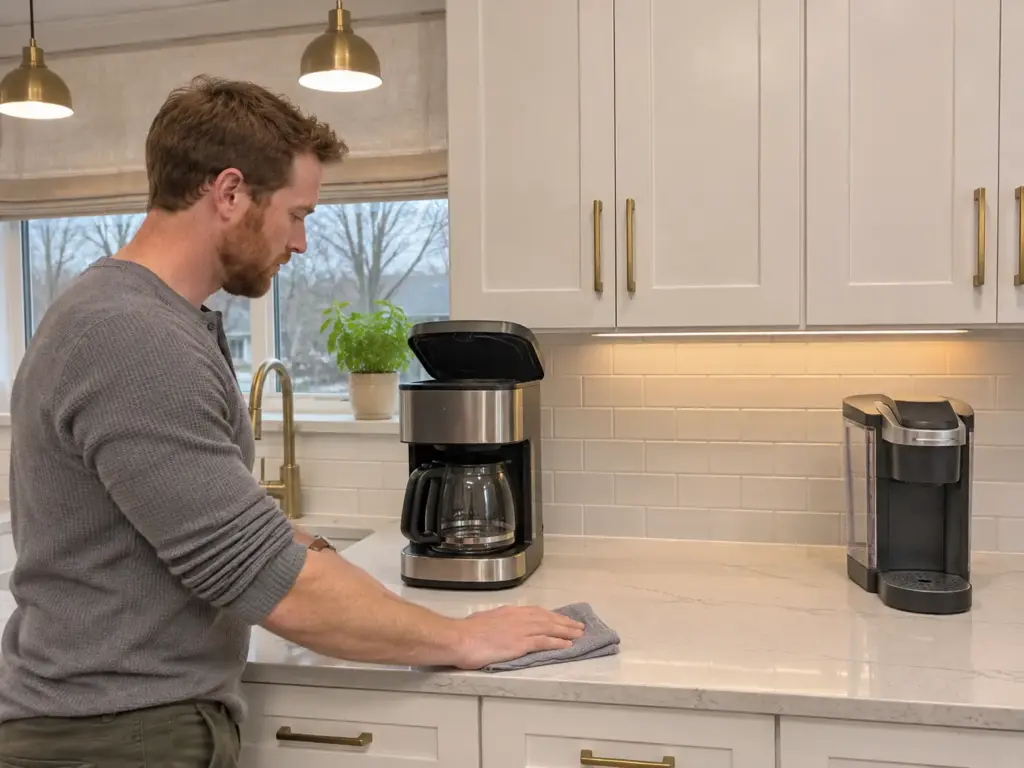
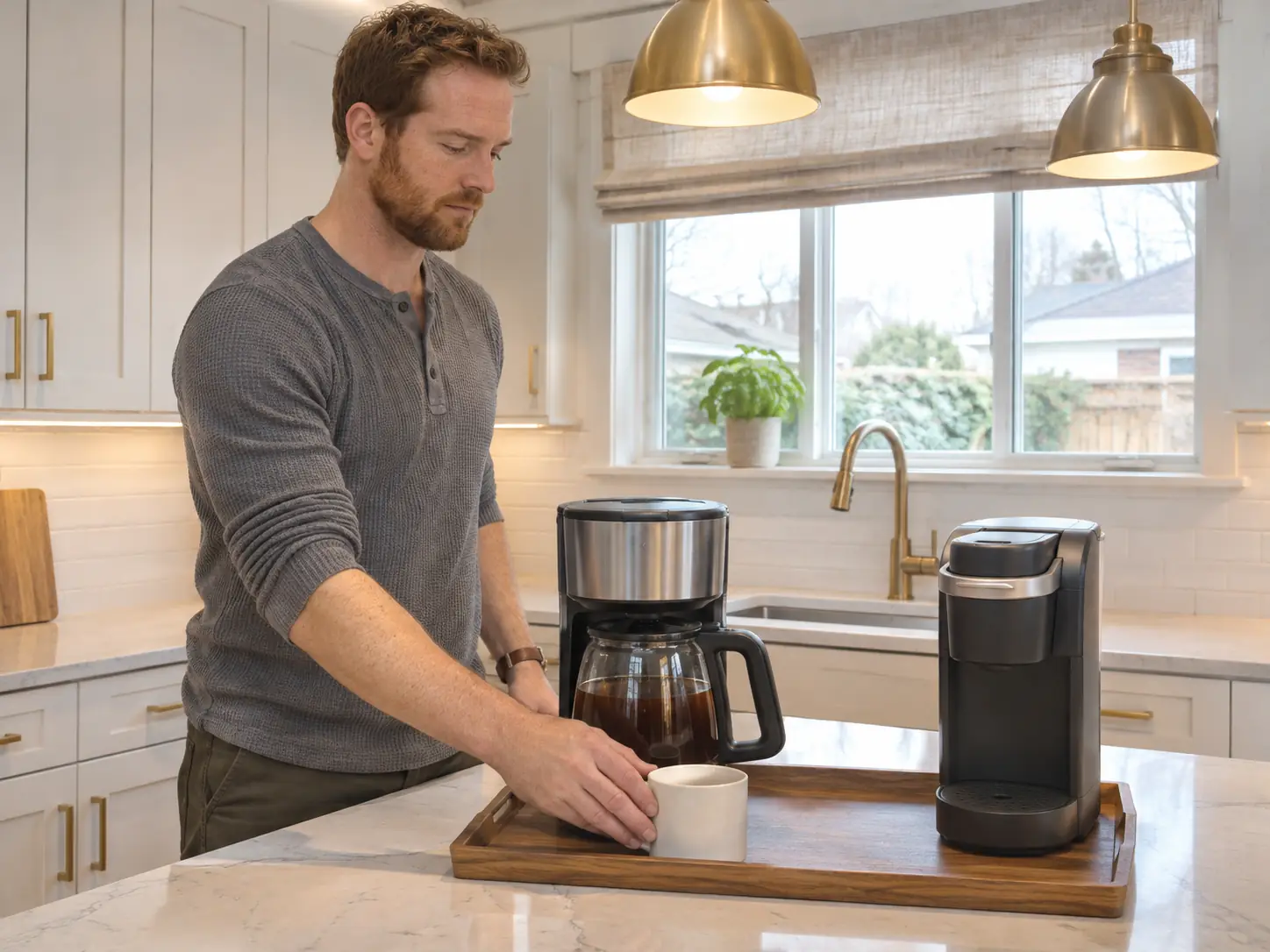
The footprint: a drip machine and a pod brewer side by side
The pod brewer is the smaller of the two. A drip machine needs room for a carafe and a lid that opens upward to fill the tank, which makes the cabinet above it matter more than the width of the counter. In a small kitchen where one machine has to live under a cabinet, that headroom decides the question before the coffee does.
Variety on the pod side: what the pod range gives and what it fixes
The pod range hands you flavors you would never roast or grind yourself, and for some mornings that is the real draw. What it fixes is the roast and the dose: you buy what is in the box. A drip machine takes any bag, any grind and any roast, so the bean can change every week if you like. If you are leaning pod, a coffee maker that takes both K-Cups and Nespresso pods removes the either-or, and choosing between a Keurig and a Nespresso by the cup settles the one that remains.
Using the reader’s own grounds: reusable pods and the all-in-one
A reusable pod lets a pod machine run on your own grounds, with the dose back in your hands (the cost section below says what that does to the waste). Machines that put a pod holder and a carafe in a single unit exist too, for a kitchen that wants both.
The First Cup: Minutes for a Pot, Seconds for a Pod
Speed is the reason most readers look at a pod machine in the first place. Here are the numbers, and the places where each one stops being true.
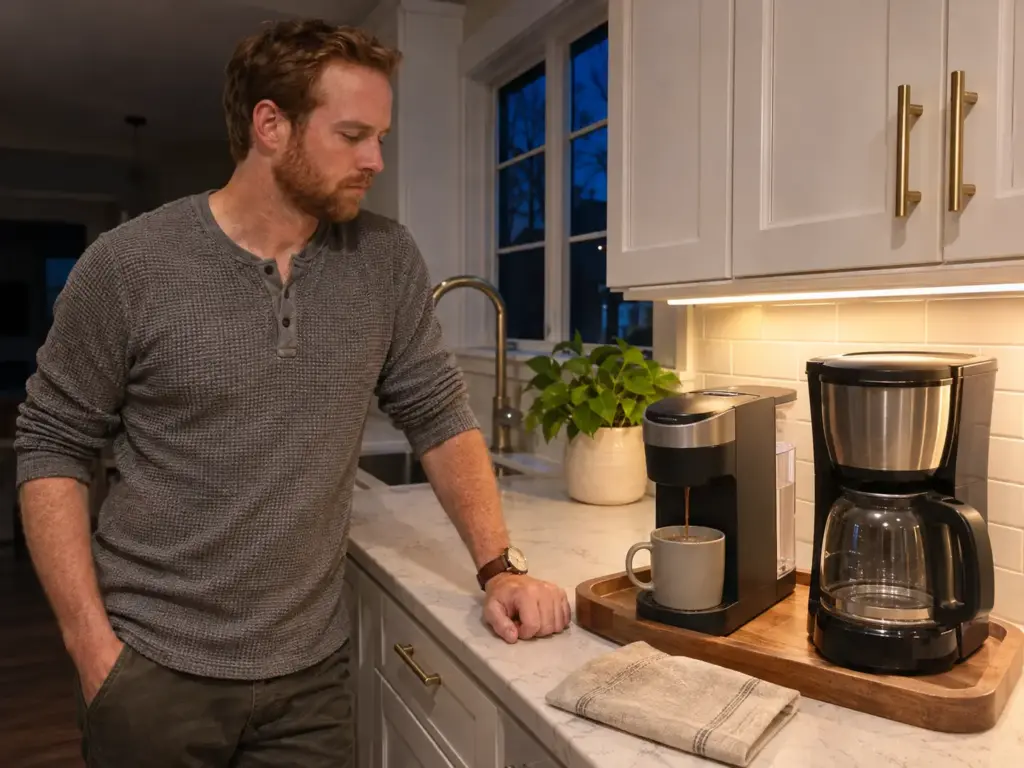
A full pot against one cup: 5 to 10 minutes against 30 to 60 seconds
chulux gives a full drip pot 5 to 10 minutes and a single-serve cup 30 to 60 seconds. Those are honest numbers for the pot against the cup. A one-cup drip brewer still takes about five minutes, because that time is a fact of drip, whatever the pod machine does.
What the stopwatch leaves out: heating the first water
The first water through a machine that sat cold is the coolest water of the run, and a first brew that comes out thin and lukewarm is often exactly that. A plain-water run through the machine first lets it heat up, and the real brew starts hotter. Before the sun is up, with one light on in the kitchen, the machine that is ready first tends to be the one that gets used, and a stopwatch cannot measure that.
The pot that stays warm, and the one that cools
A glass carafe sits on a warming plate that keeps heating the coffee after the brew is done, and the last cup tastes cooked. A thermal carafe holds the heat with no plate under it, so the last cup tastes like the first, and a drip machine with a thermal carafe is the way to buy that on the drip side.
Rinse a thermal carafe or a thermos with hot tap water just before the brew finishes and tip it out. A carafe that starts warm keeps the last cup closer to the first.
Making One Mug on a Machine Built for a Pot
The small batch is where a drip machine fails first, and the reason is arithmetic: the smaller the dose, the larger the share one gram represents. A twelve-cup machine run for a single mug has the same water path it has for a full pot, so a recipe that works at full size stops working at a third of it. The fixes are a smaller dose worked out properly, a machine made for one mug, or no machine at all.
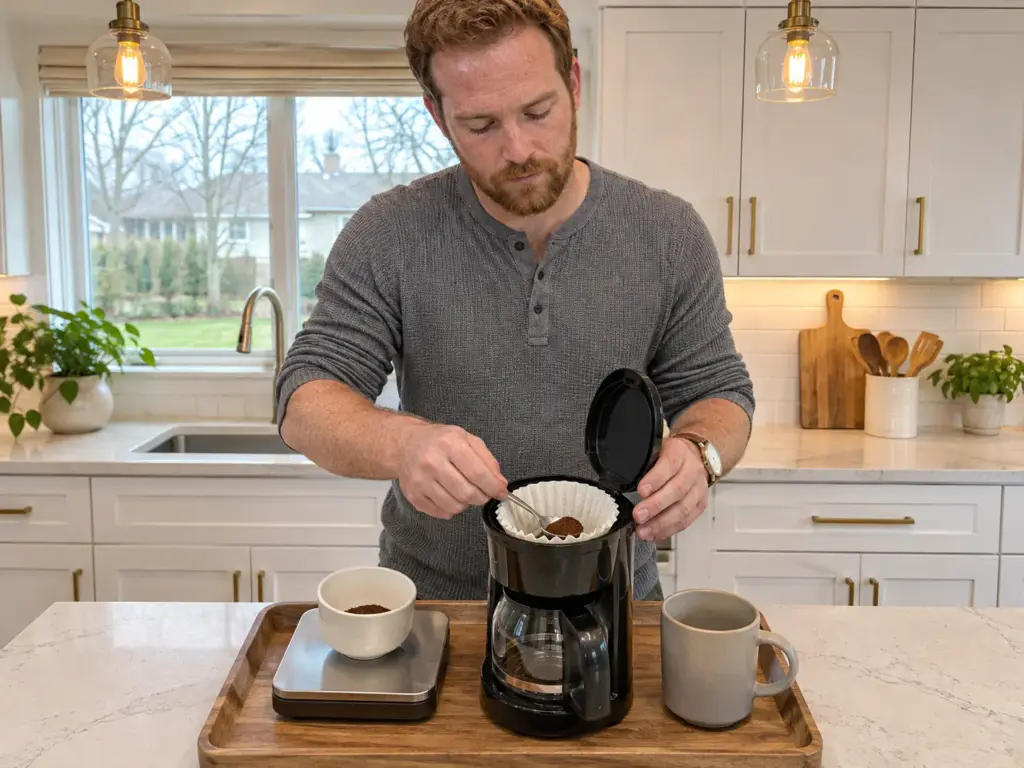
One gram in fifteen: why the small dose fails first
Serious Eats puts the margin of error at one gram when the dose is 15 g of coffee, which is about 7 percent of the dose. On a pot of 70 g a gram is noise; on a single mug it is a visible swing in strength. The same tester notes that single-cup brewers lose heat, and that is the second way a small batch goes wrong: less water has less heat to spare, and it cools before the grounds are done.
The box can mislead here too. Bon Appétit found the 9 g recommended for one single-cup brewer too thin, and two cups at the larger batch tasted better. A number printed on the machine is a starting point, and it can be the wrong one. Work from the ratio and taste the result.
A one-mug drip machine and a press
The drip answer built for one mug is the Technivorm Moccamaster Cup-One: its 10-oz reservoir is the cup, so the dose is one mug by design, and a copper element holds the water between 197 and 204 °F (92 to 96 °C), the maker’s figure. Bon Appétit’s tester used four tablespoons of grounds for the 10 oz, about twice what machines usually suggest for 8 oz, and that matches the arithmetic below. It takes about five minutes and it drips at the spout when it finishes, the price of a machine that never needs a pot. One-person drip machines that do not waste a pot lines up the rest of the options.
With no machine at all (a pour-over dripper does the same job), the AeroPress Clear makes about 6 oz a brew through a paper or steel filter, and the dose is whatever you weigh into it. A six-ounce press cup looks like a whole mug until milk goes in, and then it is a small one. If you drink 10 oz, that makes it a two-brew morning.
Grams for a mug, worked out from the standard
Work it from the tester’s ratio, 60 g per liter, and leave the scoop out of it. A 10-oz mug is about 300 mL, which comes to 18 g. An 8-oz mug (about 240 mL) takes roughly 14 g, and a 6-oz cup (about 180 mL) about 11 g. A level tablespoon of medium grounds weighs somewhere near 5 g, so the 10-oz mug is a little under four tablespoons, which is close to what the Cup-One’s tester used.
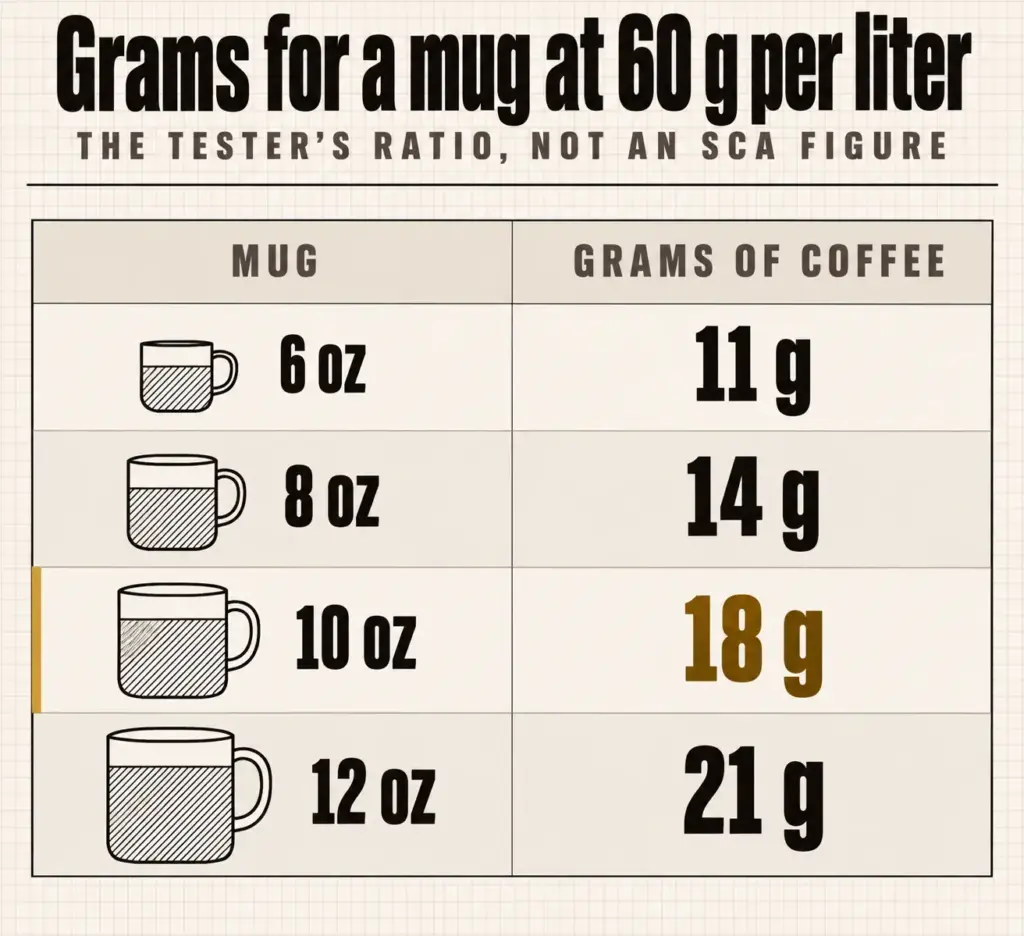
Weigh it once, brew, and taste. Then move the dose a single gram at a time, because at this size a gram is a step you can taste.
What a Cup Costs, in Pods and in Waste
A pod costs more per cup than ground coffee, and the real comparison is a division you run with today’s prices. Nothing here quotes a price, since every box and every bag carries its own and next month’s will differ.
The division: box price over pods, bag price over cups
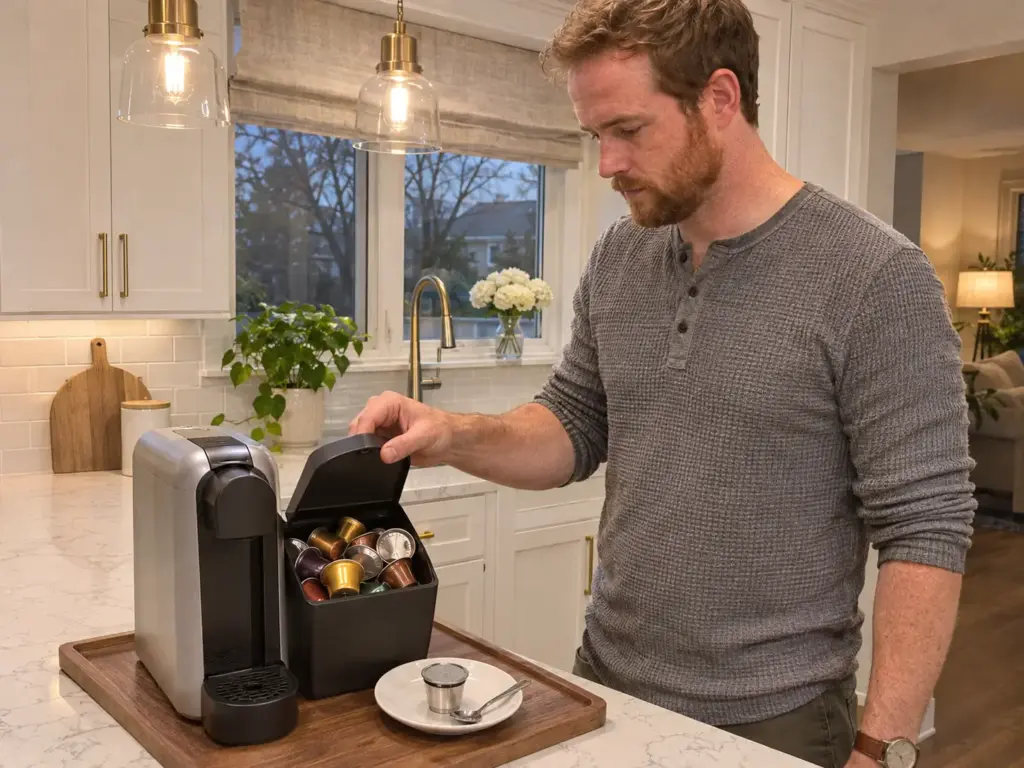
Cost per cup is two divisions. On the pod side, take the box price and divide by the pods in it. On the bean side, take the bag price and divide by the cups the bag makes: a 12-oz bag is about 340 g, and at about 18 g for a 10-oz mug that is roughly 19 mugs. Put the two results next to each other and the ratio between them is the answer, a multiple that you compute and no article can print.
Pod cost per ounce, not per pod does the same division by volume, which keeps a small capsule and a large pod honest.
The bin: what a pod machine fills first
Every cup leaves something behind, a pod or capsule on one side and a filter with wet grounds on the other. The Nespresso Vertuo Next shows how it plays out on a capsule system: its used-capsule container holds 13 large capsules or 20 small ones, and it fills before the water tank empties, so the bin is the first thing a Vertuo owner empties. A full bin that sits goes bad quickly, and recycling Vertuo pods without mold or flies covers what to do with it.
Reusable pods: taking the dose and the waste back
A reusable pod hands you the dose and cuts the waste to a spent filter. For a Keurig, reusable K-Cups by needle type matches the pod to the machine. Capsule brewers have reusable pods too, and with them the grams you load decide the cup, which is what reusable Nespresso pods and the grams to fill works out.
Cleaning Day: What Each Machine Asks For
Cleaning is where the two machines swap places. The drip machine is simple to keep and its carafe takes most of the work, while the pod machine is quick to run and keeps a tray and a bin full. The descale itself belongs to the manual, and this section points there instead of walking through a chemical sequence.
The drip side: the basket, the filter and the pot
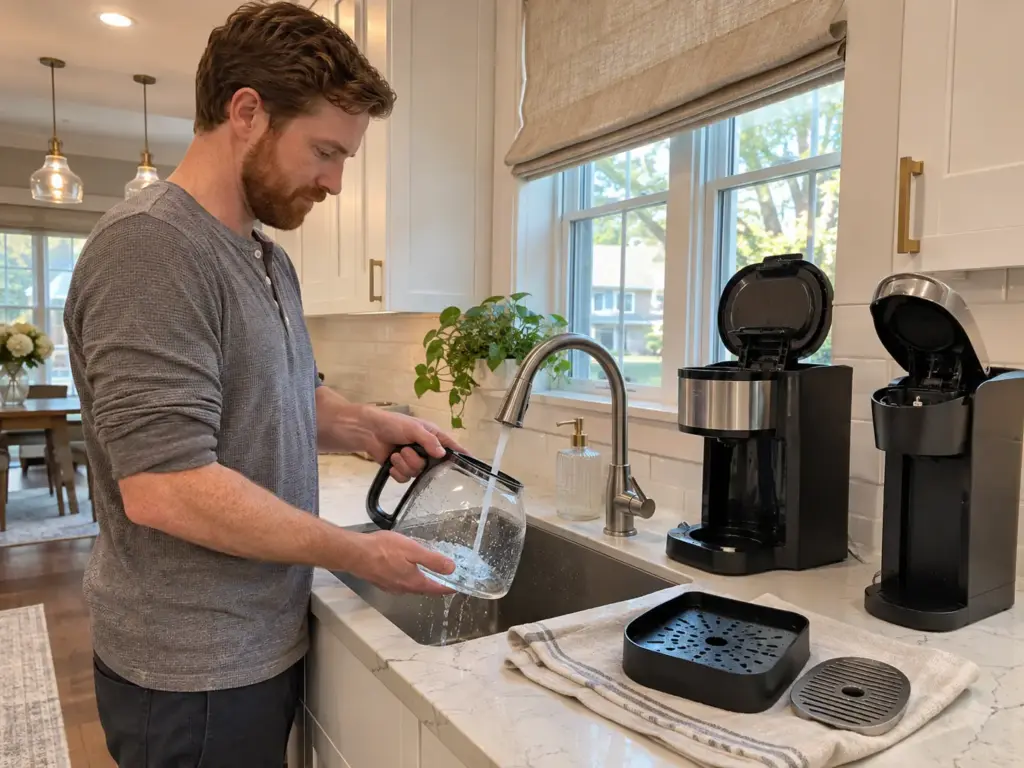
Wash the basket and the pot weekly, change the paper filter every brew, and take the pot off the warming plate once it finishes. The chulux comparison lists the same routine, and the manual says which parts are dishwasher-safe and which are hand-wash only. Paper or permanent decides what you wash and what you throw away, and paper or permanent filter, clean or full sets the two against each other.
The pod side: the tray, the bin and the descale light
A pod machine asks for three things: empty the tray, empty the bin, and descale when the descaling alert lights up, which on most models is the one maintenance signal the machine gives. The light is easy to postpone for a day and then a week. The manual for your model has the descale steps, and that is where to follow them.
Wipe the drip tray dry whenever you empty the bin. Water sitting in a tray you wiped yesterday means a leak has started, and catching it that way costs nothing.
Month Two: What the Carafe and the Pod Machine Show
Week one looks the same on every machine. A different picture shows after a few descale lights and a few hundred cups, and it is different on each side.
The pod machine: the leak, the first descale and the bin
The K-Supreme family has a pattern. It leaks from the base after a few cups, with the drip tray under the cup the suspected source, and some units failed around the first descale and others within months to two years. The pattern belongs to the family, and the SMART sits in it.
The Nespresso version of month two is the bin from the cost section, which fills before the tank does. The free fix comes first: check that the tray is seated and dry. If water still collects in it, the manual and the warranty are the next stop, because a leaking machine is not a coffee problem.
The drip machine: a carafe lid that keeps the old coffee
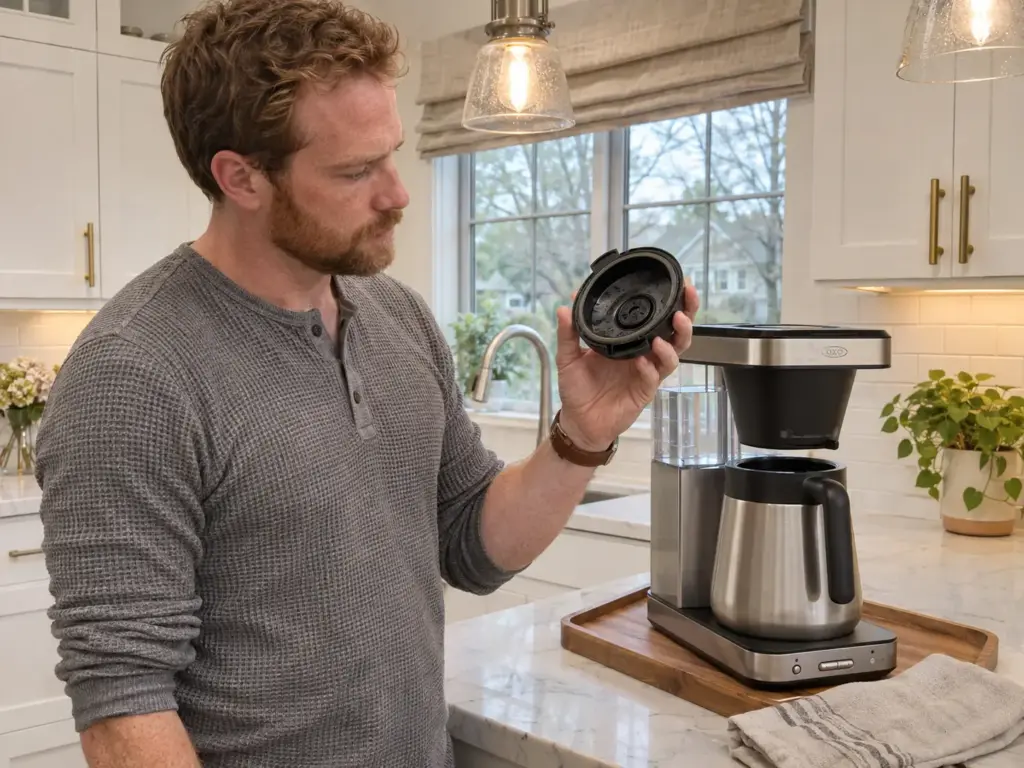
The thermal carafe is the usual answer to a pot that cools, and it fails in a different way. Wirecutter’s long-term testing found that the lid of the OXO thermal carafe tends to trap old coffee after years of use. The underside of the lid and its gasket are where it hides, and a lid that smells of last week will put last week into the new brew. Washing the lid every time is the whole fix.
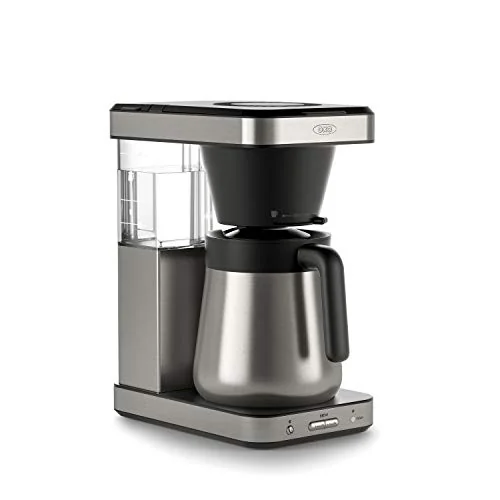
The OXO Brew 8-Cup Coffee Maker with Thermal Carafe is the drip pick that carries this flaw, and as of November 2026 it may be on backorder with no return date, so check availability before clicking. The rest of the drip machines, ranked by the water temperature they reach, are in the drip machines picked by water temperature, where this carafe sits among them.
The flaw of each choice
Each choice carries one flaw worth writing down. The drip machine’s flaw is the pot nobody finishes. The pod machine’s is a dose you cannot change, short of a reusable pod filled with your own grounds, plus a tray and a bin that keep asking for attention. Pick the flaw you can live with, because neither machine is free of one.
Tap Water in Both Machines
The water that goes in is the water the machine keeps, so this section is a check you run in your own kitchen, with no number to look up. A tank, a heating plate and a spray head all sit in contact with tap water for months.
What to look at: the tank, the heating plate, the first cup
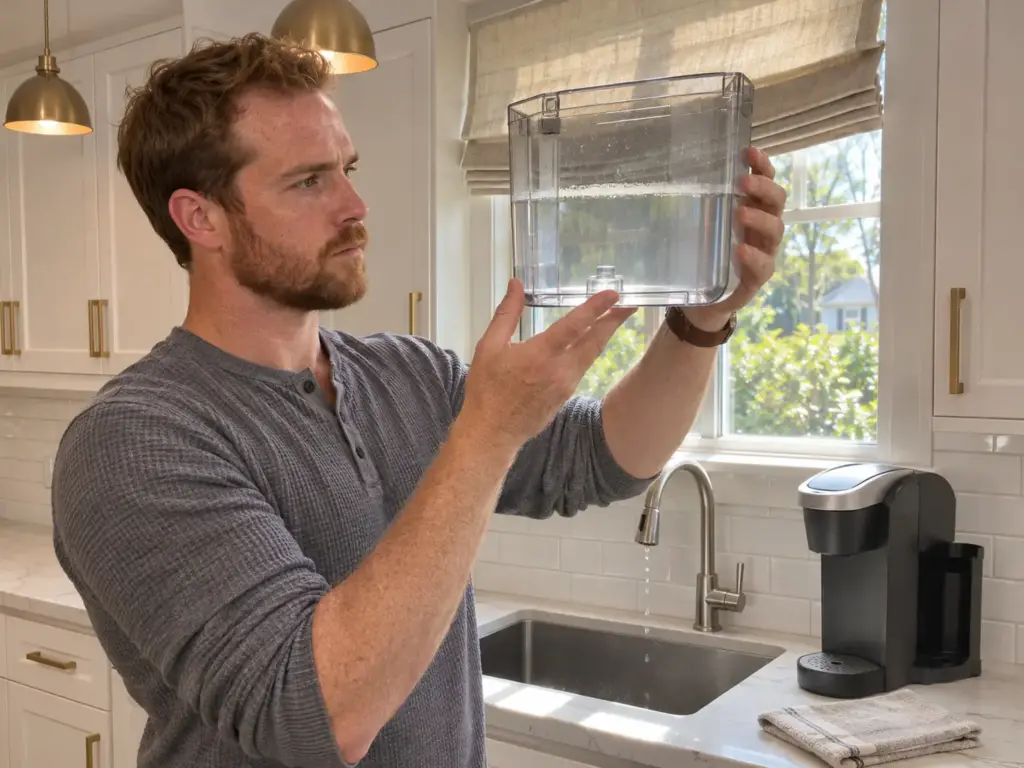
Hard water from the tap can leave a chalky white film on a tank, a heating plate or a spray head, and whether yours has one is something you can see. Take the removable tank to a window and look at the bottom and the corners. A film on the heater is a plausible reason that a machine that used to brew hot now brews cooler, and the first cup of the day is the earliest place that shows: it tastes thinner and sourer than it did, because sour is the taste of water that left the grounds before it finished. No bag of beans fixes that.
The places to look differ a little by machine. On a drip machine, check the plate under the carafe and the holes of the spray head, where a white crust can narrow the stream and leave part of the bed dry. On a pod machine you can see only the tank and the drip tray, so the tank is the check, along with a descale light that comes on sooner than it used to.
What to do first, for free
Start with what costs nothing. Rinse the tank and the carafe, look at the plate, and read the descale step in your manual, which is where the procedure for your model lives. If the film is there, the work is on the machine, so leave the bag alone.
Descale, brew the same dose at the same grind, and taste again. A fuller cup means the water was the problem. A cup that is still thin sends you back to grams and grind.
A descale leaves something behind in the next cup, so the first brew afterward is a check too. Run the rinse cycle the manual calls for, with plain water, before the first real brew, and taste it: any leftover sharpness or chemical edge means the rinse is not finished, and another water-only cycle is cheaper than a wasted pot or pod.
Taste one cup before you descale, then brew the identical dose with the identical grind afterward. The difference between those two cups is what the scale had been costing you.
Tomorrow’s Cup: Weigh the Dose or Drop a Size, Then Taste
The drip machine is the one you set yourself, and the pod machine is the one that is done in a minute. A weak cup is a different peg on each: grams and grind on the pot, brew size and strength on the pod. The cost per cup is a division you run with this week’s prices, and the lid of the carafe and the bin of the capsule machine are where the second month shows.
Look at the carafe lid after a few weeks of brewing, and at the tray and the bin once the first descale light has come on. Those two checks tell you what the schedule on the box does not.
For tomorrow: on a drip pot, weigh one mug’s dose and taste it against yesterday’s scoop. On a pod machine, drop the brew size by a single step and taste again. If the cup got fuller, you found your peg.
If you are staying with a pot, a drip machine picked by water temperature is the next place to look, with the grind already settled above. If a pod machine is the plan, the Keurig side comes down to which Keurig line suits the cup you pour, while whether a Vertuo is better than the Original is the Nespresso question. Within that second family, the difference between the Vertuo and the Vertuo Next by size matters for the machine shown above, and K-Cup machines that cost less and still work covers the budget end of the Keurig side.
Frequently Asked Questions
01Which is better, a drip coffee maker or a Keurig?
A drip coffee maker is better when you want to set the dose and pour several cups, and a Keurig is better for one cup in about a minute with the pod setting the dose. Count the mugs you pour in a morning and the choice usually makes itself.
02Are single-serve coffee makers worth it?
They are worth it for one cup in a hurry with no pot to wash. They stop being worth it once the pods and the bin add up, and that is a division: box price over pods, against bag price over cups. Run both before you decide.
03Why is my pod coffee weaker than my drip coffee?
The pod fixed the dose before you pressed the button, so the levers left are a smaller brew size, the Strong setting and a different pod. The grind rarely explains it, and weak K-Cup coffee is not always the grind shows when it does.
04Can I use my own ground coffee in a single-serve machine?
Yes, with a reusable pod filled to its line, which puts the dose back in your hands. Weigh what goes in once, and fill a reusable pod to its line shows where that line sits.
05Can a drip coffee maker make just one cup?
A twelve-cup machine can, but the small dose is the number that fails, because one gram is a larger share of a mug than of a pot. A one-cup drip brewer or a press handles it better, and a drip machine that makes one cup lists the options.


How did your cup turn out?
No comments yet. Tell us what you changed — and whether the needle moved.