



We may earn a commission when you buy through links on this page. It never changes what we recommend. How we pick
On this page7 parts
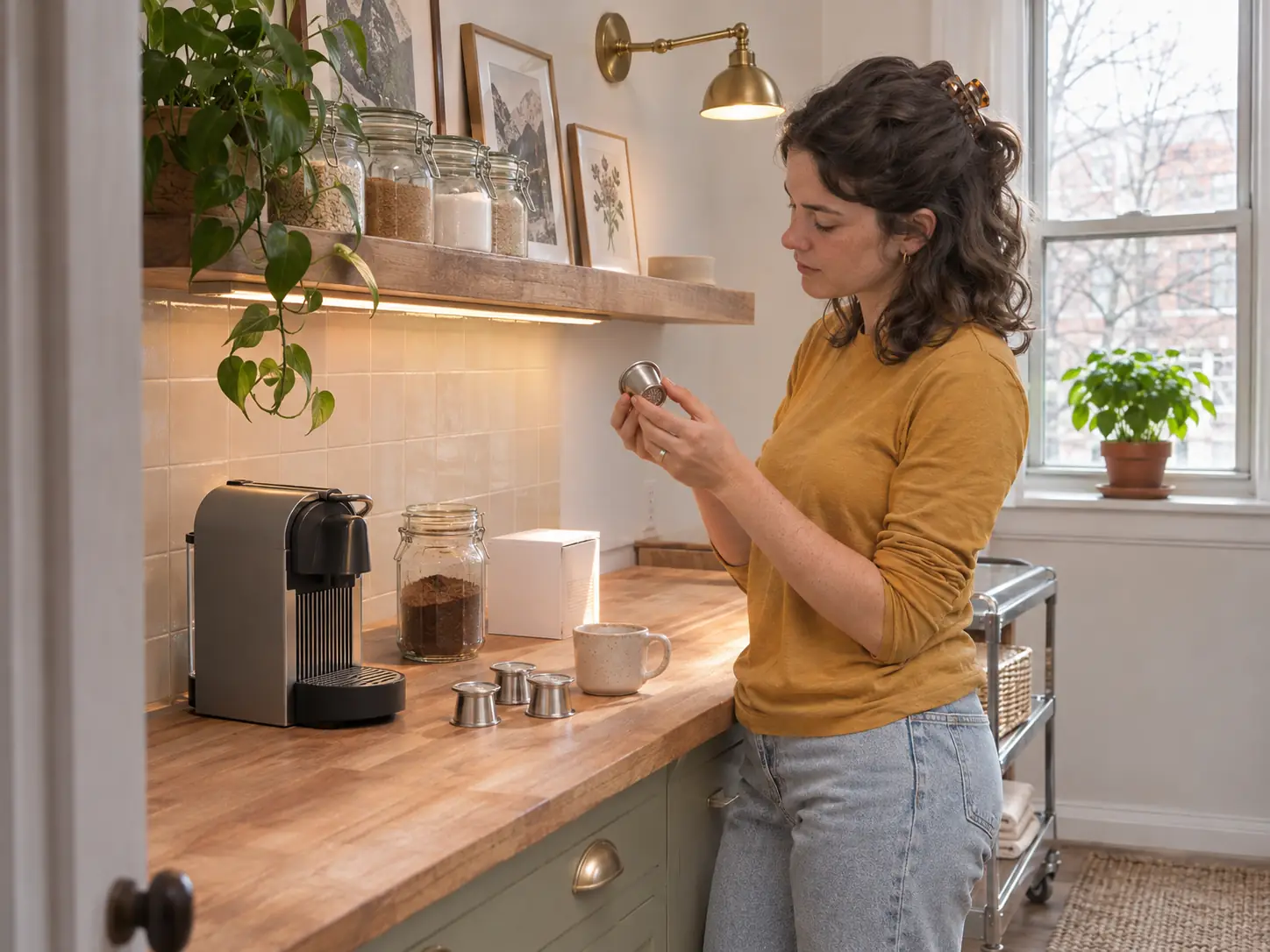
The first cup from a freshly filled steel pod comes out thinner than the disposable it replaced, and the easy conclusion is that the whole idea was a mistake. Are reusable coffee pods worth it, or did that one weak coffee answer the question? It answered a smaller one.
A disposable pod fixes the dose and the grind size at the factory. A refillable pod hands both to you, and on a single-serve machine the grind is the only control left, so a price question turns into a tuning question. The order that saves money is machine fit first, then the count of cups, then the fill, the lids and month two, ending with the cases where the disposable still wins.
Quick Answer
Yes, for a cup you brew every day in a machine that takes the pod without a fight, and only once the fill is dialed in. No, for an occasional cup or a machine that reads a code on the pod. Cups per day and the fill decide it, not the price of the pod.
Check the Machine Before the Math
The arithmetic in the next section is useless if the pod will not seat, so the machine gets checked first. It costs nothing and takes a minute at the counter: the pod holder, the manual and the pod itself settle it before an order goes in. Each system reads a pod differently, and that reading decides more than any set’s price.
A Keurig reads the needle, a Vertuo reads the rim
A Keurig-style machine pierces the pod with a needle, and the needle type, single-needle or MultiStream, decides which reusable filter fits. That sorting is done on the page about which reusable pods fit a Keurig, by needle type, so it is not repeated here. A Vertuo machine works the other way around: it reads a barcode printed on the rim of the capsule to know how to brew it, and a steel shell has no code to read. For a Vertuo owner the answer is usually no before cost even enters, and the only route is a capsule made to be filled for that system, which is what the pods a Vertuo will actually read covers.
Original-line machines take a steel shell, with caveats
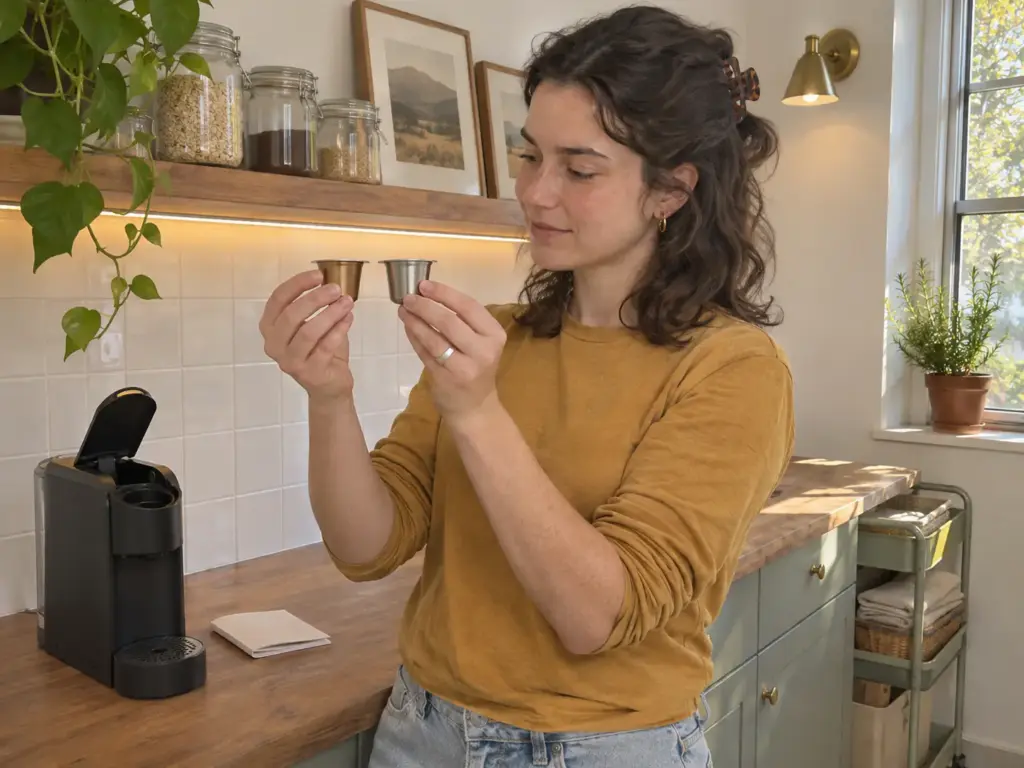
The Original line is the one the steel and plastic shells in this article are made for. Even there, a fit on one model is no promise on the next, and the sign is small: a shell that looks right but sits a hair high in the holder, so the lid will not close on it. A lid that resists means the shell was made for another line, and it is never forced.
The cheapest way to find out is a small set. The Triplot reusable capsules for Nespresso Original, model Ncap001, come as two sets with steel lids, which makes a wrong guess a small loss. Compatibility is mixed: the shell works in some machines and not in others, so close the lid on it empty before a single gram goes in.
What to look at before ordering anything
Four checks settle fit for free, in this order:
- Find the pod system in the machine’s manual: needle, rim barcode or Original-line capsule.
- Open the holder and look at what it grips, the pod’s top or its rim.
- Hold an official capsule next to the shell you are considering and compare the height.
- Close the lid on the empty shell; it should shut flush and without a push.
One more cost hides in this step. A holder that sits deep in the machine and is awkward to rinse will get cleaned less often, and a refill routine adds rinsing to every morning, so a machine that is easy to wipe down is part of the fit.
Run the lid test with the machine cold and the shell empty, then once more with a filled and sealed shell. A shell that closes empty but not full has a headspace problem, and the fix is a lighter fill instead of a harder push.
The Break-Even Is a Count of Cups
The pod’s price is the smallest number in the cost of a cup, so this section counts cups and grams instead of dollars. Prices move; the division does not, and you can run it today with whatever the bag and the box say. Two quantities set the answer: how many cups the set has to make before it has paid for itself, and how many cups a day you actually brew.
Cups per day against the grams you fill
Start with the fill. A shell takes a weight of coffee, the bag has a weight, and the bag divided by the fill is the number of cups one bag makes. A 12-ounce bag is about 340 grams; if your shell takes 6 grams of fresh coffee, that is 56 cups. Your shell will take its own number, so weigh one fill before trusting the example.
Then run the break-even. Take the cost per cup of a filled pod (the fill’s share of the bag, plus one lid) and subtract it from what one disposable pod costs. Divide the set’s price by that gap and you have a number of cups.
Divide that by cups per day and it becomes a number of weeks. A cup every morning gets there steadily; two cups a day halves the wait; an occasional cup may never get there before the lids go stale or the rinse wears out your patience.
The costs the box does not show
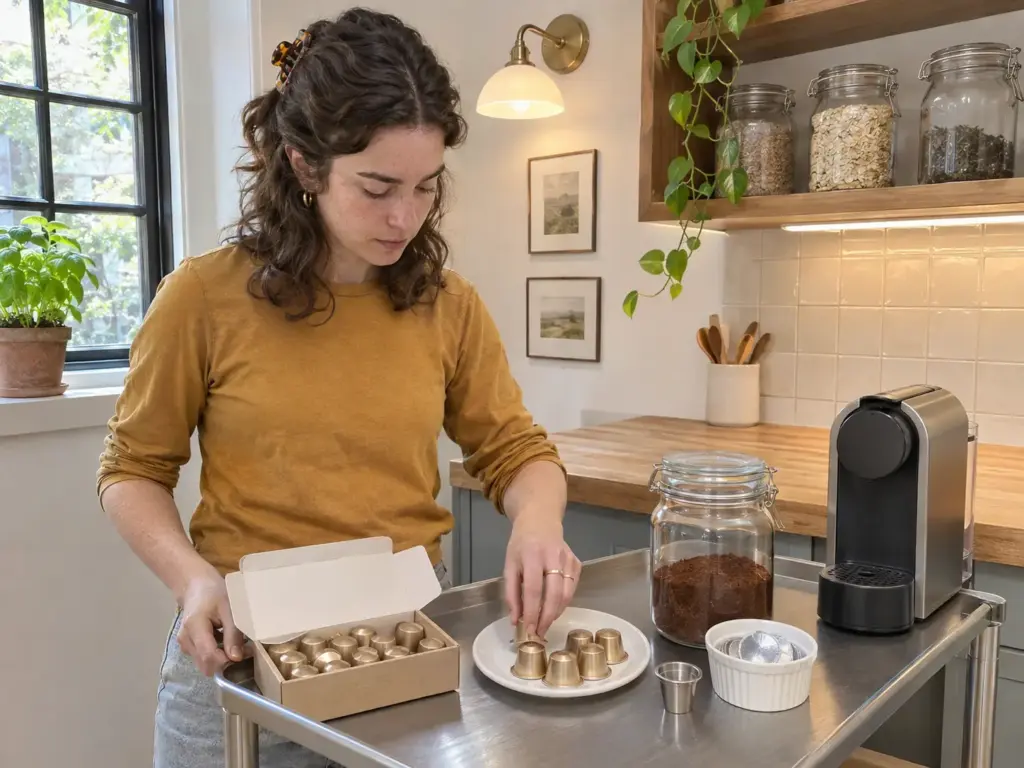
The shell is bought once and the lid is bought forever. A set arrives with something like a hundred foil lids, one per cup, so at a daily cup the roll lasts a little over three months, and after that the recurring cost is lids plus coffee. The roll tends to run out before the bag of coffee does, so the number to watch is lids, not shells.
A full set shows the shape of it. The CAPMESSO reusable capsules for Nespresso OriginalLine pack six stainless pods, 100 foil lids and a wood tray, and the shells will outlast the lids many times over. The cup is where this set is uneven: crema and espresso quality come out mixed, and a weak result is part of what to plan for, so the fill in the next section is the thing to get right with it.
Then comes time, the cost that never shows up on any listing: filling, tamping, sealing and rinsing add minutes to a morning that a disposable pod spent in seconds, and the first brews are a tuning session. The pod systems compared per ounce does the division for each system’s cost per cup, which this section leaves out.
Write the date on the lid roll the day it is opened. When the roll is half gone, order the next one. Running out of lids on a weekday morning is the quickest way to end up back on disposables.
What happens to the waste
A disposable pod is a piece of plastic or aluminum for every cup. A refill leaves two things: a foil lid, which is still single-use, and a spoonful of wet grounds, which can go into the compost or the bin. The lid is far smaller than a pod, but it is trash all the same, and a screw-top shell is the only design that removes it, at a cost covered in the lid section below.
The Fill Becomes Your Dose
With a disposable pod the dose belongs to the factory; with a reusable one it belongs to you, and the first brews are where it gets tuned. A thin cup in week one is a reading, and it says nothing about the pod itself. This section names which way the cup is off and puts the changes in order, with a taste between each.
A thin first cup points to the grind
Weak coffee that tastes watery and a little flat points one way: under-extraction, the water ran through too fast and left before it finished. A pod machine pushes water through a small shell in seconds, so the grind is the one control you still hold. The free change is one step finer, with the same fill and the same tamp, then taste again.
A sour cup points the same direction. If the next cup is rounder but still a touch thin, you are closer; if it turns bitter and the drip drags, you went a step too far and half a step back is the answer.
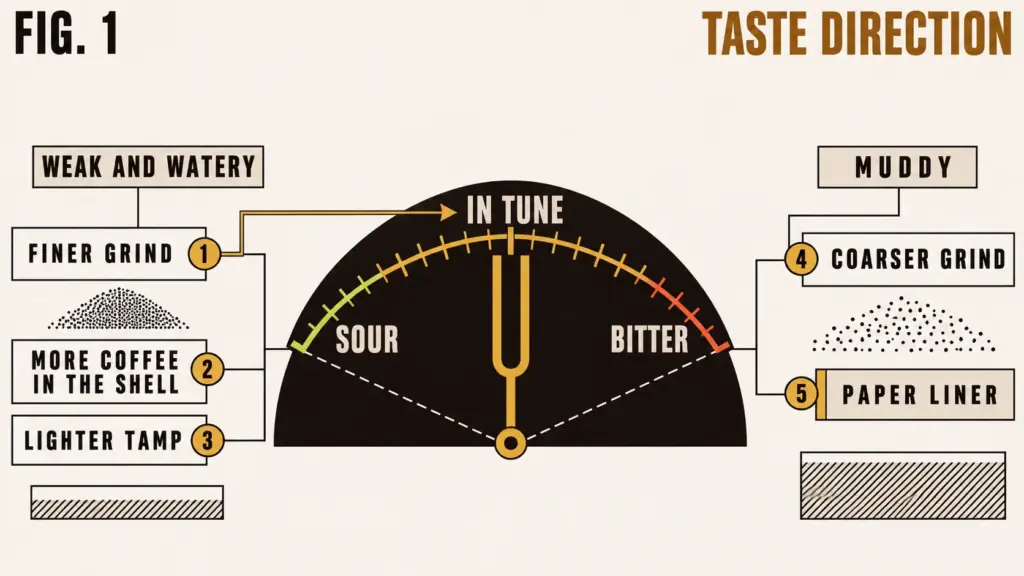
Finer has a ceiling, though. Grinding down is the standard move for a weak cup, but in a mesh shell there is a point where the fines pack the holes, the flow slows and the cup flips from thin to bitter and muddy. When that happens the grind did its work and the next change belongs elsewhere. For what a finer grind does in this kind of cup, including the cases where weak is not the grind at all, read what a finer grind does in a single-serve cup.
Then the fill, then a light tamp
Still thin once the grind has moved? Then the fill: a little more coffee in the shell, level with the rim, neither mounded nor packed to the lid. Taste.
A ratio is checked against a standard, not against whatever a bag or a blog prints, and the place to check is the Specialty Coffee Association’s published standards. According to the SCA, “SCA Standards create a shared framework for quality, consistency, and best practices across the coffee industry.” Its home-brewer specifications and test methods are the reference for anyone who wants to check a dose rather than guess it.
The grams for each system live on their own pages: where to stop the fill line on a Keurig pod for the K-Cup side, and for the Original line the question of how many grams a Nespresso shell takes is worked out the same way.
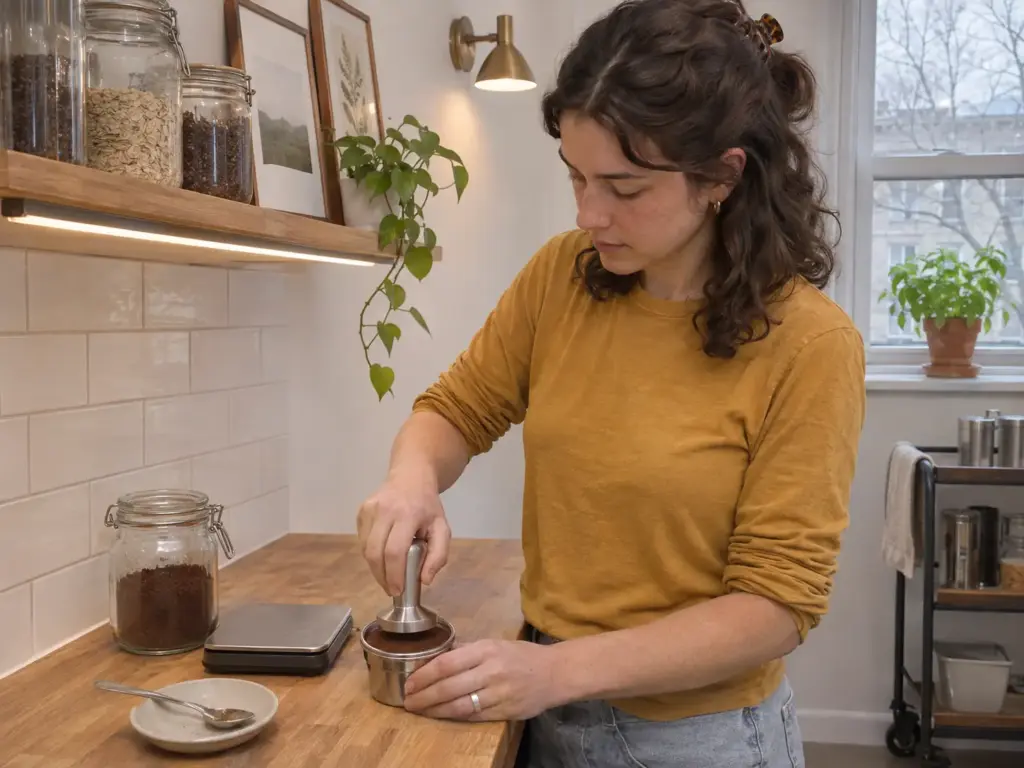
The tamp comes last, and lightly. A hard tamp chokes the flow on a pod machine’s modest pump, and the cup swings from thin to slow and bitter. A flat-faced tool presses level where the back of a spoon does not, and the RECAPS stainless steel coffee tamper has a 24 mm head made for the job. Check the shell’s opening before ordering, because the head runs small for some pods.
Weigh the first fill on a kitchen scale, then mark that level on the spoon with a strip of tape. The same pod tastes thin on Monday and right on Friday when the scoop wanders by a few grams, and the scale is what shows it.
Grounds in the mug and what a mesh lets through
A steel shell is a mesh, and a mesh passes fines. They settle as sediment, so you find grounds in the mug and the cup tastes muddier than the disposable it replaced. Two trades are on offer.
A slightly coarser grind sends fewer fines through but gives back some of the extraction the first step won. A paper liner holds the fines back, at the cost of one more thing to buy and throw away. Pick one, taste, and only then consider the other; the first fix and this one pull in opposite directions, so they move in sequence.
Foil Lid, Sticker Lid or Screw Top
The lid is the part you throw away or the part you keep, and it sets the effort of every morning after the first. A closure that takes two minutes is a closure that stops getting used. Three kinds are in play, and each trades time, mess and cup differently.
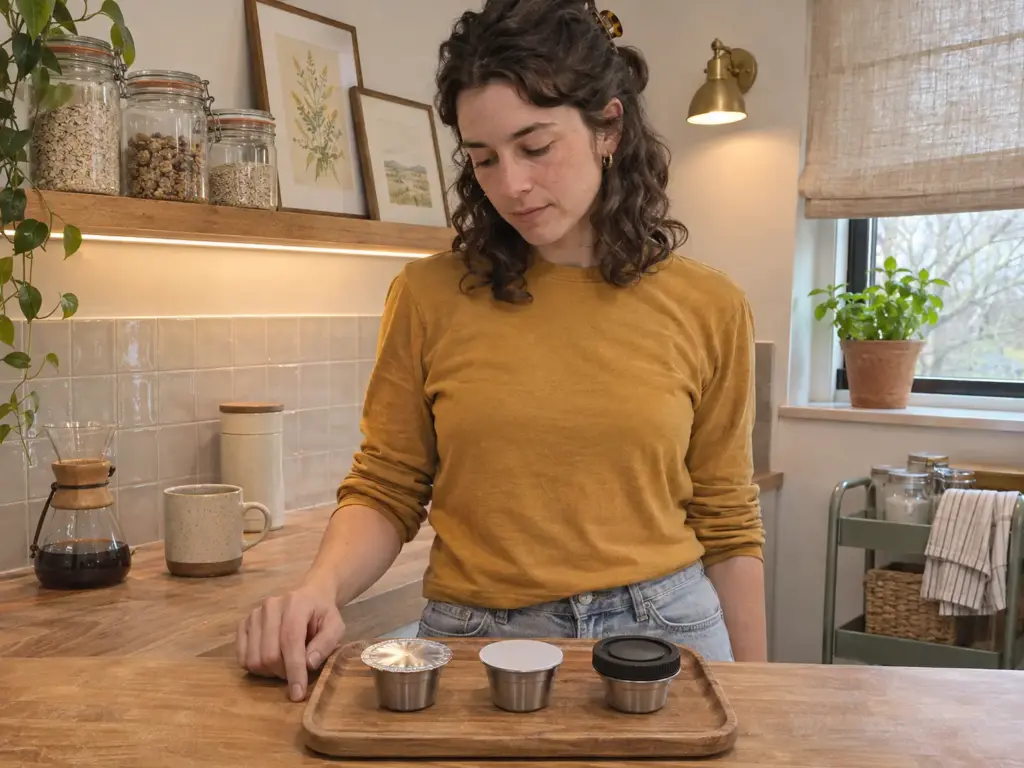
Foil lids seal well and run out
A foil lid is pressed on with a sealer or the back of a spoon. It seals the shell, tears off clean, and costs one lid per cup, so it is the supply you keep reordering. It also changes the cup against a disposable: a foil-sealed refill brews with a lighter intensity, and the response is the fill and the grind, not a different pod. A dark roast tends to shed more fines into the mesh, so it shows up sooner.
A sticker closure on a steel shell
A sticker closure is quicker, and it is also a single-use disc. A lid that does not stick gives a leaking shell, so the rim has to be wiped clean and dry before the next lid goes on, because a wet rim or a few grounds on it stop the disc from gripping. The saving in time disappears if a leak sends the water around the grounds and the cup comes out thin.
A screw top and why the seal is the weak point
A closure with a rubber seal lasts as long as the seal does, and a seal can work loose. The sign is small: one that has stretched no longer clicks into place, and it feels loose in the fingers before it looks loose. The Didaey reusable espresso capsules show both sides: six stainless shells with 204 foil lids for a sealed fill, and a rubber seal that can fall off with use and leave the coffee weak and watery.
That symptom looks exactly like a bad fill, so the seal gets checked before the grind gets blamed. A loose seal lets water bypass the grounds, and moving the grind finer does nothing while the cup stays thin.
What Month Two Costs
Week one shows you the fill; month two shows you the clog, the seal and the rinse. These are the costs the box never lists, and they decide whether the habit survives. What drifts shows up in a fairly steady order.
The mesh clogs before the lid wears
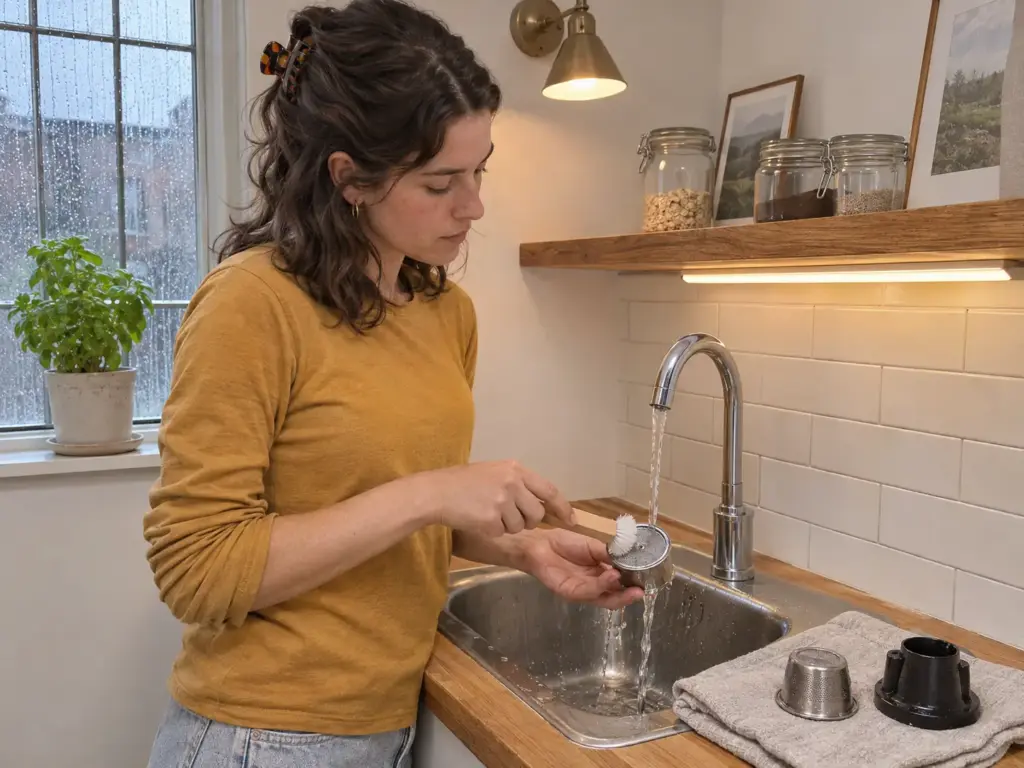
Fine grounds pack into the holes of the mesh and slow the flow. The cup that follows looks like a grind problem but is a cleaning one: a slow, sputtering drip and a flat or bitter taste. A cleaning brush and warm water right after each use keep the mesh open, and the grind is only touched after the mesh has been cleaned.
The sign that it has gone too far is the first mug in weeks with a few grounds in it again, which means the mesh is worn or the seal has slipped out of place.
Empty the shell and brush the mesh while the grounds are still wet. Dried coffee wedges into the holes and takes a soak to shift, and a soak is the step that makes people give up on refilling.
A spent pod stays wet longer
A disposable pod is thrown away the moment it is spent. A reusable shell stays on the counter holding wet grounds, and one left filled overnight smells by morning. The routine is short: empty, rinse, set it upside down to dry.
The Bluecup reusable Nespresso pods kit shows what a full refill routine includes, two capsules, 100 foil lids, a sealer that crimps the foil around the rim and a spoon, and the lids are the recurring chore. The cup can come out less intense than a disposable, so compensate with the fill before blaming the grind.
Descaling, rinsing and the warranty
Hard water scales the machine and the pod holder, and a scaled machine can run slower whatever you put in the shell. Descale on the machine maker’s schedule, and treat the manual as the authority. A pod machine’s warranty is also the maker’s to state, so read it before using a third-party shell.
Cleaning is where reusable pods give back what they save. A reader tired of the rinse has an exit: a machine that takes both pods and grounds lets the grounds go in directly, with no shell to fill, seal or scrub.
When the Disposable Pod Still Wins
A reusable pod changes the cup and hands back the cleanup that a disposable pod spared you. The mesh brings more sediment and a different body, and the rinse becomes part of every morning. For an occasional cup, a machine that reads a code on the pod, or a counter with no room for a brush, the disposable wins, and nothing about that is a failure. For a daily cup in a machine that takes the shell, the case holds: check fit first, use cups and grams for the money, move grind, then fill, then tamp, and watch the lids and the mesh.
Look again at the fiftieth cup, when a hundred-lid roll is half gone. Check three things: grounds back in the mug, a drip that has slowed, and a seal that no longer clicks. On a refillable pod machine those are the first signs that a refill routine has started to cost more than it saves.
Whether a pod machine is the right tool at all is a bigger decision than the pod. Pod machine or drip machine frames the choice, and if the answer lands on drip, a drip machine run in grams, not scoops is where the dose goes back to being yours.
For tomorrow’s cup, do whichever of two checks you have skipped: close the lid on an empty shell, or, if it fits, move the grind one step finer and taste the cup against yesterday’s.
Frequently Asked Questions
01Do reusable coffee pods work well?
Yes, they work well once the fill is tuned, and the first few cups are that tuning. Move the grind first, then the fill, then a light tamp, tasting between each. A worn seal or a clogged mesh brings the weak cup back.
02Can I put regular coffee grounds in a reusable K-cup?
Yes, that is exactly what the pod is for, whether the coffee is freshly ground or pre-ground. The grind sets the flow: too fine clogs the mesh and slows the drip, so move one step at a time and taste.
03Is it cheaper to use refillable coffee pods?
It depends on how many cups you brew each day and how fast the lids run out, so the break-even is a count of cups. Divide the set’s price by the gap between a disposable pod and a filled cup. A daily cup gets there; an occasional one may not.
04What are the best refillable coffee pods?
The best pod is the one your machine accepts, paired with the closure you will actually use each morning. Keurig owners pick by needle type; for the Original line, the Nespresso picks name the shells and the grams.
05Do reusable Nespresso pods damage the machine?
A shell that seats properly turns daily use into a cleaning job: a clogged mesh or a loose seal is what appears. A lid that resists closing means the wrong fit, so never force it. The warranty terms are the maker’s to state, so read them first.


How did your cup turn out?
No comments yet. Tell us what you changed — and whether the needle moved.