



We may earn a commission when you buy through links on this page. It never changes what we recommend. How we pick
On this page9 parts
- What a Coffee Maker Pot and Single Serve Base Actually Does
- What the Cup Side Takes: Pods, Grounds or a Basket
- Which Parts the Two Sides Share
- A Weak Single Cup: The Order of the Fixes
- The Carafe and the Warming Plate on the Pot Side
- What Wears First on Each Side
- When the Cup Is Off and the Coffee Is Fine
- Move the Button, Weigh the Basket, Then Ask the Water
- Frequently Asked Questions
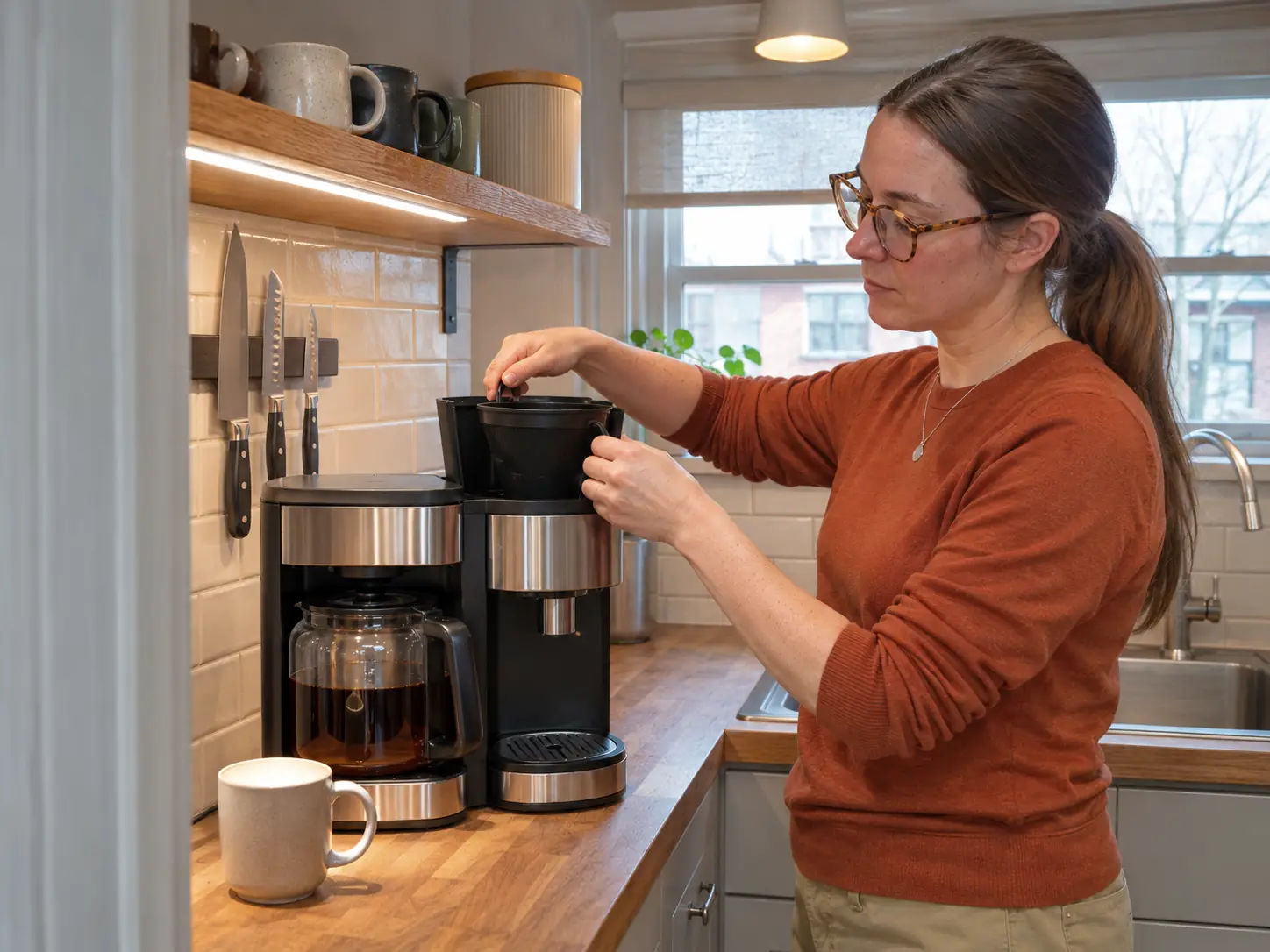
Your pot last night was fine. This morning’s single cup, poured in a hurry from the same machine with the same beans and the same tap water, tastes thin, and the glass carafe is still sitting on its plate from yesterday. A coffee maker pot and single serve base is one box with two ways of setting the dose: on the pot side you scoop it into a basket, while on the cup side a pod or a small basket decides it and the strength button only moves the water. That is where a thin cup starts, so below come what the cup side takes, what the two sides share, the order of the fixes for a weak cup and which side wears first.
Quick Answer
One machine can brew a full pot and a single cup, but the cup side gets short-changed when a pod or a small basket fixes its dose and nobody weighs it. Move the strength setting one step and taste, then weigh the basket and taste again. Your manual shows what your model shares between sides.
What a Coffee Maker Pot and Single Serve Base Actually Does
Before any fix, it helps to know what one base is doing when it offers a full pot and a single cup, and why the two sides count their sizes in different units. A carafe is sold in cups and a mug in ounces, and neither number says how strong the coffee will be. That is the question the rest of this guide keeps answering: which side sets the strength.
One base, two brew paths
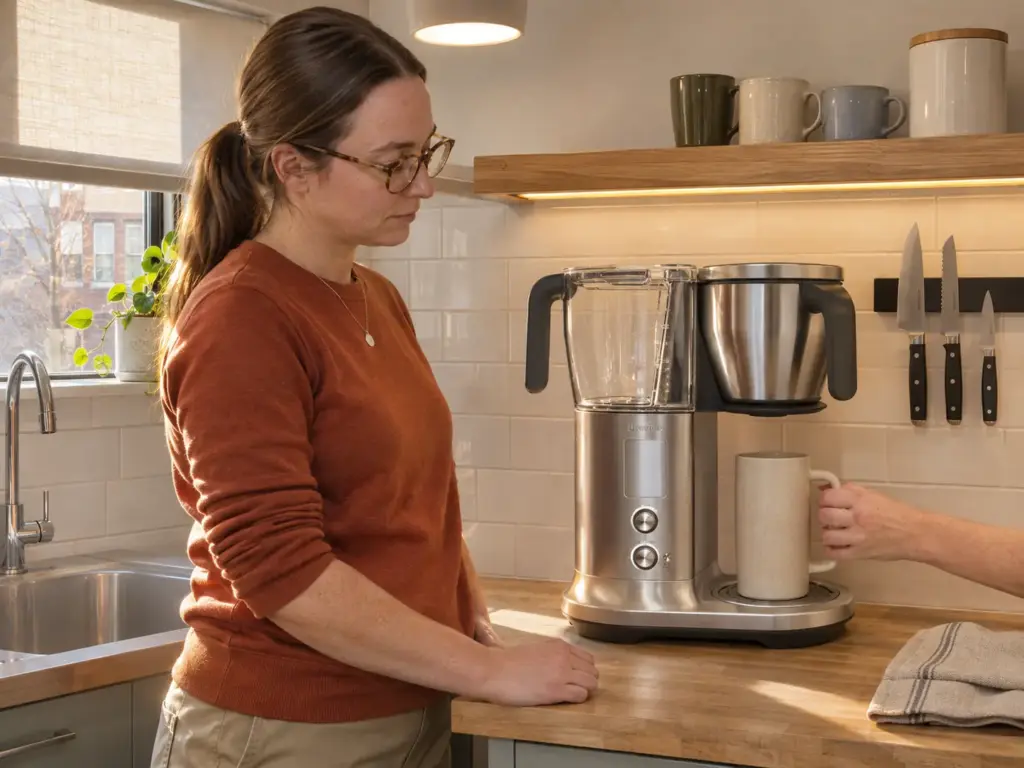
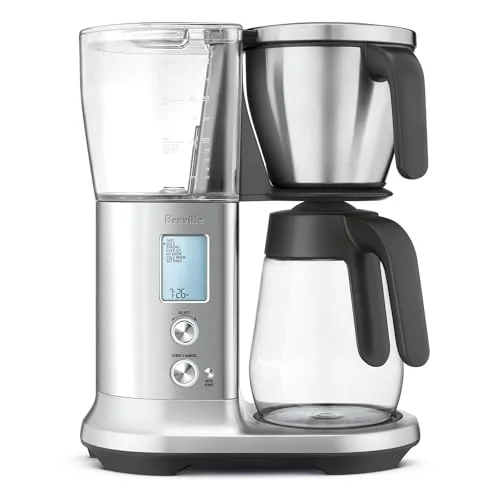
A dual machine is one base with a carafe path and a cup path. The carafe path is the familiar drip coffee maker one: a basket, a paper or mesh filter, and a glass or thermal carafe underneath. The cup path works like a small single-serve brewer: a pod holder, a reusable basket for your own grounds, or both. The Breville Precision Brewer is the fullest example of the idea, with a 60 oz glass carafe, single cups of 8, 12, 16 and 20 oz, carafe batches from 30 to 60 oz and six brew modes.
The other route to the same two mornings is two machines on one counter instead of one box, and that comparison lives on a separate page. This one takes the box as given and asks what it does to the cup.
Cups on the pot side, ounces on the cup side
The word cup means two different things on one label. On the pot side it is the maker’s small measure: the Breville’s 30 to 60 oz carafe range is sold as 6 to 12 cups, which works out to 5 oz each, nowhere near a mug. Habits like counting a large pot in ounces instead of cups keep a bigger carafe from fooling you. On the cup side the number is the mug itself, anywhere from 6 oz to 20 oz on the same base.
Because the units differ, the coffee to water ratio is easiest to compare in grams. The Spruce Eats’ testers brew at 10 g of coffee per 6 oz of water, which is about 1 part coffee to 18 parts water by weight. The reference used here is 1:16, about 11 g per 6 oz. The two sit a gram apart on a small cup: the testers’ figure is a brewer’s standard range, the tighter 1:16 is the one measured against below, and either is where tasting starts.
Where the strength comes from on each side
On the pot side the strength is whatever you scoop into the basket. On the cup side it comes from what the pod or the small basket holds, plus a mode or a strength button on a model that has one. The brew-size and brew-strength buttons move the water and the flow while the coffee stays exactly what it was. A 20 oz mug makes the point visible: it is a long run of water through the same small basket, so a dose that tastes right in a 6 oz cup reads thin in the big mug.
The Breville puts the choice on its modes rather than on the scoop, which suits anyone who wants the machine to decide and suits worse anyone who wants to see the dose. The Spruce testers say its Gold mode follows the Specialty Coffee Association’s standards. They also found that setup and customization can feel overwhelming, so expect to read the manual before the first cup.
What the Cup Side Takes: Pods, Grounds or a Basket
The first section left the cup side as the half whose dose is hardest to see. Three arrangements are possible there: a pod, your own grounds in a basket, or a holder that accepts either. The answer decides who sets the strength and which fix is available on a weak morning.
A pod holder: the dose arrives sealed
A pod holder fixes the dose before you touch the machine, and a pod brewer built around a K-Cup pod works exactly that way. The size button adds water, the strength setting changes how the water moves, and the coffee in the pod stays what it was. A 12 oz cup from a pod machine is therefore the same pod stretched over twice the water of its 6 oz cup, and the cup says so. The way to take the dose back on a pod-first side is the reusable pods worth buying, sorted by needle type, which turn the holder into a small basket you fill yourself.
Look at the holder before anything else. A pod left in it when a second person brewed with grounds, or grounds packed into a holder built for pods, floods the narrow path around the needle, and the cup comes out thin and wet-tasting. Empty it and seat it fully before blaming the coffee. That glance is why the title sends you to the basket first.
When the cup side changes from pods to grounds or back, empty the holder, seat it, and run a water-only cup before the first real brew. Whatever the old kind left in the needle path leaves with that water instead of with your coffee.
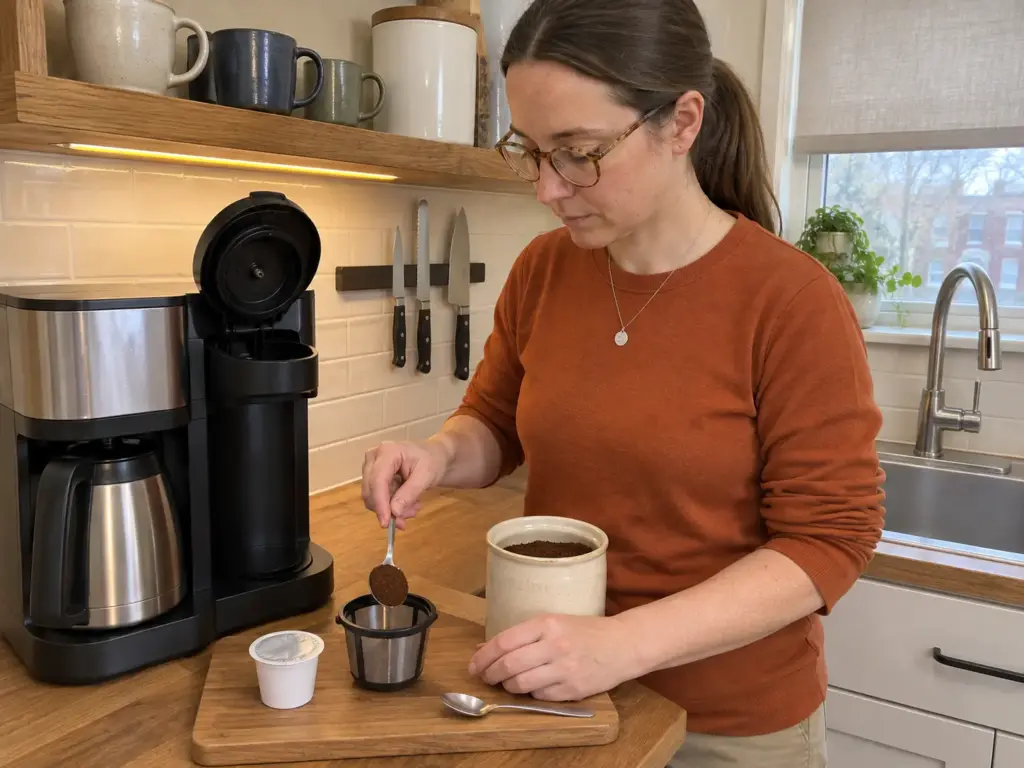
A basket for your own grounds: the dose is yours
A podless basket hands the dose to you. The Specialty Coffee Association’s certified home brewer list names a “Podless Single-Serve Function” on the OXO Brew 12-Cup, the Café Specialty Grind & Brew and the Braun MultiServe Plus. That list certifies machines. It prints no ratio or temperature for your cup, so the number still has to come from you, and the later sections give it.
These baskets take a medium grind, the same one the pot side uses, plus a filter. Paper or permanent filter, and what each leaves in the cup covers the choice; on the cup side a mesh filter lets more oil and fines through, and paper catches them.
A machine that takes both: Cuisinart and Braun as the two ends
Two machines in the set sit at opposite ends of the question. The Cuisinart Coffee Center Barista Bar 4-in-1 takes K-Cups, Nespresso capsules and grounds on the cup side, in 6, 8 or 10 oz, with a 12-cup carafe beside it. It has no grinder, so any grounds arrive already ground.
The Good Housekeeping testers found the control panel has a learning curve and the unit is bulky. Machines that run two pod systems are compared in a coffee maker that takes both K-Cups and Nespresso capsules, in ounces.
At the other end, the Braun MultiServe Plus 10-Cup is grounds only on the cup side. Good Housekeeping’s testers say it takes no pod at all, so the dose is yours every time. The Spruce testers called the earlier MultiServe line more complicated and less intuitive; that note belongs to the line and was not confirmed on this listing, so read the controls before assuming it either way.
Which Parts the Two Sides Share
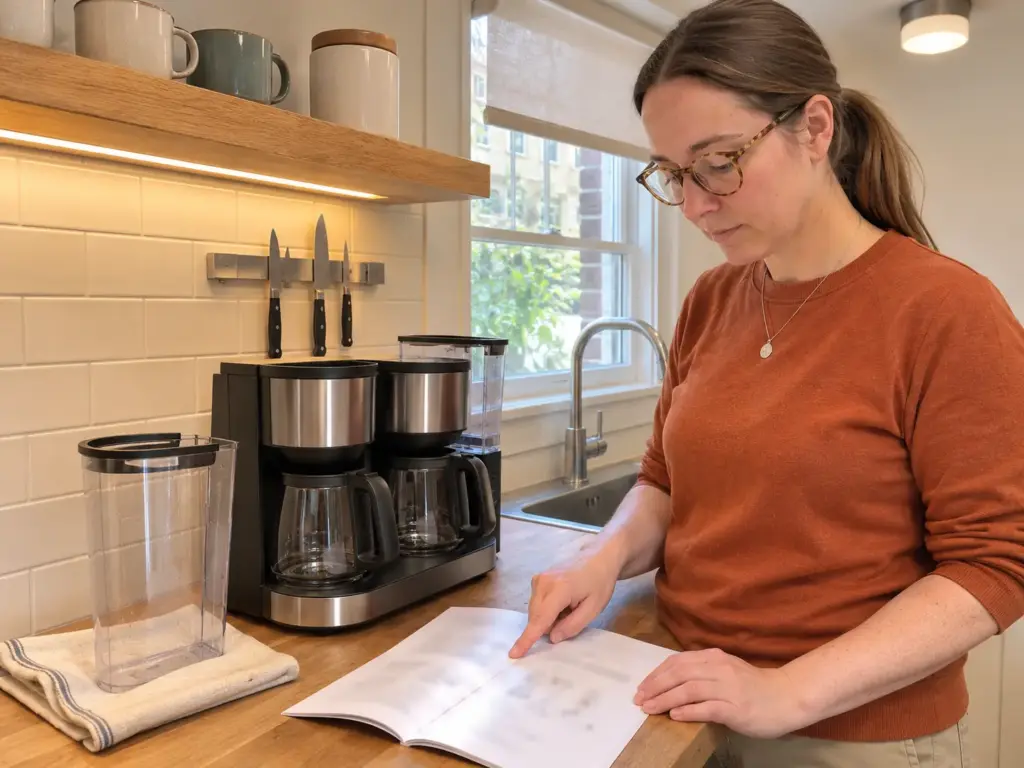
A dual machine is sold as two machines in one, yet most of it is shared: the base, the heater, the outlet, sometimes the tank. What is shared decides which side pays when the other is used. The spec sheet lists capacities, while the water path is a line in the manual, so this section gives the questions to ask and where the answers live.
One tank or two
Two designs show the split. The Hamilton Beach 2-Way Drip & Single Serve gives each side its own reservoir and basket: a reusable mesh filter for cups of 6 to 14 oz, paper in the basket for a carafe of up to 12 cups. The Spruce testers rated its cup side as the stronger half of the machine, and the price of the separate paths is width: 10.2 in across, wider than most.
The Keurig K-Duo Hot & Iced Single Serve & Carafe, Gen 2 shares one 72 oz reservoir between a pod side (cups of 6, 8, 10 and 12 oz) and a carafe side (6 to 12 cups). One fill serves both sides, and the arrangement has two downsides. Tom’s Guide’s reviewer, one person and not a lab, found the carafe coffee lukewarm, measured at about 160°F (71°C) right after brewing, and found the reservoir awkwardly placed. A tank you can barely reach gets refilled less often than one that lifts out, and a tank that stays full for days is the first thing a cup tastes of.
The two designs fail differently. With a separate tank per side, each side’s water stays its own and the bill is bulk. With a shared tank, the pot side leaves less for the cup side, and the cup side can leave old water behind for the pot. One tank or two when a machine also draws hot water works through the same split from the hot-water side, for models that add a hot water dispenser on the same tank.
One heater or two
Whether a model heats its two sides with one heater or two is a line in its manual, and it decides things the capacity figures cannot. With a single heater, the side brewed second inherits whatever the first left in the base, warm or spent. With two, the sides are independent. Look it up for your model before building a routine around it.
How to read your manual
Three places in a manual answer the shared-parts question. The water-path diagram or description shows one reservoir line or two. The descaling section says whether each side has its own cycle. The notes on baskets and holders say whether a piece may move from one side to the other.
If the manual stays silent on the heater, brew a cup straight after a pot and again from a rested machine, and taste both: a clear difference means the sides share more than the box admits.
The table gathers the eight machines in this guide: what the cup side takes, the cup sizes and the flaw each one carries.
| Machine | What the cup side takes | Cup sizes | The flaw |
|---|---|---|---|
| Breville Precision Brewer | Single cups in four sizes, strength set by mode | 8, 12, 16, 20 oz | Setup can feel overwhelming |
| Hamilton Beach 2-Way | Grounds in a reusable mesh filter, own reservoir | 6 to 14 oz | Wide, 10.2 in |
| OXO Brew 12-Cup | Grounds in an interchangeable basket, no pod | Up to 20 oz | Reservoir does not come out |
| Café Specialty Grind & Brew | Grounds ground in the machine, reusable filter | 6 to 24 oz | Loud grinder, splashing, big footprint |
| Braun MultiServe Plus | Grounds only, no pod | Several sizes | Earlier line judged less intuitive |
| Cuisinart Coffee Center 4-in-1 | K-Cups, Nespresso capsules, grounds; no grinder | 6, 8, 10 oz | Learning curve, bulky |
| Keurig K-Duo Gen 2 | Pods, one 72 oz tank shared with the carafe | 6, 8, 10, 12 oz | Lukewarm carafe, awkward reservoir |
| Ninja Specialty CM401 | Grounds in the one basket, no pod side | 4 oz to 50 oz carafe | Frother arm makes concentrate, not a true shot |
A Weak Single Cup: The Order of the Fixes
The cup that opened this guide was thin, not bitter, and thin points one way: too little coffee for the water. This section puts the fixes in order, the free setting first, then the dose, then the water, with a taste between each so you know which change did the work.
Thin points one way
A weak, watery cup is a cup that left early. Either the dose was small or the water was too much, and the direction decides the lever. Sour and bitter would point opposite ways, so name the taste before touching anything.
Before the first fix, do the glance from earlier: the holder or basket empty of old grounds and a pod, and seated fully. Then work through the rest in order, using the same mug on the same weekday morning, so any difference in the cup comes from the machine and not from the mug.
First, the strength or size setting
Move the strength setting up one step, or drop the cup size one step, and brew the same cup again. On a pod side this is the only lever you have: the pod is fixed, so a smaller cup means the same coffee in less water, and a strength step changes how the water moves through it. When a weak pod cup is not the grind covers the limits of that lever.
Taste the result. If the cup is fuller but still a little flat, the setting helped and the dose is the next suspect. If it turned harsh or drying, you overshot, and half a step back is the right place to stop. Move nothing else yet.
Second, a weighed dose in the basket
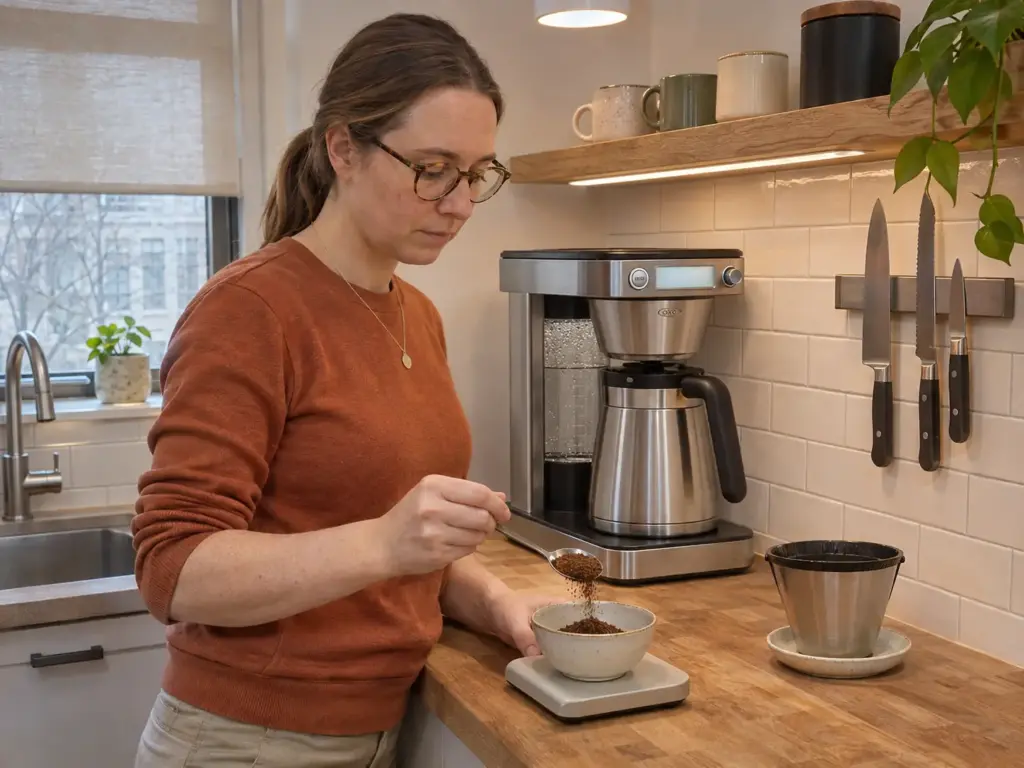
This one only exists where the cup side has a basket, and it replaces the scoop with a scale. A scoop is a volume, so a finer grind and a coarser one weigh differently in the same spoon, and a cup that varies from morning to morning is often a scoop that does. Weigh the coffee instead.
Start at 1:16 by weight: about 11 g of coffee for a 6 oz cup and about 22 g for a 12 oz cup, in between for the sizes the table below covers. Taste it against the Spruce range of about 10 g per 6 oz, which is a hair lighter, and keep whichever lands closer to what you want.
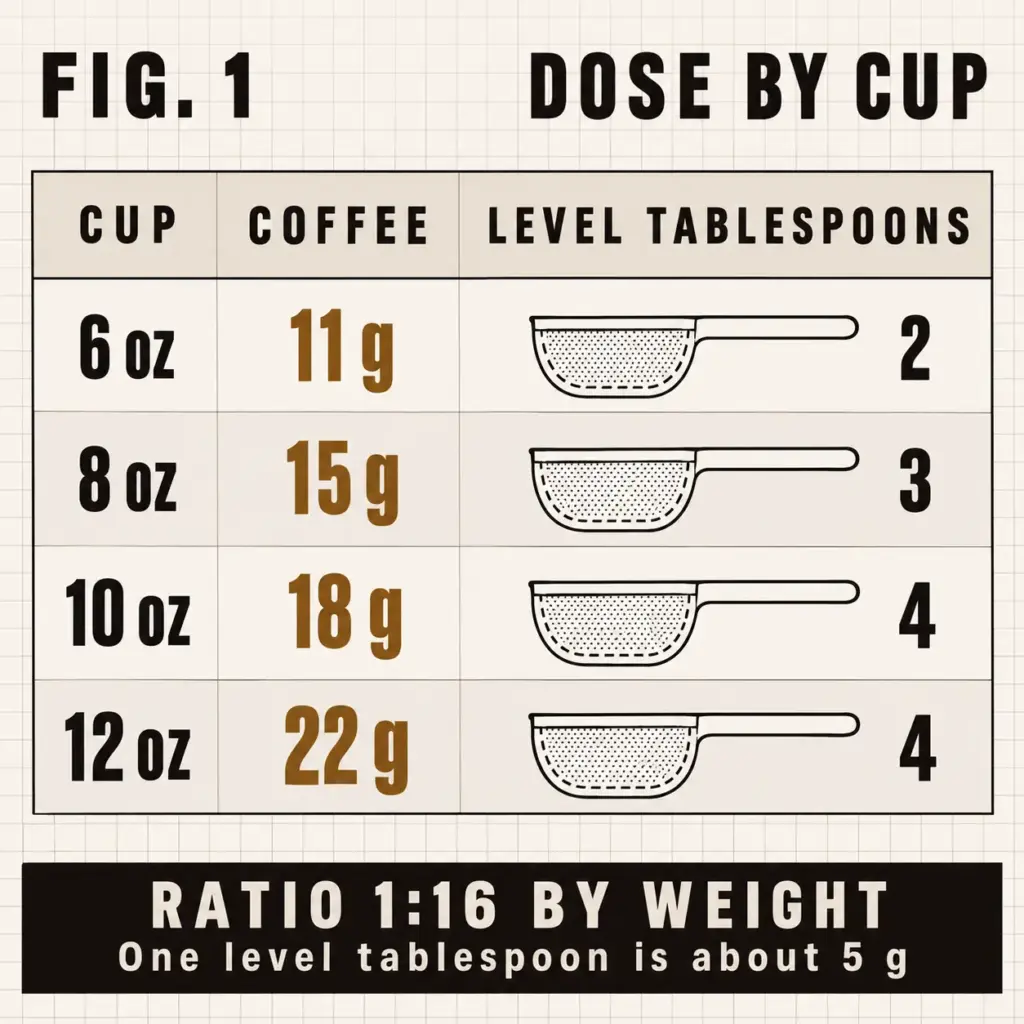
The next cup should taste fuller and a little sweeter, with the flatness gone. If it turns bitter or dry, the dose went past what the water can carry, and you step back a gram or two.
Finer grinding is the tempting lever here, but it works only until the water stops draining, and in a small basket that point comes sooner than in a pot basket. A coarse grind does the opposite, because the water runs through too fast and the cup thins out; how fine a grind can go before the water stops draining marks where it ends. A pod-only side has no second fix, which is where the reusable pod from earlier does its job.
Third, the water
If the dose is right and the cup is still thin, look at the water. Cold tap water in the water tank, plus a base that never reaches a good brewing temperature, thins a cup the same way a small dose does, and no scale will find it. Run a water-only cycle first so the heater and the path are warm, then brew the cup and taste.
After any change, the first cup tells you about the machine and the second tells you about the change. Pour the first one out only when the machine has just come off a long idle, and judge the fix on the cup after it.
Two things sit beside the water fix. The first is grind: the reference for the cup side is the medium of the pot side, and a finer grind than that slows the narrow path instead of strengthening the cup. The grind setting for a drip machine that tastes sour shows the direction to move.
The second is a grinder on the base. The Café Specialty Grind & Brew is the one dual in this set that grinds, so one dose setting sits in front of both sides. The Spruce testers’ notes are the cost: a loud grinder, splashing on a single cup and a big footprint.
Last, the basket on the cup side deserves its own check. The OXO Brew 12-Cup is built around it: interchangeable baskets for one to four cups and up to twelve turn a basket change into a dose change. It comes with a reservoir that does not lift out, which the Spruce testers say makes refilling and cleaning harder.
The Carafe and the Warming Plate on the Pot Side
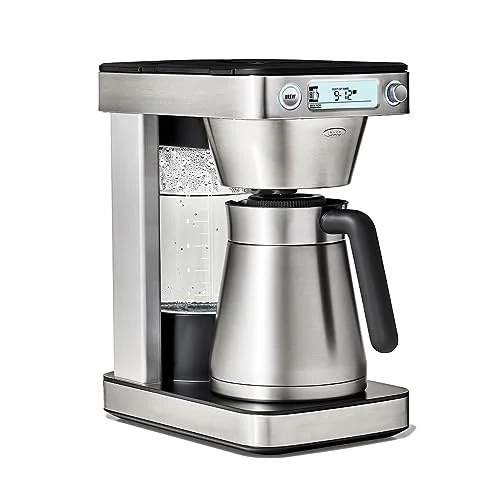
The pot side has its own way to go wrong, and it is not the dose. It is what the carafe sits on after the brew. A glass carafe rests on a warming plate, and how long a glass carafe can sit before it tastes burnt, against a thermal one covers how much the wait matters. The same box that made a good cup a minute ago can scorch a pot.
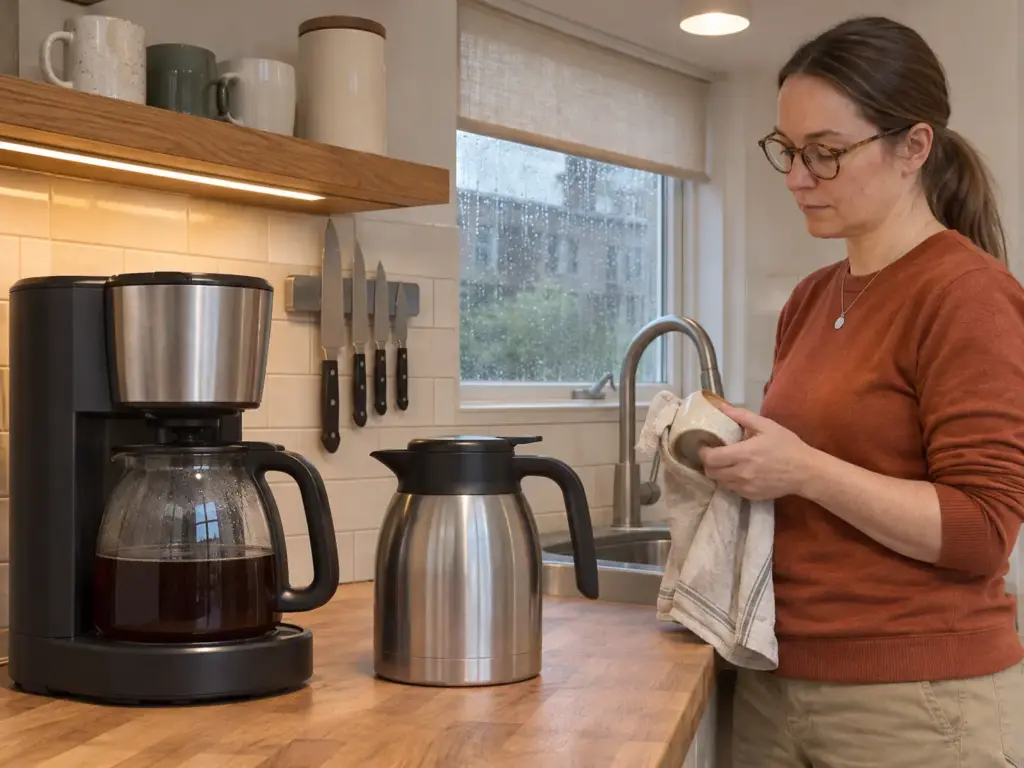
The Spruce testers’ point is that glass carafes sit on a warming plate and, over time, the coffee can develop a scorched or burnt taste, and scorched coffee does not come back with any dose adjustment. A pot that tasted right in the first cup and burnt by the third is the plate, not the beans. A single cup poured next to a hot plate is unaffected; the cup was never on it, and the pot was.
A thermal carafe has no plate and holds heat without one. The Ninja Specialty Coffee Maker, CM401 is the one-path counterexample in this set: six sizes from 4 oz to a 50 oz full carafe, all from the one basket, a stainless carafe and no warming plate on that model. A single cup there is a size setting on the drip path, not a second machine. The Spruce testers noted that its frother arm leans toward a concentrated coffee rather than a true shot, so do not buy it for the arm.
On a glass carafe, pour what the household will not drink right away into a preheated insulated bottle and switch the plate off. When a pot tastes burnt, take the carafe off the plate before you touch the grind.
For the cup side, the plate is irrelevant, and what matters is the cup that goes over ice. Brewing hot and iced from the same machine without a thin cup covers how to stretch a cup-side dose when iced coffee will dilute it.
What Wears First on Each Side
A dual machine ages unevenly: one side slows before the other, and the cup often still tastes the way it did. Which side shows trouble first tells you what to clean, so the fix goes to the side that wore. Usually that is the cup side.
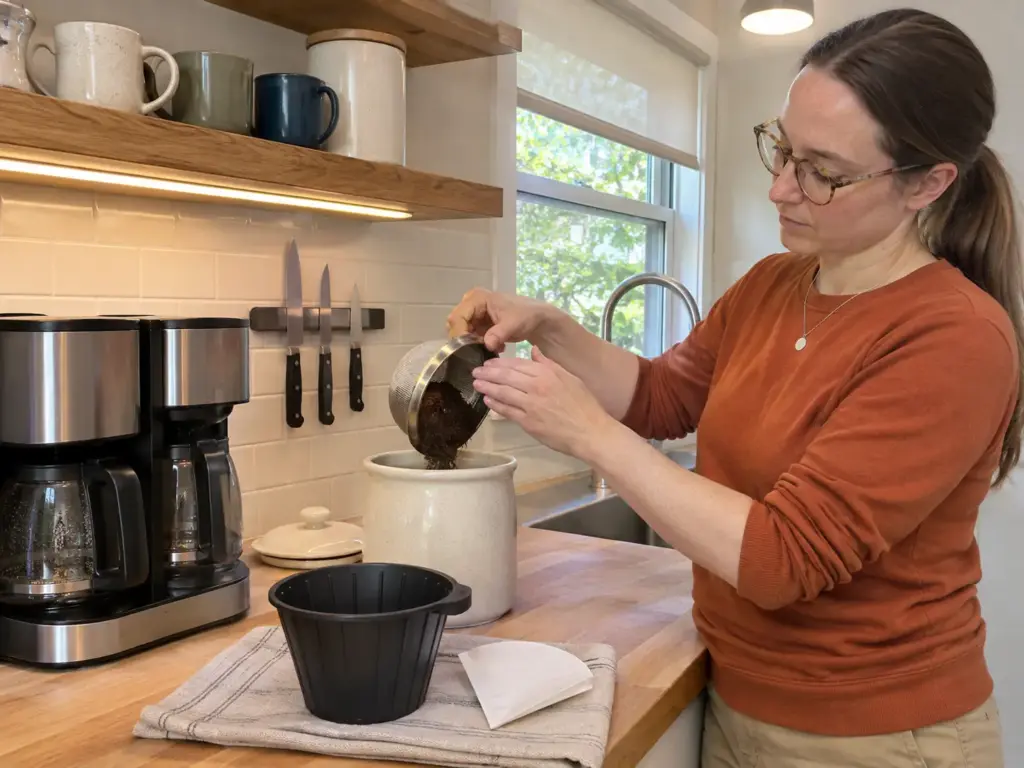
The cup side’s narrow path
The cup side’s path is the narrowest water route in the machine. The needle, the pod seat and the small screen are the usual places it clogs, and on hard water scale narrows it further, so the cup side slows and sputters before the pot side shows anything. How a drip machine moves water through the grounds draws the wider line beside the narrow one; what matters here is that a deposit a wide line shrugs off chokes a narrow one.
Run two water-only cycles after clearing the needle or the holder before deciding the machine has failed. The first often moves the loosened deposit, and the second shows whether the flow came back.
The pot side’s wider, slower line
The pot side’s scale sits in a wider, slower line, so the cup side can keep working while carafe brews creep longer. Descale each path with a cycle for that path, because descaling only cleans the path the water runs through, and on some models the descale light follows only one of the two. A carafe that will not start is usually a seating fault: push the carafe fully back on its base, then reseat the basket and its lid.
On at least one two-sided design, the single cup feeds by gravity, so when the carafe pump gives out the cup side keeps working. That is a note on that design, and your manual says how yours feeds.
A basket moved between sides
Baskets are easy to swap and carry something with them. Fines and oil from the cup side land in the pot, and old oil from the pot side lands in the cup. A cup that tastes faintly stale with fresh coffee in it is often a basket that spent the week on the other side.
Rinse a basket in hot water and let it dry before it changes sides. If the manual says each side has its own basket, keep it that way and the problem never starts.
When the Cup Is Off and the Coffee Is Fine
Before another change, check what has nothing to do with the grounds: what stayed in the machine overnight, what the plate did to the pot, and how the box sits on the counter. This section closes with the flaw of the whole design, written once, and the decision that follows: one box or two machines.
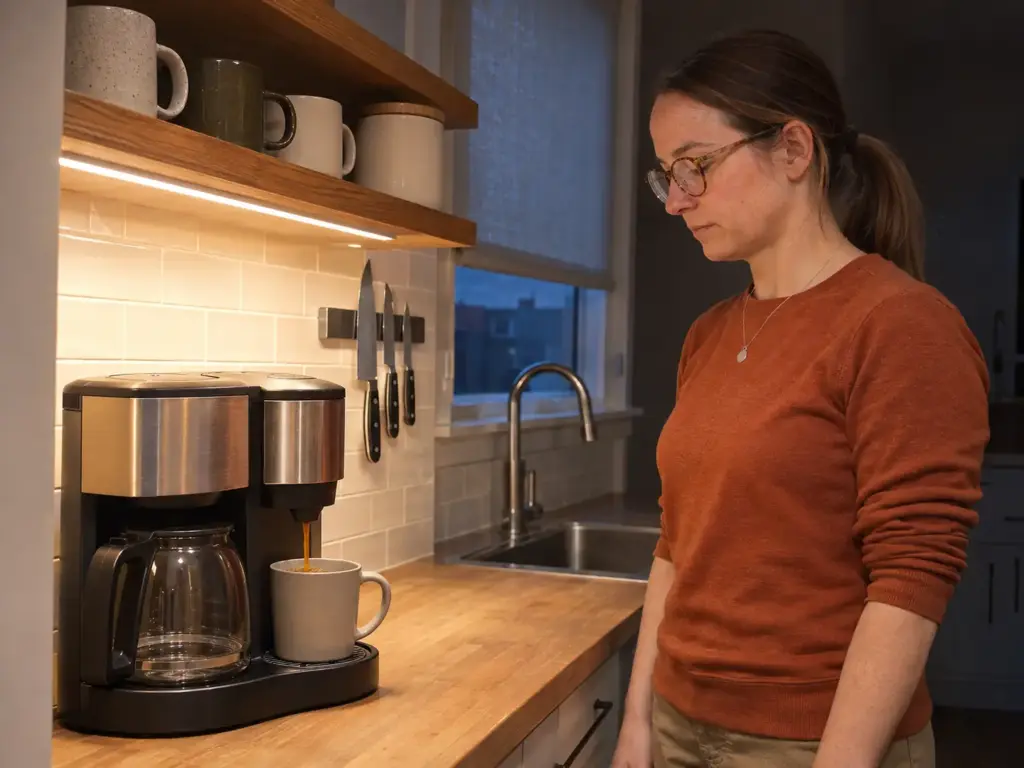
What stayed behind
Old grounds may still sit in the cup-side basket from the last brew, the carafe may have stayed on the plate overnight, and the tank may have been full since Sunday, so the first cup of the week tastes of the tank. Any one of them spoils a cup that was dosed correctly.
Check your manual for what the descale light follows. On a model where it tracks only the side in use, a machine whose cup side runs every day and whose carafe side runs on weekends has a pot side that is scaling in silence.
One box, one outlet, one counter
The ordinary kitchen has one outlet near the sink, tap water and a counter the pot and the cup have to share. That is the case for the single box: one footprint and one cord take up less counter space than two machines. The width counts, since the Hamilton Beach is wider than most and the Café Specialty and the Cuisinart are described as big and bulky, so check the cabinet clearance above the lid before the machine arrives. It also means the pot and the cup share a plate, a tank and a schedule.
The flaw of the design, and the next decision
A single cup brewed in a machine built for a pot is a trade-off every dual carries, in every brand. The cup side has a narrow path and a dose fixed by a pod or a small basket; the pot side has a plate and a long hold; the one box has to serve both. The per-machine flaws above are the visible edge of that trade, and the table in the shared-parts section lists them side by side.
What follows is a decision about which side is yours. If the cup side is the daily one and the pot the rare one, two machines or a coffee maker for one person that doesn’t waste a pot may suit better. If the pot is the daily side and the cup the occasional one, the box does its job. For the one-path counterexample, the Ninja coffee maker, drip or pod, flaw first gives the line in full, and the Cuisinart coffee maker, by cups brewed does the same for the other brand named here.
Move the Button, Weigh the Basket, Then Ask the Water
The cup side is the weak half of the box, because its dose is fixed by a pod or a small basket that nobody weighs. The order for a thin cup is the strength setting first, the weighed dose second and the water third. The plate scorches a pot and leaves a cup alone, and the narrow path of the cup side wears before the wide line of the pot side does.
By month two on hard water the cup side usually shows it first, so compare its flow with the pot side’s after a dozen brews. If the cup fills a mug noticeably slower than it used to, run a water-only cycle on each side and follow the manual’s descaling routine for the side that lags.
Tomorrow, make the same cup in the same mug with the strength setting one step up, and taste it. If the machine has a basket, weigh 11 g for a 6 oz cup and taste the difference between that and the scoop.
Frequently Asked Questions
01What is a coffee maker that can make both a pot and a cup?
It is a dual or combo base: one machine with a carafe path for a pot and a separate cup path for a single mug, using pods, grounds or both. The table in the shared-parts section lists eight of them.
02Are single-serve coffee makers worth it?
They are worth it for one cup at a time, with the dose fixed by a pod or a small basket. They are a poor fit as the only side in a household that mostly drinks pots. If the cup comes out thin, change the strength setting first, then weigh the dose.
03What is the best single serve and pot coffee maker?
It depends on what the cup side takes: pods, grounds or both. The Cuisinart 4-in-1 takes pods and grounds, the Braun and the OXO take grounds only, and the Café Specialty grinds for you. The cup side section sorts them.
04What is the best Keurig and coffee pot combo?
The Keurig K-Duo Gen 2 is the Keurig-line example, with one 72 oz tank shared by a pod side and a carafe side. Its flaw is lukewarm carafe coffee, about 160°F in one reviewer’s test. The Keurig lines and the Strong button are covered separately.
05Can I use ground coffee in the cup side of a dual coffee maker?
Yes on a podless cup side, or one that takes both kinds, with a basket and a filter. Not in a holder built only for pods. Never leave a pod and grounds in the same holder, because they flood the narrow path.


How did your cup turn out?
No comments yet. Tell us what you changed — and whether the needle moved.