




We may earn a commission when you buy through links on this page. It never changes what we recommend. How we pick
On this page9 parts
- Vertuo or Original, and the Cup That Settles It
- Five Sizes on One Button Against Two on the Original
- Crema, Foam and the Thin Cup on the Long Pours
- Before You Buy Another Machine, Change One Thing at a Time
- The Pod Lock and What Closed Asks of You
- Month Two With Each Line
- Picking the Model Inside the Line
- Tomorrow Morning, Press the Other Size Button and Taste
- Frequently Asked Questions
The Vertuo on your counter pours a mug that drinks thin, or the Original beside it tops out at a cup too small to carry to the desk, and the question forms on its own: is Nespresso Vertuo better than Original? Neither is, because the two lines answer a different question about what a cup is. The Original pushes hot water through a pod at 19 bar, the way an espresso machine does, while the Vertuo spins a capsule and reads a barcode on its rim to learn the recipe. In both cases the pod, more than the machine, is what you end up living with, so the choice runs through the cup you pour most, the pod supply that comes with it, the free fixes that come before any new machine, and what each line asks of you by month two.
Side by side, Nespresso Original vs Vertuo comes down to five places that matter at the counter.
| What changes | Original | Vertuo |
|---|---|---|
| Extraction | 19-bar pressure through the pod | Spun capsule; the barcode sets the recipe |
| Sizes | Ristretto 25, espresso 40, lungo 110 ml (most machines have two buttons) | 40, 80, 150, 230 and 535 ml from one button |
| Pods | Nespresso plus third-party capsules | Nespresso and Starbucks Vertuo pods only |
| Crema or foam | Dense pressure crema on a small cup | Thick, bubbly foam on a large cup |
| Descale | Every 2 to 4 months or on the alert | Every 2 to 4 months or on the alert |
Vertuo or Original, and the Cup That Settles It
The table put two machines on the counter, and each one is built around its own idea of a cup. So the useful question is not which line wins but which cup you pour most mornings, because that cup points toward one line and away from the other. Start with what each line is built to do.
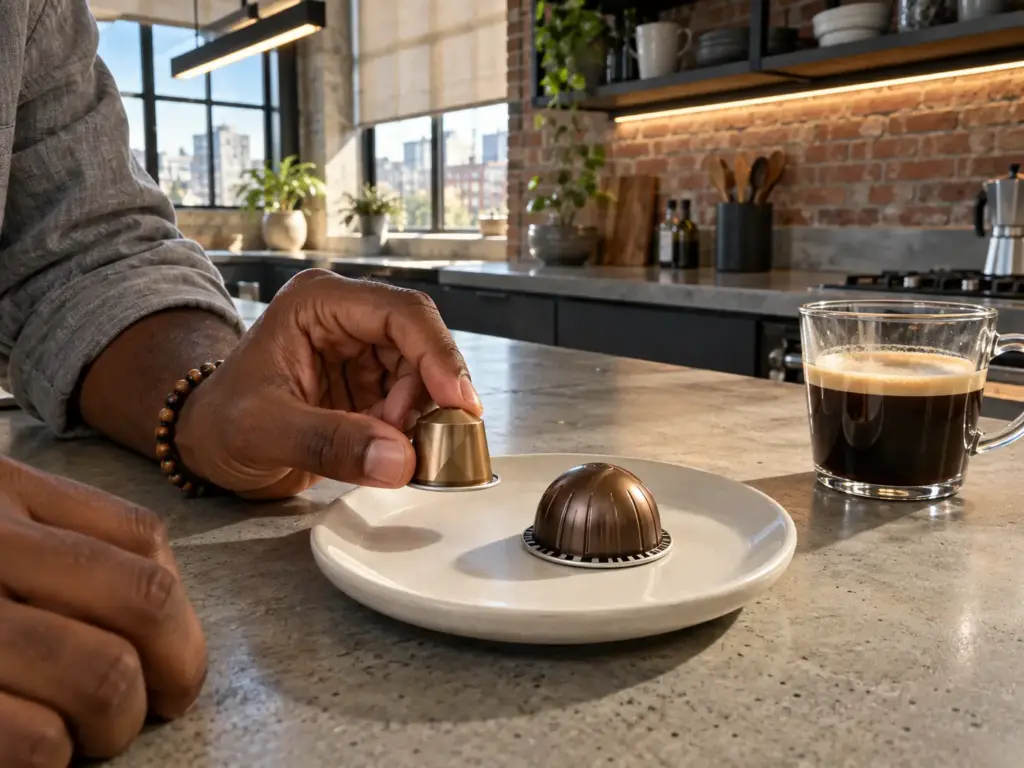
What the Original is built to do
Nespresso’s own Canadian page states it plainly: “Original uses a 19-bar high-pressure extraction system, just like traditional Italian espresso machines.” That is a pressure machine in a small case. The pod holds a fixed dose of espresso roast coffee, and the button you press decides how much water crosses it, which is why one capsule can become a short espresso or a longer lungo. The cup is small, dense and topped with a fine crema, and it is the base that milk drinks lean on.
What the Vertuo is built to do
The capsule rim carries a barcode, and Nespresso’s FAQ on the Vertuo bar codes says the machine reads it to identify which coffee is being made. The same FAQ lists what the barcode sets: the amount of water, the temperature, the infusion time and the rotation, with the spin reaching up to 4,000 revolutions per minute at the finishing stage. The method goes by the name centrifusion, and reviews also call it centrifugal brewing.
Put plainly, the pod is the recipe. You press one button, and the capsule decides whether you get an espresso or a mug. The Vertuo’s whole appeal and its whole constraint are the same fact, and it is why the Nespresso Original vs Vertuo choice is really a choice about the pod.
The drinker test
Three questions settle most cases, and they are about your cup, not the machine.
- Do you drink straight espresso or milk drinks? That points to the Original.
- Is the cup that matters a mug at the desk, or a pot for two? That points to the Vertuo.
- Do two people want different sizes at the same moment? Either line copes, but the Vertuo does it from one button and the Original from two.
The buttons tell you which line you are standing at: an Original owner presses a button per cup size, while a Vertuo owner presses one and lets the pod decide.
People who own one line and wonder about the other tend to land in the same place. A common question is whether a Vertuo would be an upgrade from an Original, and the usual answer is that it is different, not better. Some people solve it differently by keeping two of each, a pair at home and a pair at the office, each doing its own job. Two machines for two jobs is a real answer, though not one many counters have room for.
Choosing the line is a different decision from choosing the brand, and if you are really choosing between a Keurig and a Nespresso, our guide on Keurig against Nespresso settles it by the cup.
Five Sizes on One Button Against Two on the Original
The last section split the lines by drink; this one turns the drink into milliliters, and into the one place where the brand page and the reviews each get it slightly wrong. The brand’s numbers are the reference here, and the mug check at the end is yours to run.
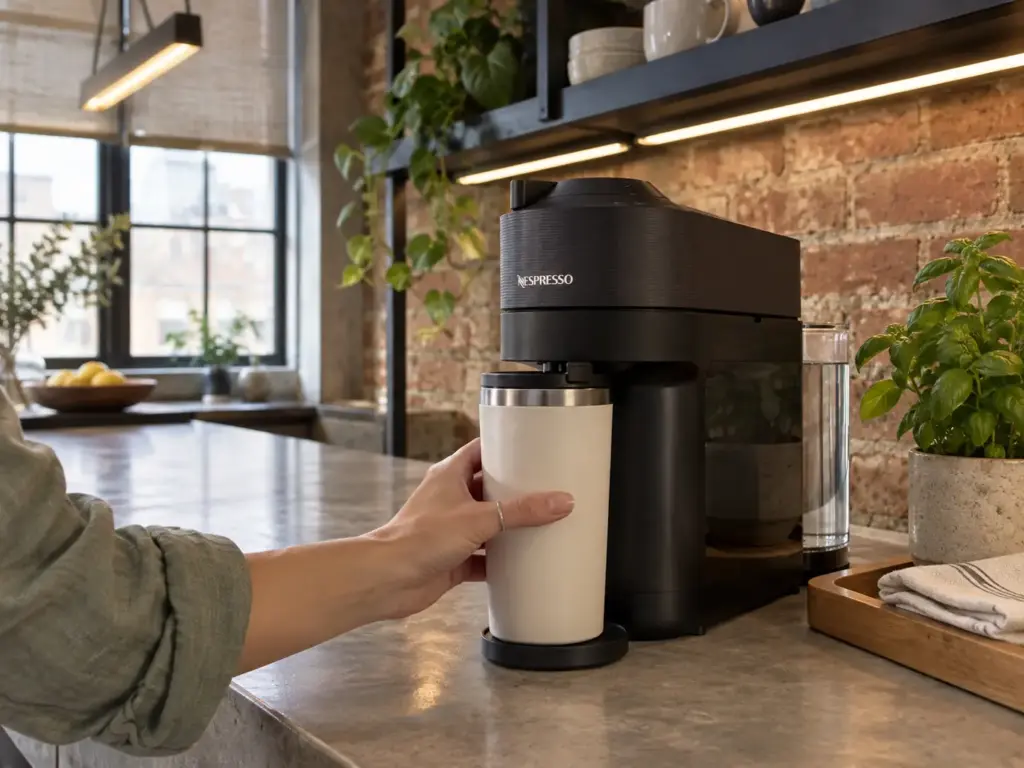
What the Original gives you
Nespresso’s Canadian page prints three Original sizes: ristretto at 25 ml (about 0.8 fl oz), espresso at 40 ml (1.4 fl oz) and lungo at 110 ml (3.7 fl oz). Reviewers name two, espresso and lungo, and most machines have two buttons to match. Read the 25 ml as the brand’s figure, not as a third button waiting on your model, and check your model’s buttons before you buy for the ristretto.
What the Vertuo gives you
The same page prints five Vertuo sizes: espresso at 40 ml (1.4 fl oz), double espresso at 80 ml (2.7 fl oz), gran lungo at 150 ml (5 fl oz), café size at 230 ml (7.8 fl oz) and the carafe at 535 ml (18 fl oz). “Carafe” is the brand’s word, and some reviews call that largest size “Alto”; this guide keeps the brand’s. The pod decides which of the five you get, so on a Vertuo you cannot stretch an espresso capsule into a carafe. An Original lets you stretch a lungo, but the cup thins, as Balance Journal’s test puts it: “You can stretch a lungo, but the cup thins.”

The mug check at your own counter
The travel mug is the test that gets skipped. A review measured the Vertuo Next at 12.4 in tall, 5.5 in wide and 16.9 in deep, but those dimensions are the machine’s outside, not the gap between the drip tray and the head, and the gap is what a tall mug needs. So measure your mug against the model’s own sheet, and confirm there rather than trusting a review’s figures. Then, before the first capsule goes in and while the box can still go back, set the mug on the tray under the spout and see what clearance you have left.
Fill the mug you actually carry from the tap, then pour it into a measuring cup. If it holds more than 230 ml (7.8 fl oz), only the 535 ml carafe size fills it, and that is the size reviewers say can read thin. A smaller mug that suits the 230 ml size is a better match for the one-button pitch.
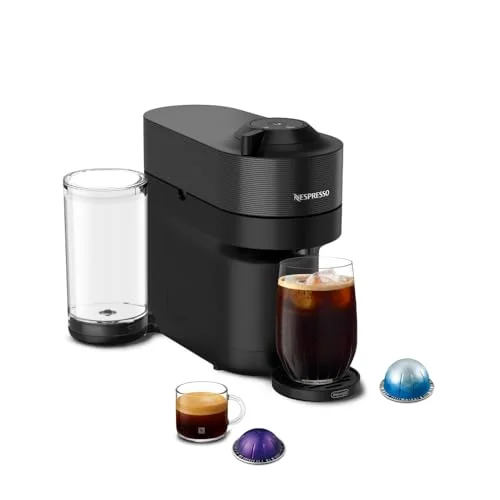
Before any machine is the answer, the size button and the capsule you chose are the first two levers: press a different size, or open a different capsule, and taste. The next sections give that order. For the reader whose cup is the one-button mug, the cheapest way into those five sizes is the Vertuo Pop+, and it carries the same pod-decides limit as every Vertuo.
Crema, Foam and the Thin Cup on the Long Pours
Sizing the cup is half of it; the other half is which way the cup tends to be off. The Original makes a dense pressure crema on a small cup, the Vertuo spins out a thick, bubbly foam on a large one, and the long Vertuo cup is the one reviewers call thin.

Pressure crema versus spun foam
The Original’s crema is denser and finer, because it forms under 19 bar on a small volume of water. The Vertuo’s layer is thicker and bubblier, and that bubbly crema is its most visible trait.
Opinions split from there. Some drinkers find the Vertuo’s crema weaker, while others say it makes more of it, and both can be true: more is not the same as finer. This guide does not pick a side on taste, because the cup you like is the cup that decides.
Milk changes the balance a little, since a dense shot holds its own against steamed milk where a long foamy cup would drown. The model that builds milk into the Original line is the Lattissima One, while the Vertuo Lattissima does the same job on the other line, so name the line whenever you name that model; the capsules do not cross over. And if you are weighing a Nespresso against a Keurig instead, how a Nespresso cup compares with a Keurig mug by size has its own page.
The long Vertuo cup that reads thin
Balance Journal’s own test found that “on the carafe sizes it can taste a little thin.” The direction matters: that cup is weak and watery, not bitter. The reason is arithmetic, because more water over the coffee leaves it weaker, so the water outran the coffee.
A thin cup like that does not call for a new machine; it calls for a different size, and the order of tries is in the next section. A Vertuo cup poured into a glass shows the point, since the foam layer is the machine’s doing and the liquid under it is the pod’s.
When the Original cup thins
The Original thins in the same direction for a simpler reason. The lungo button sends more water through the same dose of coffee than the espresso button does, and stretching it further only widens the gap. The cup that comes out is weaker, not bitter, and the cure is again the size, not the machine.
Before You Buy Another Machine, Change One Thing at a Time
A thin or off cup in either line has four free suspects before it has a machine. Take them in this order, and taste after each, because someone who changes three things at once cannot tell which one worked.

First, the size button
This is the cheapest change on either line, and it works because a smaller size sends the same dose of coffee through less water. If the Vertuo cup is thin at the carafe, step down to the 230 ml size and taste again. If it is now what you wanted, the pod was never the problem. If it turns too sharp or too small for the mug, you overshot and the middle size is the one for your cup.
The same free-fix-first order shows up on a K-Cup machine, where when a weak cup is not the grind turns out to be the brew-size button before anything else.
When you test the size button, change only the button. Use the same capsule, the same mug and the same tank of water, so that any change you taste belongs to the size and nothing else.
Second, the pod itself
An old or badly stored capsule is a likelier cause of a weak cup than a worn machine. That is a rule of thumb rather than a manufacturer’s rule, and the cup is the judge.
Open a capsule from a different sleeve, one stored away from the stove and the window, and run it at the same size. If the cup improves, the first capsule was the problem and no machine would have fixed it. If it does not, move on, and the capsule is cleared.
Third, the water
Empty the tank, rinse it, and refill it with fresh cold water, then taste again. This one is also a method, not a sourced rule: no spec ties tank water to cup taste, so judge it by the cup. The reason to try it before the next step is the same as with the capsule, that it costs nothing and rules something out. If your tap water is hard, scale is what builds up inside the machine over weeks, and that is exactly what the last step answers.
Last, descale on Nespresso’s schedule
Nespresso’s descaling FAQ sets the interval: “Depending on your machine, this will be every 2-4 months or when your machine triggers an alert.” Follow your manual for the procedure itself; this article does not describe it as steps. The consumable that goes with the schedule is Nespresso’s own descaling solution, sold as two packets, and the manual stays the authority on how to use it. No repeated complaint about that solution turned up in Nespresso’s FAQ or the listing title, which says little, because owner reviews are where a complaint would live, and the listing’s reviews are not something this guide has weighed.
Put a strip of tape on the machine and write the month of the last descale on it. A cup that has drifted over a quarter is easy to blame on the capsule, and the tape tells you in a glance whether the machine is overdue.
One limit is worth naming. The levers that are documented on a Vertuo are the size and the pod; check your model’s manual for anything beyond those two rather than assuming a strength setting. If all four steps are done and the cup is still wrong, then the question of another machine is a fair one, and the right machine is the one that matches the cup you pour most, not the one with the longer feature list.
The Pod Lock and What Closed Asks of You
The cup is one contract; the capsule is the other. The Original lets any capsule maker in, the Vertuo does not, and over the life of a machine that is the longest-lasting difference between the two lines.
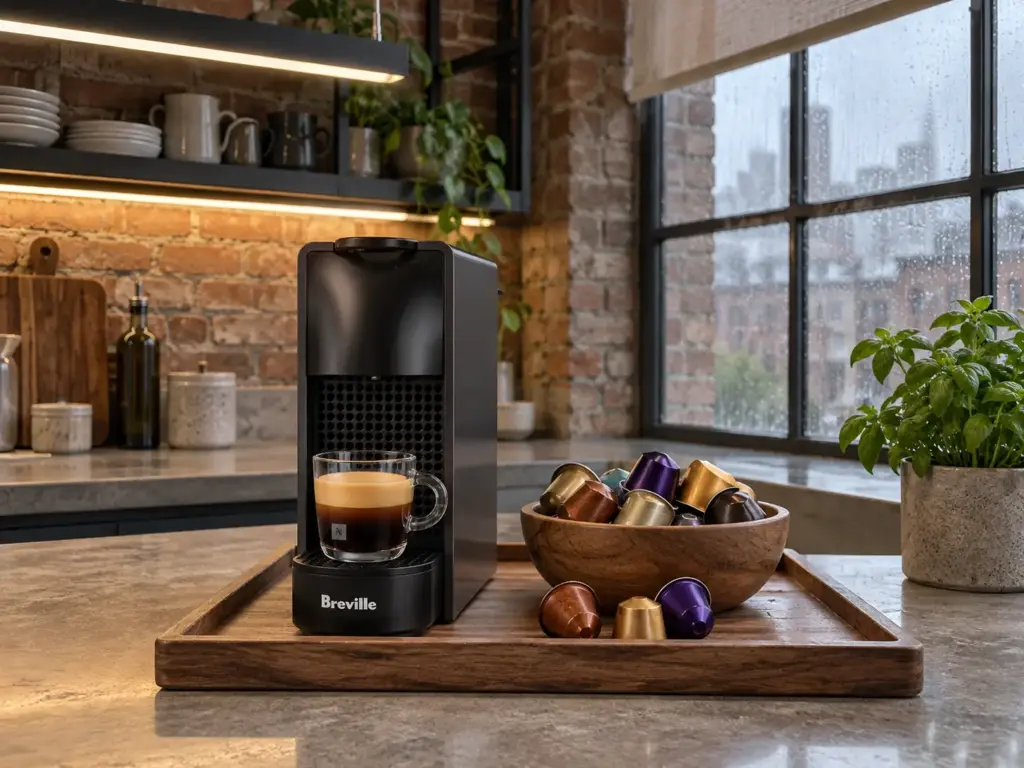
Open on one side, closed on the other
The Original takes Nespresso’s capsules and third-party pods. The Vertuo is a closed pod system: it takes Nespresso’s own capsules and Starbucks pods made for it, and the hands-on reviews found nothing else that fits.
The upside of the Original is plain: cheap knock-off pods are easy to find at the grocery store and on Amazon. The other half is that Vertuo buyers are limited to Nespresso pods. Both quotes describe the same fact from the side each owner lives on.
The reviews put the Vertuo pod above the Original pod, and what each one costs per ounce rather than per pod is the arithmetic in our pod-cost guide. That is a division you run with today’s price. And if you own a Keurig and wonder whether its pods could ever feed a Nespresso, why a K-Cup does not fit a Nespresso machine, and the decant that does is the answer.
Why it is closed
The barcode is the lock. A Nestec barcode patent, US 9,320,385 B2, is still listed as active in the public patent record, and the record labels its own expiry field an estimate, not a legal conclusion. That is why a third-party Vertuo capsule is not simply a matter of copying the shape: the machine reads the barcode to set the recipe, and the barcode is the protected part. Treat the closed supply as the rule for as long as you own the machine, and plan around it instead of waiting for it to open.
What it means at a counter far from a boutique
The supply, not the machine, is the wall. Where there is no Nespresso boutique nearby, buying pods becomes the real limit. If the nearest place that sells Nespresso capsules is a long drive, or the brand’s own shipping is the only route, the Vertuo’s convenience arrives on someone else’s schedule. The Original owner has the grocery aisle and the online market as a second route.
Before a Vertuo goes in the cart, find the nearest place that sells Vertuo capsules and check whether the brand ships to you. If both answers are inconvenient, the Original’s open market is the line that will still be easy to feed in month five.
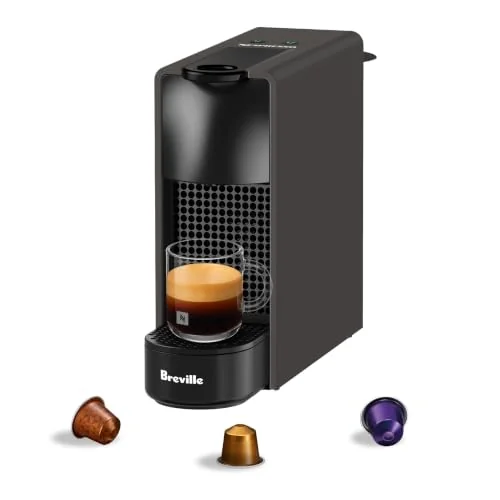
What this site does and does not recommend
The Amazon links here are affiliate links, which means a purchase through one may pay this site a commission at no extra cost to you. No pod brand is recommended on this page, and the only consumable named is Nespresso’s own descaler. Nothing here is sponsored, and a machine appears only after the free fix that could have made it unnecessary.
Both lines use aluminum capsules, and according to the hands-on reviews, compostable options exist only for the Original. Reusable pods and recycling have their own pages to come, so they get no more than a mention here.
Month Two With Each Line
Week-one reviews end where this section starts: what the machine asks of an owner in the second month and in the fifth year. That long view has a caveat worth saying first. The reports behind this are about four years old, so the machines may have changed since, and they describe experience, not a spec.
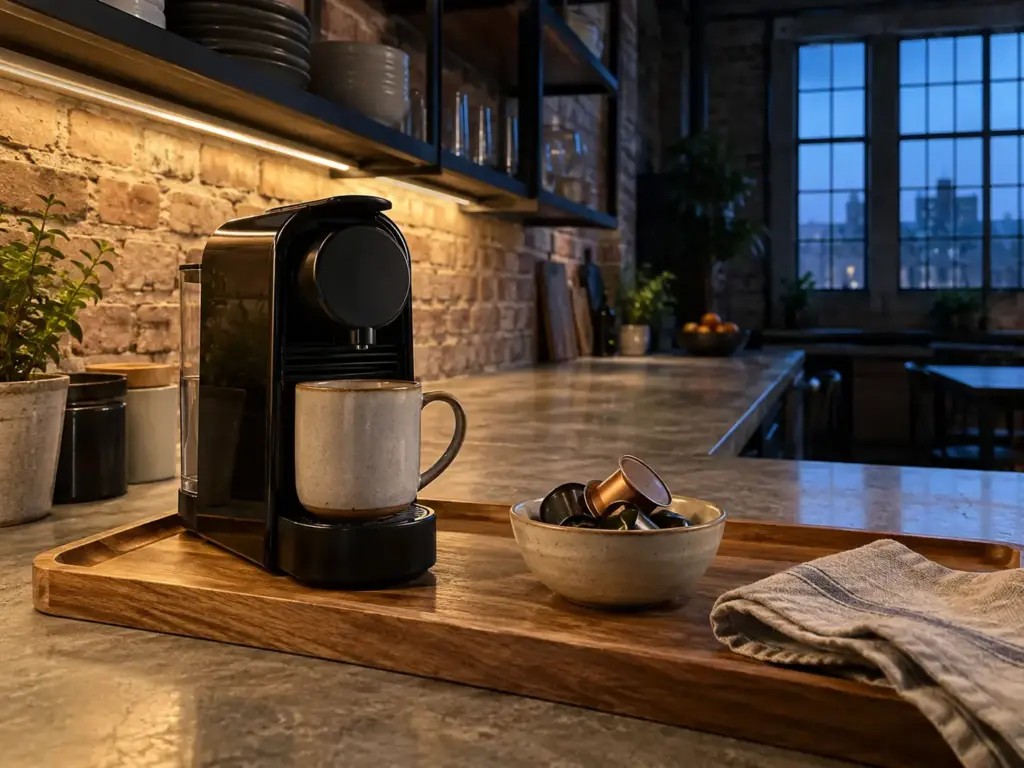
What owners say after the first month
Some buyers return a Vertuo Next and stay on the Original. The other complaint that recurs is not the machine at all but the pod supply: an owner far from a boutique describes the capsules as a chore to get, and not cheap when they arrive. That is the month-two gap: the closed supply, not the hardware.
What owners say after years
An Original owner of five years moved to a Vertuo for the double-shot pods. Another spent a decade on the Original and a year on the Vertuo, and still calls the Original’s crema much better. Neither report says one line failed; both say each line is good at a different cup, and years only widen the habit that cup built. Treat these as older reports, since they run three to four years back.
What the machine asks, and what the pod asks
The machine asks for a descale on Nespresso’s schedule, every 2 to 4 months or when the alert comes. The pod asks for a supply you can reach. The cost per cup belongs to the pod-cost sibling, so it is left there.
One detail only shows up at the counter. The used-capsule container fills faster than the water tank empties: one review gives the Vertuo Next room for 13 large or 20 small used capsules, so check your model’s sheet for its own figure and empty the bin when you refill the tank.
Empty the used-capsule bin every time you refill the tank. The bin is the part that fills first, and a full one is the reason a machine stops mid-week with a tank still half full.
Each line’s flaw, so the section ends balanced: the Original’s cup thins when you stretch the lungo, and the Vertuo’s closes the supply to Nespresso’s own capsules and Starbucks Vertuo pods. For the reader who finds the Nespresso lock-in too much, the Keurig lines and what the strong button does is the other machine family when pods are the part you would rather not be locked into.
Picking the Model Inside the Line
Once the line is chosen, the models differ by tank, footprint and whether milk is built in. This section only points to them, because the model pages and the pods you will live with are the next two decisions.

The Original lineup
On the brand’s Canadian grid the Original models are the Essenza Mini, the smallest, then the Pixie, the Citiz, the Citiz&Milk, the Creatista Plus and the Lattissima One. The Citiz&Milk and the Lattissima One add milk; the Essenza Mini is the plain espresso machine. None of them is ranked here.
The Vertuo lineup
The Vertuo side runs from the Vertuo Pop and Pop+ through the Vertuo Plus and the Vertuo Next to the Vertuo Lattissima, which carries the line in its name because the Lattissima One belongs to the other one. The Vertuo Next is left out of the recommendations here because its listing was close to out of stock when this was written. Differences between these models are mostly the tank, the footprint and the milk option, not the cup, because the pod still decides the cup.
Where to go next
If the real question is drip vs pod and you want a mug without a capsule at all, a drip machine for one person is the honest alternative. If you already own both a Keurig and a Nespresso, a coffee maker that takes both K-Cups and Nespresso pods answers it in one machine. And if the Nespresso lock-in is the actual problem, go back to the Keurig pillar. The model-by-model comparison and the pods that go with it are the next decisions after this one.
Tomorrow Morning, Press the Other Size Button and Taste
Three things carry the rest of this. The cup you pour most decides the line, not which one is called better. The free fix comes first, in this order: the size button, a fresh capsule, fresh water, then a descale on Nespresso’s schedule, with a taste between each. And the long-term difference is the pod, since the Original’s open market and the Vertuo’s closed supply shape every month after the box is opened.
A month from now, check two things: whether the capsule supply you chose is still easy to reach near you, and whether the descale alert or the two-to-four-month mark has come around while you were not looking.
Tomorrow, make your usual cup, then press the other size button on the machine you already own and taste the result. If the new size is the cup you wanted, you have just saved yourself a purchase, and if it is not, you know which direction the cup is off and can move one step the other way.
Frequently Asked Questions
01Should I get a Vertuo or an Original Nespresso?
Let the drink decide: espresso, lungo and milk drinks point to the Original, while a mug or a carafe from one button points to the Vertuo. Then weigh the pod supply, which is open on the Original and closed on the Vertuo.
02Why is Nespresso Vertuo so much cheaper?
Where the pod is concerned, it usually is not: the reviews that compare the two put a Vertuo pod above an Original pod. Cost per cup is a division you run with today’s price, and the pod cost comparison sets it out.
03Is it worth getting a Nespresso Vertuo?
Only if a mug or a carafe from one button is the cup you pour most, and Nespresso’s own capsules are easy to buy where you live. If you mostly drink espresso or milk drinks, the Original is the better fit.
04Can I use cheaper third-party capsules?
On the Original line, yes, because third-party capsules fit and the market is open. On the Vertuo line the capsules are Nespresso’s own plus Starbucks Vertuo pods, since the machine reads the barcode on the rim to set the recipe.
05How often should I descale a Nespresso machine?
Nespresso’s descaling FAQ says every 2 to 4 months, or sooner when the machine triggers an alert. Follow your model’s manual for the procedure and use the descaler it names.




How did your cup turn out?
No comments yet. Tell us what you changed — and whether the needle moved.